

Boracay seguirá siendo una isla
El 23 de septiembre de 2026, como punto final de un mes de viaje a través de Filipinas, he seleccionado una isla que evoca una variedad de sentimientos: Boracay.
Publicado: 05.10.2026
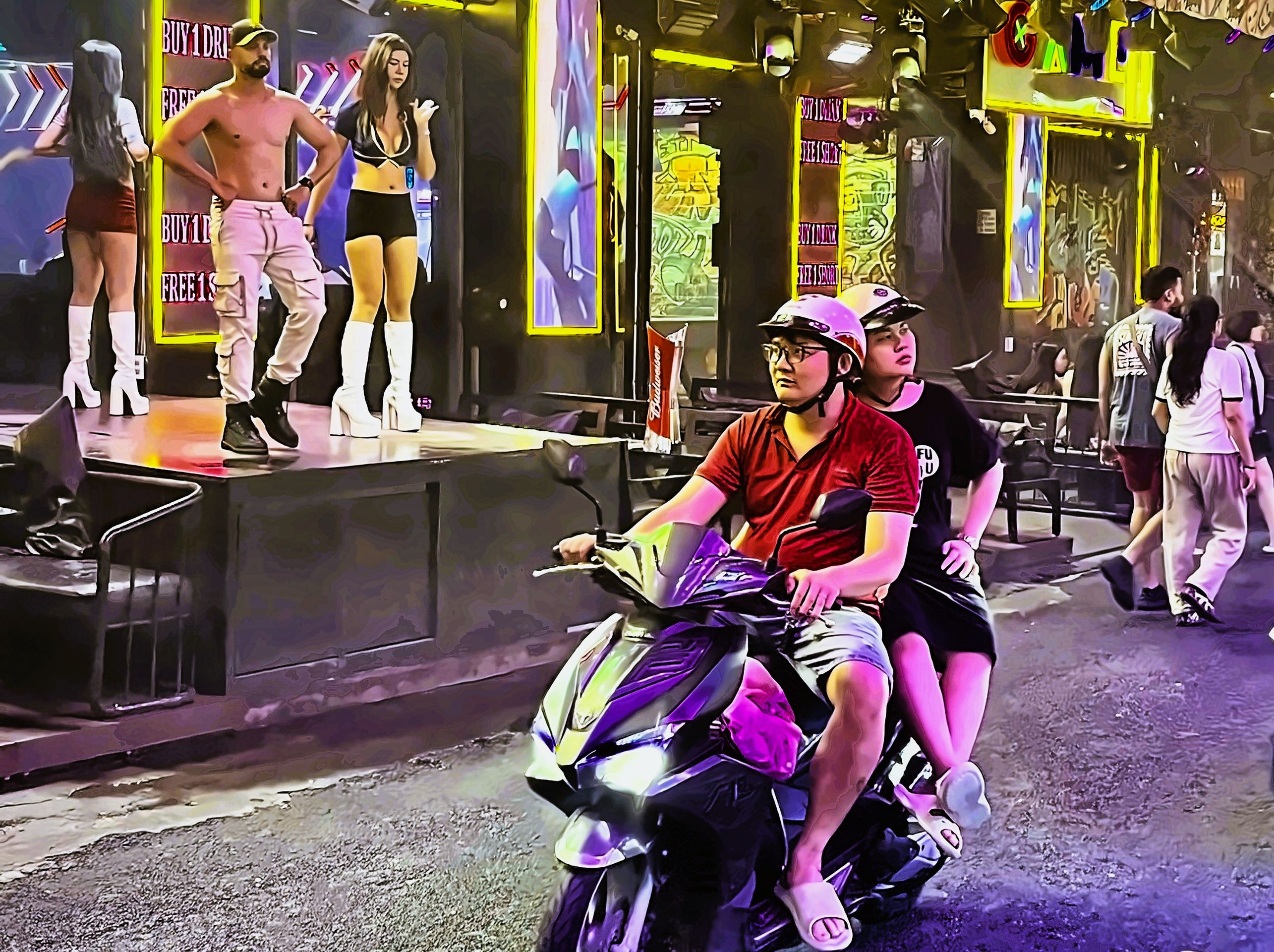
After a month in the Philippines, I returned to southern Vietnam on September 28, 2026. I had already been here in December 2024, but unfortunately spent most of my time in a dark hotel room. The Vietnamese still call the former capital of South Vietnam 'Saigon', even though it was renamed 'Ho Chi Minh City' in 1976 in honor of the 'Father of the Nation', the communist leader Ho Chi Minh (1890–1969).
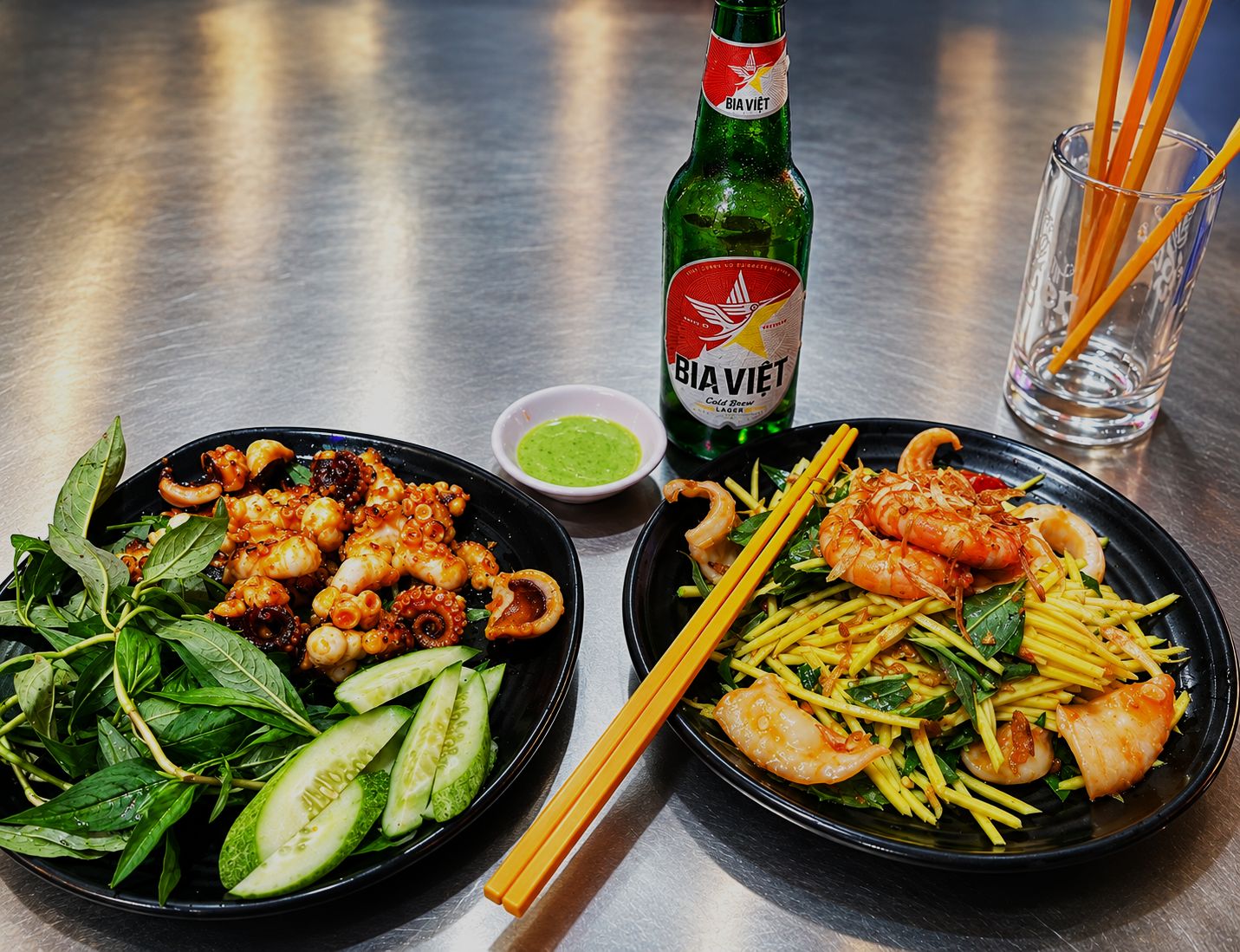
Vietnamese cuisine is considered, alongside Thai, to be particularly rich in variations. However, finding the most interesting places in a bustling metropolis that are not tourist-oriented can be a challenge. That's why I booked a food tour through downtown Saigon.
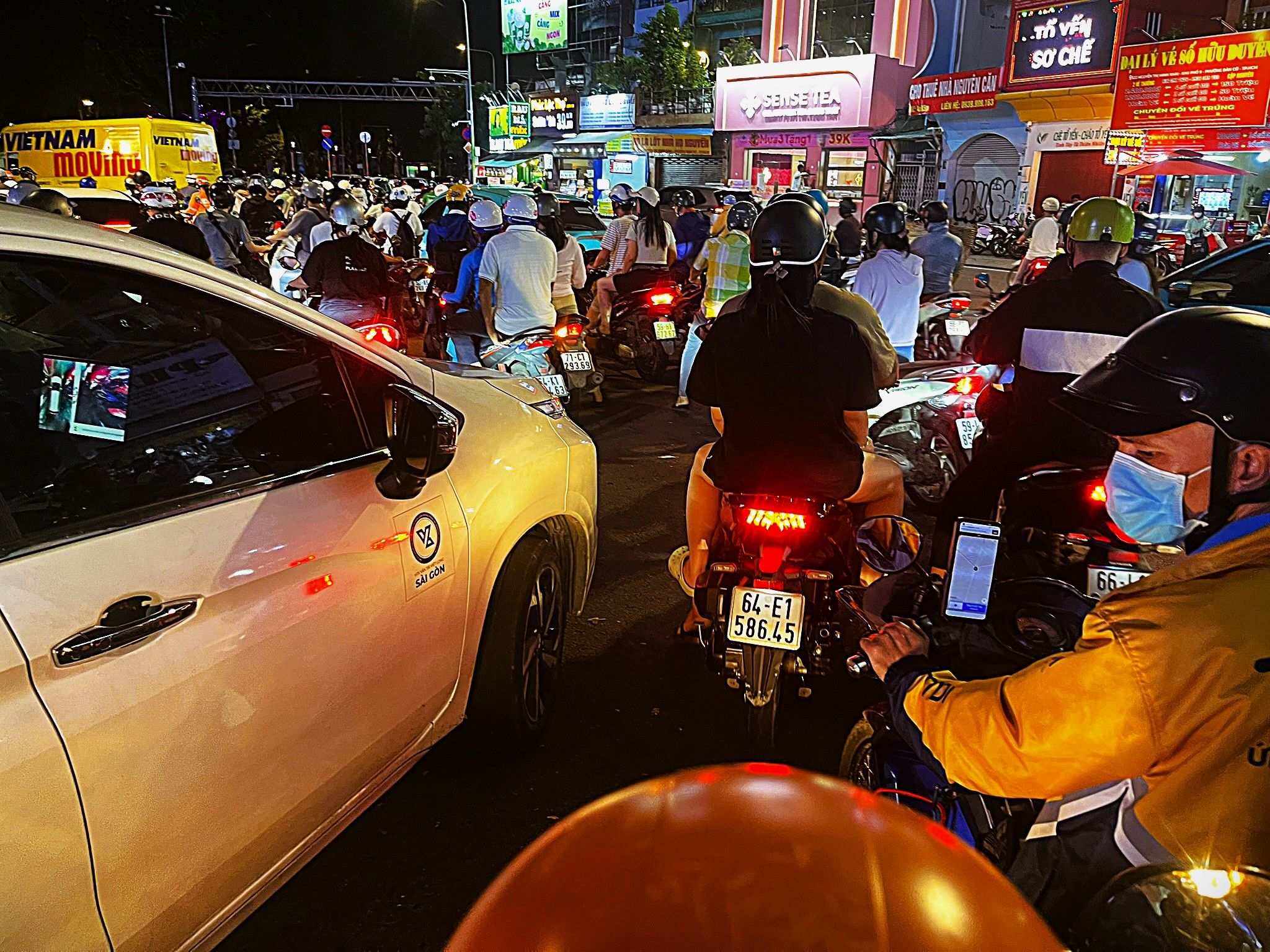
I decided on a motorbike tour, as I had done a few months ago in Yogyakarta on Java. In chaotic urban traffic, the two-wheeler is faster and more maneuverable than any car. At 6 PM, Jessica picks me up from my hotel in a narrow alley near Bui Vien street. She calls herself 'Jessica' for us foreigners; her real name is Phương. She skillfully navigates through the evening traffic. Some passersby laugh: at the handlebars, there is a petite young Vietnamese woman, and behind her, a European who is twice her weight and three times her age, towering over her by a head and a half.
Two more guests join us: Ben from Germany, around two meters tall, and Alex, a Vietnamese-American. His parents fled to the USA in 1975 as Americans withdrew from South Vietnam and the communists from the north took over power. Alex has just arrived in Vietnam for the first time in his life.
Beef, Pork, Shrimp
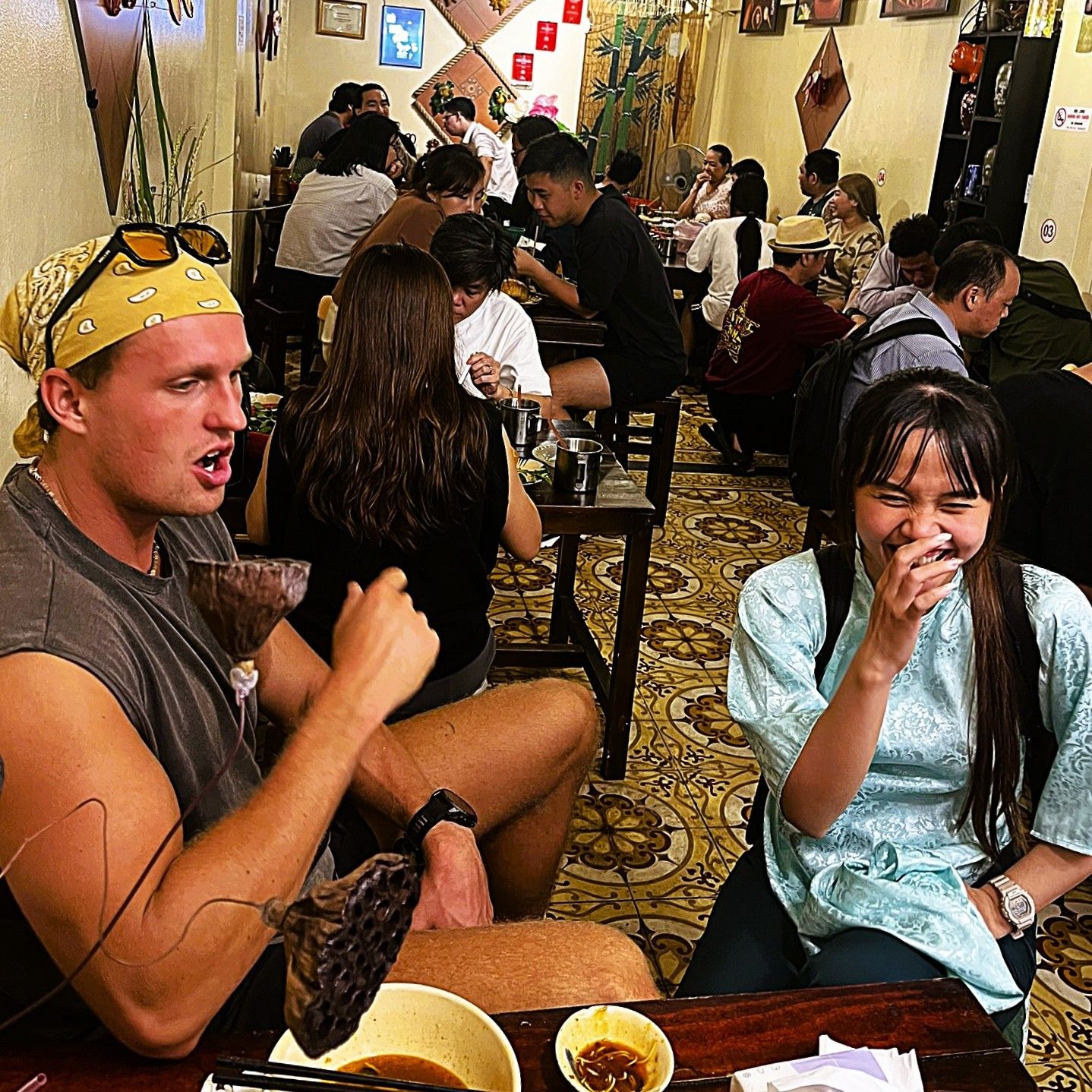
The first well-frequented spot is called 'Bò Kho Gánh' and is located in District 10. Many migrants live here in simple conditions; there are countless small industrial and craft businesses. Bò kho is a braised dish with beef, not the expensive cuts, but usually from the brisket, shank, and sinews, slow-cooked with carrots, lemongrass, star anise, cinnamon, ginger, and garlic. The broth is hearty, spicy, and, like almost everything in Vietnam, slightly sweet. It is usually eaten with Bánh mì, the baguette inherited from French colonists, rice noodles or rice.
Ben and I expected more tender meat. The establishment, in operation for over half a century, can nevertheless boast: the Michelin Guide has recognized 'Bò Kho Gánh' as a 'Bib Gourmand' for three years. This means: not classified with Michelin stars, but recommended for its very good value for money.
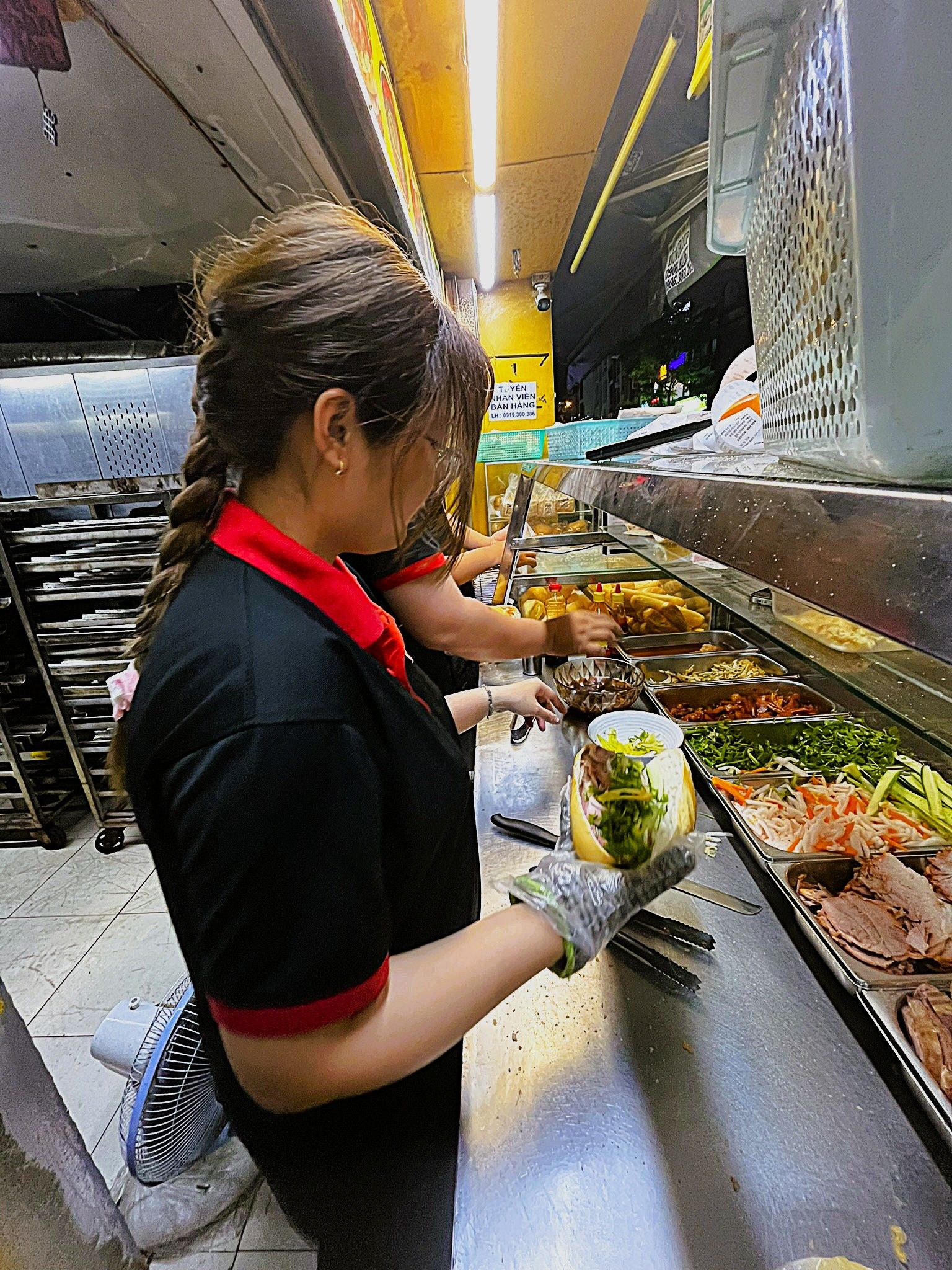
The next stop is a food stand, not a restaurant. Only Bánh mì is served, and it tastes delicious: the baguette is fresh, warm, and crispy, filled with salad and three differently prepared types of pork. The place is also bustling. There are no seating arrangements; many locals eat directly on their motorbikes or take the baguette home.
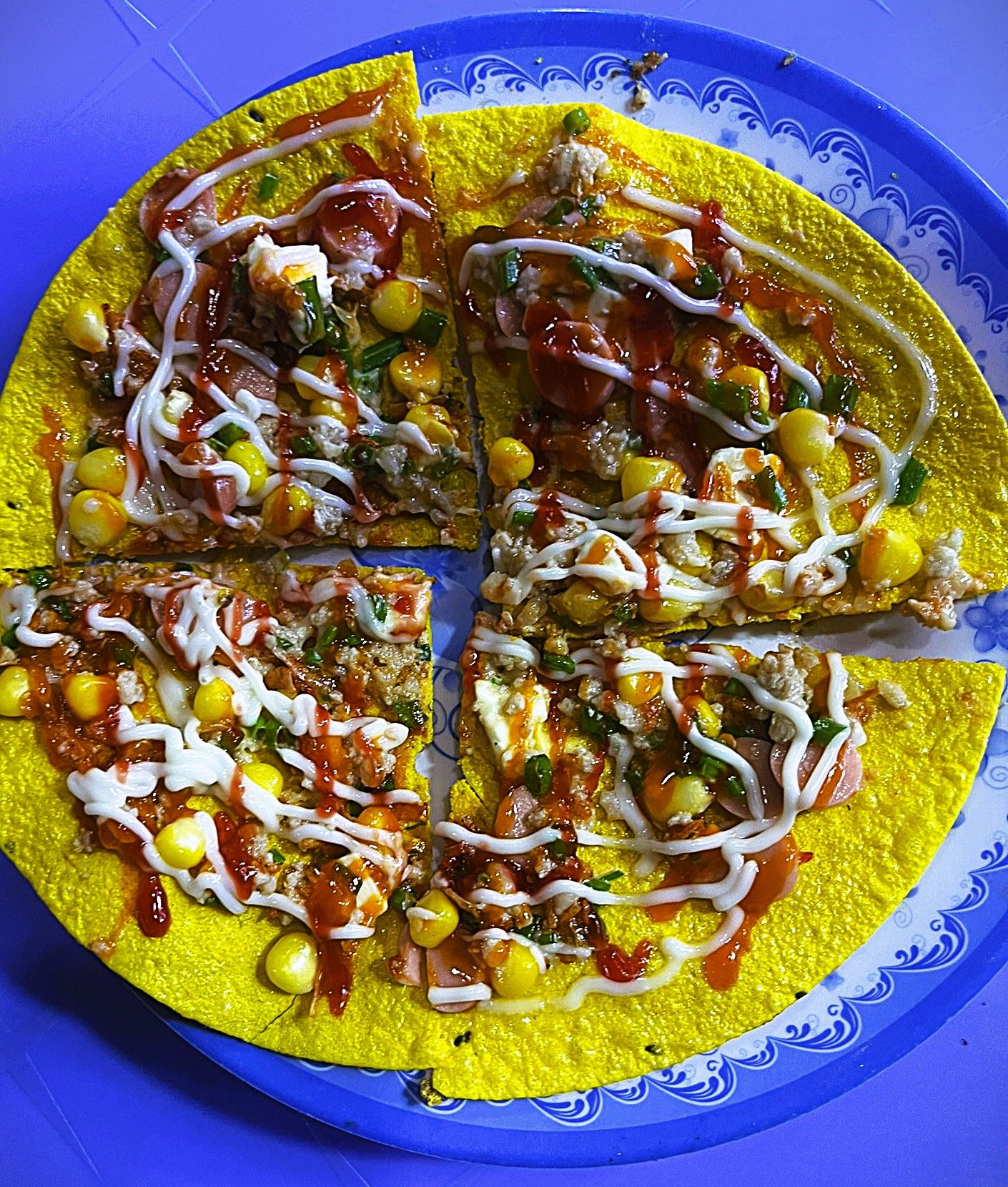
In the next place, there are tables and chairs again, but they are child-sized. You choose Saigon beer or fresh sugarcane juice here. Bánh tráng nướng is served, the 'Vietnamese pizza', which has nothing in common with a pizza: on roasted rice paper, quail eggs are spread, along with spring onions, vegetables, dried shrimp, and minced pork. Earlier, we had already tried something that tastes more like a dessert: Chuoi Nuong, bananas cooked in coconut milk with coconut milk sauce.
Embryo as Street Food
Now comes a trial not included in the program. At the beginning, Jessica asked, 'What don’t you eat?' My answer: 'I eat everything.' – 'Even dog and cat? Have you tried monkey brain?' Of course not. Now we are to eat Hột Vịt Lộn. In the Philippines, where the snack is called 'Balut', I successfully resisted. This time, Ben and I want to know; Alex graciously declines.
Hột Vịt Lộn is a boiled duck egg with a developed embryo. Jessica cracks the eggs. First, we drink the liquid inside; it tastes like strong broth. We dip the yolk and egg white in a spicy sauce. Up to that point, everything goes smoothly. Then it’s time for the substance: The embryo is cartilaginous and easily detectable in the mouth. I stay brave; Ben pulls out. For Vietnamese and Filipinos, this is totally normal street food, but it will stick with me for a long time.
'Old Saigon,' built 50 years ago
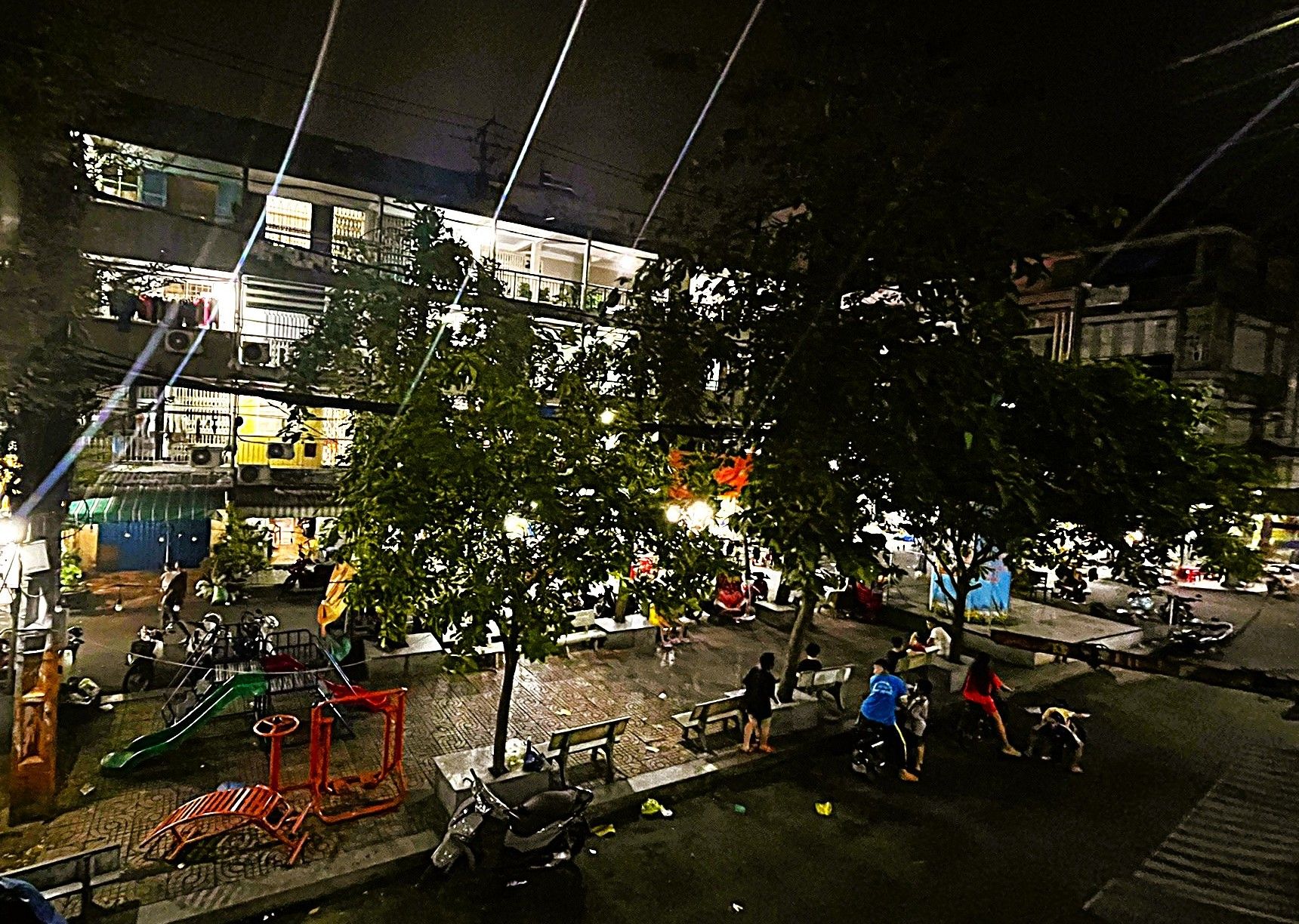
The duck embryos were served to us at the edge of a particularly exciting neighborhood that we are now visiting: the Nguyễn-Thiện-Thuật flats, a residential complex of 'old Saigon', as the guide calls it. Here was a densely populated informal settlement until it was largely destroyed during the Tet Offensive of 1968 in the Vietnam War. (At that time, North Vietnamese troops and Viet Cong attacked numerous South Vietnamese cities during the New Year celebration. The offensive failed militarily but shook the belief in the USA in an imminent victory.)
With American support, eleven simple four-story concrete blocks with 1,396 small apartments for around 4,000 people were built. Between the blocks, there are communal spaces. There are children playing, elderly people sitting in their tiny living rooms by open sliding doors, and a woman at a table amidst hundreds of parked scooters, for which she collects parking fees, reflecting the intense use of the area.
For decades, residents have also adapted the houses with extensions, additional levels, and commercial spaces to meet their needs; many run shops and food stalls directly from their apartments. The buildings have significantly aged, and a demolition has been discussed, as the guide explains. 'But you can see for yourself how popular this area is. I can't imagine how anyone could abandon and vacate it.'
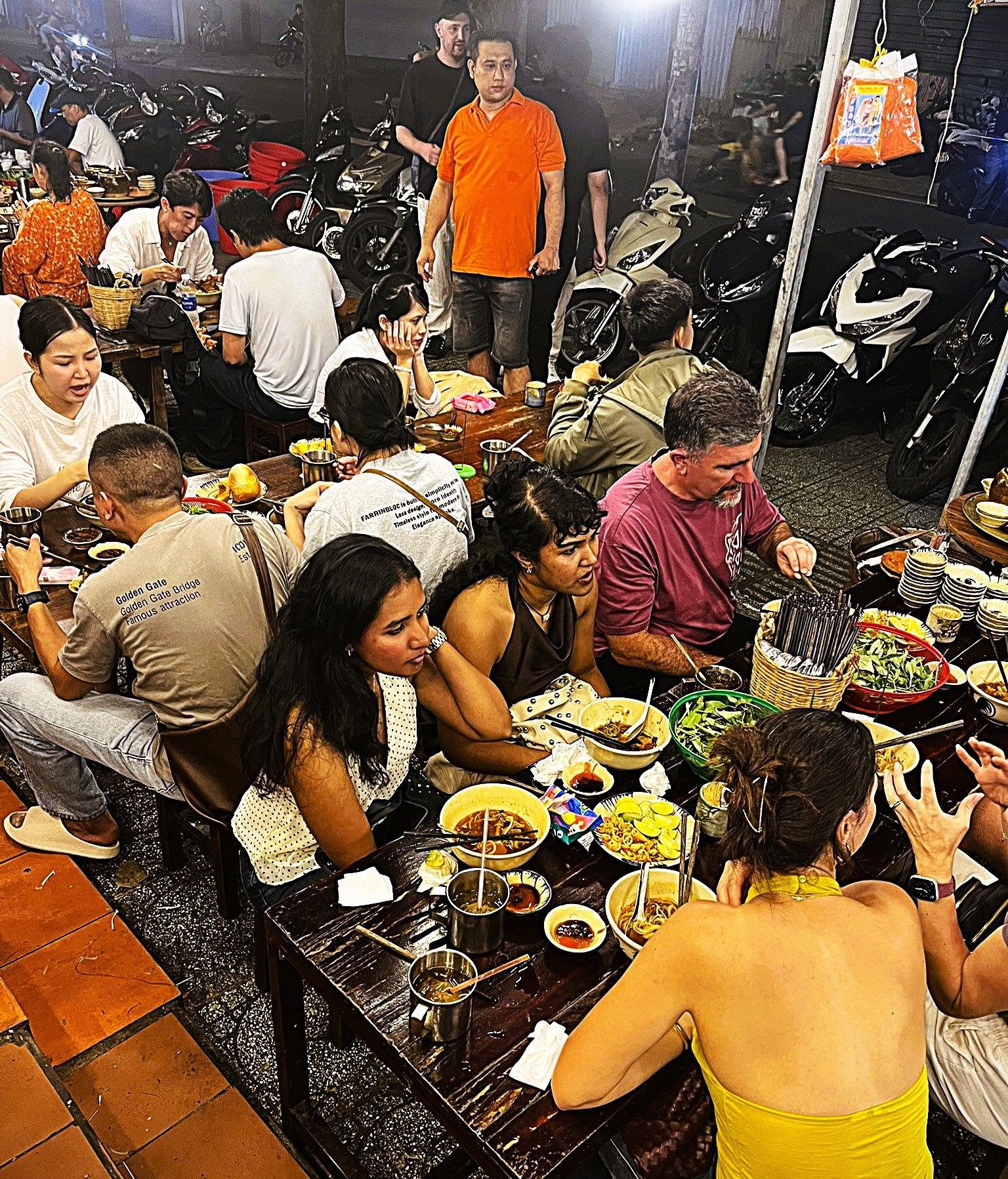
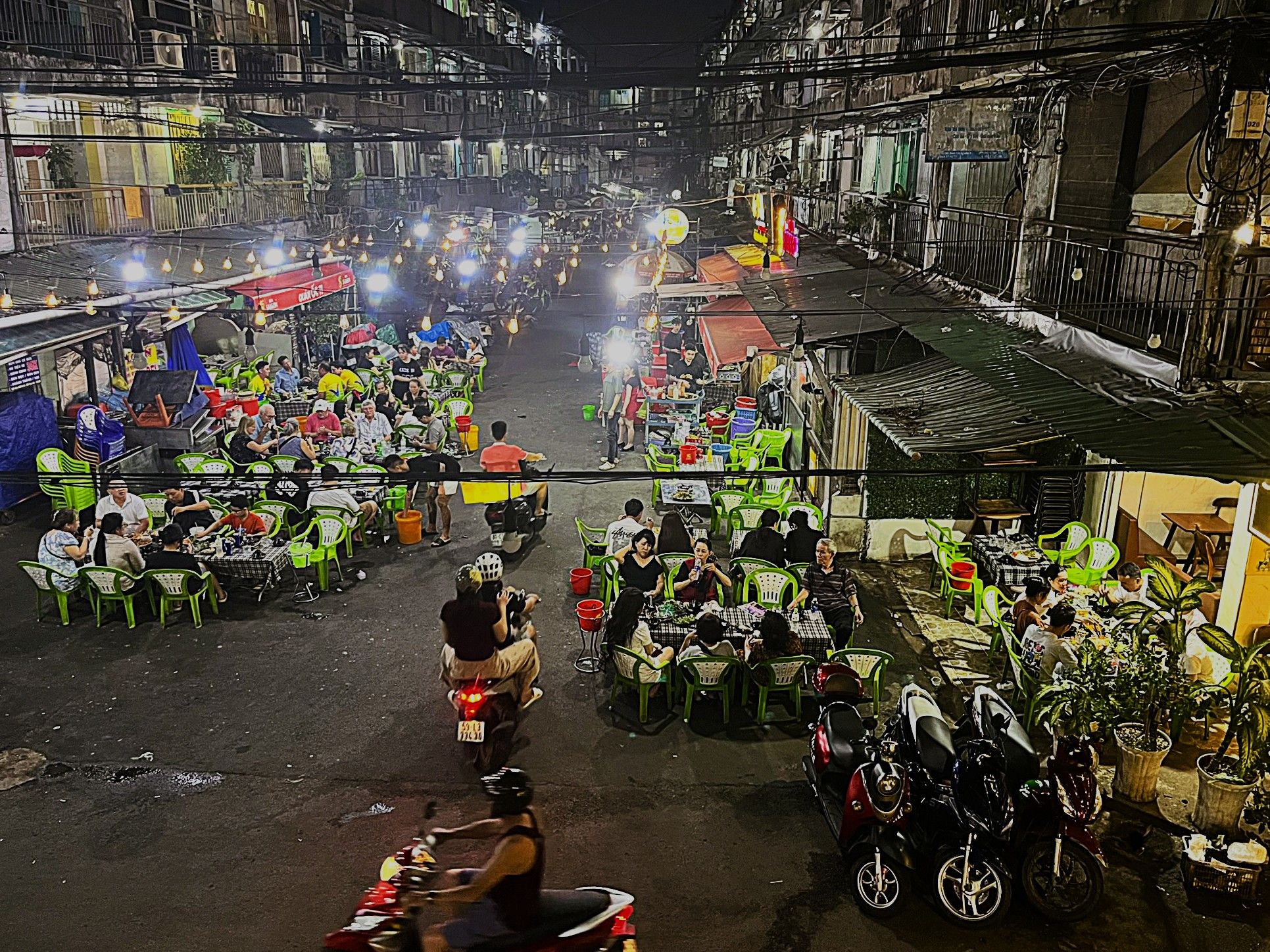
A street runs through the neighborhood, lined with restaurants; one seamlessly flows into the next. People are tightly packed, sitting at small tables, eating and discussing. This eatery street is called 'Hong Kong Street' by the locals, as the scene supposedly resembles old films from the former British crown colony.
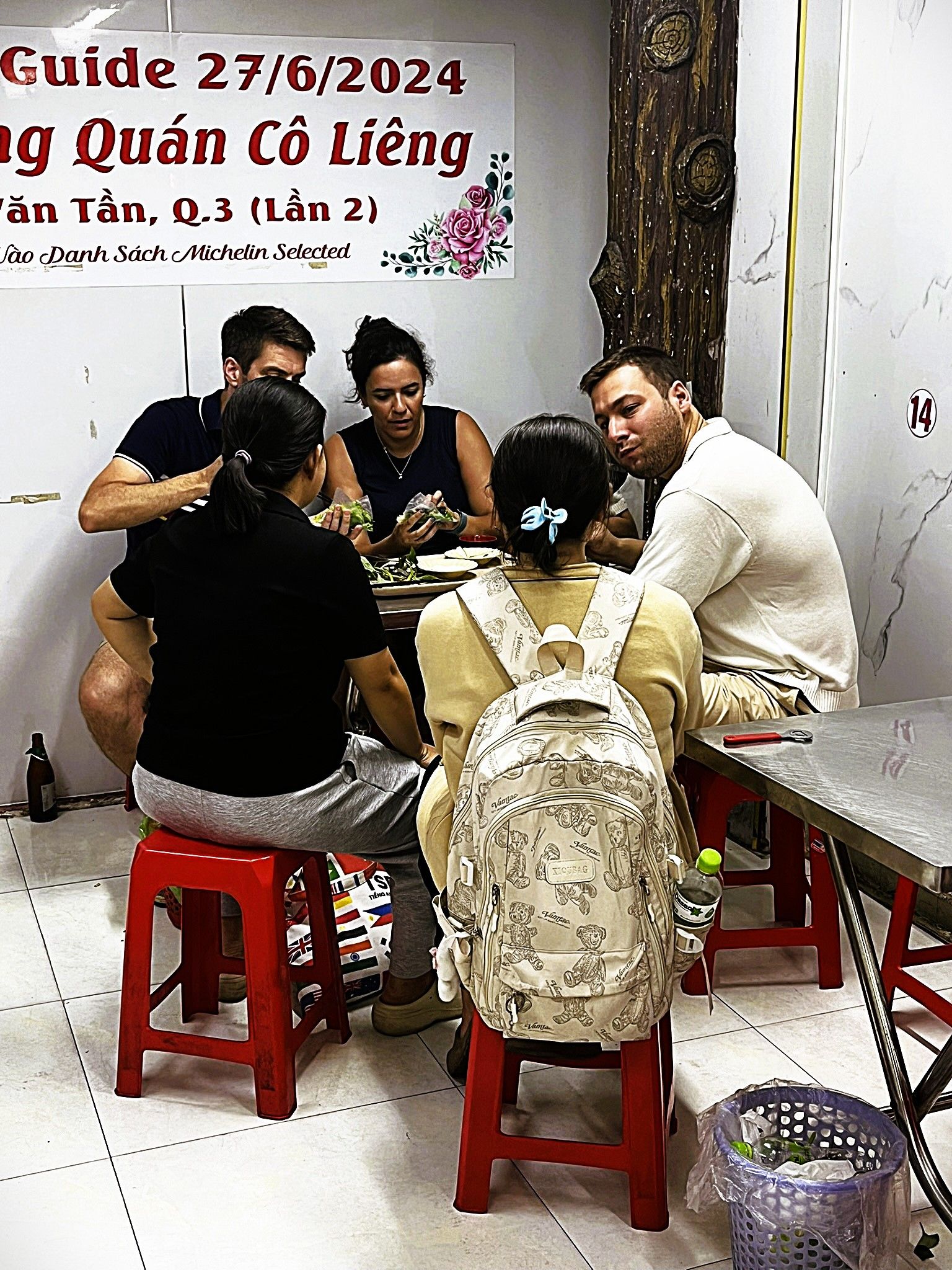
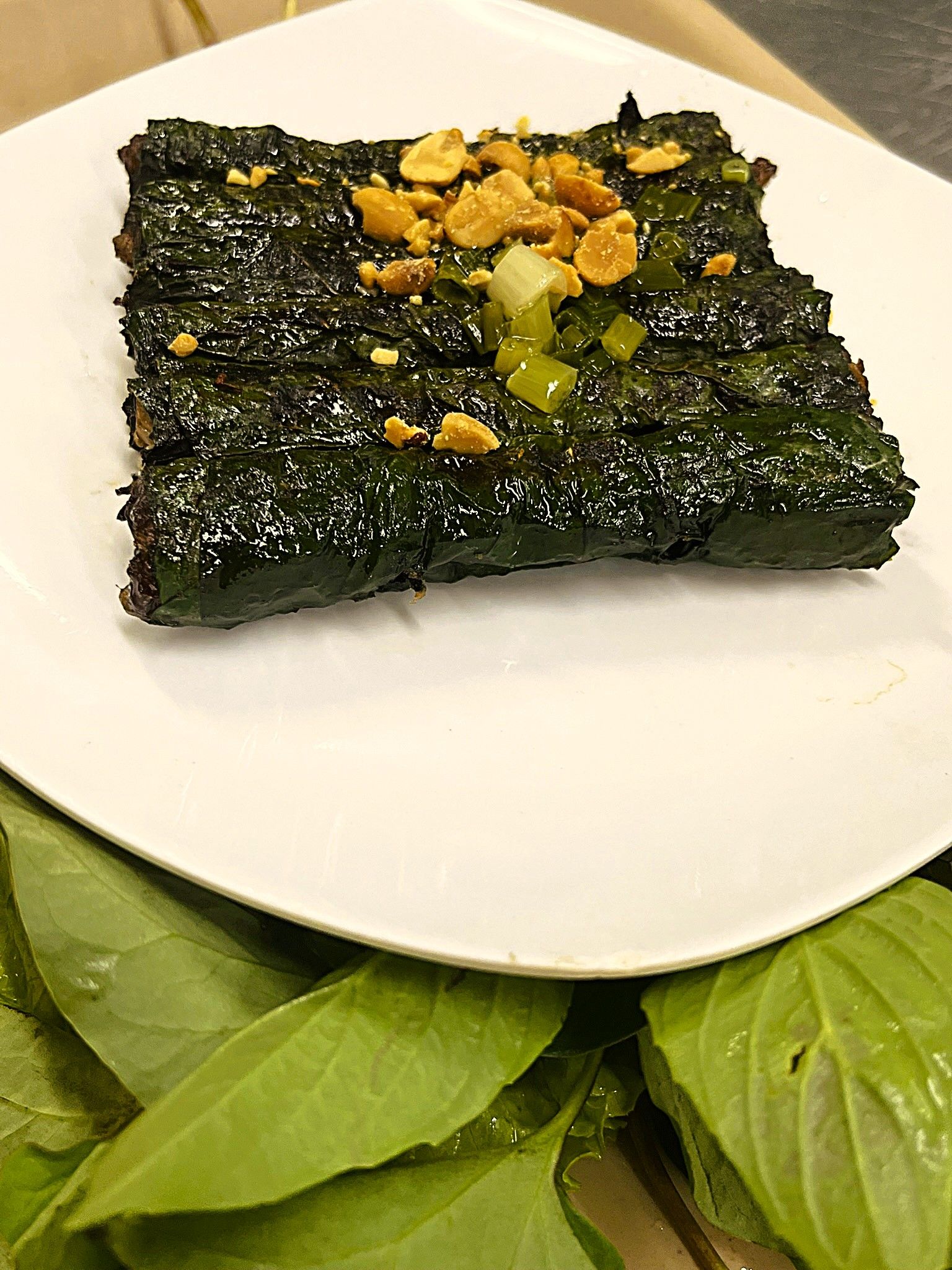
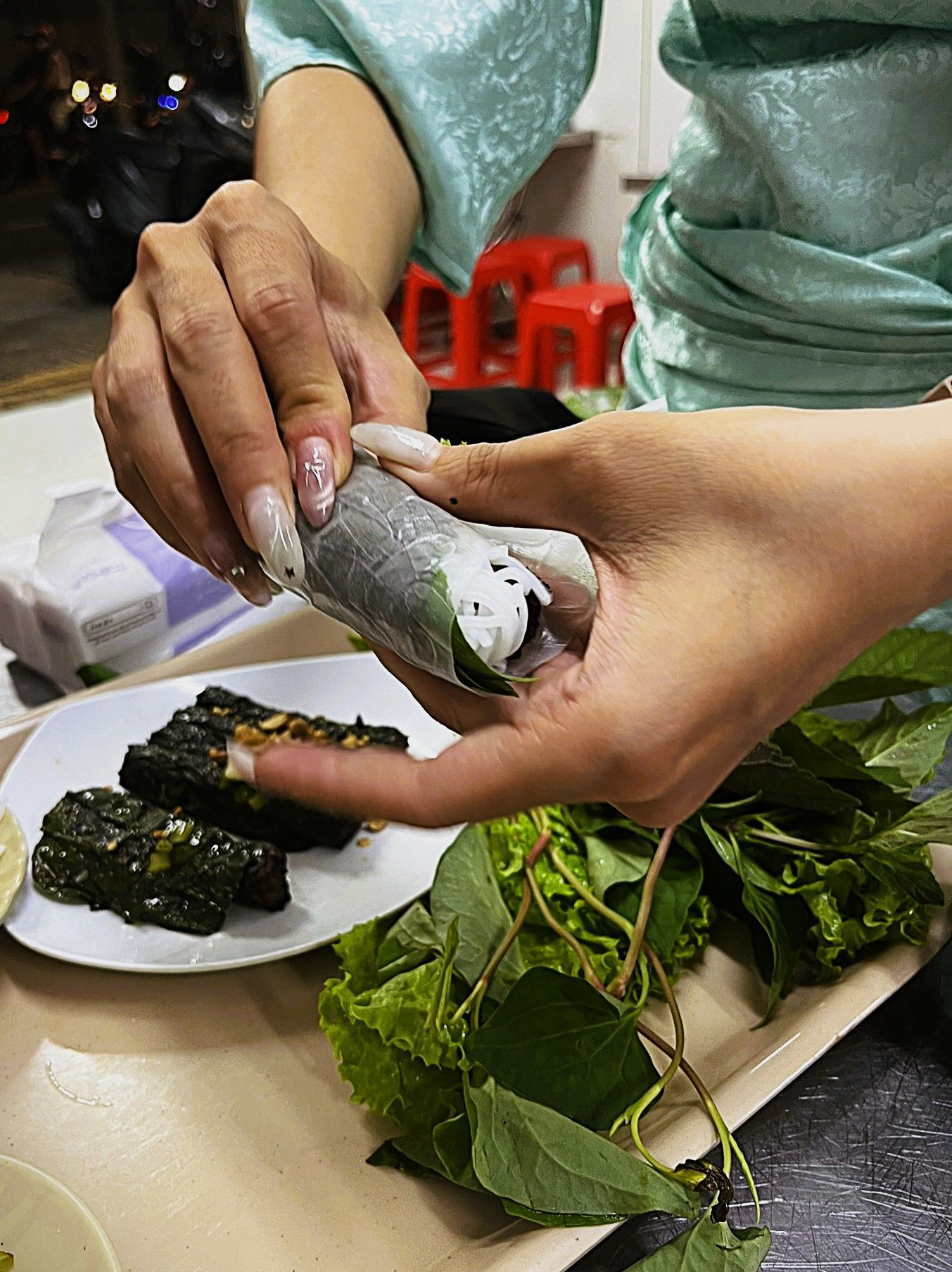
The next establishment is called 'Bò Lá Lốt Cô Liêng', also in District 3. As the name suggests, it specializes in Bò Lá Lốt: minced beef wrapped in betel leaves and grilled over charcoal. With herbs and salad, the rolls are wrapped in rice paper and then dipped in a spicy sauce. Jessica shows how elegantly that can be done while simultaneously showcasing her elaborately painted nails; our attempts look quite clumsy in comparison. The Michelin Guide praised the dish and has recognized the simple place multiple times as 'Michelin Selected': recommended, but without a star and without Bib Gourmand.
Autumn Flowers and Spring Rolls
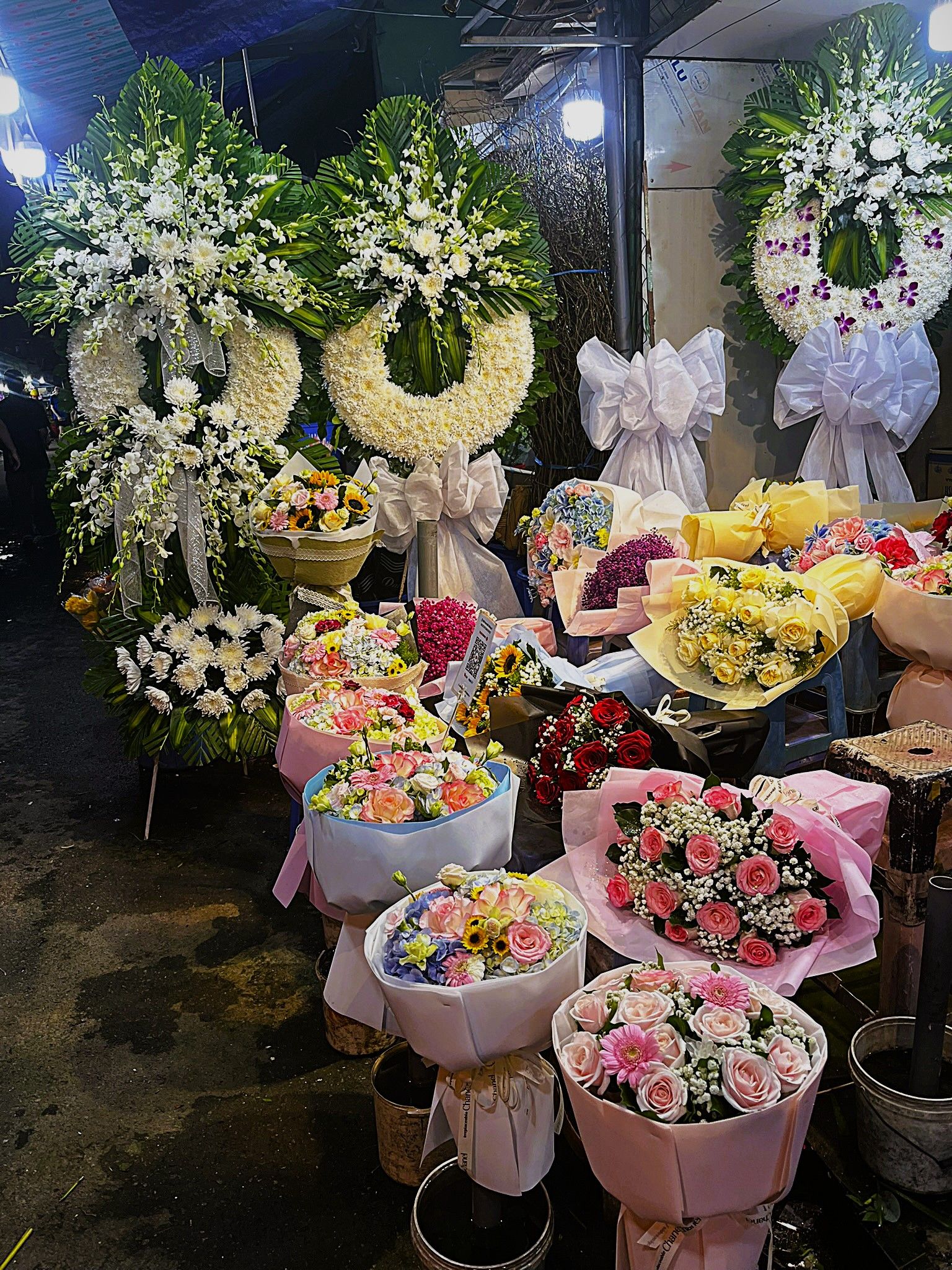
The last stop, Hồ Thị Kỷ, is a flower market with millions of flowers. 'Do not touch the flowers!', Jessica commands, 'or you will have to pay for them.' Right next to the market, partly intertwined with it, is another food street, or rather a tangle of narrow alleys filled with food.
Here, the gluttony reaches its peak. First comes Banh Khot, a crispy pancake with chopped shrimp, served with herbs and salad and dipping sauce. Then fresh, non-fried spring rolls with shrimp and peanut sauce follow. Finally, the flan made from eggs and milk is a must-have.
Ben does it right and walks several kilometers back to the hotel. I let myself be chauffeured one last time on Jessica's Honda to the hotel; but in this state, I can't lie down. A night walk through the deafening cacophony of Bui Vien street with its hotels, bars, restaurants, nightclubs, and massage parlors, followed by a nightcap, is calling. My phone's step counter reminds me: at my age, one should not only eat sufficiently but also move abundantly.