

10-best-tea-house-treks-in-nepal
vakantio.de/10-best-tea-house-treks-in-nepal
10 Best Tea House Treks in Nepal for Comfortable Hiking
Veröffentlicht: 15.07.2026
Tour
Gokyo Lakes Trek
Wanderung · Nepal Intrepid Treks
Tour
Manaslu Circuit Trek
Wanderung · Nepal Intrepid Treks
Tour
Khopra Ridge Trek
Wanderung · Nepal Intrepid Treks
Tour
Helambu Trek
Wanderung · Nepal Intrepid Treks
Sehenswert
Soti Khola
Nepal, Nepal
Sehenswert
Larkya La Pass
Manaslu region, Nepal
Sehenswert
Samagaon
Manaslu region, Nepal
Sehenswert
Samdo
Manaslu region, Nepal
Sehenswert
Dharapani
Annapurna region, Nepal
Sehenswert
Khopra Danda
Annapurna region, Nepal
Sehenswert
Khayer Lake
Annapurna region, Nepal
Sehenswert
Sundarijal
Kathmandu, Nepal
Nepal offers 10 standout tea house treks : Everest Base Camp, Annapurna Base Camp, Annapurna Circuit, Langtang Valley, Mardi Himal, Ghorepani Poon Hill, Gokyo Lakes, Manaslu Circuit, Khopra Ridge, and Helambu. Each route connects hikers to locally-run lodges that provide beds, meals, and warmth without the need for camping gear.
Tea house trekking removes the logistical burden of tents, cooking equipment, and food supplies. Local families operate lodges along established trails and serve dal bhat, noodles, and hot drinks at every stop. Trekkers carry light packs and cover 10 to 20 kilometers per day while sleeping in solid structures each night.
1. Everest Base Camp Trek
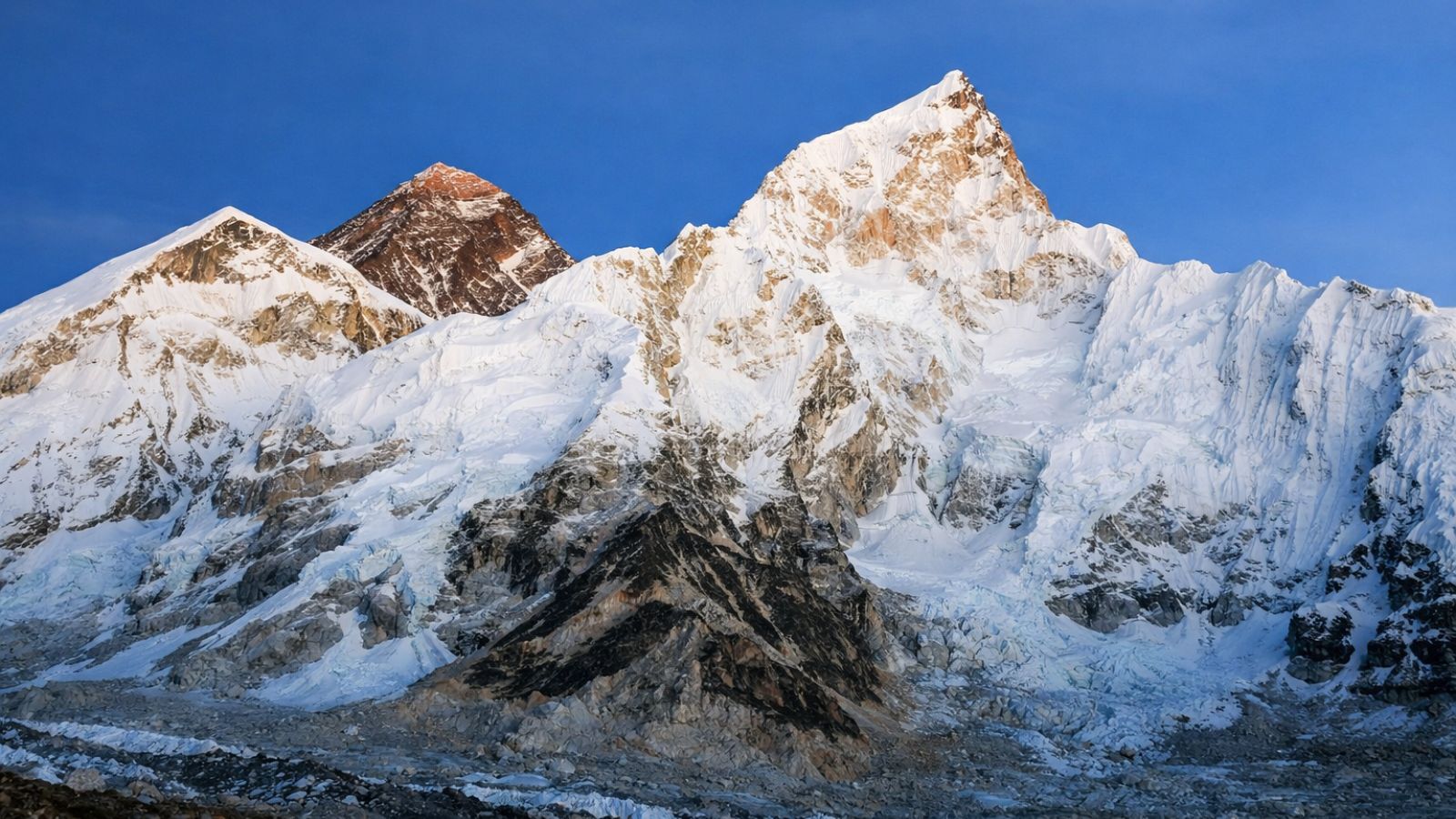
The Everest Base Camp Trek delivers direct views of the world's highest peak through a 12 to 14 day tea house route in the Khumbu region. Sagarmatha National Park protects the trail, and Sherpa communities operate lodges at every major stop.
Why Is the Everest Base Camp Trek So Popular?
The Everest Base Camp Trek attracts hikers because it reaches 5,364 meters at Kala Patthar, the closest viewpoint to Mount Everest's summit accessible without technical climbing gear. Sherpa culture, monastery visits, and consistent tea house infrastructure support the route's global reputation.
Everest holds symbolic weight beyond elevation. Edmund Hillary and Tenzing Norgay completed the first confirmed summit in 1953, and that history shapes the trek's identity today. Namche Bazaar functions as the region's trading hub, supplying gear shops, bakeries, and internet cafes that few other Himalayan trails offer at this altitude.
What Is the Route, Duration, and Difficulty?
The Everest Base Camp Trek runs from Lukla to Everest Base Camp over 12 to 14 days and carries a strenuous difficulty rating. The route ascends from 2,860 meters at Lukla to 5,364 meters at Kala Patthar , requiring two acclimatization days.
Trekkers fly from Kathmandu to Lukla's Tenzing-Hillary Airport, then walk through Phakding, Namche Bazaar, Tengboche, Dingboche, and Lobuche before reaching Gorak Shep and base camp. Daily walking distances range from 5 to 15 kilometers, and altitude gain stays below 500 meters per day after Namche Bazaar to reduce altitude sickness risk.
What are the main highlights?
The Everest Base Camp Trek features 5 primary highlights : Kala Patthar's summit views, Tengboche Monastery, Namche Bazaar's Saturday market, Sherpa museum exhibits, and direct base camp access. Each stop adds cultural or scenic value distinct from the others.
View Everest, Lhotse, and Nuptse from Kala Patthar at sunrise.
Visit Tengboche Monastery, the largest Buddhist monastery in the Khumbu region.
Shop at Namche Bazaar's weekly market for local produce and gear.
Explore Sherpa culture museums documenting mountaineering history.
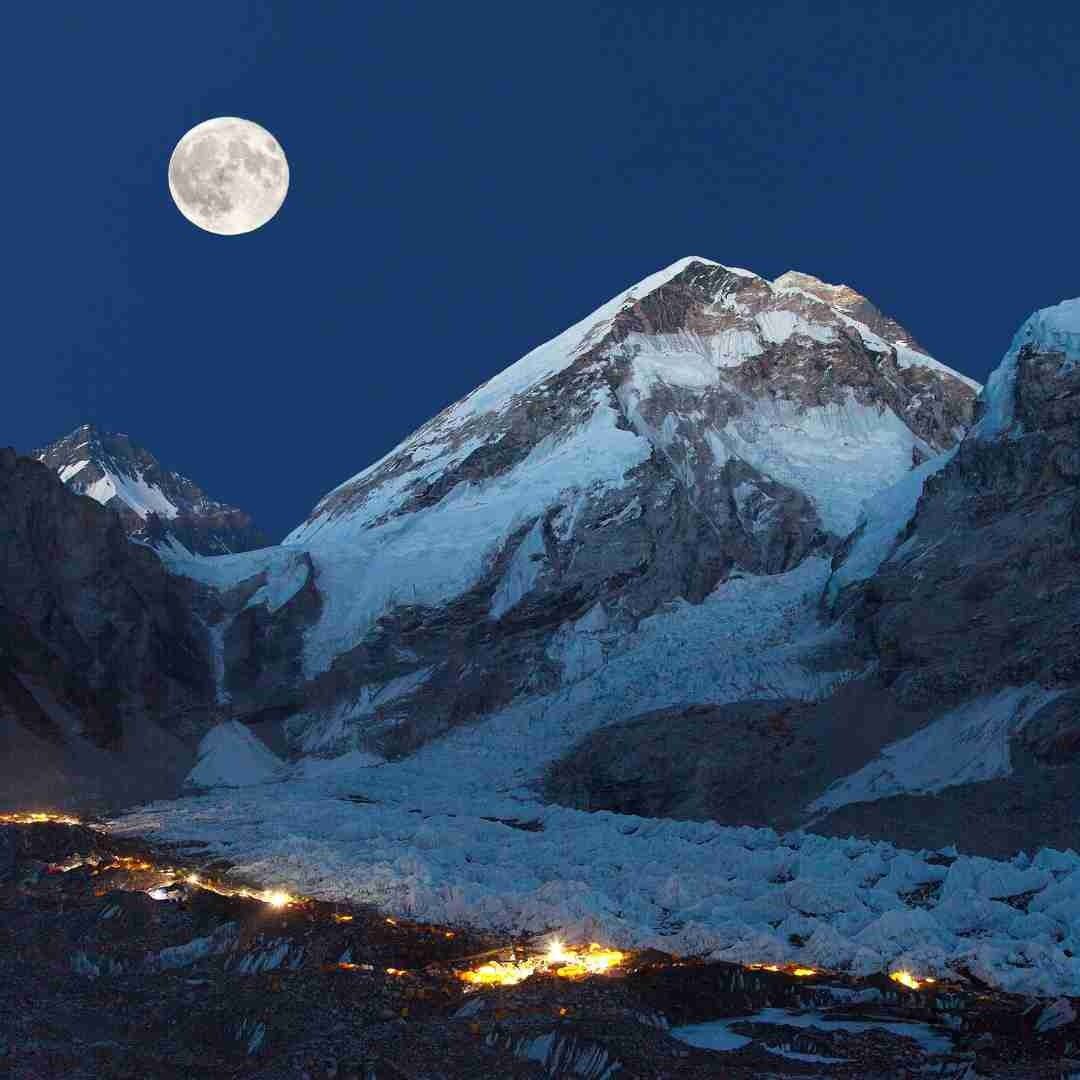
Stand at Everest Base Camp among the Khumbu Icefall's seracs.
2. Annapurna Base Camp Trek
The Annapurna Base Camp Trek circles into a natural amphitheater surrounded by peaks exceeding 7,000 meters, completing in 7 to 12 days through Gurung and Magar villages.
What Makes the Annapurna Base Camp Trek Unique?
The Annapurna Base Camp Trek places hikers inside a 360-degree mountain amphitheater at 4,130 meters , a geological formation unmatched by other Nepal tea house routes. Hot springs at Jhinu Danda and dense rhododendron forests distinguish this trail from higher, third Everest routes.
The sanctuary itself formed through glacial and tectonic activity, creating a bowl enclosed by Annapurna I, Machapuchare, Hiunchuli, and Annapurna South. Machapuchare, known as Fishtail Mountain, remains legally unclimbed due to religious restrictions tied to its status as sacred to Lord Shiva.
What Is the Route, Duration, and Difficulty?
The Annapurna Base Camp Trek covers Nayapul to Annapurna Base Camp in 7 to 12 days with a moderate difficulty rating. Elevation gain runs from 1,070 meters at Nayapul to 4,130 meters at base camp .
Hikers pass through Ghandruk, Chhomrong, Bamboo, Deurali, and Machapuchare Base Camp before the final ascent. Trail conditions include stone staircases, forest paths, and glacial moraine near the sanctuary entrance. Most operators schedule one buffer day for weather delays or altitude adjustment.
What are the main highlights?
The Annapurna Base Camp Trek offers 5 defining highlights : the sanctuary amphitheater, Jhinu Danda hot springs, Gurung village culture, rhododendron forest sections, and Machapuchare's unclimbed summit. These combine scenery with cultural depth.
Soak in natural hot springs at Jhinu Danda after descent.
Walk through rhododendron forests blooming red and pink in March.
Observe Gurung architecture and terraced farming in Ghandruk.
Photograph Machapuchare's fishtail peak from multiple trail angles.
Camp overnight inside the glacial sanctuary bowl at base camp.
3. Annapurna Circuit Trek
The Annapurna Circuit Trek crosses Thorong La Pass at 5,416 meters , connecting subtropical lowlands to high-altitude desert across 12 to 18 days.
Why Is the Annapurna Circuit Trek a Classic Adventure?
The Annapurna Circuit Trek earns its classic status by traversing 2 distinct climate zones within one route: lush subtropical forest and arid Tibetan-influenced plateau. Thorong La Pass serves as the trek's technical centerpiece and one of the highest trekking passes in the world.
Ecological variation drives the route's reputation among long-distance trekkers. The Manang Valley sits in a rain shadow behind the Annapurna range, producing dry, high-desert terrain that contrasts sharply with the humid lower Marsyangdi Valley. Muktinath Temple, a pilgrimage site for Hindus and Buddhists, adds religious significance to the trail's descent side.
What Is the Route, Duration, and Difficulty?
The Annapurna Circuit Trek spans 12 to 18 days from Besisahar to Nayapul via Thorong La Pass and carries a strenuous difficulty rating. Elevation ranges from 760 meters to 5,416 meters at the pass crossing.
The route follows the Marsyangdi River through Chame and Pisang before climbing to Manang for acclimatization. Trekkers cross Thorong La early in the morning to avoid afternoon winds, then descend to Muktinath and continue through Jomsom and Tatopani toward Poon Hill.
What Are the Main Highlights?
The Annapurna Circuit Trek delivers 5 core highlights: Thorong La Pass, Muktinath Temple, Manang's arid landscape, Tatopani hot springs, and diverse ethnic villages along the route. Each highlight reflects a different section of the circuit.
Cross Thorong La Pass at sunrise before wind speeds increase.
Visit Muktinath Temple's eternal flame and 108 water spouts.
Trek through Manang's high-desert terrain resembling the Tibetan plateau.
Bathe in Tatopani's natural hot springs beside the Kali Gandaki River.
Pass through Gurung, Thakali, and Manangi villages with distinct customs.
4. Langtang Valley Trek
The Langtang Valley Trek reaches 3,870 meters at Kyanjin Gompa within 7 to 10 days, positioned close enough to Kathmandu for shorter itineraries.
Why Is the Langtang Valley Trek Perfect for Scenic Hiking?
The Langtang Valley Trek suits scenic hiking because it starts within 7 to 8 hours of driving from Kathmandu, eliminating the need for domestic flights. Glaciers, yak pastures, and Tamang Buddhist culture appear within a compact route length.
Langtang National Park protects red pandas, Himalayan tahr, and over 250 bird species across the valley. The 2015 earthquake destroyed much of Langtang village, and the region rebuilt its tea houses with reinforced structures, making current lodges among the newest on any Nepal trekking route.
What Is the Route, Duration, and Difficulty?
The Langtang Valley Trek runs from Syabrubesi to Kyanjin Gompa across 7 to 10 days with a moderate difficulty rating. Elevation climbs from 1,550 meters at Syabrubesi to 3,870 meters at Kyanjin Gompa.
Hikers walk through Lama Hotel, Langtang village, and Mundu before reaching Kyanjin Gompa. An optional side hike to Kyanjin Ri at 4,773 meters adds one day and delivers wider panoramic views. Trail gradients stay gradual compared to Everest or Manaslu approaches.
What Are the Main Highlights?
The Langtang Valley Trek features 4 primary highlights: Kyanjin Gompa monastery, local cheese production, glacier views from Kyanjin Ri, and Tamang village culture. These highlights concentrate within a shorter travel window.
Tour the cheese factory at Kyanjin Gompa producing yak cheese.
Climb Kyanjin Ri for panoramic views of Langtang Lirung glacier.
Visit the rebuilt Kyanjin Gompa monastery after the 2015 earthquake.
Observe Tamang Buddhist prayer wheels and chortens along the trail.
5. Mardi Himal Trek
The Mardi Himal Trek reaches 4,500 meters at high base camp within 5 to 8 days, offering close Machapuchare views without the crowds of longer Annapurna routes.
Why Is the Mardi Himal Trek a Hidden Gem?
The Mardi Himal Trek qualifies as a hidden gem because it opened to independent trekkers only in 2012, keeping visitor numbers lower than neighboring Annapurna trails. Forest ridgeline walking and close-range Machapuchare views define the experience.
Trail development remained minimal for years due to the route's steep ridge terrain, which limited early lodge construction. Recent tea house additions at Low Camp, Middle Camp, and High Camp now support consistent overnight infrastructure, converting a once camping-only trek into a full tea house route.
What Is the Route, Duration, and Difficulty?
The Mardi Himal Trek covers Kande to Mardi Himal Base Camp in 5 to 7 days with a moderate difficulty rating. Elevation increases from 1,770 meters at Kande to 4,500 meters at base camp.
The route climbs through rhododendron and oak forest to Forest Camp, then continues along an open ridge to Low Camp, Middle Camp, and High Camp. Steep sections near High Camp require careful footing on loose rock, particularly during descent.
What Are the Main Highlights?
The Mardi Himal Trek offers 4 defining highlights: close-up Machapuchare views, uncrowded ridgeline trails, rhododendron forest, and base camp sunrise views. These highlights suit trekkers seeking shorter, quieter routes.
Watch sunrise light hit Machapuchare's fishtail summit from High Camp.
Walk exposed ridgelines with unobstructed Annapurna South views.
Pass through dense rhododendron forest during spring bloom season.
Reach base camp with fewer trekkers than Annapurna Base Camp trail.
6. Ghorepani Poon Hill Trek
The Ghorepani Poon Hill Trek reaches 3,210 meters at Poon Hill viewpoint within 4 to 6 days, ranking as Nepal's most accessible tea house trek for beginners.
Why Is the Ghorepani Poon Hill Trek Great for Beginners?
The Ghorepani Poon Hill Trek suits beginners because it requires no prior high-altitude trekking experience and completes in under a week. Stone-paved trails, established tea houses every few hours, and a moderate elevation ceiling reduce altitude sickness risk.
Short daily walking distances of 4 to 6 hours keep physical demands manageable for first-time trekkers and families. The route's popularity since the 1970s produced dense infrastructure, including bakeries, hot showers, and Wi-Fi access at most overnight stops, amenities rarer on higher, more remote trails.
What Is the Route, Duration, and Difficulty?
The Ghorepani Poon Hill Trek runs from Nayapul to Poon Hill in 4 to 6 days with an easy to moderate difficulty rating. Elevation ranges from 1,070 meters at Nayapul to 3,210 meters at Poon Hill.
Trekkers ascend through Tikhedhunga and climb roughly 3,000 stone steps to reach Ghorepani village. A pre-dawn hike to Poon Hill viewpoint precedes descent through Tadapani and back to Nayapul or Pokhara.
What Are the Main Highlights?
The Ghorepani Poon Hill Trek features 4 core highlights: Poon Hill's panoramic sunrise, Ghorepani village, rhododendron forest trails, and short trek duration. These highlights fit compact travel schedules.
Watch sunrise illuminate Dhaulagiri, Annapurna, and Machapuchare from Poon Hill.
Rest overnight in Ghorepani, a major trail junction village.
Walk beneath Nepal's national flower, blooming rhododendron, in March and April.
Complete a full Himalayan trek within a single work week.
7. Gokyo Lakes Trek
The Gokyo Lakes Trek reaches 5,357 meters at Gokyo Ri within 10 to 12 days, tracing six glacial lakes through the Khumbu region's western valley.
Why Should You Choose the Gokyo Lakes Trek?
The Gokyo Lakes Trek delivers 6 glacial lakes and views of 4 peaks exceeding 8,000 meters from a single viewpoint, a combination unavailable on the standard Everest Base Camp route. Gokyo Ri offers wider panoramic access than Kala Patthar without matching crowd density.
The Ngozumpa Glacier, Nepal's largest glacier, runs alongside the Gokyo Lakes and stretches over 36 kilometers. Ramsar Convention protection designates the Gokyo Lakes as a wetland of international importance, recognizing their ecological role for migratory birds and glacial water systems.
What Is the Route, Duration, and Difficulty?
The Gokyo Lakes Trek covers Lukla to Gokyo Ri across 10 to 12 days with a strenuous difficulty rating. Elevation climbs from 2,860 meters at Lukla to 5,357 meters at Gokyo Ri.
The route follows the Everest Base Camp trail to Namche Bazaar, then diverges toward Dole, Machhermo, and Gokyo village along the Dudh Koshi valley. Crossing the Ngozumpa Glacier moraine requires stable footing before reaching the lakeside village.
What Are the Main Highlights?
The Gokyo Lakes Trek offers 5 primary highlights: Gokyo Ri's summit panorama, the 6 sacred lakes, Ngozumpa Glacier, Everest and Cho Oyu views, and reduced trail congestion. These highlights distinguish it from the standard base camp route.
Climb Gokyo Ri for views of Everest, Lhotse, Makalu, and Cho Oyu.
Walk beside 6 turquoise glacial lakes considered sacred by Hindus.
Cross Nepal's largest glacier, the Ngozumpa, on foot.
Photograph Cho Oyu, the sixth-highest peak in the world.
Trek a route with fewer hikers than the main Everest trail.
8. Manaslu Circuit Trek
The Manaslu Circuit Trek crosses Larkya La Pass at 5,160 meters across 14 to 18 days around the world's eighth-highest peak.
Why Is the Manaslu Circuit Trek Worth the Challenge?
The Manaslu Circuit Trek rewards trekkers with restricted-area access, requiring a special permit that limits daily visitor numbers and preserves trail authenticity. Larkya La Pass and views of Manaslu's 8,163-meter summit define the route's technical and scenic value.
Restricted permit status since 1991 kept the Manaslu region less developed than Everest or Annapurna, preserving traditional Tibetan-influenced village life in areas like Samagaon and Samdo. Trekkers need a minimum of 2 people and a licensed guide to obtain the required Restricted Area Permit.
What Is the Route, Duration, and Difficulty?
The Manaslu Circuit Trek runs from Soti Khola to Larkya La Pass over 14 to 18 days with a strenuous difficulty rating. Elevation increases from 700 meters at Soti Khola to 5,160 meters at the pass.
The trail follows the Budhi Gandaki River gorge through Machha Khola, Jagat, and Deng before climbing to Samagaon for acclimatization. After crossing Larkya La, trekkers descend to Bimthang and connect to the Annapurna region road network at Dharapani.
What Are the Main Highlights?
The Manaslu Circuit Trek features 4 defining highlights: Larkya La Pass crossing, Manaslu summit views, Tibetan-influenced villages, and restricted-permit exclusivity. These highlights combine remoteness with high-altitude scenery.
Cross Larkya La Pass beneath glaciated peaks exceeding 6,000 meters.
View Manaslu's summit from Samagaon and Samdo villages.
Visit Tibetan Buddhist monasteries in the upper Nubri valley.
Trek a restricted route with limited daily permit issuance.
9. Khopra Ridge Trek
The Khopra Ridge Trek reaches 4,660 meters at Khopra Danda within 7 to 9 days, offering wide Annapurna Dhaulagiri views without heavy trail traffic.
Why Is the Khopra Ridge Trek an Excellent Off-the-Beaten-Path Choice?
The Khopra Ridge Trek qualifies as off-the-beaten-path because it sees fewer daily trekkers than the nearby Ghorepani Poon Hill and Annapurna Base Camp trails while offering comparable mountain panoramas. The ridge position provides simultaneous views of the Annapurna and Dhaulagiri ranges.
Community-managed lodges along the ridge developed through local cooperative investment rather than large-scale tourism operators, keeping the trail infrastructure modest and locally controlled. Khayer Lake, a sacred site near the ridge, adds a pilgrimage dimension absent from more commercial routes.
What Is the Route, Duration, and Difficulty?
The Khopra Ridge Trek covers Nayapul to Khopra Danda across 7 to 9 days with a moderate difficulty rating. Elevation ranges from 1,070 meters at Nayapul to 4,660 meters at Khopra Danda.
The route diverges from the standard Ghorepani trail at Chistibung, climbing through rhododendron forest to Dobato and Khopra Danda. An optional side trip to Khayer Lake at 4,660 meters adds one day to the itinerary.
What Are the Main Highlights?
The Khopra Ridge Trek offers 4 core highlights: dual mountain range views, Khayer Lake, low trail traffic, and community lodge culture. These highlights appeal to trekkers avoiding crowded routes.
View Annapurna South, Dhaulagiri, and Nilgiri from a single ridge point.
Hike to Khayer Lake, a Hindu pilgrimage site above 4,600 meters.
Stay in community-managed lodges supporting local cooperative income.
Walk trails with significantly lower trekker density than Poon Hill.
10. Helambu Trek
The Helambu Trek reaches 3,650 meters at Tharepati within 5 to 7 days, positioned as Kathmandu's closest tea house trekking region.
Why Is the Helambu Trek Ideal for Short Tea House Hiking?
The Helambu Trek fits short tea house hiking because trailheads sit within 1 to 2 hours of driving from Kathmandu, removing flight logistics entirely. Moderate elevation gain and Hyolmo village culture support a low-risk, culturally rich trek for limited-time visitors.
Hyolmo people, related to Tibetan Buddhist traditions, inhabit the Helambu region and maintain distinct customs from the Sherpa and Tamang communities found on other Nepal treks. Terraced farmland and forest sections alternate throughout the route, creating varied scenery within a short travel radius of the capital.
What Is the Route, Duration, and Difficulty?
The Helambu Trek runs from Sundarijal to Tharepati in 5 to 7 days with an easy to moderate difficulty rating. Elevation increases from 1,400 meters at Sundarijal to 3,650 meters at Tharepati.
The trail passes through Chisapani, Kutumsang, and Magin Goth before reaching Tharepati. Return routes often loop through Melamchi Gaon and Sermathang, forming a circuit rather than a there-and-back path.
What Are the Main Highlights?
The Helambu Trek features 4 primary highlights : proximity to Kathmandu, Hyolmo culture, forested ridgeline trails, and circuit-route flexibility. These highlights suit trekkers with limited vacation time.
Reach the trailhead within 2 hours of leaving Kathmandu.
Visit Hyolmo Buddhist villages with distinct monastery architecture.
Walk forested ridgelines connecting Sundarijal to Tharepati.
Complete a circuit route through Melamchi Gaon without backtracking.
How Can Nepal Intrepid Treks Help You Plan the Perfect Tea House Trek?
Nepal Intrepid Treks builds custom tea house itineraries by matching trekker fitness levels, available time, and altitude tolerance to 1 of these 10 routes . The company arranges permits, licensed guides, and tea house bookings across all listed regions.
Route selection depends on 3 factors: trip duration, altitude comfort, and remoteness preference. Nepal Intrepid Treks assigns guides who hold first-aid certification and carry satellite communication devices on high-altitude routes above 4,000 meters. Permit processing covers TIMS cards, national park entry fees, and restricted-area permits for routes like Manaslu.
Why Choose Nepal Intrepid Treks for Your Nepal Trekking Adventure?
Nepal Intrepid Treks operates with locally based guides who hold direct relationships with tea house owners across all 10 featured routes. This local connection secures room availability during peak trekking seasons in March, April, October, and November.
Guide-to-trekker ratios stay at or below 1:4 on standard group treks, supporting closer altitude monitoring and pacing adjustments. Nepal Intrepid Treks maintains fixed departure dates alongside private trip customization, covering solo trekkers, families, and large groups across easy, moderate, and strenuous difficulty categories.
What Are the Key Takeaways About the Best Tea House Treks in Nepal?
Nepal's 10 best tea house treks span difficulty levels from easy Ghorepani Poon Hill hikes to strenuous Manaslu Circuit and Everest Base Camp routes. Duration ranges from 4 days at Ghorepani Poon Hill to 18 days on the Annapurna or Manaslu Circuits .
Match trek difficulty to prior high-altitude hiking experience.
Choose shorter routes like Helambu or Poon Hill for limited vacation time.
Select Manaslu or Gokyo Lakes for lower trail traffic and permit-controlled access.
Confirm tea house availability during peak seasons through a licensed operator.
Verify altitude acclimatization days are built into any itinerary above 3,500 meters.
Tea house infrastructure across these 10 routes eliminates camping logistics while delivering direct access to Nepal's highest peaks, glacial lakes, and mountain communities.
10-best-tea-house-treks-in-nepalFolge diesem Blog und verpasse keine neuen Beiträge.
Antworten