

Christmas begins in Dumaguete in September
Dumaguete in the southeast of the Philippine island of Negros calls itself 'City of Gentle People'. Whether rightly so, I want to find out in September 2026.

Published: 20.09.2026
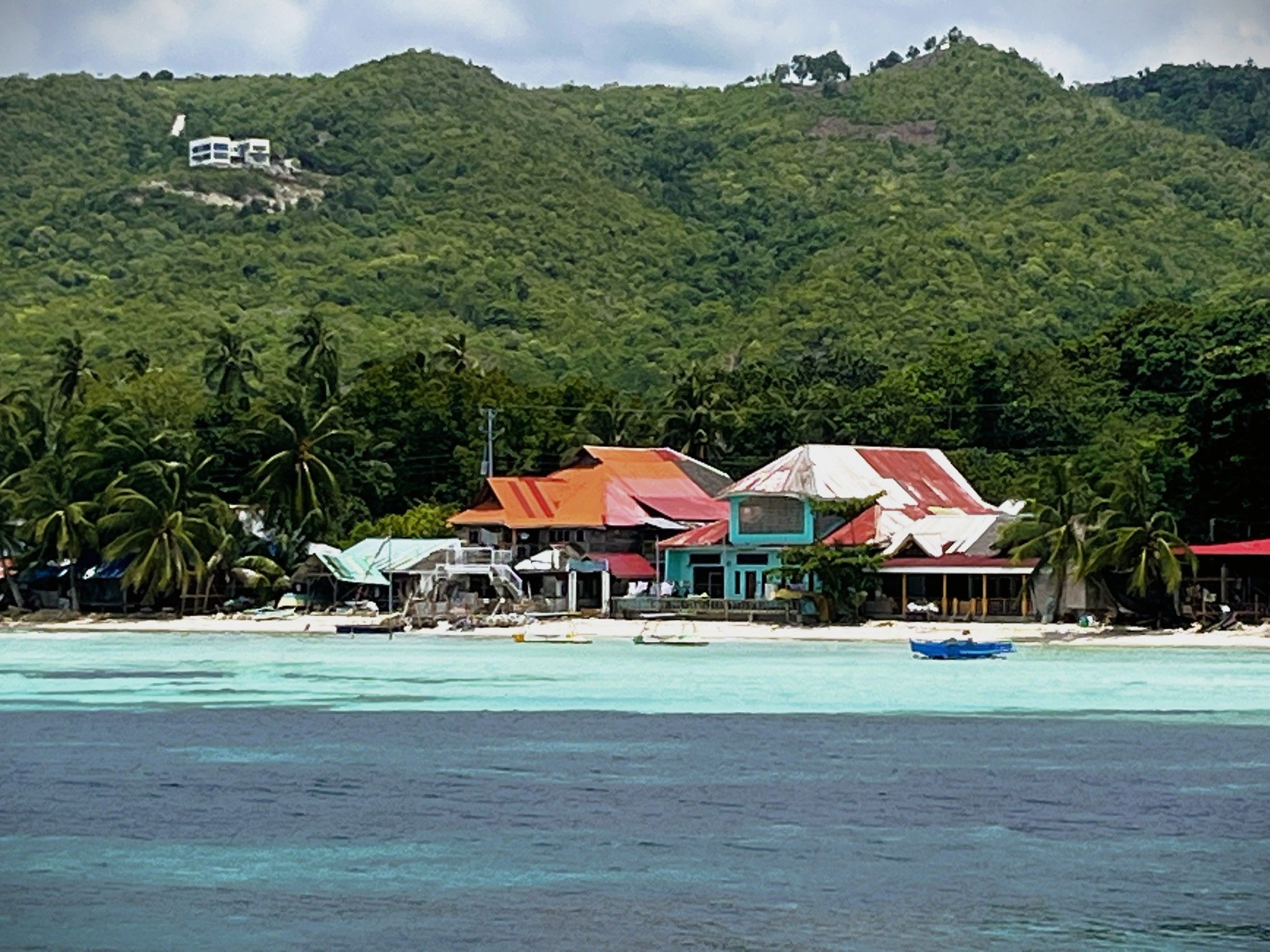
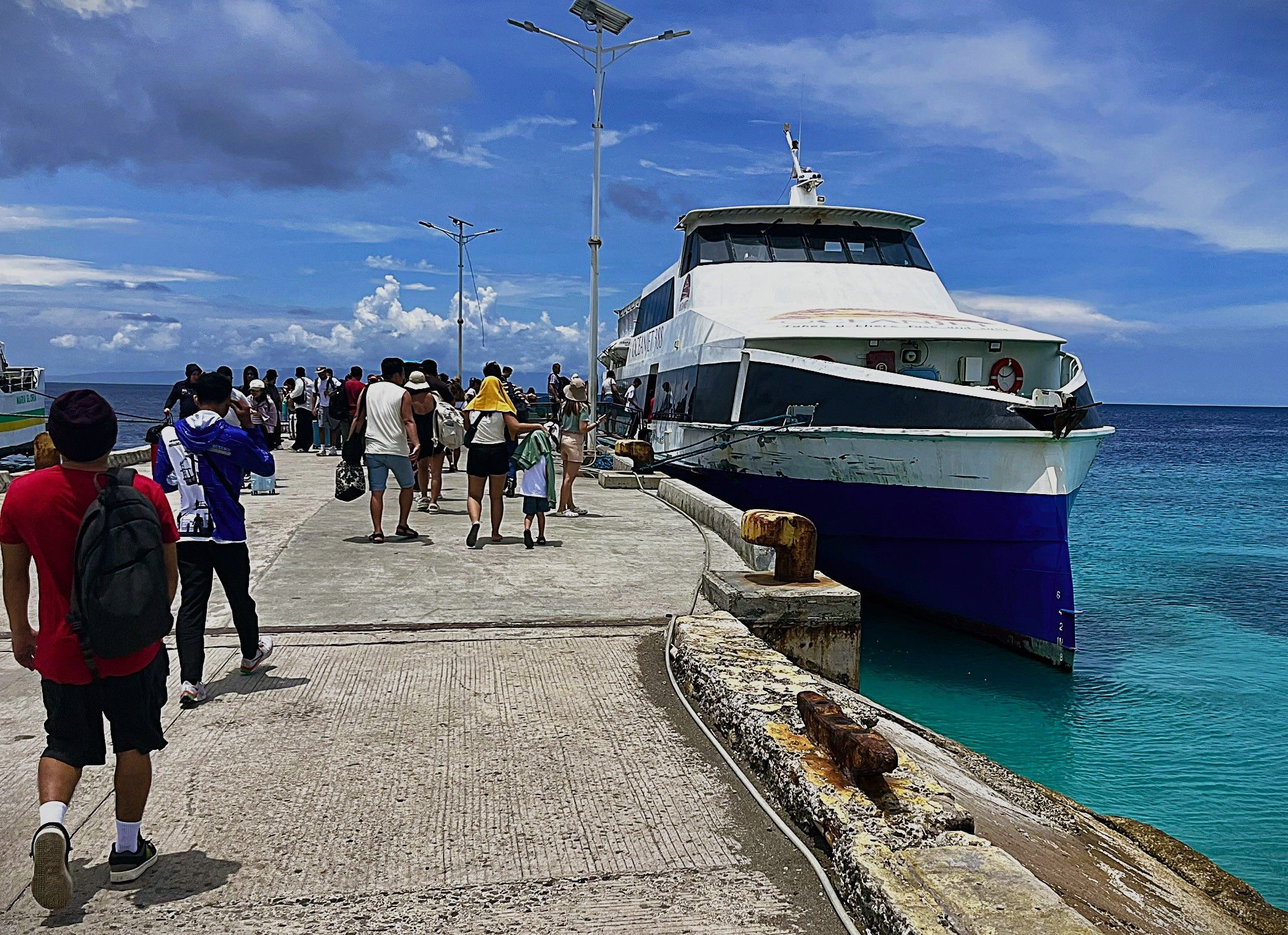
It is September 10, 2026. The fast ferry from Oceanjet departs, and soon we are speeding over the gentle waves of the Bohol Sea towards Siquijor Island. Behind the stern, the promenade of Dumaguete fades away; before the bow, Siquijor emerges from the haze, strikingly green, with a ridge of hills in the center. The air conditioning is set to arctic; a sweater is necessary, but it will quickly be shed upon arrival at the port.
Outside the port, the tricycle drivers wait for customers; I avoid any price discussions and simply give the fare I had previously determined: 400 pesos to my resort in San Juan. This preparation is advisable whenever arriving in a new place, as many taxi and rickshaw drivers around the world have a habit of mercilessly overcharging naive foreigners.
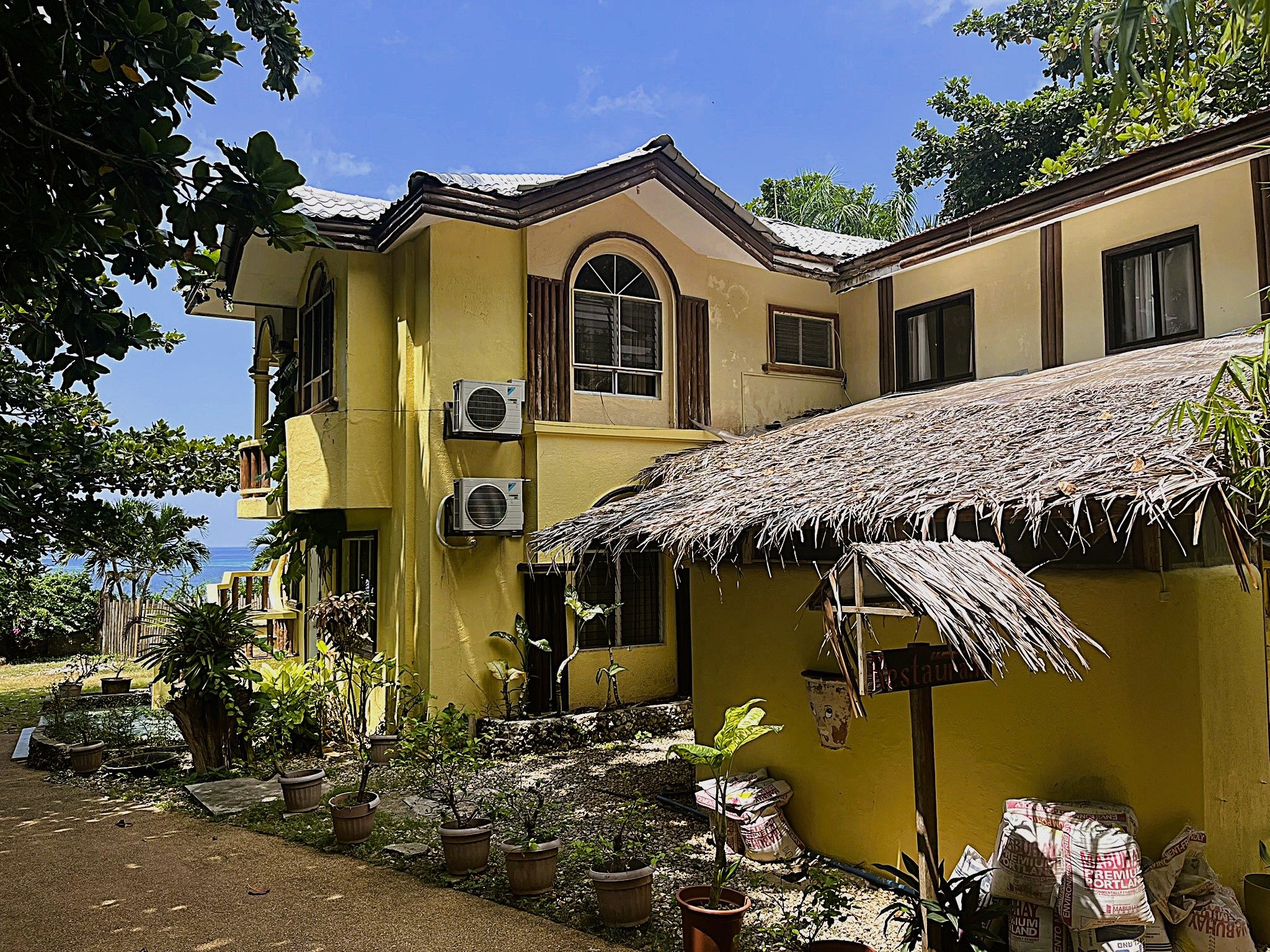
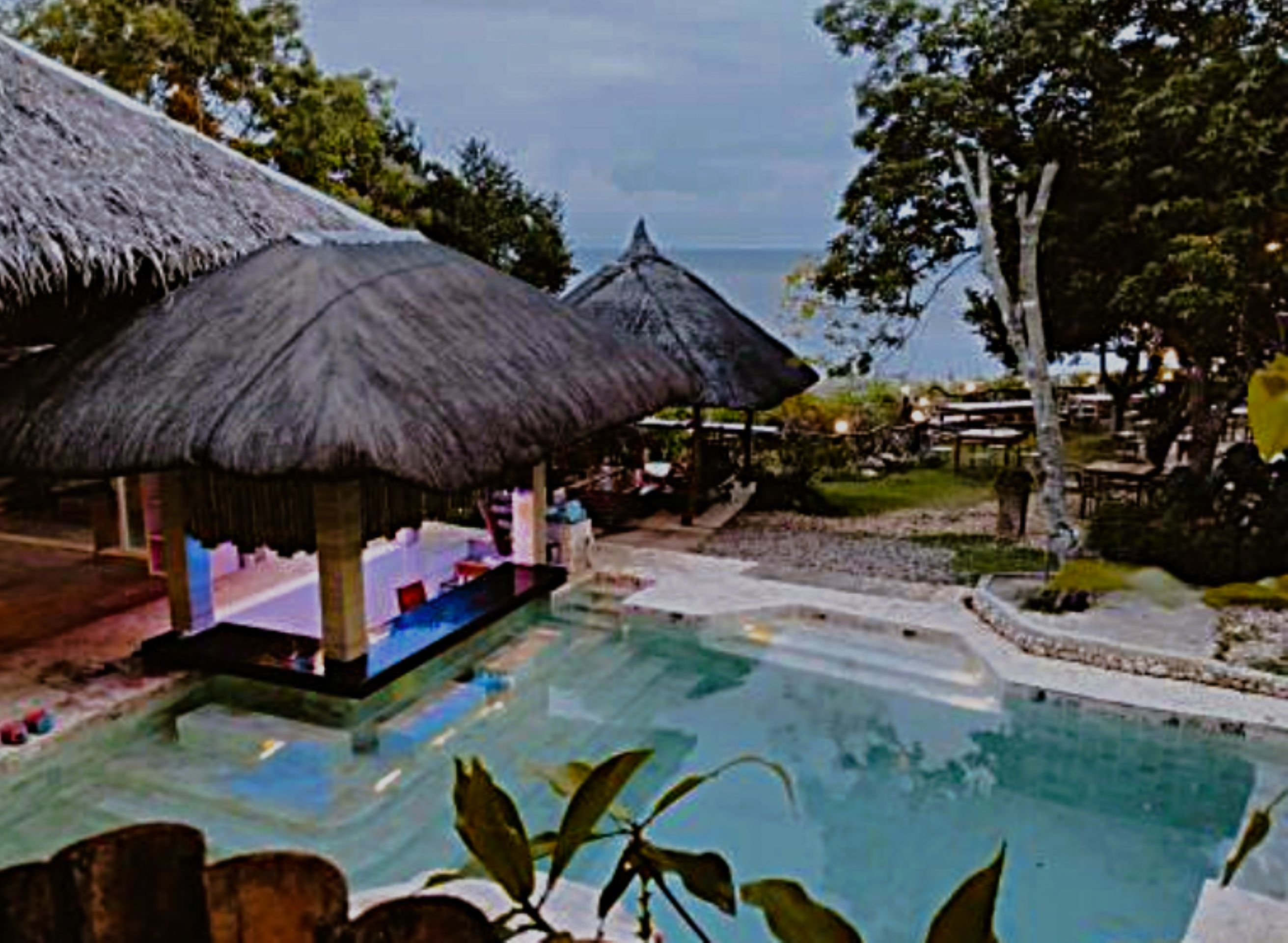
San Juan is located on the west coast of the island; I am staying at the “Tahanan Resort & Sunset Beach Club.” Tahanan means “home.” It fits: one feels at home here right away – bungalows shaded by trees, a slightly larger building in the center, all surrounded by a garden with paved paths; a bar, a garden restaurant that offers an interesting mix of international styles, serving Indonesian specialties, as well as pizza and sushi, both made fresh on-site; tables are partly under thatched roofs and partly outdoors; there is even a billiard table. (I proudly report that I defeated the chef, who challenged me, in three out of four games.) There is also a swimming pool. In the evening, the entire complex is wrapped in the soft light of hundreds of little lamps.
Gin and Tonic at Sunset
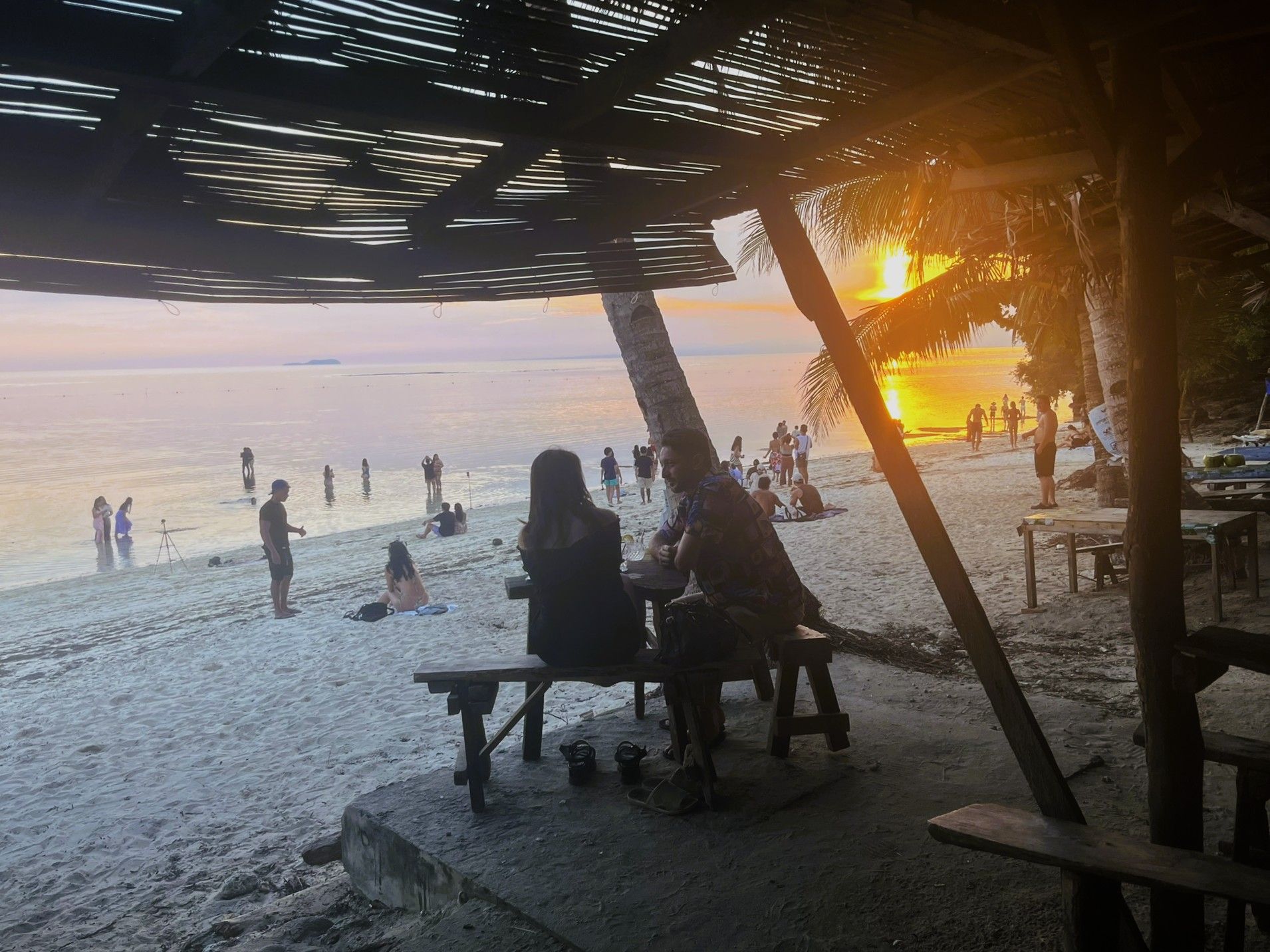
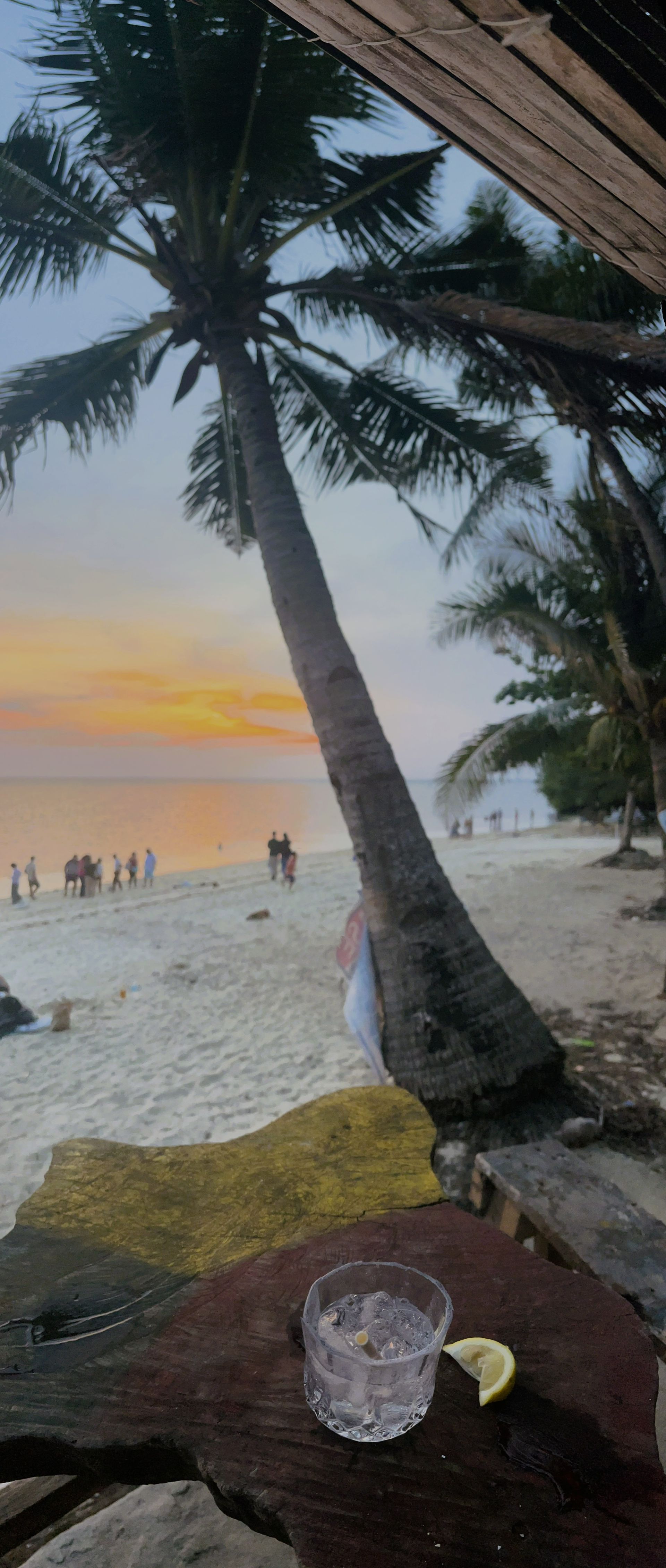
However, the “Tahanan” is not a “beach club”: While there is a staircase leading down to the sea, there are only rocks, no beach. Therefore, I let the “Sunset” at the nearby Paliton Beach soak in. Sipping on a gin and tonic with plenty of ice, with my feet buried in the warm sand while the sun floods the sea with golden hues and paints the sky in shades of red and pink, is for me the highest expression of dolcefarniente.
At such places, one inevitably strikes up conversations with people. Luca is from Italy, his companion Mahya, who specifically emphasizes that she is not Luca's girlfriend, is from Bacolod on the island of Negros; Patrick, whose English I need to pay hellish attention to in order to understand, grew up in the Connemara region on the Atlantic coast of western Ireland and will spend at least six months on Siquijor. Everyone has their biography; everyone shares unsolicited and in detail; one gin and tonic turns into several.
I stay five nights at the “Tahanan,” and for four days I rent a scooter. Siquijor is not large: slightly bigger than the Swiss canton of Schaffhausen, slightly smaller than the federal state of Bremen. However, the circumferential road that encircles the island feels quite long when sitting on the saddle of a Honda Click. It takes three to four hours to cover about 75 kilometers without stopping; it is well-built, but one does not rush, as the road is shared not only with other scooters, tricycles, minibuses, trucks, and cars but also with dogs, chickens, cows, and children.
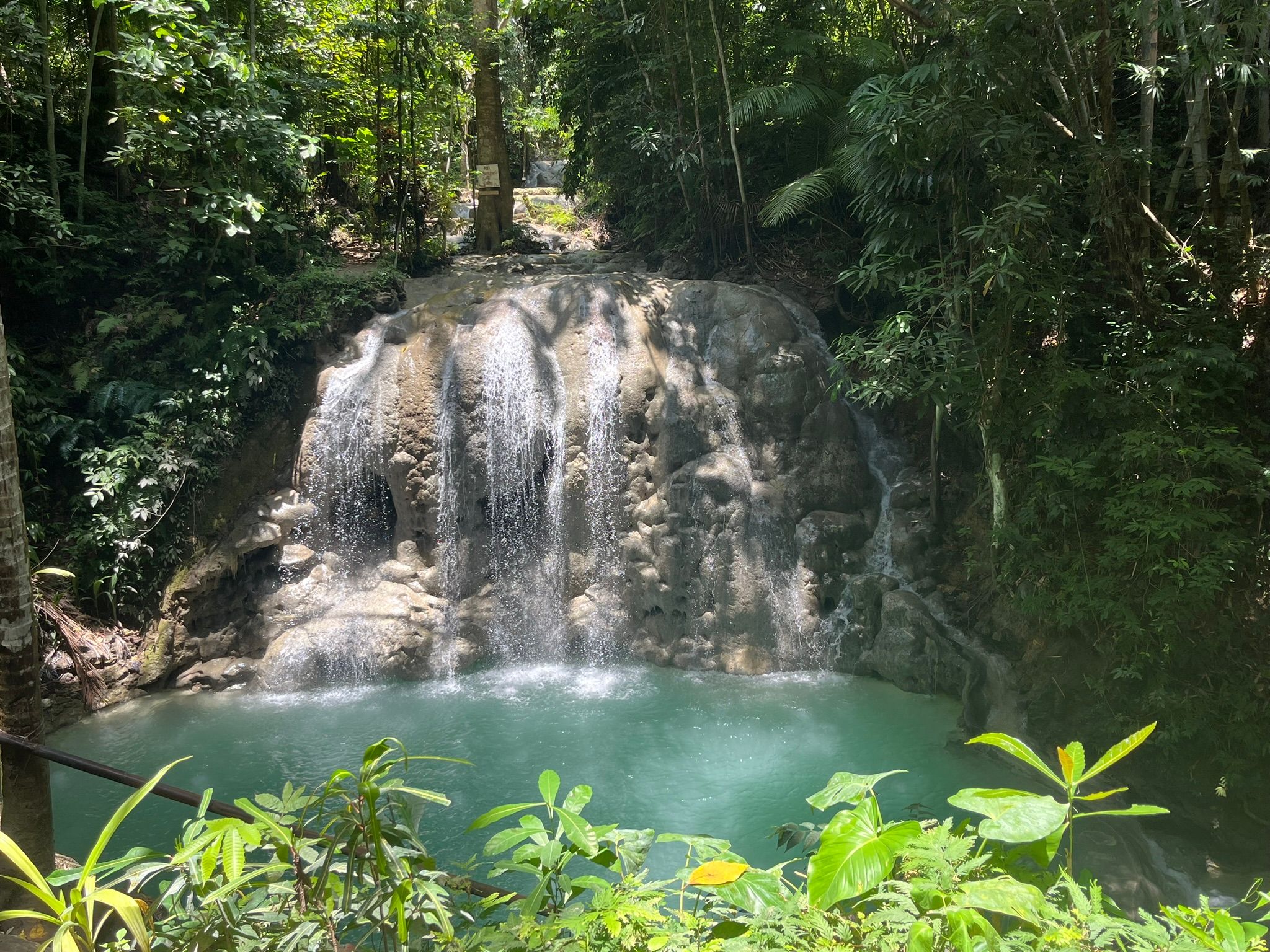
In the morning, I drive inland to the Lugnason Waterfall. From the road, one descends via a rocky path, partially equipped with steps, through dense vegetation. The waterfall, which cascades down a mossy rock wall in various streams, is not particularly impressive but is quite cozy. If I were stressed, which I have not been for months, I could sit down, stare into the water for ten minutes, which is captured in a pool of almost unreal blue, and radically lower my blood pressure and pulse.
Photos over the Abyss
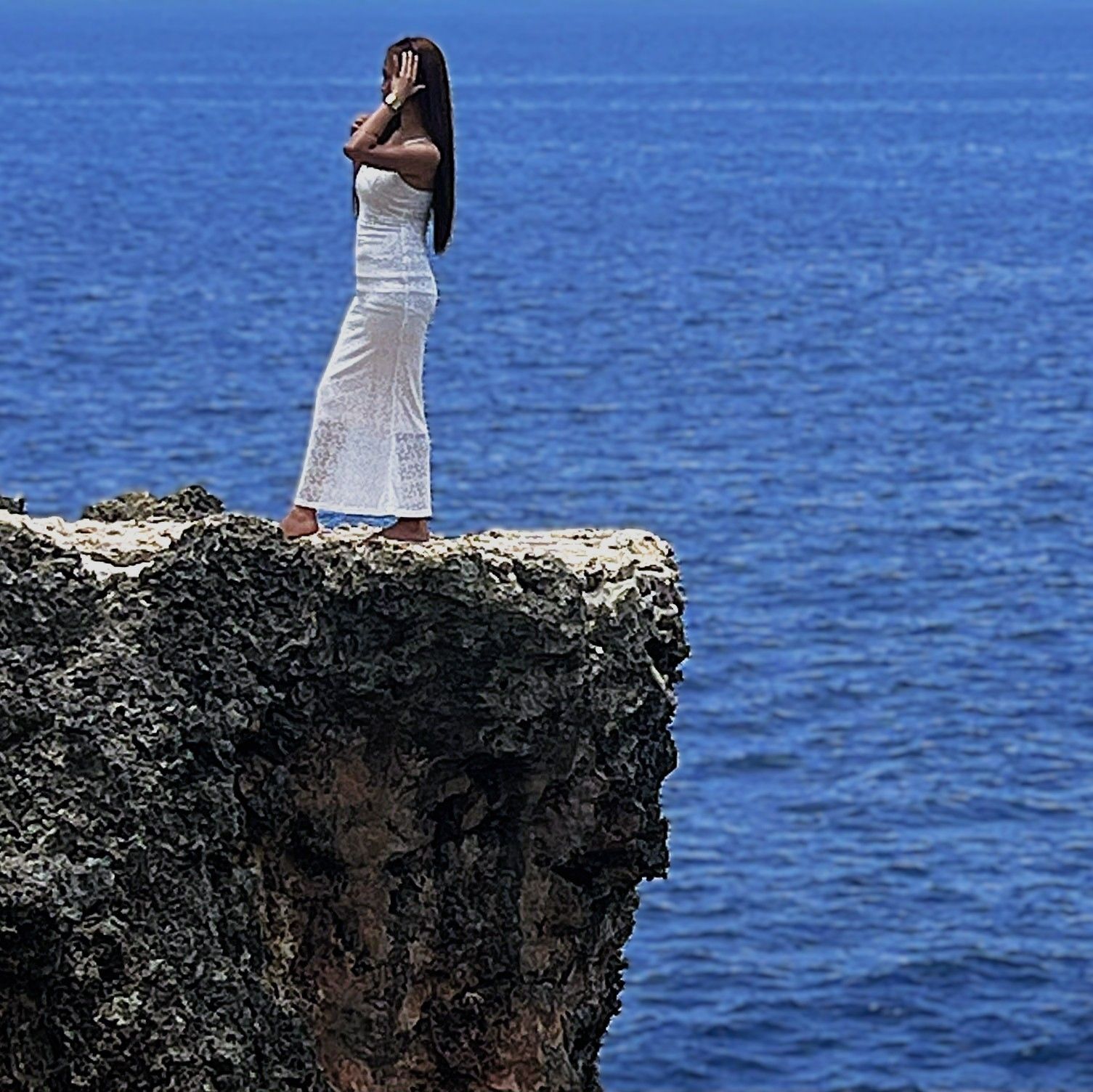
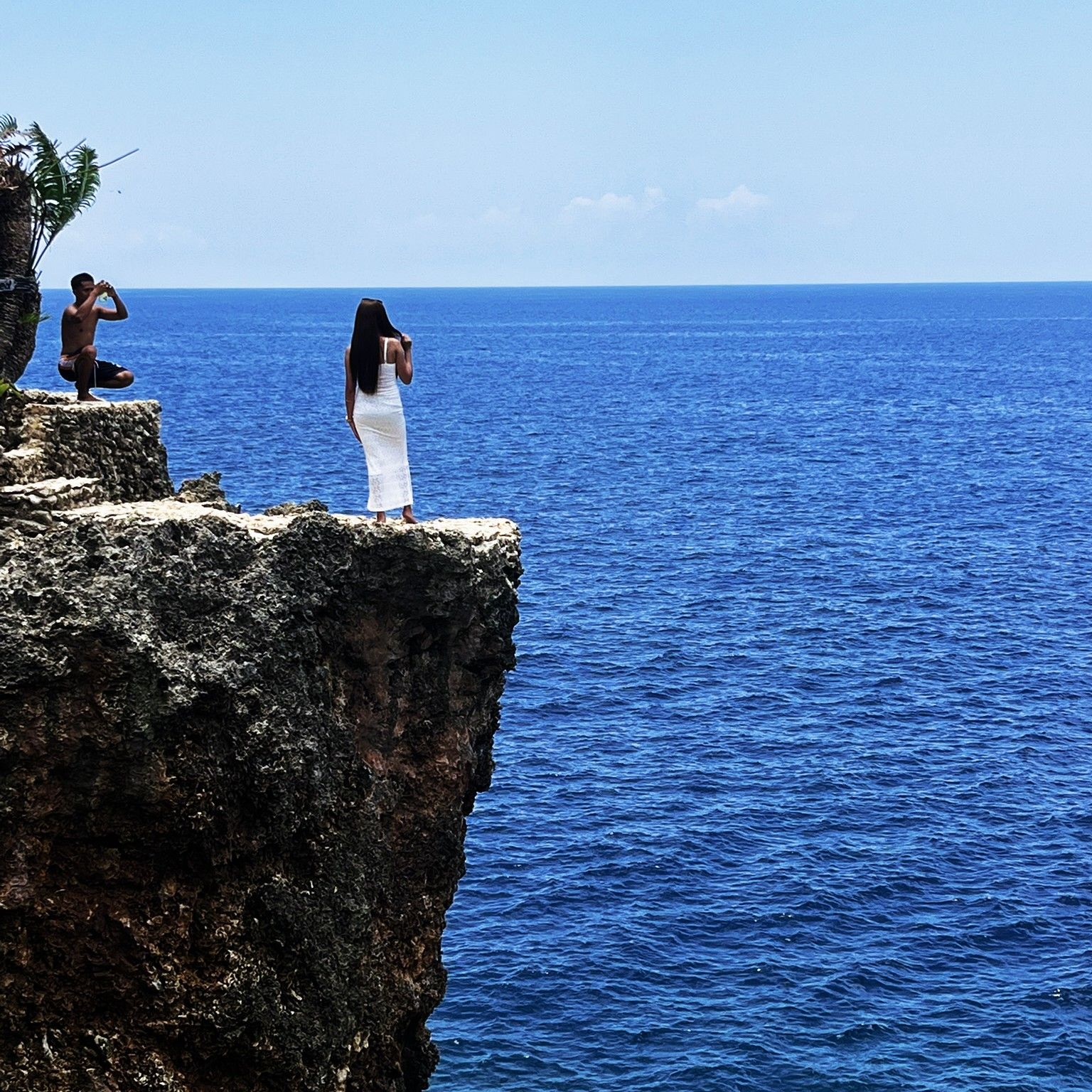
Back at the coast, I soon arrive at Pitogo Cliff. Here, it's not about lowering but about increasing adrenaline levels. A stone wall keeps selfie hunters and careless visitors from falling off the cliff. However, on a rocky ledge that juts dizzyingly into the void, young women in long dresses pose for photos. They queue up for this; one after the other adjusts hair and dress hem, searching for various positions standing, then sitting, and is photographed by a friend, girlfriend, or a professional that can be hired here. A drone hums above the scene; particularly vain individuals can also purchase aerial shots of themselves.
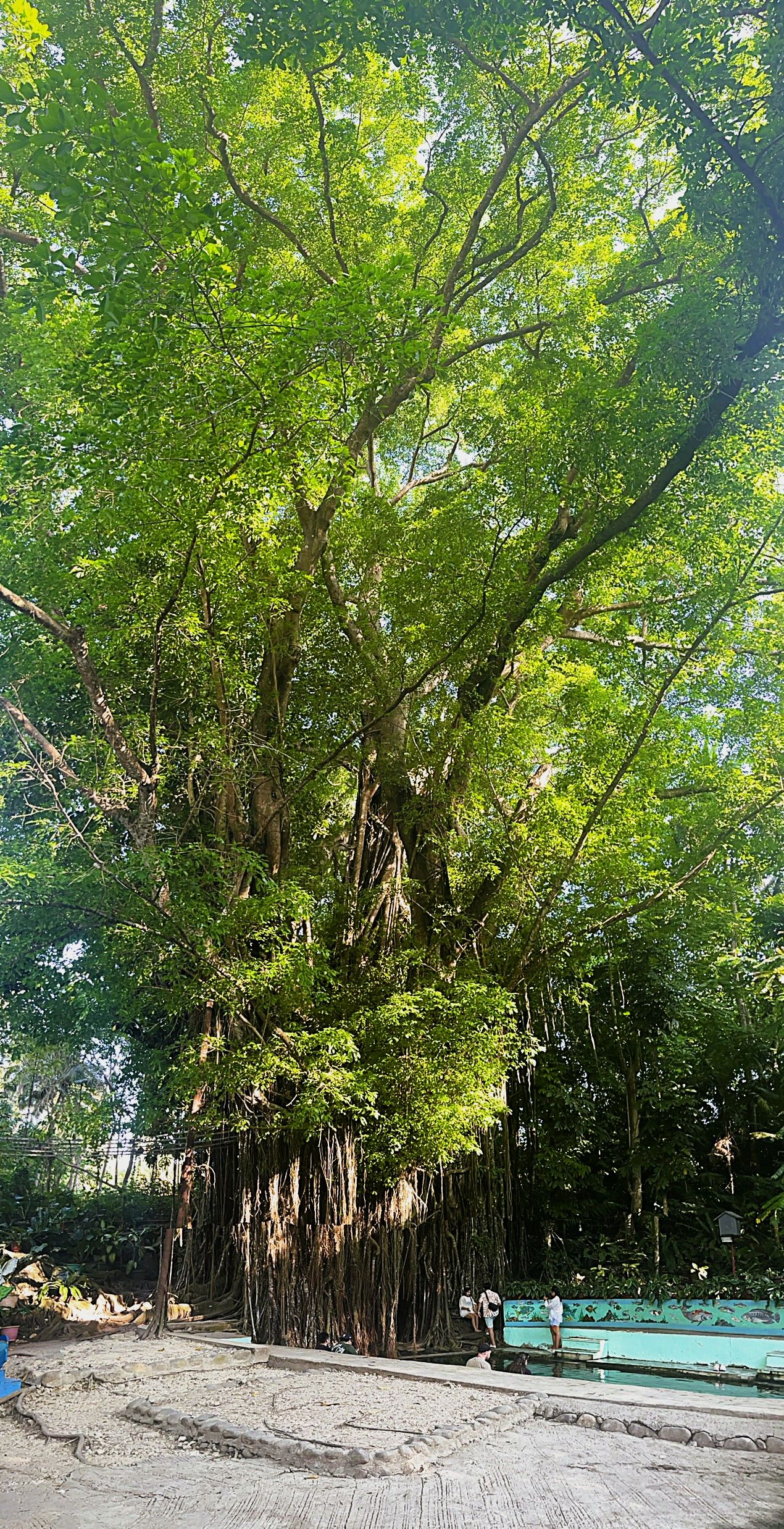
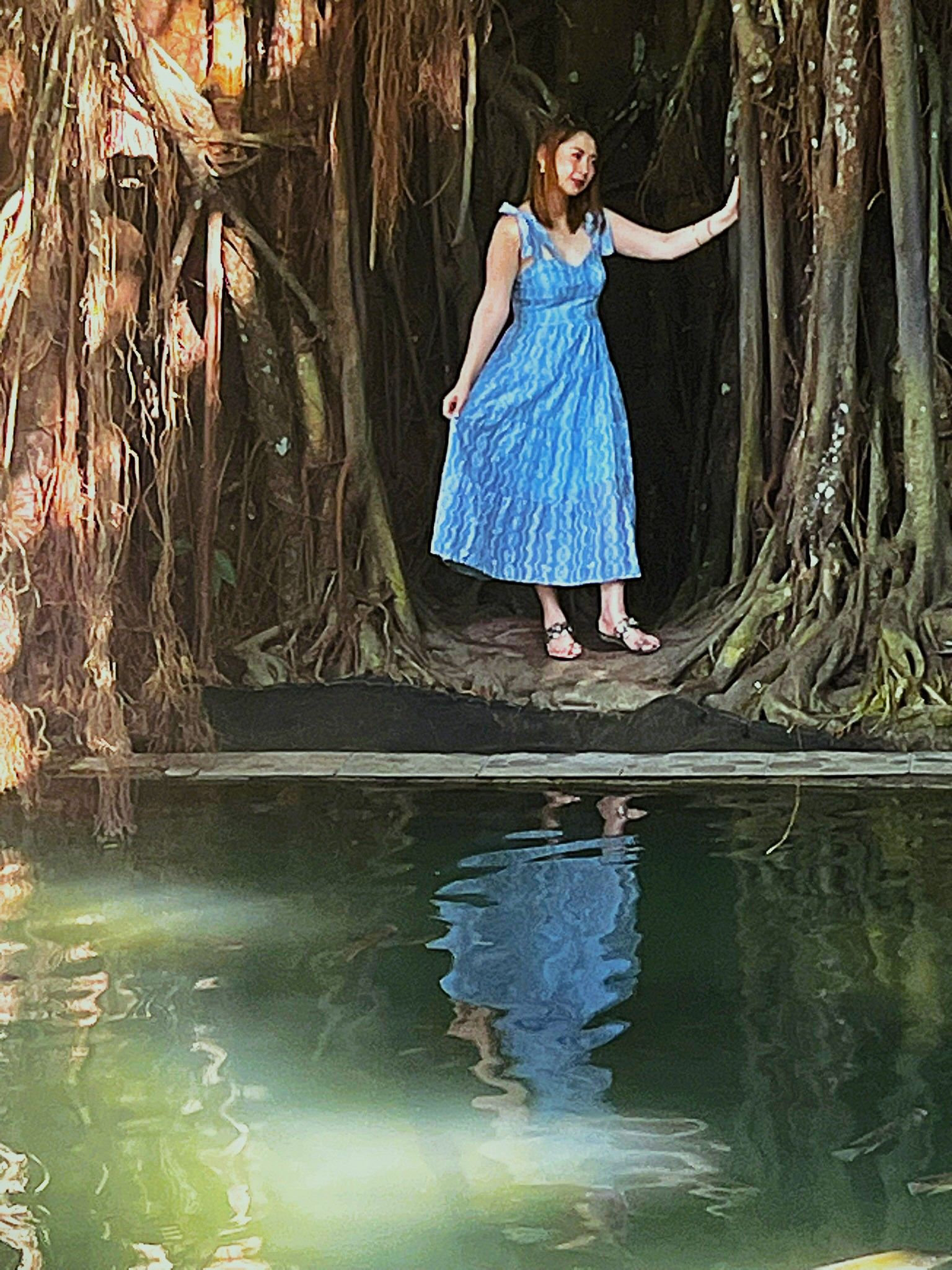
Before I reach Lazi on the southern coast, I stop at the “Old Enchanted Balete Tree.” This Banyan tree, also known in German as the strangler fig, is said to be around four hundred years old. The roots of the “enchanted” tree grasp the ground like ropes. At the base, they embrace a spring that is captured in a small canal. People sit by the clear water, dipping their legs in, while small fish nibble the dead skin.
Coral Church
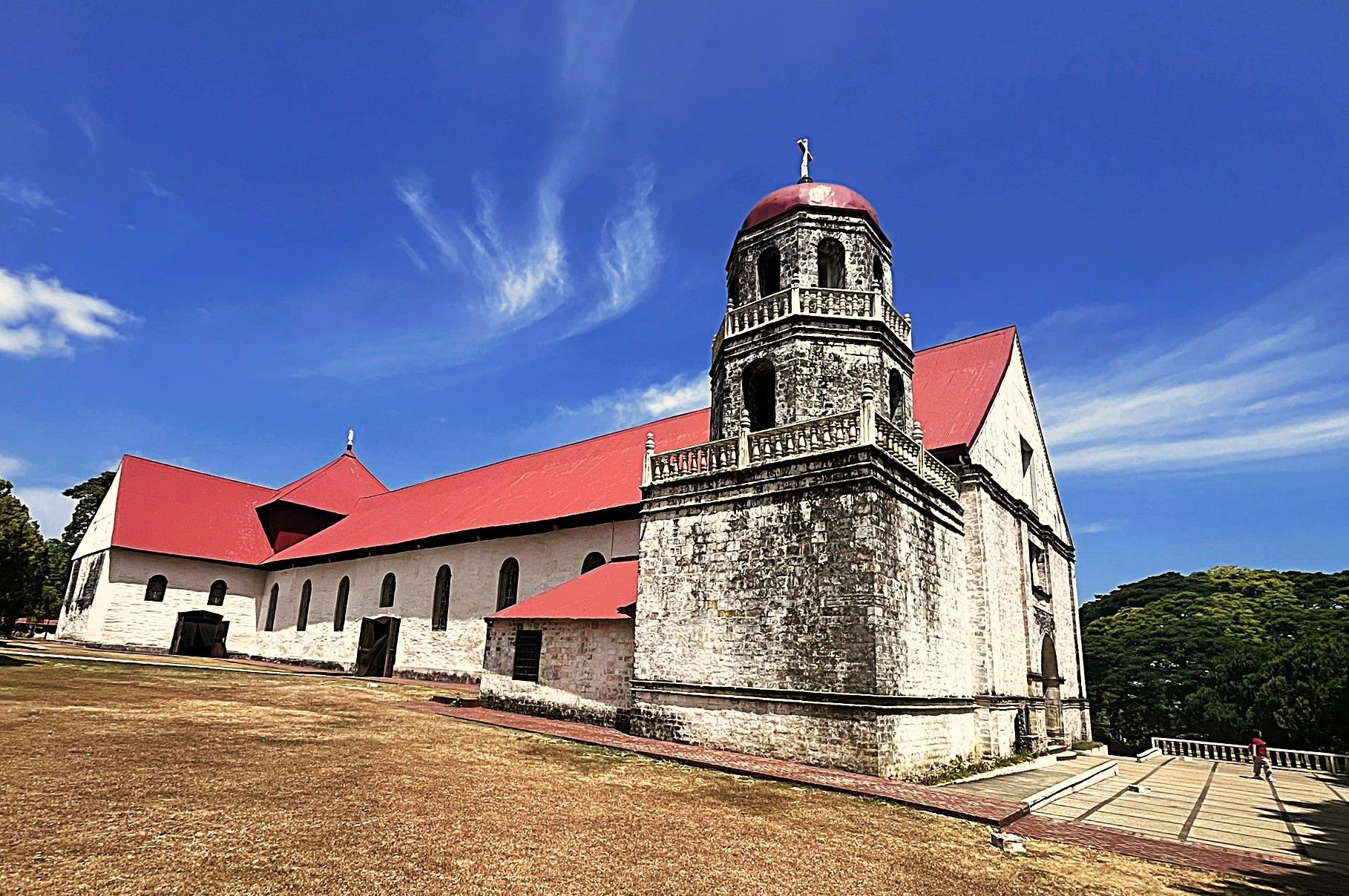
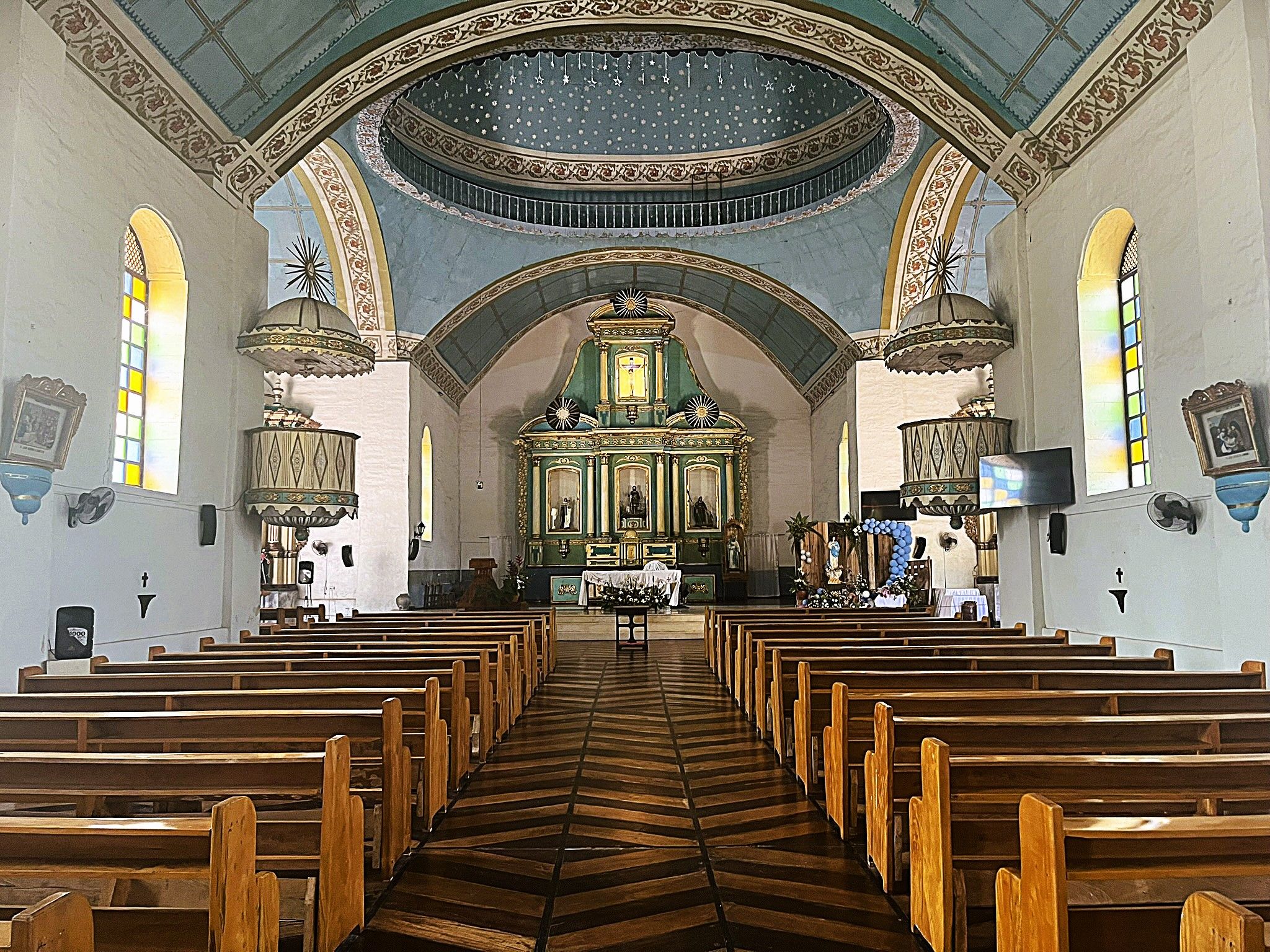
A little further, in the village center of Lazi, stand the structures that most come for: the San Isidro Labrador Church and the Lazi Convent. The church was built in 1884, as the date above the portal announces. The builders were Spanish Franciscans, and the construction materials were coral stones and hardwood. The style is neoclassical: straight lines, three portals, minimal decoration. The two pulpits and the altar piece are original. But what is remarkable is the floor: It is entirely laid with wood in a herringbone pattern, which is unusual for a church. However, it has proven durable: The floor has survived 142 years without damage.
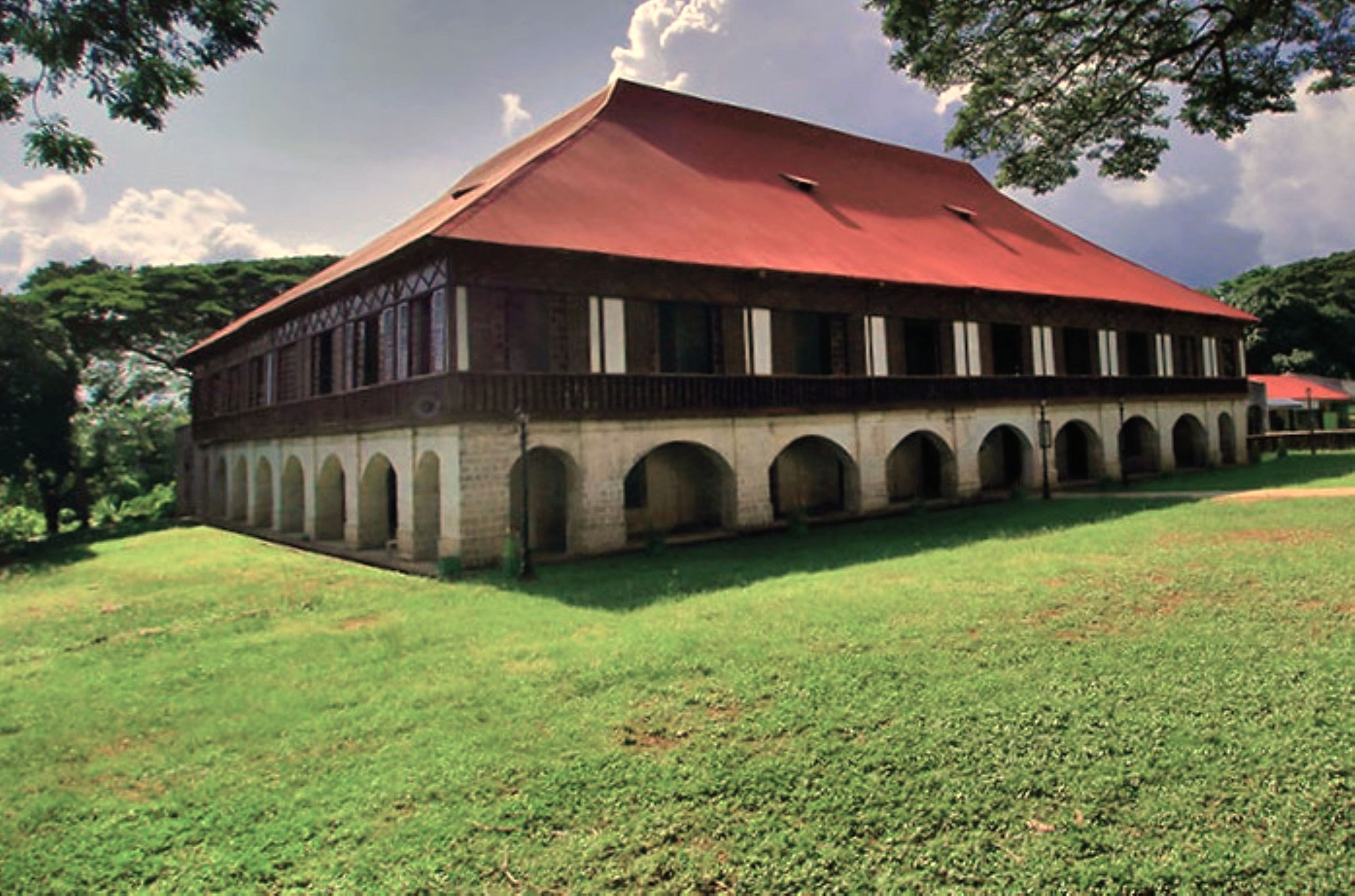
Directly opposite the church stands the Lazi Convent, completed in 1891. It is considered the largest building of its kind in all of Asia. The convent originally served as a retreat for missionaries and religious priests from the Visayas and Mindanao. Today, the building houses, among other things, a small cultural history museum.
Picnic on the Beach
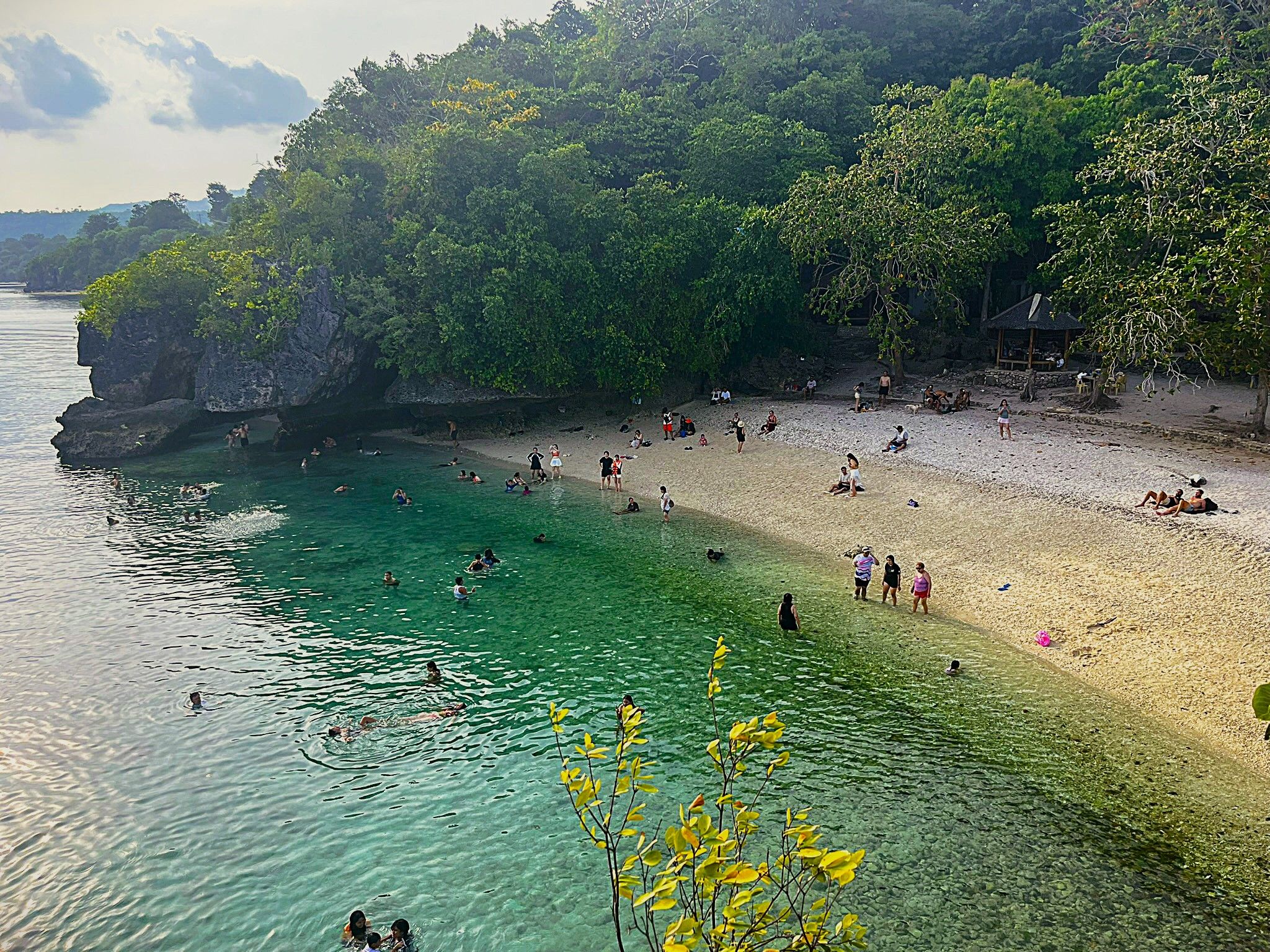
I continue northward to Maria on the east coast, to Salagdoong Beach. From a large rock, which one climbs via stairs, and which is equipped with wooden benches for resting, there is a view of the small beach with sandy and rocky sections, with a steep forest rising up behind it. The water is so clear that from this vantage point, one could count the stones on the bottom.
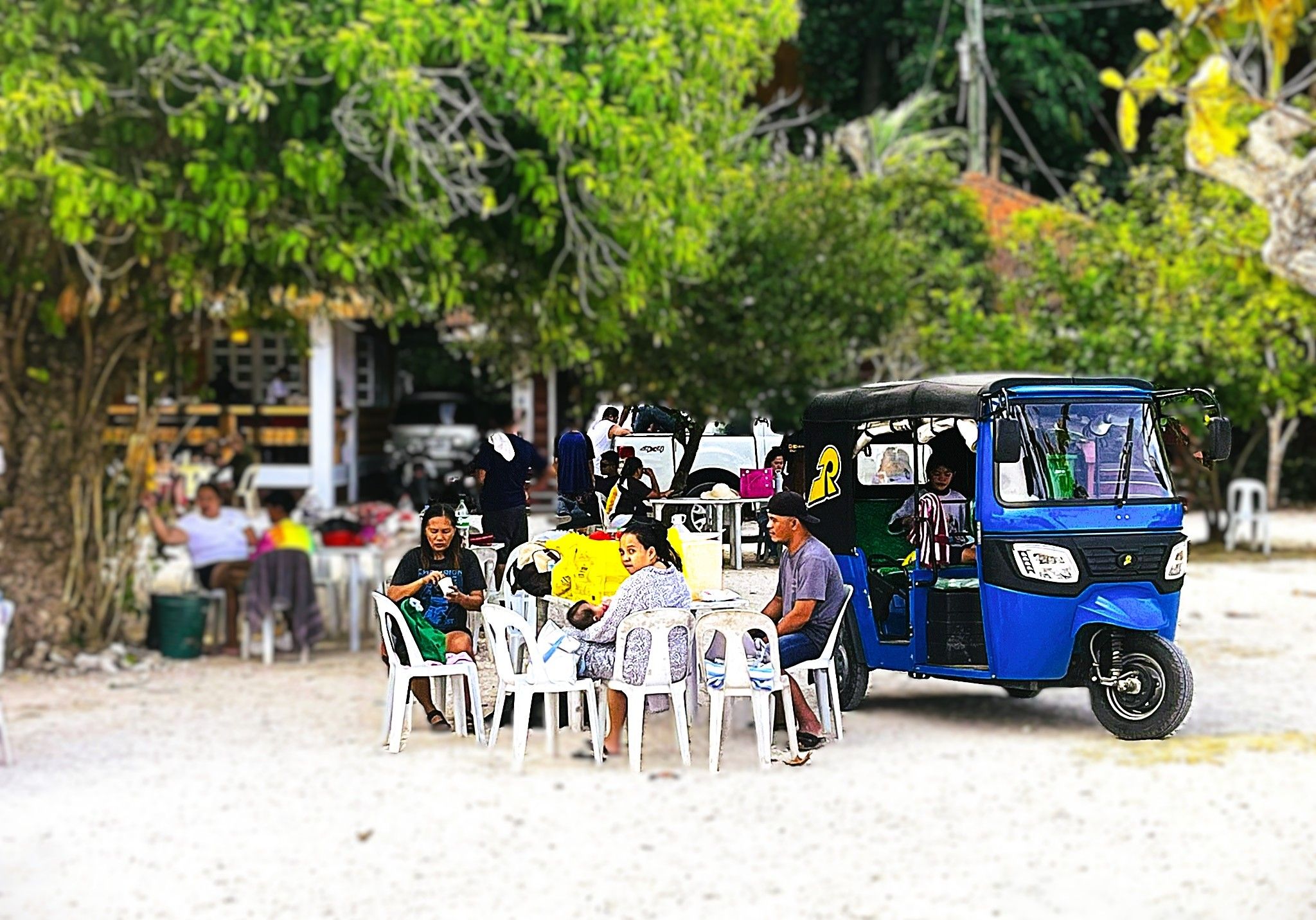
Families have parked their tuk-tuks, scooters, and cars as close to the shore as possible, settling down to eat and drink while the children frolic in the water.
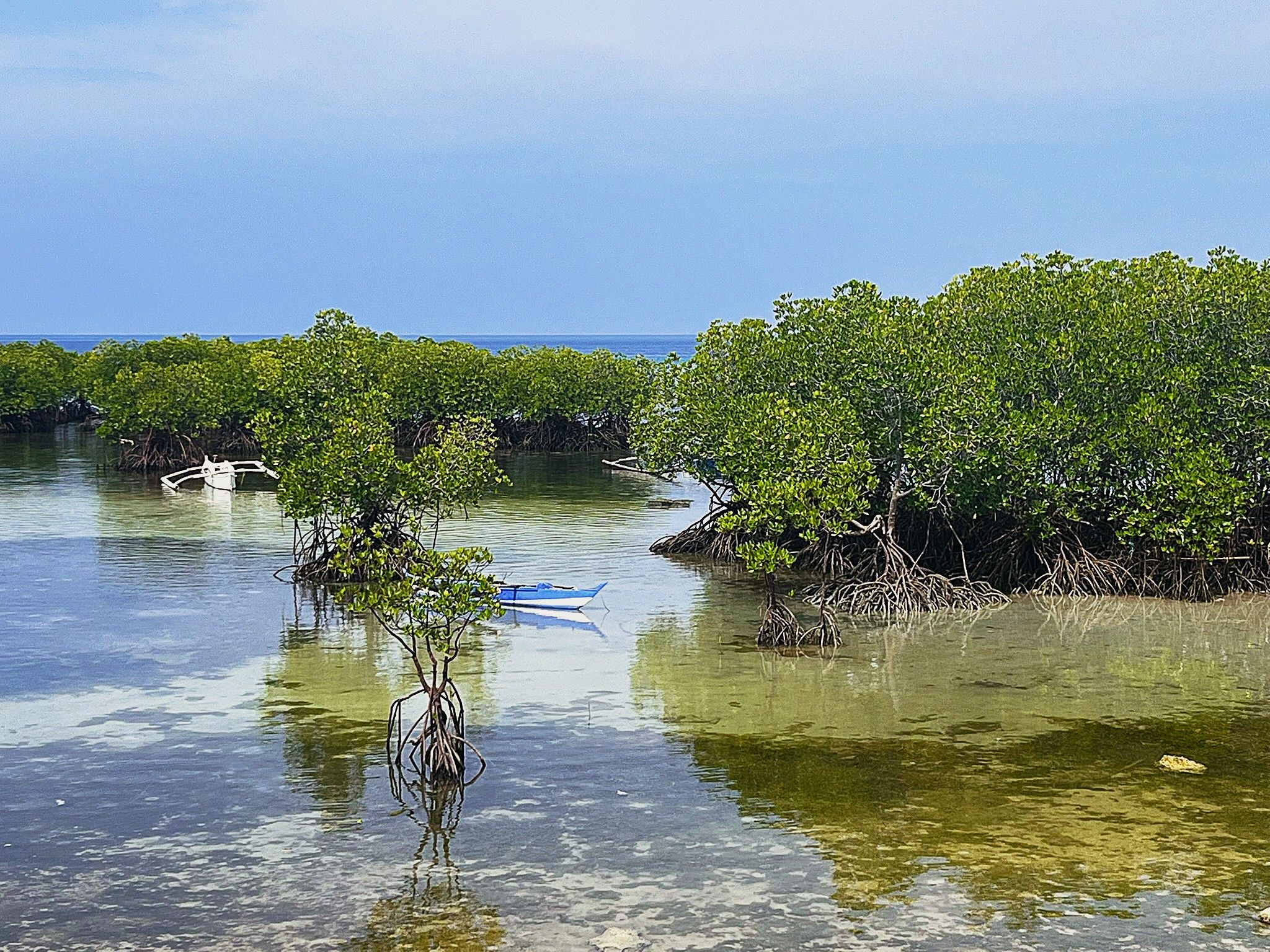
From Salagdoong Beach, I move on to the northern coast, where tourism is much thinner than further south. Here, there are mangrove forests right in the water. At one spot, one can rent snorkeling equipment, wade out, and then observe rays, barracudas, and the occasional turtle.
I am back at Paliton Beach for sunset. The sun sinks into the sea, with the mountains of Negros outlined in the distance. The gin and tonic is cold, and conversations flow naturally. There are places one is happy to leave. And there are places one wants to linger. Siquijor is one of them.