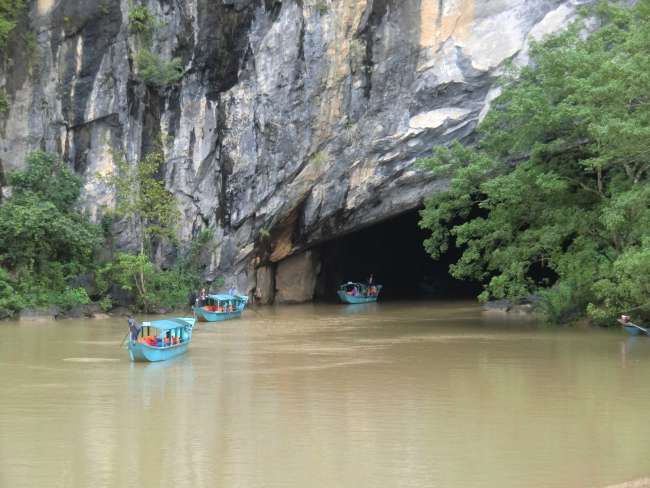


The Holy Mountain near Chau Doc
On October 11, 2026, the second day of my visit to Chau Doc in the Mekong Delta, I completely surrendered myself to spirituality on Mount Sam.
Published: 31.10.2026
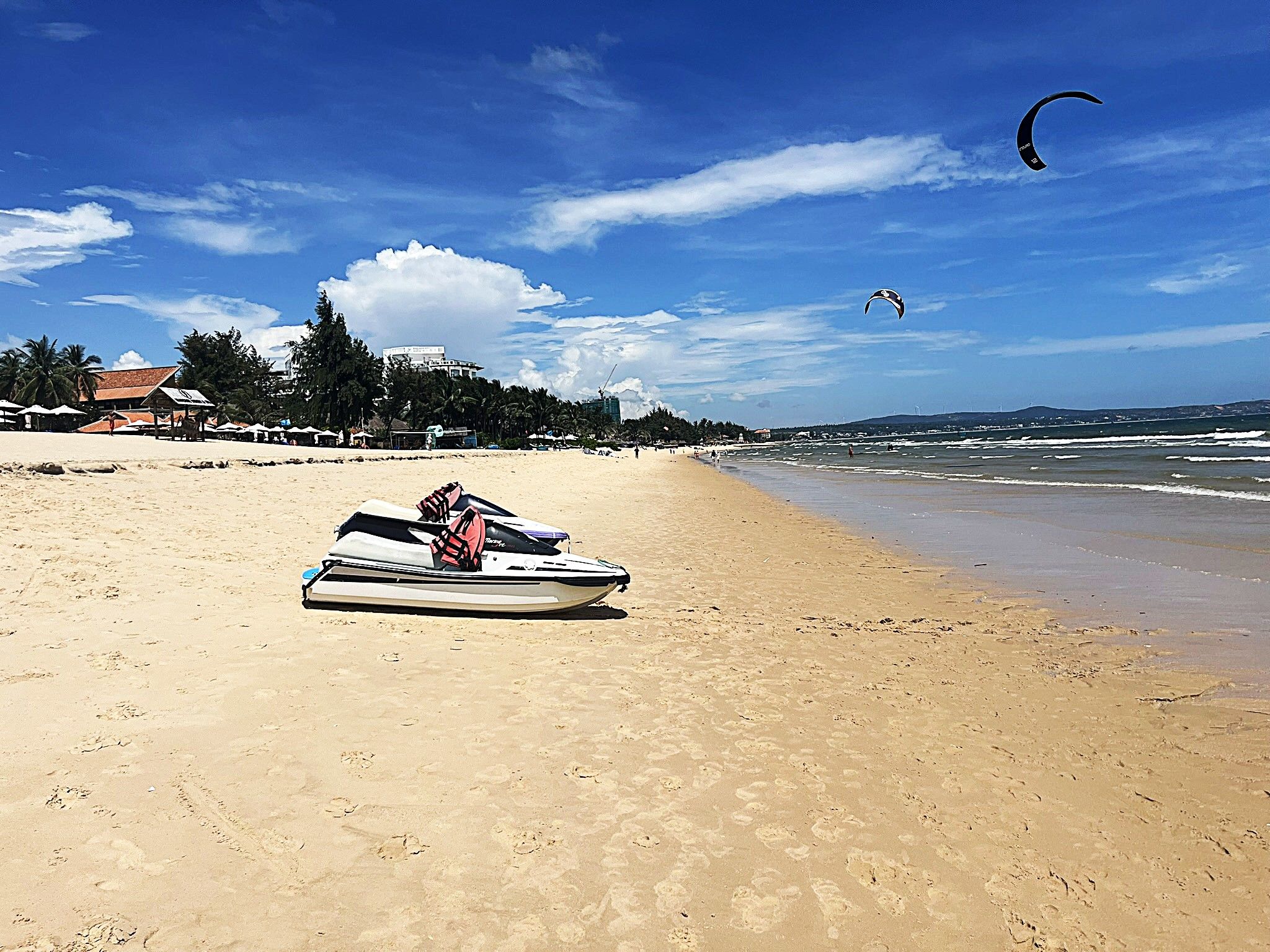

After an exciting week in the Mekong Delta, beach days are due again in mid-October 2026. I retreat to Mui Ne, as I already know Phu Quoc Island, which would have made geographical sense (see https://vakantio.de/vogel-fliegt-aus/chinesische-doerfer, my blog from December 13, 2024).
Mui Ne is a long coastal town located about 200 kilometers east of Ho Chi Minh City. “Mainly, Vietnamese people vacation there,” Chi Pi, an acquaintance, told me. The shop fronts and restaurant signs reveal who else comes here: along with Vietnamese and sporadic English and Chinese, a lot is written in Russian.
I’ve chosen a small resort called “My Little Garden.” My bungalow, not very large but equipped with all necessities, costs about 13 Swiss francs per night. Breakfast is not included, but there is a direct view of a pond densely populated with lotus flowers around which the resort is situated.
Although the sea lies beyond the road, you can only reach the beach via a detour, as most places are blocked with restaurants and hotels.
The coast is known for kite and windsurfing; surf schools line it. The wind is said to be favorable, especially during the dry season, from about November to March, but even in October, numerous surfers are riding the waves. The water is a bit too choppy for swimming.
Vietnamese Sahara
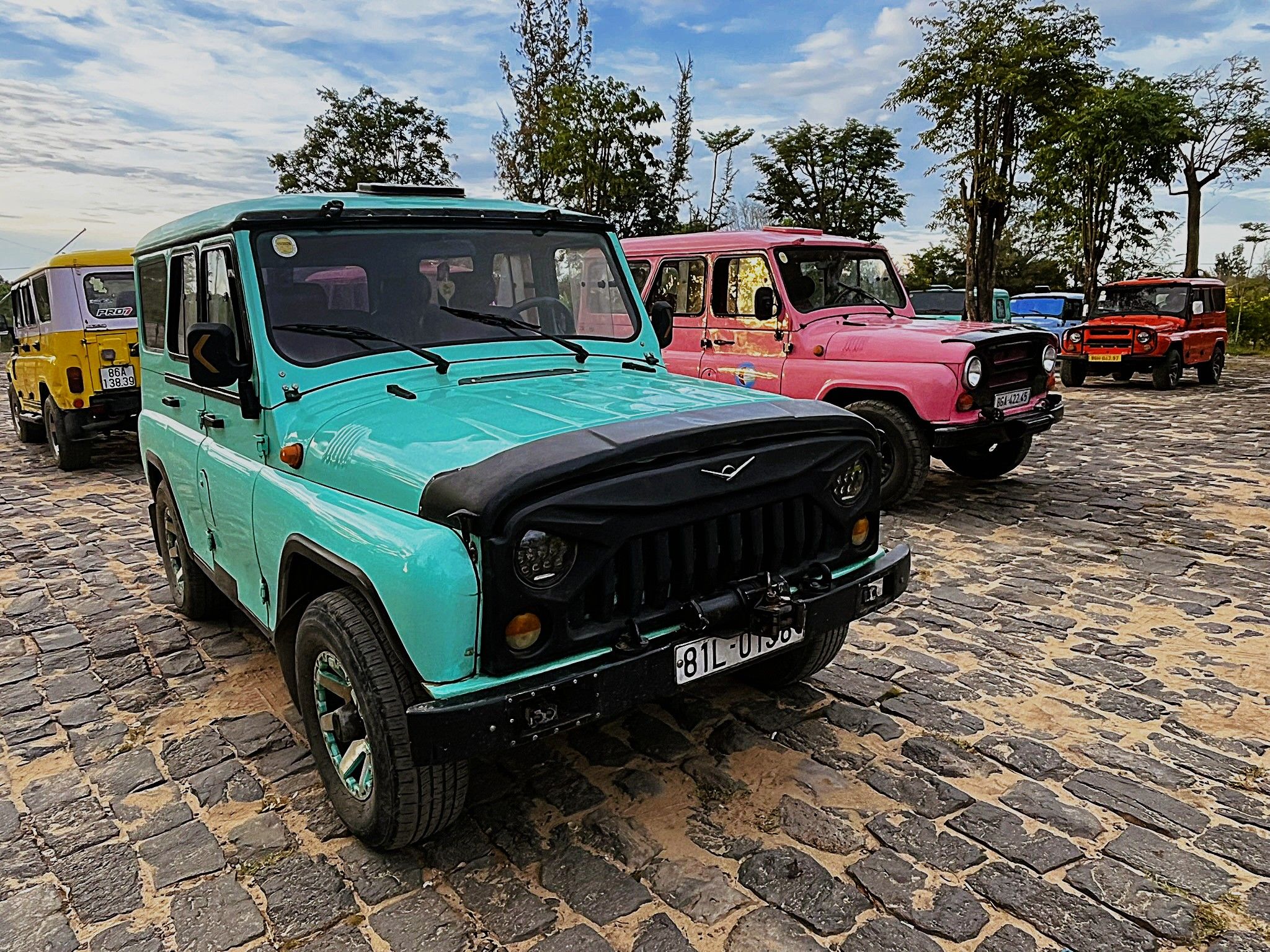
Mui Ne is famous for its sand dunes, often (and quite exaggeratedly) compared to those of the Sahara in travel brochures. I booked an early morning excursion; Bo is at the wheel of a UAZ-469 off-road vehicle built in the Soviet Union. The Soviet Jeeps once served in the Vietnamese army, were then repainted in candy colors, and refurbished for tourists. They are still uncomfortable.
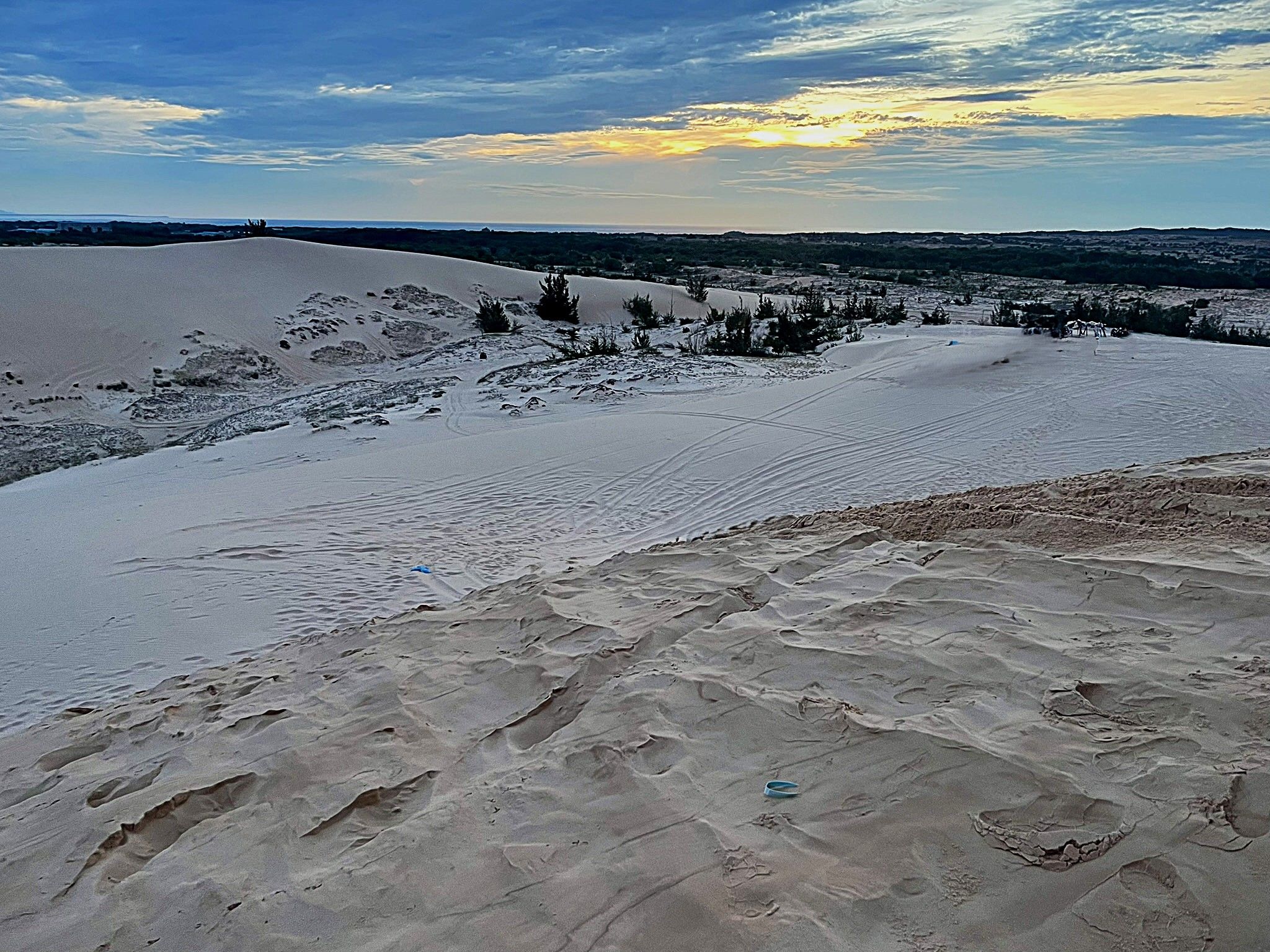
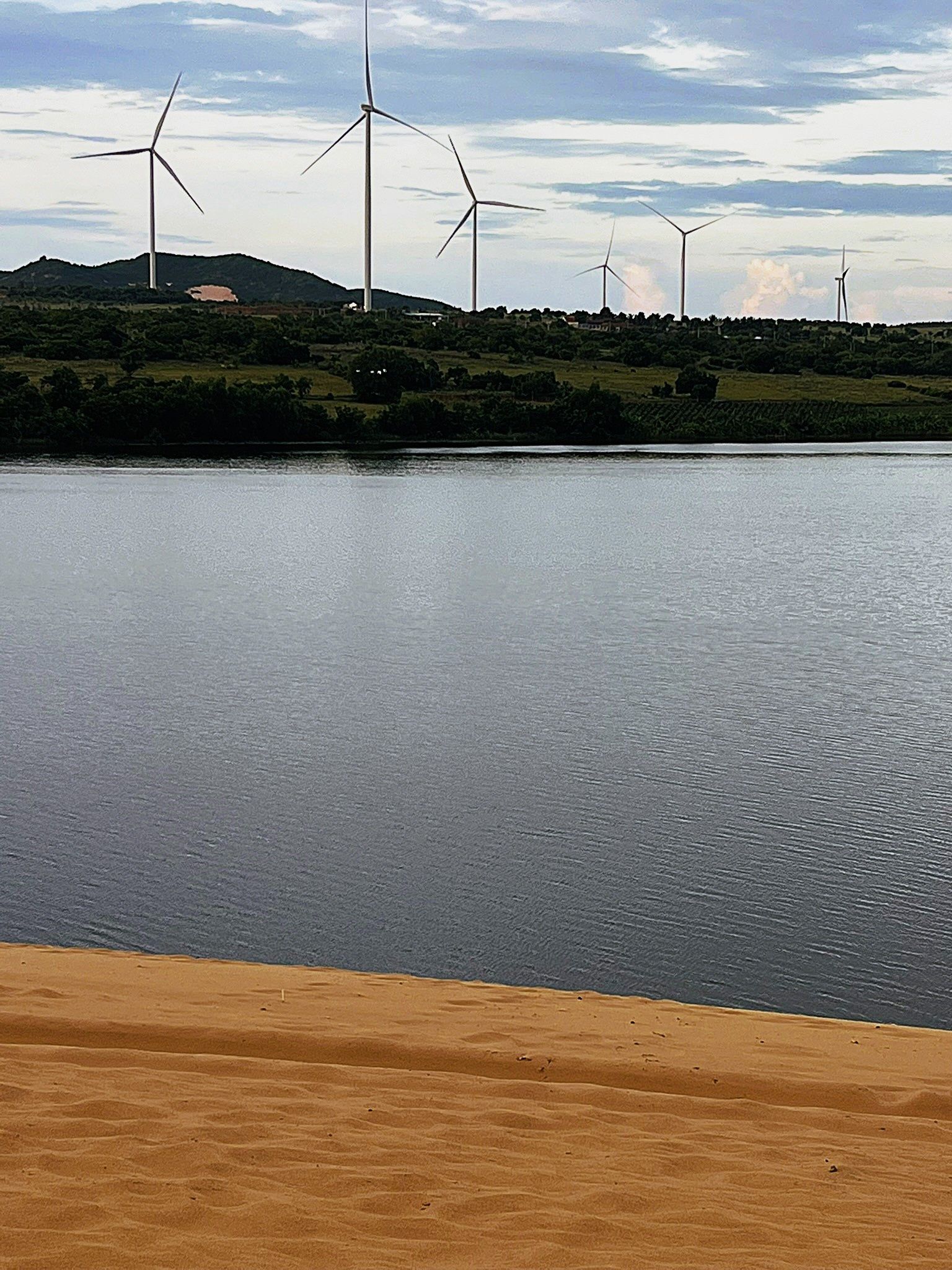
First, we drive to the White Sand Dunes to let the sunrise affect our mood. The high dunes drop down to a lake known as the Lotus Lake. Dozens of wind turbines spin on the horizon, improving the country’s power supply but not the aesthetics of the landscape.
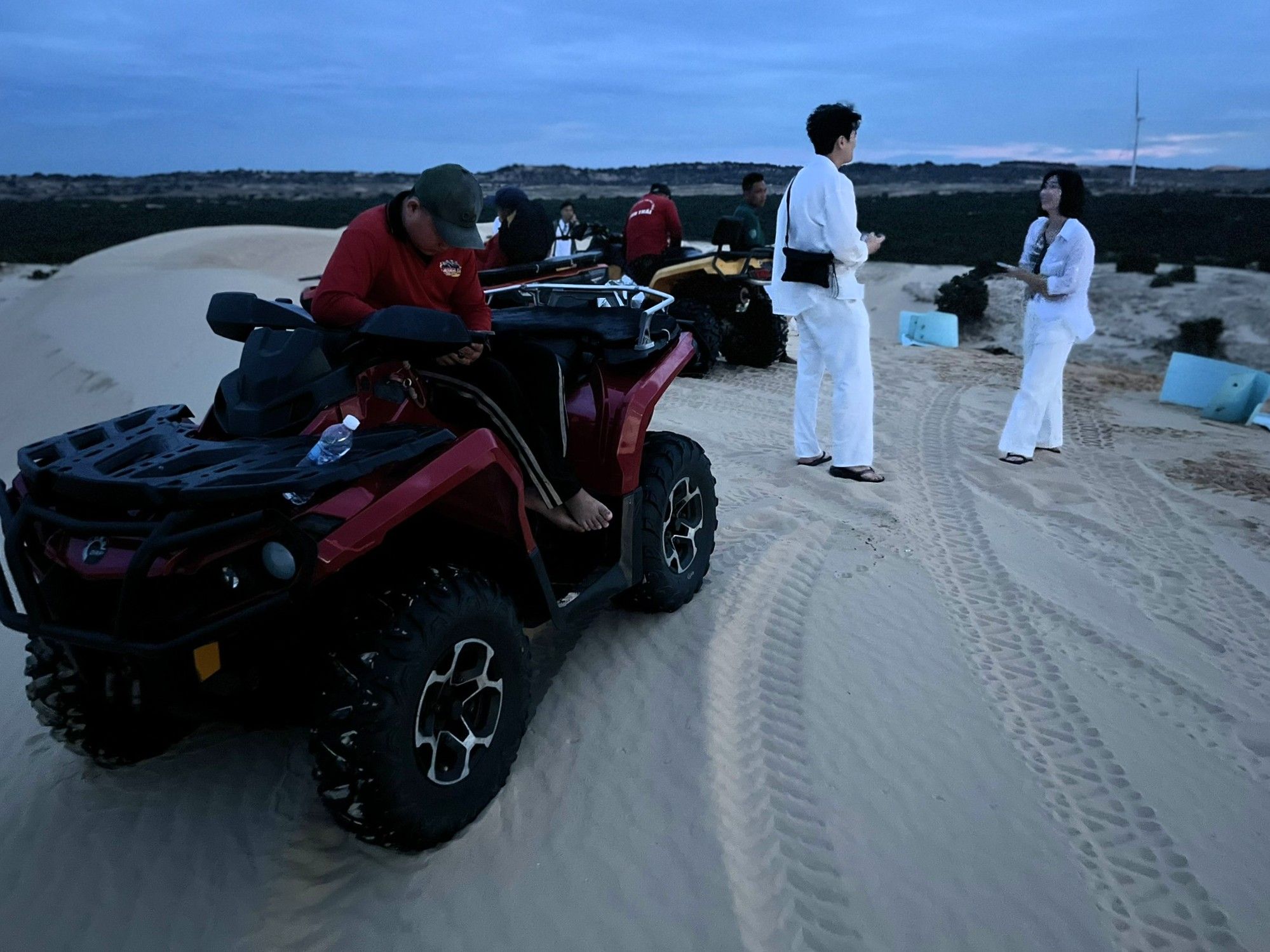
We wouldn’t have needed an off-road vehicle: we have to park it at the entrance and switch to quads (for an extra charge). A veritable quad migration, loudly sputtering and spewing exhaust, is moving toward the highest peak; one is not alone here even in the low season. “It’s much, much worse in high season,” tries Bo to reassure.
Unfortunately, the sky is so overcast that instead of an opulent sunrise, only a few veiled beams of light can be seen. What is the opposite of “overwhelming”? Let’s call the experience “underwhelming.”
A Hint of Benidorm
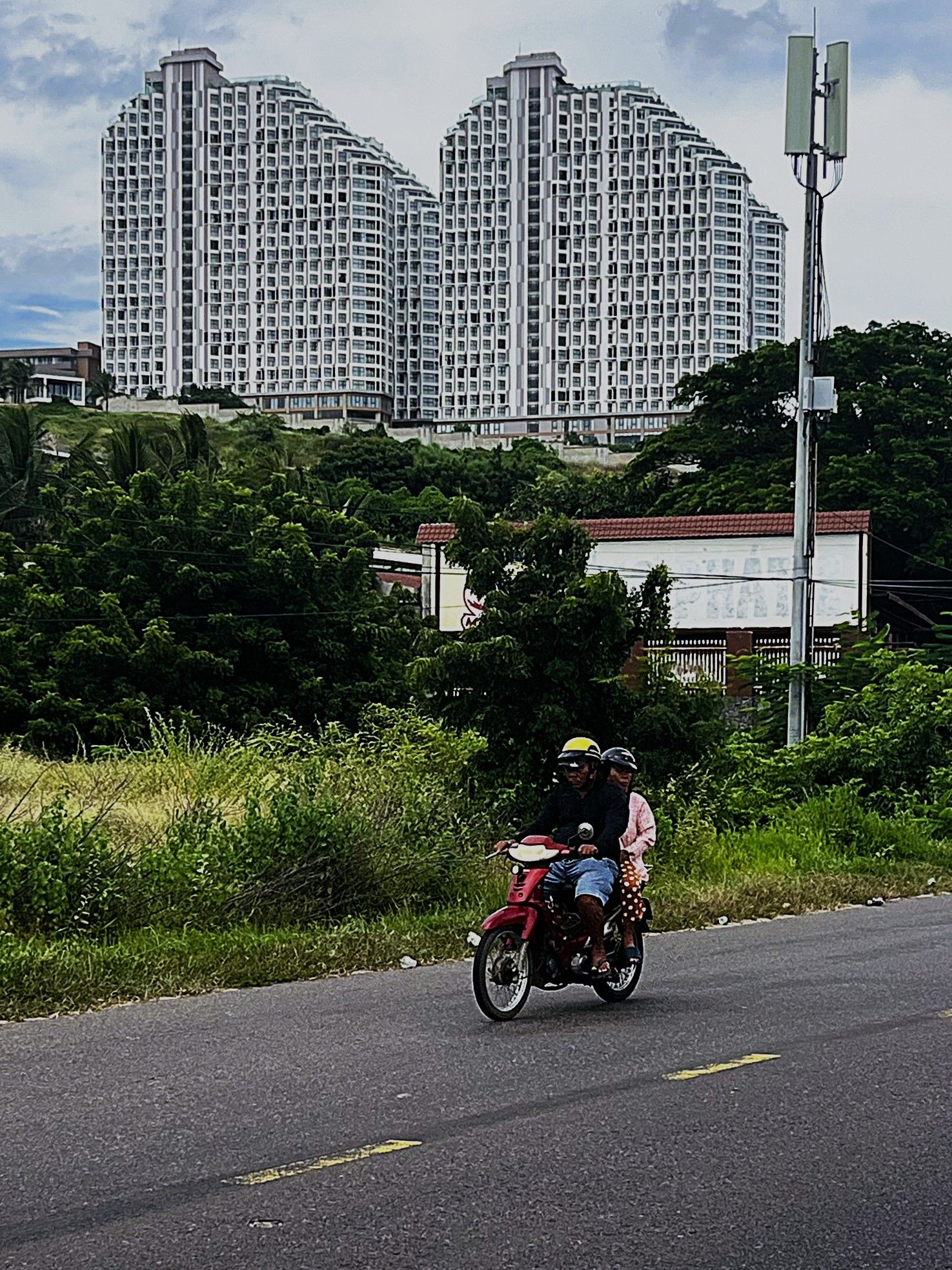
On the way back, I recognize in daylight what was hidden in the darkness: on a hill above the beach, a massive hotel complex consisting of four 25-story buildings, protruding into the landscape. It would fit in Benidorm, not on this still somewhat natural coast. The “Apec Mandala Wyndham Hotel” mainly accommodates Vietnamese and Chinese tourists, Bo explains.
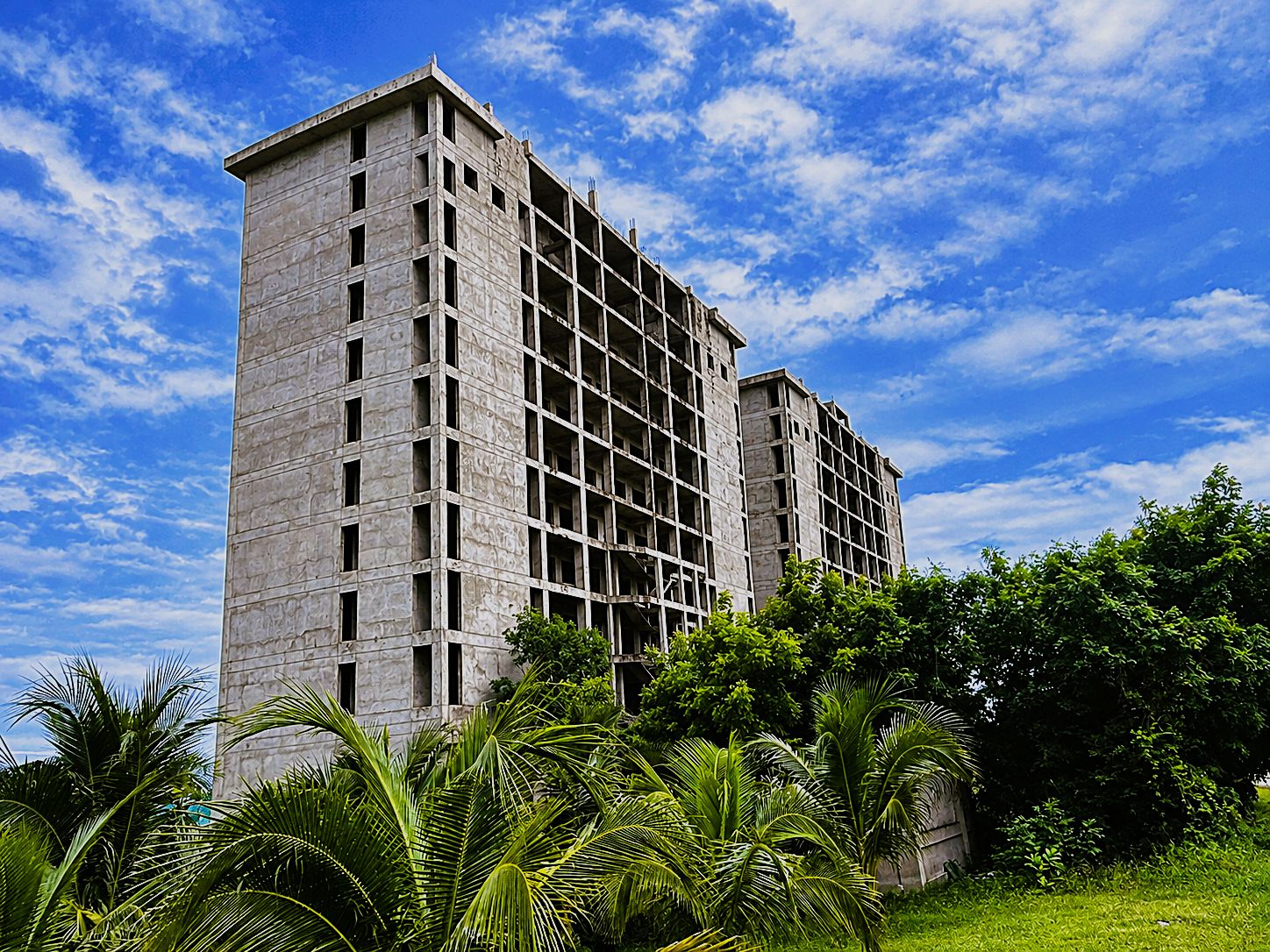
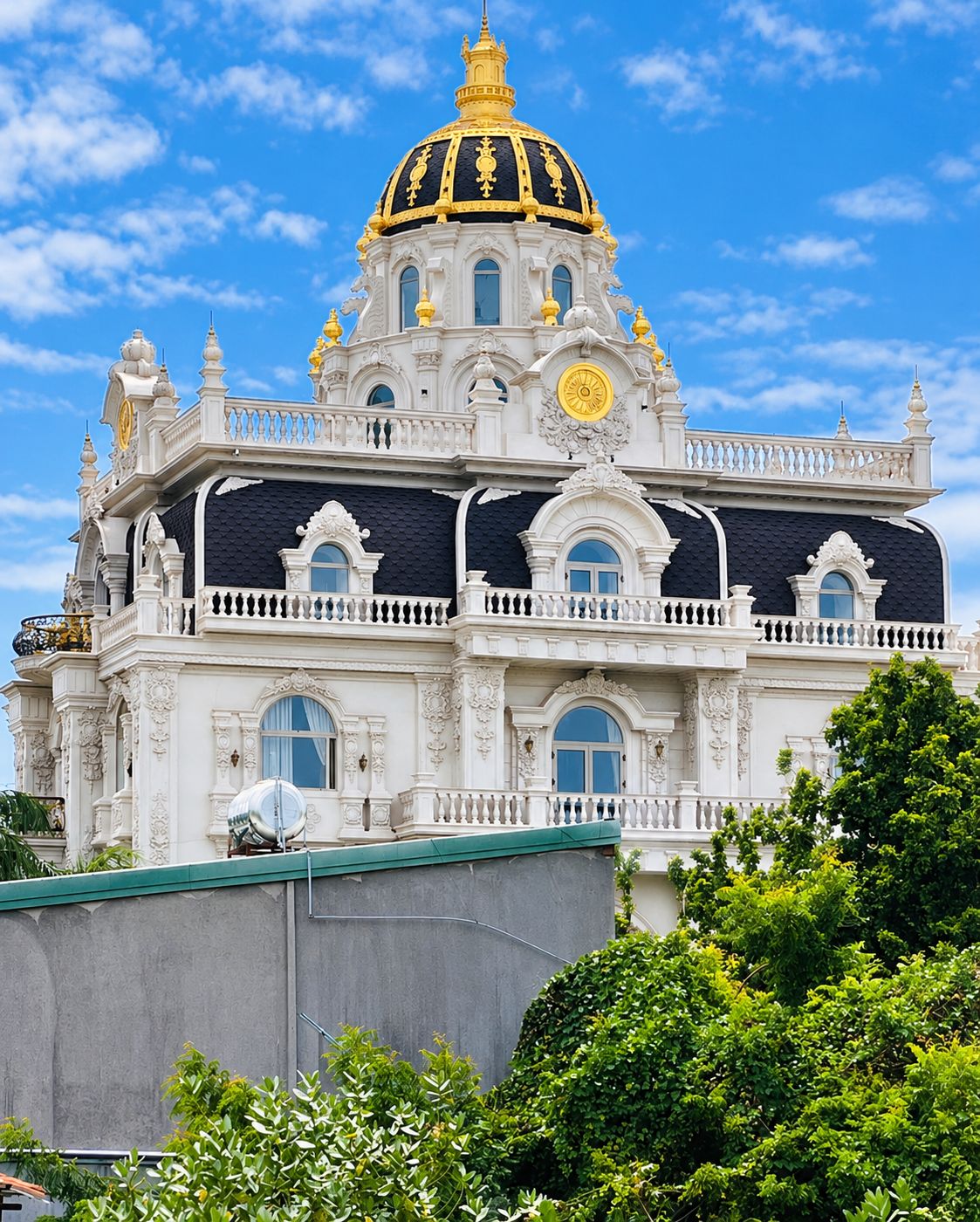
Further toward Mui Ne stands a gray, concrete monstrosity with a broken career as a hotel, from which plants are growing: the hotel project ran out of money about ten years ago while still under construction, says Bo. A palace with a Renaissance dome, where every square meter of facade had to serve for decoration, has recently been completed. Anyone who thinks they have a basilica in front of them is mistaken: it is the residence of a wealthy family.
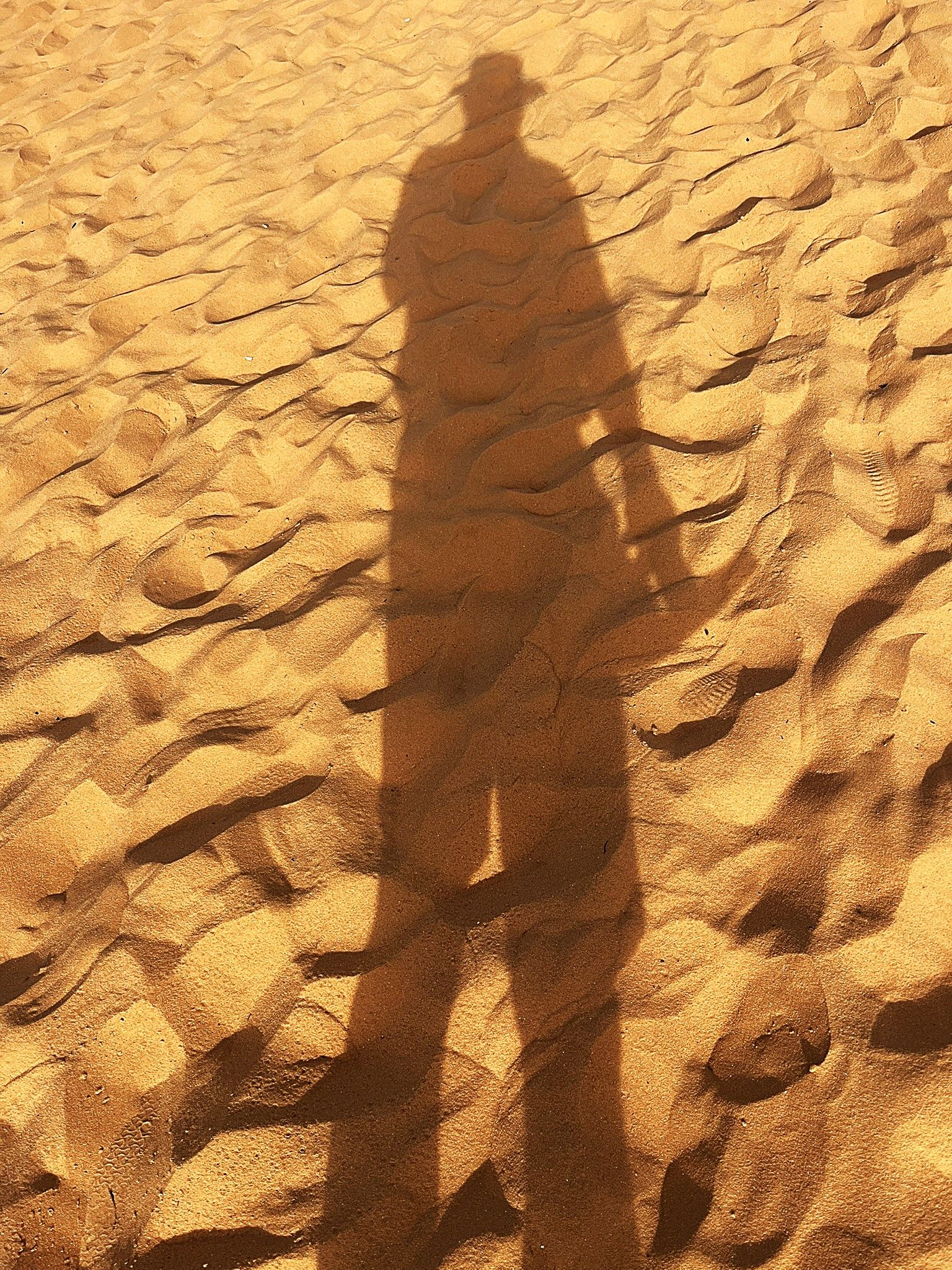
The Red Sand Dunes, our next stop, are smaller than the White; the sand glimmers from orange to rust red depending on the lighting. Under the shade of a sprawling tree, female beverage vendors have settled down. I take off my flip-flops and let the sand run between my toes.
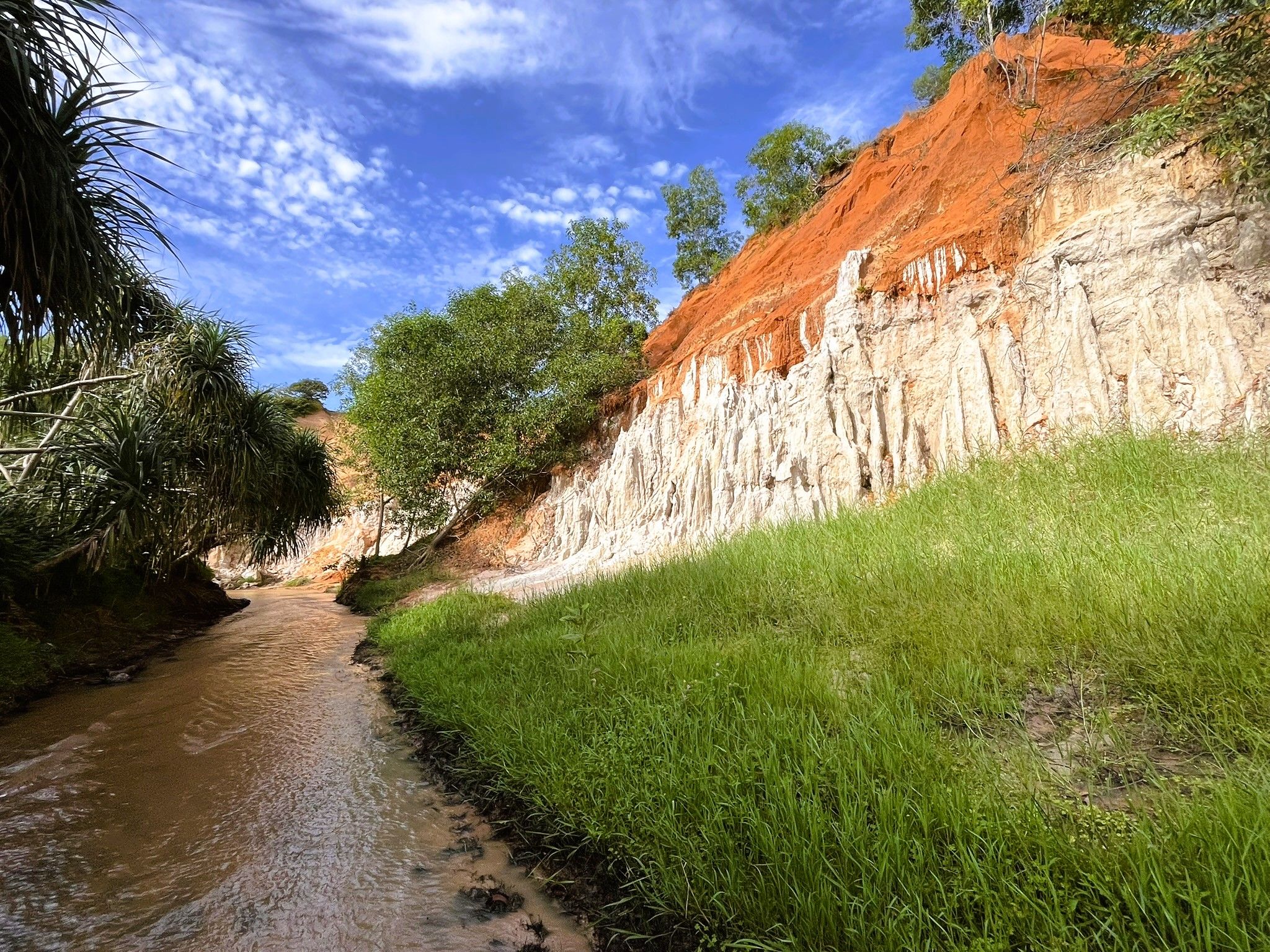
The Fairy Stream is also explored barefoot: you wade upstream through shallow water. On the left, reddish and whitish sandstone and clay banks rise, which erosion has shaped into bizarre forms; on the right are palm trees, and in wooden booths along the shore, coffee, sweets, and souvenirs are sold.
A Sandy Beach Full of Fish
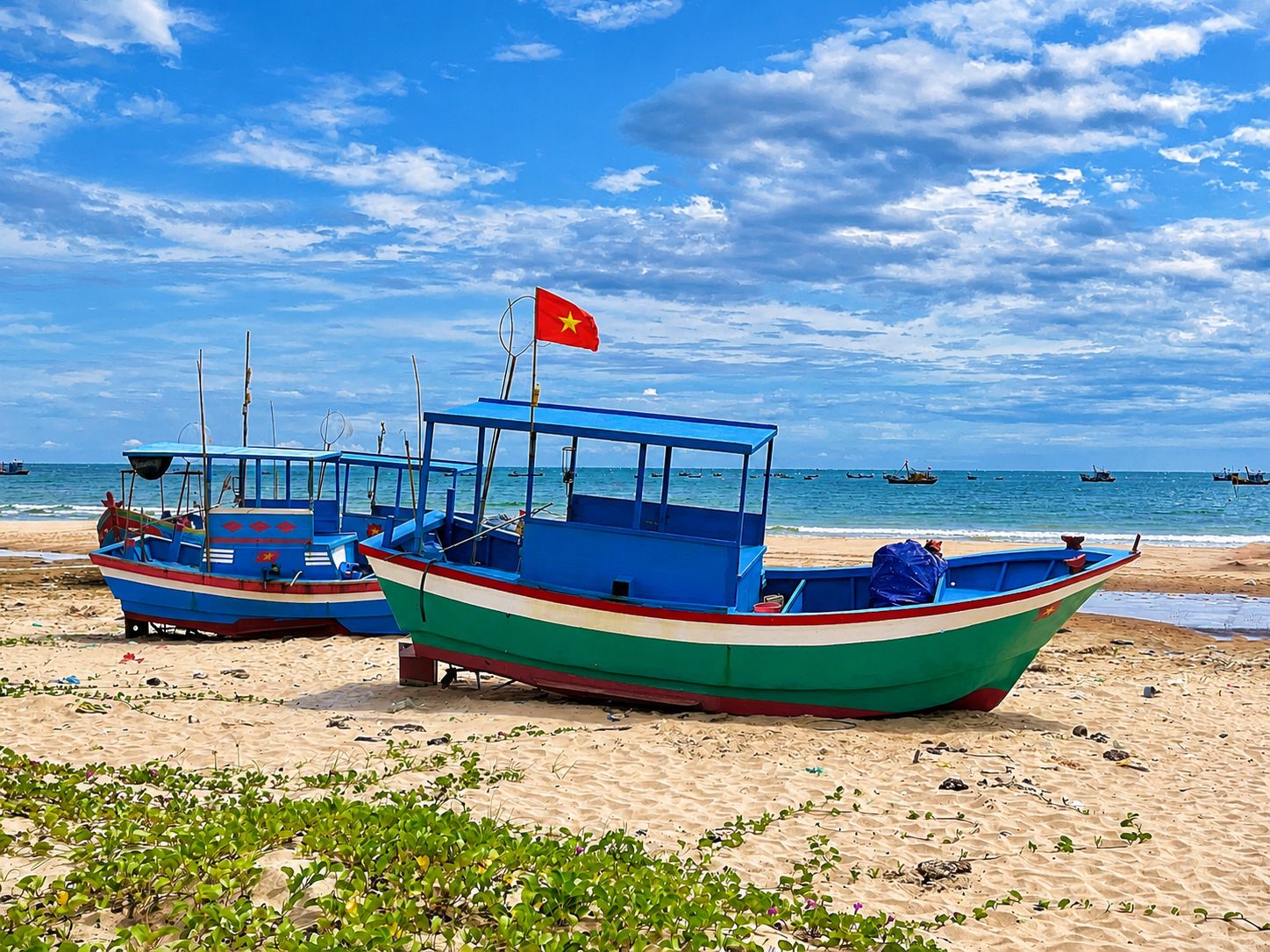
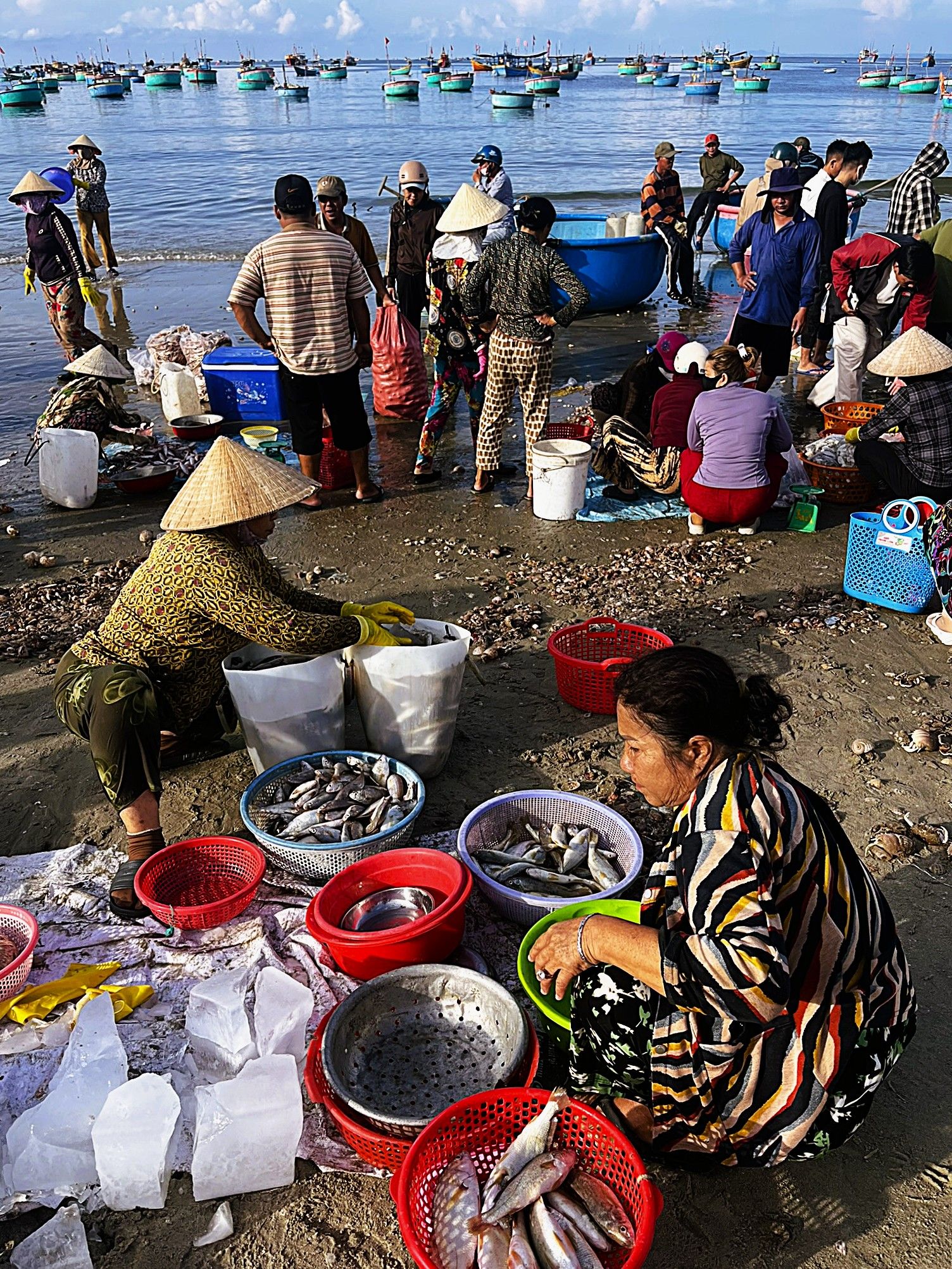
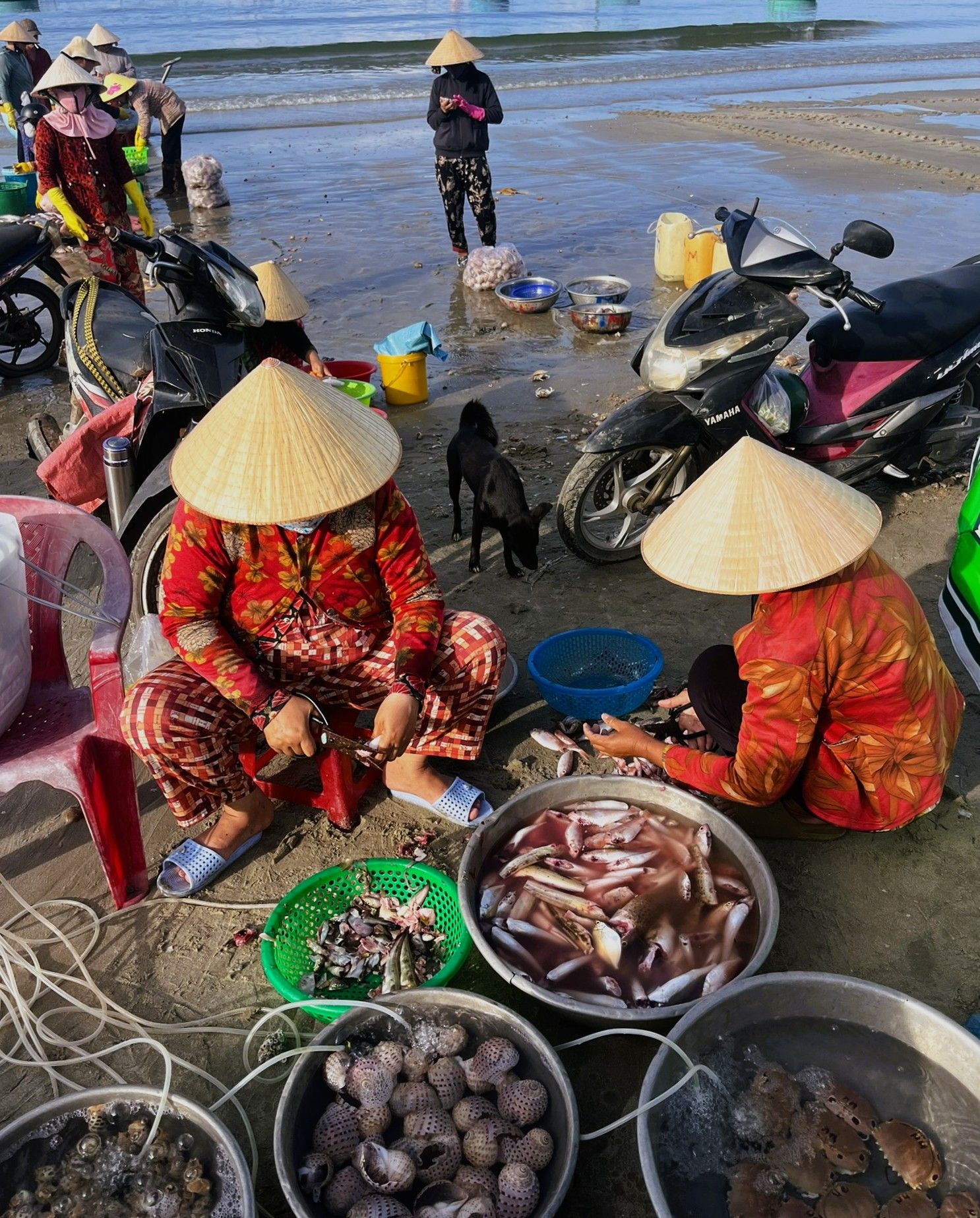
As the final stop of the morning tour, a fishing village is planned. “Village” is the wrong term: it is a section of the beach where numerous fishing boats anchor, among them round, blue vessels that look like oversized soup bowls. In the past, these basket boats were woven from bamboo; today they are made of plastic. The fishermen have brought their catch ashore. Here, women sort fish and seafood and sell them directly on the beach to restaurateurs, supermarkets, and private individuals.
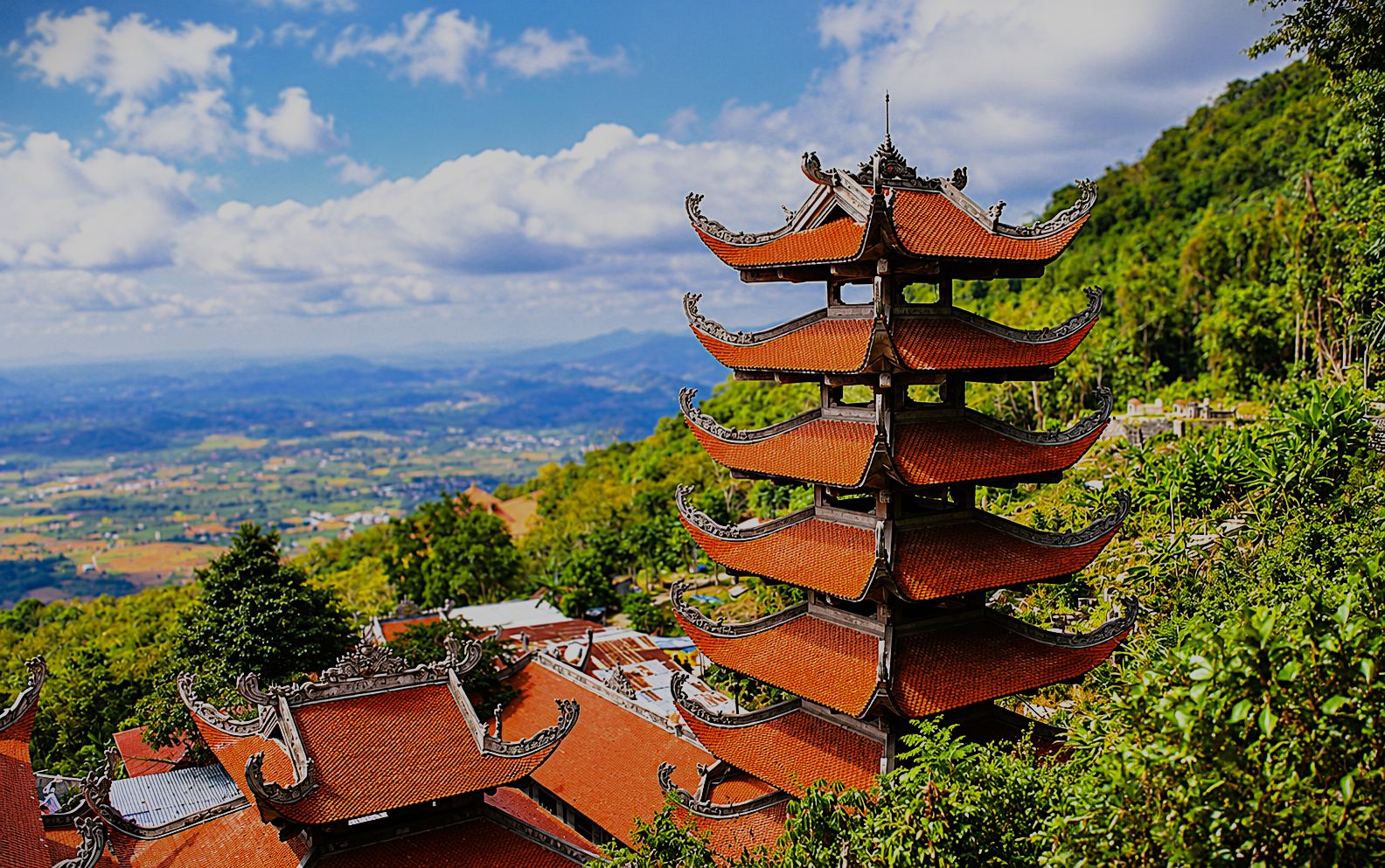
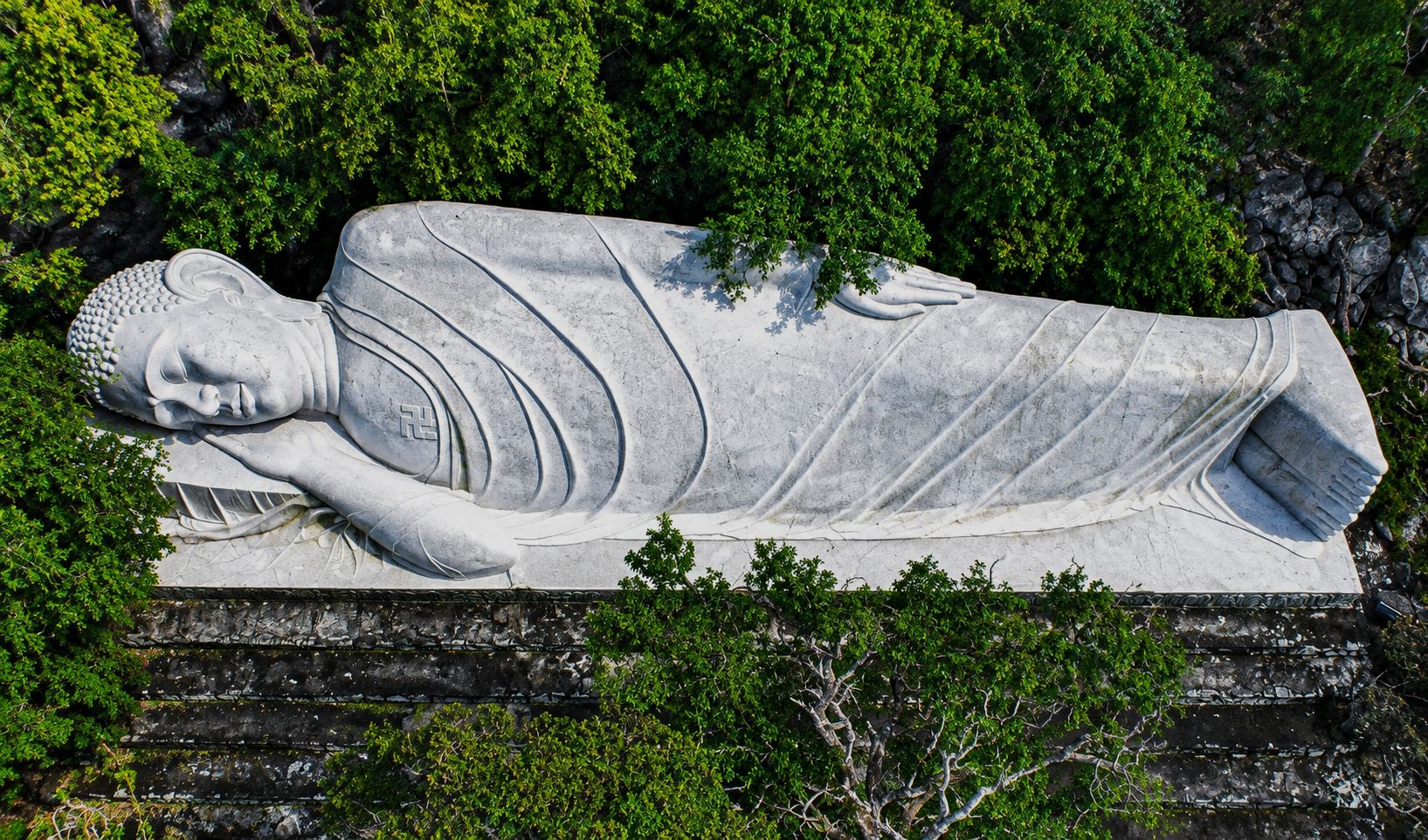
The next day, I ride with a scooter inland to Ta Cu Mountain, about one and a half hours away. A cable car overcomes about 500 vertical meters over 1.6 kilometers, the ride takes about ten minutes. From the mountain station, a path leads to the Linh Son Truong Tho Buddhist temple complex, which dates back to the monk Tran Huu Duc in the 19th century. A bit higher up, over fitness-promoting 300 steps, lies a 49-meter-long Buddha statue made of white-painted concrete, built in the 1960s.
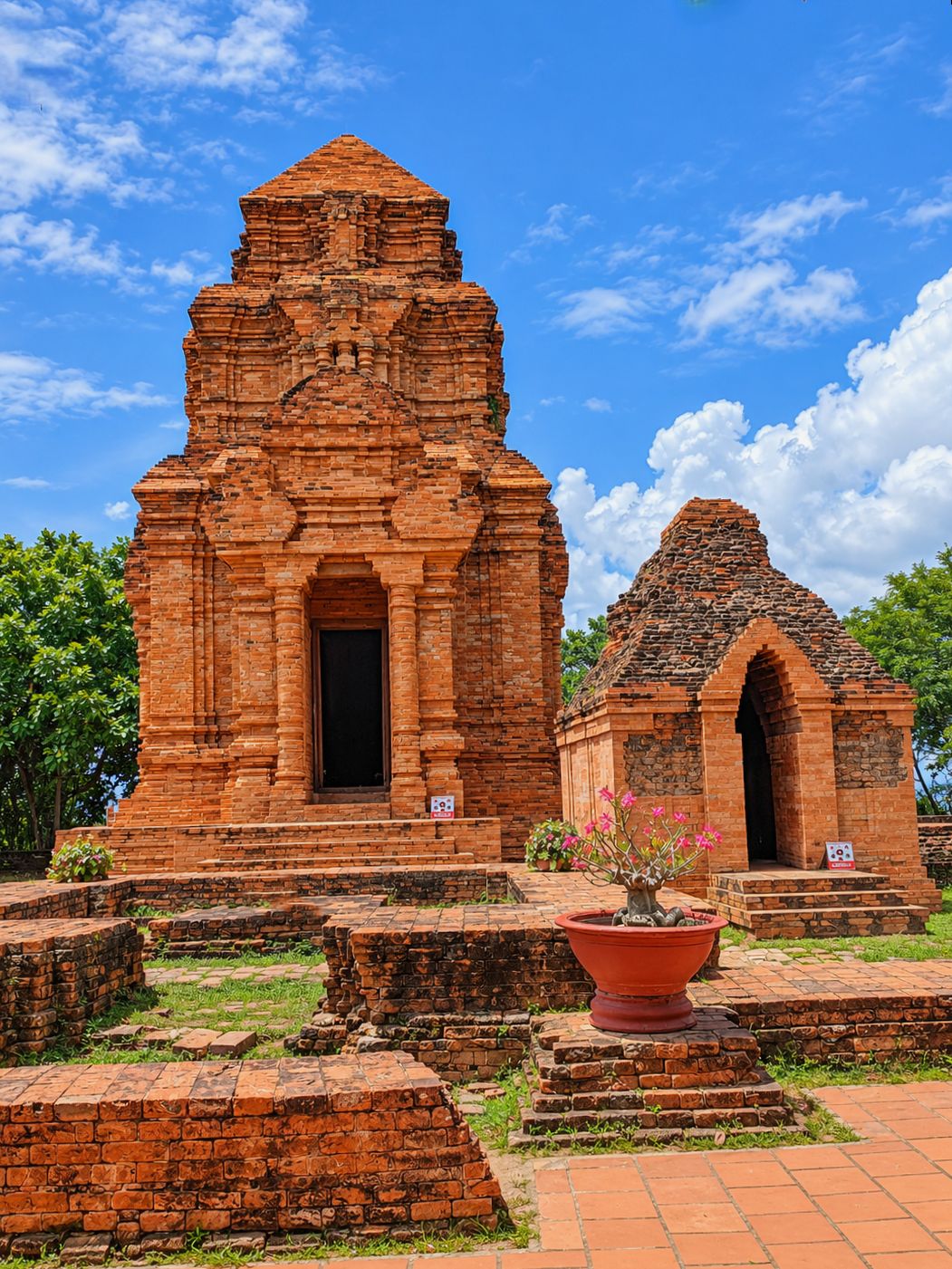
The next day, Phan Thiet is on the agenda; I rent a scooter. A few kilometers before the city, I stop at the Po Sah Inu towers: three red brick buildings, about 1200 years old, from the time when the Hindu-influenced Champa kingdom ruled the coast. The main tower is dedicated to Shiva. In the 15th century, simpler shrines were added for Princess Po Sah Inu, after whom the complex is named today. It is manageable, but from the hill, the view extends over Phan Thiet and the coast.
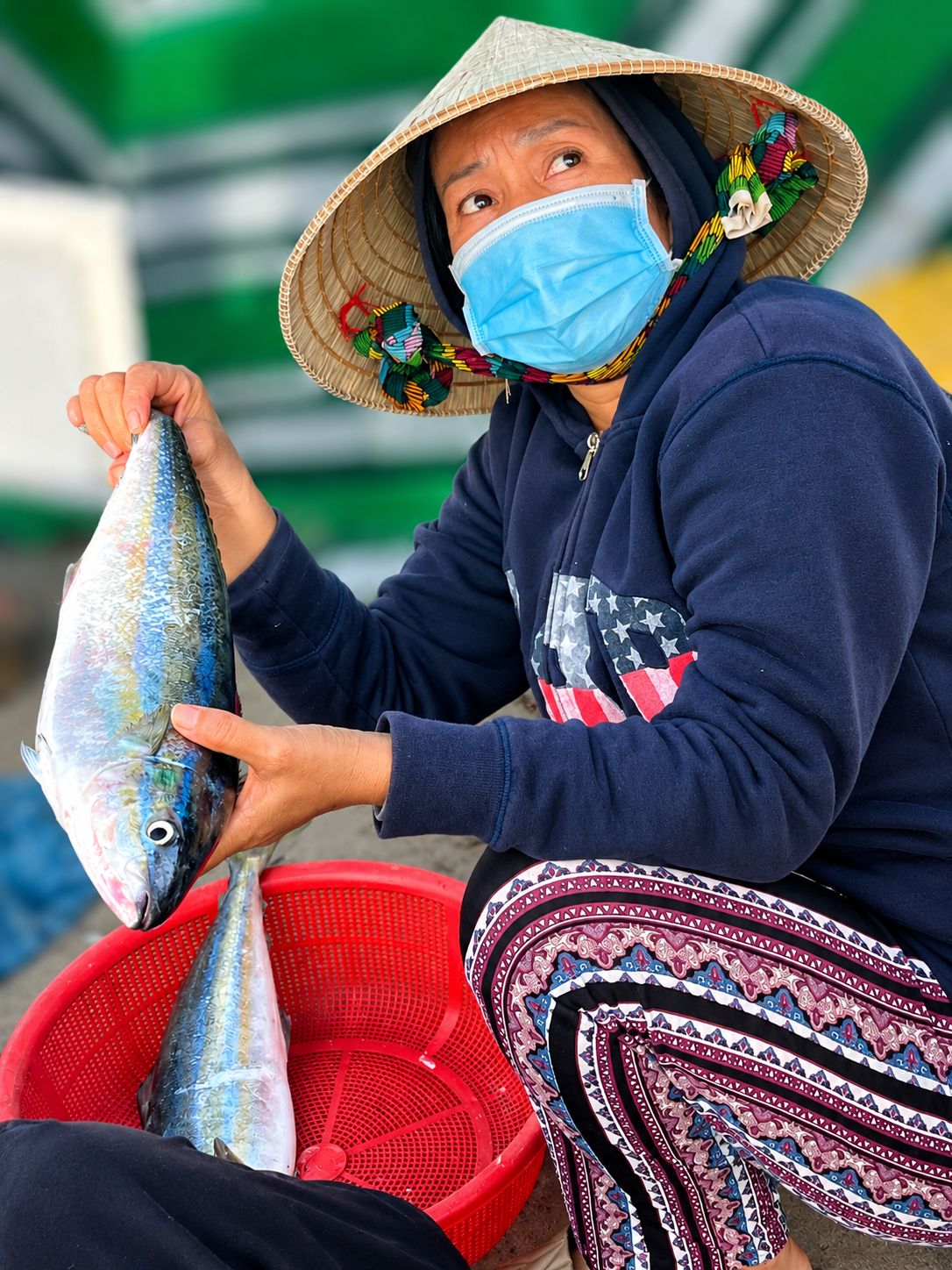
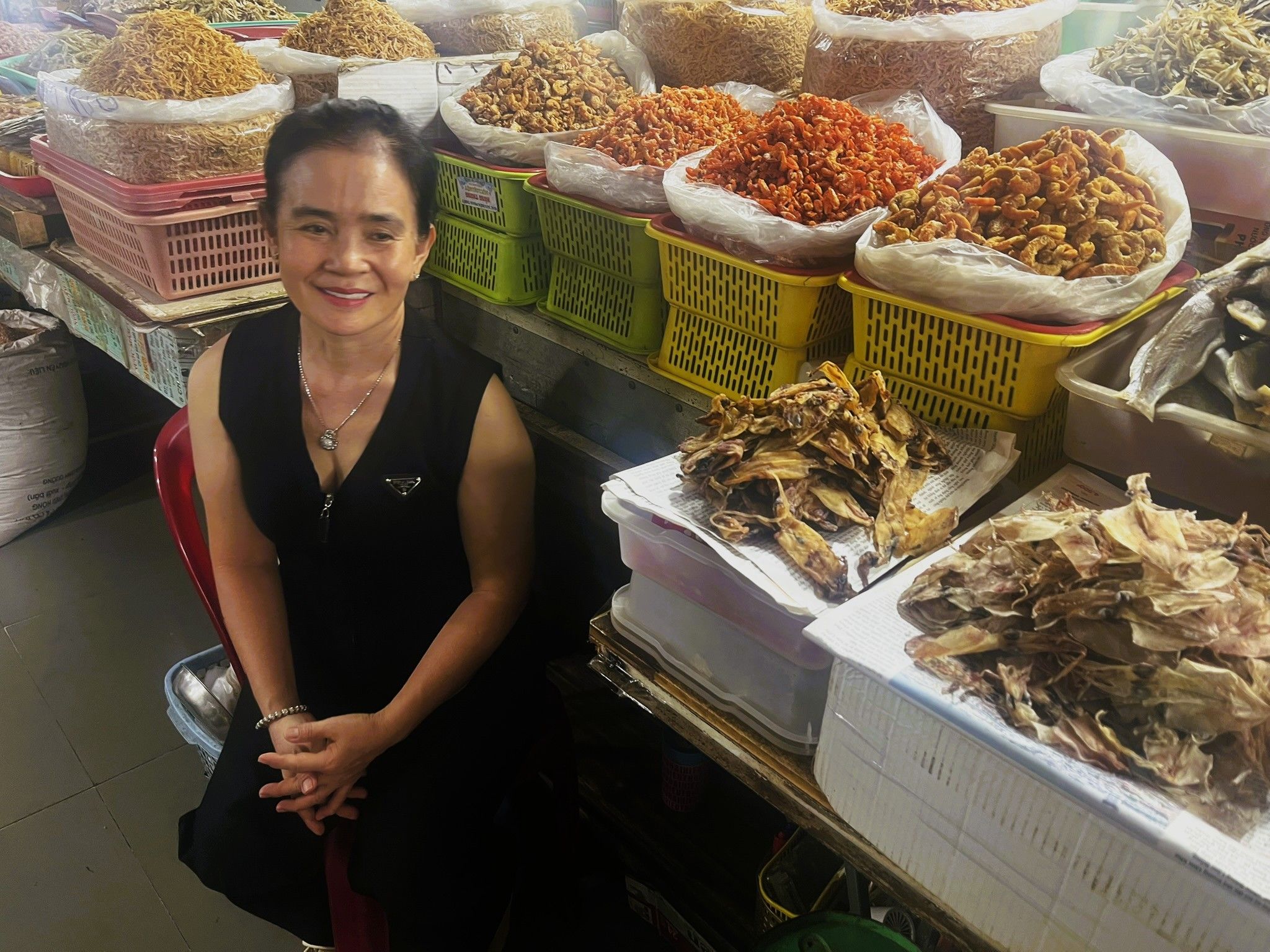
I ride into the city of Phan Thiet, about 20 kilometers west of Mui Ne. At the market, I just manage to photograph a friendly vendor of dried fish and shrimp before my phone dies. Don’t panic now! Right after the passport, actually on par with it, the phone is the most important item a traveler carries with them.
Online on the PC, I find Mr. D., who receives enthusiastic reviews as a phone doctor. He just has to take my damaged iPhone in his hand briefly: “The battery is dead,” he says, and he also replaces the shattered glass. In the evening I can pick up the device. For 1.6 million Vietnamese Dong, just under 50 Swiss francs or a little over 50 euros, Mr. D. has saved my life – or at least my further travels.
Fish Sauce Above All
I have described several times how much I appreciate Southeast Asian cuisine, especially Thai and Vietnamese. However, I have still not been able to get used to one particularly important ingredient after all this time: fish sauce.
Nuoc mam, as it is called in Vietnamese, consists of two ingredients: small sea fish, mostly anchovies, and sea salt. Both are layered in large wooden barrels or clay jars in a ratio of about three to one and left to their own devices in the heat for half a year to over a year. What is drawn off from the bottom is the first and finest quality, nuoc mam nhi. With lime juice, sugar, garlic, and chili, it becomes a dip for spring rolls, rice noodles, and grilled meats, and in soups and marinades, it takes on the role that salt plays in our kitchens.
Phan Thiet takes pride in its fish sauce, which is still produced in traditional businesses. There’s even a fish sauce museum that explains the history of the trade and the processing of fish. I suppose I will have to make peace with the smell that – unfortunately – reminds me a bit of sewage.