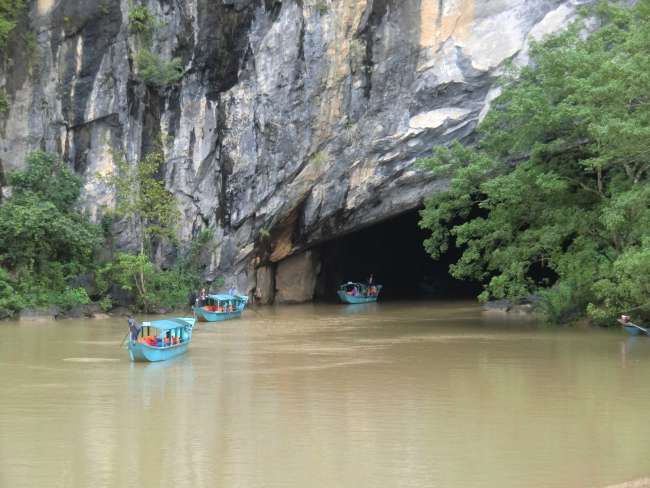


Flooding in Chau Doc
Can Tho in the Vietnamese border area to Cambodia does not attract many foreign tourists. This is unjust, as I have discovered from October 9 to 12, 2026.
Published: 25.10.2026
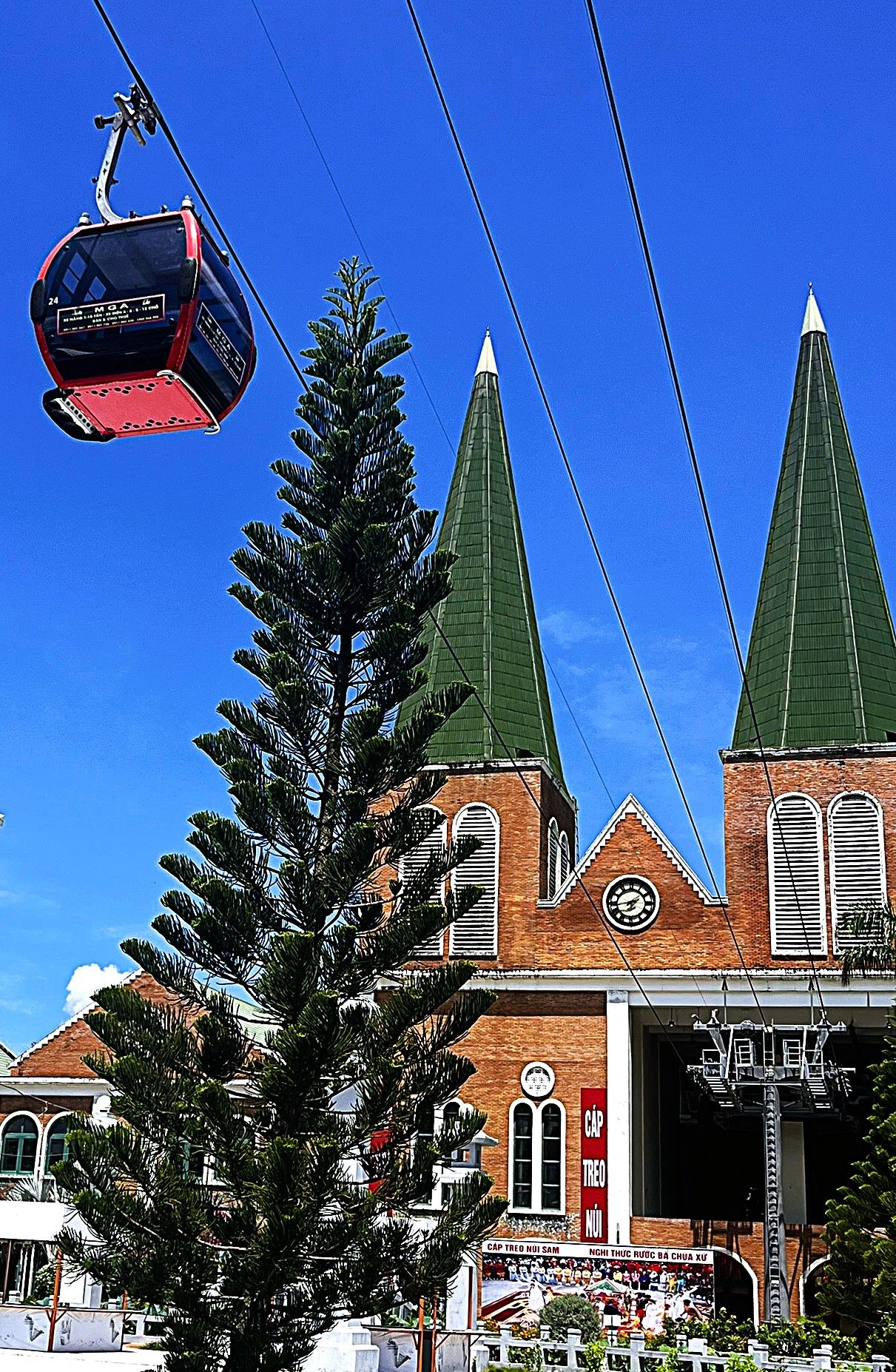
There is a connection to the Alps, however: Since 2022, there has been a 900-meter-long cable car with 37 cabins for eight passengers each leading up to Nui Sam. It was built by the world-leading cable car company Doppelmayr from Vorarlberg, which has merged with the Swiss Garaventa in Goldau in the canton of Schwyz.
Although I have rented a scooter, and there is also a road leading up the mountain, I want to try the cable car. It was built mainly to relieve the road on pilgrimage days. Because the mountain is a vast open-air sanctuary with dozens of temples, pagodas, and shrines pressing against its slopes and foot, combined into a cultural park. At the base station, there is a huge parking lot, which is now completely empty.
Sacred Buildings in the Cultural Park
The base station itself looks like a sacred building, but not an Asian one, rather a European one, designed, as I've been told, by Austrian architects: With its two towers reaching sharply towards the sky and the large clock in the gable, the brick building looks like a cathedral from a distance, until you notice the gaping, rectangular opening in the façade from which the cabins glide.
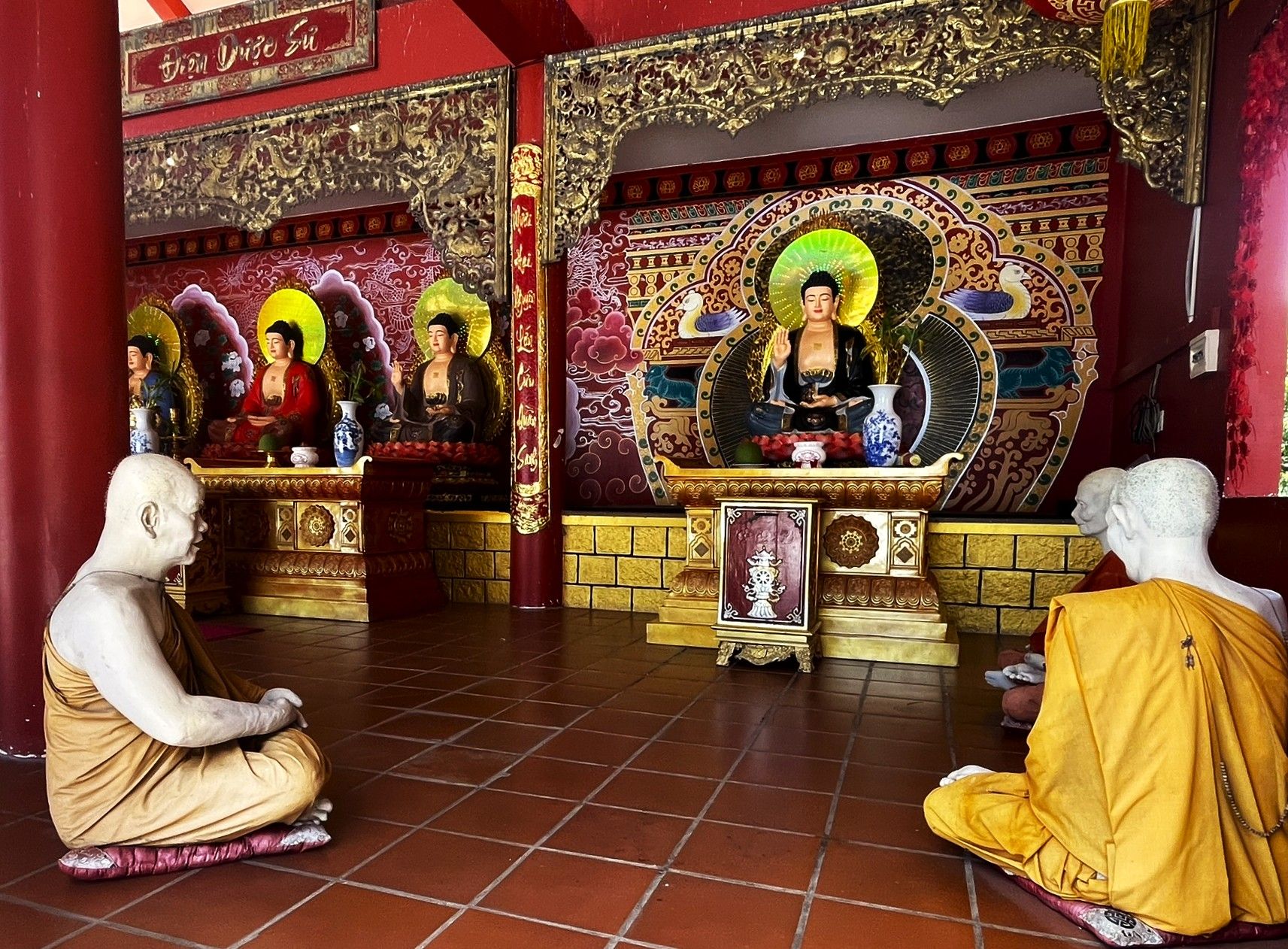
Right next to the base station is the hall of the Medicine Buddha, which, like the entire complex, was only completed a few years ago. Inside, I see monks sitting in reverence before the Buddha statues. Only upon closer inspection do I realize that they are life-sized figures clothed in monk's robes made of plaster.
A Mysterious Goddess
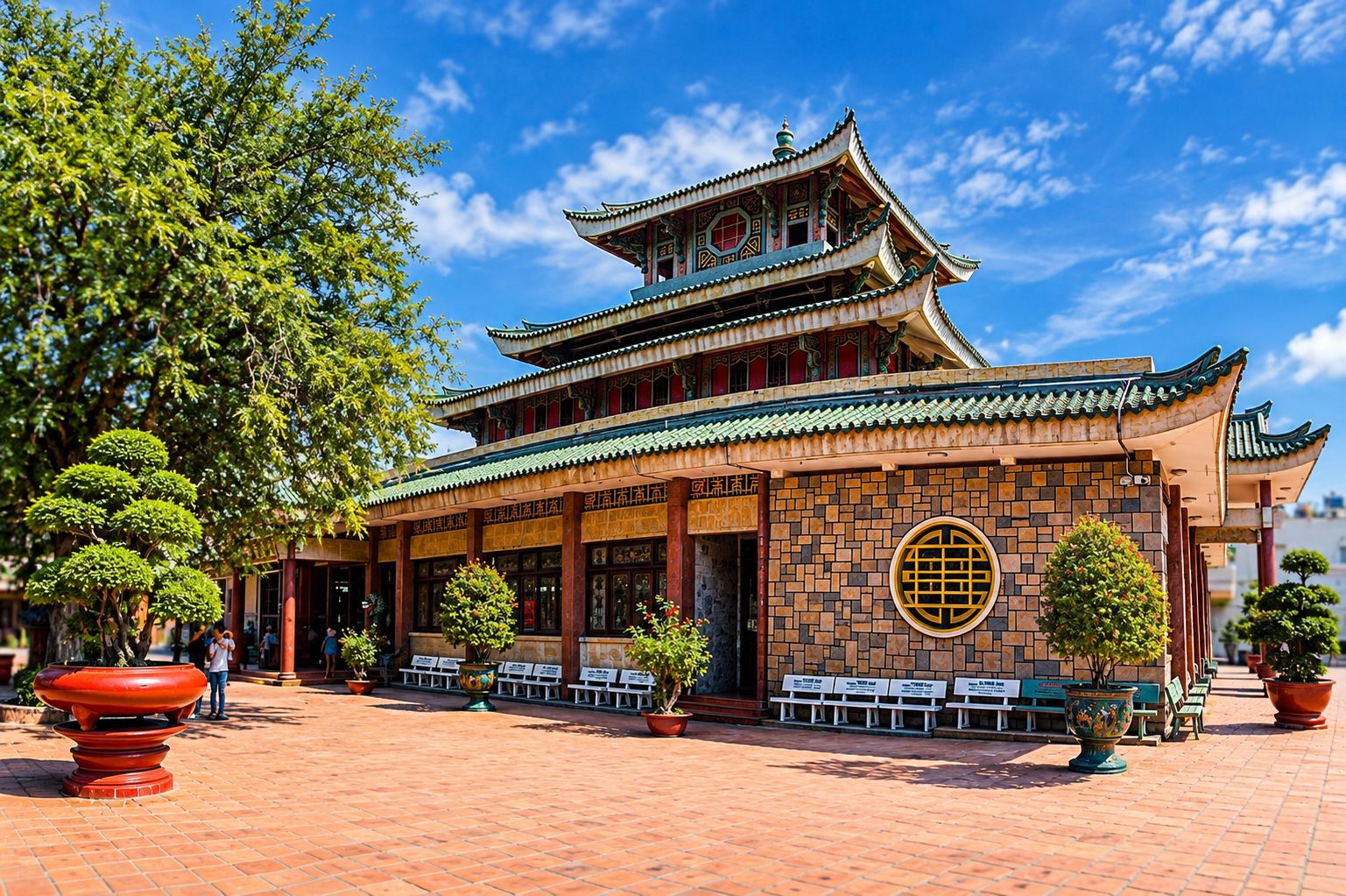
In the plain near the base station of the cable car stands the temple of Ba Chua Xu, the «Lady of the Land», as the Vietnamese call her. It was built in 1820 and is one of the most important pilgrimage sites in Vietnam.
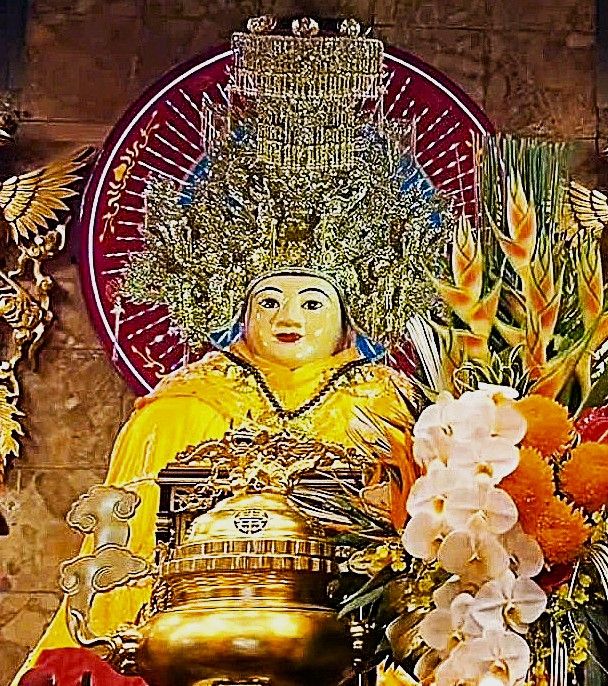
According to legend, residents of the area discovered a stone statue of the goddess on the summit of Sam at the beginning of the 19th century, which is now venerated in the temple. The statue of Ba Chua Xu sits, draped in magnificent robes, in the main sanctuary of the temple. She wears jewelry and an elaborate headpiece, and researchers argue that her head has been altered and painted to give it a feminine appearance. For she might have originally embodied a male being.
According to the French archaeologist Louis Malleret, who studied the statue in the 1940s, the sculpture is much older than the cult it represents. Malleret believed that the «Lady of the Land» is a depiction of the Hindu god Vishnu and originated in the 6th century. There are other interpretations: It may represent Shiva or a Buddha figure. So far, no archaeological consensus has been reached.
According to popular belief, Siamese soldiers tried to remove the cult image from Sam in the 1820s, but it proved too heavy. Later, the deity appeared to the villagers in dreams, identified herself as Ba Chua Xu and demanded to be brought down from the mountain so that a sanctuary could be built for her. To accomplish this, she ordered nine virgins to be sent up the mountain; they successfully transported her.
When the statue became too heavy for them as well and they had to put it down, it was decided to build a shrine precisely at that spot. This was initially made of bamboo and palm leaves like most local dwellings. In 1870, a masonry temple was built and has since been expanded and rebuilt several times.
A Festival for Hundreds of Thousands
Every year, a huge festival is held in honor of Ba Chua Xu. It takes place from the 22nd to the 27th day of the fourth month in the lunar calendar, which means at the end of May or in June. Hundreds of thousands come; there are religious ceremonies, processions, lion and dragon dances, traditional stage performances, and other cultural events. Around the temple, there is a fair. In 2024, UNESCO inscribed these festivities on the list of intangible cultural heritage of humanity.
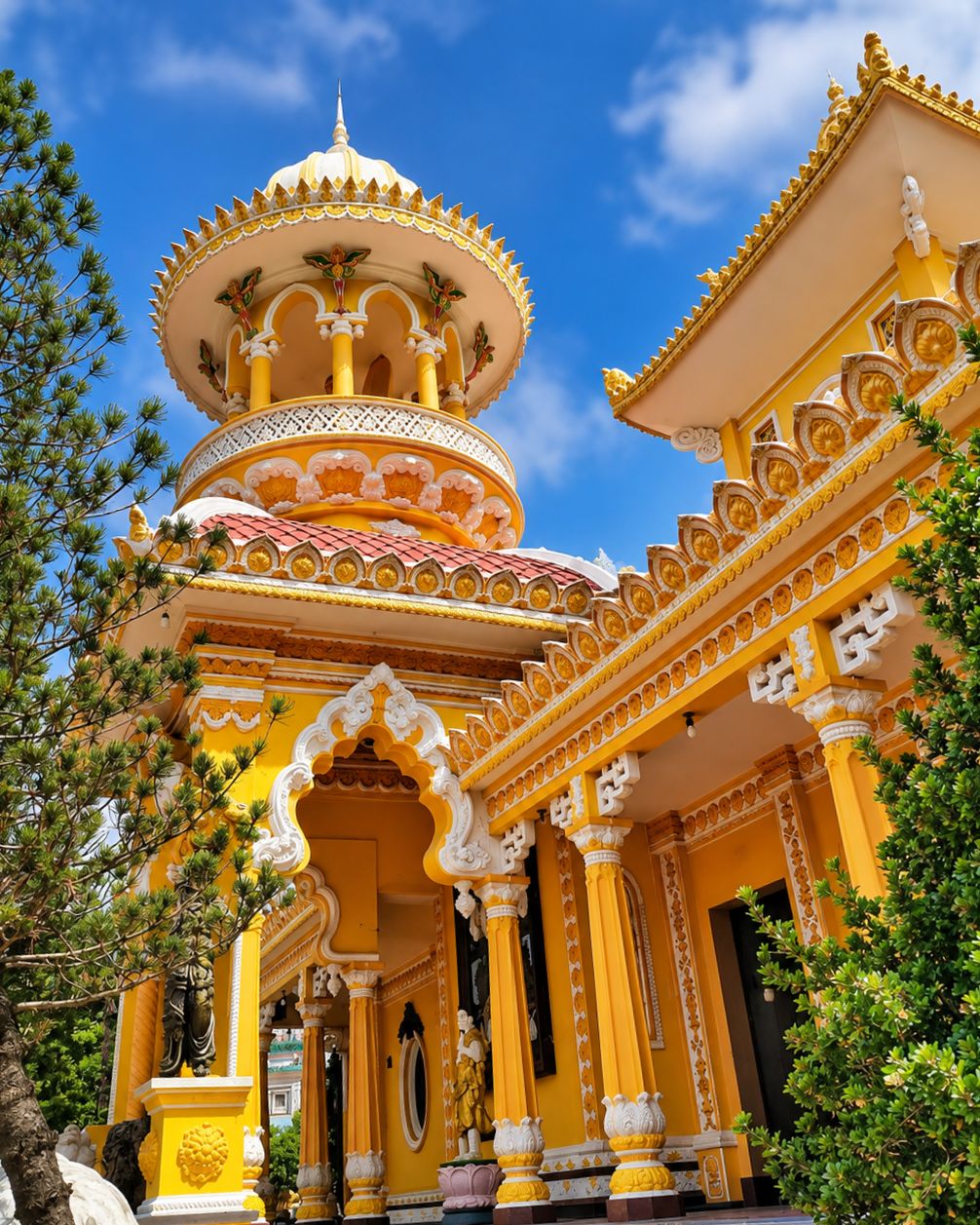
Nearby stands the Tay-An Pagoda from 1847, a Buddhist place of worship and an important religious center. It combines traditional Vietnamese pagoda architecture with Indian influences. The colorful, onion-shaped domes, the curved arches, and the richly decorated facades appear almost psychedelic; inside, there are more than 150 wooden statues.
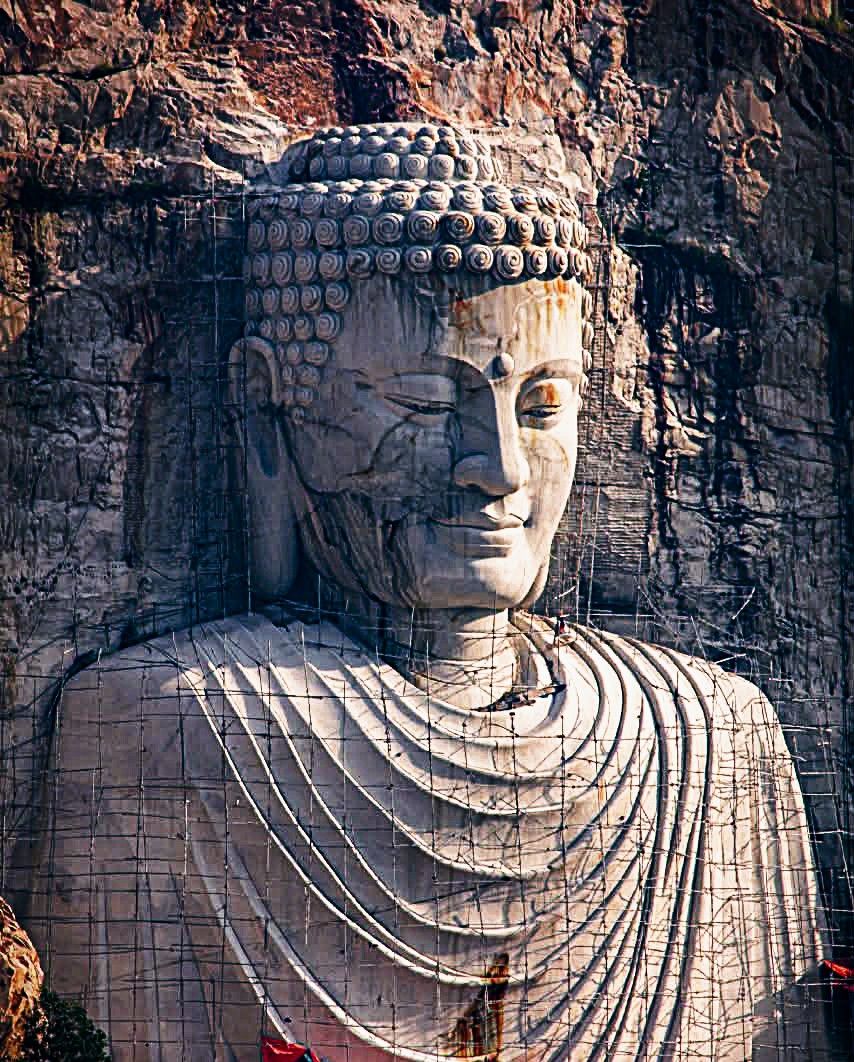
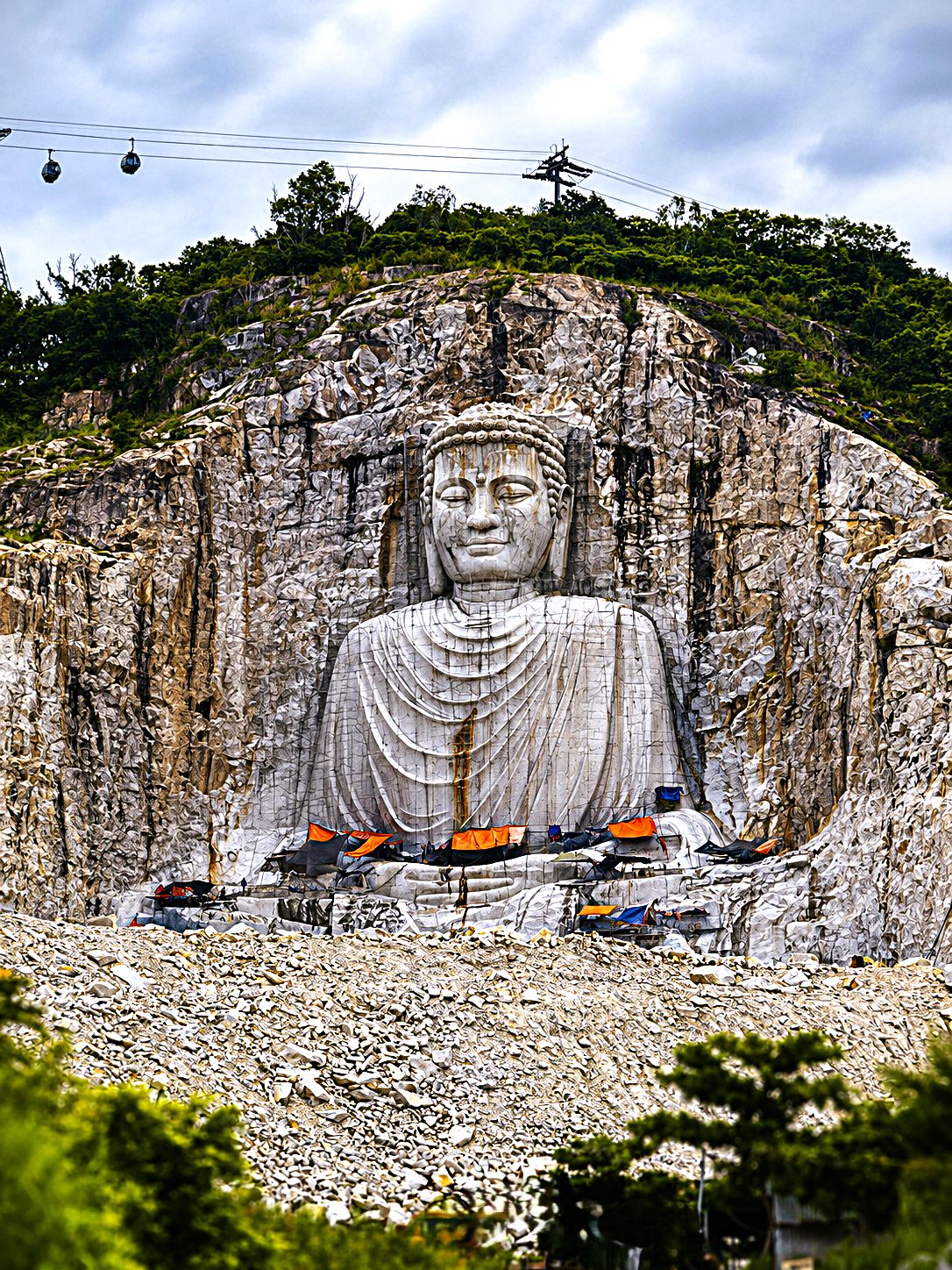
During the cable car ride up, I see a huge Buddha statue being carved into the rock face. Even from below, from the main road, it caught my attention. Since March 2015, the sitting figure, 81 meters tall, has been directly chiseled into the mountainside. Originally, completion was announced for 2020, my guide says; now we hope for the end of 2027, about seventy percent has been completed.
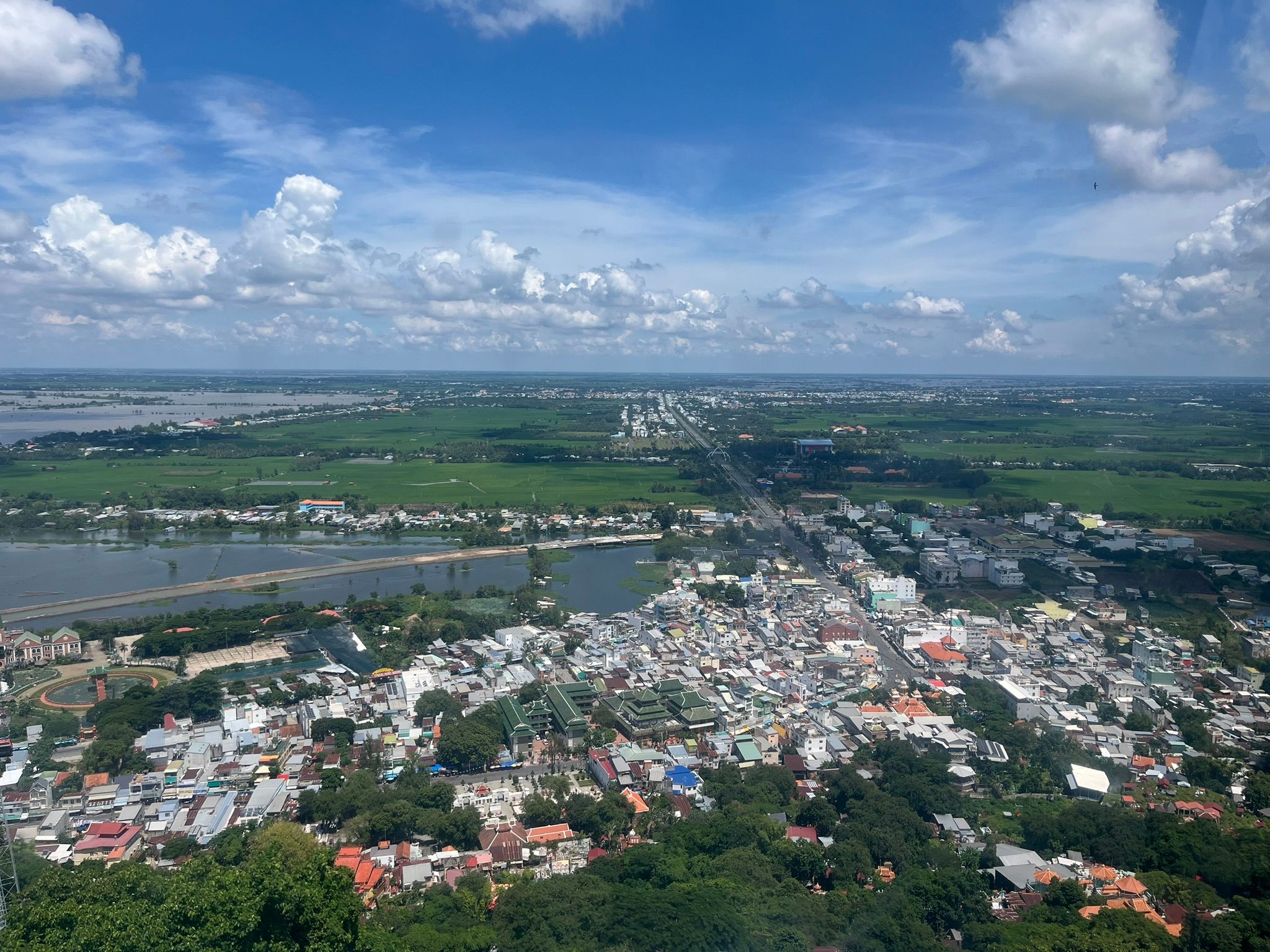
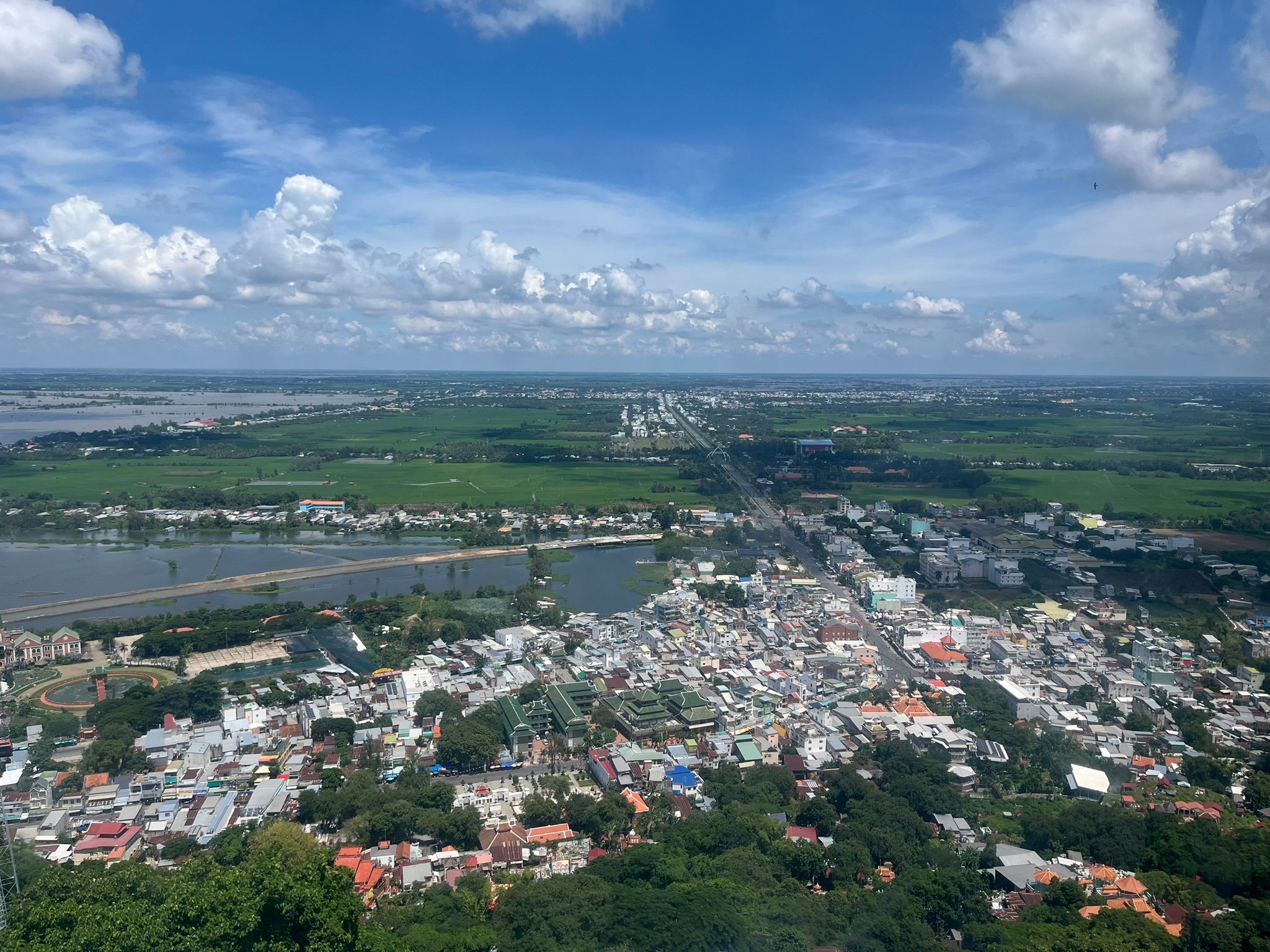
Upon reaching the top, I see the delta spread out before me: cities and villages along the main road, rice fields shining in the floodwaters, and the Vinh Te Canal, which runs straight through the plain. It was excavated between 1819 and 1824, stretching about 90 kilometers all the way to Ha Tien by the sea and serves transportation and irrigation.
Temples, Pagodas, Viewpoints
On Sam, I find a collection of temples, statues, and pagodas that are accessible via steep stairs. In between are viewpoints, coffee stands that are unfortunately closed, and many informational signs, although almost exclusively in Vietnamese.
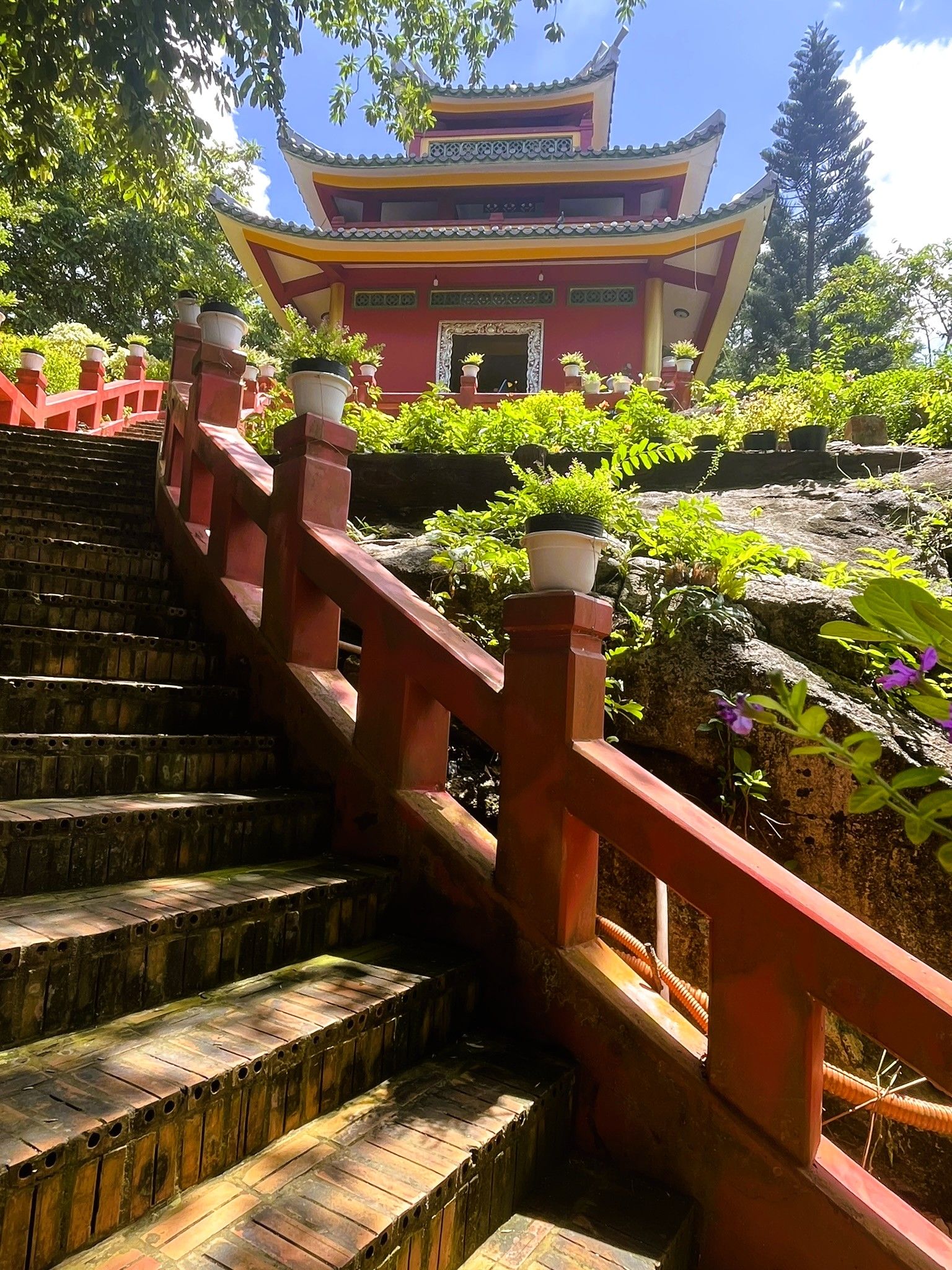
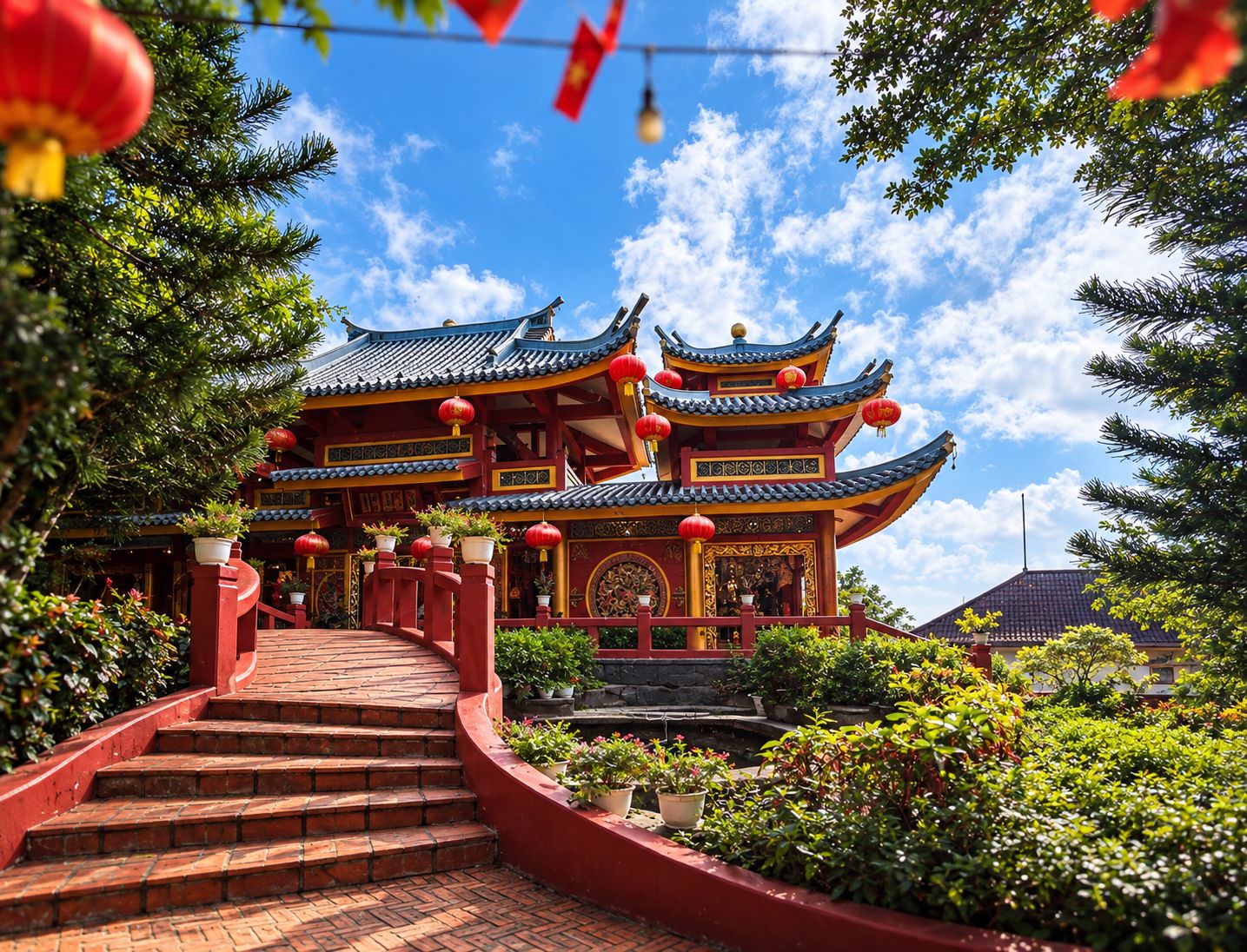
A winding staircase with a red-painted stone railing, for example, leads to the Guanyin Temple. Guanyin is the Bodhisattva (a being on the path to enlightenment) of compassion and mercy. The temple, when translated into German, is called «Perceiving the Cries of the World», and that is precisely its function for devout Buddhists: They find here a place to plead for help in difficult life situations, comfort, and spiritual support.
Another ornately decorated building with a multi-story gable is the Temple of the Jade Buddha. Completed in 2018, it houses the statue of the Buddha for «World Peace», around two and a half meters tall, approximately three tons heavy, and incredible molded from a massive, flawless block of green jade. The block was imported from Vancouver, Canada.
Spiritual and Material
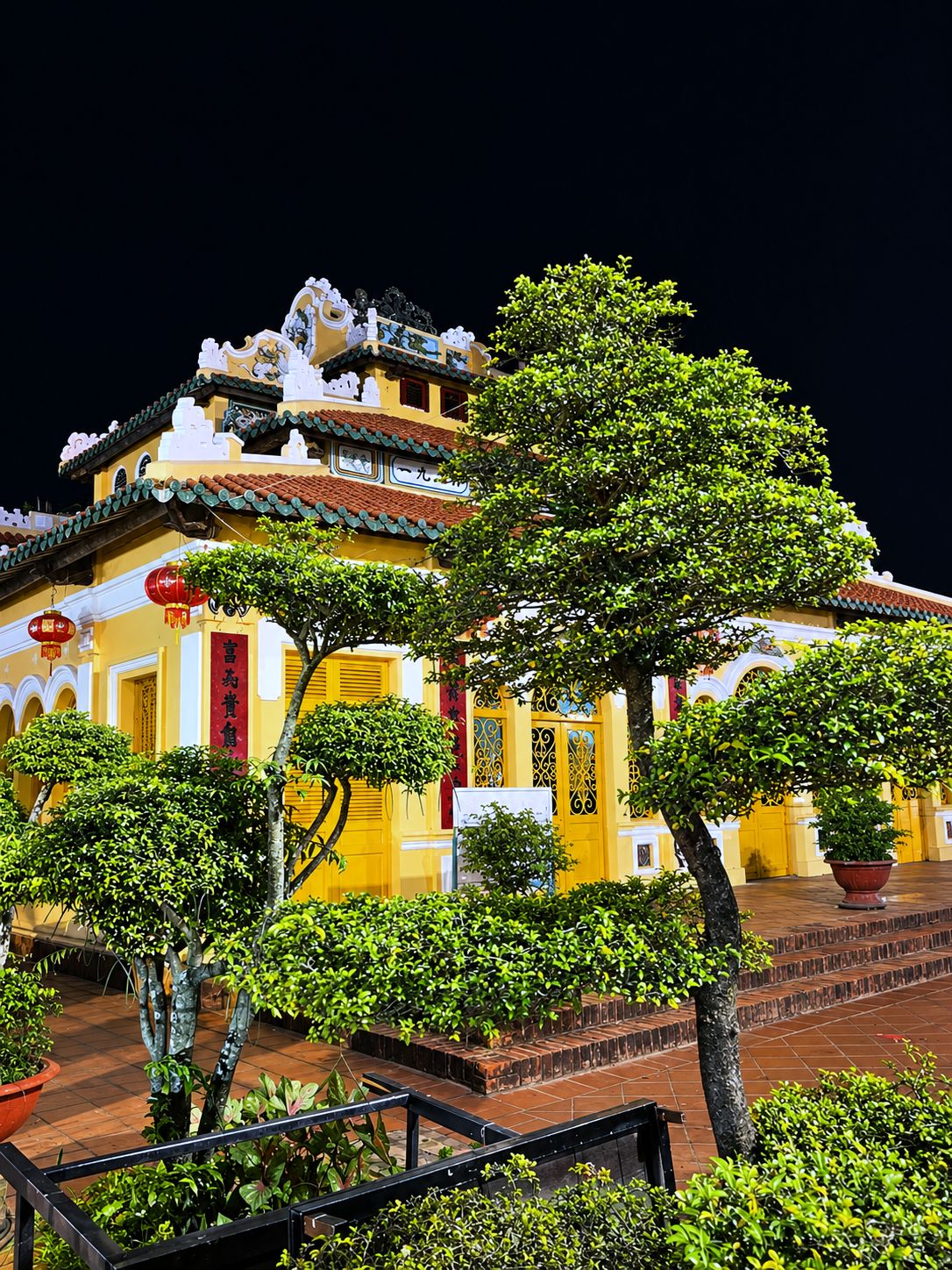
Back in the city, to conclude my personal pilgrimage, I also want to visit the Dinh Chau Phu. (A Dinh is a communal house where a village honors its protective spirit.) It gets dark early here; night has fallen before 6 PM; the Dinh is closed, but beautifully illuminated.
The current complex was opened in 1926 and is, like so many colonial-era buildings, a mixture of styles: Traditional Vietnamese Dinh architecture is combined with elements of the imperial Nguyen style, which is primarily found in the former imperial city of Hue in Central Vietnam, and French influences (see my blog about Hue: https://vakantio.de/vogel-fliegt-aus/nachtzug-nach-hue).
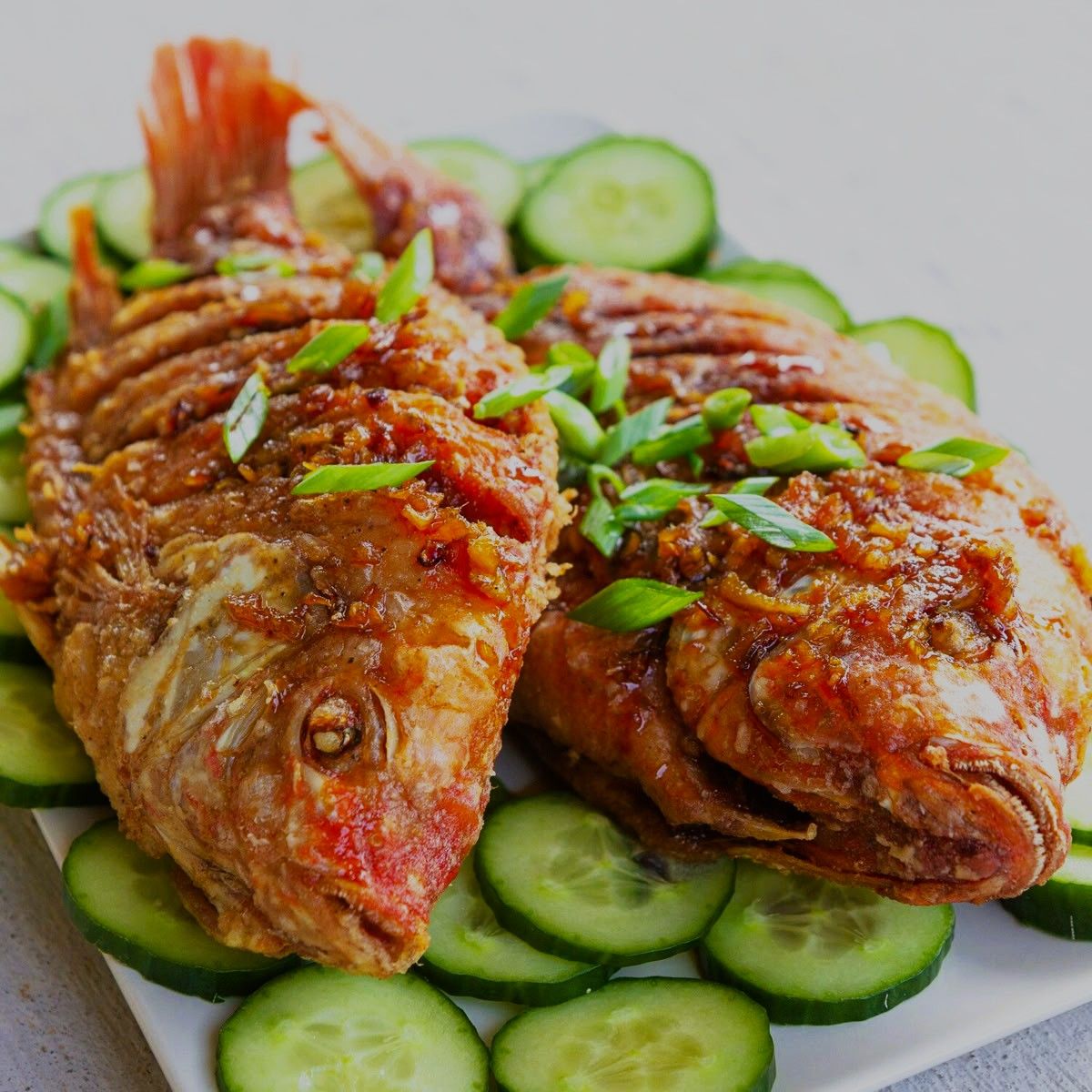
After so much spirituality, my body craves material nourishment. I ride my rental scooter to the night market in Chau Doc, sit down in a street restaurant, and have a delicious fried fish served with garlic, herbs, cucumbers, and rice, along with a Saigon beer. All this for an amount for which one would hardly get an espresso at home. Life is really tough!