
Food of Vietnam
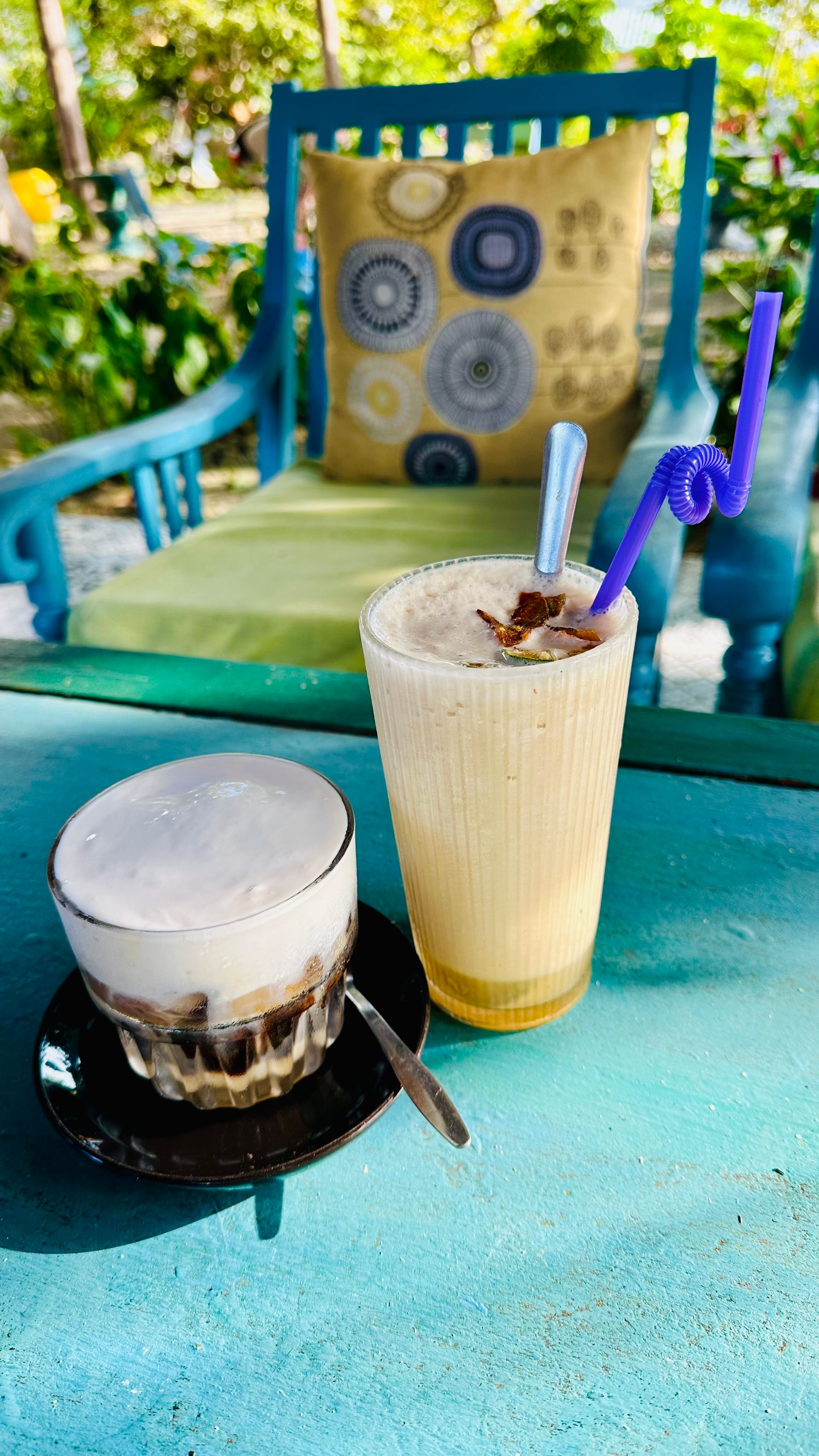
In Hoi An and Da Nang, we got to try all kinds of new dishes—as well as variations on foods we were already familiar with. The bánh mì wa

Published: 24.07.2026
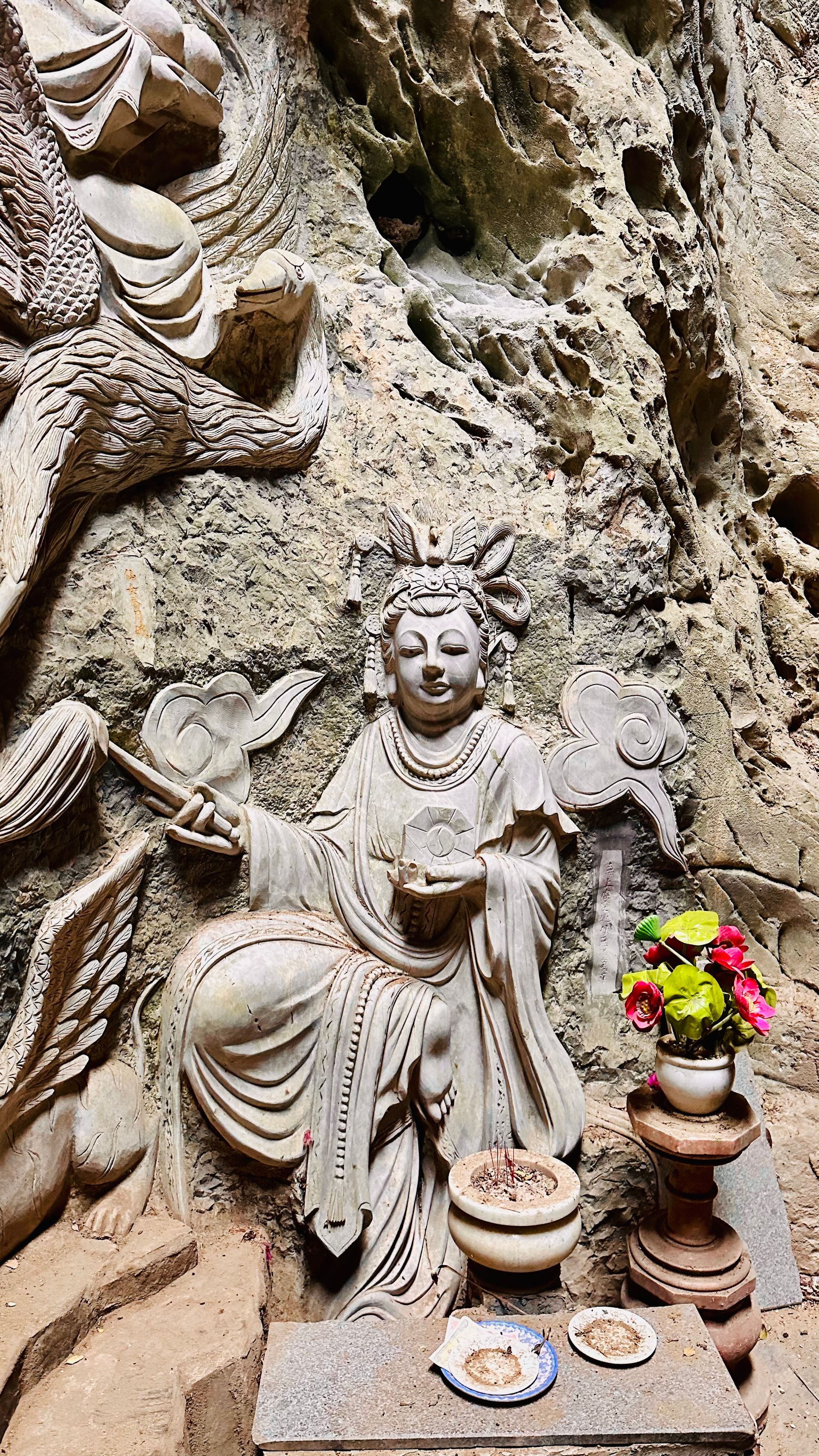
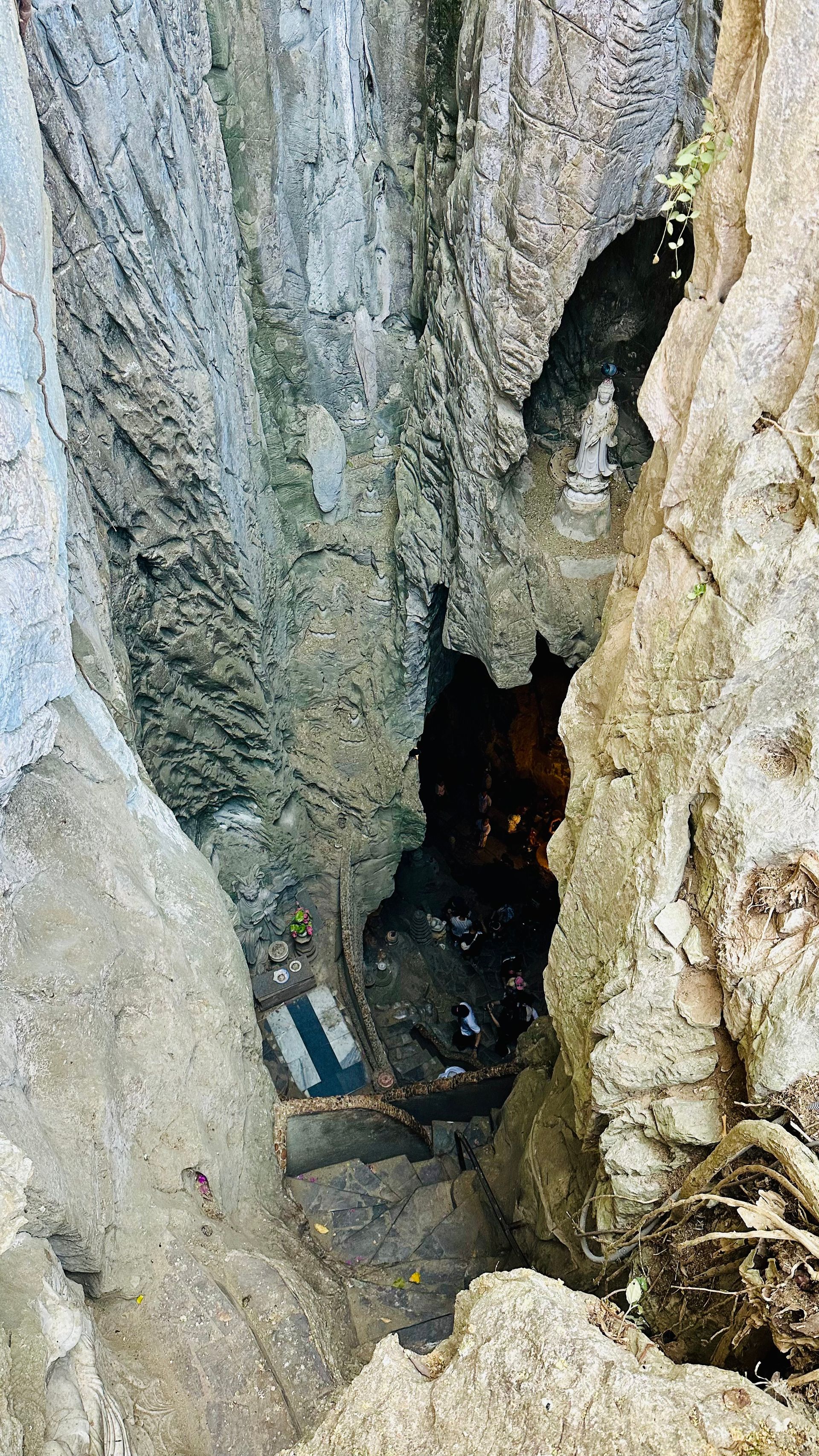
The final days of our first trip to Vietnam are upon us—a good time to squeeze in one last excursion.
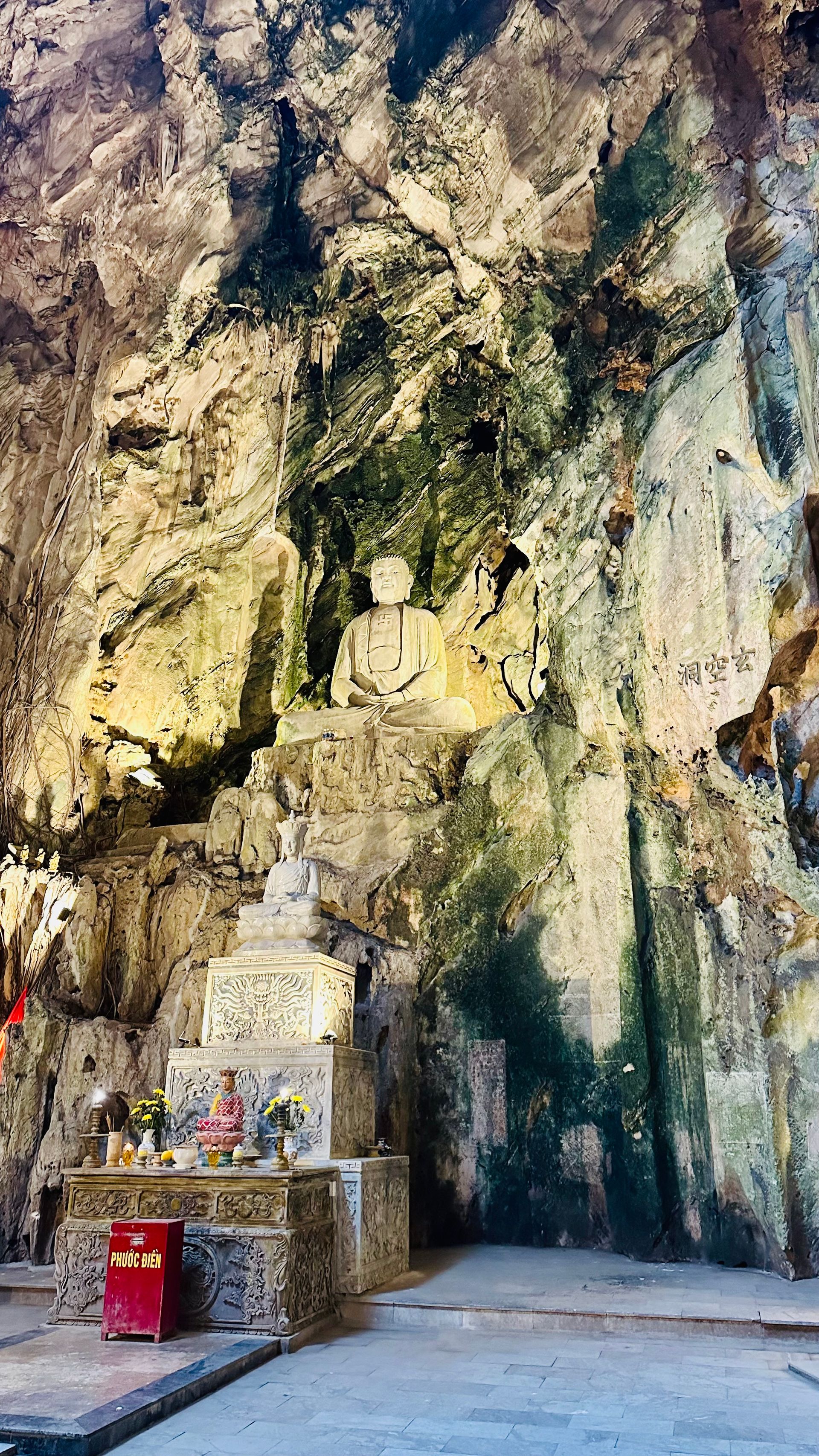
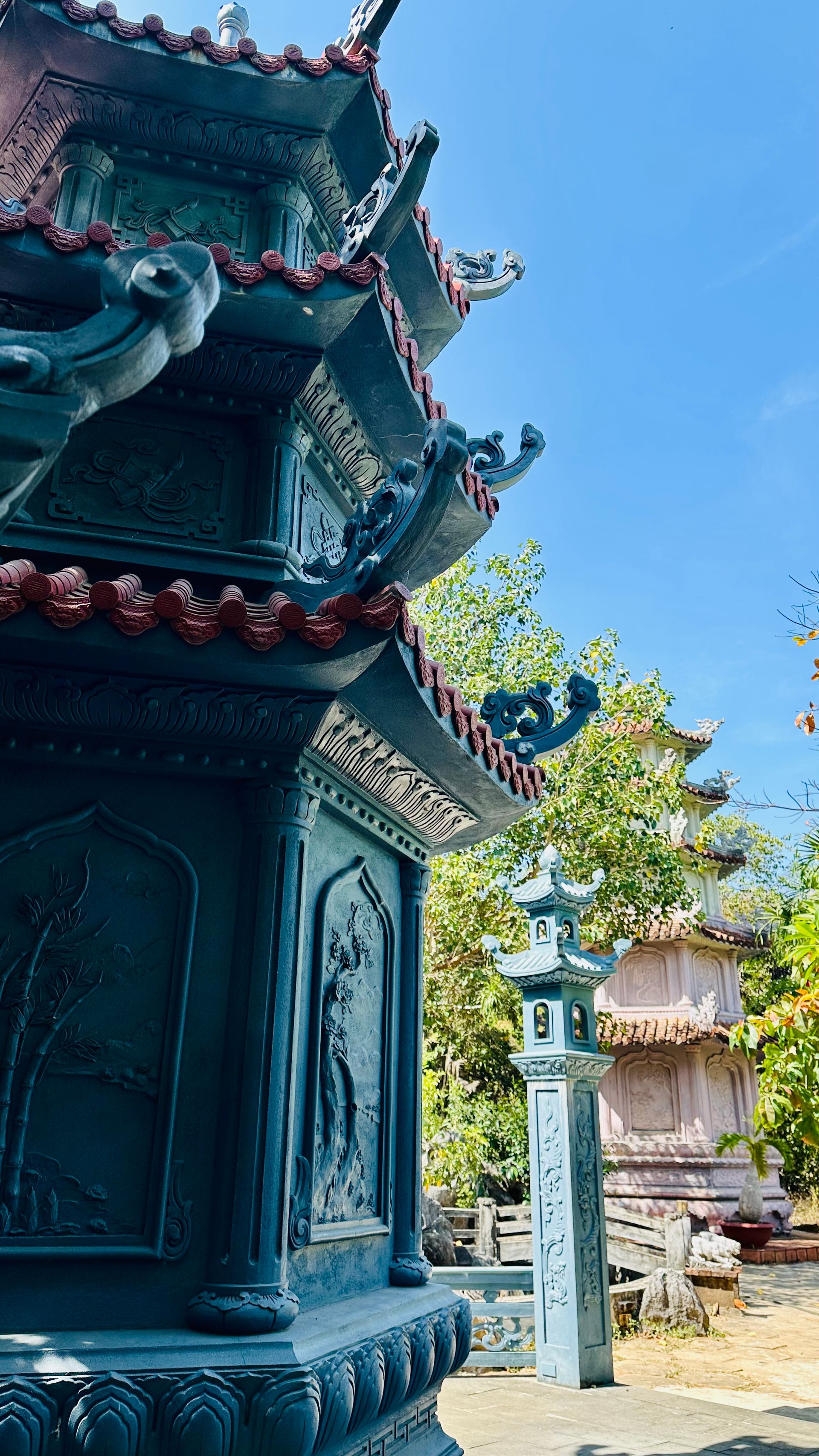
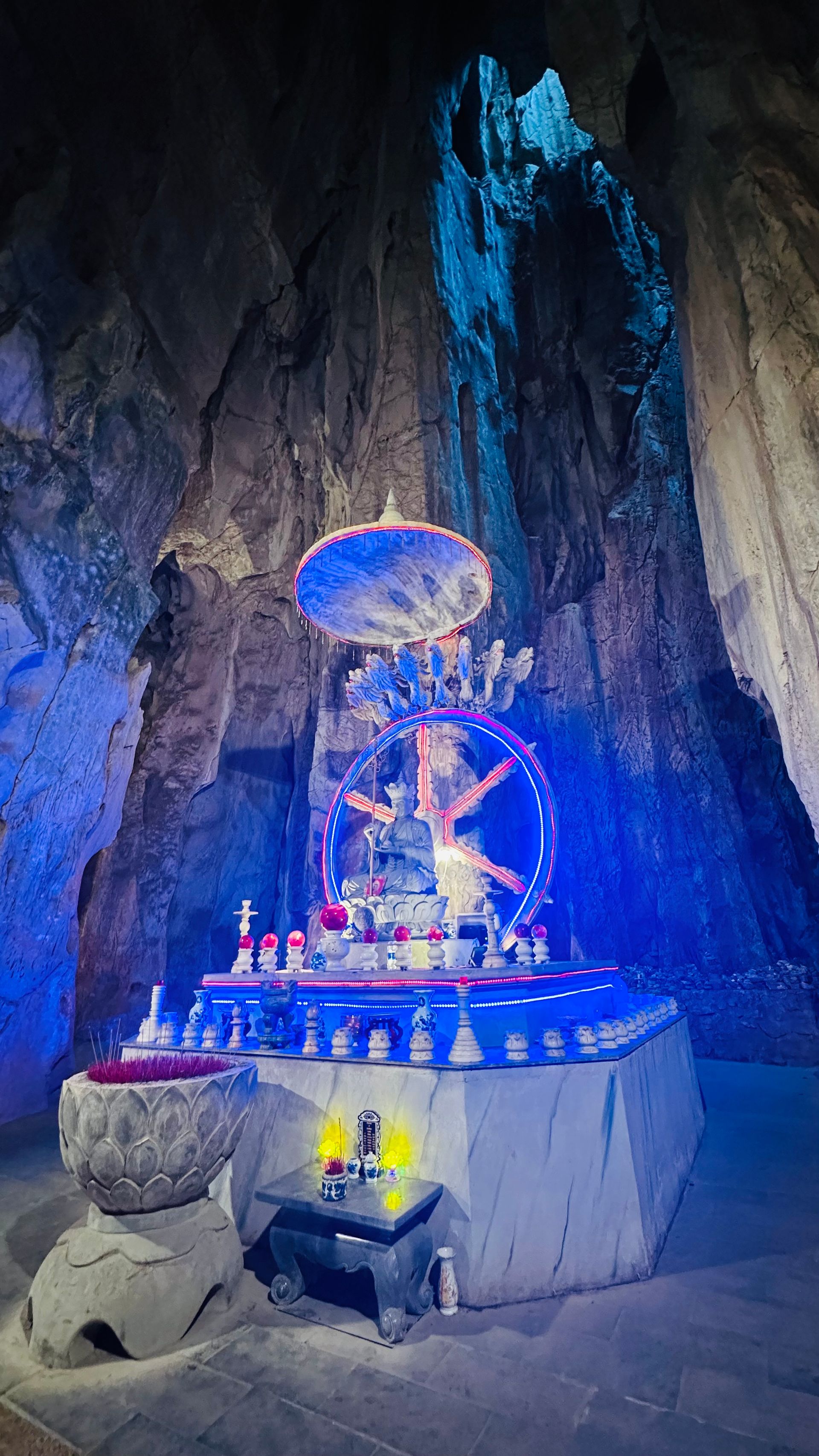
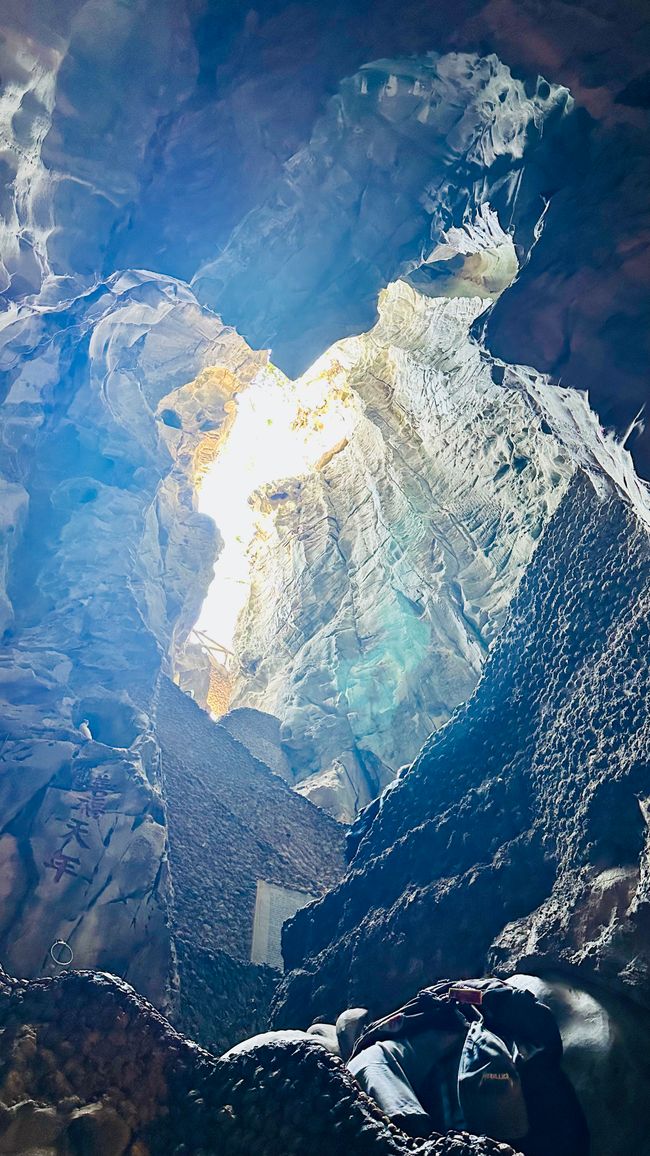
Last week, we drove to the Marble Mountains near Da Nang. They consist of five marble peaks, each named after one of the five (Chinese) elements. The Water Mountain is the most developed for tourism; it encompasses a very popular temple complex with various caves. You make your way up to the summit via steps, passing pagodas, gardens, and caves with small shrines along the way. Alternatively, you can take the elevator for 15,000 VND; general admission costs 20,000 VND.
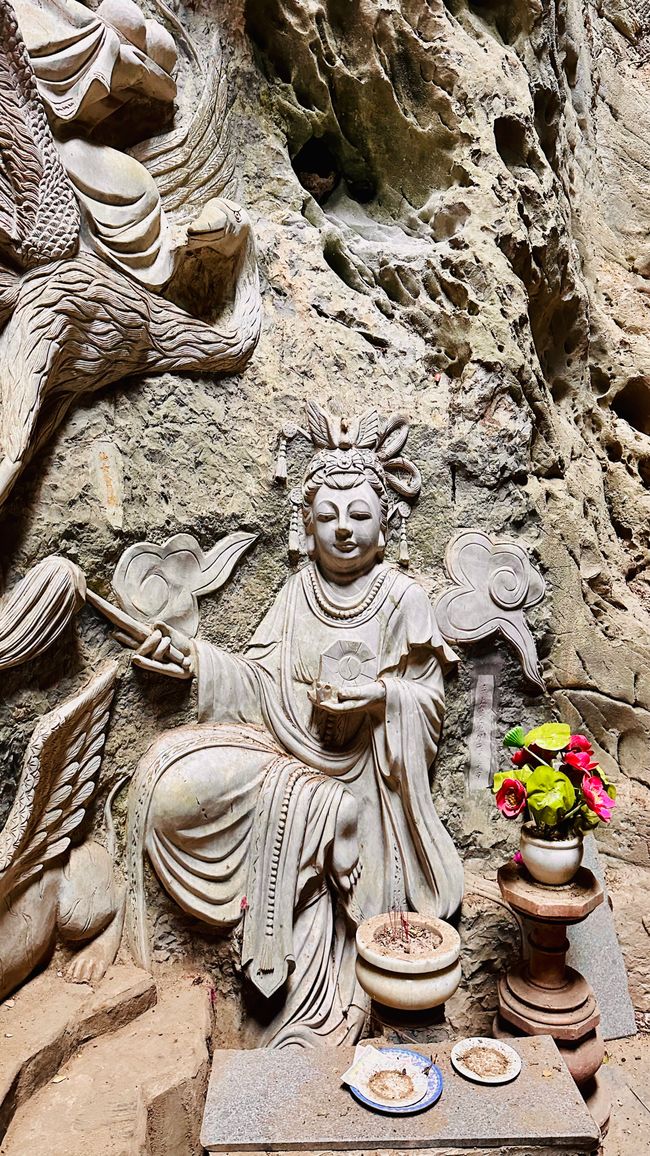
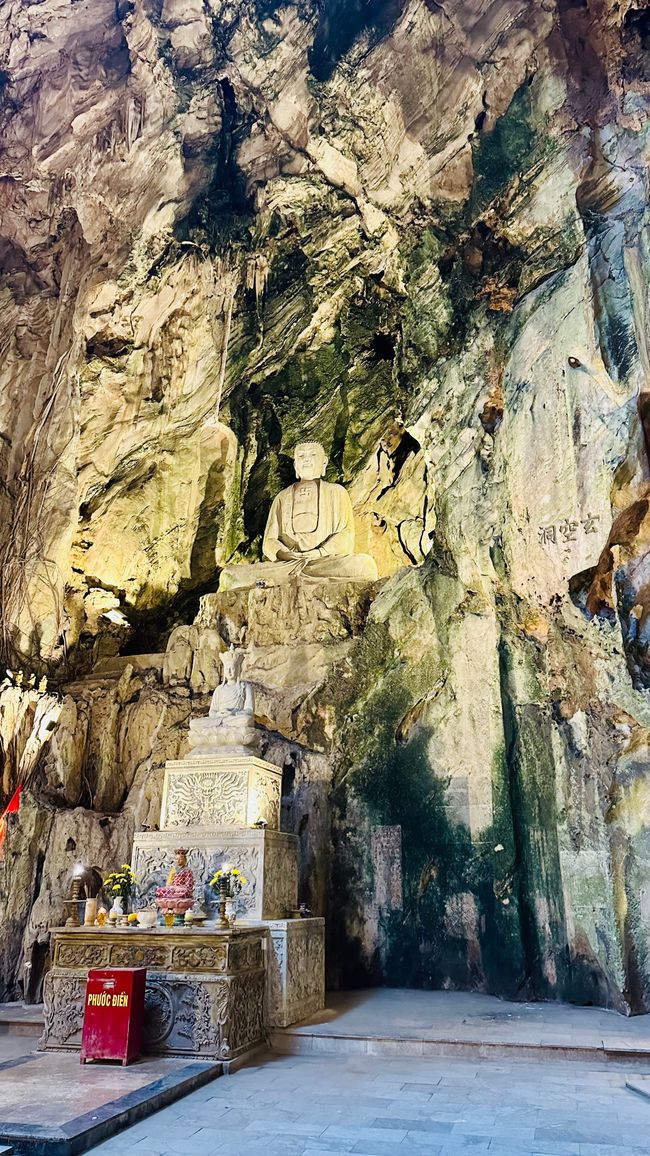
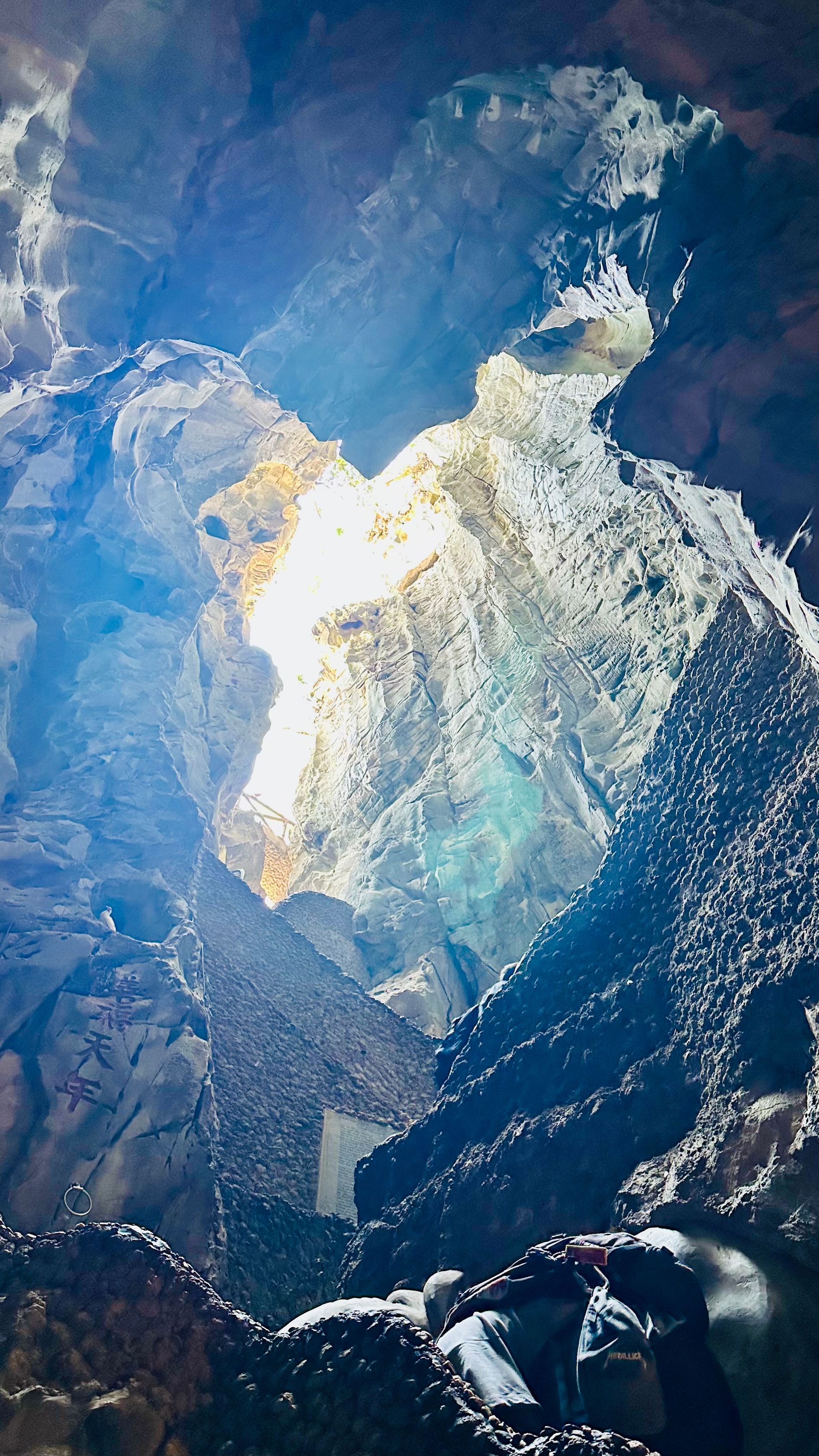
The upper area is quite spacious—so spacious, in fact, that I lost sight of Simon for a while. In one cave, there was a narrow passage leading upward that could only be navigated with some climbing. Simon preferred to wait below rather than squeeze through the tight opening. Once I reached the top, a beautiful view of the mountains and the sea awaited me—though you had to be careful not to slip, as not all viewing points were secured. On the way back, I went down a flight of stairs instead of climbing back through the hole and ended up in a completely different spot than the cave entrance. So I wandered through several other caves, looking for the right one—until Simon finally found me. It really was very sprawling up there (and, admittedly, my sense of direction isn’t the best).
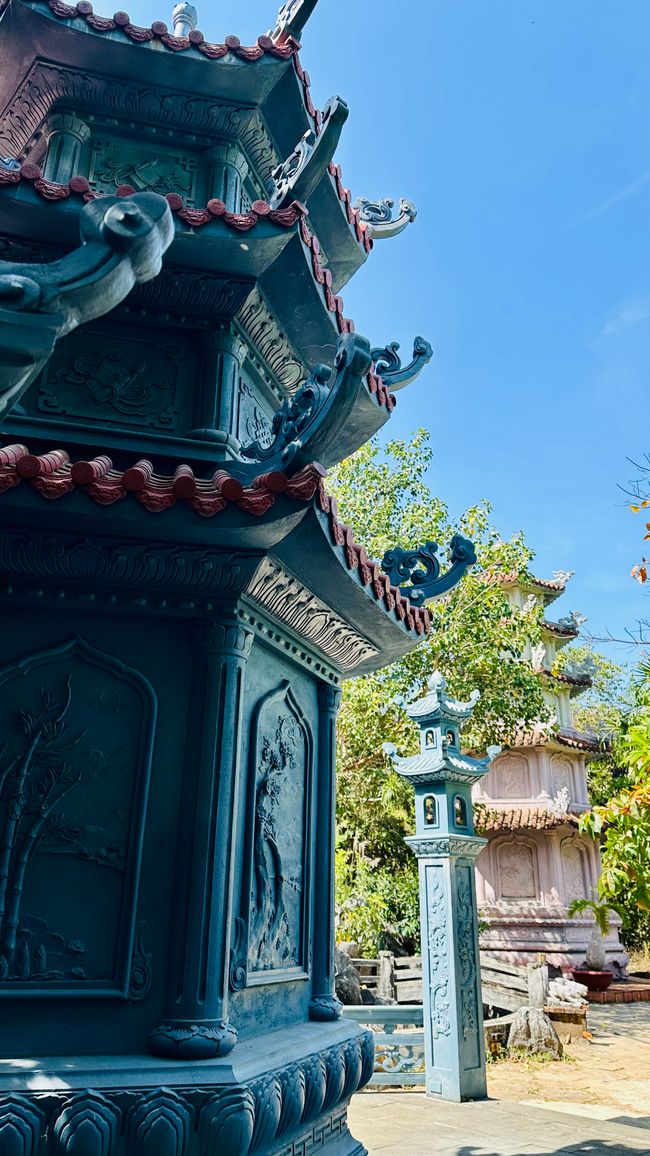
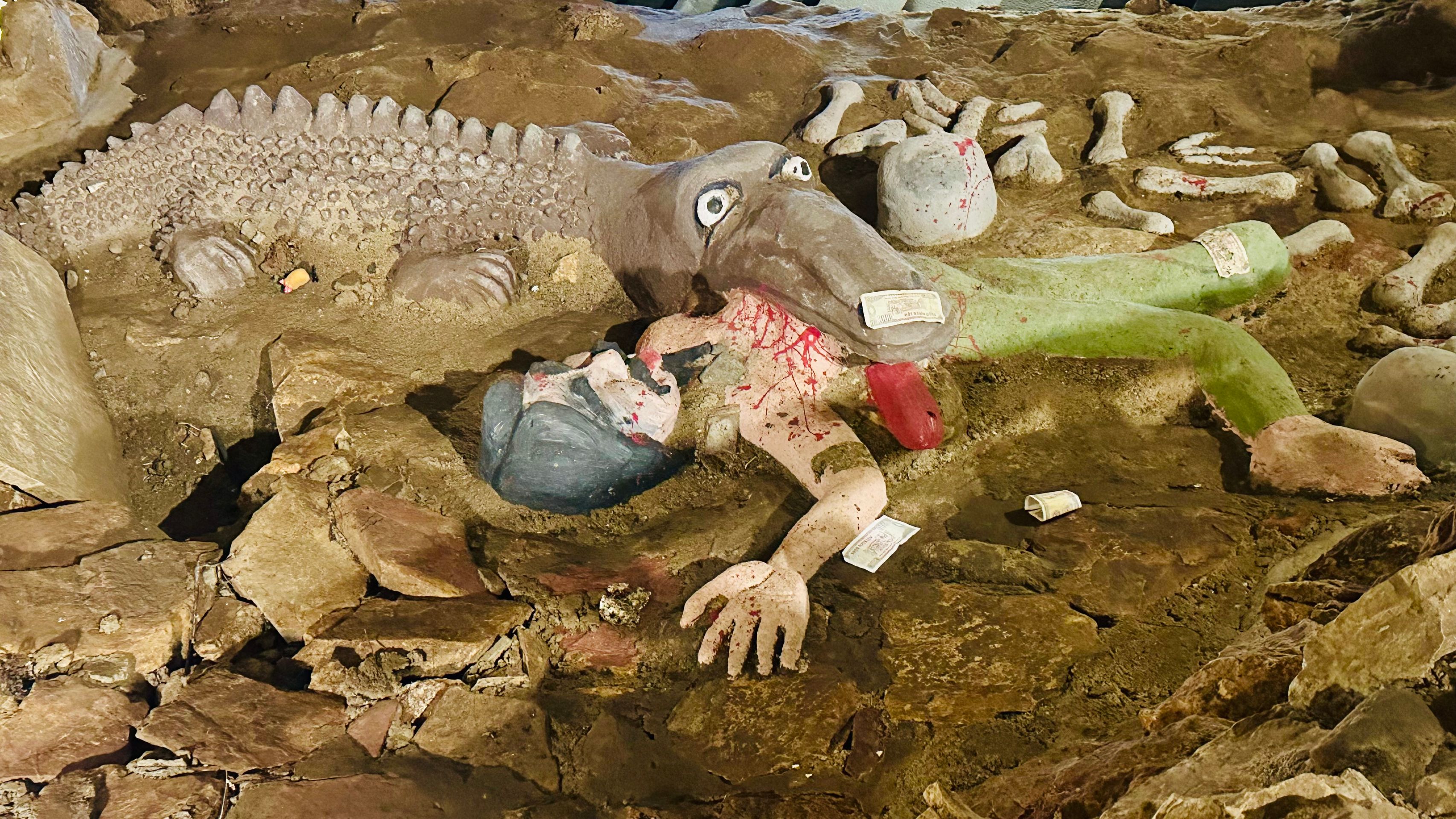
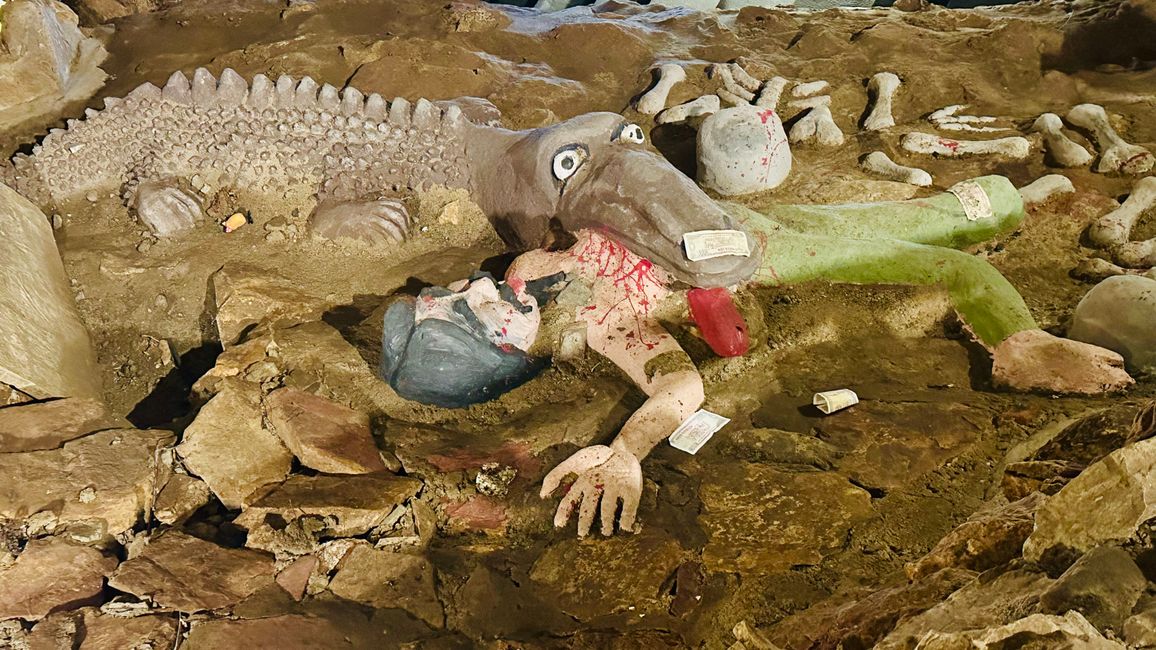
At the foot of Nui Nước is Động Âm Phủ, the Underworld Cave, which costs an additional 20,000 VND to enter. It is a spiritual site that depicts the Buddhist underworld and conveys the teachings of karma. The path begins at the Yin-Yang Bridge, which symbolizes the transition between life and the underworld, and then leads into the cave. From there, paths branch off to “Hell”—lined with painted figures carved into the rock—and to “Heaven.” To reach the latter, you’ll need to climb quite a few more steps, but once you reach the top, you’ll be rewarded with a fantastic view of the city and the sea.
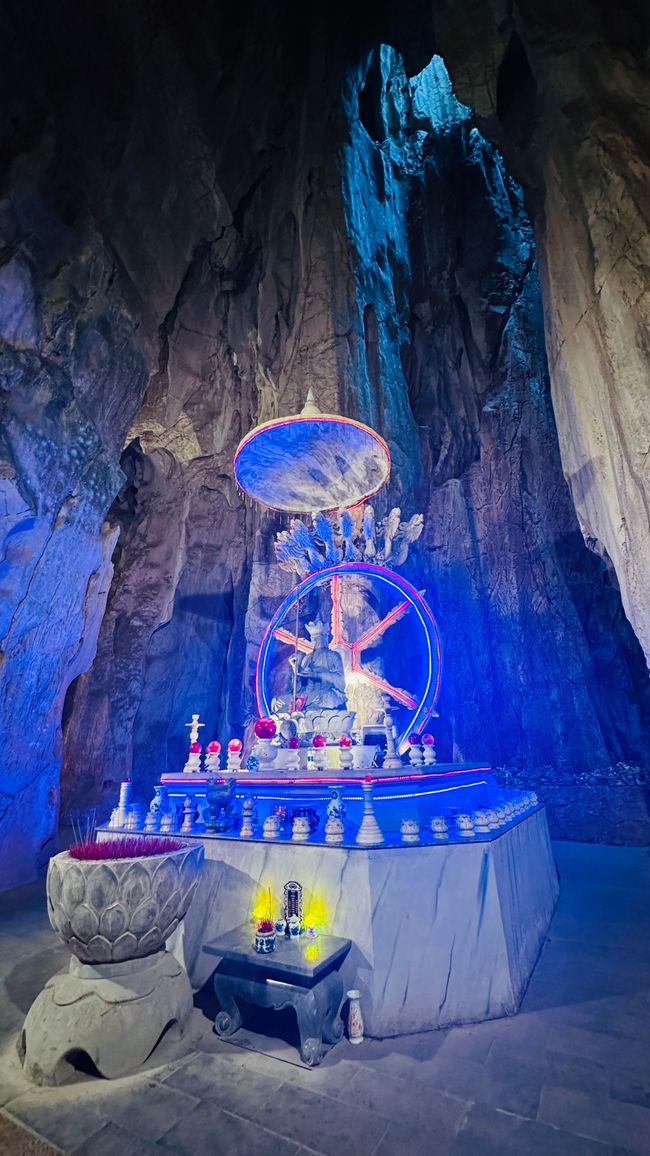
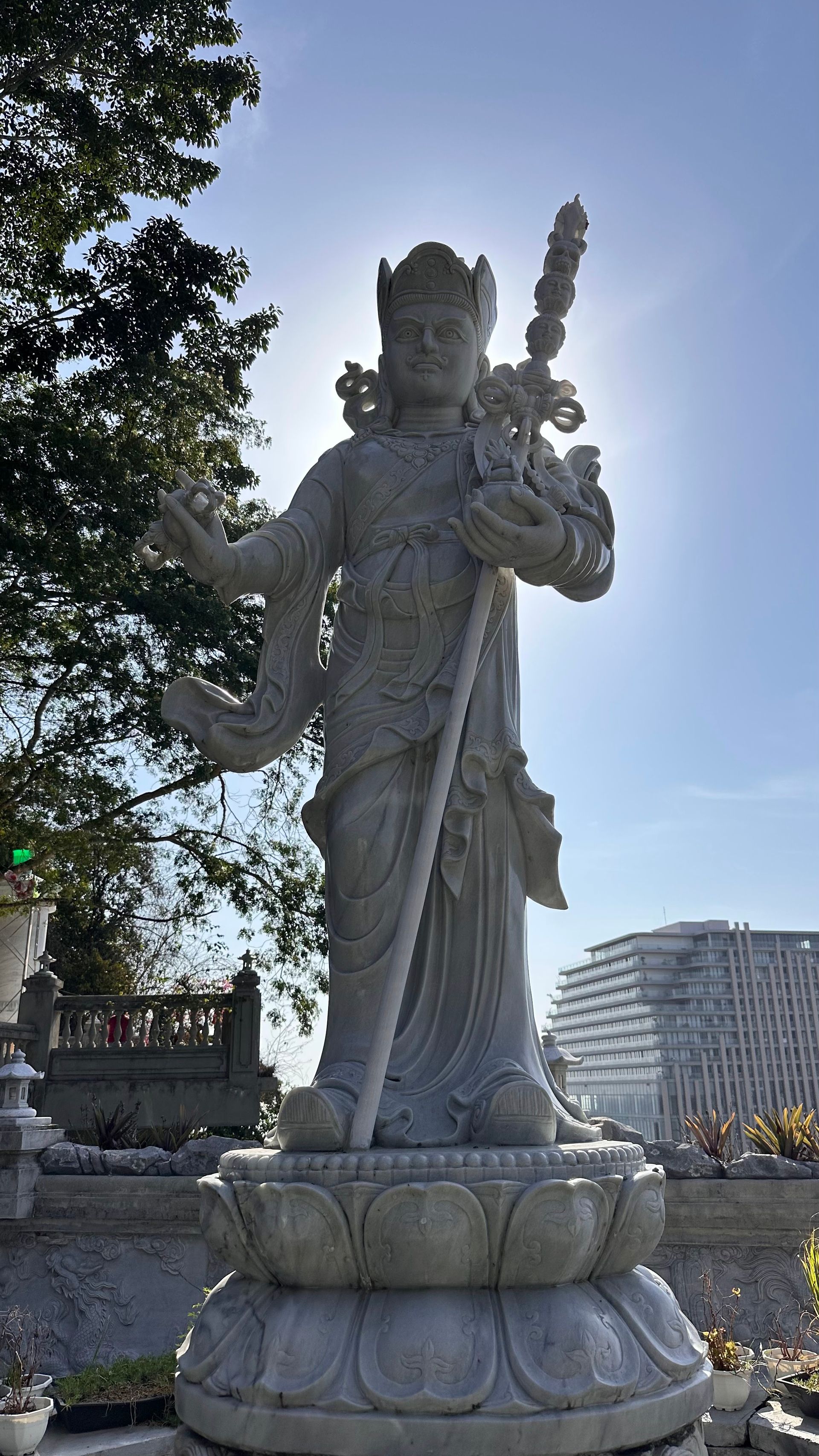
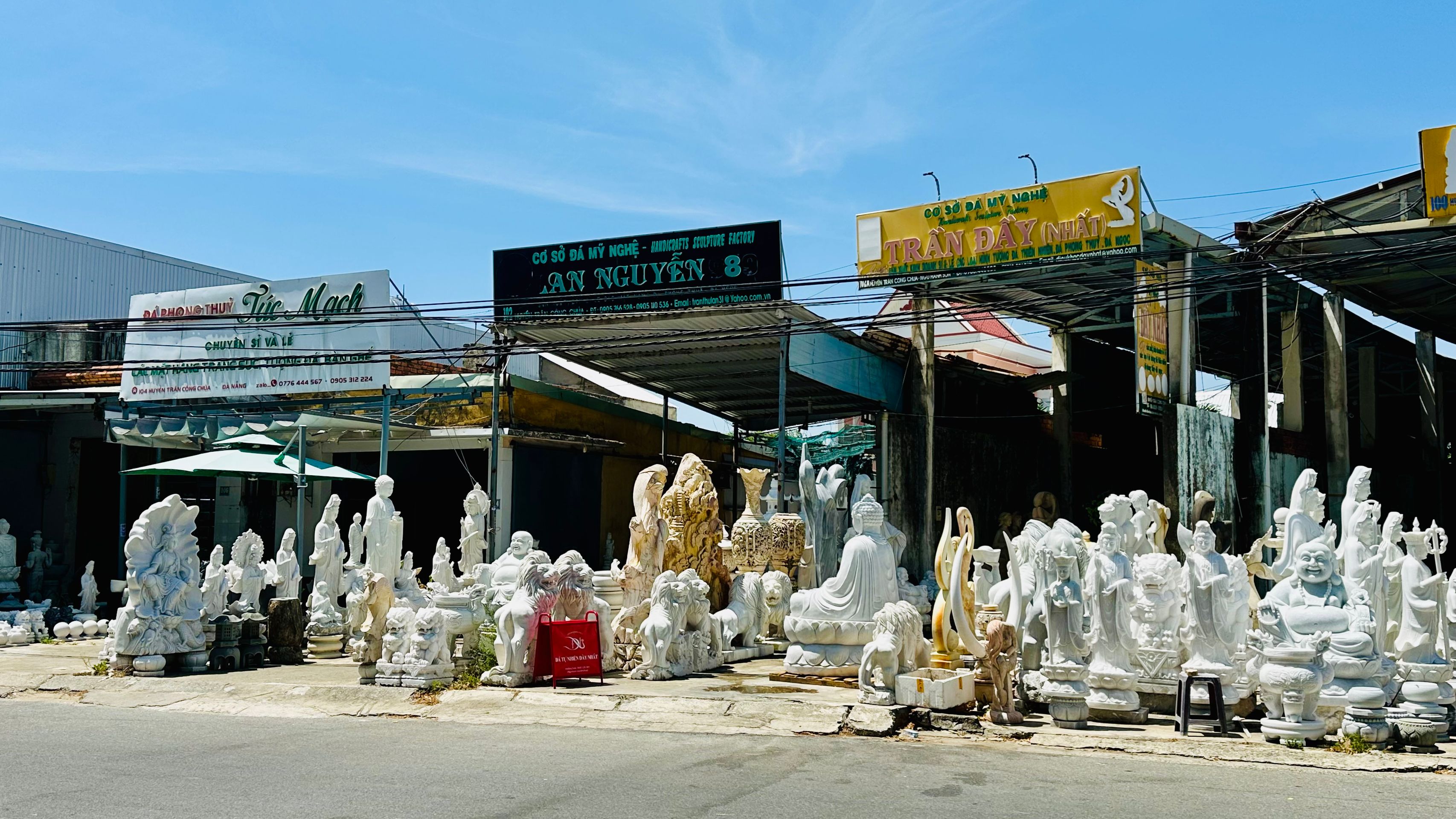
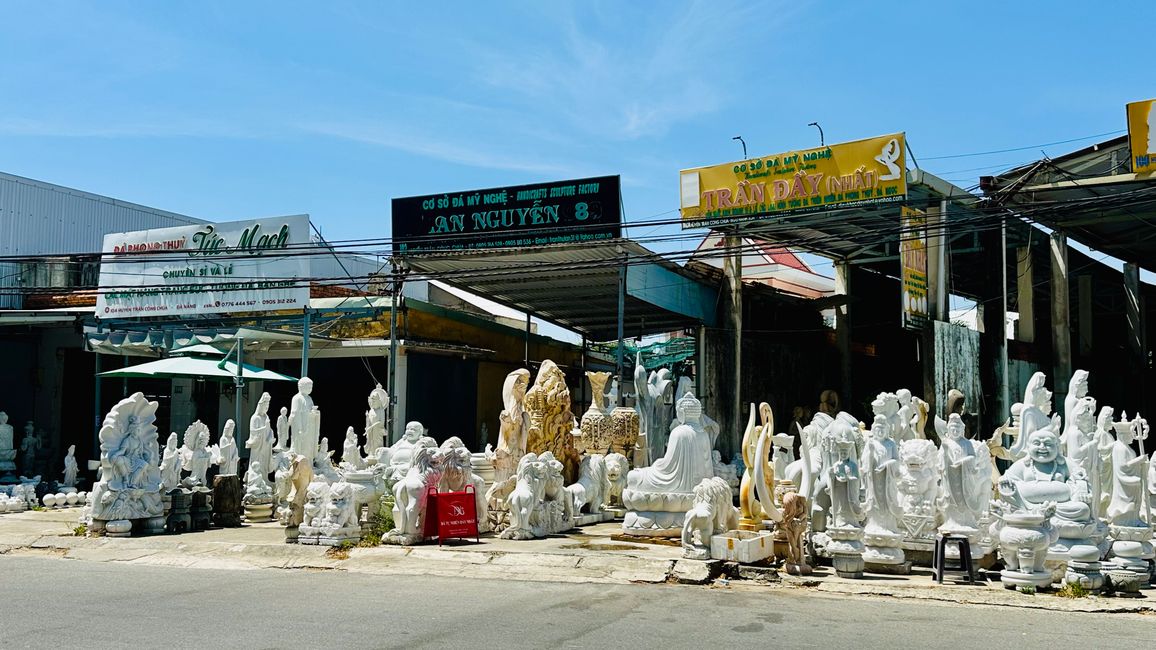
Around water mountain, there are many stonemasonry workshops with highly artistic sculptures—some of which are also on display in the water mountain garden and along the promenade in Da Nang.
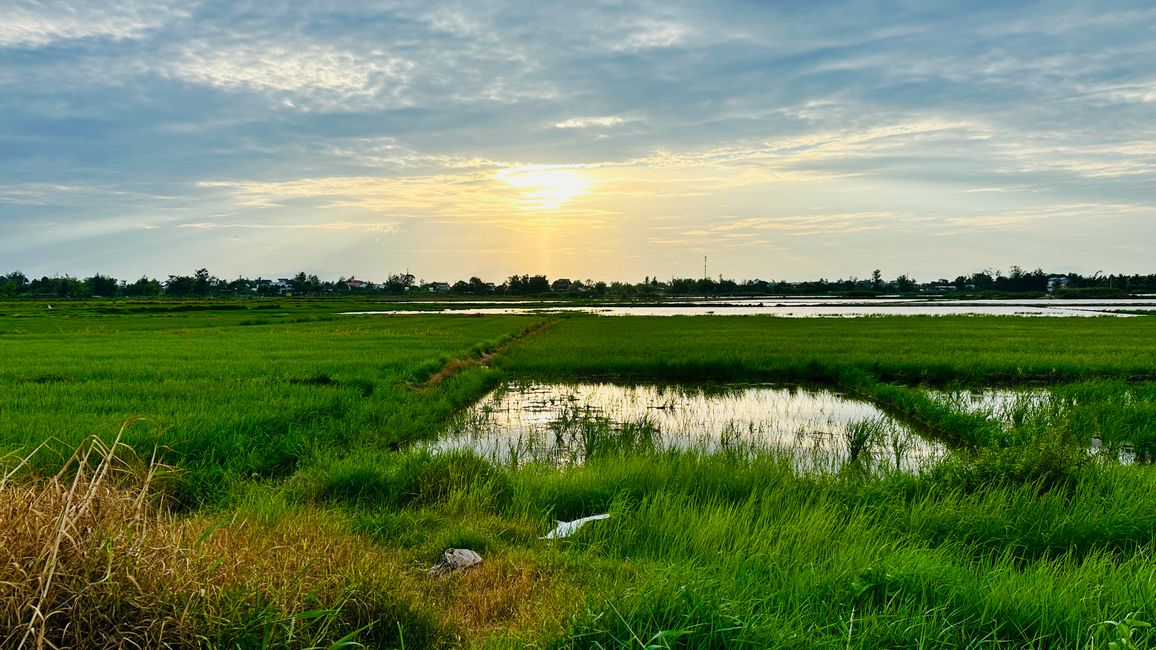
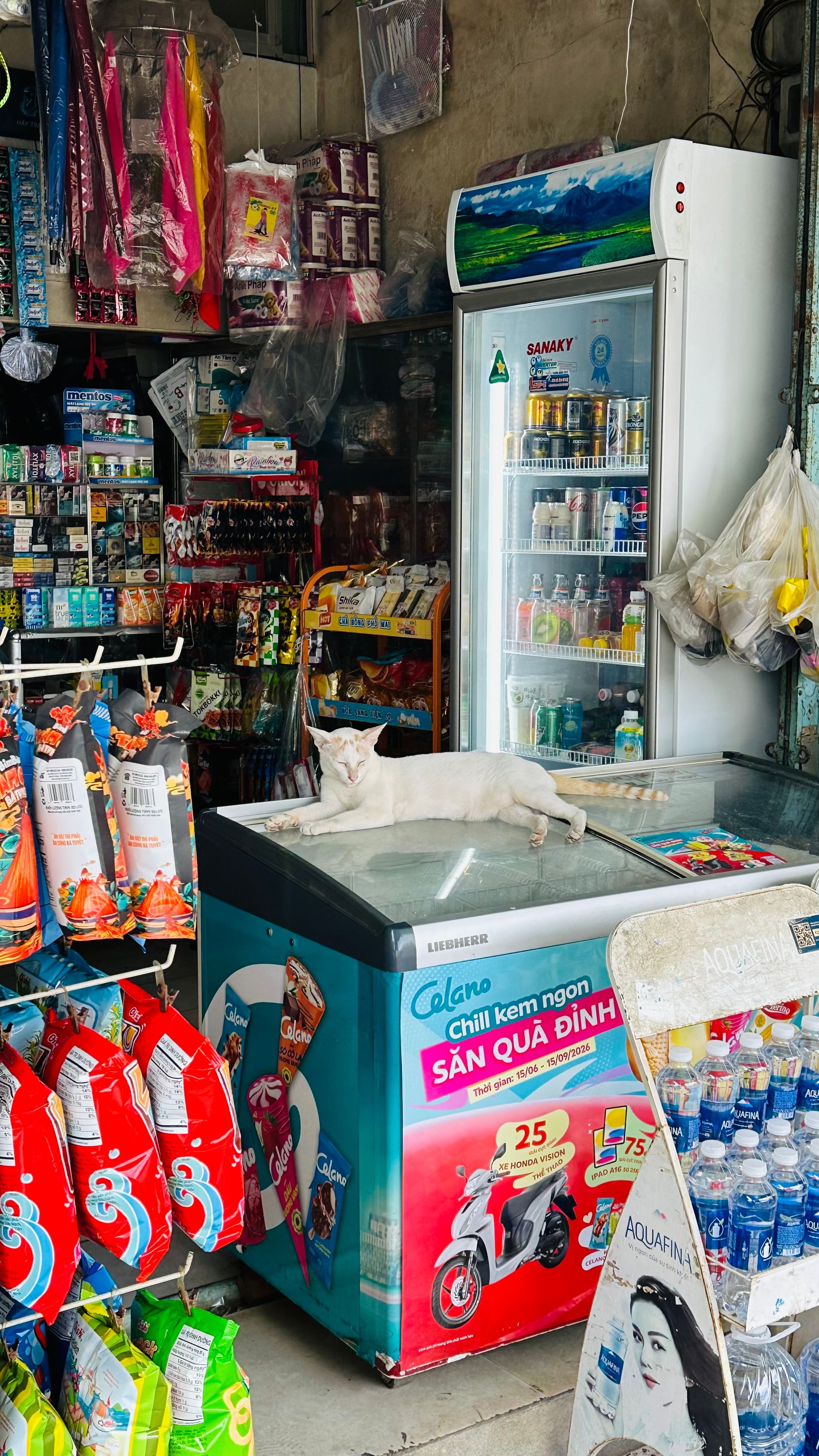
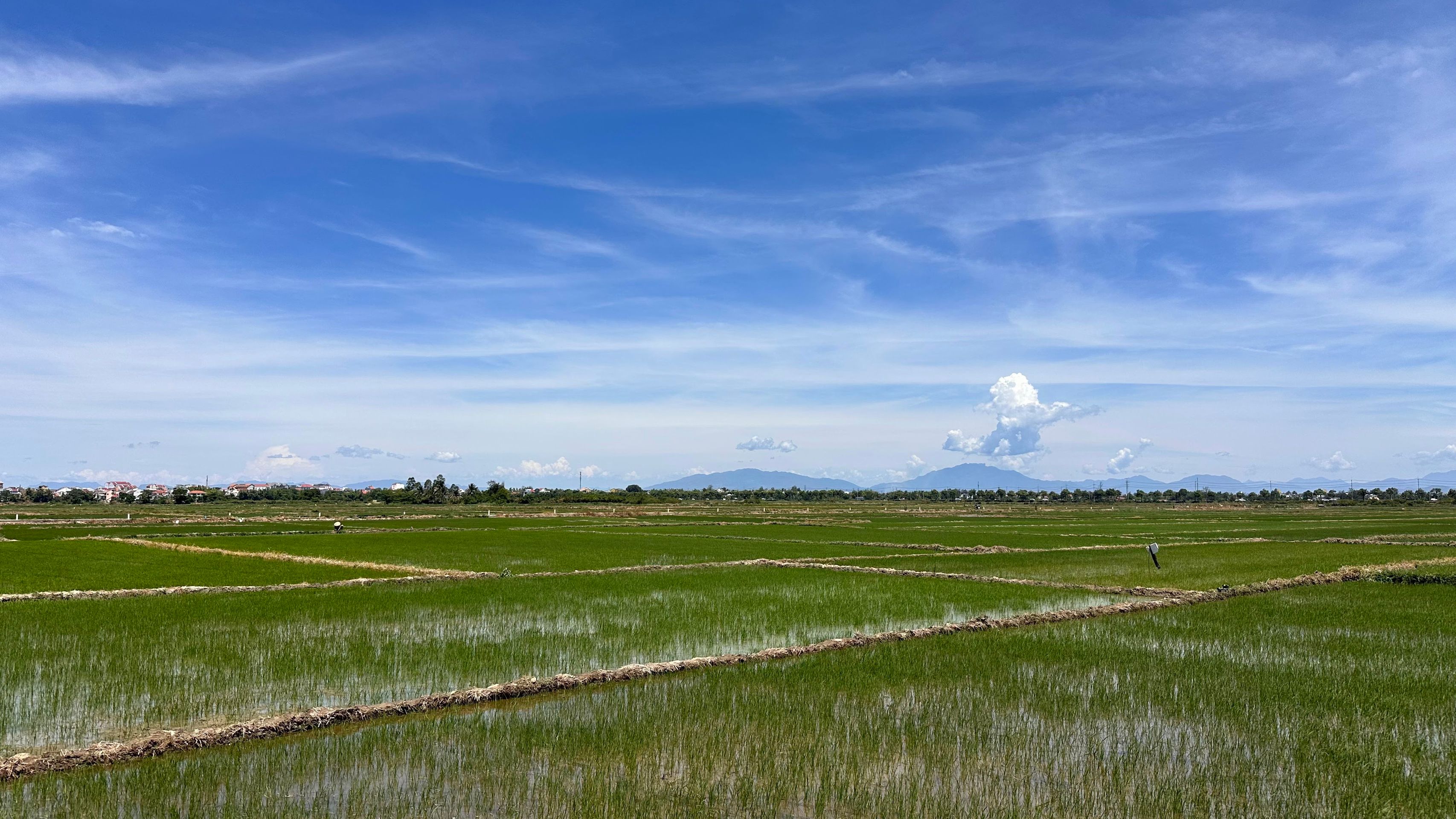
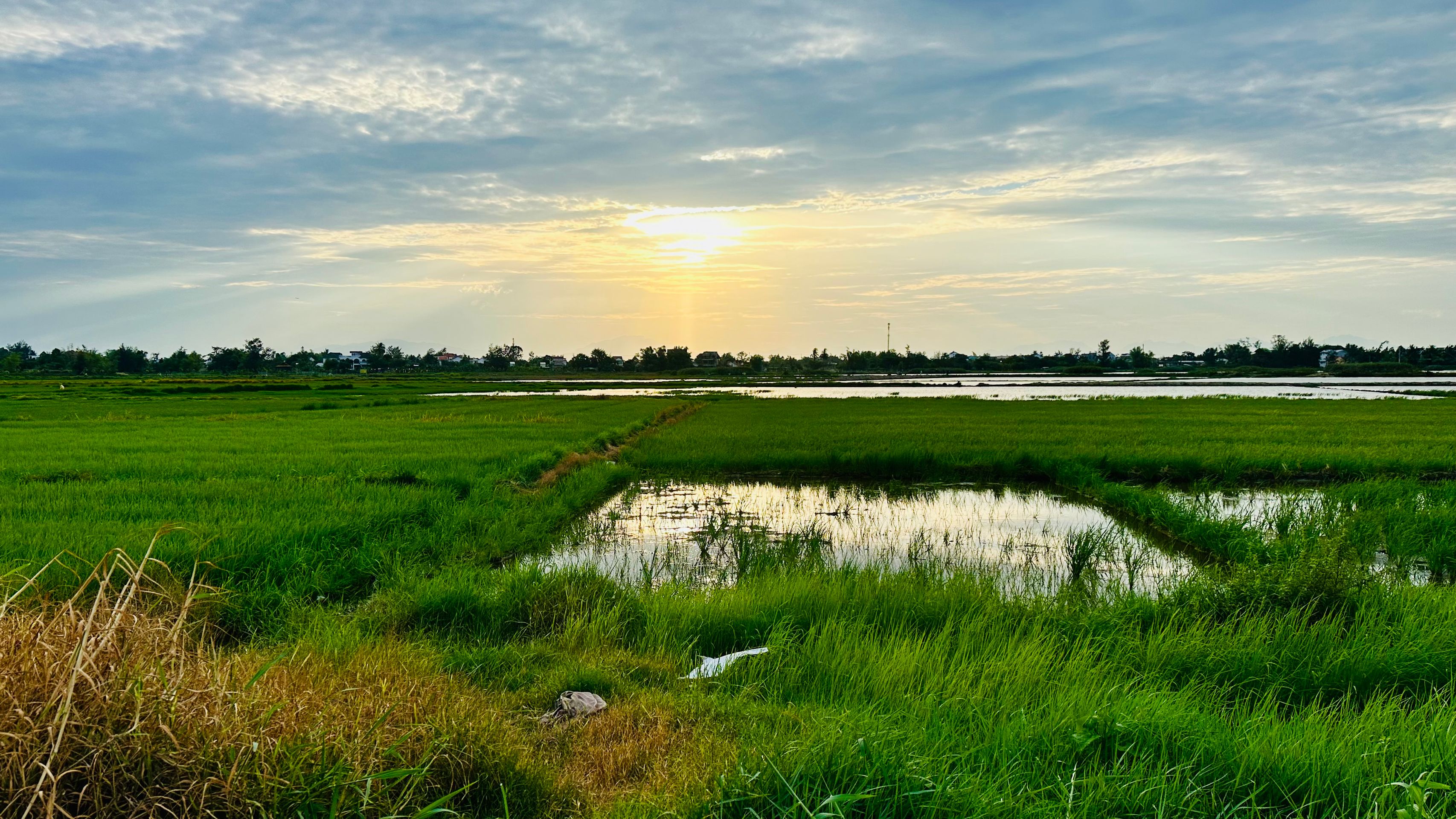
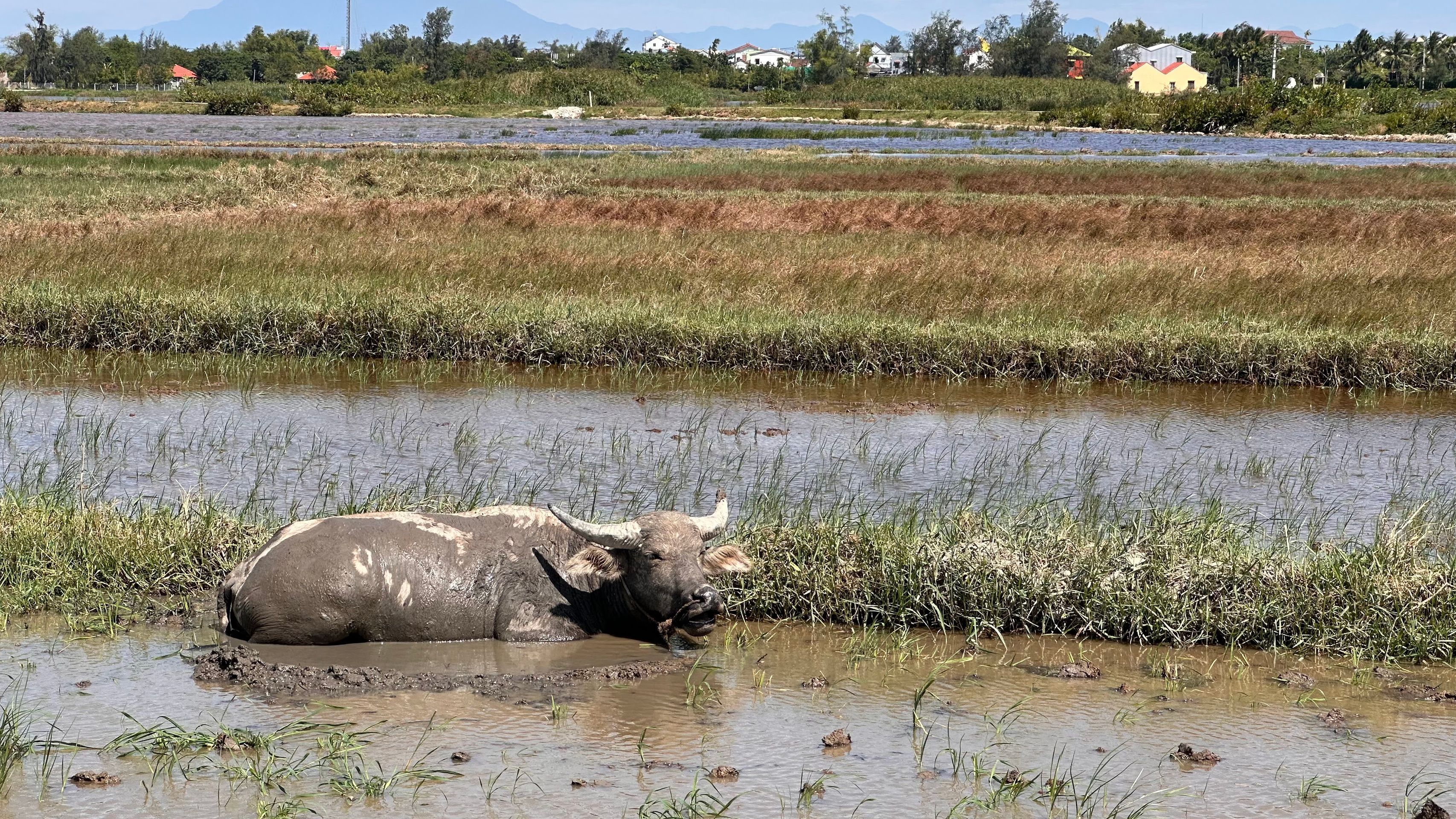
Over the past few days, we haven’t planned too much; instead, we’ve just let Vietnamese daily life sink in—because there are some things you only really notice after a while.
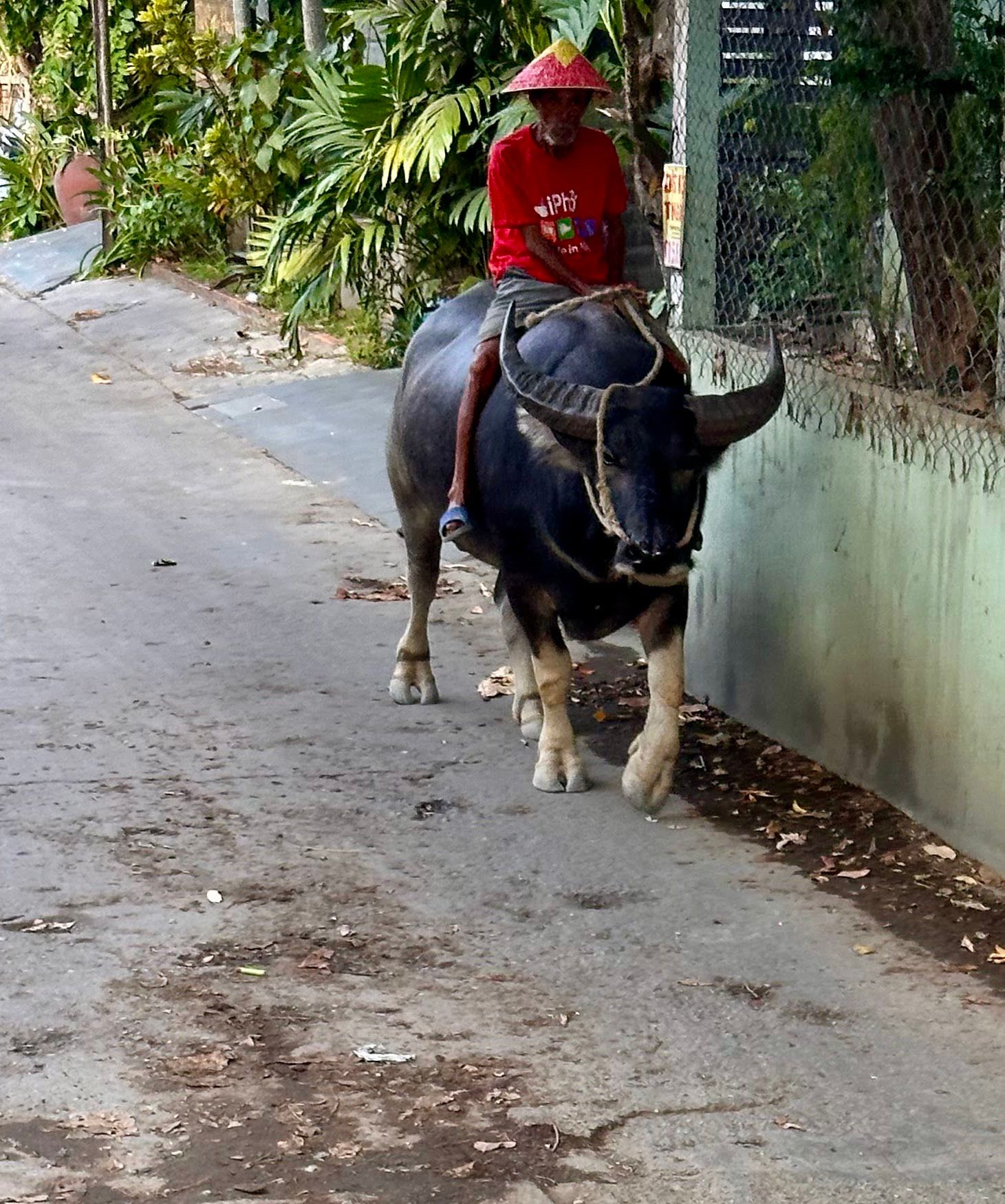
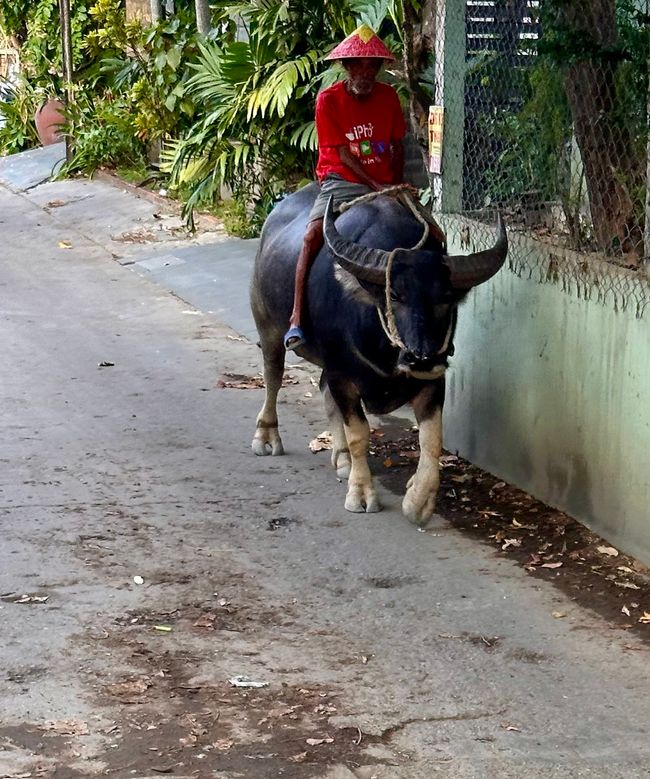
The Vietnamese consistently protect themselves from the sun and avoid the midday heat. Many shops close between noon and 2 p.m., and on their scooters, the locals are wrapped up in hoodies—women often even wear a long-sleeved hooded jacket that reaches down to their ankles. The classic hat made of palm leaves and bamboo is also still widely used and is worn for sun protection both on scooters and in the fields. You can buy one in various sizes at almost every souvenir stand.
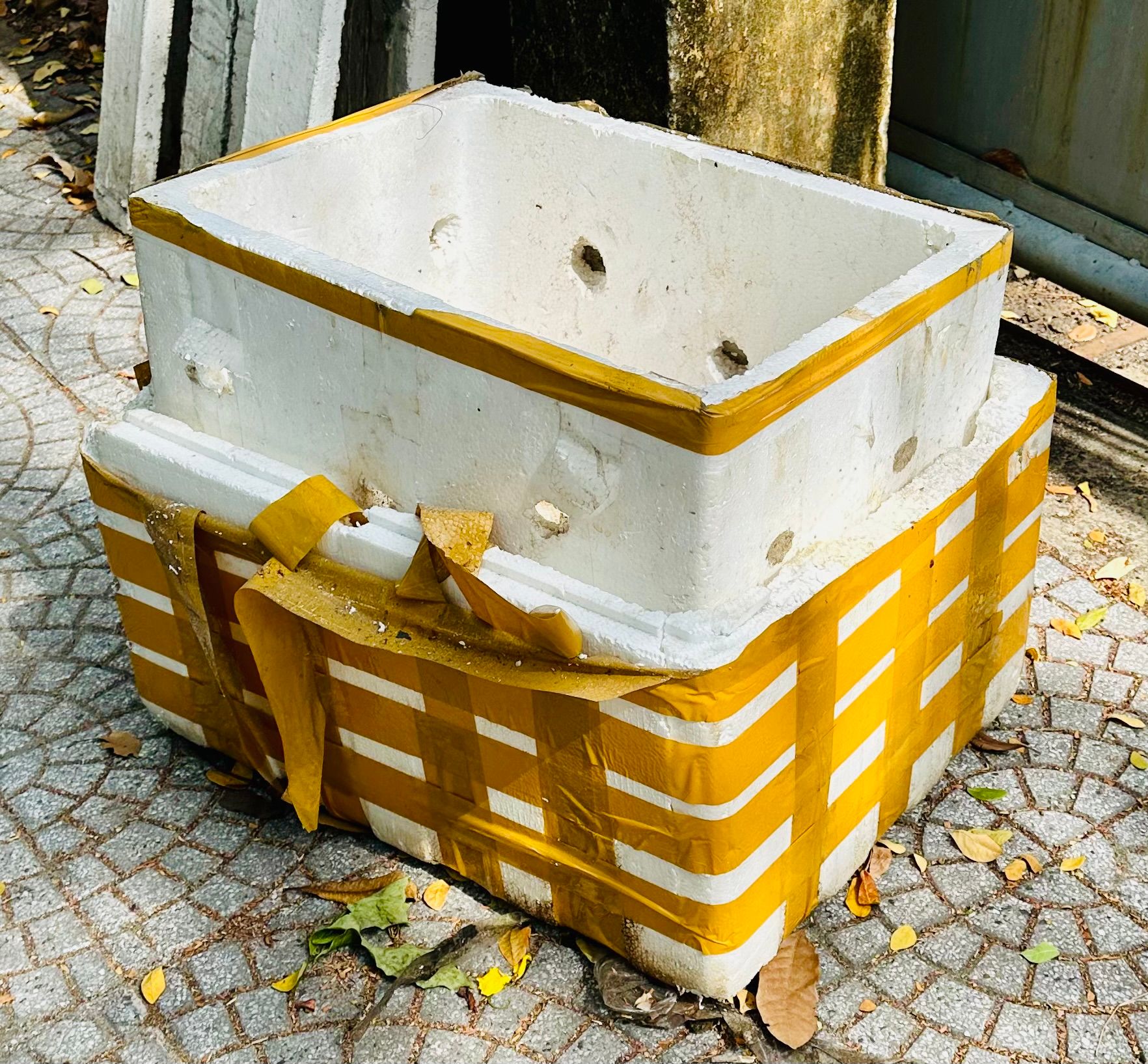
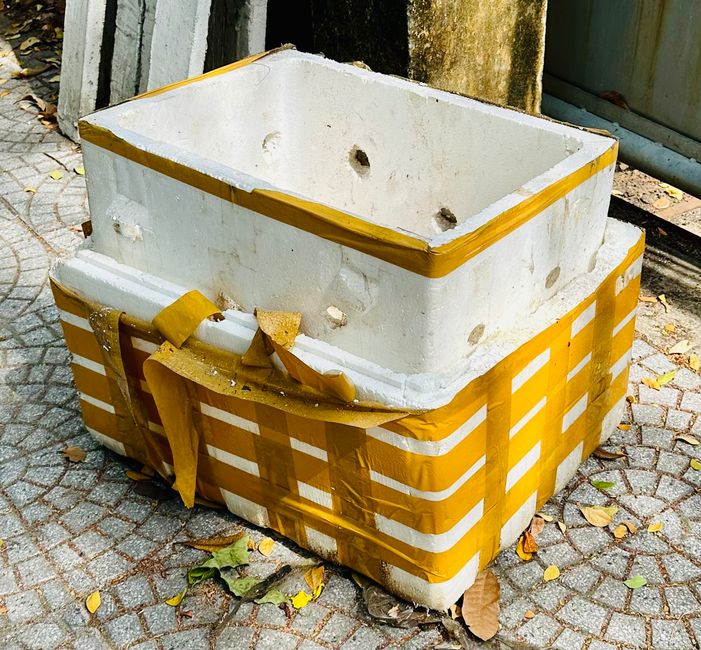
For a while, we wondered why there were so many Styrofoam boxes lining the roadside—until the garbage truck drove past us one day. The boxes, which are otherwise commonly seen on fishing boats, are used in Hoi An for collecting trash. In general, waste management in Vietnam is still somewhat rudimentary: In large cities, trash is collected, though without much sorting; in rural areas, it’s burned, and there are workers who sell plastic waste to recycling facilities.
Unfortunately, people still smoke a lot in Vietnam—even in restaurants and stores, which can be a bit overwhelming over time. That might also explain why so many locals have a chronic cough. In that context, you also notice people spitting or blowing their noses on the side of the road—it’s not something you get used to easily.
It was also striking that, outside of restaurant menus, there are hardly any English translations in Vietnam. Even information signs at tourist attractions are usually in Vietnamese only. Coming from Thailand, I’m used to a much wider use of English signage, which makes traveling there noticeably easier. So in Vietnam, the Google Translate app isn’t just the best travel companion when it comes to food.
We had a wonderful time here—making nice acquaintances and enjoying the pleasant feeling of having a bit of a routine now and then. It was nice to know where and when a store was open or when something was happening, rather than always chasing after something new and trying to see and experience everything in the shortest amount of time possible. We’ll be traveling to the Philippines in a much more relaxed state of mind than when we first arrived here from Singapore.
We were especially happy to meet Ben and to wander through the city with him, trying out new things. I hope he comes to visit us soon—then we’ll explore Palawan together.
We’d love to come back to Vietnam, because there’s still so much to see and discover. And the locals—despite all the cultural quirks that take some getting used to—are friendly and helpful across the board.