

Hue and Da Nang
We decided to take a few days off from our vacation. Above all, though, we wanted to explore a few nearby places, so we booked two seats on a bus to spend a few days in t


Published: 24.07.2026
In Hoi An and Da Nang, we got to try all kinds of new dishes—as well as variations on foods we were already familiar with.
The bánh mì was the easiest place to start. It’s the Vietnamese equivalent of a filled wheat roll, though it contains rice flour, which makes the crust crispier and easier to bite into without tearing. It’s usually filled with various herbs like basil, mint, and cilantro, as well as vegetables such as cucumbers, white radish, tomatoes, and onions, with a type of soy sauce as the base. For toppings, you can choose from a fried egg or various pork options (crispy, BBQ, etc.). There are also fillings featuring chicken, pâté, fish, or cream cheese. We really enjoyed eating at “Bánh Mì Queen” in Old Town, and for Grab orders (delivery service), “Tuktuk Thai Lan Cafe” was our top choice.
The bánh mì also has an interesting origin story: It dates back to the colonial era around 1850, when French occupiers wanted to continue enjoying their beloved baguettes even though wheat was being imported at high cost. As World War I raged in Europe, wheat became scarce, and Vietnamese bakers had to get creative. They mixed the wheat flour with rice flour, which made the bread easier to bite into and allowed it to be used as a sandwich—previously, the “bread topping” had been eaten separately. Starting in 1954, the bánh mì became widespread throughout Vietnam in its sandwich form and was sold cheaply at street stalls.
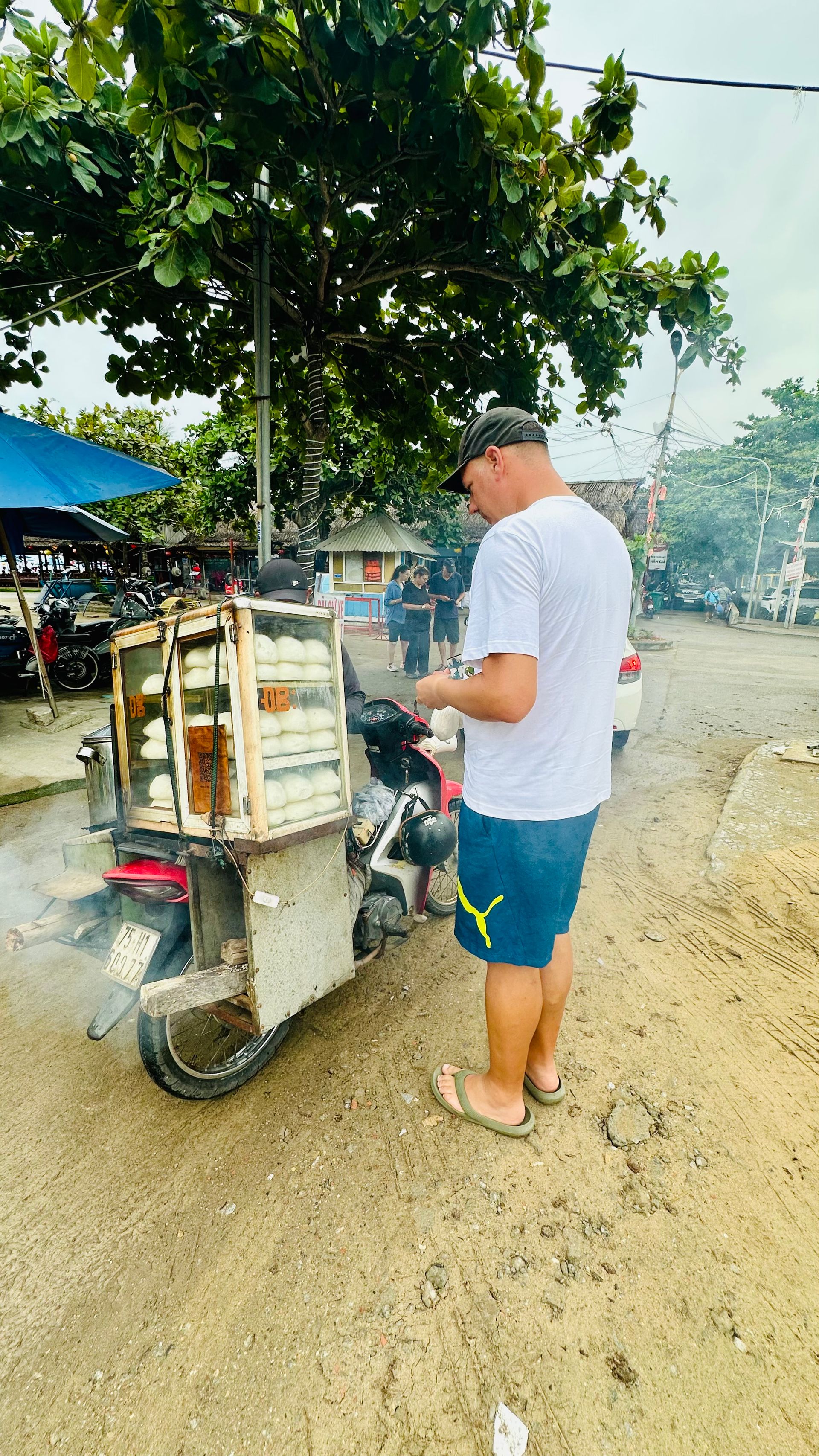
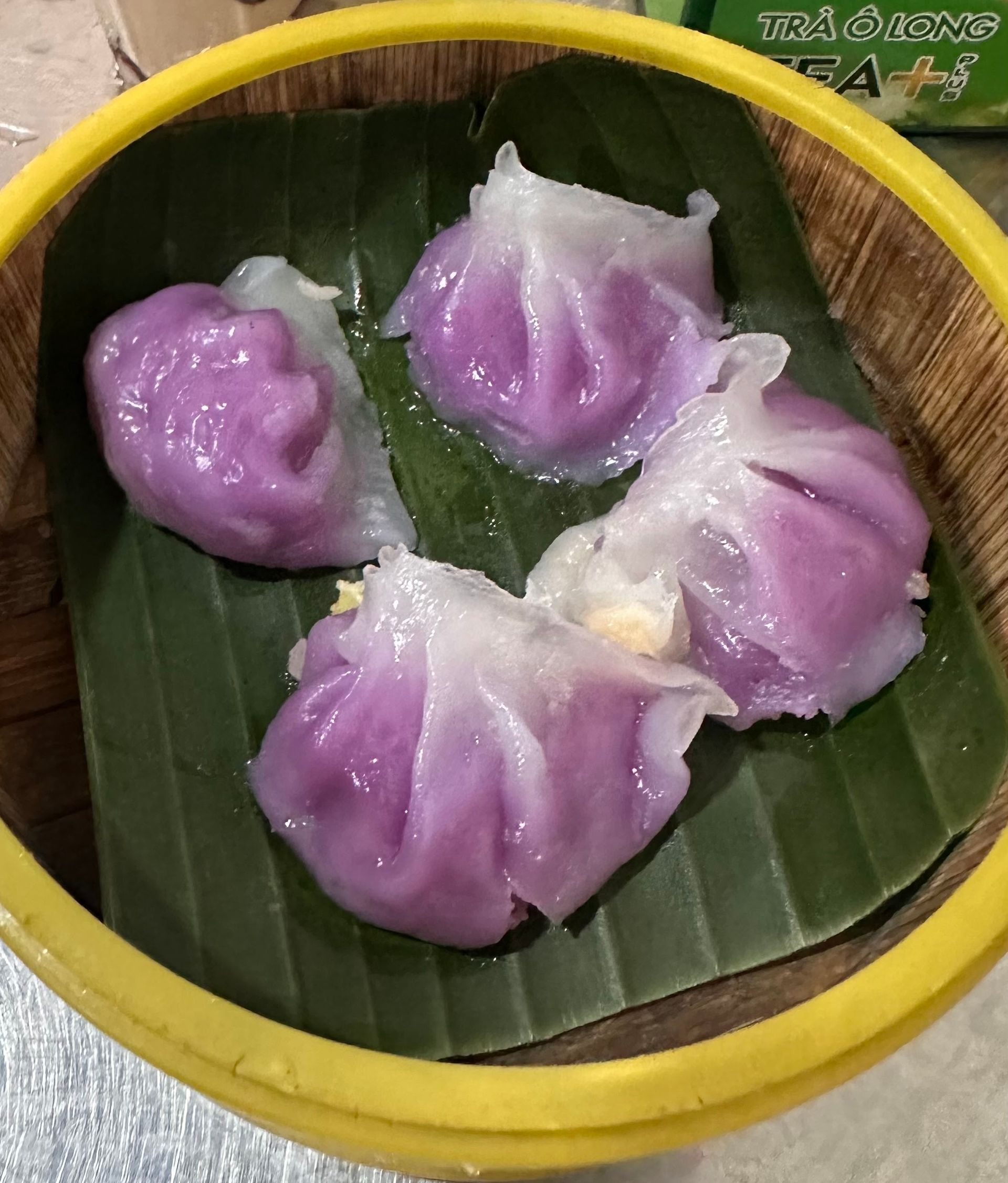
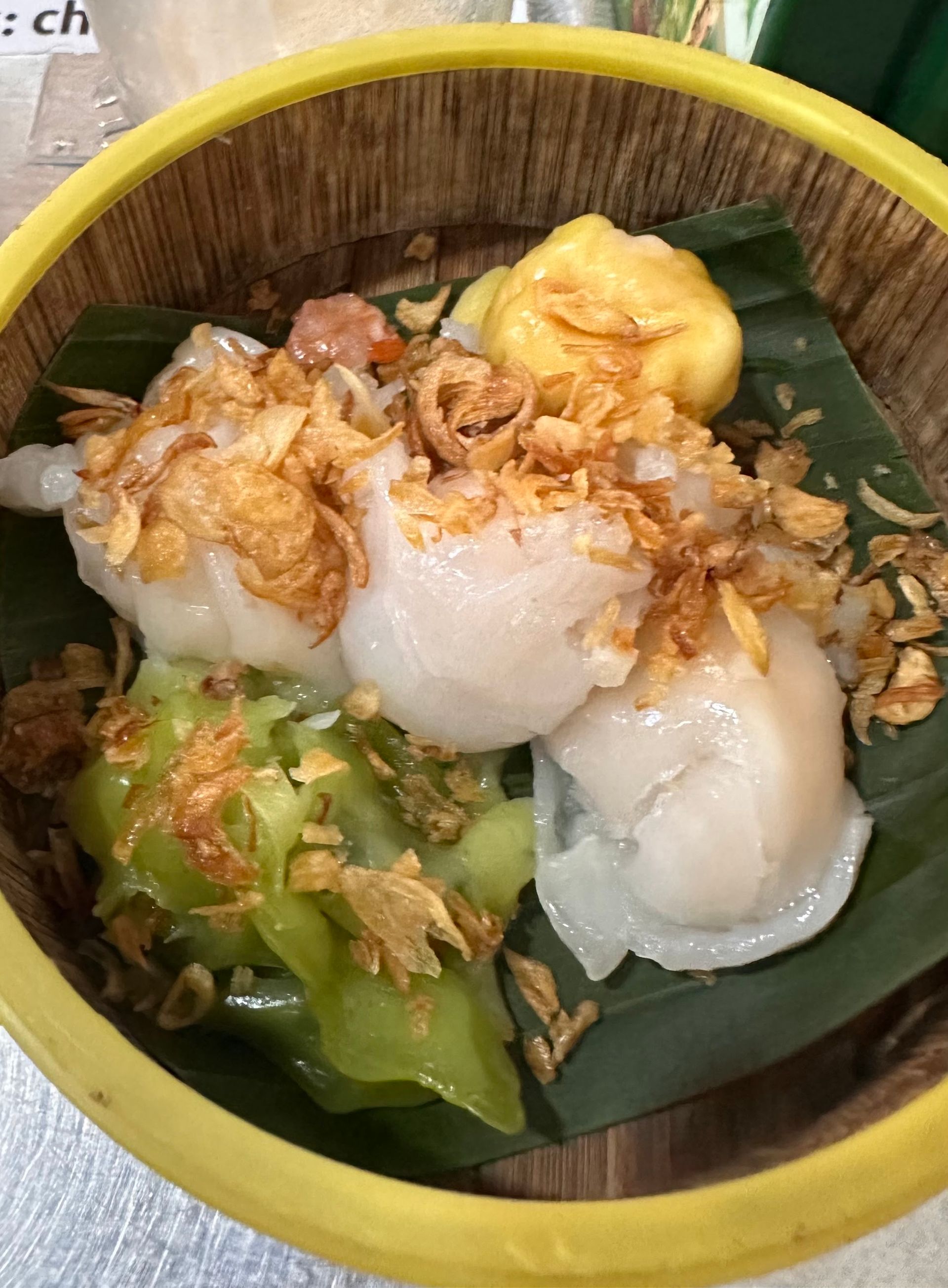
In Da Nang, in particular, there are many dim sum restaurants that sell delicious steamed buns filled with soup or meat and mushrooms. One such dish is also among Simon’s favorites: banh bao. These steamed, filled yeast buns are sold mainly at street stalls and even by itinerant street vendors on scooters—who announce their wares with a corresponding call.
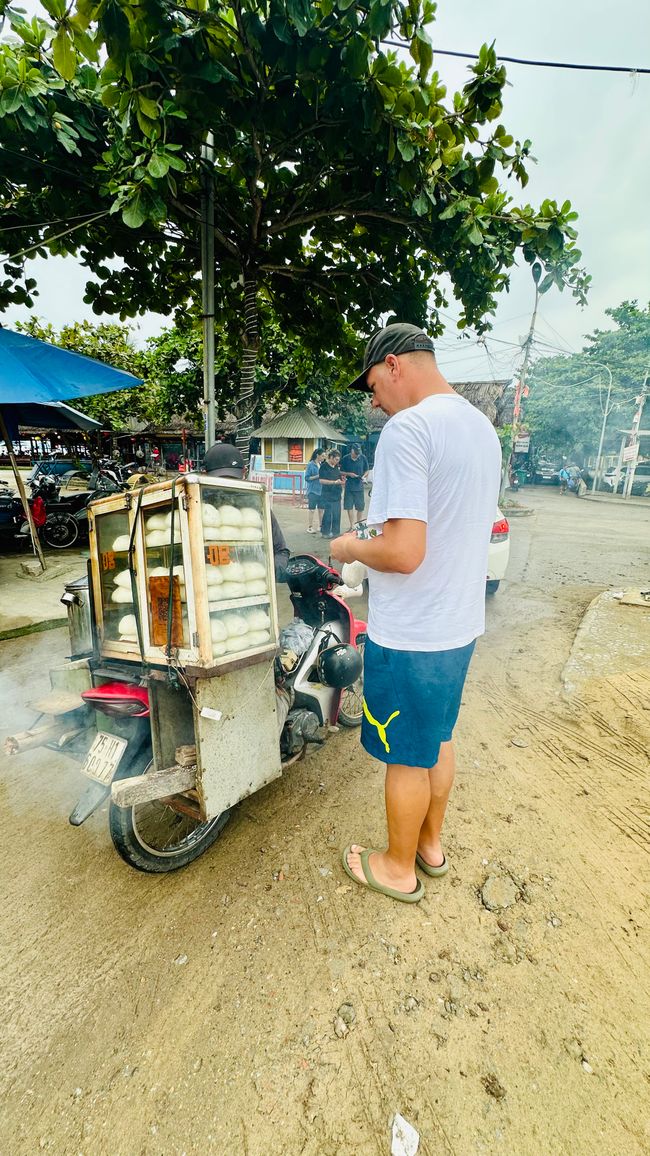
Dim sum made its way to Vietnam via Chinese immigrants and has since diverged somewhat: Classic dim sum continues to be served relatively unchanged in Chinese restaurants, while bánh bao is considered a dish in its own right and is sold at street stalls in a heartier version, often filled with quail eggs.
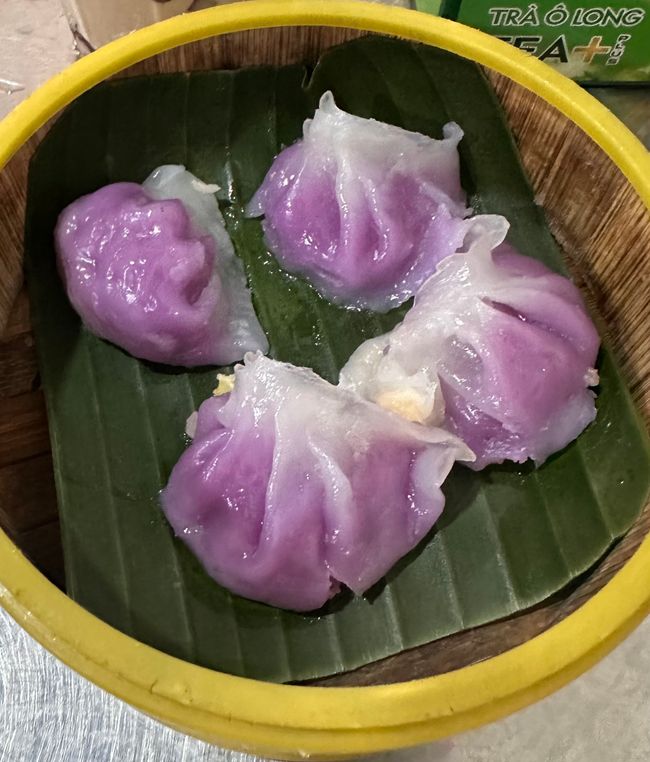
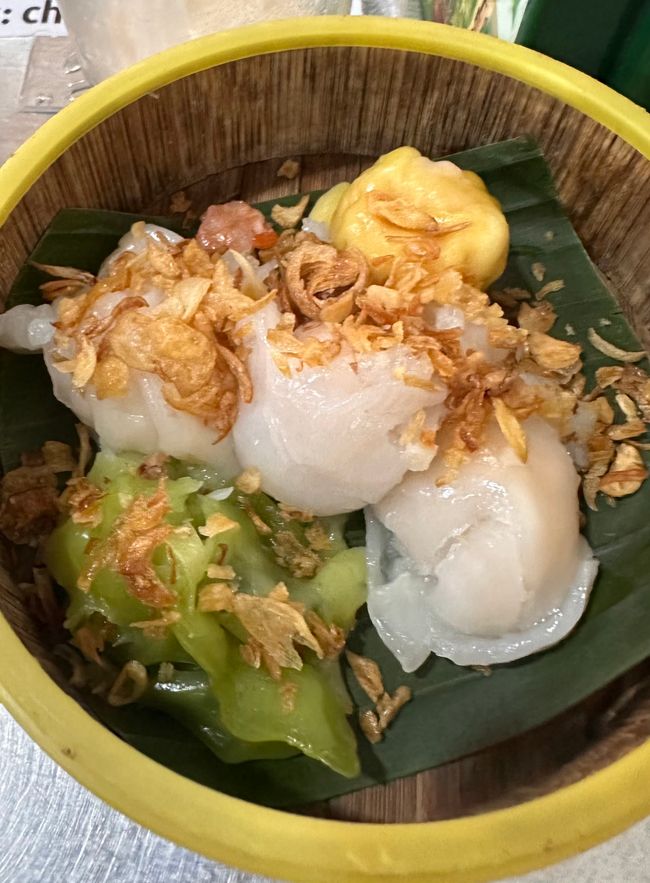
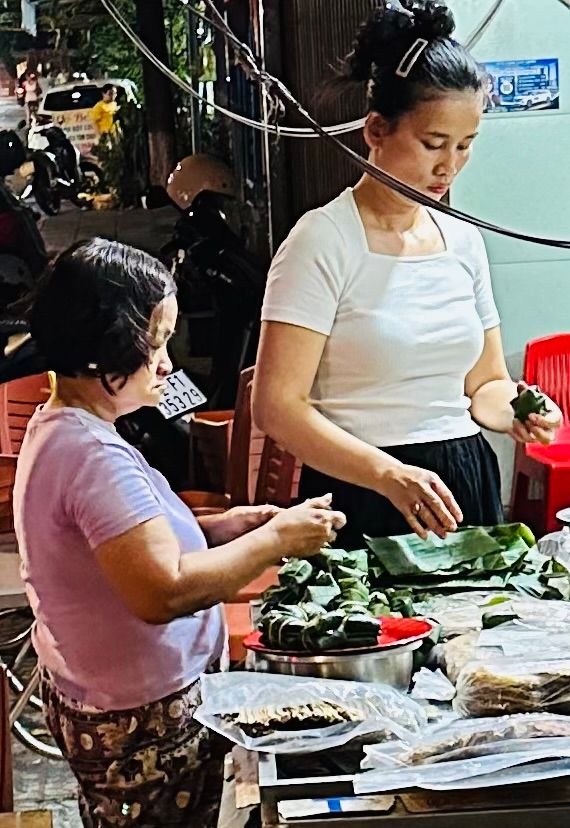
In Vietnam, bánh chưng (square) and bánh tét (cylindrical) are widely popular. They consist of glutinous rice with mung beans and pork, wrapped in banana leaves and then cooked or steamed for a long time. The dish is usually eaten around the Tết festival but is available year-round in small restaurants.
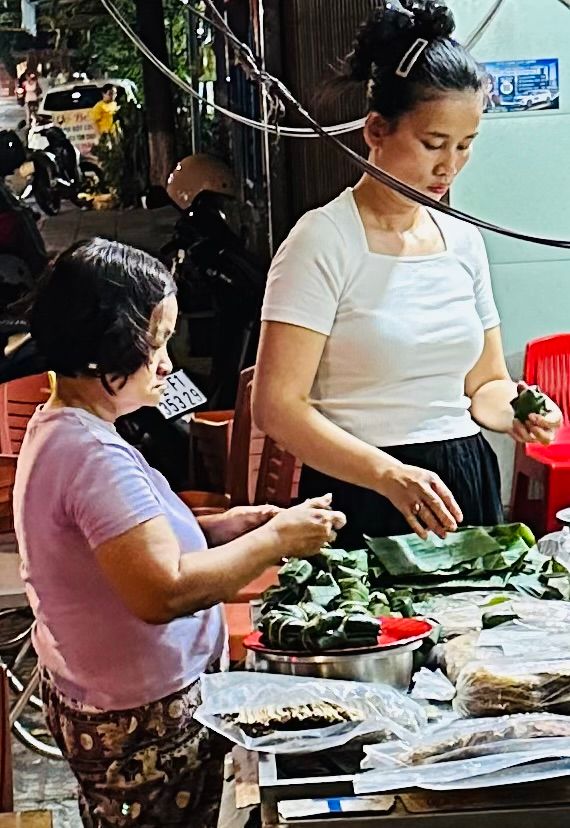
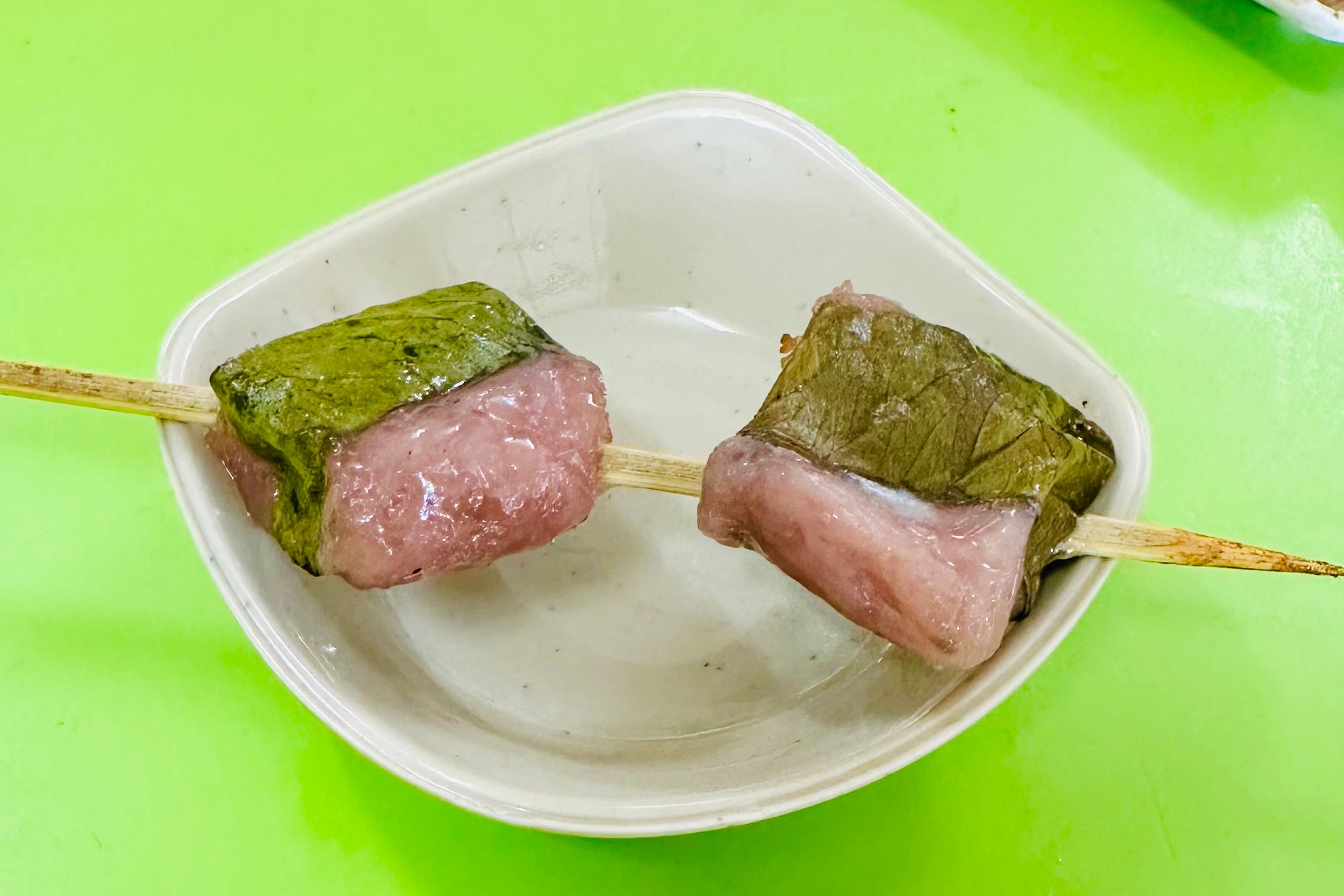
You have to be careful what you buy, though—it’s not just Bánh Chưng that’s wrapped in banana leaves; other dishes are as well. We accidentally bought Nem Nướng Chút Chít, fermented pork wrapped in a banana leaf, which at first glance even looked like sticky rice. The slightly sour taste wasn’t really to our liking.
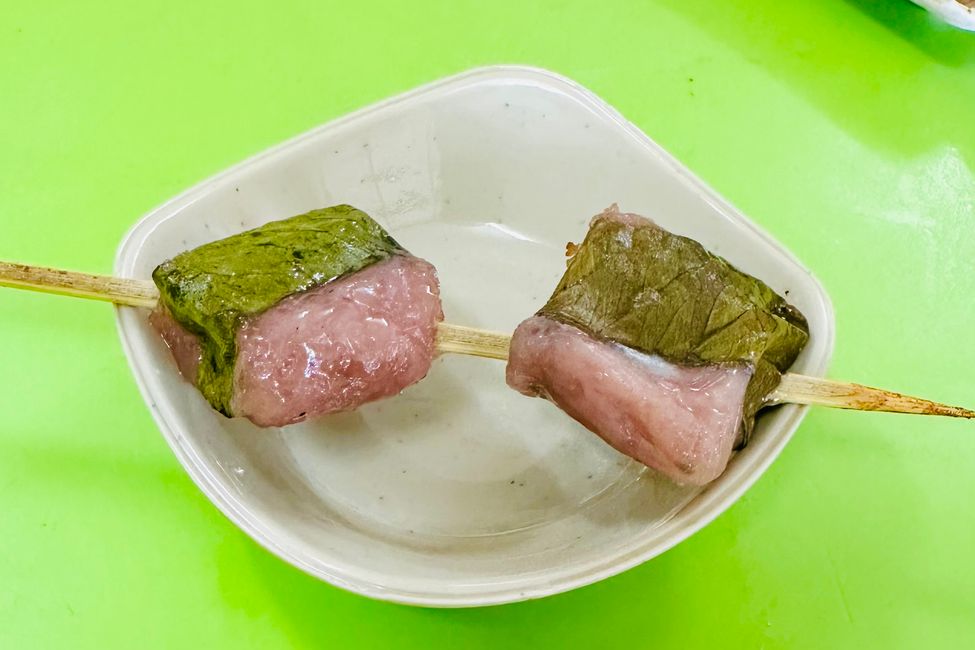
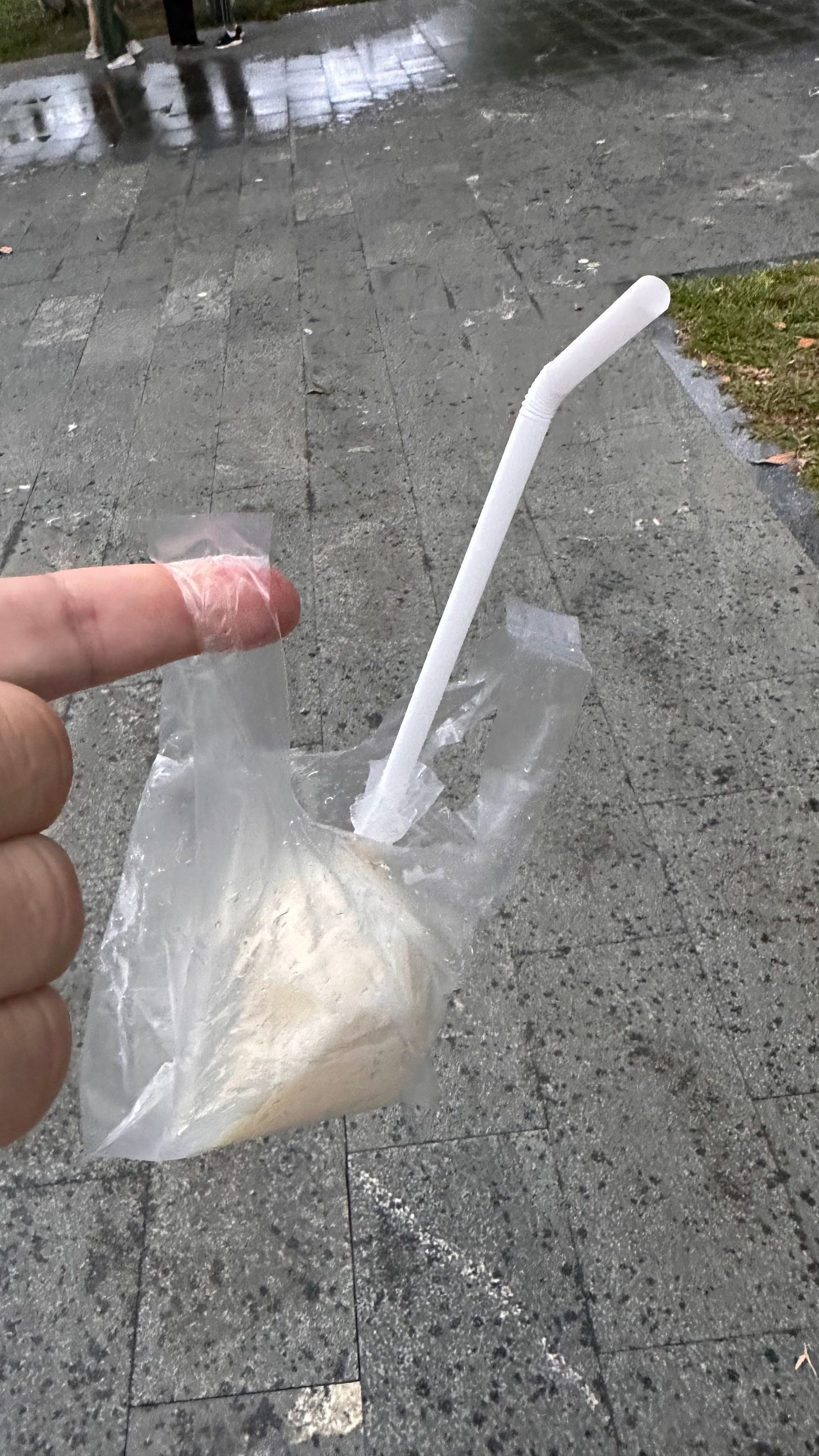
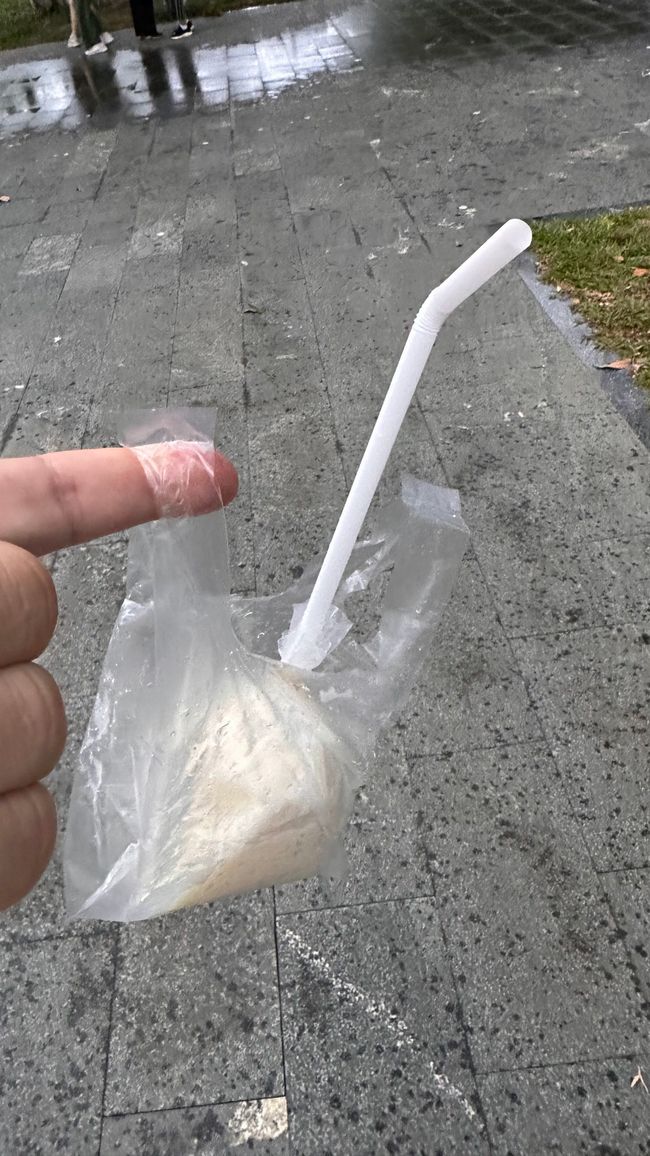
Sữa Chua is a frozen yogurt sold at street stalls in a plastic bag with a straw—you suck the contents out like a popsicle. It’s made with condensed milk instead of regular milk, which makes it sweeter and creamier. Unfortunately, we only saw this dessert at street stalls in Hue.
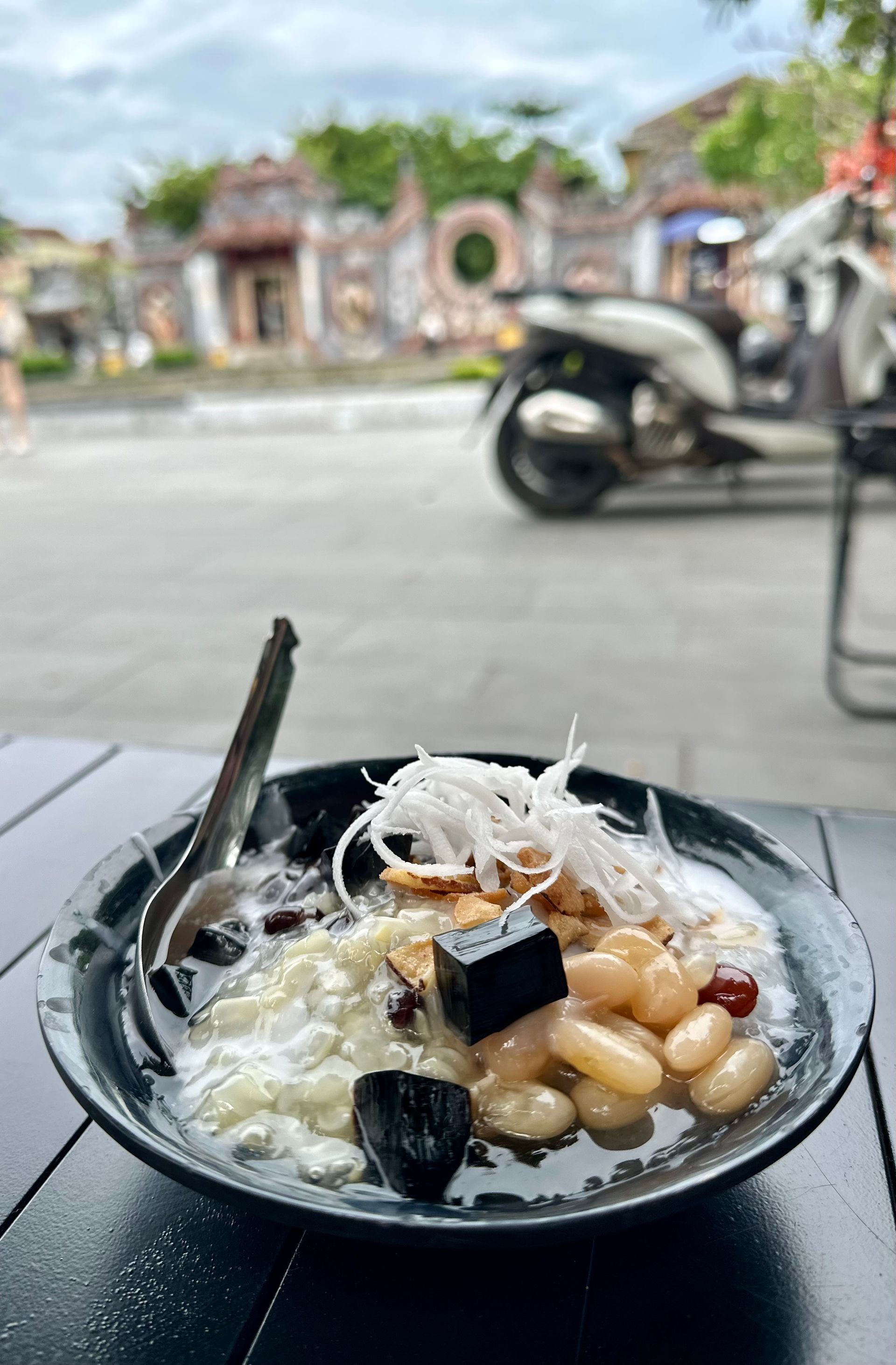
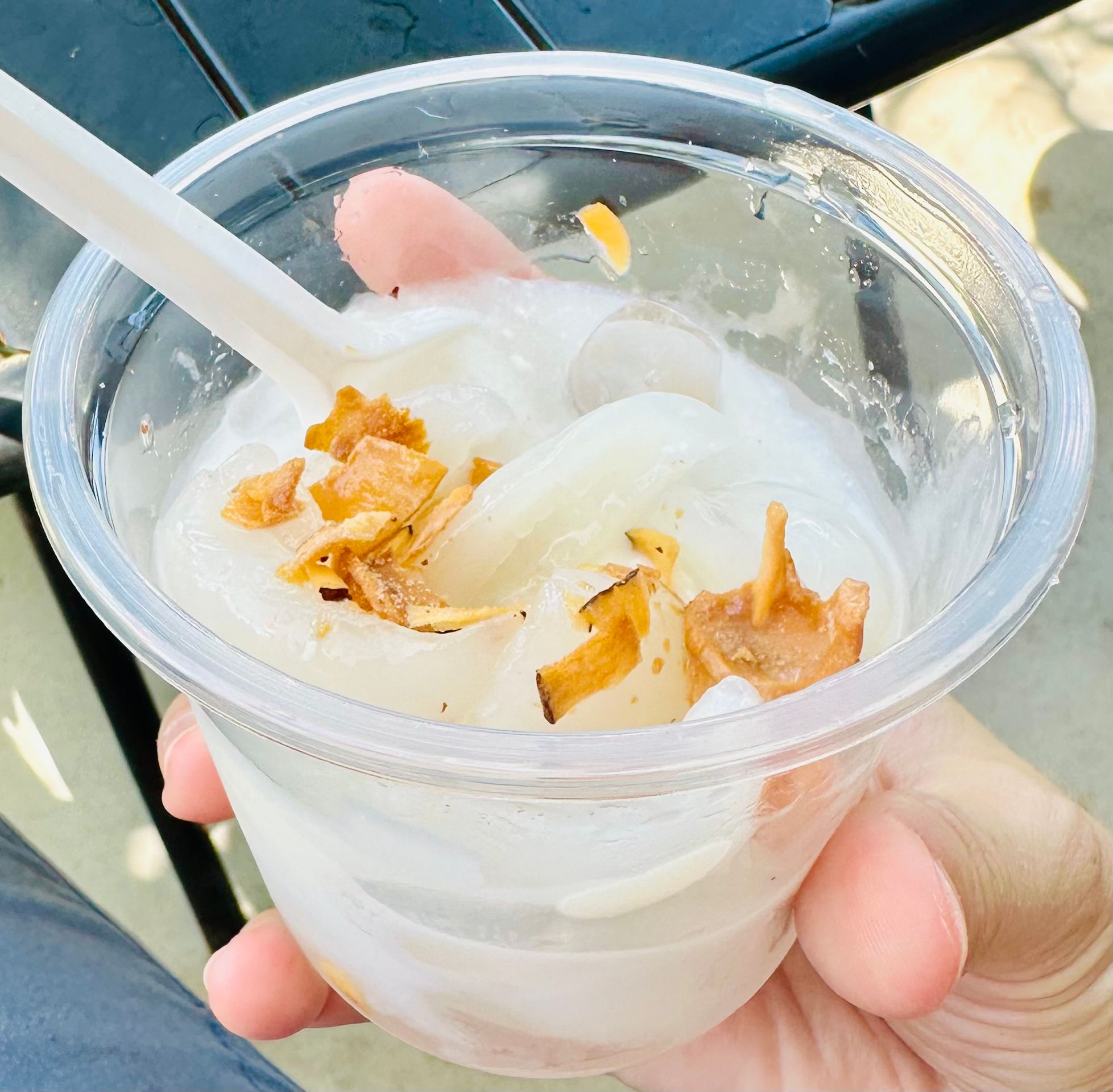
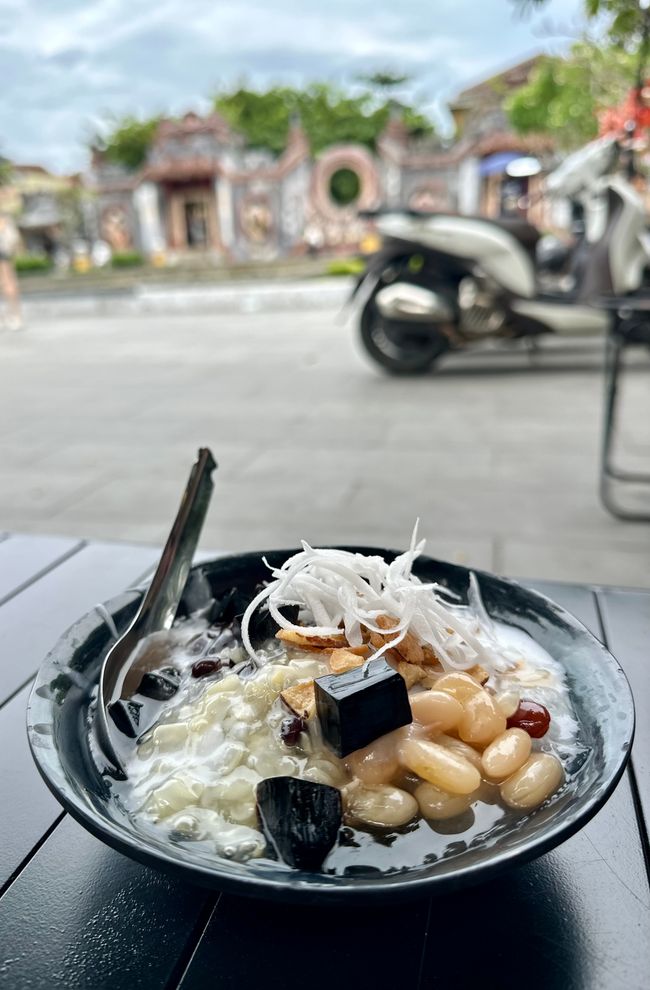
Chè is a sweet dish made with coconut milk and ice cubes, served with various toppings such as sweet beans, sticky rice, or jelly cubes, and sometimes jackfruit or candied fruit. In Thanh Tam, at the Coconut Forest, we had chè made with water coconut from the nipah palms growing there. The dish is refreshing in the heat and is usually not too sweet or intense in flavor—the beans still have a bit of a bite and aren’t overcooked to the point of being mushy.
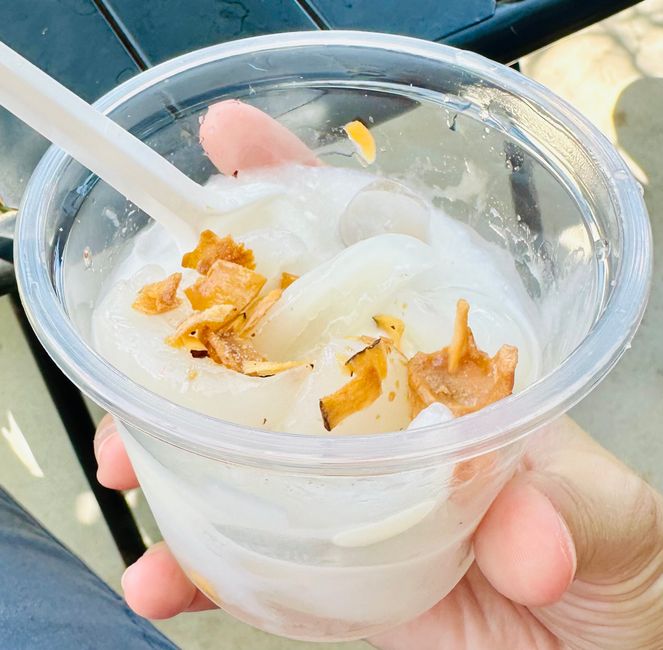
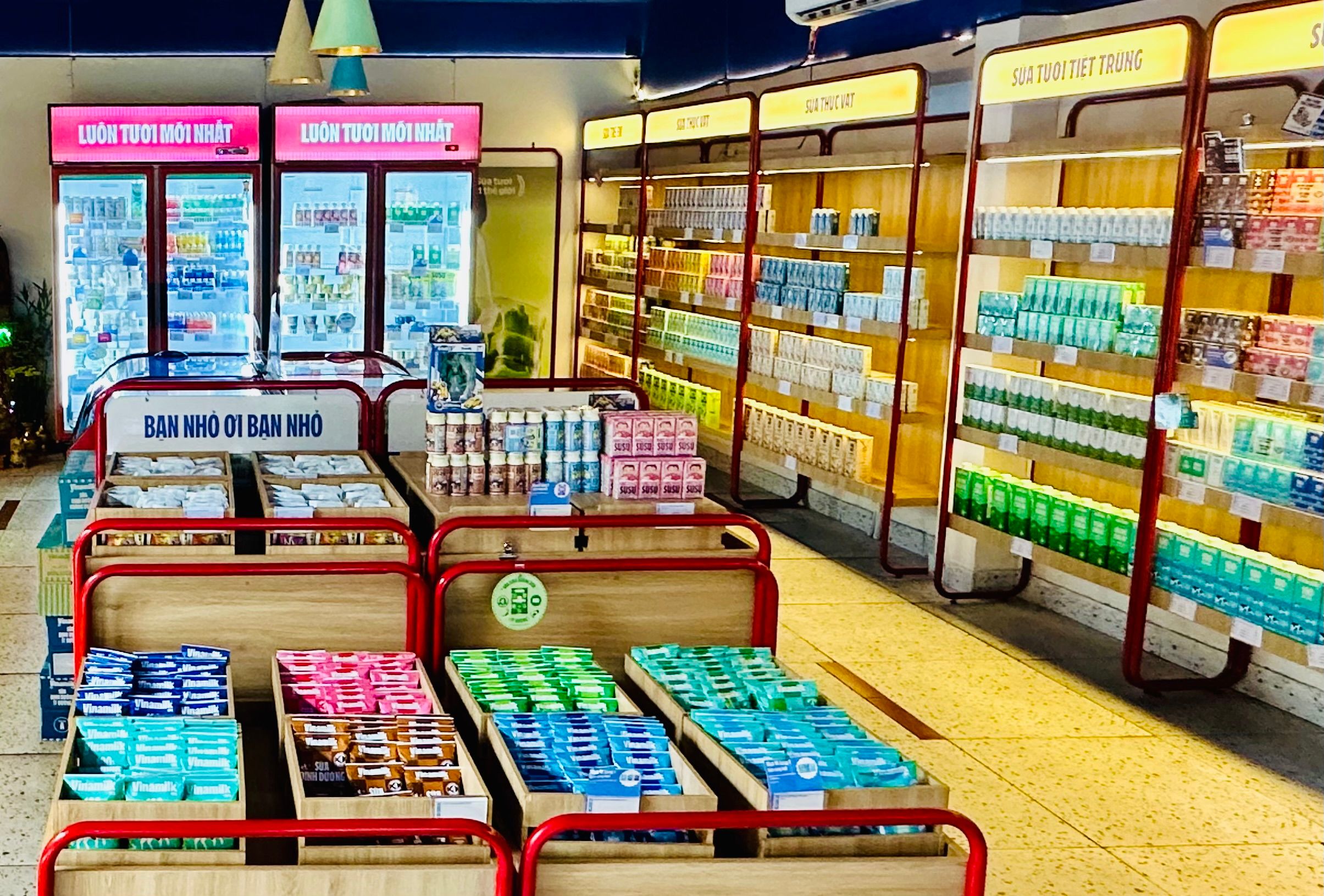
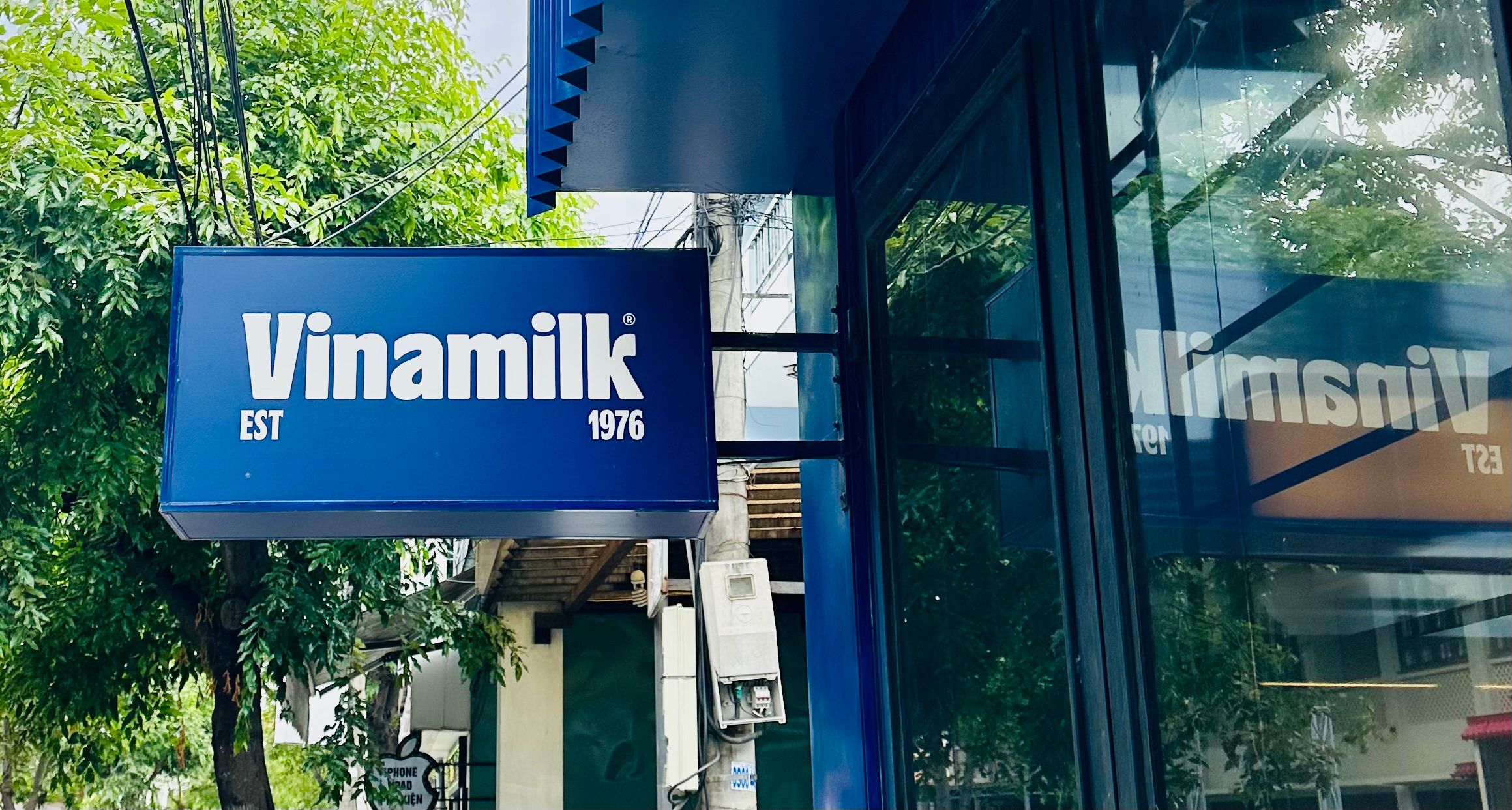
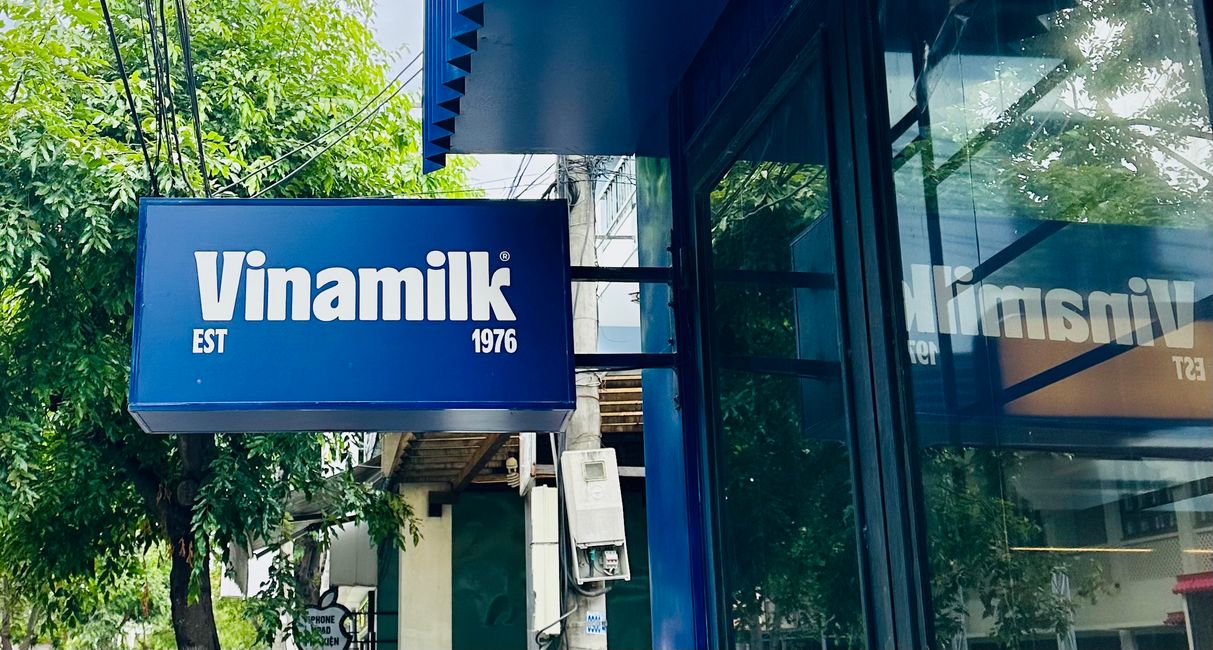
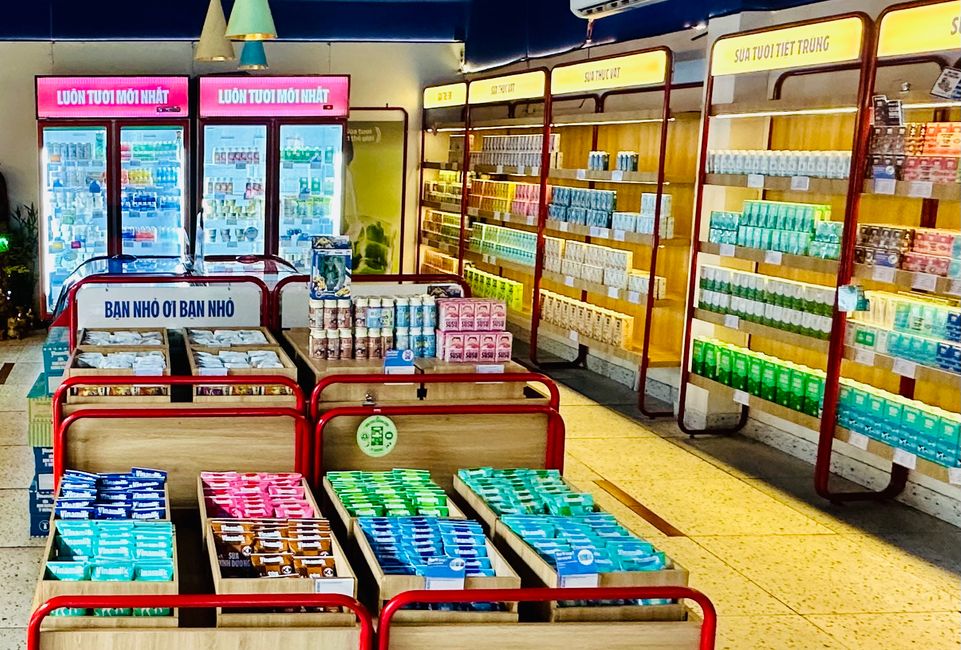
Not a dish in its own right, but a ubiquitous producer of dairy products is Vinamilk. In Hoi An, there’s even a dedicated Vinamilk store offering various types of milk (low-sugar, sugar-free, or sweetened), flavors (orange, taro, strawberry, chocolate, blueberry, lychee), and dairy products such as yogurt, ice cream, drinking milk, cream, milk powder, and plant-based drinks. The taste is usually sweet and somewhat different from milk—more like very runny yogurt.
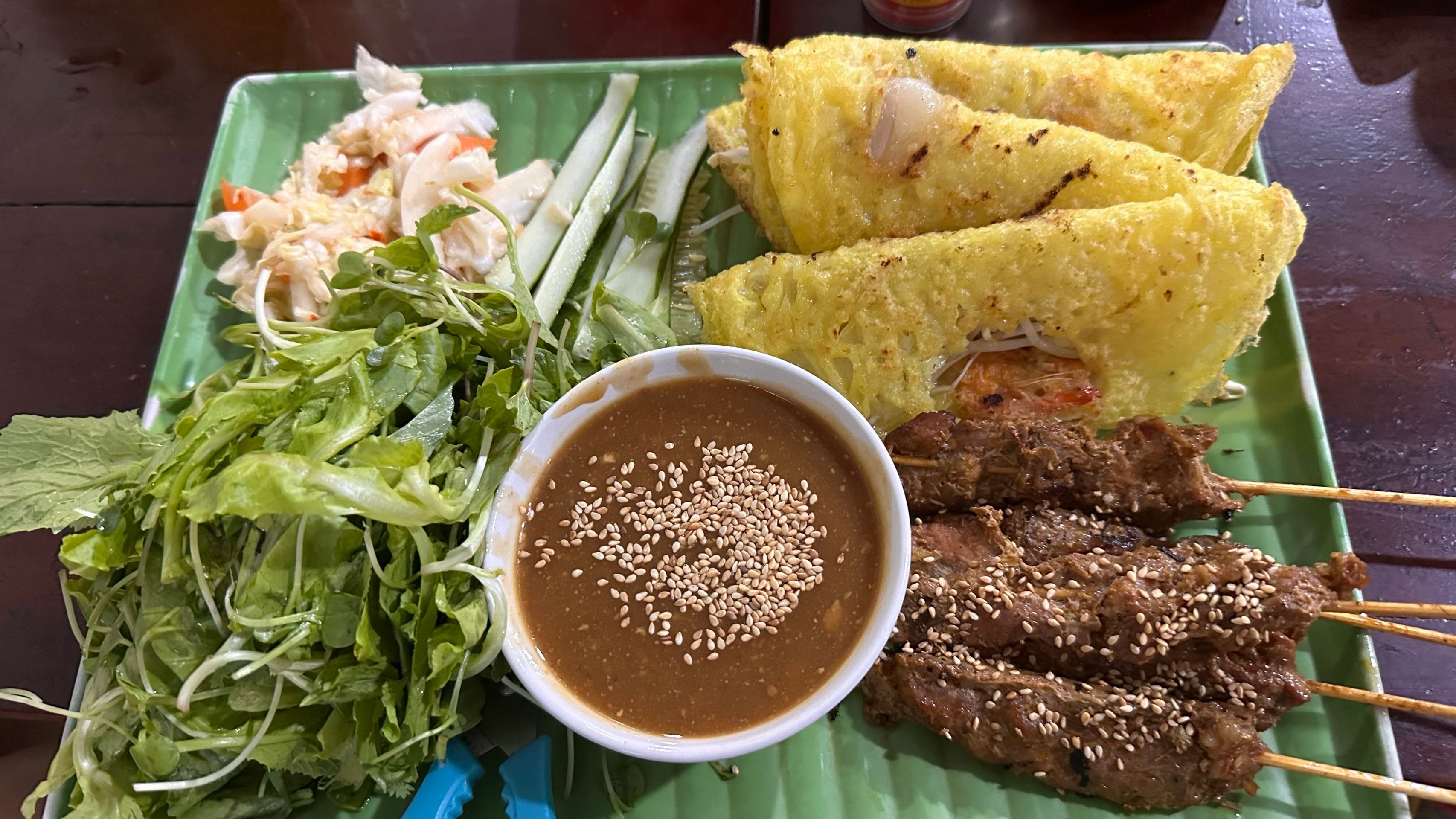
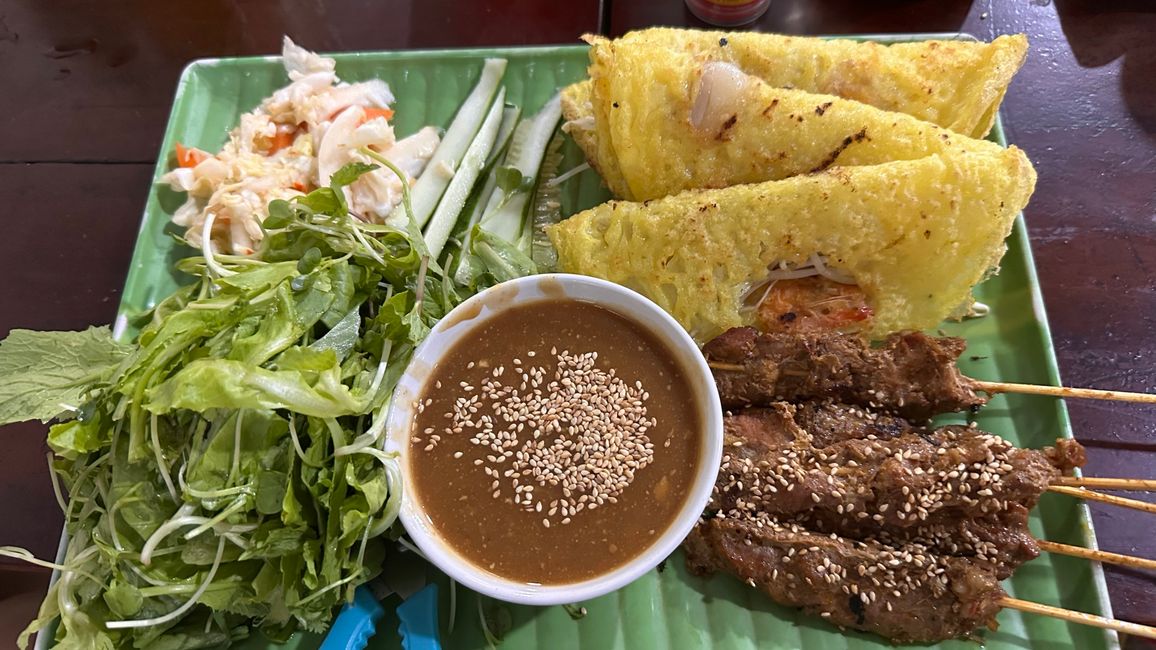
Bánh Xèo is a very regional dish: a crispy fried pancake made with turmeric and filled with bamboo shoots. Depending on the variation, meat or shrimp may also be fried into the batter. Many restaurants also offer meat skewers, which pair well with the pancake—both are wrapped in rice paper along with plenty of lettuce, pickled vegetables (similar to kimchi), and herbs. Peanut sauce is usually served on the side.
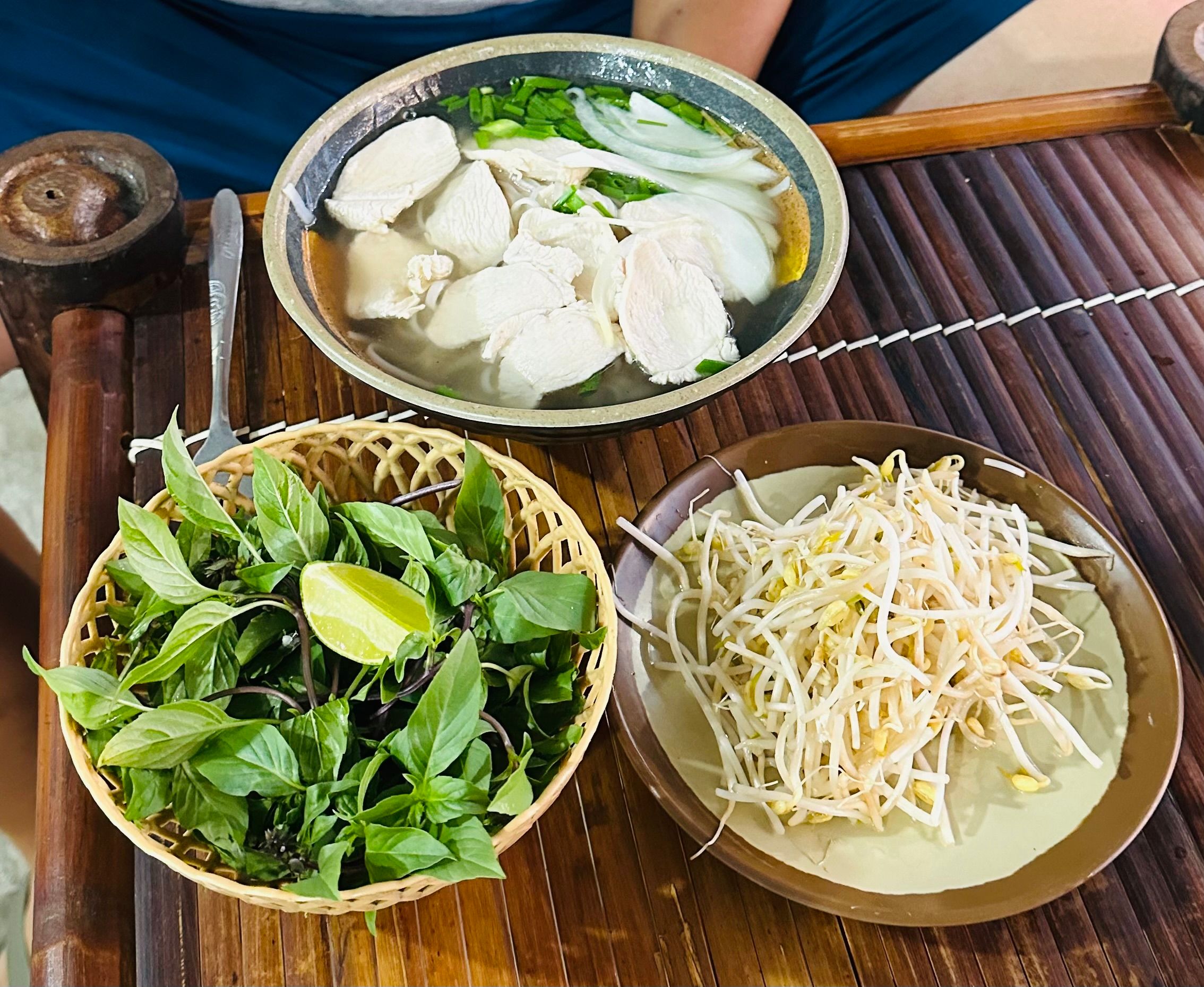
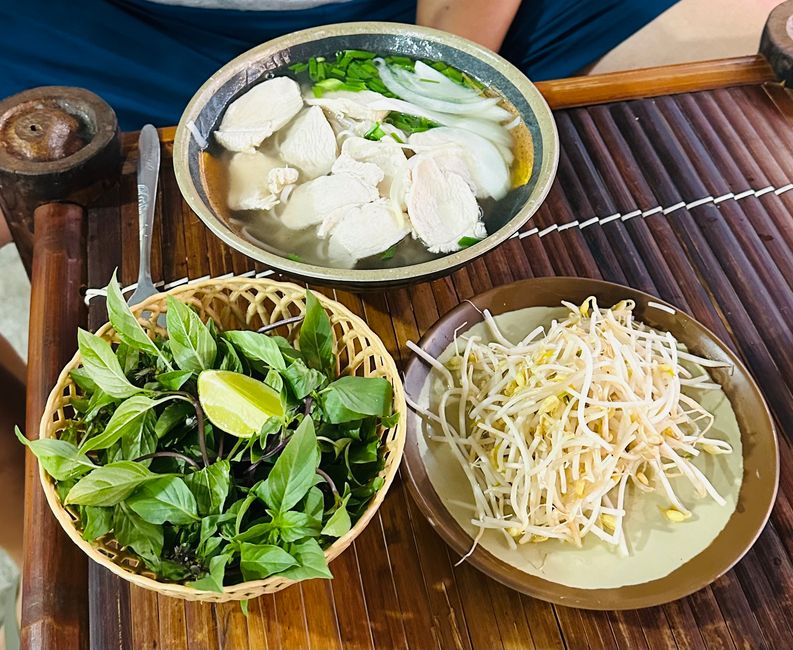
Noodle soups are called phở in Vietnam and consist of a clear broth with flat rice noodles. You can choose from various types of meat—I prefer beef, which is added in thin strips. The dish is served with a large plate of Thai basil, cilantro, bamboo shoots, mint, and limes, from which you gradually add the greens to the soup.
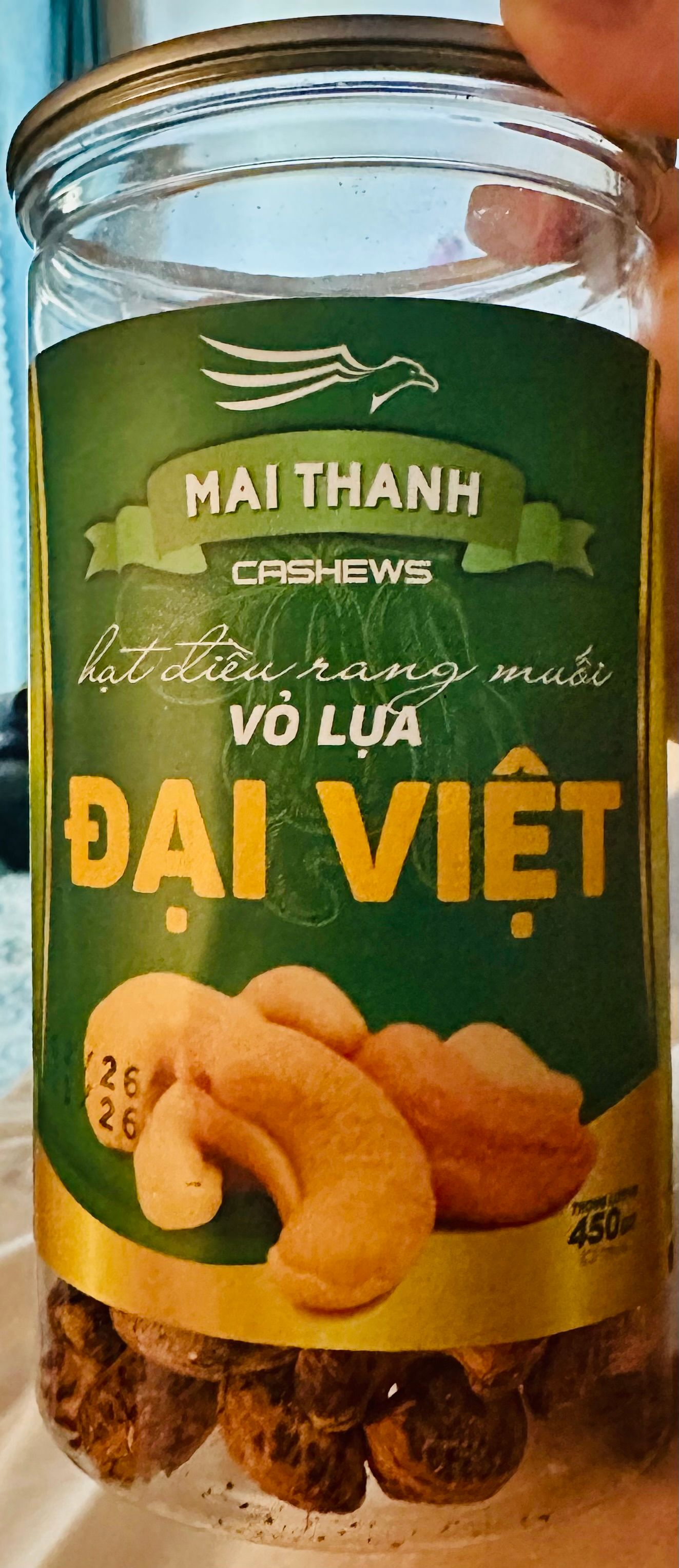
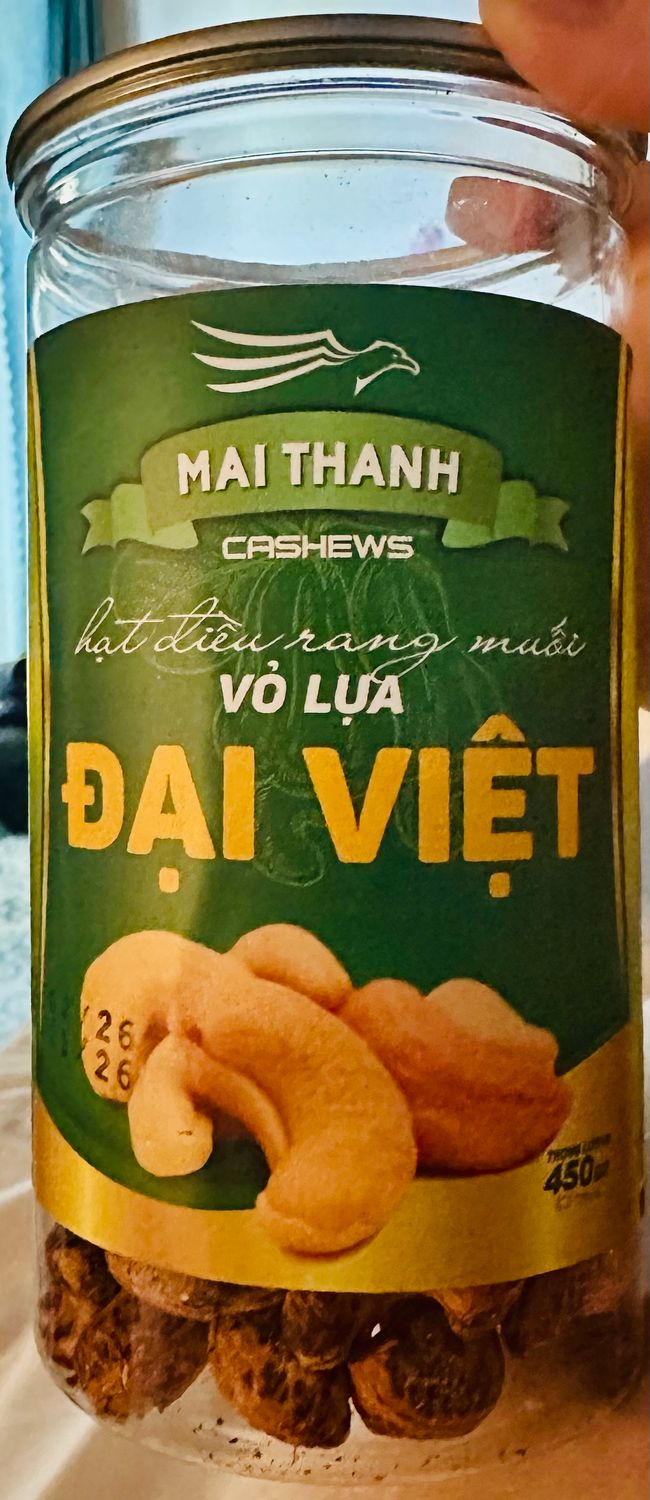
As a snack, you can buy large packs of various nuts in Vietnam. I liked the large cashews with their shells best—nice and crunchy and not as small and mushy as the ones you can buy in Germany. There are also salted peanuts with shells or wasabi peas.
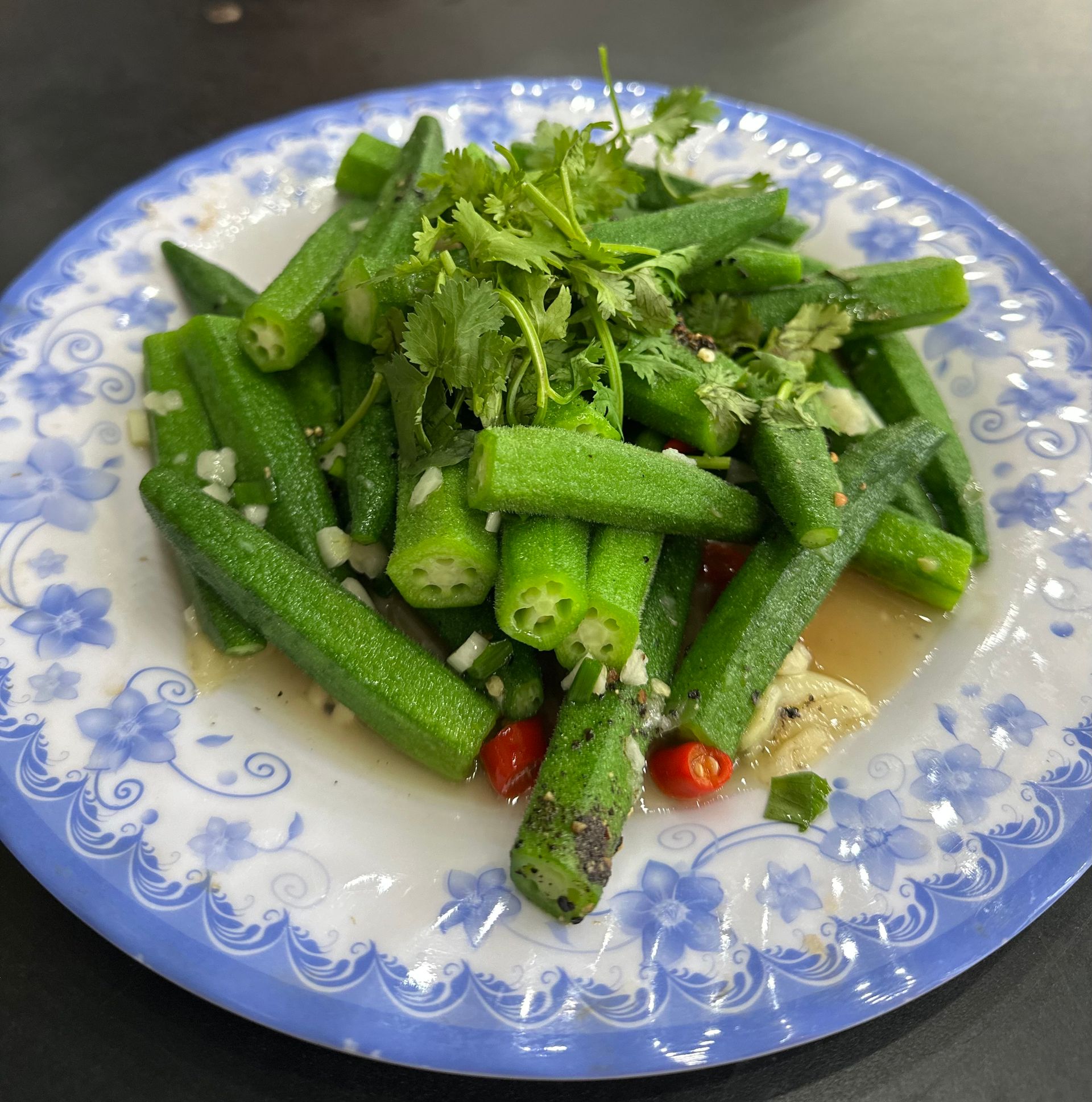
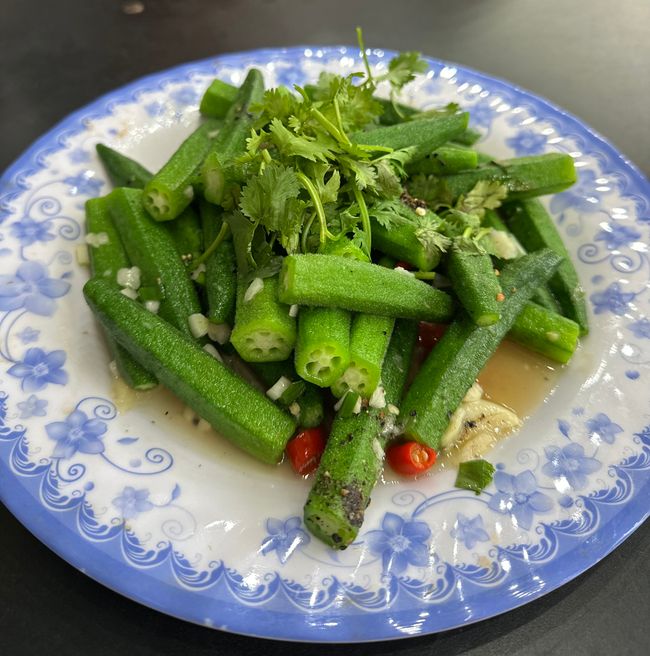
We discovered the dish Đậu Bắp Luộc at a family-run restaurant. It consists mainly of boiled okra with garlic, chili, cilantro, and pepper, served with a spicy sauce.
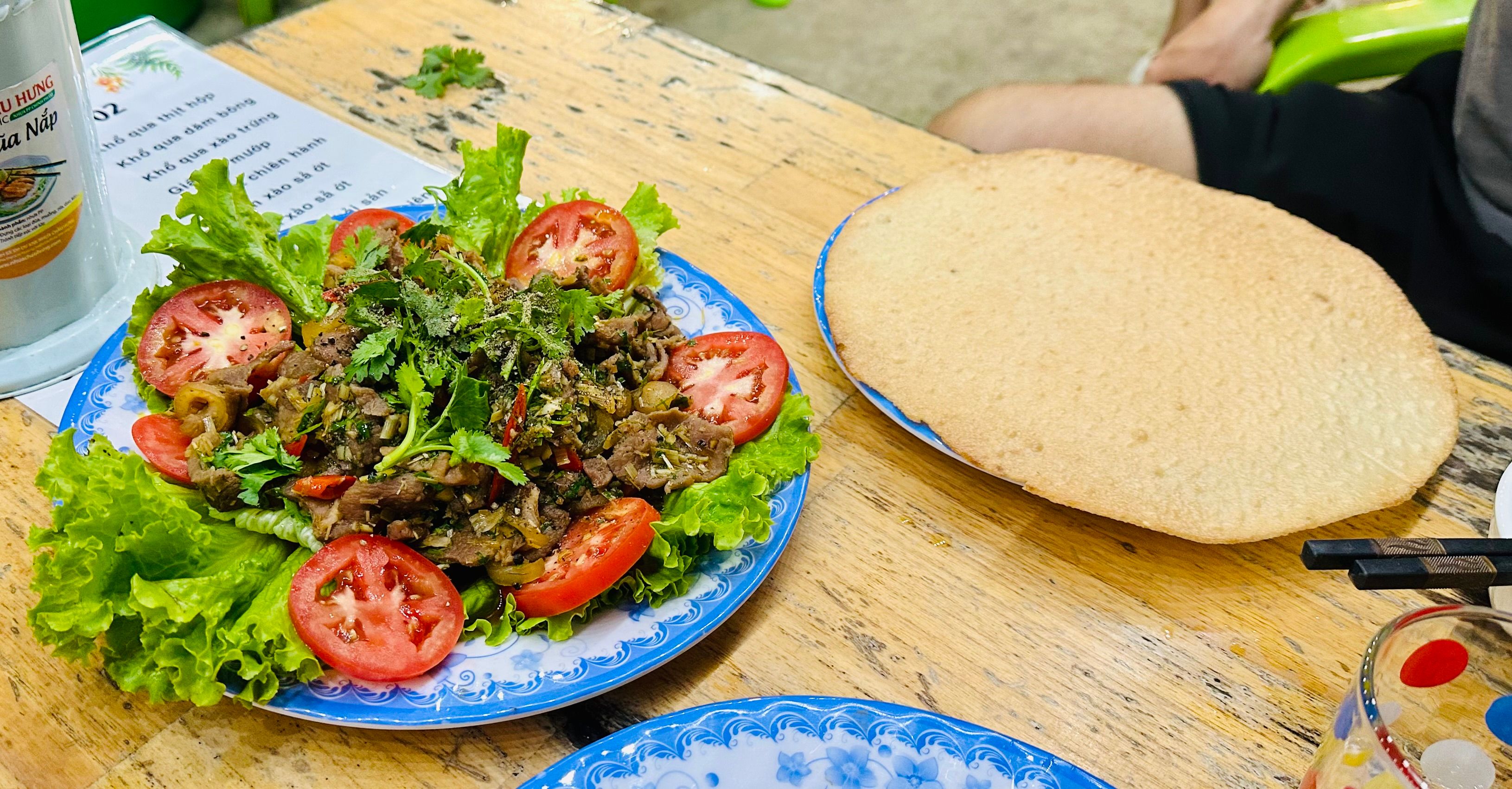
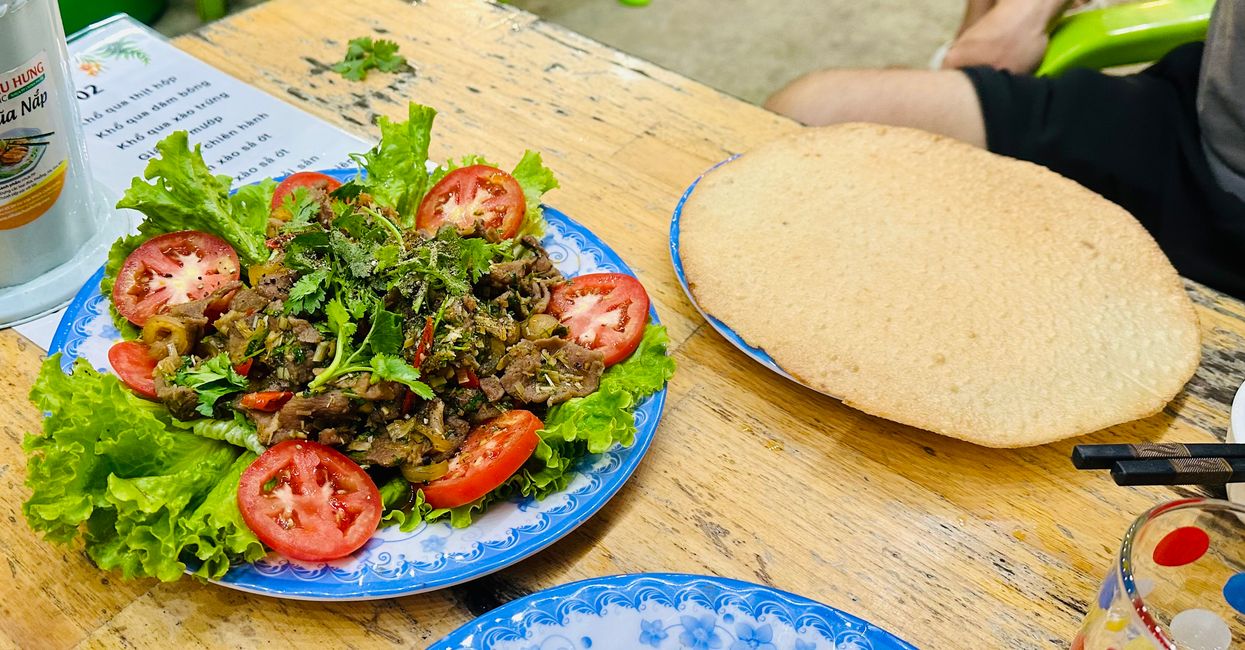
At the same restaurant, we also tried Thịt Heo Nướng Sả with Bánh Tráng Nướng: grilled pork marinated in lemongrass served with toasted rice paper. It’s served with chili, cilantro, lemongrass, garlic, tomatoes, and lettuce. To eat it, you tear off a piece of the plate-sized rice paper and top it with some pork.
For breakfast, the Vietnamese in Hoi An like to eat Mì Quảng: wide turmeric rice noodles with meat, herbs, quail eggs, and peanuts in a light but flavorful broth.
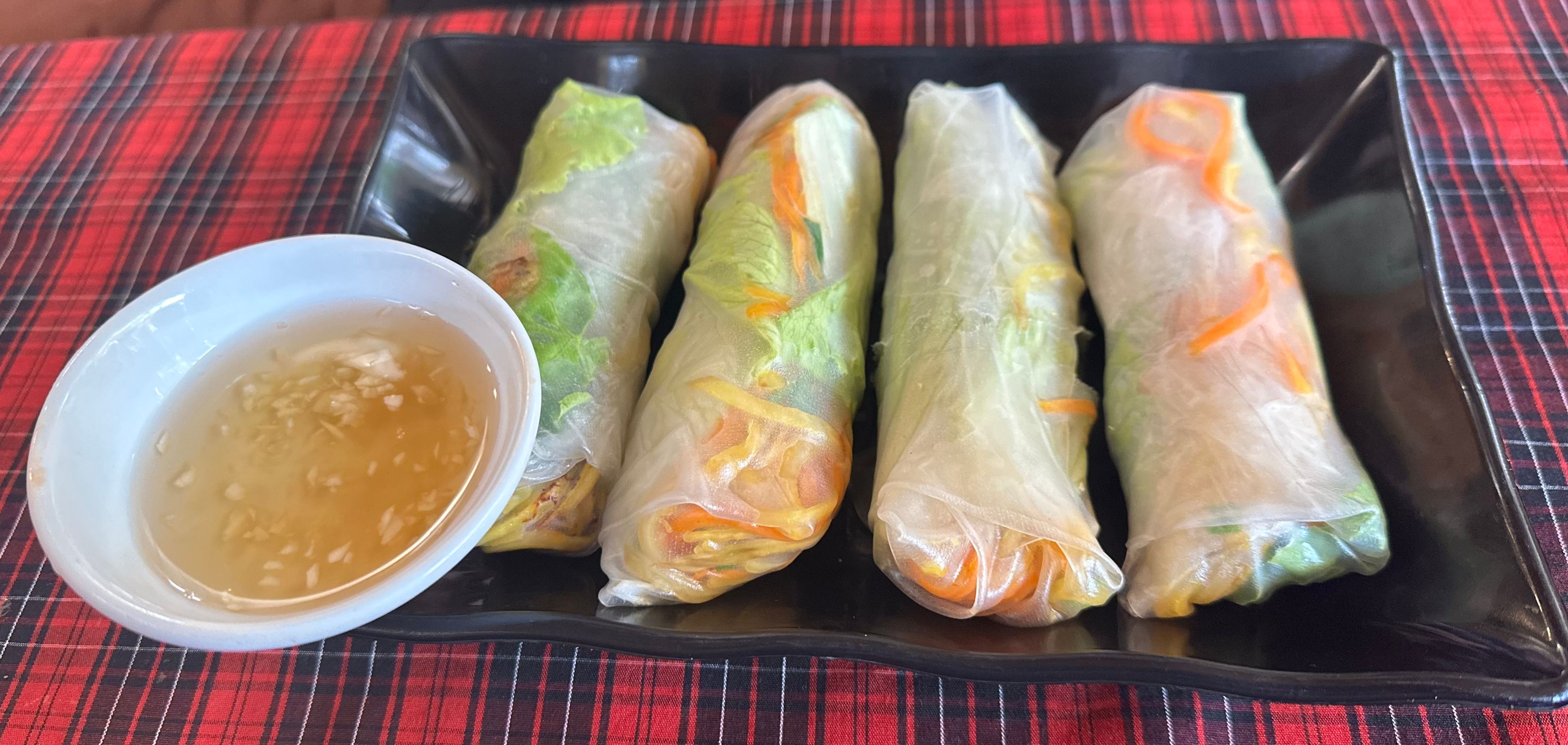
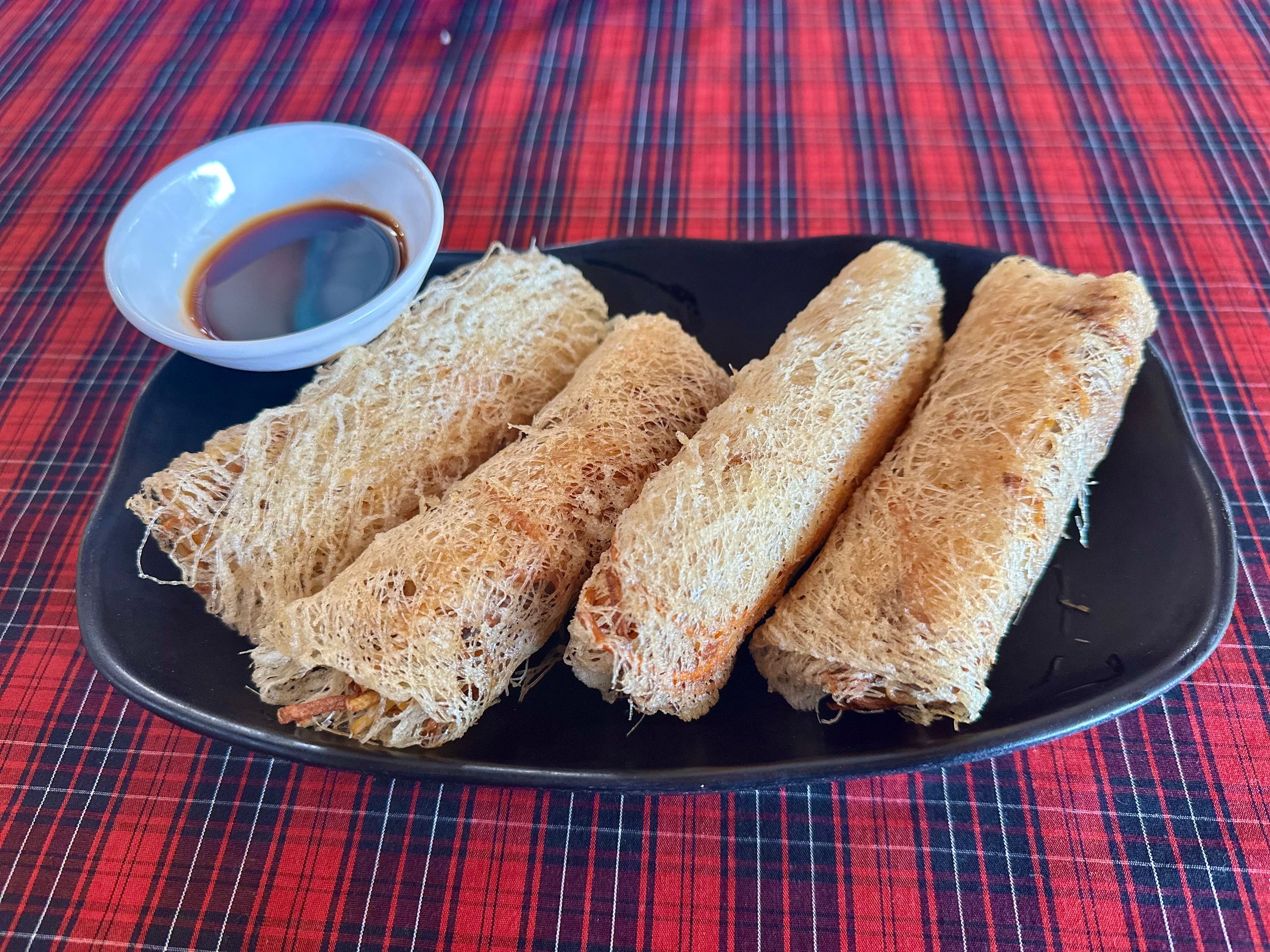
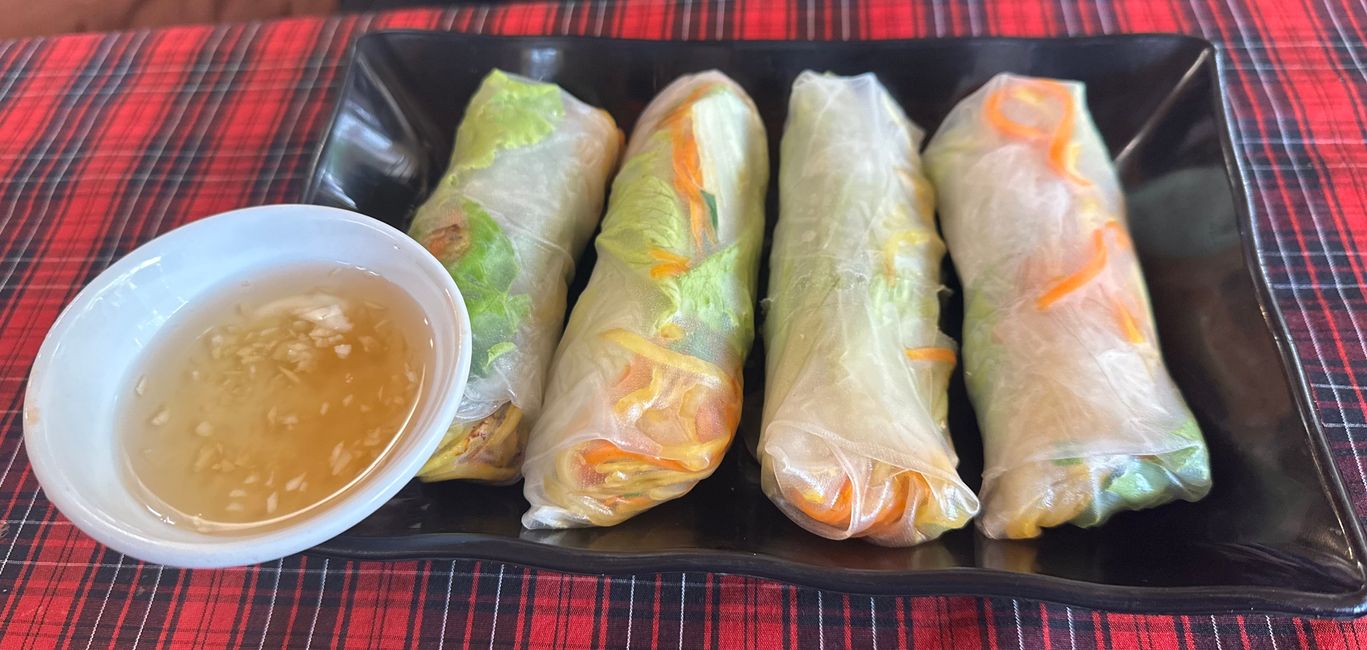
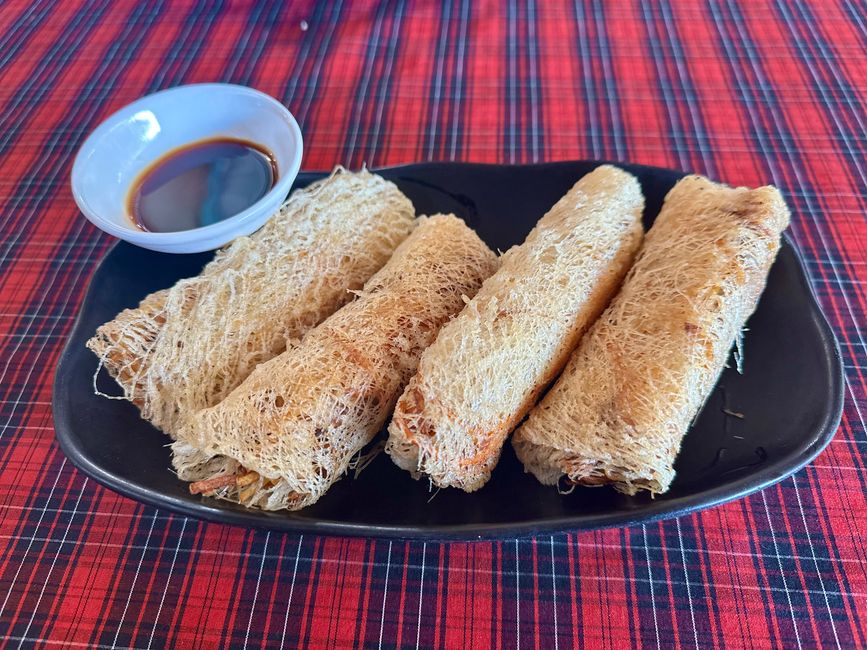
A very classic dish is Gỏi Cuốn (summer rolls), which appear on almost every menu and which we often enjoyed. They’re usually filled with fresh herbs, carrots, cucumbers, lettuce, a bit of ginger, and a choice of meat, all rolled up in rice paper. There’s even a fried version (Chả Giò), which is usually served with peanut sauce.
In Vietnam, you can find a café on almost every corner—in a wide variety of styles. The French originally brought the coffee plant to Vietnam during the colonial era around 1850, and today Vietnam is even the world’s second-largest coffee exporter (primarily the Robusta variety).
Coffee culture has developed rapidly among the Vietnamese: There are cafés with koi ponds or even a swimming pool, but also very traditional ones with a counter and a few folding chairs. Locals often spend hours here on small plastic chairs, coffee in hand, playing a game of Cờ Tướng (Chinese chess) or cards.
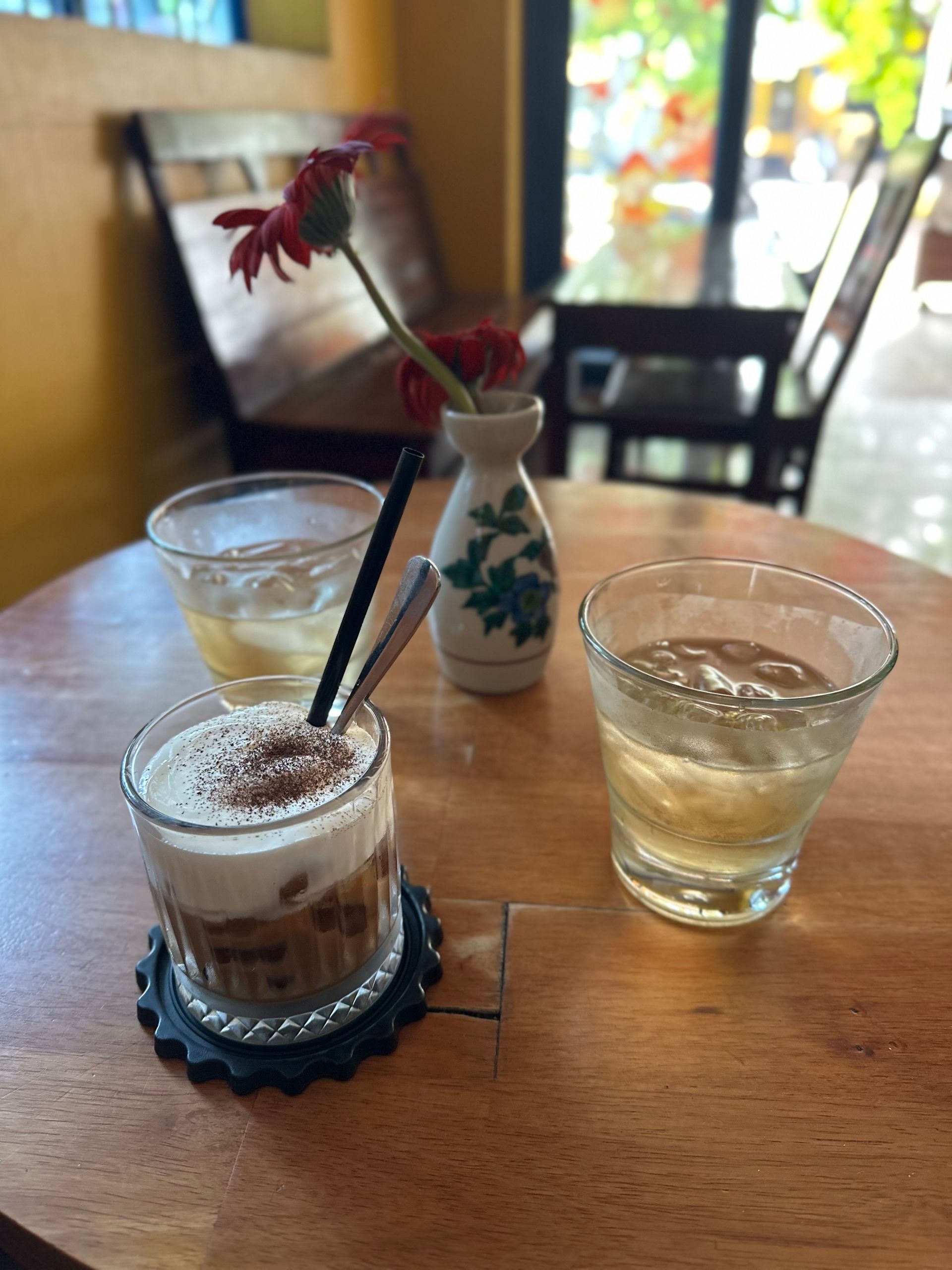
The selection of drinks can vary widely: In a simple café, you’ll find black Vietnamese coffee, with milk or condensed milk; in a larger café, there are also variations with coconut, ginger, or avocado, as well as all kinds of fruit teas, juices, and smoothies. A glass of iced tea is usually served on the side.
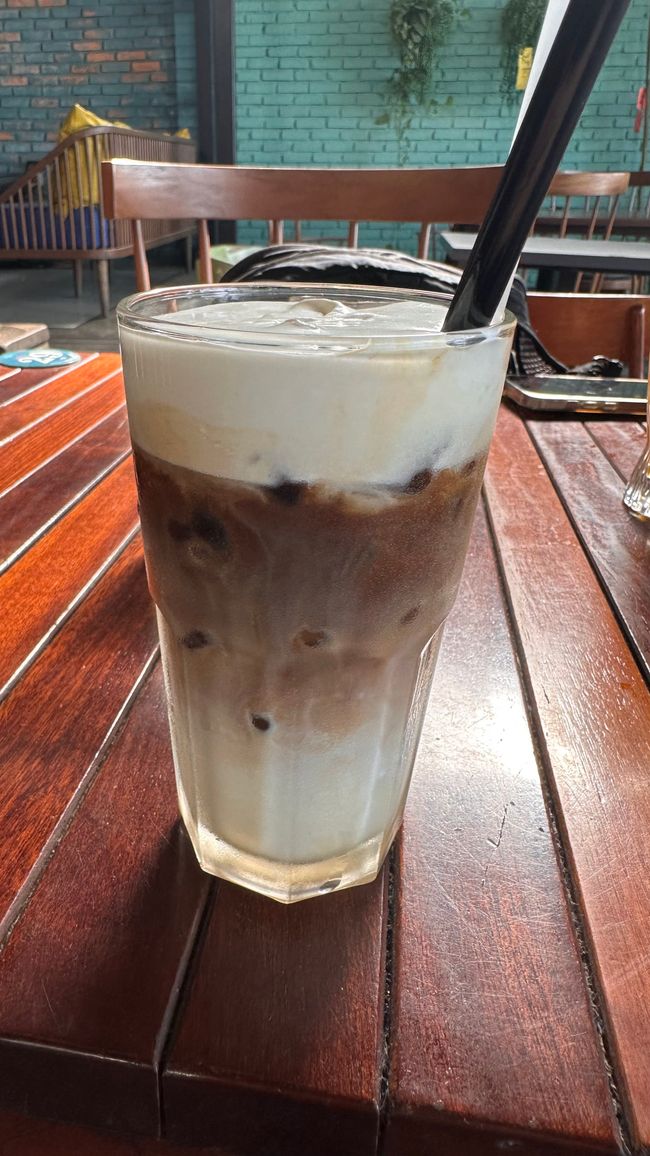
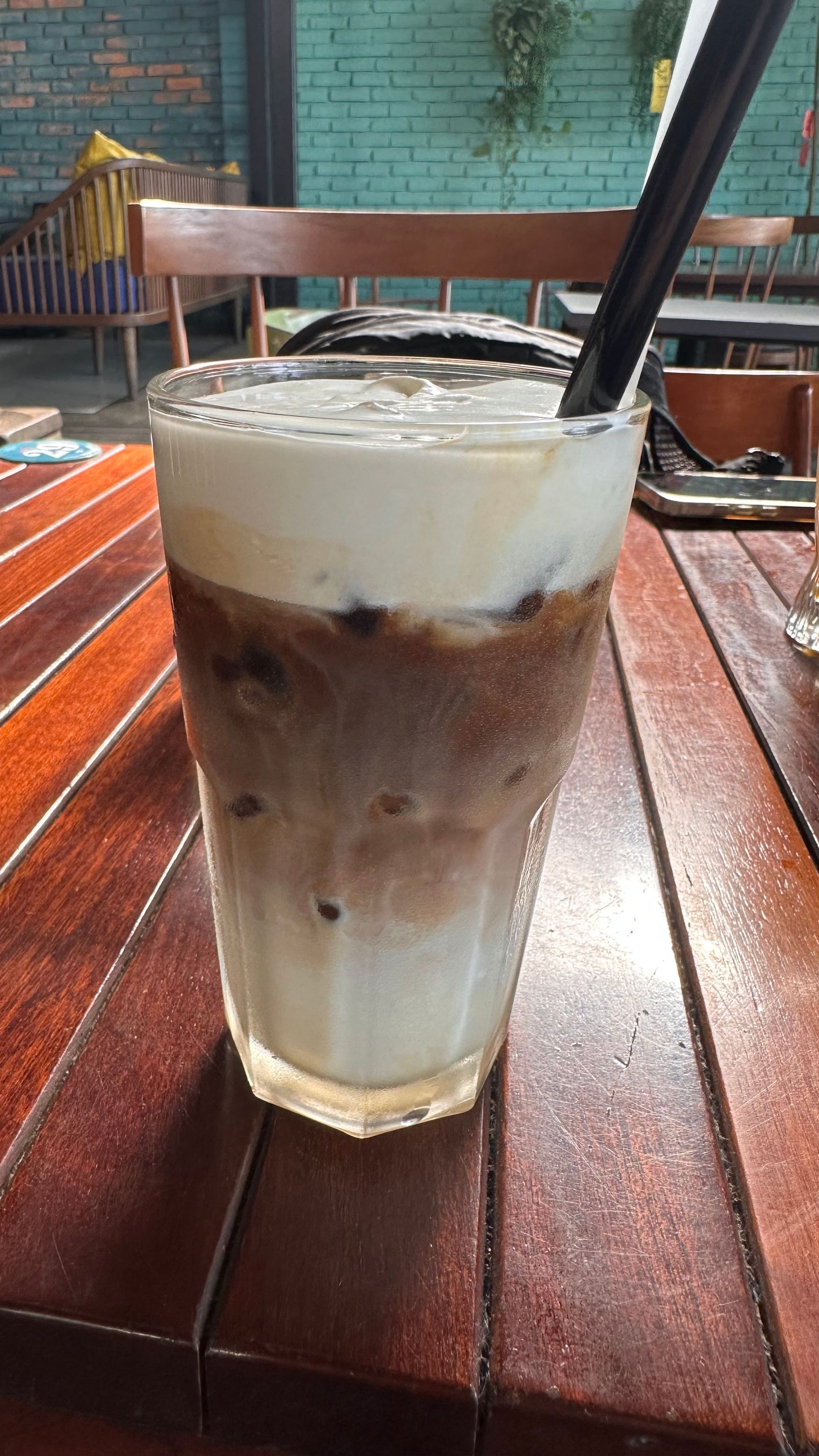
We’ve already tried all sorts of coffee variations: ginger, salt, Phin Da (coffee with salty whipped cream and milk), coffee with milk, or black. Sugar is usually added to black coffee as well, which is why—despite eating a fairly healthy diet in Vietnam—we’re consuming more than enough sugar.
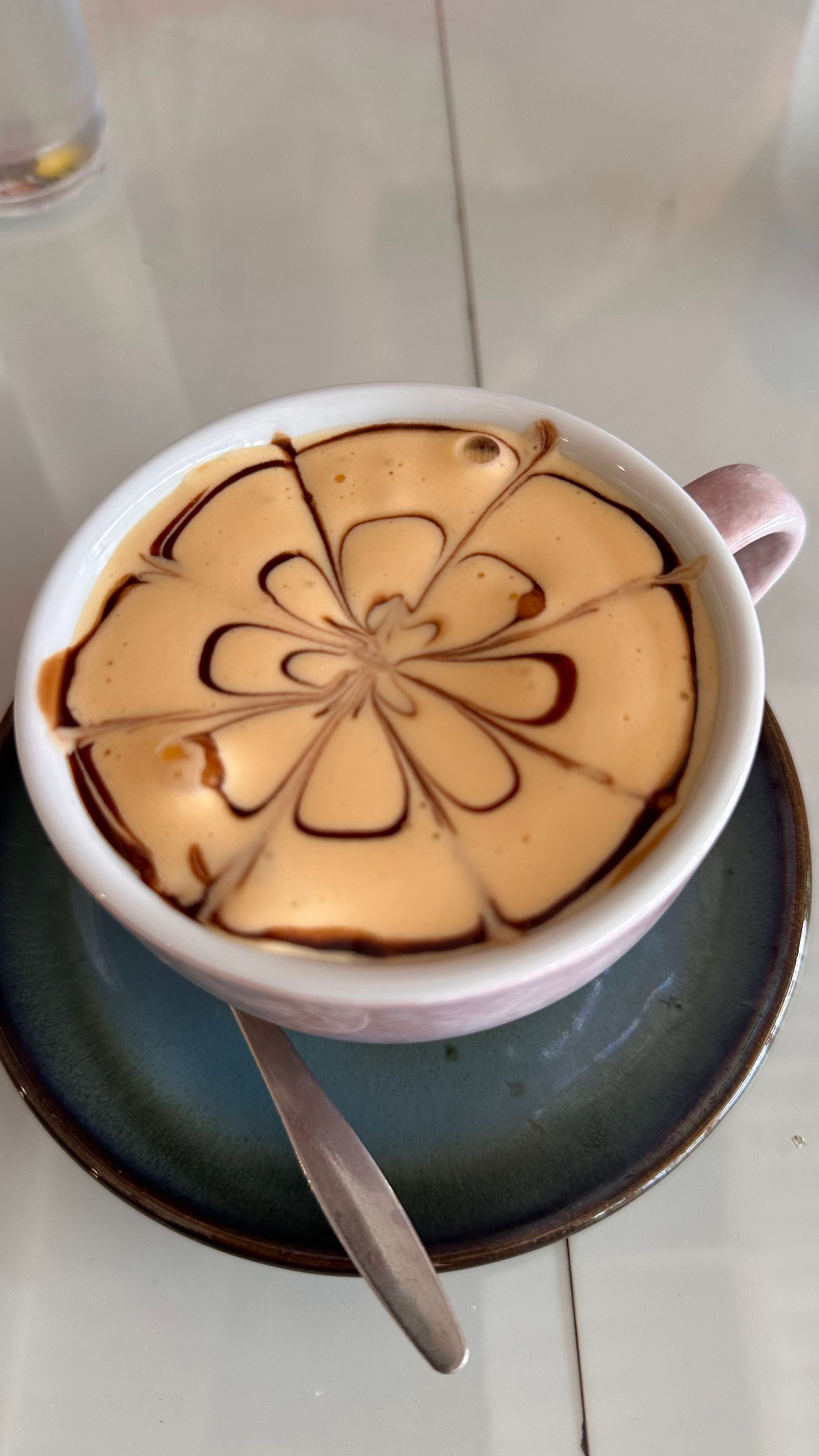
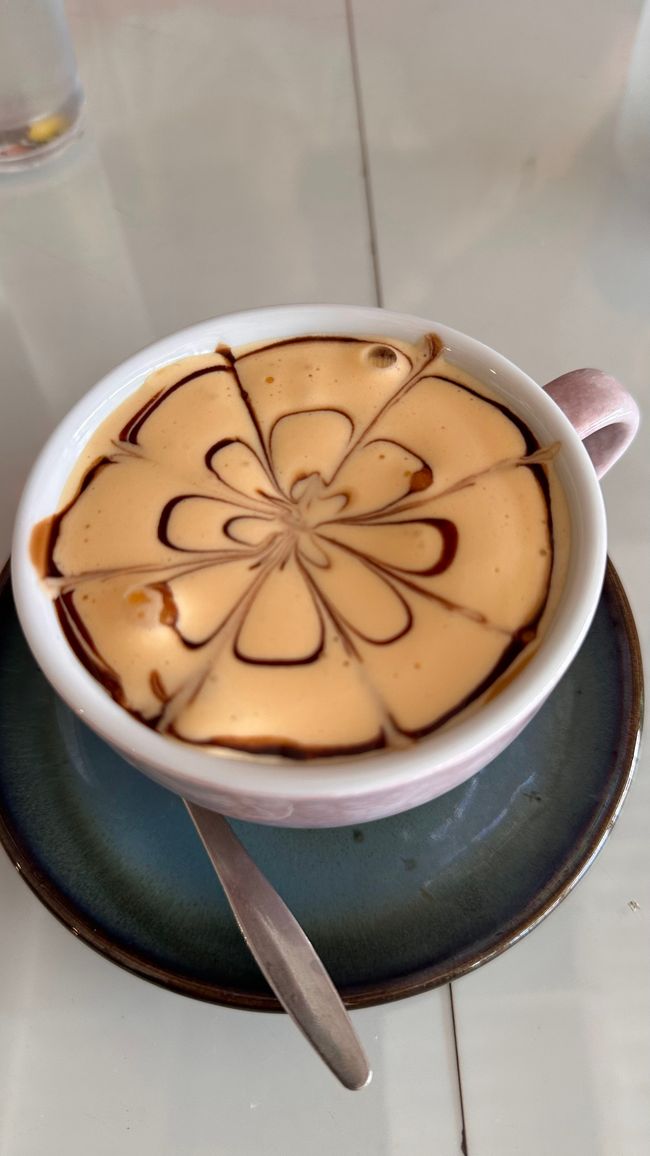
We’ve also tried the popular egg coffee—beaten egg yolk and condensed milk on top of black coffee. It didn’t win us over: The texture is very interesting, but the flavor isn’t particularly intense and the aftertaste is almost a bit unpleasant.
I generally prefer the hot versions, since the aroma comes through better—especially with salted coffee—whereas with the chilled versions, the salt tends to stick to the ice cubes. My favorite is hot ginger coffee; Simon prefers iced salted coffee.
We really liked the following restaurants and cafés:
— Bánh Mì Queen
— Miss Hoi An Café: A building covered in flowers and a beautiful garden overlooking the river
— Minh’s Kitchen Restaurant: A wide selection of delicious dishes and coffees
— Baby Mustard: The dishes are a bit pricier relative to others, but truly delicious, and you can even take a cooking class using fresh ingredients grown in the field right behind the restaurant
— Lạc Thảo Viên: A café in Da Nang
— Tây Sơn Cuốn – Bánh Cuốn Bình Định: A family-run spot for fresh spring rolls in Da Nang
— Nhậu Bình Dân Dũng Mười: A family-run spot in Tra Que
We often ate at small street restaurants that weren’t listed on Google Maps. We used the number of local customers as an indicator of quality—often a more reliable measure than Google reviews. In Vietnam, these small family-run restaurants are called Quán Ăn: usually covered, with small plastic chairs, open fronts, and a concise menu.
Here, however, you should expect that there won’t be an English menu and that the staff speak very little English. The Google Translate app was our most helpful tool—both for communicating with the locals and for using the photo translation mode on the menus.
But we weren’t in the mood to try everything: chicken feet and pig ears weren’t for us—and we’d rather leave the ubiquitous snails to others as well.