
Southernmost metropolis of Vietnam
From October 4 to 12, 2026, I stayed in the Mekong Delta in southern Vietnam. Initially, I extracted some of the secrets of the metropolis Can Tho.
Published: 19.10.2026
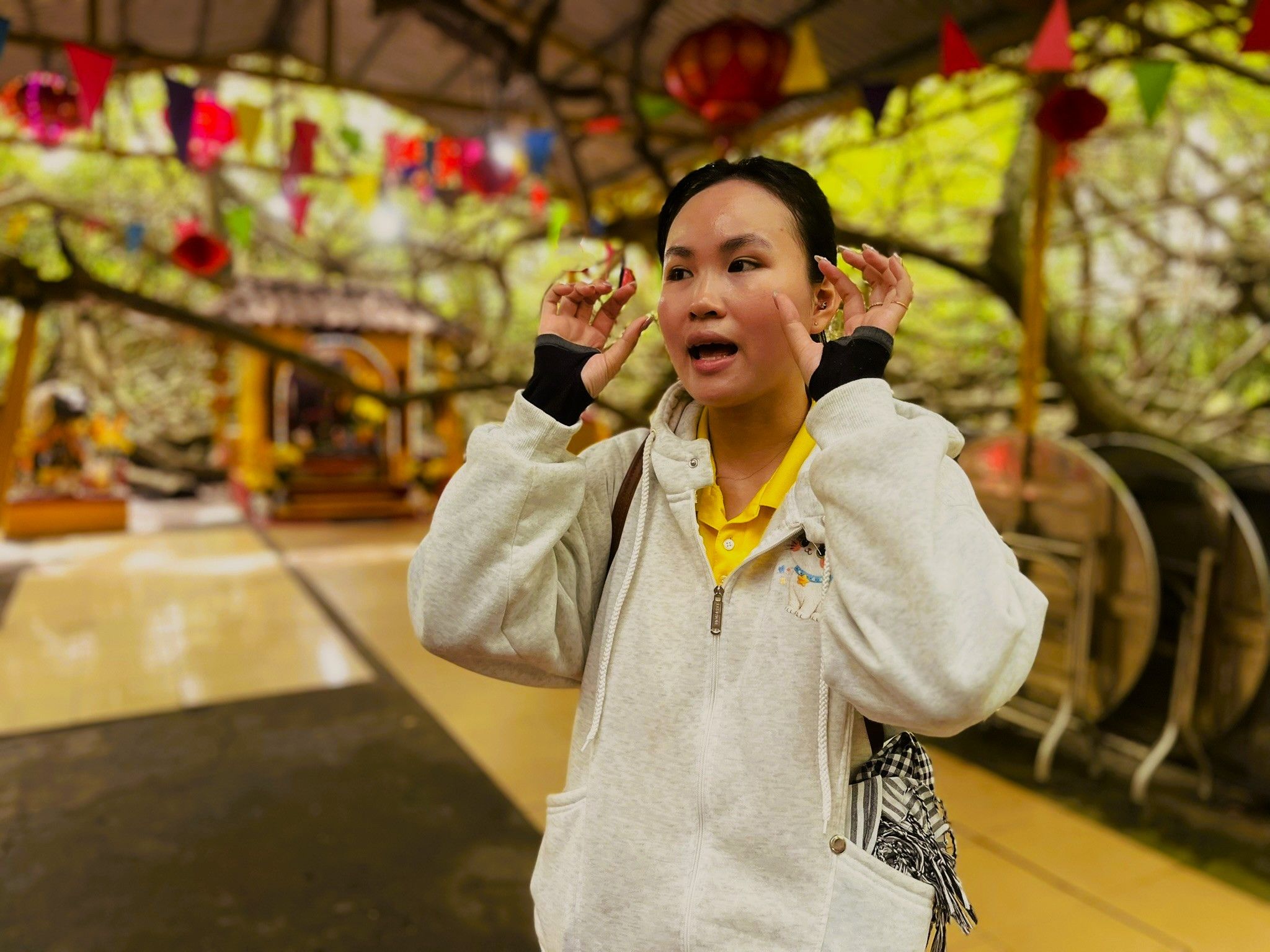
On my second day in Can Tho, I booked an excursion with Vy as my guide. The young woman picked me up at the hotel with a driver; in the minivan of the Vietnamese car brand Vinfast, there were two couples, one from Belgium and one from the Netherlands. I enjoyed once again a privilege of advanced age, allowing me to stretch out in the front seat while the back of the vehicle became cramped.
After a longer drive, we first stopped at a street stand to fortify ourselves with Banh mi, the baguette sandwich that, as a remnant from the French colonial era, has been adopted by the Vietnamese as a specialty. (In December 2024, during a food tour through Hoi An in Central Vietnam, I was served Banh mi. There, in local patriotic fervor, they claimed it was an invention of the city, which is not true. Banh mi can be found all over Vietnam. 'It is our preferred fast food,' says Vy.)
Revolutionaries and a Golden Lion
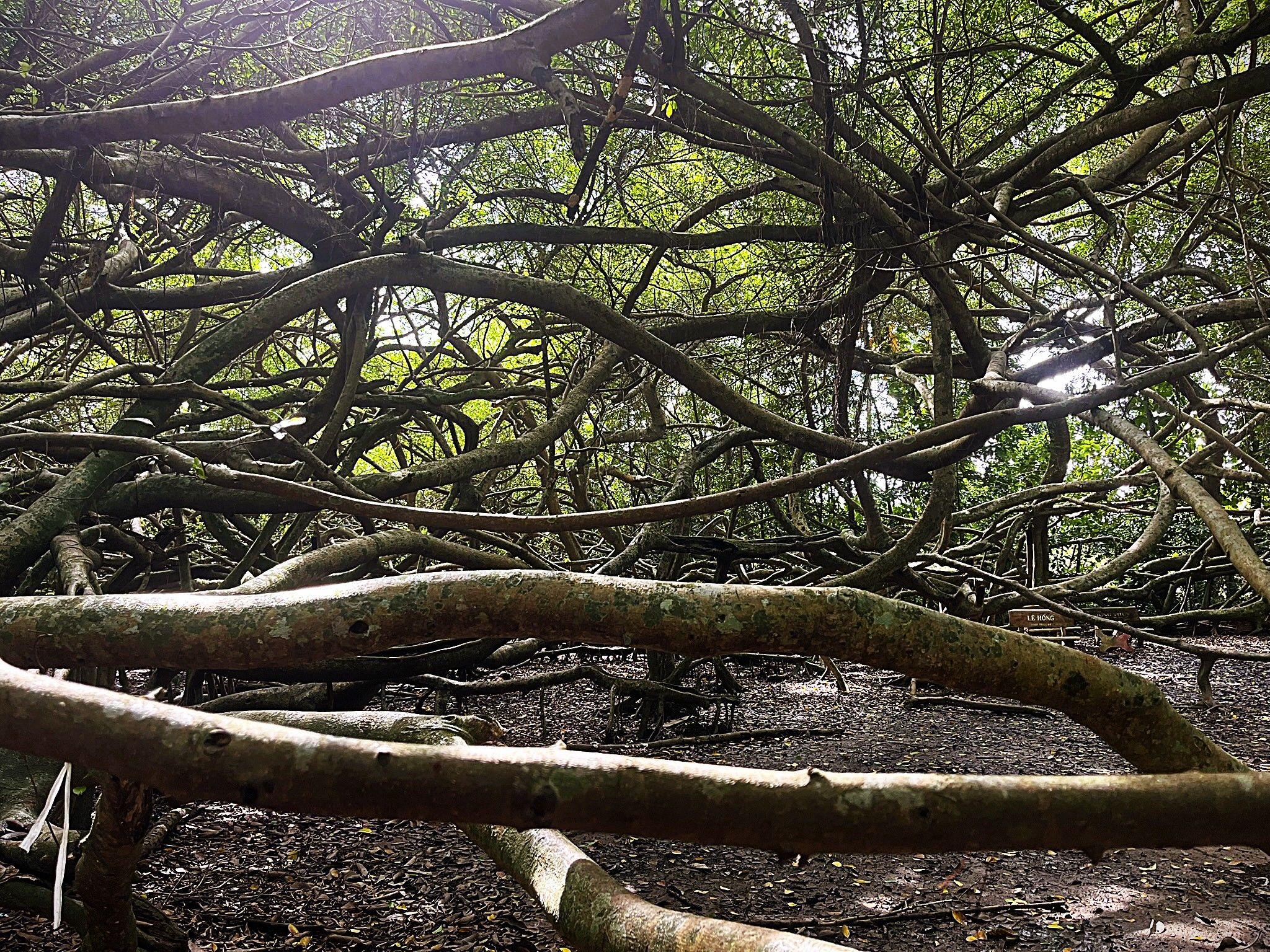
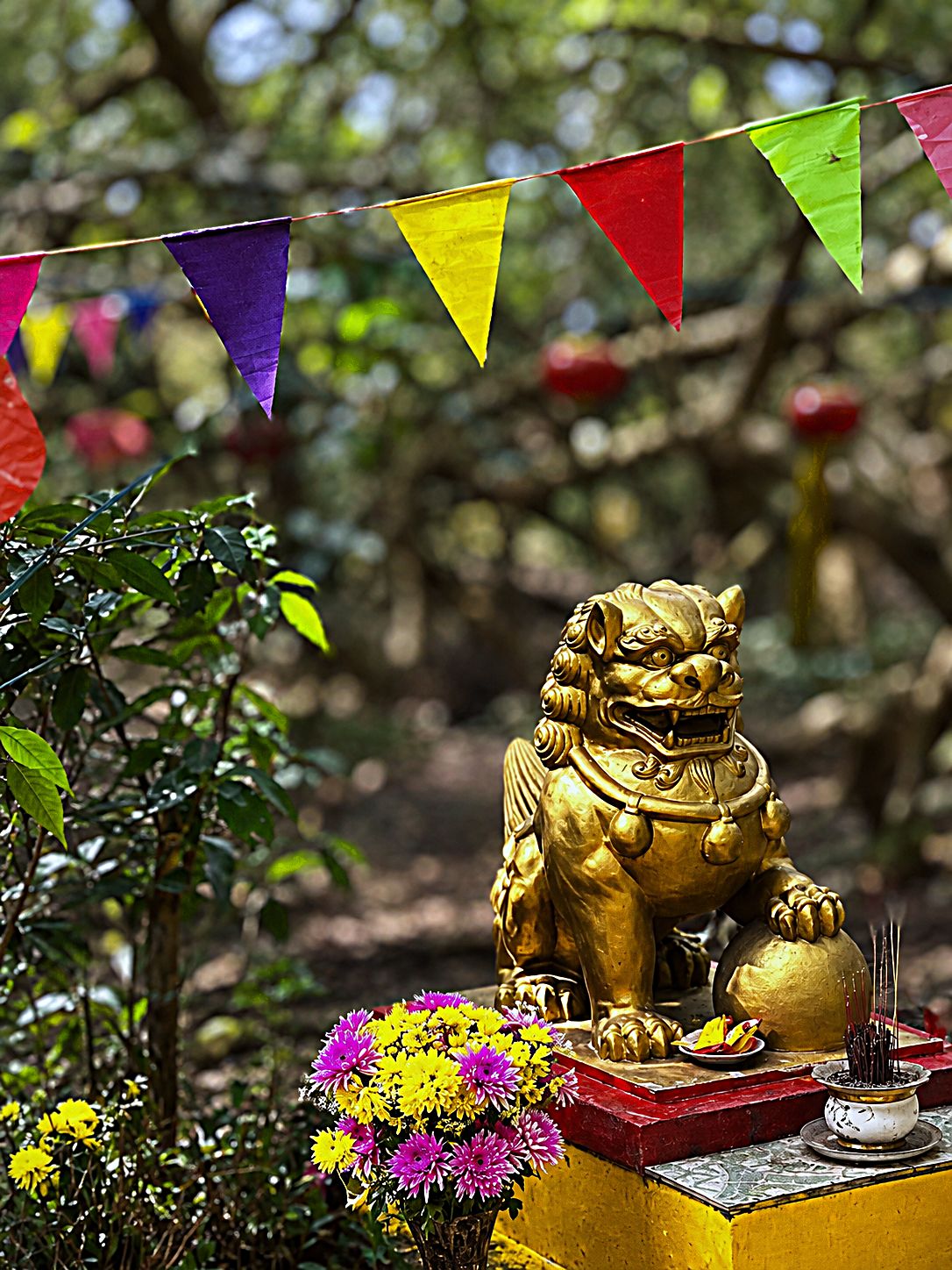
We continue to the 'Hidden Forest', Gian Gua. The Vietnamese call this species of fig, which we are discussing, Gua; it is known as 'Banyan,' a word that comes from Gujarati, an Indian language. The specimen we admire is over 150 years old, growing from a main trunk and forming an extensive network of branches and aerial roots above.
During the Vietnam War, the labyrinth of leaves and roots is said to have served as a hideout and base for revolutionary troops. According to Vy, the tree was therefore bombed by Americans. The 'Hidden Forest' is a destination and also a spiritually charged location: Amidst the root system, there is a Buddhist worship site with a gilded lion statue.
Our next destination is Lung Ngoc Hoang, a wetland nearly 30 square kilometers large located south of Can Tho, protected since 2002. It is surrounded by expansive rice fields that find ideal climate here and can be irrigated so well that up to four harvests per year are possible.
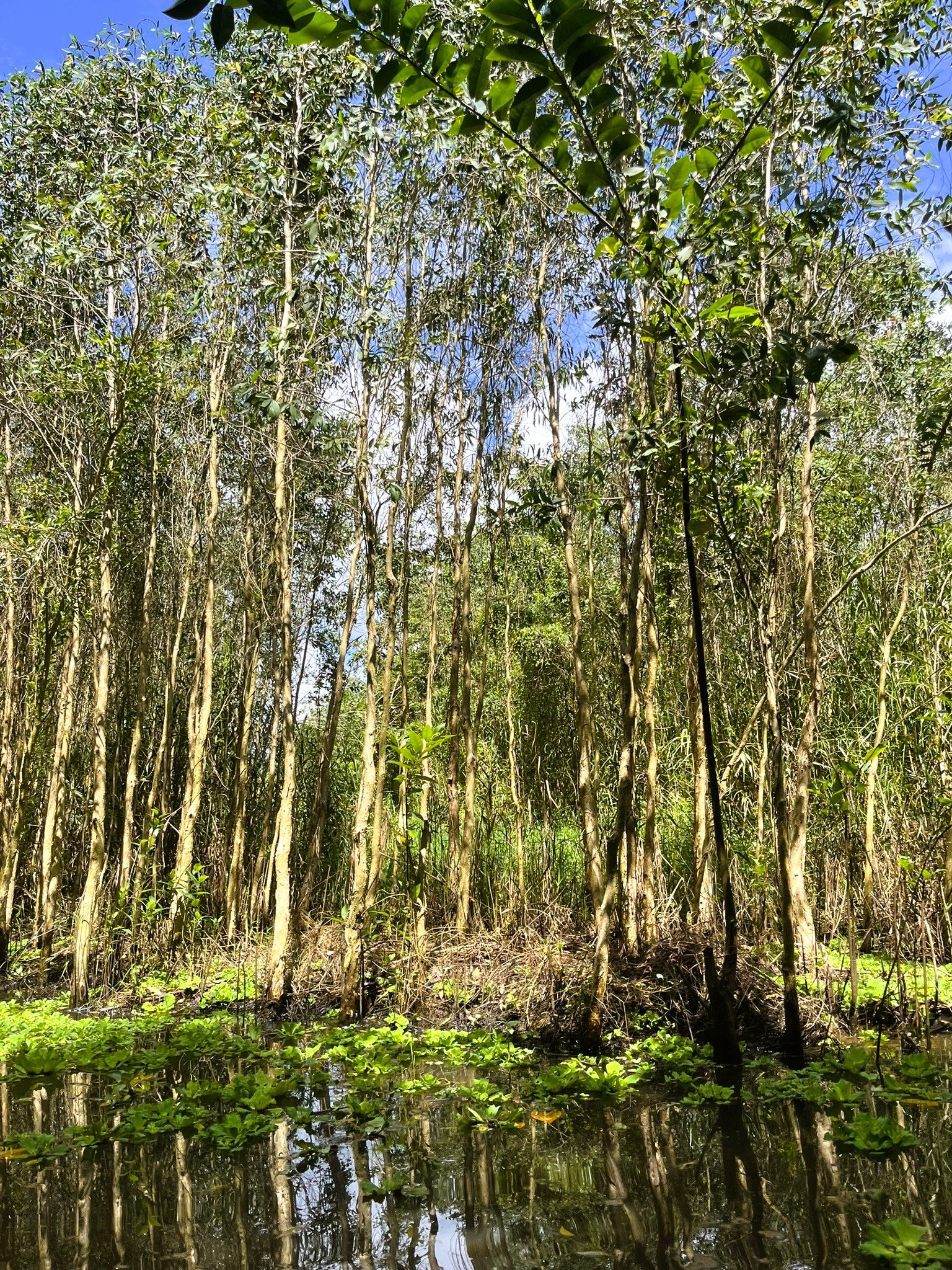
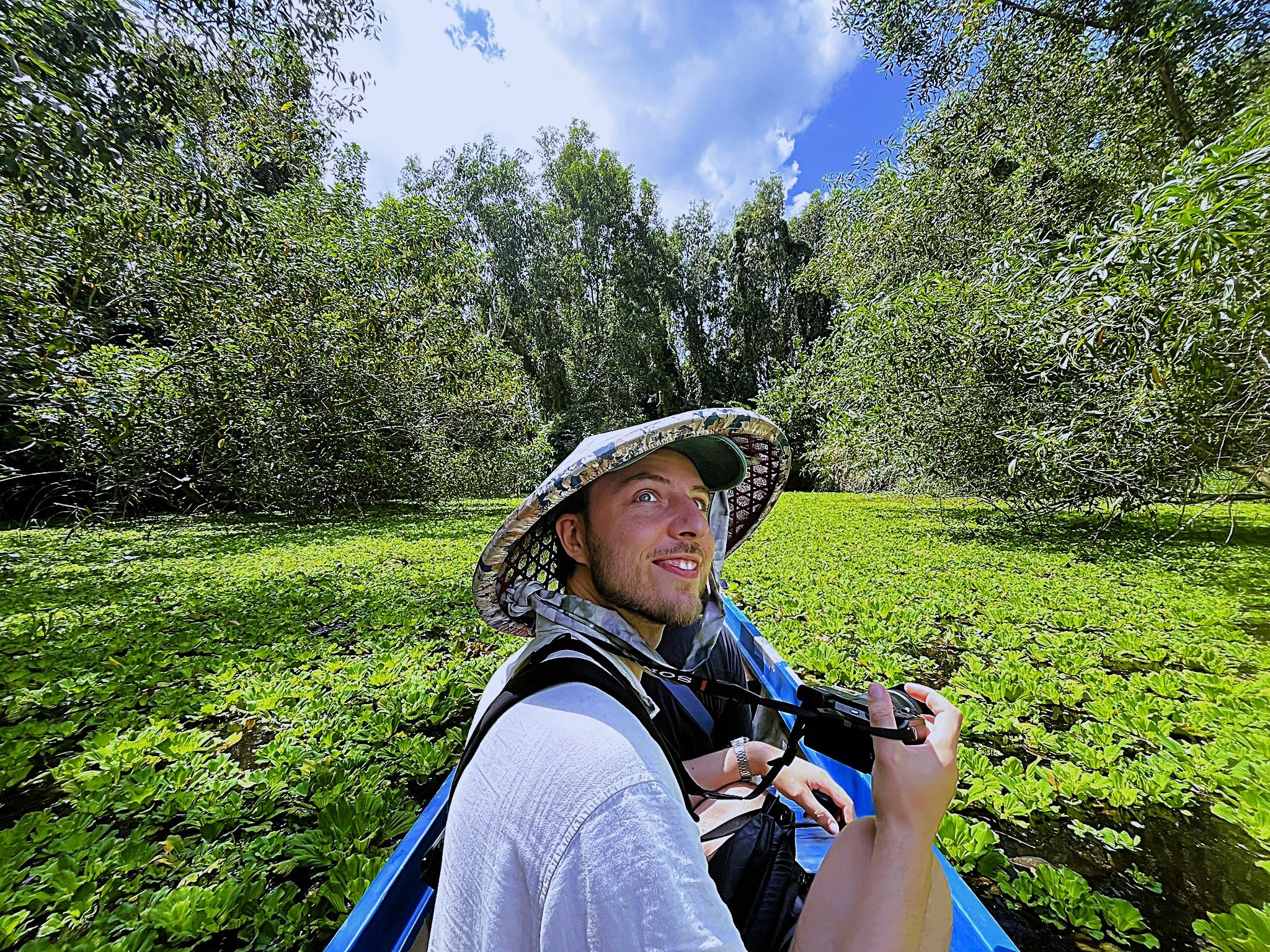
To protect ourselves from the relentless sun, we have borrowed typical Vietnamese hats, those conical structures that must not be missing from any picturesque Vietnam photo. Our narrow boat glides through the waterways. Kneedeep trees grow from the water, their bark peeling off in paper-thin strips from the trunk. They are called paperbark trees in English, Vy informs.
In some areas, the water arm is so overgrown that one could mistake it for a meadow. There are water lettuces – green rosettes resembling tiny heads of lettuce – and water lentils. The boat carves a path through the matrix of plants, which closes behind us.
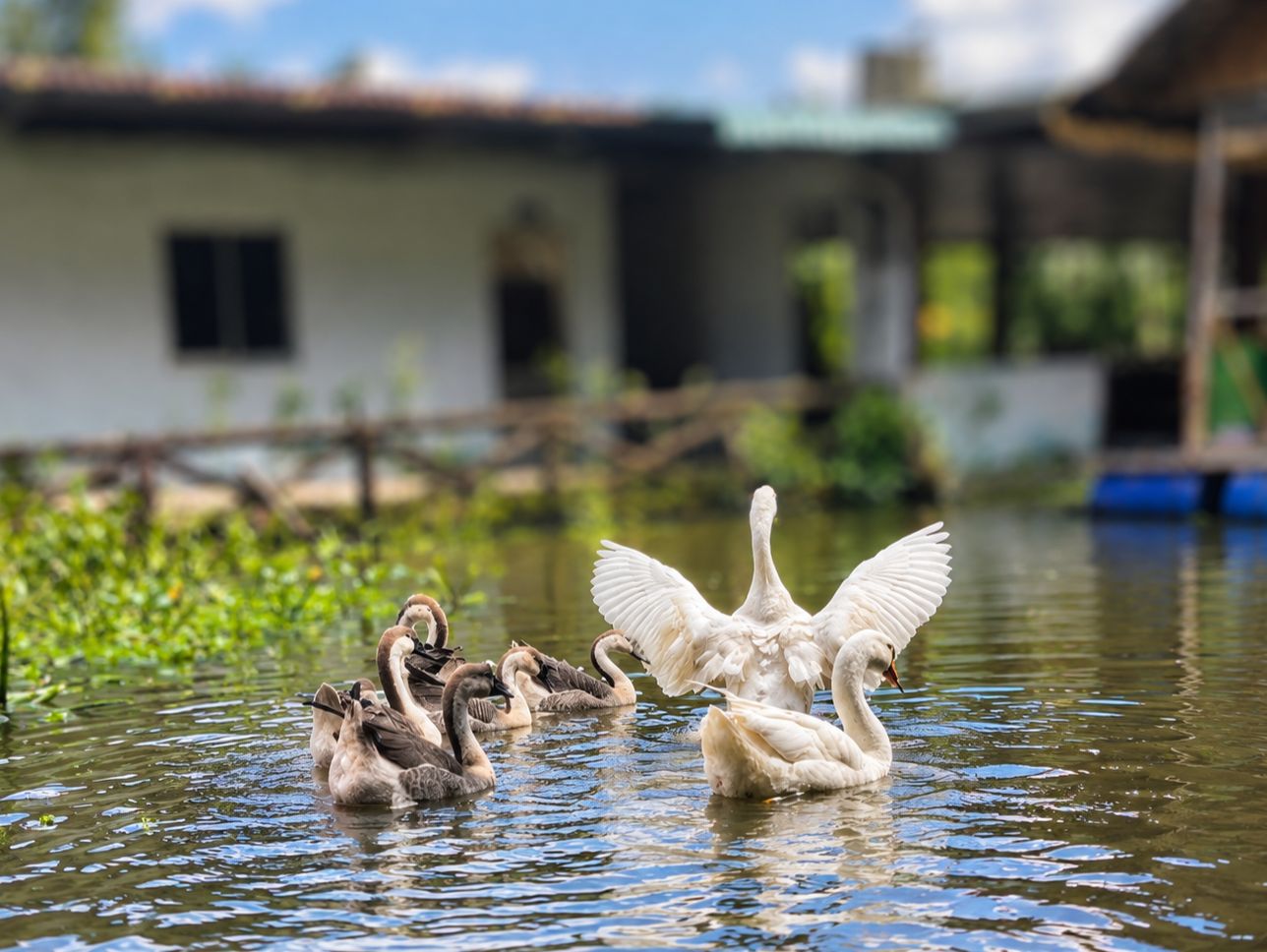
Vy says that over 330 species of plants have been counted in this area, with 56 categorized as new findings. Fishes, shrimp, frogs, and water birds also live here. We catch sight of some of them, as well as a flock of geese, which, however, are not part of the native fauna and will eventually end up on a grill.
The next day at six in the morning, I was met by Huong, another tour guide. We were set to visit the floating market. Although we met at a café right next to the market hall, we did not set off from the waterfront promenade but from a small pier that we accessed through a damp back alley.
Trade and Change on the River
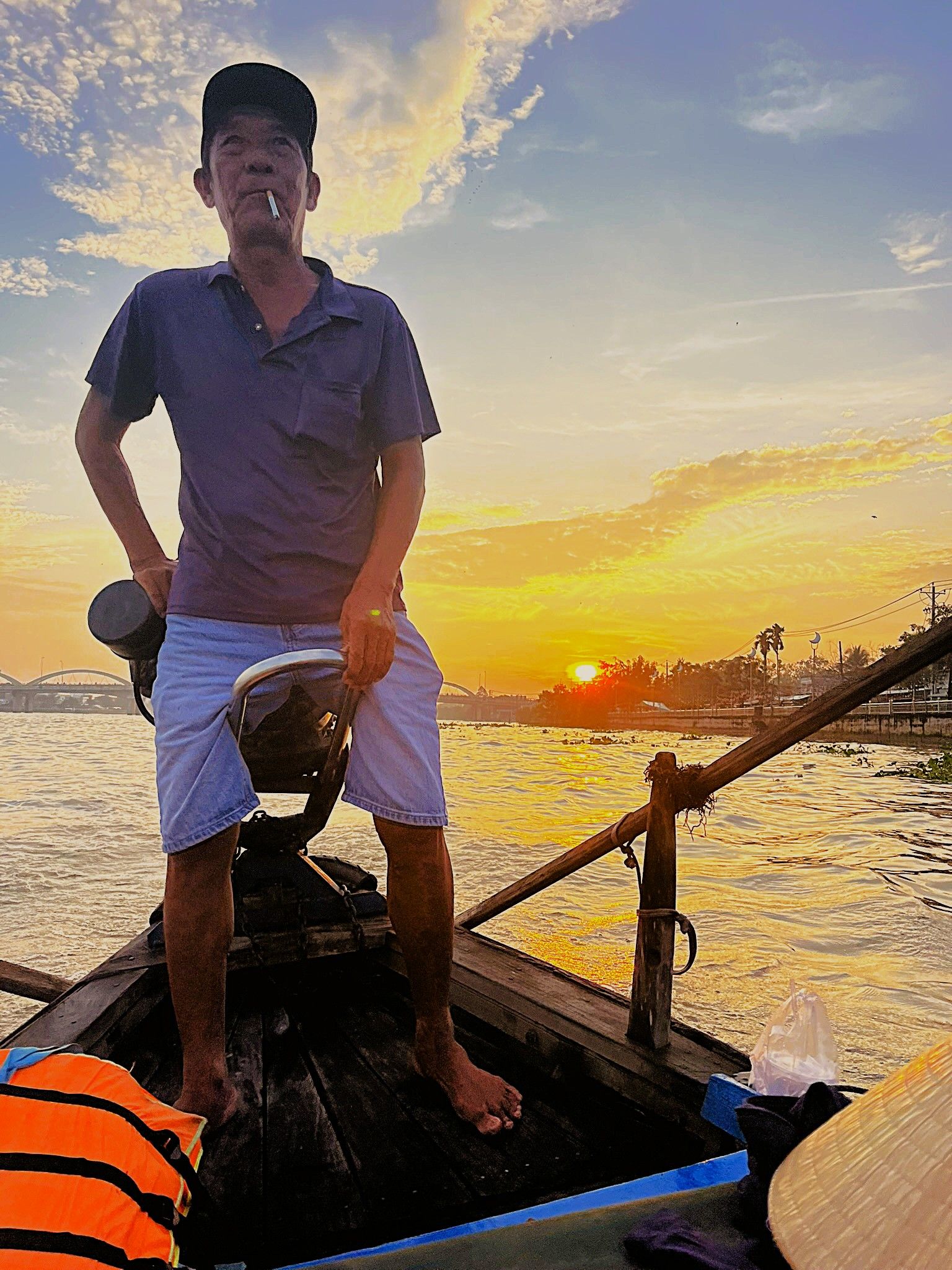
The motorboat is small and made of wood. Onboard is a couple from California who speaks Vietnamese perfectly: both fled Vietnam as children with their parents in 1975. The boatman stands at the back, smoking incessantly; I take his photograph backlit by the rising sun.
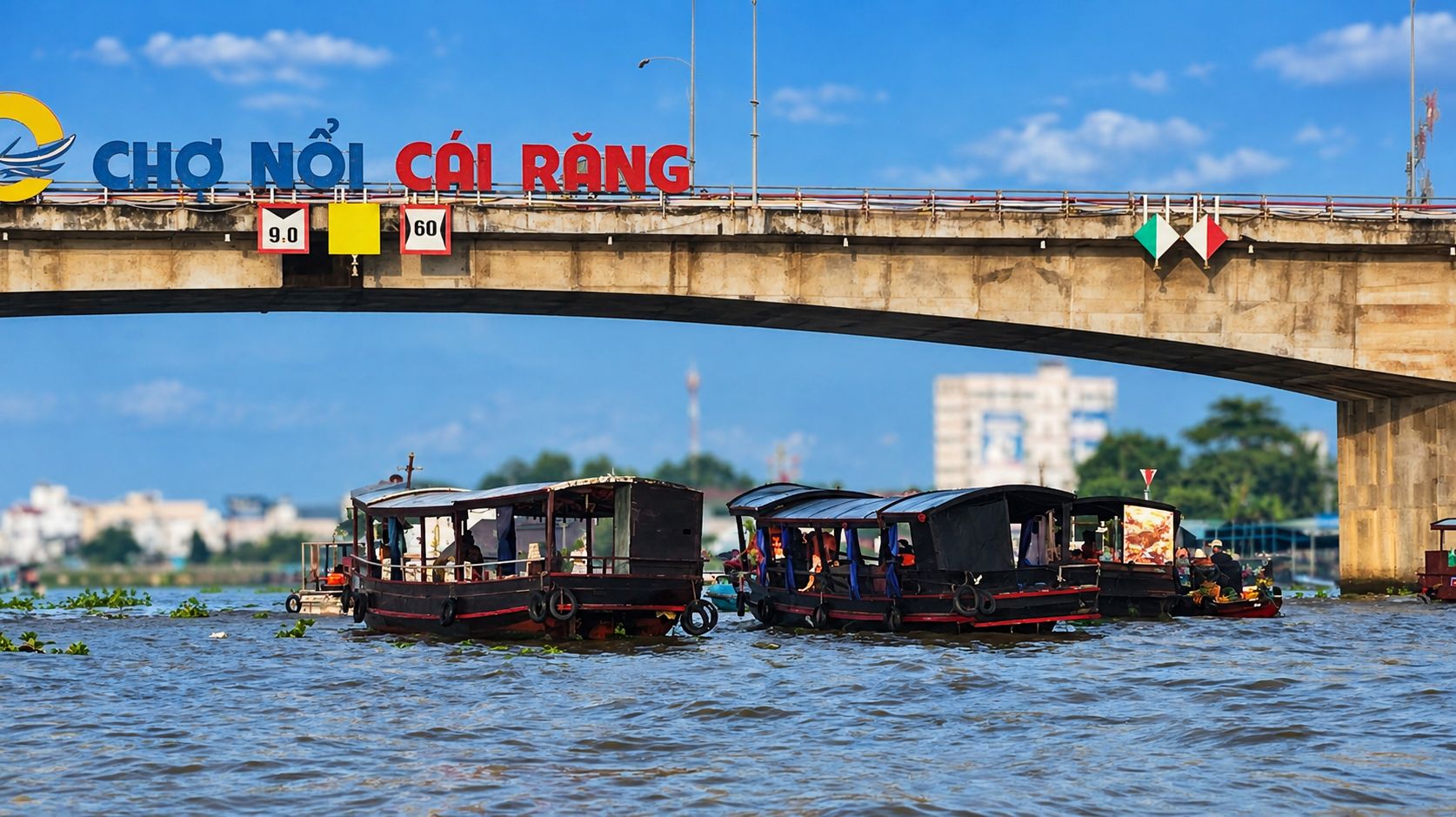
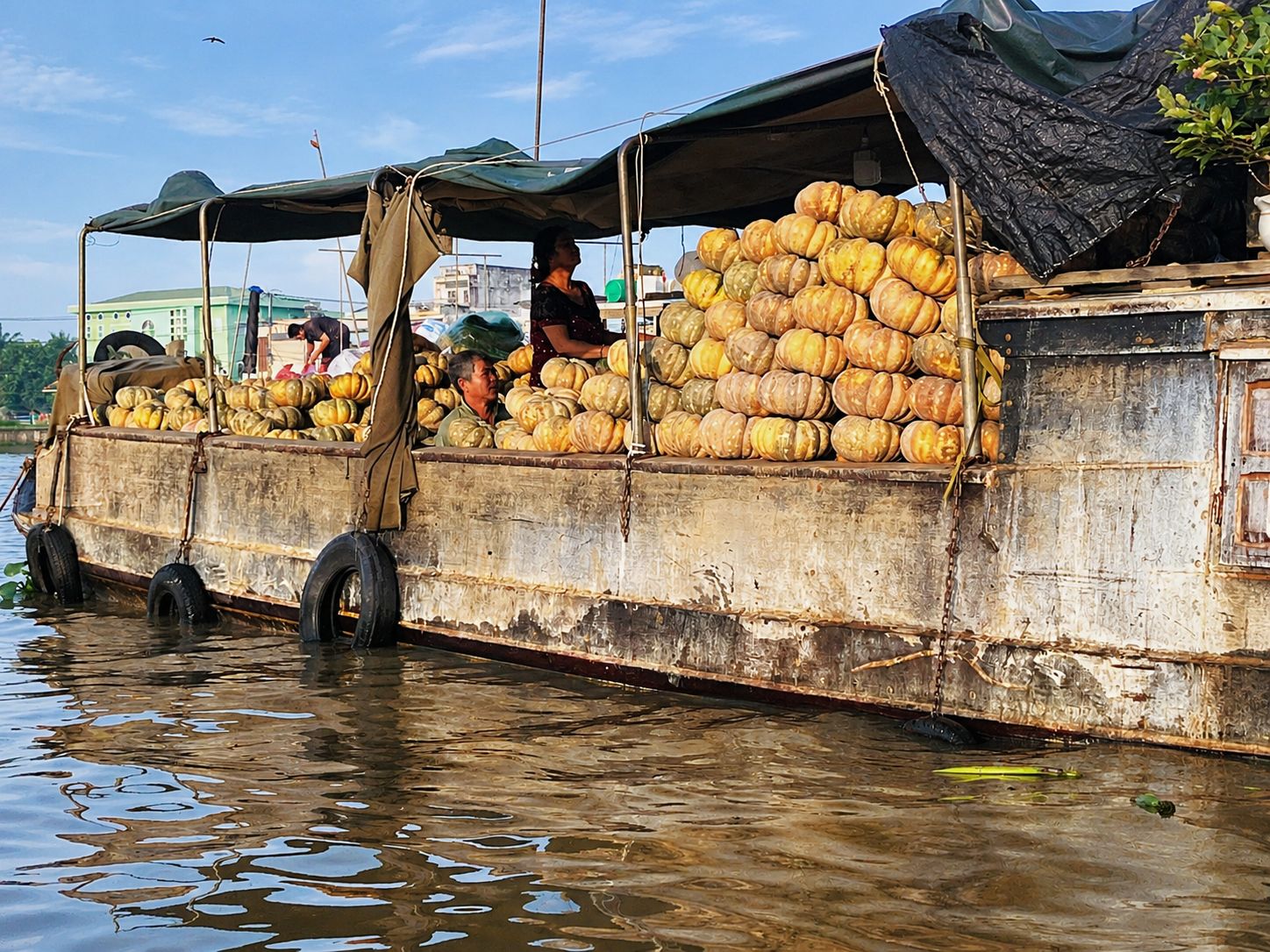
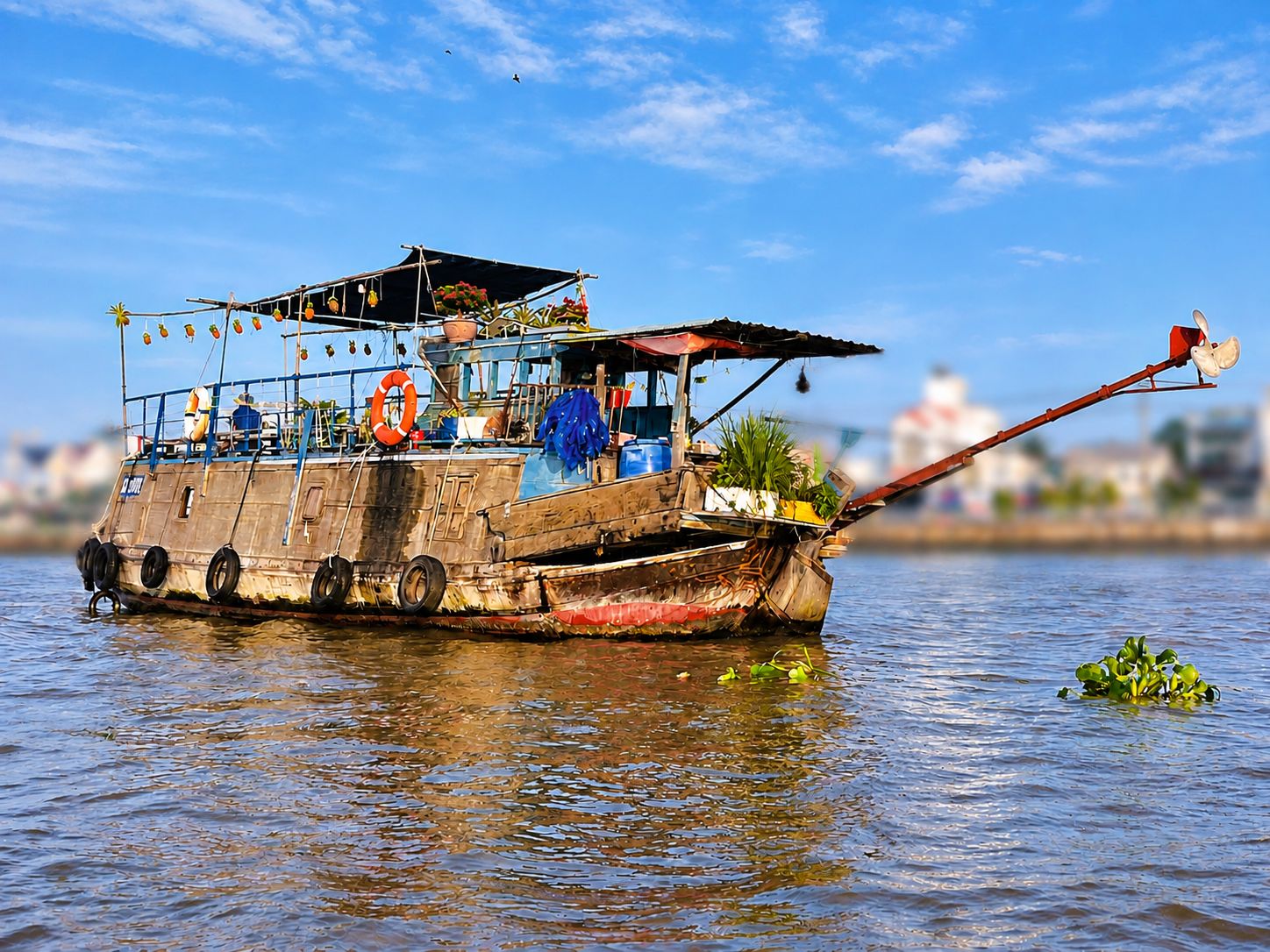
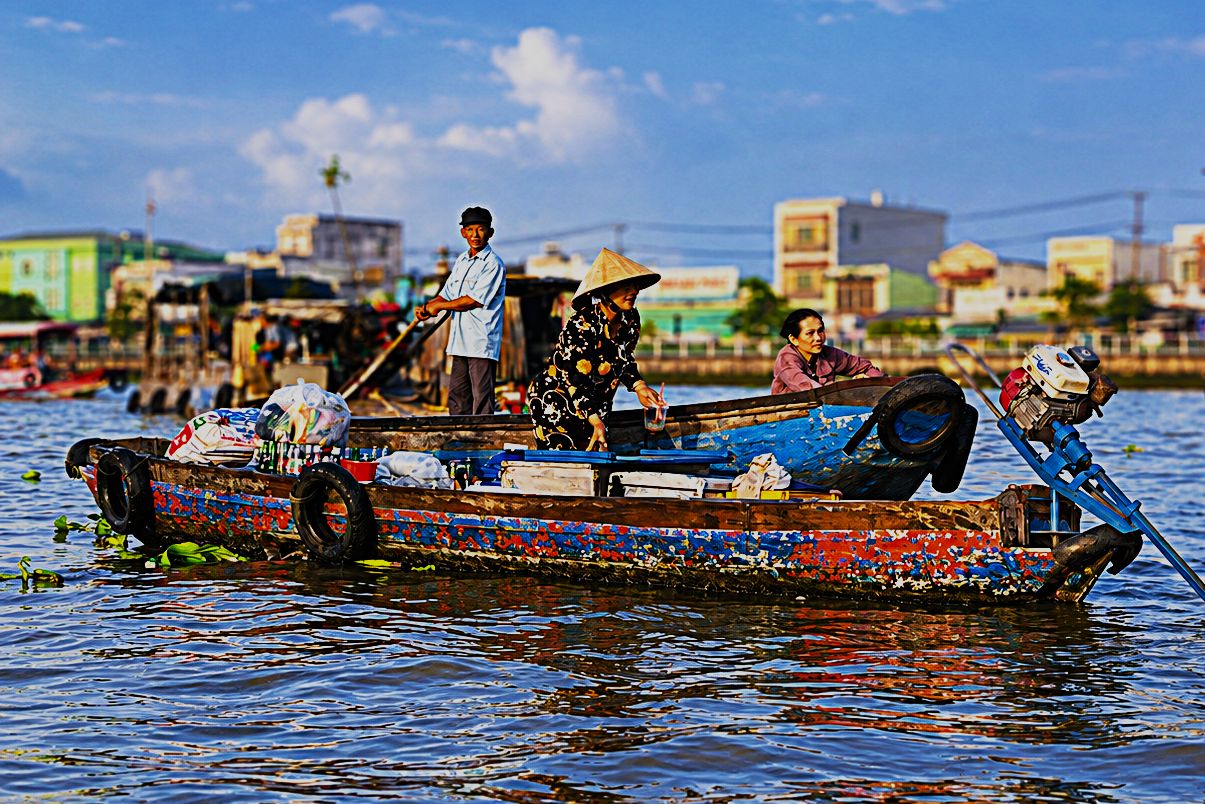
The market of Cai Rang is located on the Can Tho River, just over six kilometers from the center. A concrete bridge welcomes visitors. The busiest time is early in the morning between five and eight o'clock; being a quarter to seven puts us right in the thick of things. 'The authorities try to keep the market authentic while also attracting a few more tourists,' explains Huong.
Unlike the famous Damnoen Saduak Floating Market southwest of Bangkok, where one can hardly see the floating market stalls among the closely packed, exhaust-spewing tourist boats, here tourists are merely welcome extras; genuine trading occurs, both wholesale and retail.
Huong says Cai Rang is the most important trading place on the water throughout the delta, and it’s worth shopping here: 'In the city, a pineapple costs six or eight thousand Dong, here only two thousand.' That's about six cents or nearly seven cents.
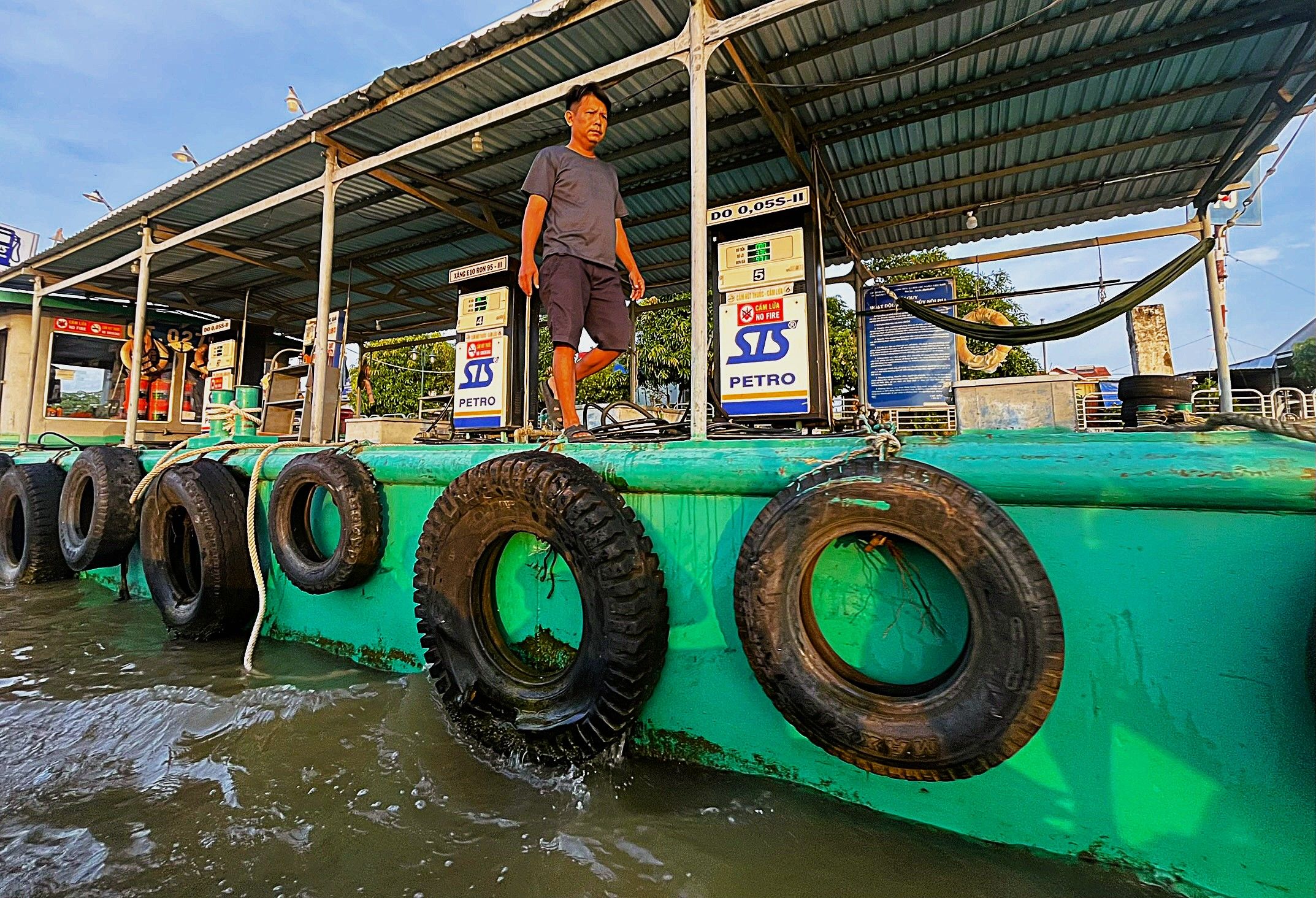
Larger vessels deliver pumpkins, pineapples, and onions from the growing areas; smaller ships carrying buyers weave in between. And because trading makes one hungry and thirsty, vendors on small boats offer sliced fruits and freshly squeezed fruit juices, noodle soup, tea, and coffee. Gas for the boat engines is sold at floating gas stations.
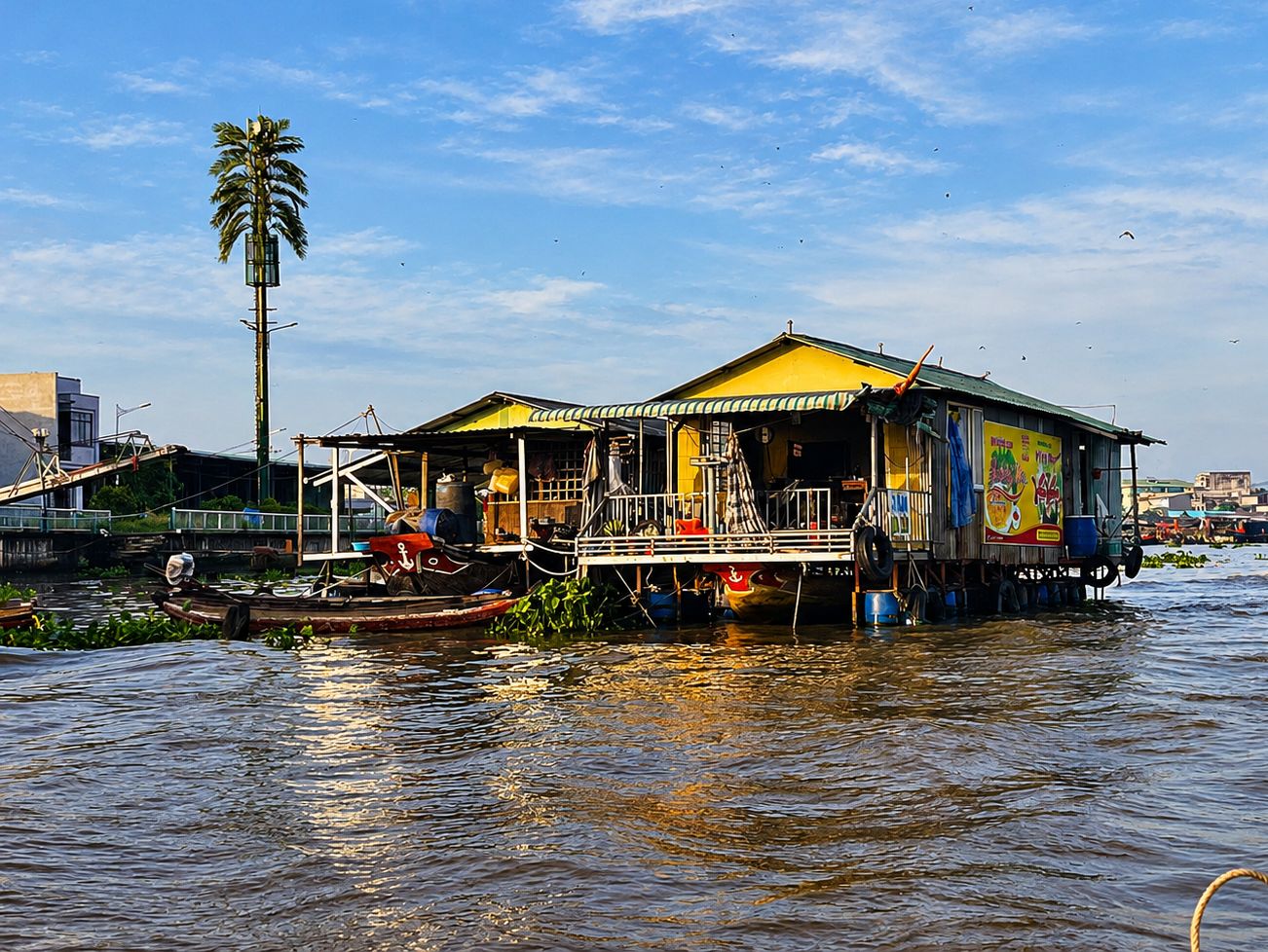
Many families live on the water. Depending on size, they have three, four, or five boats tied together. We visit a family with five boats; one is under repair. Between the hulls hang large containers with live fish, and in an enclosure, geese honk.
In a cage, there is even a guinea pig as a pet, as the daughter of the family explains. (That my thoughts of the Swiss Animal Protection Act come to mind here in the deepest south of Vietnam is far-fetched but not completely absurd: It prohibits keeping guinea pigs individually.)
The girl moves nimbly over the planks and rails; it’s clear she grew up on the boats. She hands us plates with sliced fruits: pineapple, watermelon, mango, dragon fruit. The dragon fruit grows on a cactus; from the bus on the way from Ho Chi Minh City to Can Tho, I saw large plantations of these cacti lined up. The white pulp is interspersed with tiny black seeds, tastes sweet, and has the consistency of a soft pear.
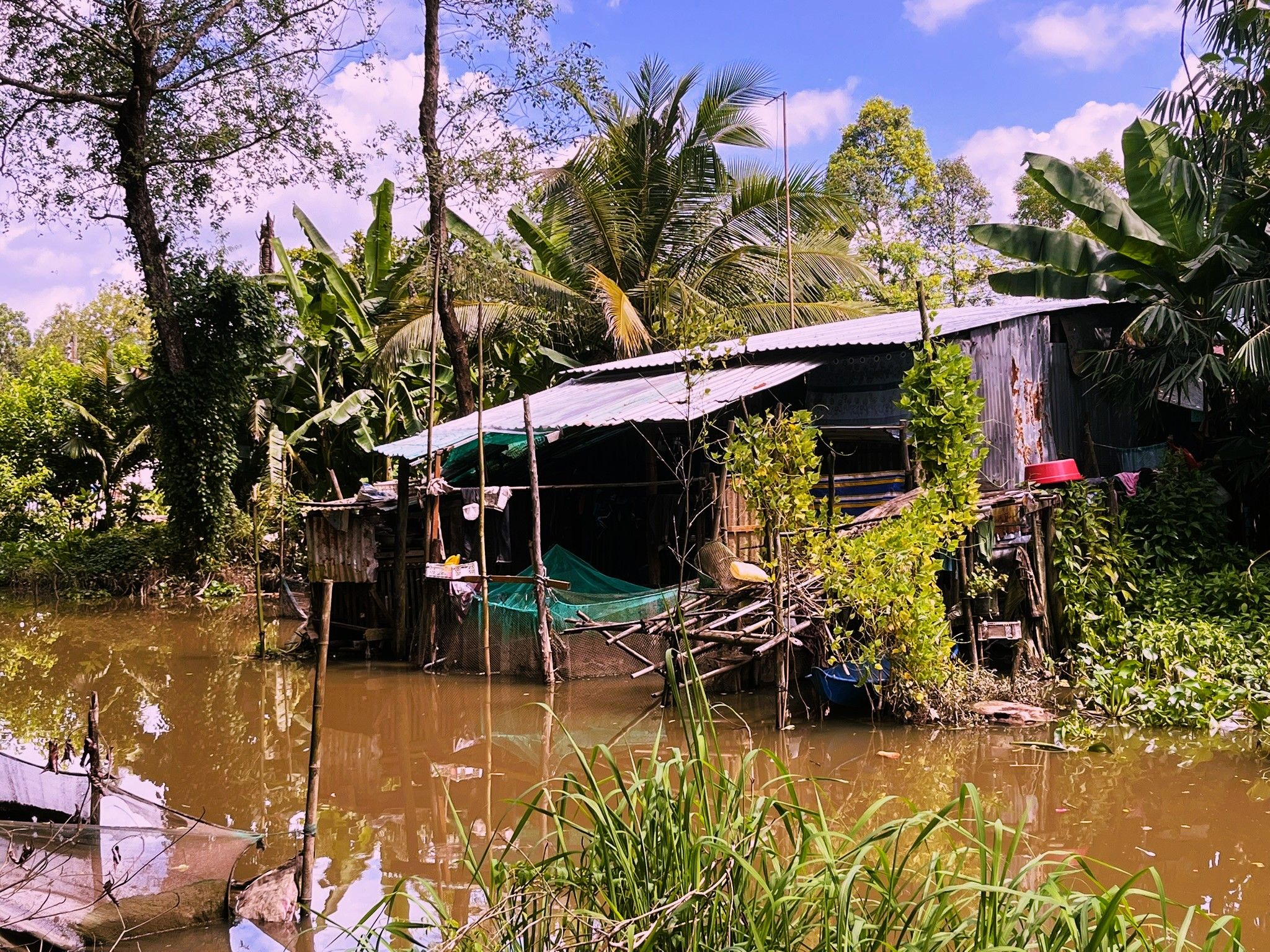
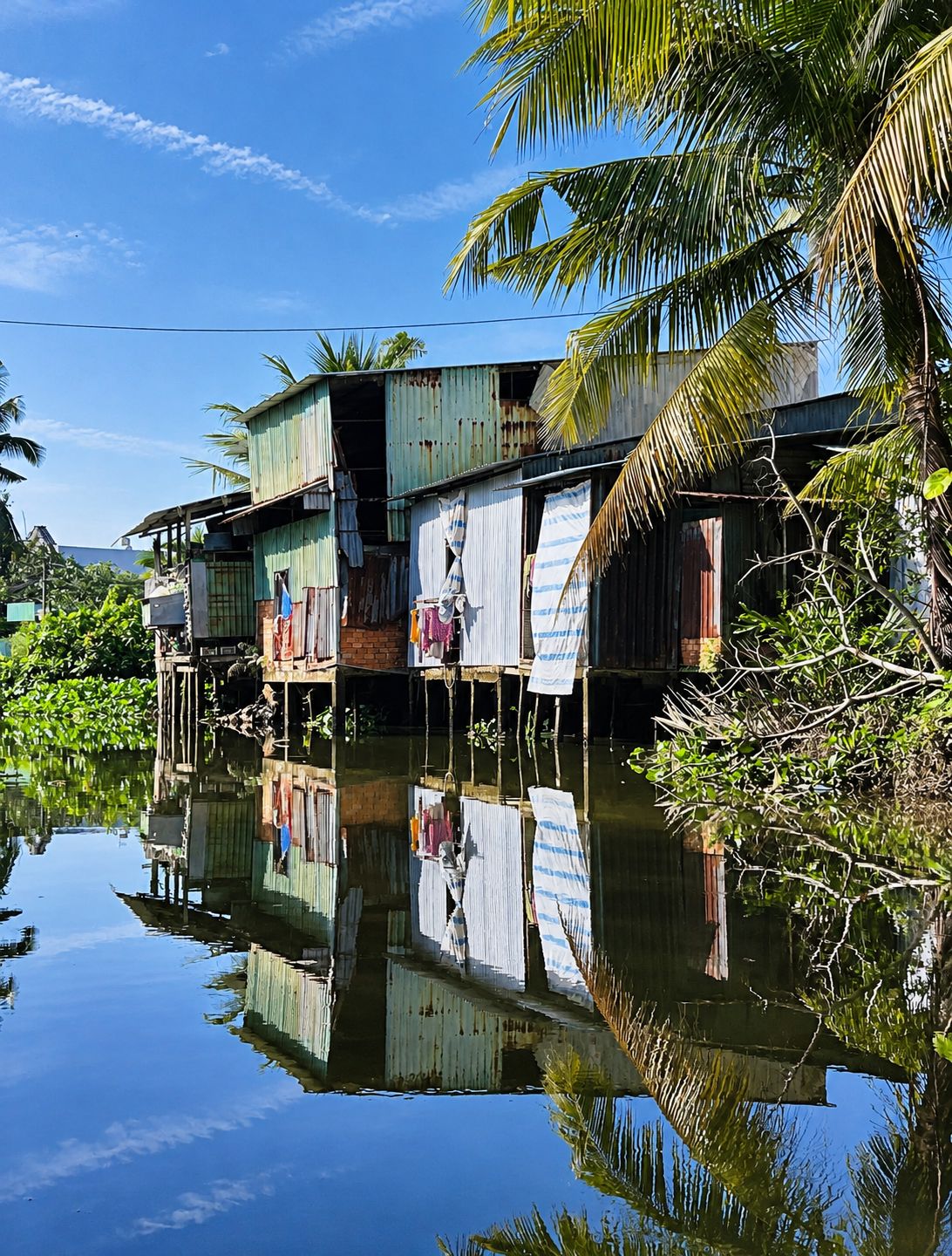
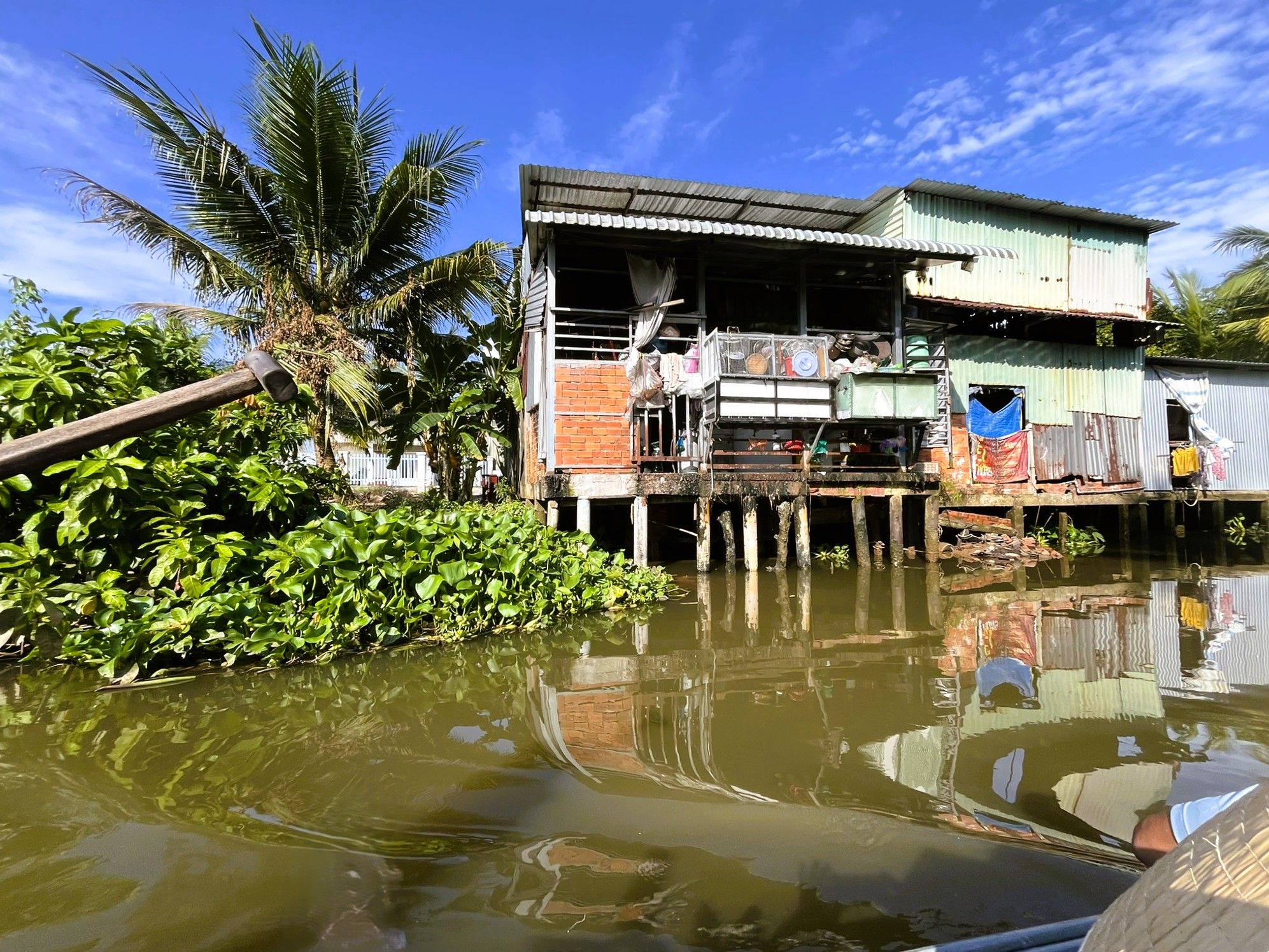
After the market, we turn into a small tributary. The houses stand half on stilts in the water and half on solid ground by the road. 'This way, the residents can use both the motorbike and the boat,' says Huong.
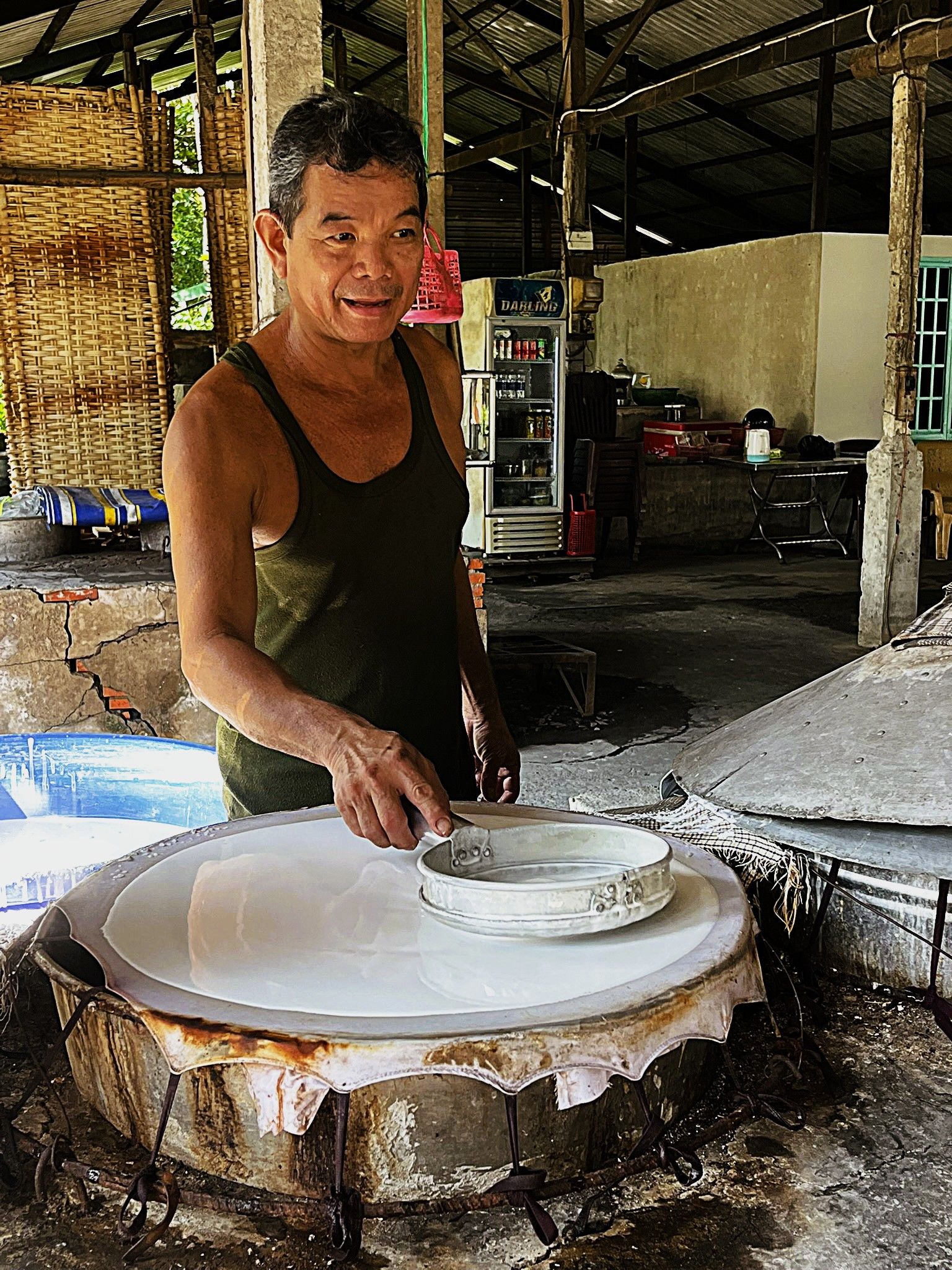
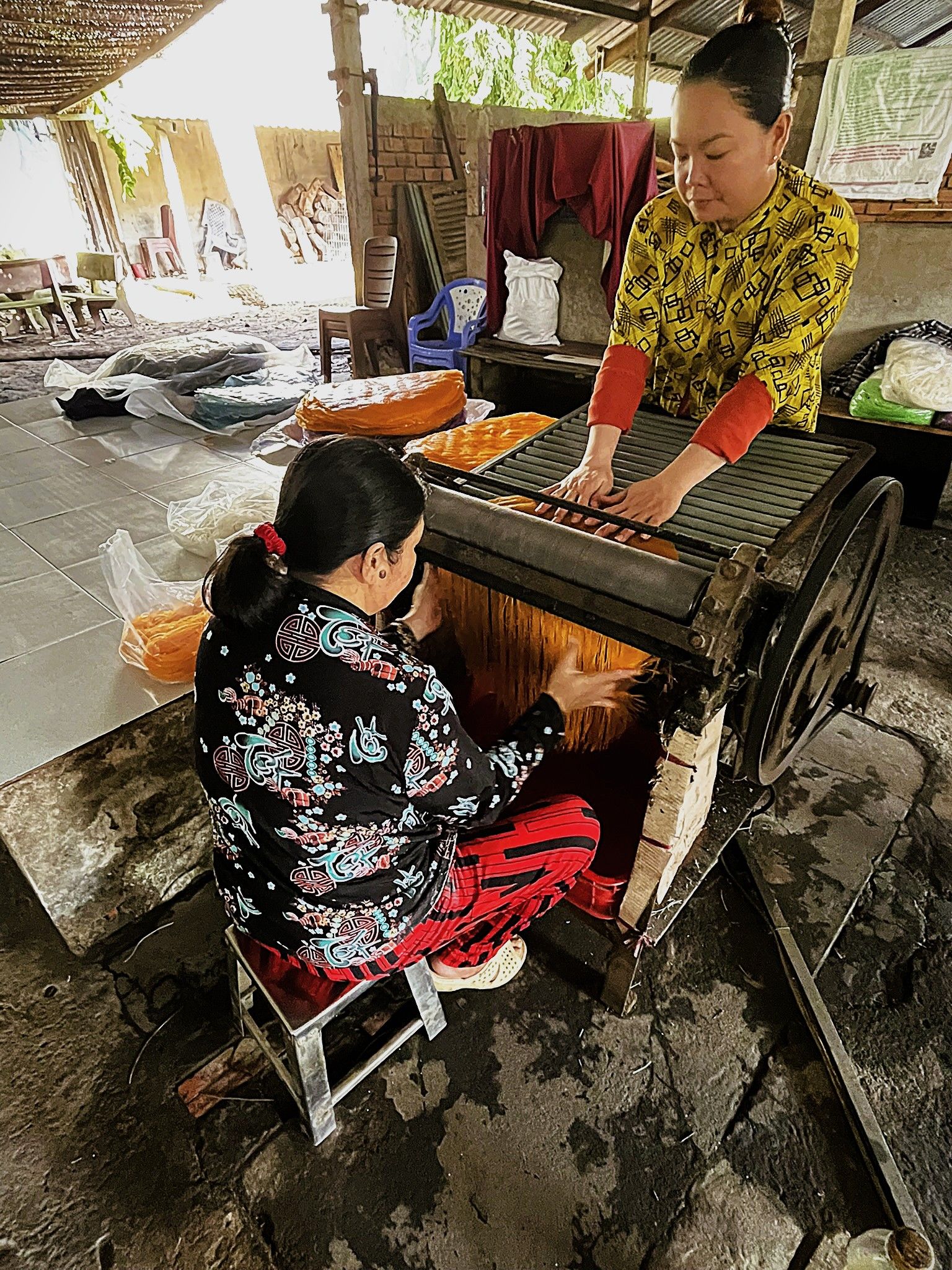
Not far from the tributary, we visit a noodle factory established in 1982, as a sign indicates. After seeing the effort put into the production here, I will never again mindlessly consume noodles. Much of it is done by hand. In a blue plastic barrel, the dough is prepared. The exact mixture of water and rice flour determines whether the dough can be processed or becomes either too fluid or too crumbly.
A man – the owner, as Huong says – spreads the dough thinly on a stretched cloth over water kept simmering by a wooden stove. After a few moments, he rolls the steamed sheet off the cloth with a bamboo-woven instrument and places it on a bamboo rack. This is carried outside, and the sheet is dried in the sun for several hours. Then two women take over at a rudimentary machine: one feeds the dried sheets into the cutting device, while the other collects the cut noodles and packs them in plastic by the kilogram.
Water dictates almost everything in the Mekong Delta: the construction, trade, work, food, the amount of rice harvests, and even the consistency of the noodles.