
A French woman loves Chinese men in the Mekong Delta
which was released in theaters in 1992. The film is based on the novel of the same name by Marguerite Duras, who was born in 1914 during the French colonial period near Saigon.
Published: 18.10.2026
There is much literature about the Mekong Delta in southern Vietnam, not just the colonial perspective by Marguerite Duras in her novel «L’Amant», which I wrote about in my last blog post. The landscape of rivers, canals, rice fields, and mangrove forests, along with the life of people on and by the water, has inspired many writers; for example, «Endless Fields» by Nguyen Ngoc Tu received a literary prize in German in 2018.
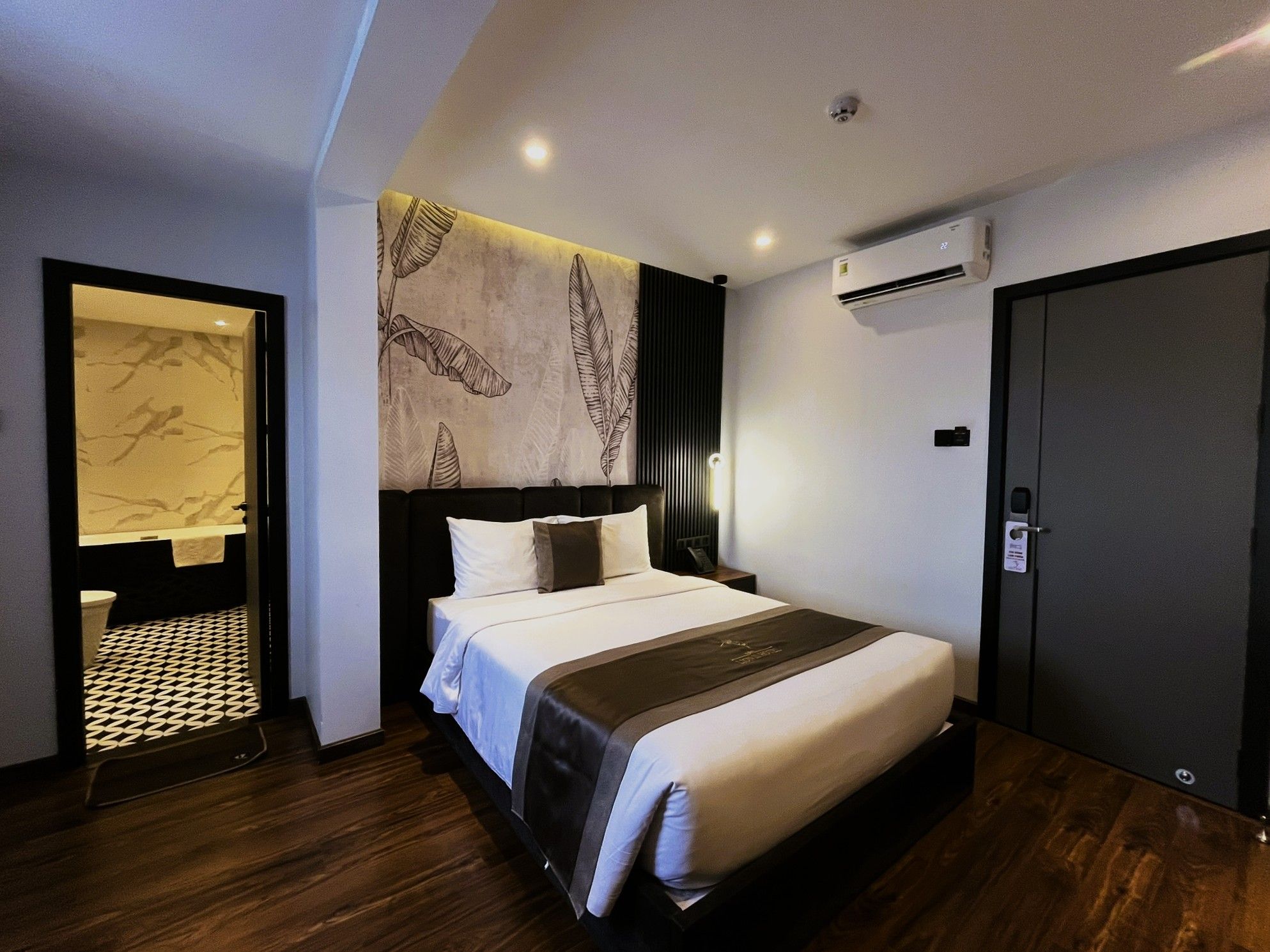
However, I do not want to experience the Delta through paper and YouTube documentaries, so at the beginning of October 2026, I first stayed in Can Tho and then in Chau Doc at the border with Cambodia. My hotel in the city center, the «Lion 11», is modern, clean, and has spacious rooms and bathrooms. For 23.50 Swiss Francs (about 25 Euros) per night, it is one of the best city hotels of my trip.
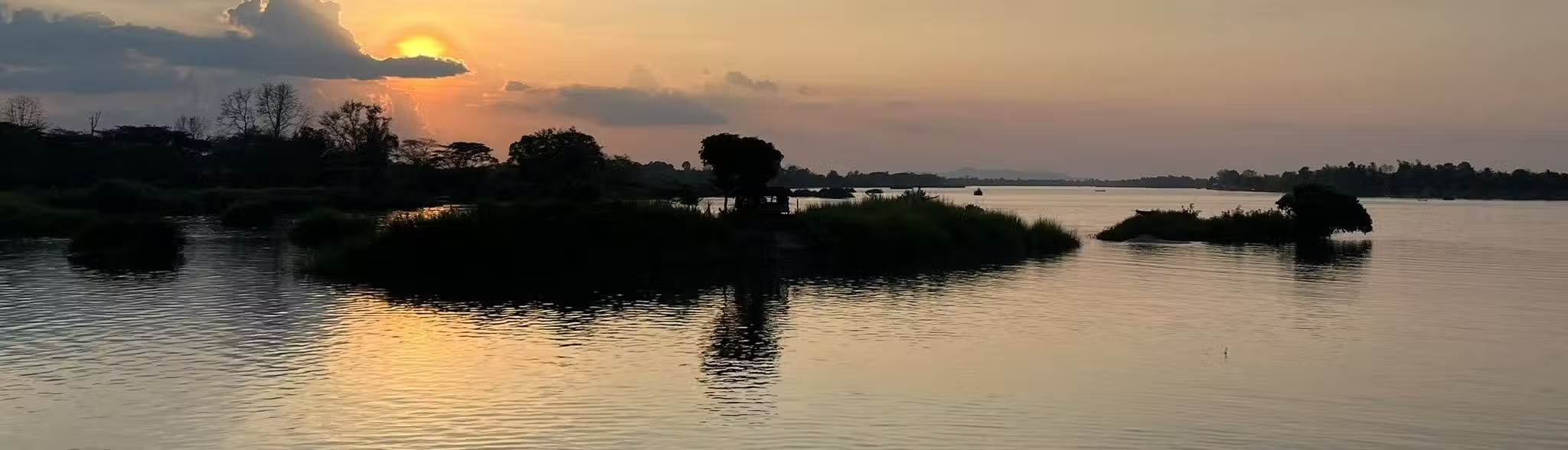
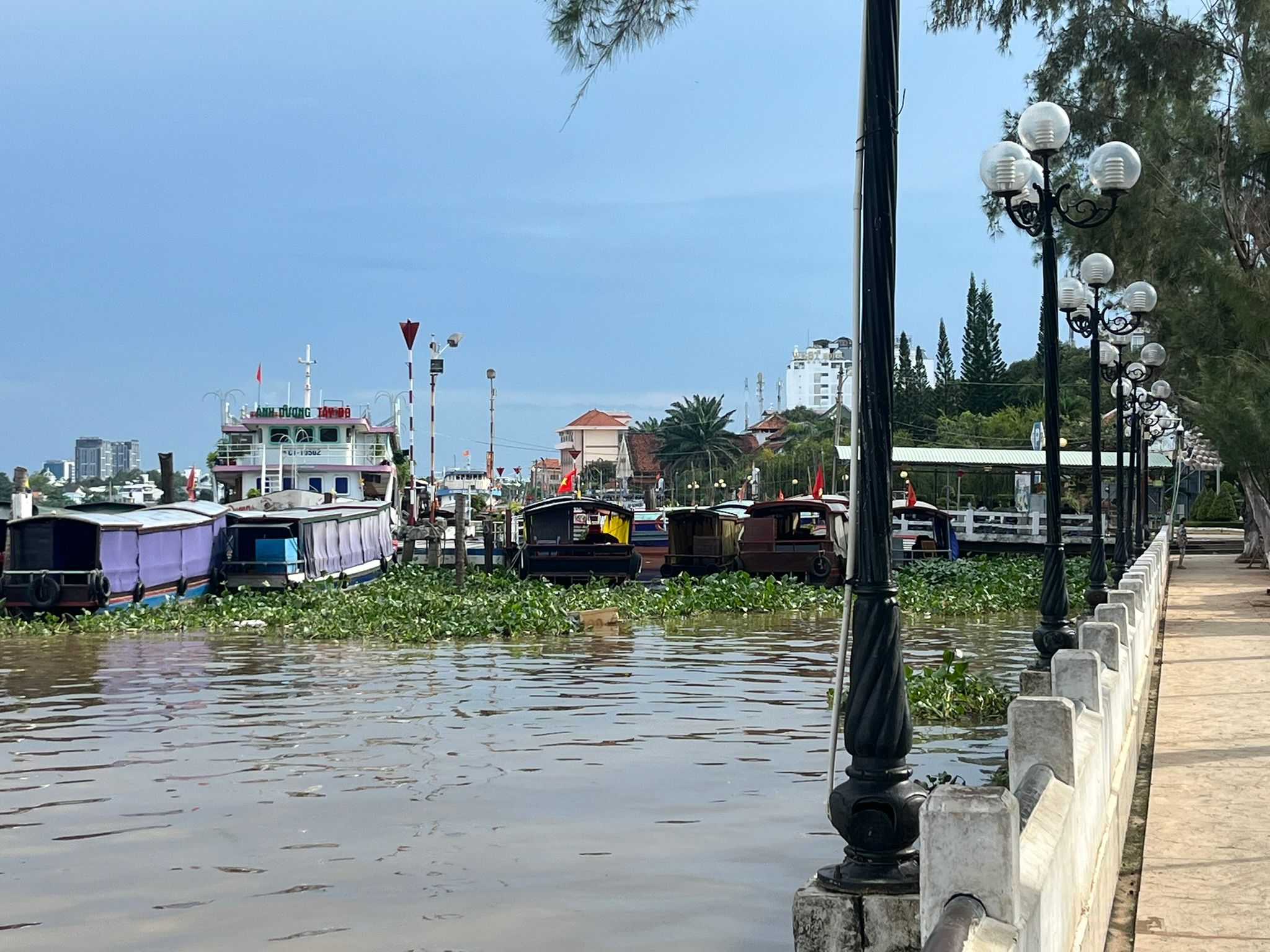
The metropolis of Can Tho lies on the Hau, known as Bassac, the most important distributary of the Mekong. Those who stand on the Ninh Kieu waterfront in the evening quickly understand that everything here is oriented towards water. Right in front of the quay, old-fashioned large wooden boats bob on the water, where people live. Excursion boats wait for tourists, fishing boats for their next catch, and floating restaurants for patrons.
Paternally greeting Uncle Ho
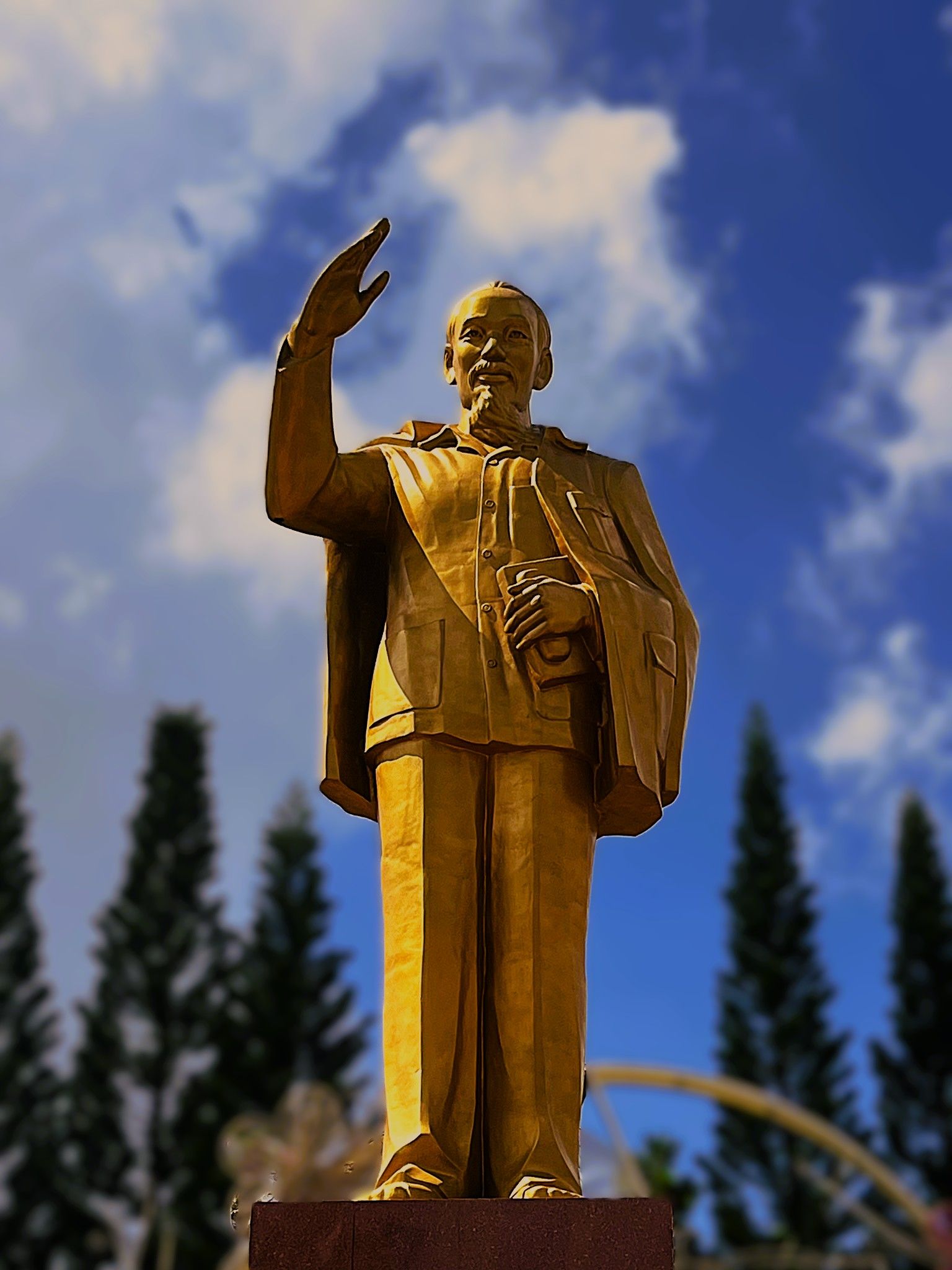
The promenade is a small park where the Can Tho River flows into the Hau. Vietnam's recent history poses here: In the middle of the park stands a more than seven-meter-high golden statue of Ho Chi Minh on a pedestal of three and a half meters. Paternally, «Uncle Ho», as the Vietnamese call him, greets the scene.
Originally, the place was just a landing spot for fishermen and market vendors. The French, who dominated the Delta since the 1860s, reinforced the banks in 1876. It was not until 1957, long after they had left, that the then Vietnamese provincial governor established the promenade and park.
Anyone who delves into Vietnam's history immediately encounters complexity, here in the park and at the nearby Can Tho Museum. Ninh Kieu, the name of the park and the entire district, literally means «Bridge of Peace», and the name is older than the city that bears it since Can Tho's history officially begins only in 1739.
A bridge of peace from the North
Ninh Kieu, however, refers to an event in the 15th century: Le Loi, the later emperor and founder of the Le Dynasty, is a national hero, somewhat like a Vietnamese William Tell. He founded a liberation army and led a guerrilla war against China, which was ruled by the Ming Dynasty and occupied Vietnam. (At that time, the country only encompassed the North and Central parts of today's elongated territory.) In November 1426, Le Loi and his rebels defeated the Ming army near today’s capital, Hanoi, even though they were outnumbered by ten to twenty times: five to ten thousand Vietnamese against nearly one hundred thousand Chinese. Tens of thousands of Chinese soldiers died at the Ninh Kieu bridge.
Thus, the name of the promenade in Can Tho initially has nothing to do with the South. The Mekong Delta, more than 1100 kilometers from Hanoi, was then part of the Khmer Empire, the Chinese never reached it, and Vietnamese people did not live there yet. (I have written about the Khmer Empire and its capital Angkor on April 7, 2026: https://vakantio.de/vogel-fliegt-aus/angkor-die-ehemalige-weltstadt.)
Only in the late 17th and 18th centuries did Vietnamese settlers and soldiers push southward, gradually displacing the Khmer. (However, the term «Vietnamese» is imprecise: Today, Vietnam counts no fewer than 54 ethnic groups.) Later, parks, streets, and squares in the new southern areas were named with names from the North, perhaps to manifest the cohesion of the now larger, geographically extremely diverse country. Thus, a battle from the North gave the Hau riverbank in Can Tho in the South its name.
Markets for locals and tourists
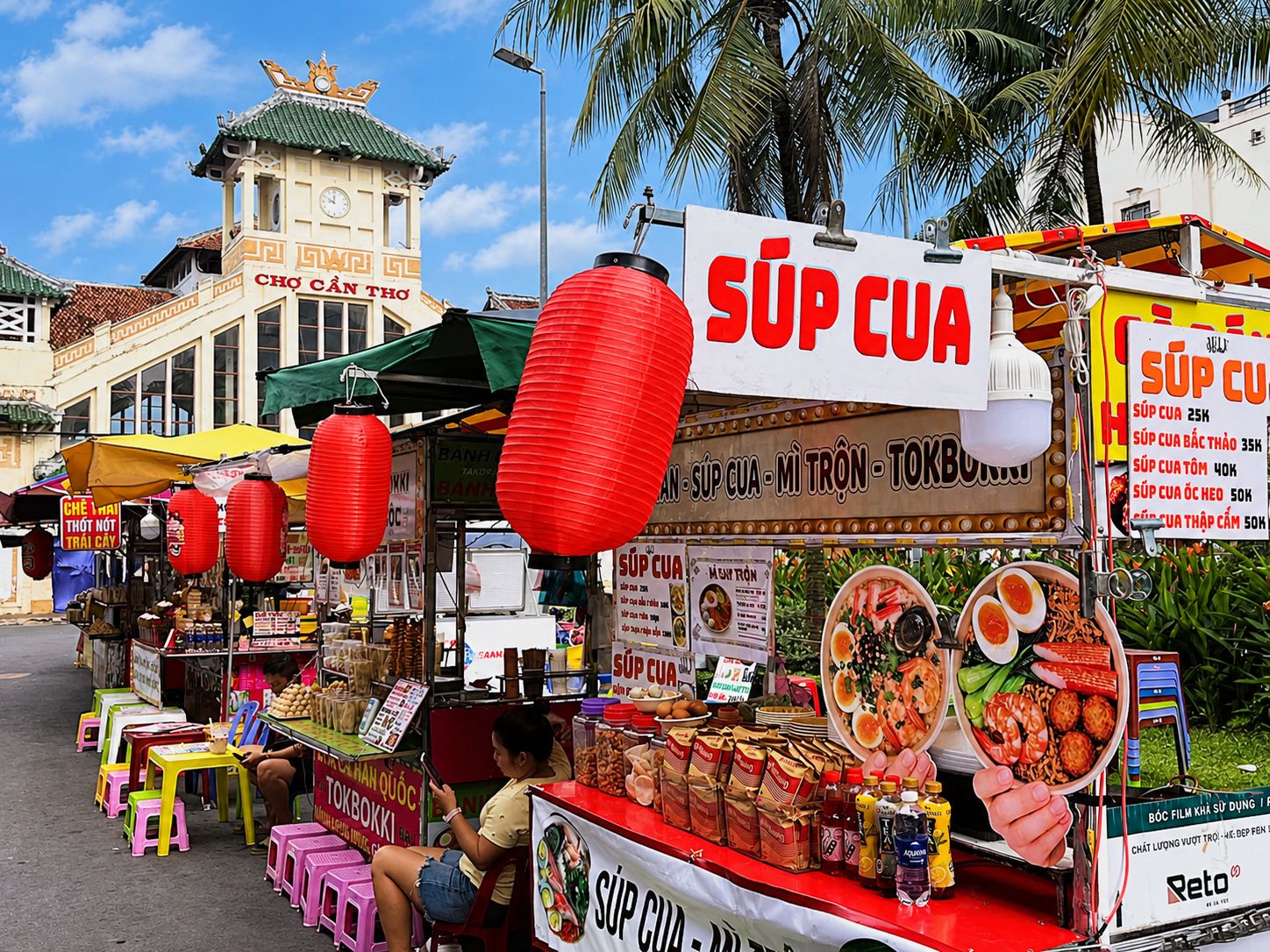
In the evening, Hai Ba Trung Street by the river fills with stands. The night market opens around five in the afternoon and runs until midnight. Street kitchens offer all kinds of regional dishes, such as the well-known noodle soup Pho, baguette sandwiches known here as Banh mi, or Ca loc nuong trui, grilled snakehead fish. Excursion boats depart for evening cruises; restaurants shine in multi-colored neon lights.
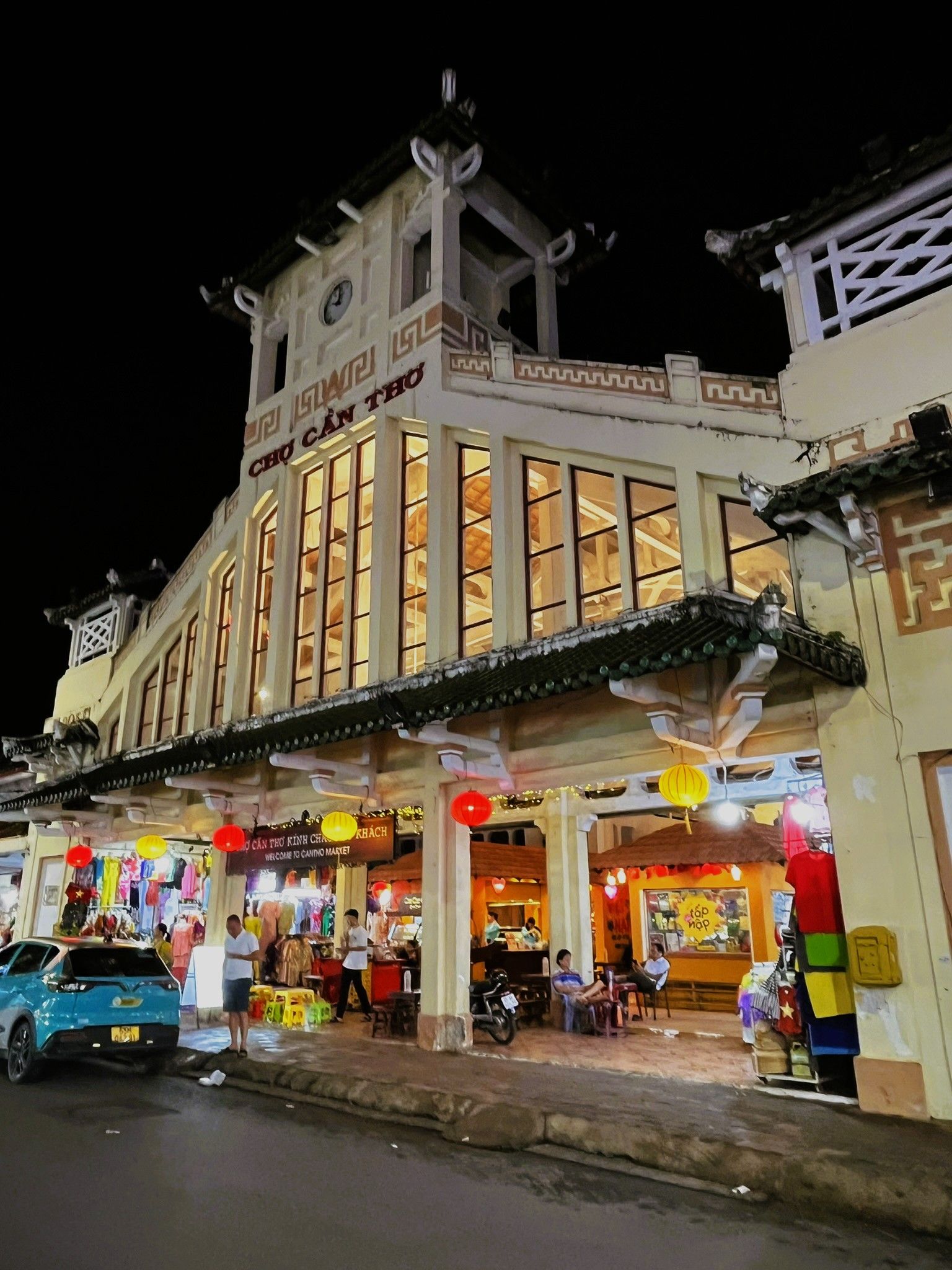
The Can Tho market, a colonial-era building, is illuminated from within; it is also right on the Hau riverbank and directly adjacent to Ninh Kieu Park. The elongated rectangular building measures about 1700 square meters, with its front facing Hai Ba Trung Street and its back facing the river. It was built around 1915, at the same time as the large markets Ben Thanh and Binh Tay in Saigon. About eighty stalls share the interior.
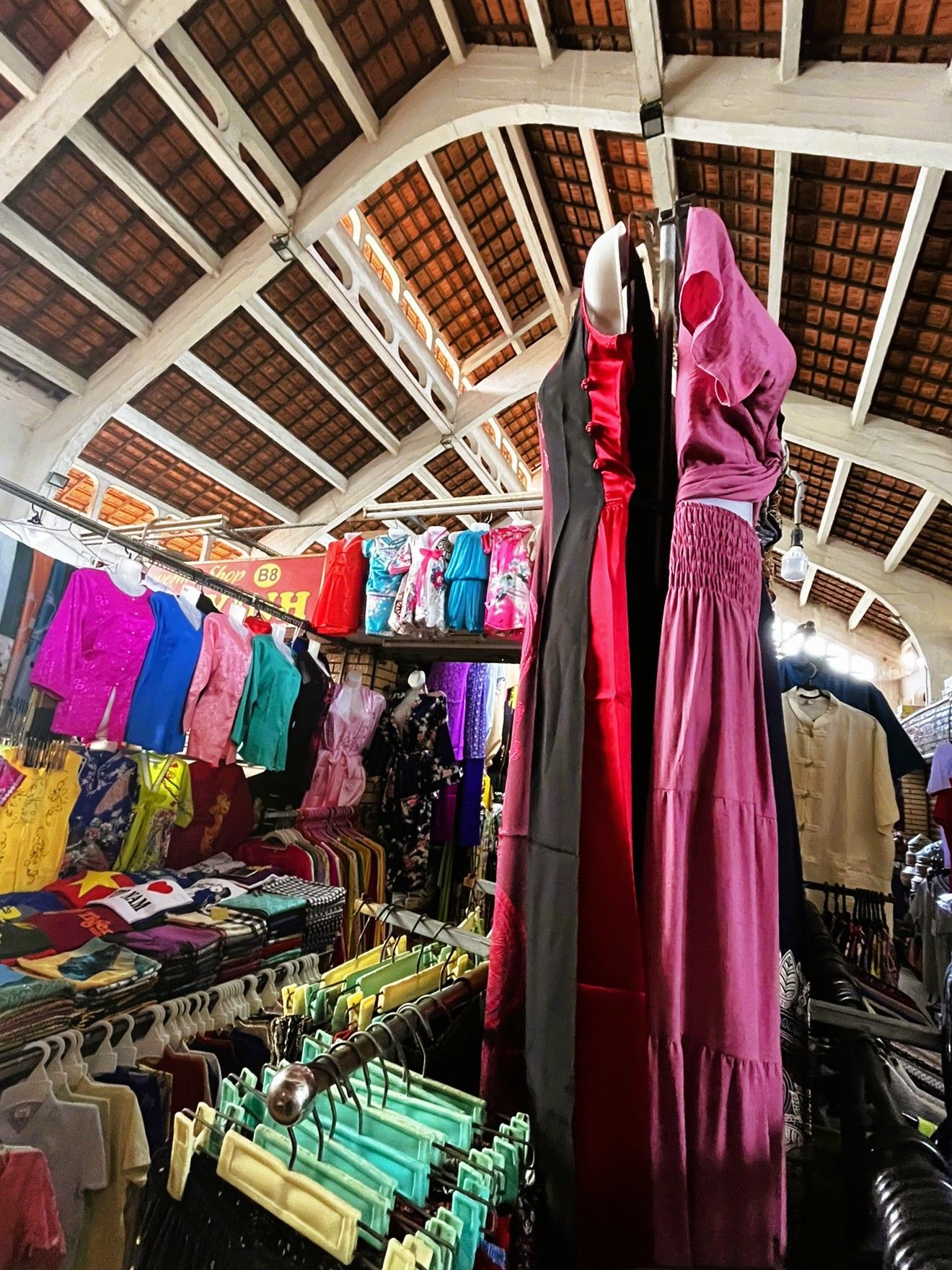
Over the decades, the market hall has been heavily impacted, which is why the building underwent extensive renovations in 2005. Not only the façade but also the skeletal roof structure inside has been preserved. The market today is more geared towards tourists. This can be seen not only in the offerings—clothes, shoes, souvenirs, interspersed with coffee stands—but also in the fact that this is the only place in Can Tho where one is directly approached by eager sellers.
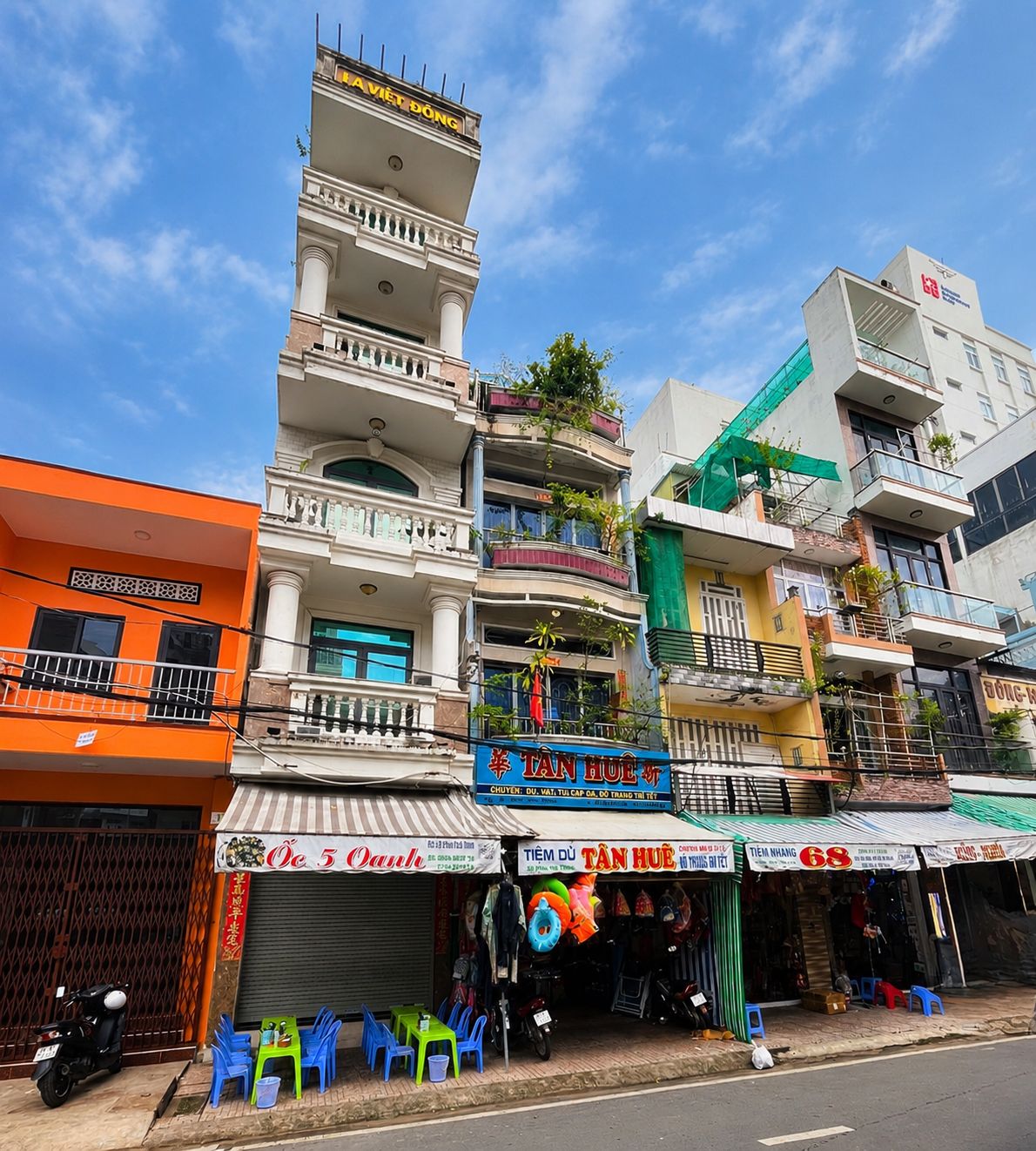
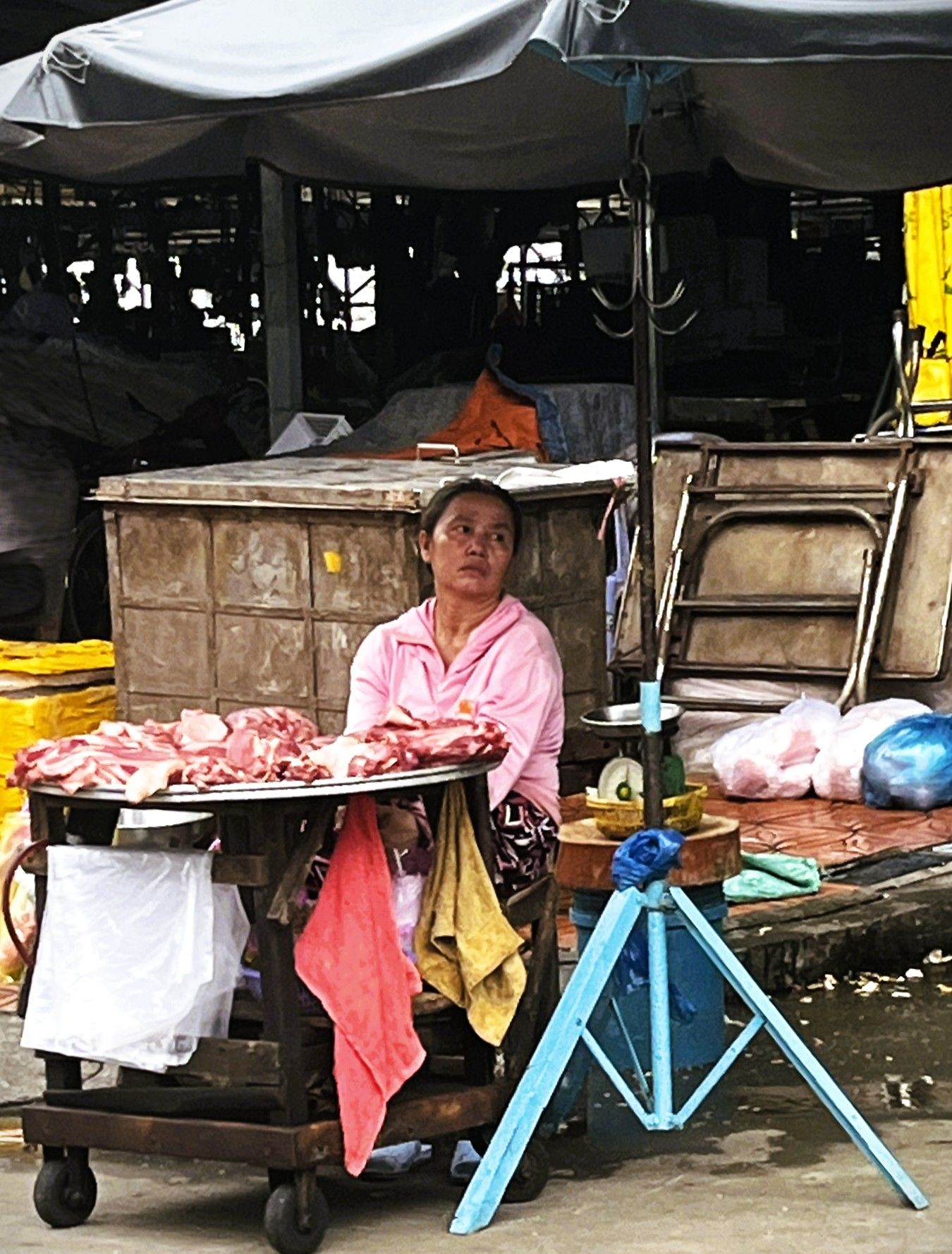
The real market for the local population is located downstream along Hai Ba Trung Street. There, one can find everything necessary for daily survival, from unchilled pork laid out in large pieces to fruits, vegetables, rice, noodles, tools, motorcycle parts, and small clothing shops.
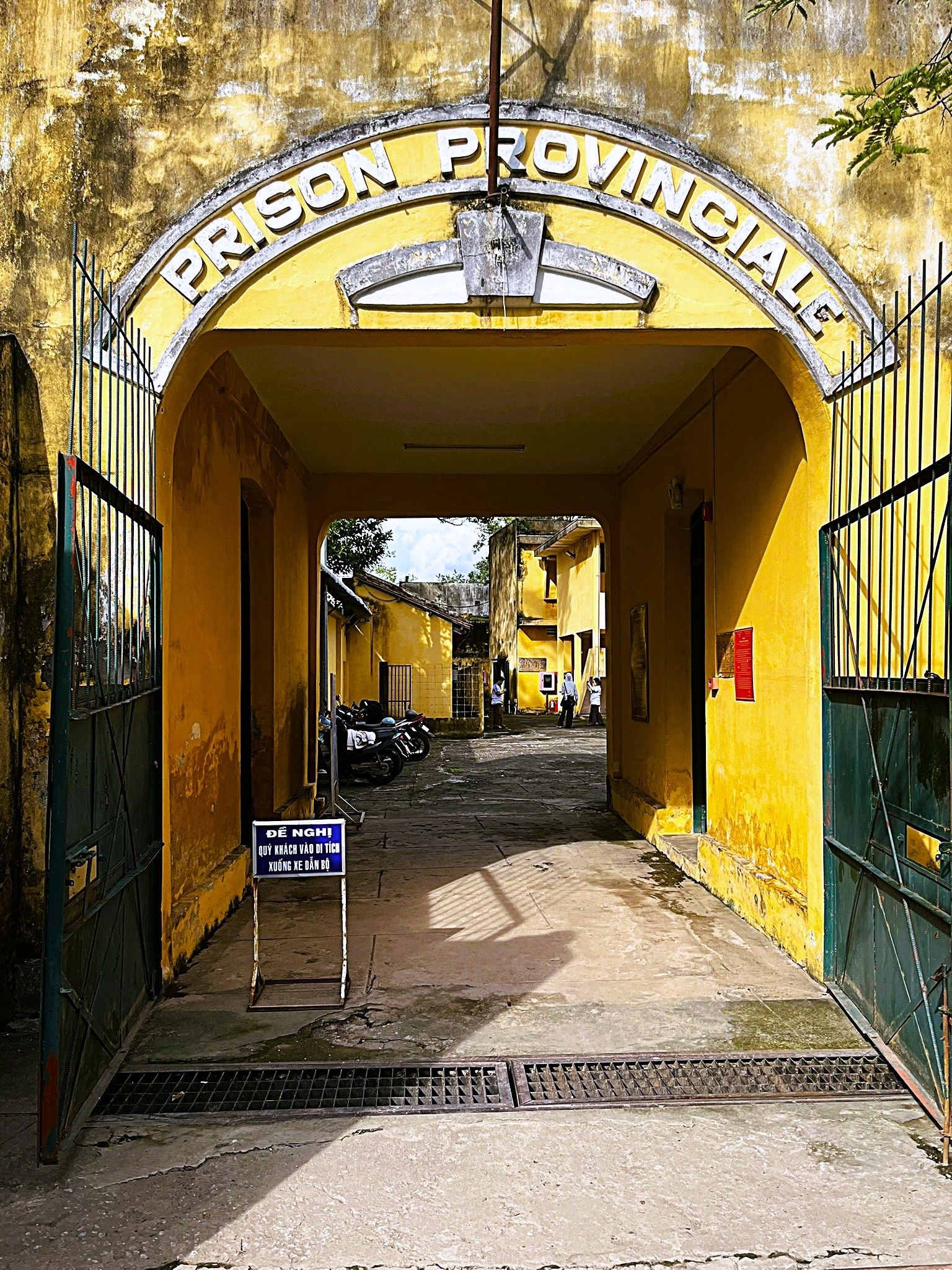
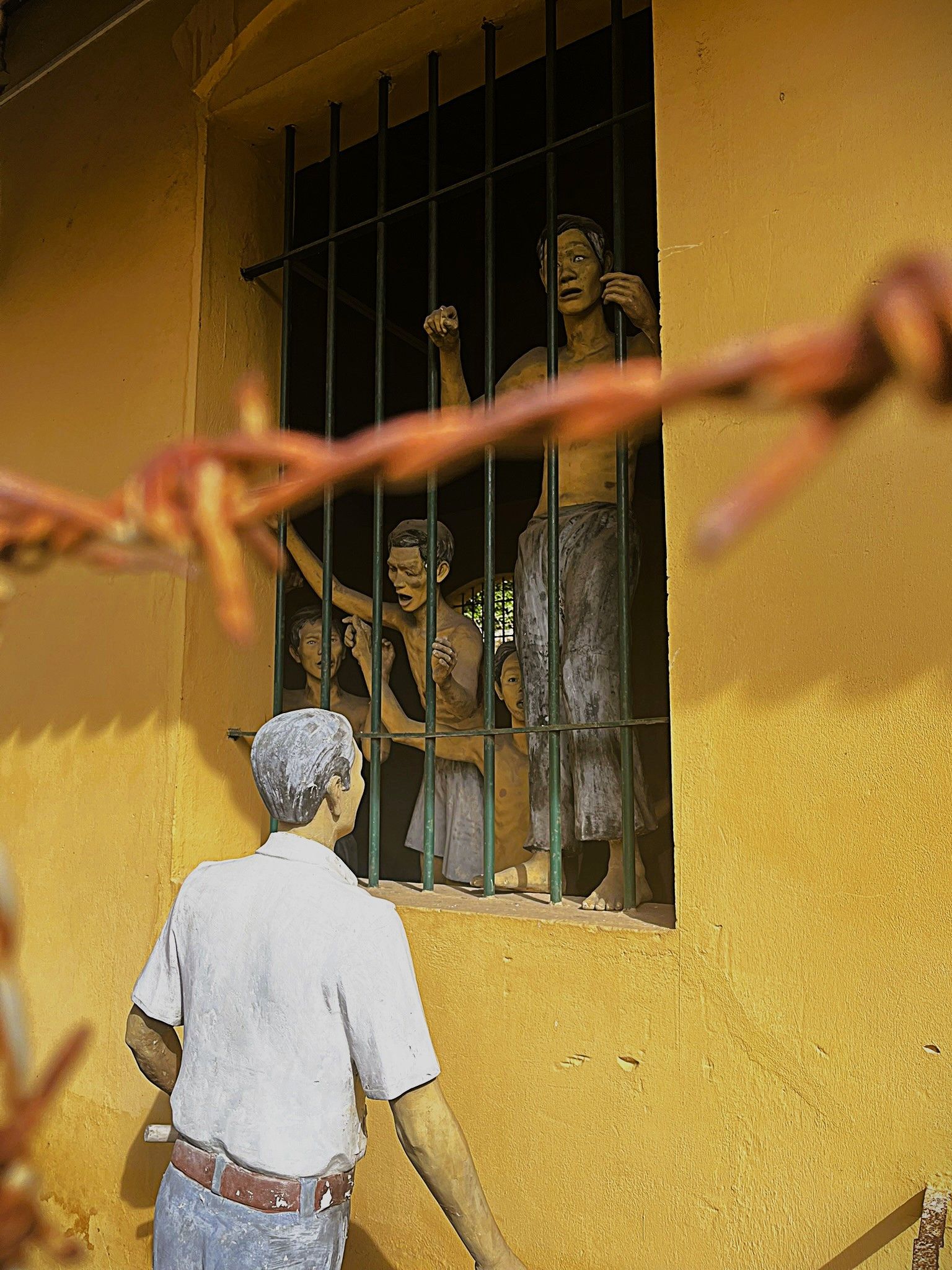
There is little left from the French colonial period in Can Tho. However, one institution of the colonizers has been carefully preserved by the Vietnamese. It is separated from the street by a yellow wall topped with barbed wire, and above the gate, its original function can be read: «Prison provinciale».
Buddhist temples and a cathedral
From «Lion 11», I explored not only the waterfront but also the city center and came across three Buddhist buildings. Unlike in other Southeast Asian countries, however, Buddhism plays a subordinate role here: In the 2019 census, only about five percent declared adherence to it, while about six percent identified as Catholic. Fully 86 percent of Vietnamese are officially non-religious.
This is partly a result of policy: In communist Vietnam, religious practice was restricted after the North conquered the South in 1975, subjected to state control, and partially persecuted. It is also partly due to the counting method, as ancestor worship and folk religion fall into the statistics under «without religion».
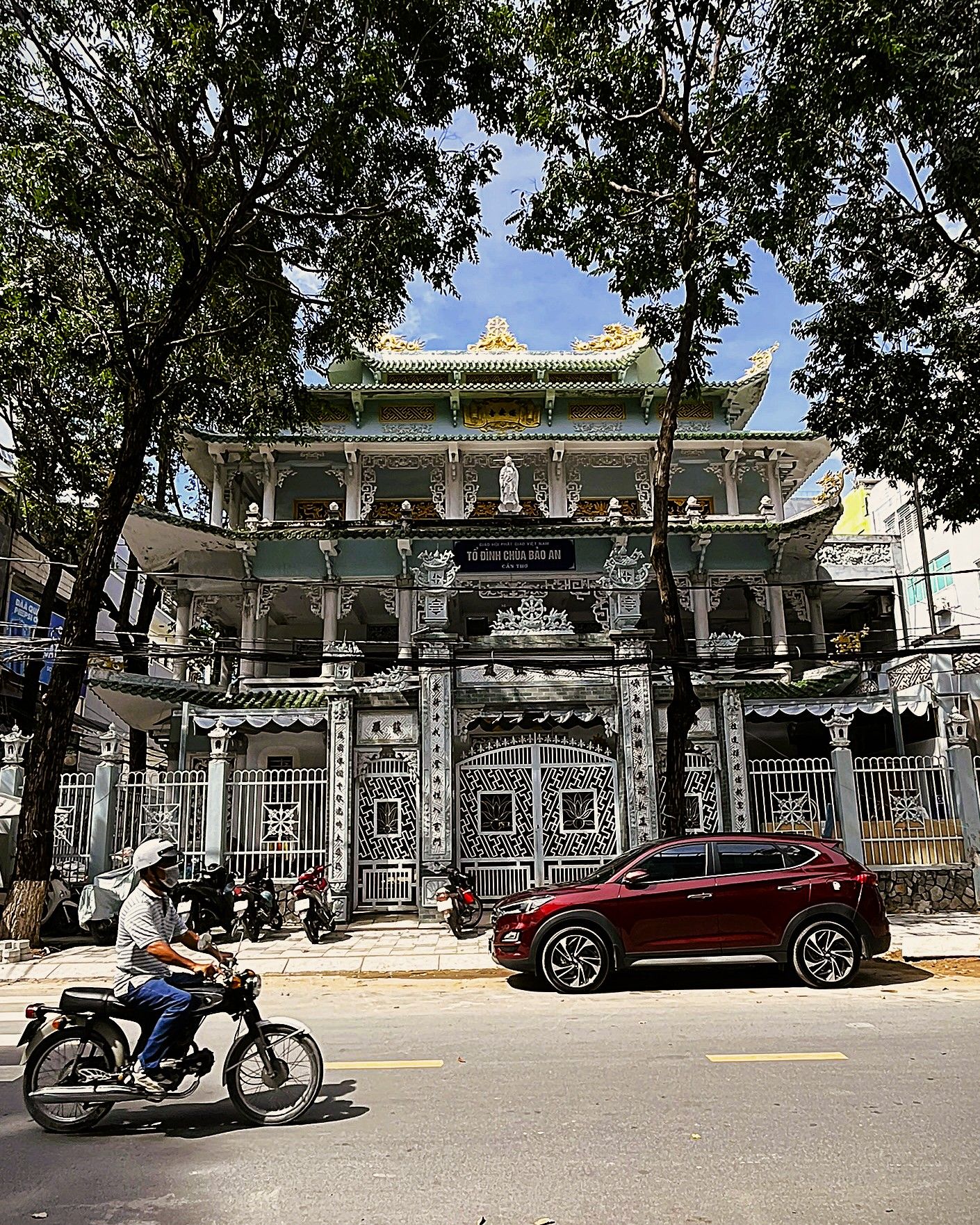
In a side street, I stumbled upon a striking multi-story shrine, the To dinh Chua Bao An, a building densely adorned with dragon motifs and inscriptions. Its origins date back to the French colonial period. Religious ceremonies are held here; it is also a traditional monastic training and practice site for Buddhist nuns.
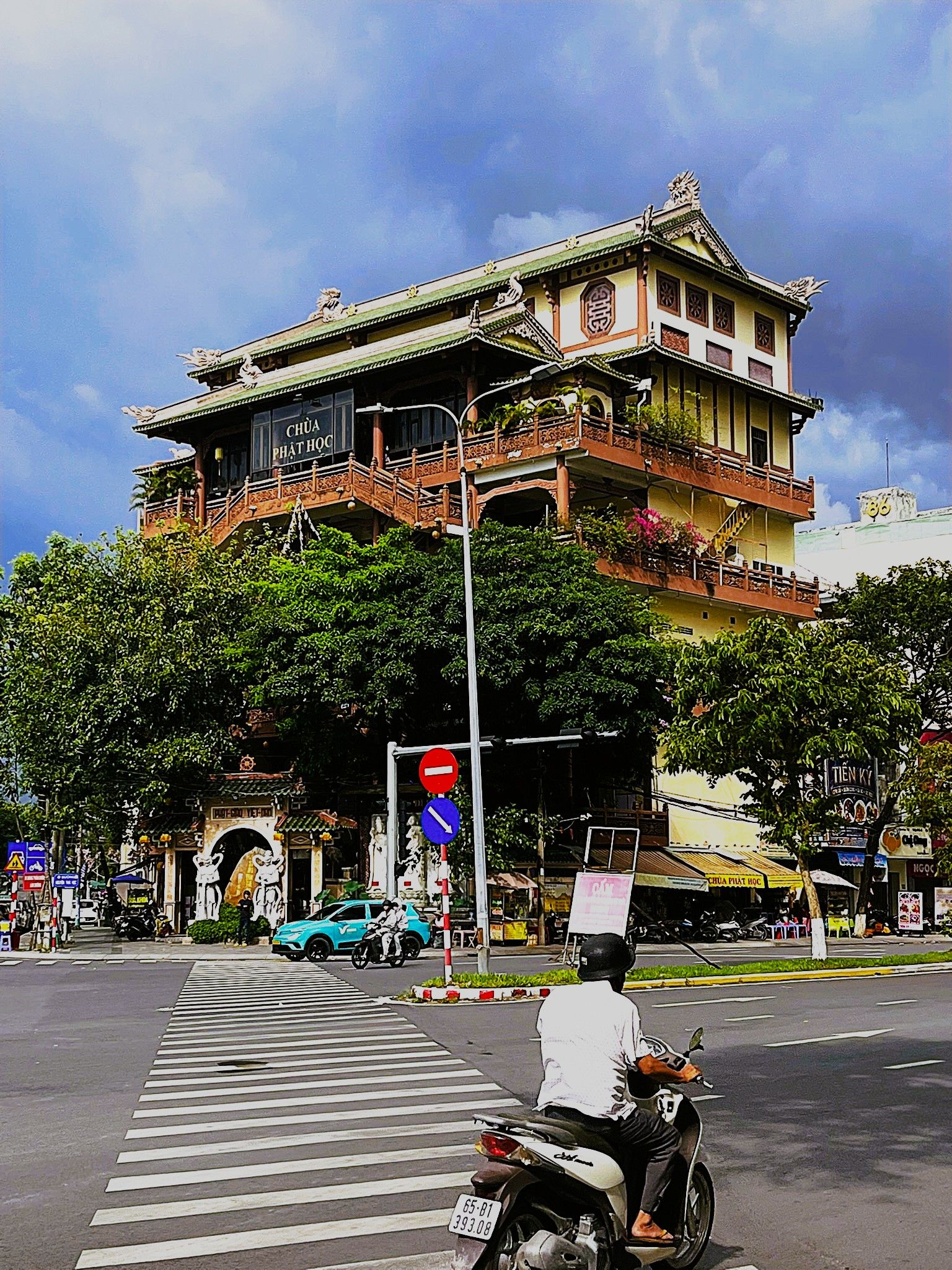
Prominently positioned at a wide street intersection is Chua Phat Hoc. Green tiled roofs in several tiers, carved wooden balconies, dragon figures at the roof ends. The pagoda was built in 1951 by a Buddhist study society and extensively renovated and expanded twice. Its current form was established only between 2012 and 2014. Chua Phat Hoc serves as both a Buddhist prayer and educational site; the name roughly translates to «Pagoda of Buddhist Studies», as explained to me by the man who answered my questions.
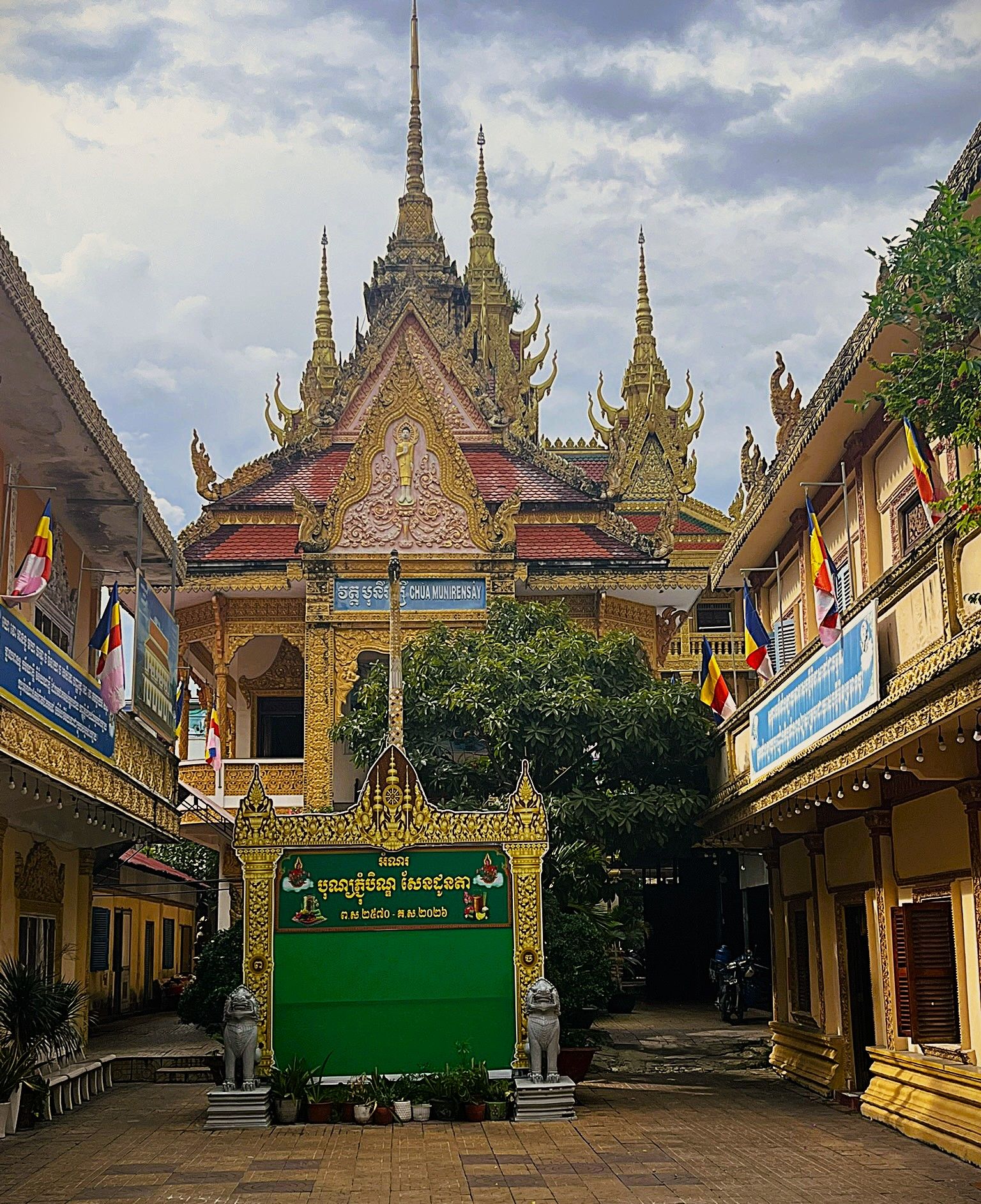
Diagonally opposite stands another Buddhist shrine that has also received its current form only in the last decades, but stands out due to its completely different style: the Chua Munir Ansay with its bright yellow roofs, fine carvings, and statues of mythical creatures.
Two directions of Buddhism stand closely opposed here: In Chua Phat Hoc, Mahayana Buddhism is practiced, which focuses on the quest for enlightenment. In Chua Munir Ansay, however, Theravada Buddhism is celebrated, which is prevalent among the Khmer in South Vietnam. Theravada adheres more closely to the teachings of the historical Buddha, the monastic path, and liberation from suffering.
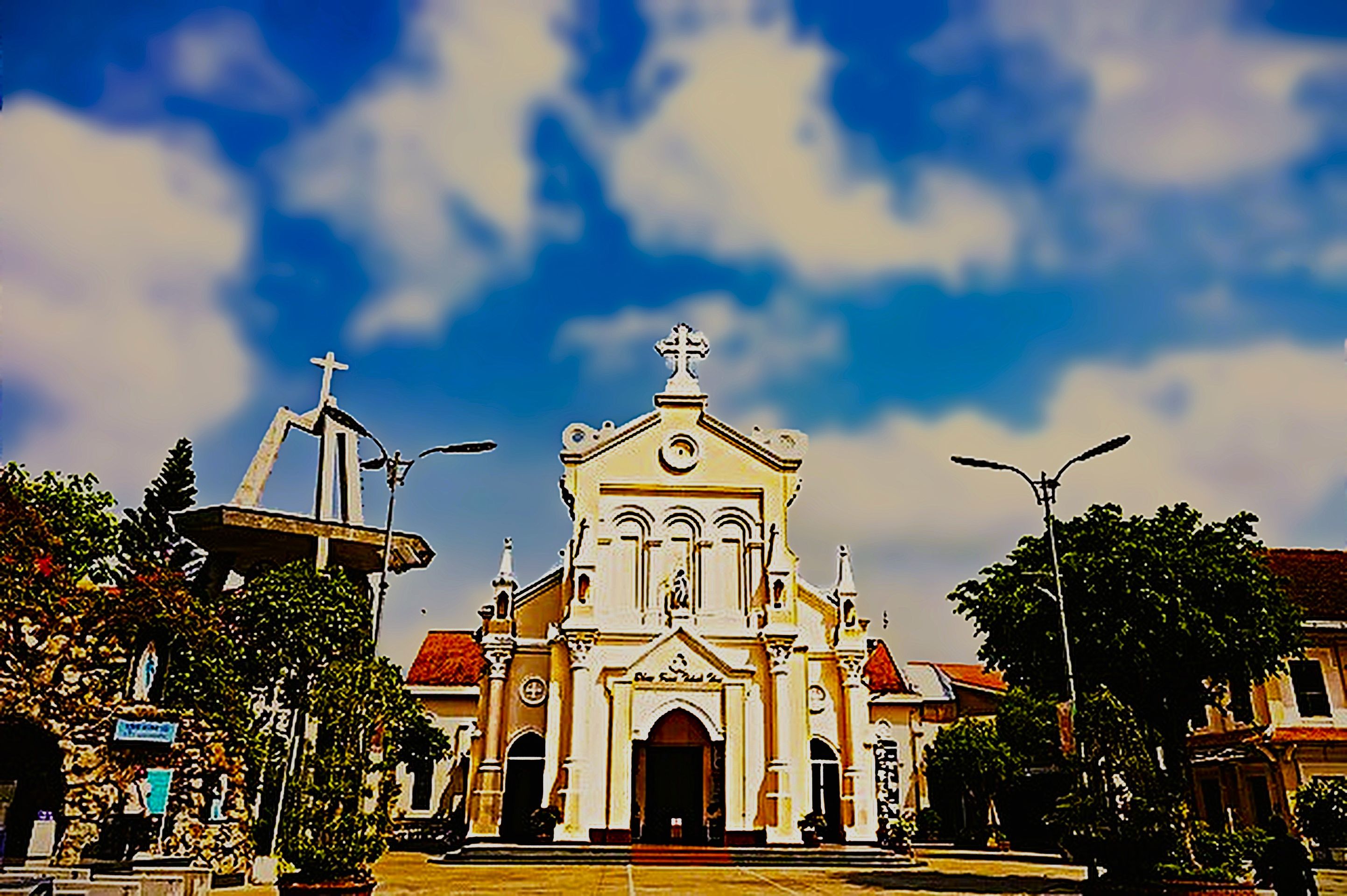
With so much Buddhist presence, the Catholics, of course, do not want to lag behind. Also right in the city, I find the Cathedral of the Sacred Heart of Jesus, built starting in 1899 and consecrated in 1916. The church received the status of a cathedral, meaning a bishop's seat, in 1960. I google the number of Catholics in Vietnam: In the 2019 census, there were only about six million; now, according to their own figures, there are 7.5 million. They are well cared for: Vietnam has no fewer than 24 dioceses and three archdioceses.
After this divine edification, I am drawn back down to the river, to the night market, where I want to strengthen my physical well-being: I absolutely must find out how the grilled snakehead fish tastes.
PS: Vietnamese is written with Latin letters and a confusing number of accents that dictate pronunciation. Since we cannot master them anyway and they complicate reading, I have omitted them this time.