
Surfing in Siargao (but not for me)
In my hostel, they laughed at me when I said I was going out with a 73-year-old,
Published: 18.09.2026

I have read that Christmas is not just a Christian holiday for Filipinos; it is an entire season that they wholeheartedly embrace. Why am I bringing this up now, on September 8, 2026, in the city of Dumaguete in the southeast of Negros Island? We are still 106 days away from Christmas, but today I heard the first Christmas song on the radio in a shopping mall and spotted the first stars dusted with artificial snow (while outside the summer heat prevails).
Mhaya, an acquaintance from Bacolod, also located on Negros Island, provided me with this explanation: “In the Philippines, we talk about the 'Ber-Months': September, October, November, December. By early September, Christmas becomes a topic and remains one for four months.”
Negros Island, about one-third the size of Switzerland or slightly smaller than Schleswig-Holstein, got its name from the Spanish conquerors in the 16th century. At that time, the island was relatively isolated; apart from a few trading posts along the coast, it was mainly inhabited by members of an indigenous, notably dark-skinned ethnic group. Hence, the Spaniards named the island “Isla de Negros,” or “Island of the Blacks.” The name was later shortened to “Negros” and is still used today. Filipinos do not perceive it as racist but use it quite naturally.
Of course, that is not the first thought that comes to mind when I stroll along Rizal Boulevard for the first time after arriving from Siargao via Cebu. The city also calls itself the “City of Gentle People,” a marketing slogan invented by a local radio station about 50 years ago.
However, many Dumagueteños find this too prosaic. Their historically unverified legend claims that national hero Jose Rizal named Dumaguete during a brief visit on August 1, 1896. The then 35-year-old Jose Protasio Rizal, a doctor, writer, and politician, would only live another five months: On December 30, 1896, he was executed by a firing squad in Manila after being sentenced to death by a military court of the Spanish colonial power for his alleged involvement in the Philippine Revolution.
After his early death, Jose Rizal became a symbol of resistance against the colonizers. Following the American colonial period, which came after the Spanish one, his reputation spread throughout the geography of the entire country: countless places, schools, parks, and streets are named after him.
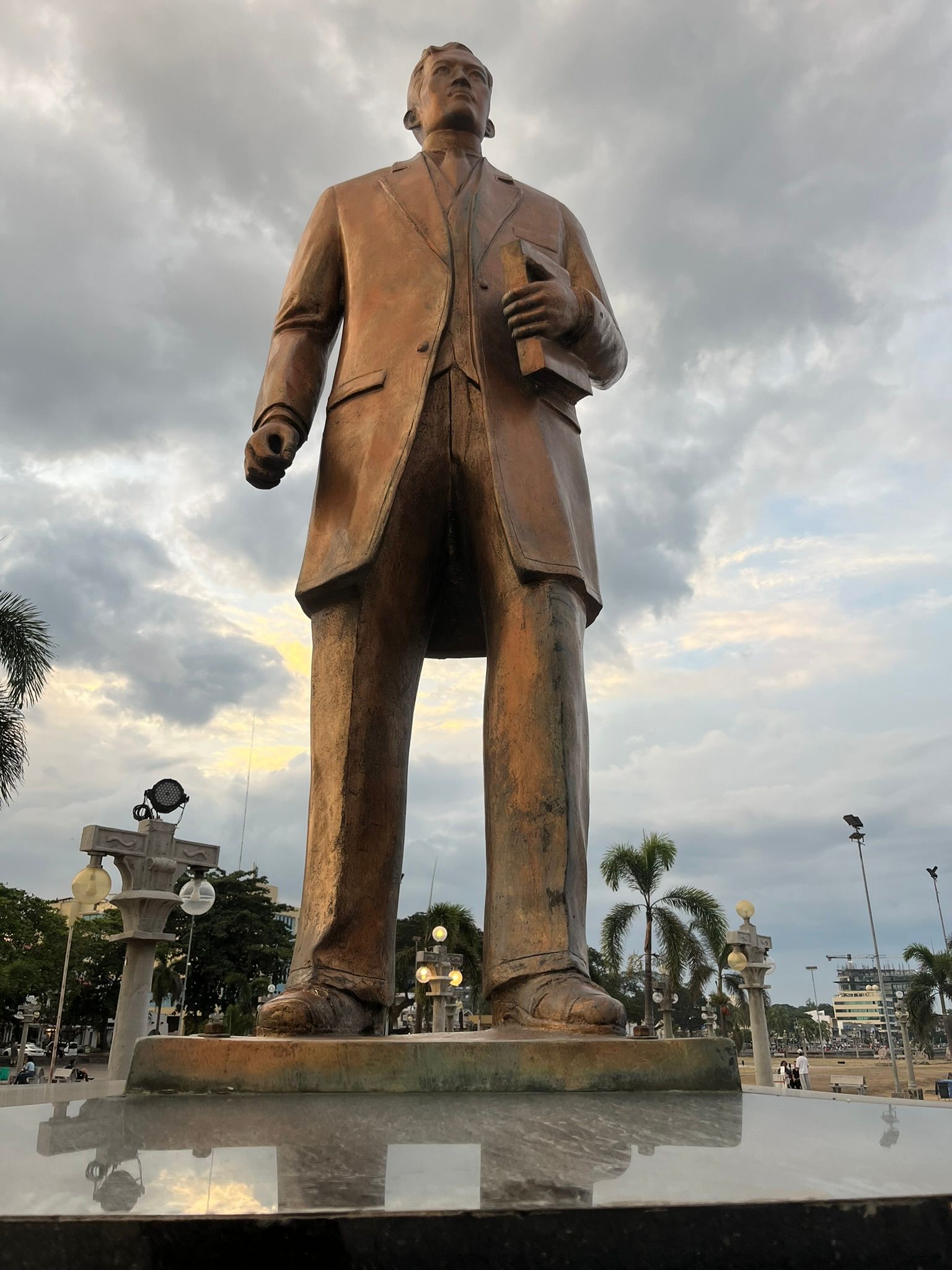
So now I walk along Rizal Boulevard in Dumaguete during dusk. What is called a “Boulevard” is not just a busy street but also a wide park stretching for kilometers, separated from the sea by a seawall, extending from the ferry terminal in the north to the Banica River in the south. Naturally, a life-sized statue of Rizal stands right in the middle.
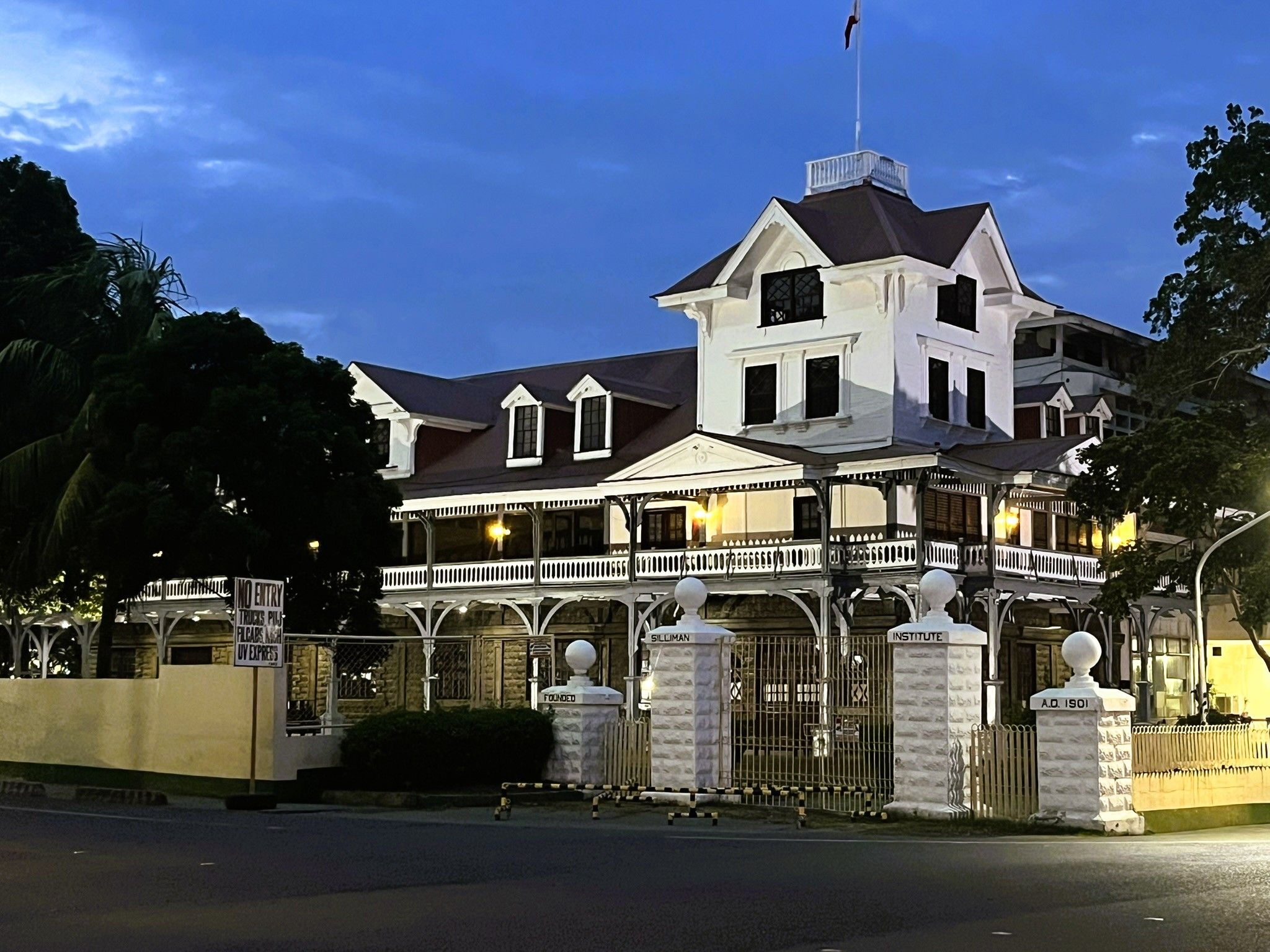
In the north, the Boulevard is dominated by the Silliman University campus. Perhaps this is the most important place in the city. The university was founded in 1901 by American Presbyterian missionaries, initially funded by New York businessman, publisher, and investor Horace Brinsmade Silliman, who never set foot in the Philippines. What began as an elementary school for boys developed over three decades into Asia's first Protestant university, which today ranks among the most prestigious universities in the country.
The simple Protestant church, the first heritage-protected building of the university, and other structures from various periods of the past 125 years shape the campus. Students gather in groups, discussing, laughing, sipping coffee from cardboard cups.
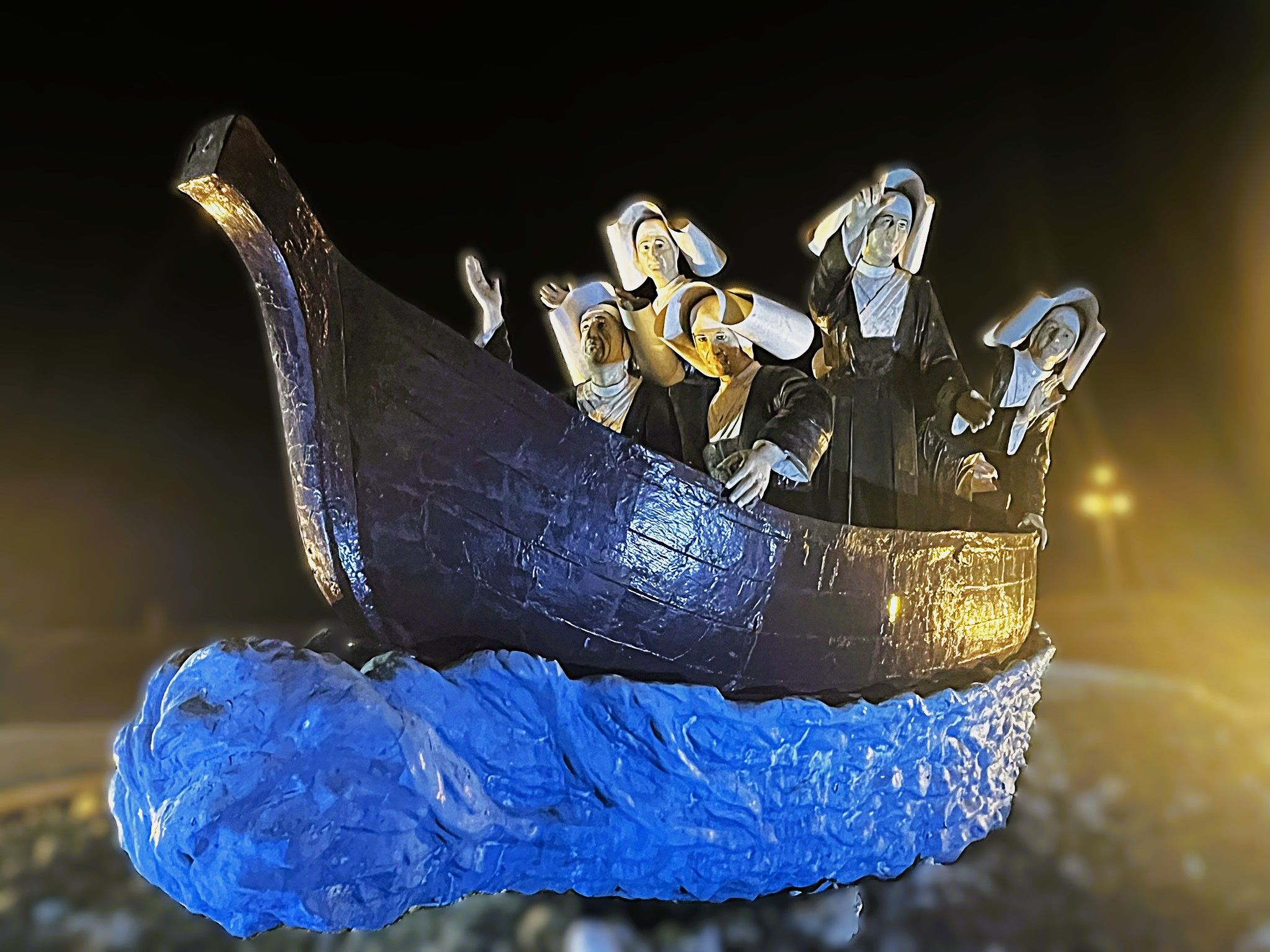
However, the Catholic competition was not long in coming: at the end of October 1904, the first seven nuns from the Congregation of the Sisters of Saint Paul of Chartres arrived by boat in Dumaguete. They came from Saigon in Vietnam at the invitation of the Bishop of Dumaguete. By early January 1905, they opened the St. Paul Academy (now St. Paul University). Their arrival is immortalized by a dramatic sculpture on Rizal Boulevard.
Intensively Used Boulevard
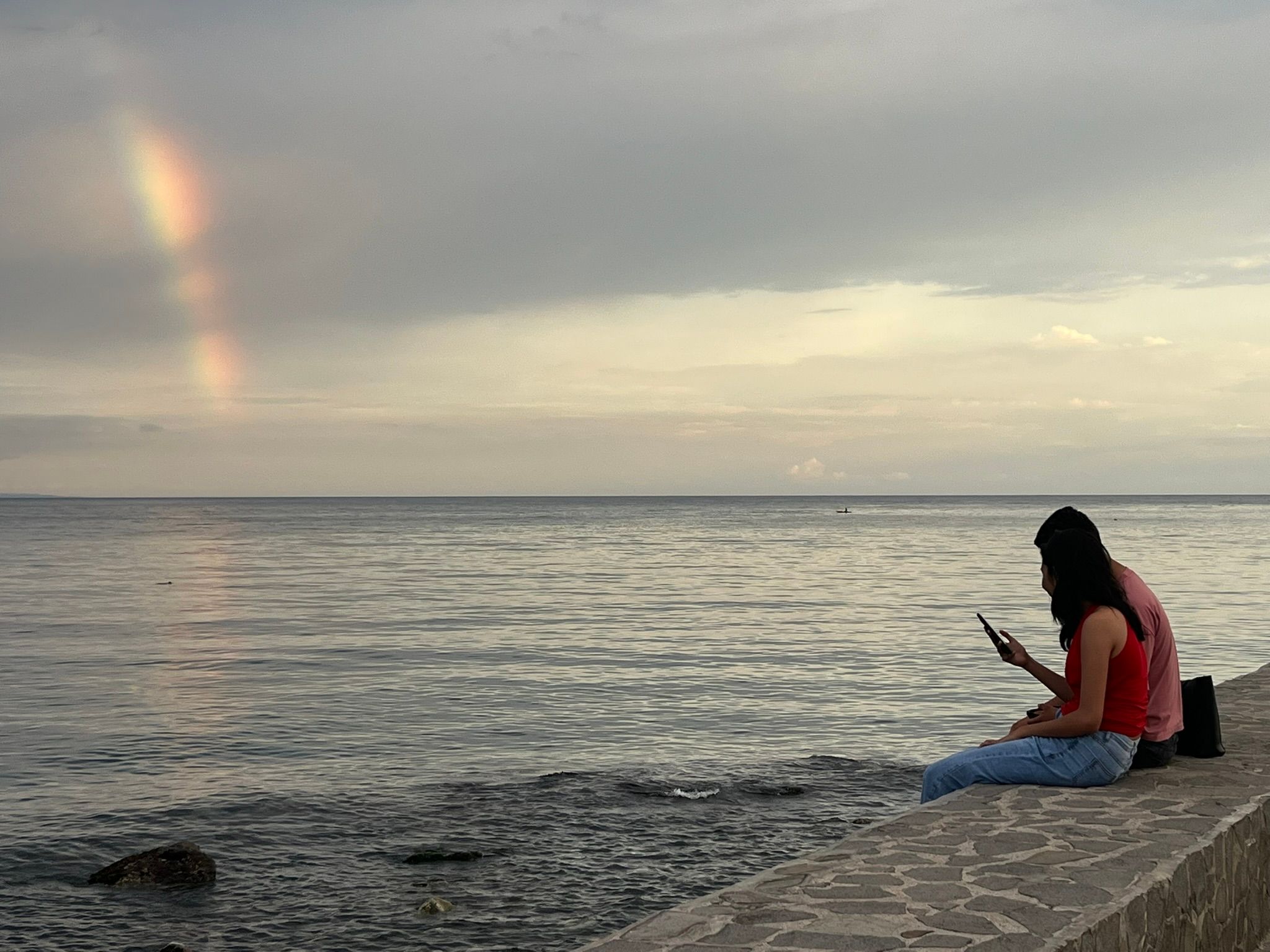
The Boulevard is not a tourist hotspot, especially given that there is little tourism in Dumaguete. It belongs to the people of Dumaguete and is intensely used by them: joggers, walkers, couples closely embracing on the seawall in the twilight, their backs to the world, gazing at the sea and the rainbow that ends in the waves. Later, sound systems will be set up, mobile karaoke stations blaring out Philippine hits and international pop classics loudly and off-key. Families picnic on the grass, dogs and children play around freely.
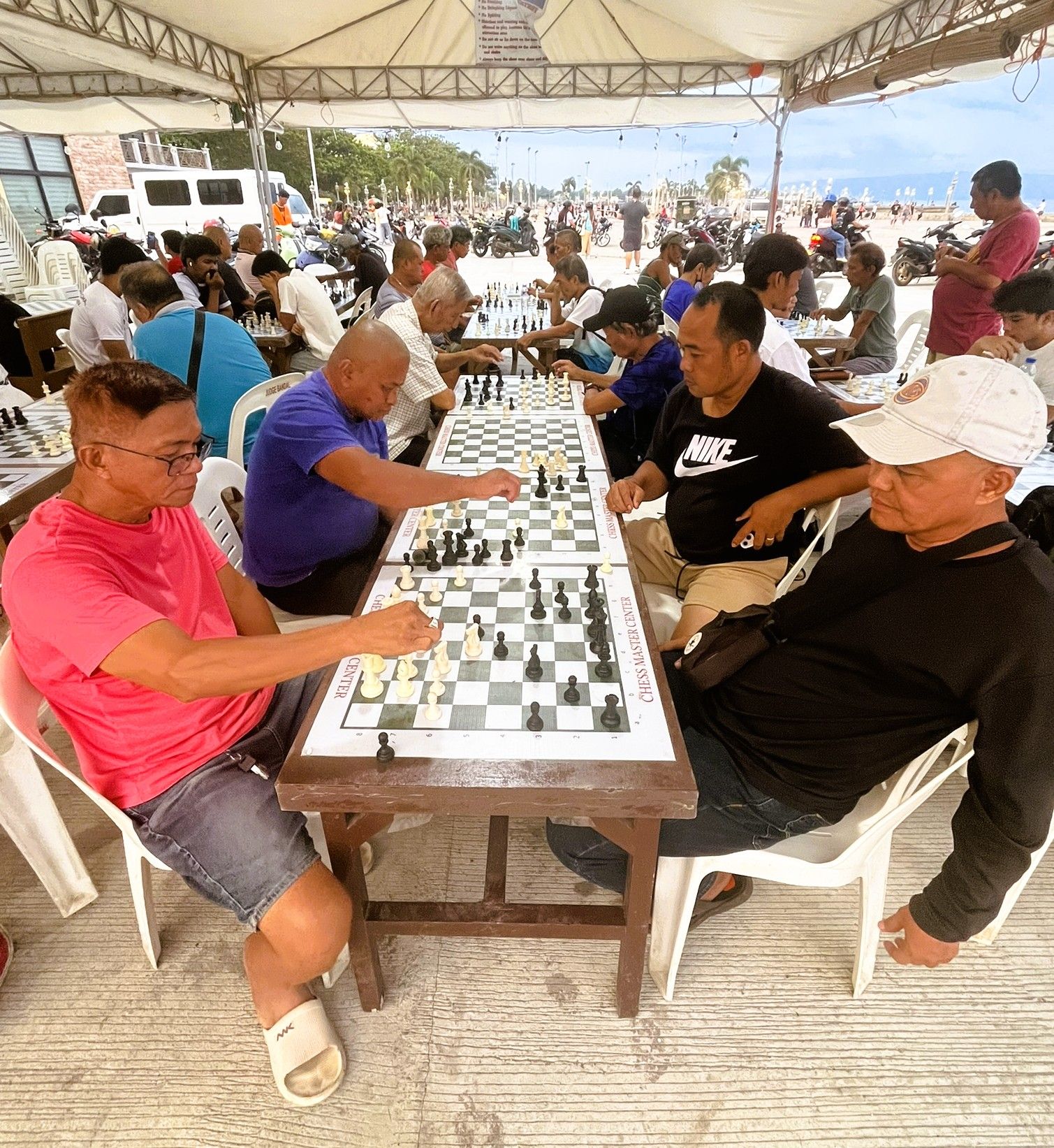
At the southern end, where the well-kept park gives way to a compacted gravel area, men (and very few women) sit under a large canopy at chess boards lined up on long tables. I stop to watch two very serious players, seeing how the one with the black pieces throws away a clear advantage and ultimately loses the game.
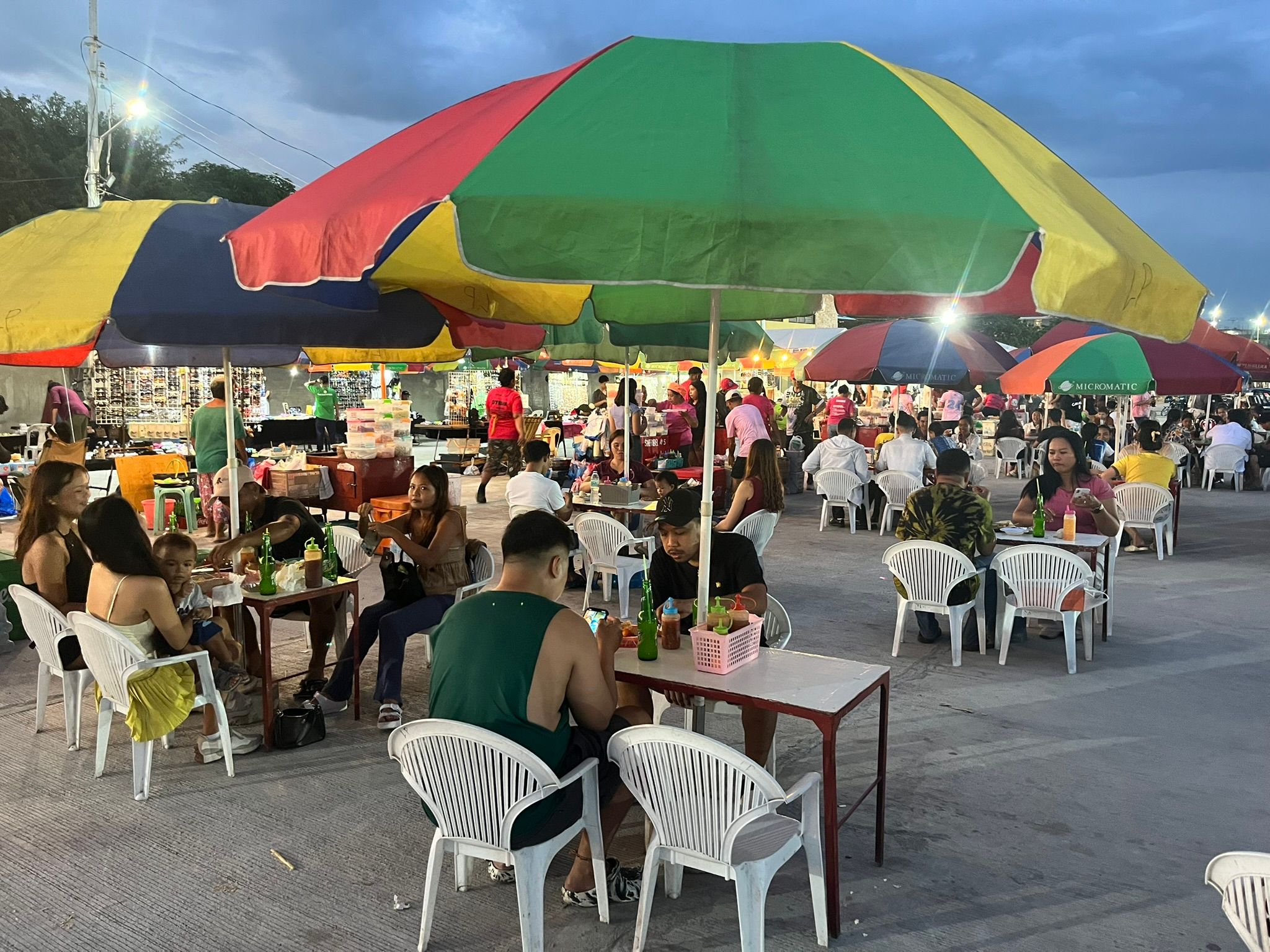
Behind the chess players, the food stalls emerge, tables under sunshades, plastic chairs, the smell of grilled fish, chicken skewers, and pork in sauce. At the very end of the row, somewhat shyly, sit massage chairs in the open air, where men have their bare backs massaged after work.
Dumaguete does not have a long list of attractions. One does not come here to tick things off a list. One comes because the center is manageable, because one can sit by the sea, and because there is a café or restaurant waiting at every other corner. On Rizal Boulevard, these include “Casablanca” with predominantly European cuisine, “Sans Rival” with bakery, pastry shop, and bistro, the very popular Philippine “Kawa,” where I am the only foreign guest, and “Gerry's Grill.”
Cathedral in 'Earthquake Baroque'
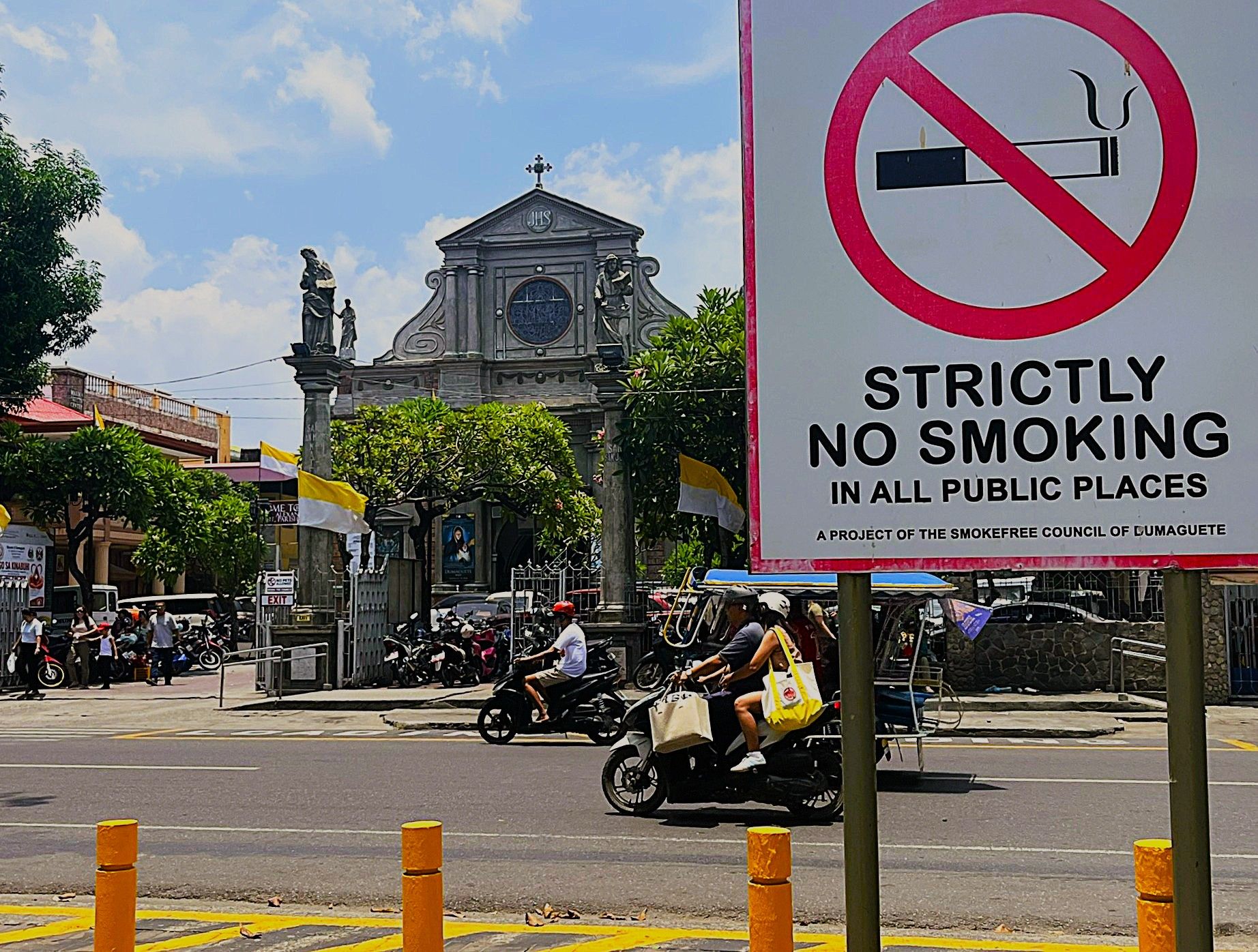
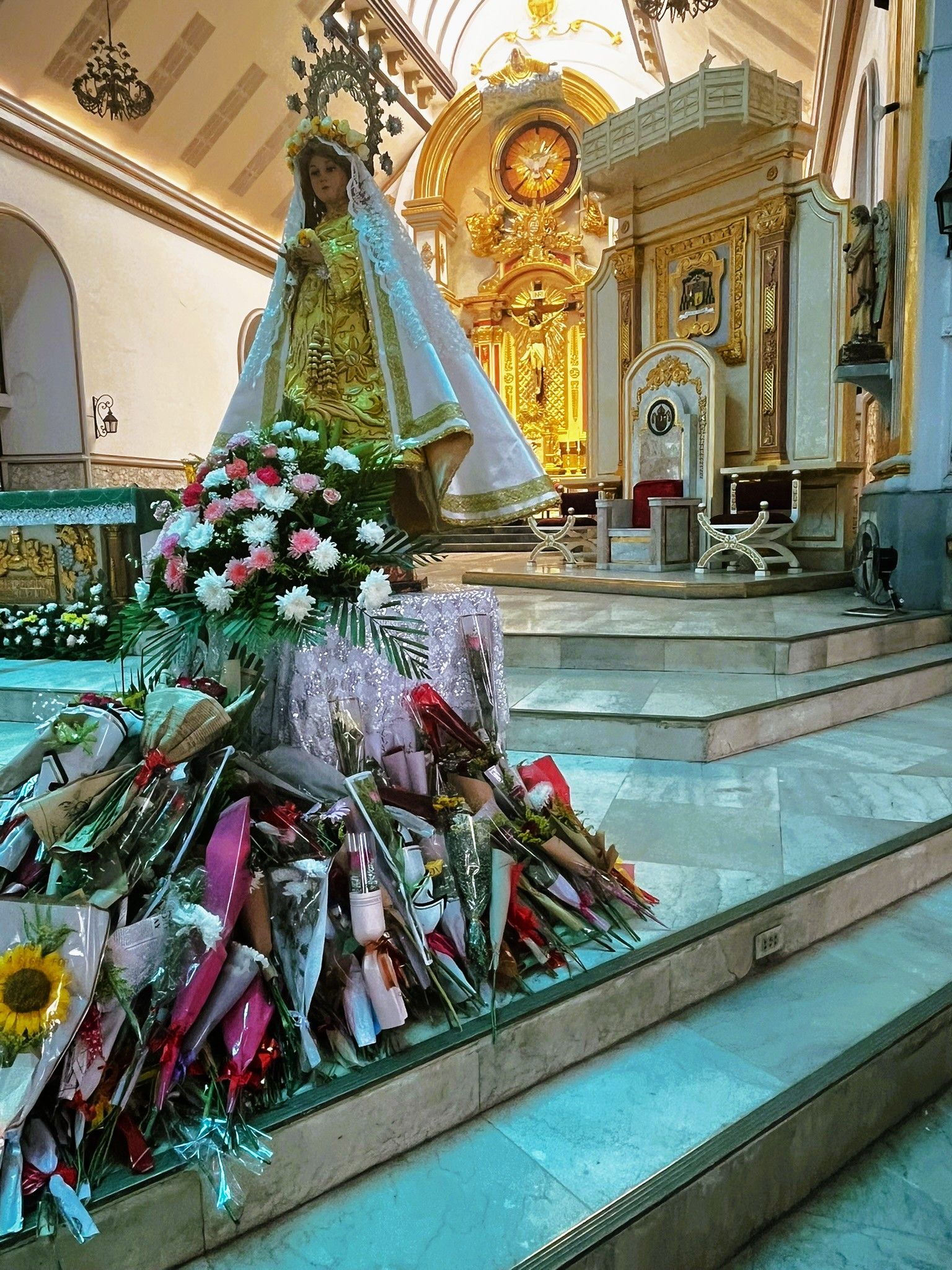
A few blocks towards the center stands the Cathedral of Dumaguete. The church is considered the oldest stone church on Negros Island. The original construction phase extended from 1754 to 1776 in a style that drew on Spanish Baroque but was massively reinforced due to the frequent earthquakes, which is why it is called “Earthquake Baroque.” Over the years, the church was heavily damaged by fires and was rebuilt in 1885, with the facade being expanded again in 1936. In 1955, the church was officially elevated to a cathedral and has since served as the seat of the Bishop of the Diocese of Dumaguete.
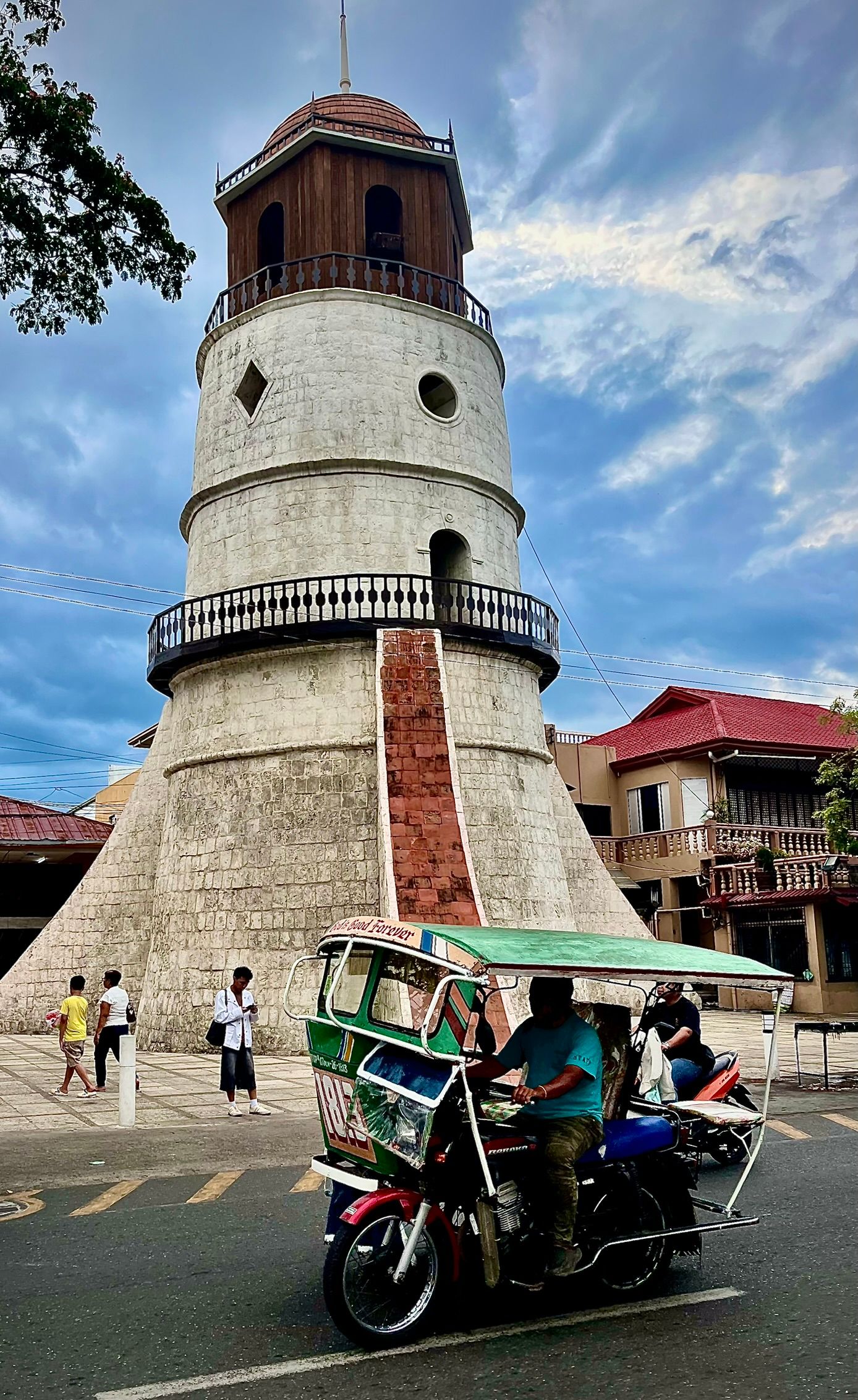
Next to the cathedral stands a massive bell tower, the Campanario, which, however, was not built for that purpose. It resembles more of a lighthouse in the middle of the street block, dating back to the 19th century, originally serving as a watchtower to spot attacks from the sea early on.
Everything is Available at the Market
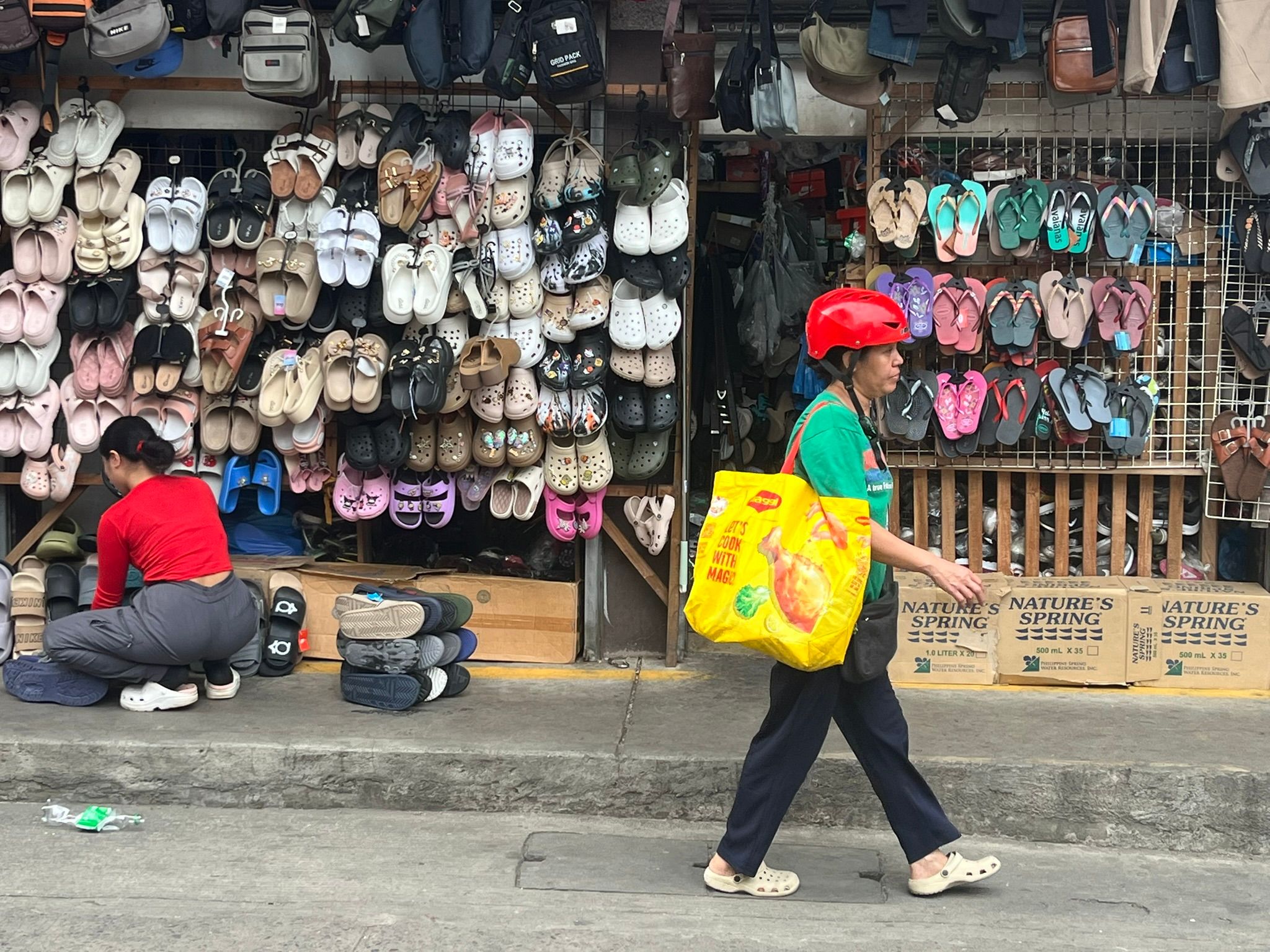
Another completely different face of Dumaguete appears in the morning at the Public Market. Here, like in a department store, you can find everything: fish and other seafood, chicken, pork, rice, canned goods, fruits, vegetables, spices, flowers, as well as pots and pans, plastic items, household appliances, tools, cosmetics, and toiletries. A new watch? No problem! A haircut? Likewise! A gold necklace for the fiancée? Just around the corner! Clothes, shoes, glasses? Of course! And if the wallet suddenly runs empty, you can convert your possessions into some pocket change at pawn shops.
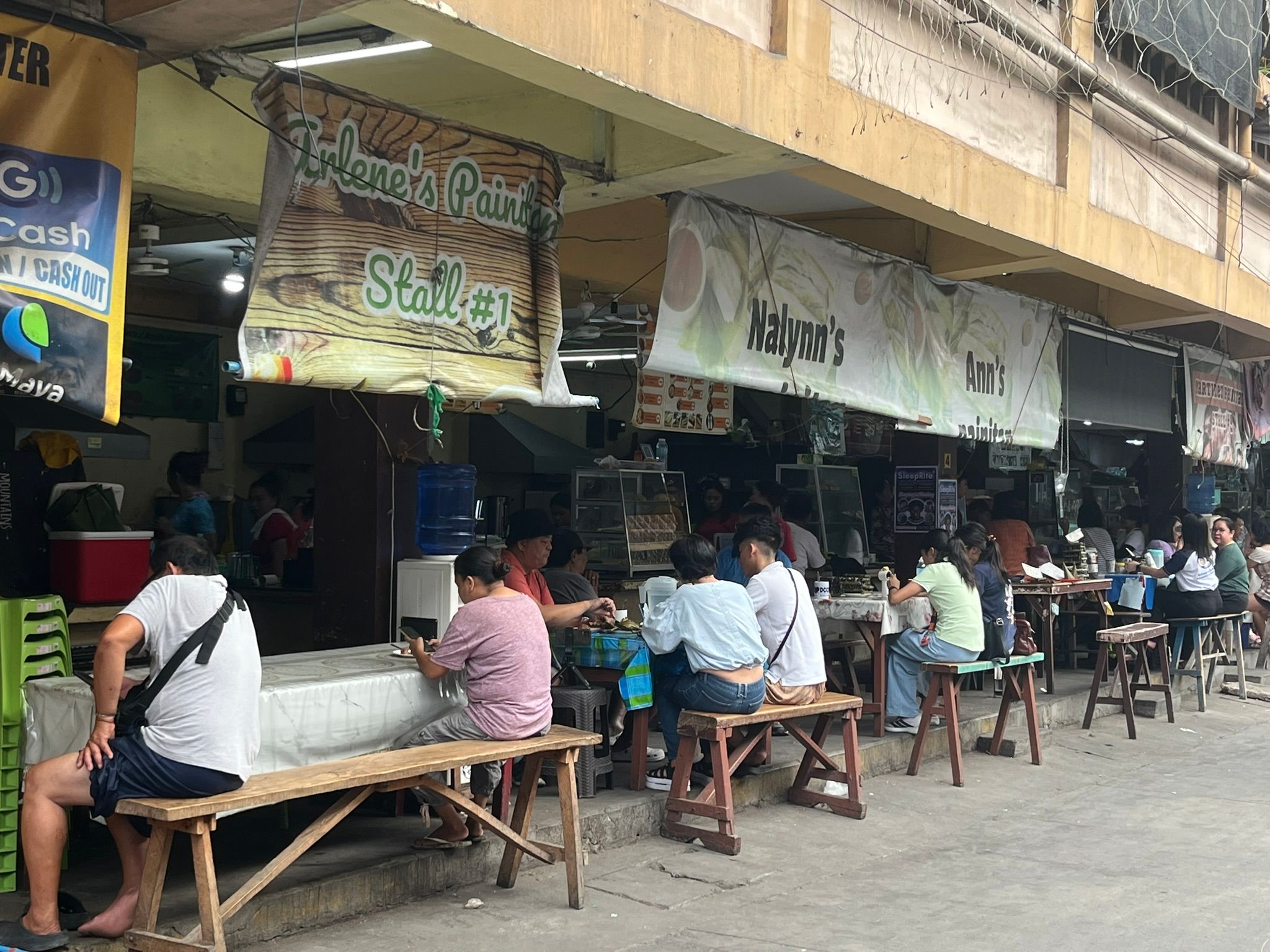
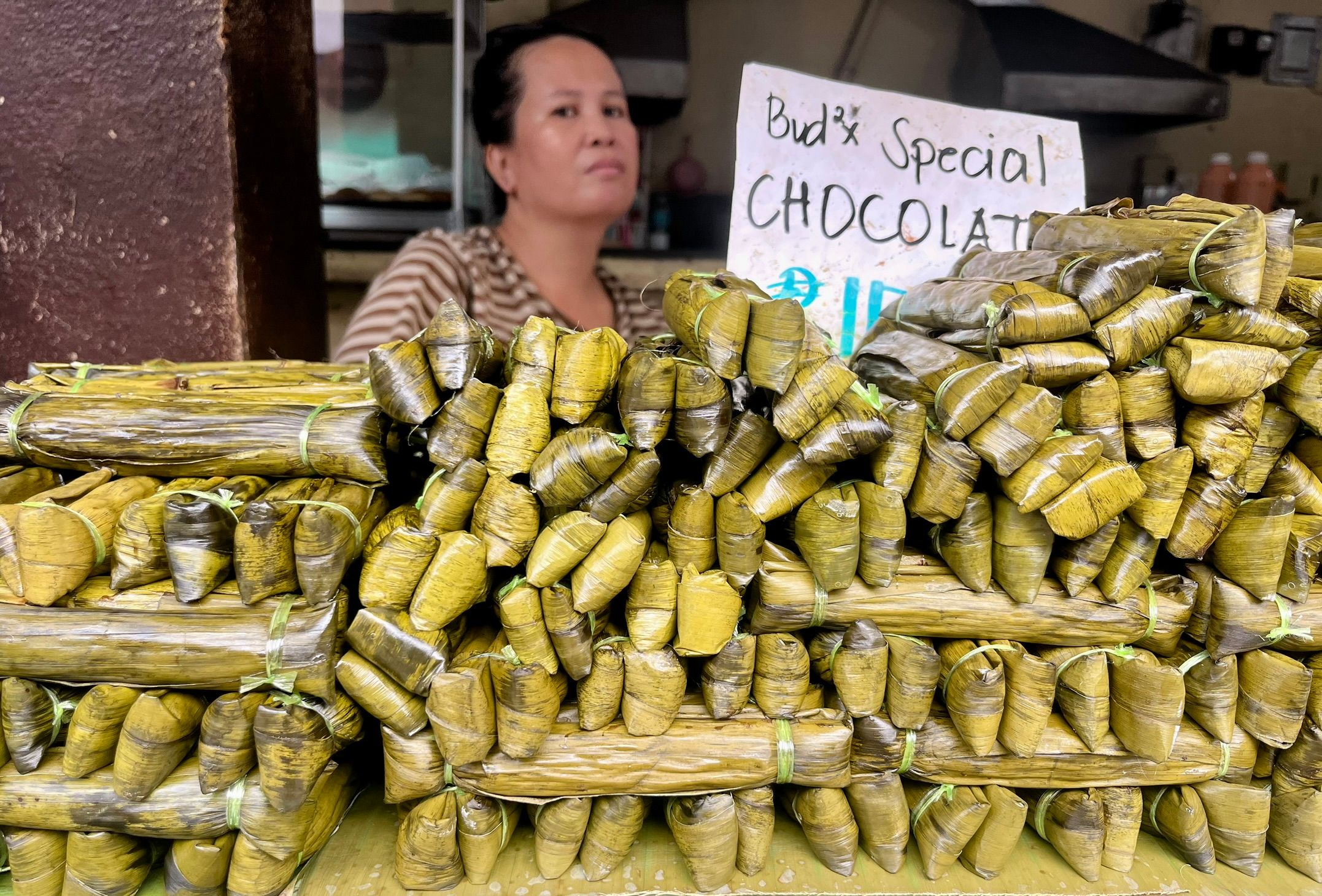
In a side street in the middle of the market, I come to what is called Painitan, which means “Place to Warm Up,” as a seller explains to me (which seems a bit far-fetched given the prevailing tropical temperatures). Here, street food stalls line up next to each other, and people have breakfast at simple tables. Small packages wrapped in banana leaves are stacked on tables. I opt for sticky rice with chocolate, a warm, sweet dish that makes you feel satisfied for the whole day.
It took me two or three days to let Dumaguete soak in. I could not verify whether the people here are particularly “gentle,” as the slogan claims. Kindness is a basic attitude of most people throughout the Philippines that continually amazes me. I will now spend a few days on the island of Siquijor, which is considered particularly relaxing – as if one needs to recover from the laid-back city of Dumaguete.