Bukit Lawang
From Medan, we took a taxi to Bukit Lawang - a winding journey over bumpy roads through many small villages, packed with mopeds, trucks filled with people, palm oil fruits, or...

Published: 10.03.2026
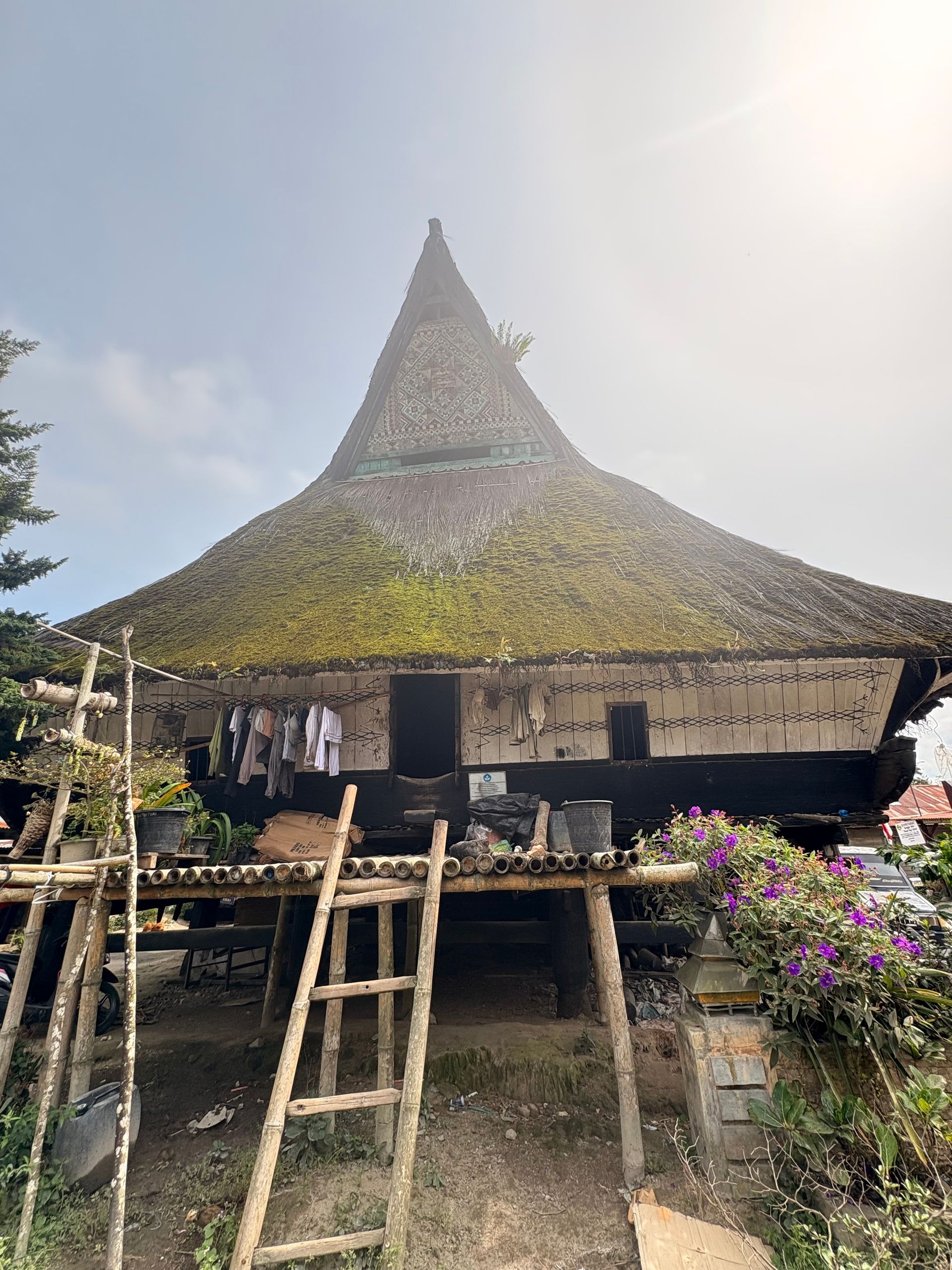
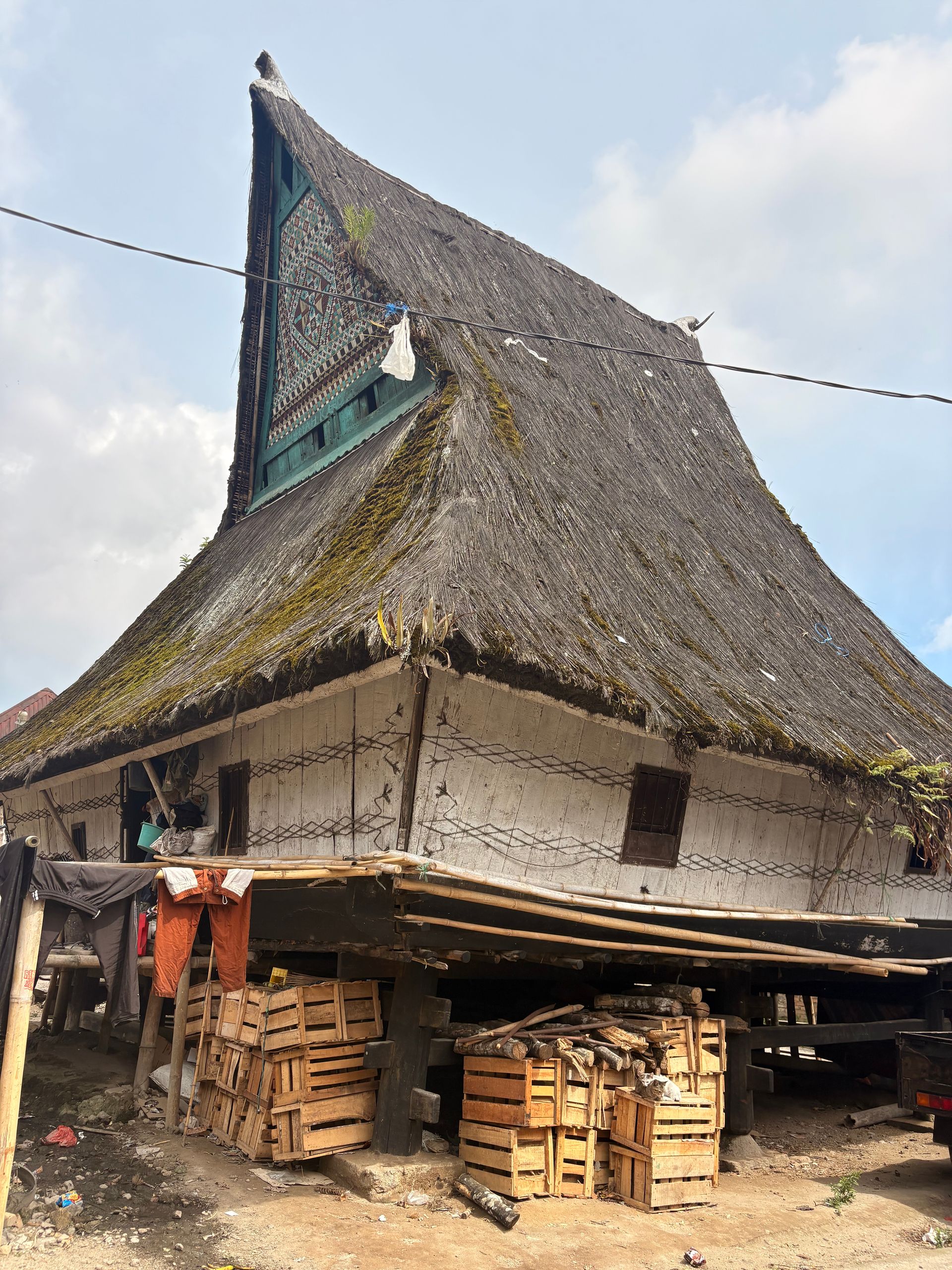
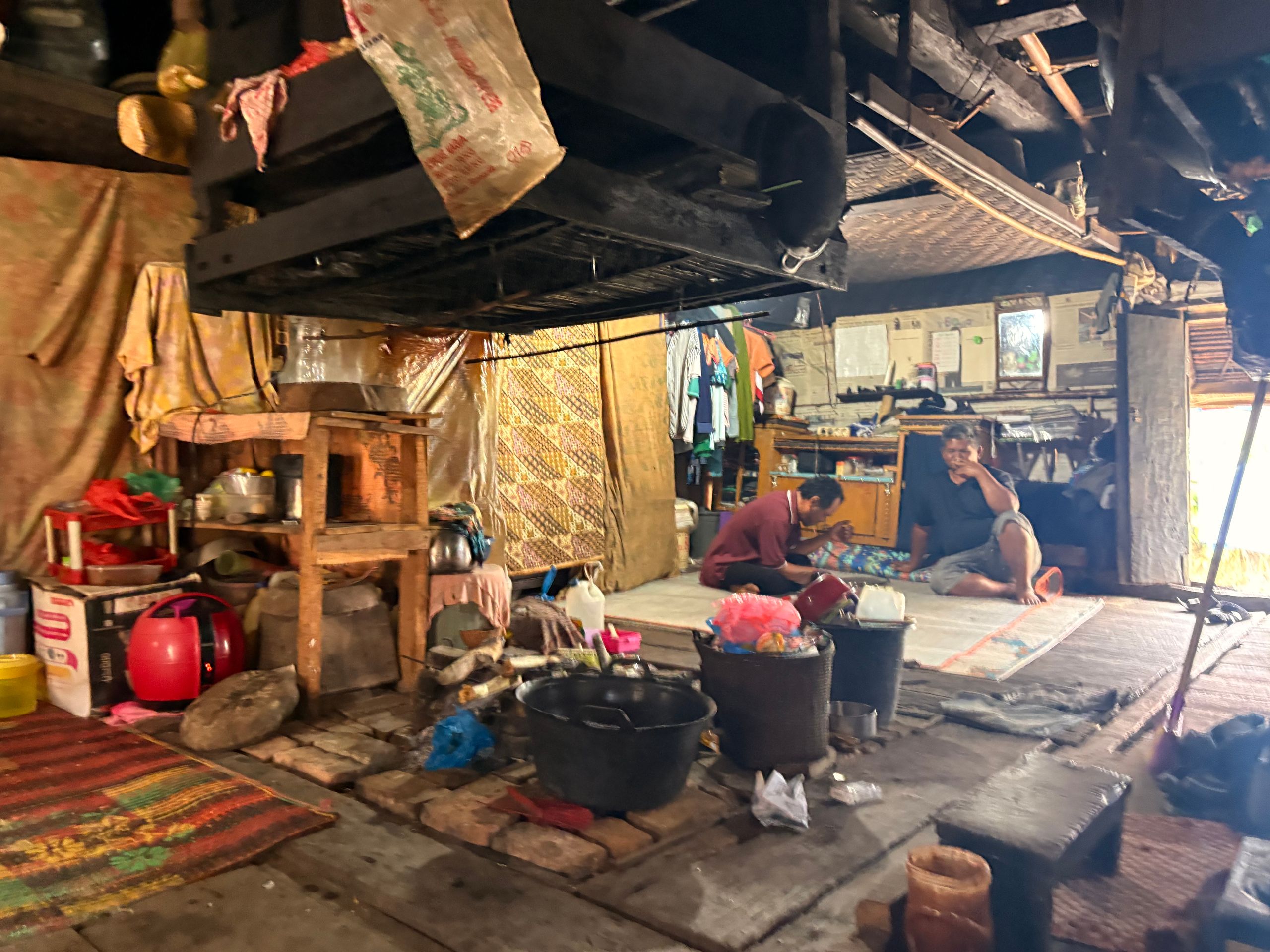
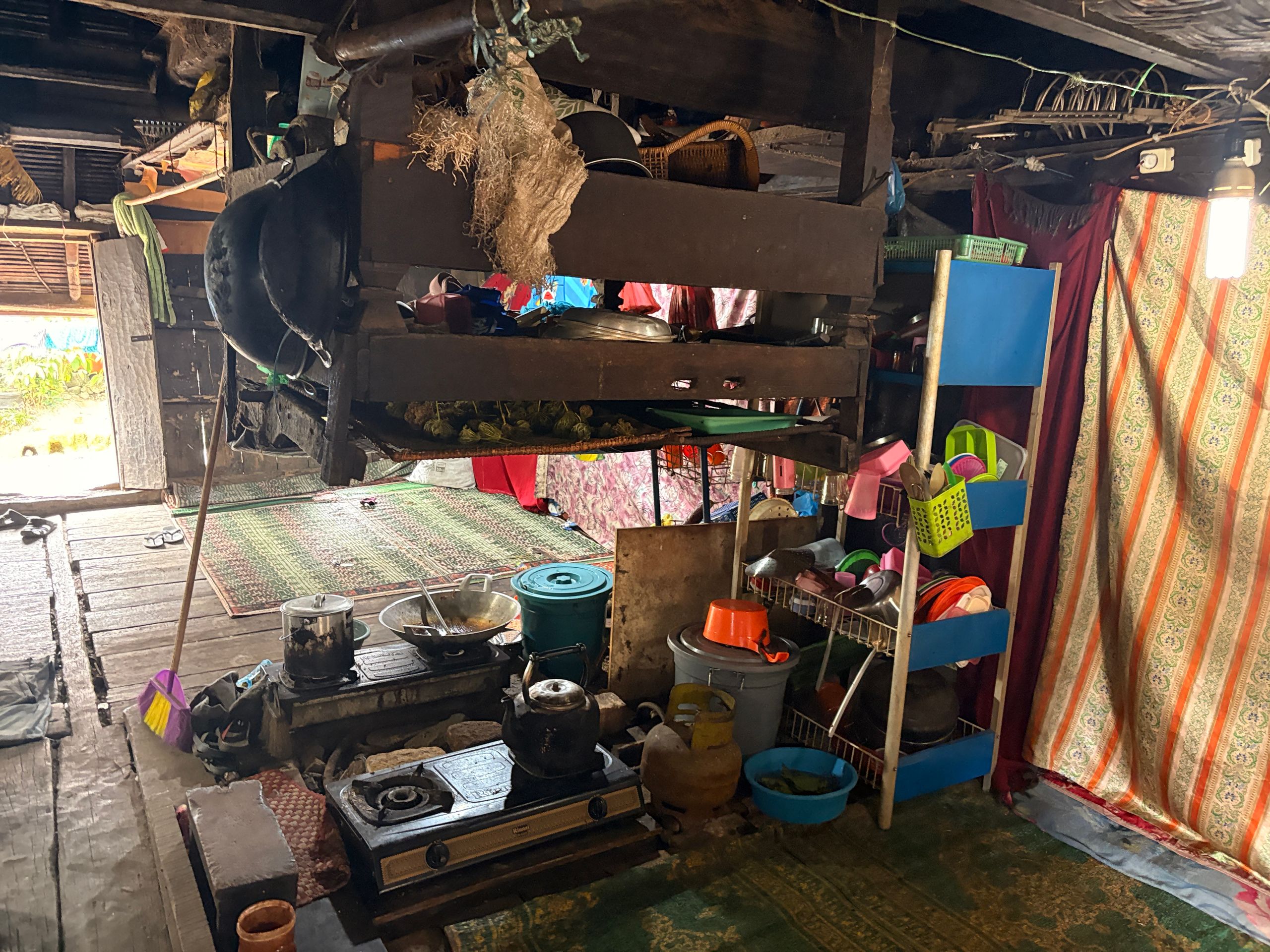
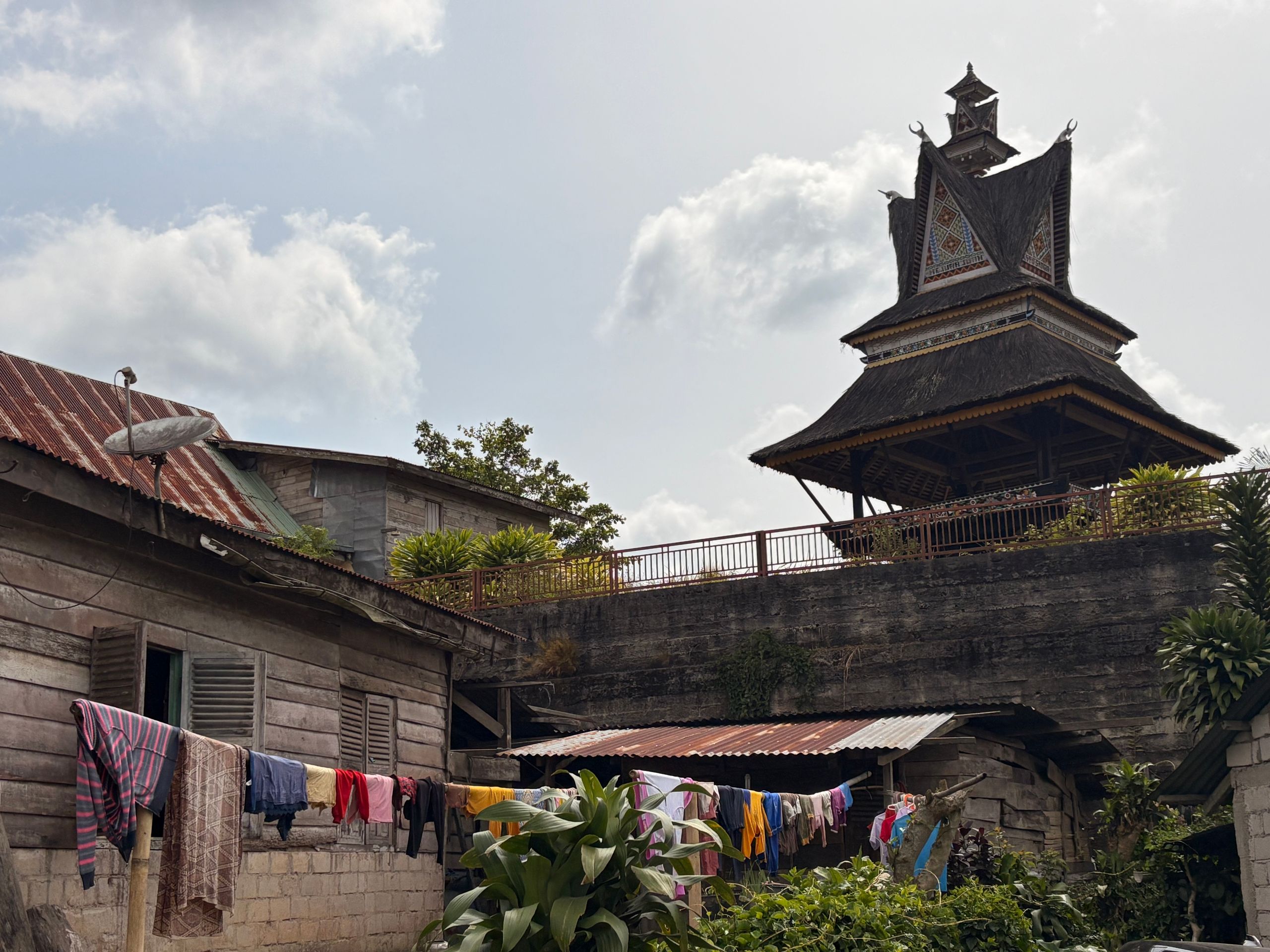
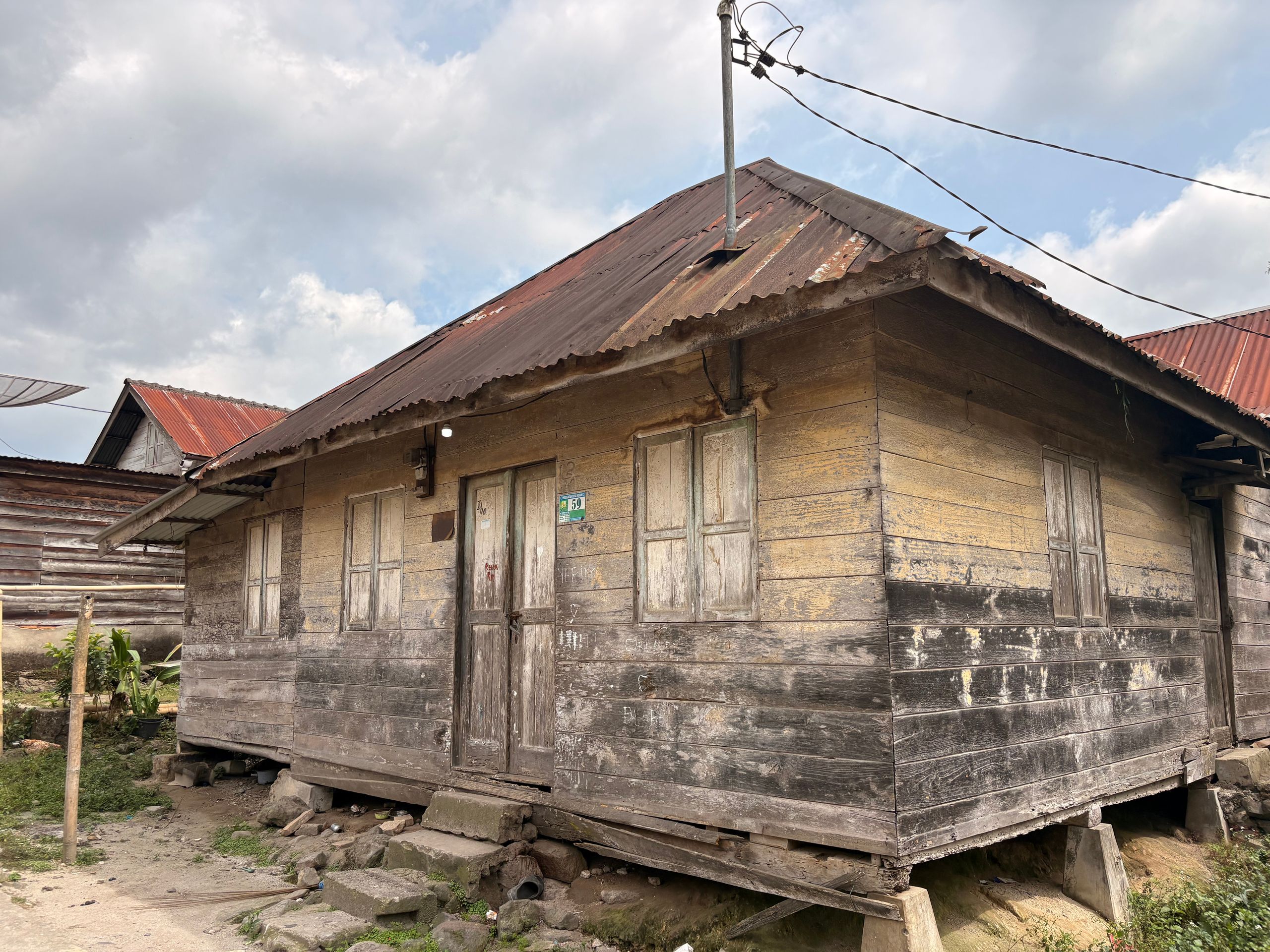
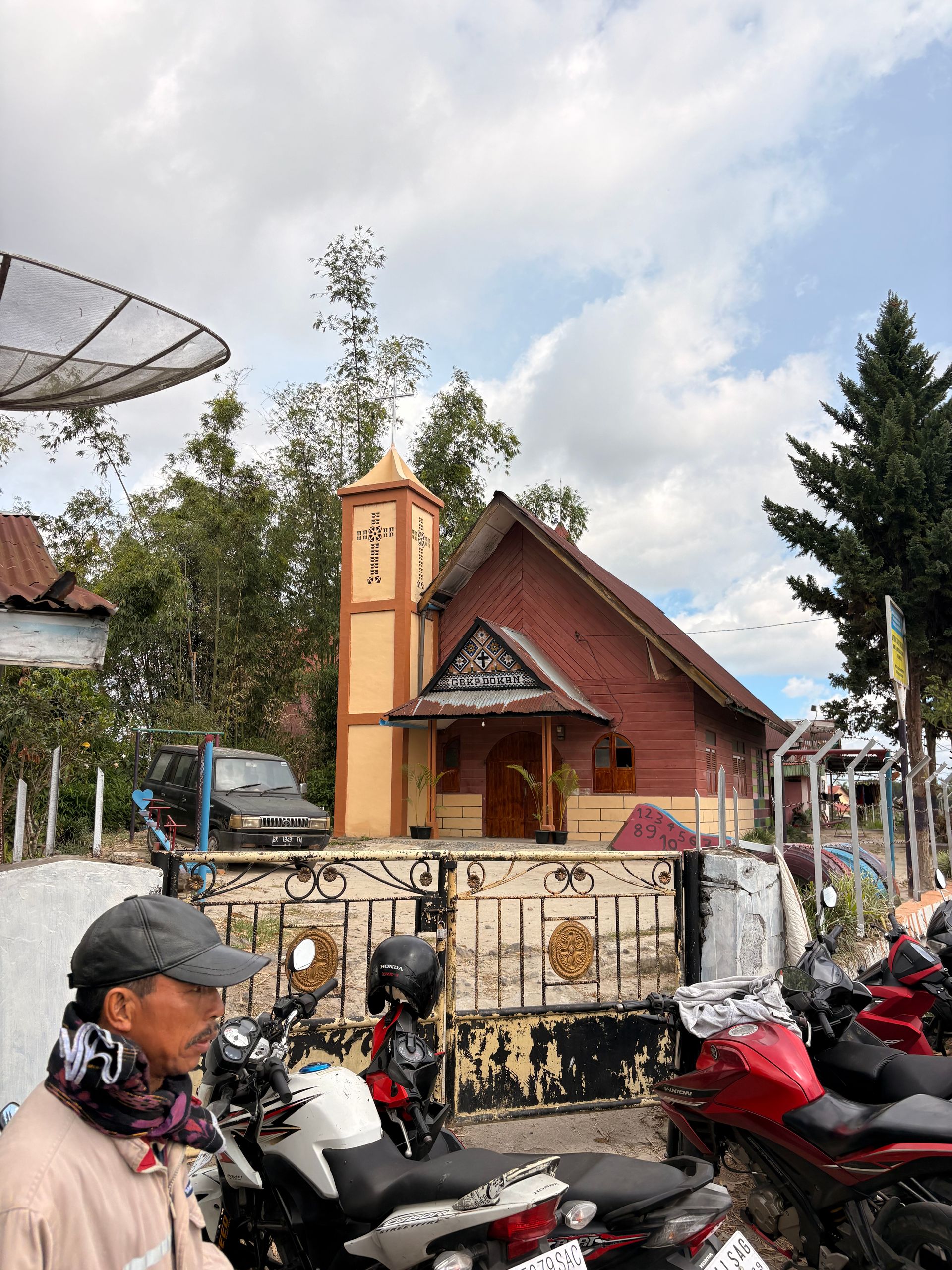
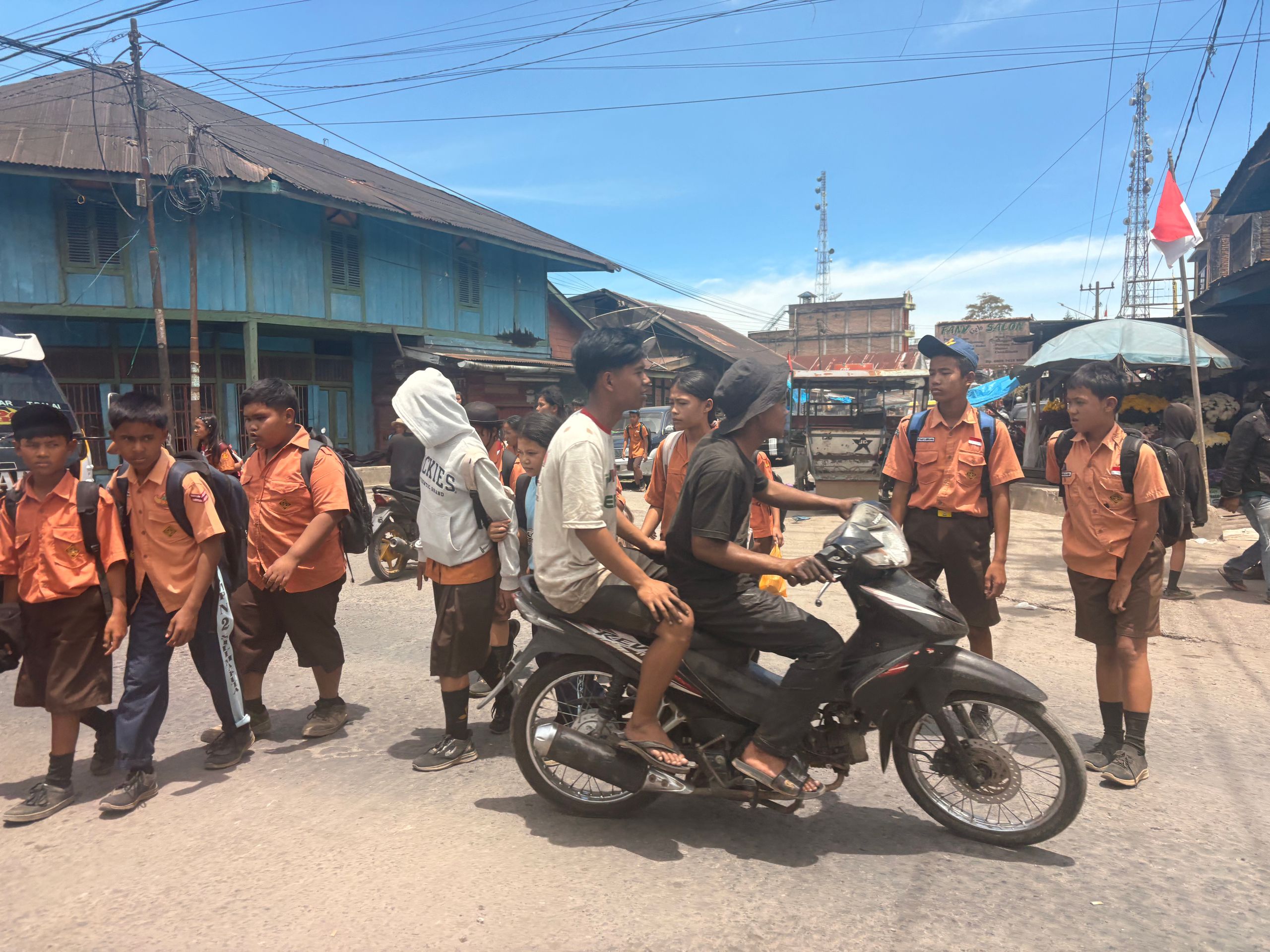
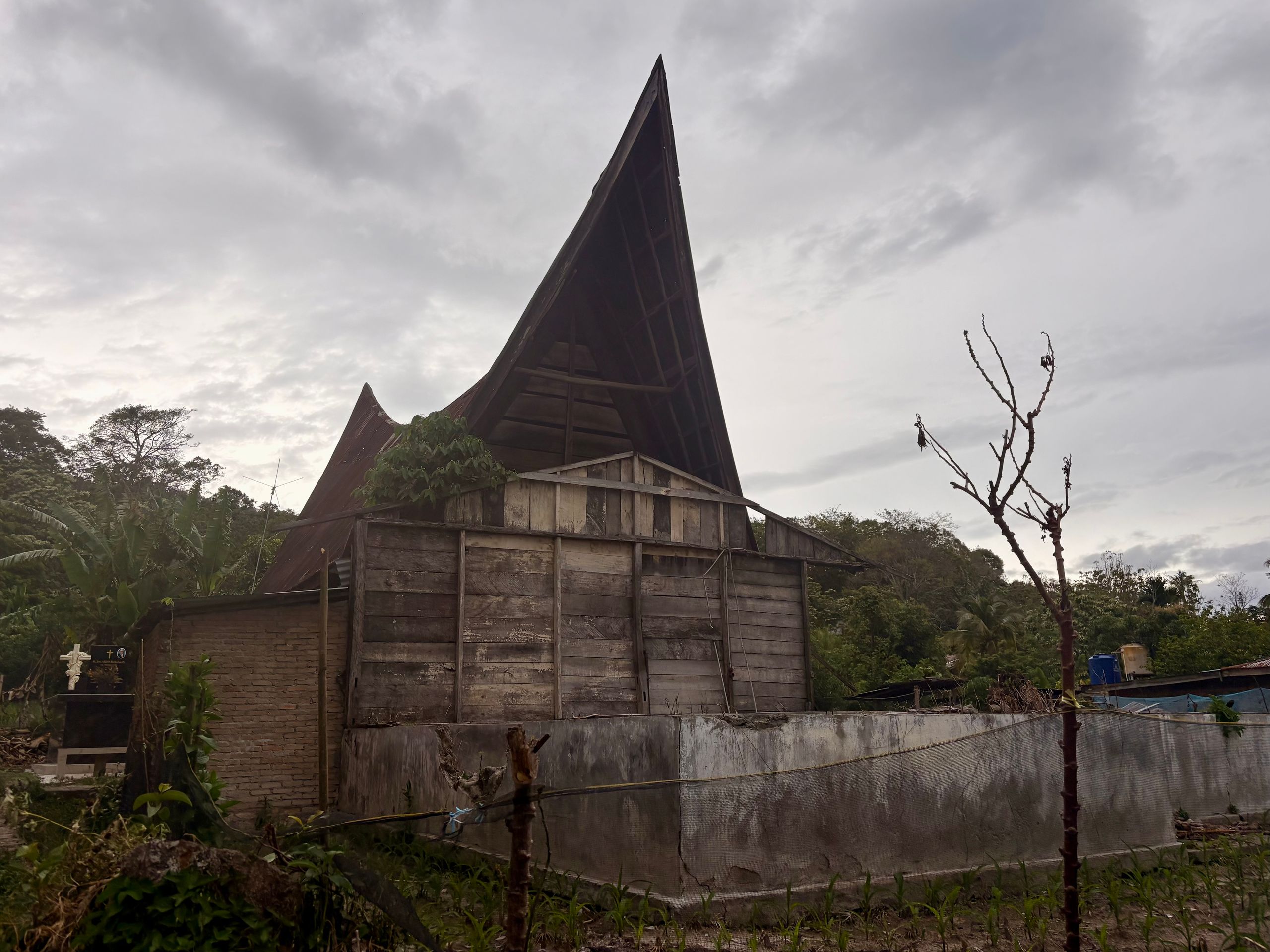
On the way south to Lake Toba, there were some interesting stops, so we booked (also due to lack of alternatives) a private transport again. First, we headed to Dokan, a small Karo-Batak village, to see the traditional stilt houses with their characteristic high pointed thatched roofs. It really is a small, quiet, and somewhat rundown village. Like in other villages, there were quite a few dilapidated houses (both traditional and simple wooden huts), and we felt a bit like we were intruding into the community. Apart from a few faded explanatory and directional signs, nothing indicated excessive tourism; it seems that not more than a few individual tourists wander here. However, the special Batak houses were easily identifiable, and while we were strolling through the village, a woman invited us into one of the houses. So we climbed up the entrance stairs into a single large room, and we 'conversed' a bit using Google Translate. We learned that four large families live under one roof in a single room, each with its corner and its own cooking area. There was also access via ladders to a sort of second floor, but due to the ceiling height and the steep roof, only a few things could be stored there. An old woman proudly showed us a photo of her five adult sons and one daughter (the latter was the one who had invited us). Then all at once, they rummaged around in their corners and threw colorful long scarves over (Gatip Ampar). They had to leave, as there was a wedding taking place in the village. And indeed, all the villagers streamed toward the community house, and suddenly there was quite a bit of activity! We were curious but also didn’t want to intrude, so we continued on our way.
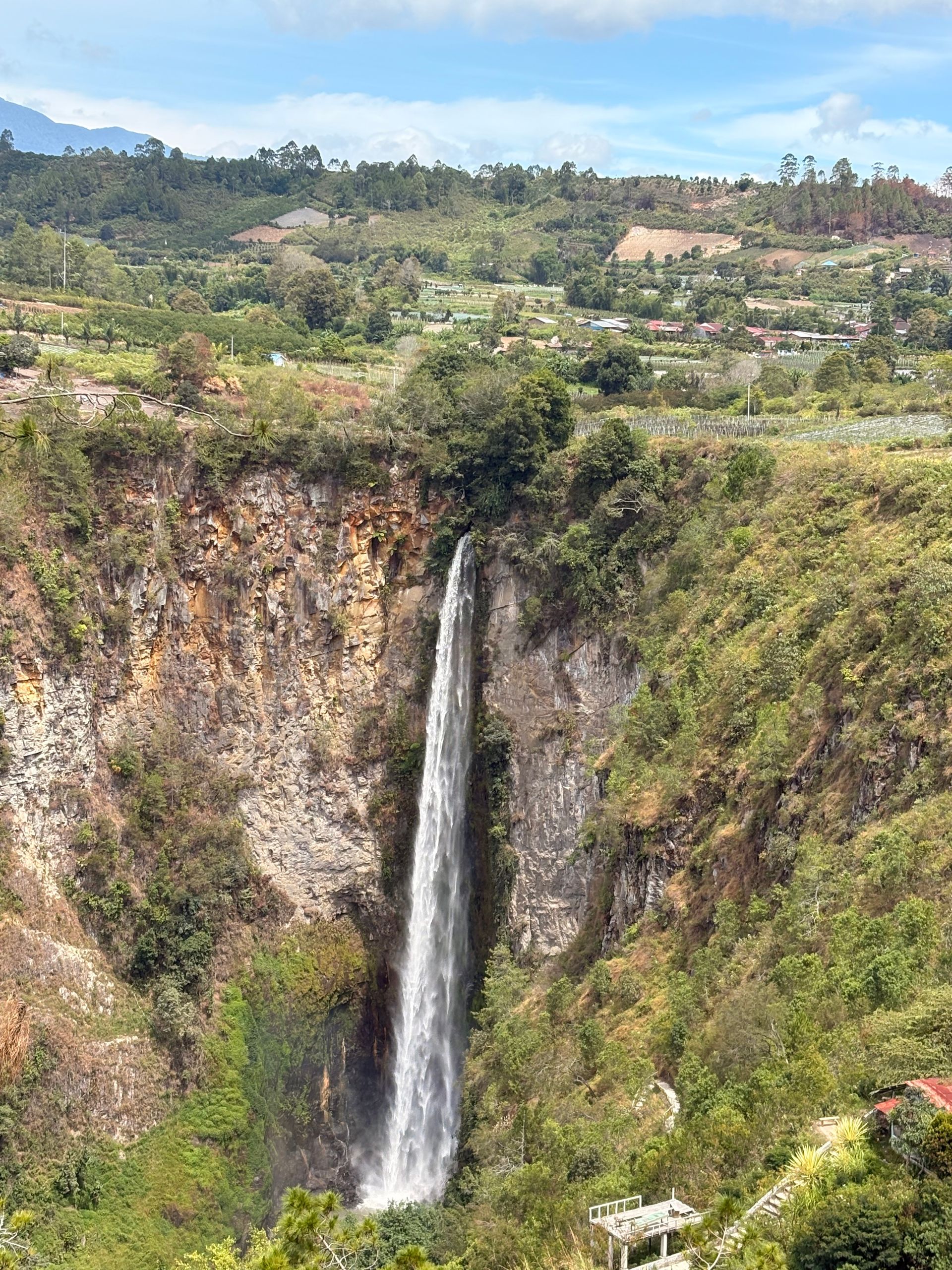
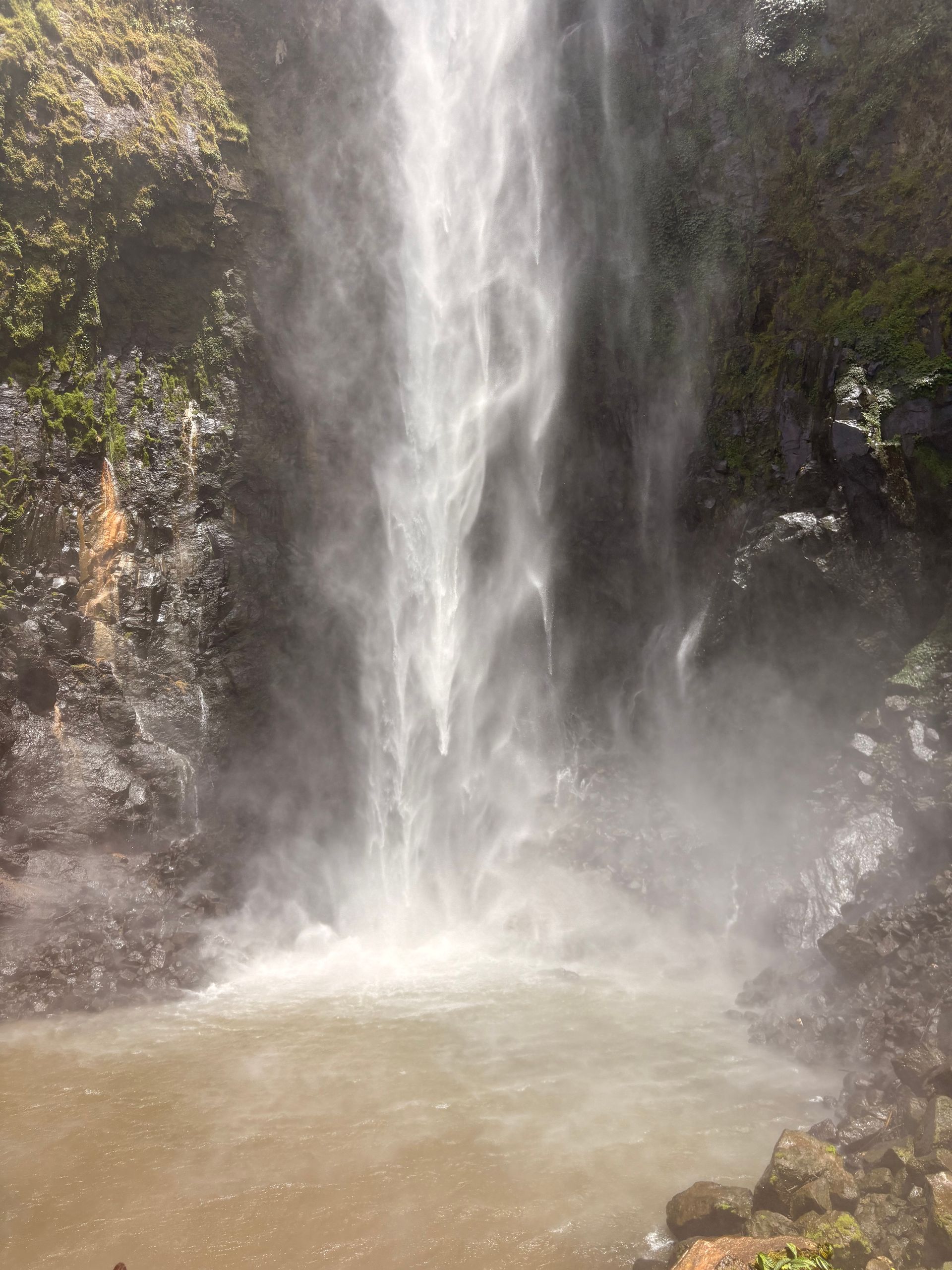
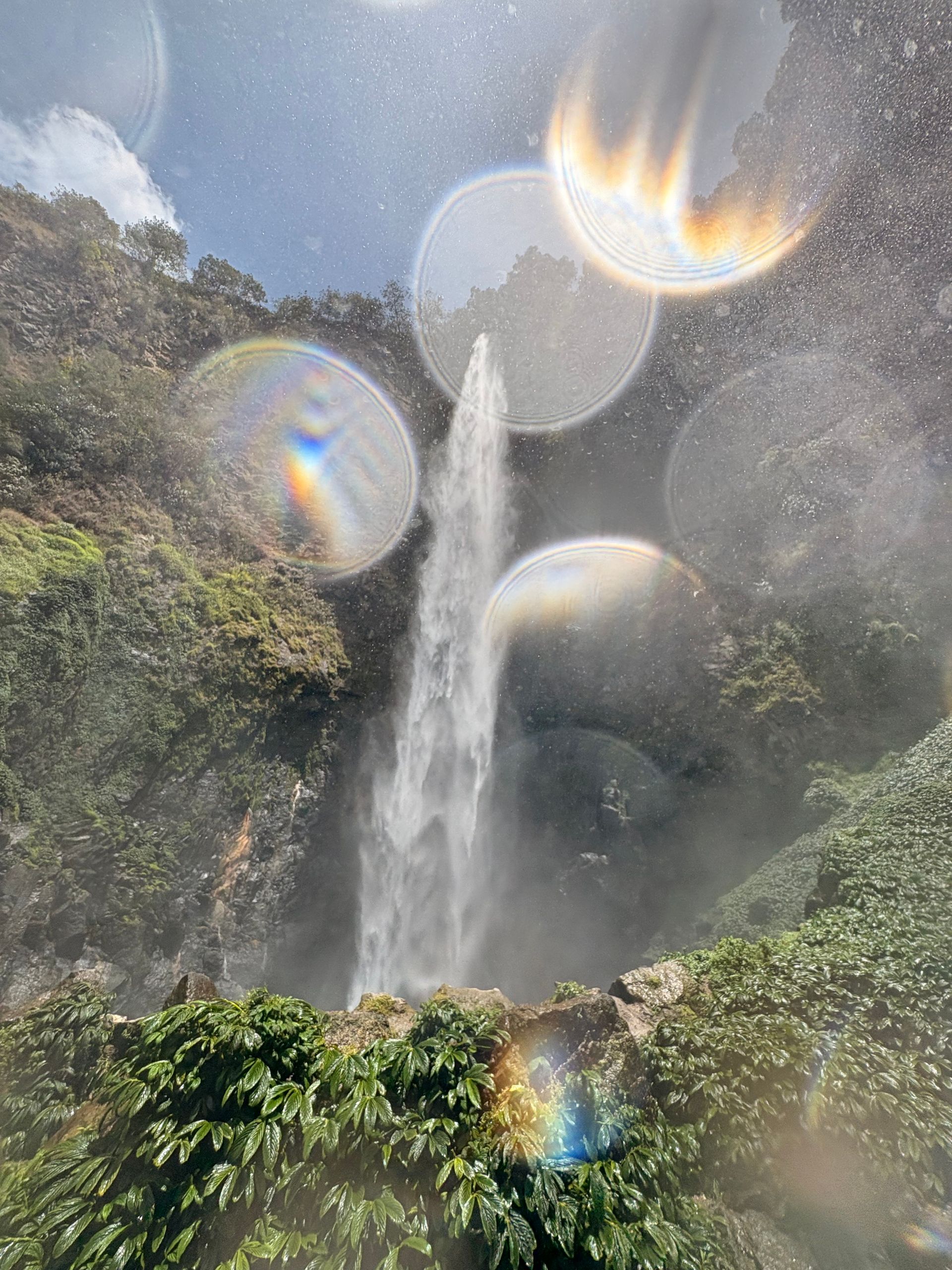
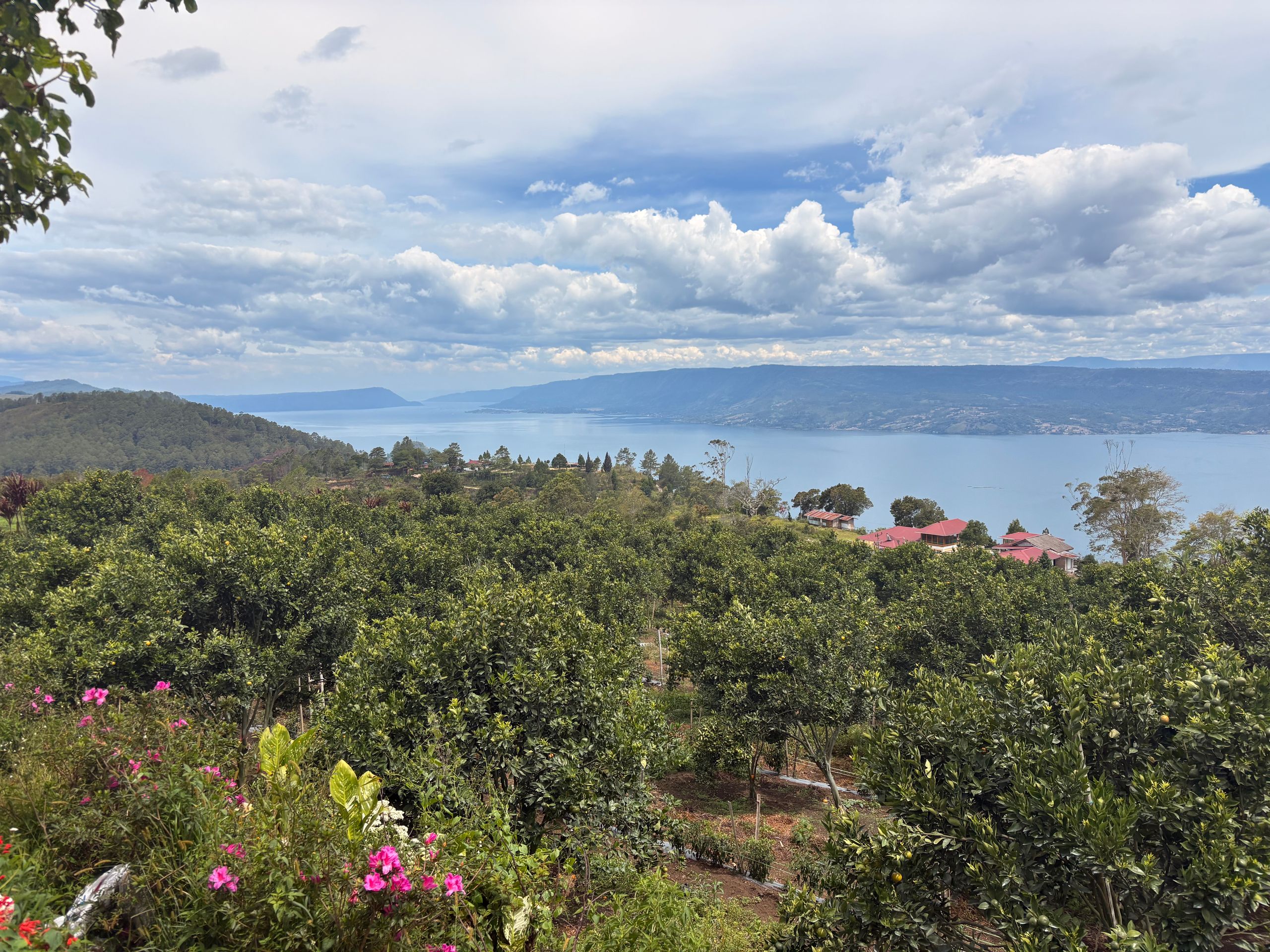
The next stop was the Sipiso-Piso waterfall; from the hilltop, one could already see a beautiful view of Lake Toba. We decided to make our way down to the waterfall, on an incredibly worn-down, poorly cemented, and already crumbling path with a torn railing — very Indonesian. It was hardly crowded, and even though the ascent and descent in the heat were exhausting, it was worth it. Incredible how much force this waterfall (about 120 m high) exhibits. The falling water created strong winds that carried a massive spray far from the waterfall and nearly knocked us down. A lovely little hike!
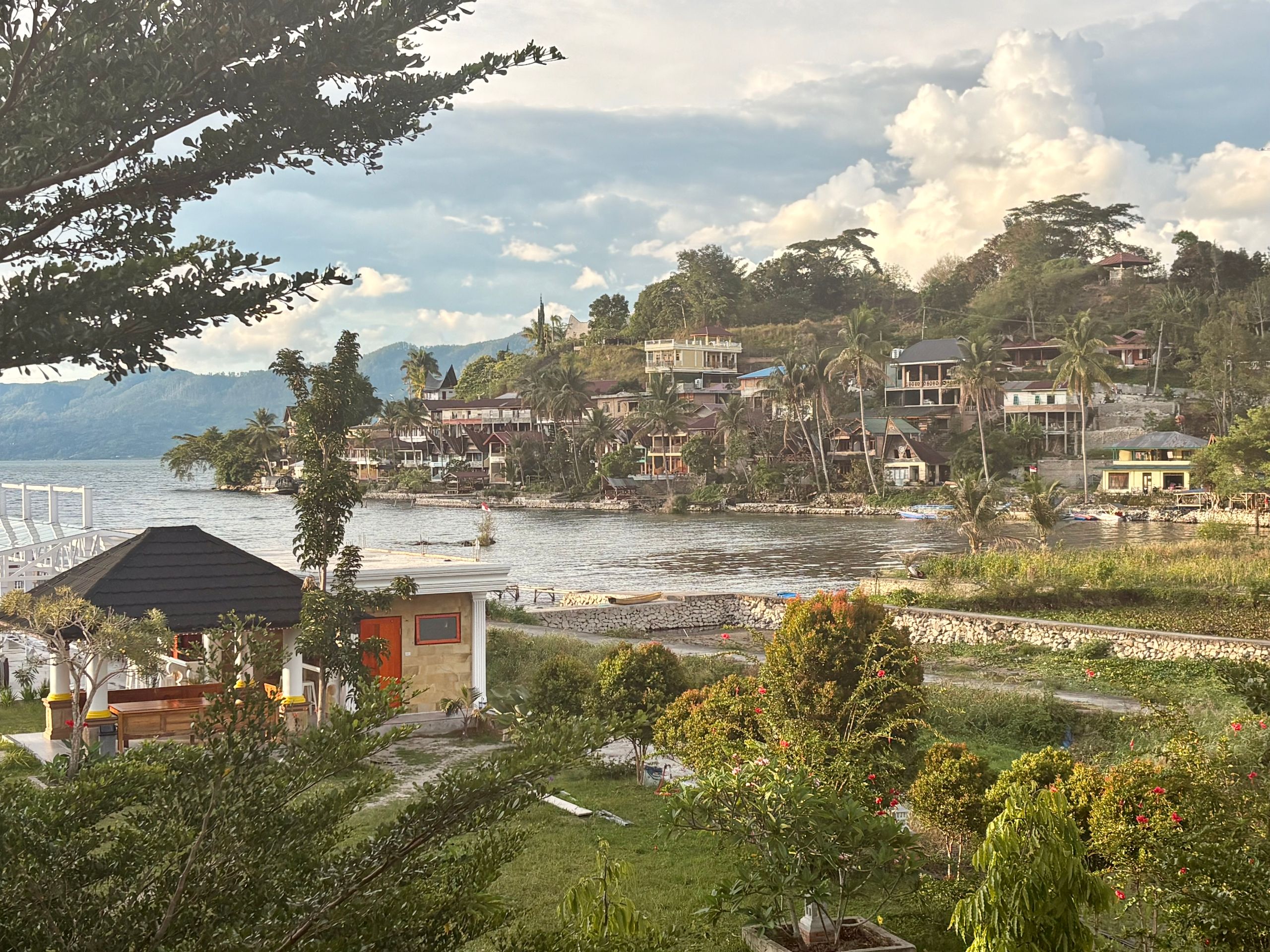
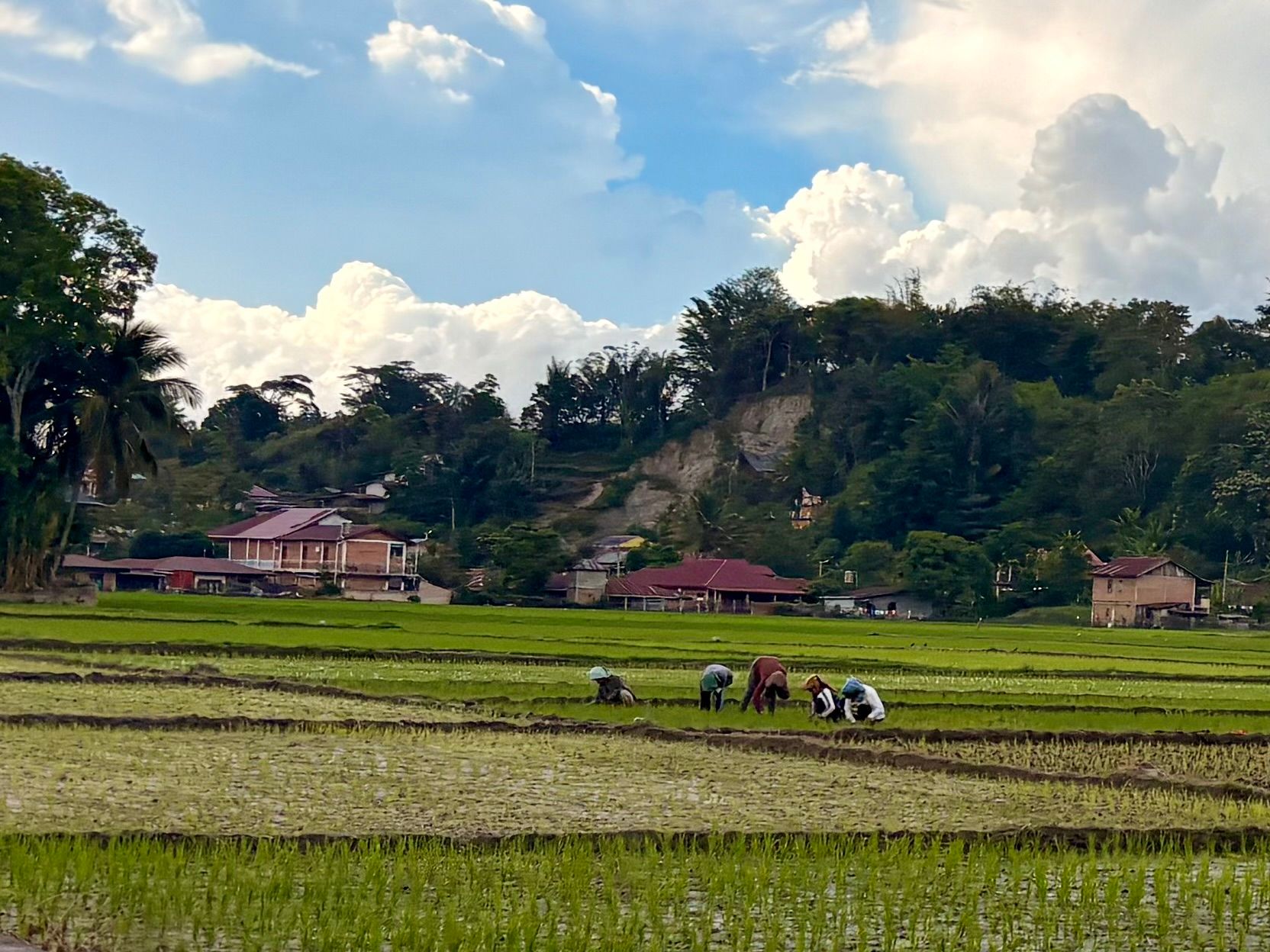
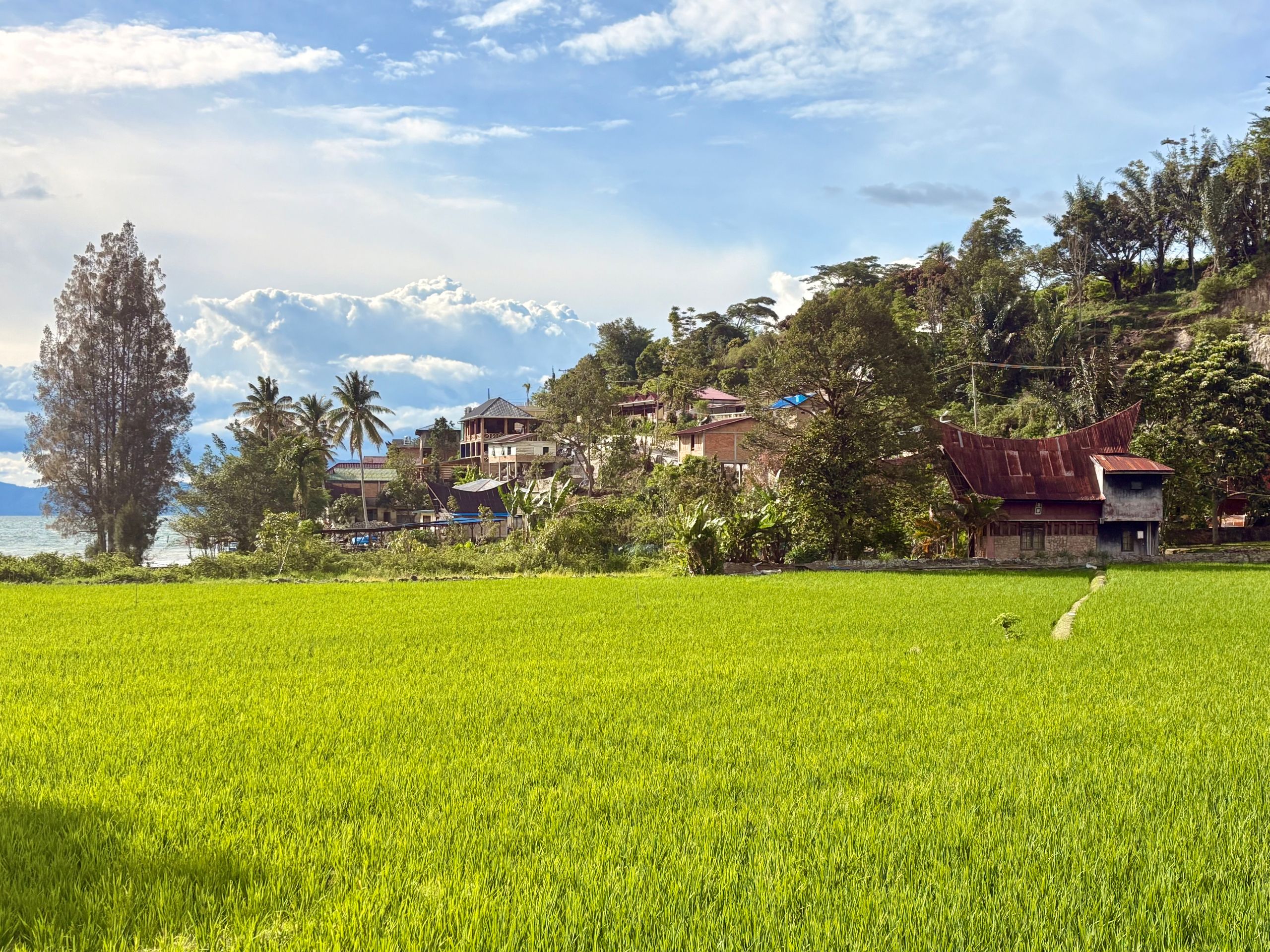
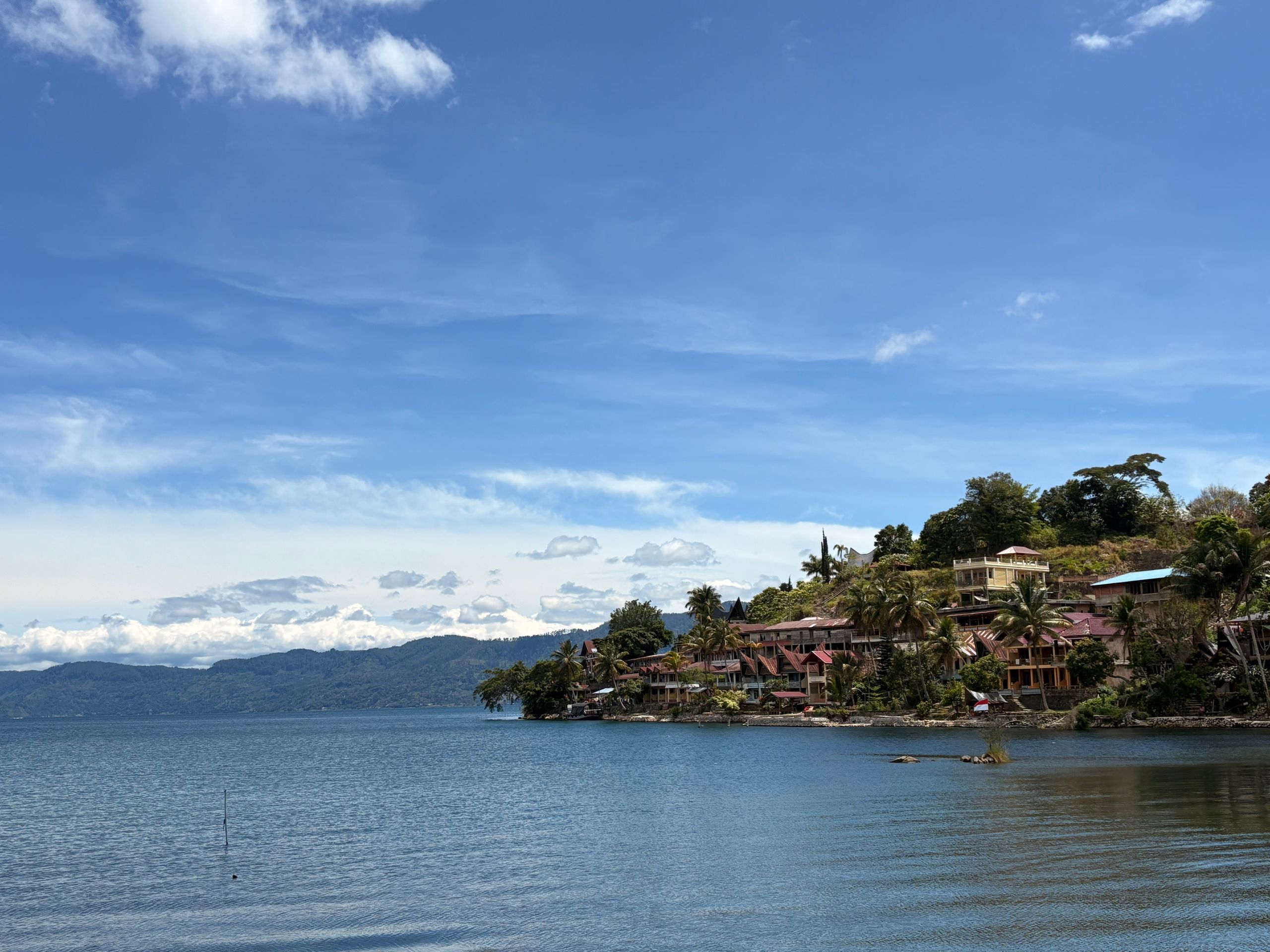
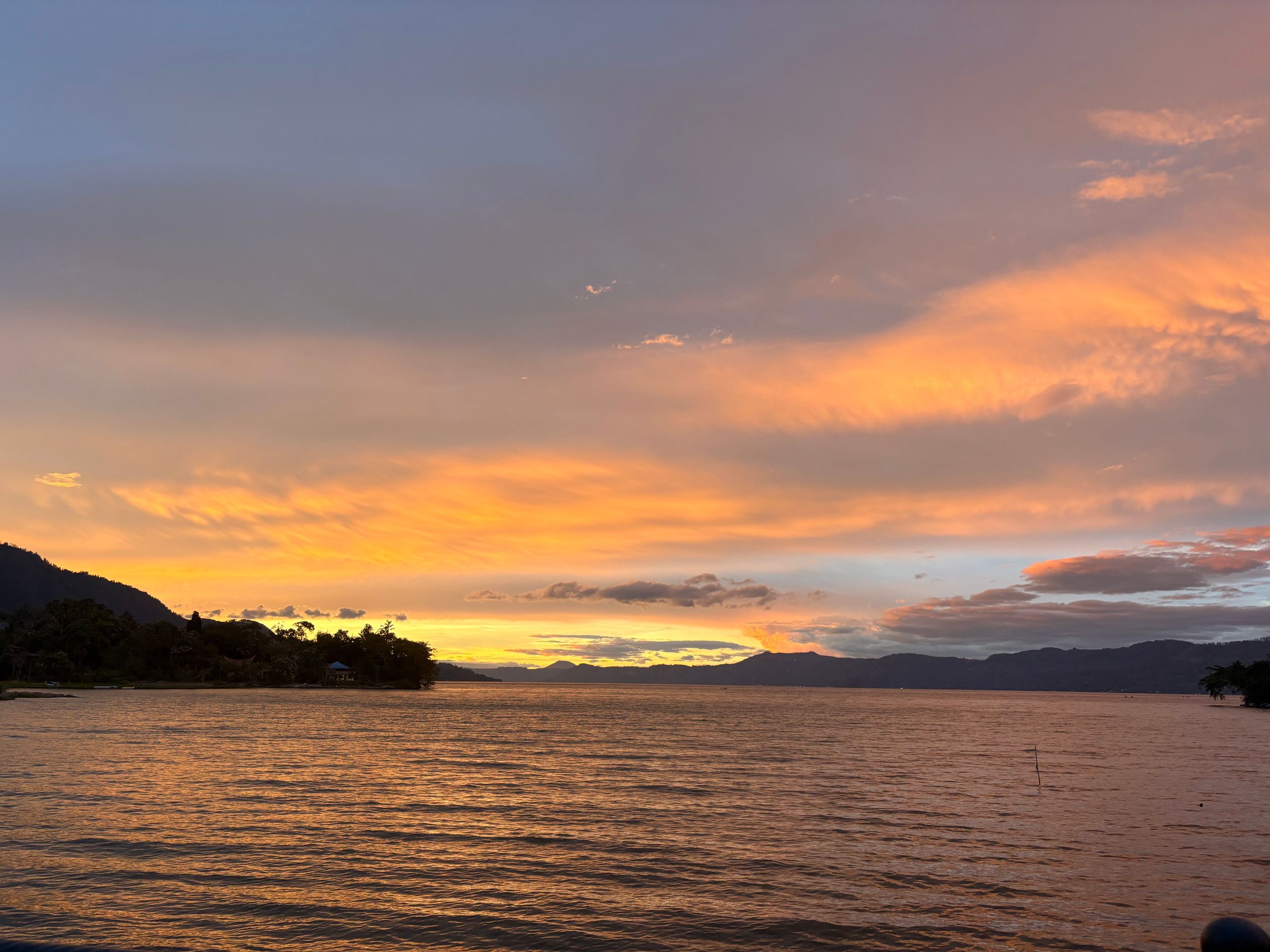
Finally, our driver dropped us off at the ferry terminal in Parapat on Lake Toba. Lake Toba was formed about 70,000 years ago during the eruption of the supervolcano Toba, whose caldera subsequently collapsed. A massive eruption whose consequences were likely felt worldwide at the time. There is even the (somewhat controversial) Toba catastrophe theory, which suggests that as a result of the eruption and ash particles in the air, there was a worldwide cooling that may have even affected the spread of humans as a genetic bottleneck (Homo sapiens was nearly wiped out, reducing its genetic variability). We are not paleoanthropologists, and there are some counter-theories, but it’s quite fascinating to read about it. Looking at the beautiful, calm lake in the sun, nothing indicates the great chaos that must have prevailed here. And for us, it was onto the ferry to the Samosir peninsula, heading to Tuktuk. What a sleepy, quiet little place! People were on the small rice fields, and here and there rice, cocoa, or other beans were being dried on the ground, and always a wonderful view of the lake. Traditional wooden houses of the Toba-Batak could also be seen here, though they were somewhat smaller than those of the Karo-Batak (and intended for only one family), with the massive decorated roofs meant to remind of the ancestors arriving by boat.
Freddy still wasn’t feeling well, so we took it easy, went for long walks, ate delicious food, lounged by the pool with a view of the lake, and read.
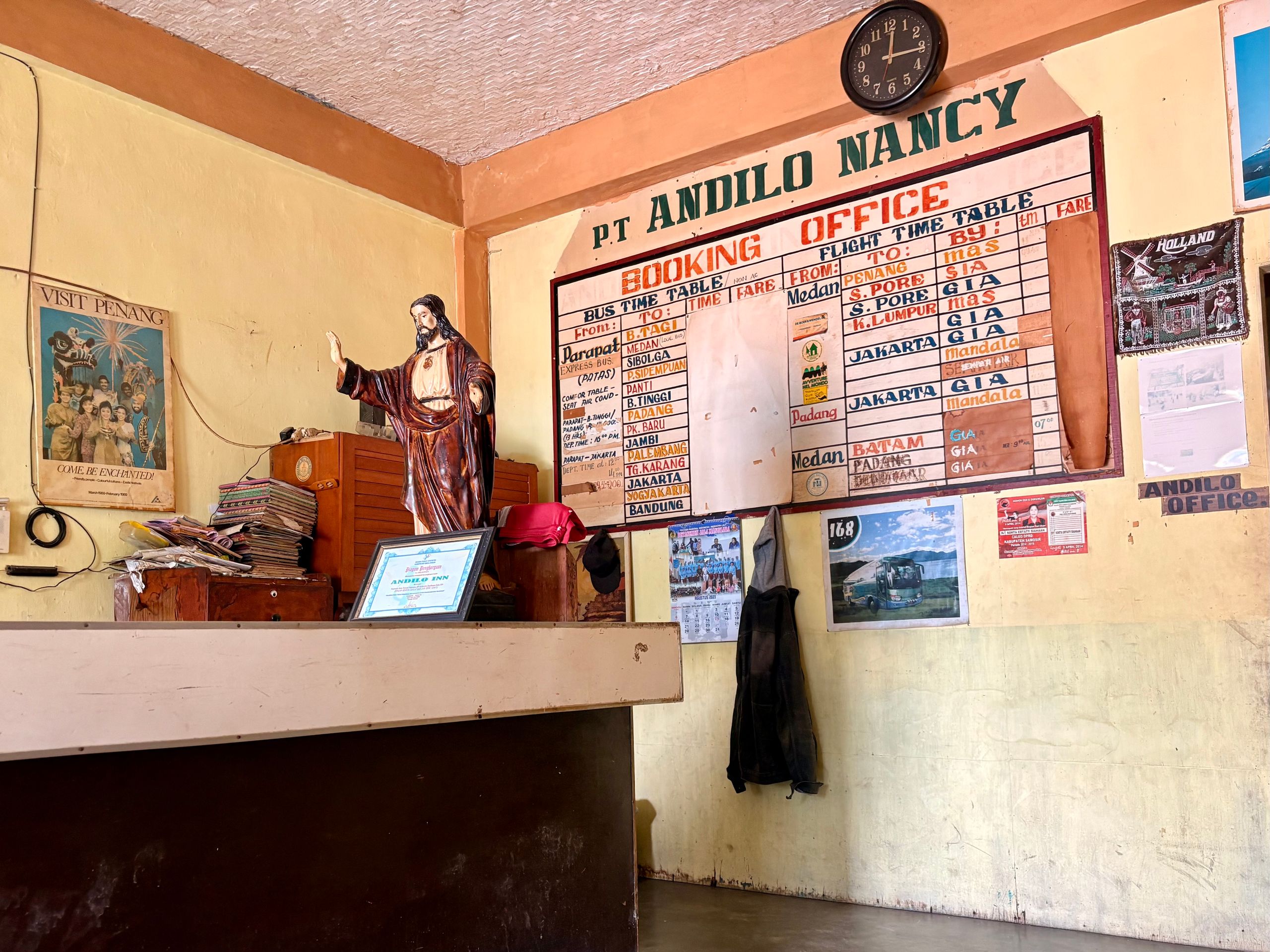
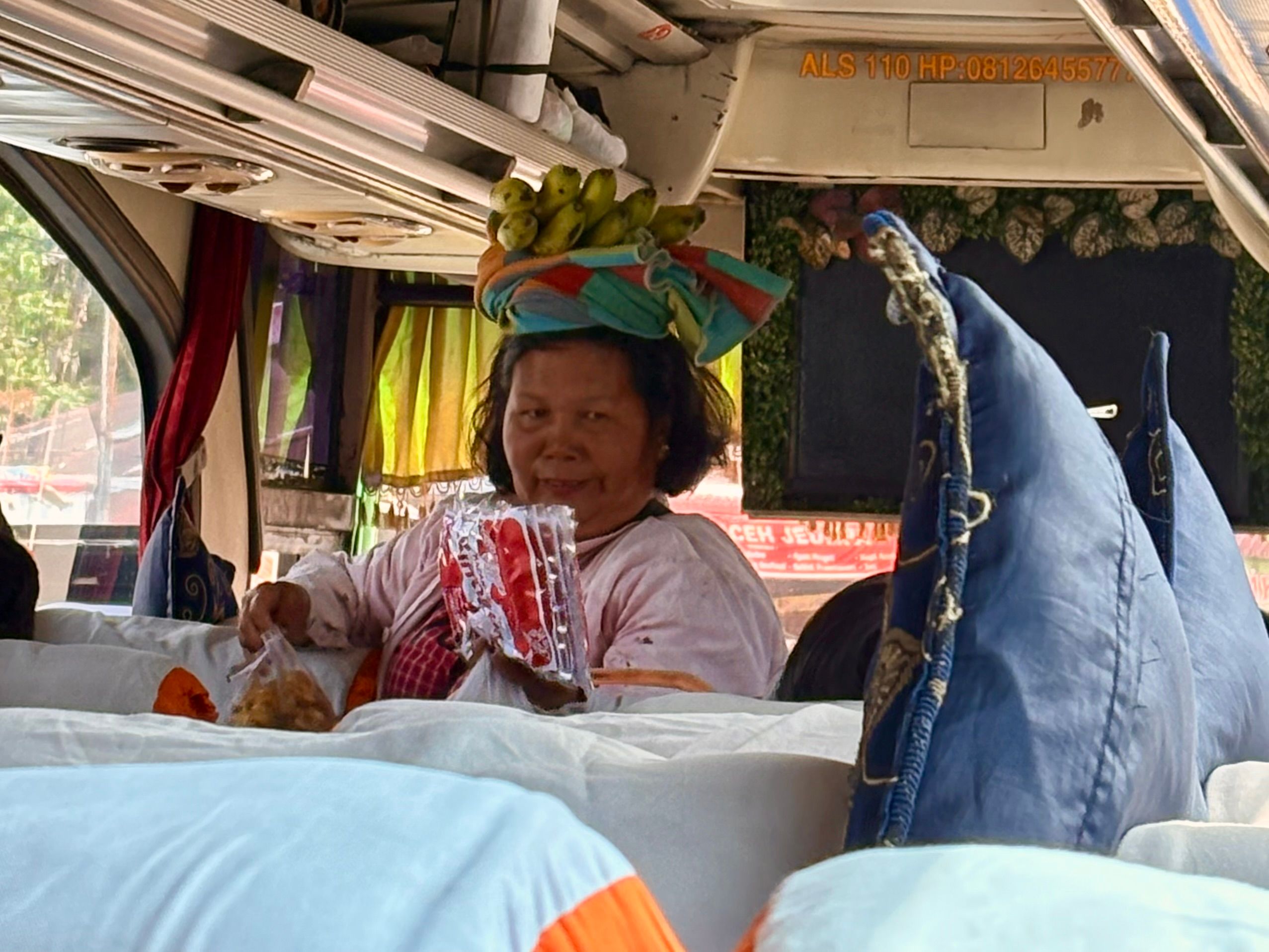
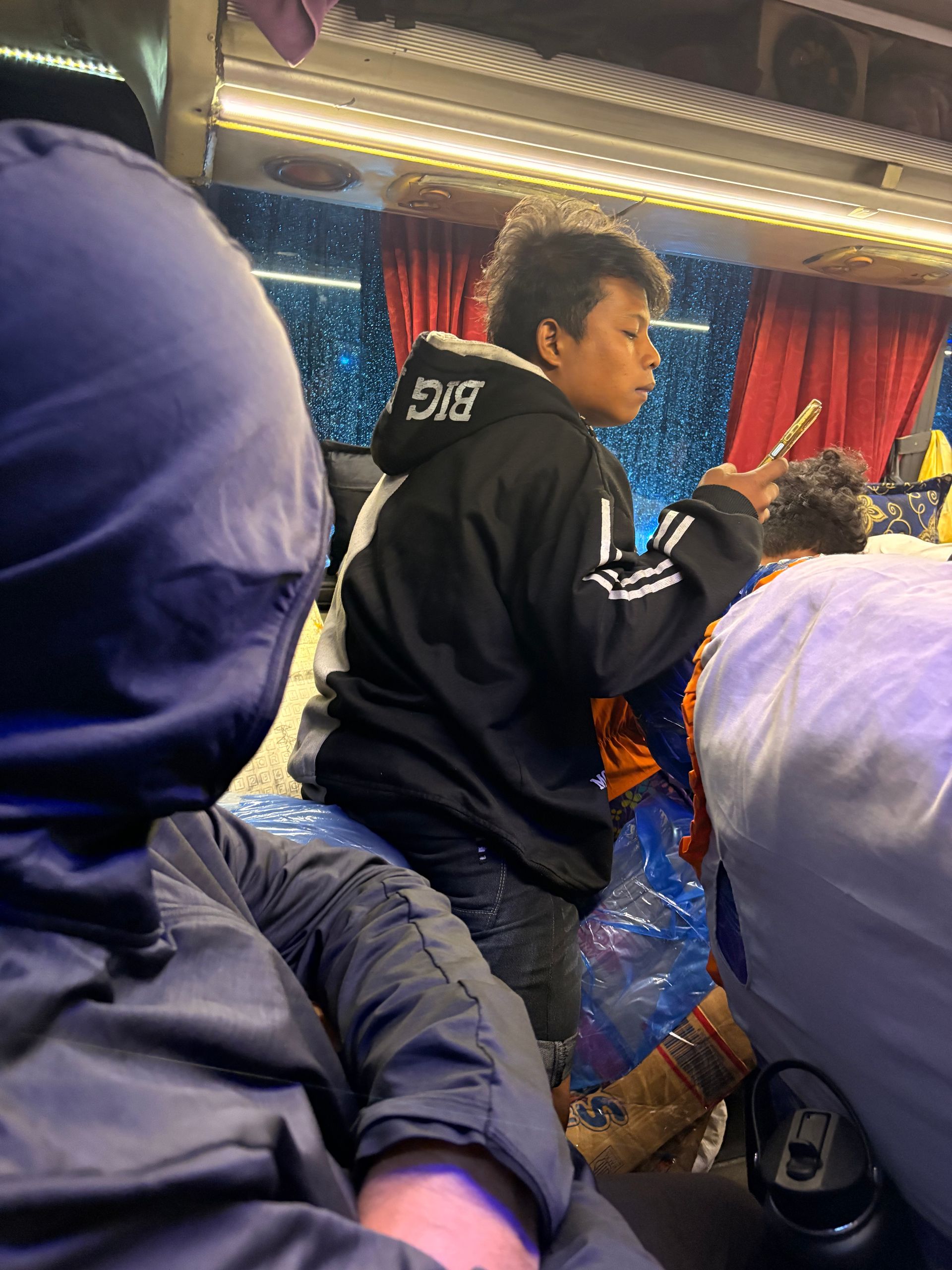
After a few days, we made our way back with the ferry to Parapat. Here, we shook off the 'ferry terminal mafia', a bunch of strange characters (it had already been odd on the way there), who wanted to sell us onward journeys, local taxis, or bus tickets for outrageous prices. Once we were finally rid of them, a normal taxi driver took us to the bus station for a fraction of the previously offered price. The ticket office was initially closed, but after some inquiries, the responsible person was finally roused and let us in. The office seemed to have been set up in the 50s and had likely not been cleaned since then; the restroom there will forever hold the top spot in our travel horror cabinet. But there were tickets for the only bus, and these were much, much cheaper than if we had bought them at the ferry terminal. After a long wait (the bus had already left Medan and was significantly delayed), we boarded the high-quality bus, which had probably last been cleaned along with the ticket office. But at least we got a decent seat. We made dozens of stops: restroom, loading things, praying, eating, with more and more people and stuff piling on, plastic stools placed in the aisle, and sacks, boxes, and metal rods stacked. The highlight was when a moped was pushed into the aisle (and the aisles are narrower than in a normal bus), trapping us, but it was strapped to the roof at the next stop to free up space for more people and things. In between, it began to rain heavily; unfortunately, the windows were not entirely sealed, so it became quite damp. When the bus drove, it went full throttle over the really bad roads. We even saw a serious accident. So we mentally cocooned ourselves, trying in vain to find a somewhat comfortable position on the worn-out, greasy seats so at least we could doze a bit, waiting for it to be over. 500 km and 18 hours later, the ordeal was over; even the restorative effect of Lake Toba had nearly evaporated. Completely exhausted, we checked into a supposedly slightly better hotel, which was unfortunately quite eerie. For the moment, it was irrelevant, welcome to Bukttingi!