Berastagi
Our shared taxi took us relatively comfortably onward to Berastagi, even though the roads were really not great and we took almost 5 hours for 130 km. Berastagi is a popular...

Published: 10.03.2026
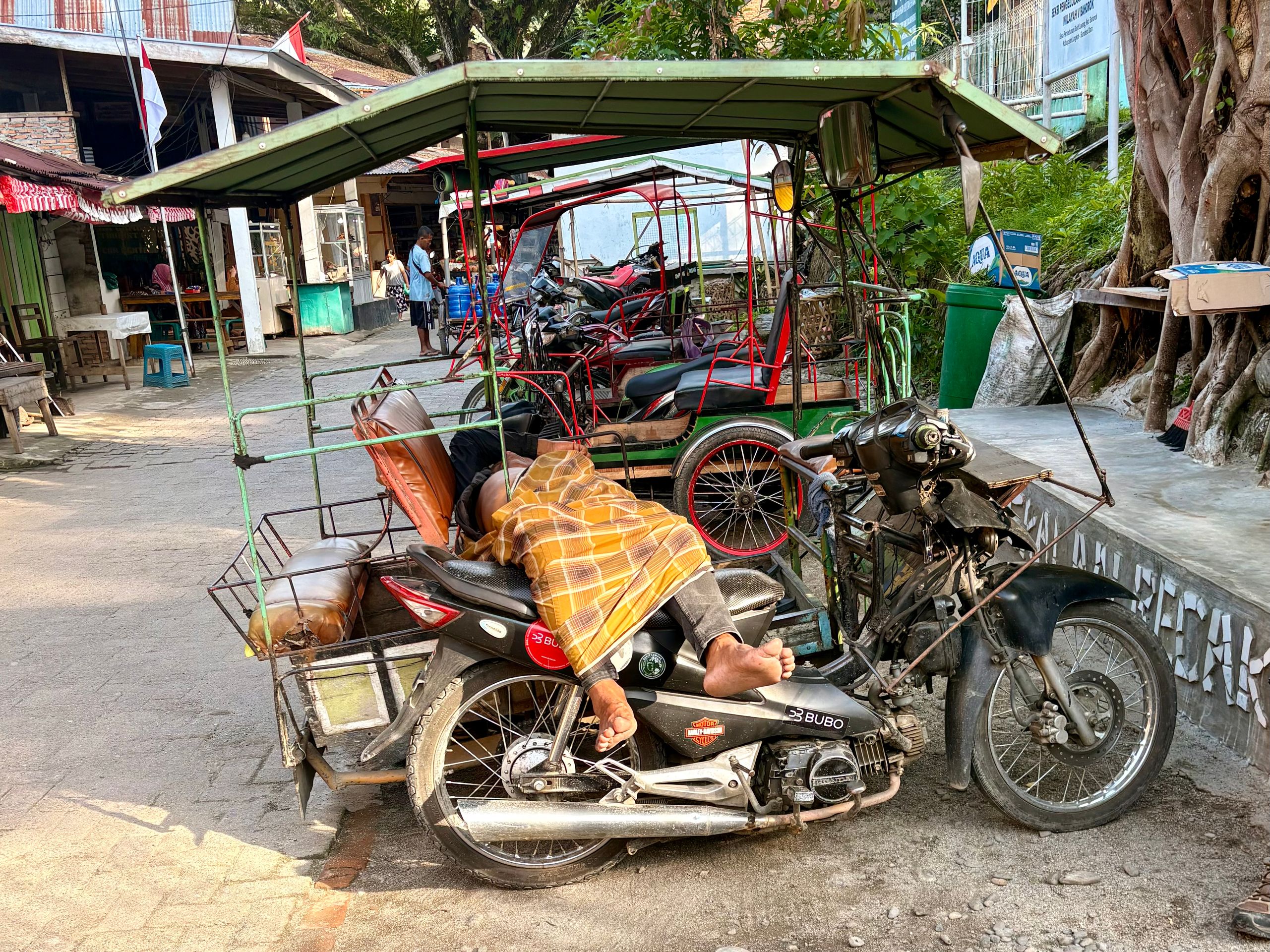
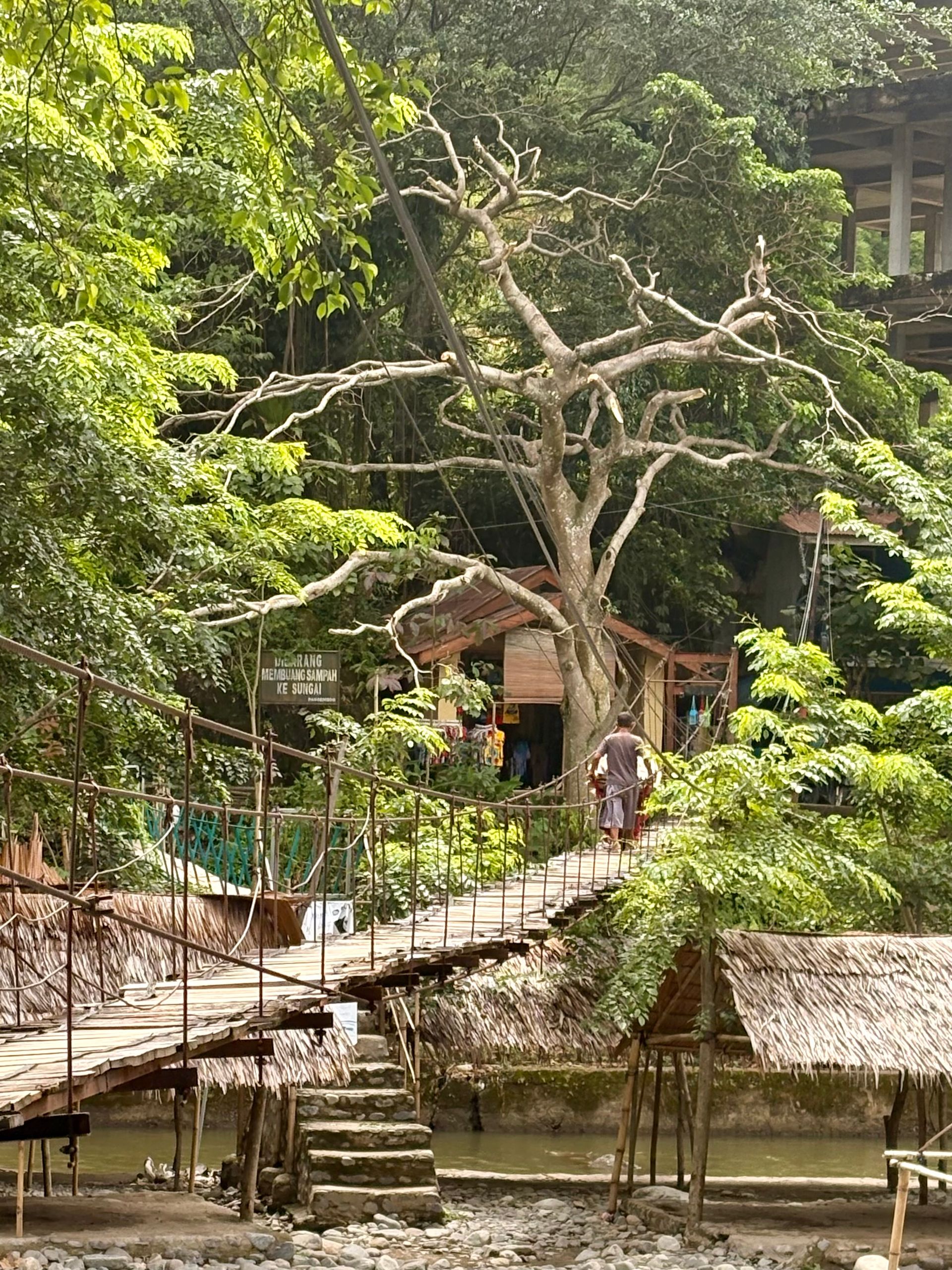
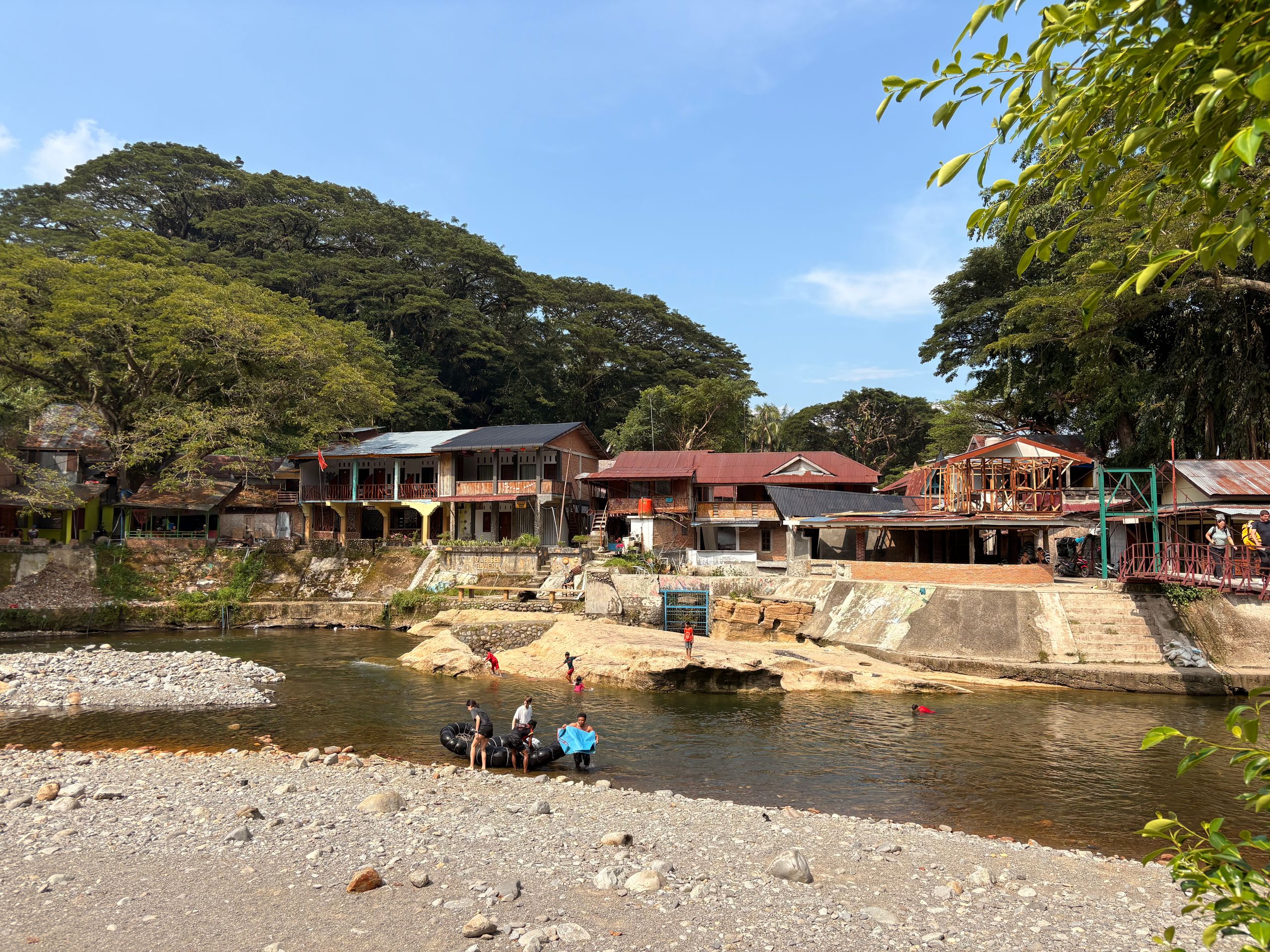
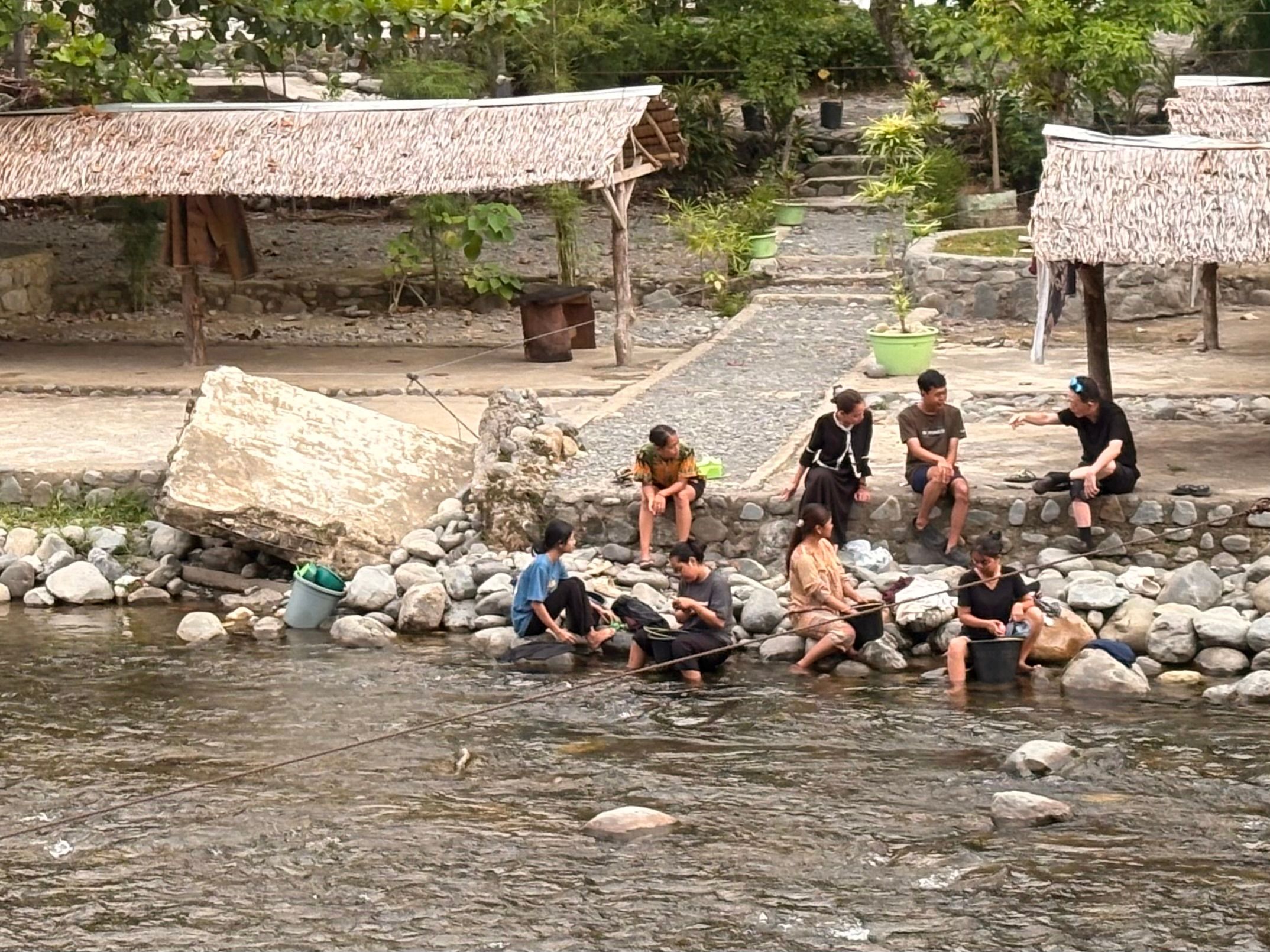
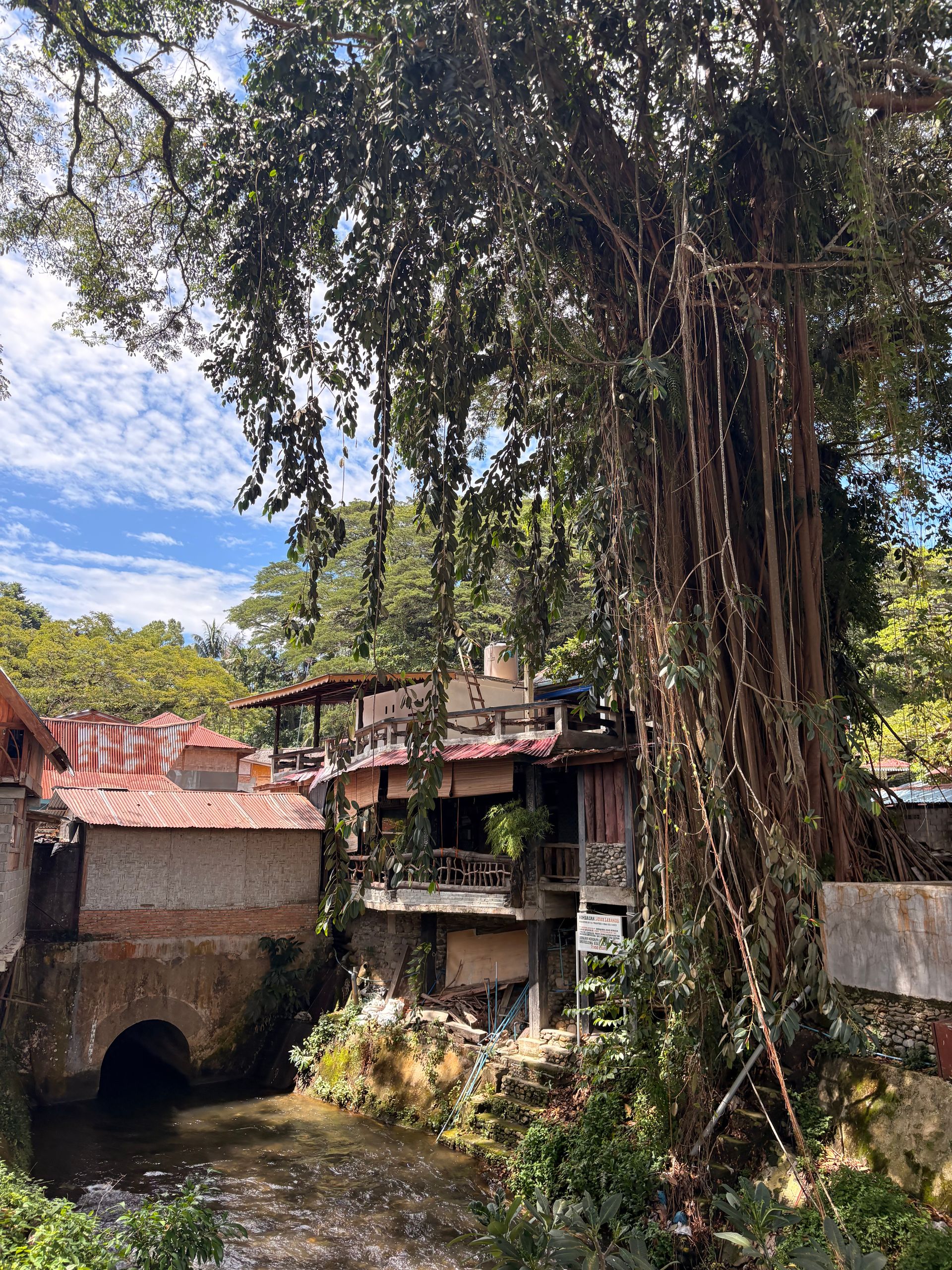
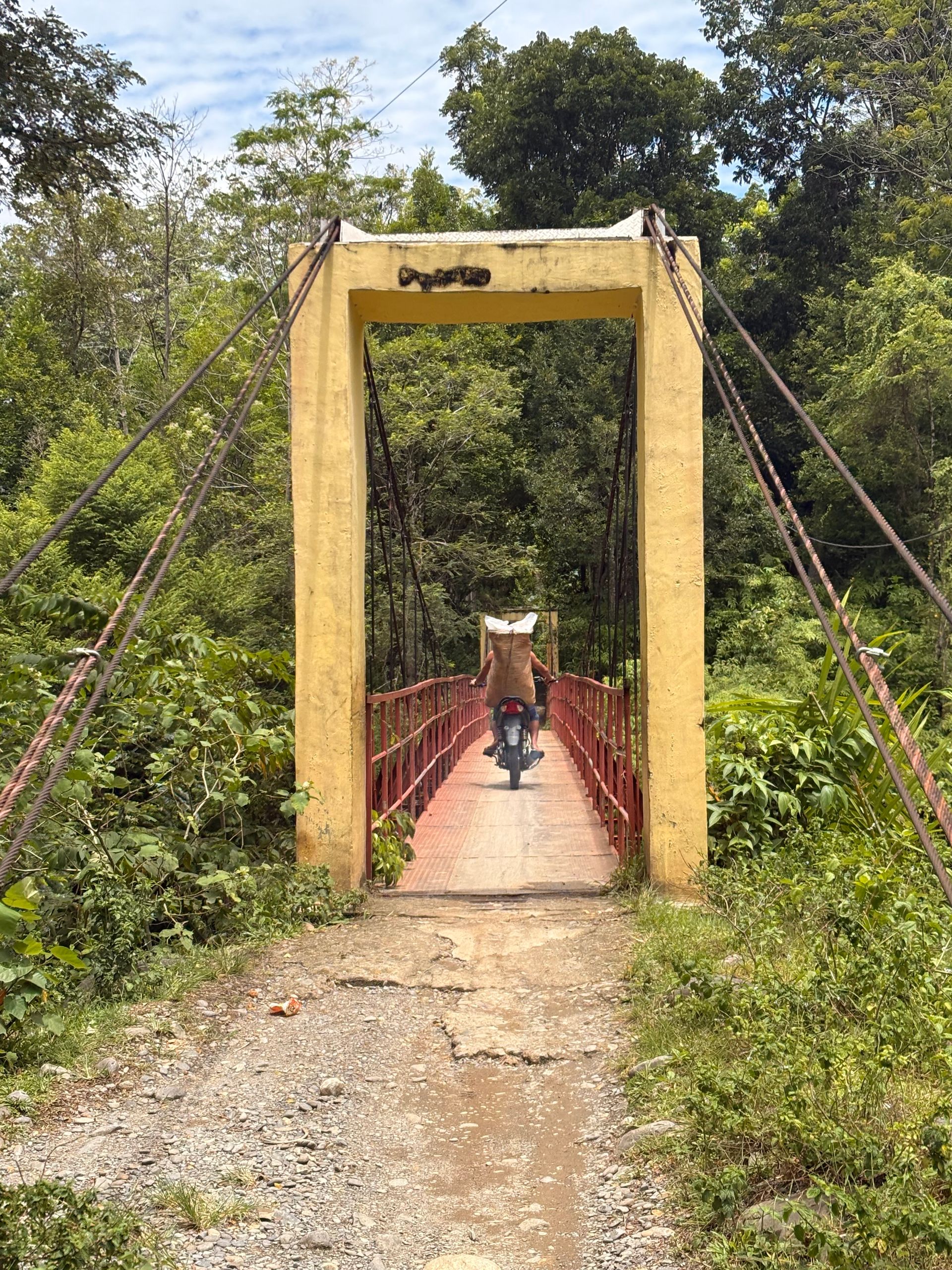
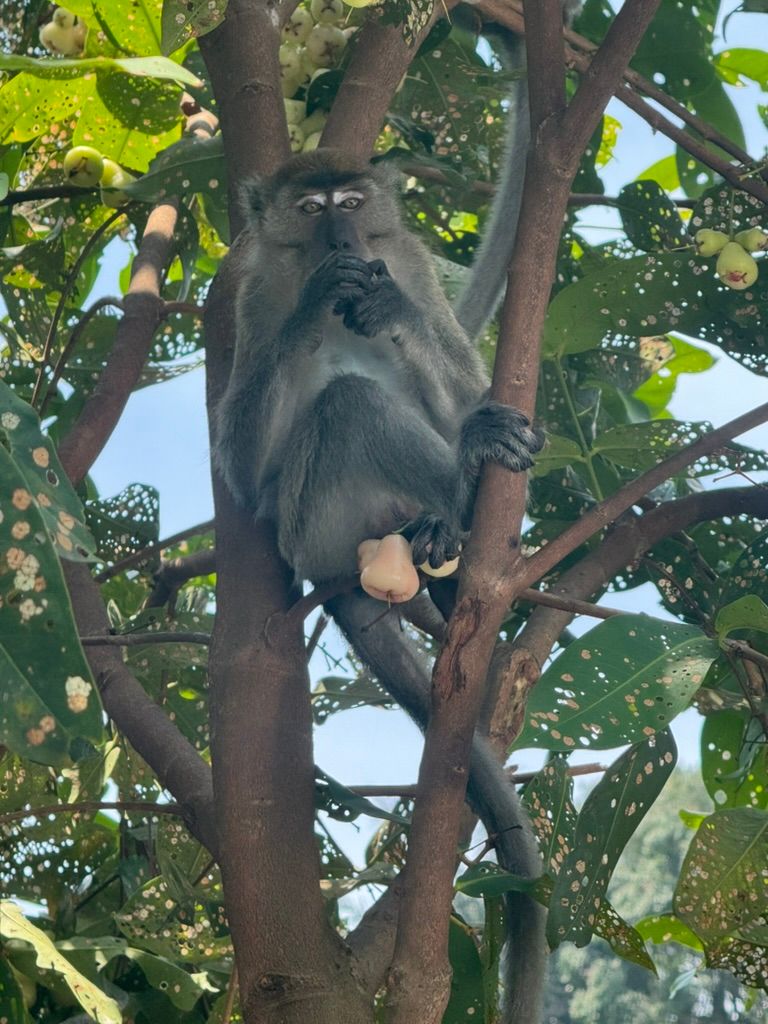
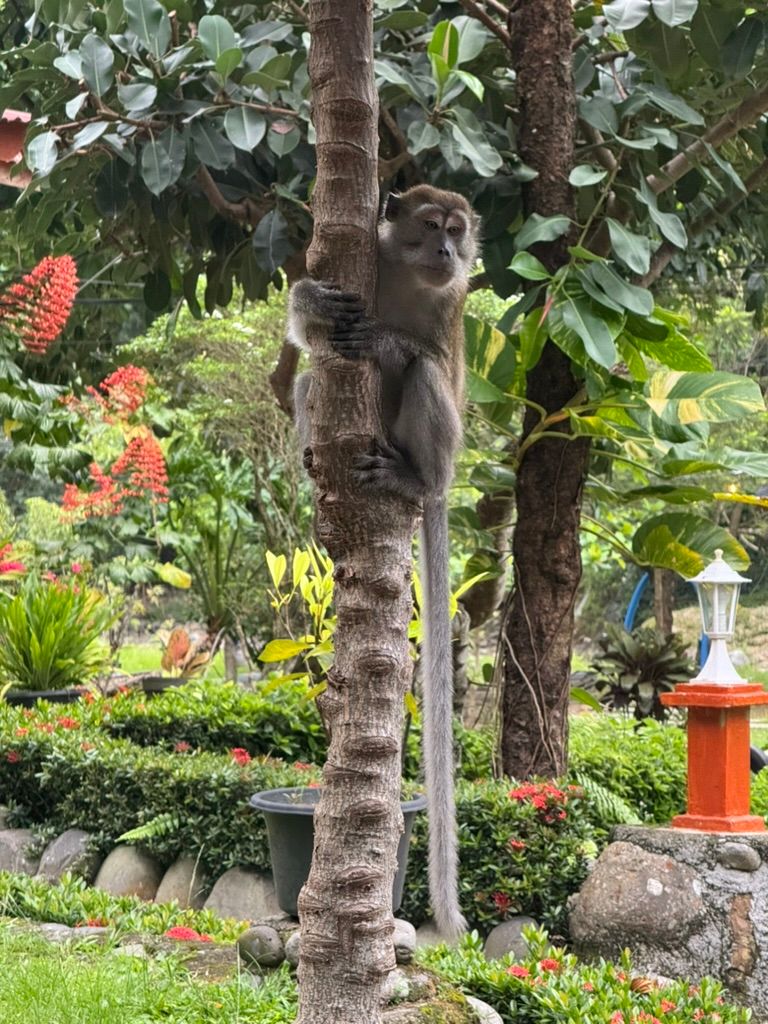
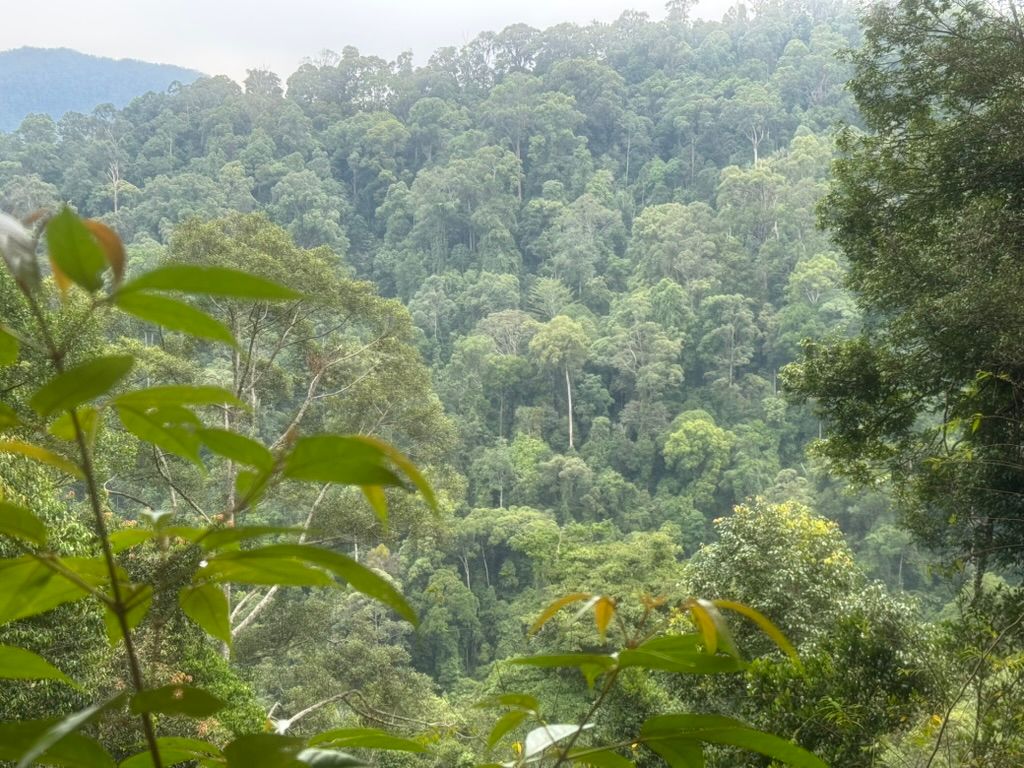
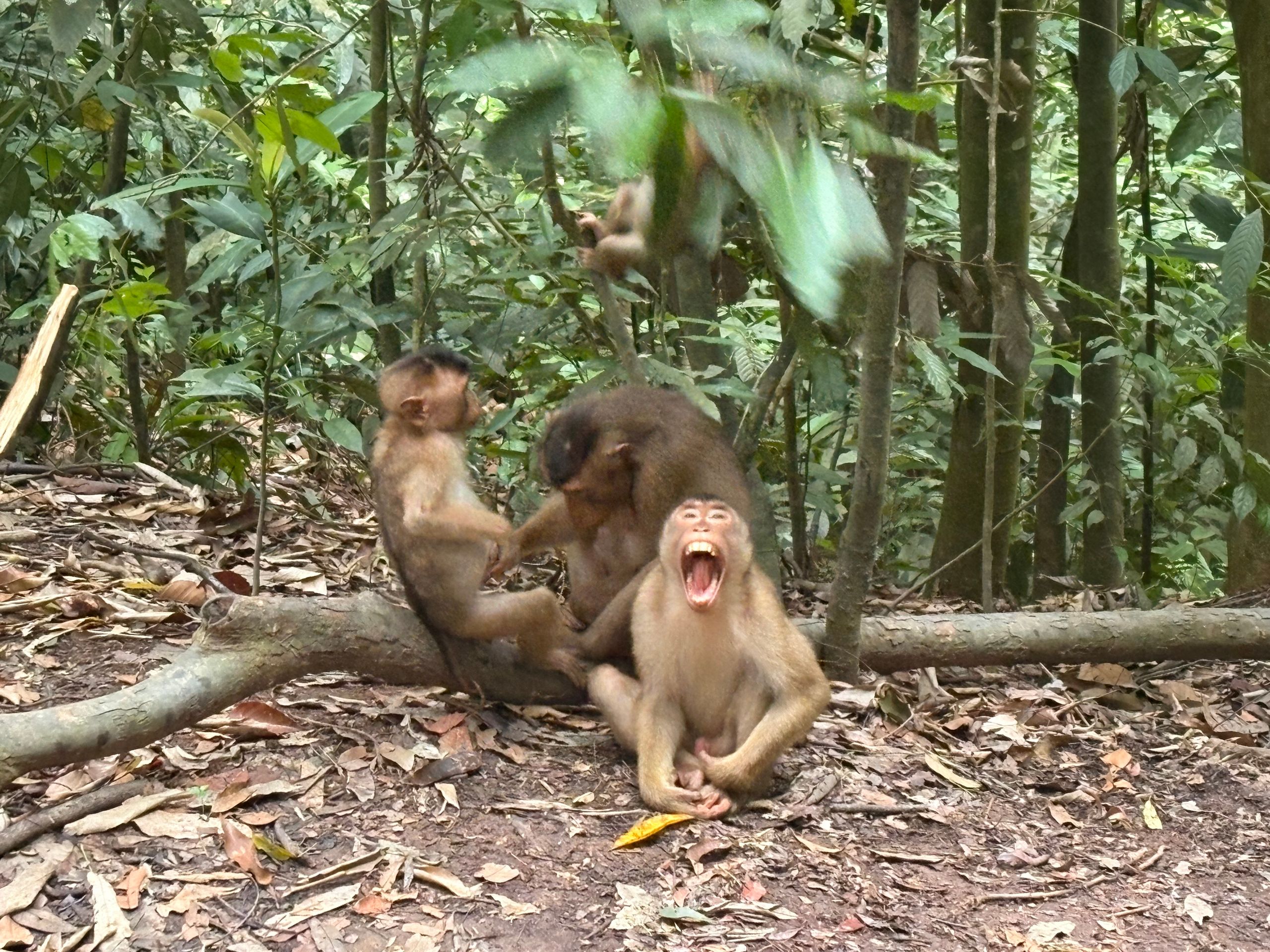
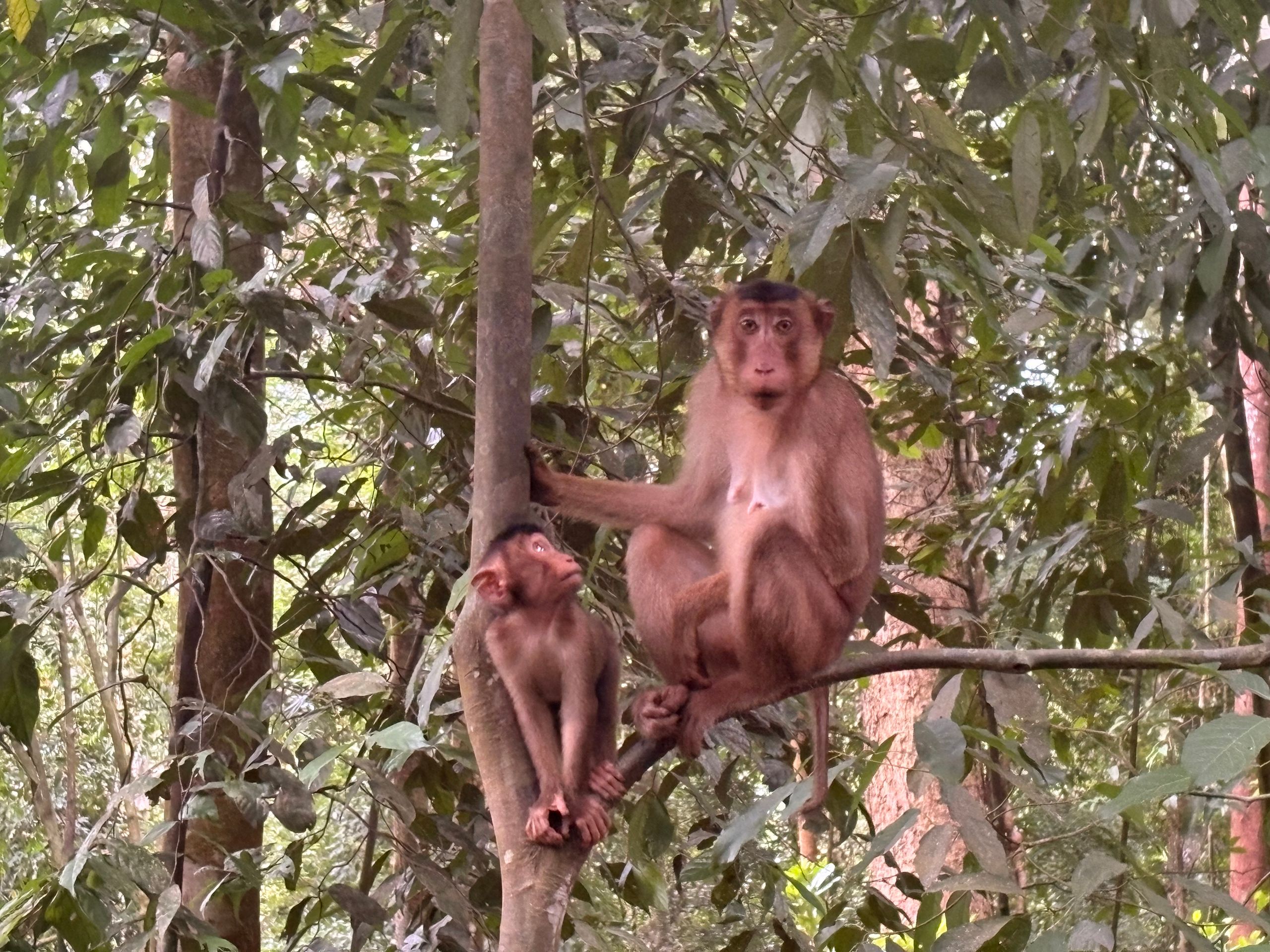
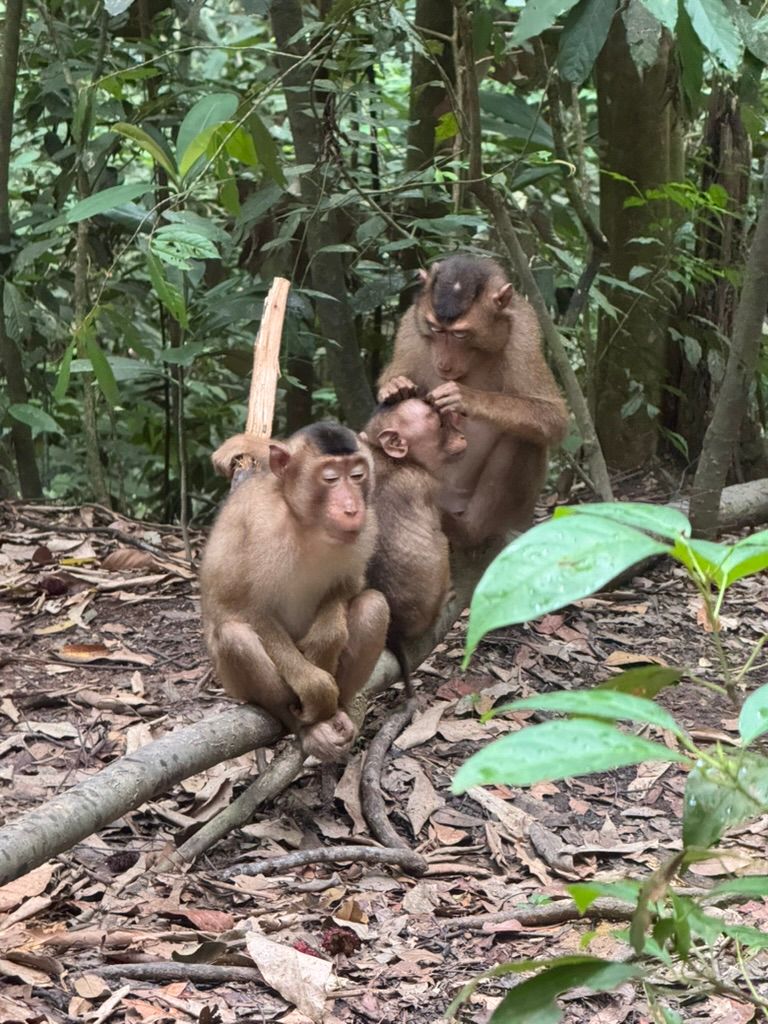
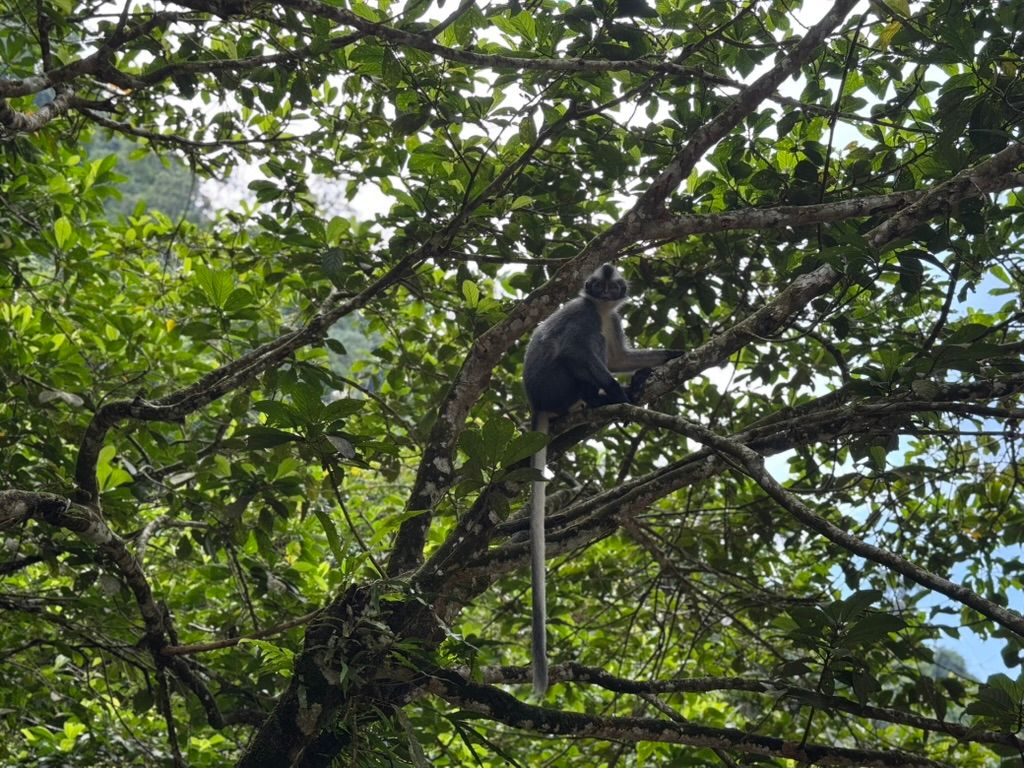
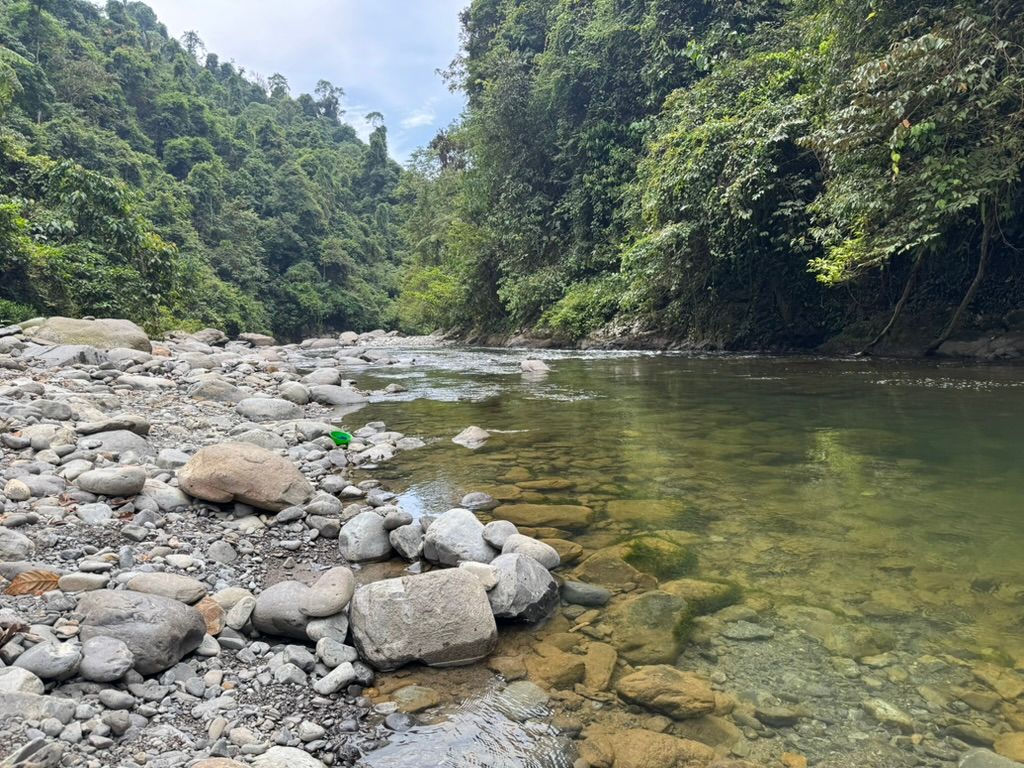
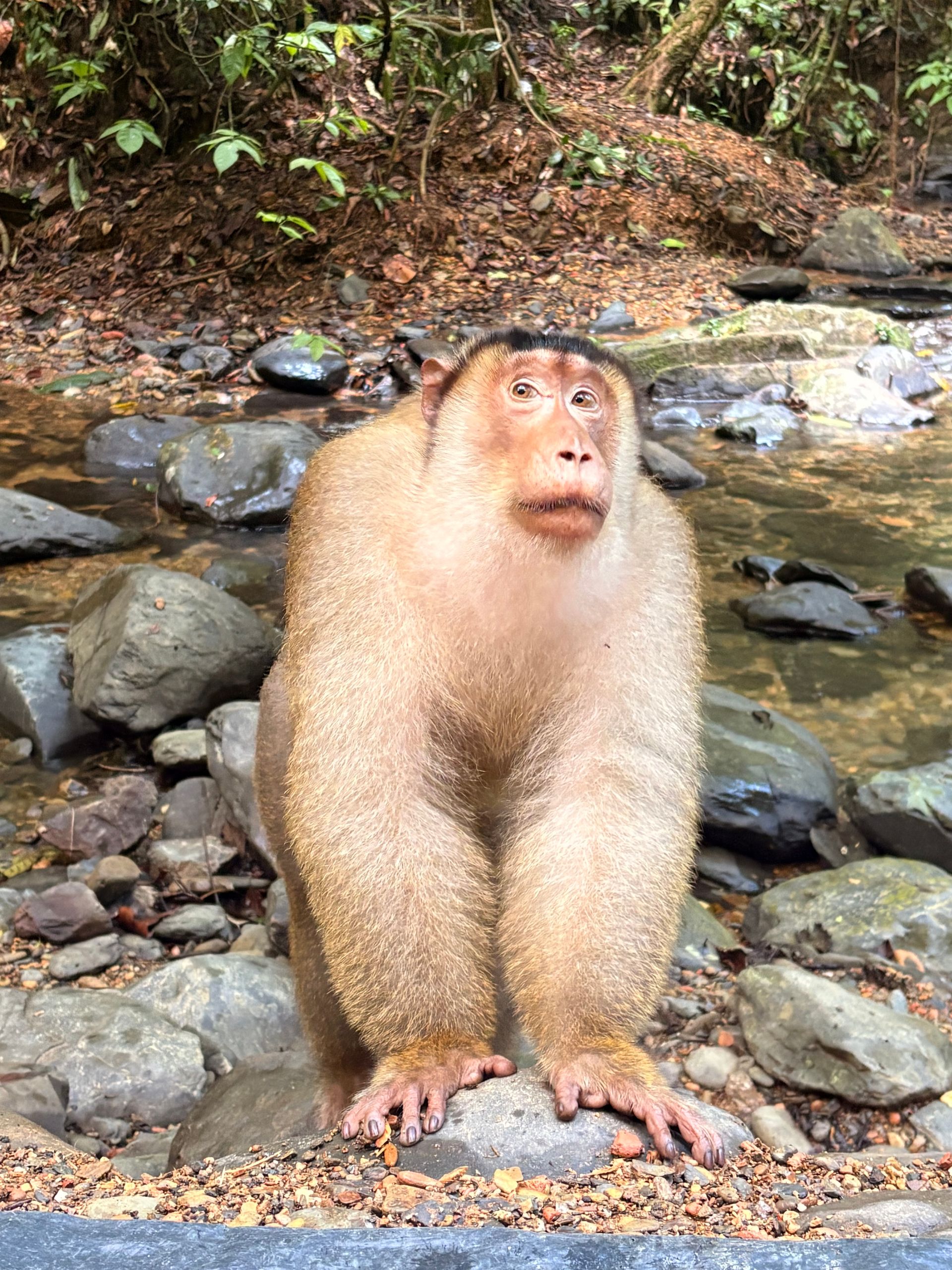
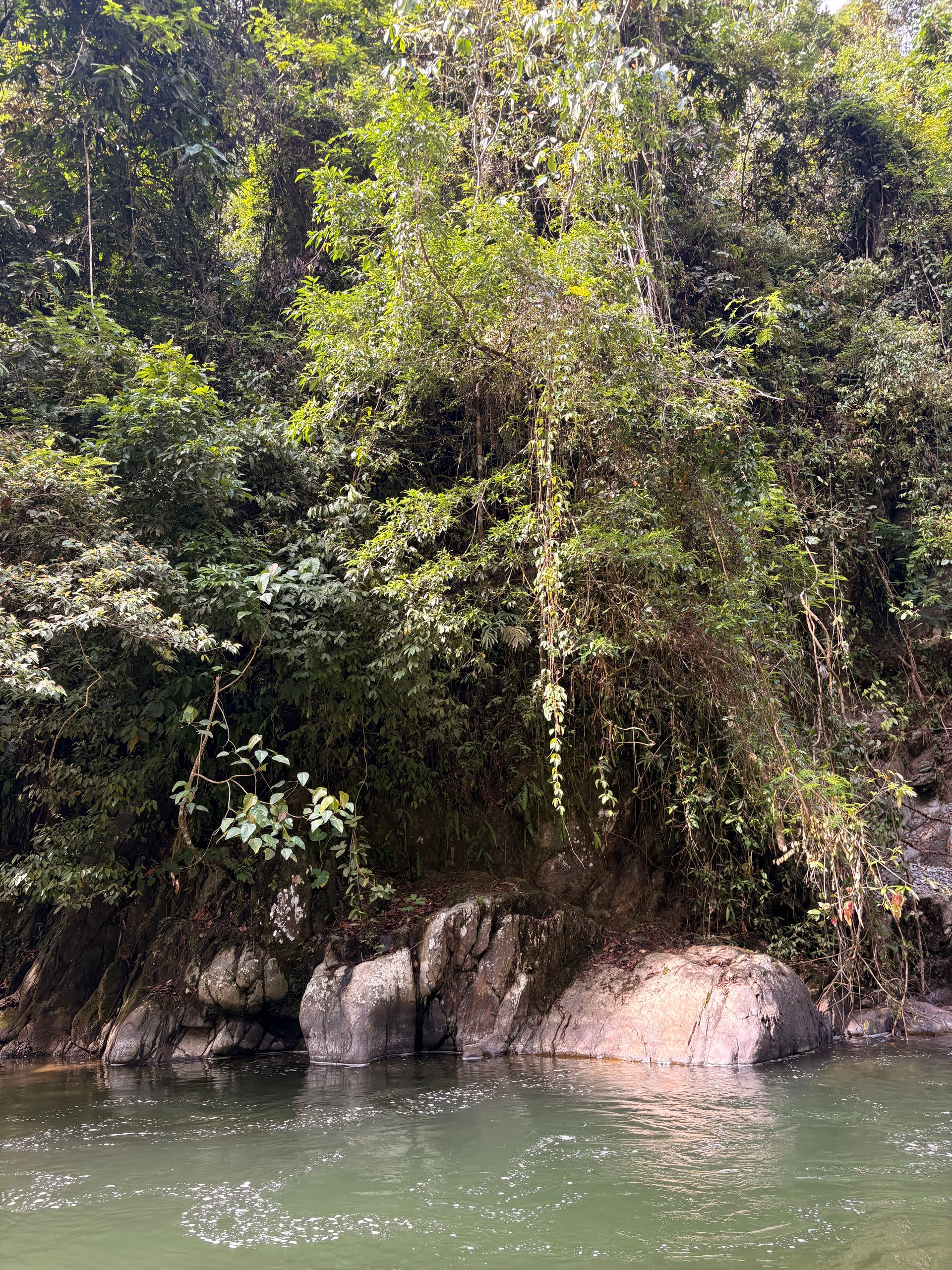
From Medan, we took a taxi to Bukit Lawang - a winding journey over bumpy roads through many small villages, packed with mopeds, trucks filled with people, palm oil fruits, or other things. It became much quieter when we arrived in Bukit Lawang, a small village by the Bahorok River on the edge of the jungle and the Gunung Leuser National Park. Although most people here live from tourism, and we traveled here during the peak season of the European summer holidays, it was really very quiet and relaxed, far from overcrowded. Restaurants and accommodations lined the river, where people sat, bathed, washed laundry, and crossed via shaky makeshift bridges. In our accommodation, we settled into a cozy wooden hut, where the owners also lived (depending on the number of guests, they occupied more or fewer rooms), children, the family dog, and cats dashed through the garden, while monkeys sat in the trees munching on fruits. It was beautiful and relaxed here!
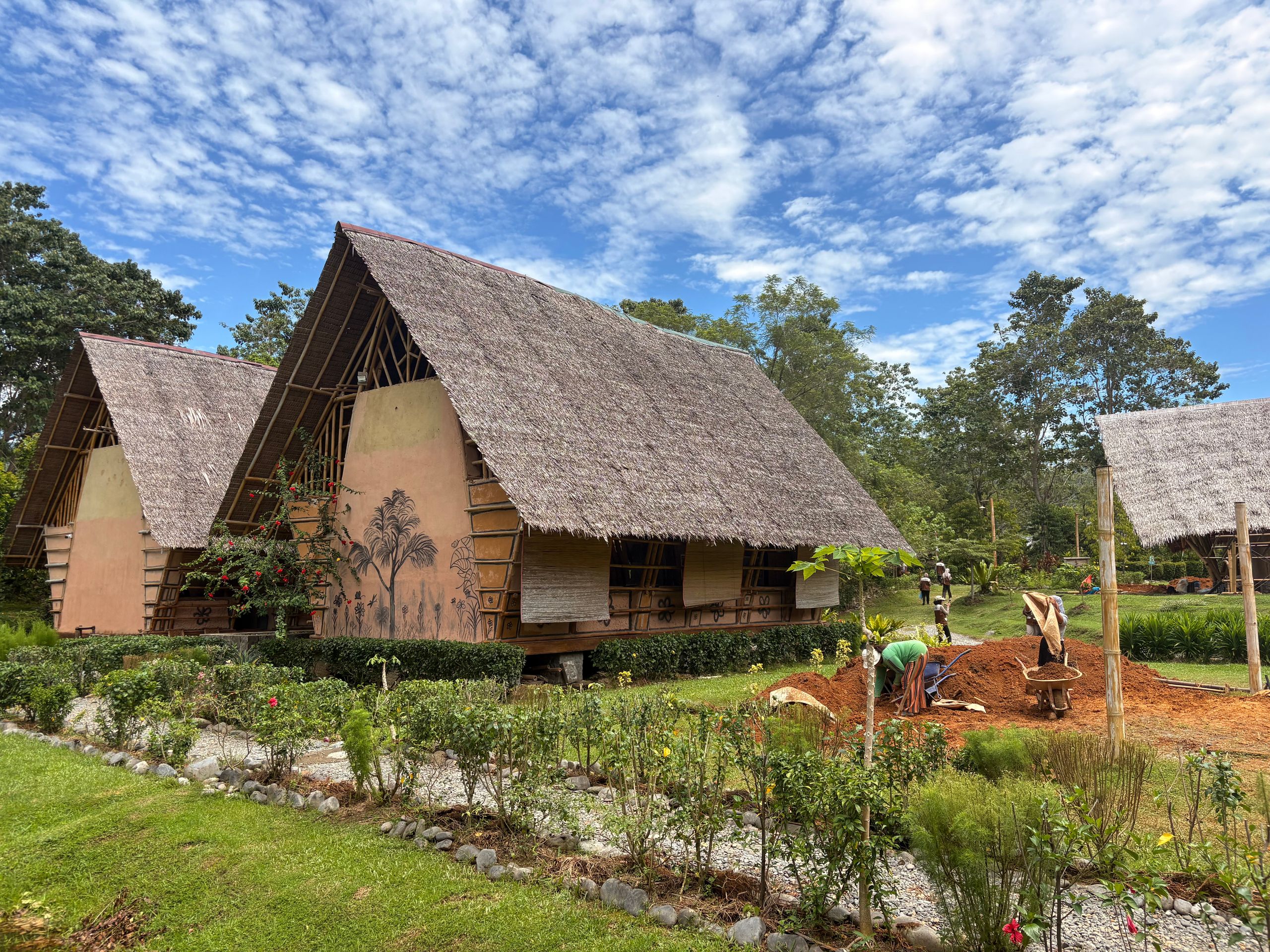
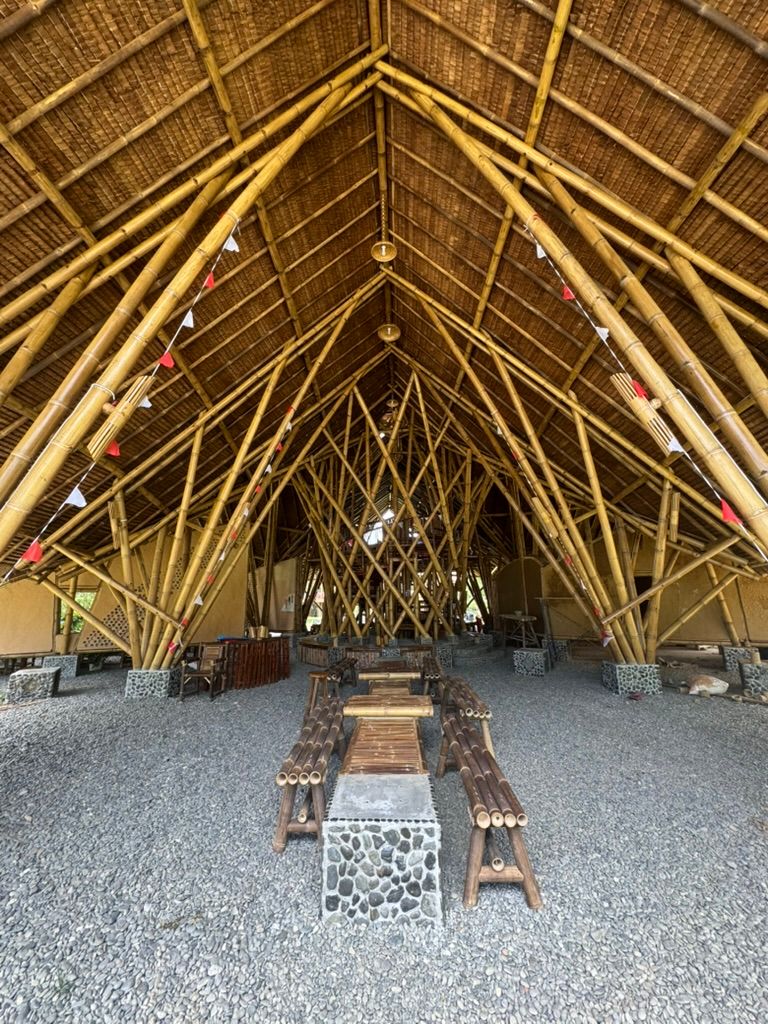
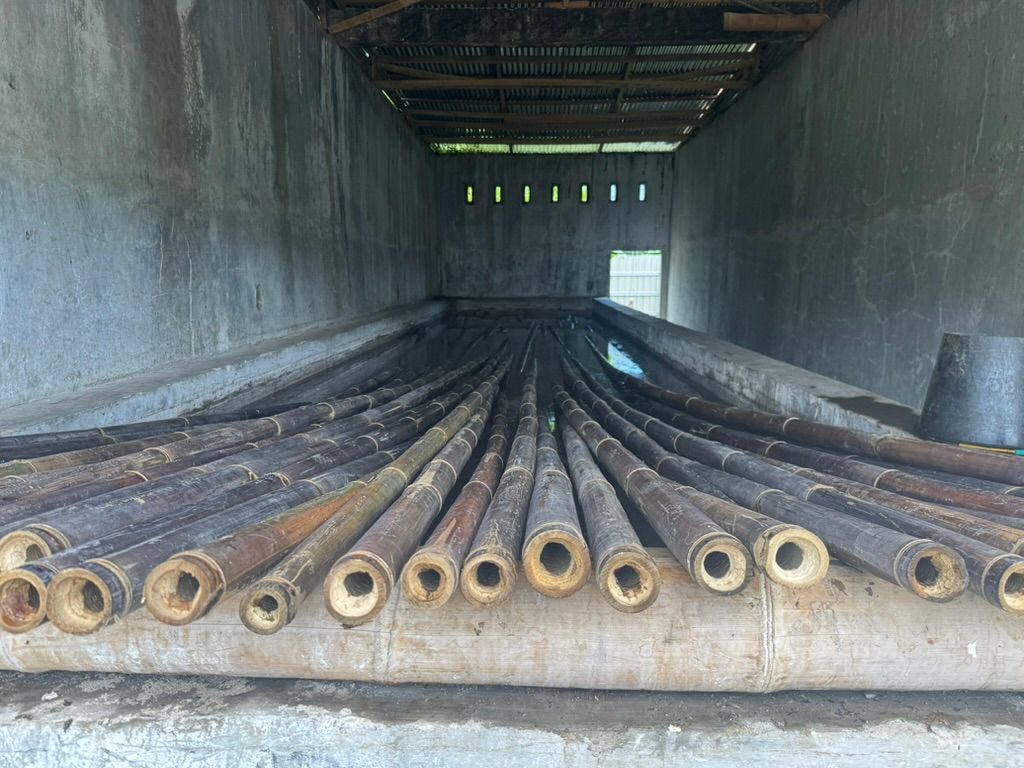
In the area, there is a German NGO - Project Wings - which we had stumbled upon in a podcast. We wanted to look into it more closely. Actually, we were warmly welcomed and also given a tour of the premises. The goal of the NGO is to tackle the massive environmental problems of Indonesia - massive plastic waste and simultaneous deforestation of the rainforest for palm oil plantations. With Ecobricks (old plastic bottles filled with highly compressed plastic waste, which are then used as building blocks), the massive amounts of waste are to be reduced. To motivate the local population to collect waste, they receive money for the Ecobricks. In fact, we could hardly see any litter in Bukit Lawang and the surrounding area. So far, several public buildings (such as a covered sports field, meeting rooms) that benefit the population have already been built this way. Training on environmental education is also offered here, for example for other communities. The NGO aims to soon finance itself entirely, hence there is also organic vegetable farming and bamboo processing, which creates a few jobs for locals and brings in money. We also met a few German sociology students who were doing internships there. It seemed promising and worth supporting for us!
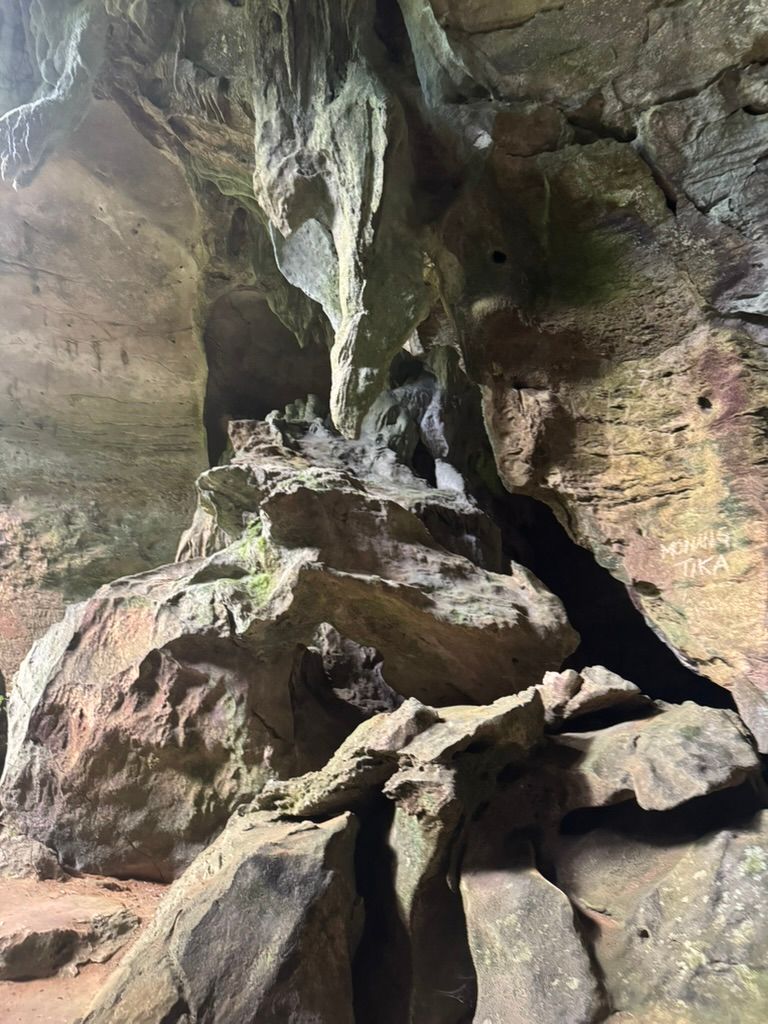
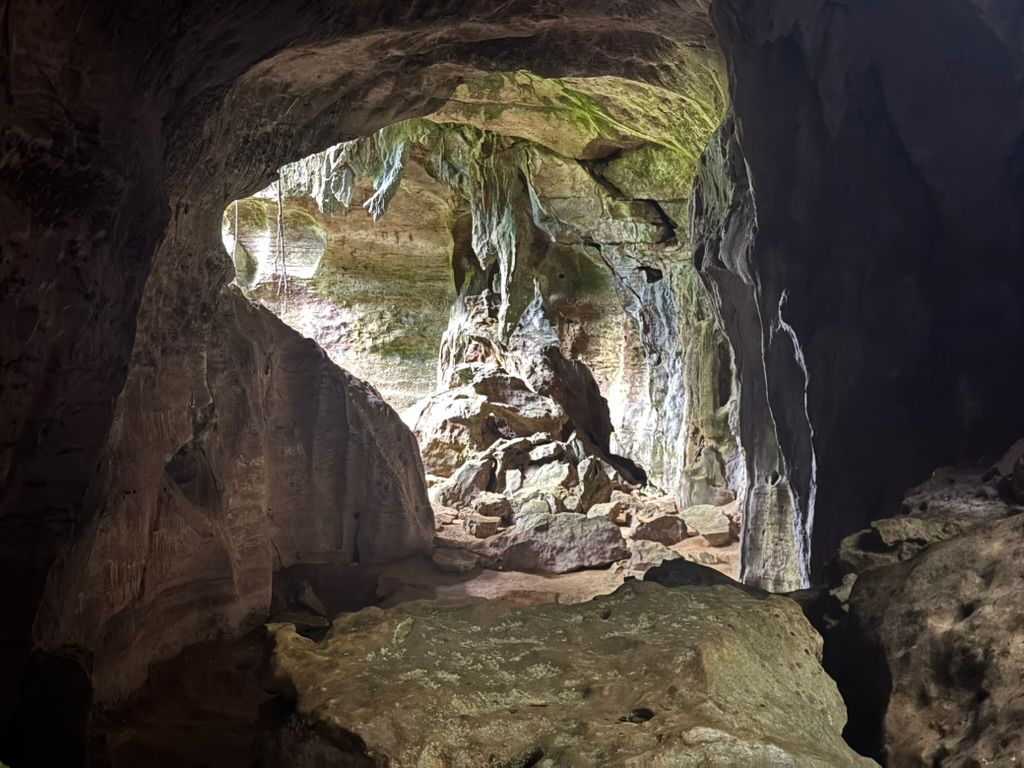
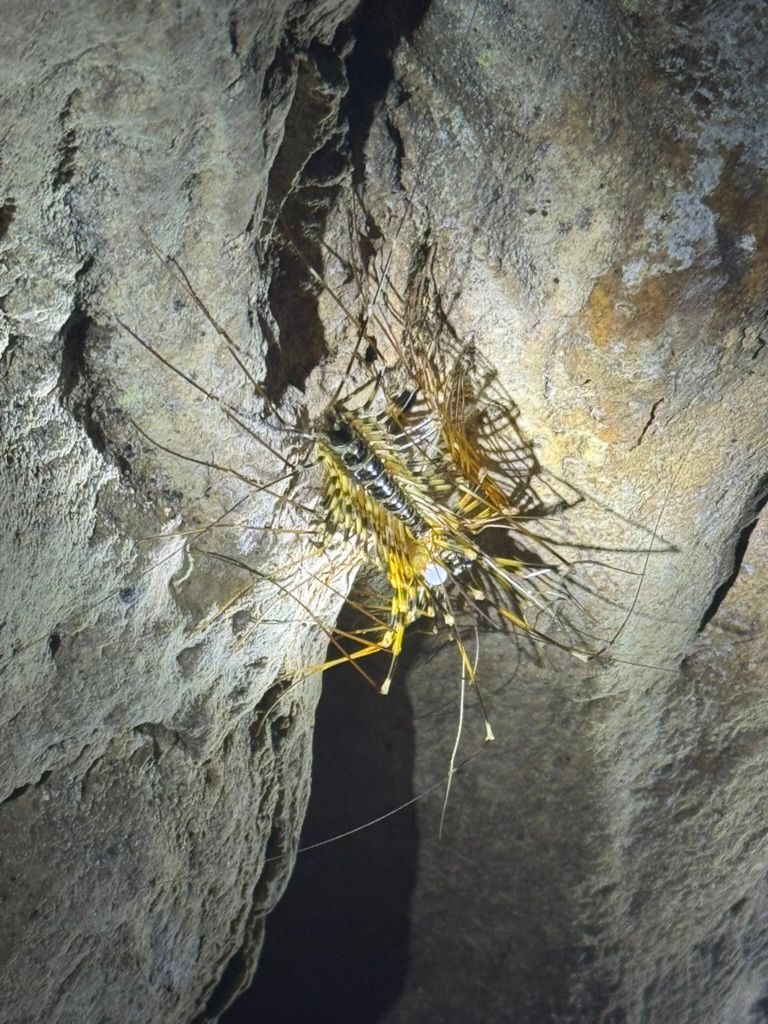
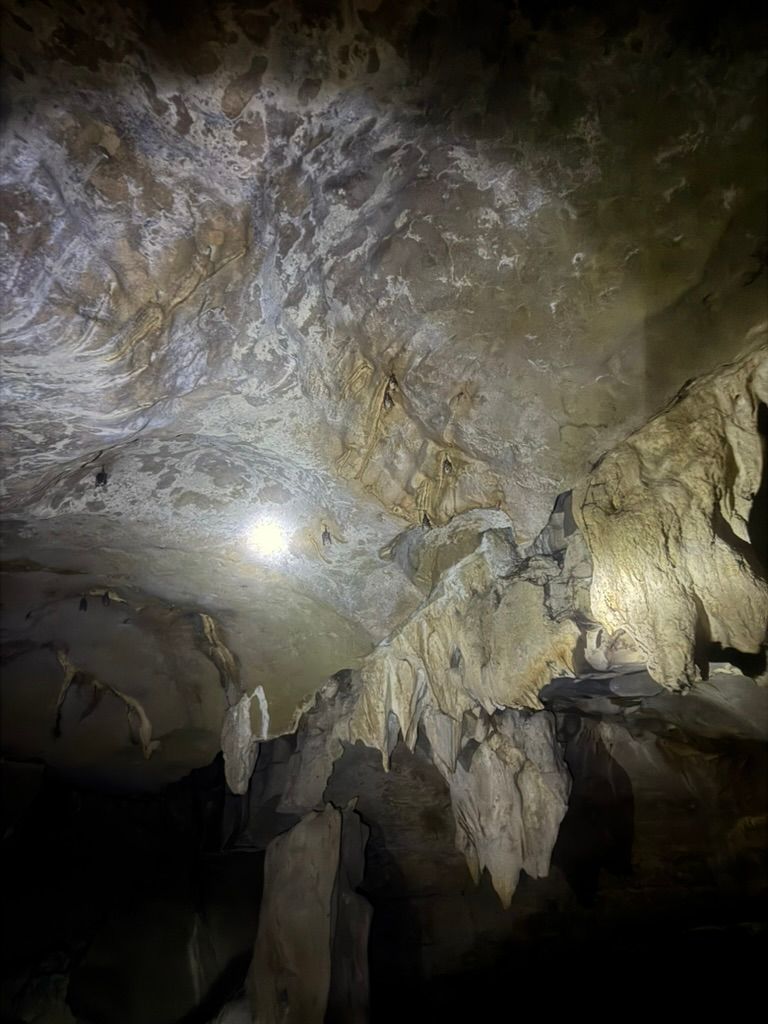
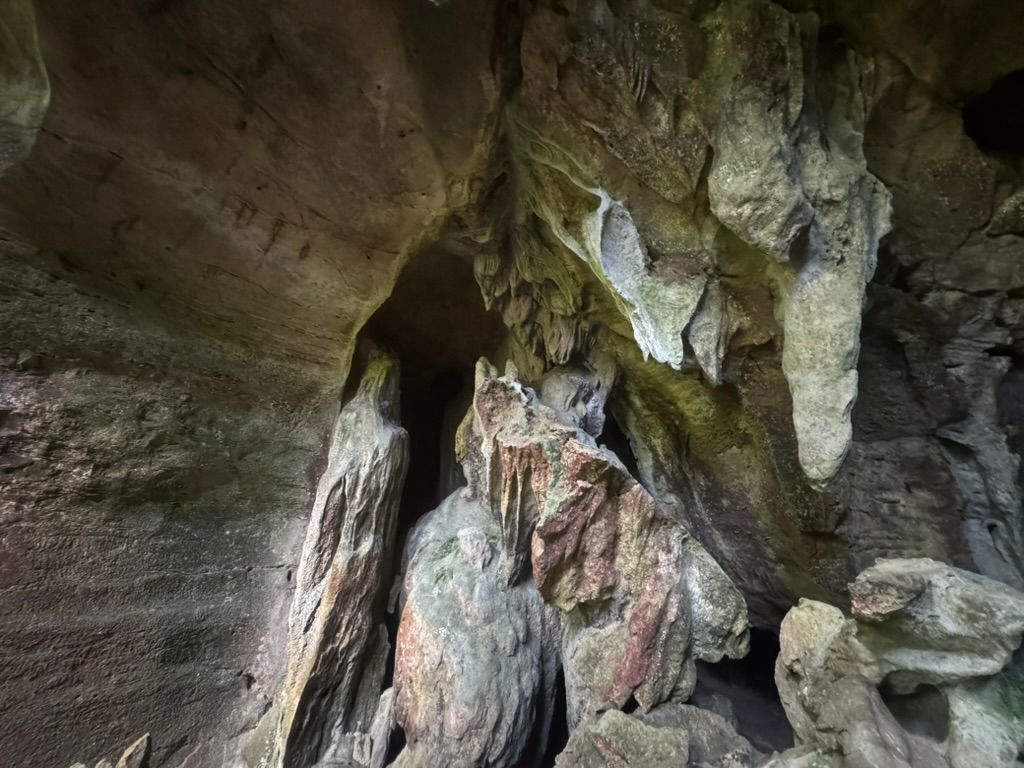
Additionally, we went to the Desa Sampe Raya Cave, which was quite an exciting experience as well. The cave isn't huge, and the climbing was somewhat adventurous. As a reward, we really saw quite a few bats of different species, against a beautiful rocky jungle backdrop.
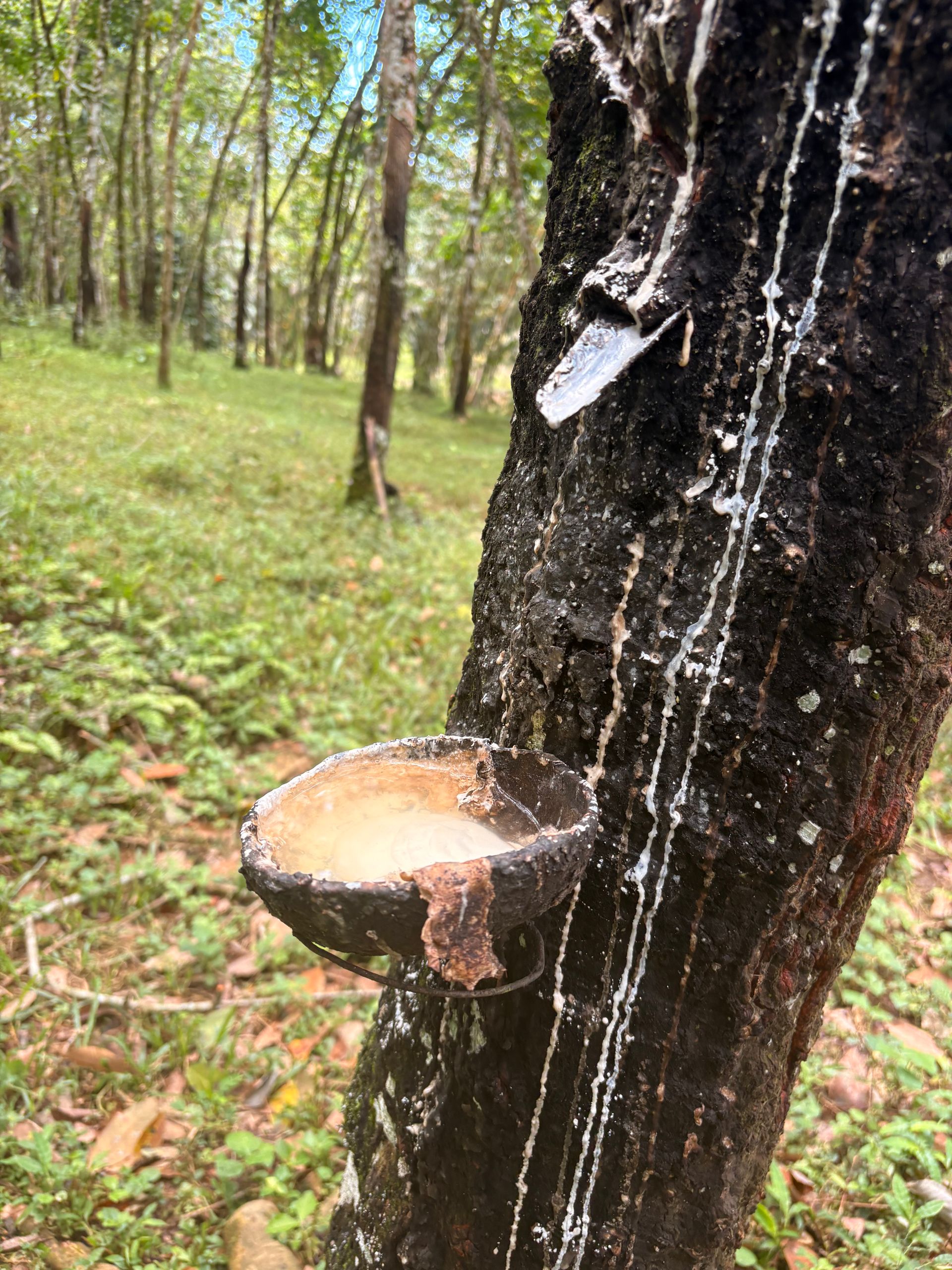
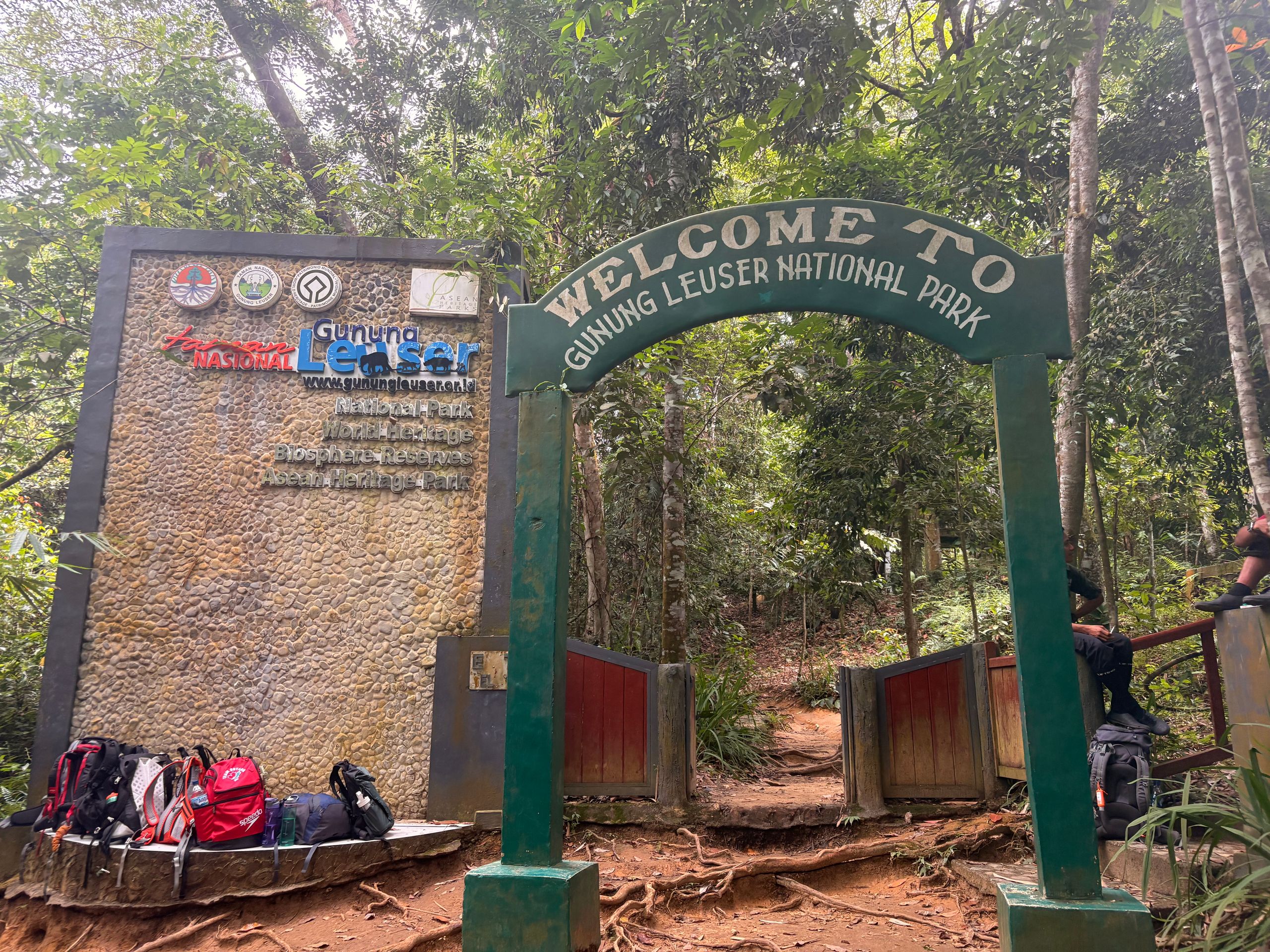
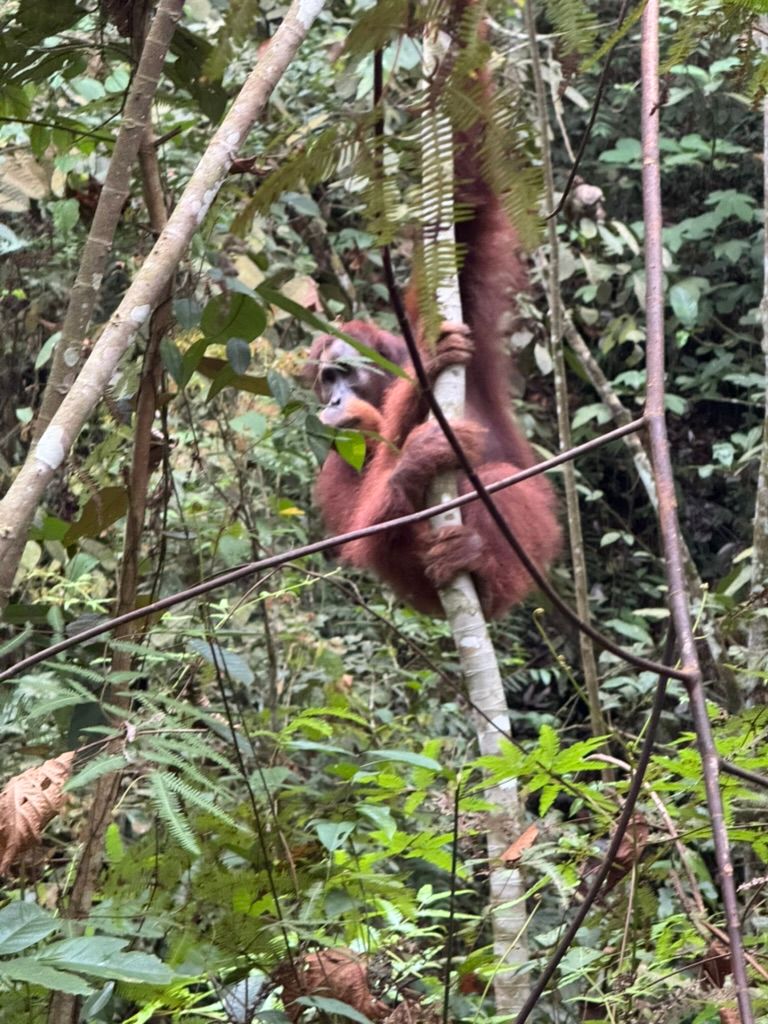
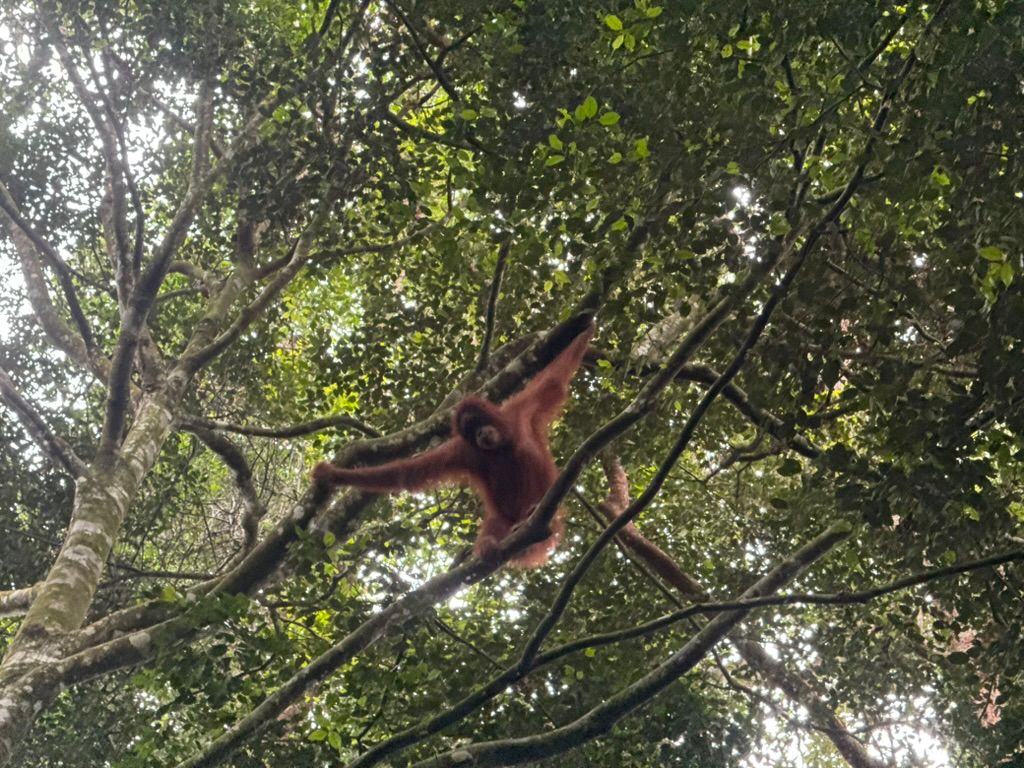
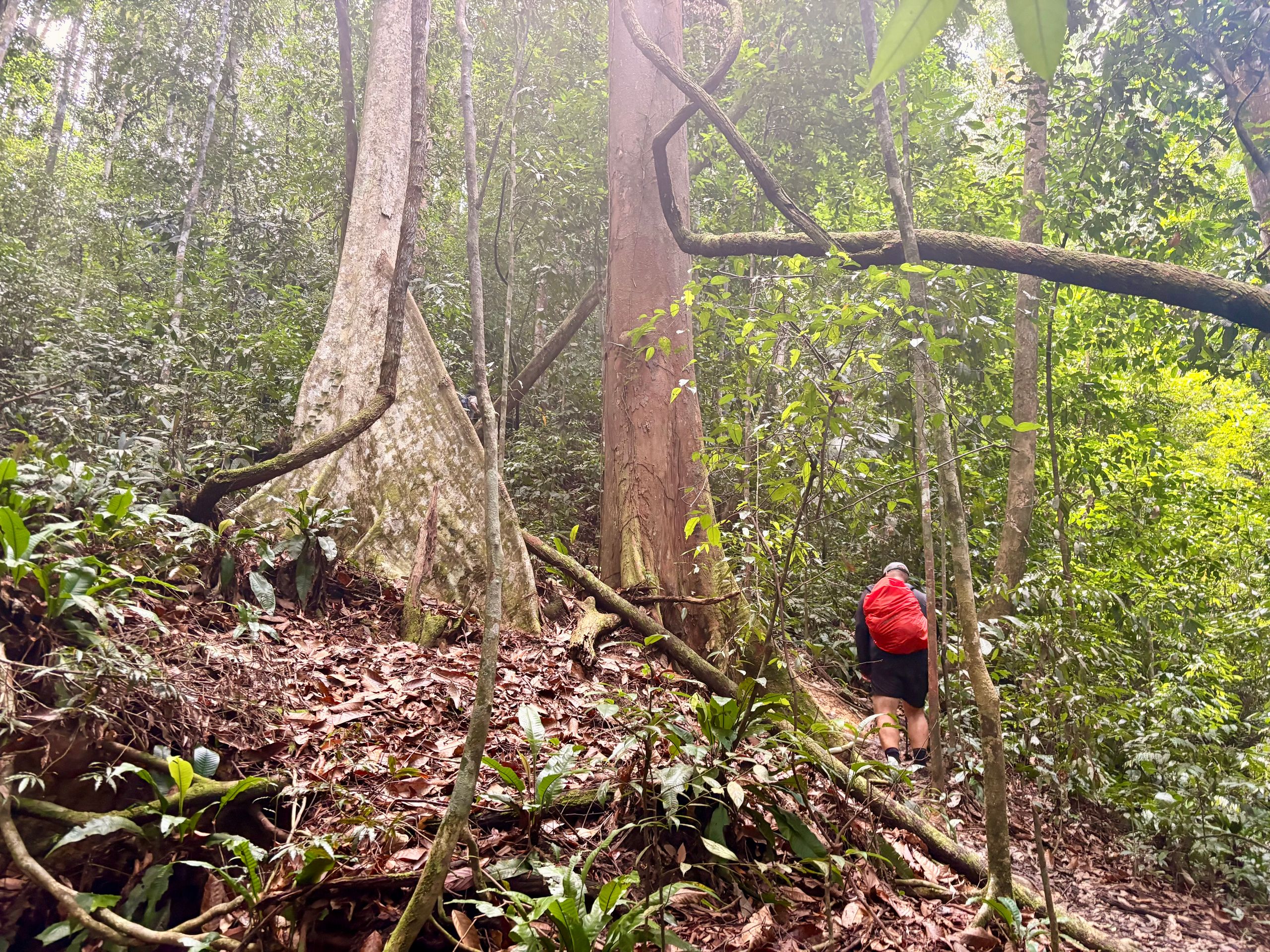
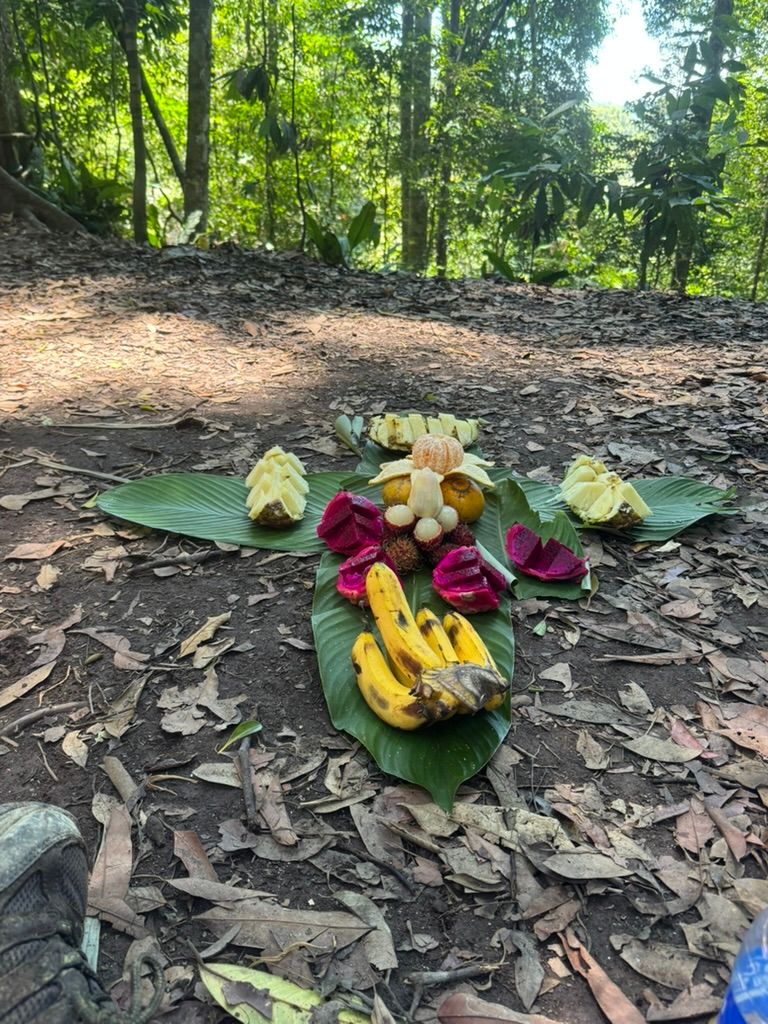
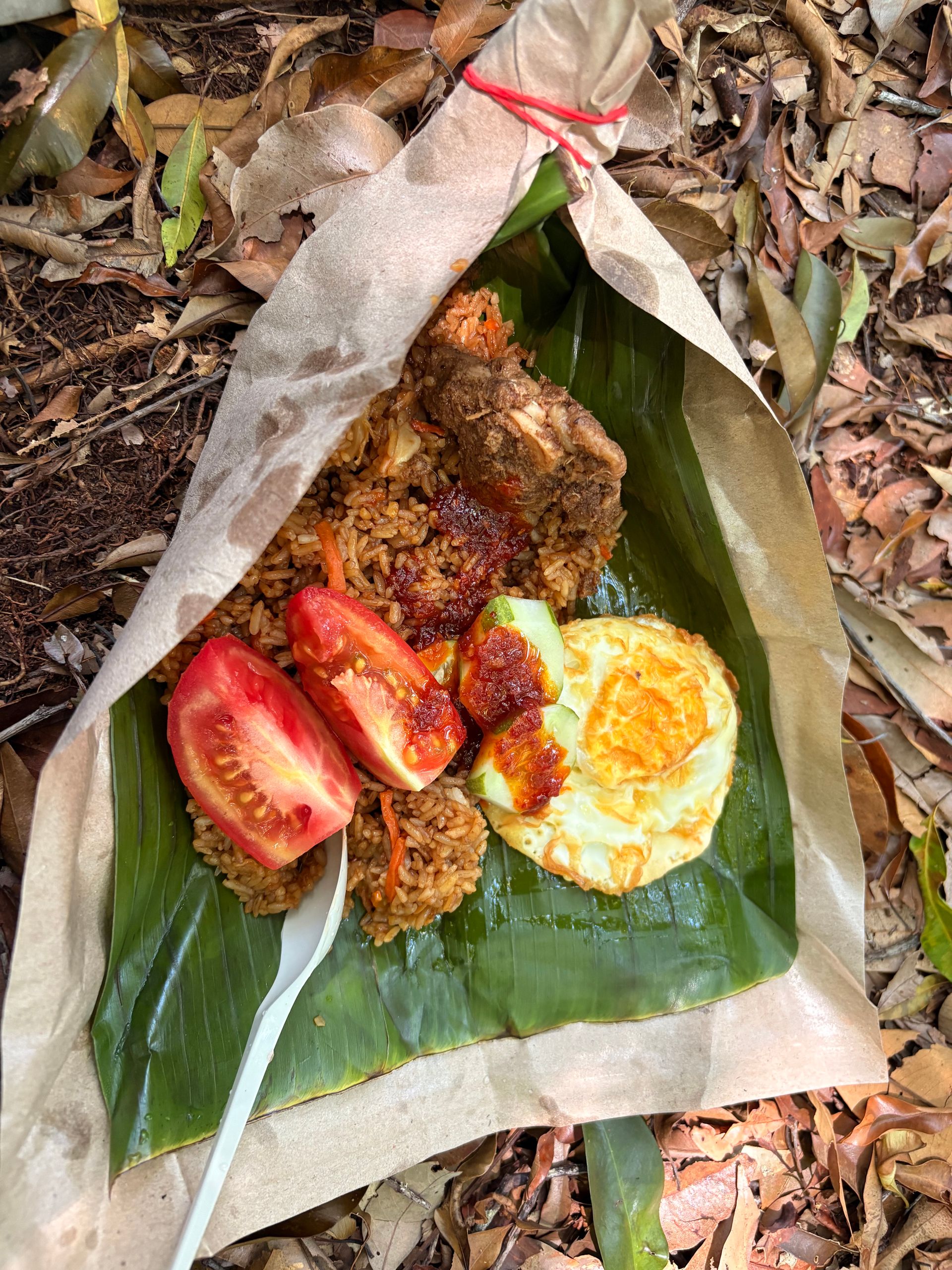
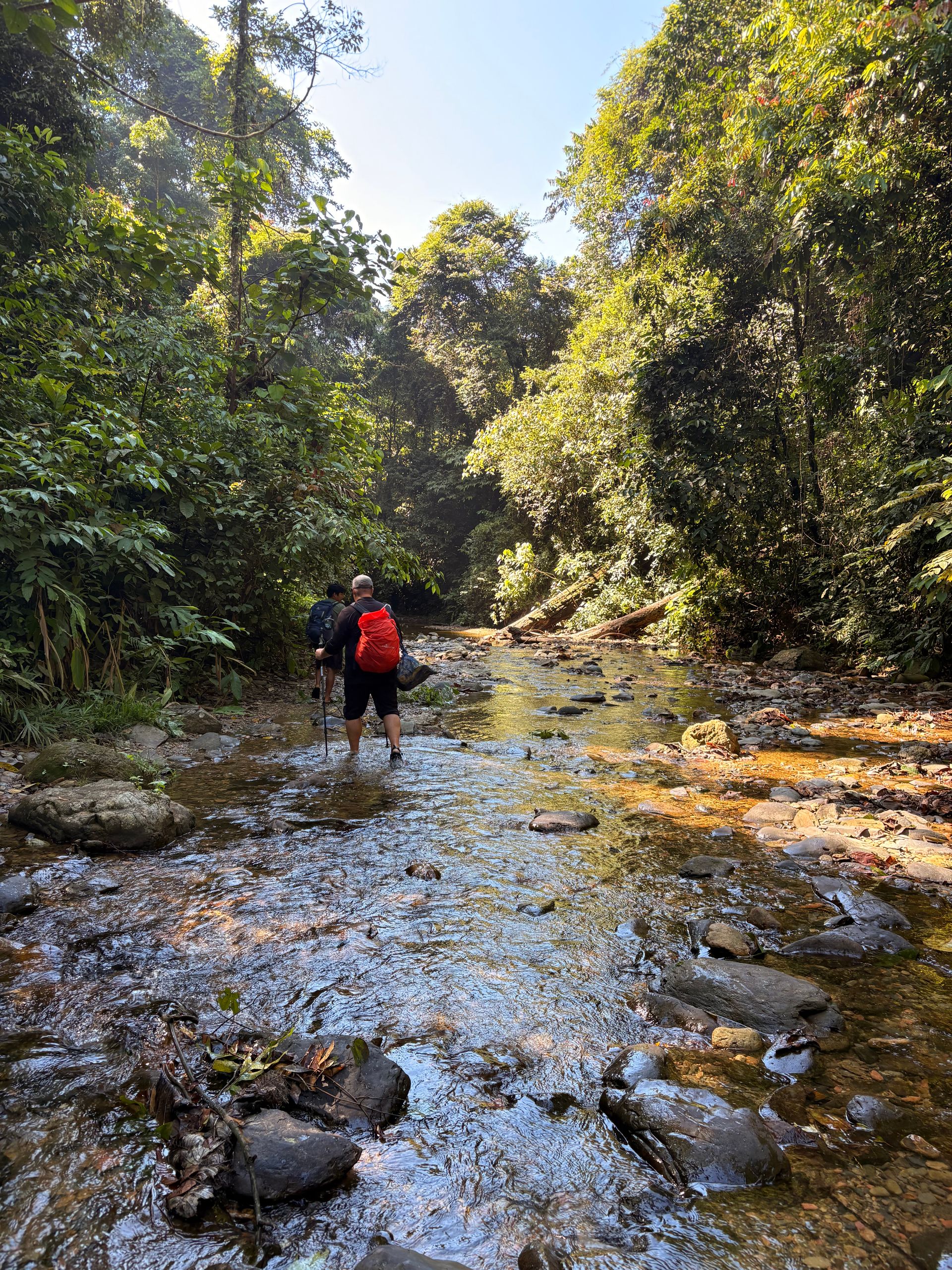
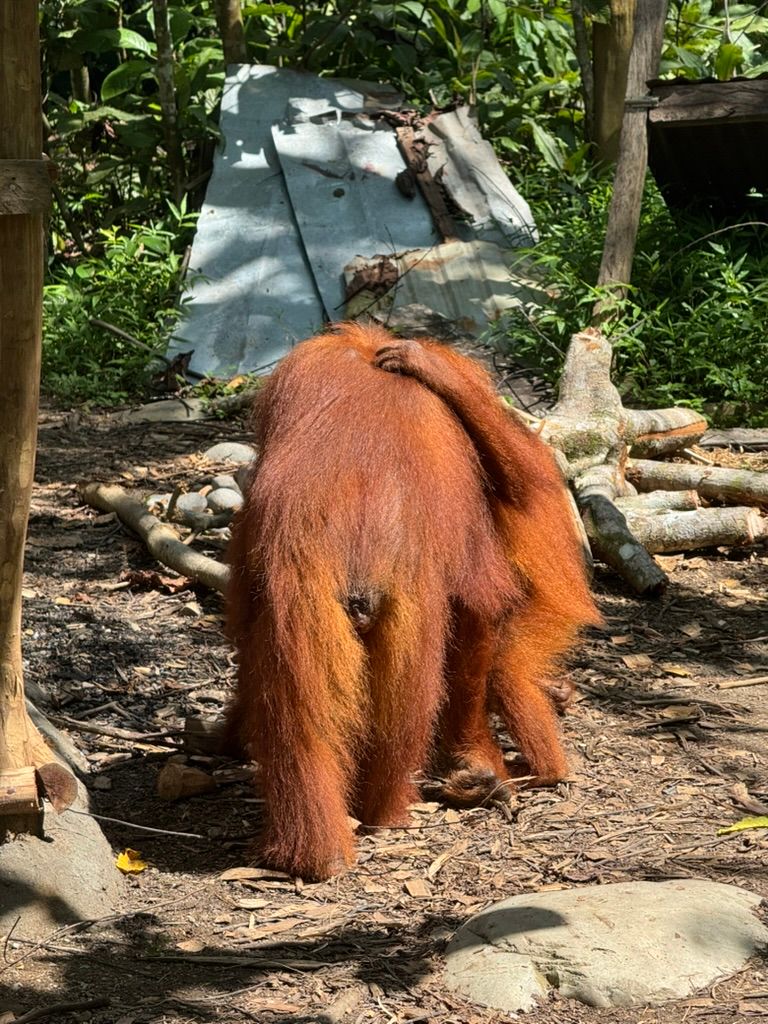
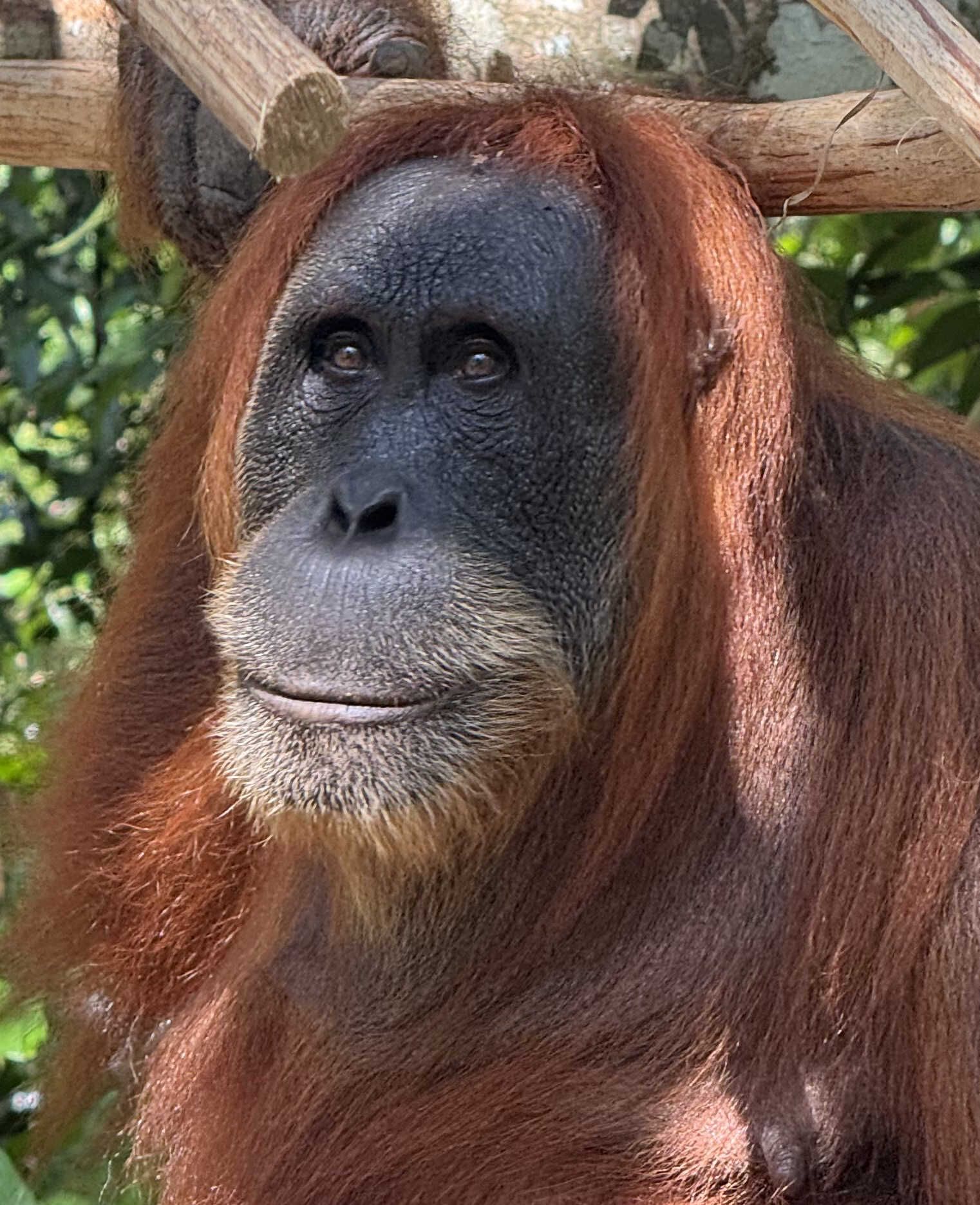
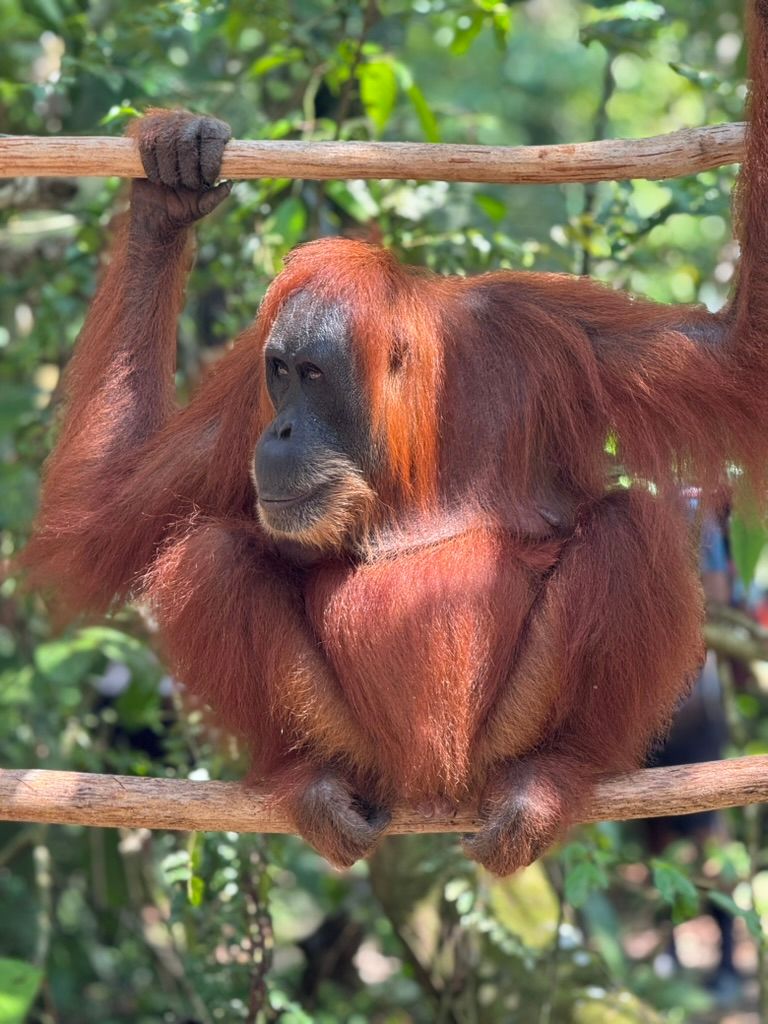
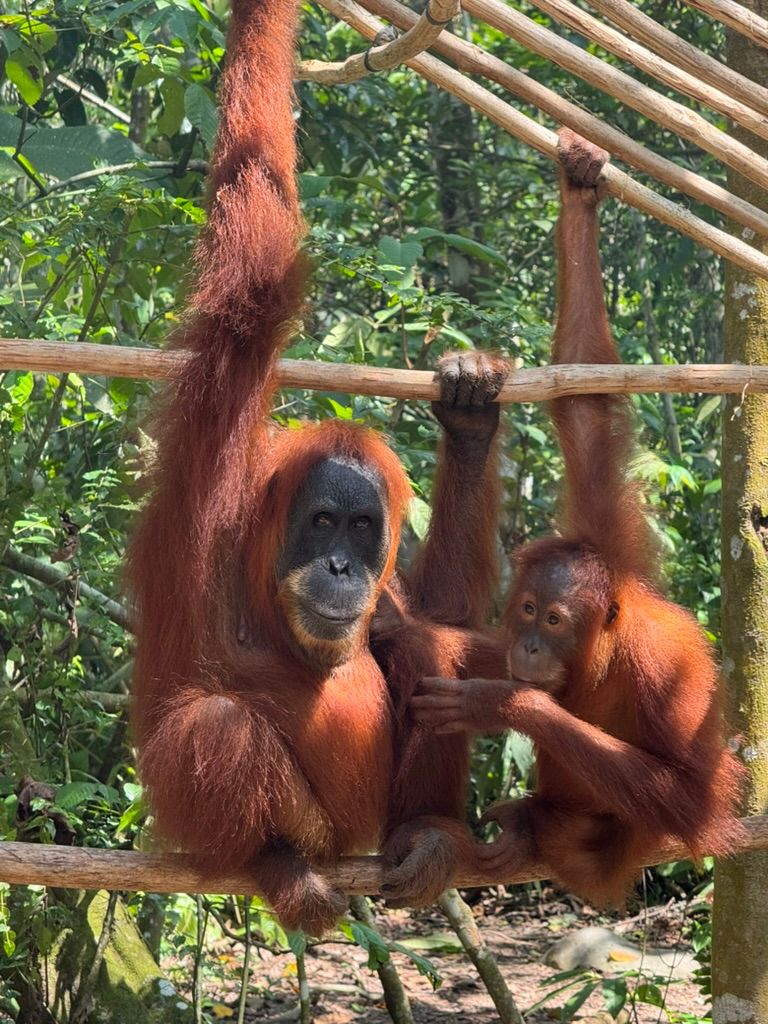
However, the main reason for our trip to Bukit Lawang was a jungle trek in the Gunung Leuser National Park to see orangutans. As usual, we booked the tour directly at the hostel, and so the two of us set off with Kayla for 4 full days in the jungle. In the past, there was much competition in the village and a price war, but now there are standardized prices, which has certainly led to somewhat more peace. So we began our hike, initially through a few small rubber tree plantations that we had already seen in the previous days. It was a laborious business that hardly pays off anymore and is only managed by a few old men. At the entrance of the national park, it was relatively crowded, as this was where all the day tourists and groups with shorter tours (most stay 1-2 days in the jungle) met. Suddenly, everything moved quickly. One of the guides raised the alarm, and we all trotted over sticks, stones, and bushes, to crouch on a covered hill. And there she was, our first orangutan lady, leisurely swinging through the trees not far from the ground. What a sight, and the hustle and bustle of the other tourists around us was completely forgotten! The movement of the orangutans is, by the way, not frantic but totally relaxed. They do not jump from branch to branch but swing themselves. If the gaps are too wide, they make the branches rock until they can reach the next branch. After that, we continued deeper into the jungle, hiking up and down, climbing, slipping, sweating, over forest floor, mud, roots. At first, we felt like we were hardly moving away from the village, notably because we heard the muezzin calling in between, but in retrospect, we realized that we were walking quite differently than we had imagined and had completely lost our sense of direction. When we took a break in between, we noticed that Kayla had kilograms of fruit for us (however he could carry all that, he had the rations for all days with him), which he artistically cut and arranged on banana leaves. Later, we had Nasi Ayam wrapped in banana leaves, also very delicious. This way, even spoiled Westerners can survive in the jungle! The number of other tourists quickly decreased, so we occasionally encountered other groups, but we also hiked a lot as a trio. One time that day, we discovered more orangutans; this time we had to push through the bushes even further, which was not easy. However, we saw - much higher up in the trees - a mother with her still quite small child, which she let climb a bit through the branches, only to catch it again! Great, great, great! By the way, orangutans have the longest childhood in the animal kingdom after humans, as they stay with their mothers for about 8 years. We could also see a male with prominent cheek pads nearby.
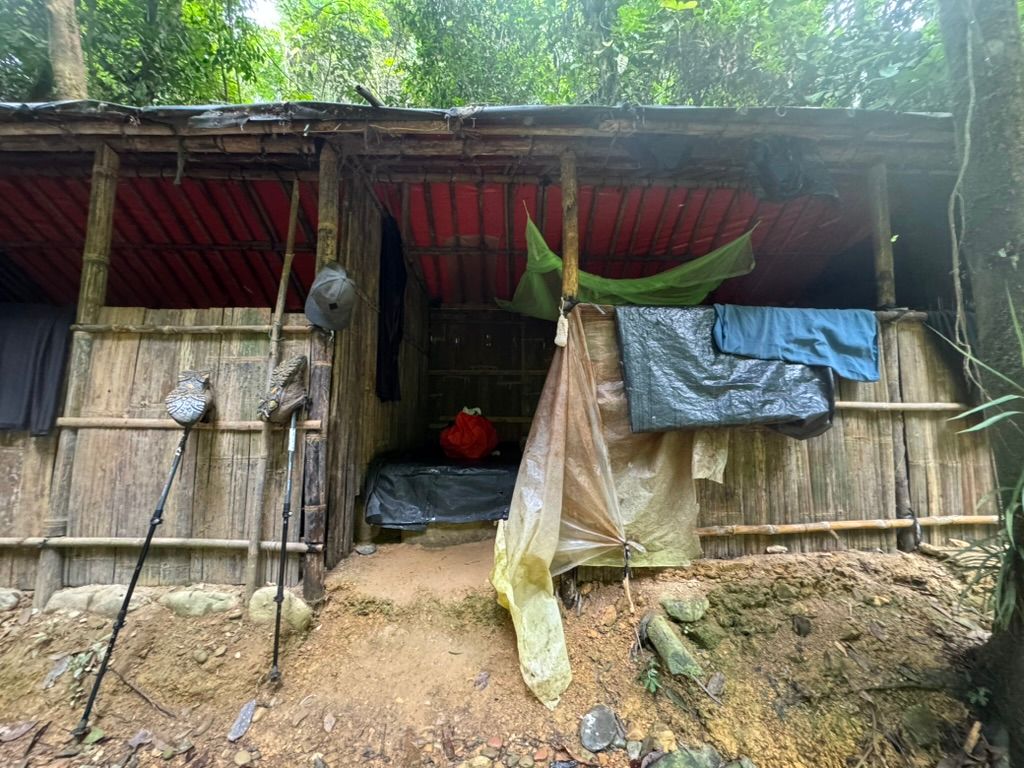
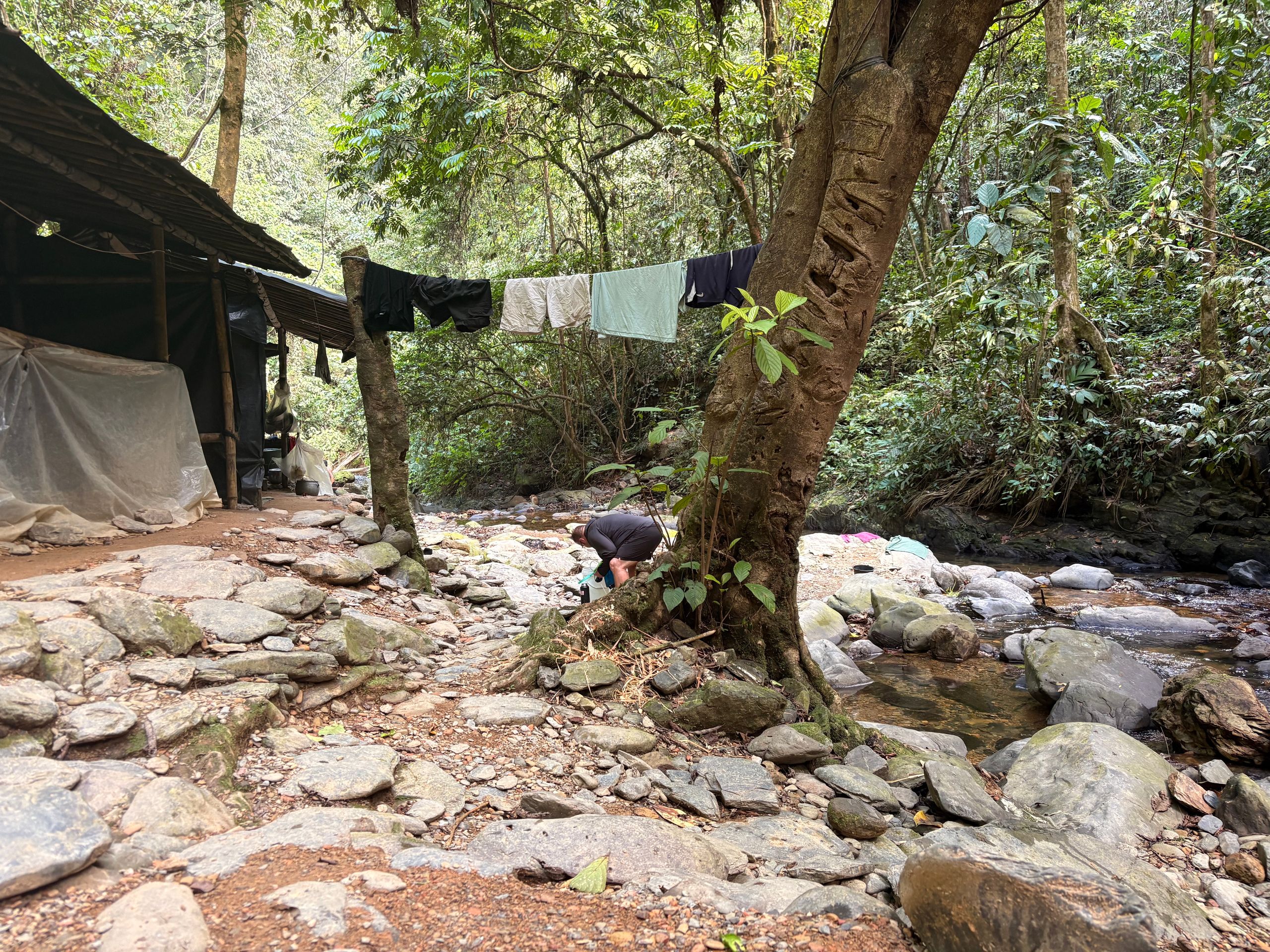
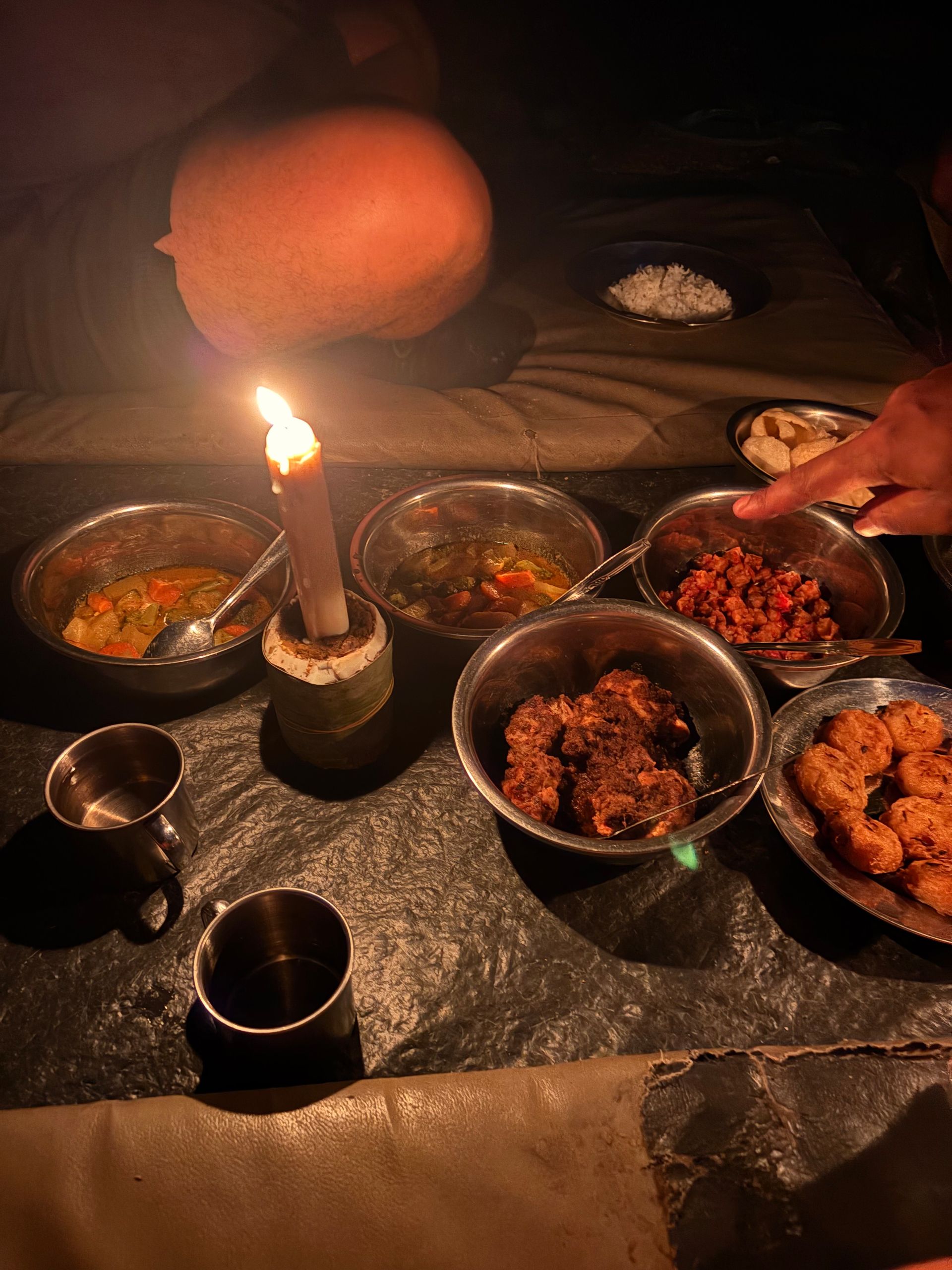
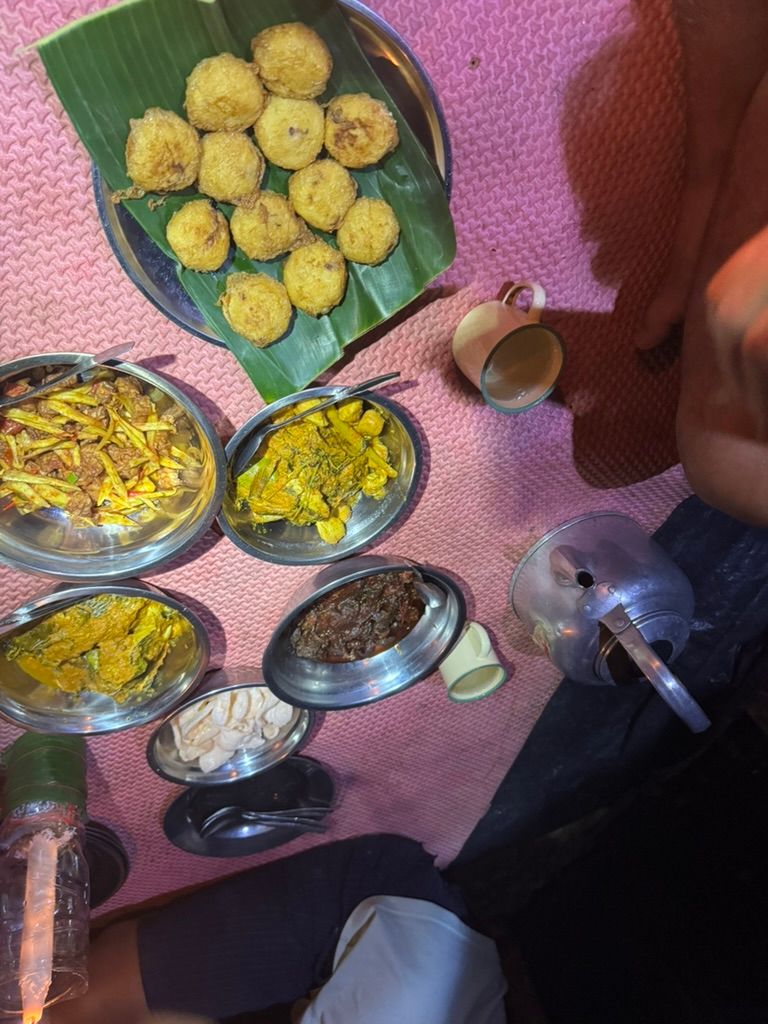
In the evening at our accommodation hut (rather a screen for privacy and a roof over our heads), we got to know our personal cook, Mahadi, who had brought mattresses and blankets for us and prepared a truly delicious meal with exceptional dedication, tranquility, and love. The best food in Indonesia was in the jungle, partly transported by him here, partly collected in the surrounding area (for example, delicious edible ferns). The river water for drinking was something to get used to; although boiled, it tasted really strange and contained quite a bit of solid residues. The truth is that Kayla and Mahadi afterwards got a bit high on millet, but we honestly didn’t care because we were really worn out. Using a jungle toilet (a hole with a privacy screen), washing ourselves in the river, licking wounds and trying in vain to get our clothes dry, we went to bed early. Marike wandered barefoot through a fire ant track in the dark, which was briefly very painful but over faster than expected. By the way, it was delightfully quiet, as the few other tourist groups camped slightly above or below the river, so we had a lot of privacy. Stoned guides are, by the way, a general problem here and actually a no-go. However, the two took their job very seriously otherwise, Kayla guided us well, cut down trees that had fallen on the ‘paths’, had a good feel for where we could find animals, and Mahadi took care of the transportation of our infrastructure from shelter to shelter. We were very satisfied with the two!
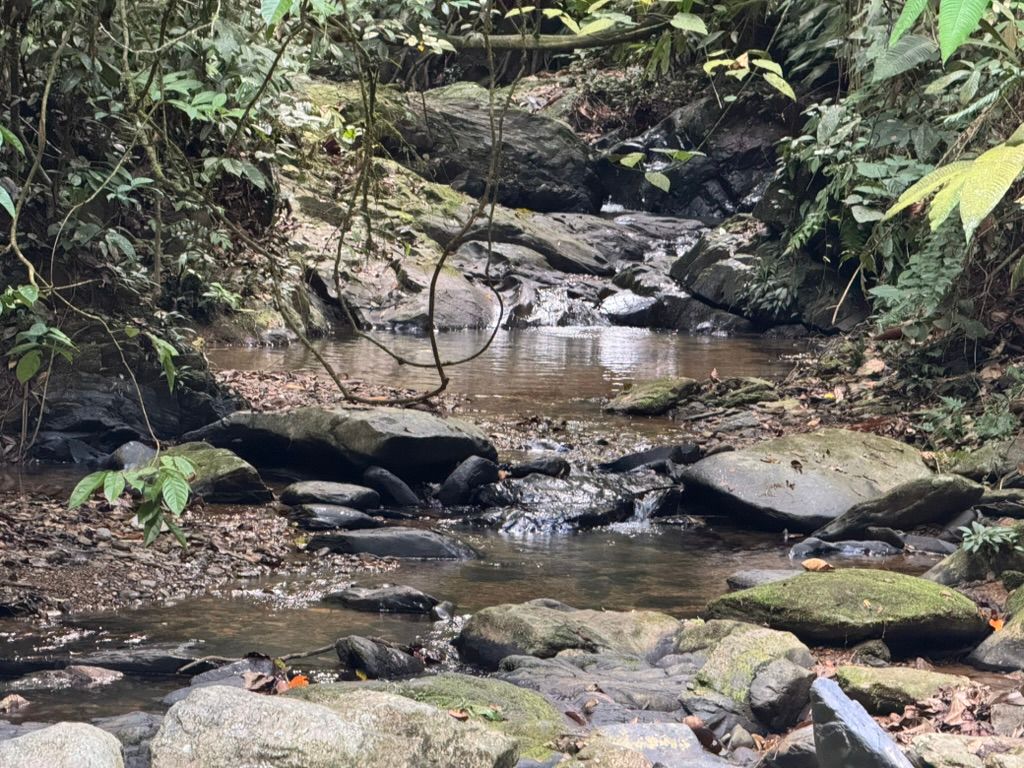
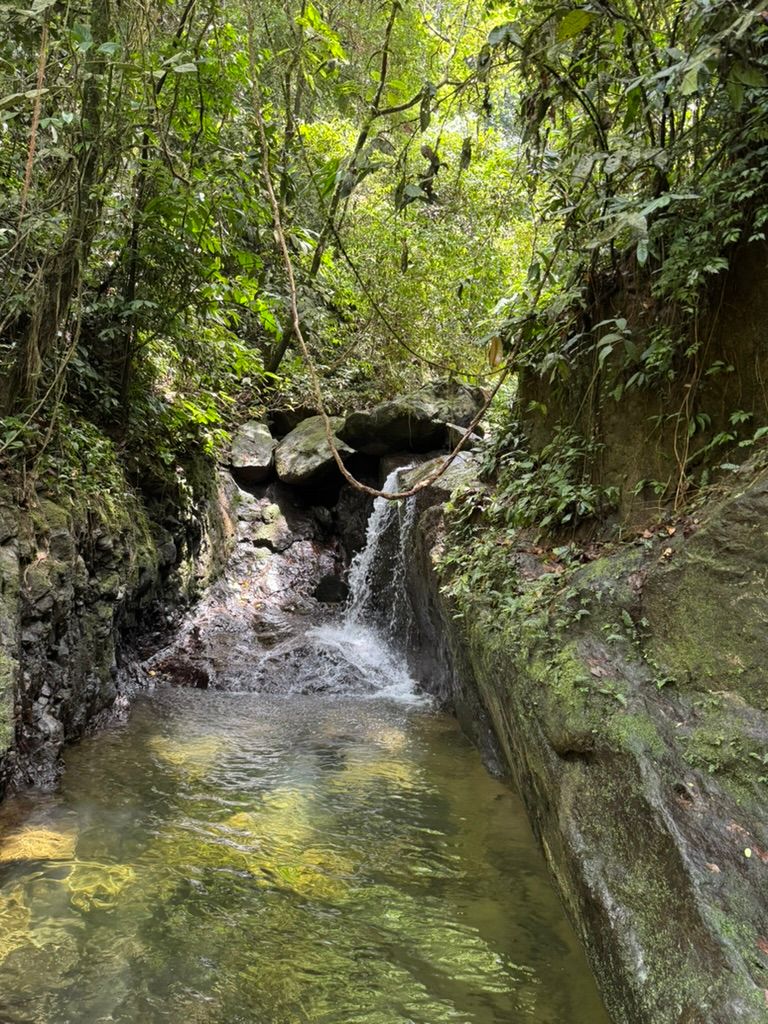
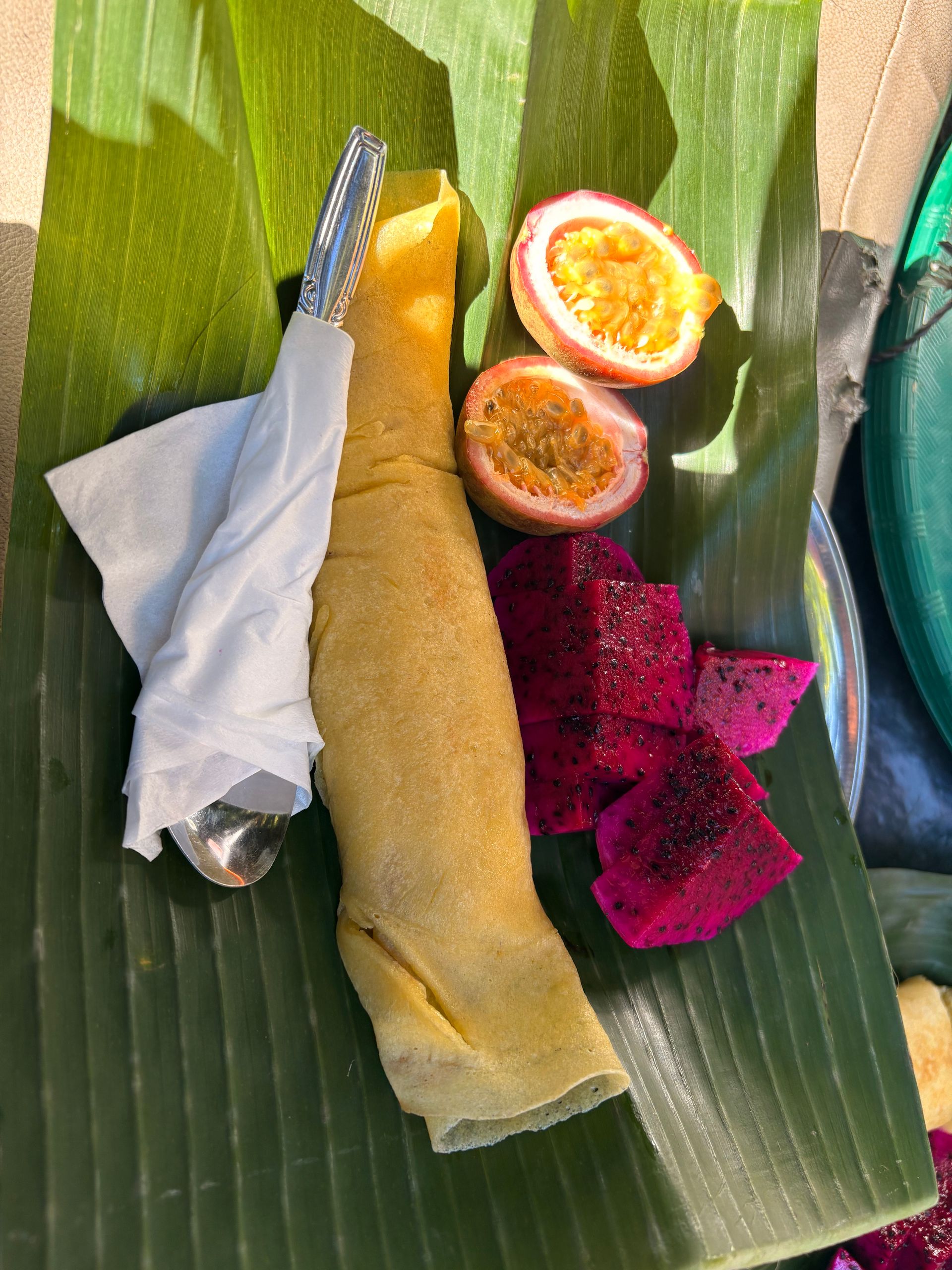
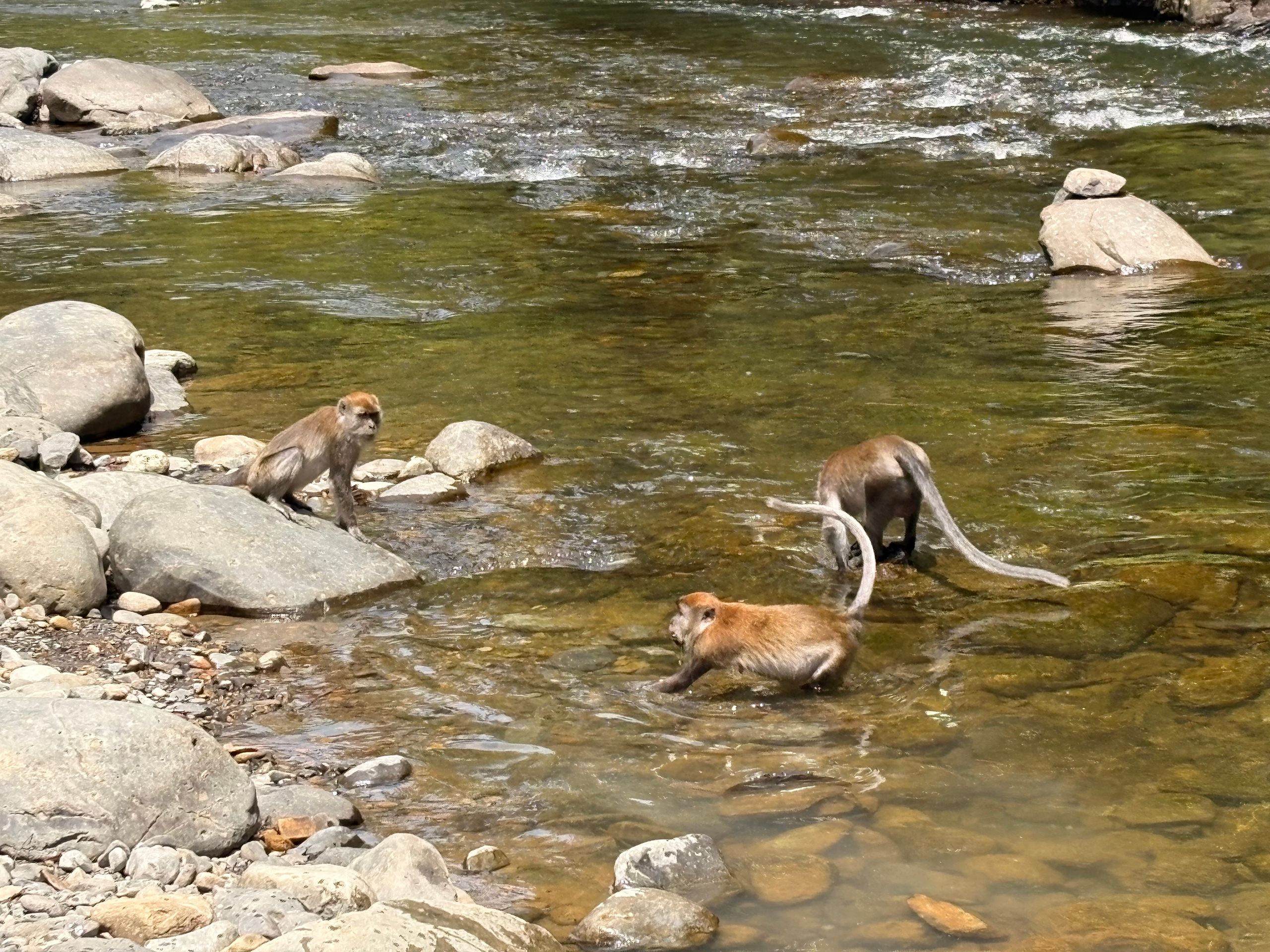
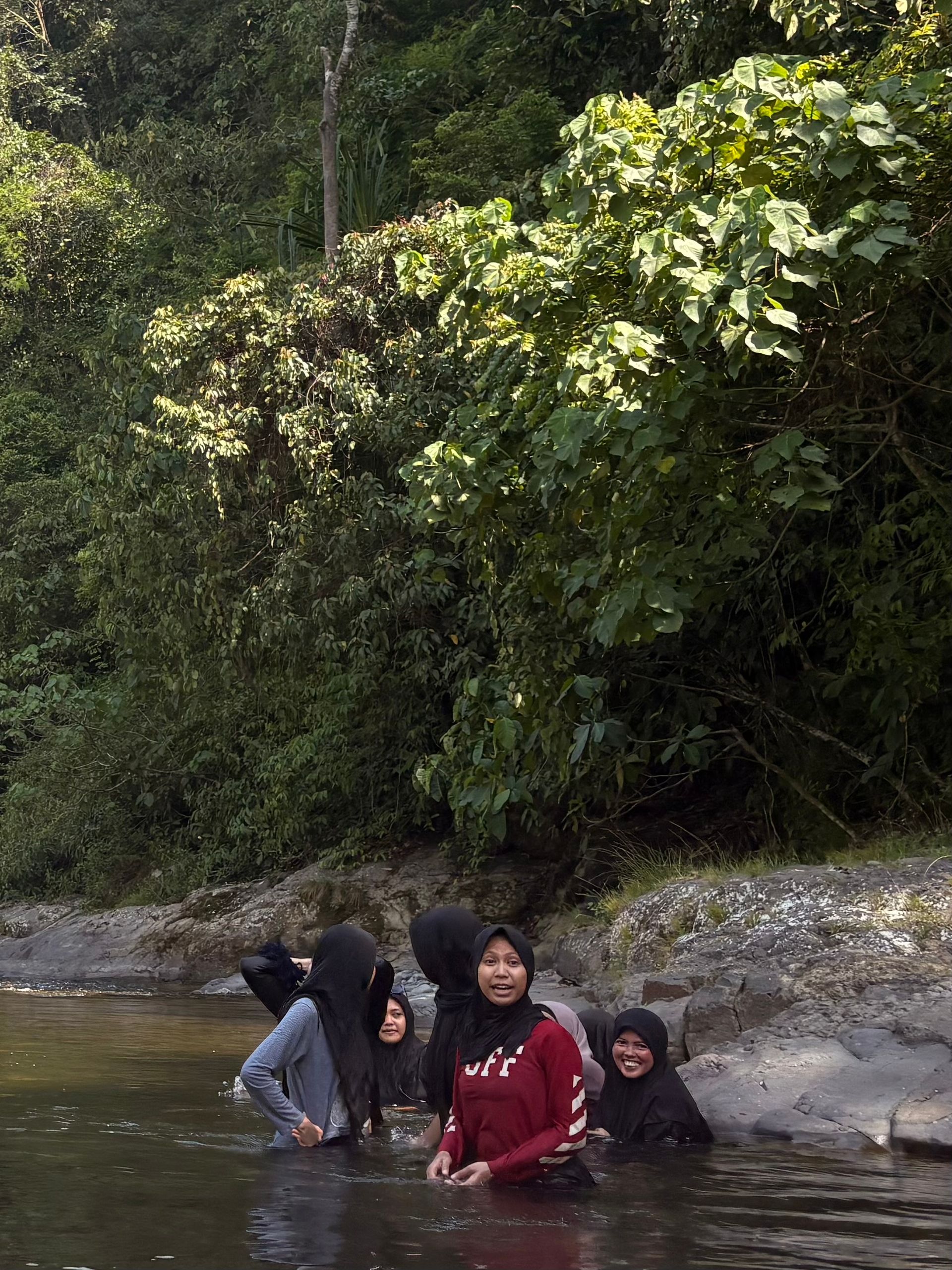
Our next days went similarly, although not less beautiful. In the mornings, we got banana pancakes and coffee, again fruit and Nasi/Bami in banana leaves on the go. We didn’t encounter orangutans again at first, but many other monkey species and animals (also on the first day, below is a list of the species we could identify). We wandered around, often at the edge of our strength, bathed at lonely waterfalls. In the afternoons, we chilled and bathed at the shelter, then delicious food was served again. Observing groups of macaques in the sunset as they carefully move from tree to tree and always wait for each other. And of course, no mobile reception, so truly just without distraction enjoying another world!
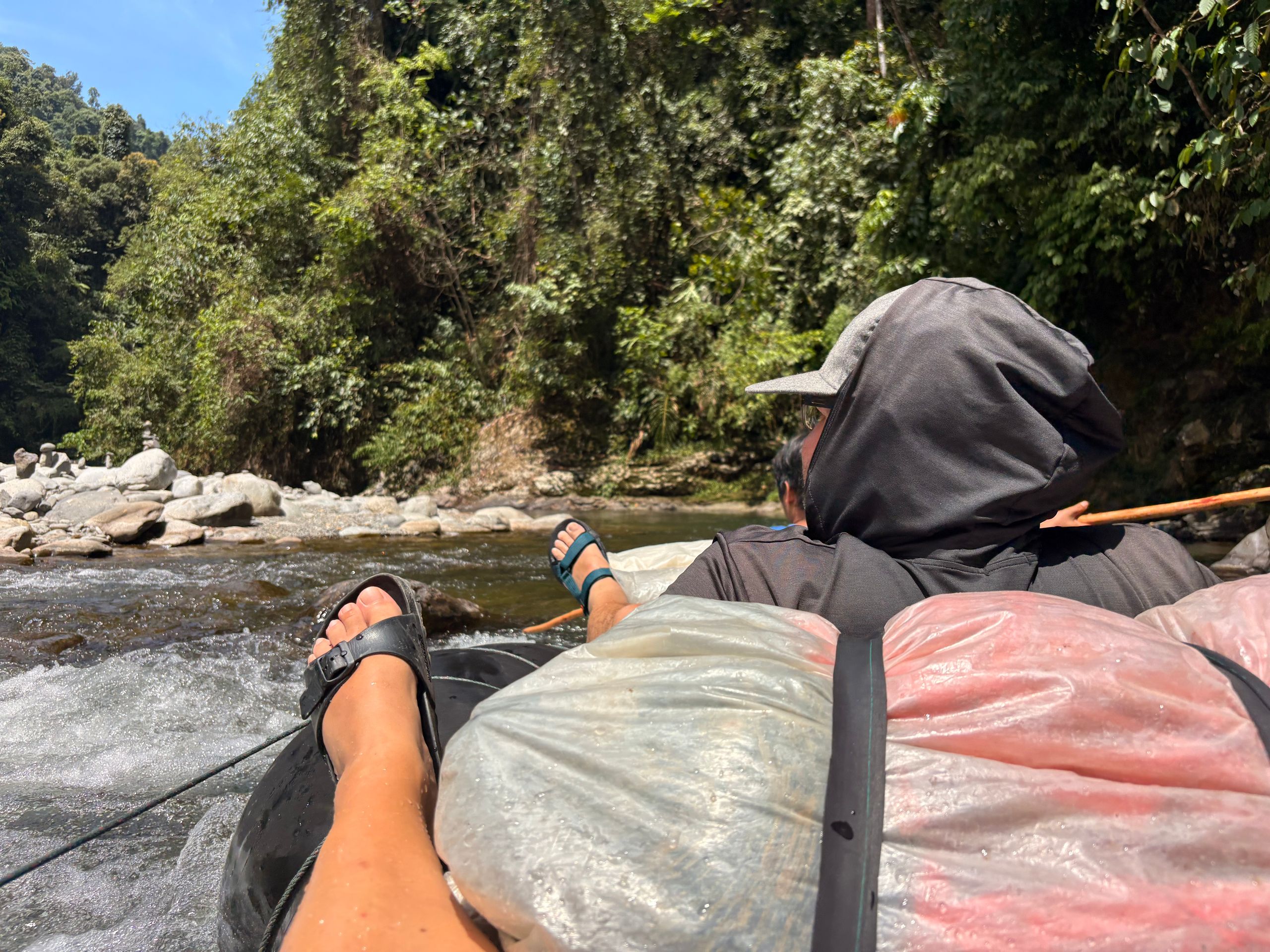
Nevertheless, we felt ready for civilization again on the last day. After breakfast, inflated truck tires were tied together, and we loaded our entire stuff (cooking pots, mattresses, etc.) onto them and set off down the river. Mahadi took the lead, knowing the river, its currents, and shallow spots very well, and steered us skillfully. Then there was another surprise when we passed a larger camp (apparently, it’s not so intimate with the shorter tours), orangutan sighting! So we stopped and jumped out. And indeed, a relaxed orangutan lady was strolling with her already quite large child through the huts. Since most tourists had already left, only very few people were nearby, and we could observe them in peace. The mother was visibly proud of her child; we almost had the impression she wanted to show off. The little one climbed up a tree now and then, only to return to mama for a hug. It was truly moving, and we understand why they are called great apes. Really like a mirror! Completely enchanted, we let ourselves be rowed further toward the village by our boys. At the end, there was another moment of terror, but it showed us that we were in good hands during our time in the jungle. Just before we landed, we saw a group of children in the river. One boy was having trouble with the current, and before we even understood the situation, that he was about to drown, Mahadi swam like lightning there, grabbed him, and pulled him out of the water. What a reaction! After a group scolding (the others hadn’t noticed at all), he was back with us and handed us our luggage from the tires. Phew!
After an extensive shower, we sat relaxed in a restaurant with a cold beer and looked forward to sleeping in a real bed again. Of course, there are many criticisms one can make about these tours, and not everything in Bukit Lawang is done correctly. For example, the first orangutans we met were certainly not completely wild animals, but very accustomed to humans and in sight, they also received the odd banana from the guides to stay close. There were also some individuals among the other monkeys that were specialized in stealing or begging for food. It shouldn’t be like that in a national park, but still, we had the feeling that it was understood here, and people are aware that an intact nature and sustainable tourism are the prerequisites for the survival of their source of income. Whether the orangutans or the other endangered residents (Sumatran rhinoceros, elephants, tigers, and many different species of birds, insects, and mammals) will succeed long-term with constantly shrinking habitats is, unfortunately, very uncertain.
_____
These animals we were able to observe and also identify later (as far as we remember):
Sumatran orangutan Pongo abeliiJava macaque Macaca fascicularis
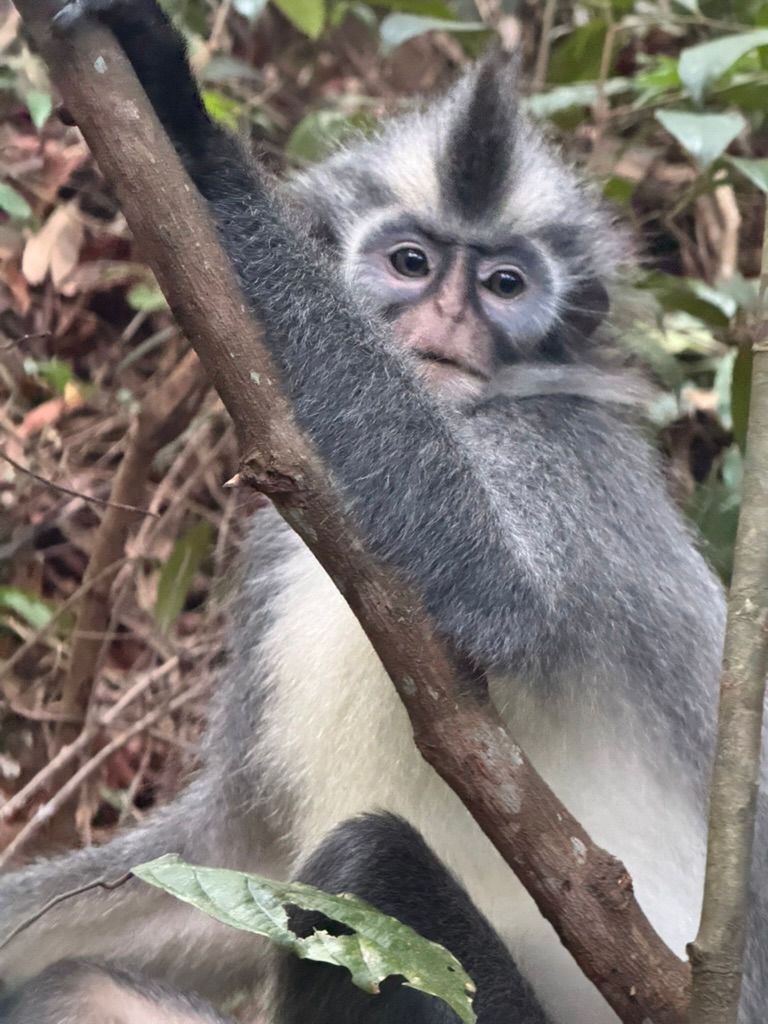
Thomas’s langur Presbytis thomasi
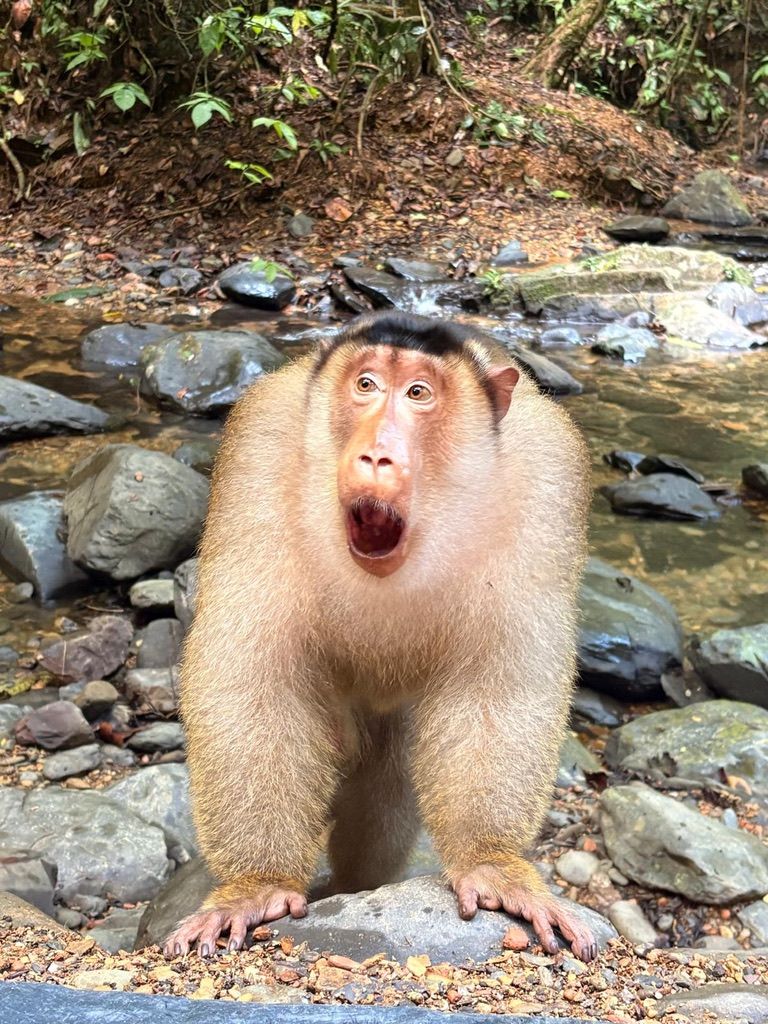
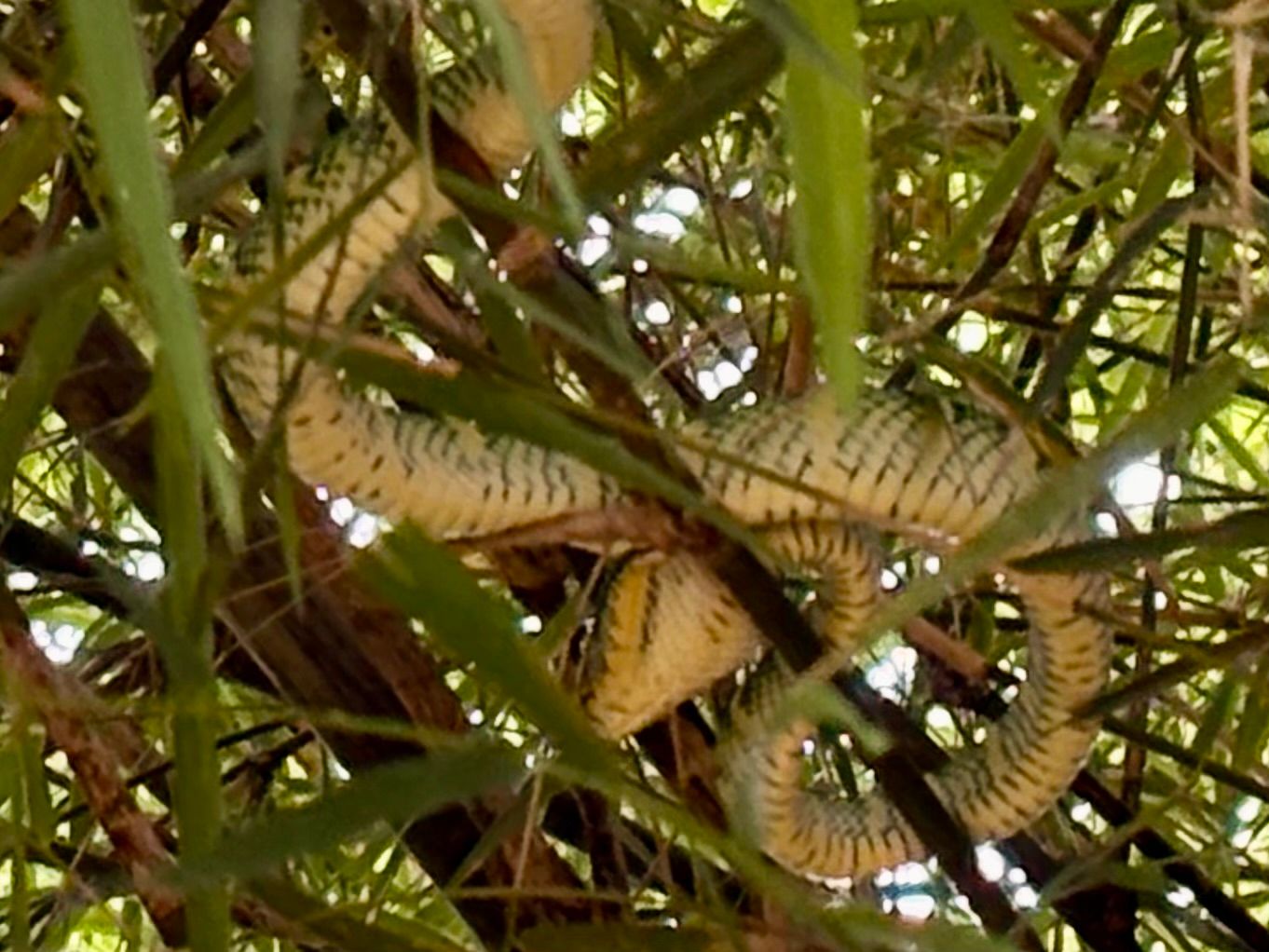
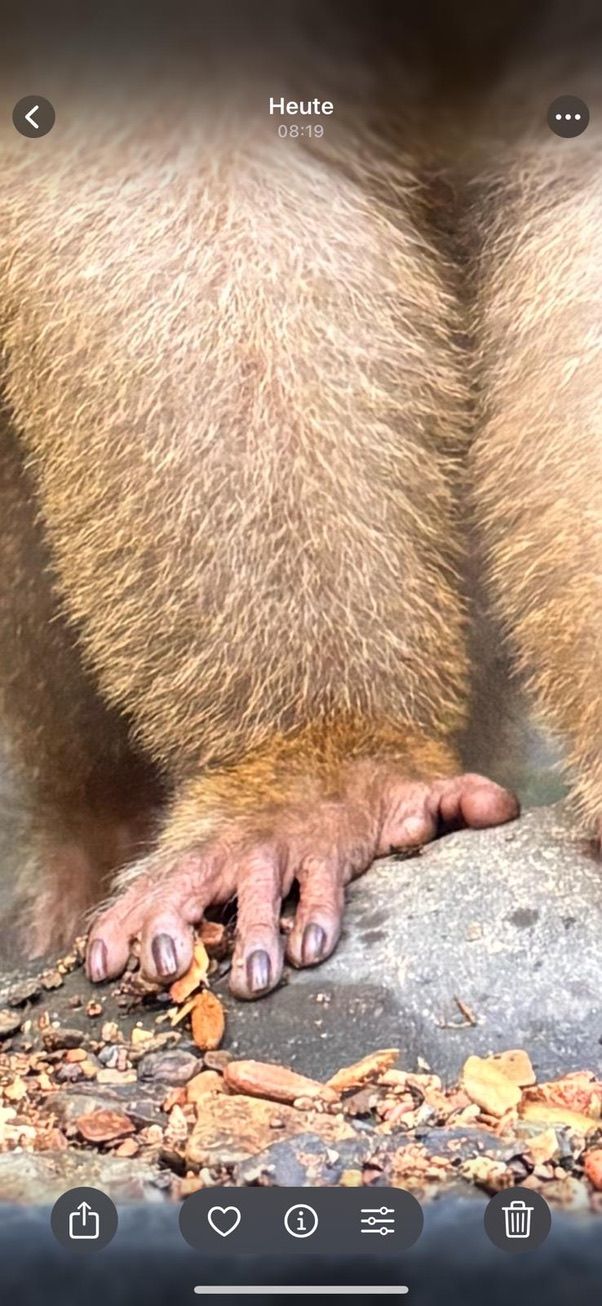
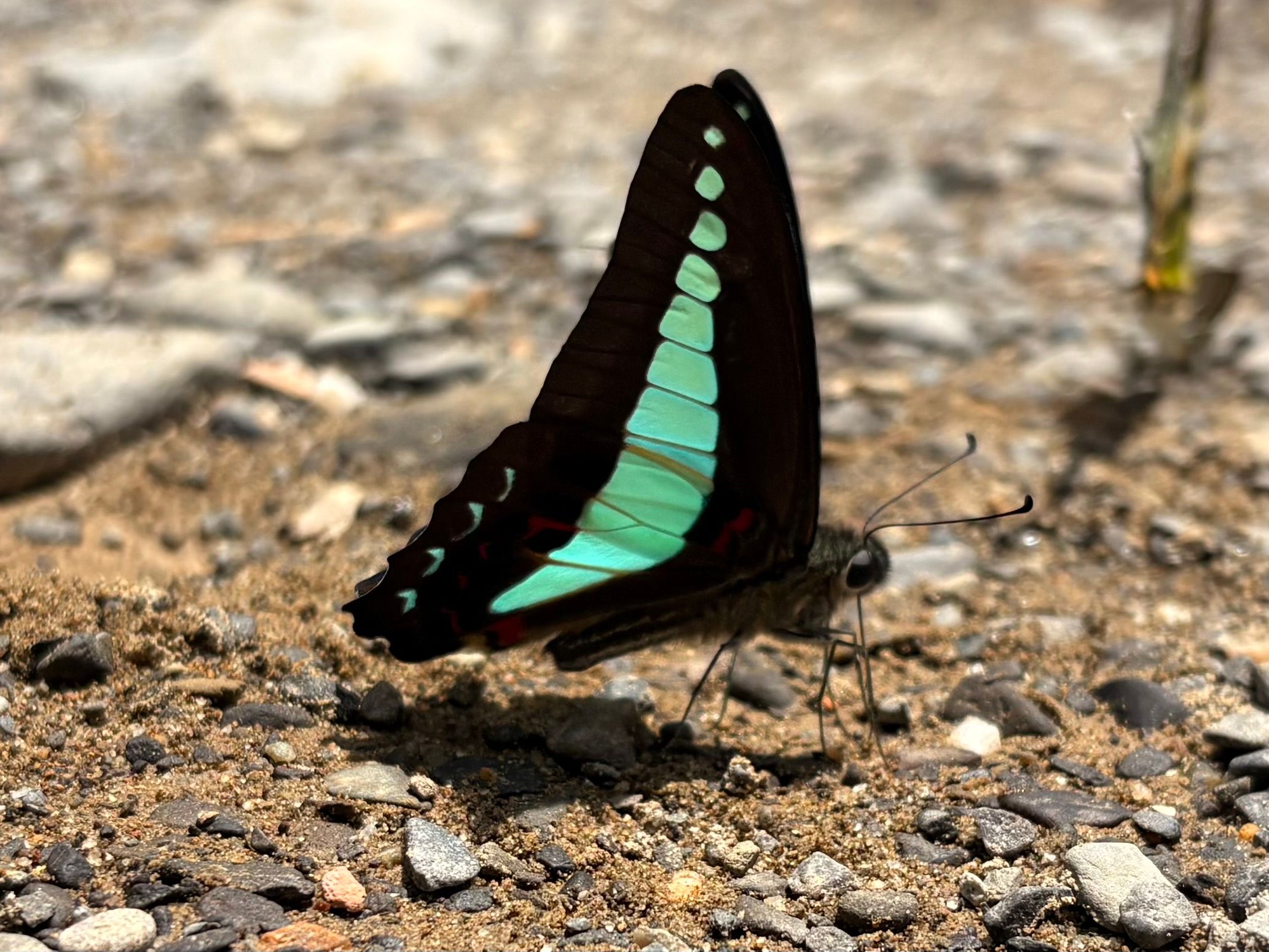
Southern pig-tailed macaque Macaca nemestrina Argus pheasant Argusianus argus White-handed gibbon Hylobates lar Malaysian softshell turtle Dogania subplana Many butterflies, e.g. hummingbird butterfly Graphium sarpedon Spiny softshell turtle Heosemys spinosa Rhinoceros hornbill Buceros rhinoceros Silvered langur Trachypithecus cristatus Wagler’s bamboo viper Tropidolaemus wagleriHouse centipede Scutigera coleoptrata