
Stone Age in Rammang-Rammang
A breathtaking karst landscape visited just outside the major city of Makassar in the south of Sulawesi Island on August 13, 2026.
Published: 04.09.2026
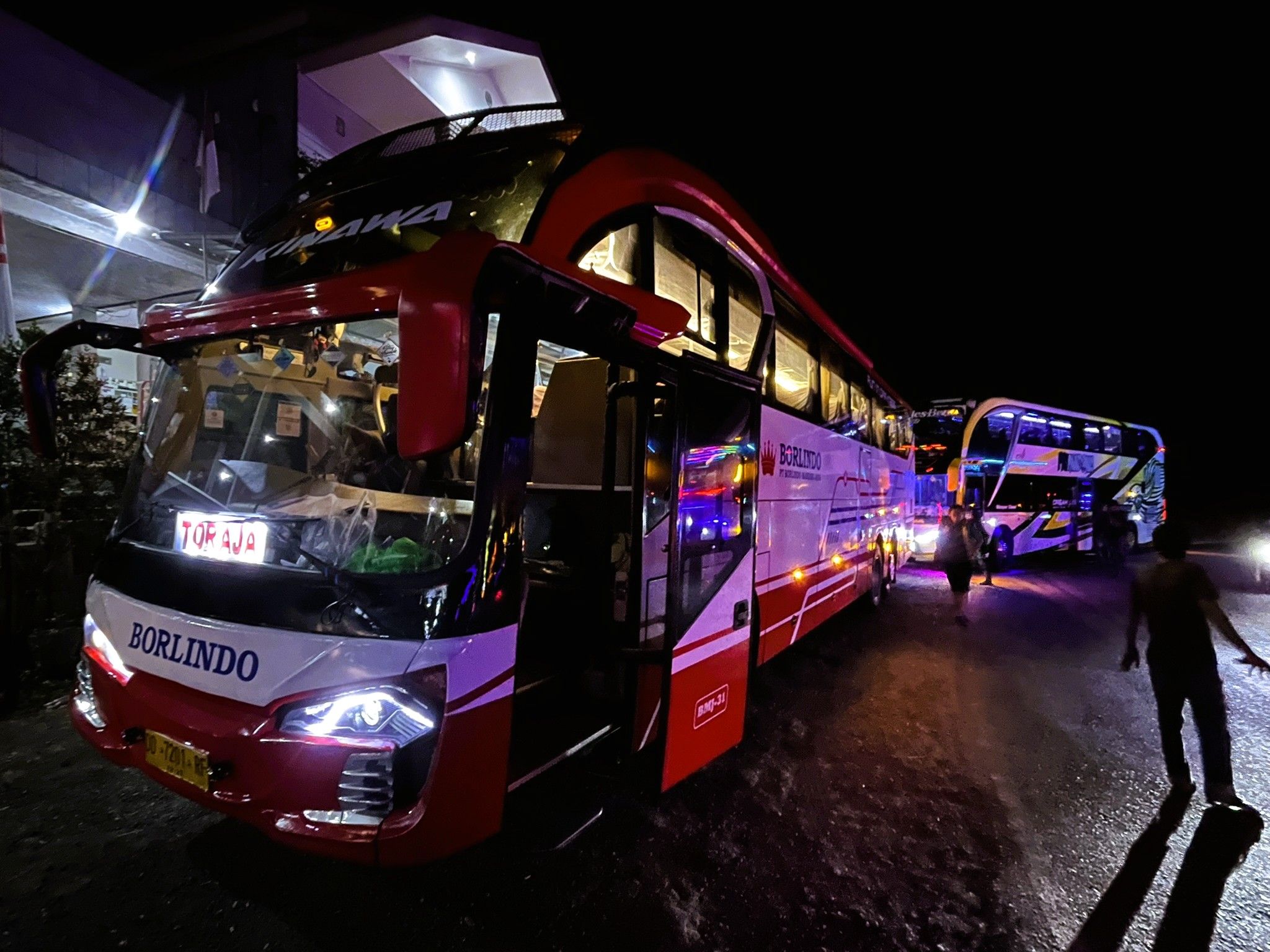
I surprisingly managed to sleep about two hours three times in the very comfortable night bus from Makassar. So, after a nine-hour journey, I arrive relatively refreshed in Rantepao on August 15, 2026, about 300 km northeast. Rantepao, with around 43,000 inhabitants, is the capital of the North Toraja district in South Sulawesi. The area is well-frequented by tourists, as it is dominated by a culture that is both morbid and impressive. Rantepao is the gateway to Toraja, that highland where the living interact with the dead in a manner that fascinates me as a sober European.
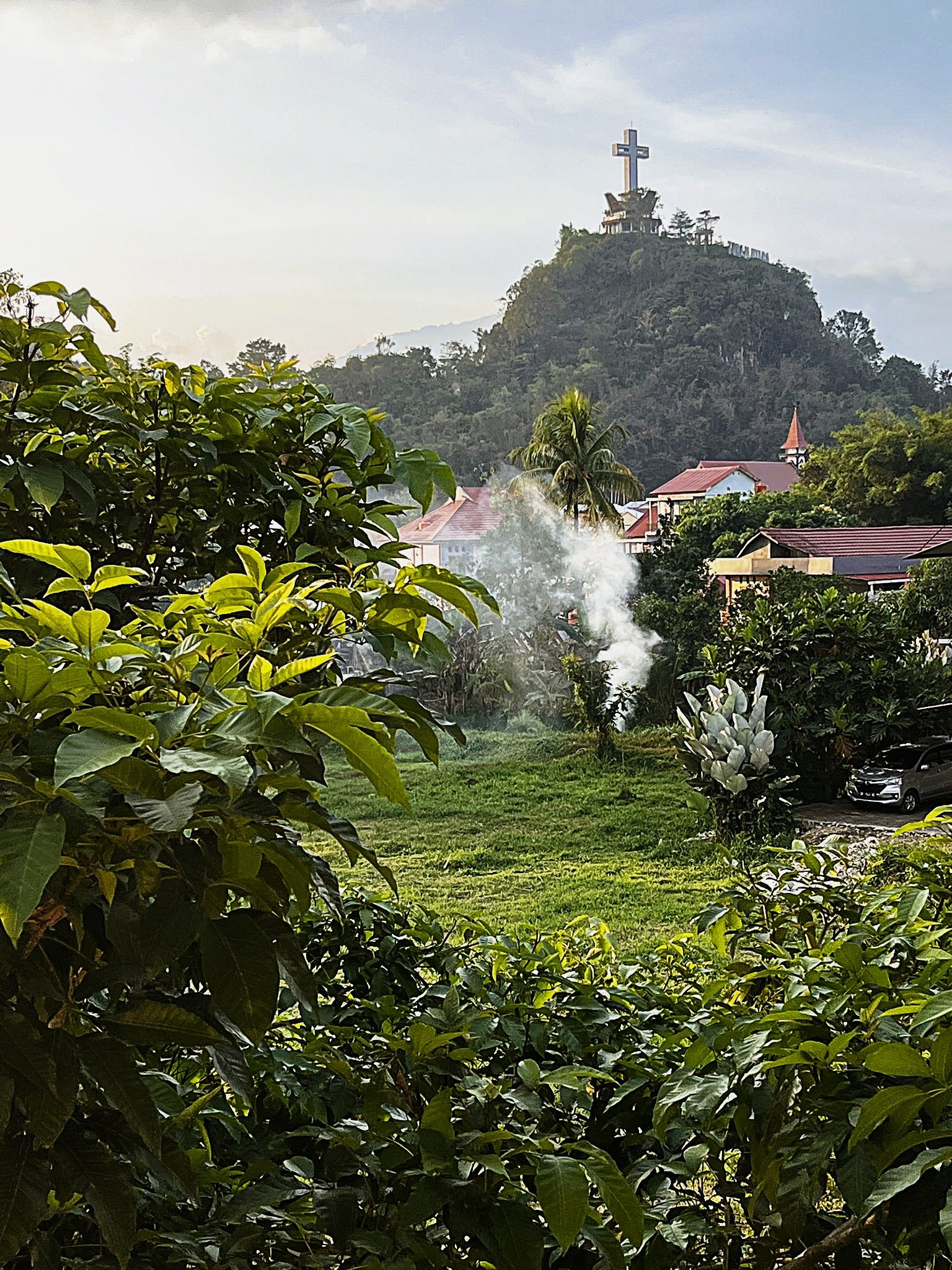
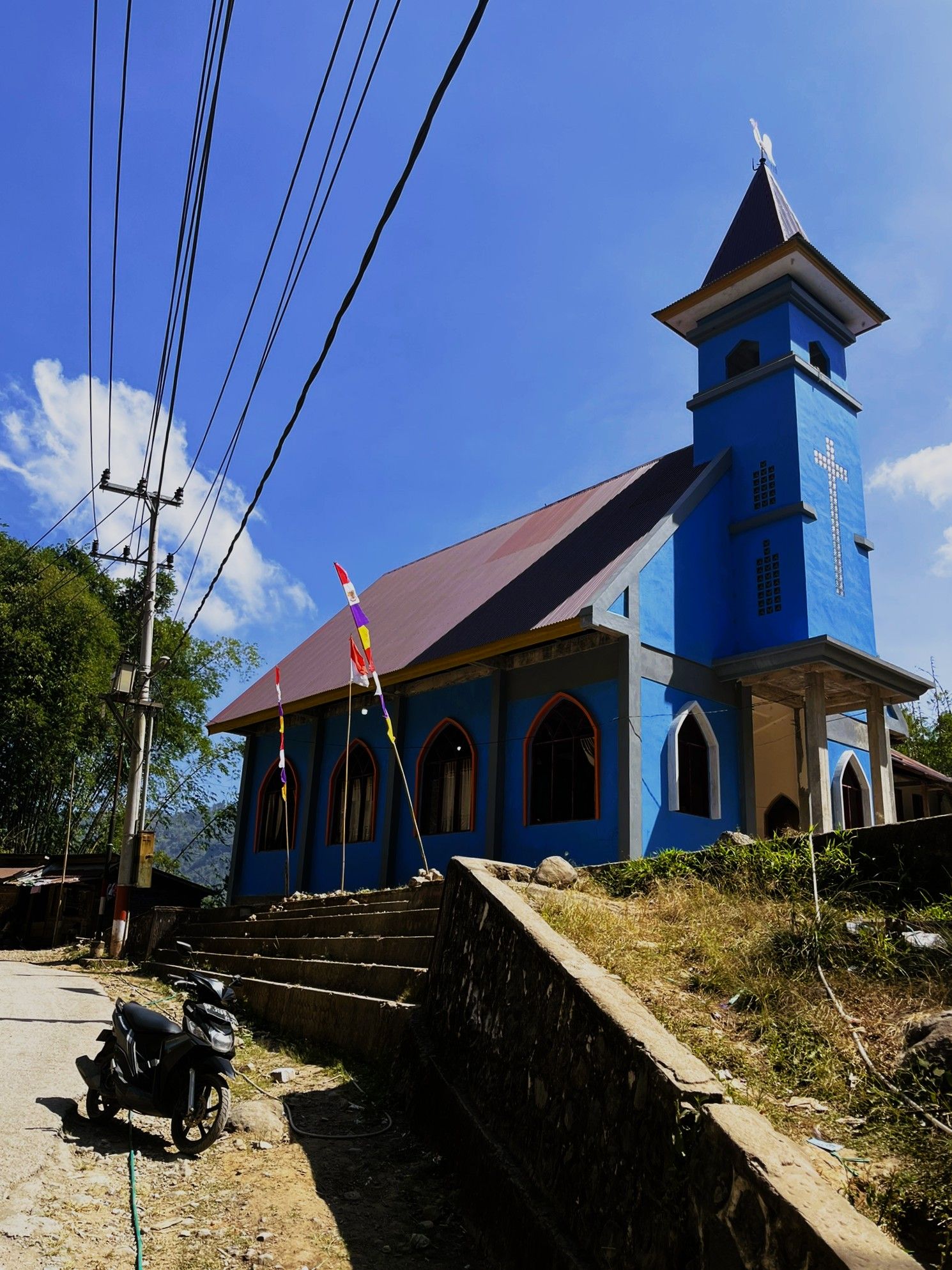
At “Pia's Poppies Hotel,” I find a very pleasant accommodation for twelve francs (around twelve euros) per night, overlooking the fields behind and a huge cross on a hill that rises steeply from the landscape. The Toraja region is predominantly Protestant, which is important to know for the following story; it was evangelized by the Dutch in the early 20th century. Churches stand in every larger village. At the same time, pre-Christian customs have persisted here like almost nowhere else.
Roofs like Buffalo Horns
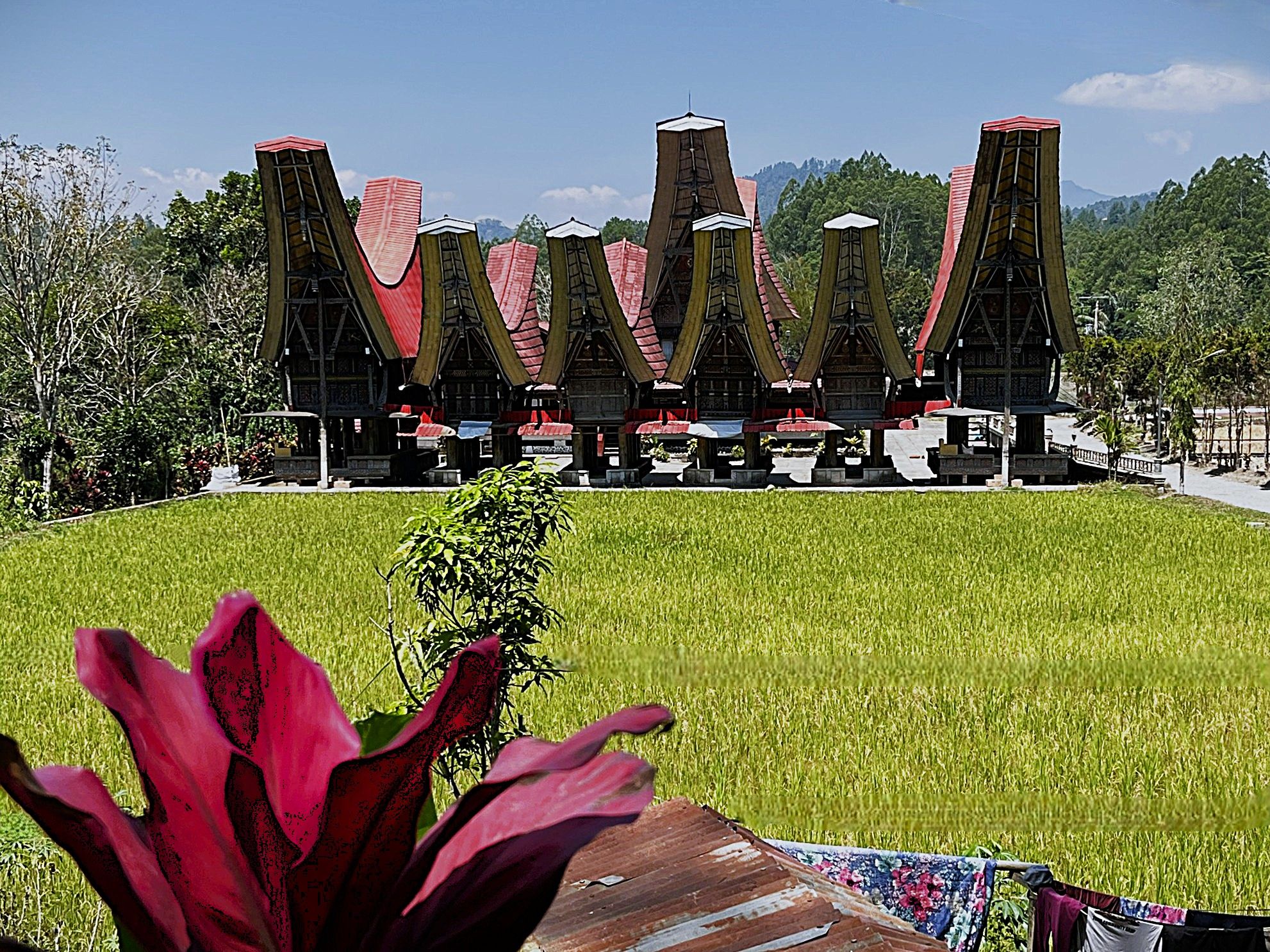
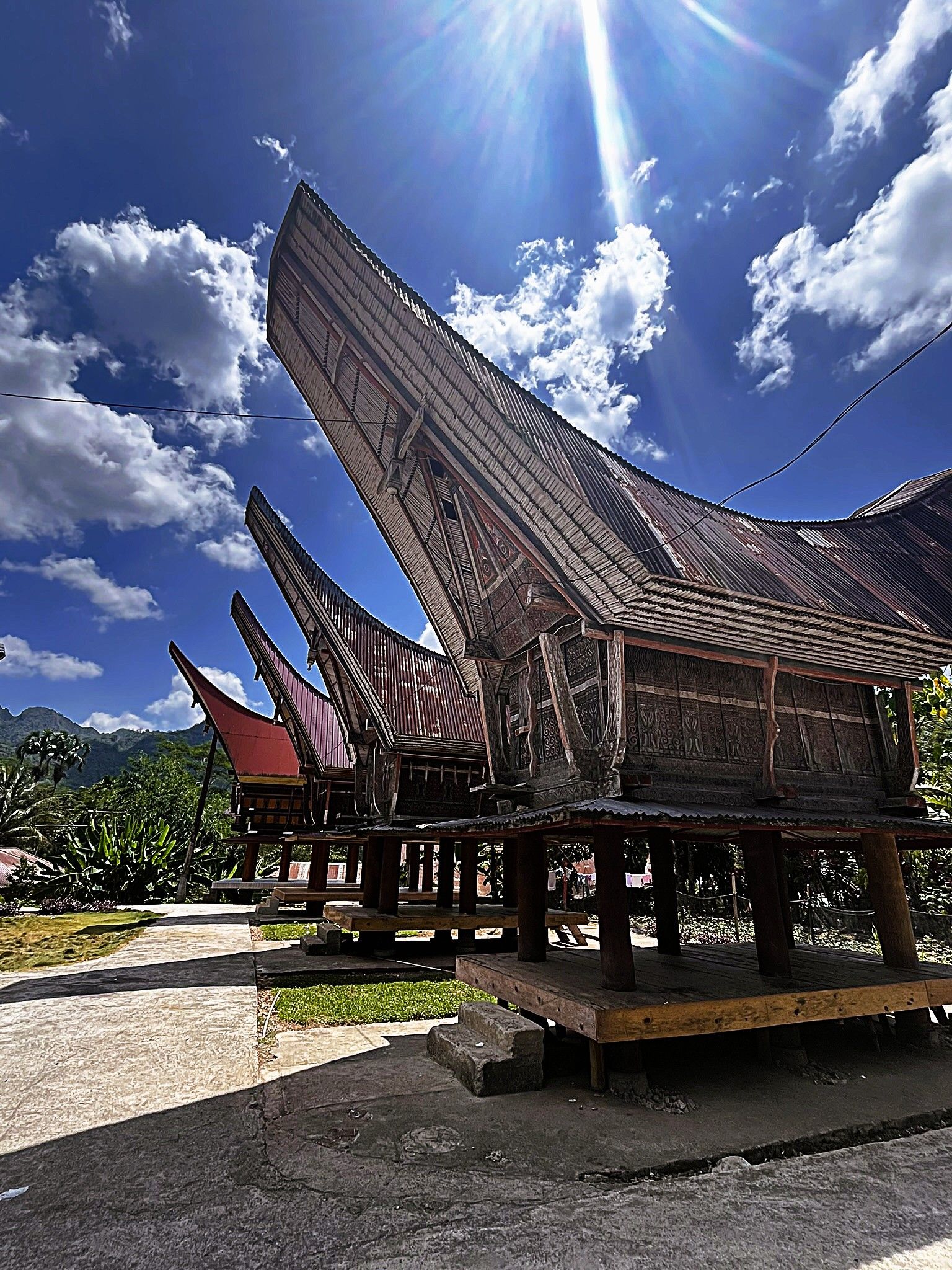
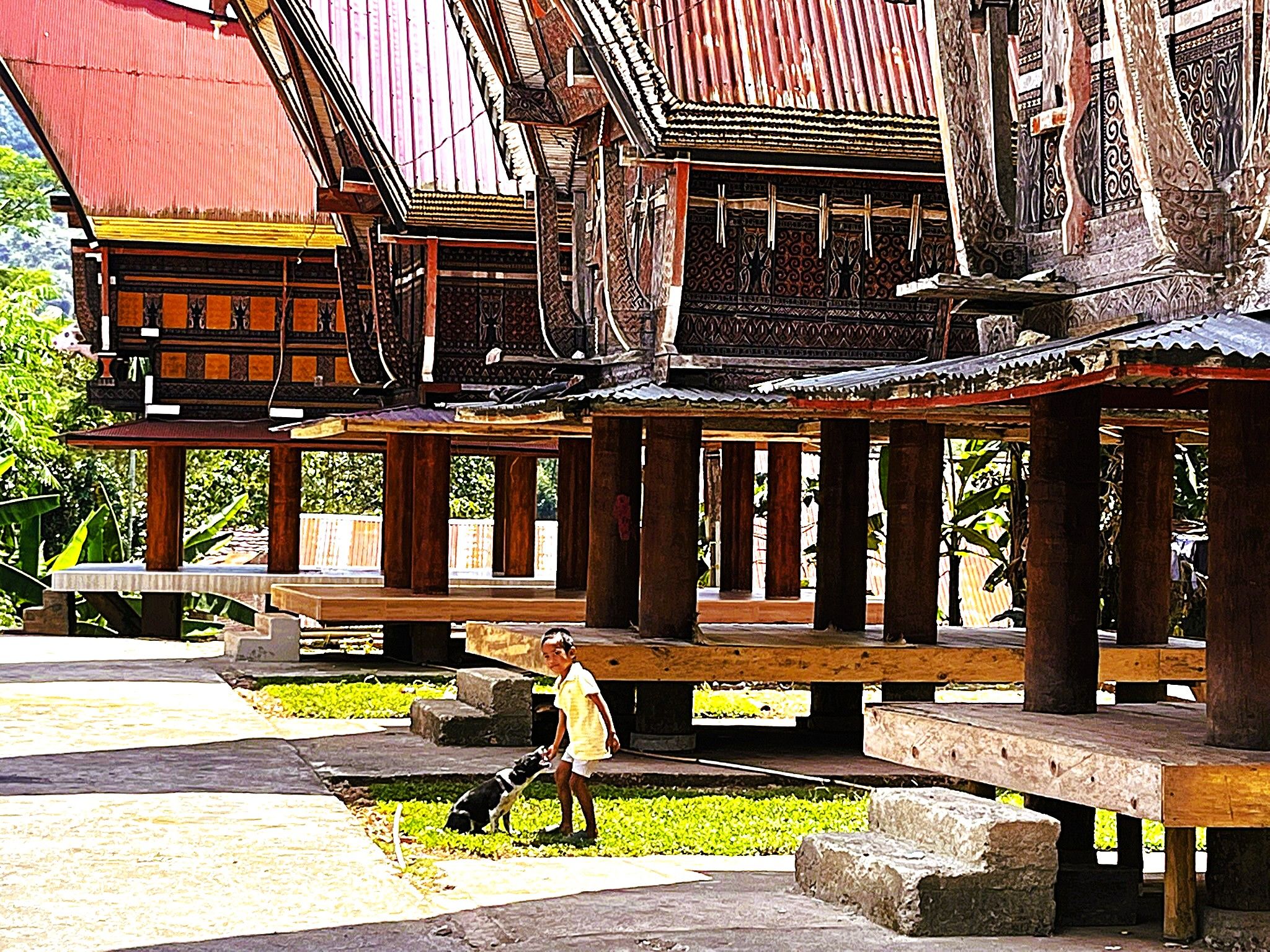
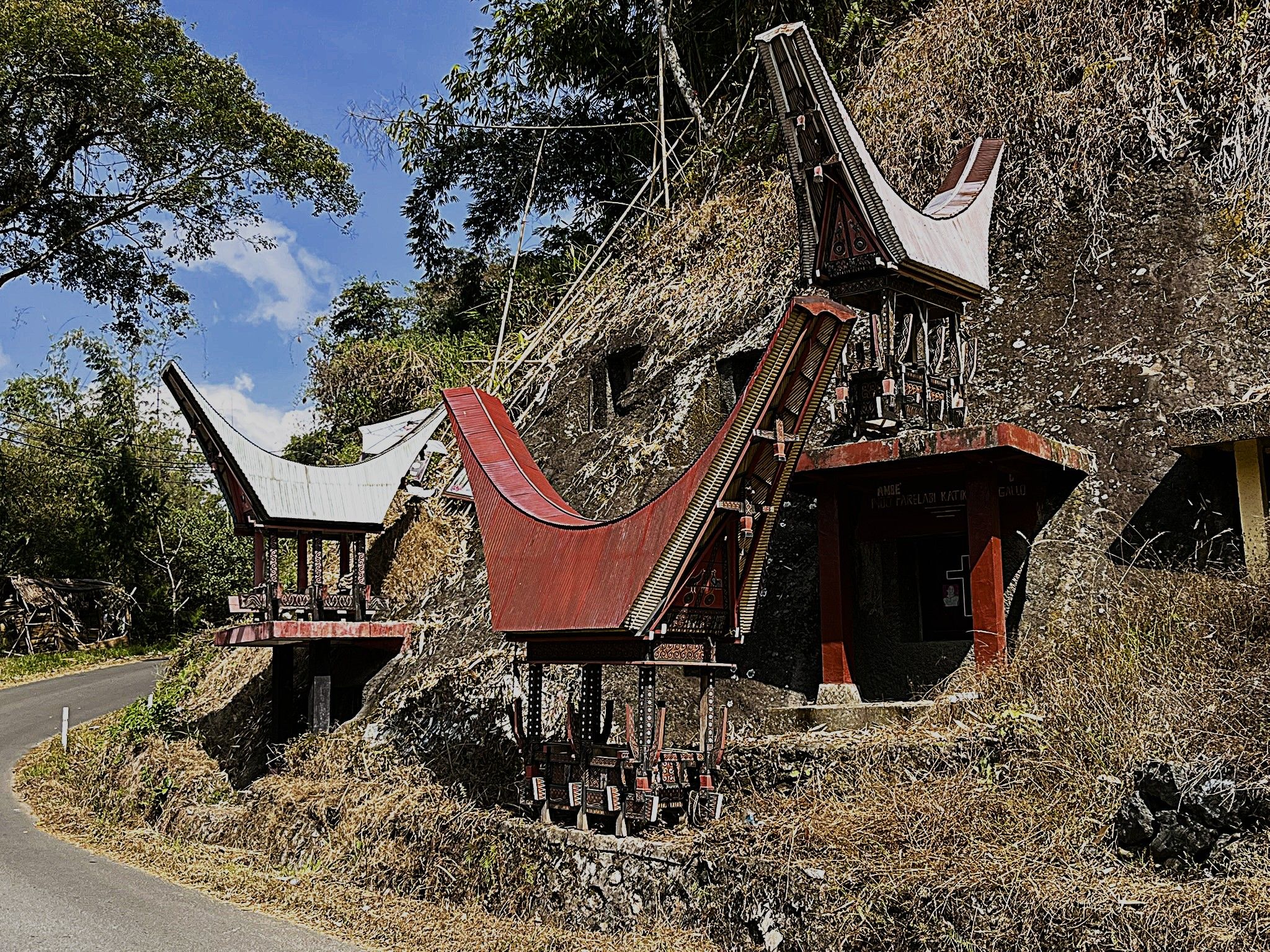
Almost immediately, the roofs of the Tongkonan stand out, contrasting like oversized buffalo horns against the sky. Tongkonan are the architectural heart of the Toraja culture. Built on stilts, with roofs made of layered bamboo - today often made of corrugated iron as a concession to modernity which imitates the old form - they stand in rows facing each other: on one side are the houses, on the other the rice barns.
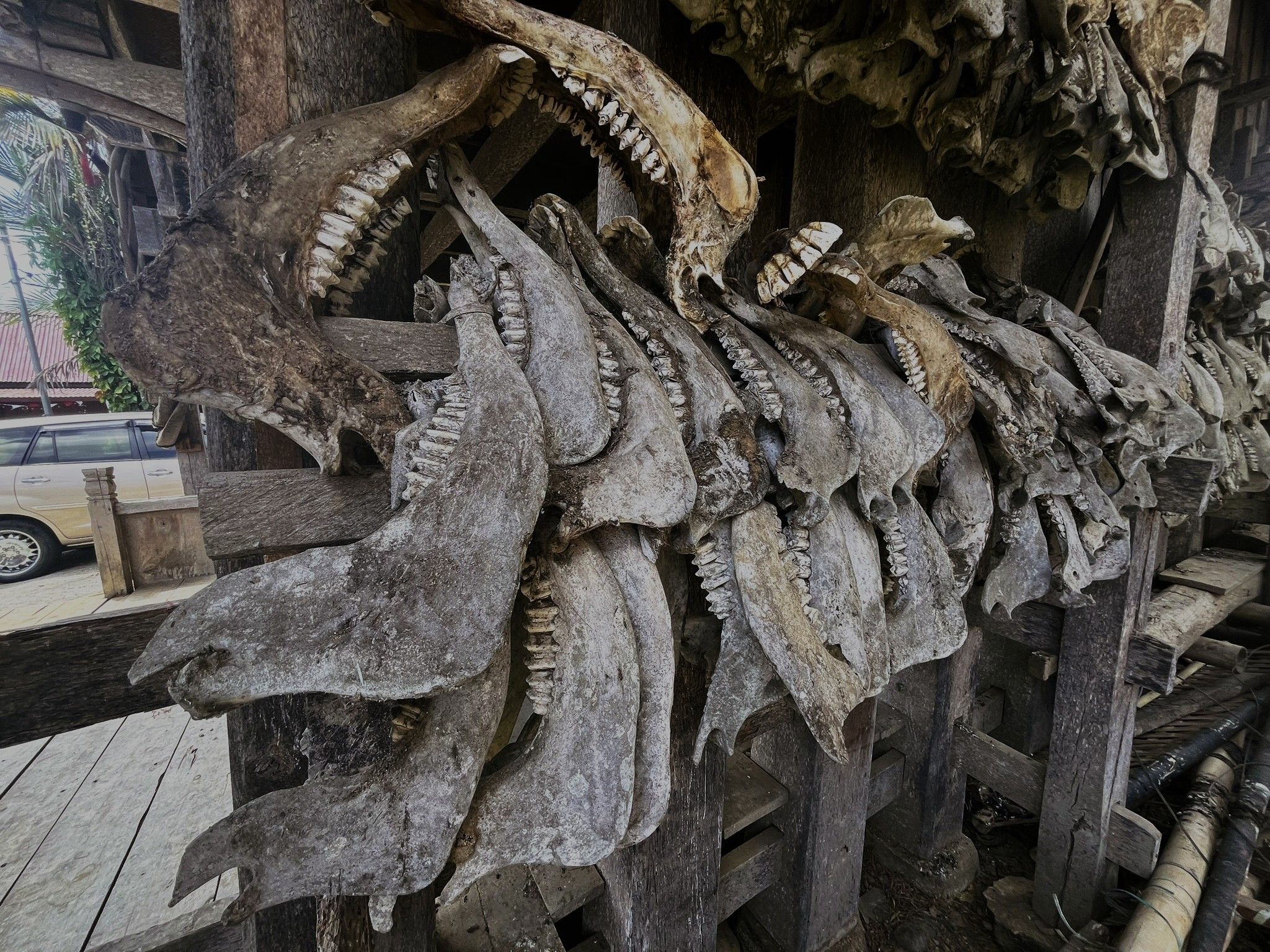
“Each house demonstrates the status of its family within the village,” explains Yunus, my guide; buffalo horns, sometimes also bleached buffalo teeth, arranged on the ridge poles or the outer walls, testify to the number of animals that were slaughtered at past funerals - this too is a sign of the clan's prosperity.
No place shows the close connection of life and death as directly as Ke'te' Kesu', a dozen kilometers southeast of Rantepao. This stately village is one of the best-preserved in the region; it is said to be around 400 years old, but is continuously being expanded, as several construction sites indicate.
A row of Tongkonan faces the slender rice barns, both richly carved with red, black, and yellow patterns depicting buffaloes, roosters, and life trees. Everything is well-kept, almost museum-like, and yet inhabited.
Influencers in front of Decaying Bones
Behind the village layout, there are first rows of tourist shops, then some generous family graves with statues of the deceased in display cases.
But at the steep rock face that closes off the valley, accessible via a sometimes-worn stone staircase, things get really interesting: wooden coffins, some centuries old, lie in niches and crevices or hang on the rock wall. Some are rotting; skulls and bones peek out. Further skulls are openly lined up on the coffins. Here one enters a silent realm of the dead.
That glamorized influencers – manicured, made up, in designer clothes and hijabs – pose in front of the coffins and bones gives the scene a surreal touch. Life and death, beauty and decay have no fixed boundary here.
Wooden Guardians
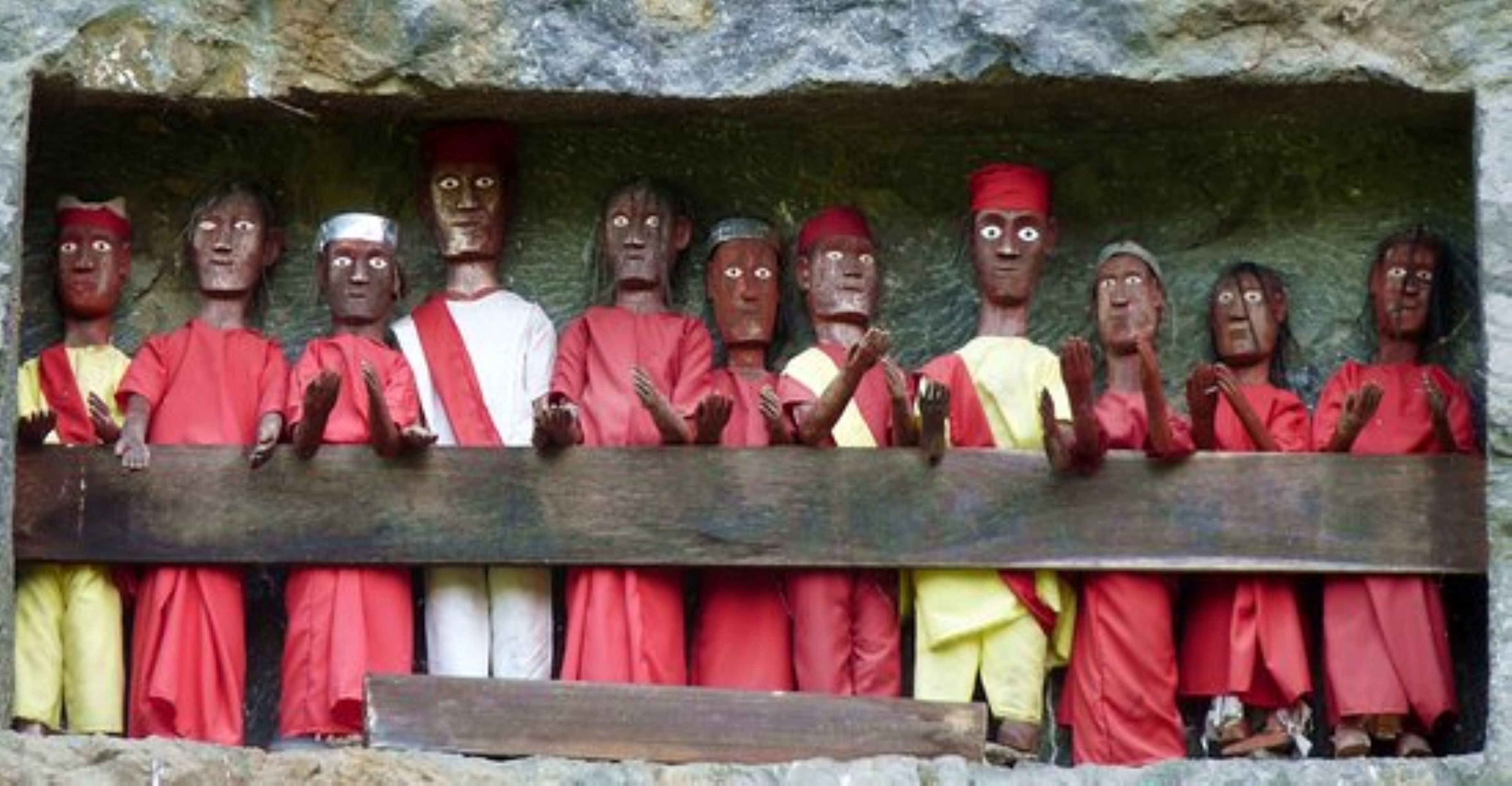
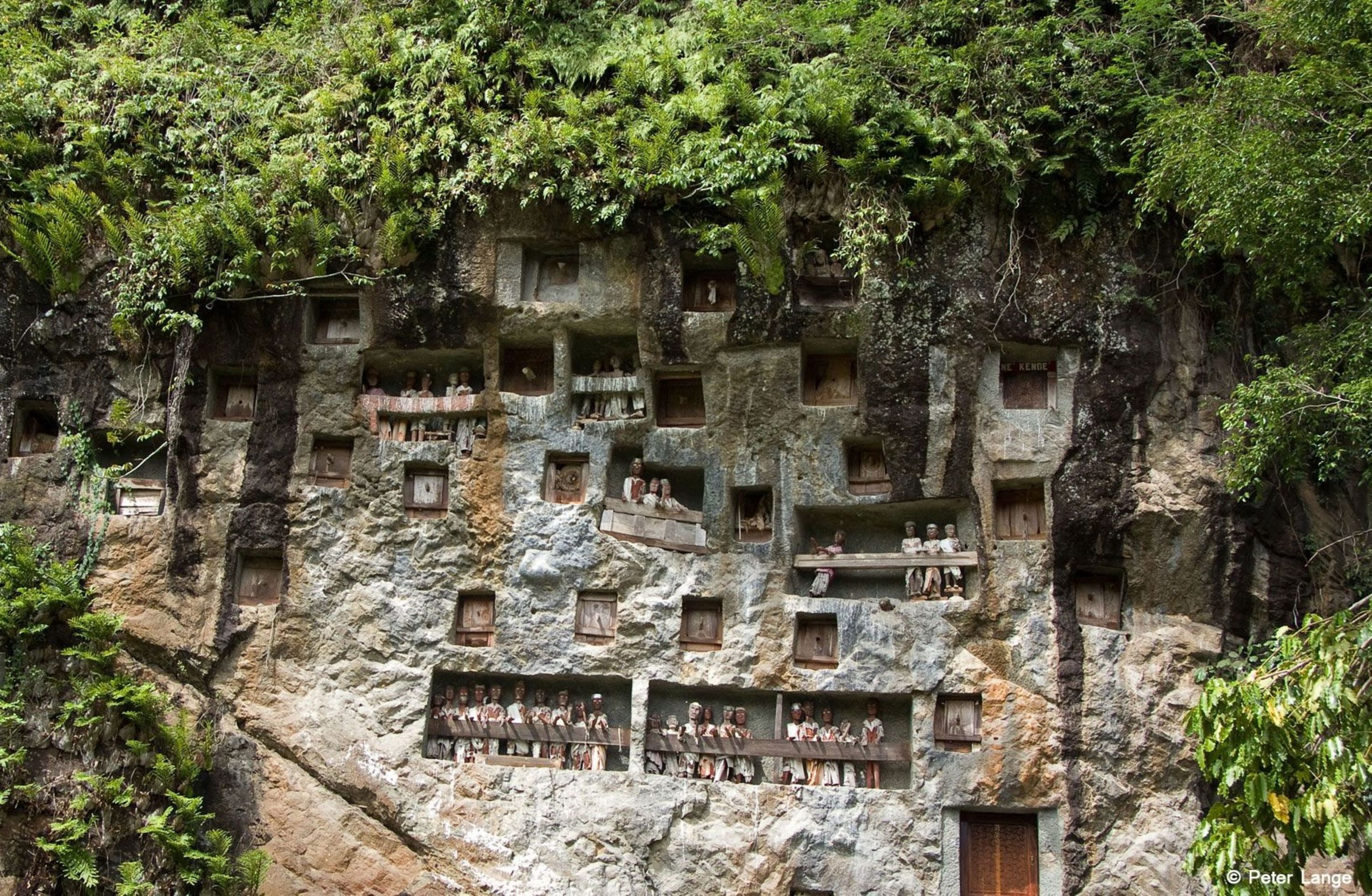
Another form of burial, but equally impressive, can be found in the village of Londa, also a few kilometers from Rantepao. A limestone wall is here penetrated by burial chambers, stacked coffins, and natural caves. Guarding the graves are rows of Tau-Tau: life-size wooden figures with painted faces, real clothes, and outstretched arms, as if inviting visitors into their ancestral realm.
About ten kilometers south of Rantepao lies Lemo, another example of the burial tradition. In a high, almost vertical rock wall, dozens of burial chambers are manually carved, exclusively for wealthy families, as carving a burial chamber takes years of work. Here too, Tau-Tau stand on wooden balconies, some weathered, others freshly clothed, all looking stoically out into the landscape.
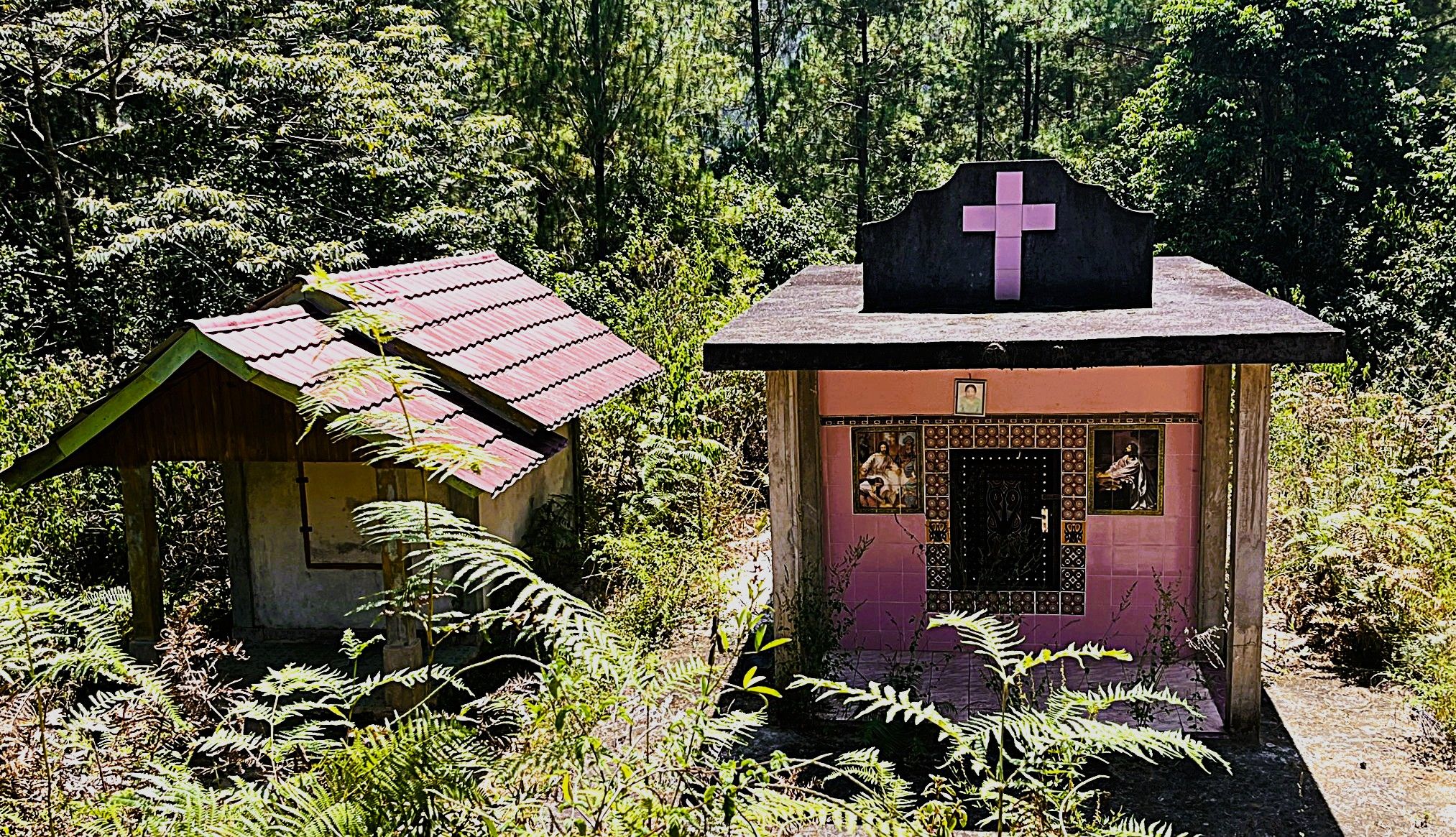
Not only in these special places are the dead buried. Grave sites, either masonry or wooden with the characteristic Tongkonan roofs, line the roads, and some even lie in the gardens of residential houses.
Ritual Becomes a Tourist Spectacle
Striking graves are built for the dead; it’s no surprise that the most elaborate rituals are dedicated to them. Together with other tourists, I accompany Yunus, the guide, to a large village. He hands us sarongs. With these, we show our respect; participants in ordinary clothes are not welcome, he says.
On a dusty square, people throng. Relatives and friends have poured in for days to carry a grandfather to his grave, who actually passed away last year. Most come from the region; some have traveled from Makassar, others even from distant Jakarta. For instance, Lordy, a young woman with excellent English skills, tells me she hails from Sulawesi but works in medical sales in Jakarta.
In front of the village, minibuses are parked, and tourists rudely jostle for the best snapshot, many not even adequately dressed. I wonder when this centuries-old ritual will finally become a mere backdrop for cameras. Yunus shrugs; for him, it’s a welcome opportunity to make money.
Precious Sacrificial Animals
When we arrive, the multi-day festival is just entering its final phase. Yunus explains what has already happened: In the morning, the water buffalo were led to the square. Moreover, dozens of pigs have been delivered, tied to bamboo poles, now helplessly lying in the sun and occasionally squealing softly.
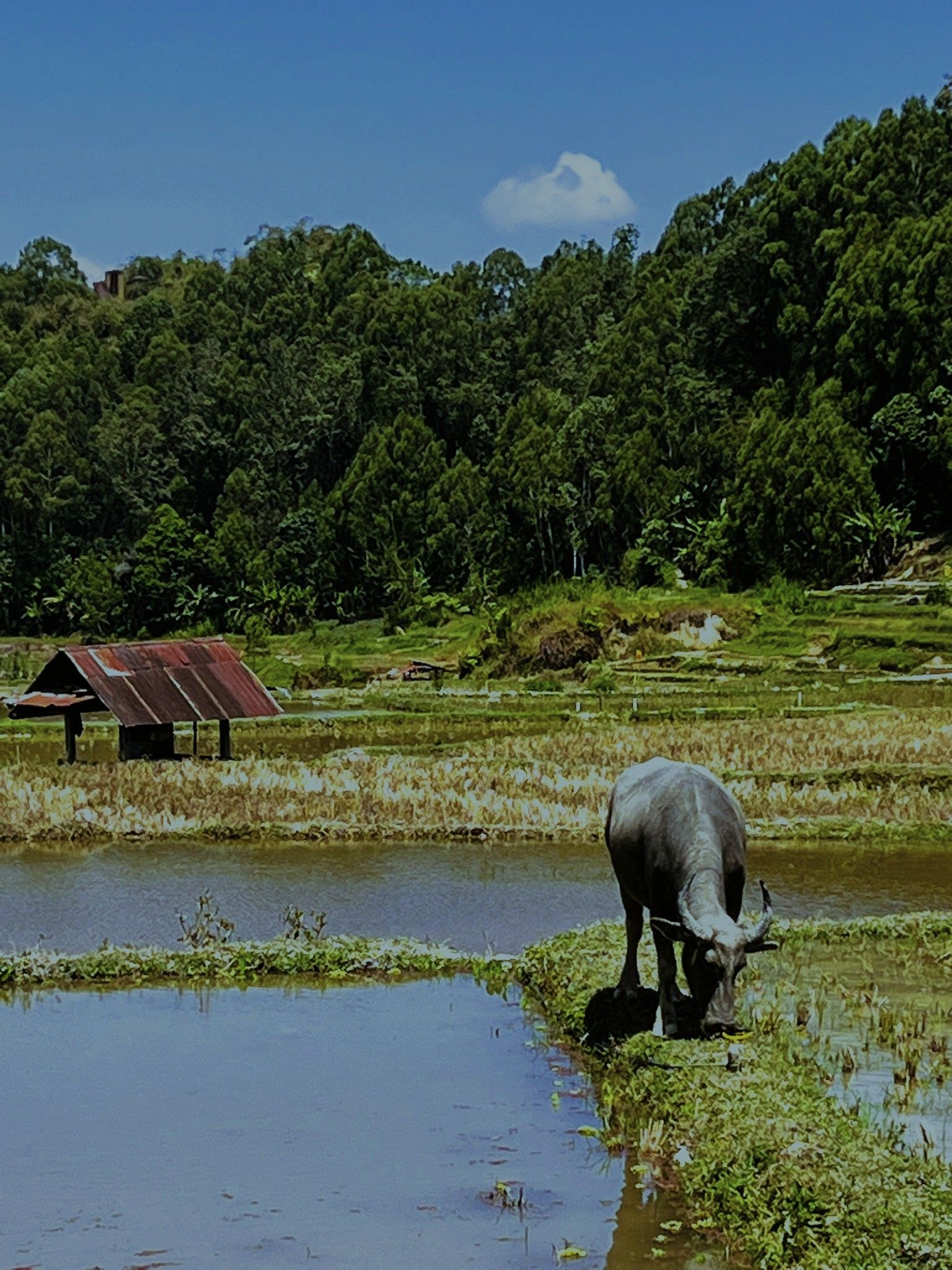
The buffalo are status symbols and nearly unaffordable when compared to local purchasing power. According to official statistics (“Toraja in Numbers, 2025”), a worker here earns two to three million rupiah or around 90 to 130 francs or euros per month - provided he even has a stable job. In agriculture, the earnings are even lower. A small black buffalo costs about five million rupiah (around 220 francs or euros), a large one about double that. It gets really expensive when one is looking for something special: black and white spotted animals start from about 50 million rupiah (around 2200 francs or euros), albinos for another double.
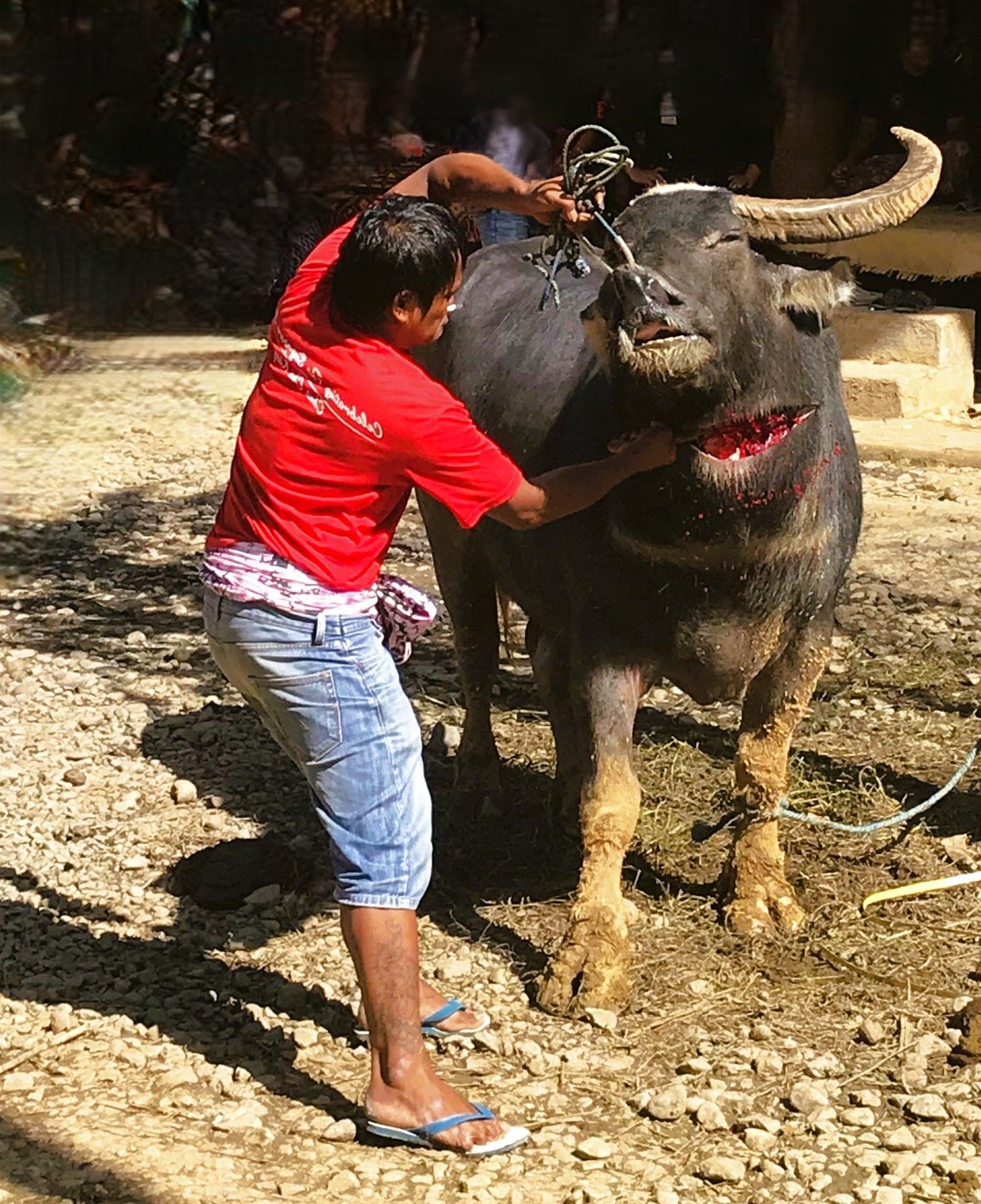
After the parade, according to Yunus, a bullfight followed. But now, the end for the animals is near; we try to discreetly hold back in the background. The buffalo are brought forward. A man grabs one of the animals by the nose ring, lifts its head, and with a single precise stroke of the machete, slices through its throat. The massive creature recoils, gasps; a fountain of red blood sprays out from the neck wound. Then it sinks to its knees and dies.
Next door, the pigs are slaughtered; there will be a huge feast today. “Only if enough blood has flowed can the dead continue their journey to the realm of the ancestors,” explains Yunus.
Corpses Re-dressed
After visiting the main sights along with many other tourists, I wanted to leave the beaten paths on my rented scooter. That may not have been a very good idea, as soon I wondered what criteria the South Sulawesi road authority (if it exists) uses to decide where to build and where to repair.
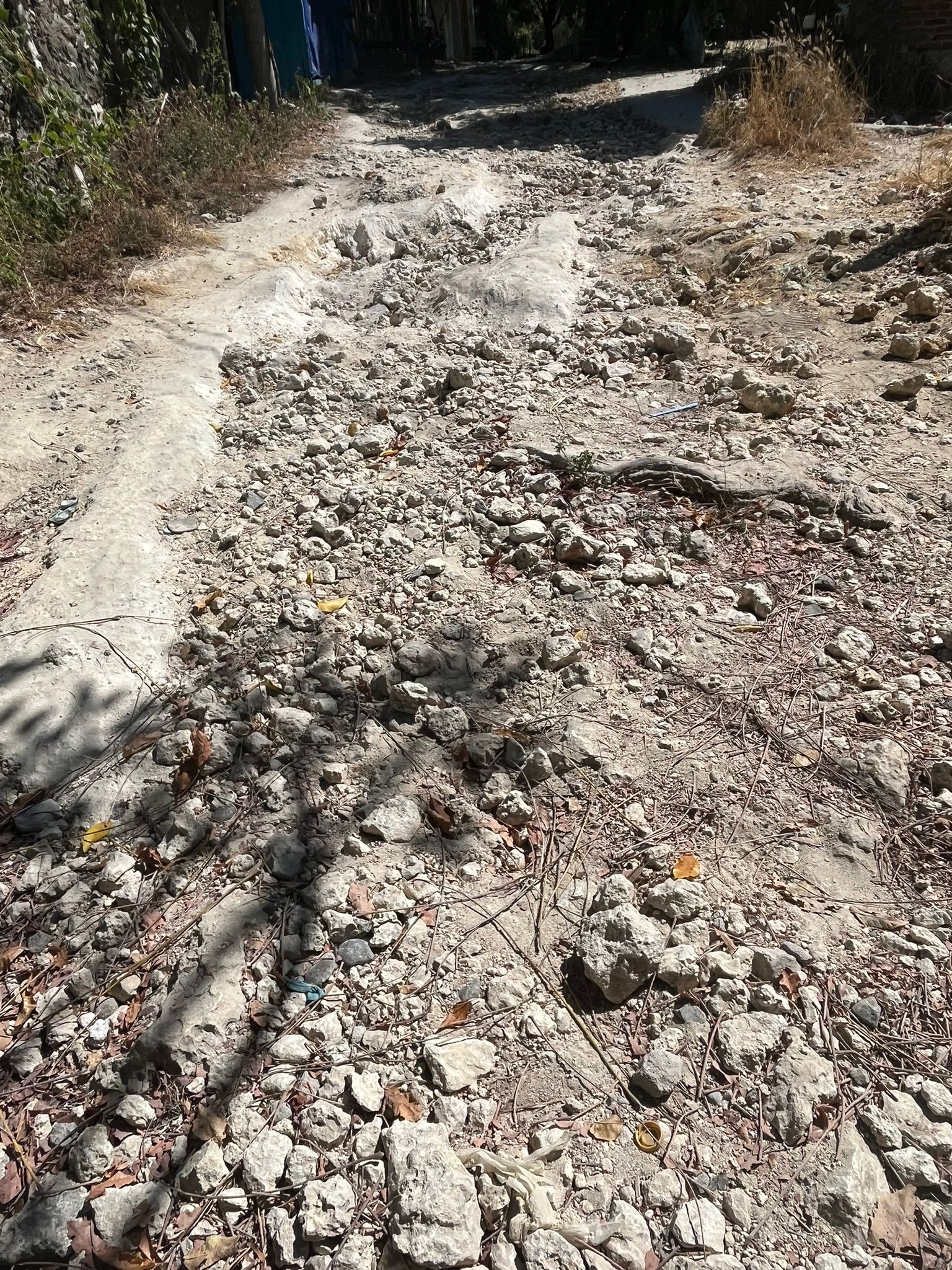
One drives on a clean, paved road with side and center stripes, which abruptly ends, transitions into a gravel path, and finally looks like a washed-out riverbed, where navigating with the scooter, not designed for such terrain, becomes laborious and the backside of one’s anatomy takes hard blows.
But finally, the ordeal was worth it. In a village, whose Tongkonan can be seen from afar on the horizon, another dead ritual is taking place, called “Ma'nene,” as I later learn. It is a relic of the traditional ancestor cult that has survived in Christianity.
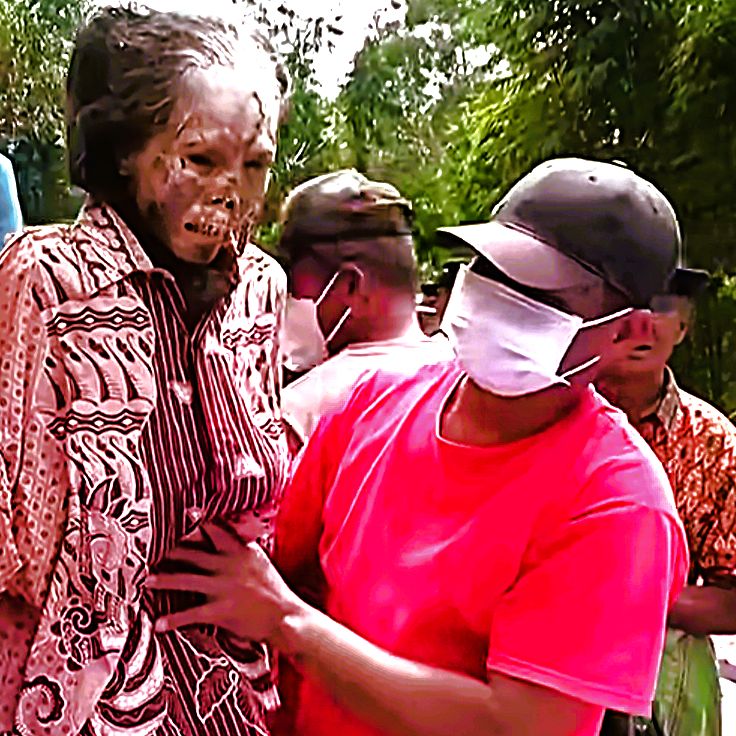
Every few years, often in August, each family retrieves their dead from the graves. They are remarkably well preserved, almost mummified. A woman who died long ago still has recognizable facial features. She has, as a man explains to me, been washed and redressed. Now she is paraded through the village as if she were still alive.
For the Toraja, death is not an abrupt endpoint but a lengthy transition. The dead are not buried once and for all and then forgotten; among the Toraja, they still belong to the social and family community and are respected as family members. With Ma'nene', the relationship with the ancestors is to be continually nurtured.
Random Encounters
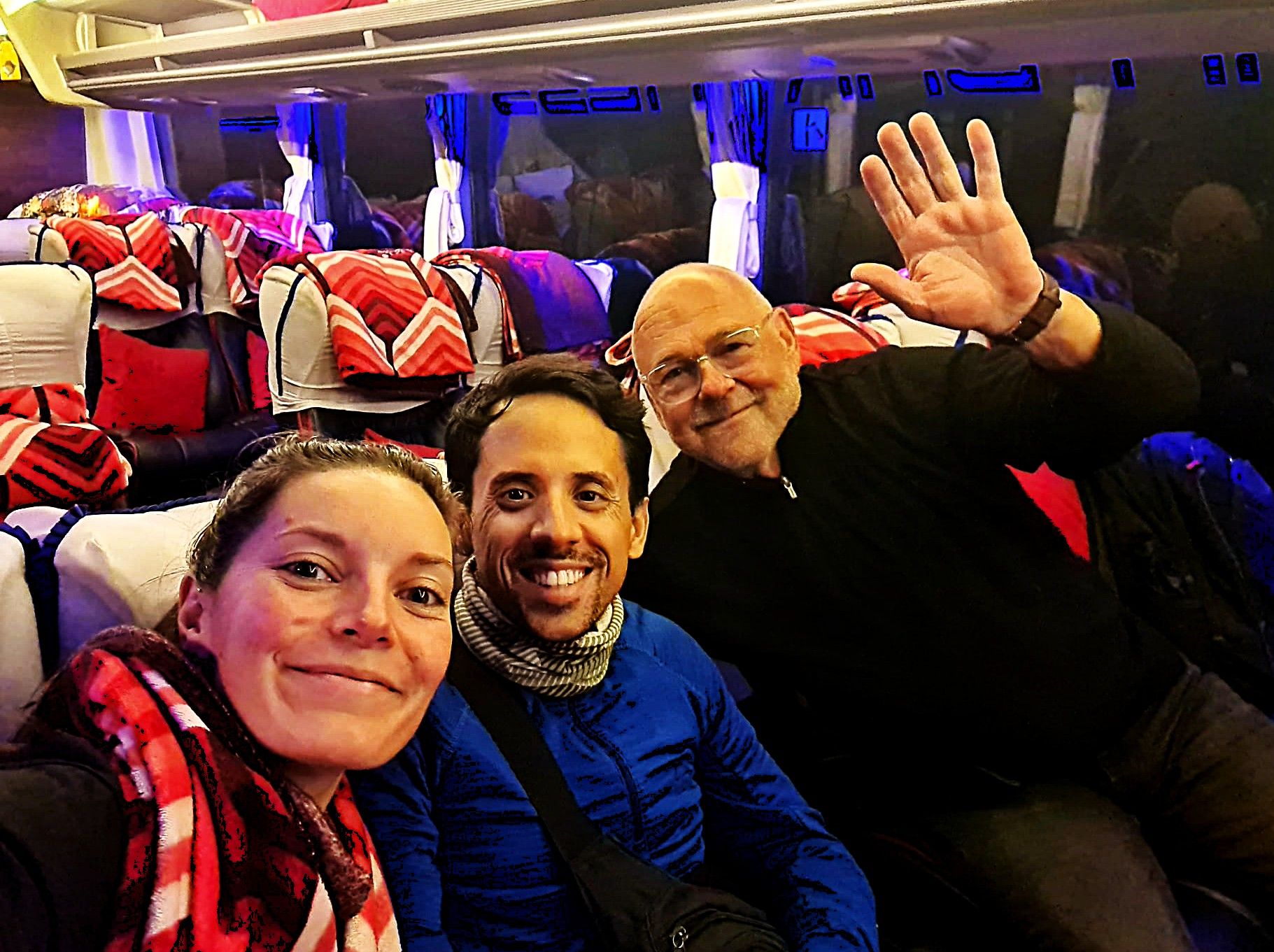
For me, as a solo traveler, relationships with the living are more important than with the dead to avoid loneliness. At “Pia's Poppies Hotel,” I met Johanna, a long-term tourist from France. She is set to go on a tour with a couple. In the evening, as I sit at the table in the restaurant, my name is called by multiple voices. Johanna stands there, next to her Mégane and David, the Spanish-Swiss couple I had already met in the town of Ende on Flores Island.
Two days later, the night bus picks me up in front of the hotel for my return to Makassar, and who is sitting in the two plush seats directly next to me? Guess! Johanna, meanwhile, is heading north to Sulawesi. And yet I will meet her again: we are both in Siargao off the northeast coast of Mindanao in early September 2026, she for a surfing course, I for beach life. Mindanao is the second-largest island in the Philippines, more than twice the size of Switzerland or Niedersachsen.
It is said that one meets the same people twice in life. On my journey, I am beginning to believe that. Though: I have already met David and Mégane three times.