
Sacred Heart of Jesus and 99 Names of Allah in Makassar
From Flores Island, I traveled to Makassar, a multifaceted metropolis in the south of Sulawesi Island, with a detour via Kupang on Timor.
Published: 01.09.2026
On August 11, 2026, during the descent to Sultan Hasanuddin Airport in Makassar in the south of Sulawesi Island, I blinked from my aisle seat over the other passengers through the cabin window. Below us, a massive stone formation of jagged limestone cliffs suddenly rose vertically from the rice fields in the green plain. Karst, I thought, and immediately associated the landscape with the Dolomites. Even before the landing gear creaked onto the runway, I knew: You must go there.
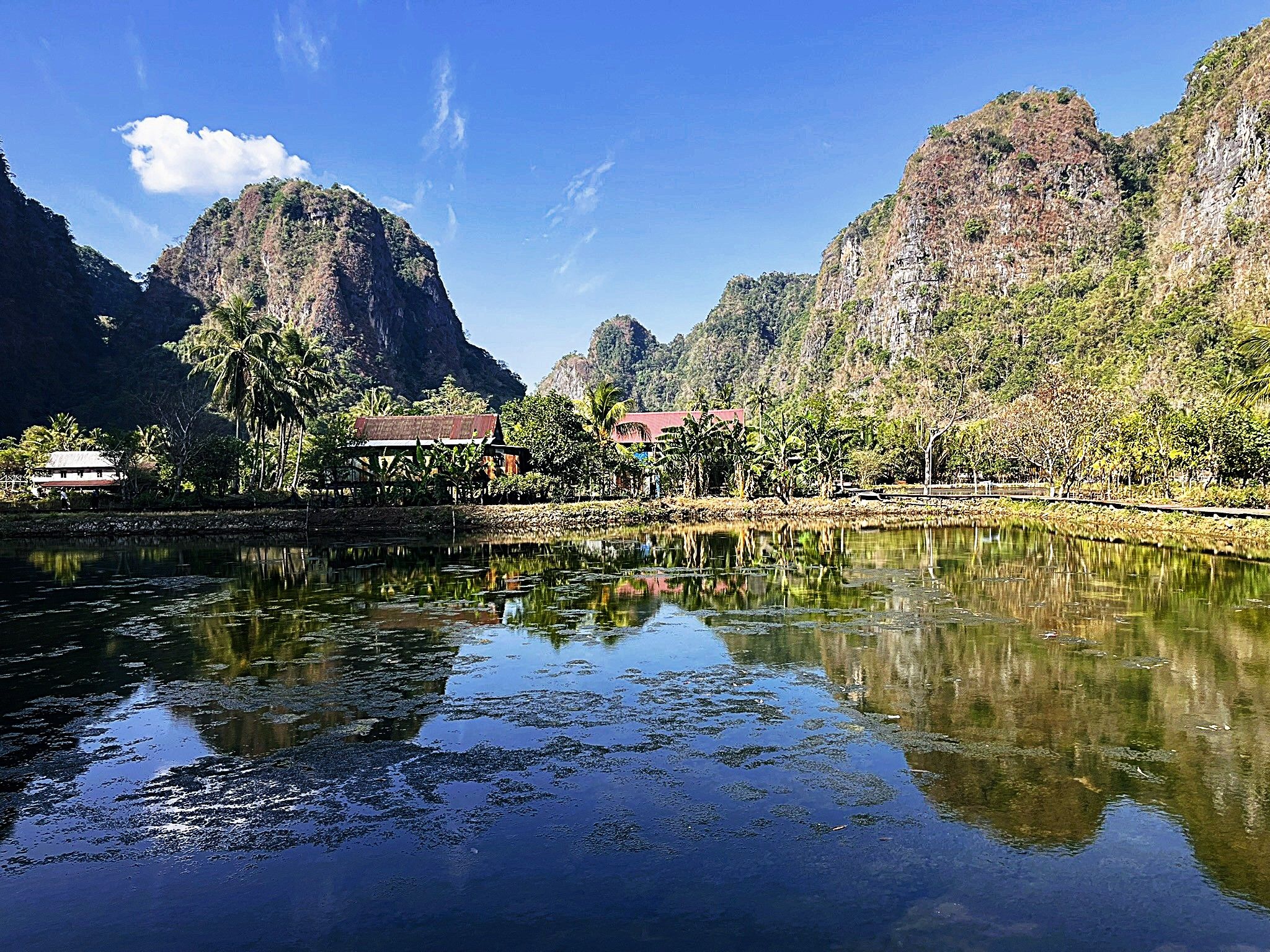
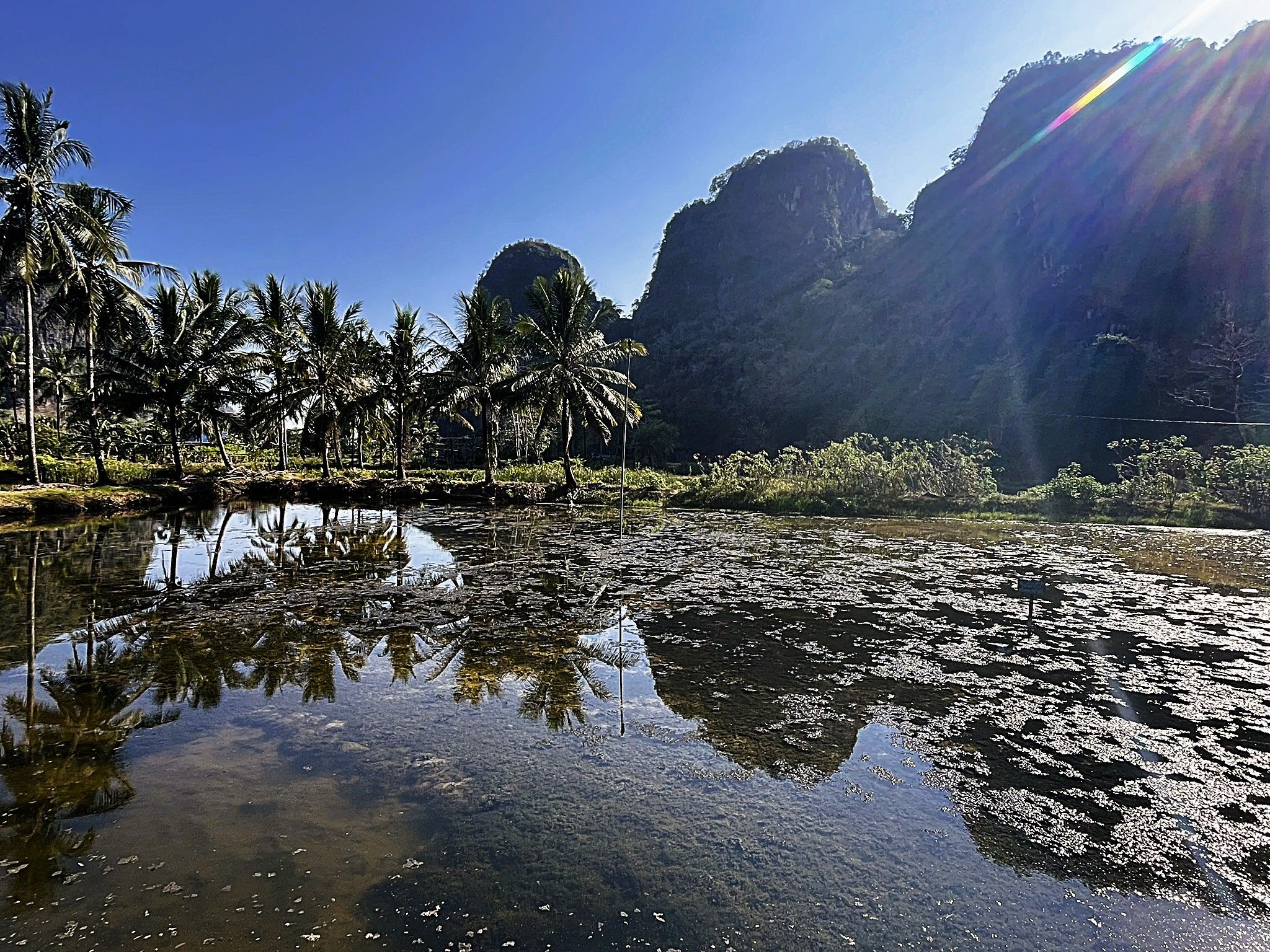
The bizarre landscape is called Maros-Pangkep Karst, covers about 450 square kilometers, and is considered one of the largest contiguous karst areas in Southeast Asia. Only a small part of the area, called Rammang-Rammang, is developed for tourism.
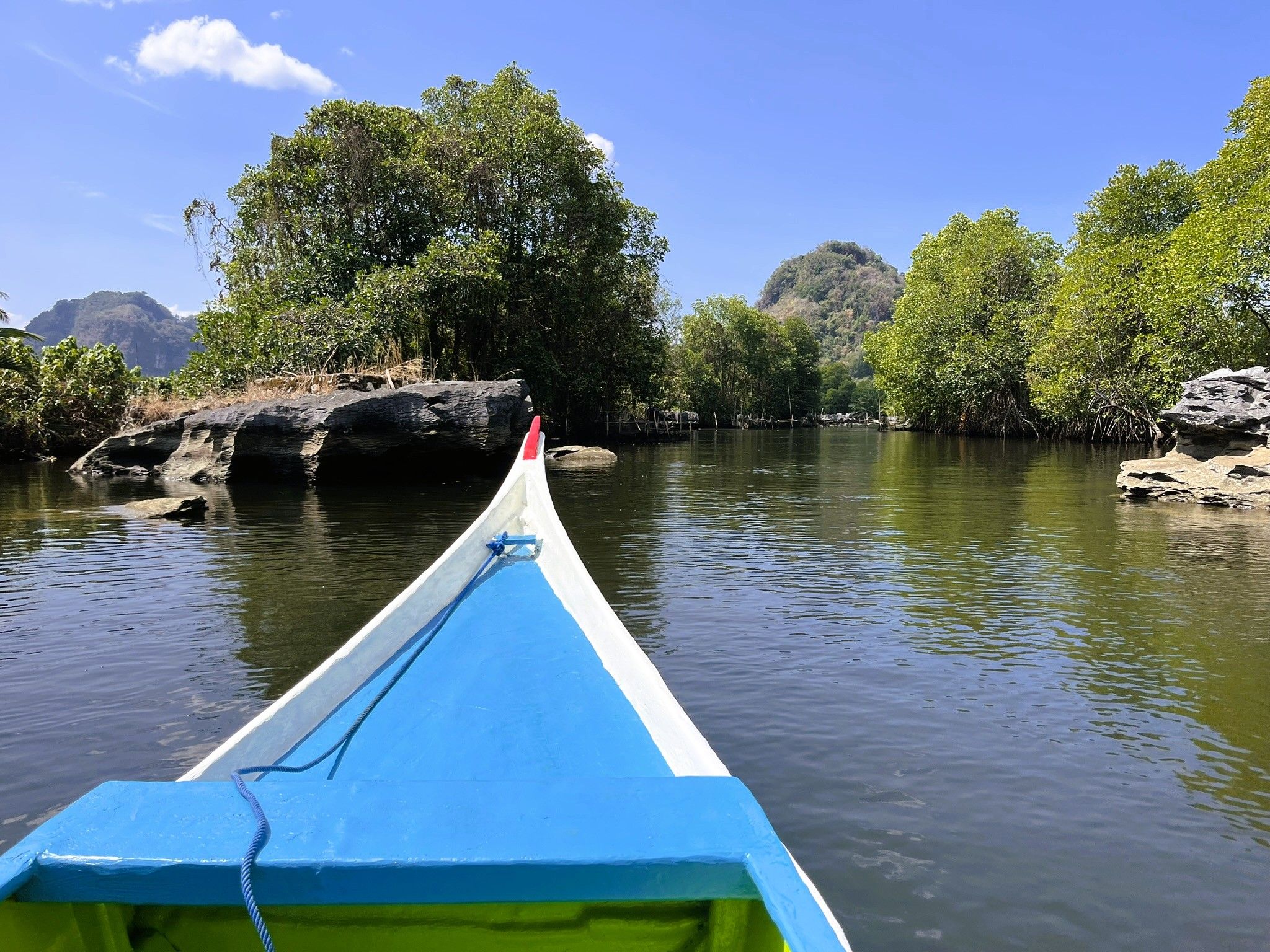
Rammang-Rammang, a term from the local language, is meaningfully translated as “fog” or “misty place.” The name fits the landscape: Between the rugged limestone cliffs, rice fields, mangroves, and river flows, there is often moist mist, especially in the morning.
An app against silence
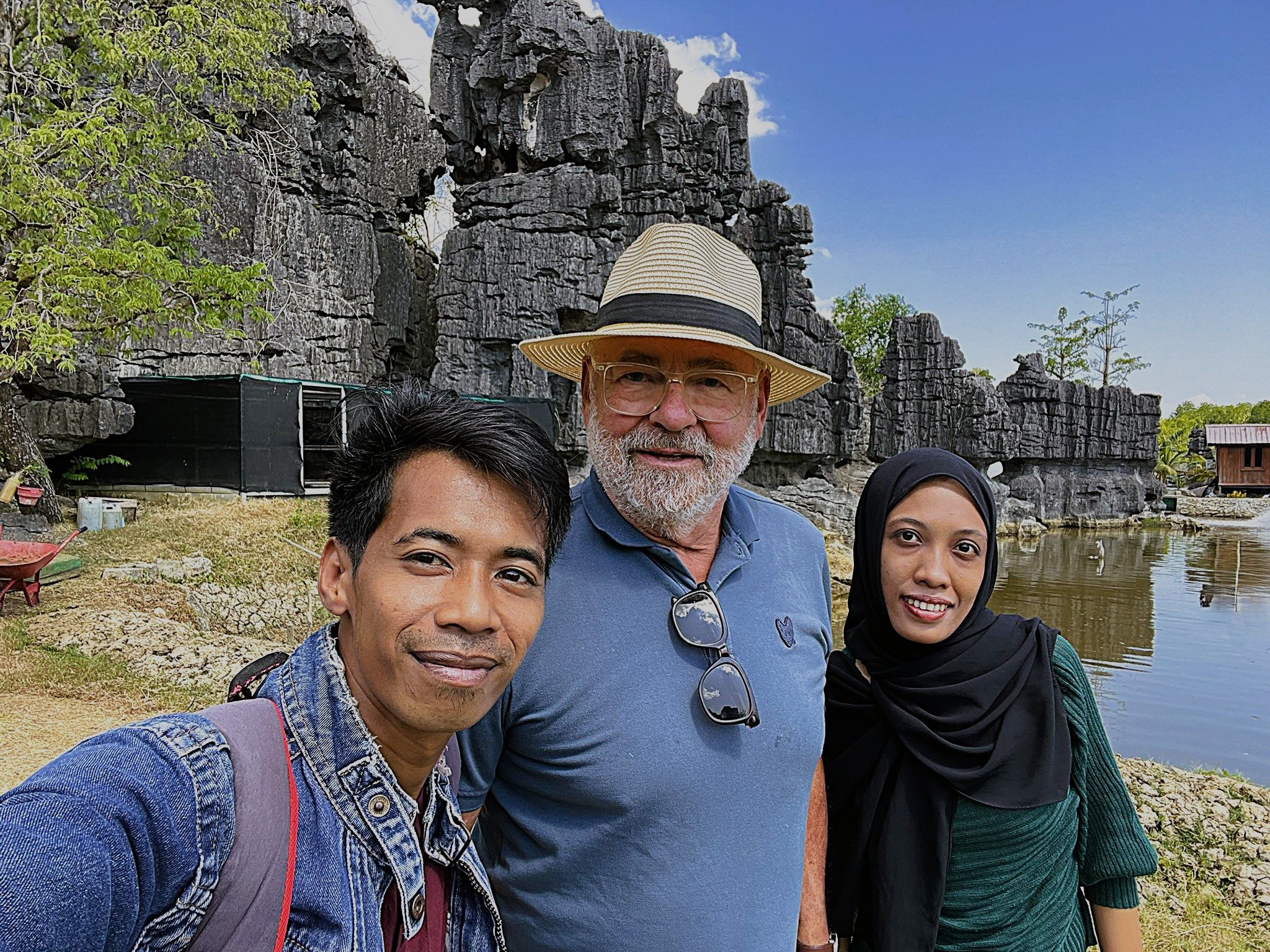
By the third day in the city, it's time. In front of my hotel, the pompous yet affordable “D'Primahotel Pattimura” near the beach promenade and the container port, a small black Daihatsu waits, driven by the notably elegantly styled Sultan (“Sultan” this time as a first name, not as a majestic title like Hasanuddin); Ristina, a slender woman with a black headscarf, picks me up in the lobby. With both of them, it soon becomes clear, I can only communicate through gestures, fragments of sentences, and a translation app.
I had booked an “English-speaking tour guide” through “12go” and paid a hefty price for it. The app had promised it, but reality looks different. Ristina introduces herself with the phrase “not speak English.” Later, she pulls out her phone: I type my questions in English, she reads the Indonesian translation, and answers in writing as well – a cumbersome, stuttering dialogue where every simple question must go through translation loops.
Through the stone labyrinth with a plastic helmet
However, the two could hardly have been friendlier and more helpful. Ristina hands me a water bottle before I even ask for it and warns me of slippery stones with energetic hand gestures that require no translation. Sultan hands me a plastic helmet as the passages in the stone landscape and the labyrinth cave get narrow, and sharp rocks invite you to bump your heads against them.
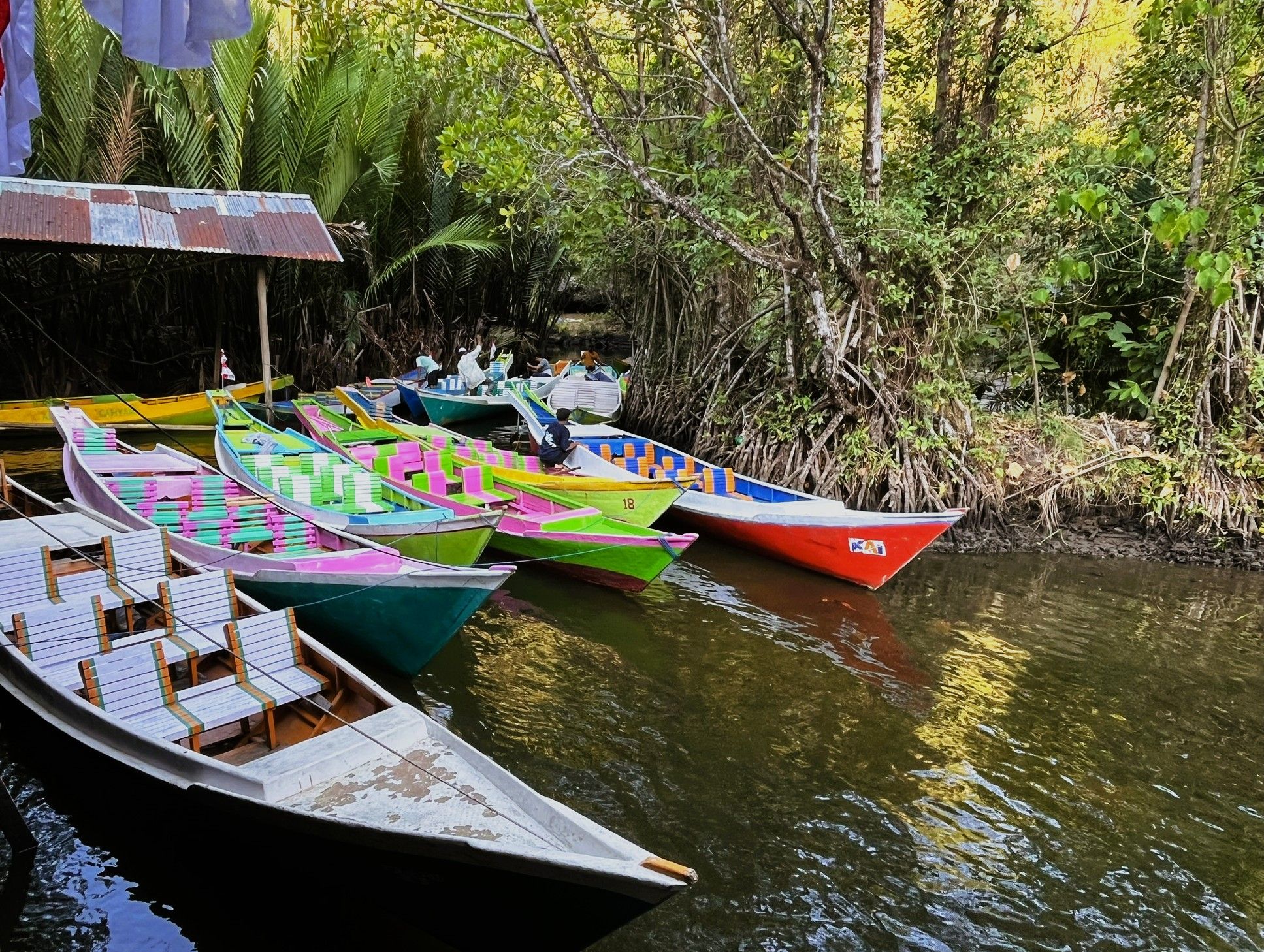
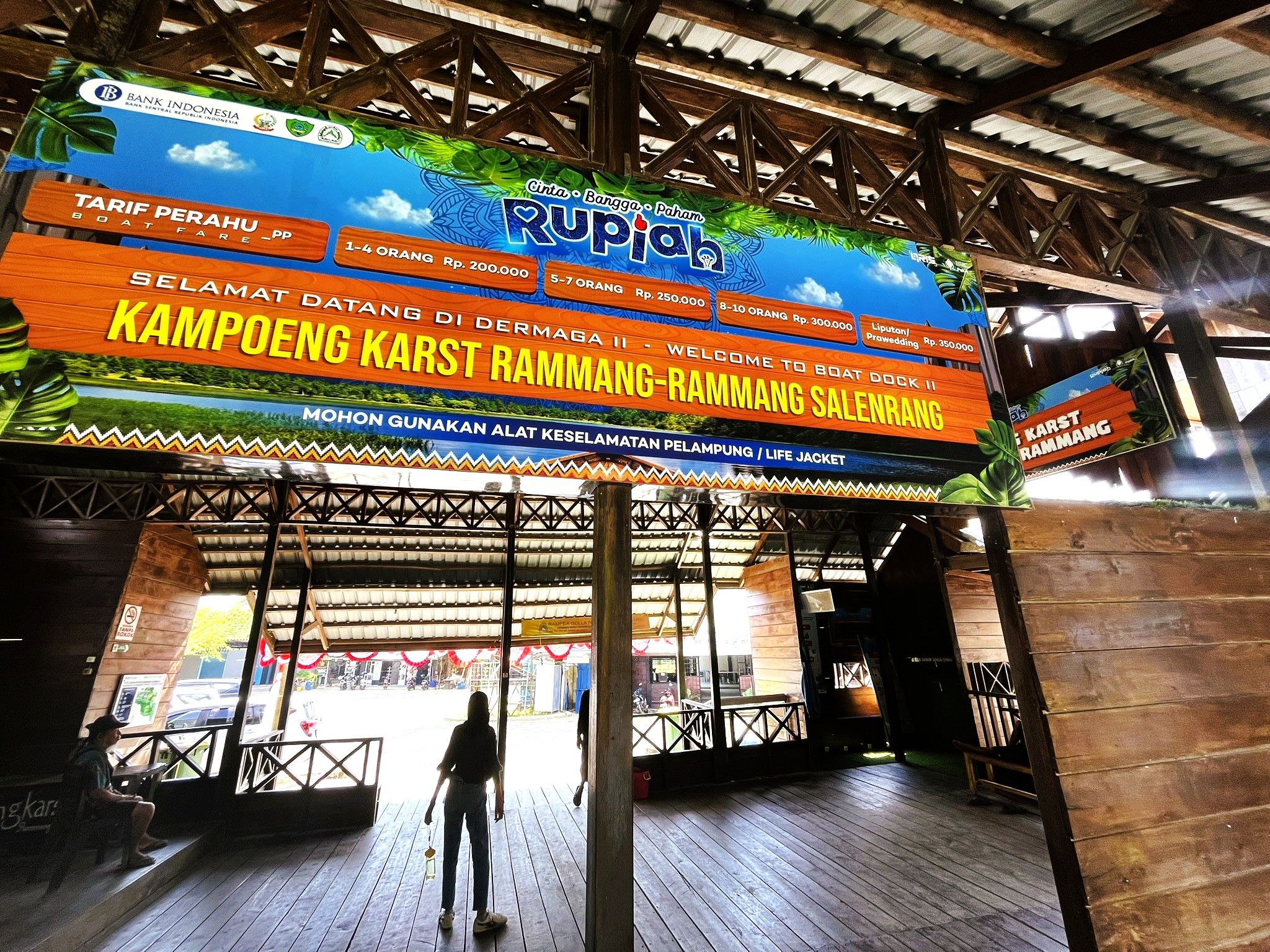
After nearly two hours of driving through the dense traffic of the two major cities, Makassar and adjacent Maros, the actual karst tour begins at a wooden boat station, where narrow wooden canoes with benches bob in the murky green of the Pute River. We climb aboard over steep wooden planks, and the boat sways precariously. The boatman starts the engine and takes us into a tunnel of greenery and roots that grow directly from the water.
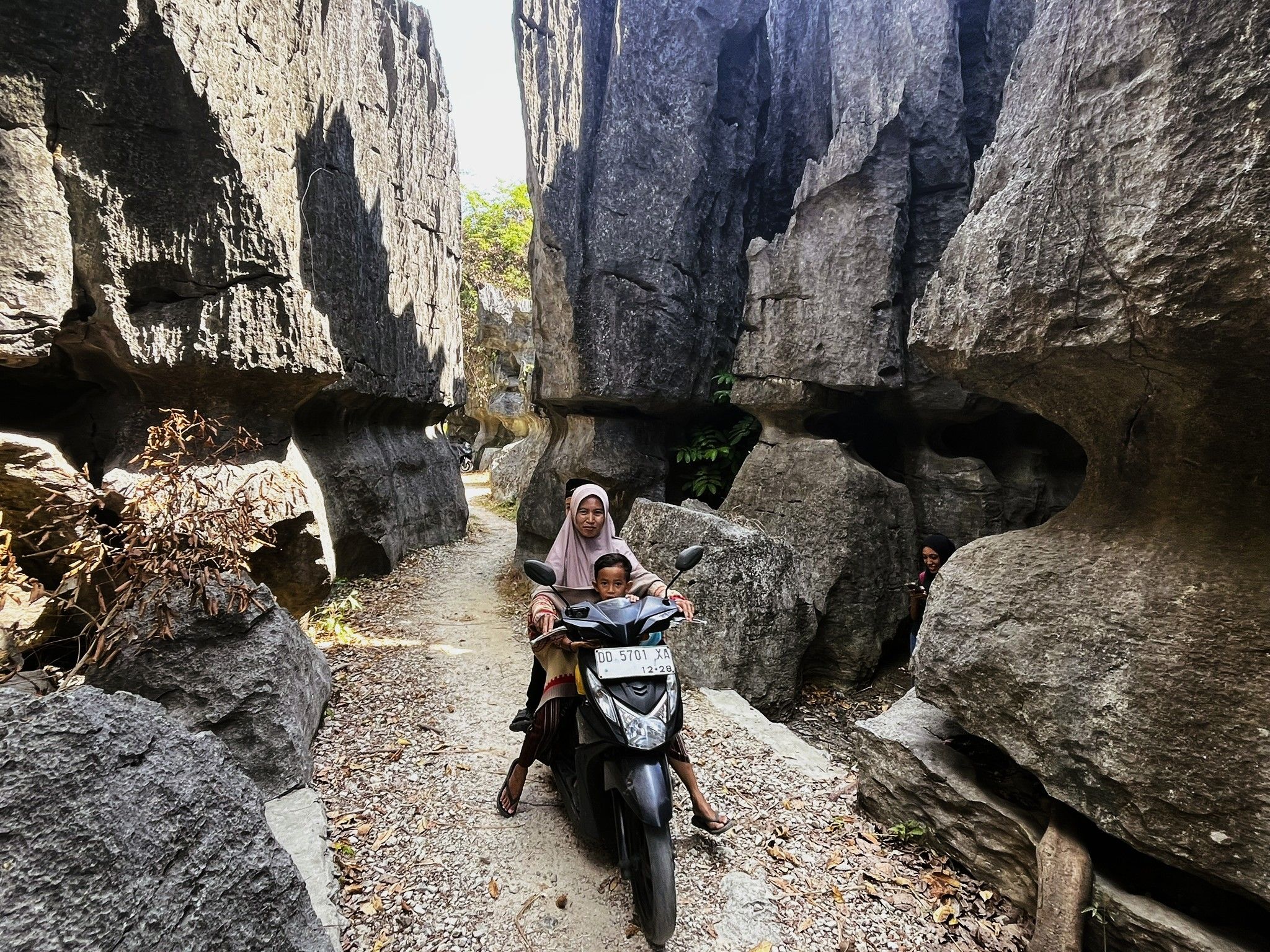
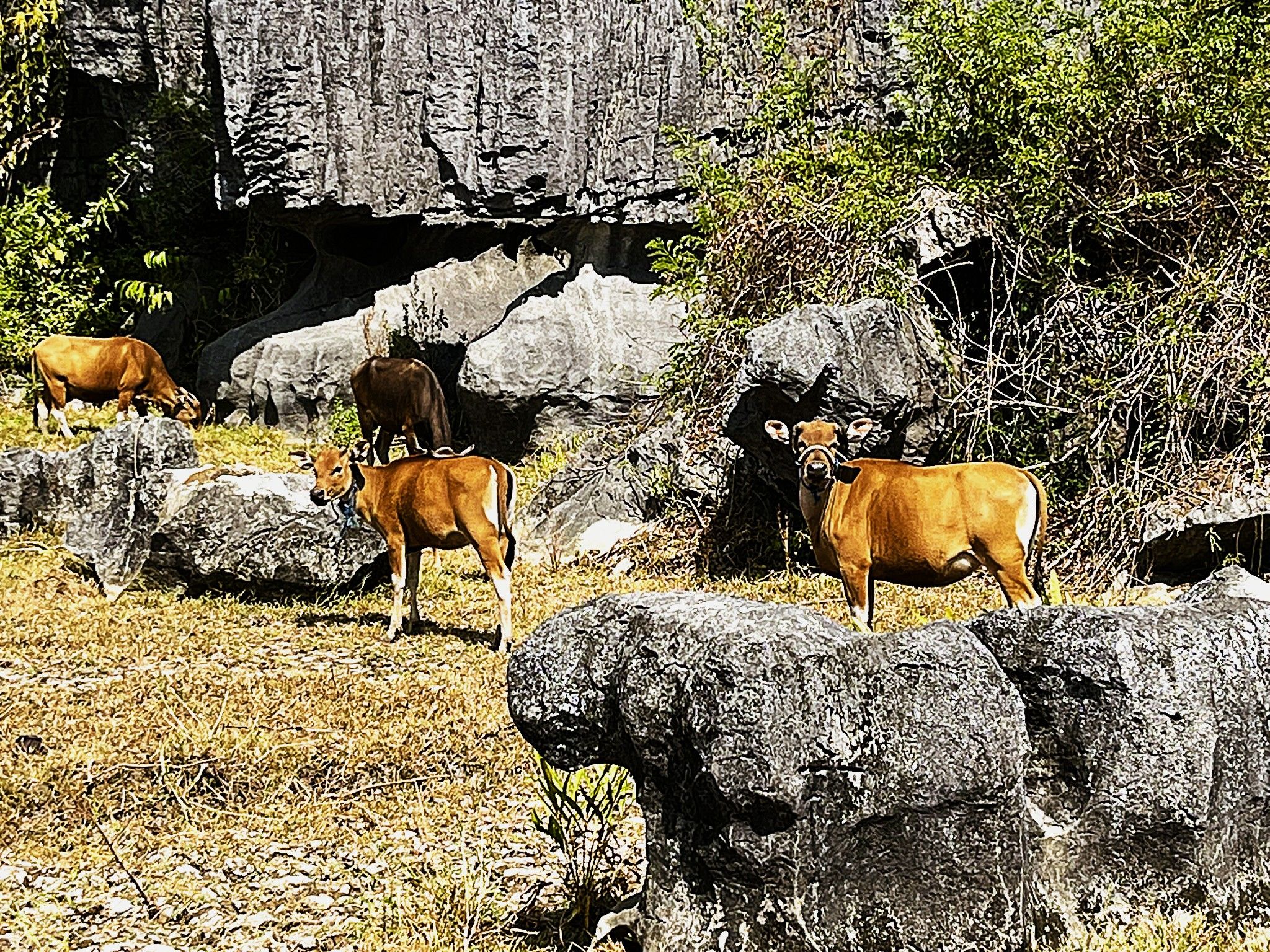
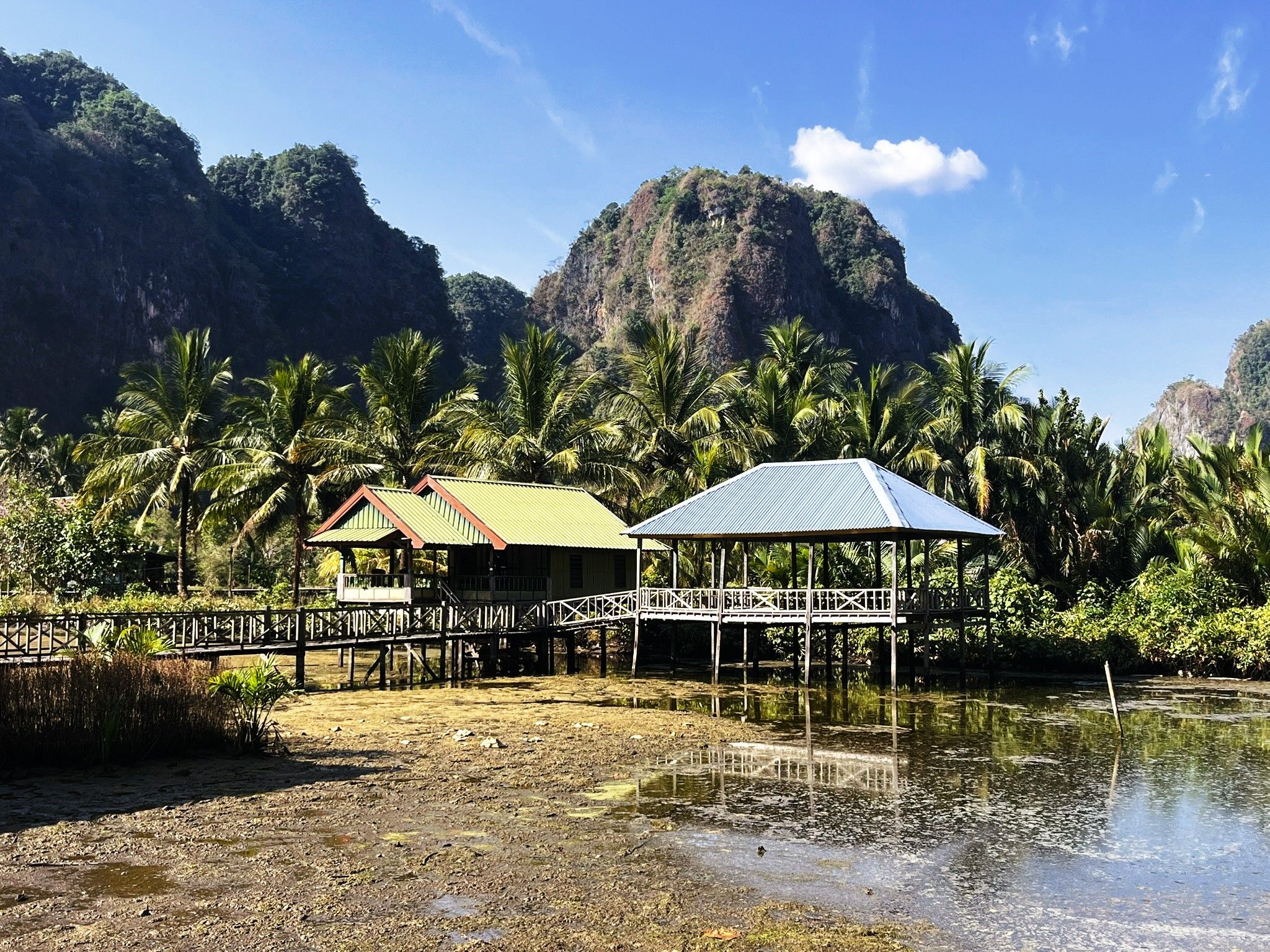
Along the river, there are several docking points, each with wooden covered piers. At the first, we stroll through the labyrinth of bizarre rock formations near the village of Laku with our helmets on. Even here, in this inhospitable area, people live. A woman with her small son comes towards us on a scooter. And the cows grazing in the parched grass also indicate civilization.
At the second station, we hike through a lush green landscape to the Tianang cave. At the cave's entrance, Ristina points to faded drawings of land animals and fish on the rock wall – millennia-old testimonies of a prehistoric culture of hunters, fishermen, and gatherers.
Young coconuts in the stilt village
Finally, the boat drops us off in the village of Berua for an extensive tour – the program has announced this final stop as the “main destination” of our excursion. Berua lies in a flat basin, partly cultivated with rice and dotted with coconut palms, partly submerged underwater. It is surrounded by dark, almost vertical karst cliffs that cast heavy shadows on the village by early afternoon.
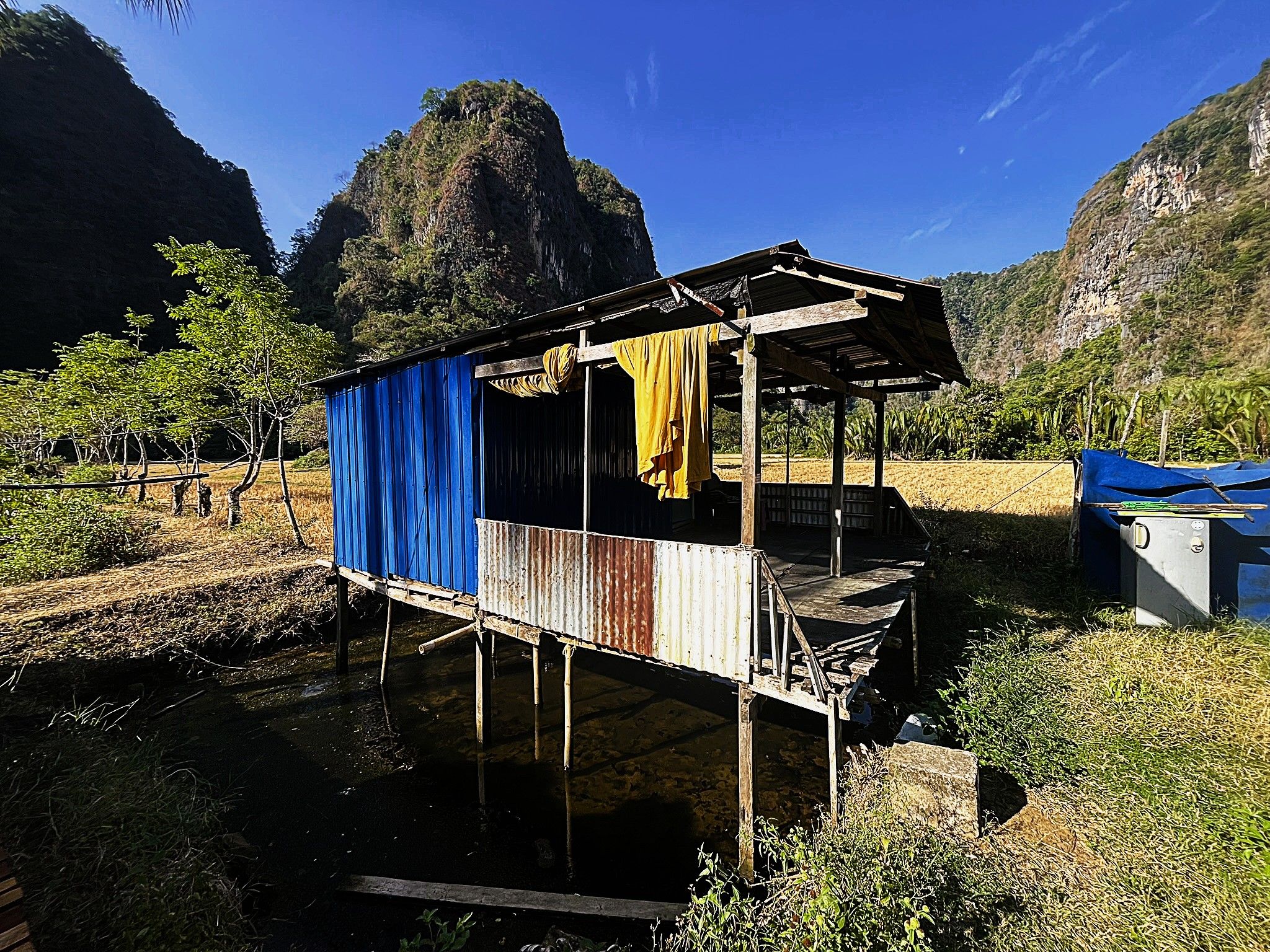
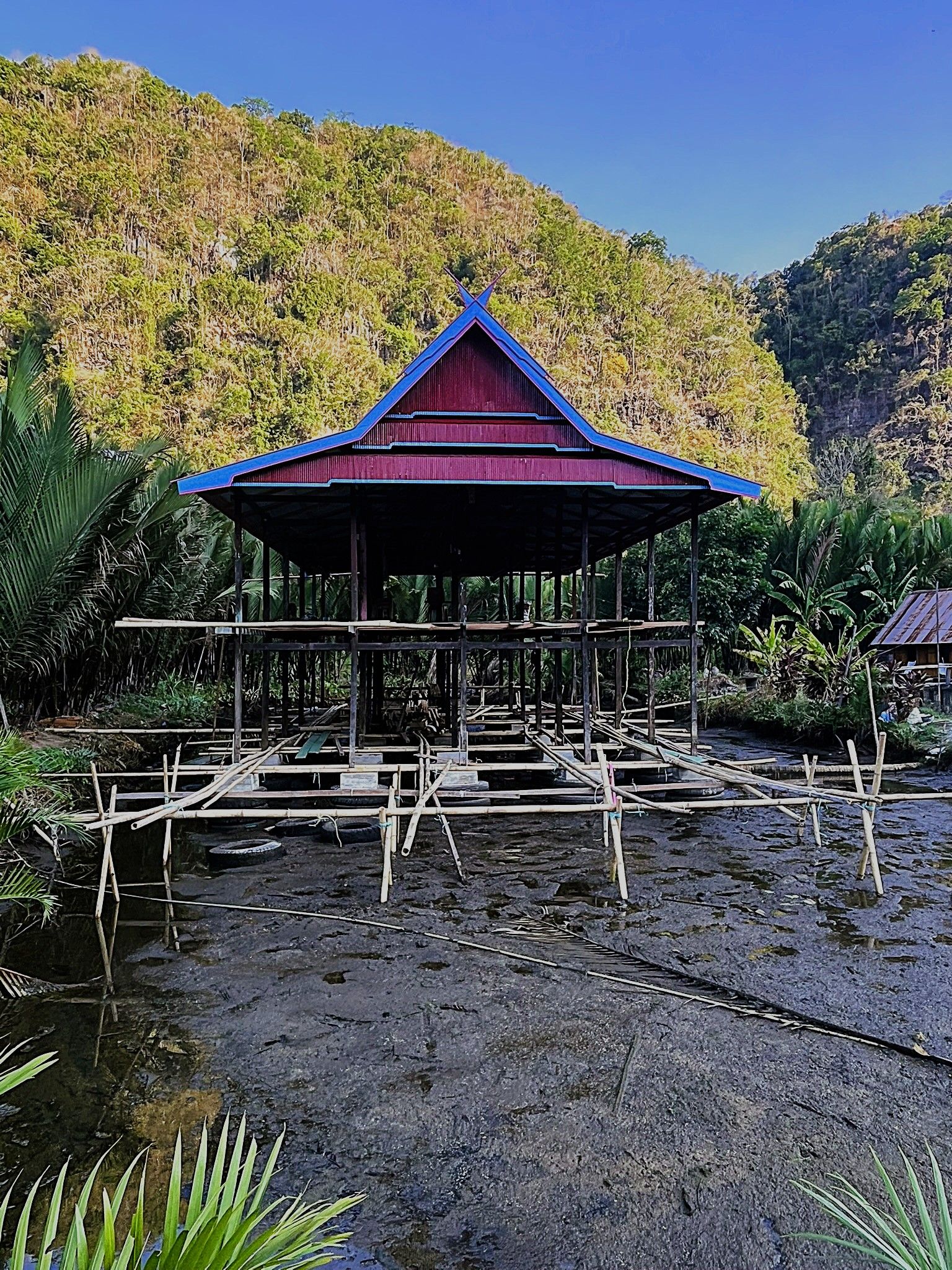
The village is alive; some of the houses stand on stilts in or near the water; new dwellings are being built in the traditional style. Mothers rock their babies, and men engage in conversation. Women offer fresh coconuts; when you buy one (or, in my case, receive one included in the excursion price, which is a “young coconut”), it is quickly chopped open with a few clean swings of a machete, after which you sip the coconut milk with a straw.
Ancient drawings at the King Kong rock
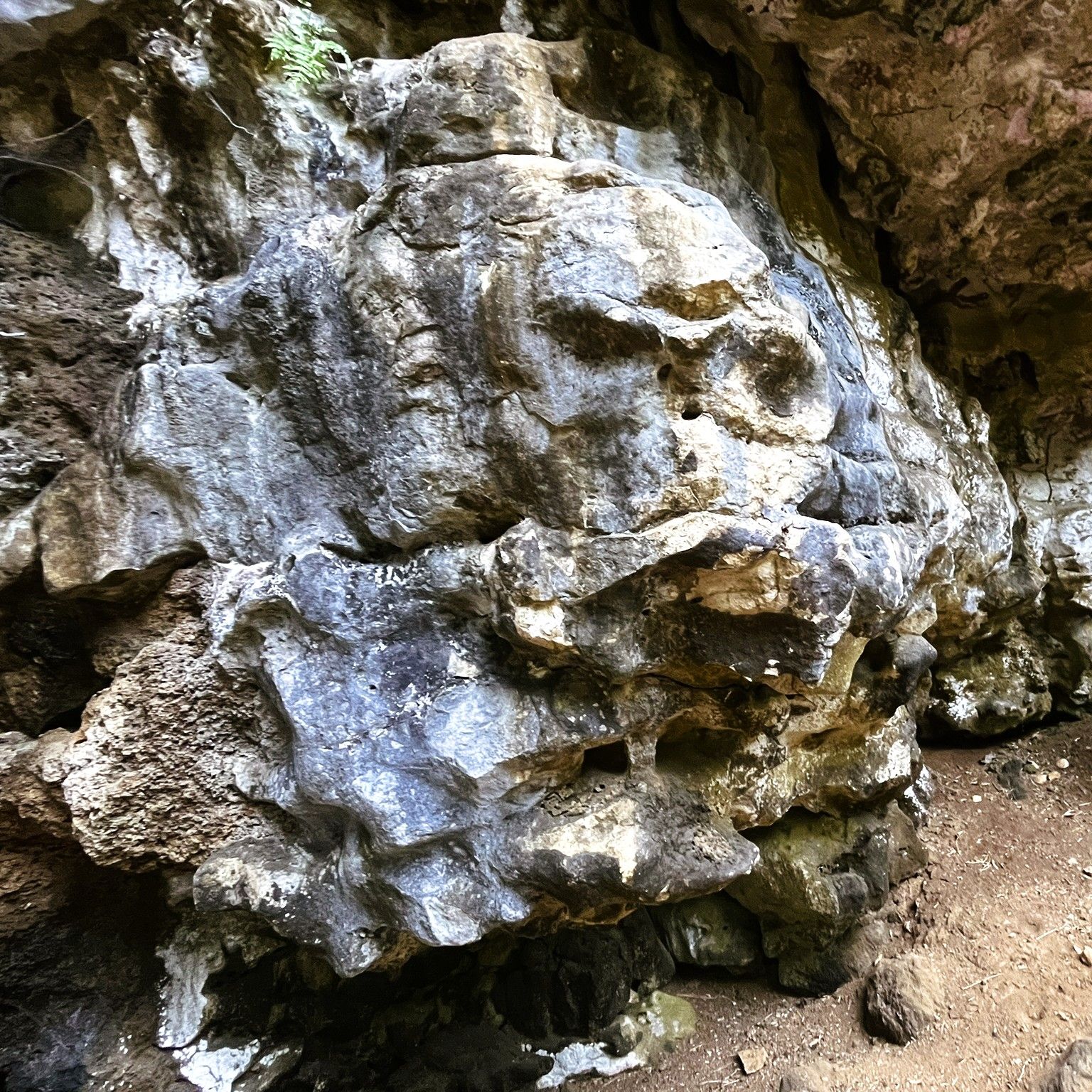
To keep tourists' feet dry, wooden walkways have been built along the edges of the expansive fields, and following them leads you to the so-called “King Kong rock,” a vertical stone formation that (with a bit of imagination) resembles the head of a gorilla. Once – as a sign reveals – this was a place where masculinity rituals were held, including cockfights.
Right next to the stone gorilla, there are further rock drawings that document that this remote area was inhabited by humans even in the Stone Age.
As we climb back into our boat and begin our return journey, from a boat just docking, I hear my name “Artur,” loud and echoing off the rocks, pronounced in a French way: “Artüür.” I had already met the Belgian family – the woman a professor, the man a marketing specialist, with two teenage daughters – on the island of Flores. We had stayed next door in the “Pantai Paris Homestay” in Maumere, about a thousand kilometers from Rammang-Rammang, and had talked extensively over breakfast.
It seems that there are actual trails for backpackers in Indonesia, as – what I don’t know yet in Rammang-Rammang – will happen again a few days later in Rantepao, about 300 kilometers north of Makassar: I coincidentally meet Mégane and David again, a Spanish-Swiss couple with whom I had already had extensive discussions in Ende, also on Flores.
Indonesia is vast, but the world is small.