
Maumere – the holiday paradise can wait
As the last stop on the Indonesian island of Flores, I reached Maumere on August 3, 2026 - from where I could hardly leave.
Published: 30.08.2026
After traveling from Ende on Flores Island with a detour through Kupang on Timor Island, I finally arrived in Makassar, South Sulawesi, on August 11, 2026 – my originally planned flight from Maumere had fallen victim to volcanic ash.
At half past seven in the evening, the air over Makassar, the large city in South Sulawesi, is still warm like an open oven. I met up again with Mégane and David, the couple from Delsberg, Switzerland, whom I had already encountered in Ende on Flores Island. In search of a cooling breeze and a drink, we took the lift to the rooftop terrace of the “Swiss-Belhotel,” where there is a huge bar and a live band playing Indonesian pop and Western rock classics.
Below us, the night-time container harbor looks like a video game: rows of orange and blue boxes stacked into towers, with cranes leaning over the cargo. Light sources illuminate everything in a dim glow, and suddenly flashlights brighten the scene. Men are bustling on the harbor piers and between the containers. Meanwhile, up on the hotel rooftop, the ice cubes are melting in the glasses. Just a few hundred meters separate two worlds that could hardly be more different, as Mégane notes, “fascinating, the contrast,” she says.
From the Becak Perspective
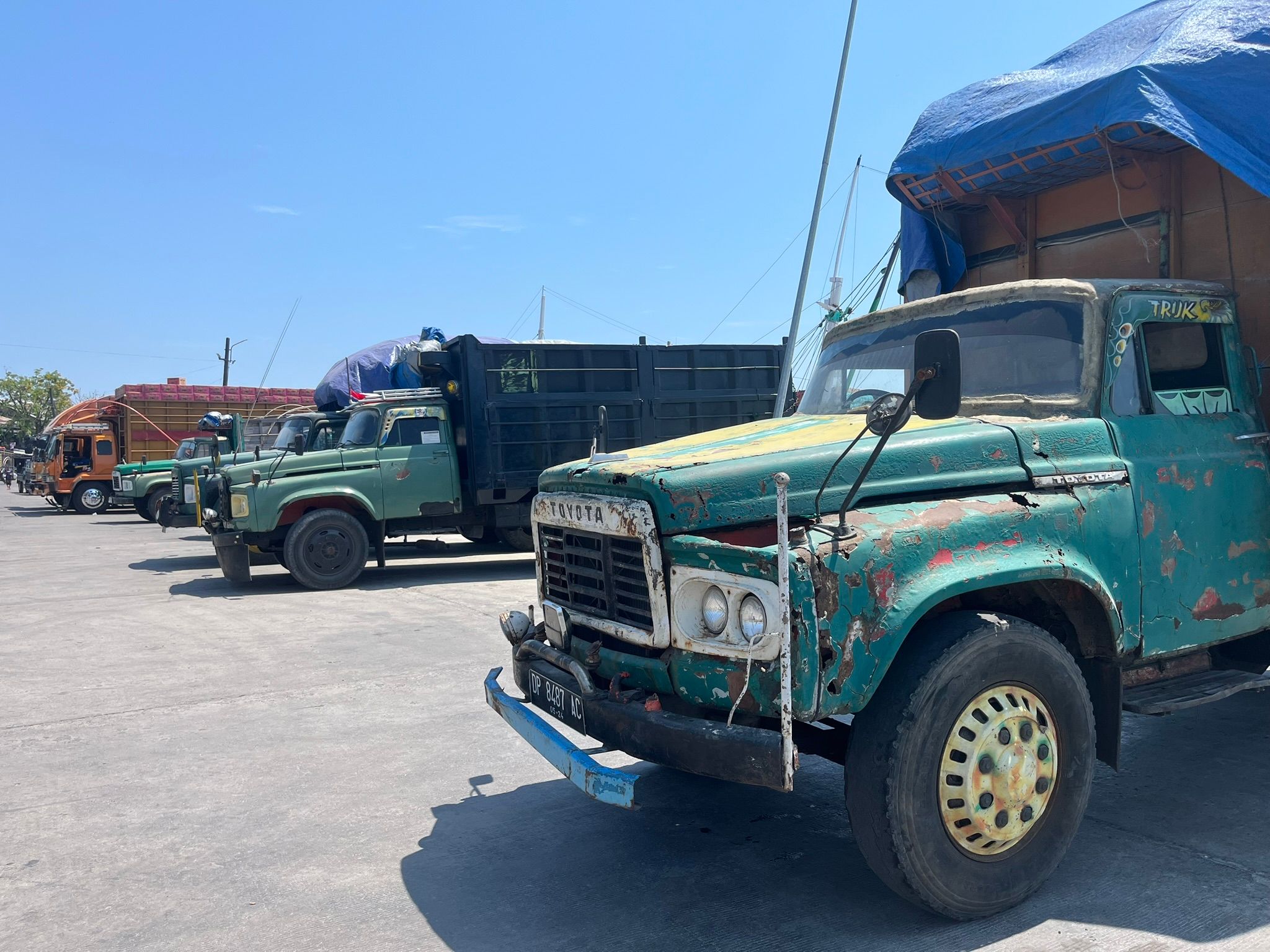
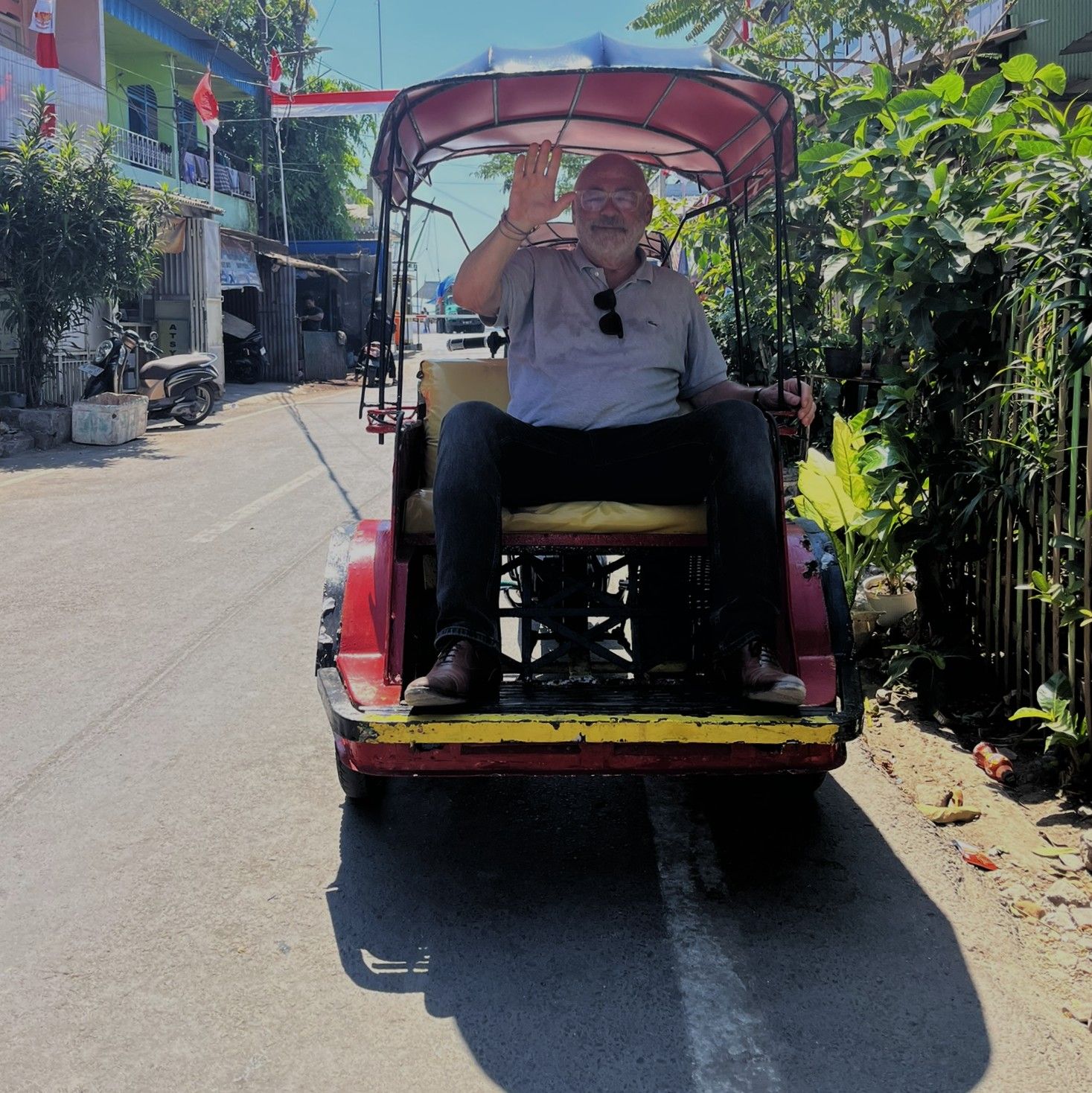
The next morning, I exchanged the bird's-eye view for the ground-level experience in a Becak, a pedal rickshaw with a small passenger cabin in front while the driver pedals from the back. I sit at the height of the exhaust pipes of countless motorcycles and cars and breathe in their exhaust fumes, especially the stinking diesel smoke from old trucks.
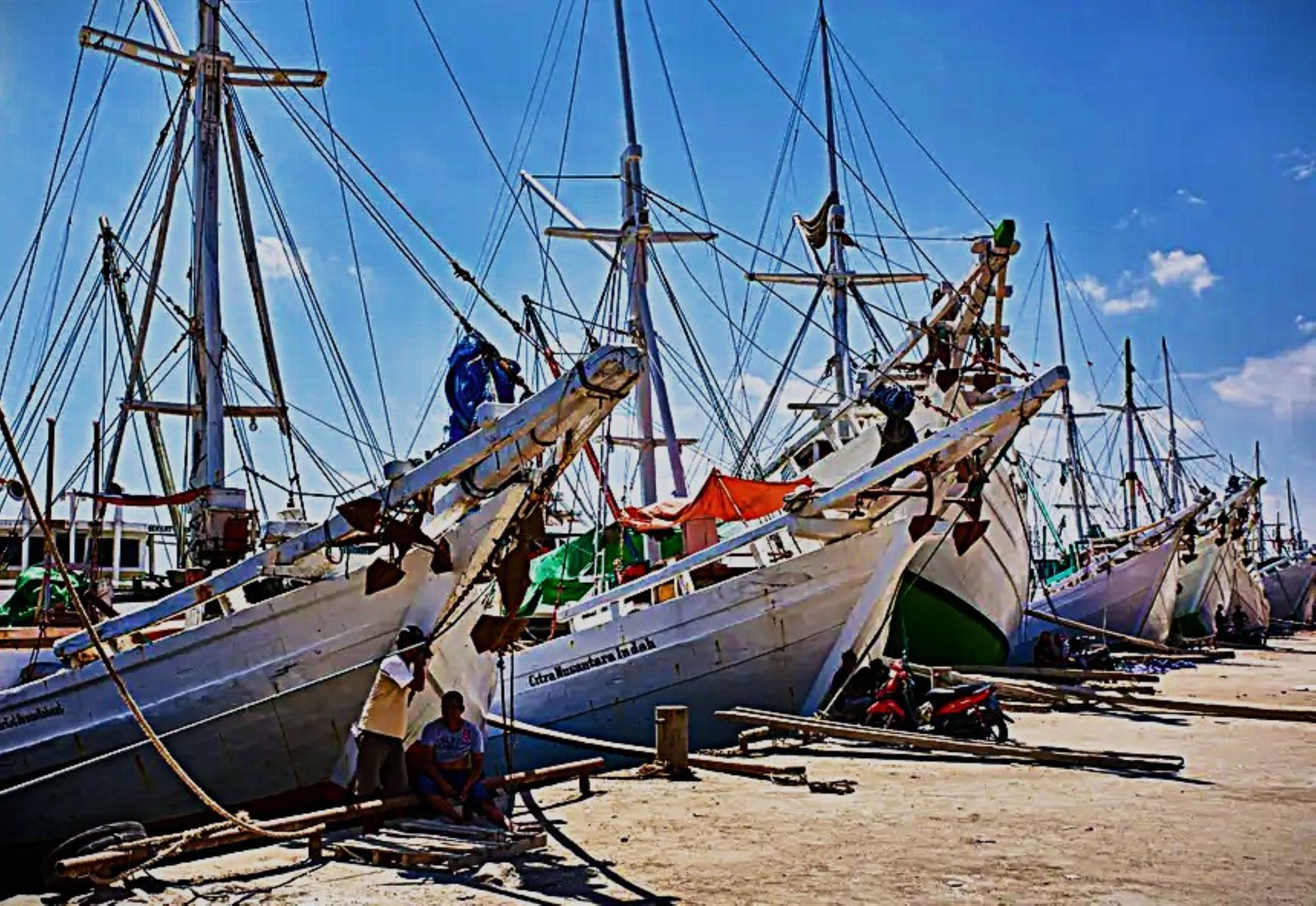
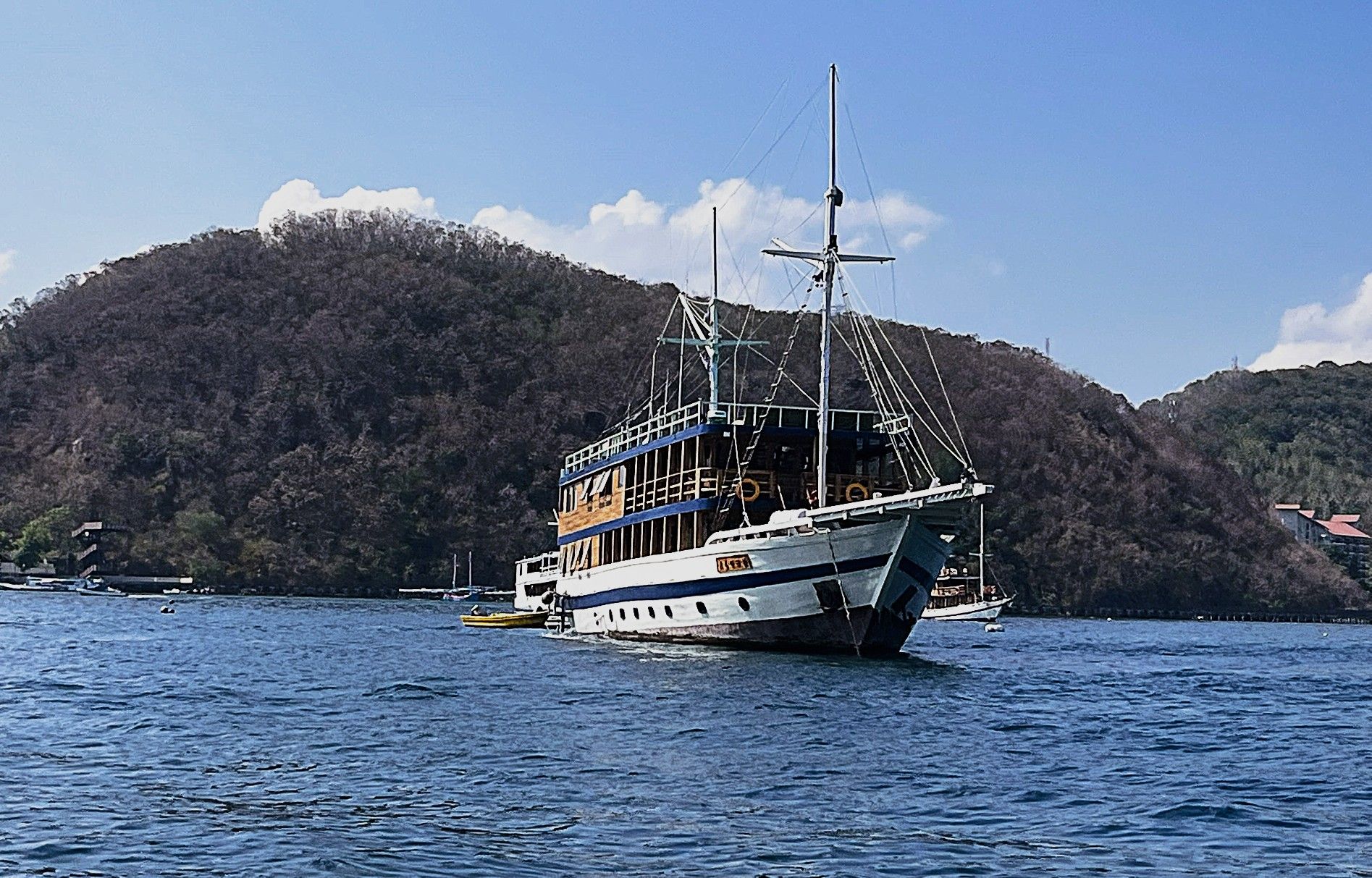
The Port of Paotere, a few kilometers north, has nothing to do with the nighttime container ballet. Here, the Pinisi, the traditional sailing ships, are so close together that you could almost jump from one bow to the next without falling into the water. Their hulls are made of wood, hand-crafted in countless small shipyards along the southern coast of Sulawesi, bleached by salt and sun.
Men carry bags of cement on their shoulders across swaying planks, fifty, sixty kilos per bag. On the wharf, furniture from Jepara on the north coast of Java has been dropped off, along with mountains of Bintang beer in cartons, brewed in Jakarta and distributed throughout the country. The Pinisi are not a folkloric remnant of past times but the cheapest logistics between the roughly 17,500 Indonesian islands. More luxurious variants for tourists can be found as excursion and cruise boats off Bali and between Lombok, Komodo National Park, and Flores Island.
Plastic Sandals and Dead Chickens
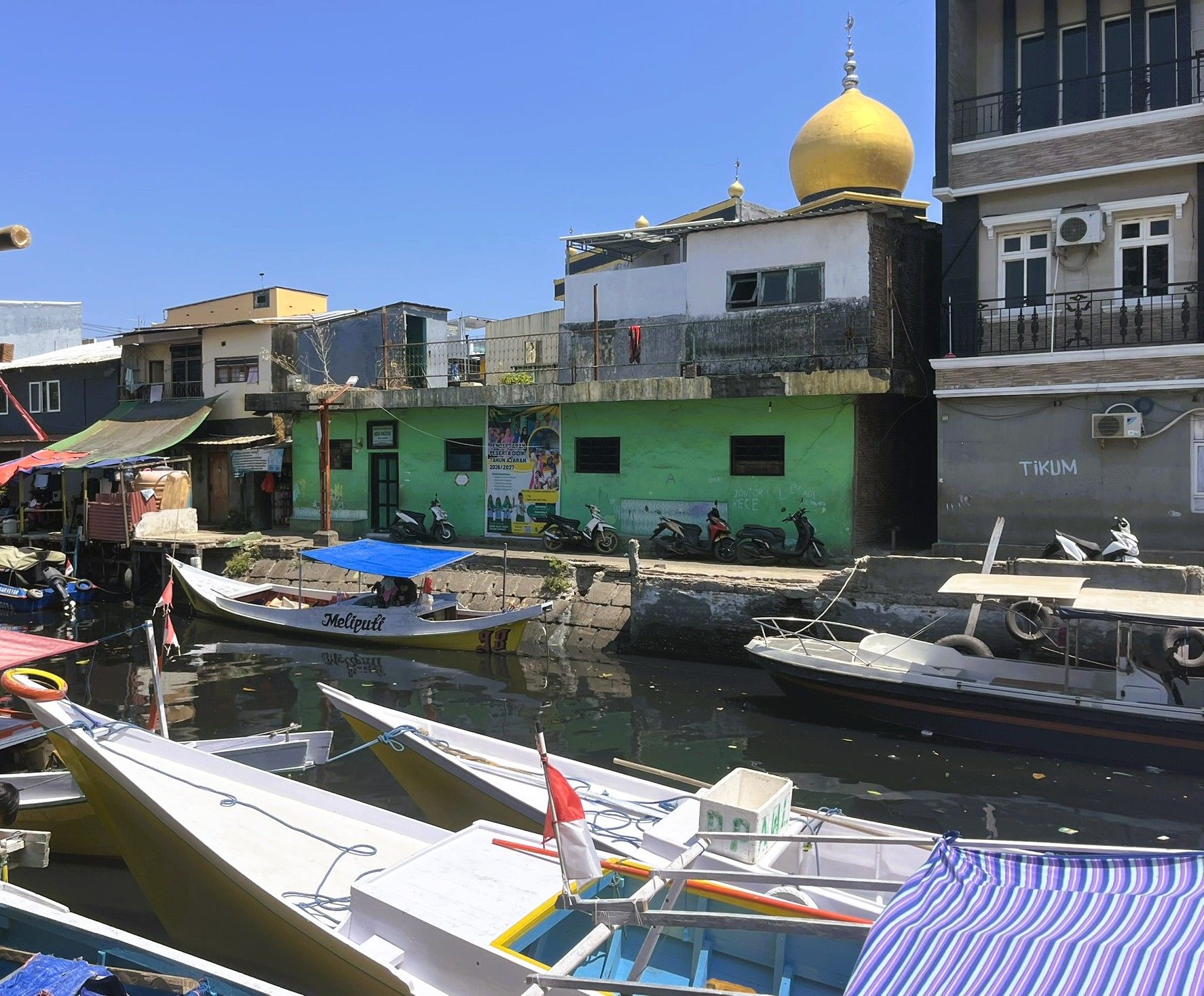
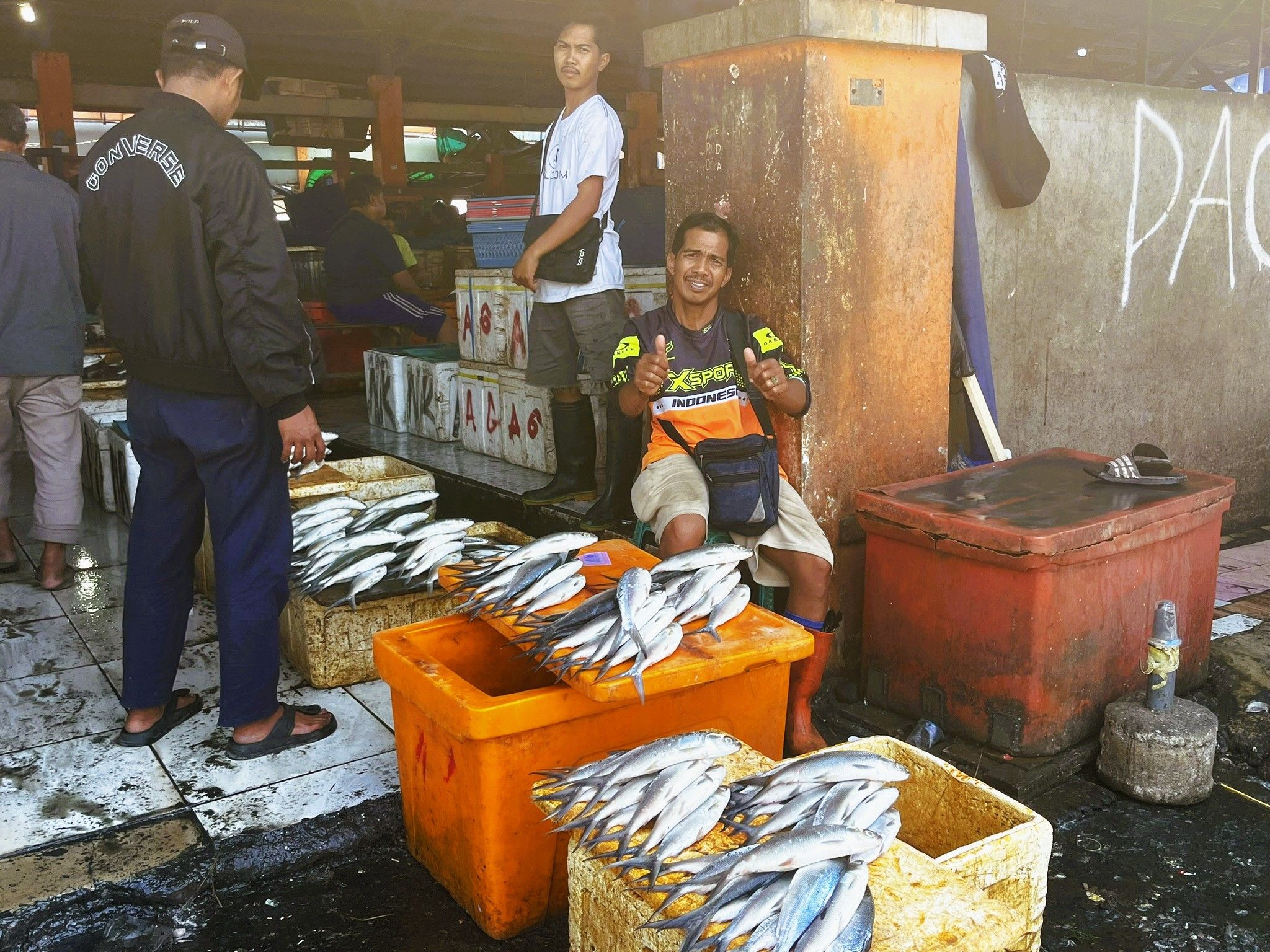
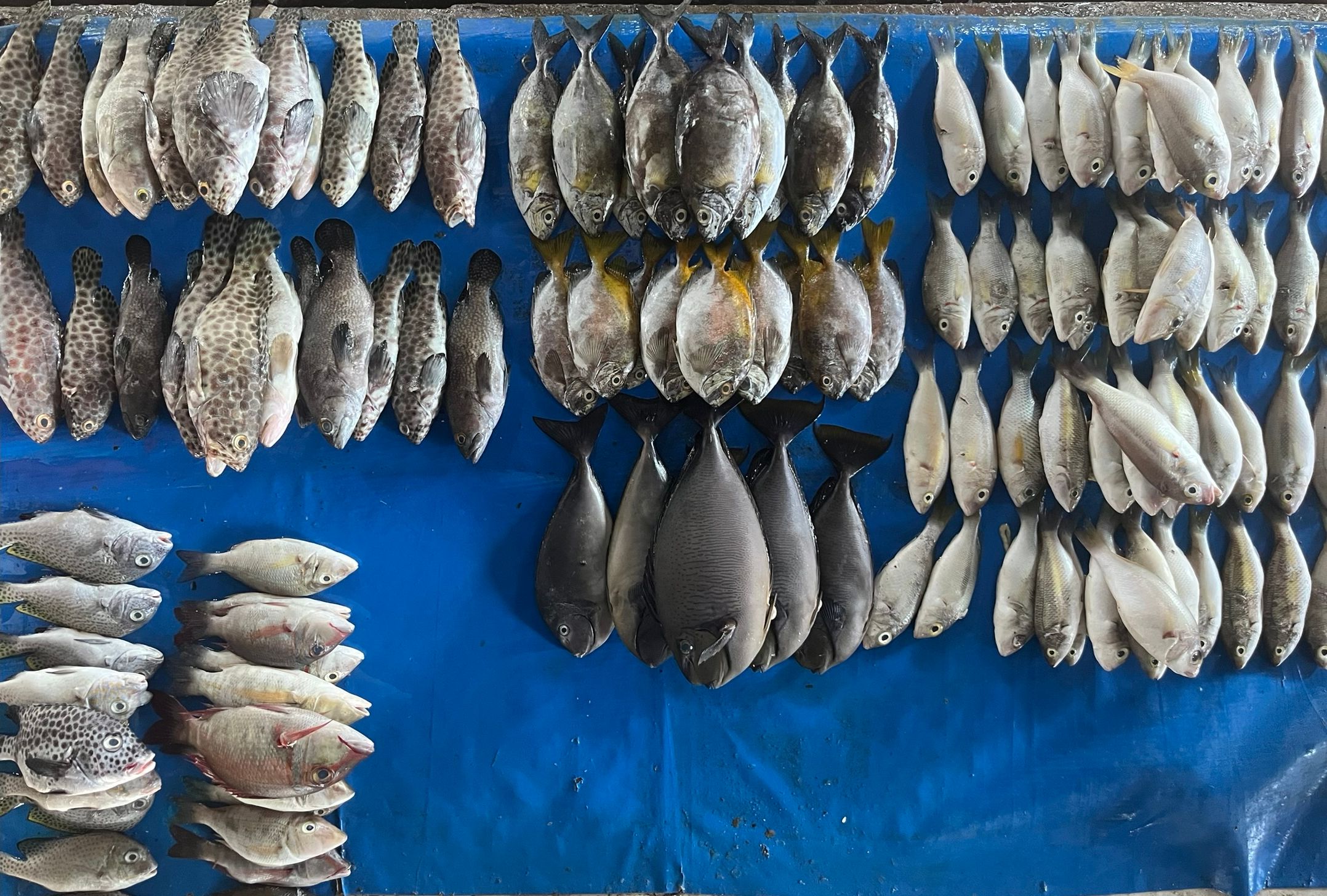
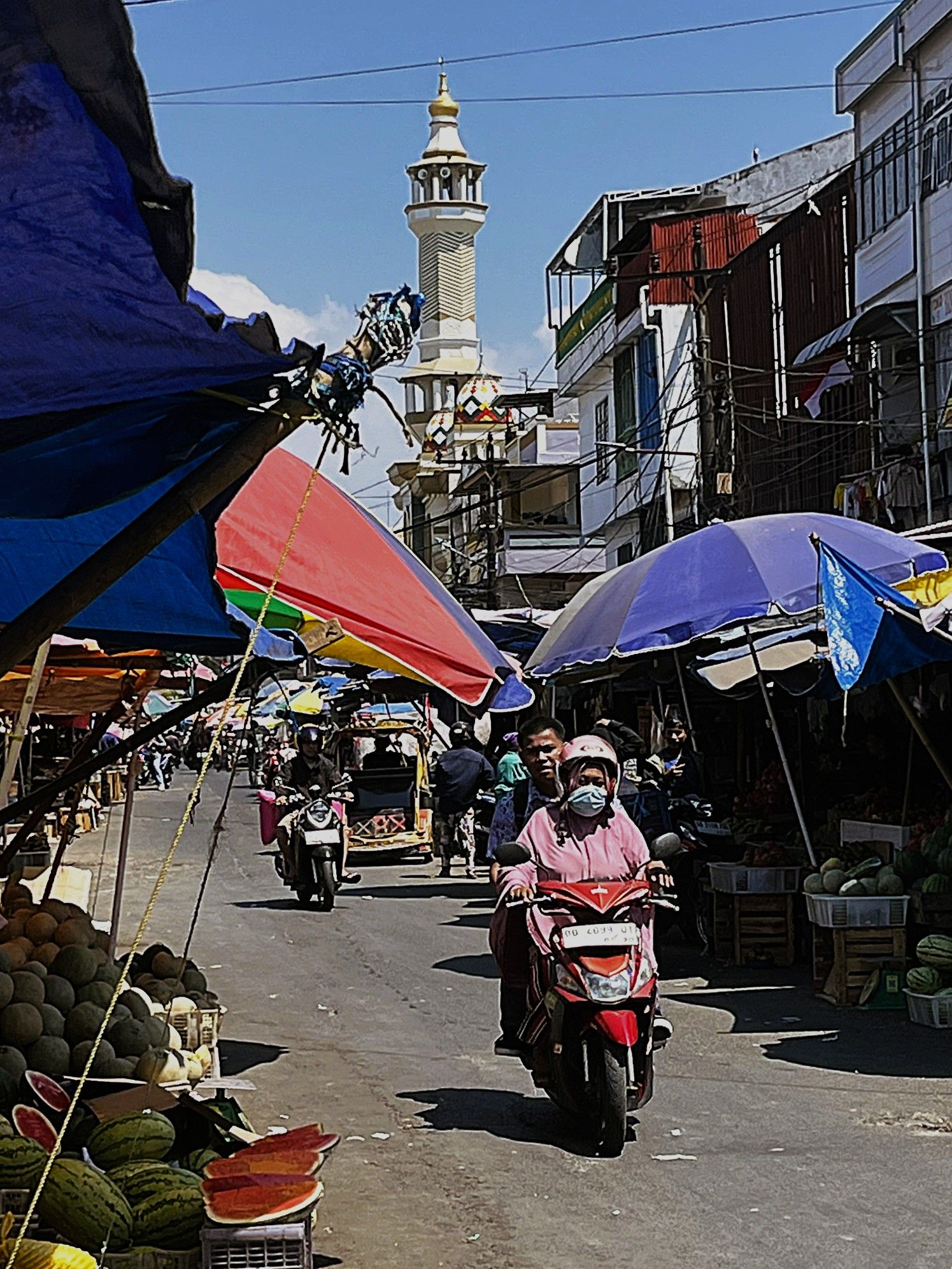
From the harbor, I continue to a side canal where fishing boats are moored, and to a fish market where the catch delivered early in the morning is sold. Then I visit Pasar Butung, the large market in the heart of the old town. On the way there, we weave through streets with heavy traffic in the Becak, and I shudder at the thought of how my legs, always ahead, are replacing the missing bumper.
The Dutch established this market in the seventeenth century when Makassar was a trading post for the VOC, the Dutch East India Company. Little remains of Dutch architecture, a few colonnades, one facade, the rest is concrete, brick, and corrugated iron, with a mosque in between.
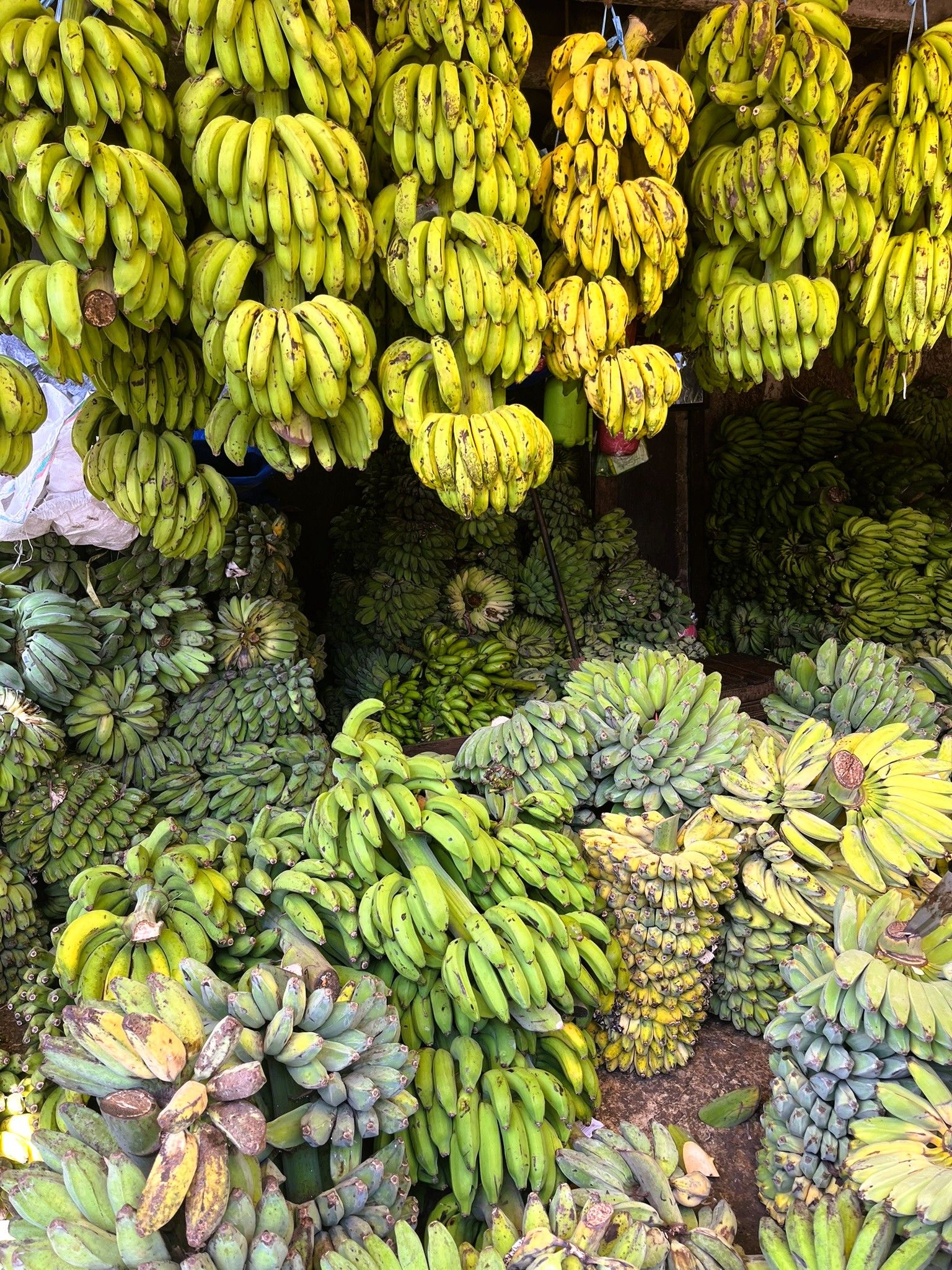
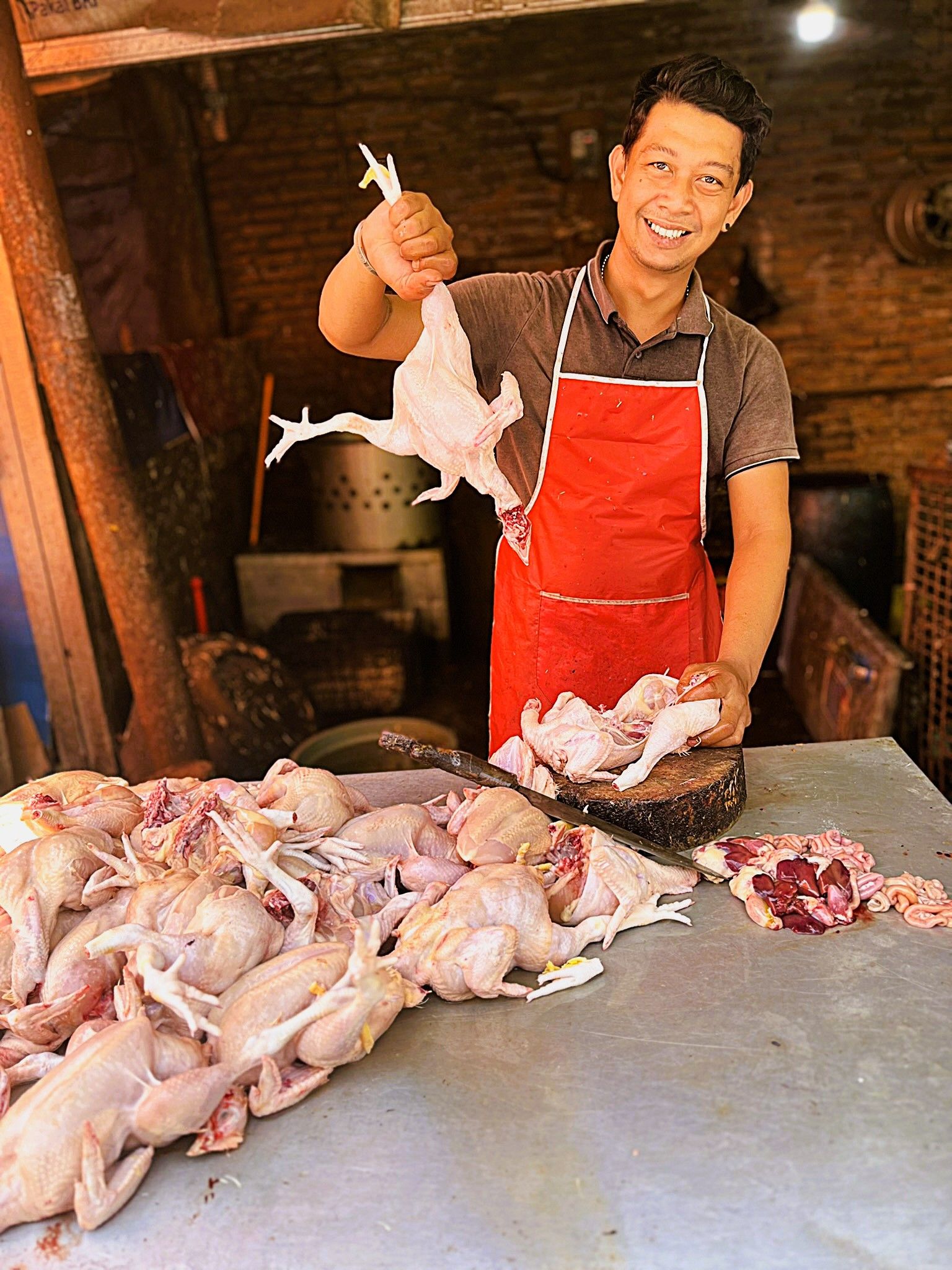
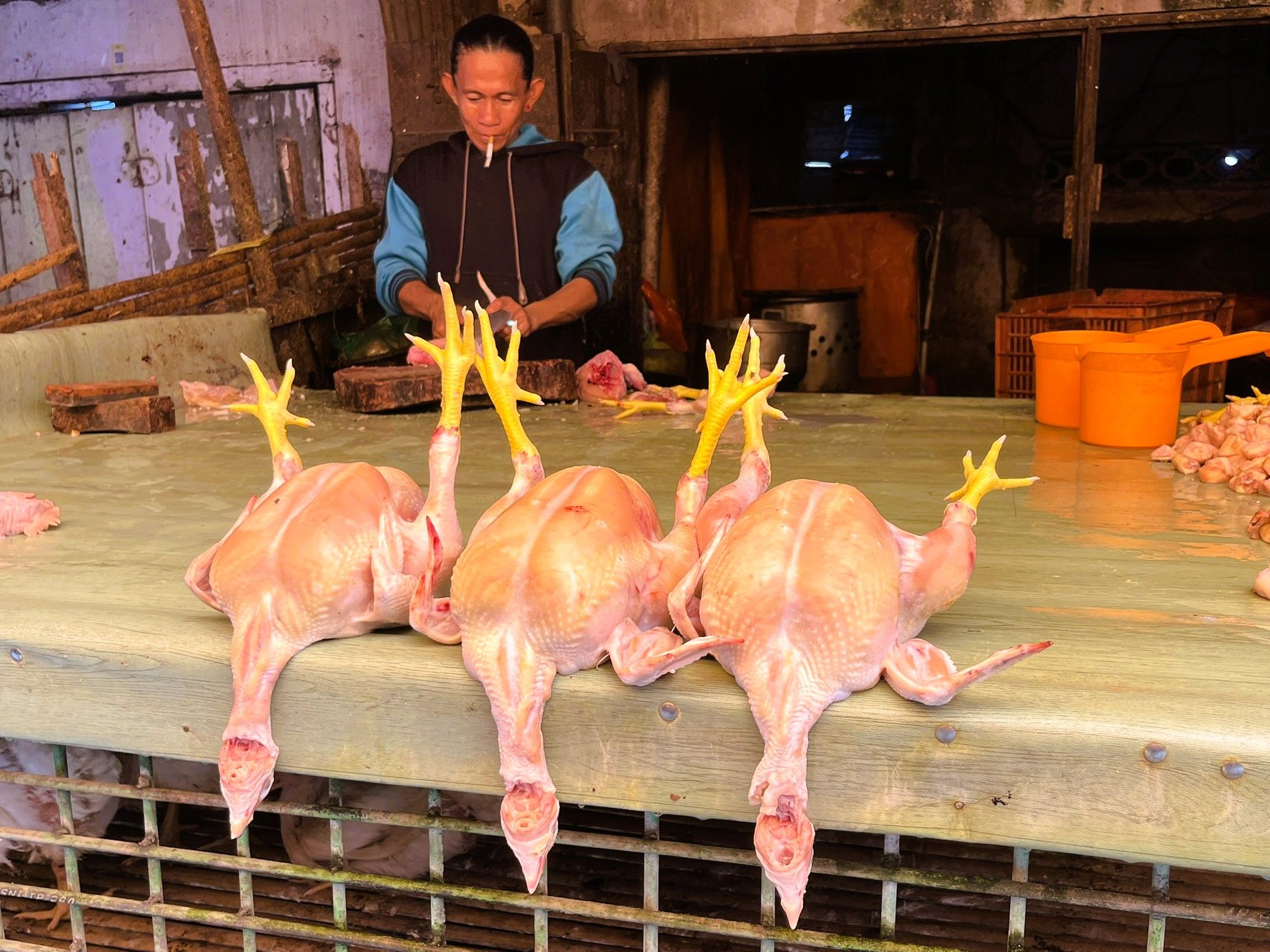
What remains is the function as a transshipment point: in the same streets where spices, textiles, and slaves were once traded, today stalls with fruits and vegetables are lined up, alongside cheap clothing and plastic sandals from China and chickens that are slaughtered and butchered before the buyers' eyes.
The first heyday of Makassar, then known as Somba Opu, occurred before the Dutch conquest: in the mid-17th century, the city had an estimated 100,000 inhabitants and was one of the most important cosmopolitan trade hubs in Southeast Asia and the capital of Gowa-Tallo, a powerful dual kingdom in southern Sulawesi. In 1605, the ruler of Tallo converted to Islam; on November 9, 1607, Islam was declared the state religion of both kingdoms.
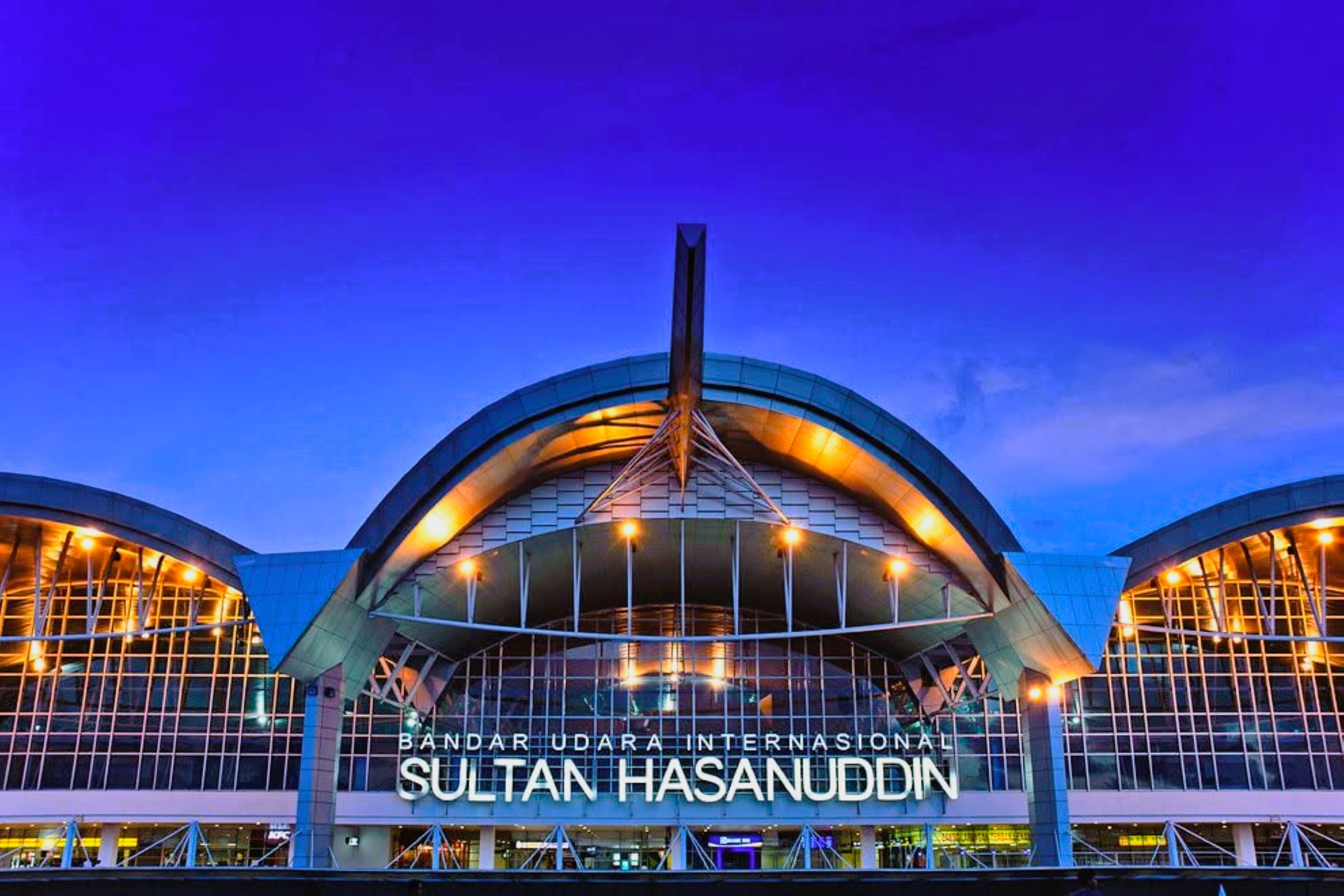
Sultan Hasanuddin, who ruled from 1653 to 1669 (Makassar's international airport is named after him), fought long against Dutch colonization but had to surrender after a lengthy war in 1667. The consequence: the destruction of the capital Somba Opu by the Dutch. The population fled, and the large city shrank to a village of 5,000 souls. Today, nearly three and a half million people live in the greater Makassar region.
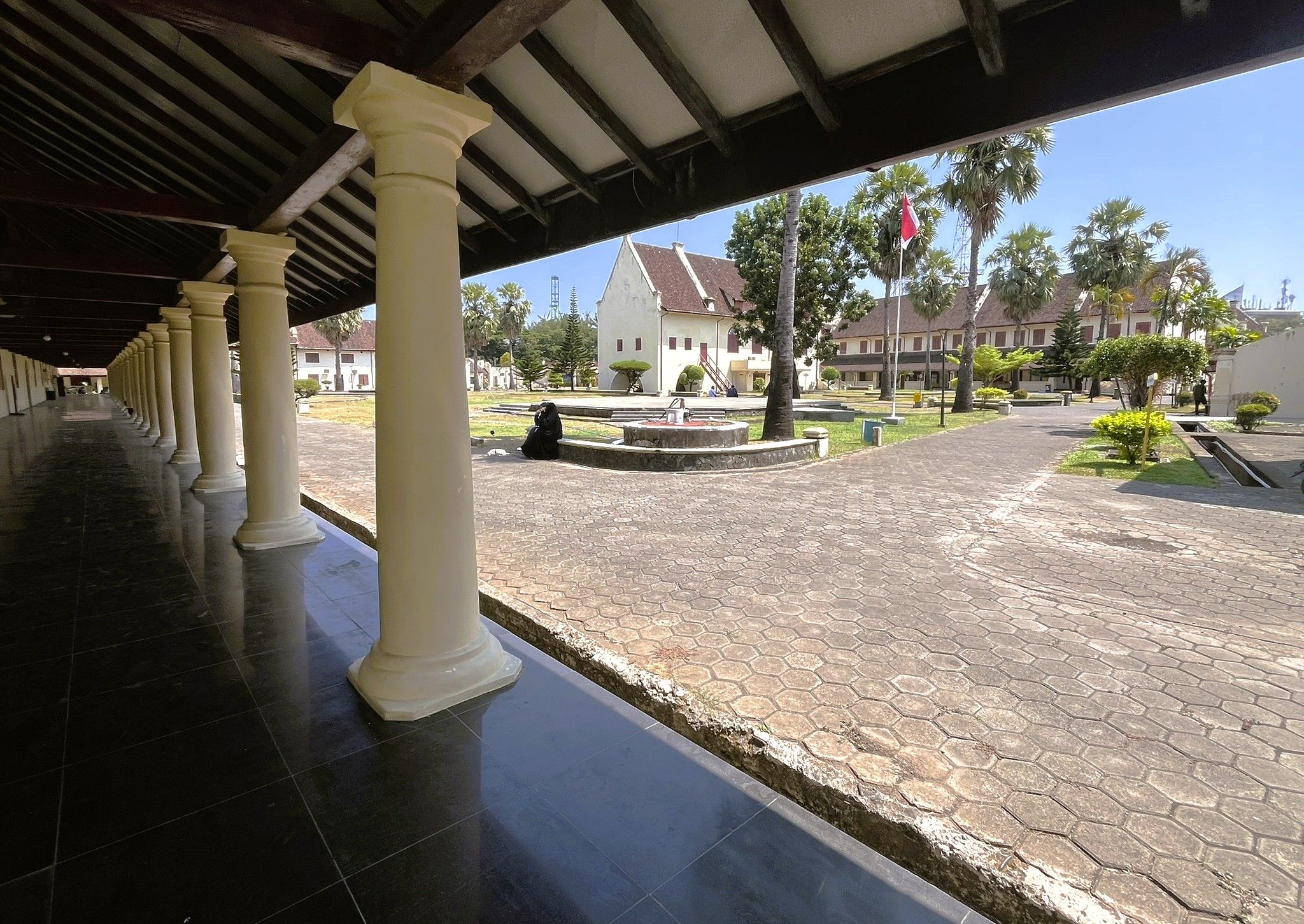
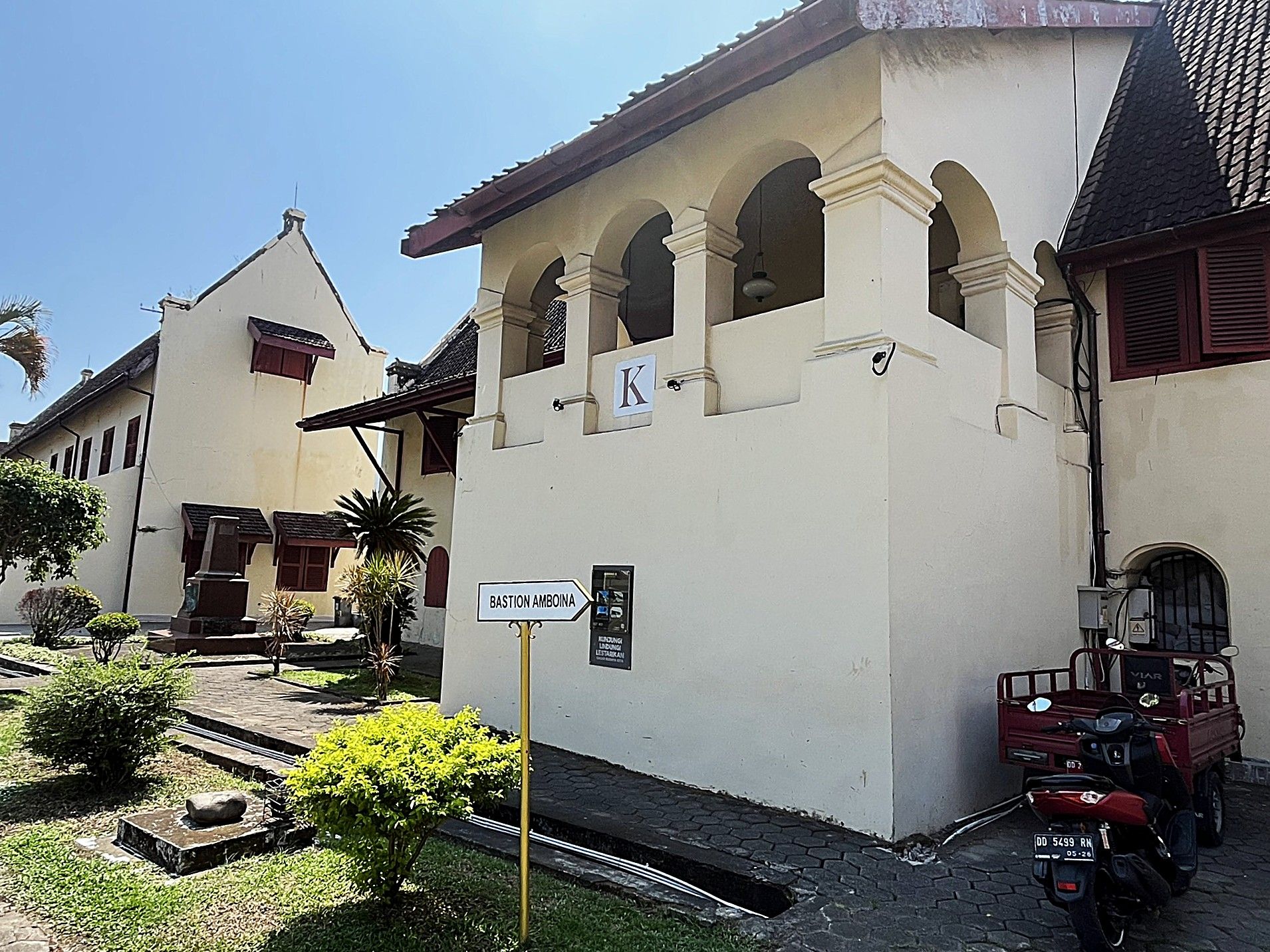
At Fort Rotterdam, one can trace this history: the fort was originally constructed around 1545 by the then Sultan of Gowa as Fort Ujung Pandang. In 1669, it fell to the Dutch VOC. Admiral Speelman had the facility expanded in European style and named it after his hometown. From then on, Fort Rotterdam controlled the entire spice trade of East Indonesia – a stone symbol of Dutch dominance over the once proud sultanate.
Thick, black coral stone walls, accessible for visitors, enclose a spacious lawn with trees. Twelve low buildings, reminiscent of Dutch architecture with red tiled roofs – one of which was built only in the 1940s by the then Japanese occupiers – line the bastions; some serve as a museum, while others remain empty. From the ramparts, one looks towards the sea, where once the VOC ships anchored.
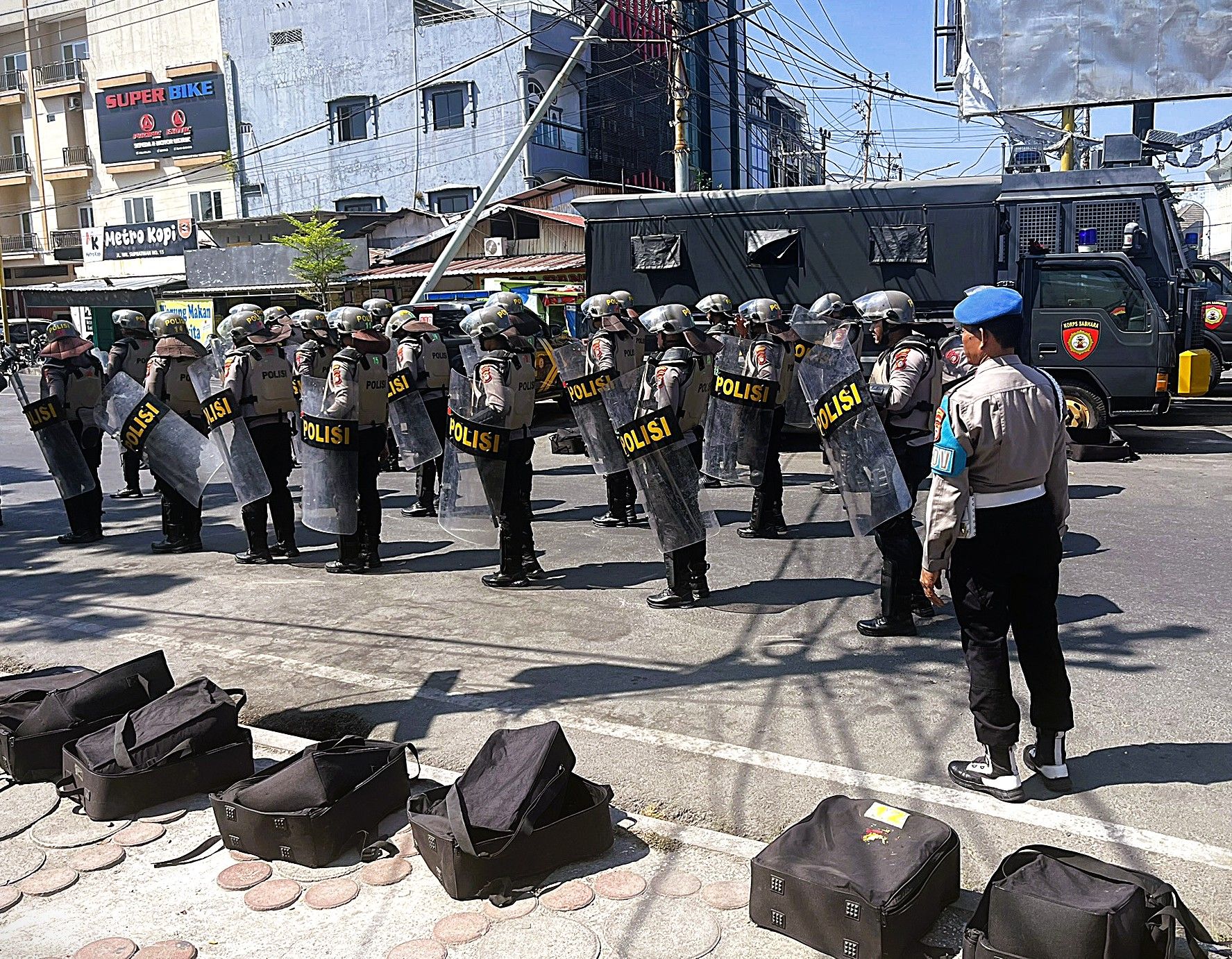
Next to the fort, several police vehicles block a side street. Young police recruits practice putting on protective clothing as quickly as possible and using shields against attackers. I am greeted, as usual asked where I am from, and requested to take selfies with the future guardians of internal order.
Towers Against Domes
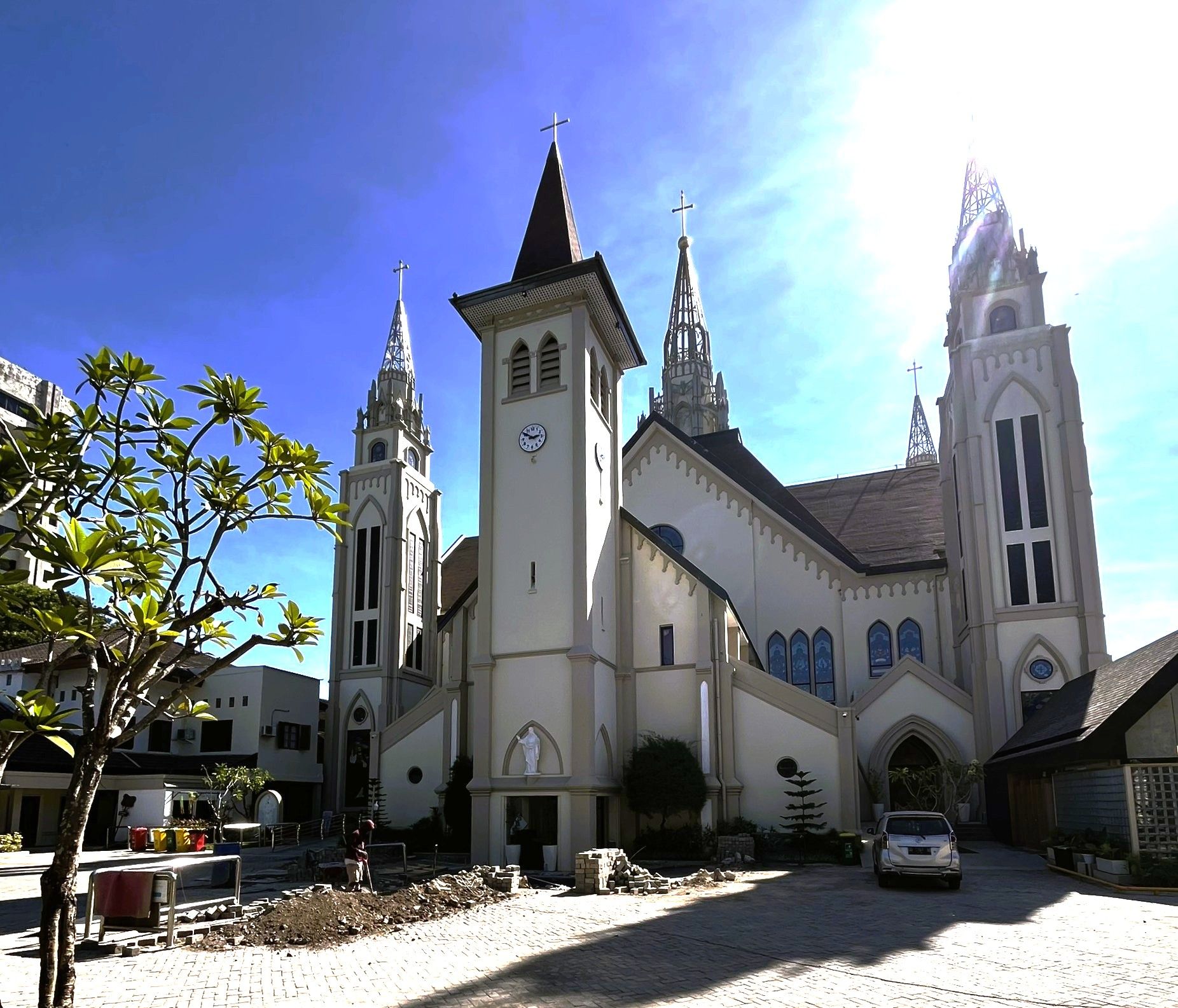
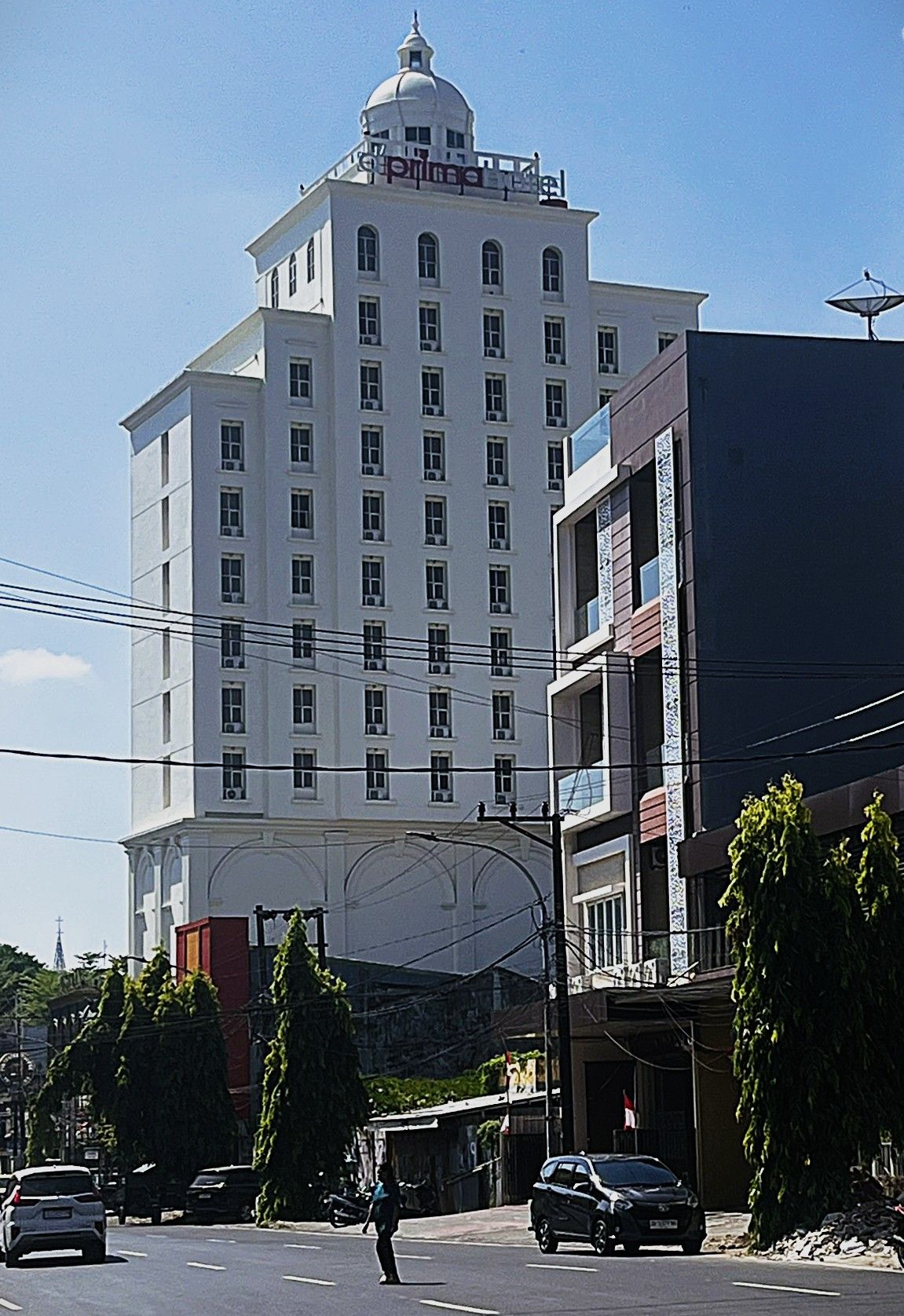
Around the corner from my hotel “D'Primahotel Pattimura” stands the Katedral Hati Yesus Yang Mahakudus (“Cathedral of the Most Sacred Heart of Jesus”). It is the seat of the Archdiocese of Makassar and the ecclesiastical center of a vast area that covers all of Sulawesi (around 175,000 square kilometers) and the Maluku Islands (around 75,000 square kilometers) – where however only a minuscule minority, about 1.6 percent, belong to Catholicism.
The church was completed in 1900 in a style reminiscent of Gothic architecture. Its towers stand almost defiantly next to the neighborhood mosques, and the walls surrounding the complex express a readiness for defense.
This is necessary, as a watchman at the entrance and the heavy metal gates show. On March 28, 2021, the cathedral was the target of a suicide attack during Palm Sunday Mass. The two attackers, a young couple, with the woman four months pregnant, rode a motorcycle directly onto the church grounds. When guards stopped them, they detonated their explosives, which were rigged with nails. Both died instantly – they were the only fatalities. 20 people were injured, including four church guards.
The perpetrators were members of Jamaah Ansharut Daulah (JAD, “Partisans of the Islamic State”), an Indonesian terror network linked to the terrorist organization “Islamic State.” JAD had already been banned in Indonesia in 2018 after followers of the group carried out three devastating attacks with more than 30 dead on churches in Surabaya and a police headquarters that same month.
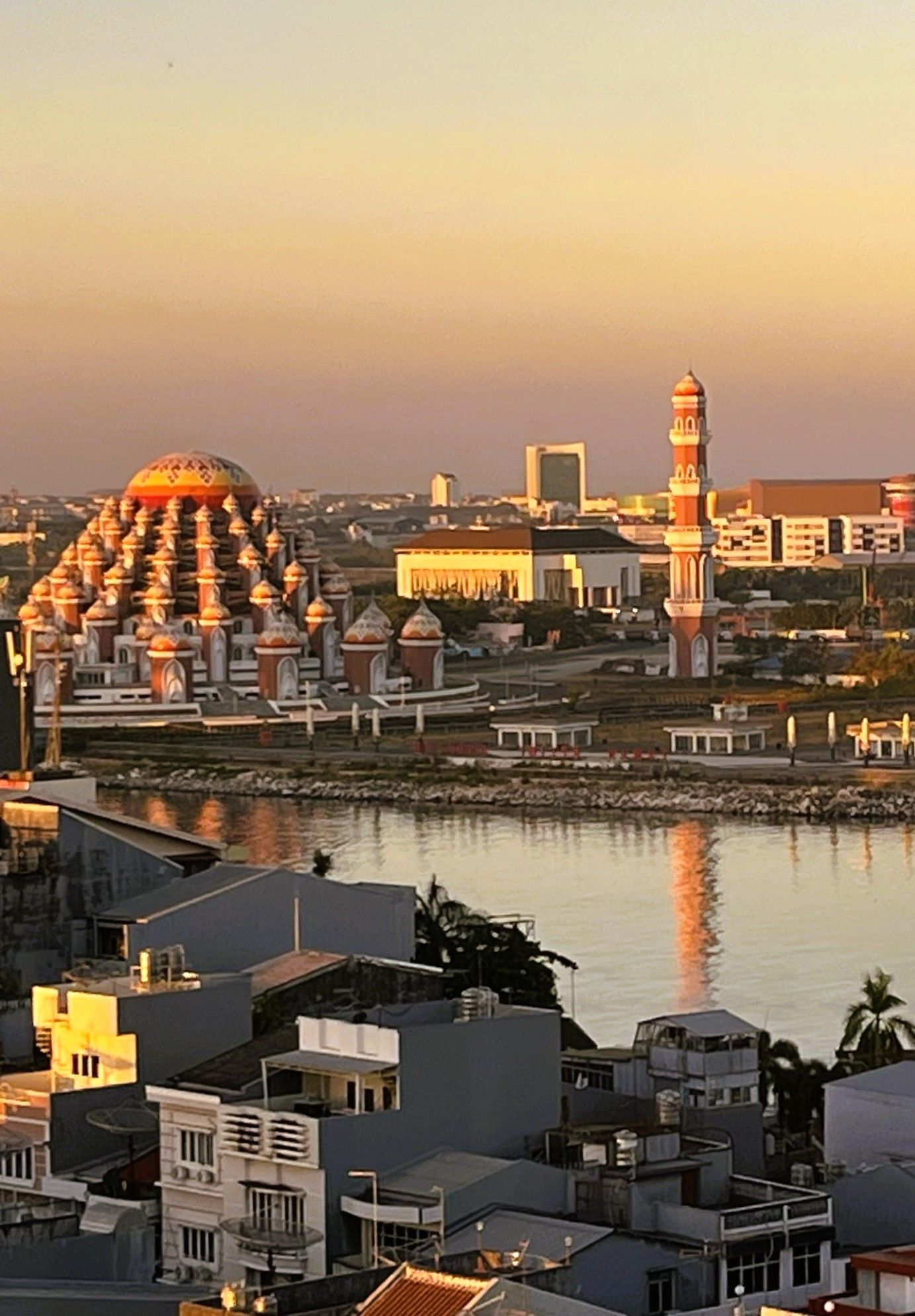
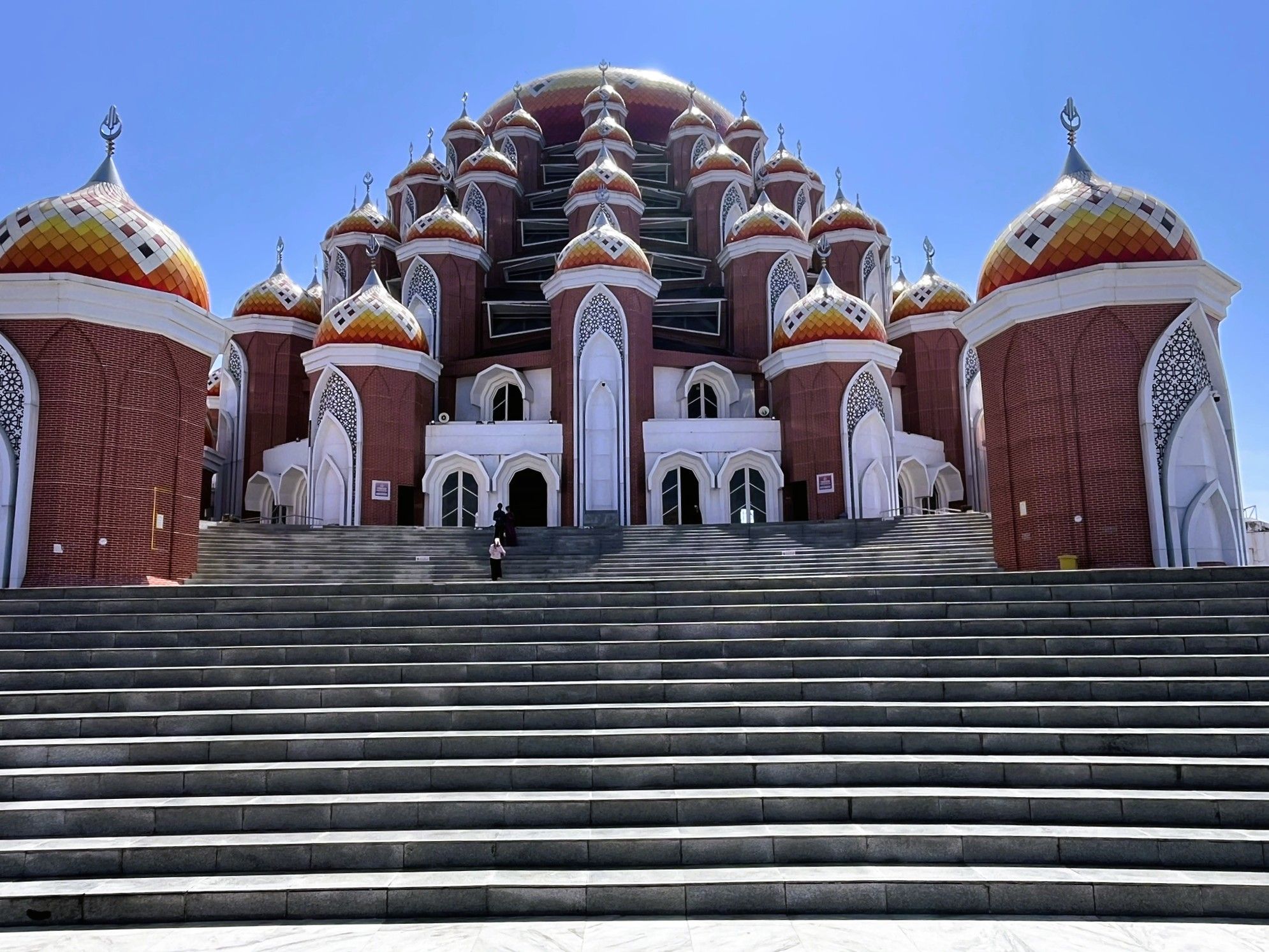
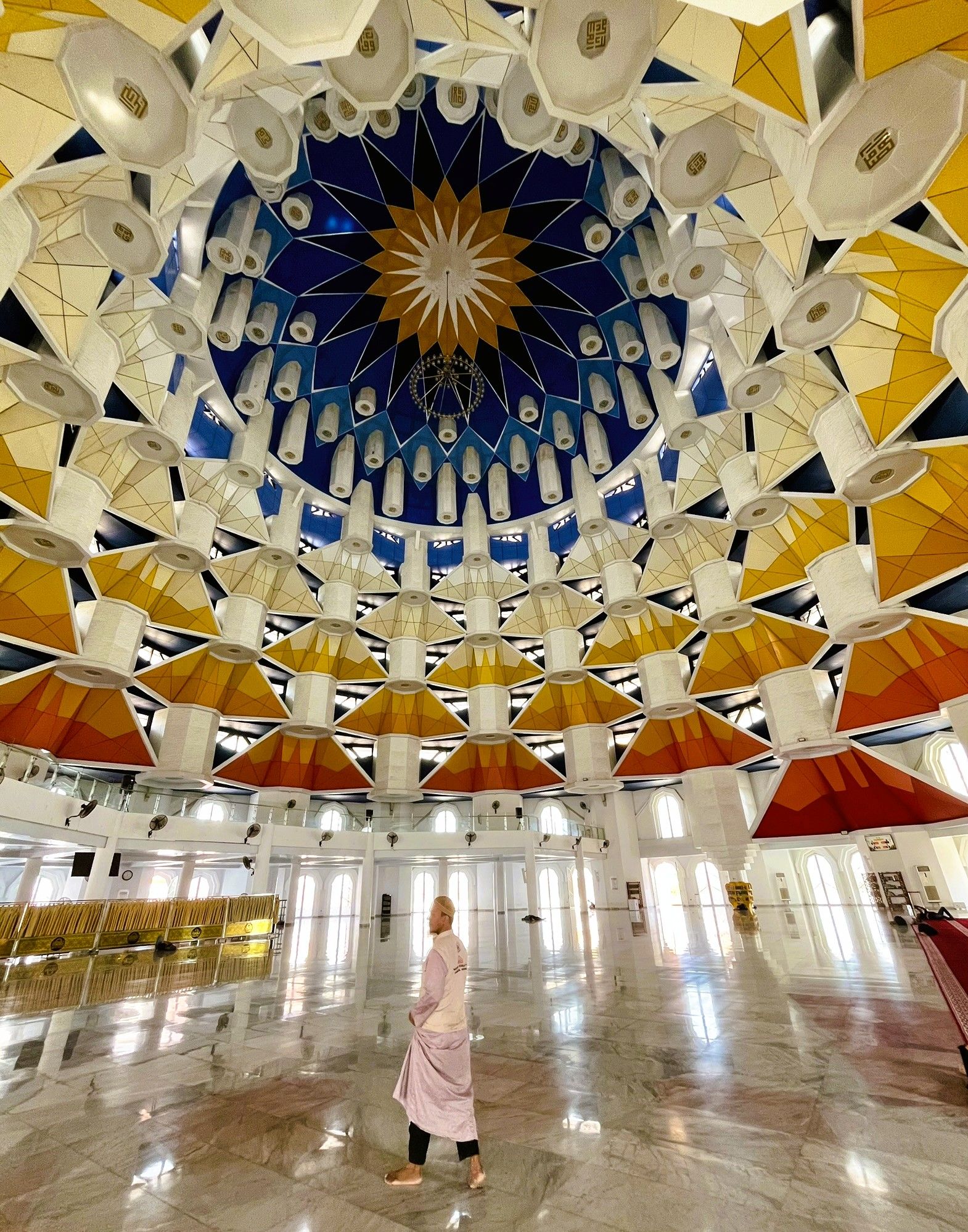
The strongest contrast to the Cathedral of the Sacred Heart of Jesus is provided, not ten Becak minutes away, by the Masjid 99 Kubah, the Mosque of the 99 Domes, named after the 99 names of Allah. It was opened just four years ago and is located in front of Losari Bay on a large, reclaimed peninsula, which it shares with a hospital complex and much vacant space. With its countless smaller domes set on the main dome, it resembles a shell from a distance.
Makassar cannot be summarized if one oscillates between the harbor, market, and places of worship for a few days. It is a city that has never shed its past as a trading hub but has merely changed the merchandise: formerly nutmeg, cloves, and slaves, today furniture, beer, and building materials. From the rooftop of the luxury hotel, the polished version is presented, while from the Becak perspective, the hustle and bustle of daily life, smelling of fish and exhaust fumes, is visible.