
Across the Mountains through Flores
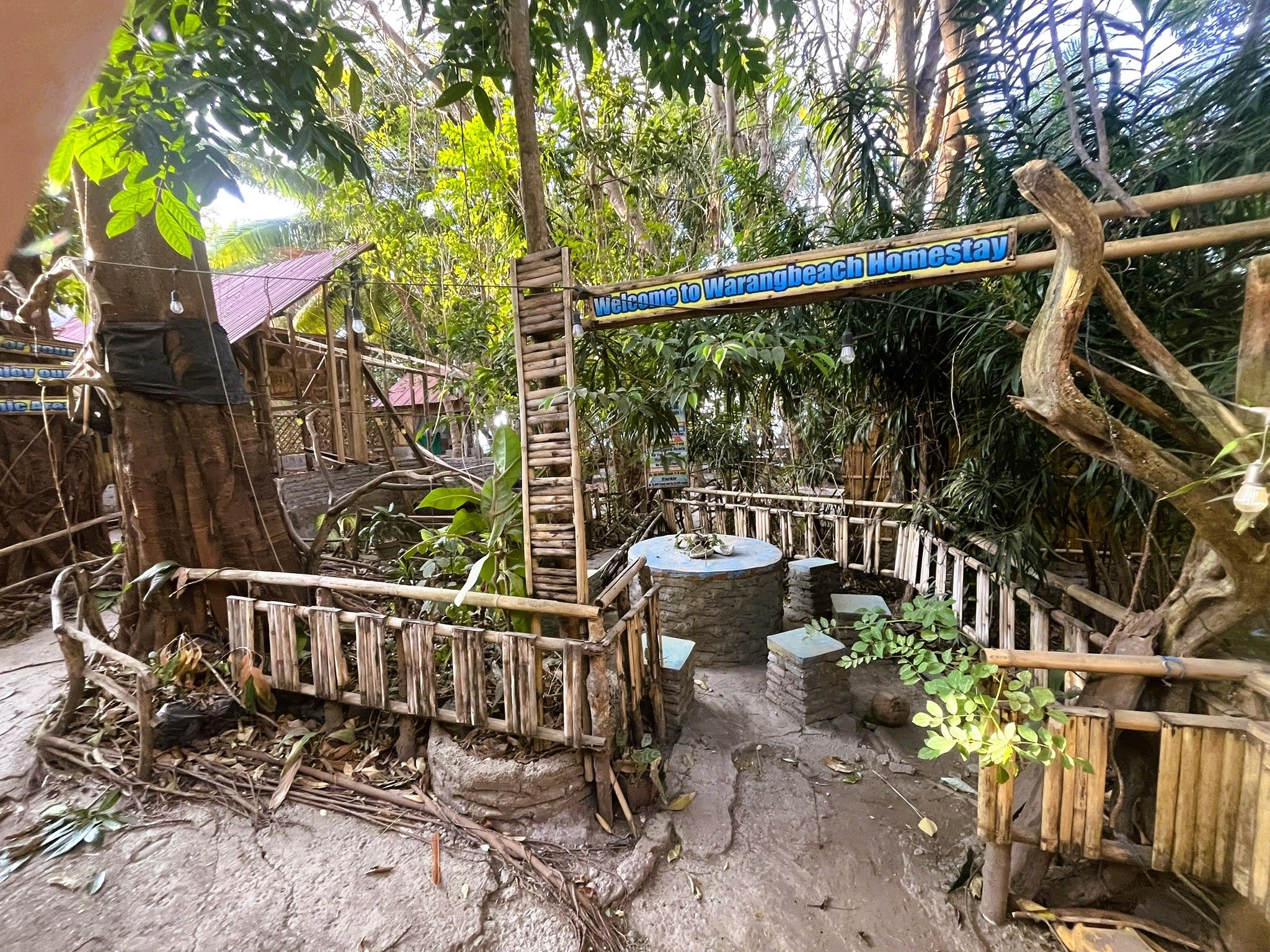
At the end of July and beginning of August 2026, I am in Bajawa on the island of Flores visiting several intact traditional villages.
Published: 28.08.2026
The journey from Bajawa to Maumere, about 270 km apart, takes eight hours. The further we move east, the less comfortable the Gunung Mas minibusses become. Perhaps it's because driving across the island on the winding road eventually wears down both body and mind.
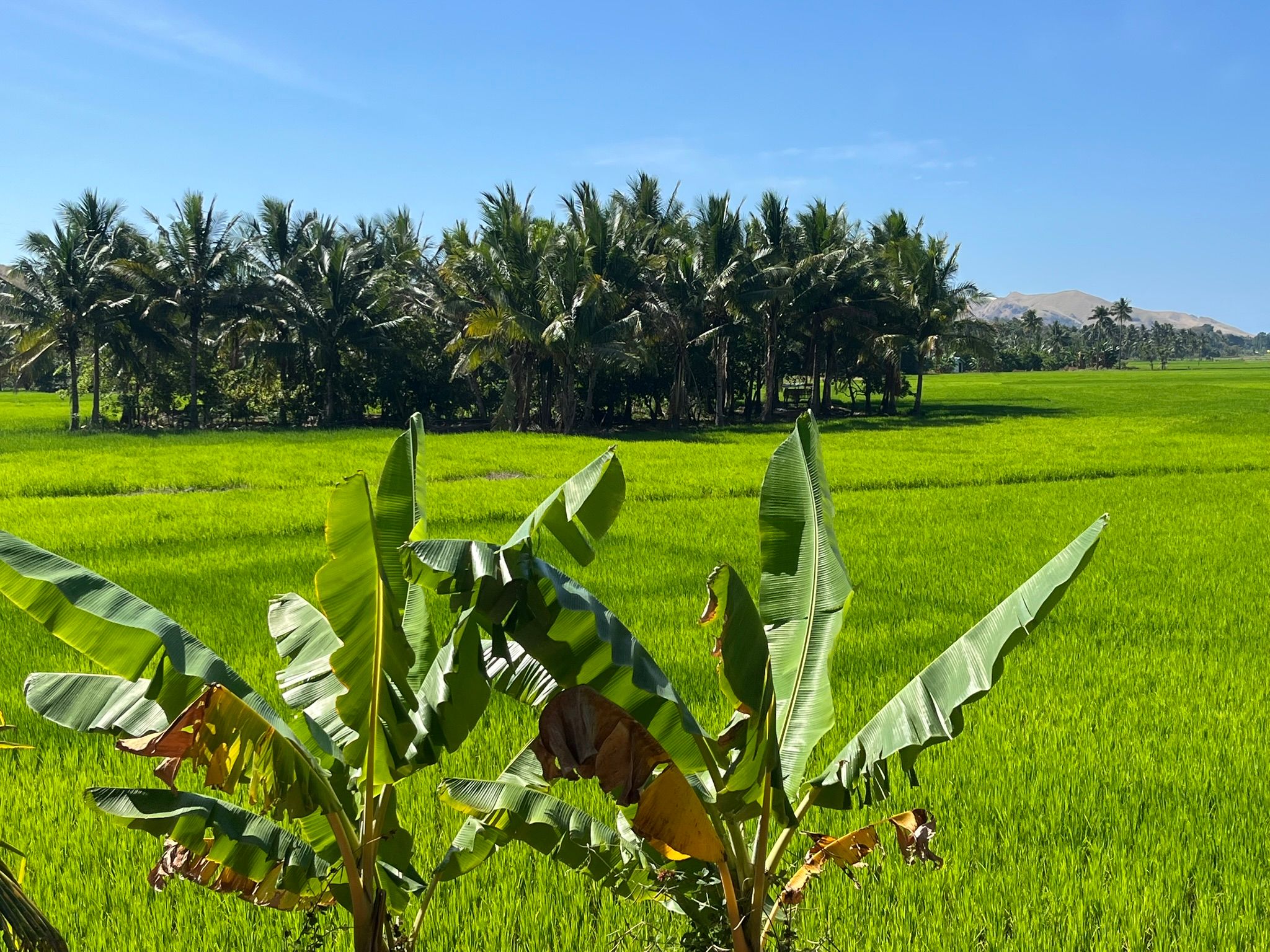
The driver passes through villages with the already familiar tin roofs, through plantations and rugged landscapes. In some places, stalls and food carts line the road. People at the roadside want to hitch a ride. Sometimes the minibus stops to pick up a new passenger and drop off another. Gunung Mas is not an establishment for tourists, but for everyday travelers on Flores.
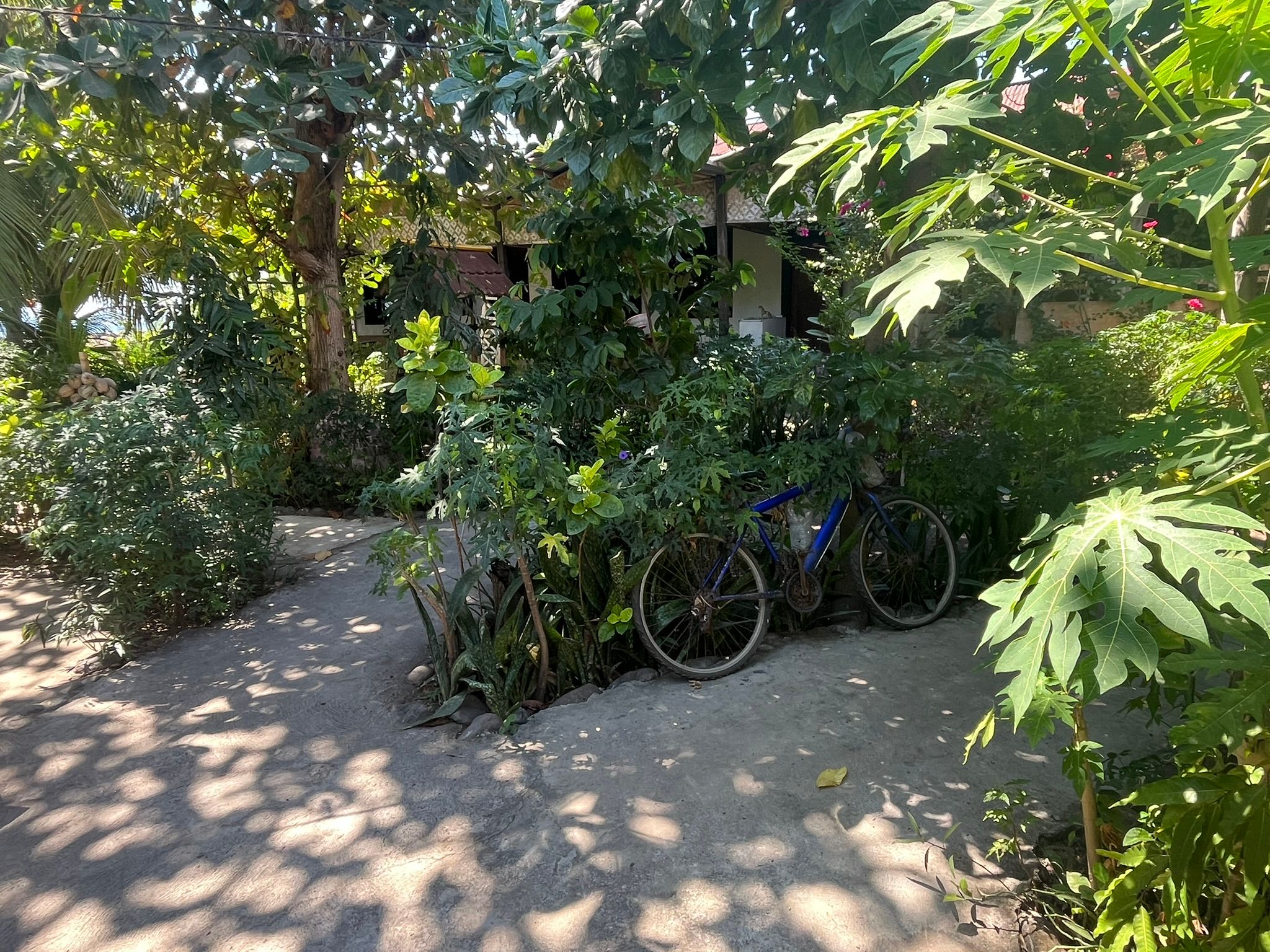
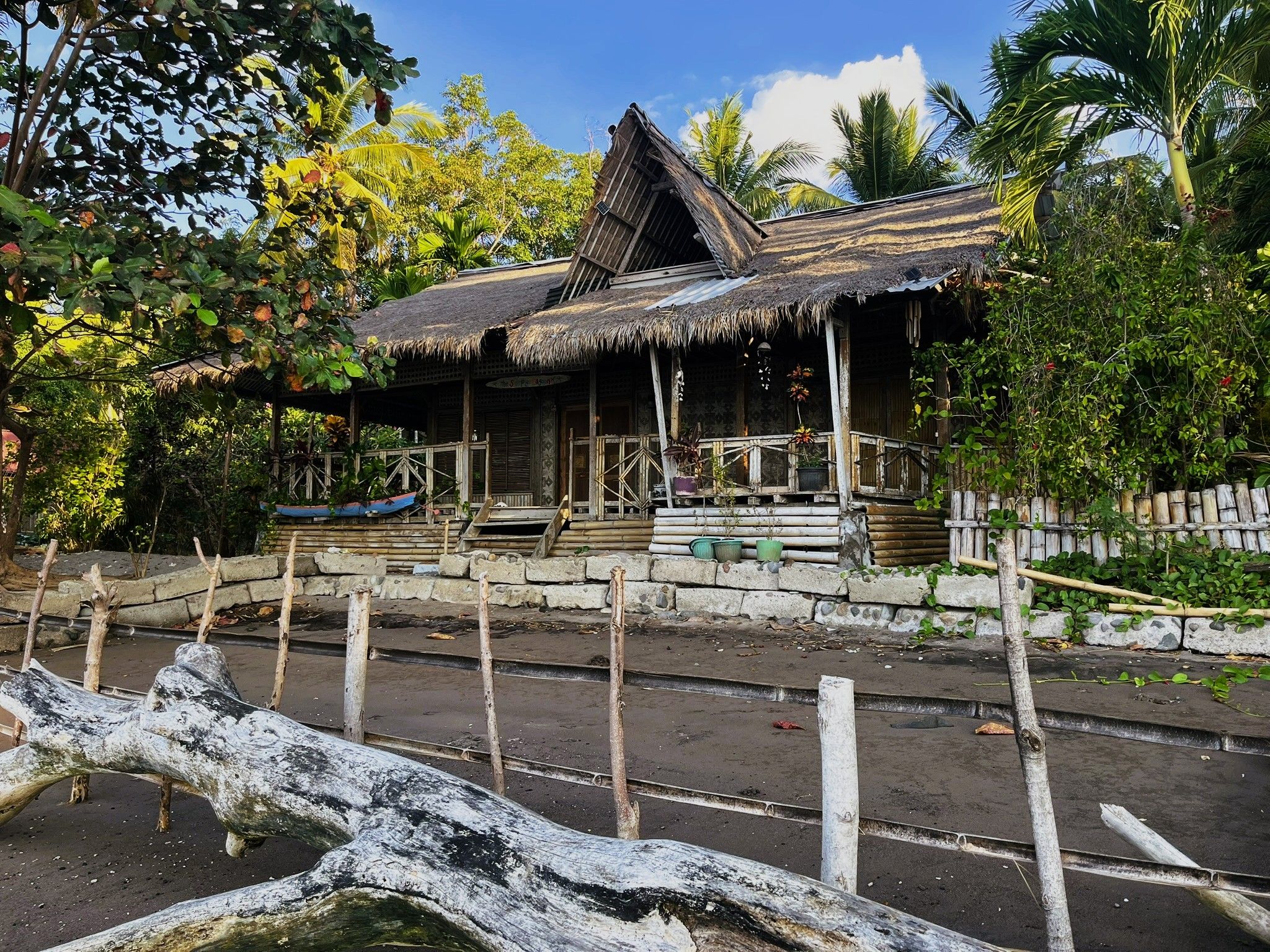
My guesthouse Pantai Paris – 17 euros per night including breakfast under coconut palms – is reportedly run by a friendly couple, she Indonesian, he Dutch, according to online reviews. The two are not present; an employee explains that they live in Labuan Bajo at the other end of the island.
The guesthouse is, as advertised, located in a magical garden right by the sea, but there is no beach here; instead, there is a very noisy thoroughfare right behind the house. The noise filters into the room unfiltered, which is so poorly soundproofed that you can hear every discussion (and other noises) from the couple in the neighboring room.
Empty beaches, abandoned resorts
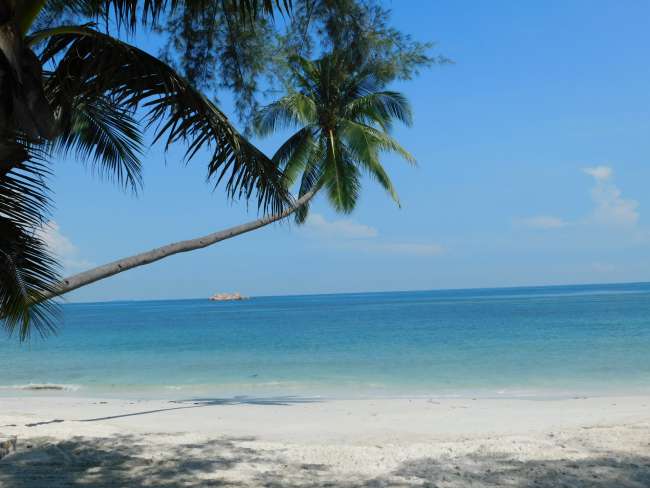
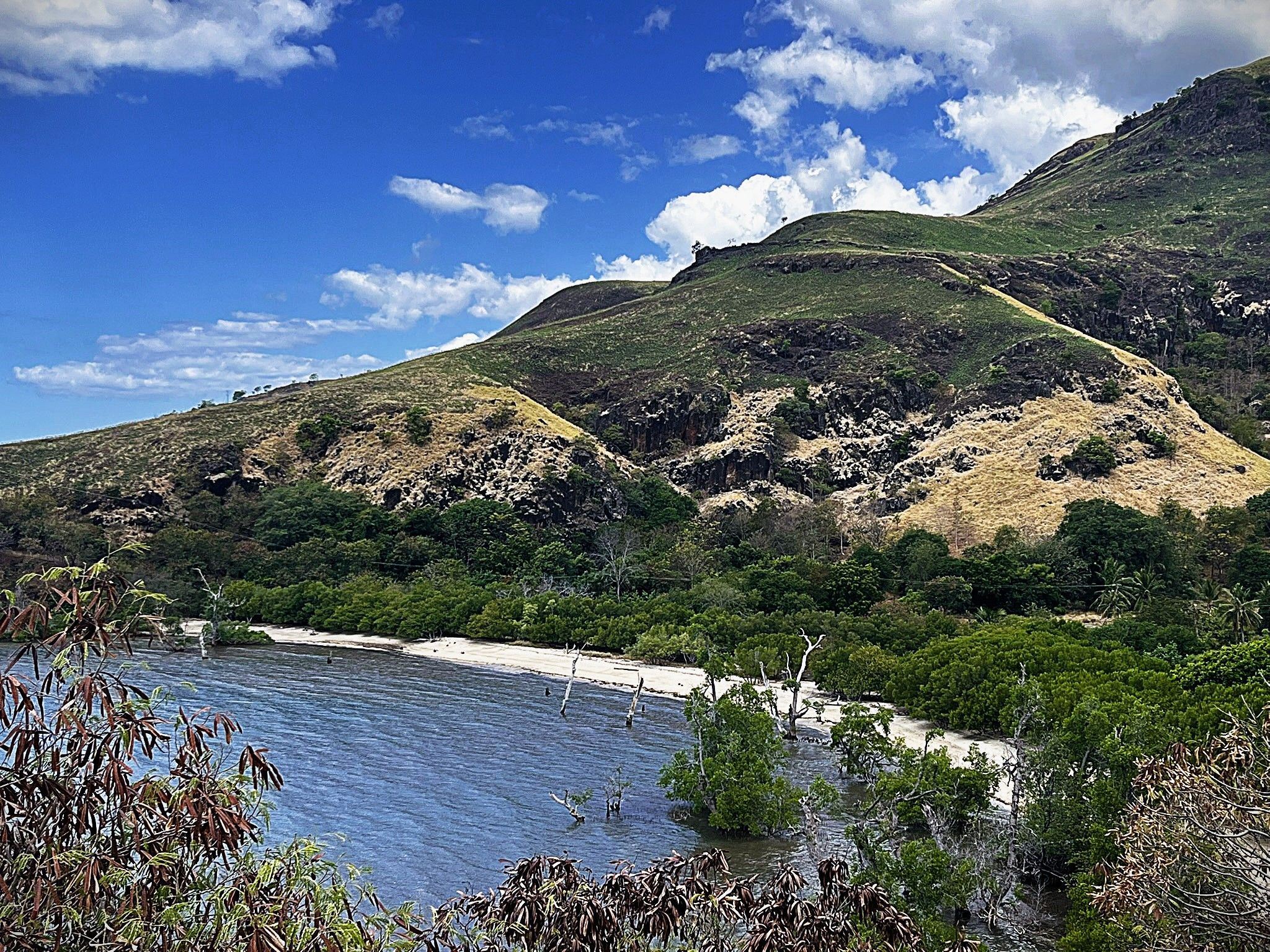
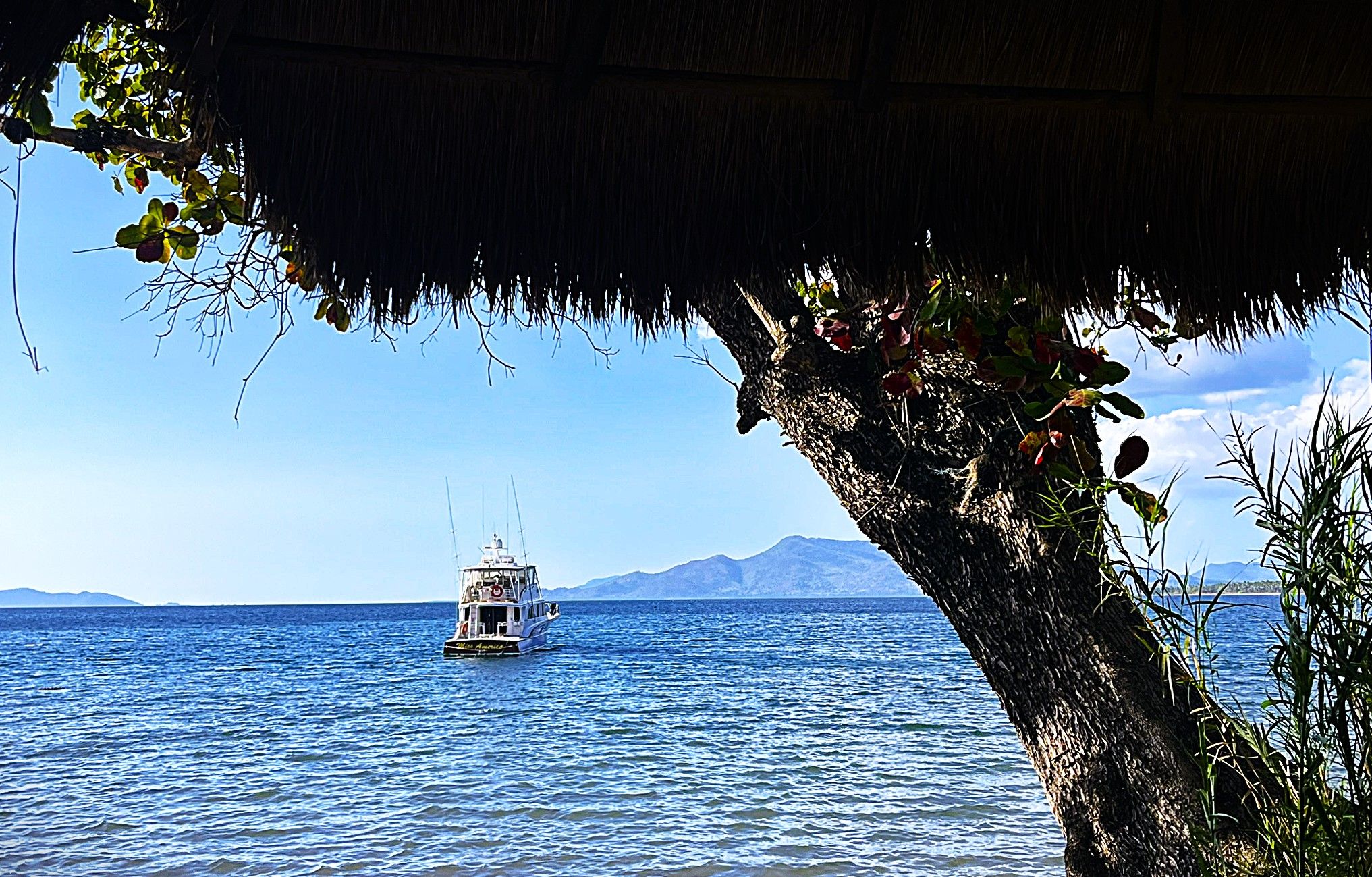
In the vicinity, there are indeed some fantastic beaches, some with light sand and others with dark volcanic sand, nestled in hilly landscapes, but they are empty, without tourists, without infrastructure, and sometimes decorated with driftwood and plastic waste.
I visit Gian Luca, whom I met in Bajawa. He resides in Lena House Flores, a simple guesthouse on Wodong Beach, about 30 km east of Maumere. On the same beach stand, at a respectable distance from each other, two luxurious private holiday residences; one belongs to a family that has become wealthy through real estate trading in Surabaya on the island of Java and in the USA, as the loitering employees tell. Two large yachts bobbing in the bay are part of this arrangement. The family comes for two weeks each year, says one of the men.
On the same beach, we find several small, abandoned resorts. One looks as if the owners fled in a hurry: keys are stuck in the doors of the bungalows; flip-flops are lying around as if they were about to be used; a huge sound system with almost man-sized speakers is rotting away, covered in dust. The dreams of million-dollar tourism revenues in the Maumere region will probably remain just dreams for a while longer.
Stilt village of sea nomads
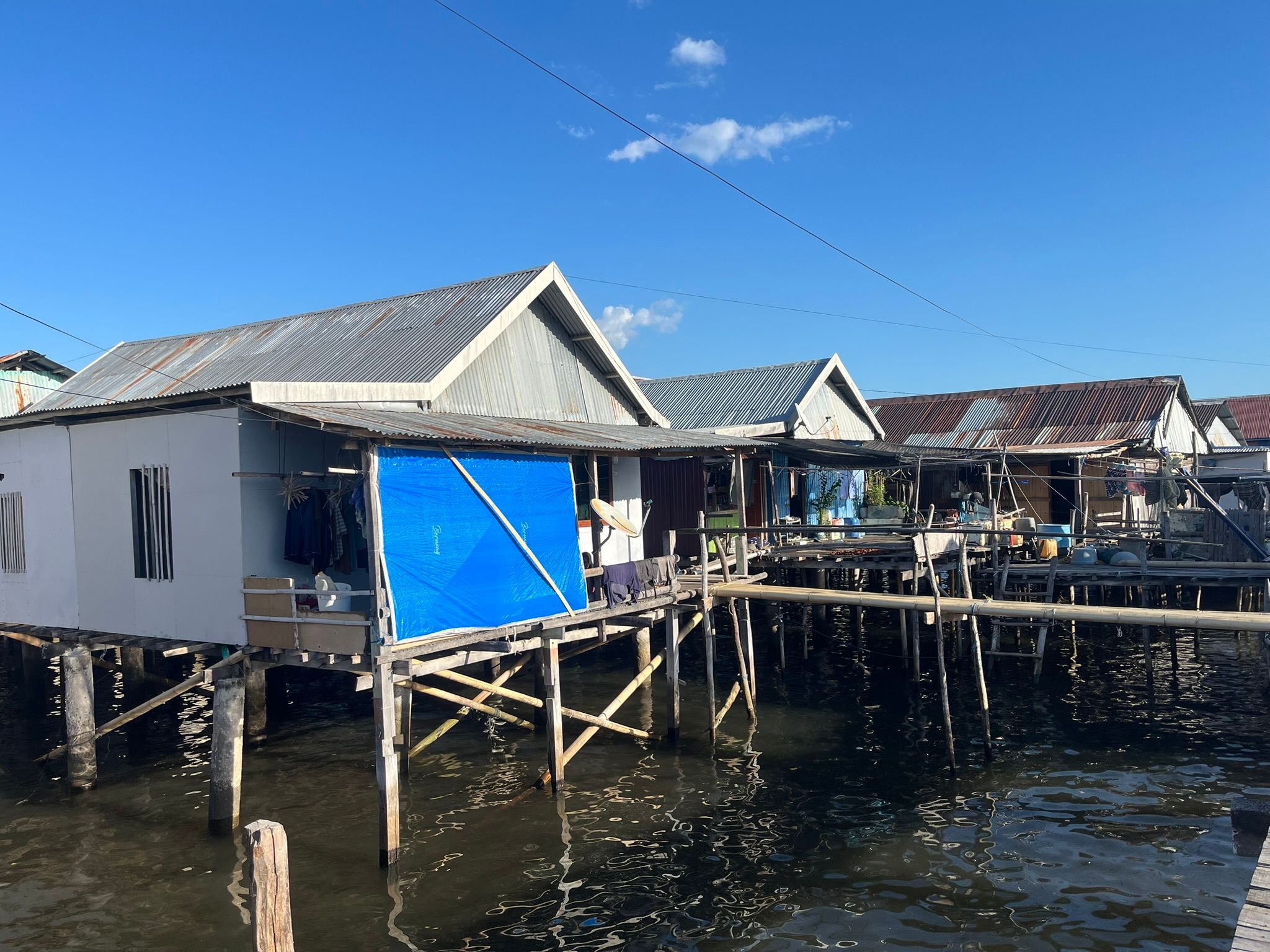
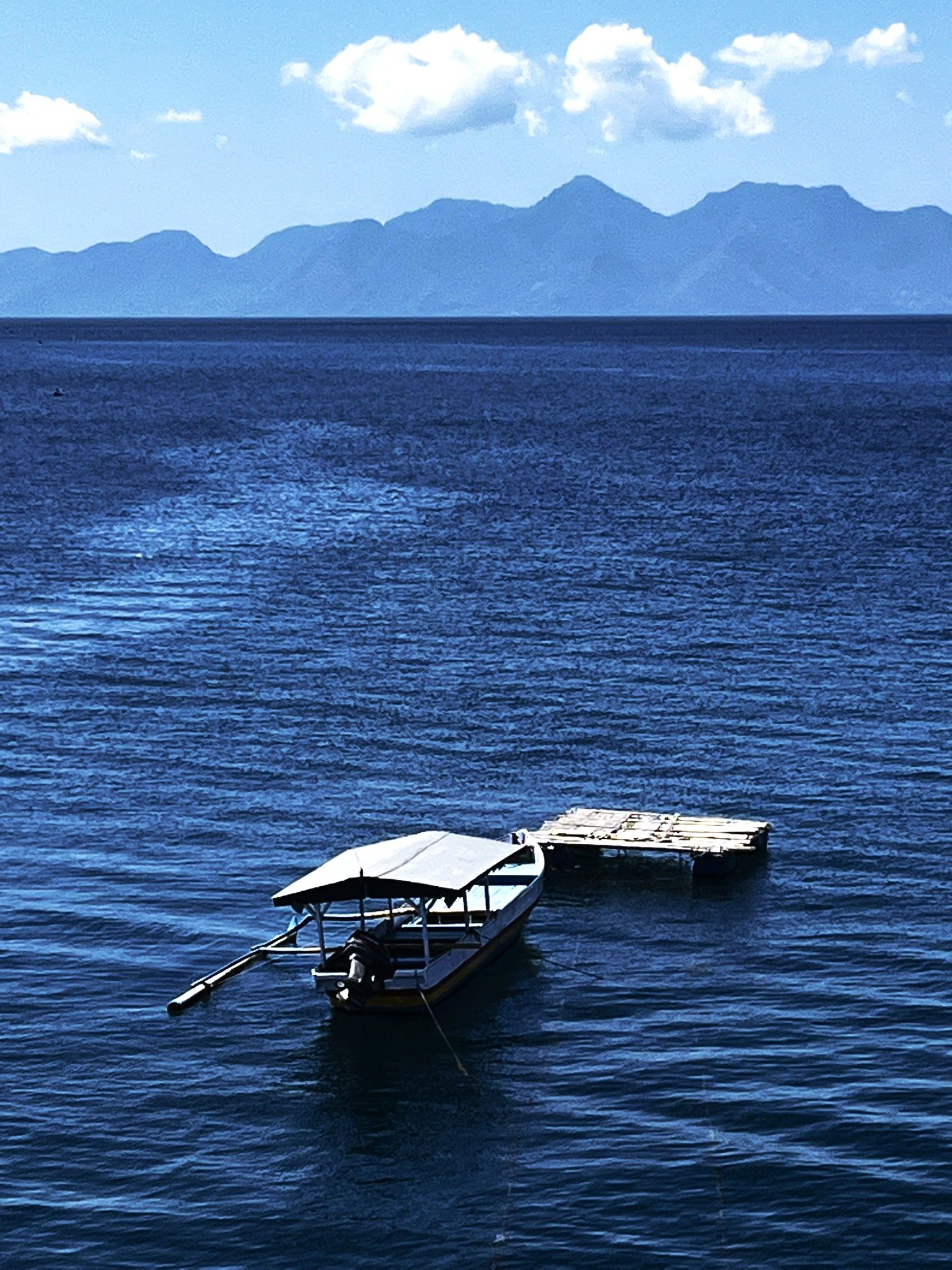
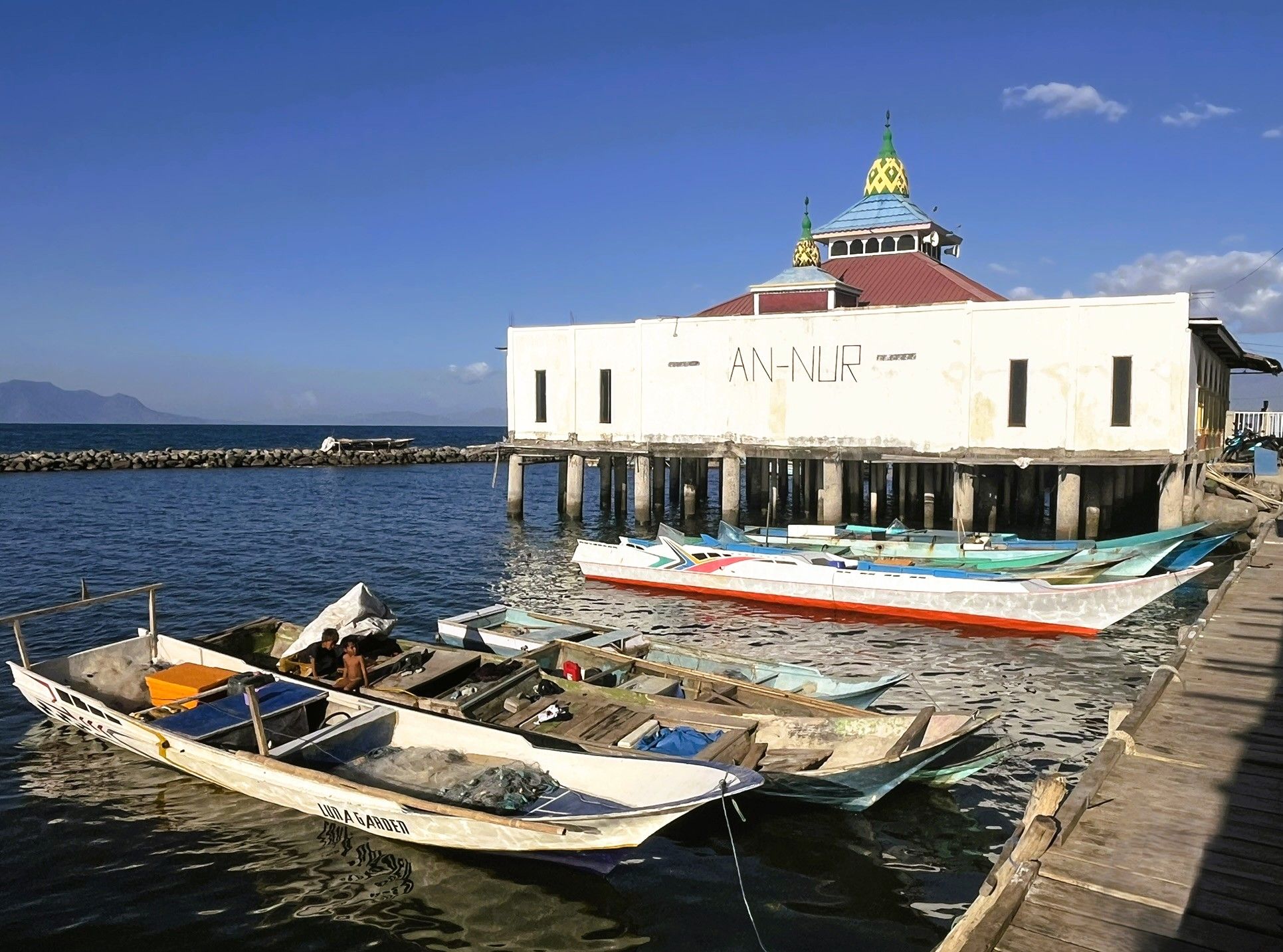
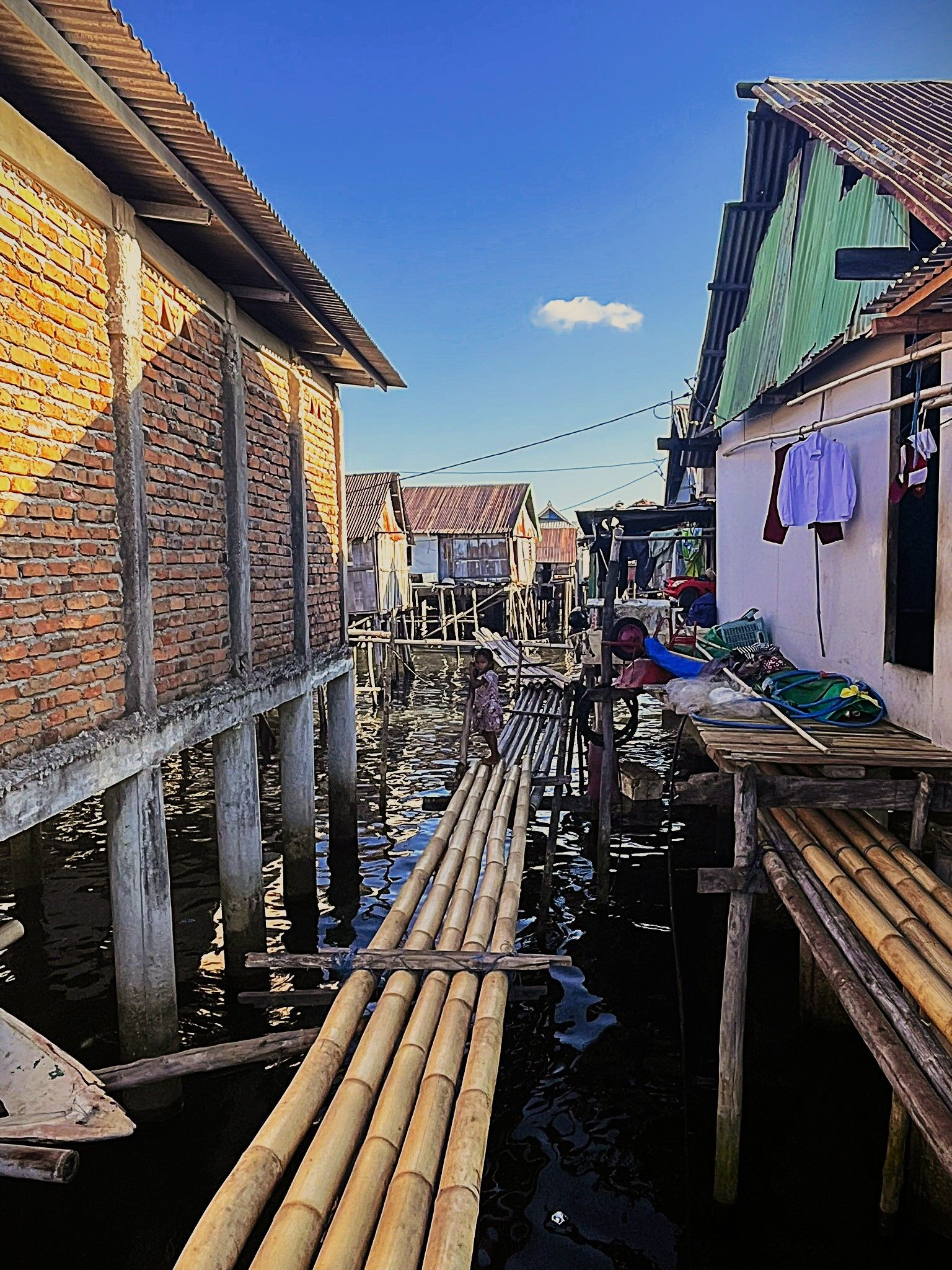
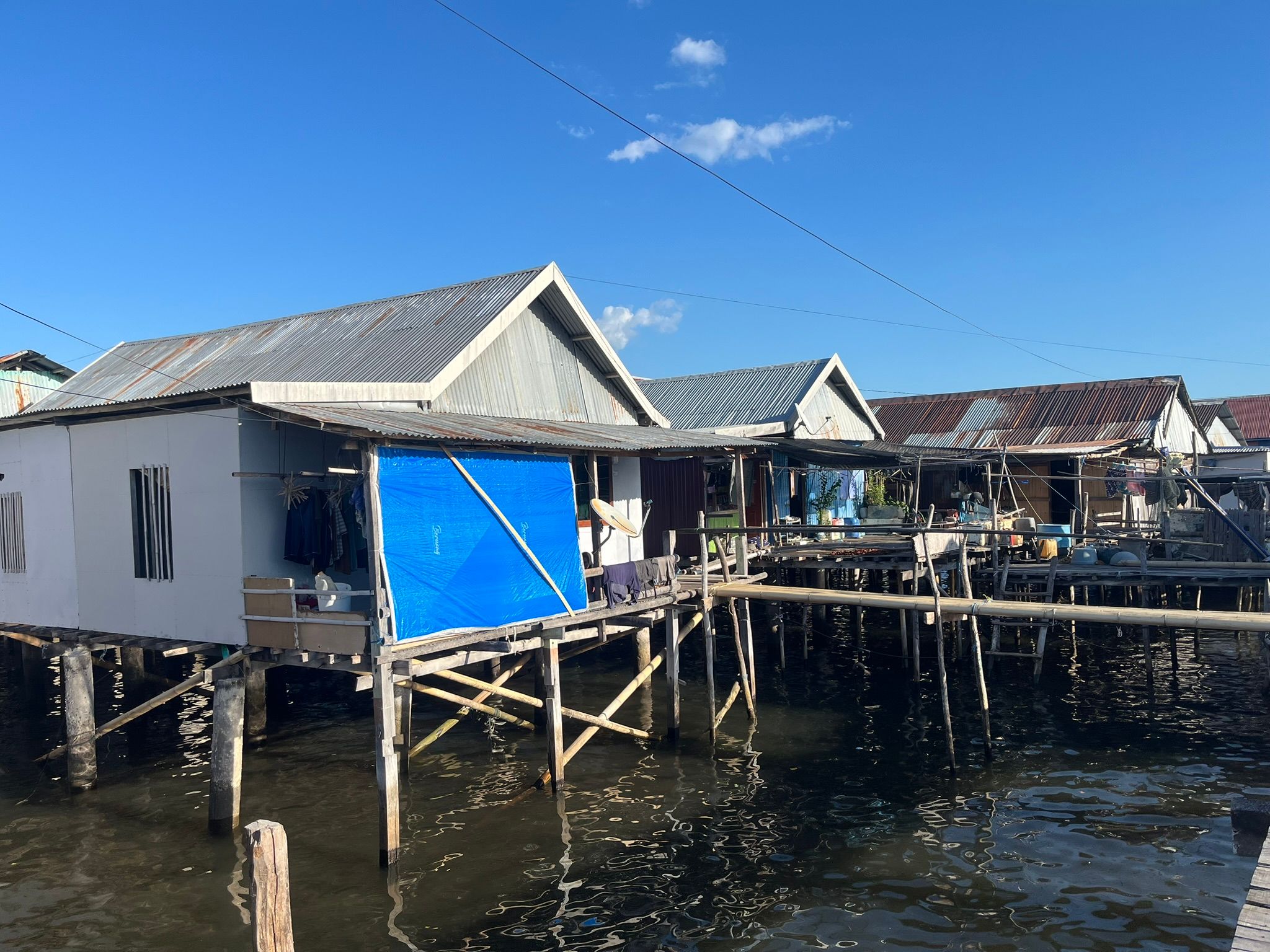
A visit to the traditional fishing village of Wuring is more interesting. The mosque named “an-Nur” (Arabic for “The Light”) stands like the whole village on stilts. This indicates that there are Muslims living here, not the Catholic majority of Flores. In fact, Wuring is inhabited by Bajos, former nomadic fishermen and sailors who have settled here. Wind-tilted houses and jetties, many made of bamboo trunks that look quite slippery, stand over the water; in between, boats are tethered.
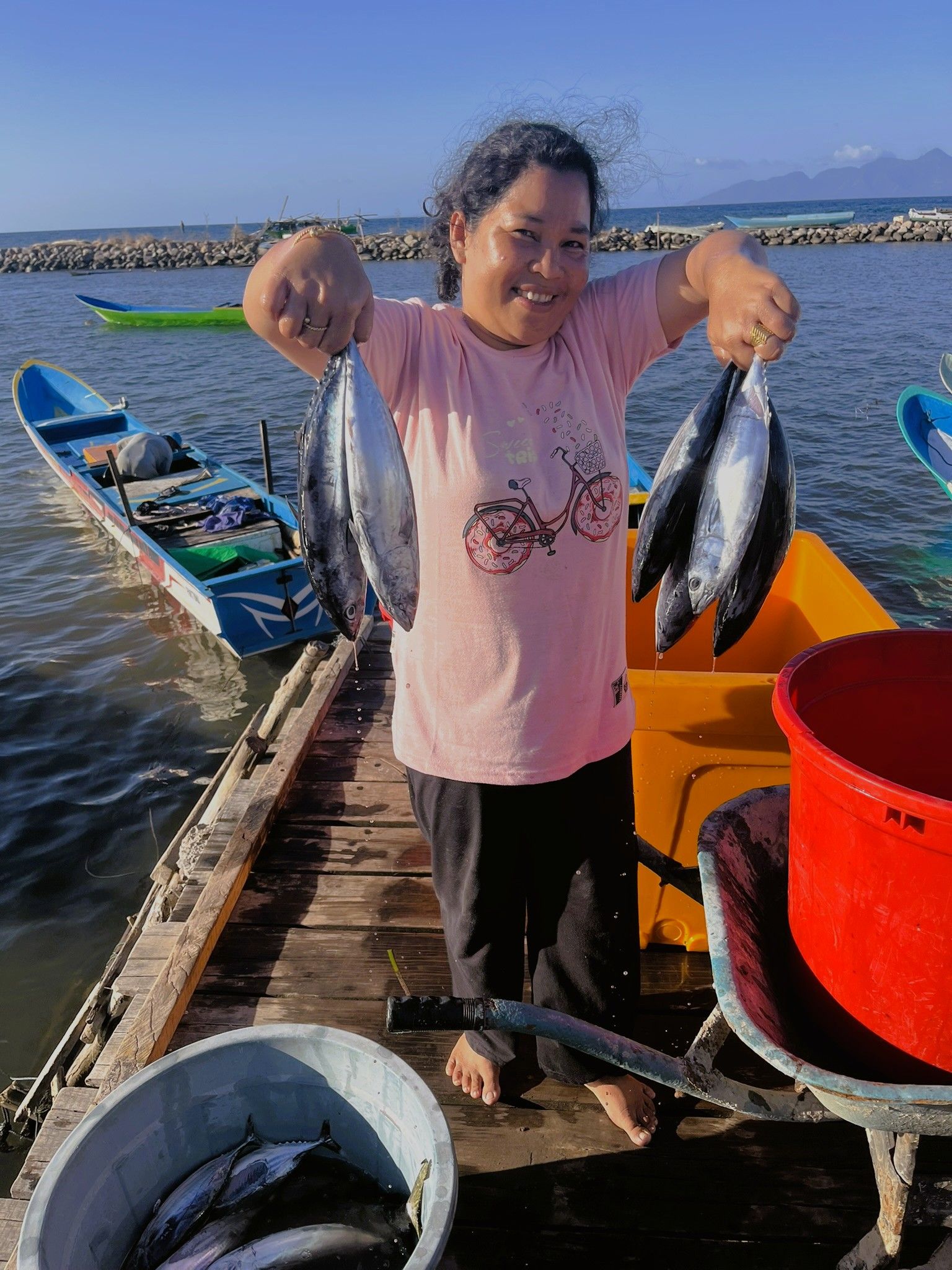
A boat with a fresh catch has just landed. A woman throws the fish into plastic buckets; men immediately take them to the market behind the stilt village on solid ground, next to other mosques.
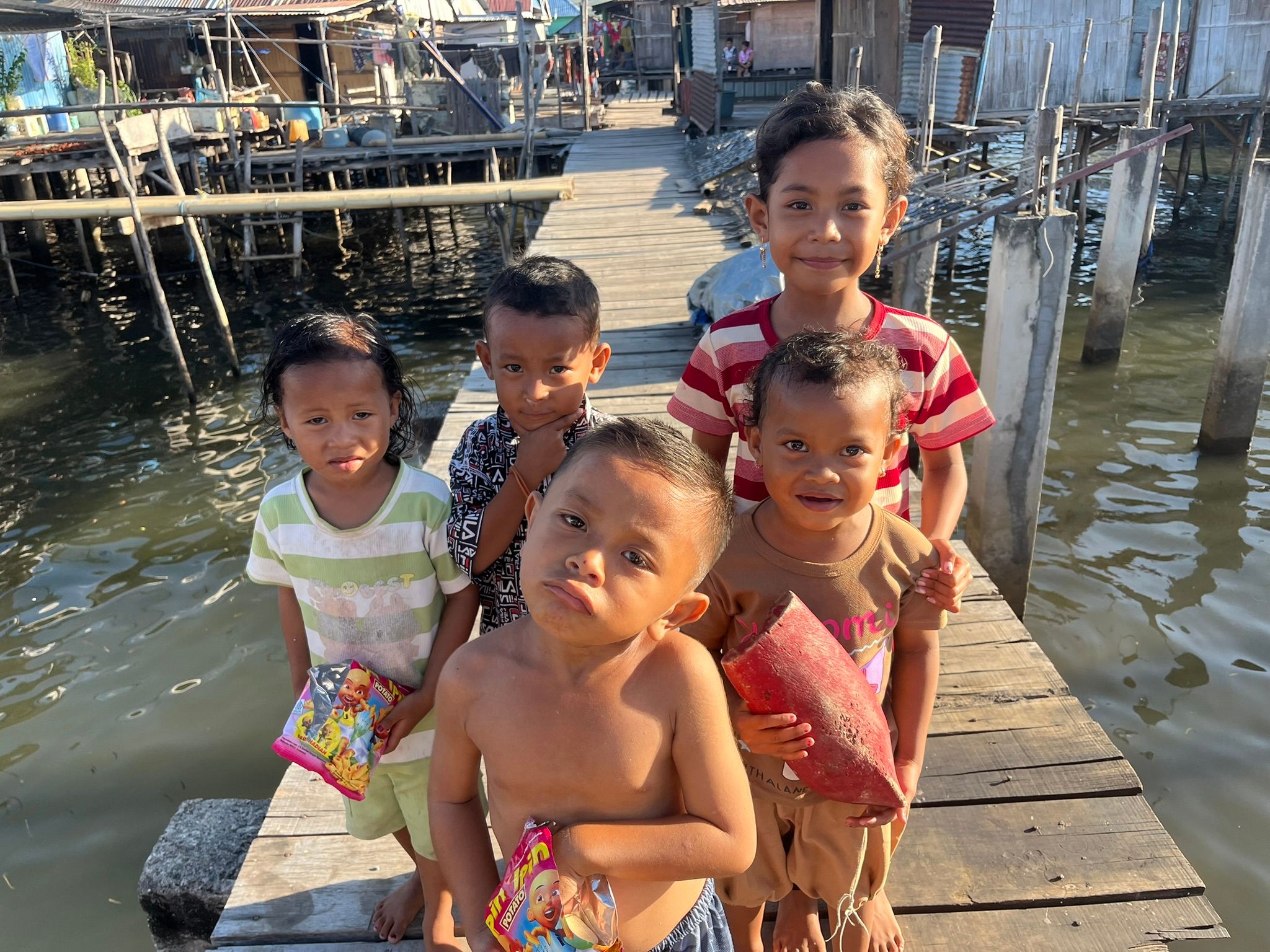
Tourists are rare here. Even on the motorbike, you are greeted: “Hello Mister,” “Good Morning Mister” (also in the afternoon). While walking between the stilt houses, children surround me. People scrape together their few English phrases to ask where I come from, why I am traveling alone – “don’t you have a wife?” – and whether I like Flores.
Getting away from Maumere is difficult
By nine in the evening, the city seems to be settling down for sleep. There is nothing happening in Maumere. But continuing my journey proves to be difficult: A booked flight directly to Makassar on the much larger Northern Sulawesi island is canceled the day before, and the money is refunded without discussion.
But then the newly booked replacement flight to Makassar with a stopover in Kupang on Timor Island is also canceled. If I had read the online reviews of NAM Air in advance, I probably would not have booked a flight with them. “Completely unacceptable! Our flight with NAM Air was canceled at the very last minute without any explanation. No compensation, no assistance, and we were forced to re-book tickets at our own expense,” wrote a frustrated Italian tourist – exactly what happened to me as well.
Upon arrival at the airport, a staff member flatly informs me that the booked flight is canceled. I hear three different reasons from three people: volcanic ash from an eruption of Lewotobi Laki-Laki 60 km away; a malfunction of the airplane (a Boeing older than 30 years); too few booked passengers.
Without asking me, NAM simply rebooks me on a flight two days later, which would have disrupted my travel plans. The airline refuses to refund the flight price.
Getting away from Maumere seems impossible, especially since Gunung Mas does not run anymore that day. Together with a young Italian man who is also stranded, I eventually rent a car with a driver that takes us to Ende, another provincial town 145 km southwest of Maumere. From Ende, I am finally able to leave the next day, with a newly booked and newly paid flight.
Before that, at breakfast, I meet a couple, Mégane and David, from Delsberg, the capital of the Swiss canton of Jura. A few days later, and very far away, in Rantepao on Sulawesi, we will meet again. The world is small, and that also applies to Indonesia, the most populous country in Southeast Asia.
My annoyance with the airline turns out to be trivial and insignificant just four days later: I am already in Sulawesi when Flores Island is struck by a severe earthquake in the early morning of August 15, 2026, causing dozens of deaths.