
«Swiss» mountain road on the island of Flores
gradually replaced the Jesuits. The Society of the Divine Word was founded about 150 years ago in the Dutch town of Steyl near the German border by the German priest Arnold...
Published: 28.08.2026
I am on Flores, and on July 30, 2026, I will continue from Ruteng to Bajawa, moving from one district capital to the next. The road is often narrow; the traffic is manageable, yet there’s a lot of honking and overtaking in impossible places. Again and again, I am astonished (not only in Flores, but generally in Indonesia) that despite the adventurous driving style, there are hardly any accidents.
We are traveling with Gunung Mas, a company whose minibuses connect the larger towns on the island. Gunung Mas means “Golden Mountain” in Indonesian – a pompous name for a fleet of Toyota vans. I cannot book my seat using well-known apps like 12go, redbus, or easybook, but instead have to inquire for WhatsApp numbers.
Normally, bus drivers pick you up from your accommodation and bring you directly to the next stop at the end of the journey. In Bajawa, that doesn’t work: The main road runs several kilometers outside this city of about 40,000 inhabitants, and I will be dropped off at a crossroads. There, taxis are waiting, whose drivers expect to charge travelers more than locals.
Bajawa, like Ruteng, is located at around 1100 meters above sea level. The nights are cool; one sleeps without air conditioning - a pleasant change from the tropical nights in the coastal towns. The air is clear unless, next to you, one of the hundreds of small fires is burning, with which the islanders dispose of their waste. I will remember Flores for the ever-present smell of burning garbage.
However, not all waste is burned. Garbage bags, some torn open by animals in search of food, and empty plastic bottles adorn almost everywhere in Indonesia the edges of roads, stream valleys, forest clearings, and even accumulate under palms at the edge of certain beaches.
Howling Motorcycles, Howling Dogs
In Bajawa, I stay for four nights at Mawar B&B, a guesthouse, paying 13 Swiss Francs or just over 13 Euros per night including breakfast – quite pleasant, if it weren’t for the local toughs who race down the street on their motorcycles without mufflers, causing infernal noise, and the neighbor’s dog, which almost continuously howls at the moon.
In the morning, you are not woken by the Muezzin croaking through loudspeakers from the minaret, but by church bells. Bajawa is, if that is possible, even more Catholic than Ruteng.
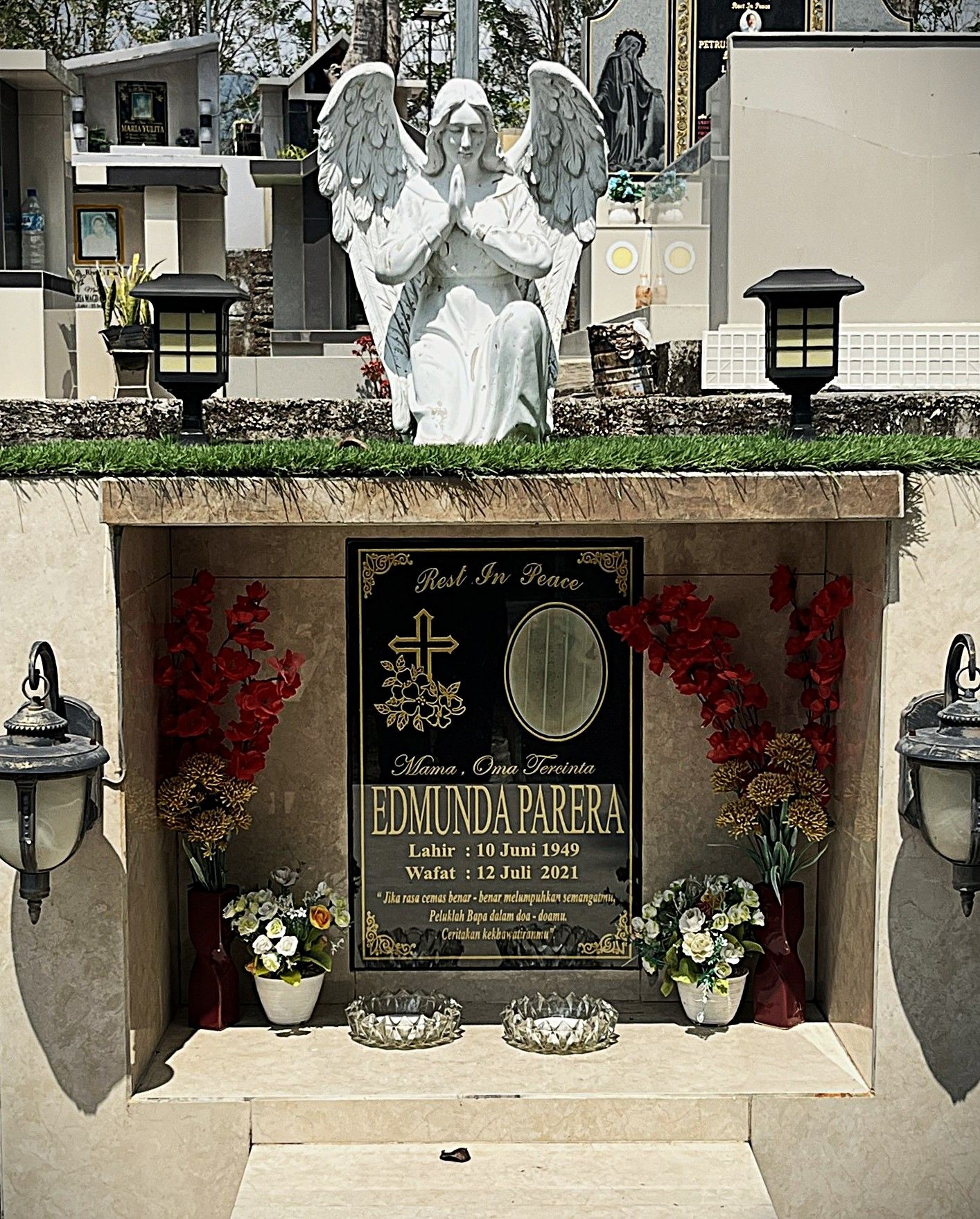
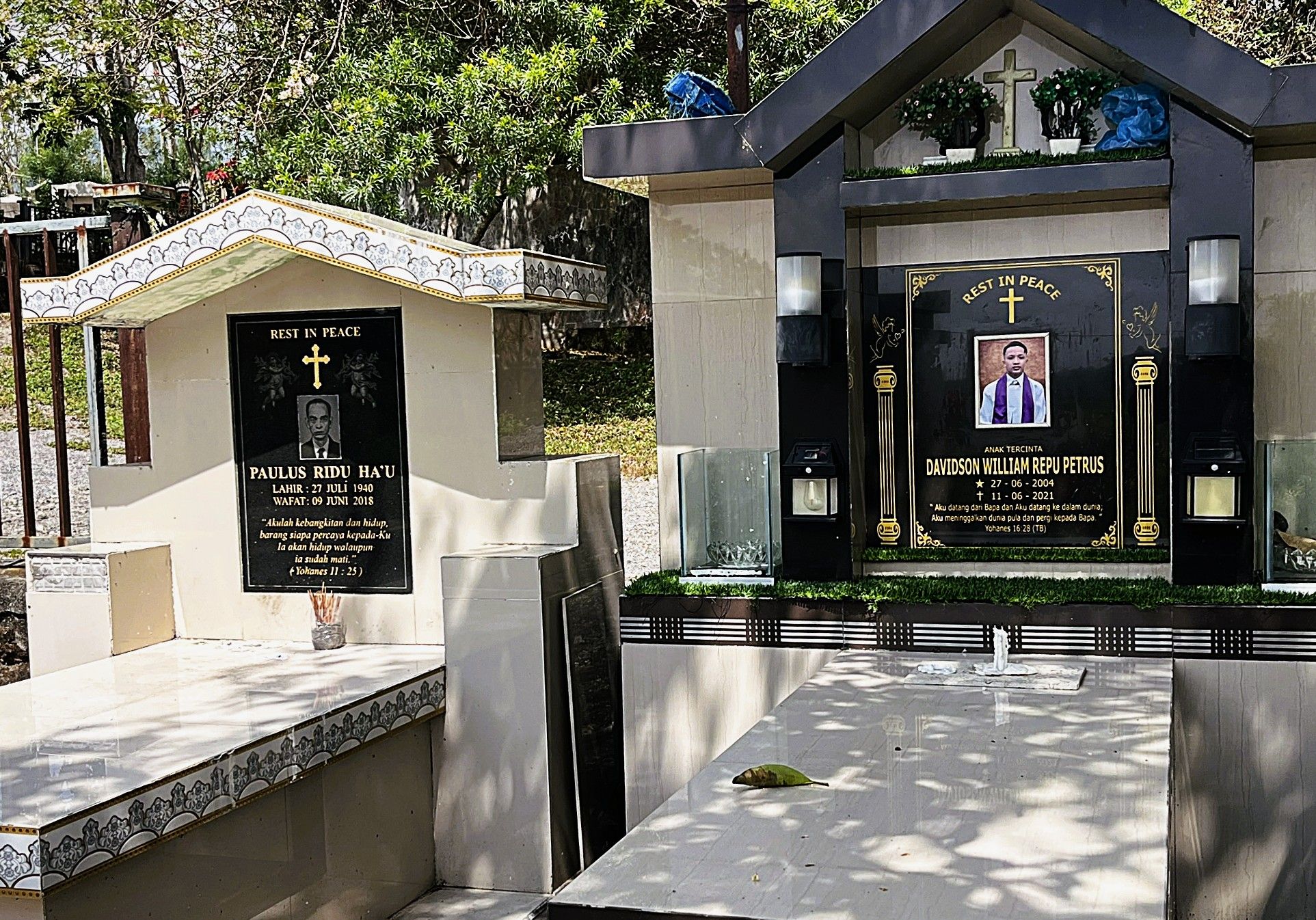
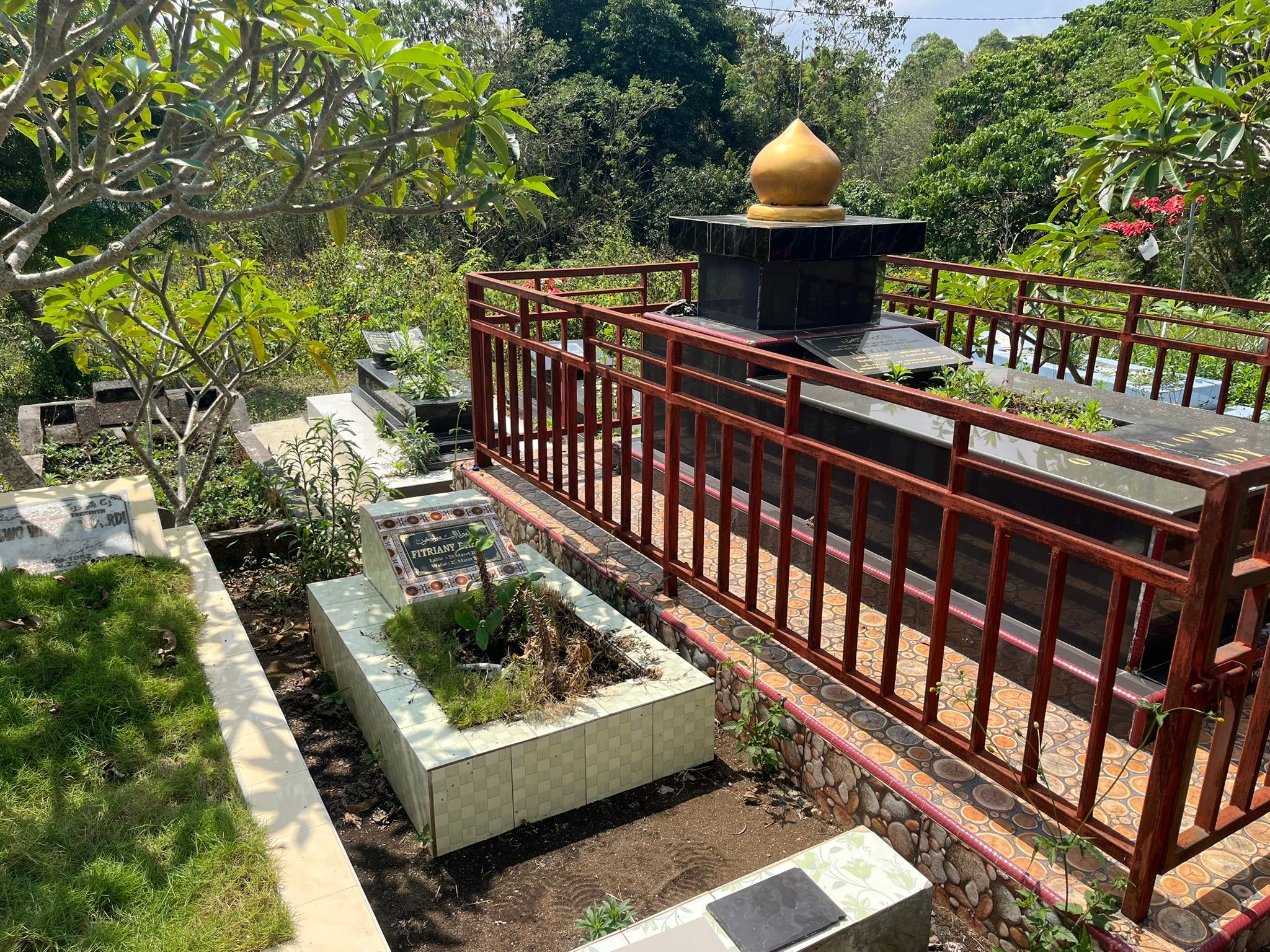
On an excursion into the countryside, I unexpectedly come across a sprawling cemetery on a hillside near a village called Radha, featuring a small section for Muslims and an impressive collection of luxurious Christian graves, adorned with marble or other stone slabs and large portraits of the deceased, all strangely inscribed in English (which hardly anyone speaks here) with “Rest in Peace.”
Christine, the 23-year-old daughter of the house, is a pharmacist, speaks a very comprehensible English, dreams of her own pharmacy, an elaborate wedding, and children, and takes care of me. She knows the sights and the routes to get there. (Google Maps, however, as I have noticed many times on my journey, seems to fail just when you need it most outdoors.)
Conversations at Breakfast
A Bed & Breakfast is a house where you have breakfast on the same sofa as your roommate and immediately strike up a conversation. Here I meet Gian Luigi, a generously tattooed geologist in his fifties from Veneto; we will later encounter each other again in Maumere, farther east on Flores. A family of four from Poland, I will coincidentally run into a few weeks later in Rantepao on Sulawesi, almost 1000 km north of Bajawa.
I rented a scooter, but upon delivery, I would have to decline it as the tires are so worn that there’s no tread left on the front or back. Instead, I drive off and notice before the first tight curve that the brakes hardly work – the worst vehicle I’ve ever been given, especially since on the way back, the engine starts sputtering and various warning lights flicker nervously.
Upon returning it early, I refuse to pay, which the renter accepts without discussion; he is obviously aware that his scooter belongs in the junkyard and not under a tourist's behind. For the remaining days, Christine generously lends me her private Honda Beat.
An Imposing but Harmless Volcano
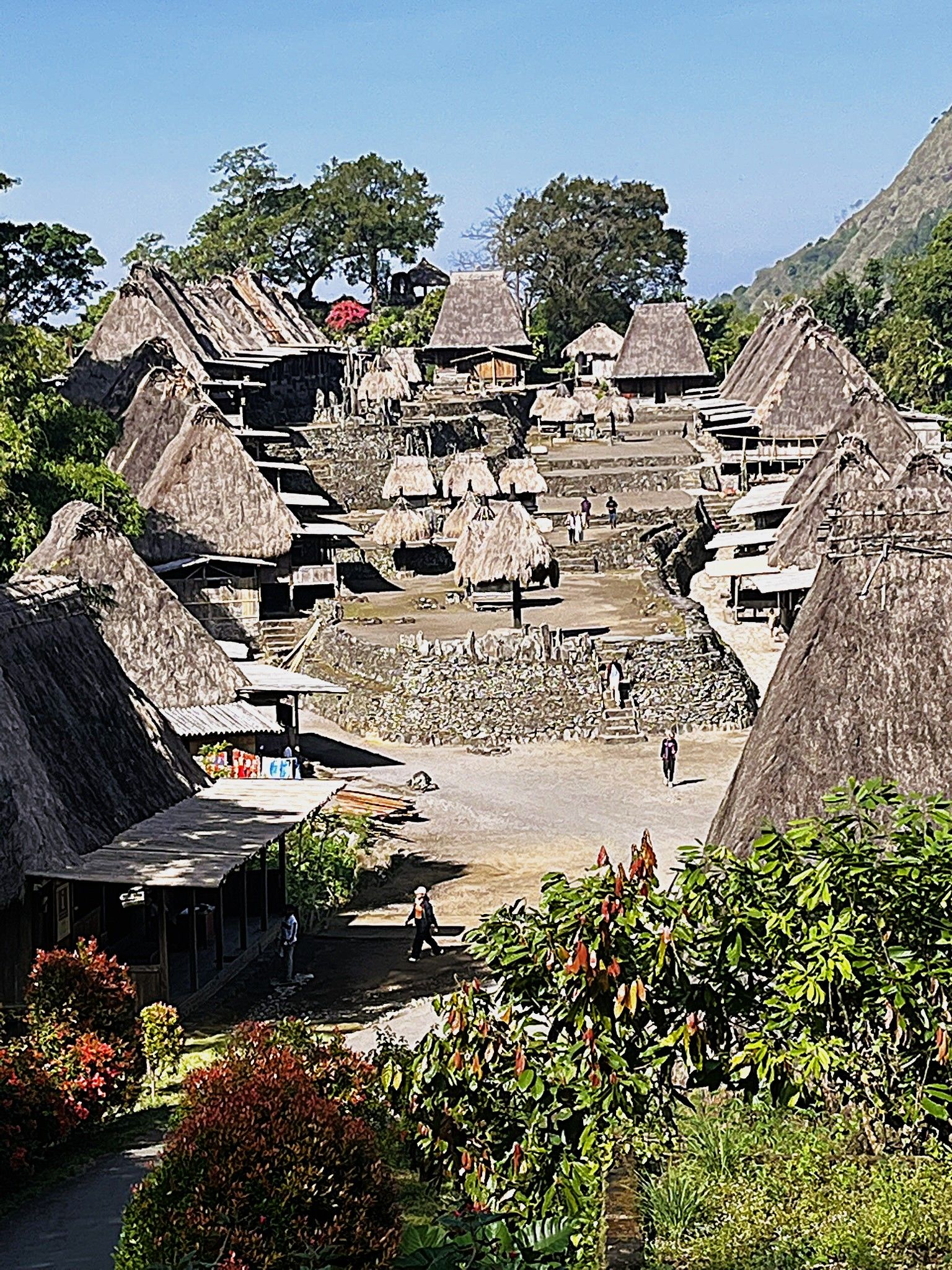
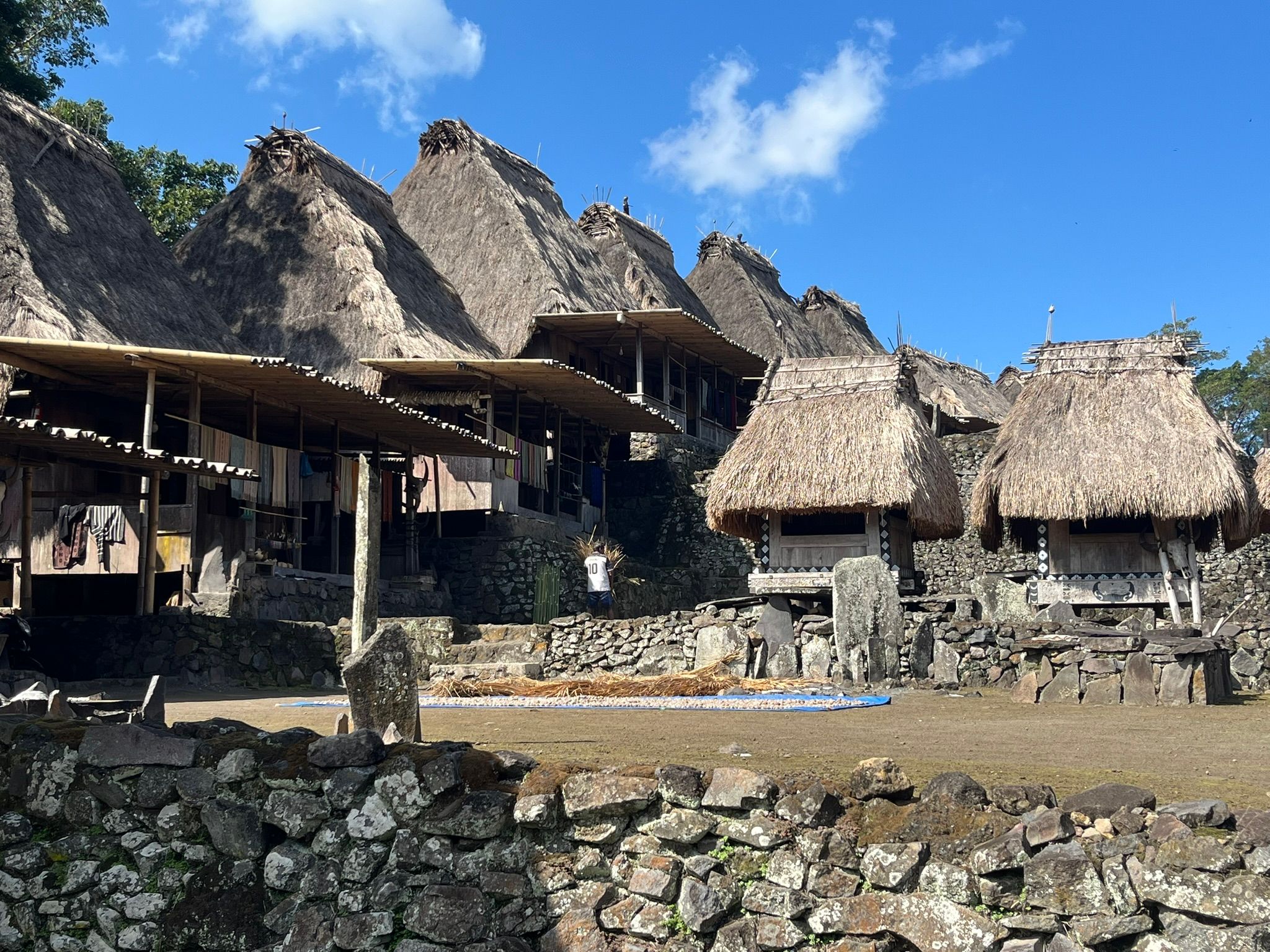
With the broken scooter, I at least managed to reach Bena and Luba, two traditional villages of the Ngada (the dominant ethnic group in the highlands of Bajawa; they speak a different language than the Manggarai further west).
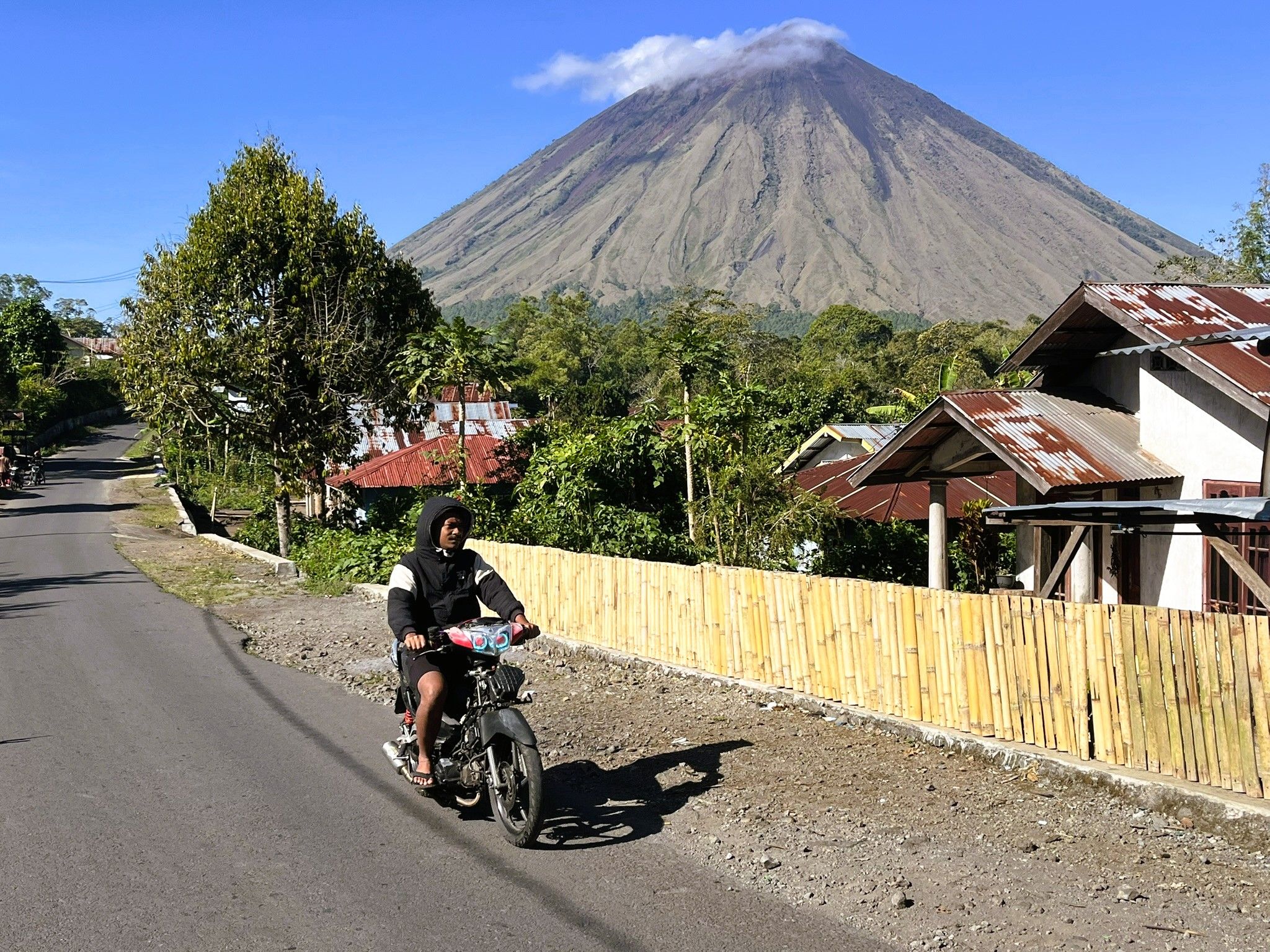
In the background rises the Inerie, a 2245-meter high volcano in the shape of an almost perfect cone. A cloud playing around the summit might hint at volcanic activity, but that is misleading: The Inerie may look imposing, but geologists date its last eruption to around 8050 BC.
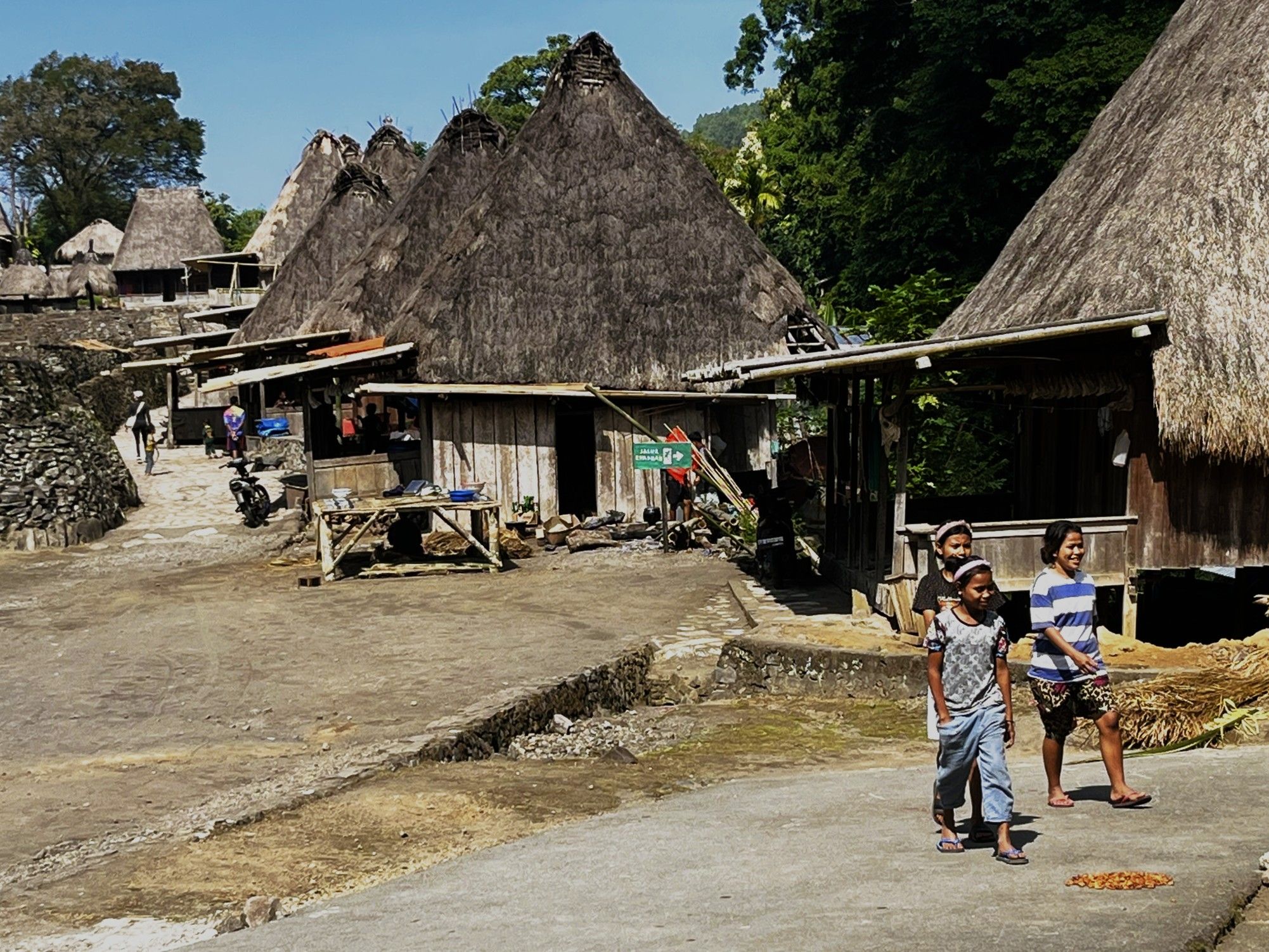
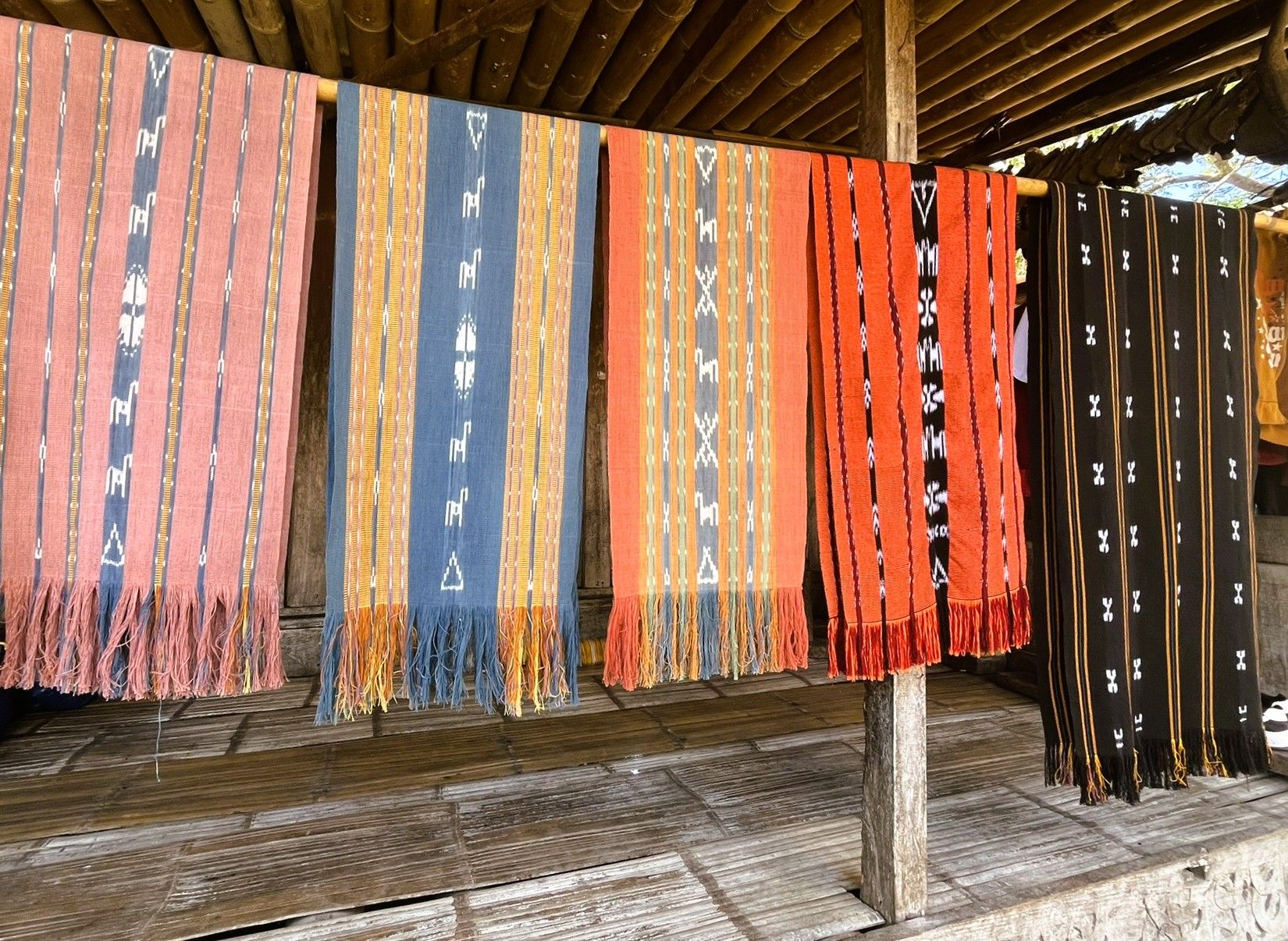
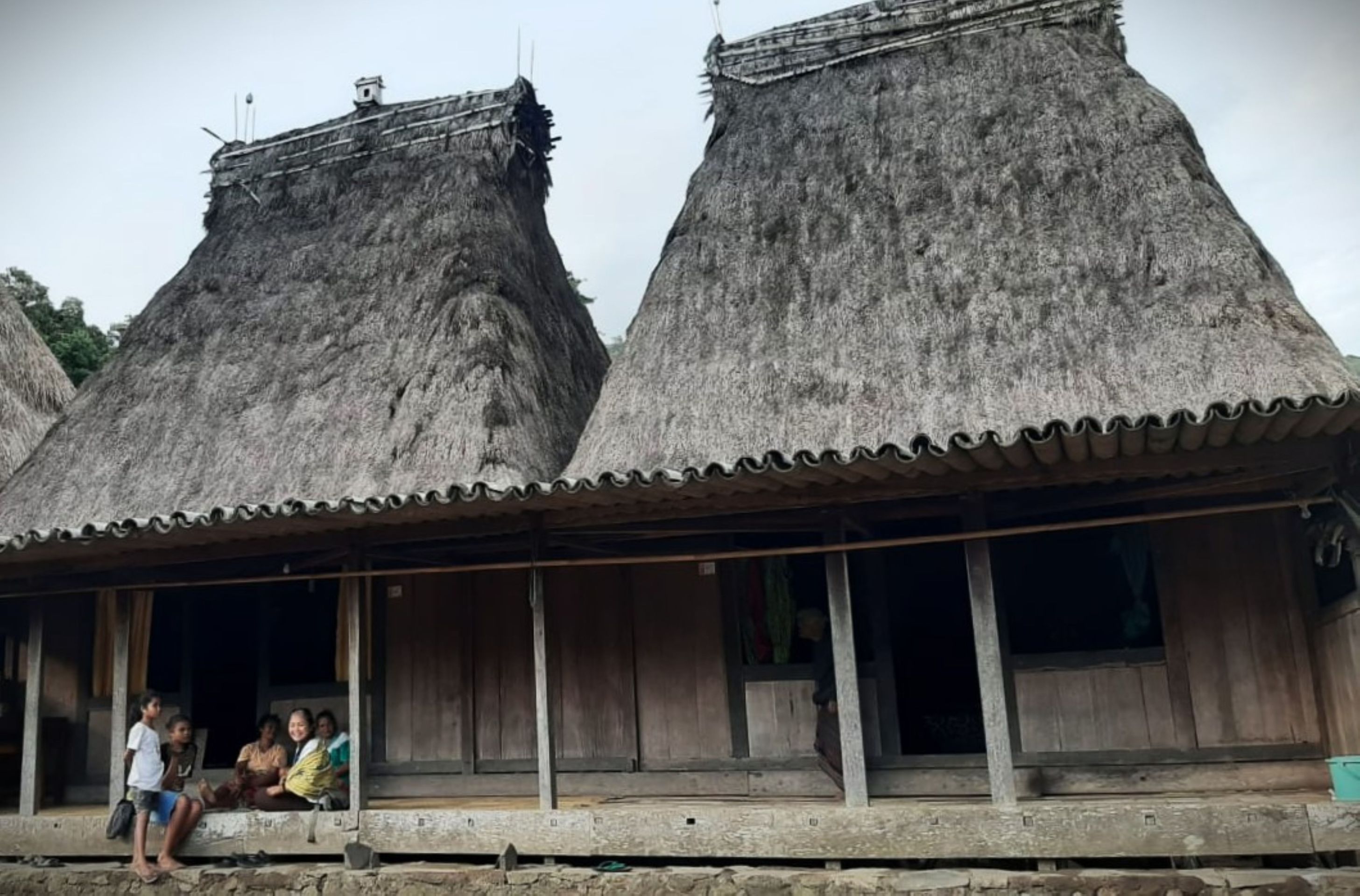
The houses of Bena with pointed roofs, carved symbols on the walls, and lined up ox horns stand in two orderly rows, interspersed with stone altars and graves that honor the ancestors. There are a few tourists in Bena, almost none in Luba. The traditional villages are beautiful but not polished, and they are not just backdrops for selfies; they are still inhabited; new homes are built in the old style; women weave colorful cloths that hang out for sale; children play football.
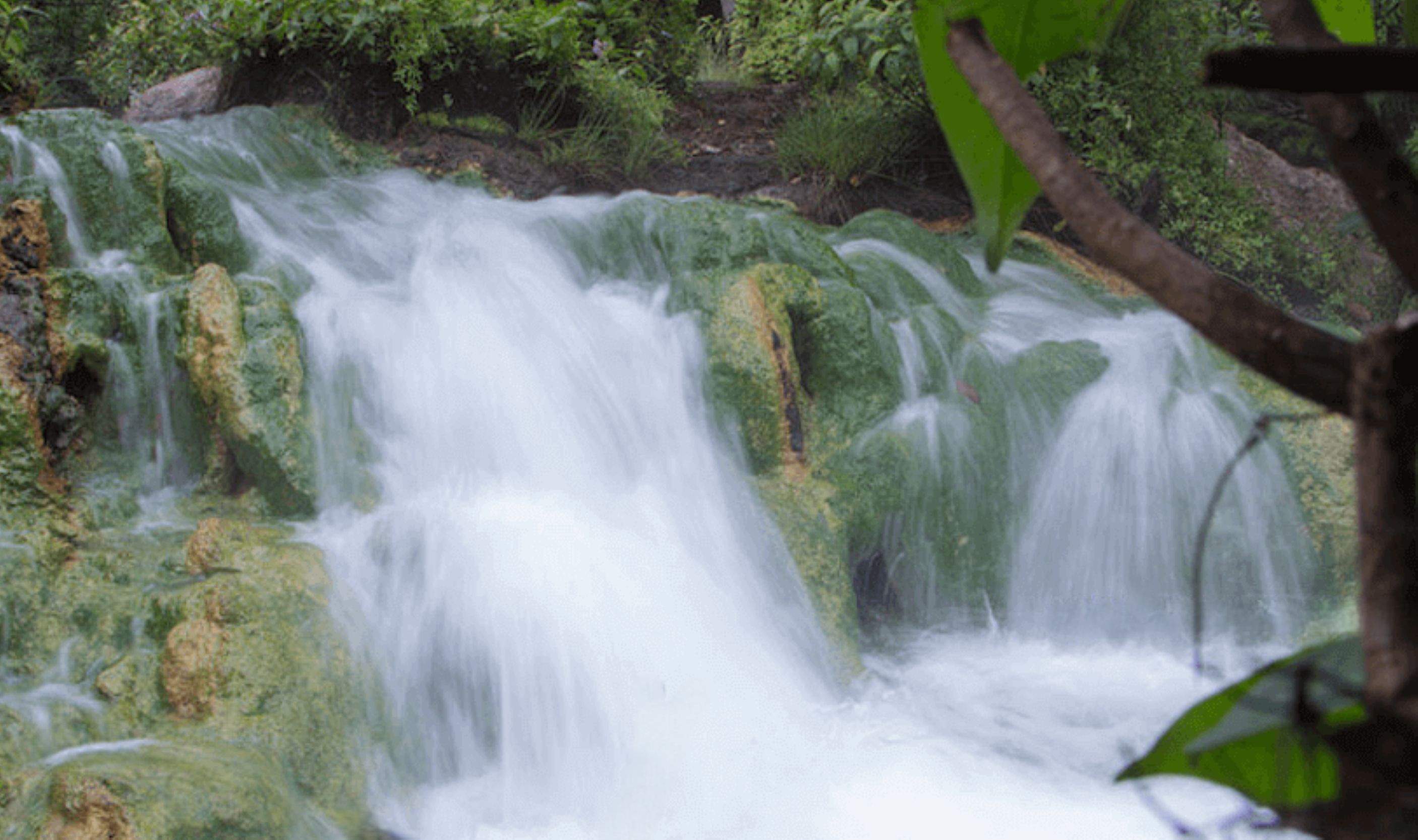
Later, no longer with the junk scoot, but with Christine’s Honda, I go to the Mengeruda Hot Springs about 25 km north of Bajawa at the foot of another volcano. (This volcano, the Inielika, is active unlike the Inerie and last erupted 25 years ago.) In Mengeruda, sulfurous, about 40-degree warm spring water bubbles up, feeding several bathing pools and a small waterfall.
The Journey is the Destination
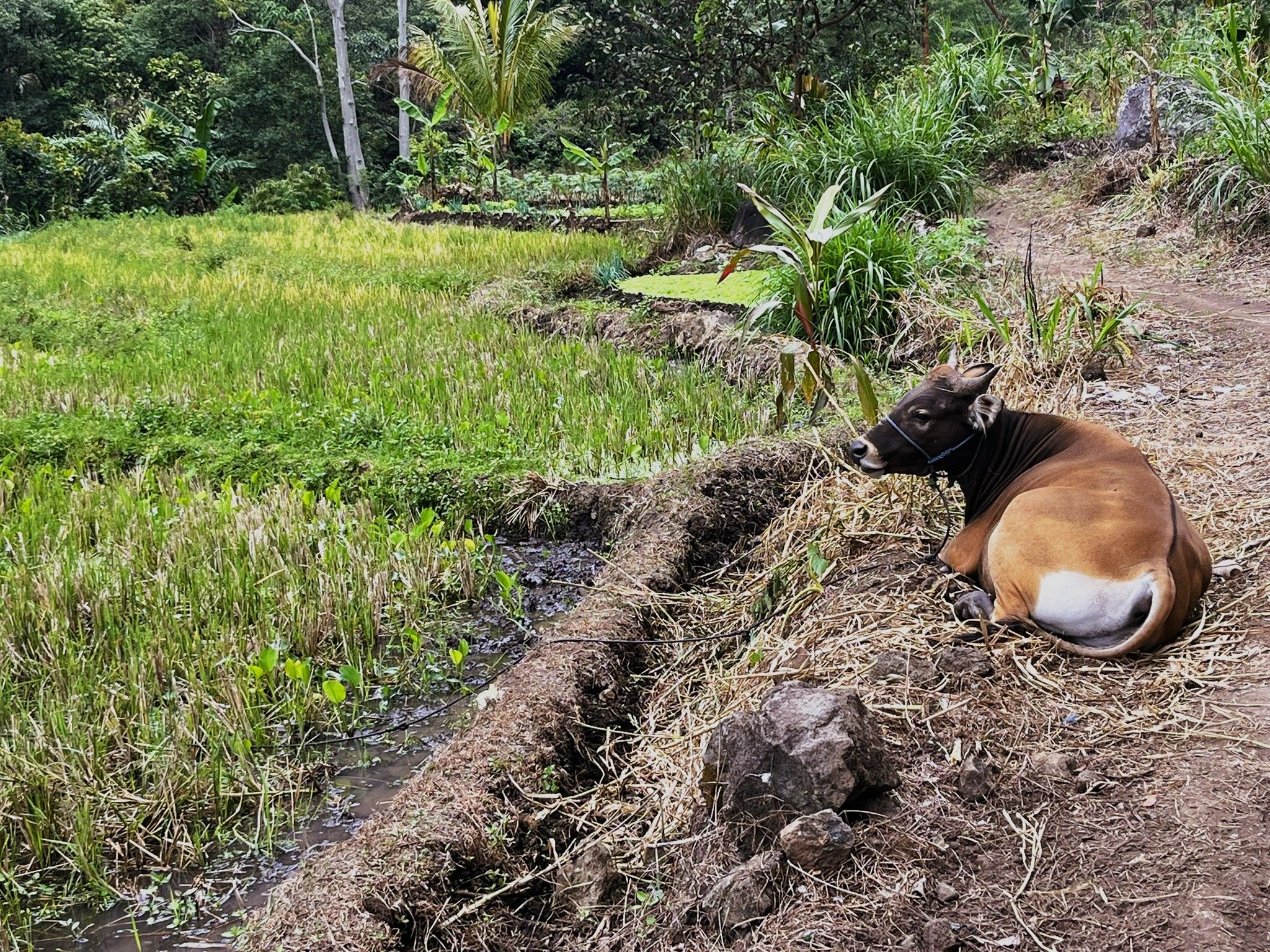
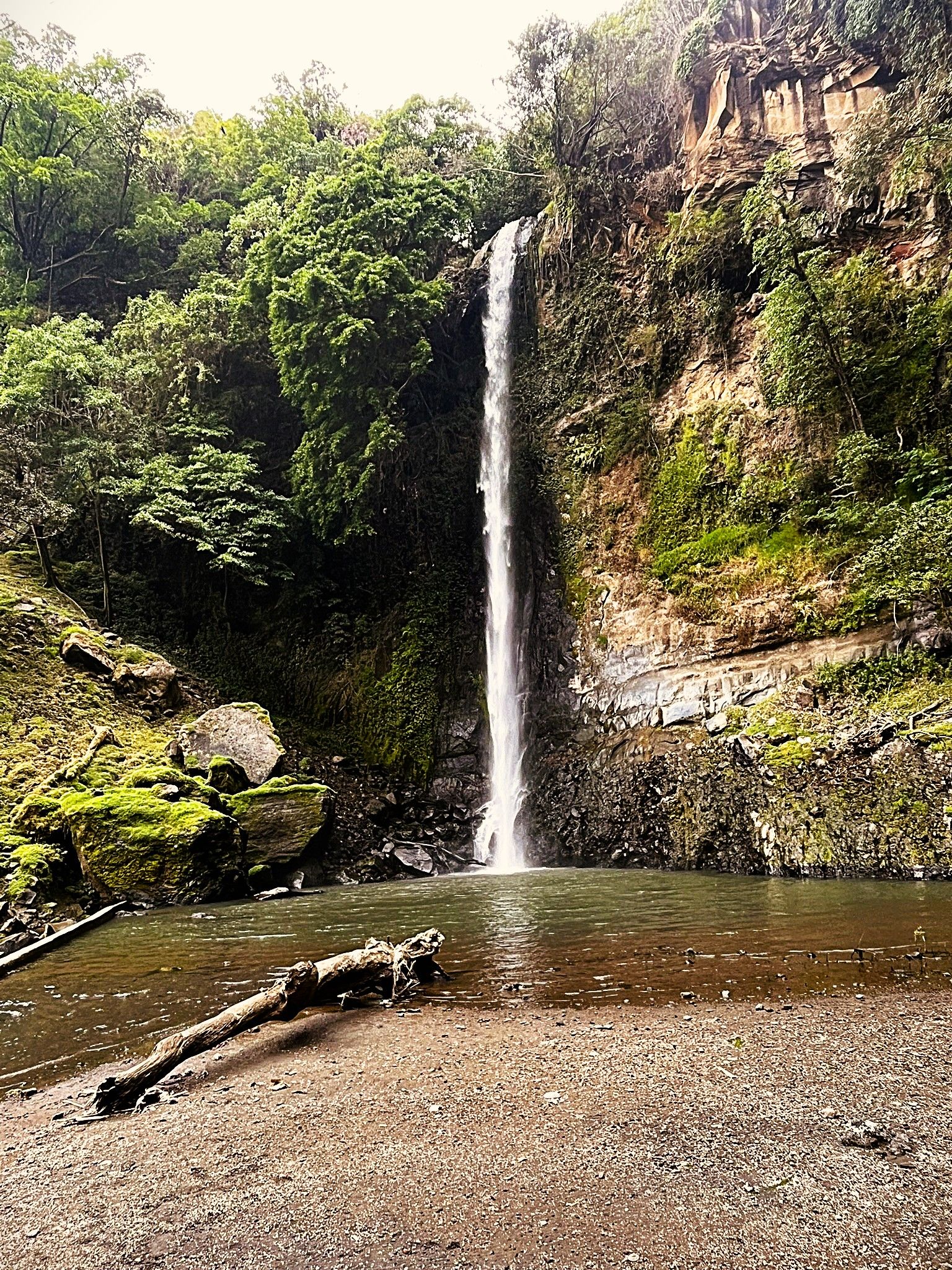
The Ogi waterfall does not live up to what the travel sites promised. The footpath leading there, after the road has become so bad that one prefers to park the scooter, is more charming than the waterfall itself. An elaborate irrigation system services the vegetable and rice fields, and on the small dams between the wet areas, solitary cows and water buffalo graze with stoic calm.
The name Ogi evokes memories of the Bernese Oberland. (For German readers: Adolf Ogi – yes, that's really his name – was a particularly popular member of our national government, which would be your federal government. He comes from the Bernese Oberland.)
In that Bernese Oberland, there are quite a number of spectacular waterfalls: the Staubbach Falls in Lauterbrunnen, for example, which plunge down a vertical rock face almost 300 meters; the Giessbach Falls with 14 roaring and spray-kissing cascades in an idyllic forest and mountain landscape that tumble down 400 meters into Lake Brienz; the thundering Reichenbach Falls near Meiringen, where Arthur Conan Doyle let his master detective Sherlock Holmes meet his doom (only to resurrect him years later).
Compared to them, the Ogi Falls near Bajawa are just a cat's pee. And yet, the trip is worthwhile, for on the way to the waterfall, an unusual tranquility prevails, and the contemplative view of fields, meadows, babbling brooks, and grazing livestock compensates me for the promised, but absent water spectacle.
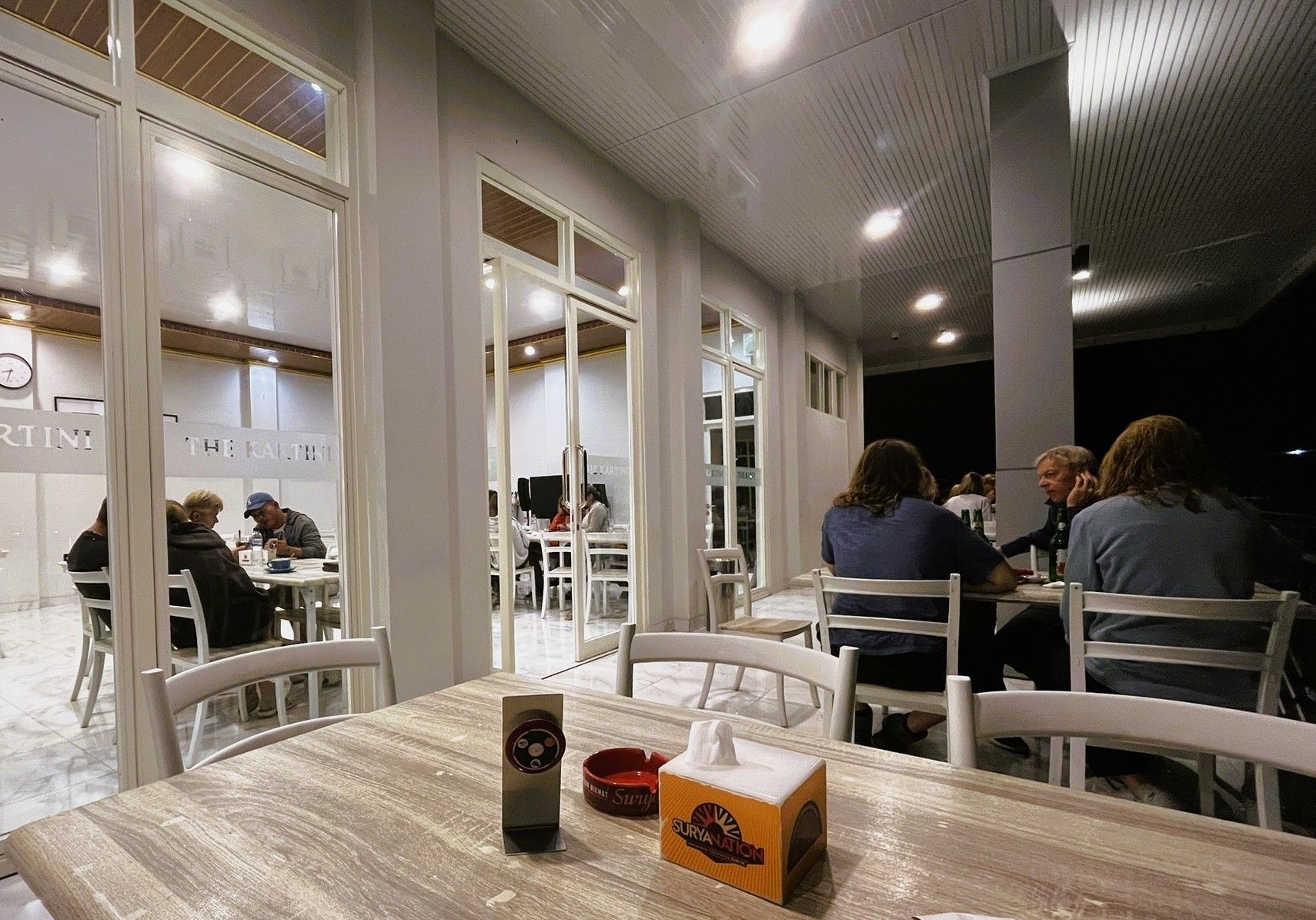
Bajawa may be a small provincial town pretty much lost in the middle of the island of Flores. But they have a modern, well-lit restaurant, bright white and shining at night, that would suit any metropolis well. It is named after the park at the edge where it stands, “The Kartini,” and offers traditional regional alongside international cuisine (which I disdain). The prices are moderate, the quality is good, and it is only a five-minute walk from my B&B.
I am there almost every evening, which proves to be a wise move, as at my next stop, Maumere, there is nothing comparable, even though the town is twice as large as Bajawa.