
Tuktuk / Lake Toba
On the way south to Lake Toba, there were some interesting stops, so we booked (also due to lack of alternatives) a private transport again. First, we headed to Dokan, a small...

Published: 11.03.2026
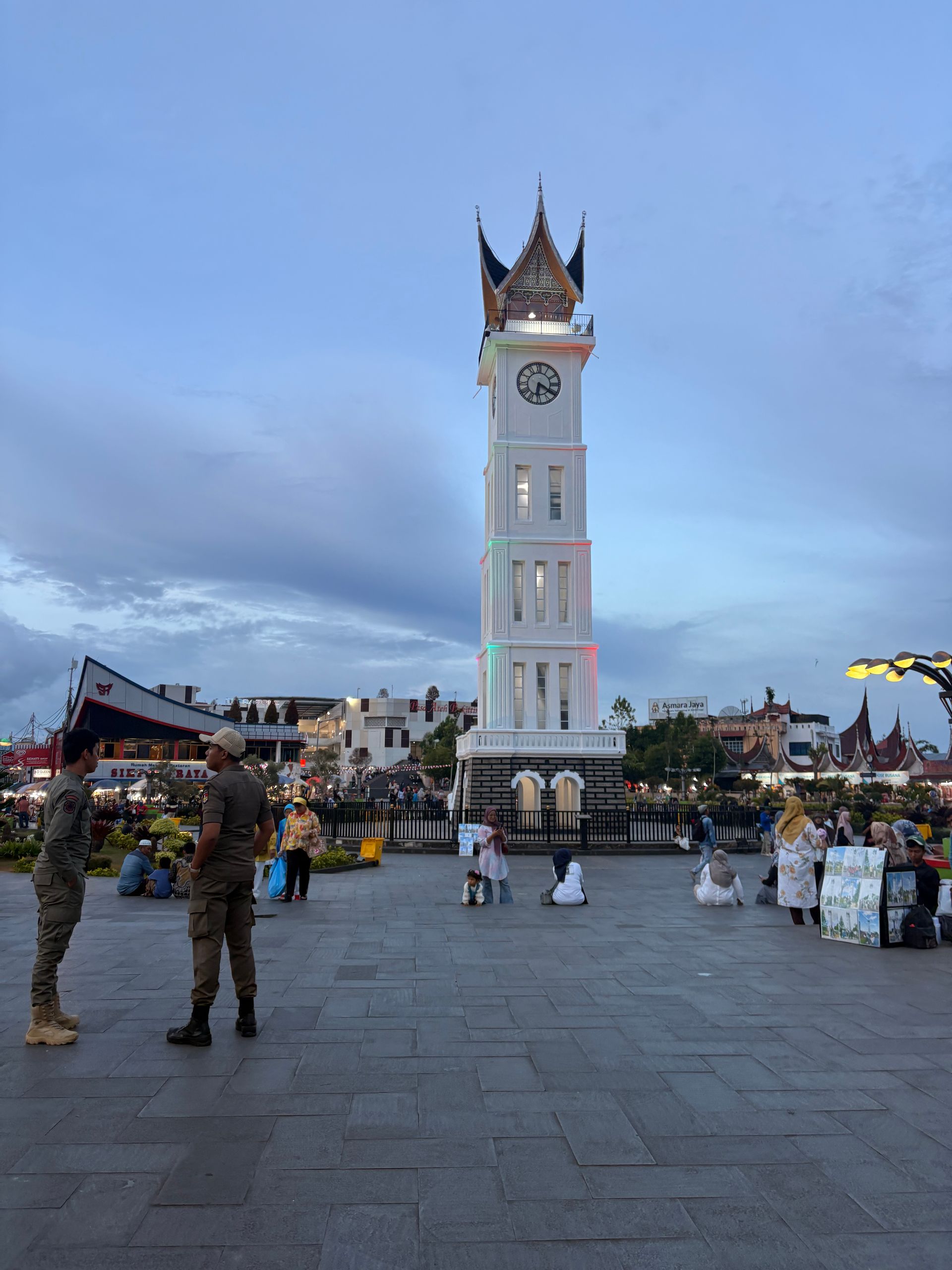
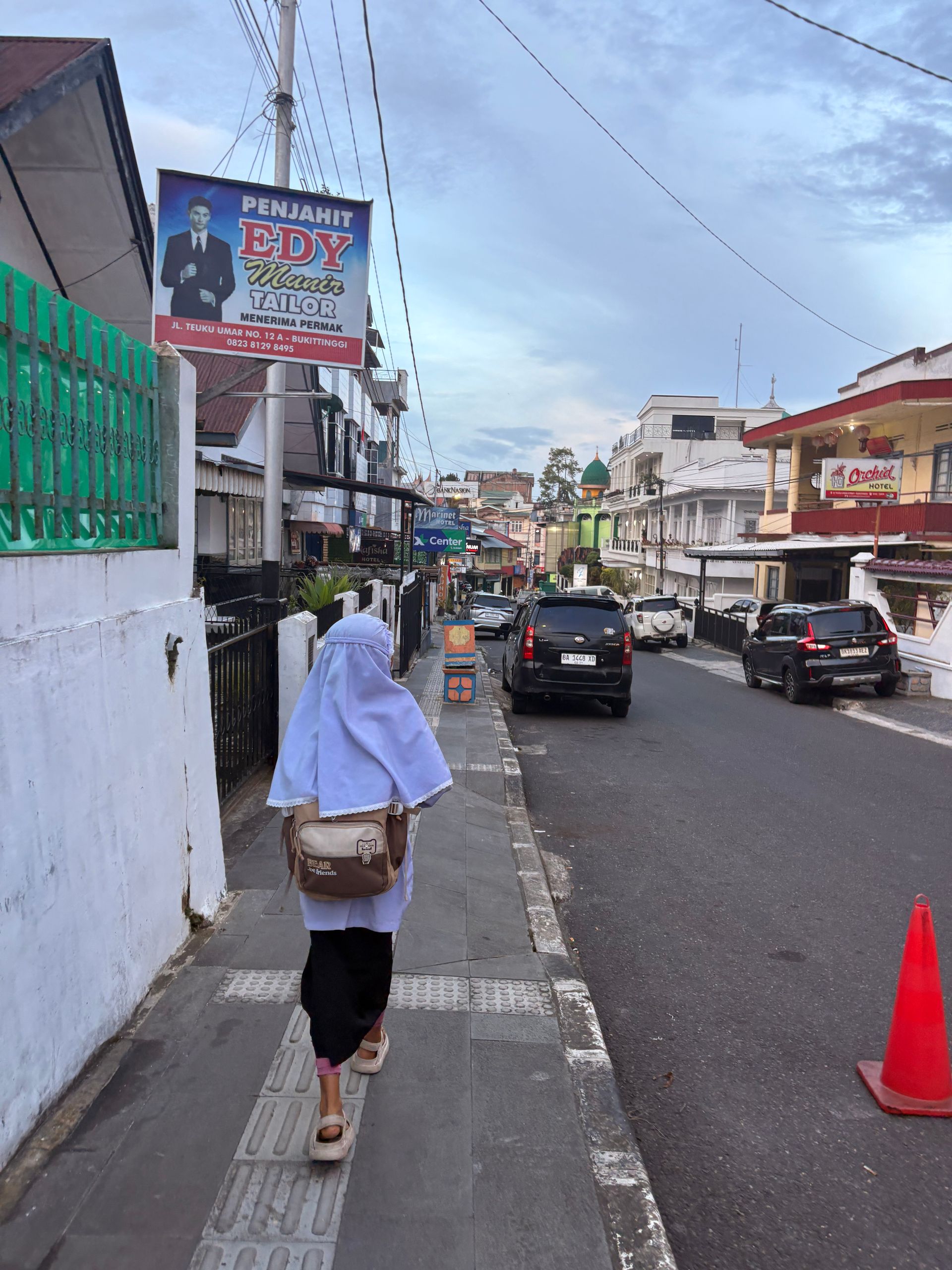
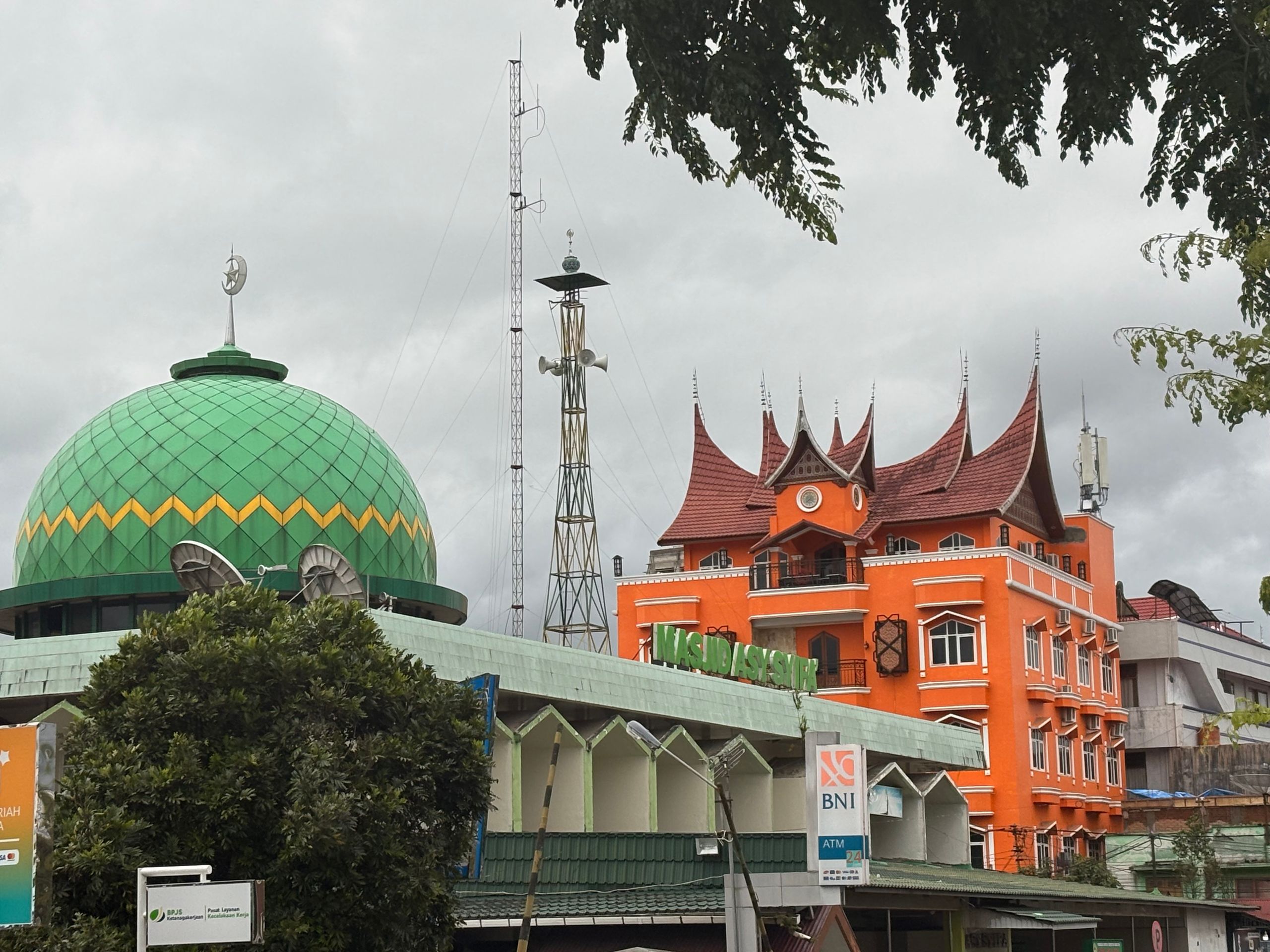
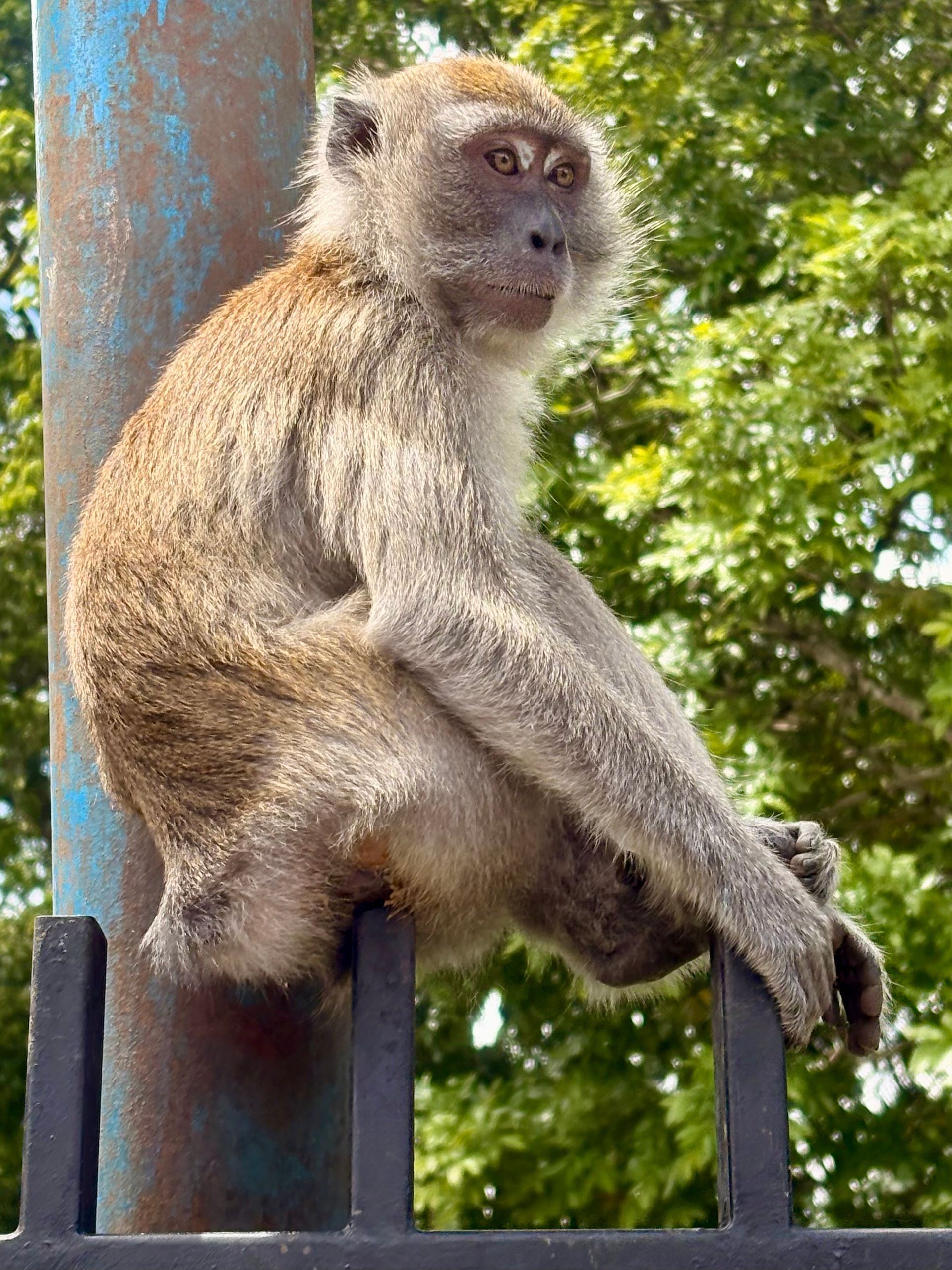
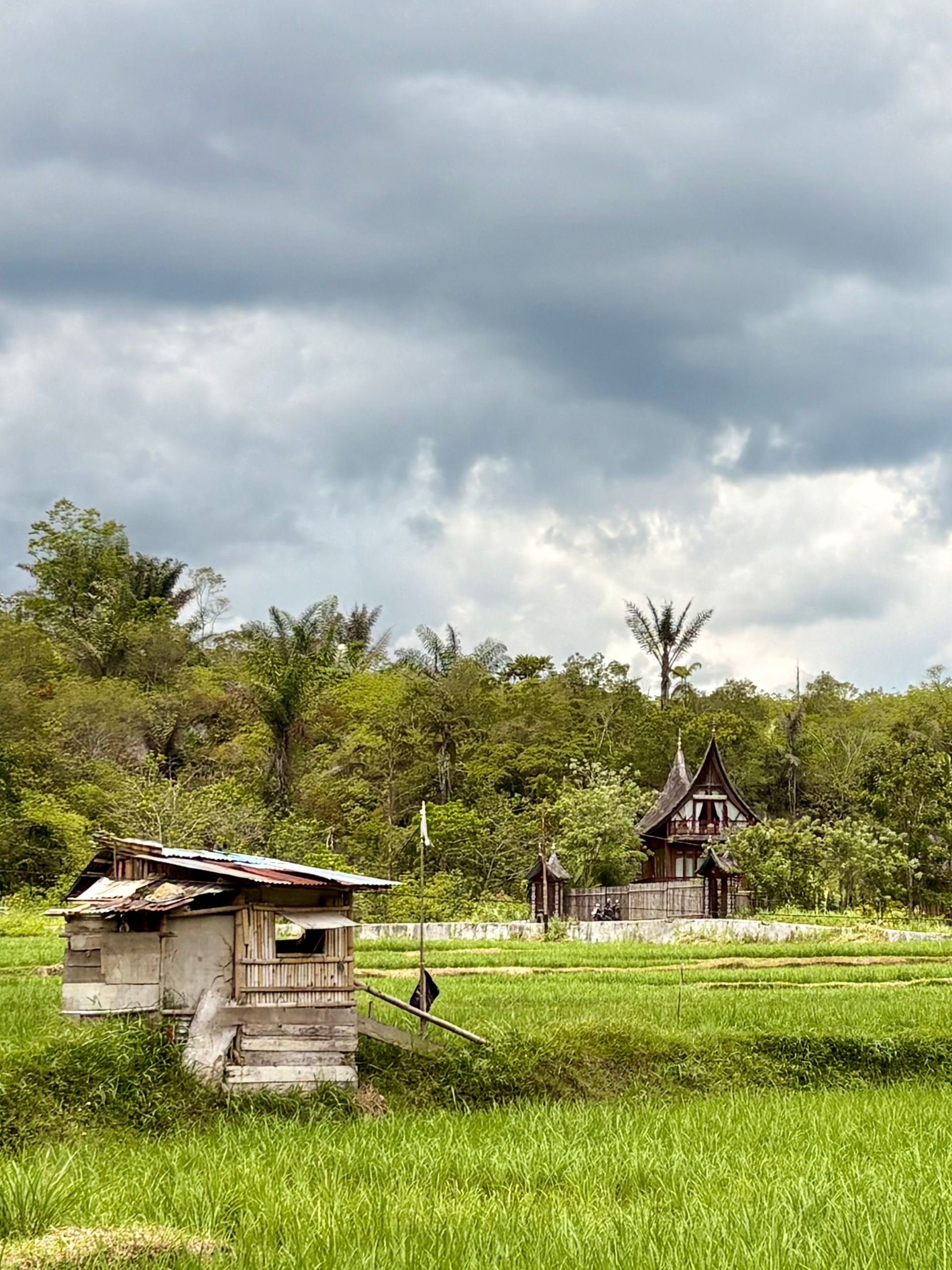
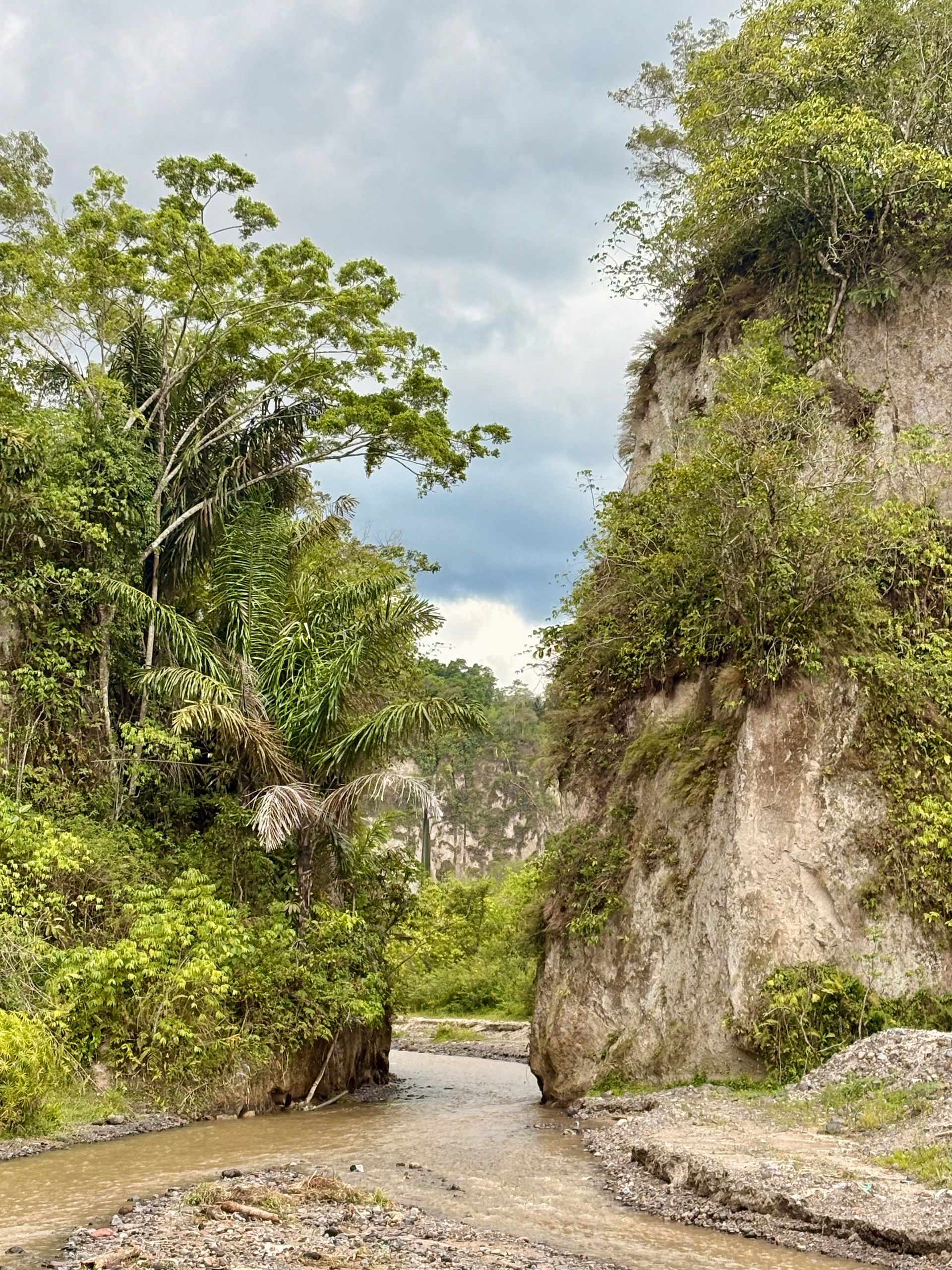
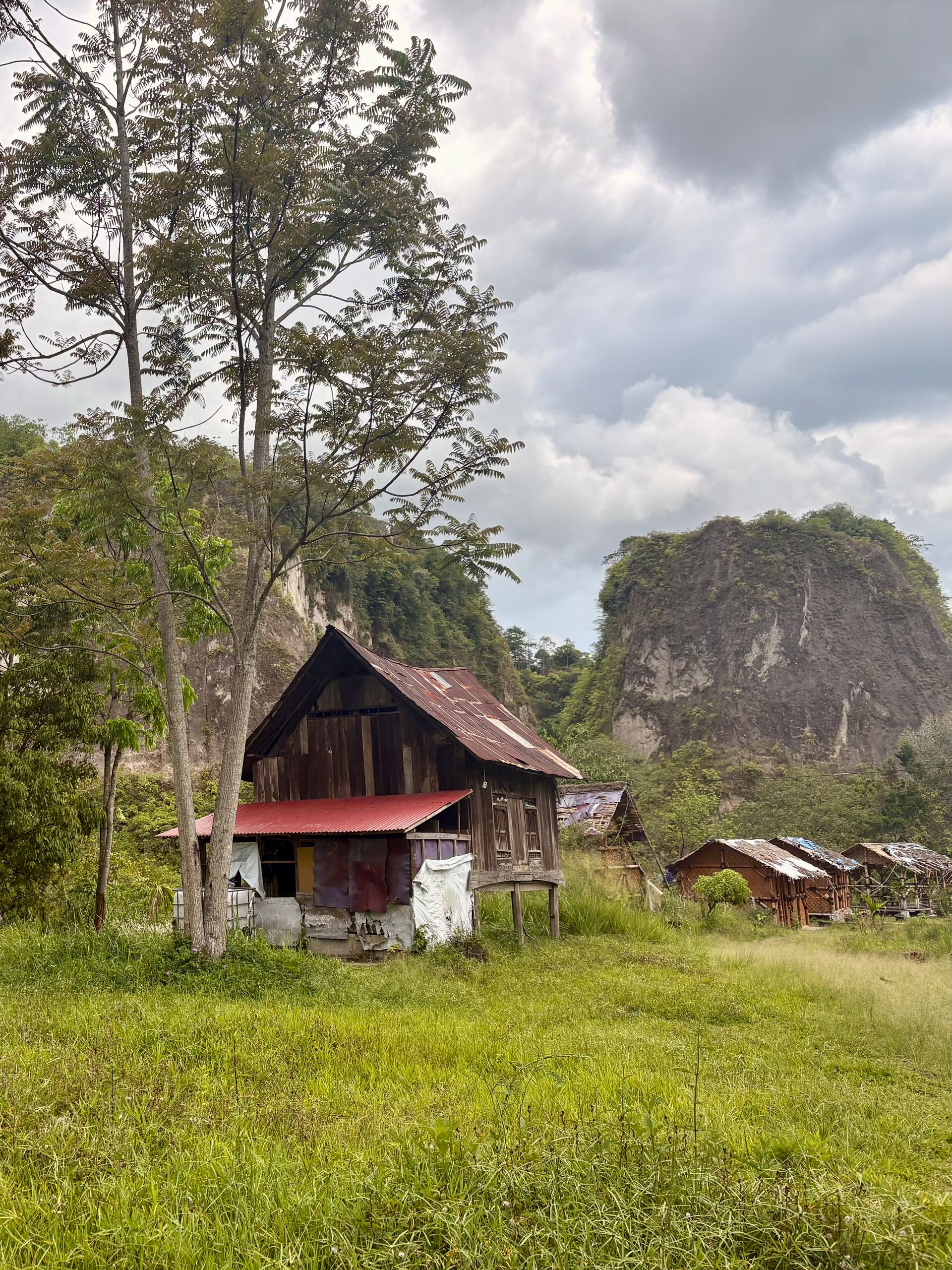
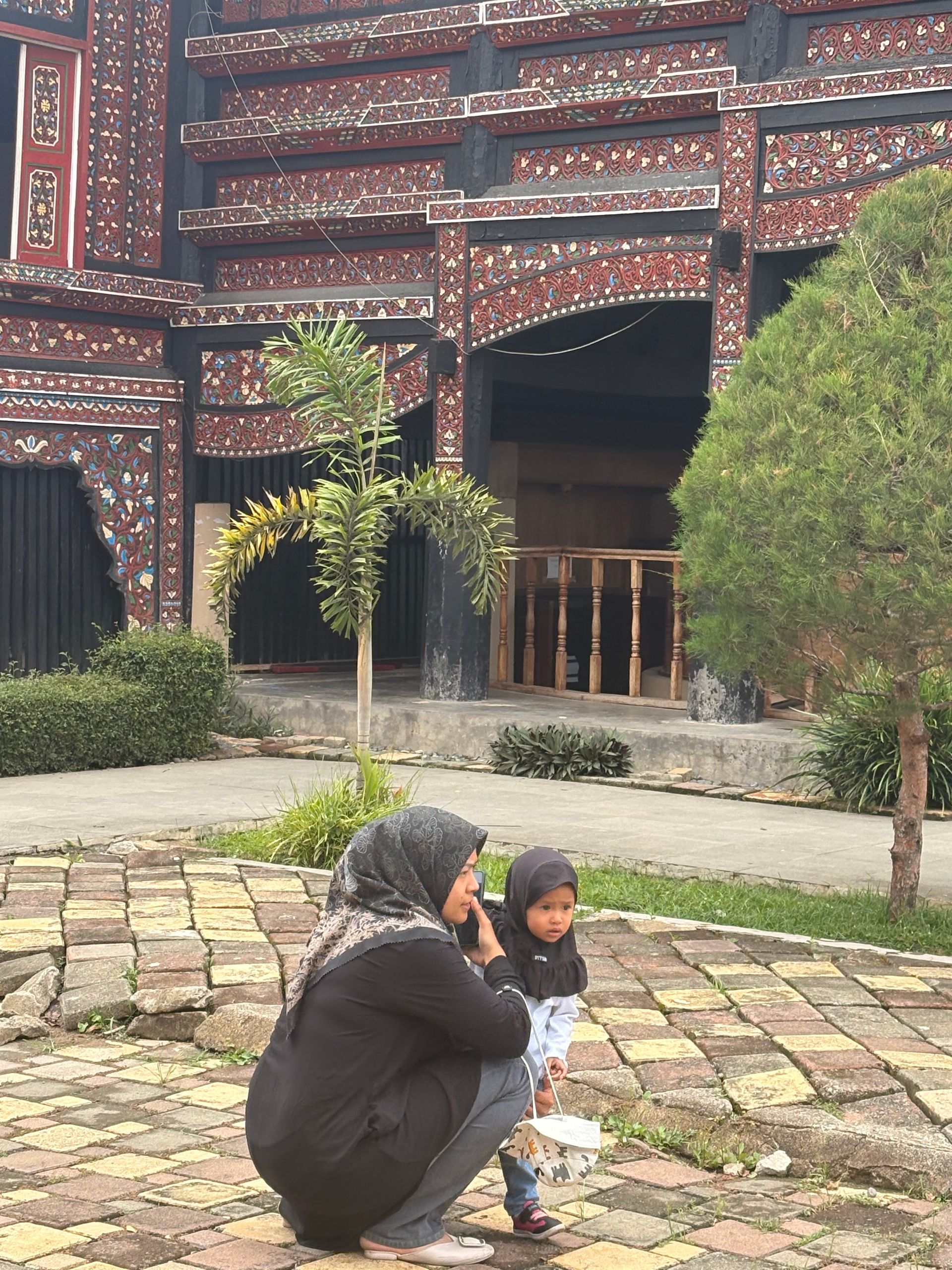
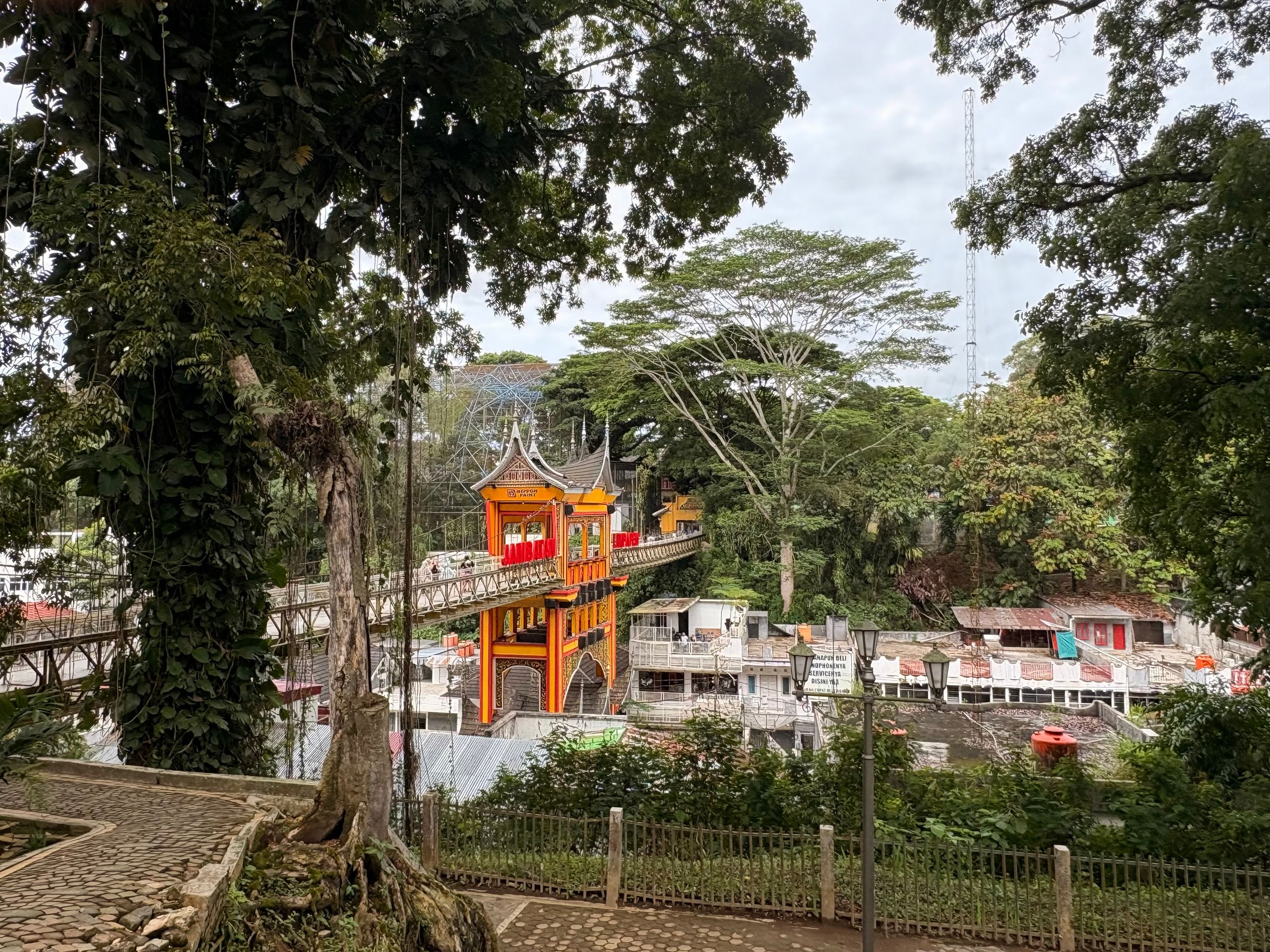
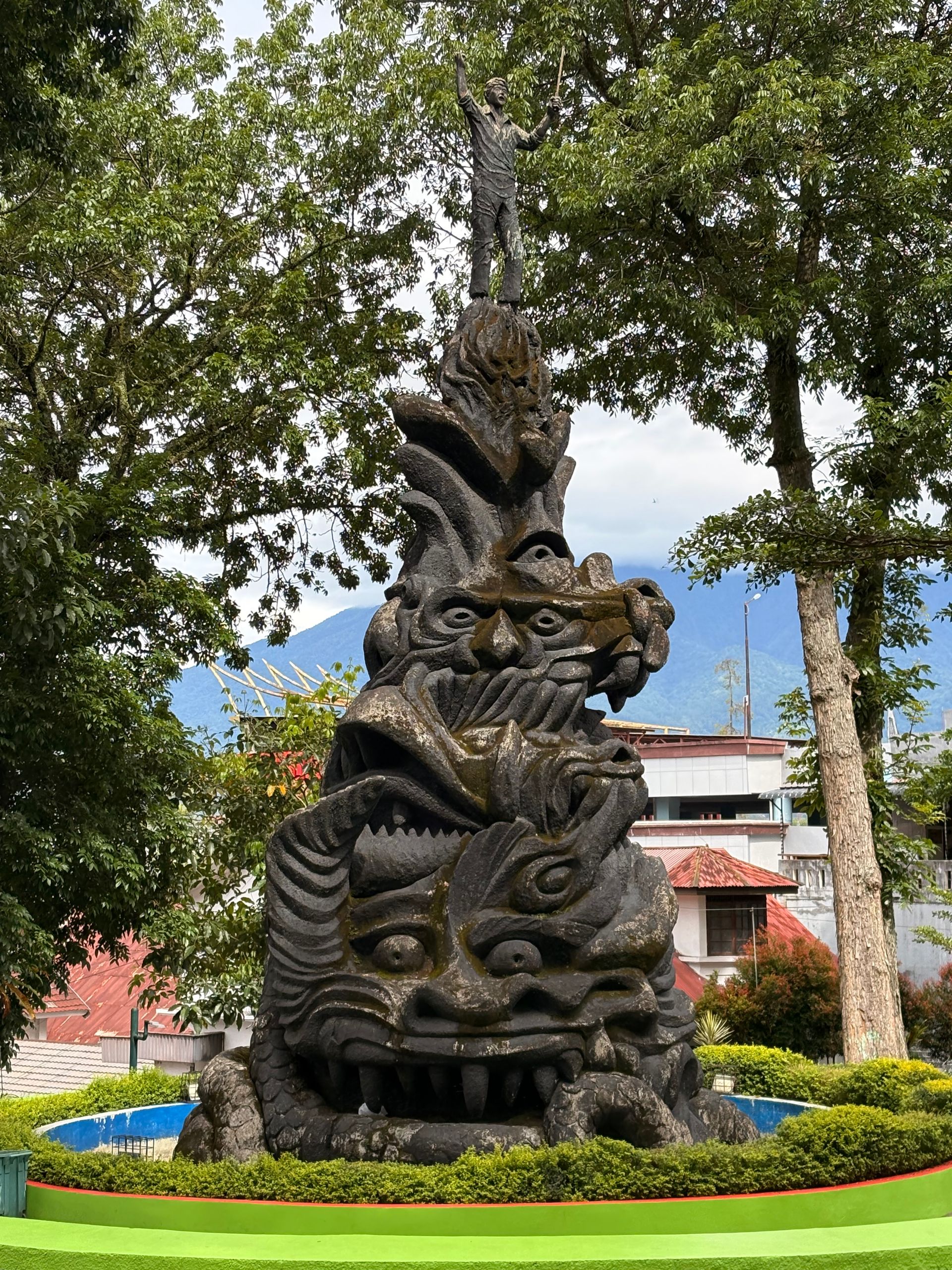
After we recovered from the bus ride, we started exploring Bukittinggi. Here, we immediately noticed that we had left the predominantly Christian area, and the Muslim lifestyle took over. The locals were partly excited to meet us and very friendly. In a café, where we were the first foreigners who seemed foreign enough, we were immediately photographed from all sides for advertising purposes – hopefully it helps! However, what we found challenging was the widespread veiling of very young girls and even babies. According to our understanding (and we are certainly no experts), if the hijab is supposed to preserve modesty, for us, it translates to a very early sexualization. Luckily, the girls we observed didn’t let their childhood stop them and ran around energetically in full attire. And when it got too hot, they even threw the hijab around inside the restaurant!
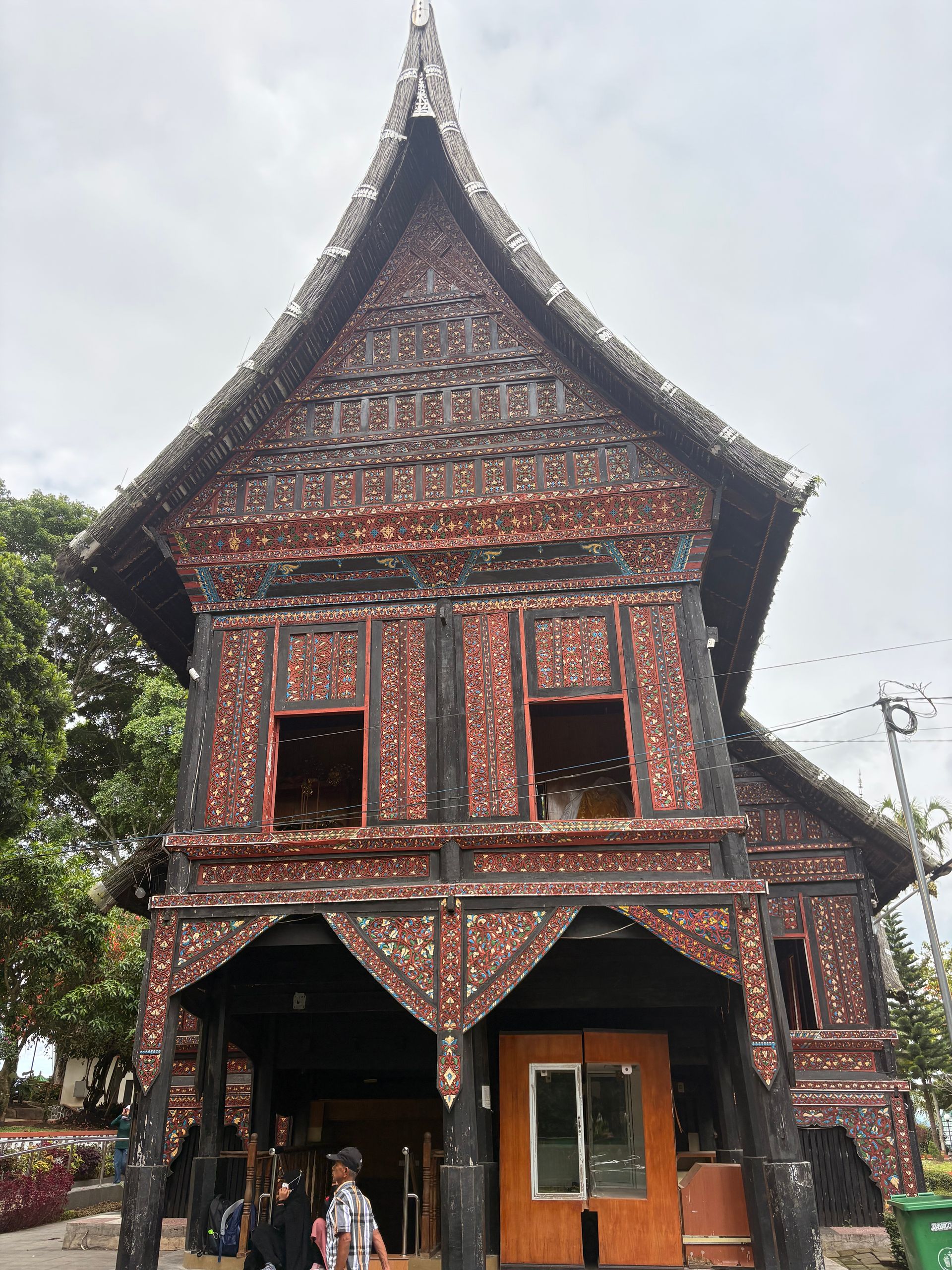
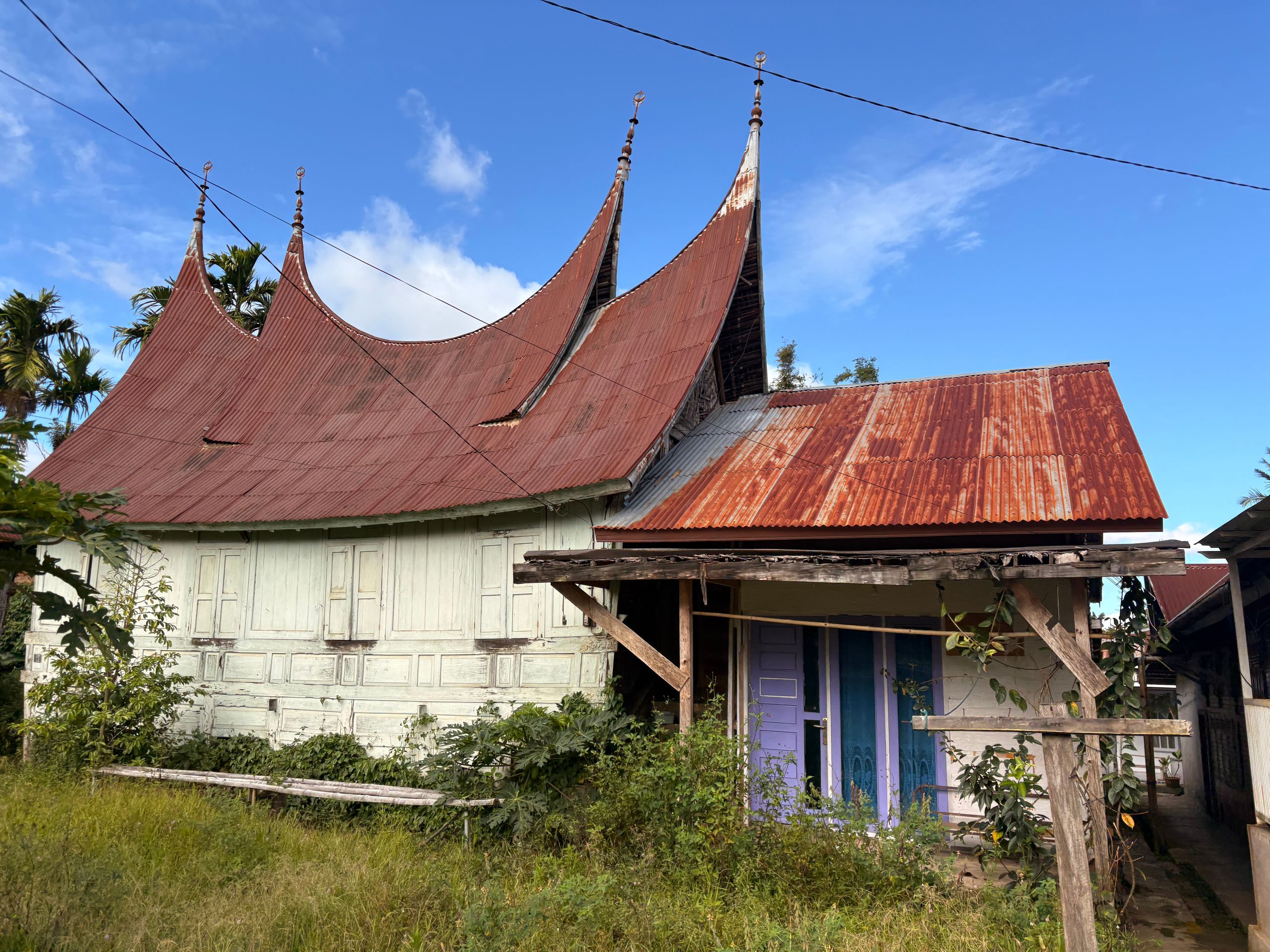
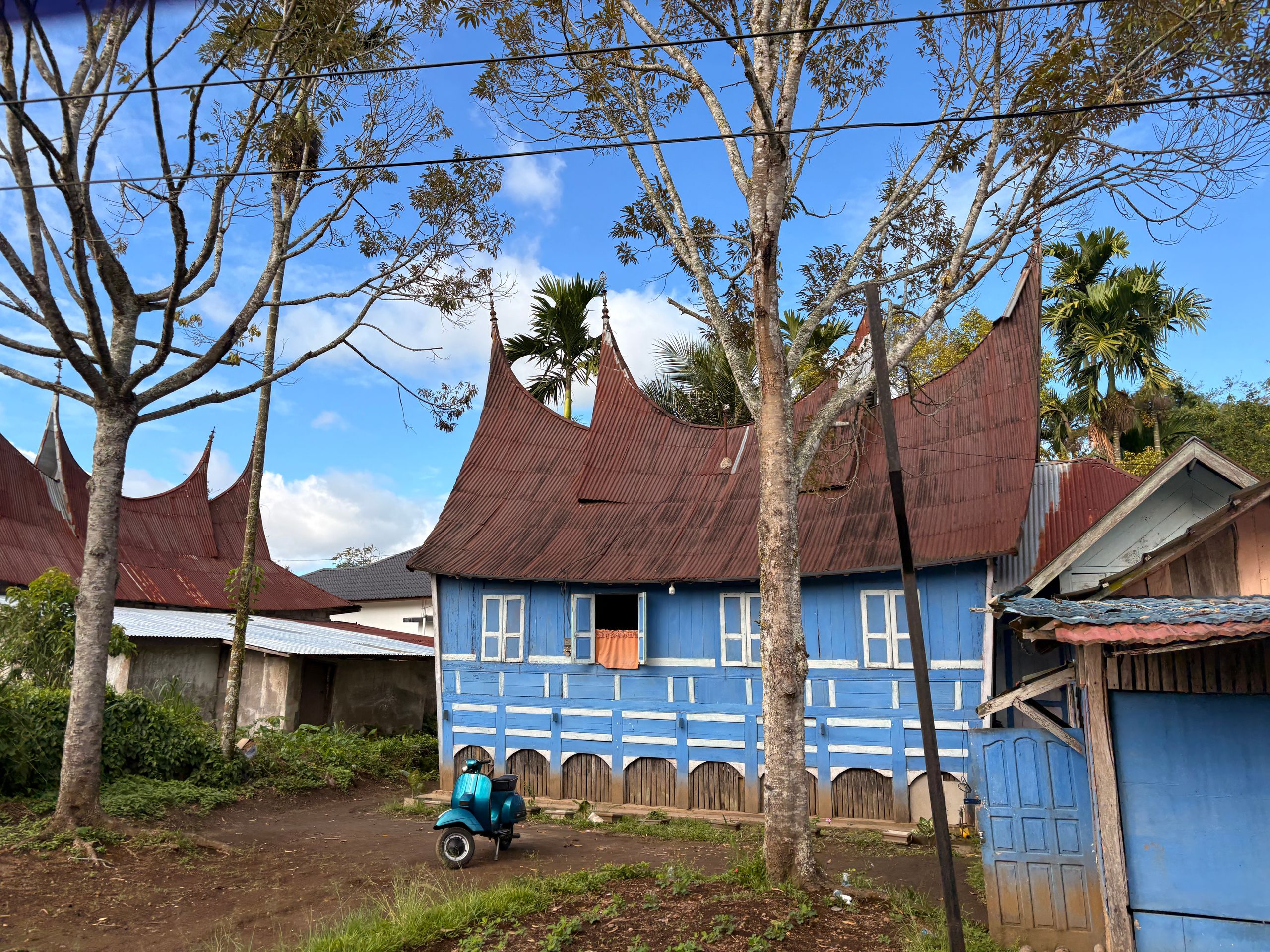
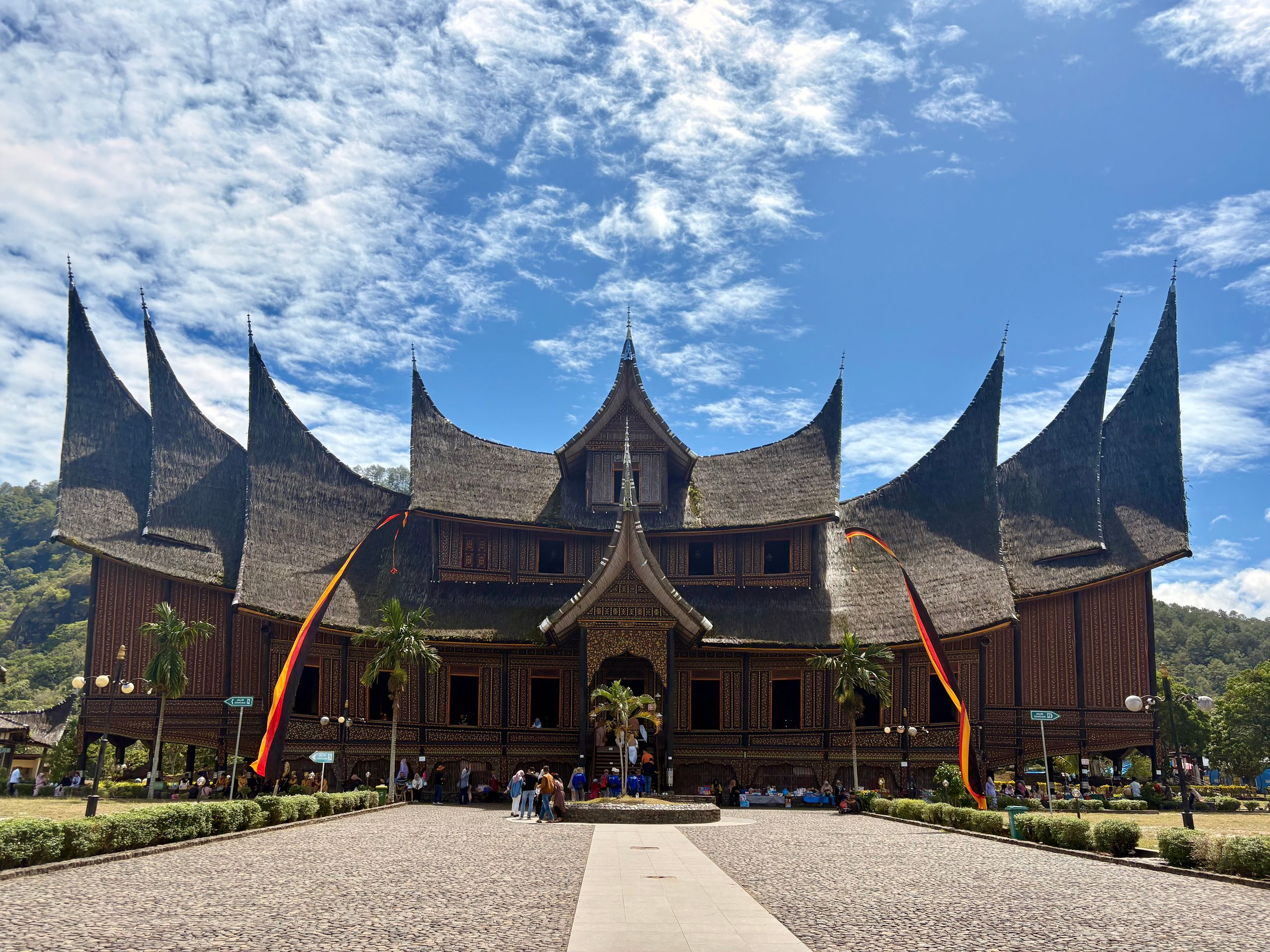
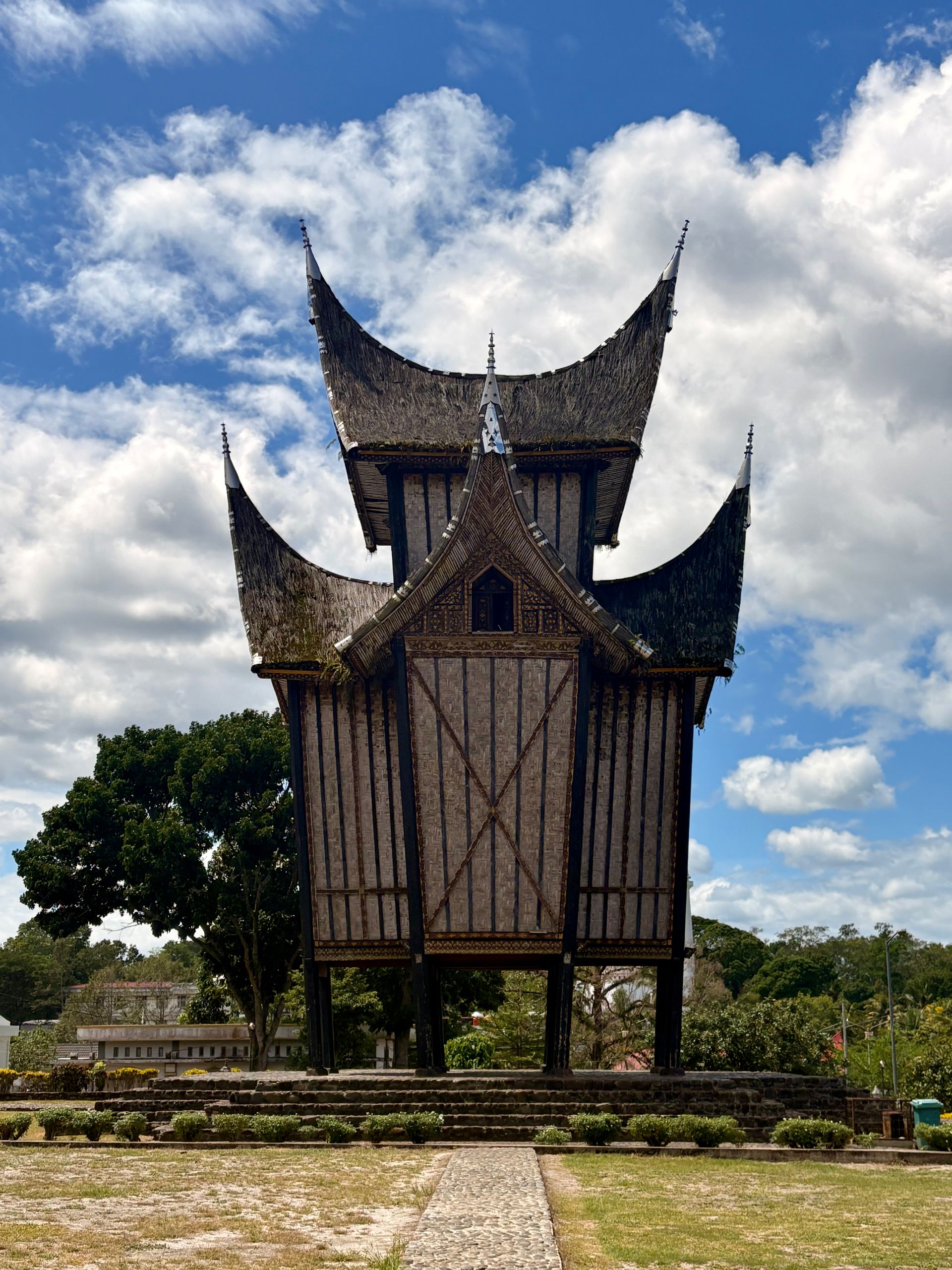
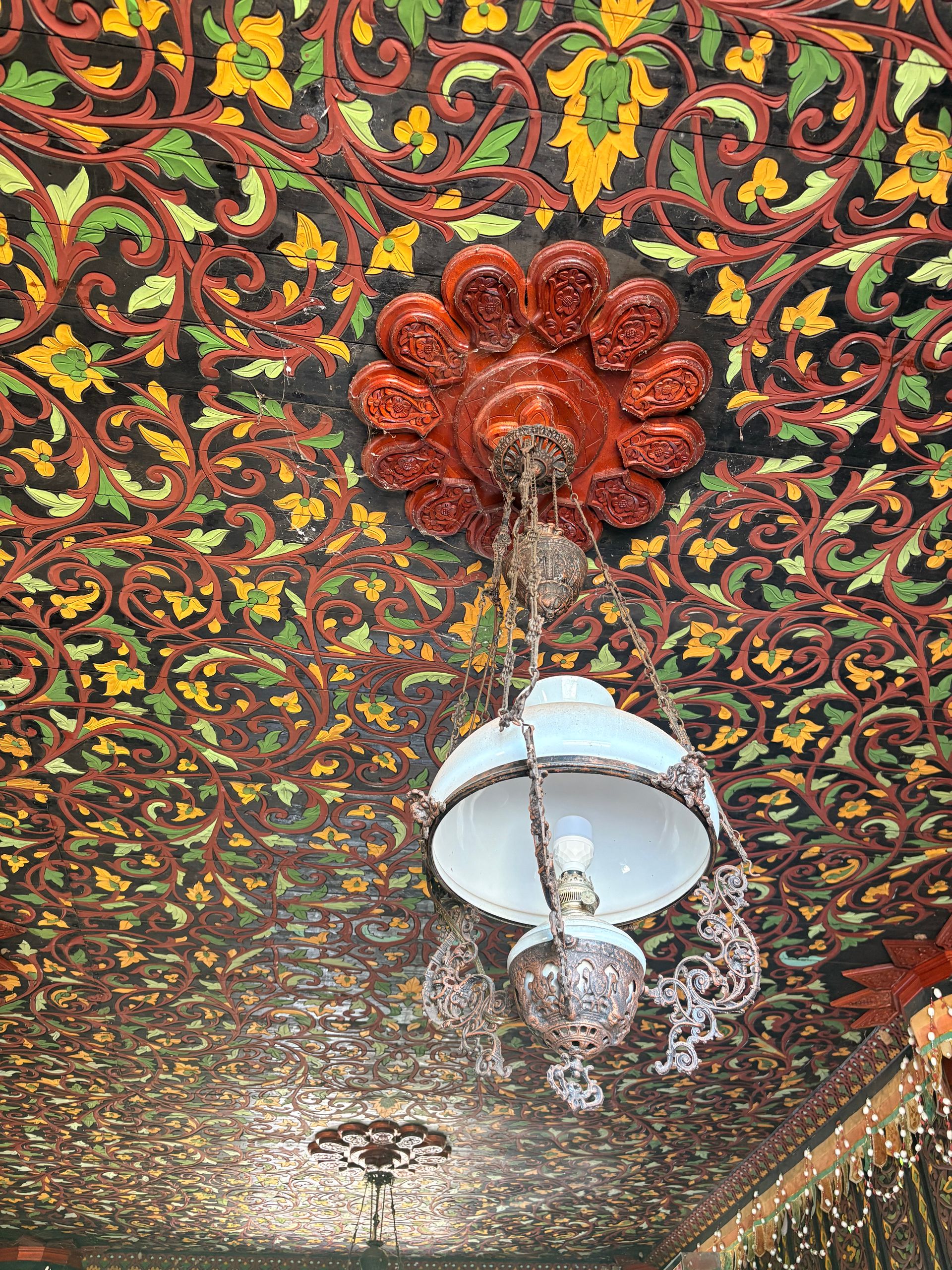
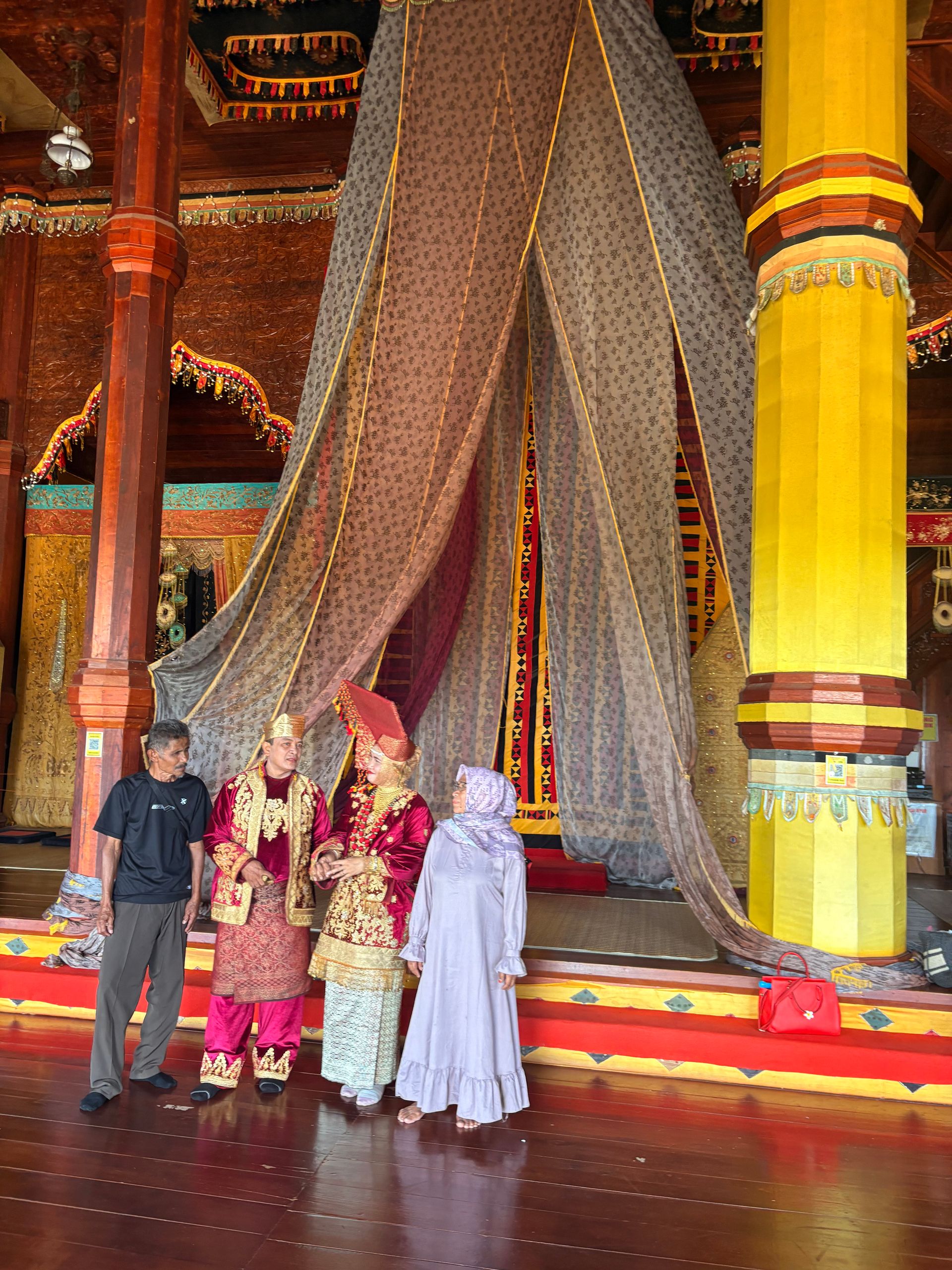
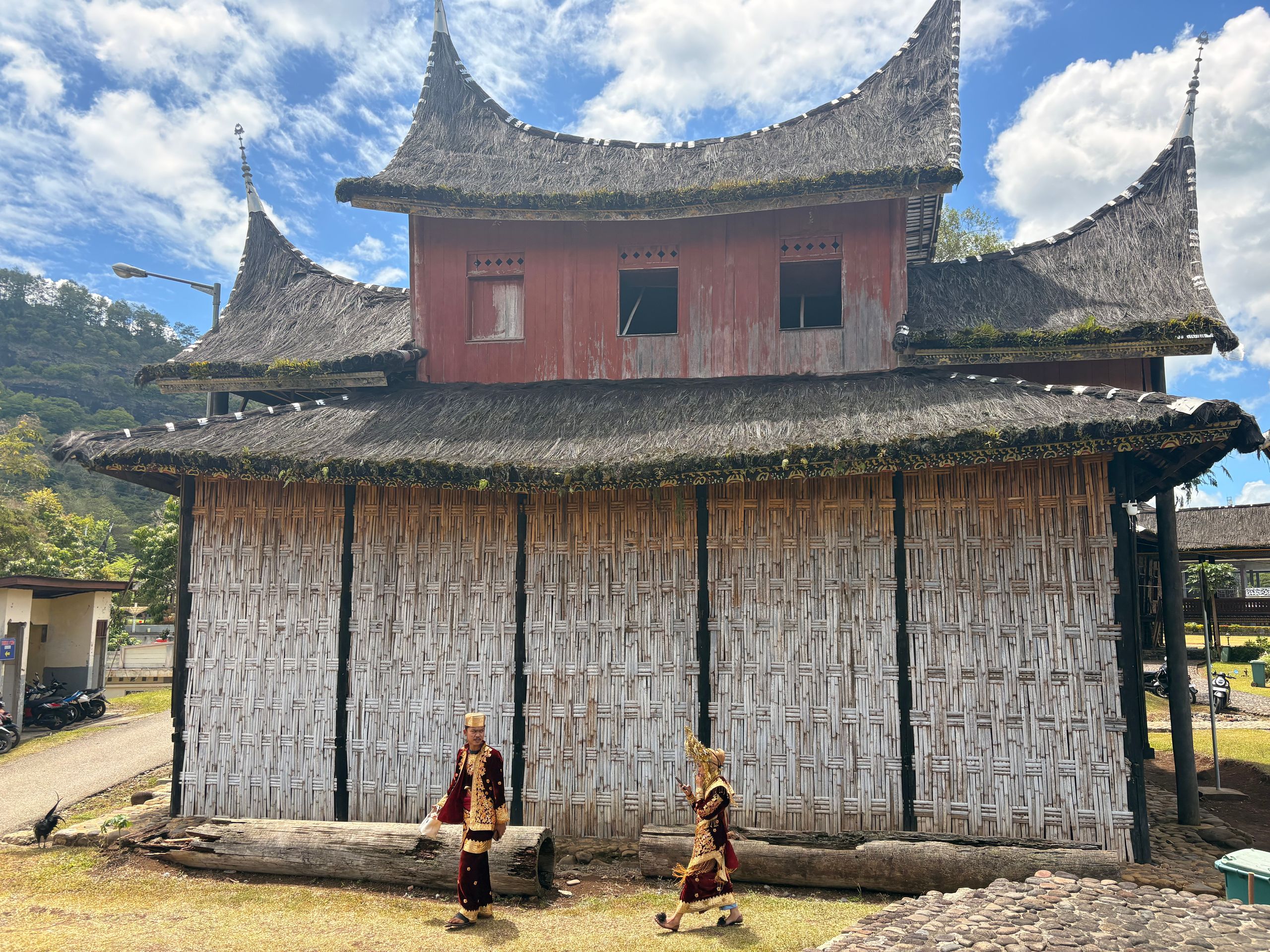
By the way, the Minangkabau people are at home in Bukittinggi and its surroundings. They mostly see themselves as Muslims, but inheritance and residence are primarily designated for women. For example, rice fields are traditionally bequeathed to daughters, and the husband must move in with his in-laws. The Minangkabau houses are large longhouses on stilts, featuring many wooden decorations and large, curved roofs meant to resemble buffalo horns. One could admire examples of this in the lovely Pagaruyung Palace in the vicinity (though it's a reconstruction, as the palace often fell victim to fire), and even in more modern architecture, elements are often incorporated.
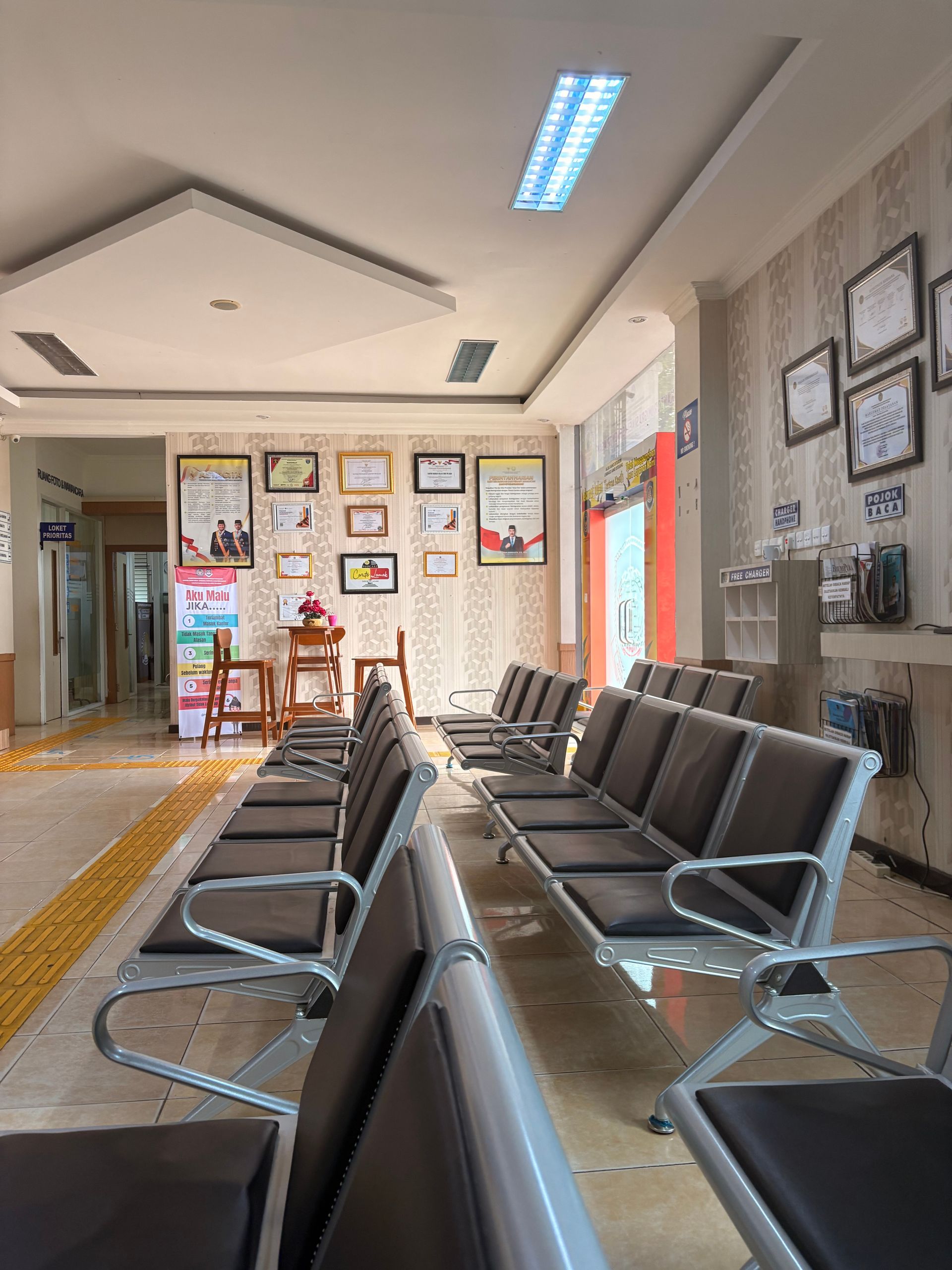
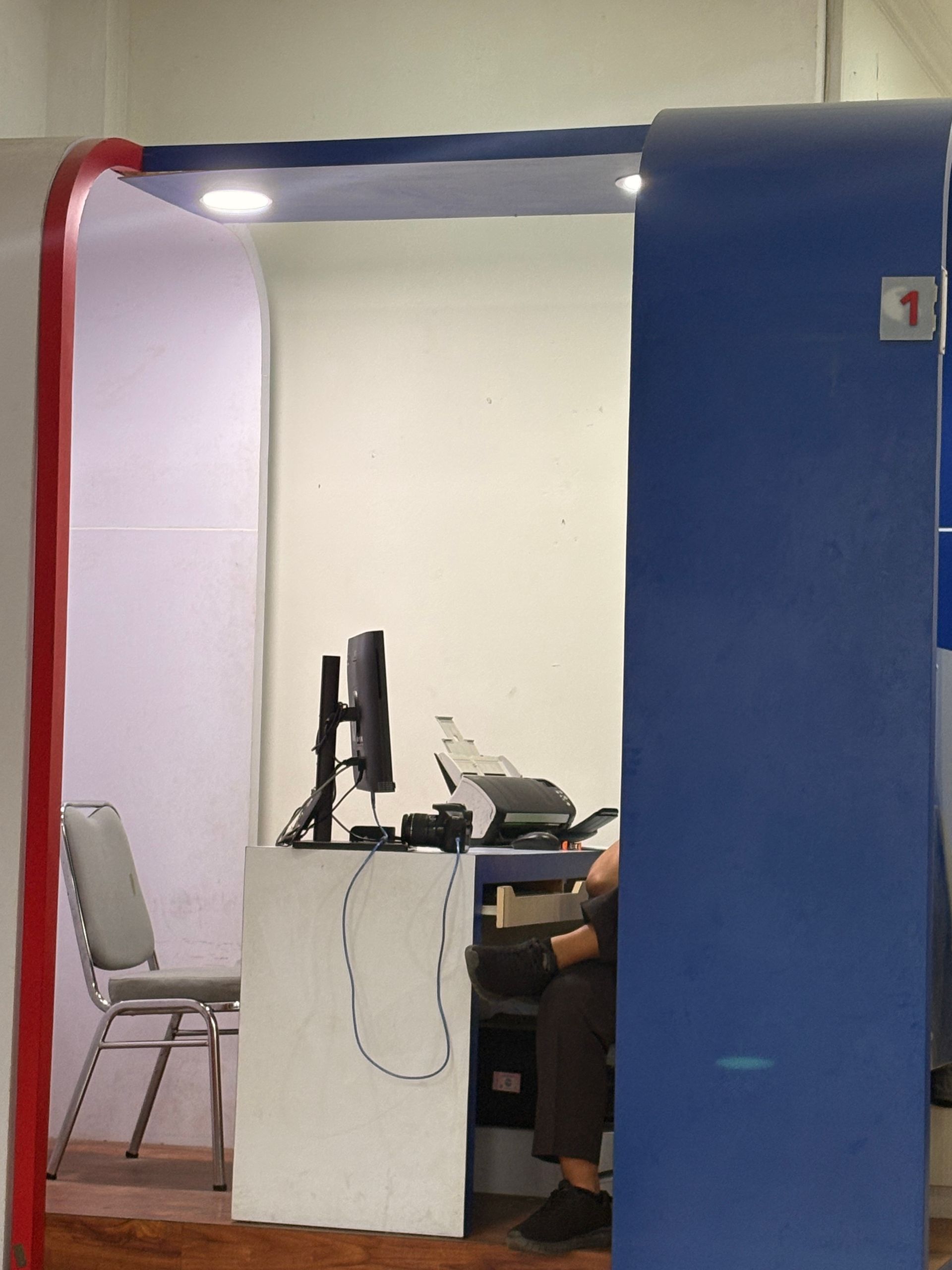
We had to go slightly outside the city to the Immigration Office because we wanted to extend our visa. Although we had applied and paid everything online, we still had to show up in person. There was hardly anyone in the office; we seemed to be the only clients. There was a lot of staff, but at first, no one wanted to deal with us and seemed rather annoyed by our presence; eventually, we were asked to take a seat and wait. The person who took care of us after what felt like an eternity had actually been there the whole time but probably needed to finish their nap or mentally prepare for us. After a few clicks, everything was done, sent online to Jakarta for verification, and a few days later we received info that the extension was approved.
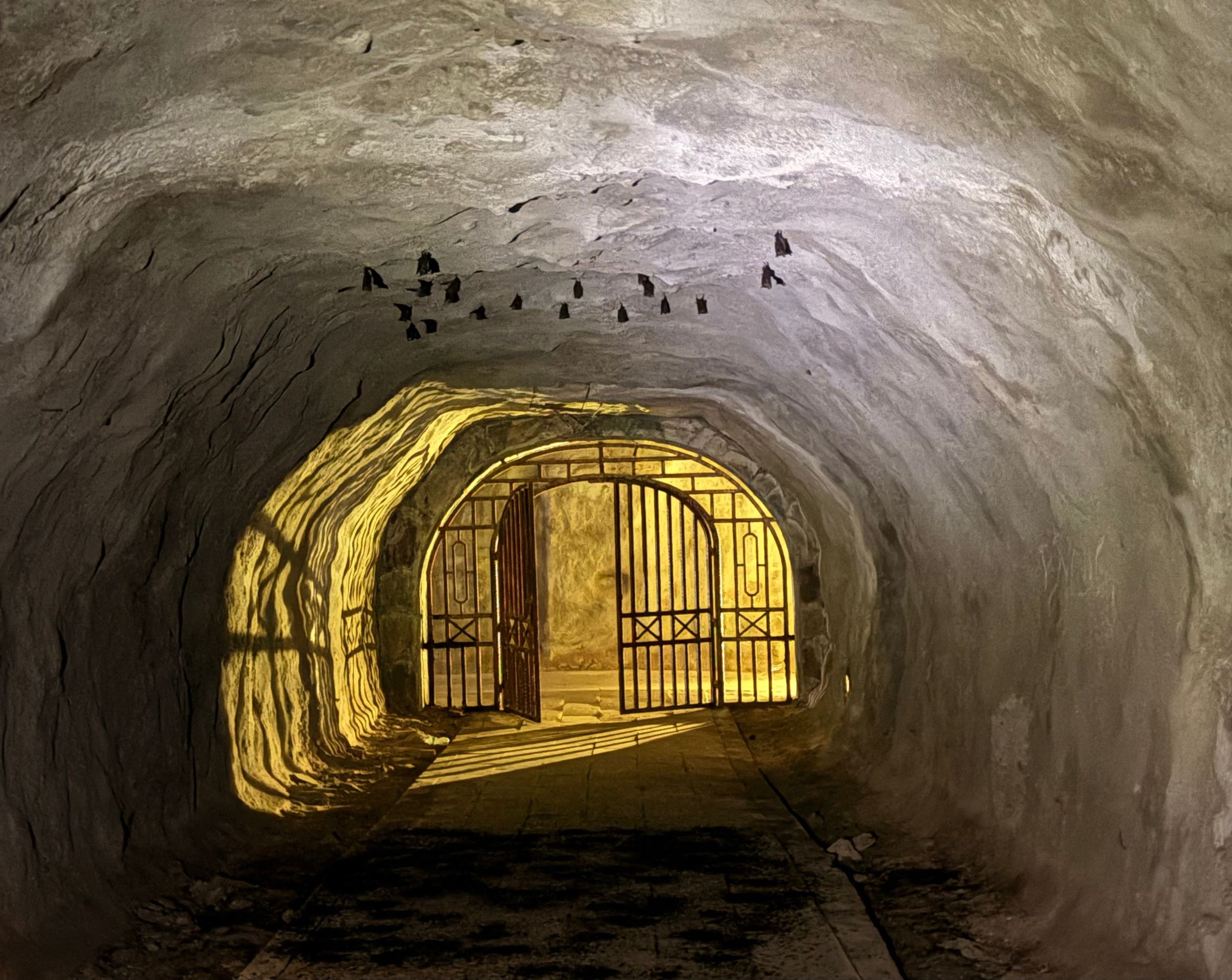
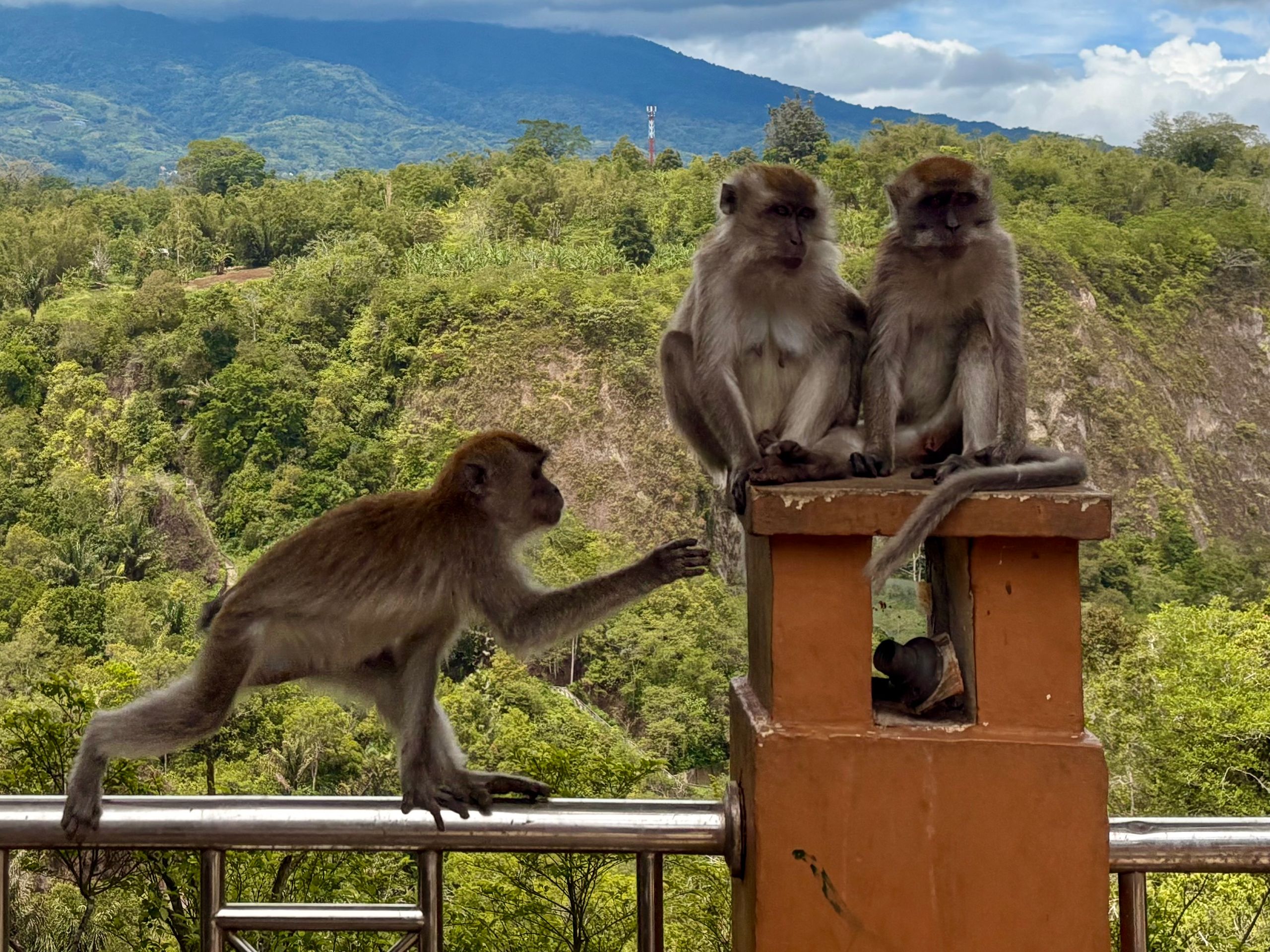
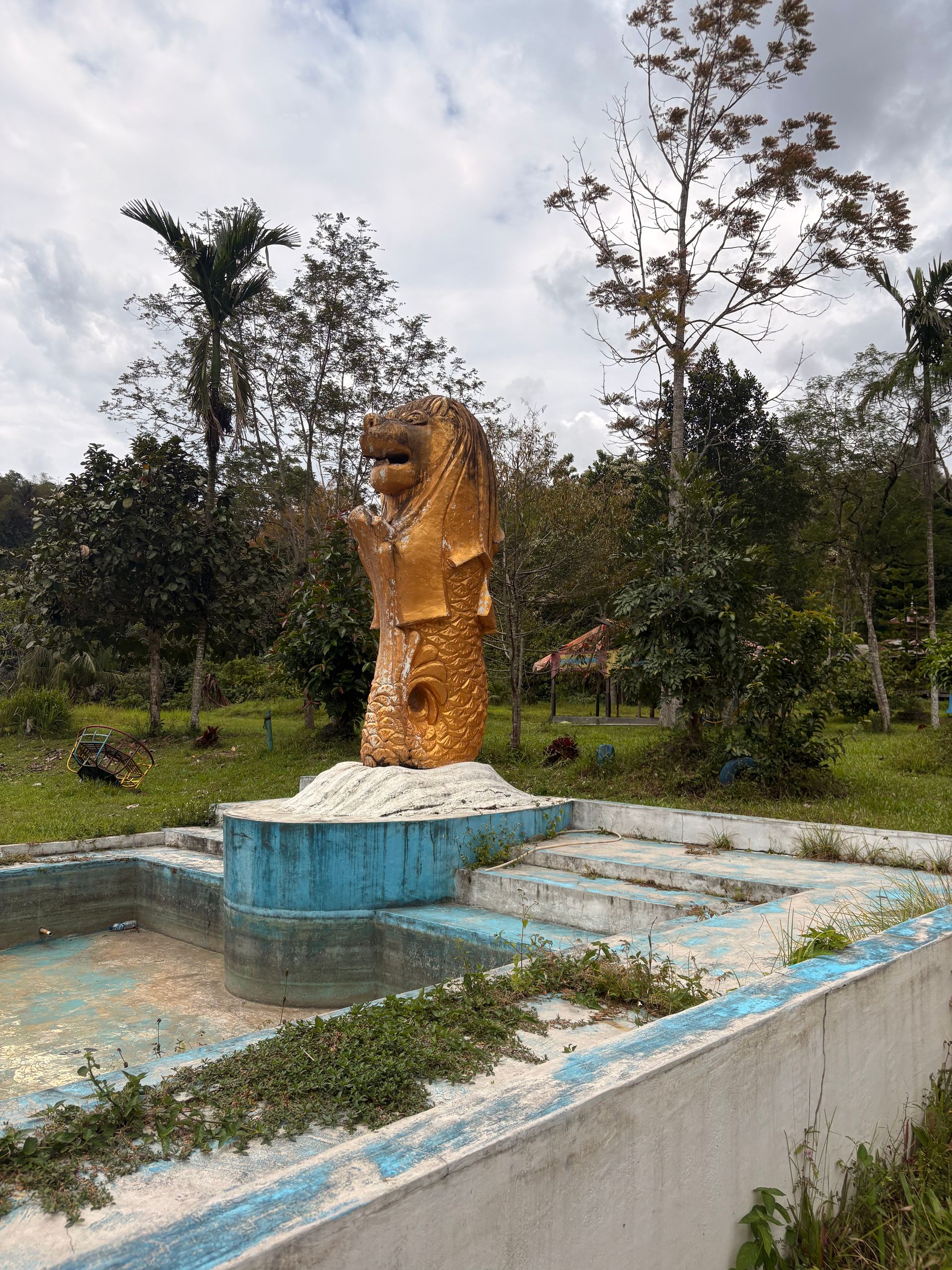
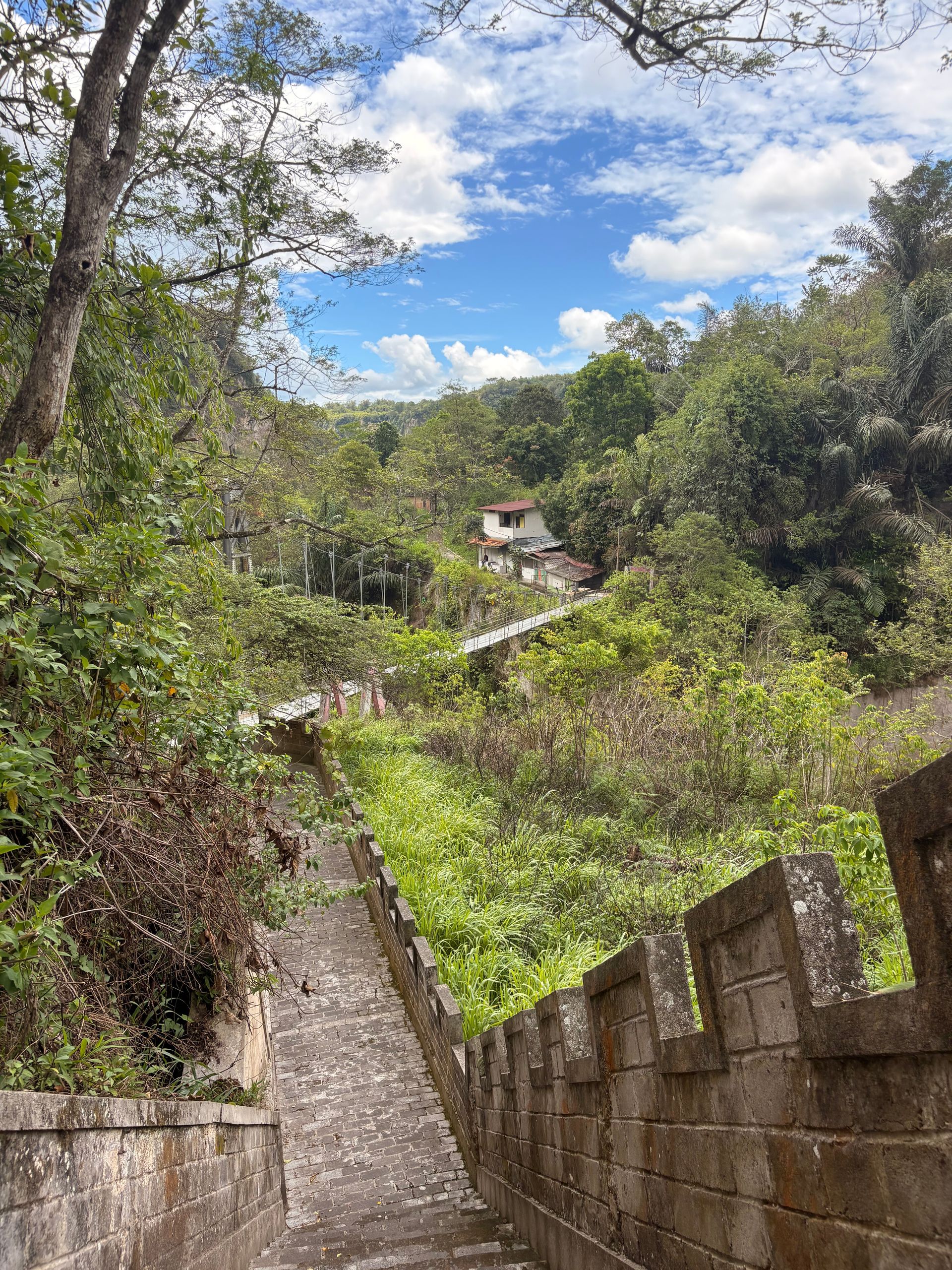
In the following days, we visited an old underground tunnel system (Lobang Jepang), which the Japanese built mainly as a hiding place for weapons during World War II. Quite intriguing but a bit creepy with a bunch of bats and their droppings, roughly 8 km long, of which we could visit about 1-2 km. Then we headed to the small canyon Ngarai Sianok at the city border, which was quite pretty, although there was a lot of decaying and abandoned tourist infrastructure and garbage. From there, we continued to the 'Great Wall' of Bukittinggi. Over a rickety scrap bridge (which has probably collapsed by now), we found a wildly concreted stair complex in the pampas – it really takes a lot of imagination to feel reminded of the original in China. We don't know whether there was actually more tourism here before or if they were just optimistic that it would happen someday. But at least someone had visions!
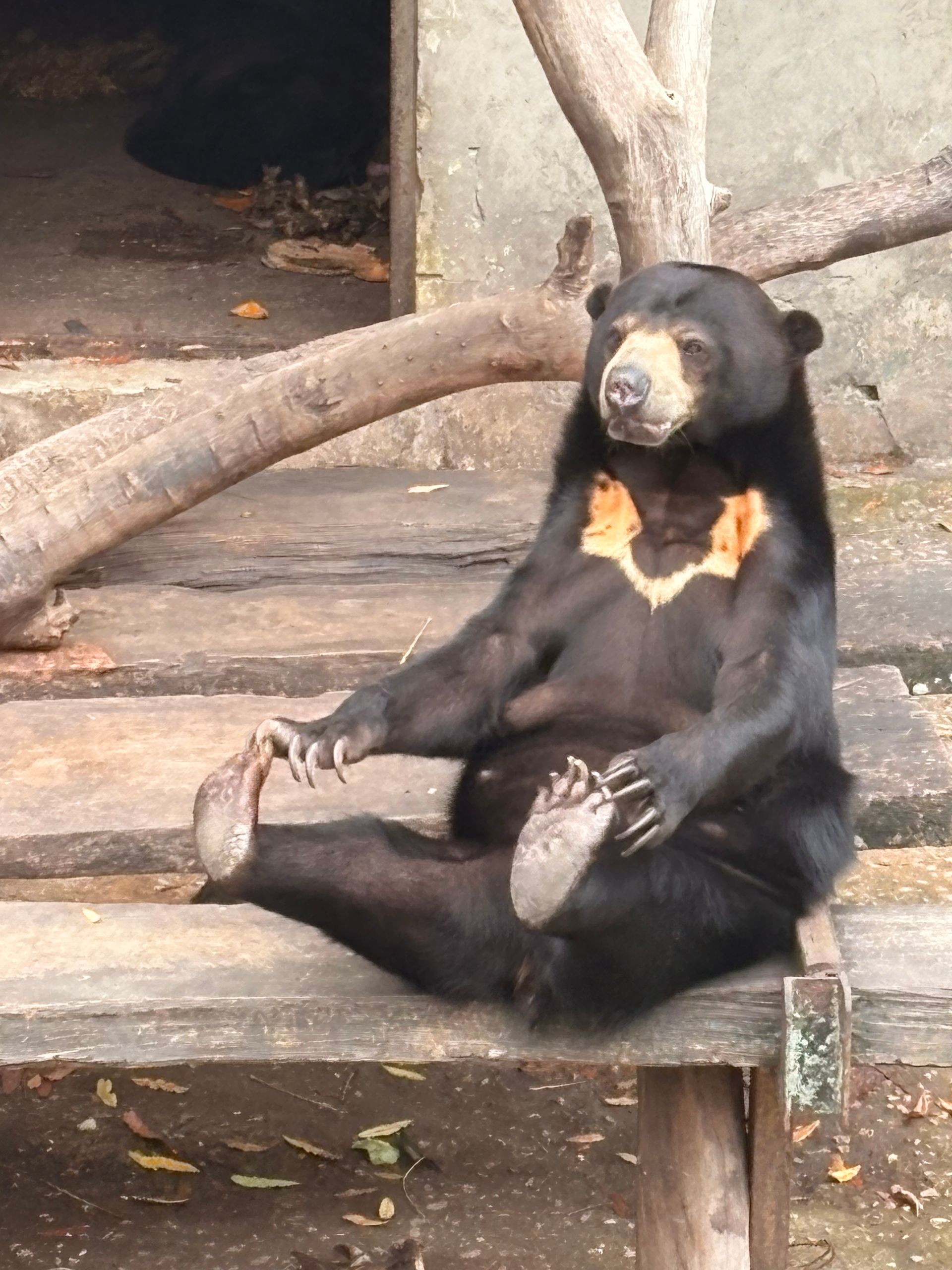
The visit to the Kinantan Wildlife and Cultural Park was not pleasant at all. Initially, we just wanted to see the old Dutch Fort De Kock and the Kinatang Gadang House Museum, but we soon realized that they were in a sort of zoo – pure horror! The animals were kept in terrible conditions, mostly alone in small, dirty cages, regardless of their social behavior, and in miserable states, often kept on chains. The most shocking for us was the lonely male orangutan, staring into space with dull, dirty, tousled fur and dead eyes. What a tragedy when we thought of the beautiful, friendly, and proud animals in Bukit Lawang.
We bravely entered a Padang-style restaurant again – this time we knew how things worked – and selected a suitable number of dishes. We left aside the plates with brains and entrails, which we could now identify better than initially, and the chosen dishes were truly delicious. Especially Chicken or Beef Rendang will stay in our memory, and we definitely want to try to cook it at home.
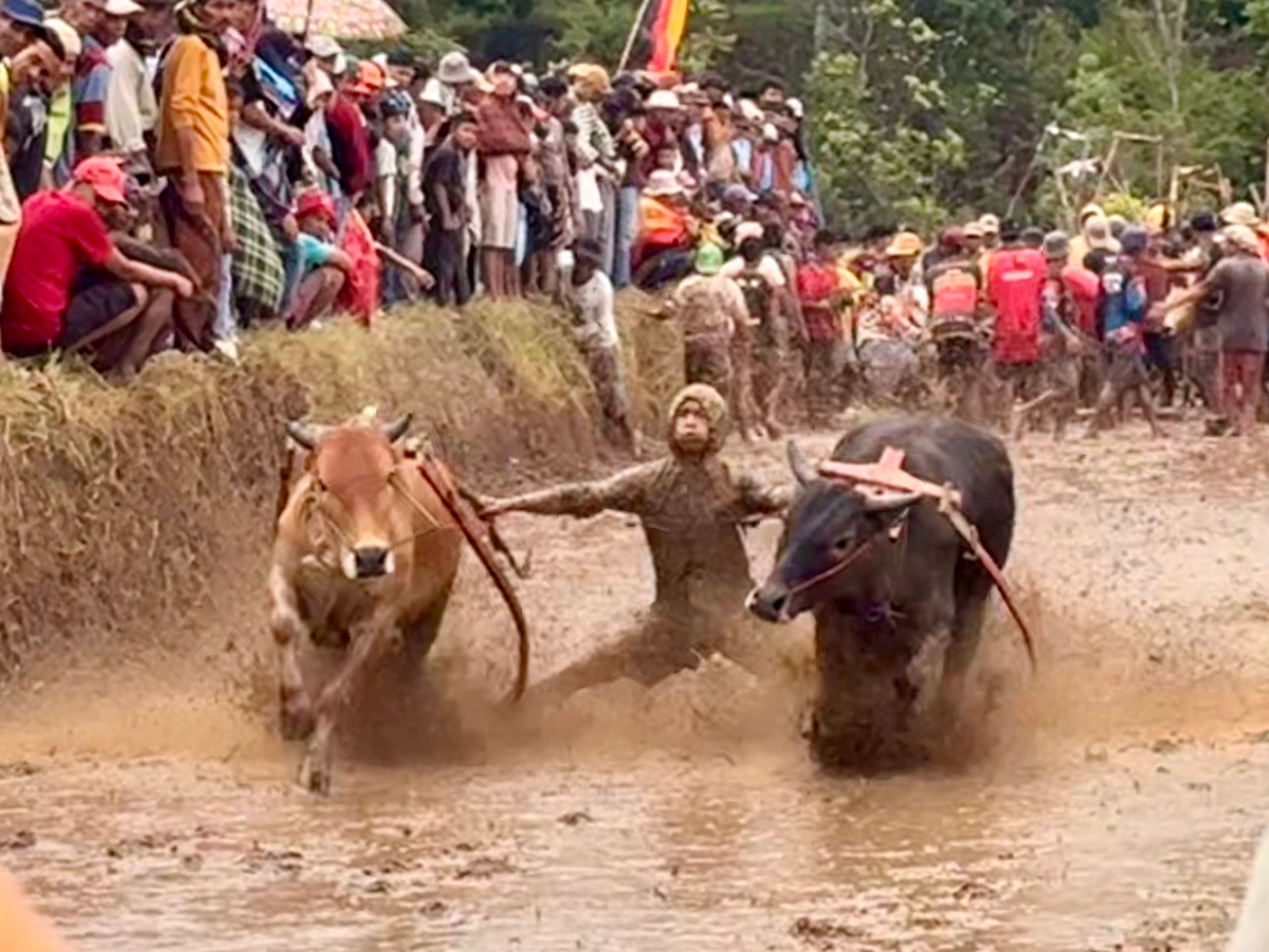
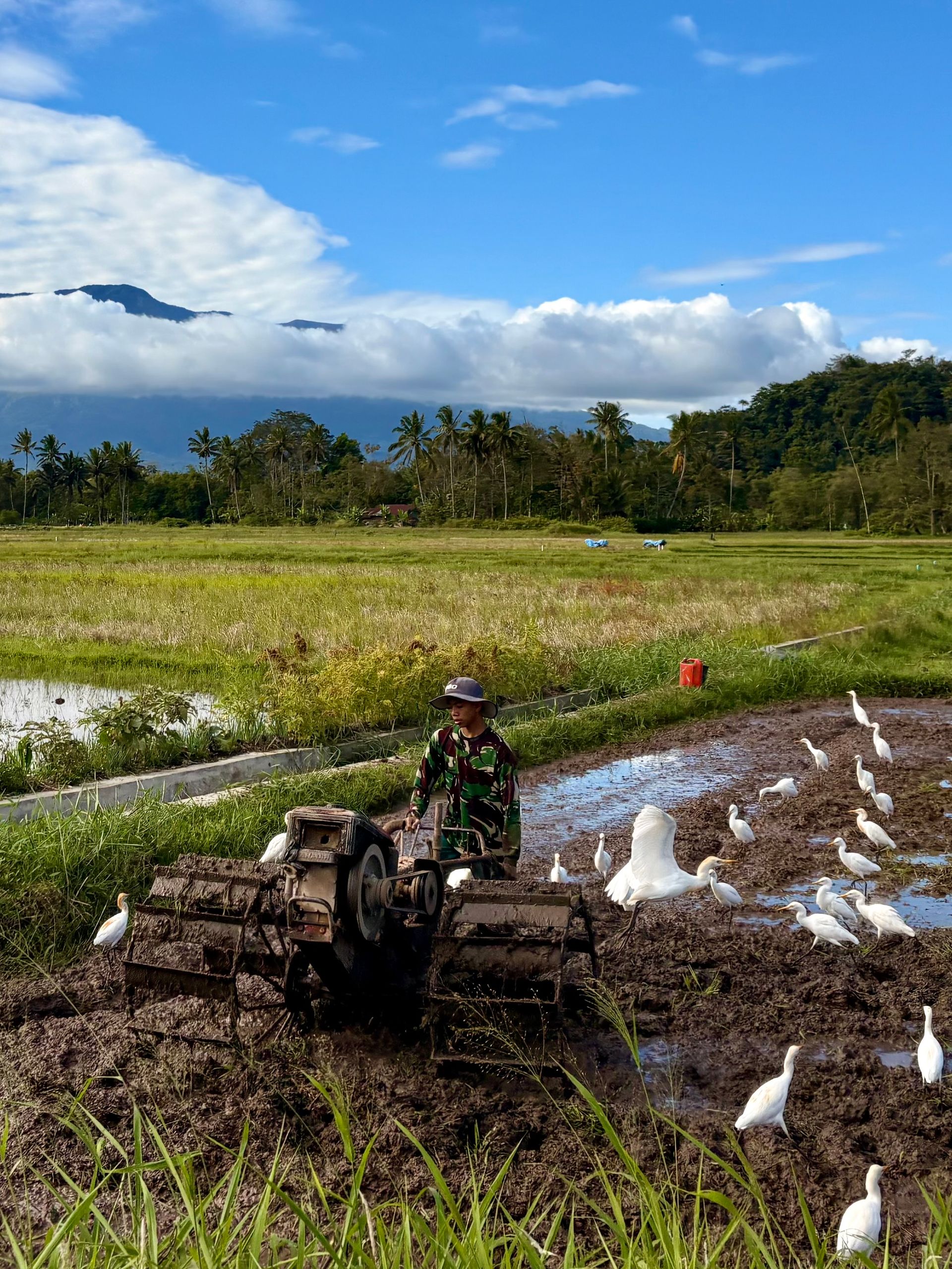
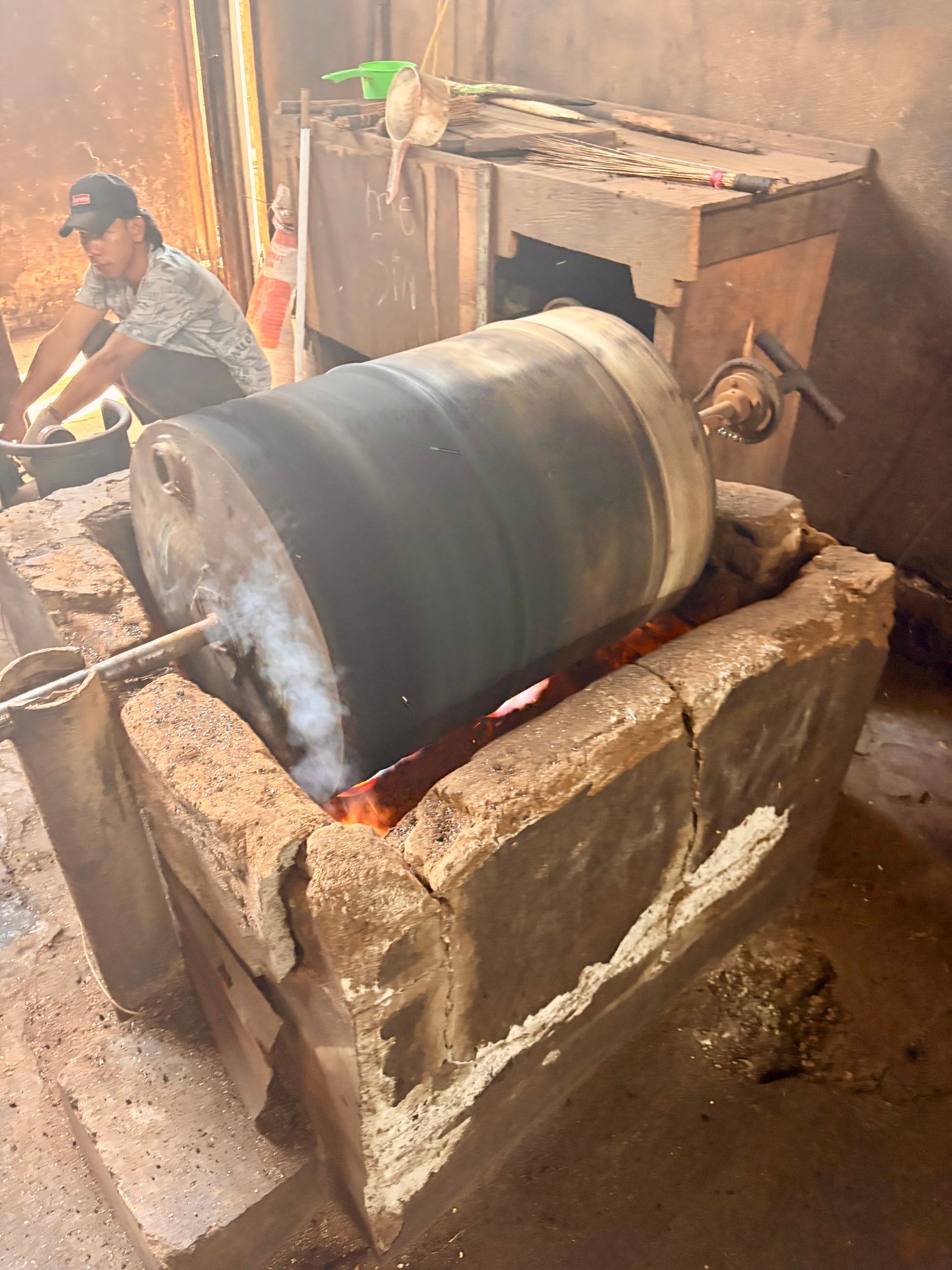
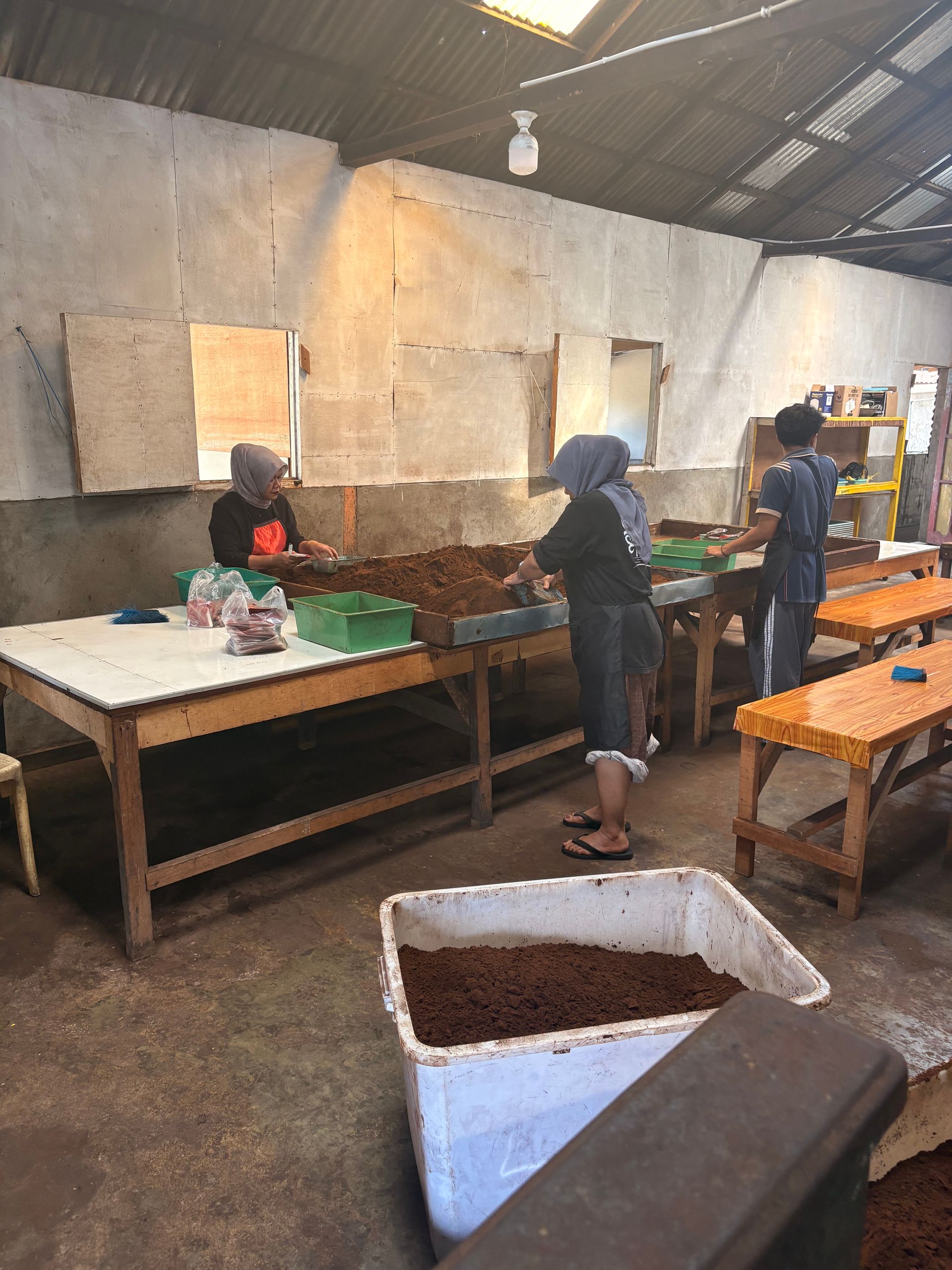
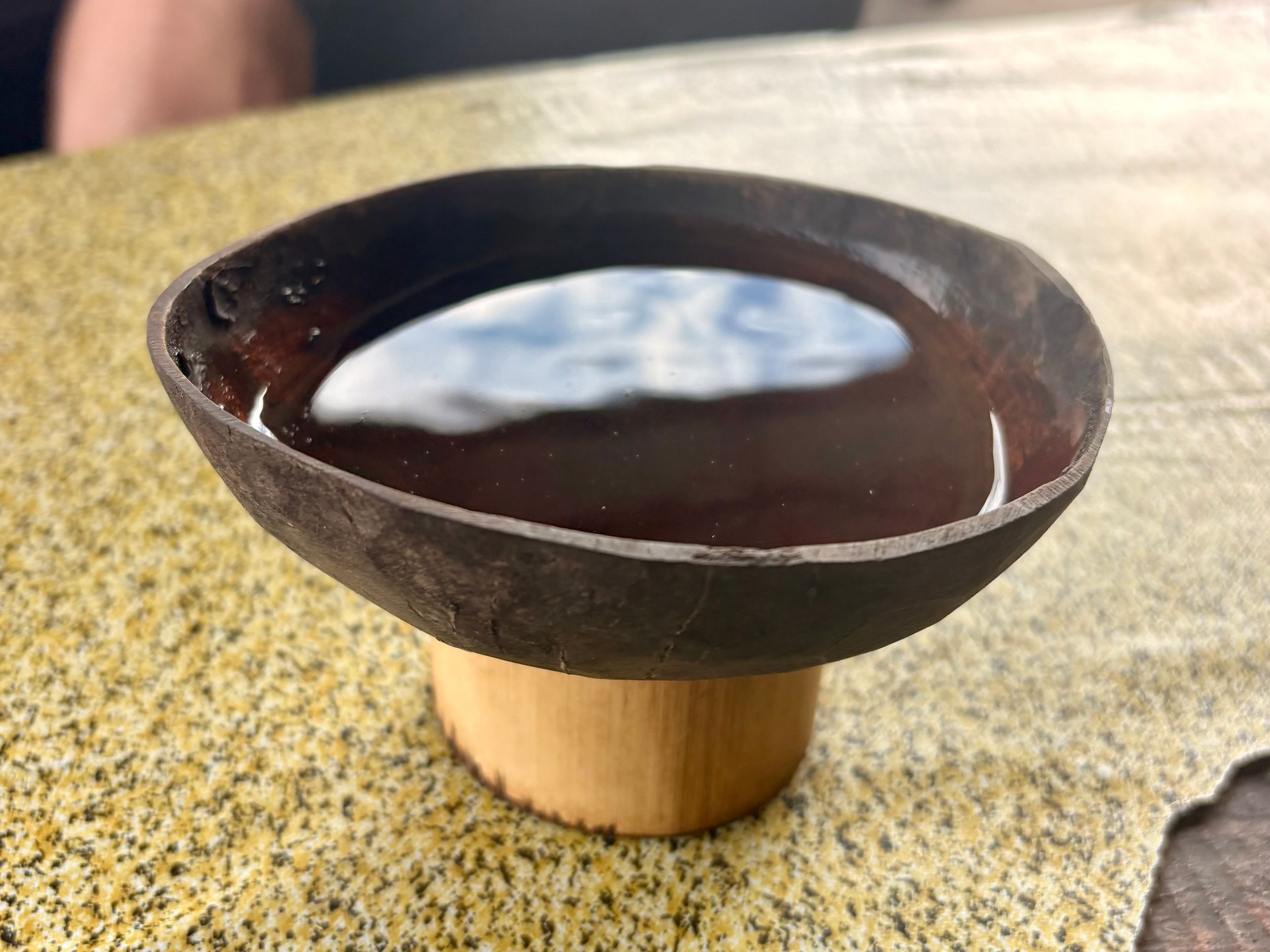
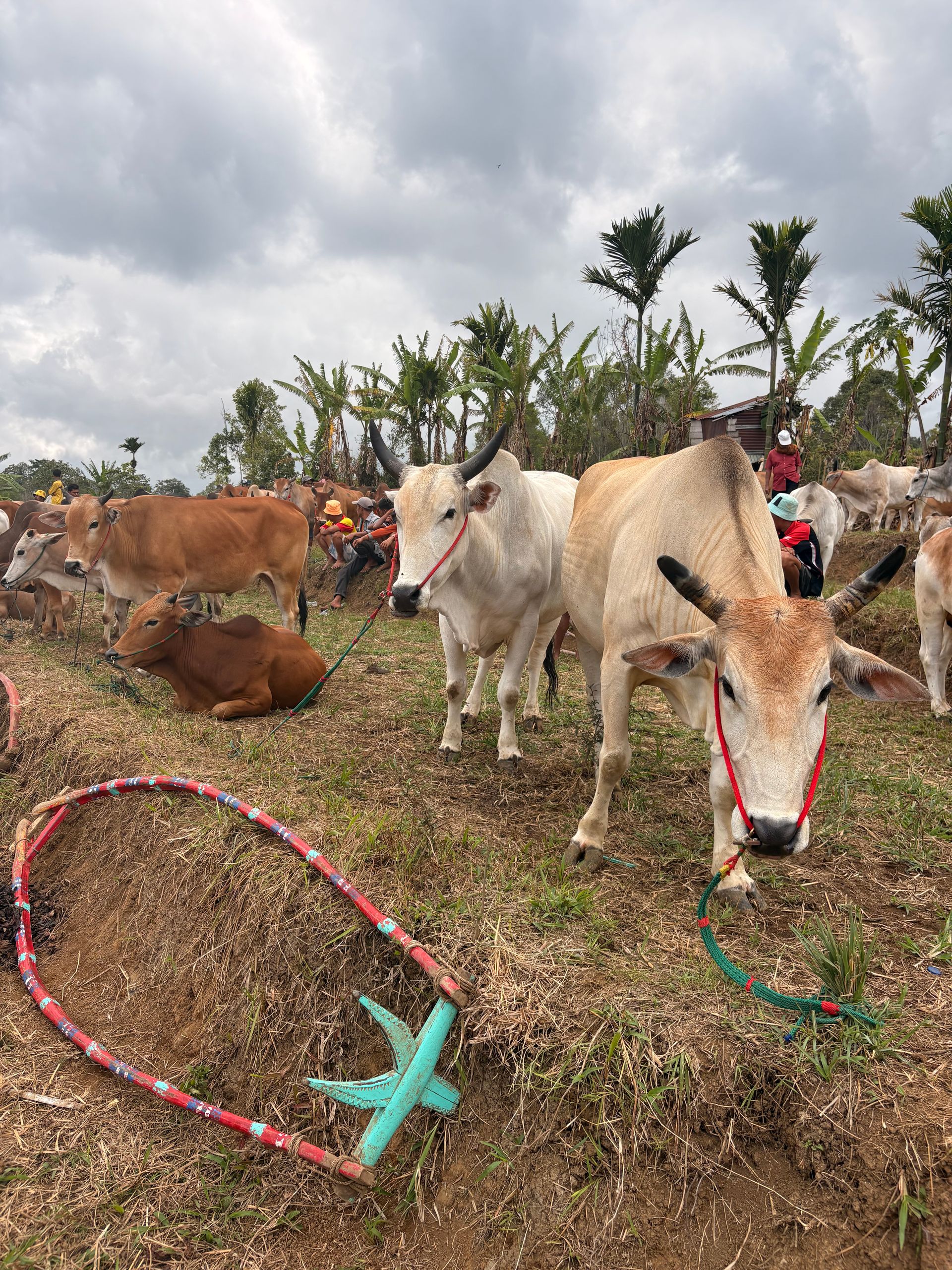
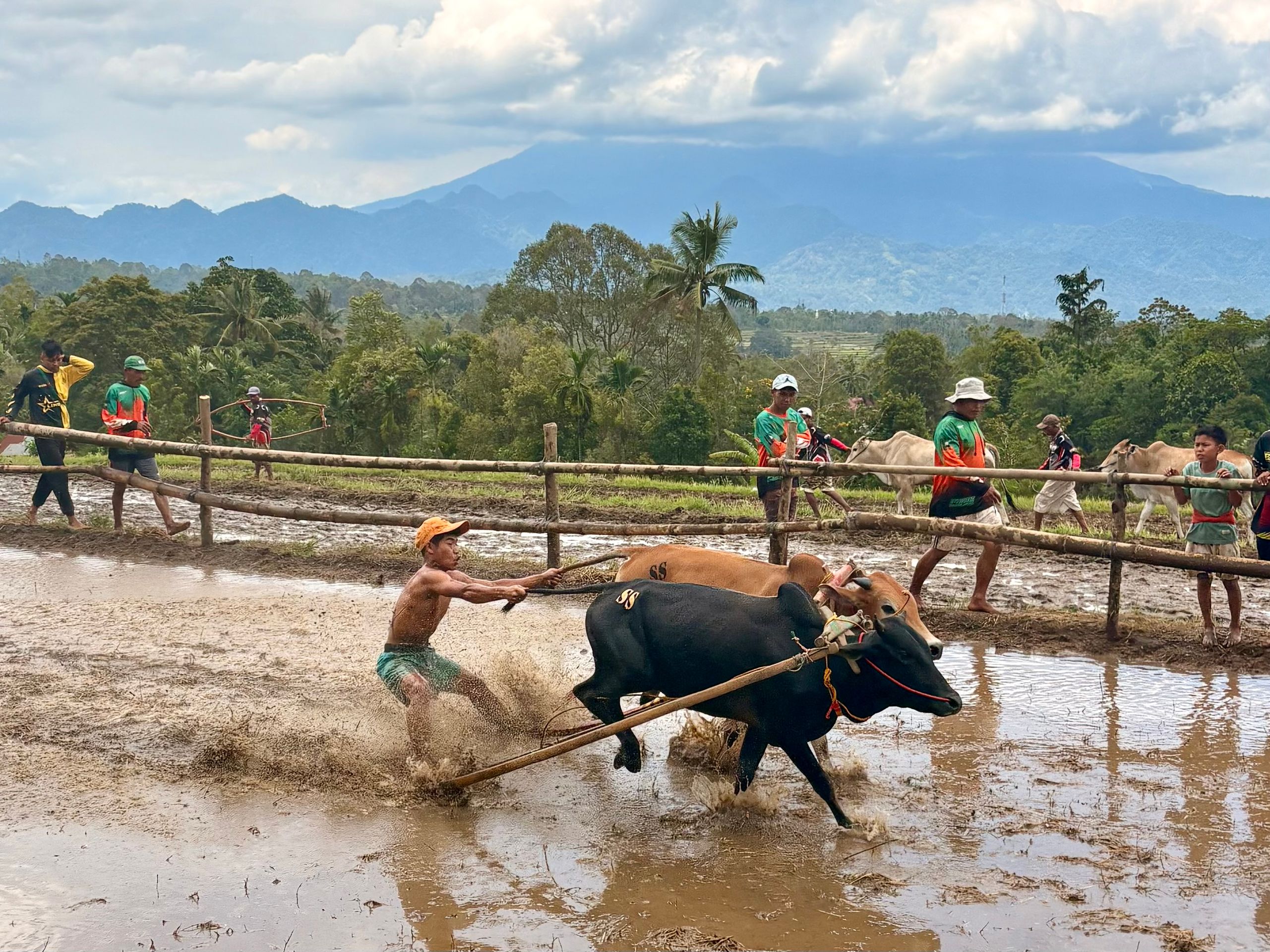
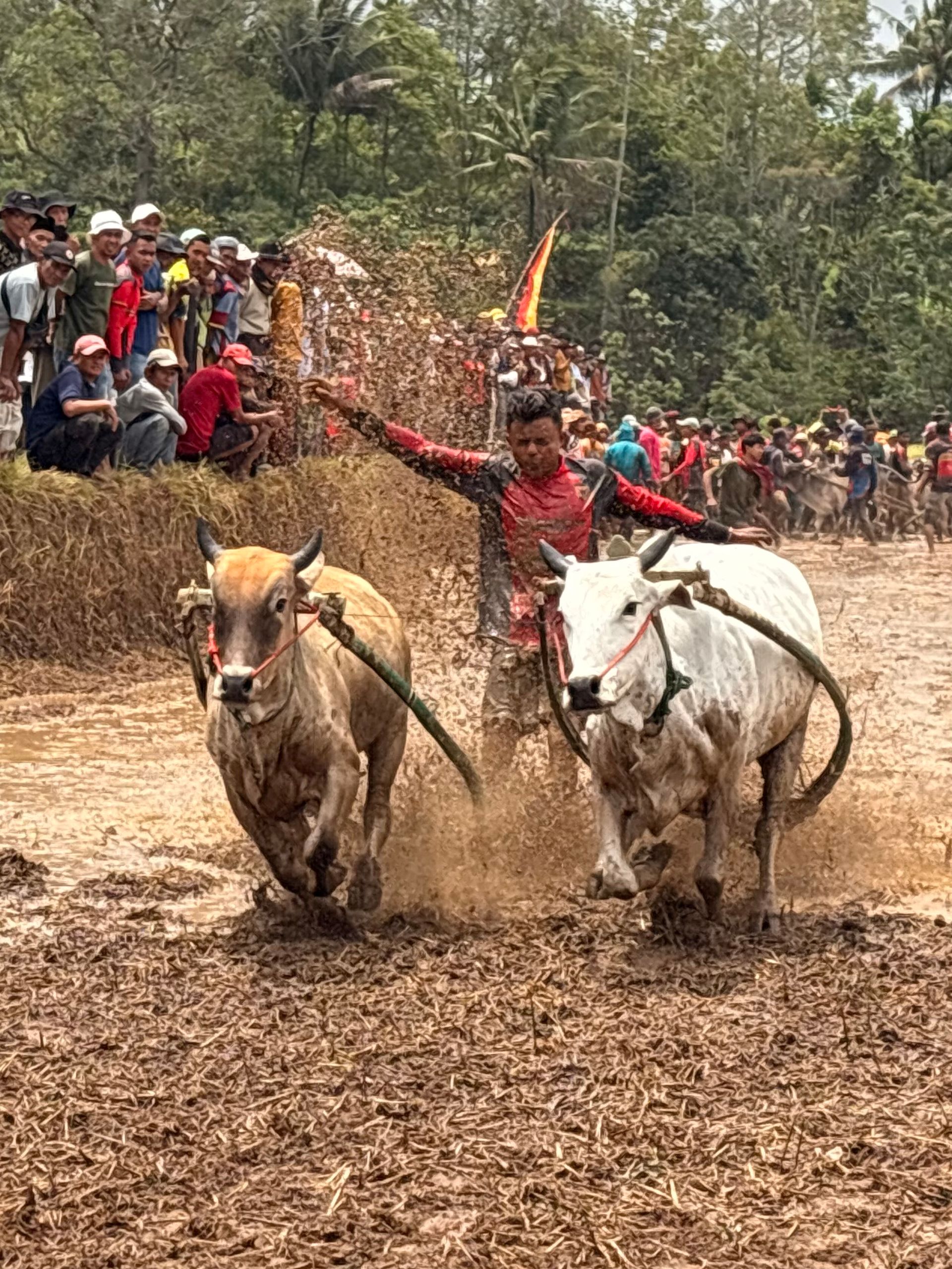
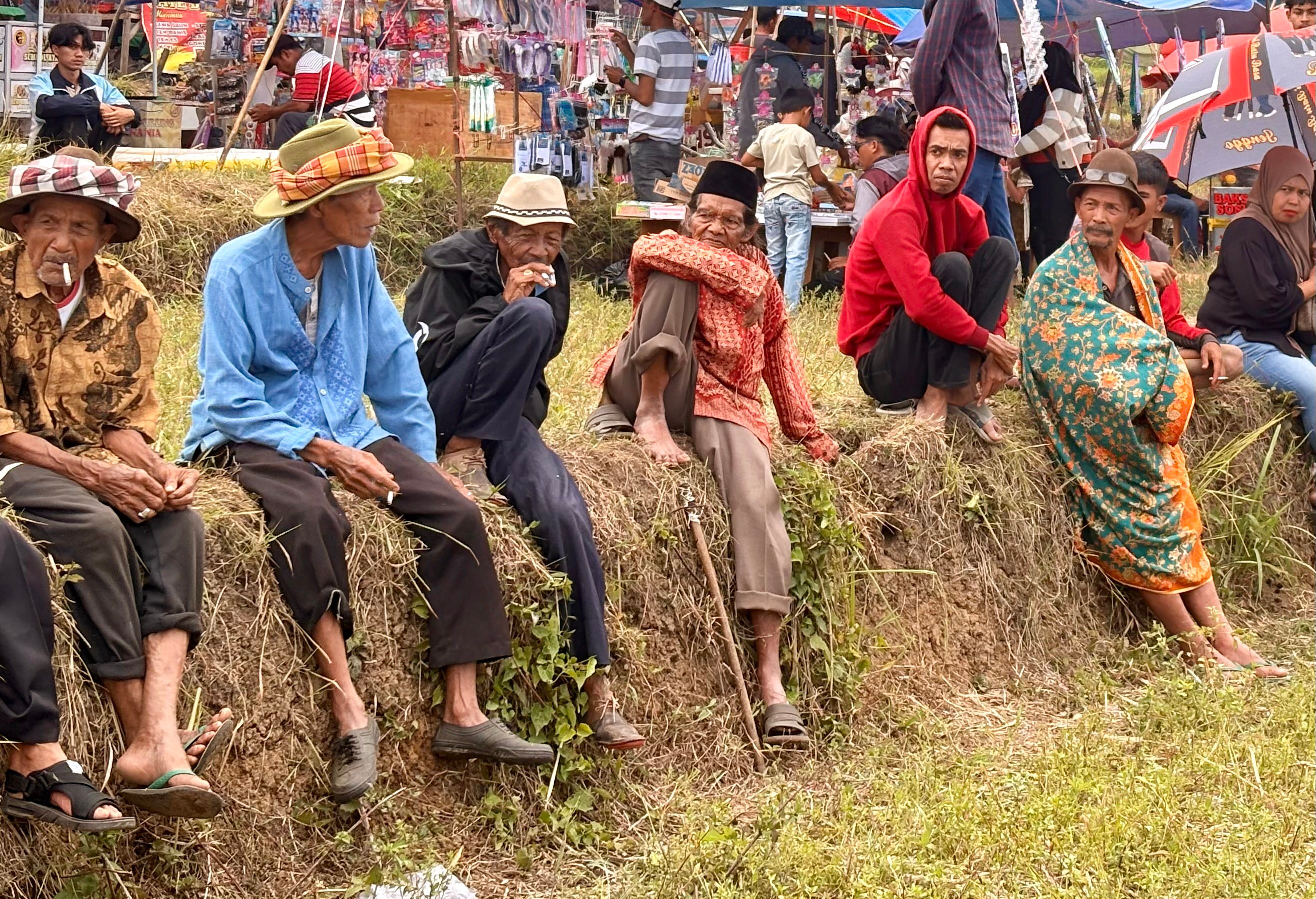
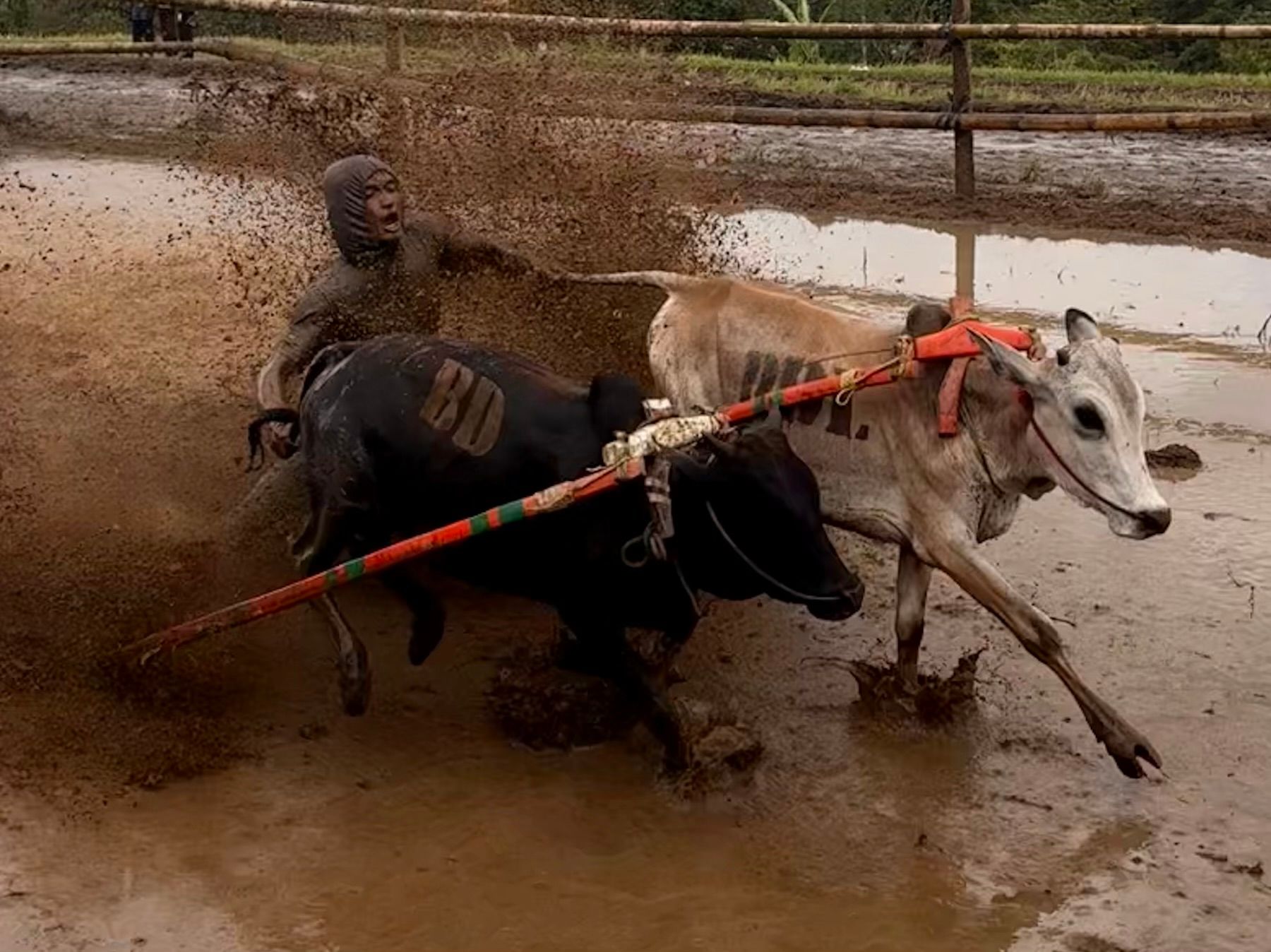
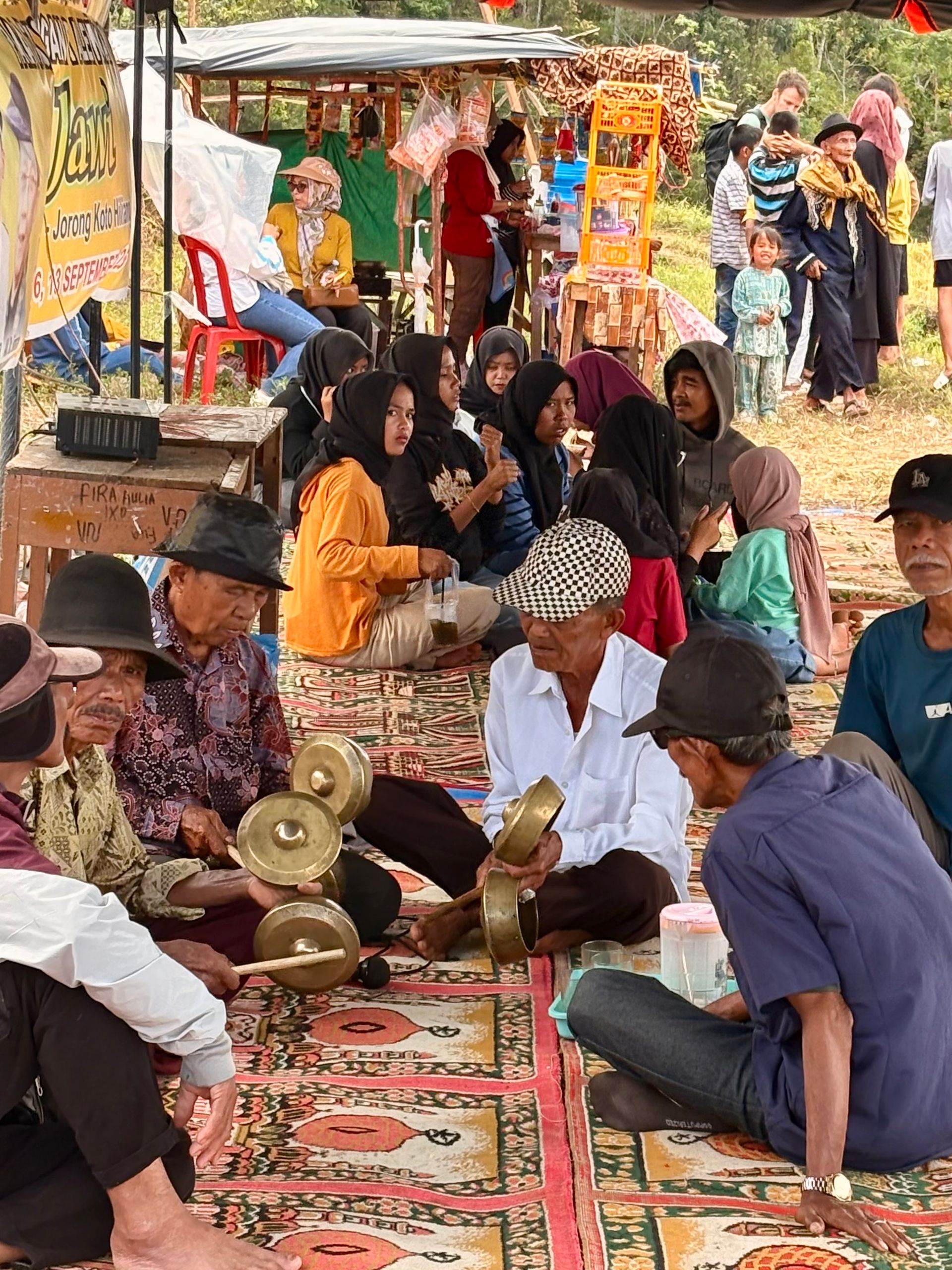
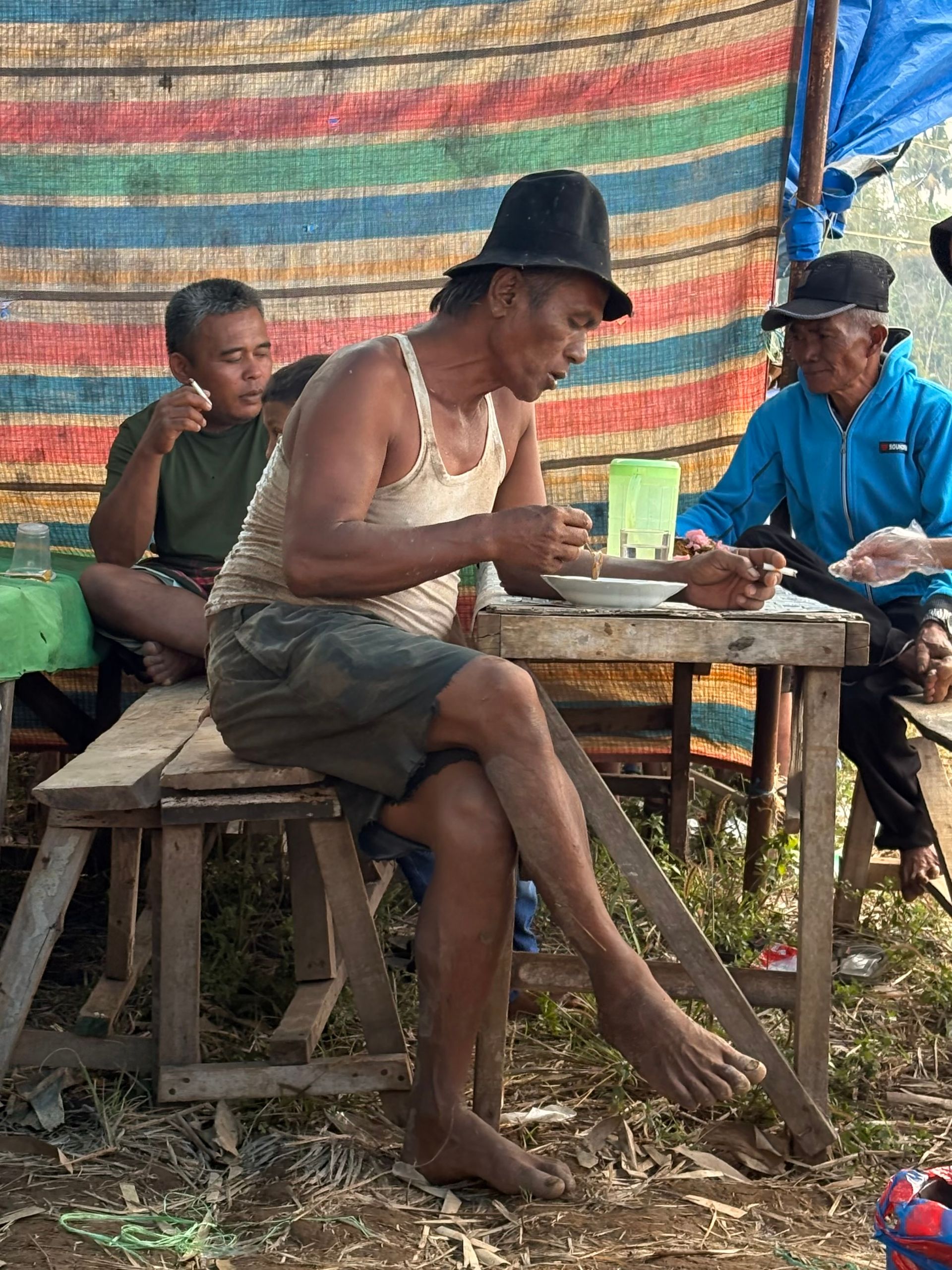
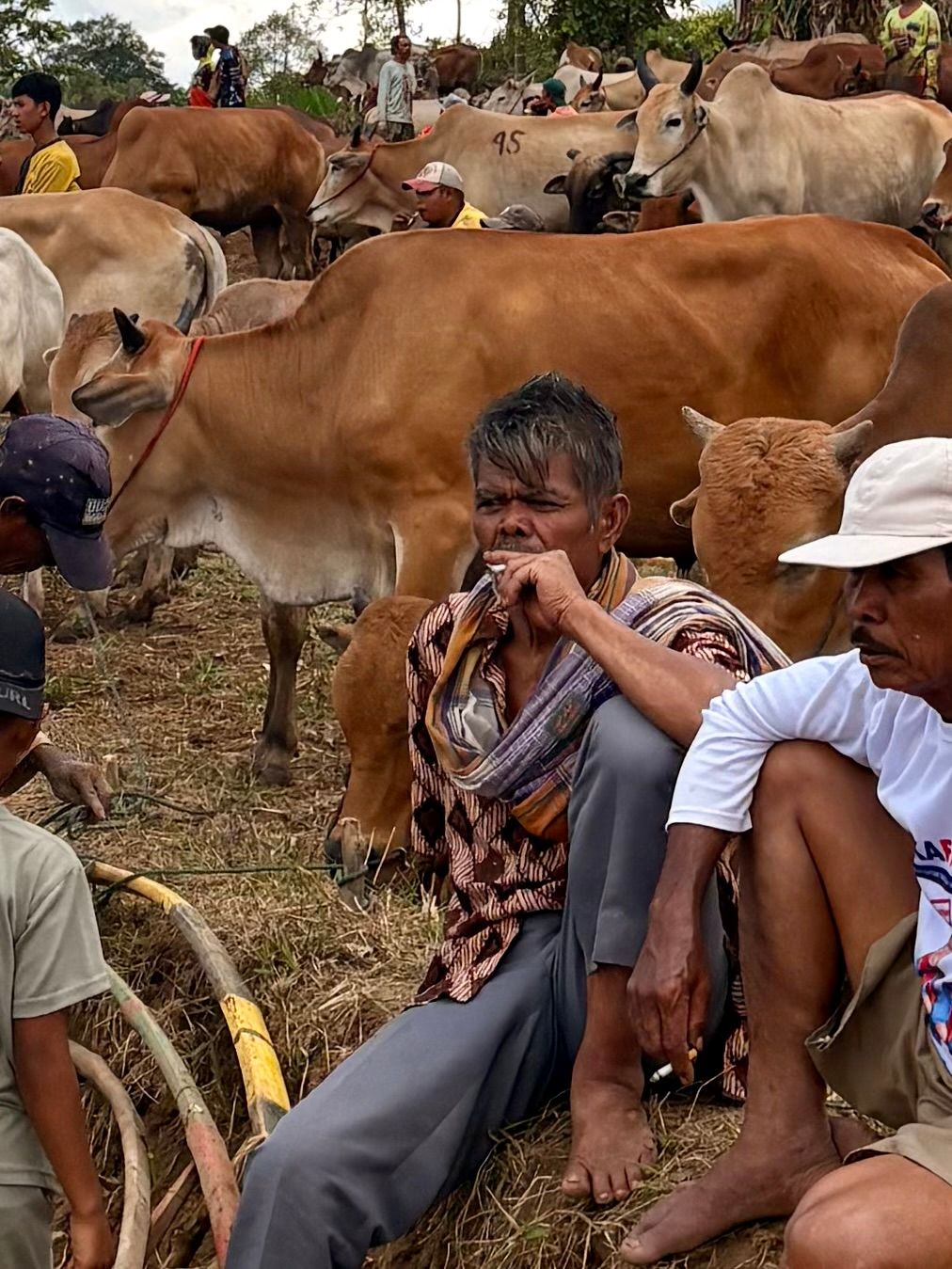
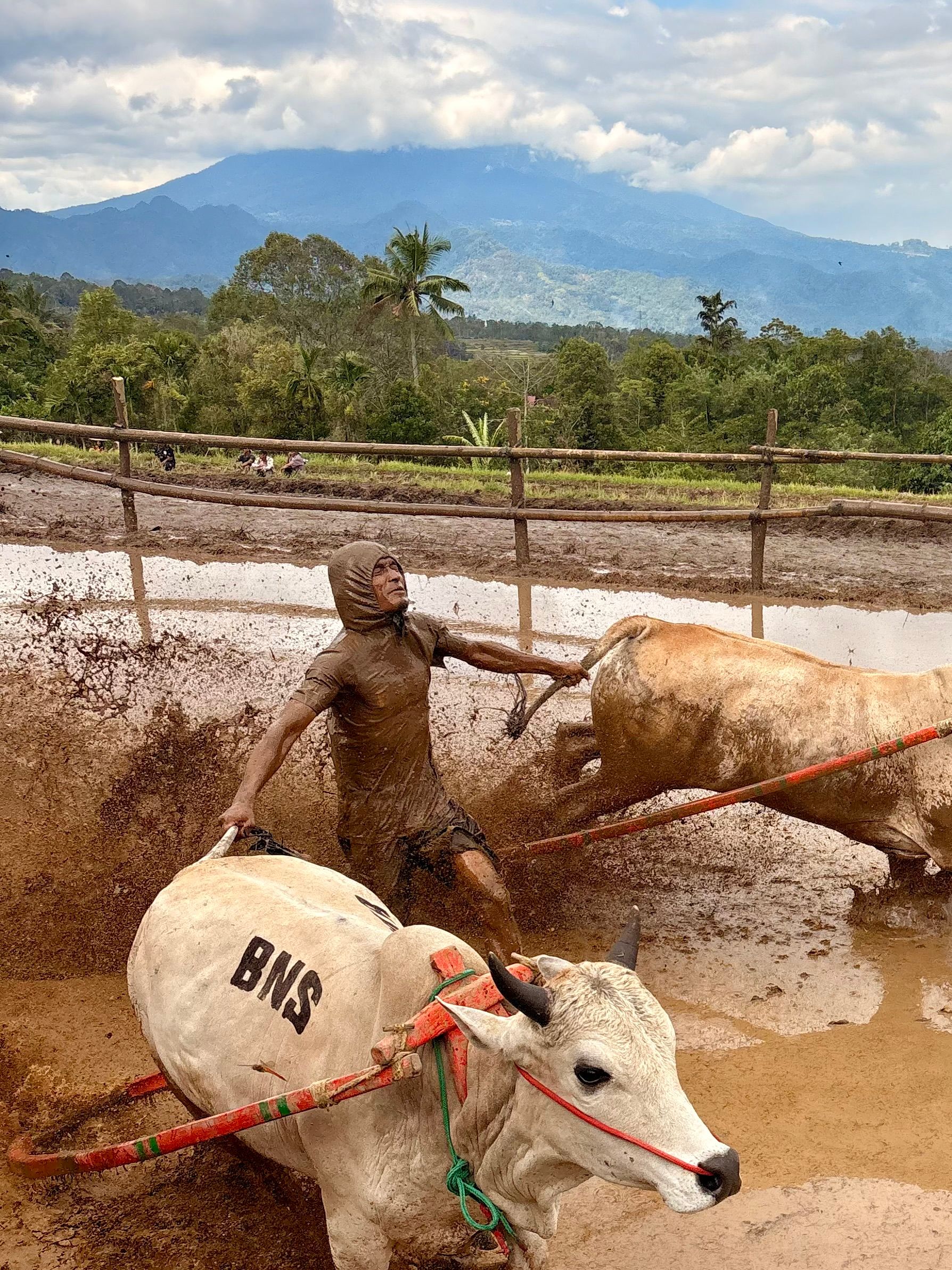
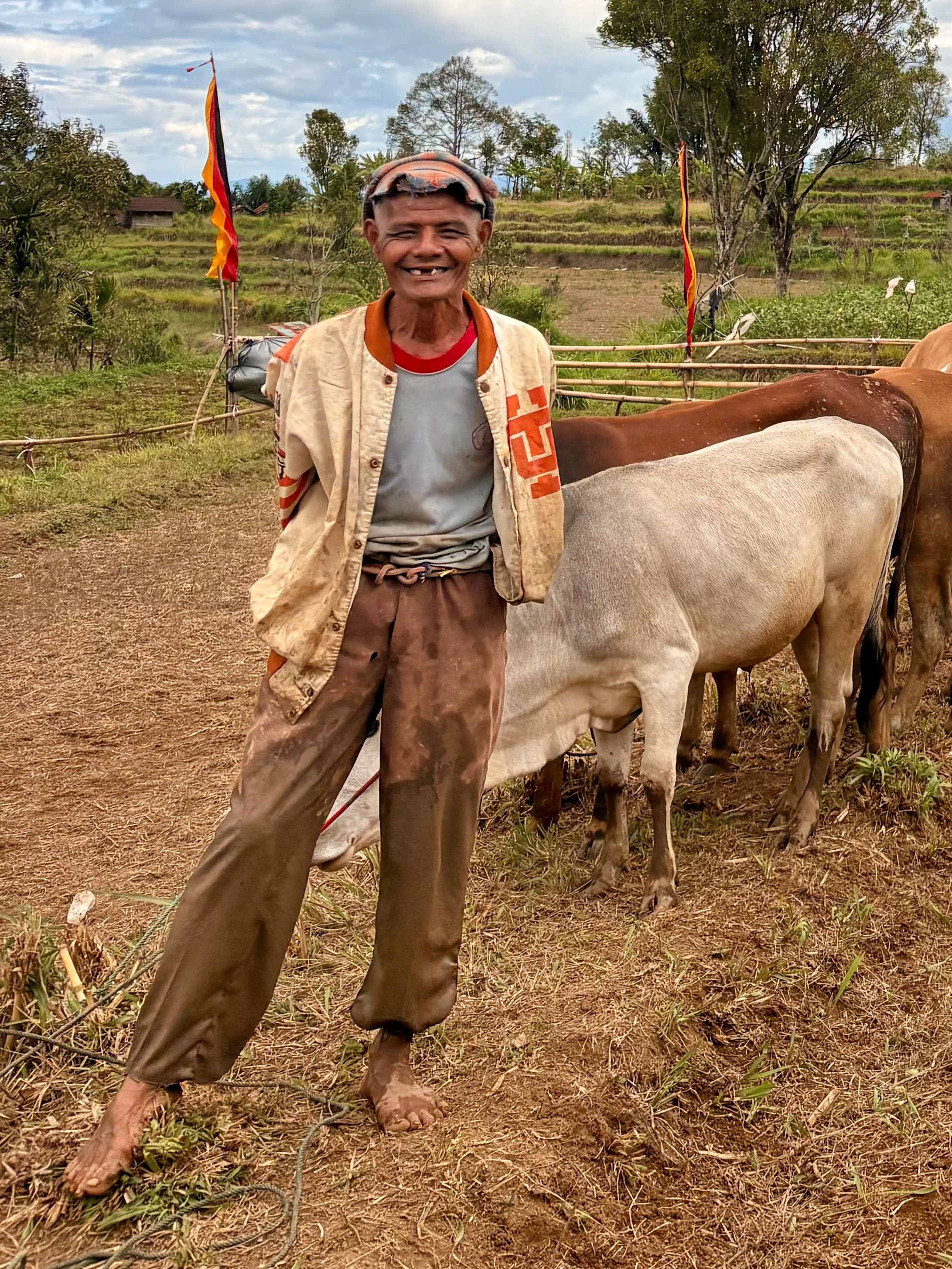
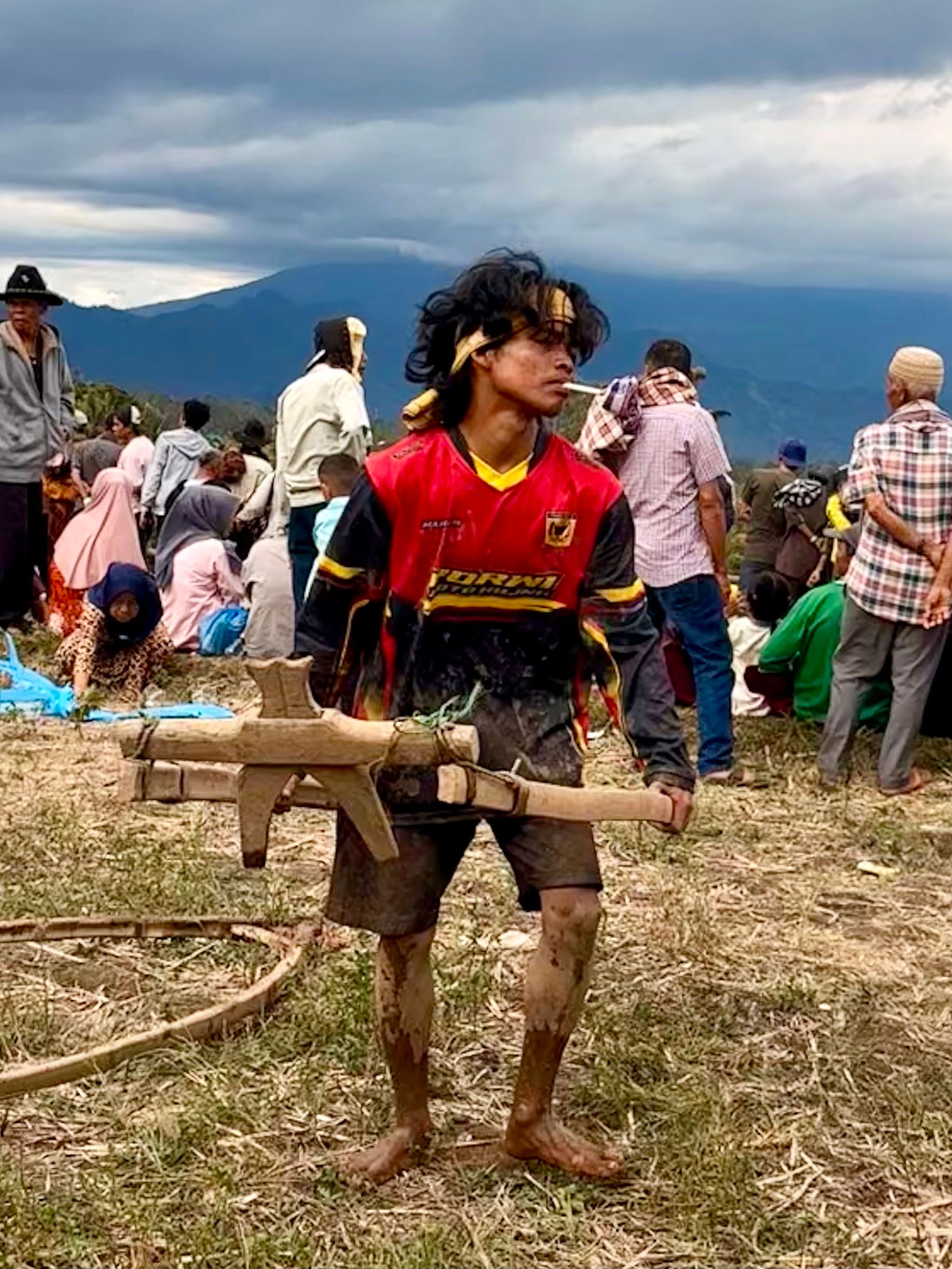
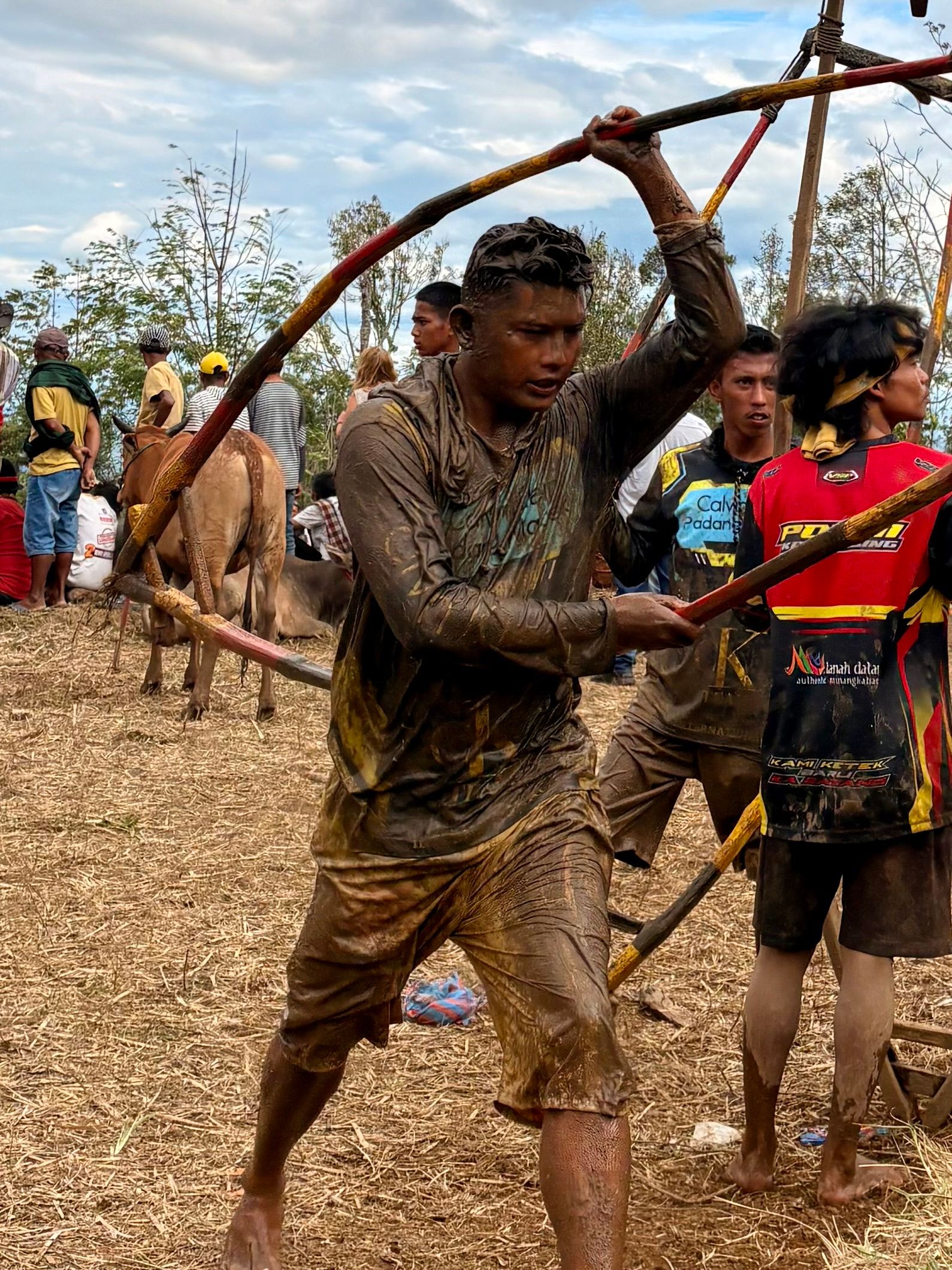
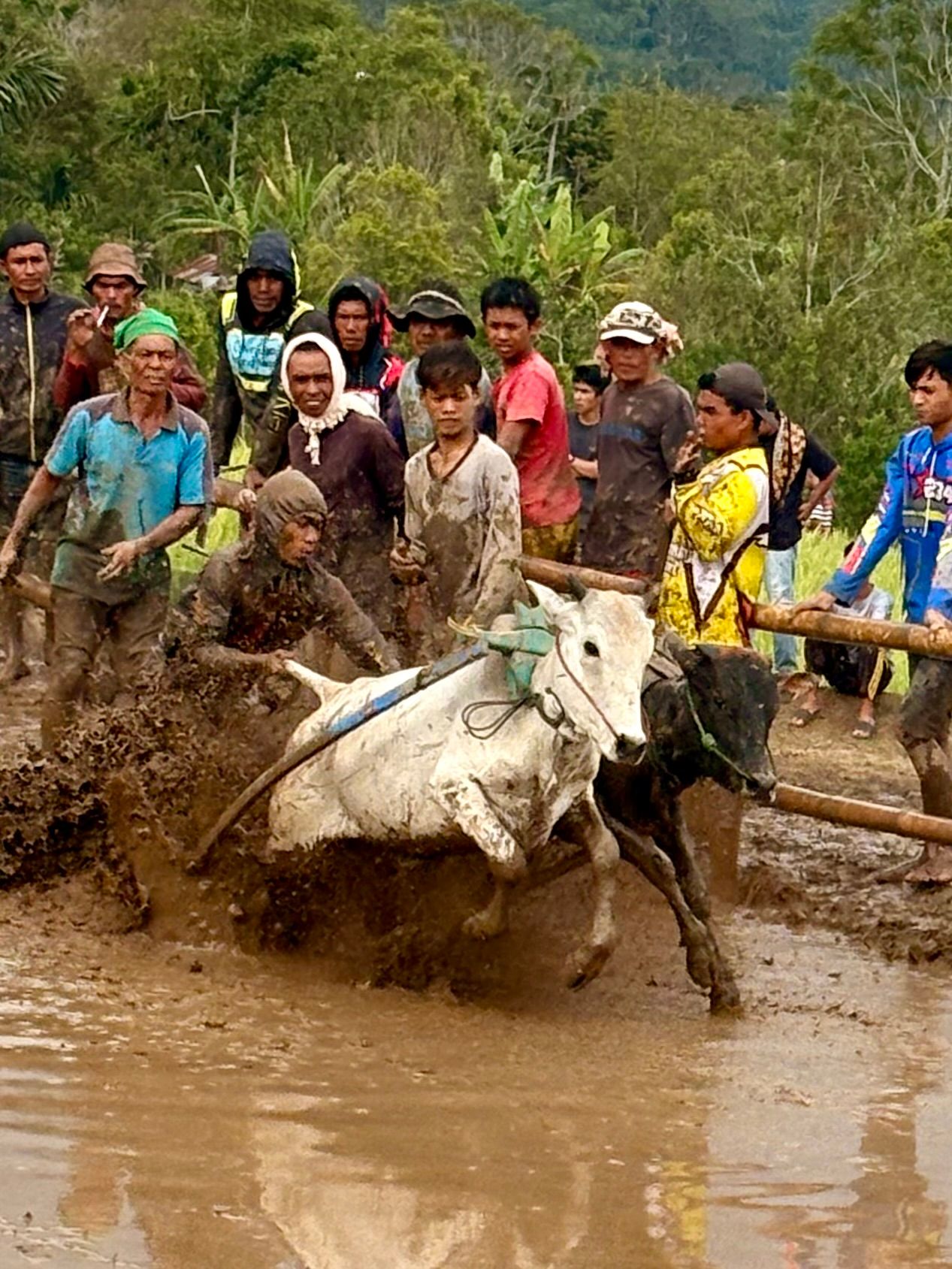
The absolute highlight in Bukttinggi was supposed to be the visit to the Pacu Jawi, a traditional bull race that only takes place here in the area, for which we stayed a few extra days in Bukittinggi. We organized a local driver (hardly anyone in Bukttinggi knew about the bull races, which surprised us) and first visited the aforementioned Pagaruyung Palace and explored the rural surroundings, also stopping at a small, very simple coffee farm and roastery. Tea made from coffee leaves tastes very good, by the way! Then we drove around the area searching for where the race would take place that day, as the location changes every time and is not widely announced. Eventually, we saw a transport truck with bulls on it, which we followed out of the villages along the dirt paths. And there it was! Suddenly there were many people, food stalls, musicians, and lots and lots of bulls being unloaded, driven towards the racetrack, fed, and groomed. Many of them had logos sprayed on in color to identify which owners they belonged to, sometimes brand names like Puma or Porsche. As tourists, we had to pay an entrance fee to take photos. This has allowed the race to take place more frequently now (probably once a week during harvest season), but overall, there were almost only locals there. What a commotion and what an atmosphere, even before the first races began. Although it’s called a bull race, it is not a classic race in which time is kept or a definitive winner is determined. It takes place in harvested rice fields that are flooded and turned into a muddy wasteland. Two bulls are loosely tied to a plow with light ropes, and the jockey stands at the back on the plow, holding onto the tails of the animals. Then the animals take off, and the jockey tries to stay on the plow and reach the finish line at the end of the field. So much for the theory – the practice looked different. On the one hand, the bulls, accustomed to the hustle and bustle from a young age, were not particularly eager to start running. So the teams of about 5-6 people tried first to get the animals to set off at the desired time while standing in the mud. Sometimes the animals resisted or started too early. Then the jockey also had to stay on the plow, which rarely happened as well. This resulted in many spectacular stunts and muddy landings. As the race progressed, more and more water was pumped into the field, making it even mushier. The audience stood at the edge, cheering, always ready to jump aside in critical moments and not immune to landing in the mud themselves. While the bulls themselves had to run perhaps once or twice, the jockeys participated very often – and over time became weaker and trembled; an arm was occasionally dislocated, and a leg was broken, which felt trivial in the rush of testosterone and adrenaline. But what an atmosphere! It was all about seeing and being seen, doing business, meeting people, showing off your beautiful bulls, and demonstrating what a great guy you are. Truly fantastic! After a few hours, the fun was over, and we made our way back, tired, splattered with mud, and euphoric. Mega!