
Bukittinggi
After we recovered from the bus ride, we started exploring Bukittinggi. Here, we immediately noticed that we had left the predominantly Christian area, and the Muslim lifestyle...

Published: 19.03.2026
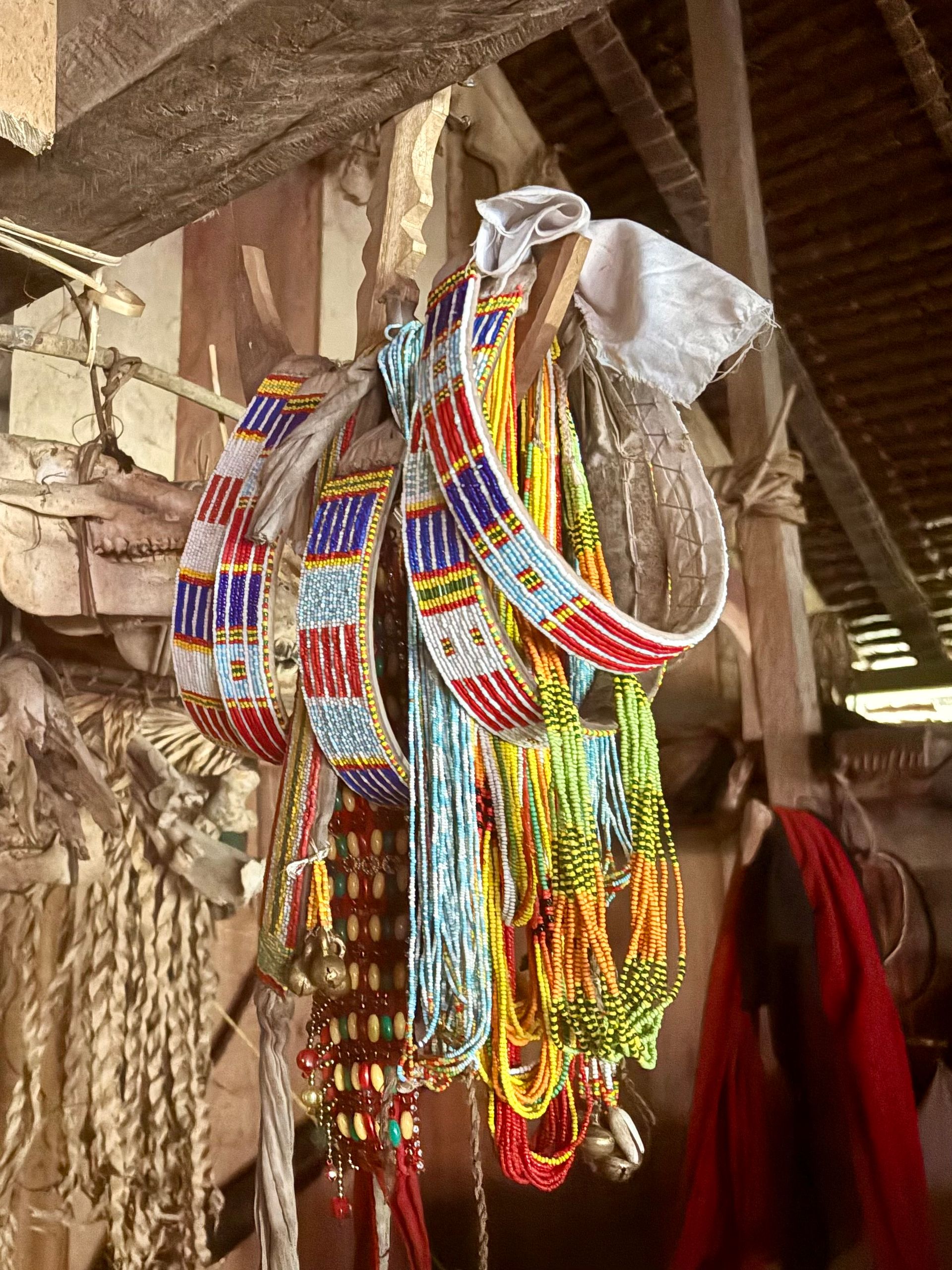
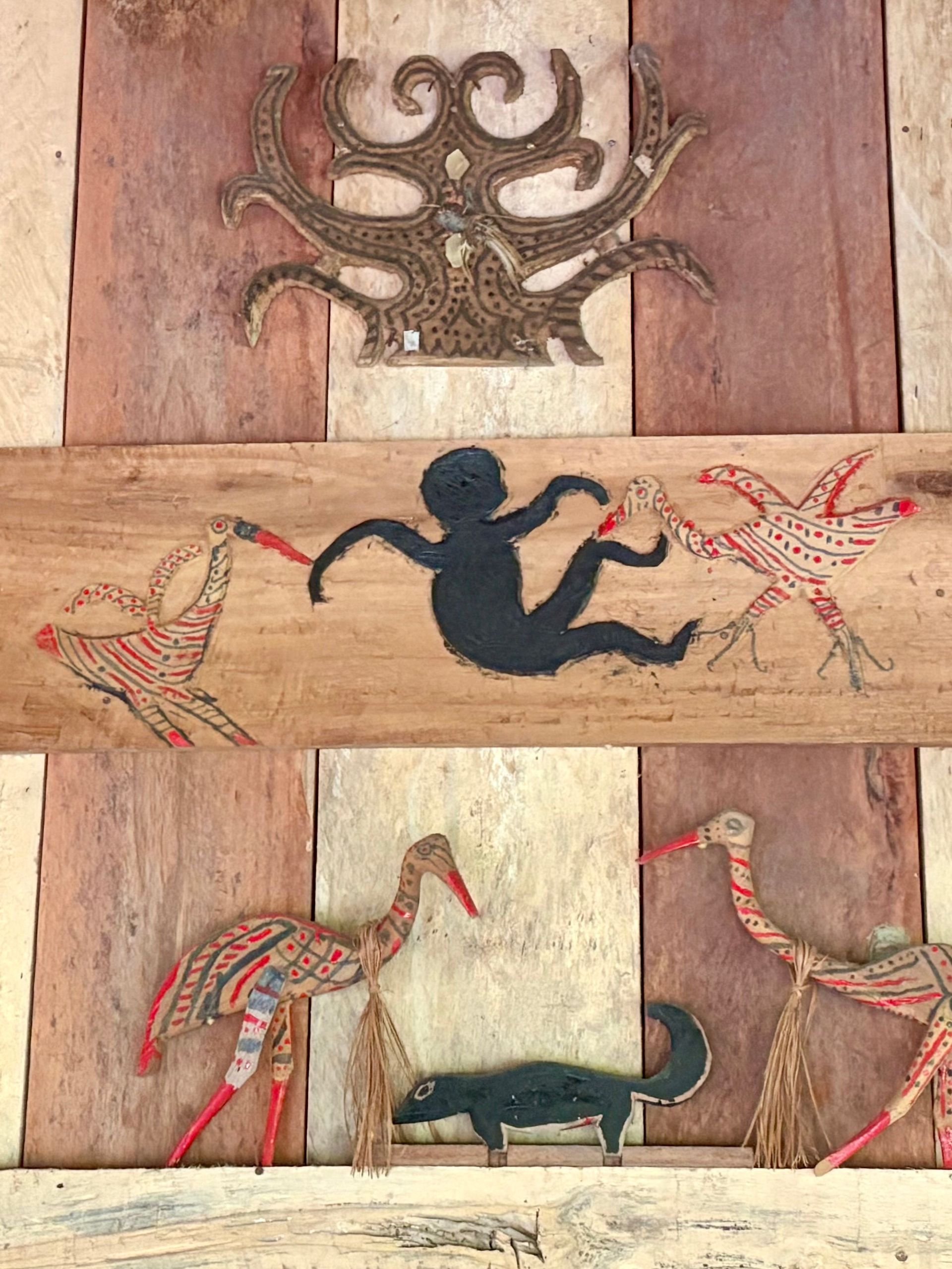
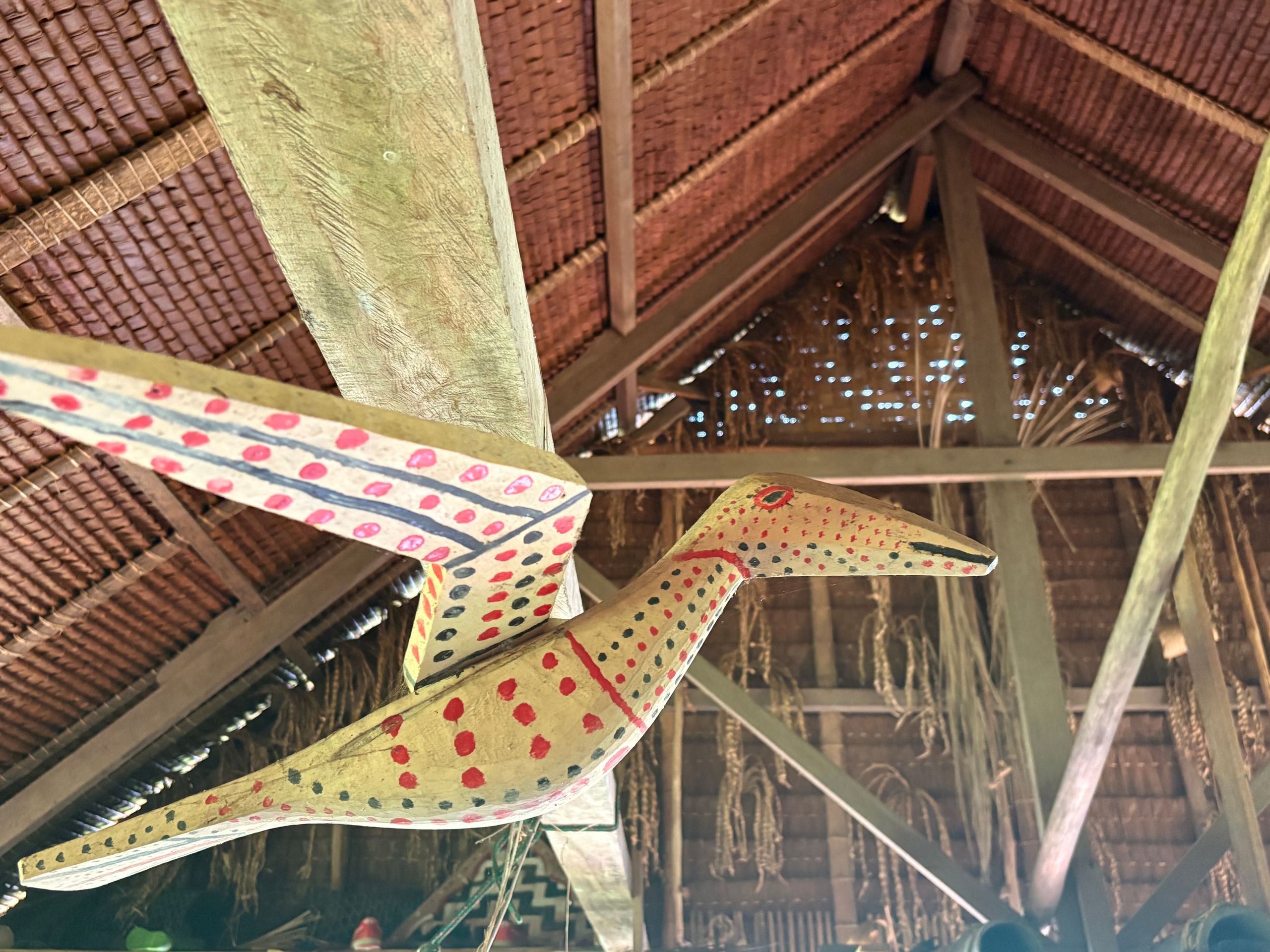
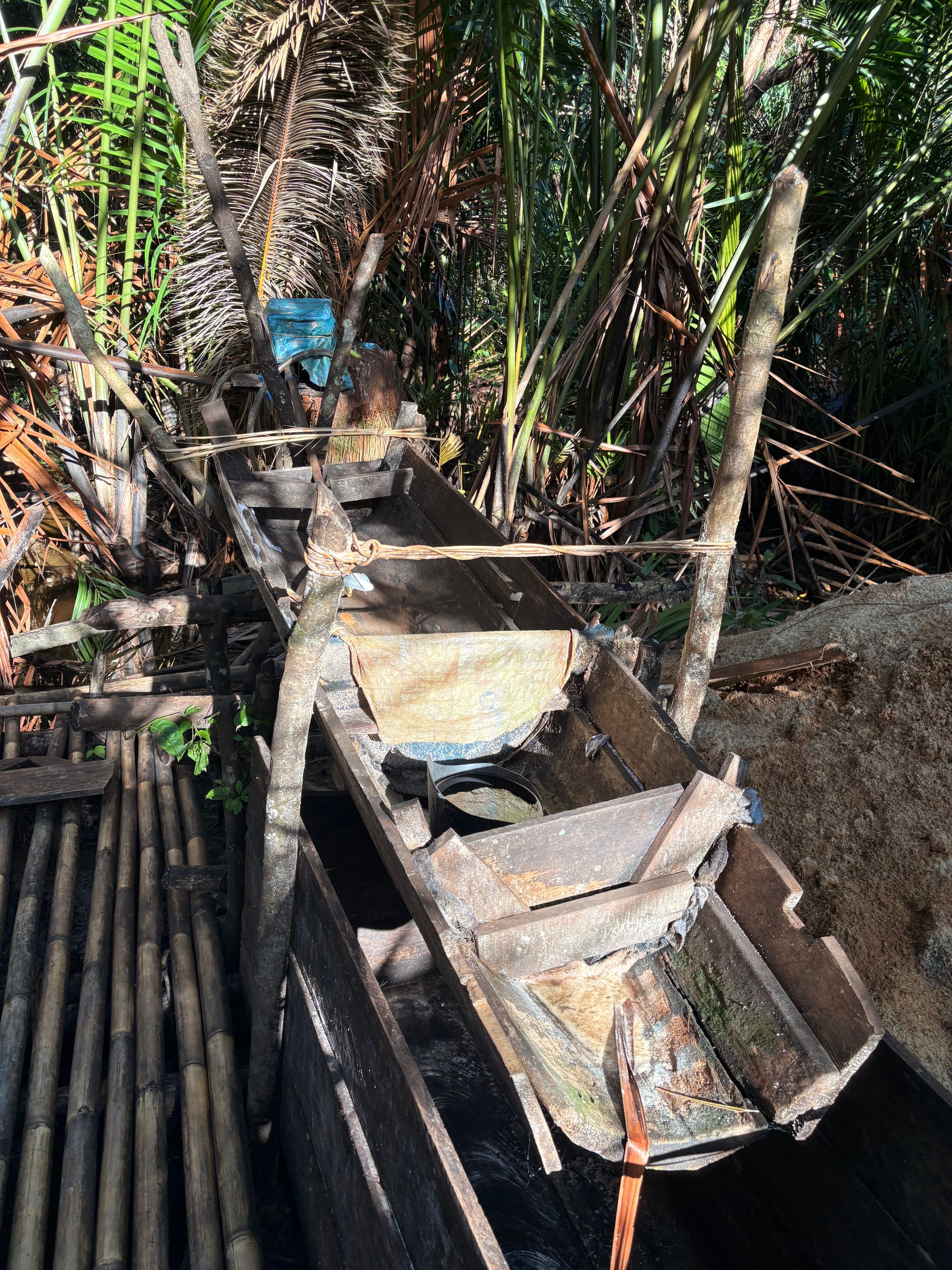
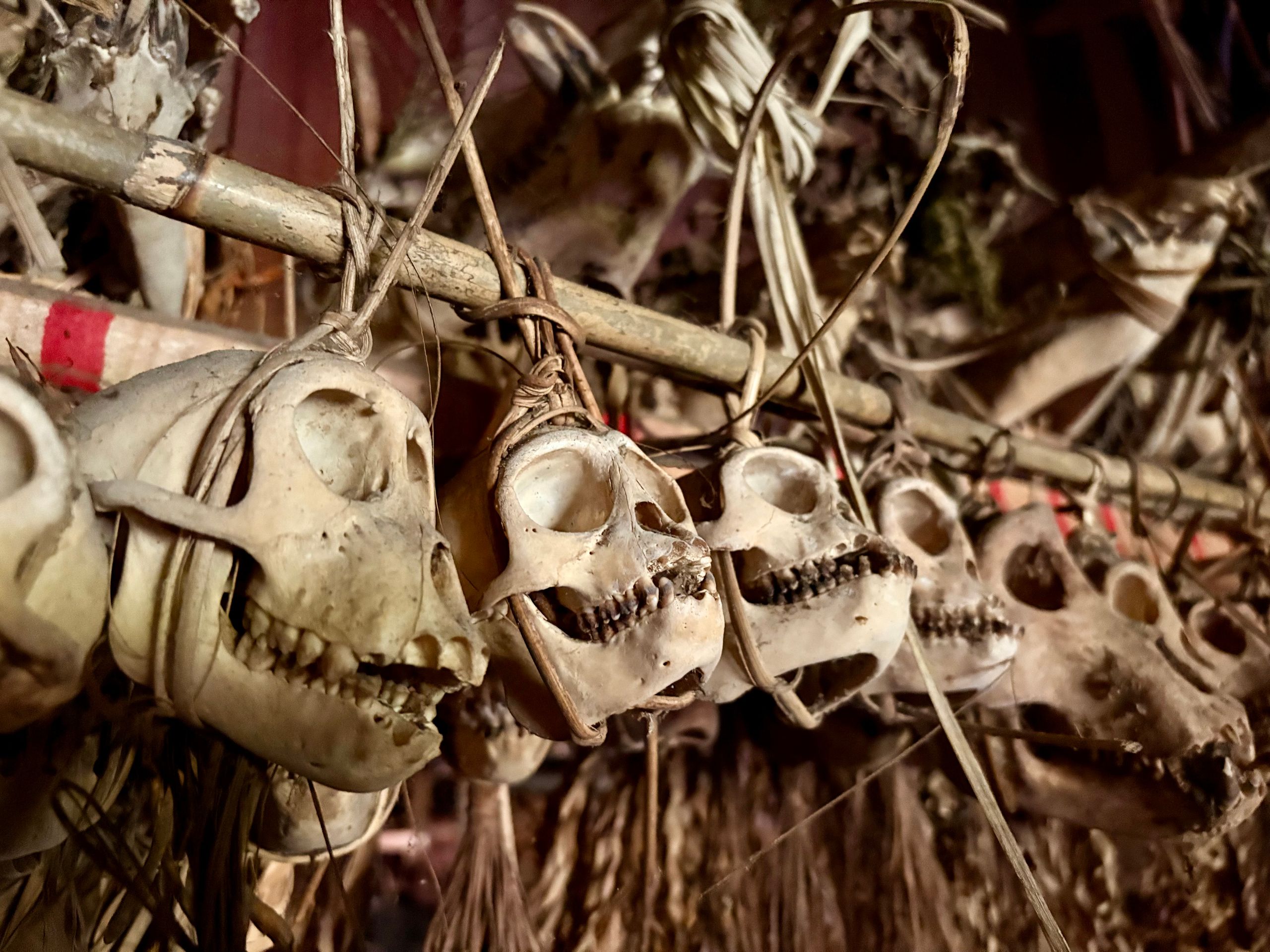
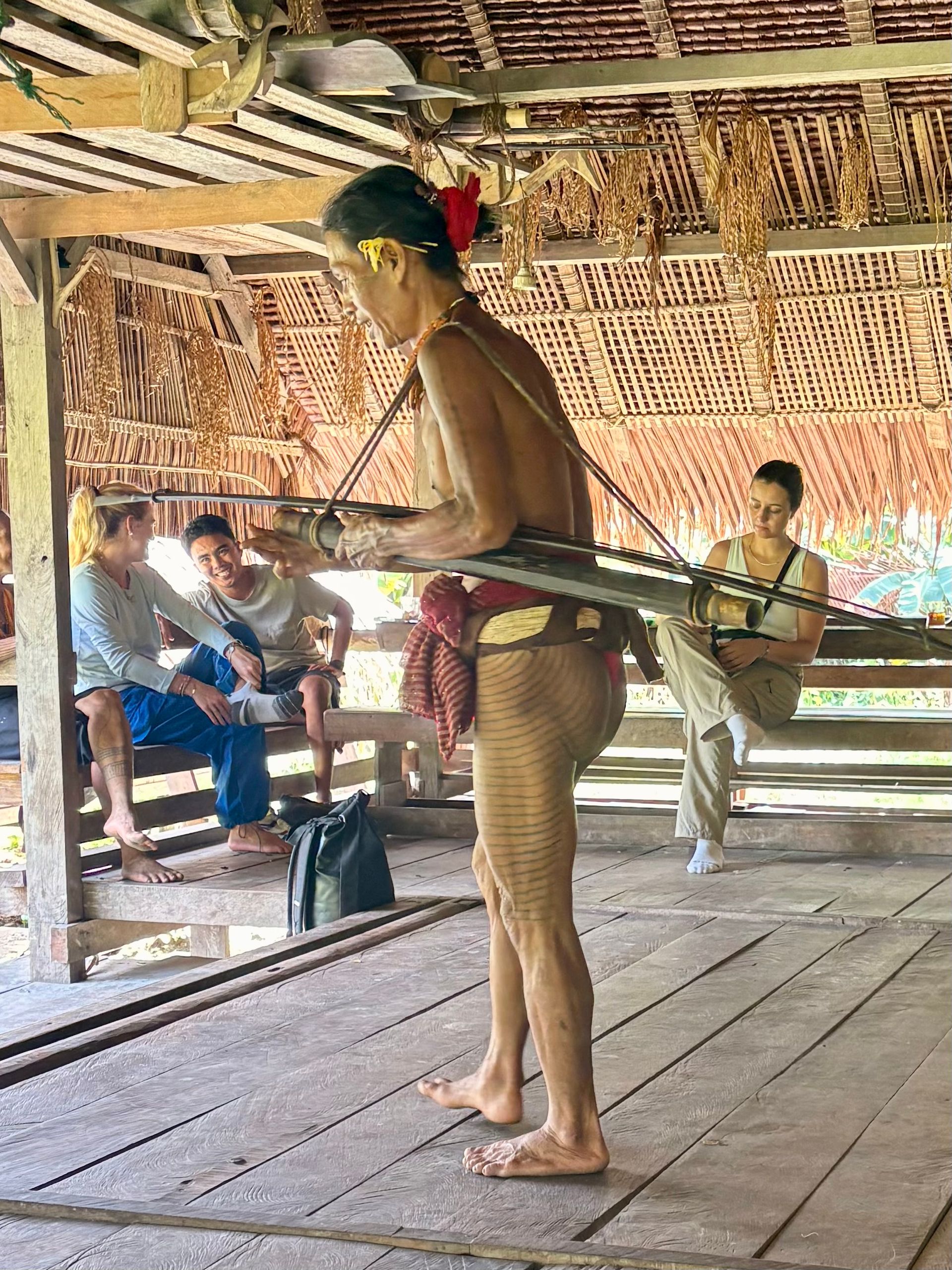
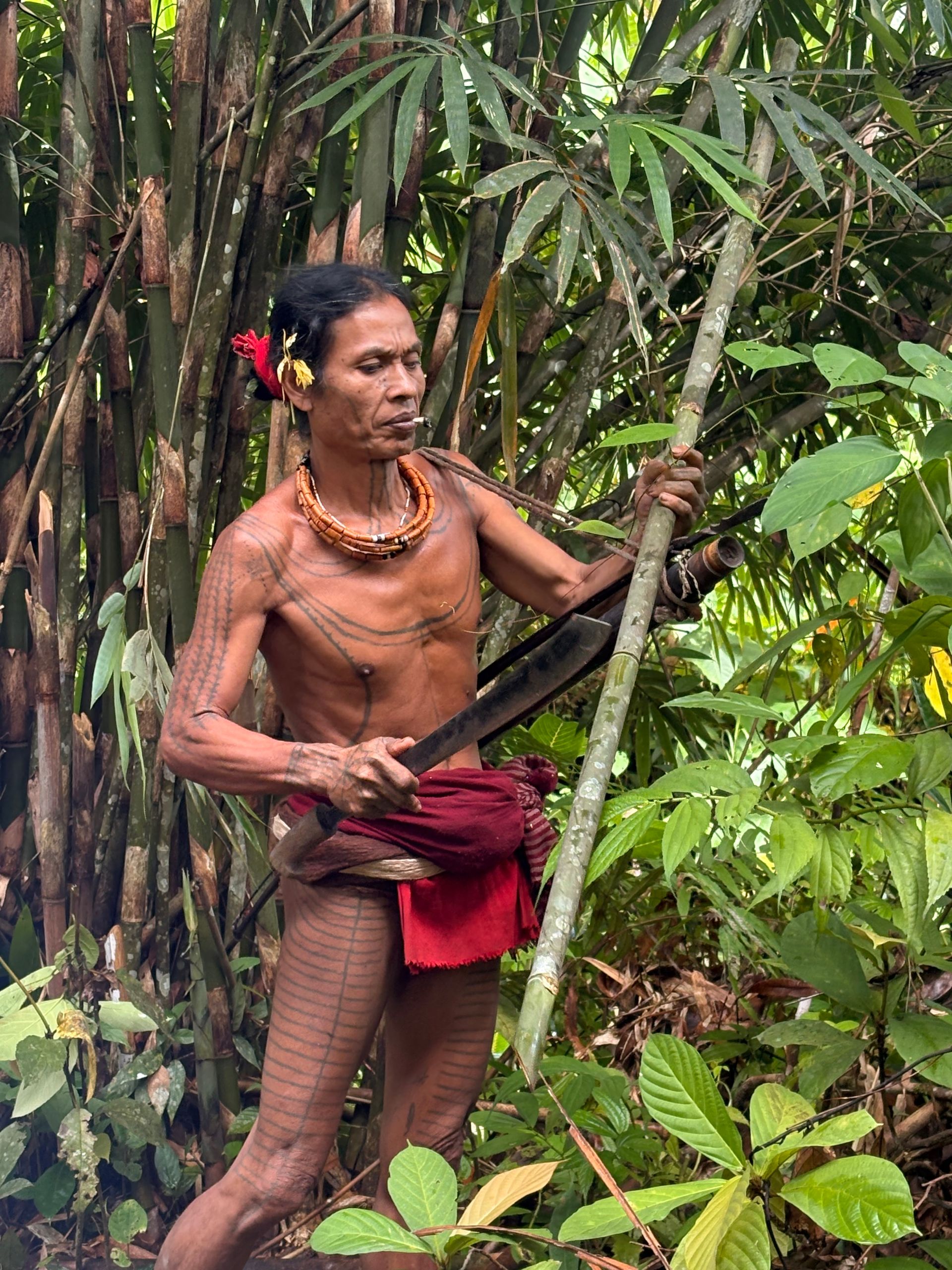
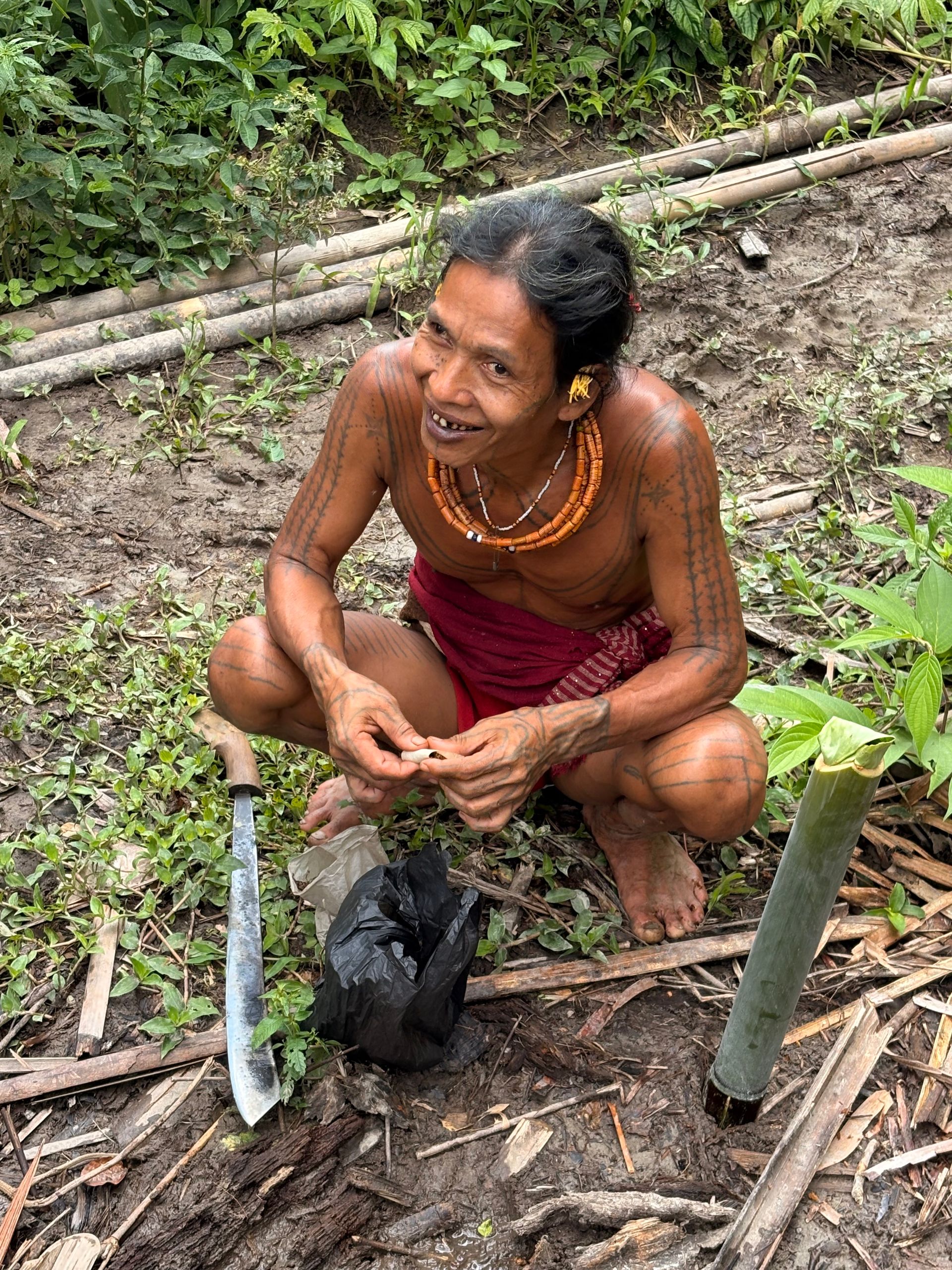

We continued south towards the coast to Padang, which is a two-hour journey away. The city itself doesn’t offer much, but the real destination was the Mentawai, an archipelago located about a hundred kilometers southwest of Sumatra. Here, we had the opportunity to live for a few days with the indigenous people of the same name. Unfortunately, it was quite troubling as Freddy's off-and-on health issues flared up again. Although we had confirmed in Bukttingi that he hadn't picked up any jungle parasites, he was still laid up with a fever and cold symptoms. Thus, Marike set off for the Mentawai islands alone, while Freddy stayed in Padang to recover.
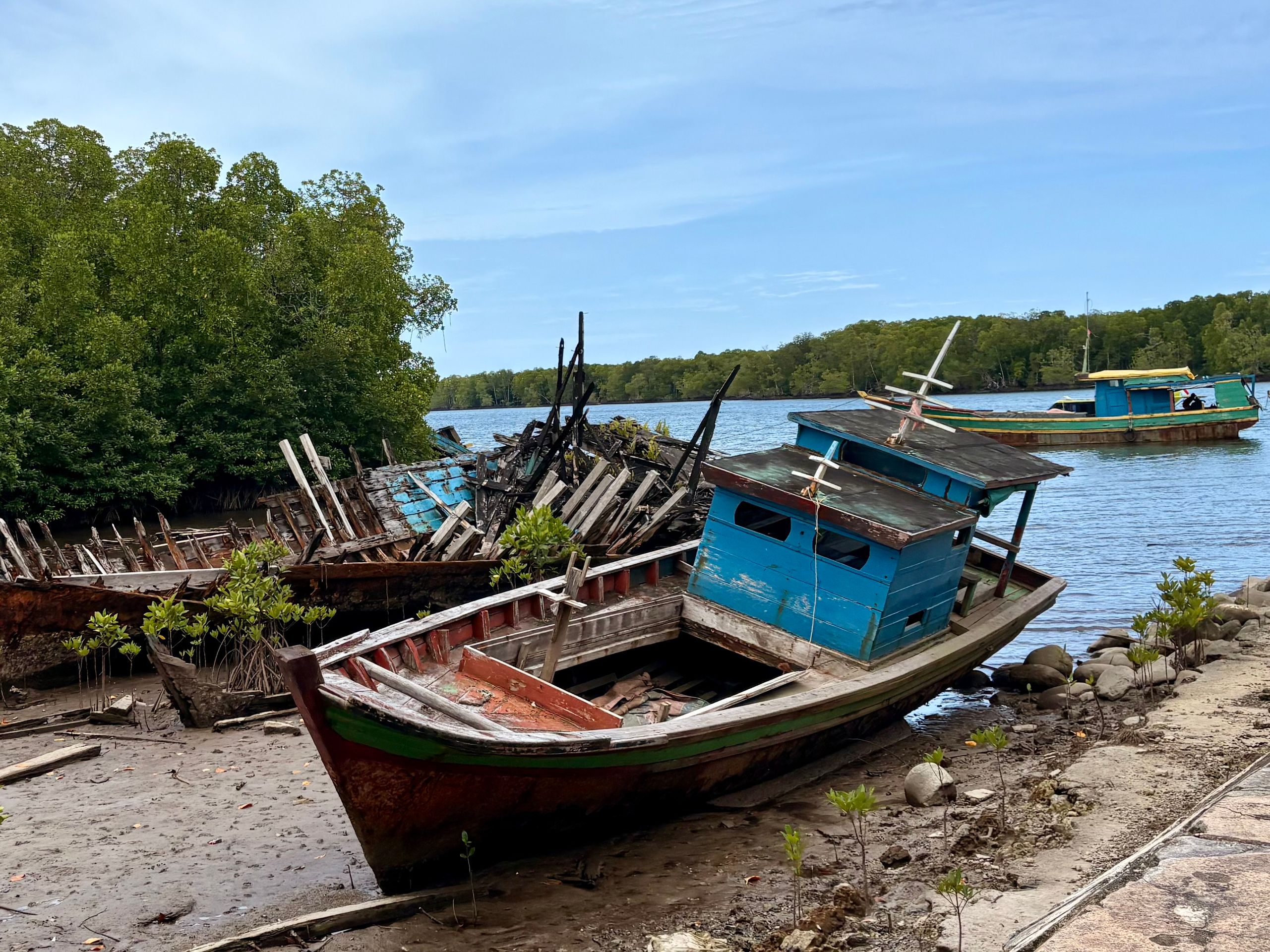
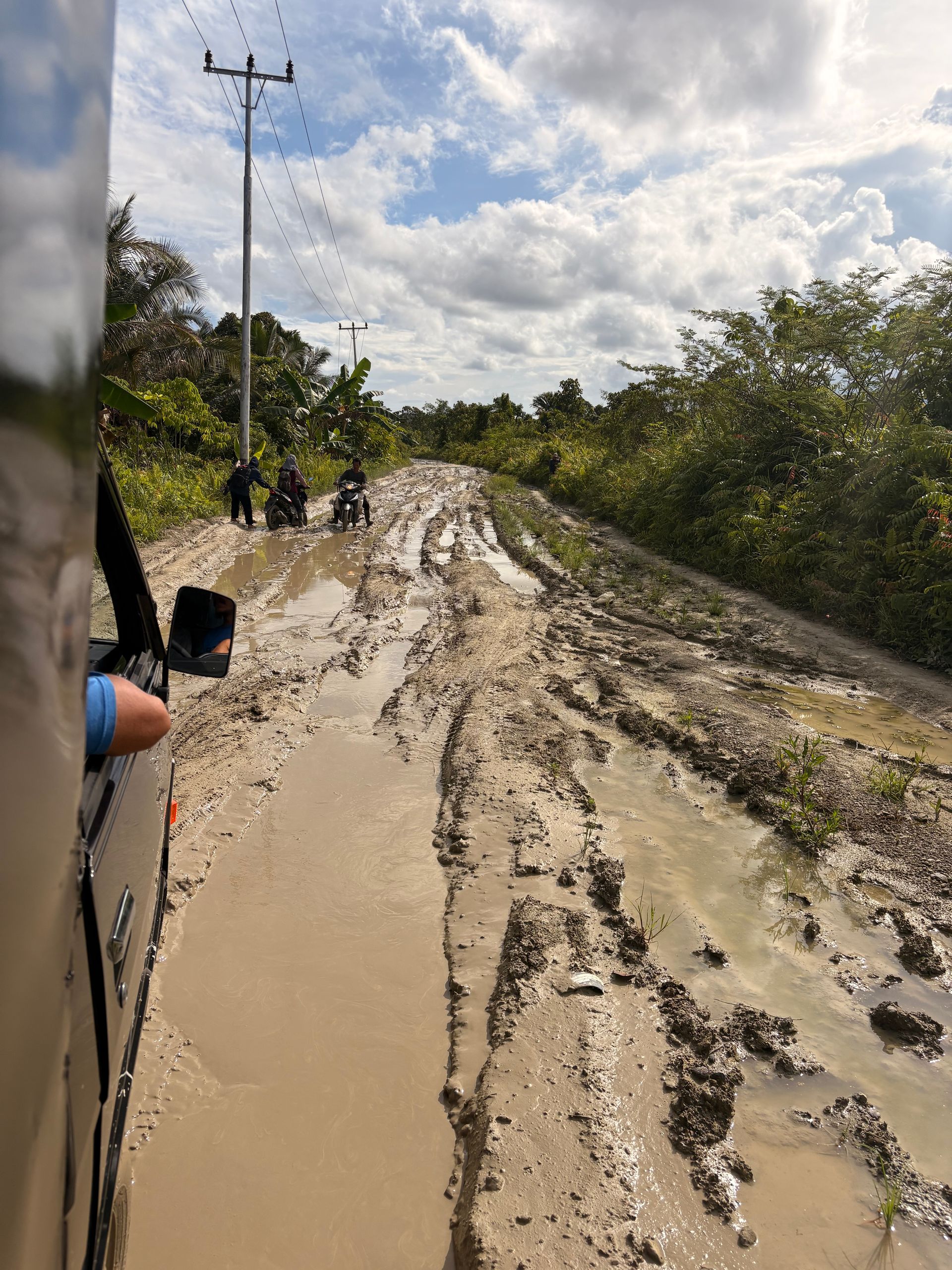
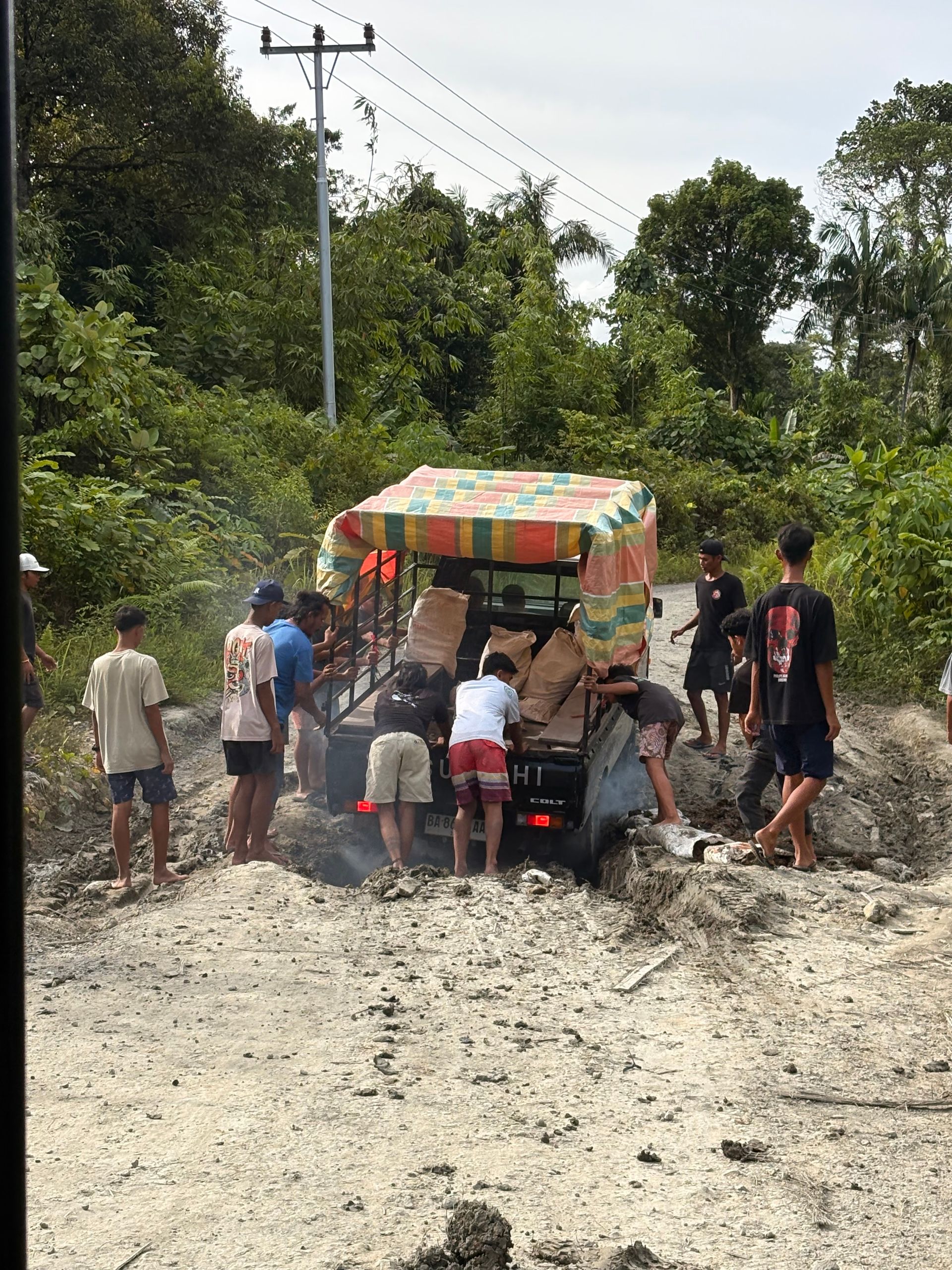
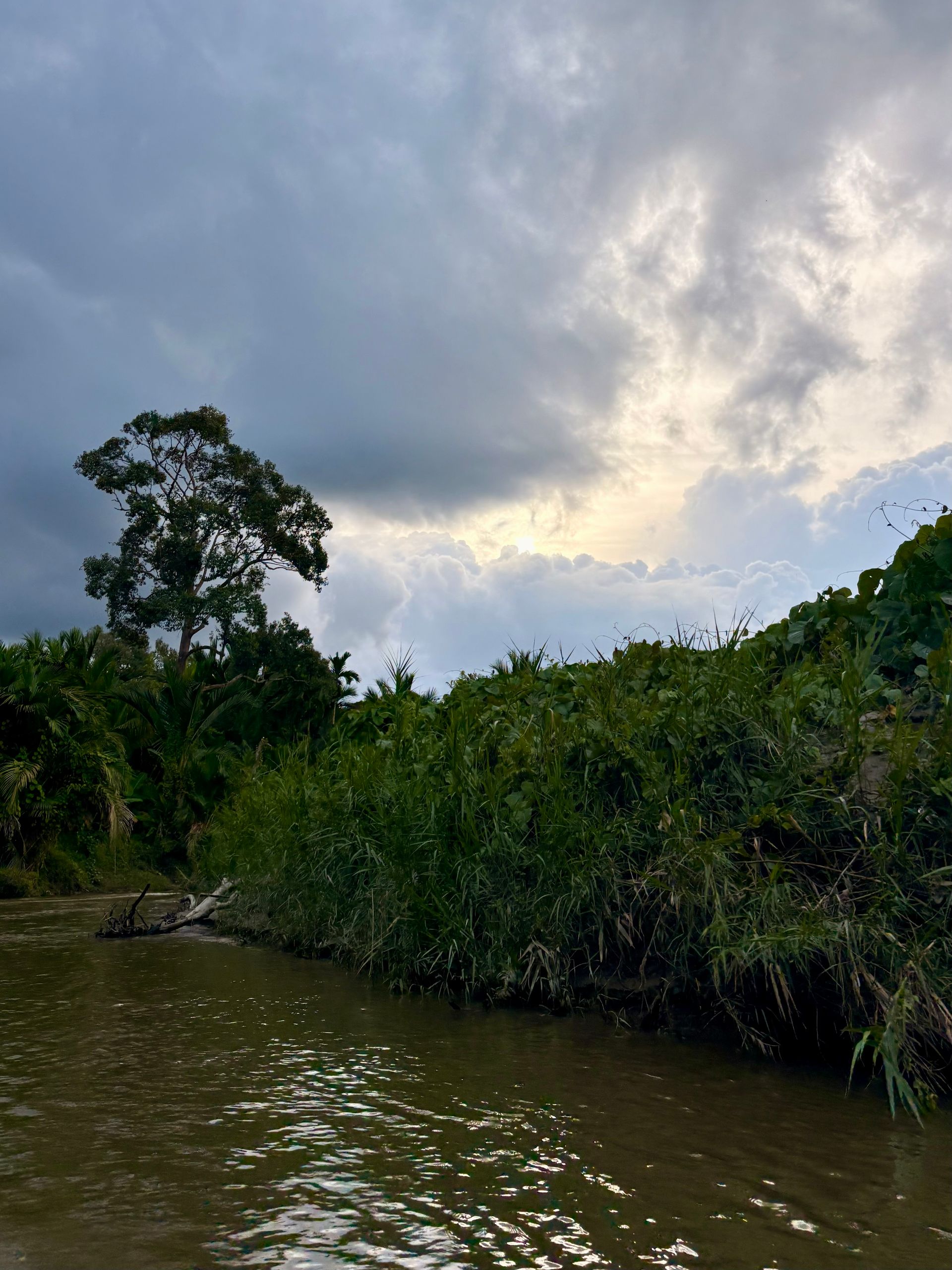
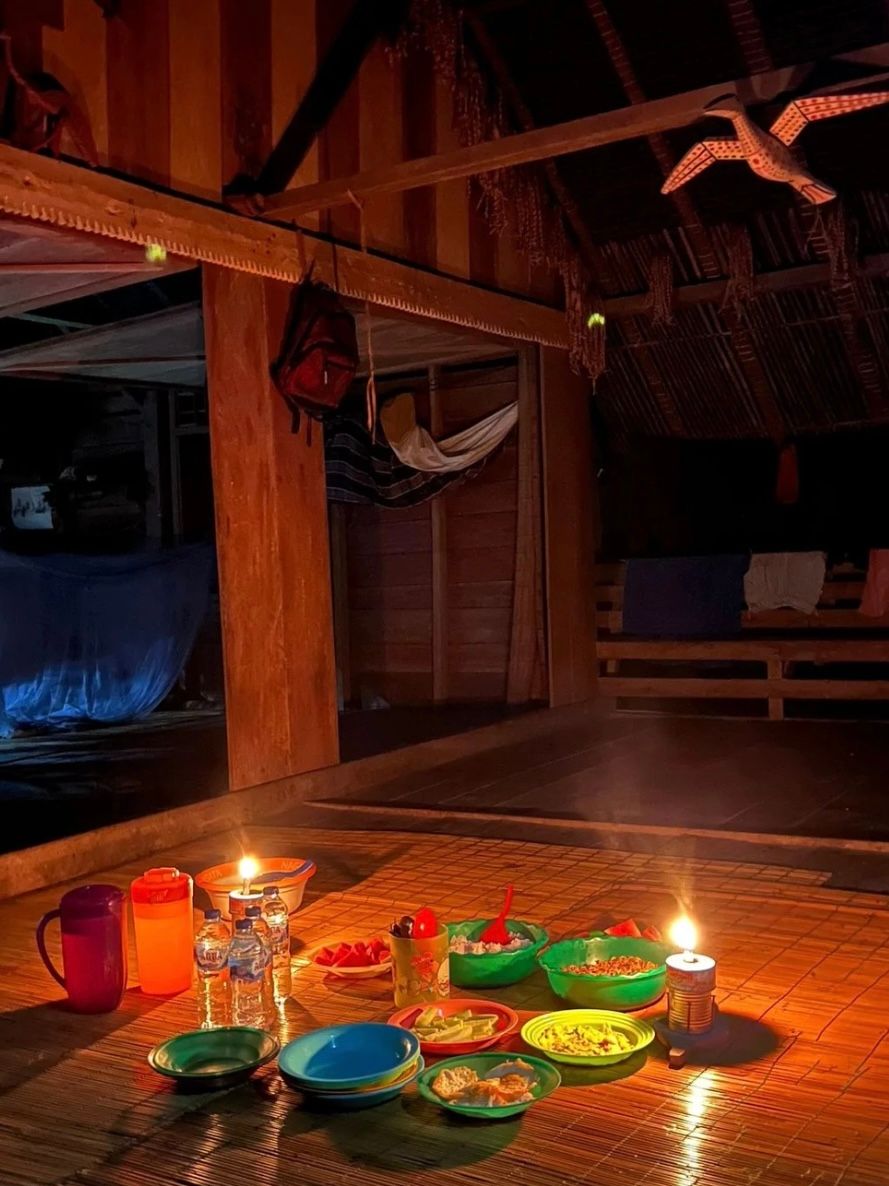
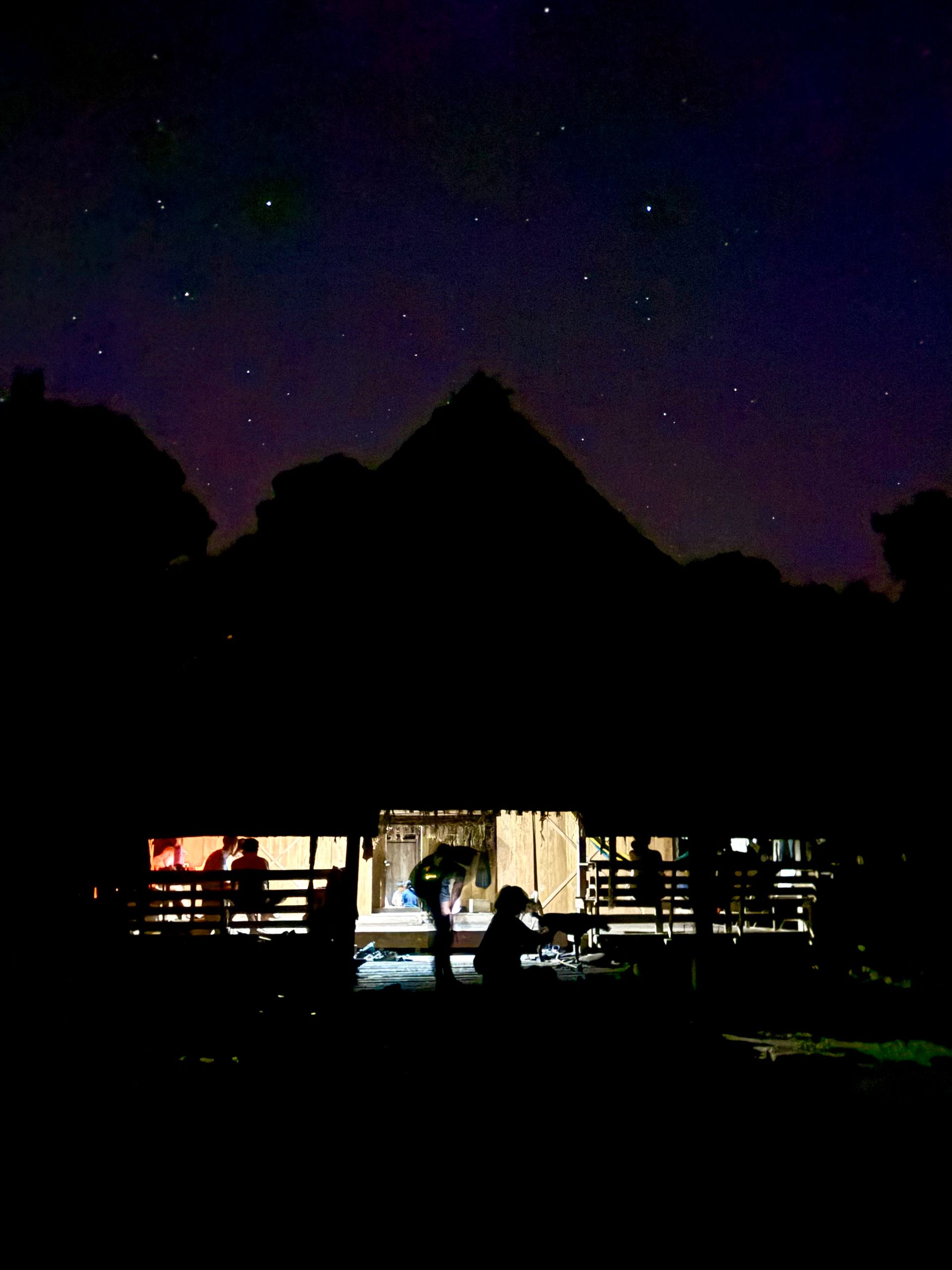
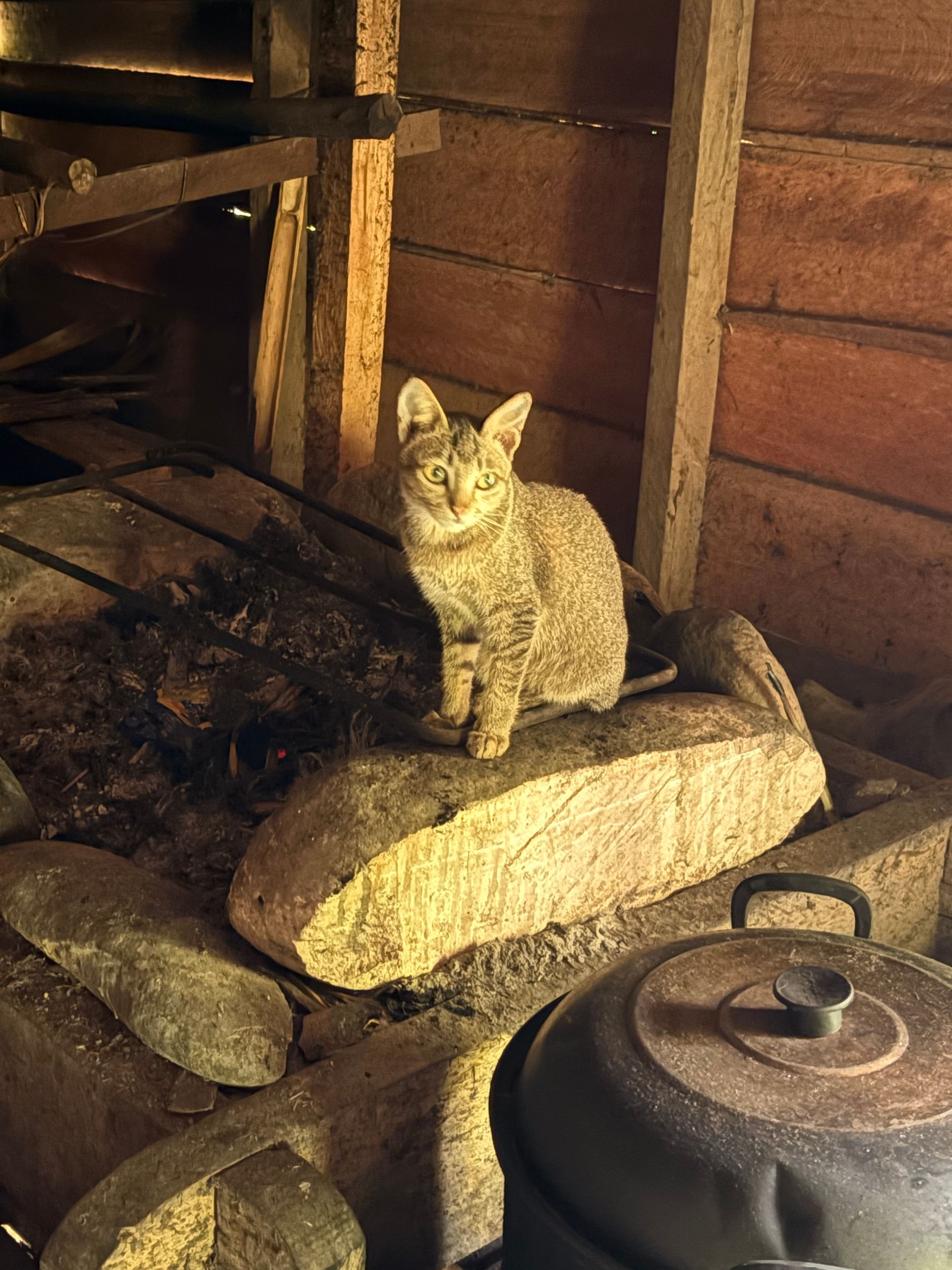
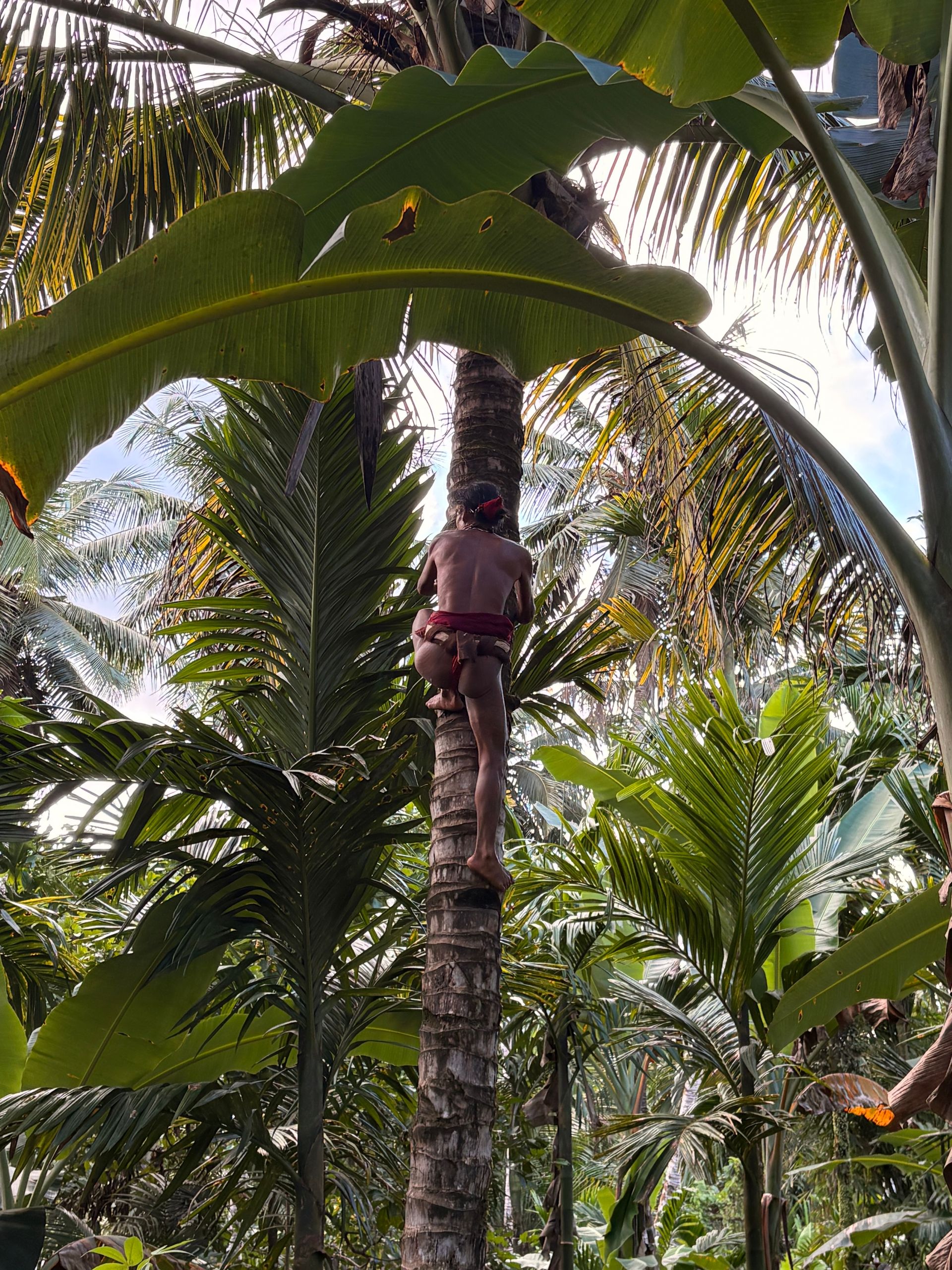
So, we departed in a small group of four tourists for five days to Siberut, the main island of the Mentawai. On the ferry, there were quite a number of tourists — there are some luxury resorts on the islands and some of the best surf spots in the world, which attracts many professional athletes here as well. None of that would matter in the coming days. After several hours, we reached Siberut, the main town and port of the islands — a quaint fishing village. There was an incredible hustle and bustle at the harbor — the ferries also brought mail and packages that needed to be picked up and sent off, and the local travelers had plenty of groceries from the mainland. It became much quieter very quickly as we continued by car on ‘roads’ deeper into the island — a muddy craters inferno. We had to get out numerous times to push the stuck car out of the ruts, and a few days and heavy rain later on our return journey, it would only get tougher. Eventually, we stopped in a small settlement, were all outfitted with overly large rubber boots, and switched to canoes, leisurely moving across the water surrounded by dense greenery. Somewhere in the middle of nowhere, we clambered, more or less elegantly, out of the boats to wade through the waist-deep water balancing our backpacks on our heads — it didn’t matter that it started to rain at some point. We continued on muddy paths, where wooden poles were laid over the trickiest spots, and after what felt like an eternity, we reached some loosely scattered houses on stilts. One of these so-called Umas would become our home for the next few days. Here lived a shaman, known as a Sikerei, with his wife, whom we called Mama and Papa. It wasn’t easy to determine who else lived in the house regularly, as there was a constant coming and going! The five adult children had moved out and some had gone to Java for their studies; however, a sister of the wife still lived here, along with the husband's brother, his wife, three children, a cat, and a large pack of dogs. The floor space of the Uma was generous — there were two rooms with high ceilings, one with the cooking area and one where our guests' sleeping arrangements were set up (thin mattresses on the floor with mosquito nets; the Mentawai seem to regularly sleep on the floor, possibly with a small thin cloth as a blanket), and a large covered terrace with long benches around it, where all the social life took place. There were no bathrooms; for the toilet, we went into the jungle, and for washing, to a nearby river. Our two guides — young men from the fishing village of Siberut who had learned the Mentawai language through visits to the Mentawai — acted as interpreters and explained things to us — we tried to memorize a few Mentawai words; otherwise, we communicated non-verbally. Additionally, we brought a cook with us, who came from one of the island's fishing villages, and some unknown helpers in the background had brought bottles of drinking water for us so we didn’t have to drink the river water. Thus, a few conveniences were provided for us tourists, but that didn’t mean things would always be easy.
Exhausted and dirty, we pulled the water-filled rubber boots off our feet — and then we simply immersed ourselves in this life. Without phone reception, without a sense of time, without any specific plan for what we would do. For the Mentawai, time does not matter, and their activities depend on what is happening, how they feel, and what the weather is like; we adapted to that. As gifts for the hosts, we mainly brought coffee, tea, and tobacco — the latter was particularly popular. In Indonesia, a lot of smoking happens anyway, but what the Mentawai did was truly next level; everything occurred under a huge blue cloud. Smoking is deeply embedded in the culture and also important for communicating with ancestors in animistic ceremonies, but what we witnessed seemed like an excessive nicotine dependence without any regard for health consequences. Papa — definitely suffering from a lung illness and incessantly wheezing and spitting out phlegm — wrapped the tobacco (ube) in dried banana or nipah leaves to create large blunts, while Mama preferred to roll thinner ones, and the rest of us were happy with normal cigarettes. The main thing was that it smokes and stinks! And so we sat, getting to know each other and, as often happened in the following days, on the covered terrace, drank tea and coffee, and smoked actively and/or passively. And someone was always visiting. The houses of the Mentawai are built further apart, but if someone was passing by nearby, they would stop by for a few cigarettes and a coffee and good-naturedly make fun of us tourists.
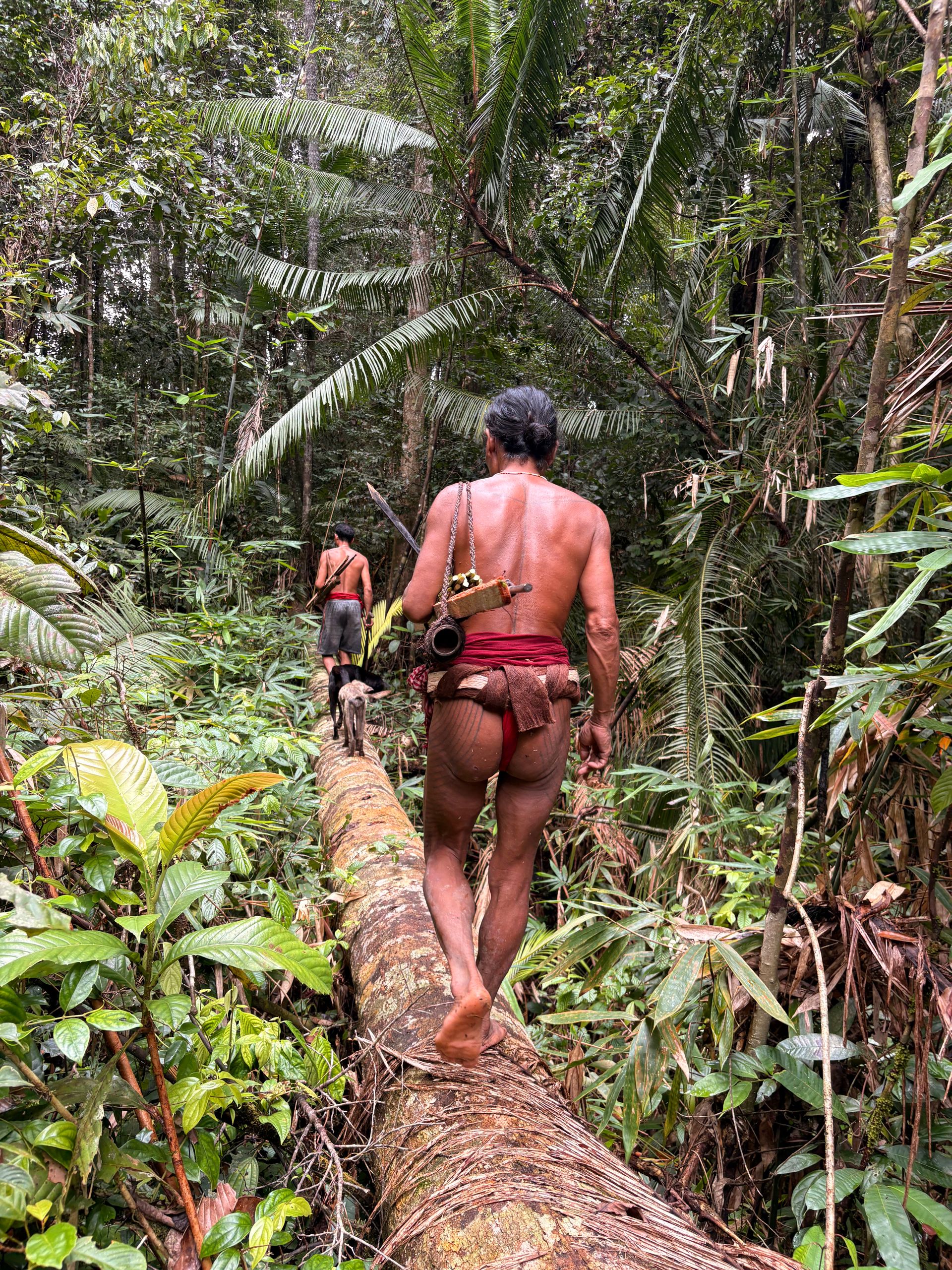
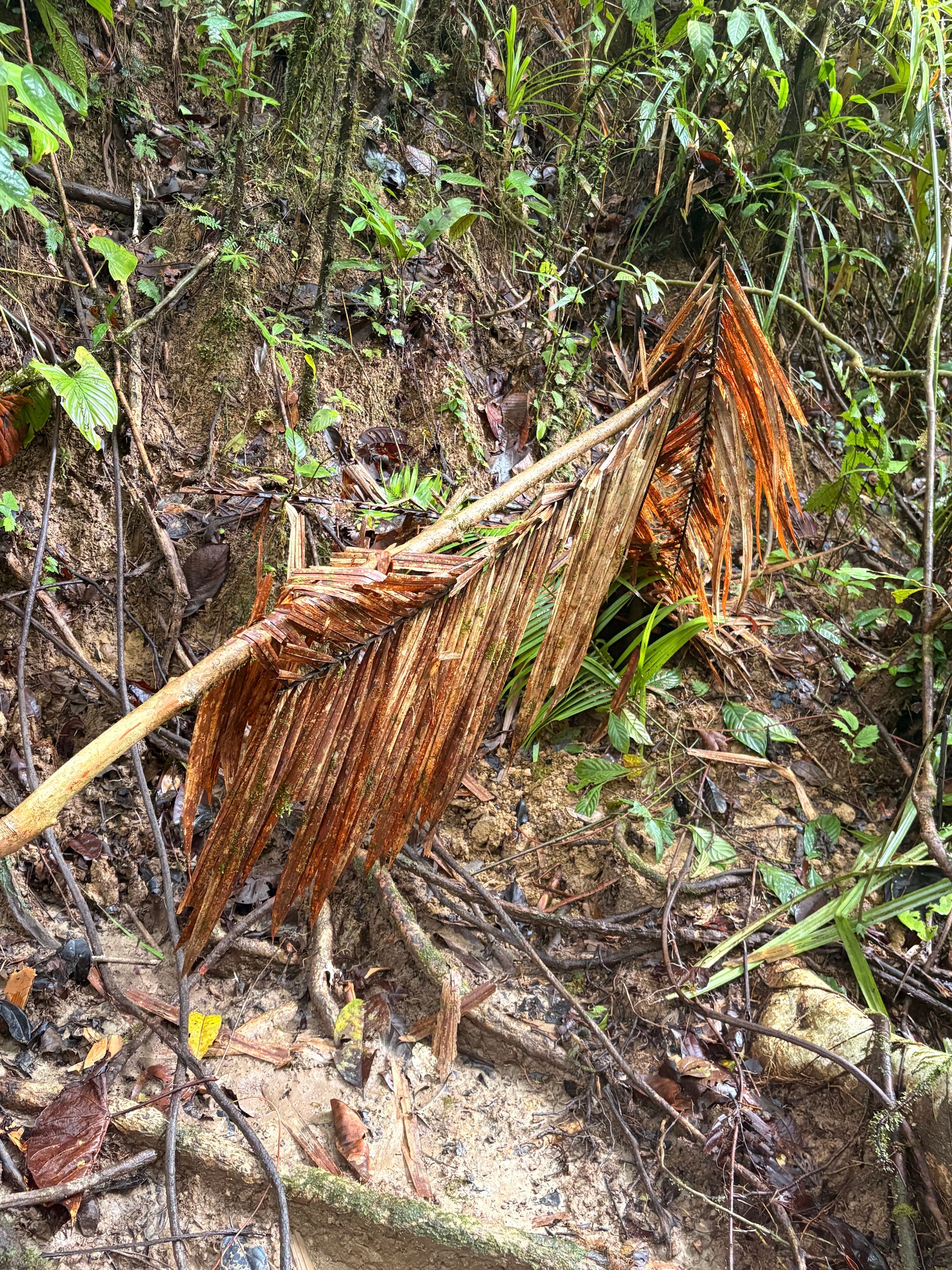
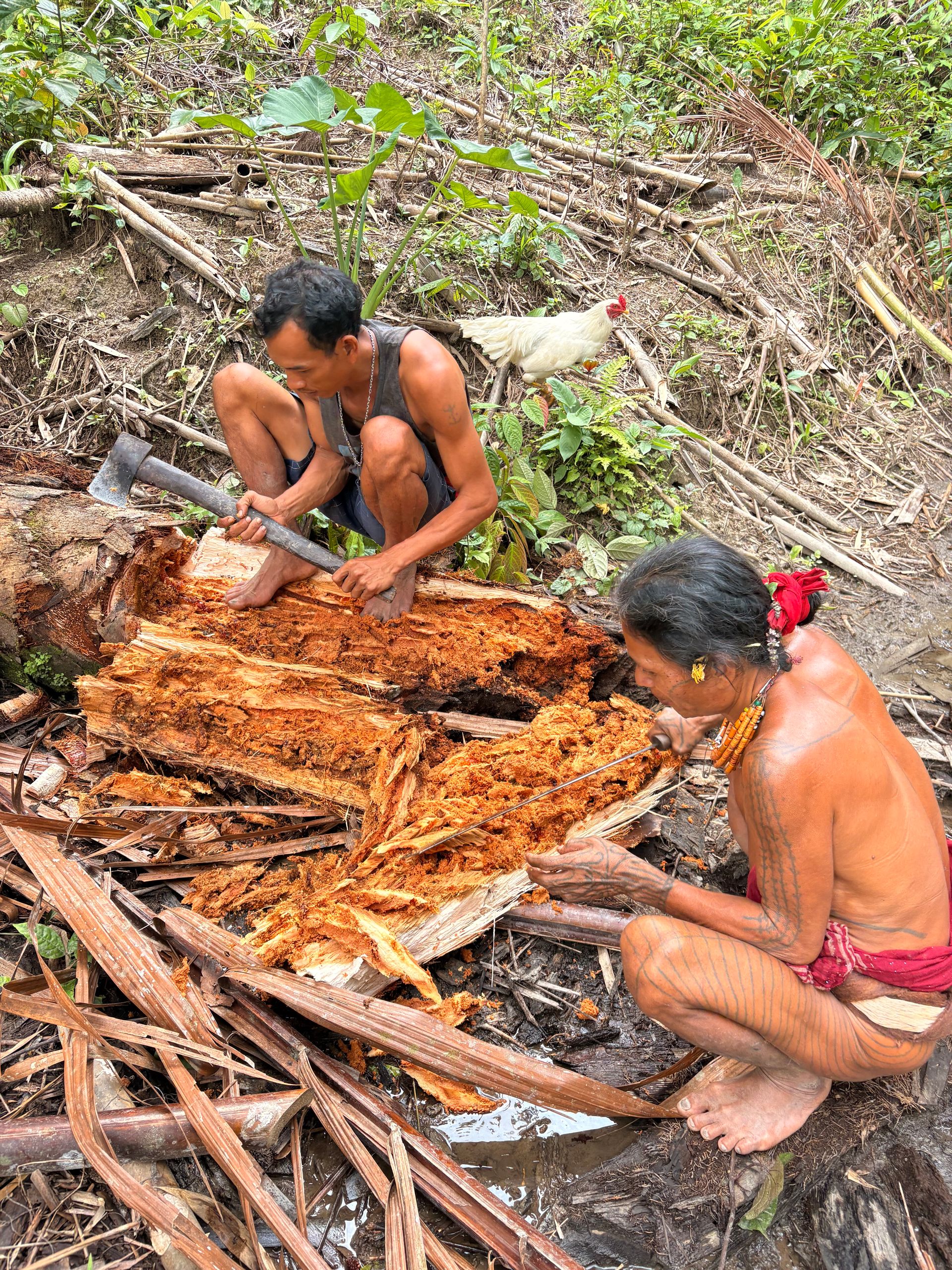
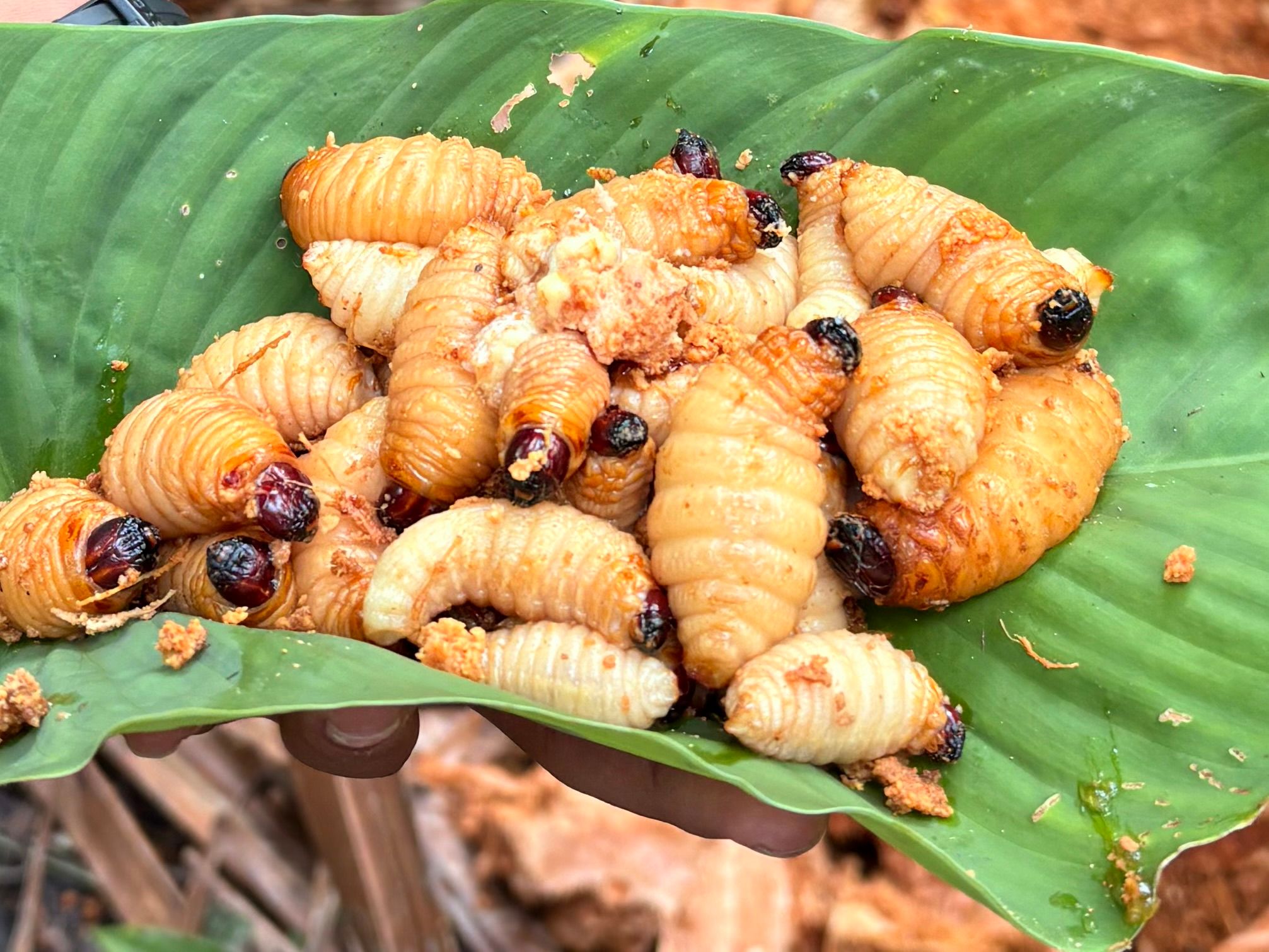
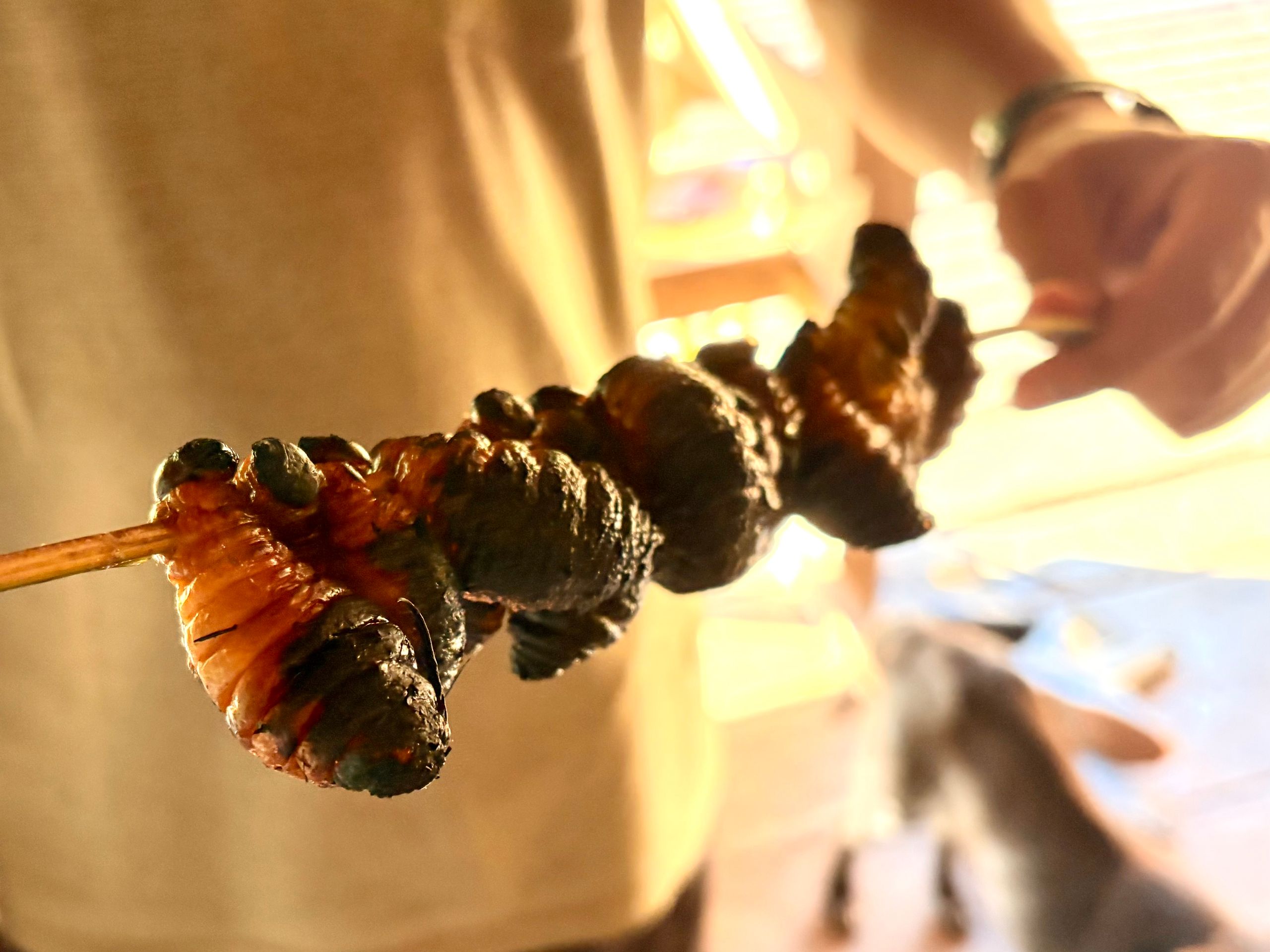
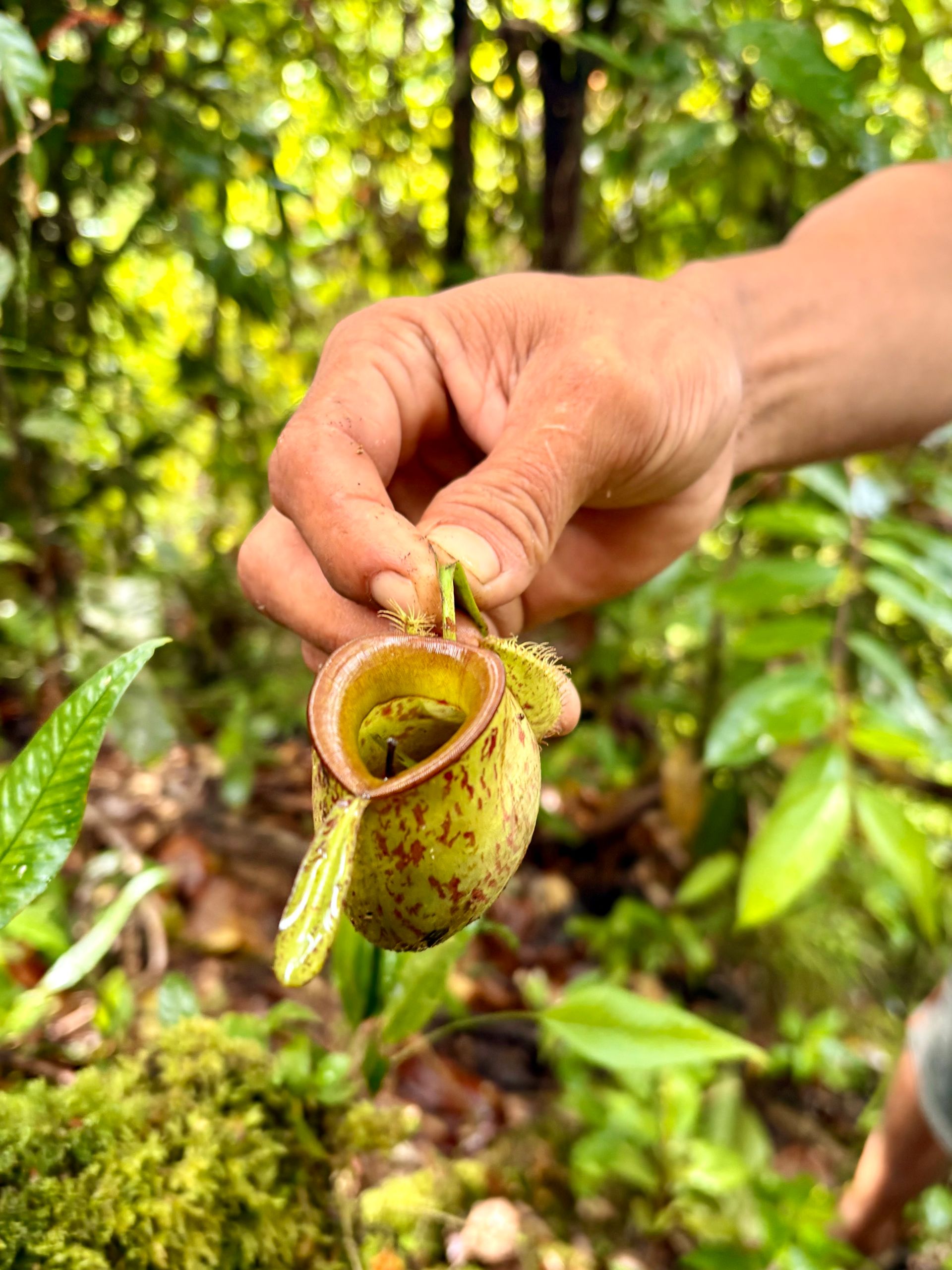
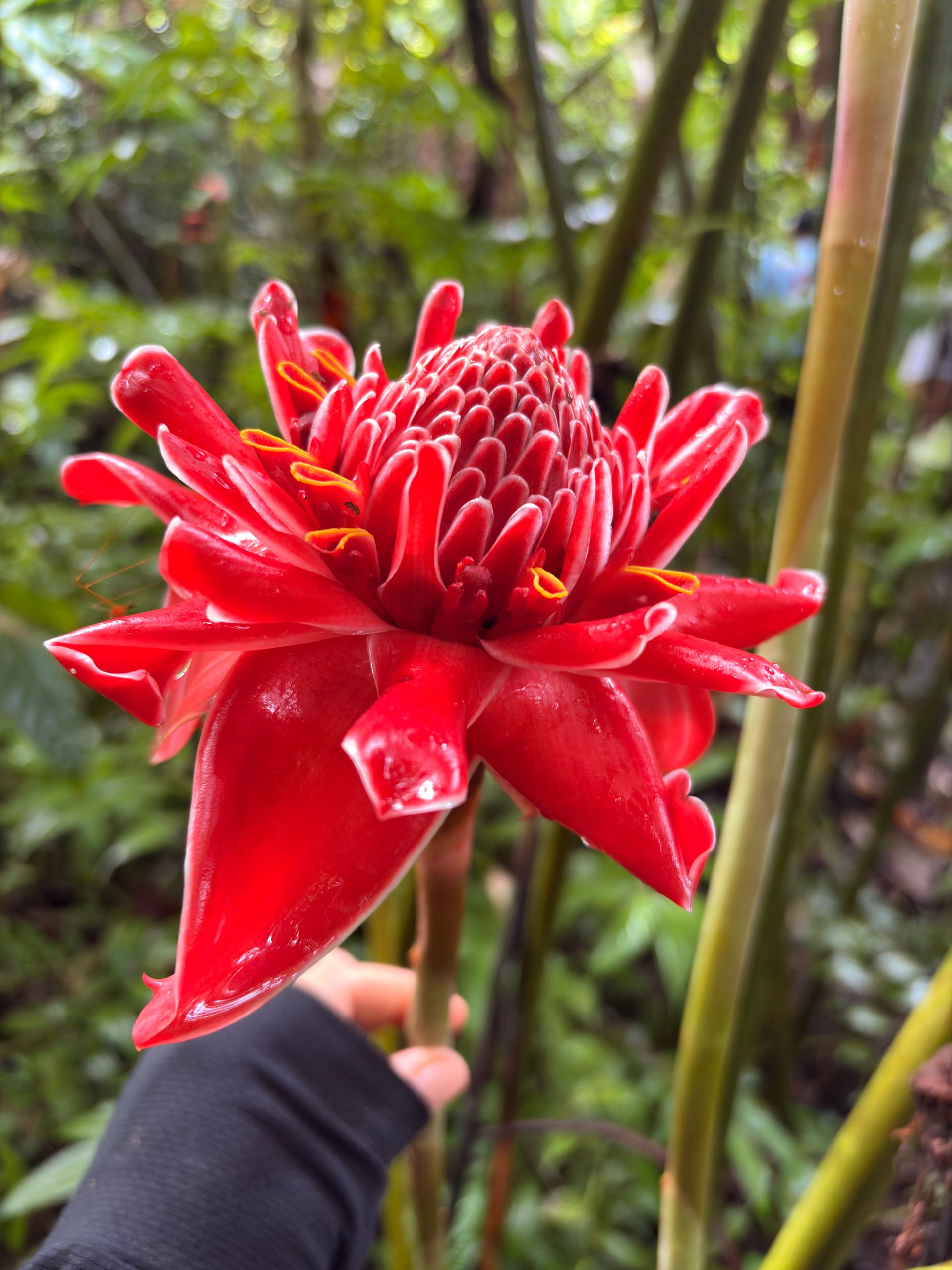
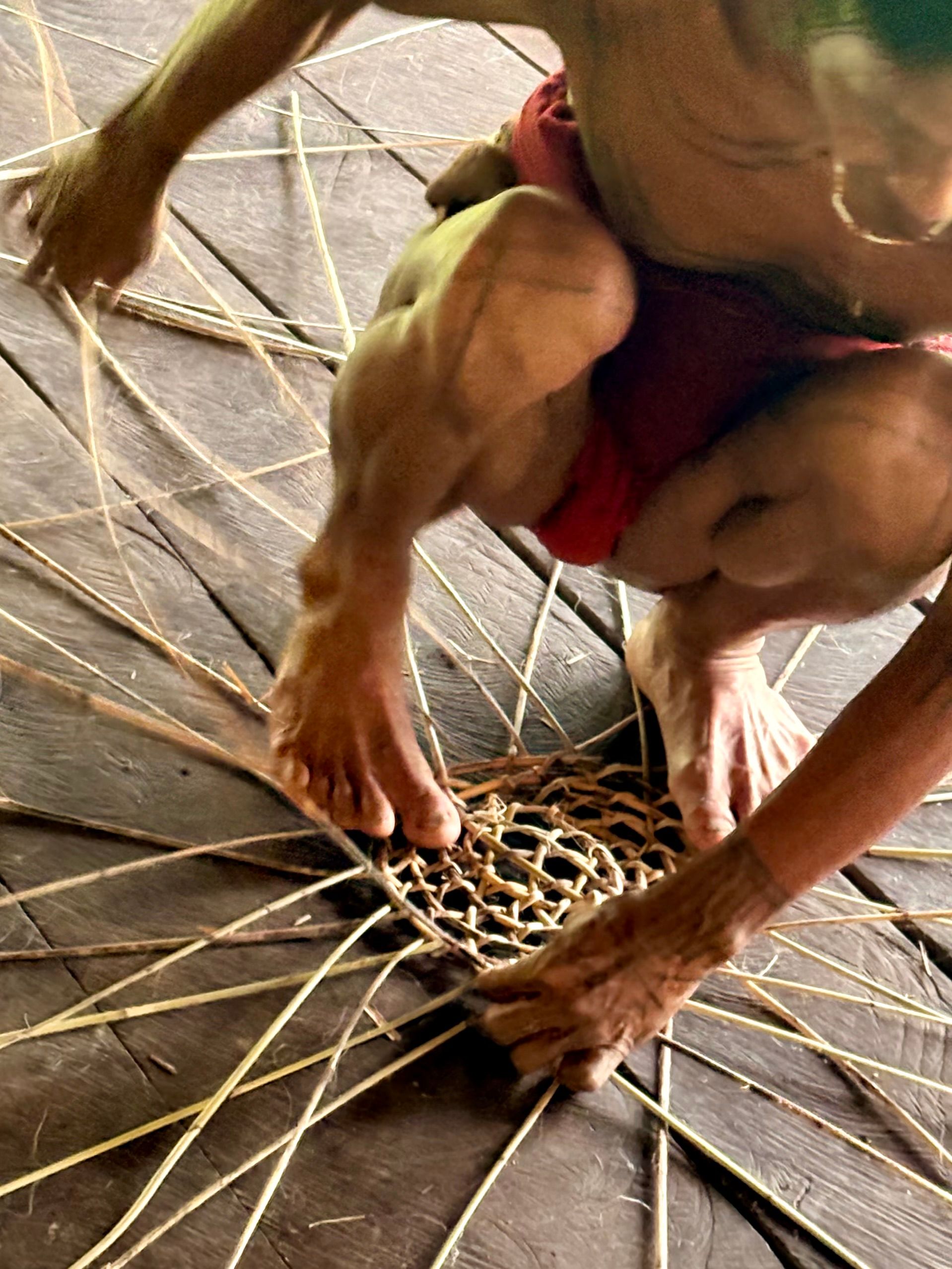
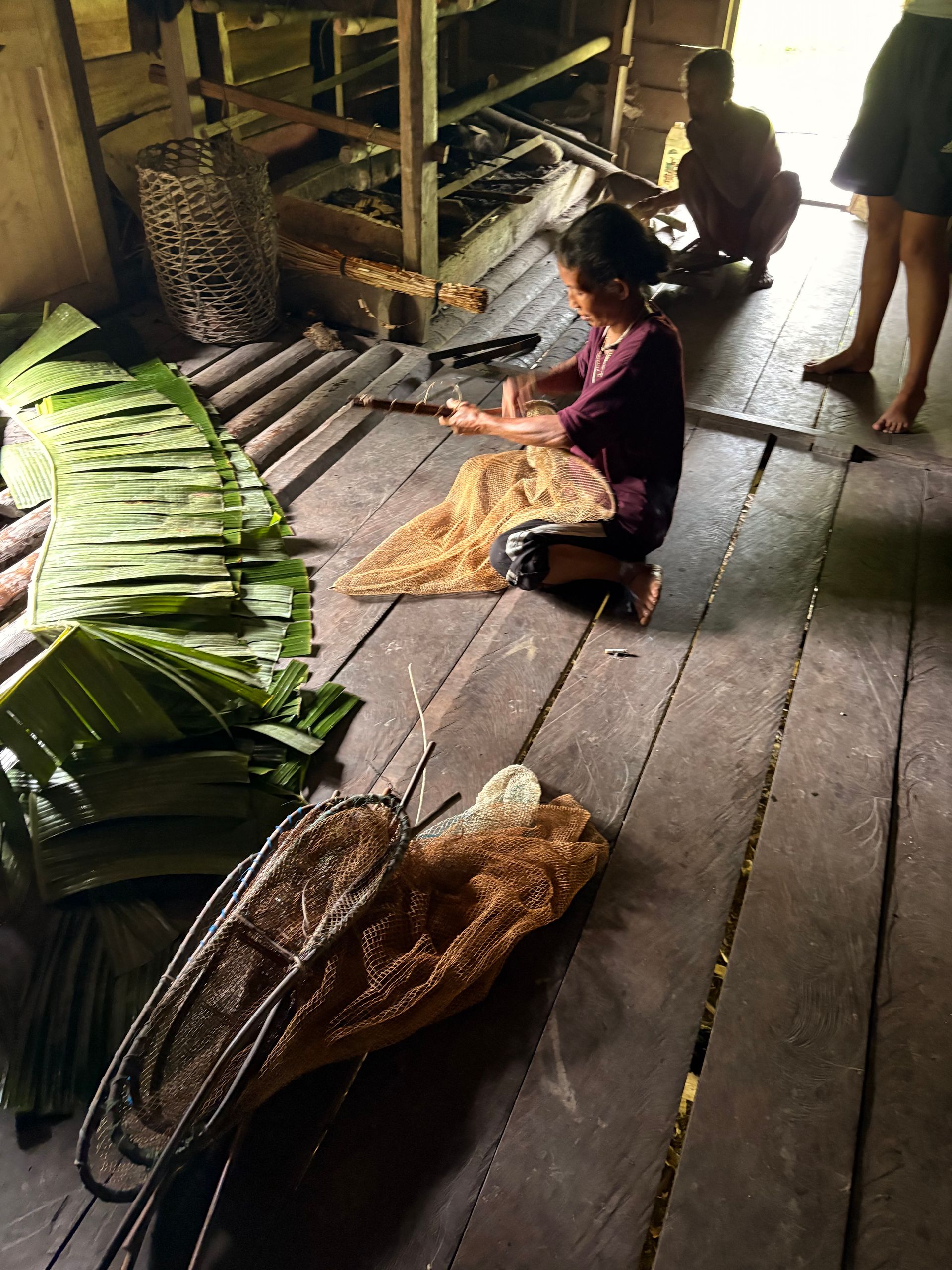
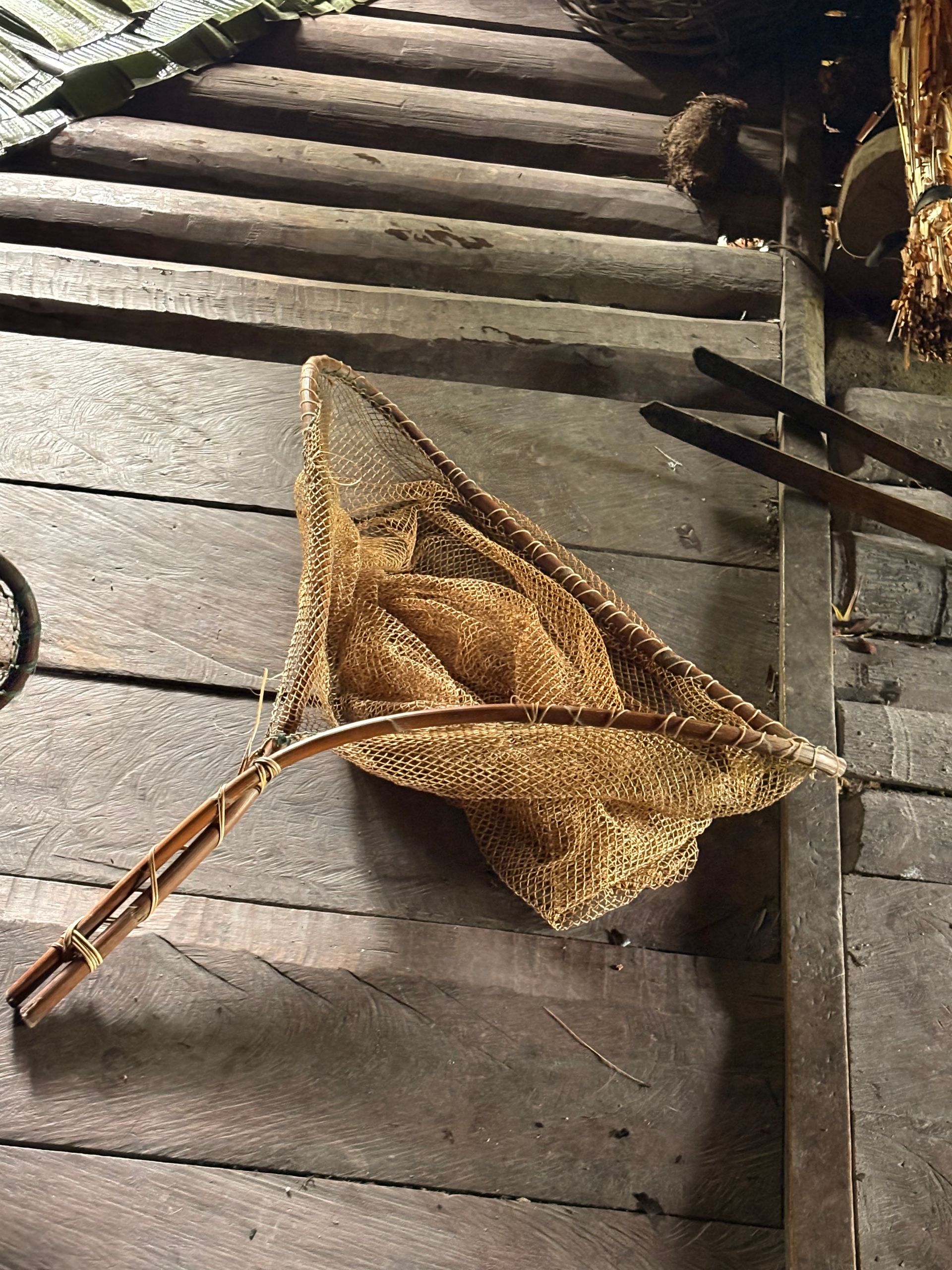
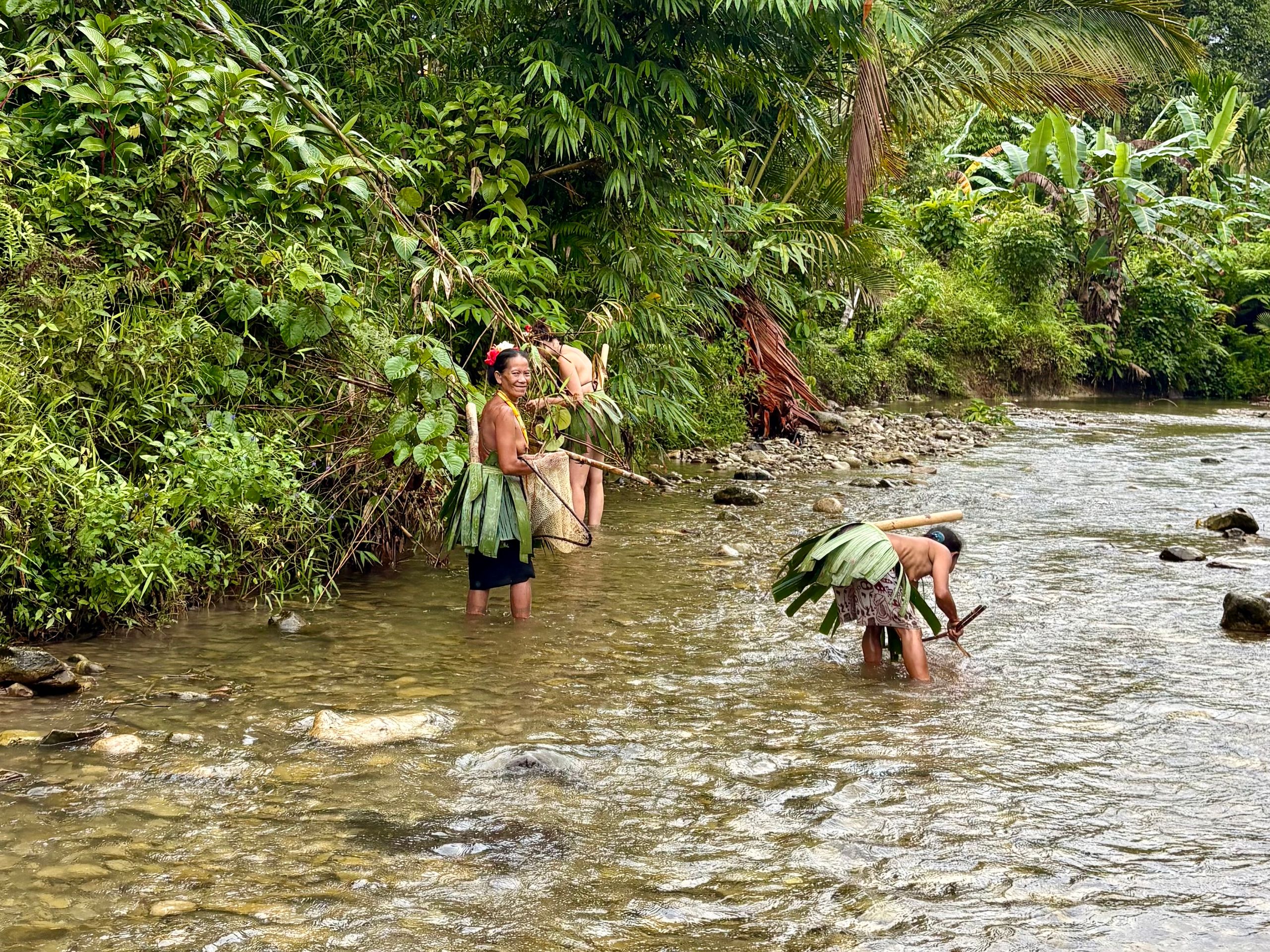
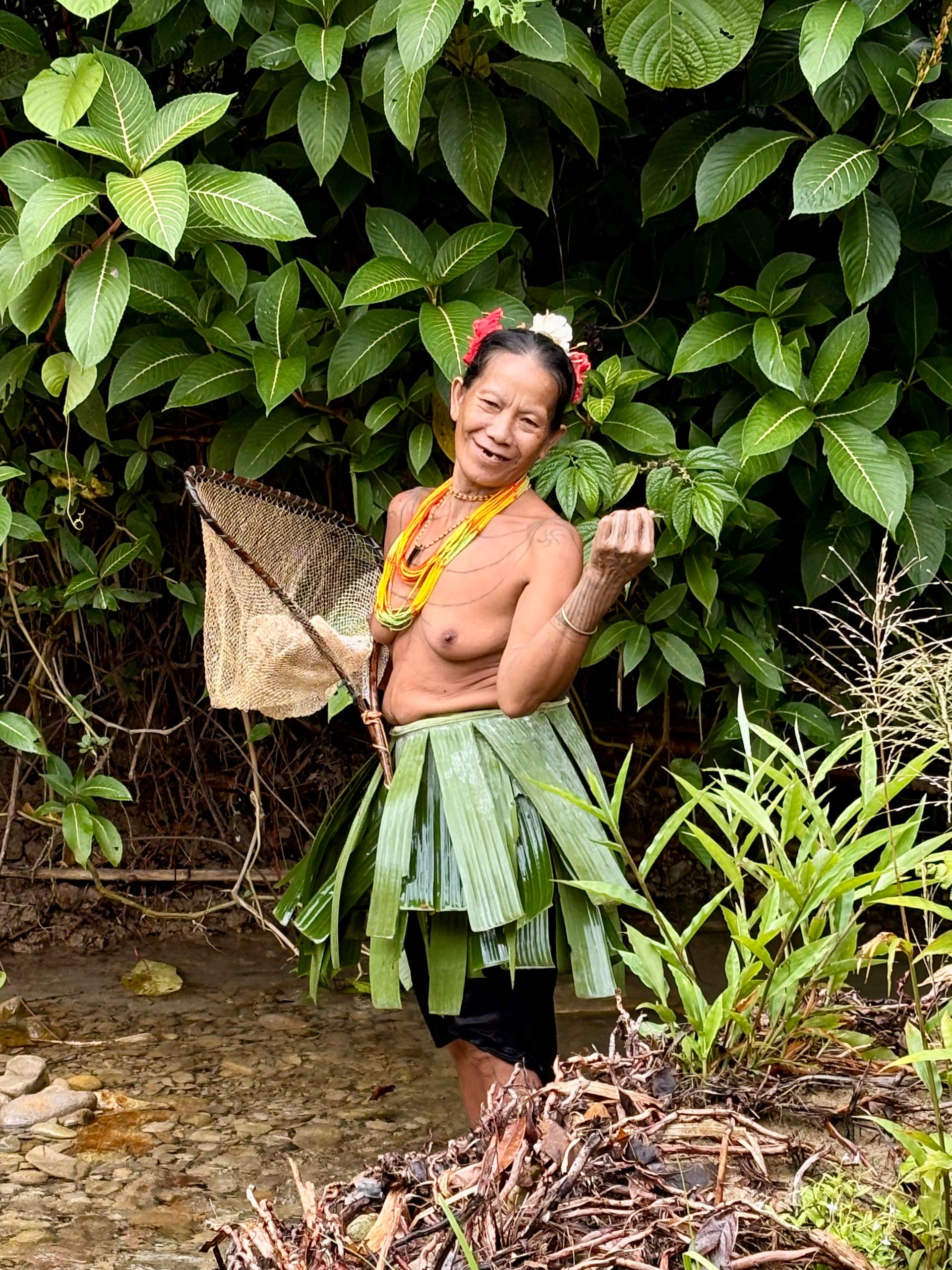
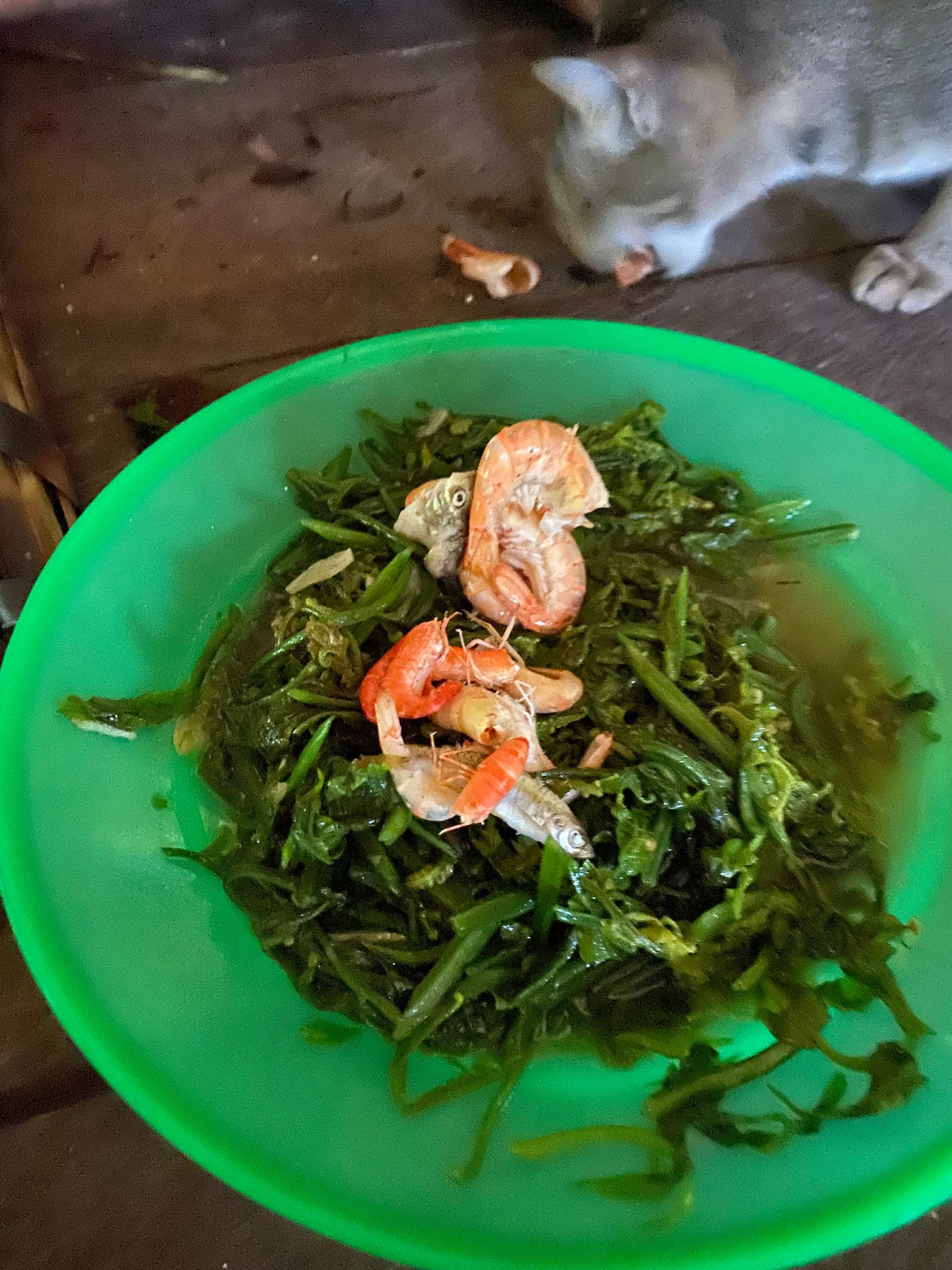
This relaxed socializing is very important for the Mentawai and takes up a lot of time, but of course, there were also things to do. We accompanied Papa and his brother into the jungle several times. While both effortlessly flitted about barefoot, we struggled through the vegetation and mud in our sloshing rubber boots, sweating, drenching, getting caught up in thorns, and balancing on tree trunks to keep up. Papa graciously waited for us repeatedly, while he smoked one or another cigarette. Thus, they searched for wood for traps and skillfully carved and assembled them, checking existing traps along the way. Rattan was cut as we passed. A few times, the dogs picked up the scent of wild boars or monkeys, but hunting did not work out with us clumsy tourists. Thick larvae were pulled out from decaying sago trees lying on the ground. Marike couldn’t bring herself to eat them raw and alive, later tried them roasted over a fire (actually okay, but that creamy consistency… well). At the river, there was also a sago flour production facility used by several families. The wood is chopped finely here, the shavings stored airtight in water for a while, fermented, and then can be processed into dough, which can be wonderfully roasted over the fire (with a little salt it’s quite tasty); the chickens also receive sago flour as feed. The flour can be stored in water for up to a year, and there’s always a reserve in case other food sources run low. When we took breaks, Papa the shaman sang songs to establish a connection with the jungle. With the women of the family, we went fishing with small nets (the only male tourist had to stay home). Quite a demanding task; we had to wade barefoot through the river, turn over stones, and catch the startled shrimps, tossing them into a bamboo pouch; with some luck, we also caught a little fish. In the end, it was a rather meager catch, but it was served for dinner. The food was very tasty, and luckily we had our cook with us, who cooked well according to Indonesian standards. As typical Mentawai food, there was some monkey meat (not hunted by us, but a neighbor had brought it over), wild boar, the aforementioned sago worms, and bread, along with some vegetables gathered in the jungle. Even for meals, some people would suddenly appear out of nowhere to eat our leftovers. It took us a few days to realize that the Mentawai probably had much less food available, and everyone was pleased that there was a bit more this time.
Thus, the days drifted on; it was very nice, even though one didn’t always understand everything and sometimes felt a little out of place. It was partly very exhausting, but it was also wonderful to feel how adaptable one can be and to learn quickly. After hardly getting any sleep the first night on the hard wooden floor, which vibrated because the flea-infested dogs had to scratch themselves incessantly, one ended up sleeping wonderfully through the nights. The bathroom trips, an initially scary and exciting adventure, fully dressed, armed with rubber boots and disinfectant wipes, became no problem — at some point, it was just barefoot behind the trees, and leaves made for pretty good toilet paper anyway. While initially embarrassed when trying to wash at the river, presuming a bit of privacy, only to suddenly have a horde of strange men in canoes and loincloths rush by, one eventually didn’t care at all. While one panicked at first searching for leeches and other critters, later one simply scratched and smudged the blood without looking closely. It was difficult at first not to lose balance on the wet and humid tree trunks or the muddy paths, and there was a constant fear of falling, but one grew self-assured and skillful over time, even barefoot near the hut. The feet, previously hurting from stones and thorny plants, became increasingly less sensitive. And even though we didn’t actively participate much, but rather just observed what was happening — one felt that it was possible to learn these things, even as a spoiled Western couch potato. Whether one wants to is a different matter, and some inventions like the toothbrush and other conveniences definitely have their place.
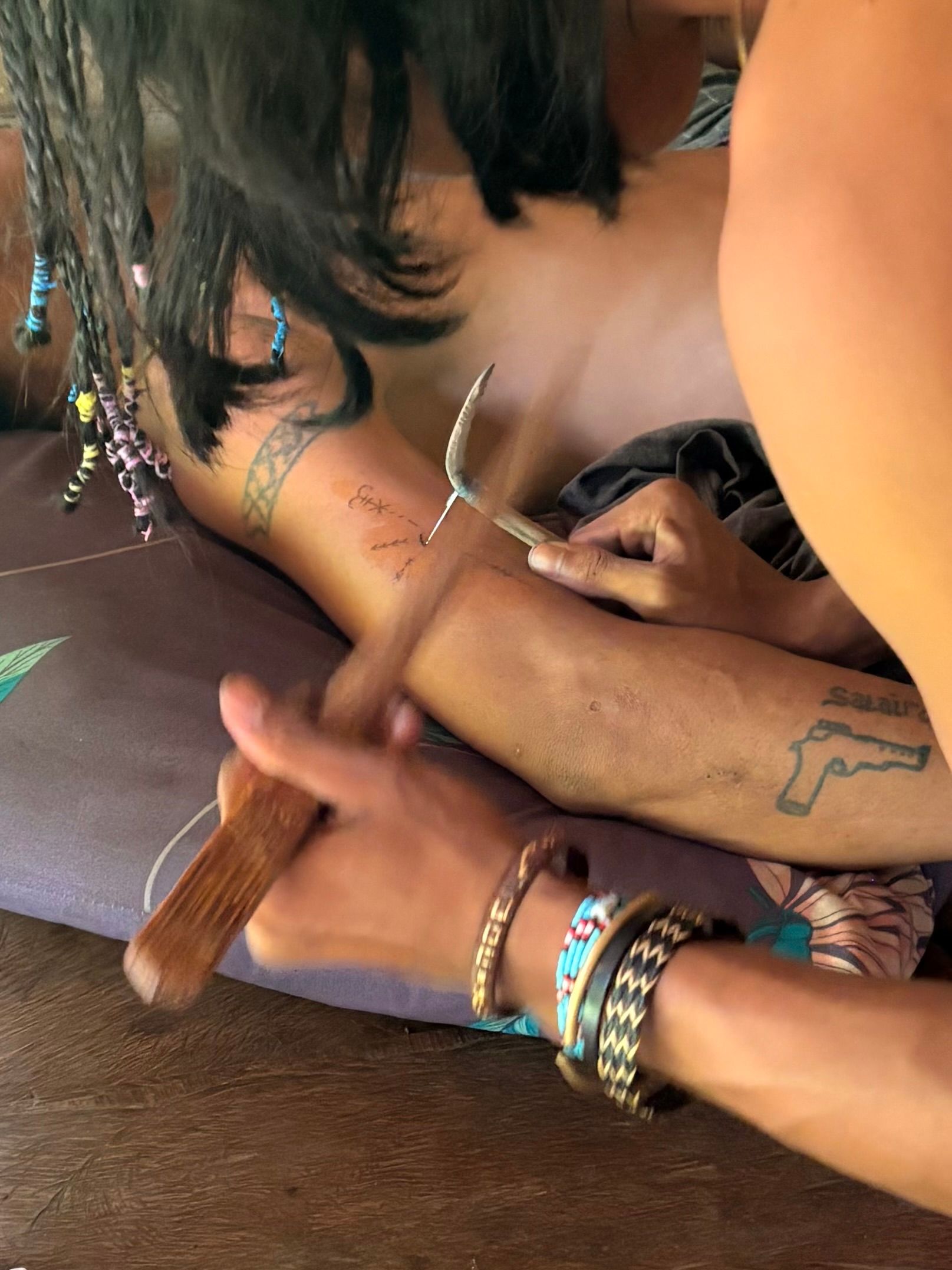
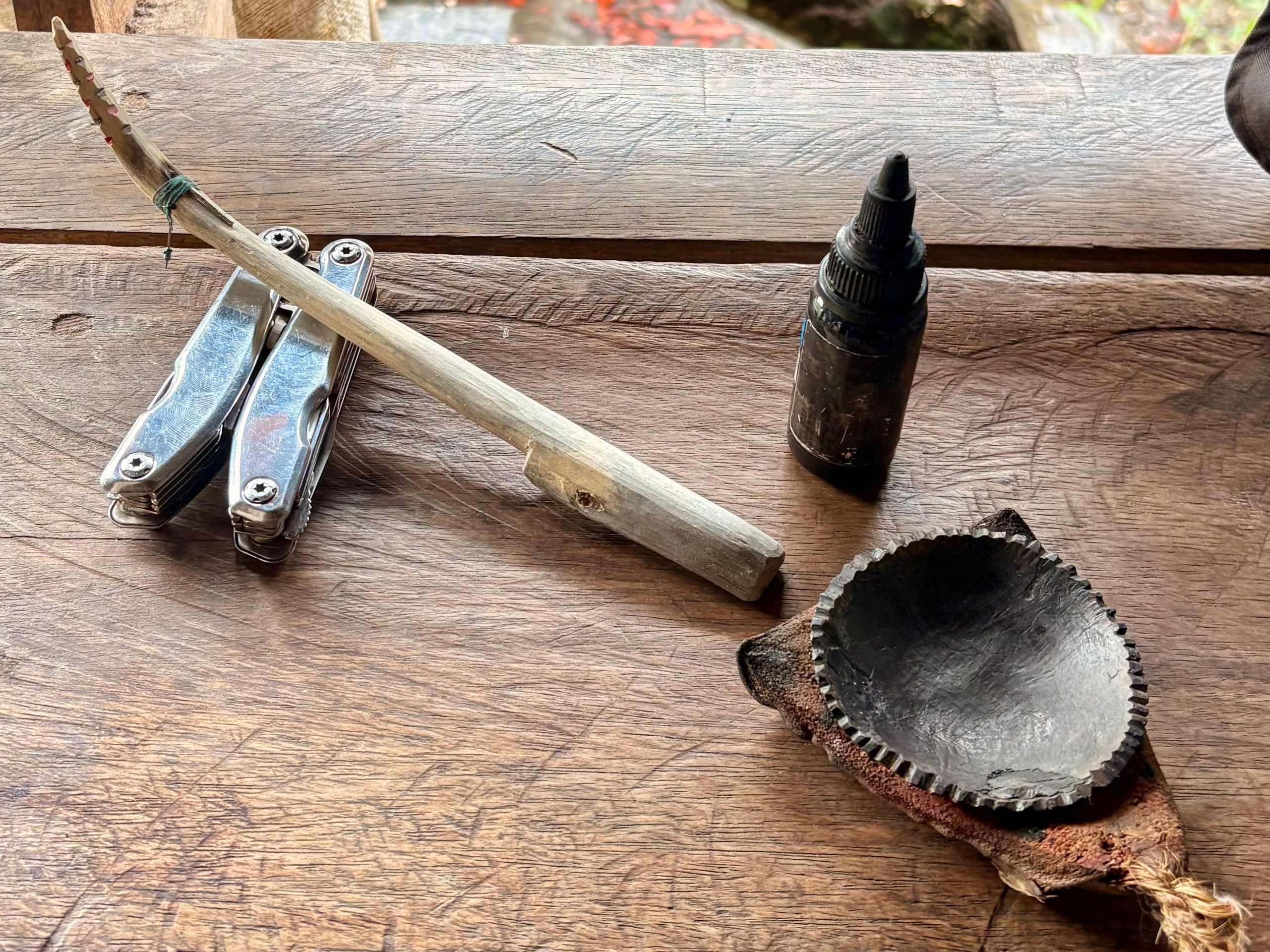
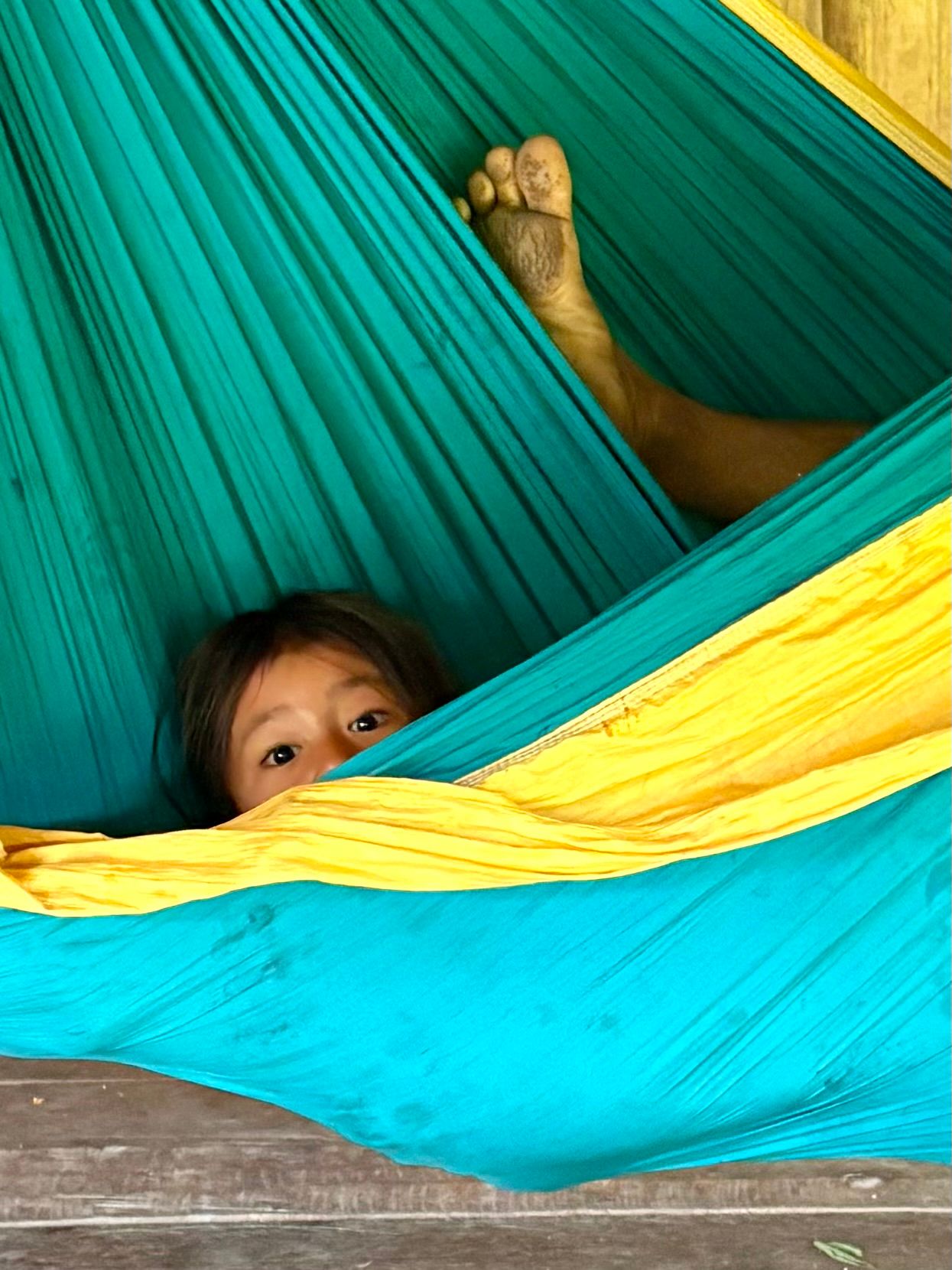
On the penultimate day, the local tattoo artist came by and gave the two other girls in our group a traditional tattoo on our terrace, and since a fresh needle was already unpacked, some boys tattooed each other as well. Marike preferred to watch, drank coffee, and played with Nora, one of the brother's daughters. After the farewell on the last day, we no longer took a canoe but hiked for about 1.5 hours through mud, rivers, uphill and downhill to the spot where the jeep had dropped us off a few days earlier. Quite exhausting again, and then we learned that this was the regular school route for Nora, who walked this way back and forth every day at her 7 years of age.
It was truly wonderful to meet this Mentawai family and their surroundings, who are very open-minded to outsiders but still hold on to their traditions. Very authentic; apart from the banana skirt we wore for fishing, probably nothing was done just for the sake of us tourists. And yet, they seem to have understood that their children have more opportunities in life if they enjoy education, keeping the door open for training and a life outside of this world. An incredible experience and one of the most formative events for Marike, and it is truly a shame that Freddy could not be there (even though the decision was right, one had to be in full possession of one’s physical strength). Another reason to return to Sumatra someday.
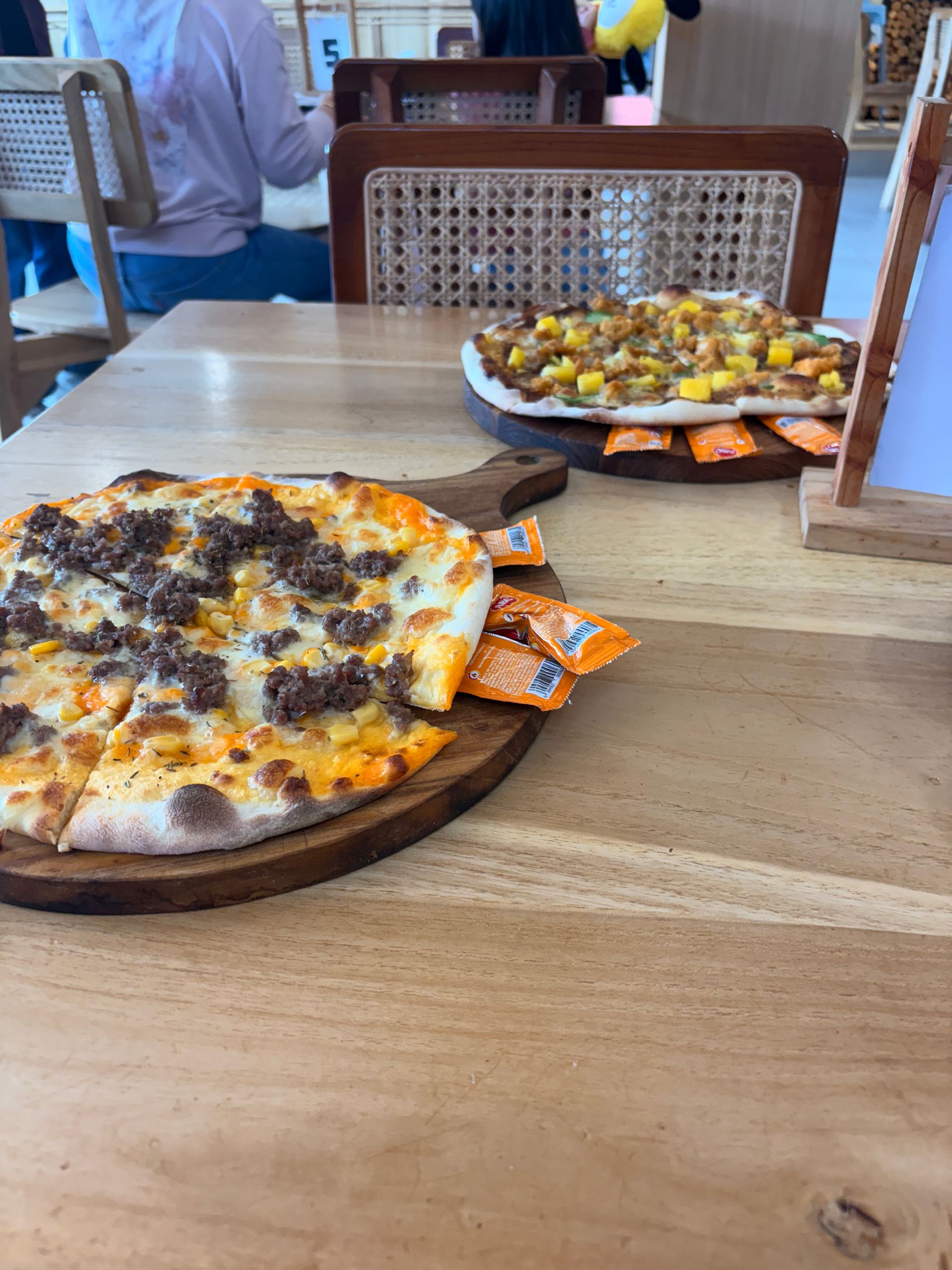
After 5 long days without any contact, we were reunited as a pair and very happy about it. After a hot shower, treating flea bites and scratches, and fresh clothes, we first indulged in pizza and a beer - and then slept in a soft bed!