
Schopenhauer in Frankfurt/M.
When Schopenhauer calls, I must absolutely come. Unfortunately, there is no appropriate recognition of the outstanding philosopher Arthur Schopenhauer anywhere in Germany, no...
Published: 19.06.2026
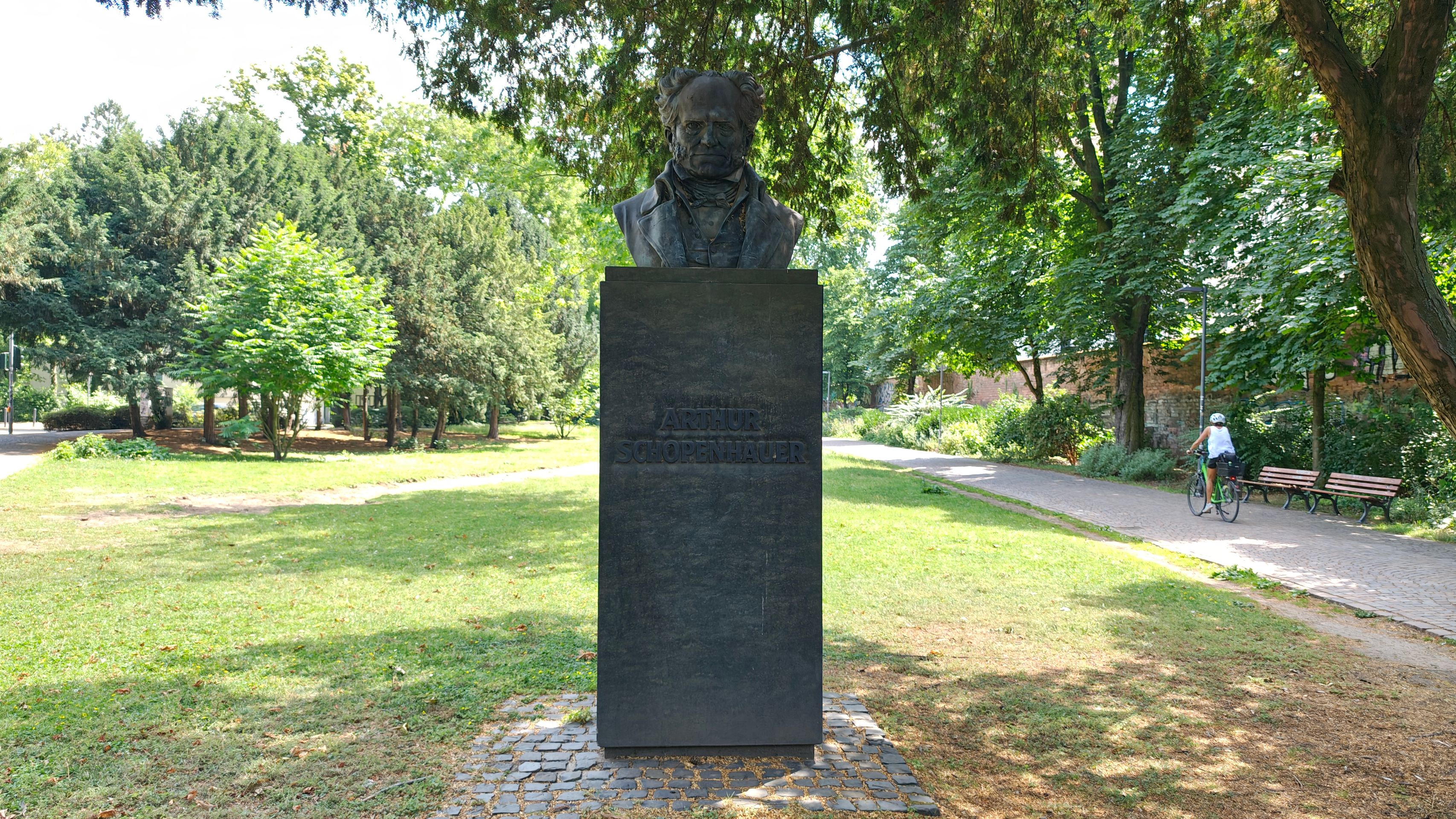
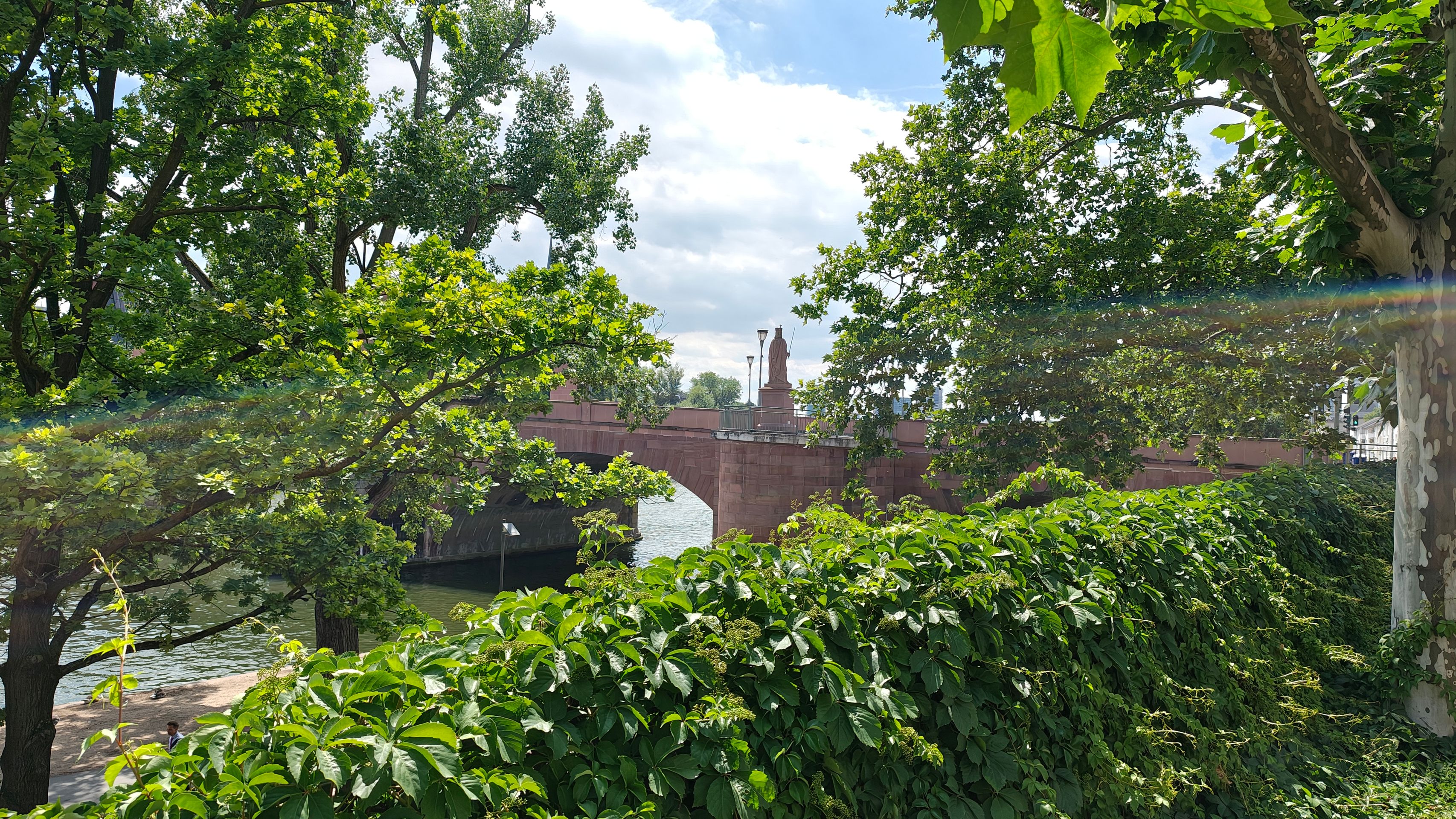
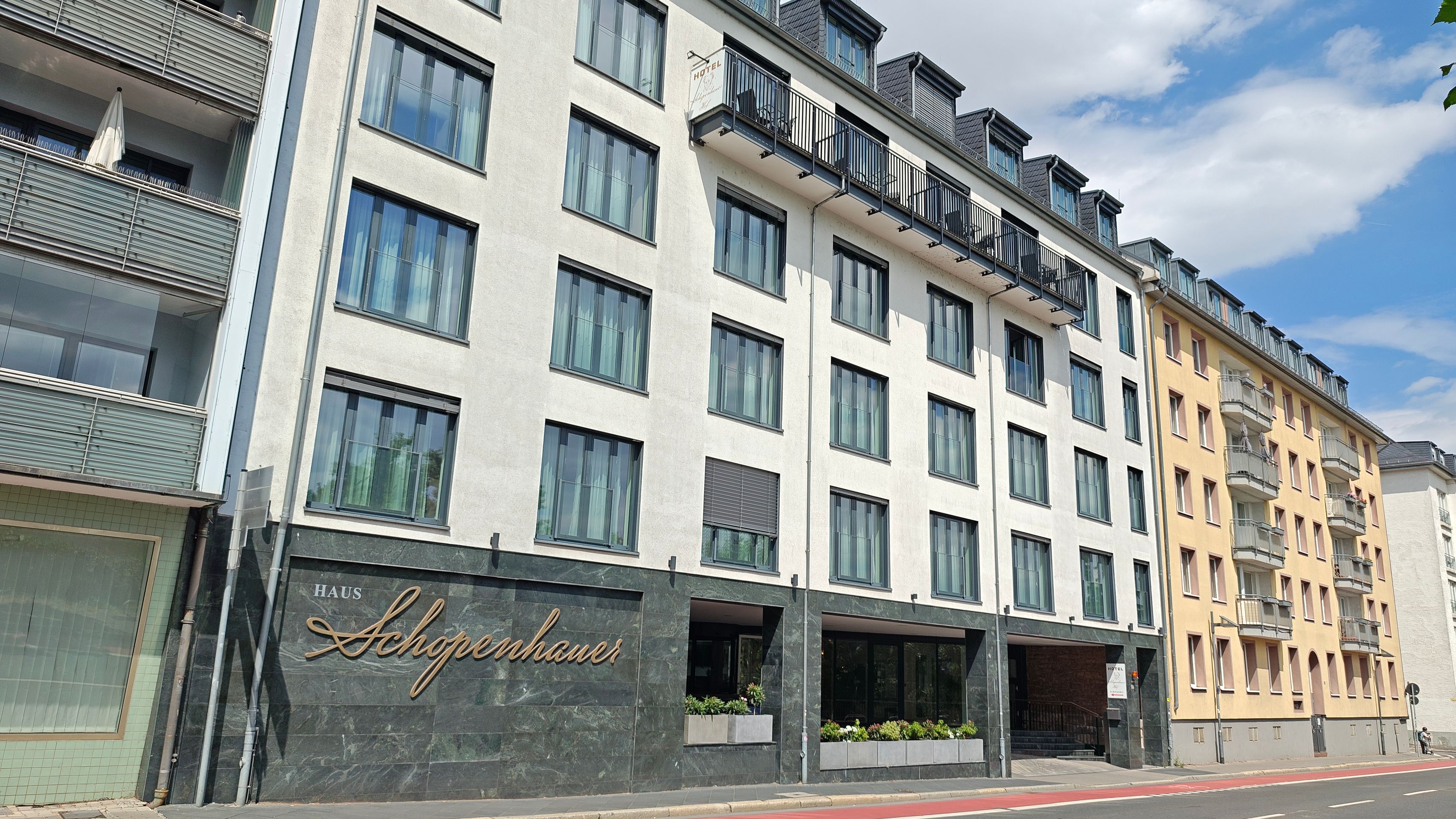
After visiting Goethe's birthplace and the small Schopenhauer exhibition (Schopenhauer in Frankfurt/M.), we take the tram to Obermainanlage and stroll past the park at Rechneigrabenweiher to the Schopenhauer monument, a bust of the philosopher on a pedestal. With the many graffiti scribbles in the park, even on the playground, benches, and trash cans, one must almost be grateful that the monument has not been defaced. Then we walk along the Main River to the last Schopenhauer memorial: his long-time residence on 'Schöne Aussicht' street, which offers a direct view of the Main and the 'Old Bridge'. When I used to live in Frankfurt, there was only a building gap and a 1950s new construction at this spot, as the house was, like so many others in Frankfurt, destroyed on March 22, 1944, during a British bombing raid. Today, a chic hotel named 'Haus Schopenhauer' stands at this location, a lovely tribute, in my opinion.
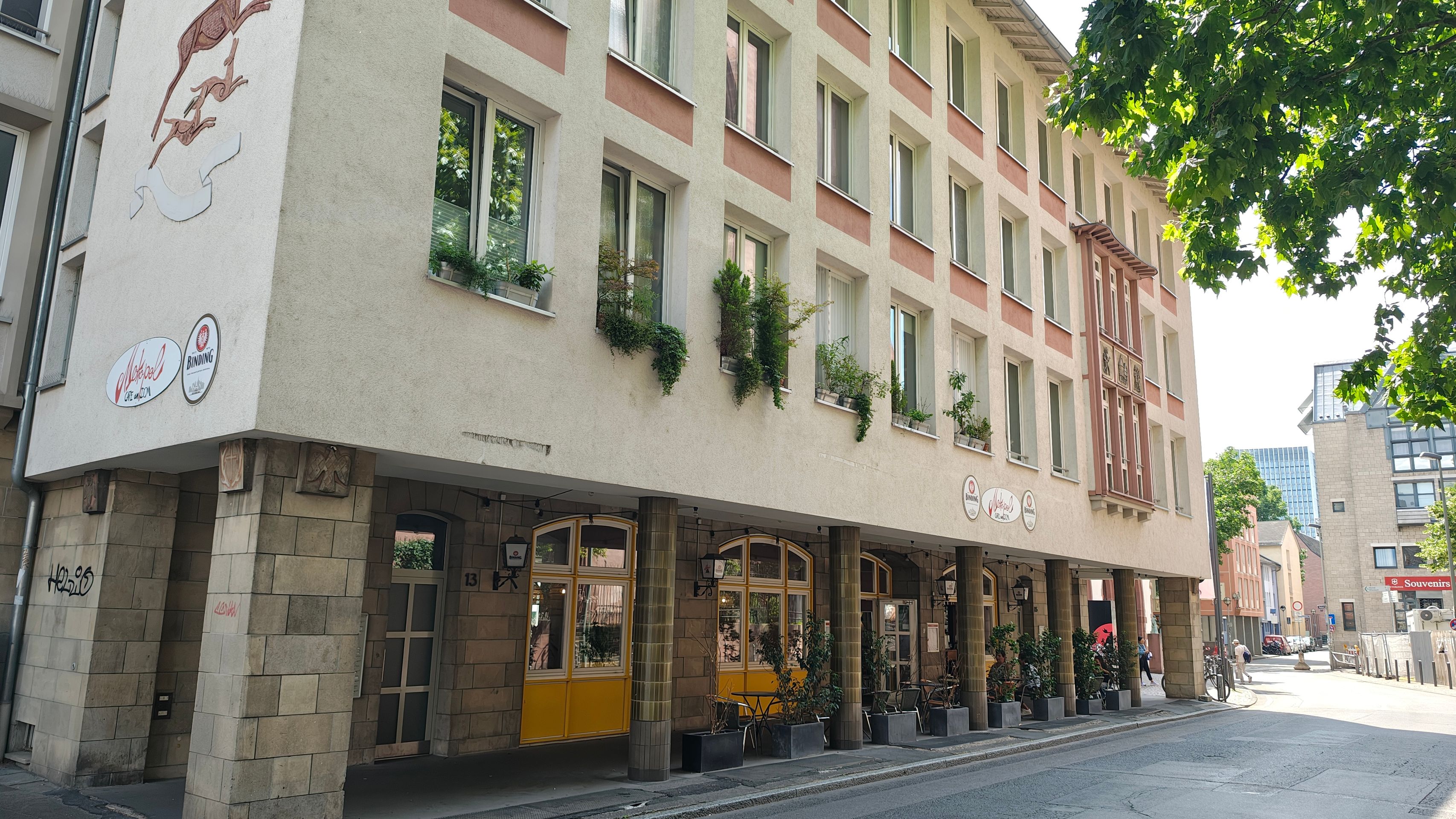
Now that we have visited all Schopenhauer-related places, we stroll past my old regular café 'Metropol' on our way to the cathedral. I spent many hours in this café over 20 years ago, with a giant mug of grain coffee (I used to have a hard time tolerating bean coffee), reading, chatting with friends, or just observing the illustrious guests.
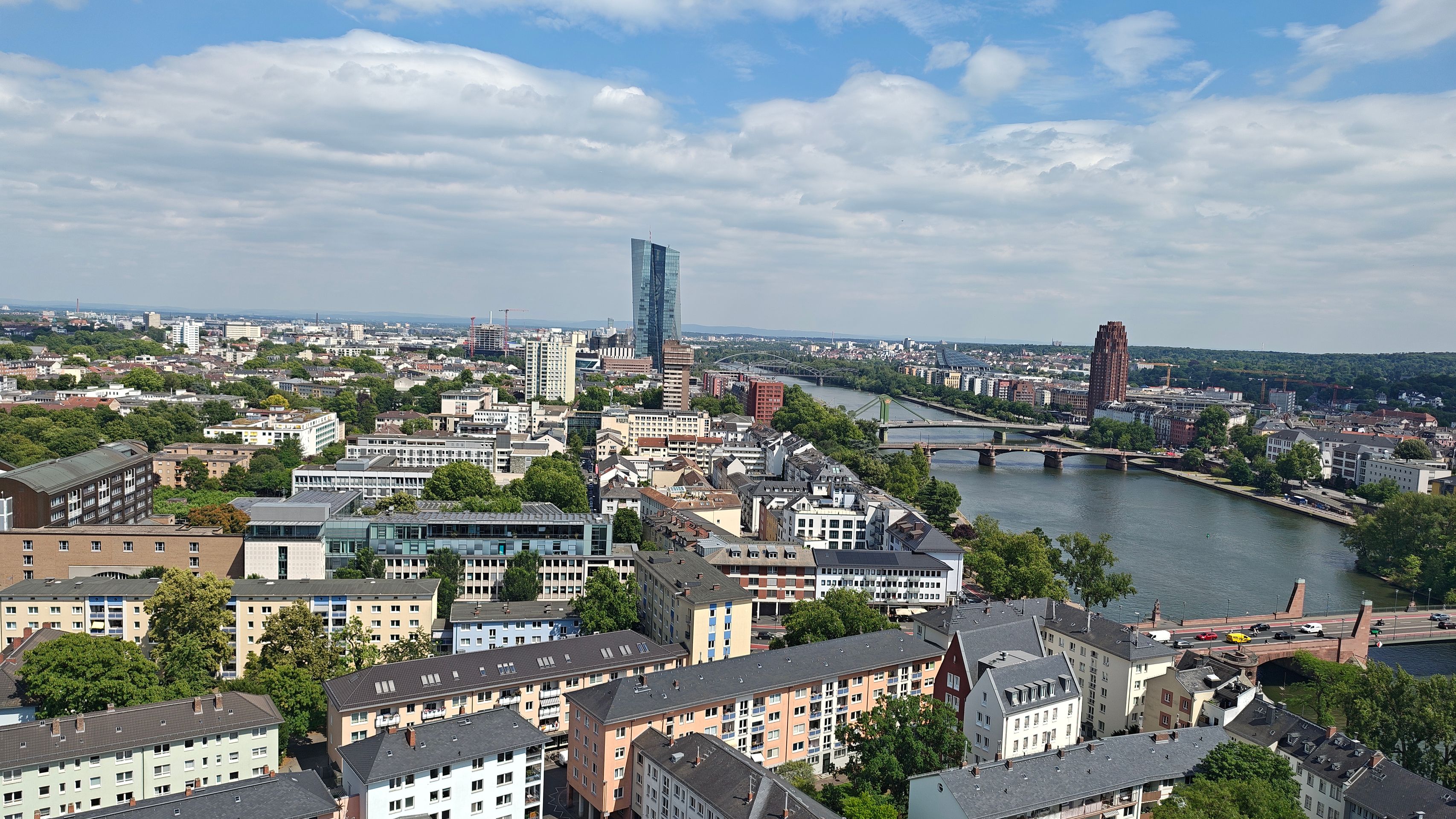
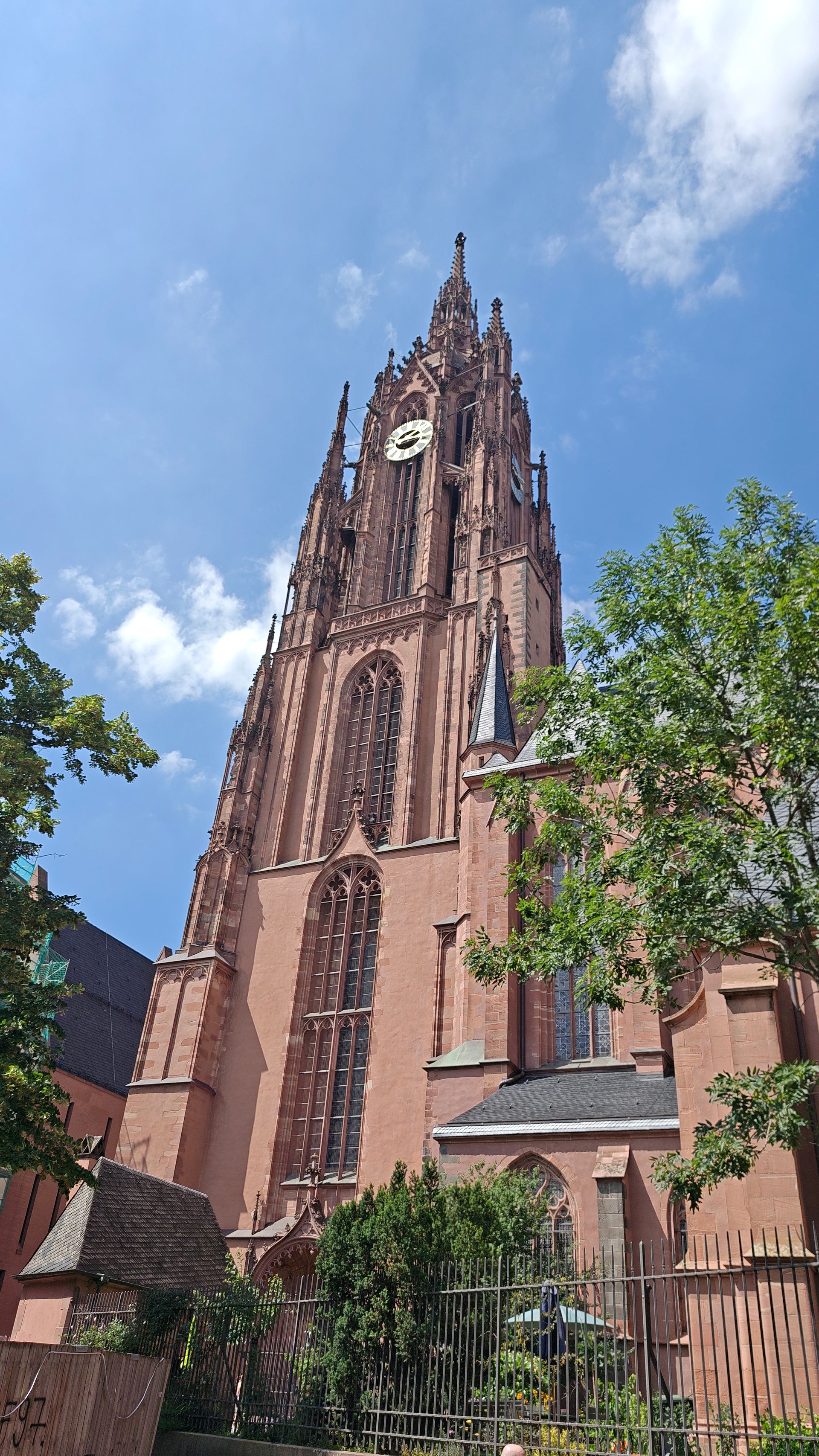
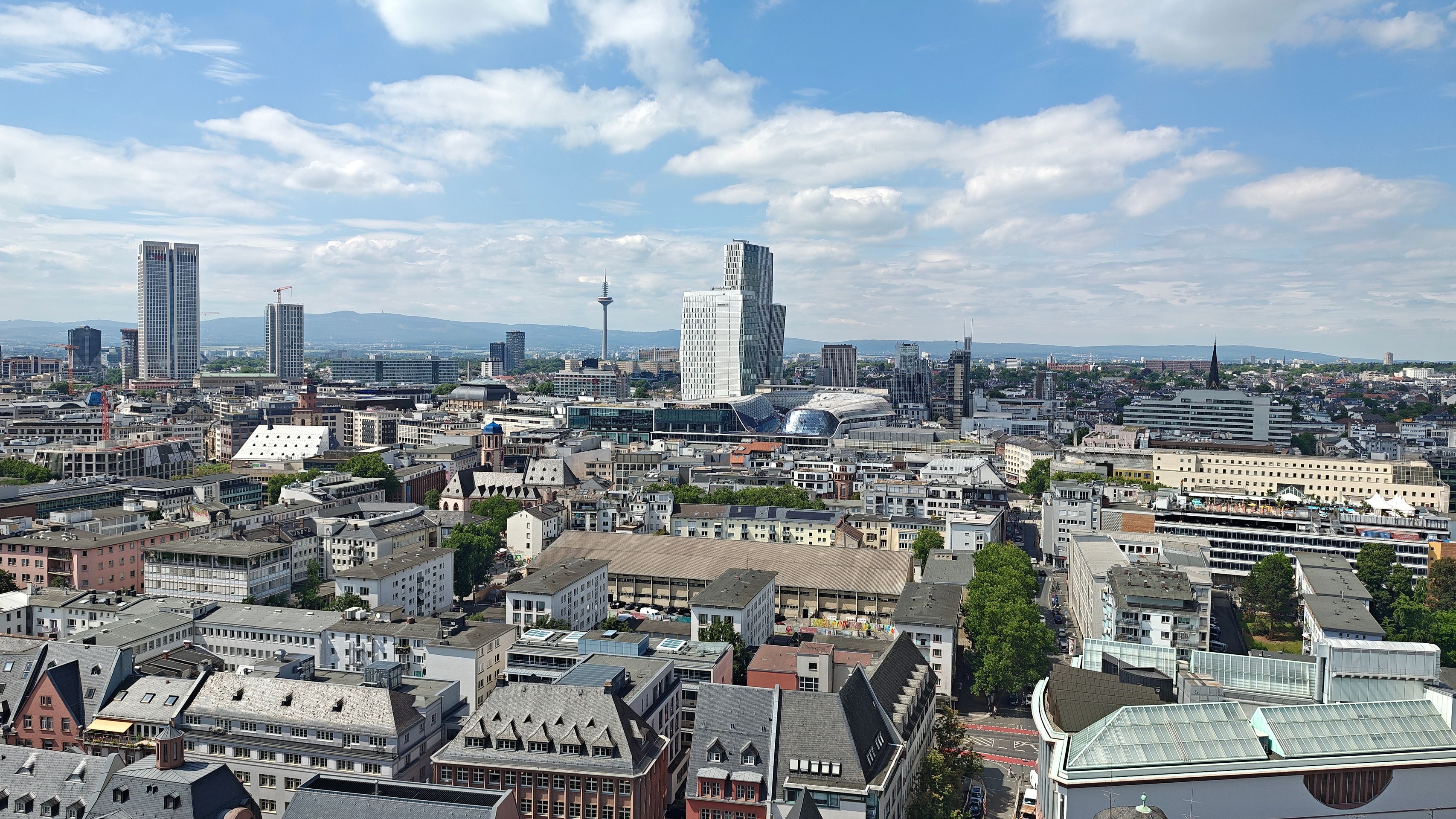
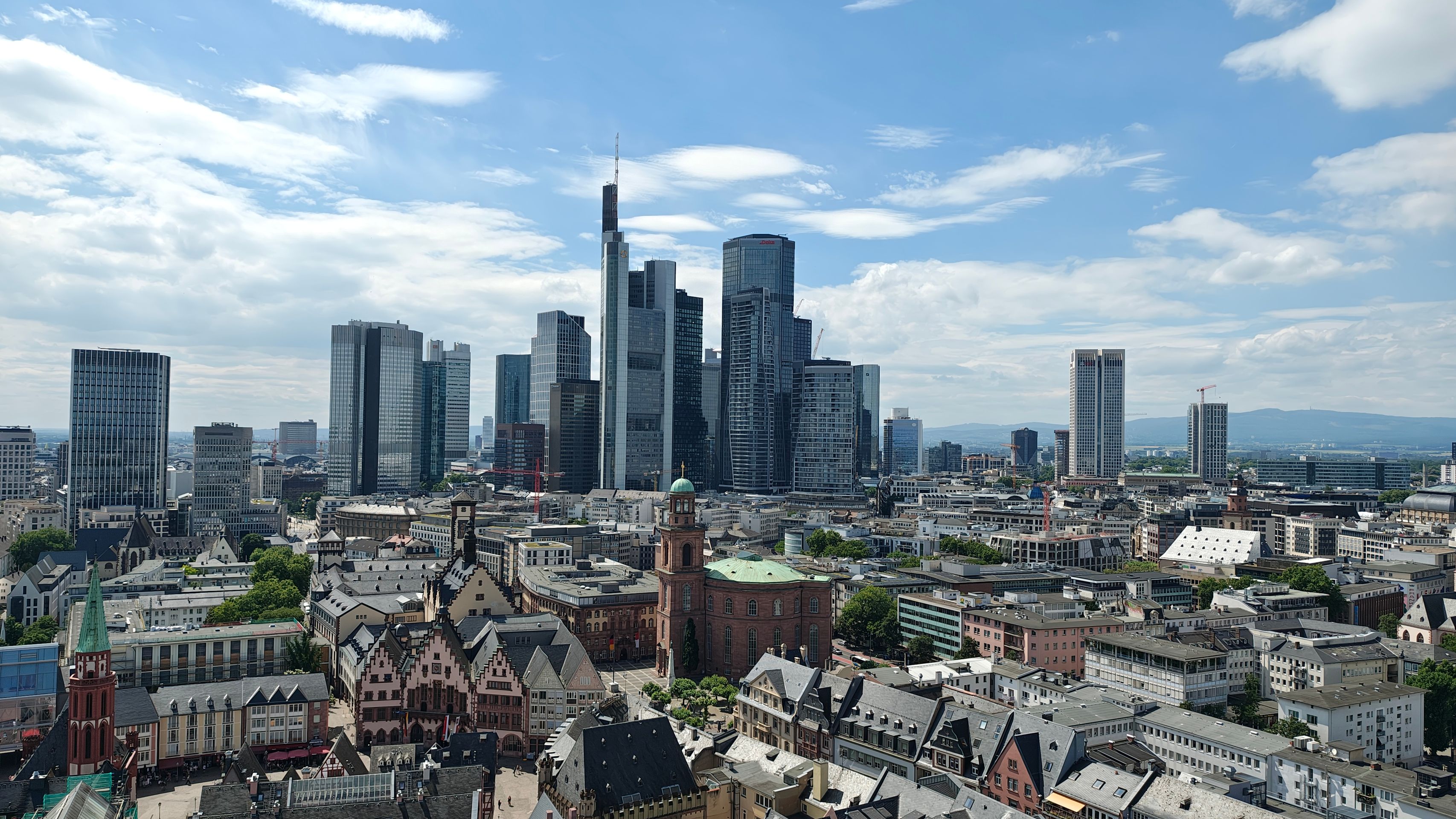
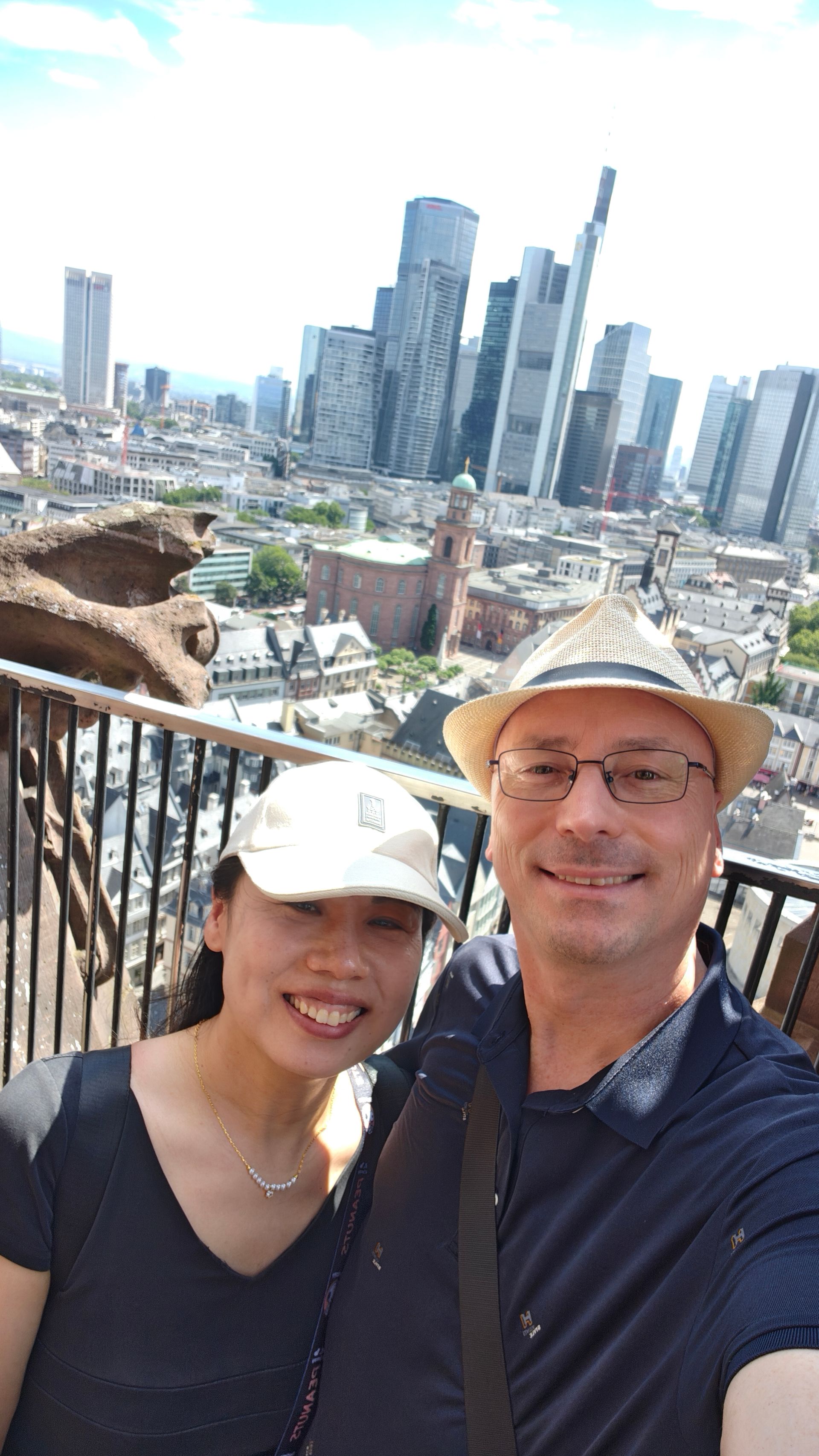
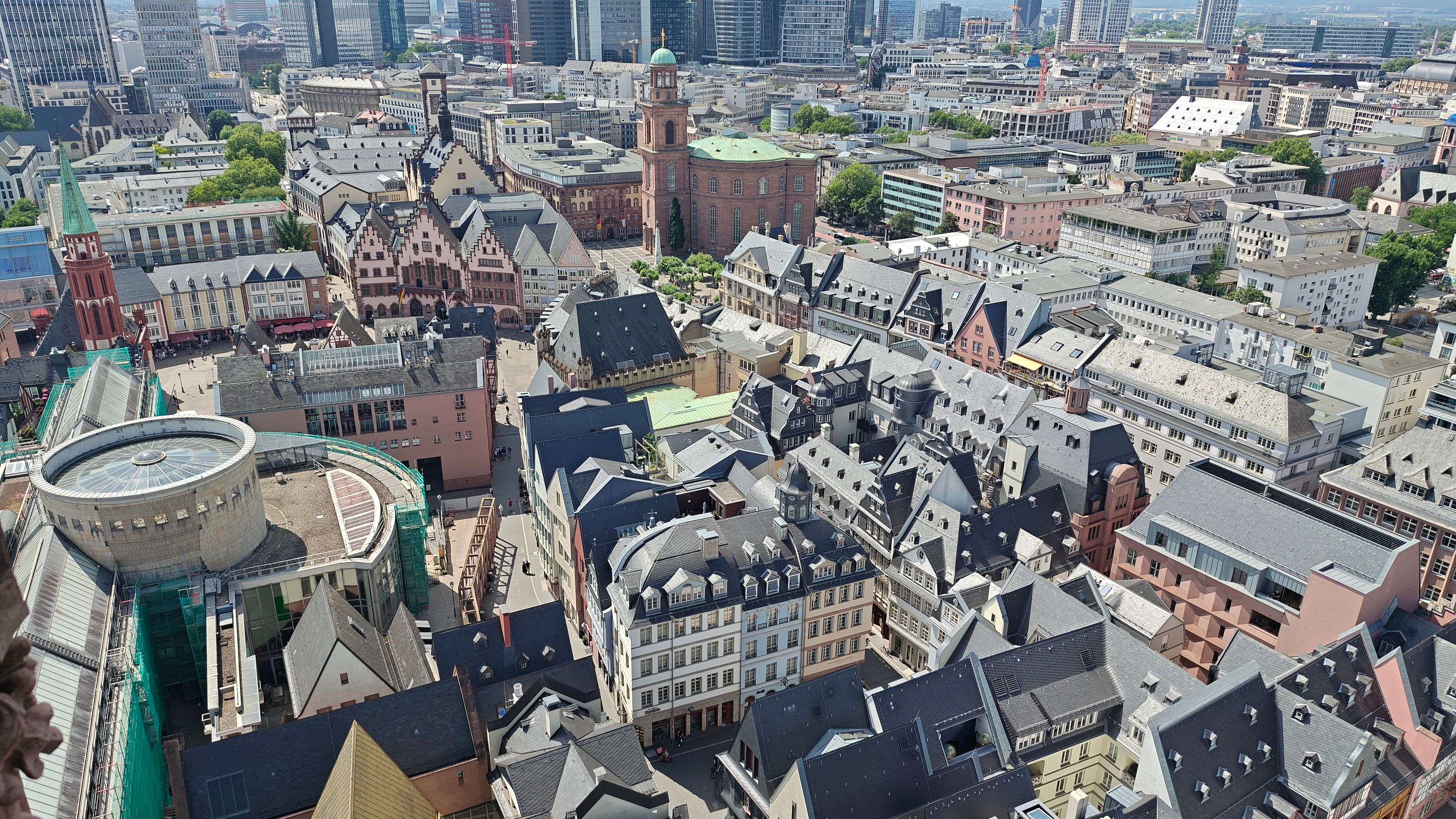
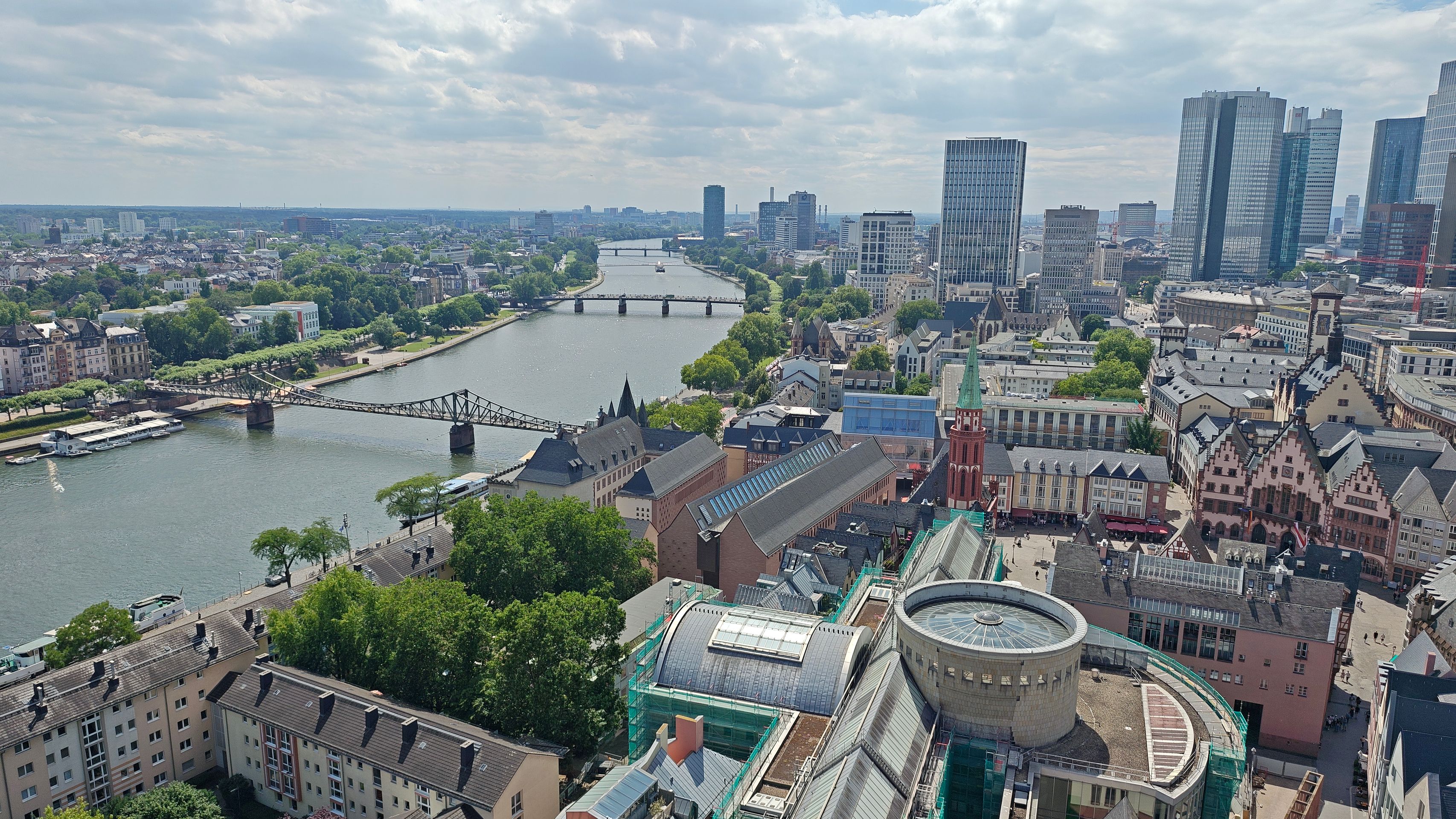
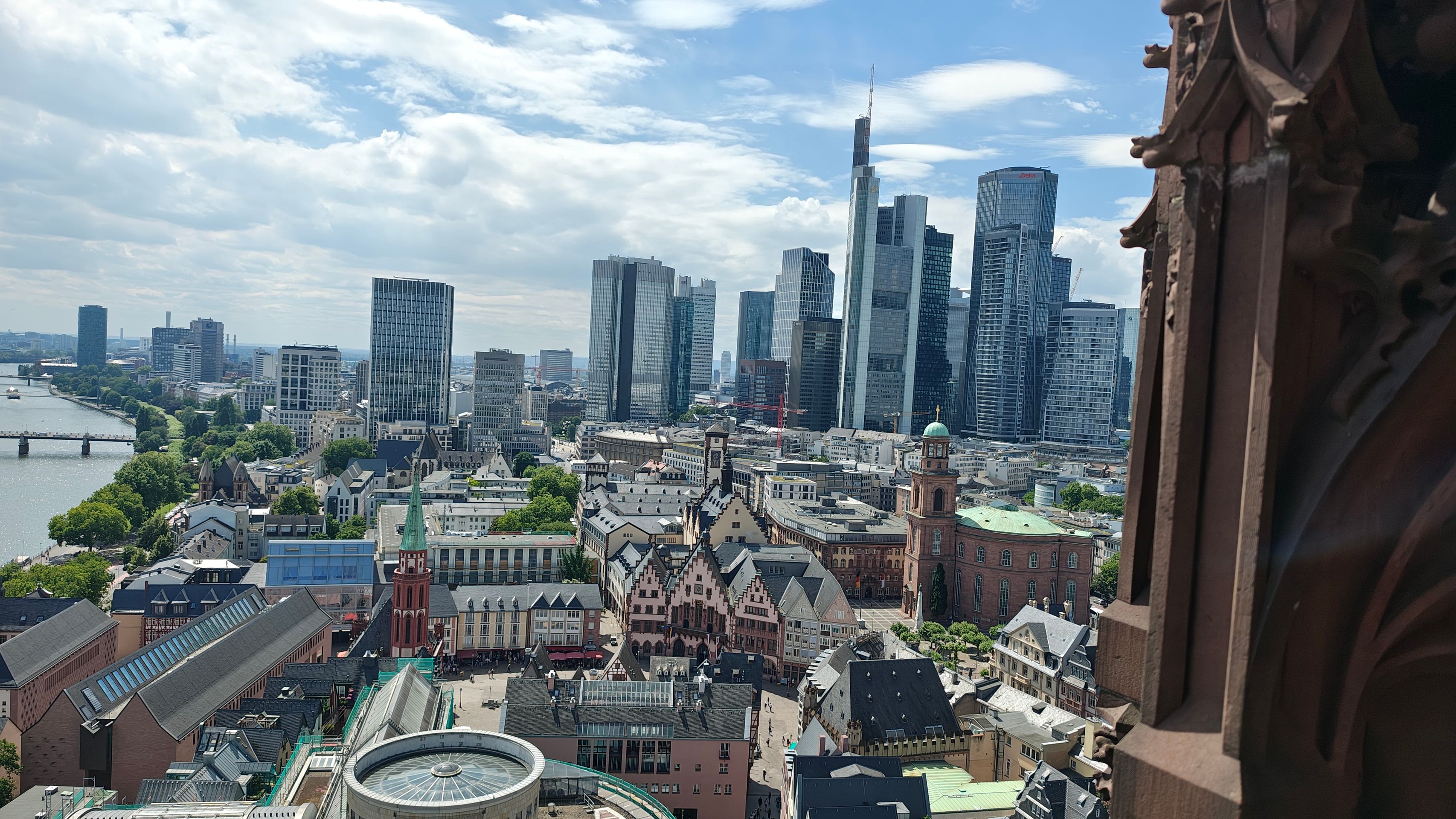
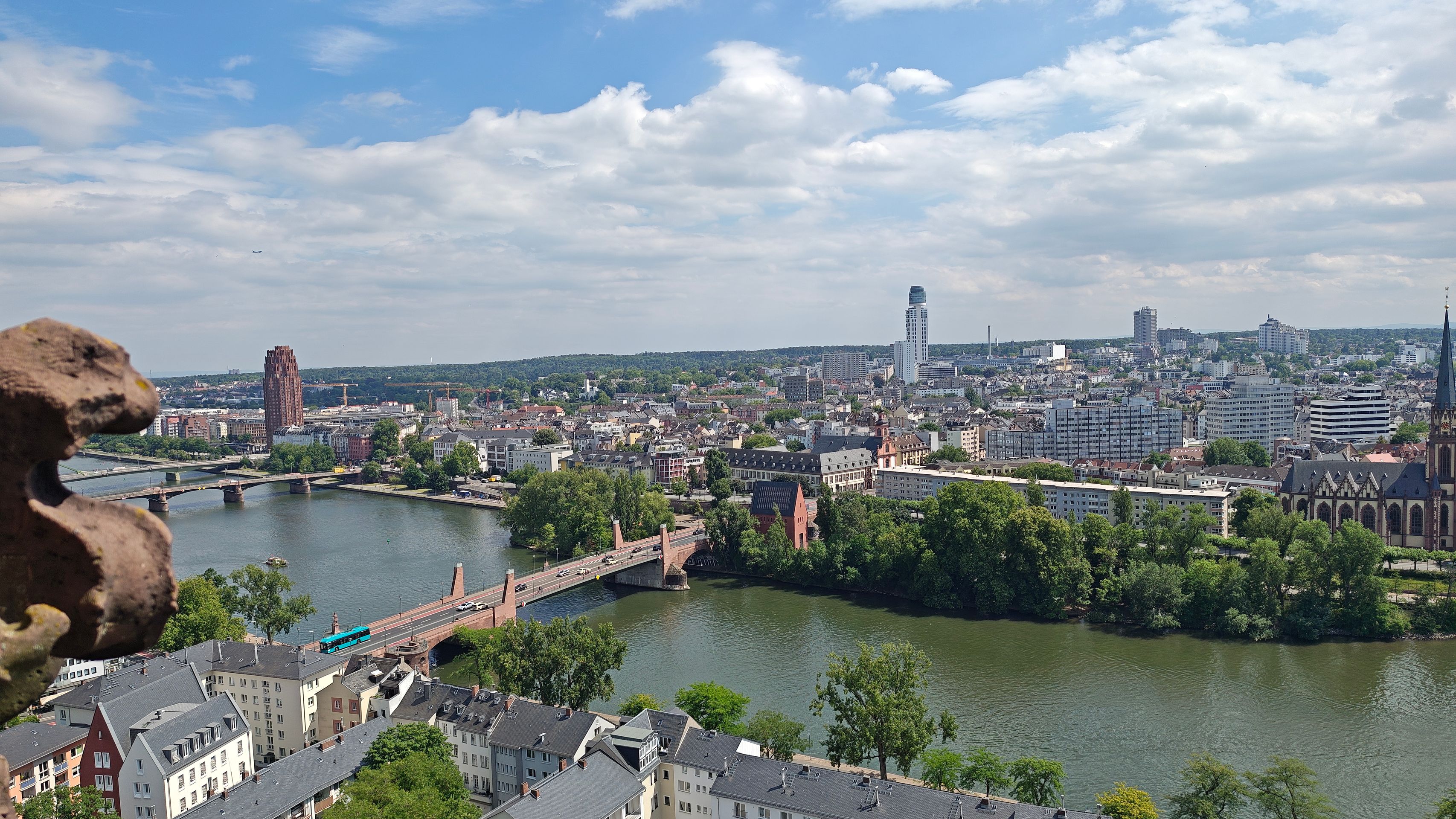
But now we are heading to the sporty part of the excursion day: We climb the 328 (!) steps of the cathedral tower. In the narrow spiral staircase, we can hear the panting of other visitors above and below. Step by step, we conquer the stone steps. But in the end, we are rewarded with a magnificent view from 66 meters above the city center. The descent is easier and quicker, but the narrow spiral staircase makes one's head dizzy now. At the forecourt, a passerby comments on our exhausted faces: 'Well, you've completed a cardiovascular workout!' Frankfurt locals seem to have a sense of humor.
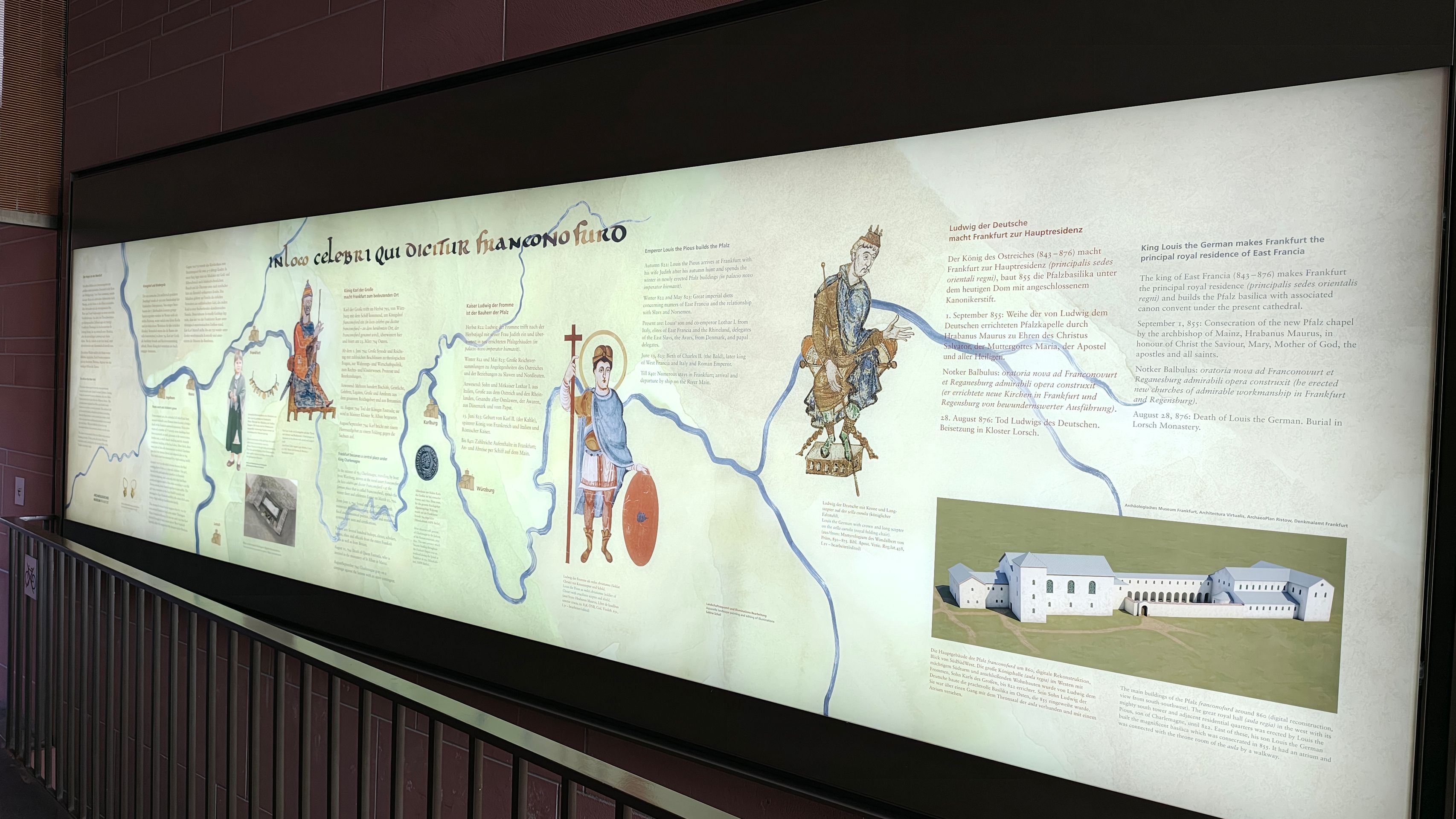
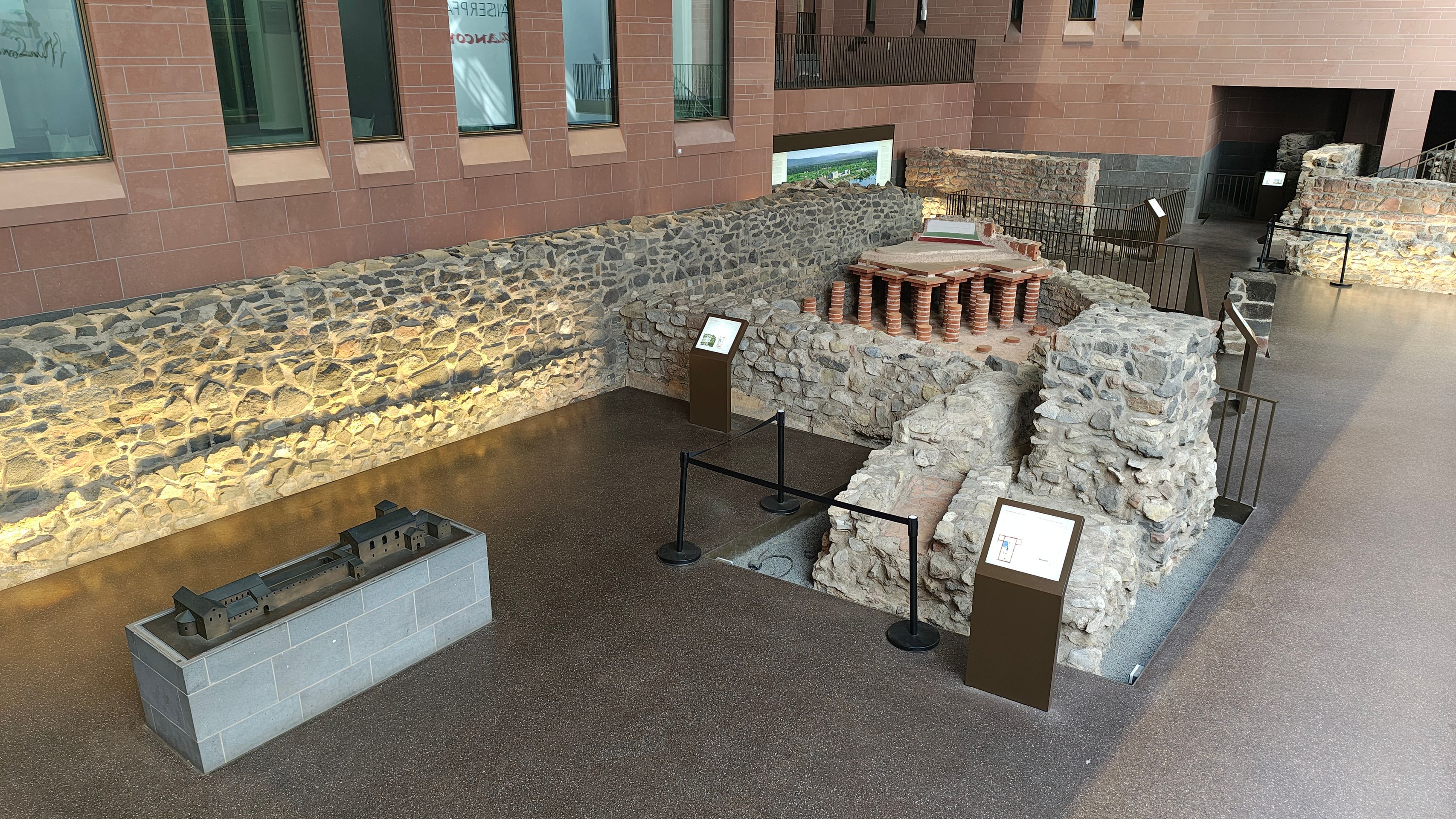
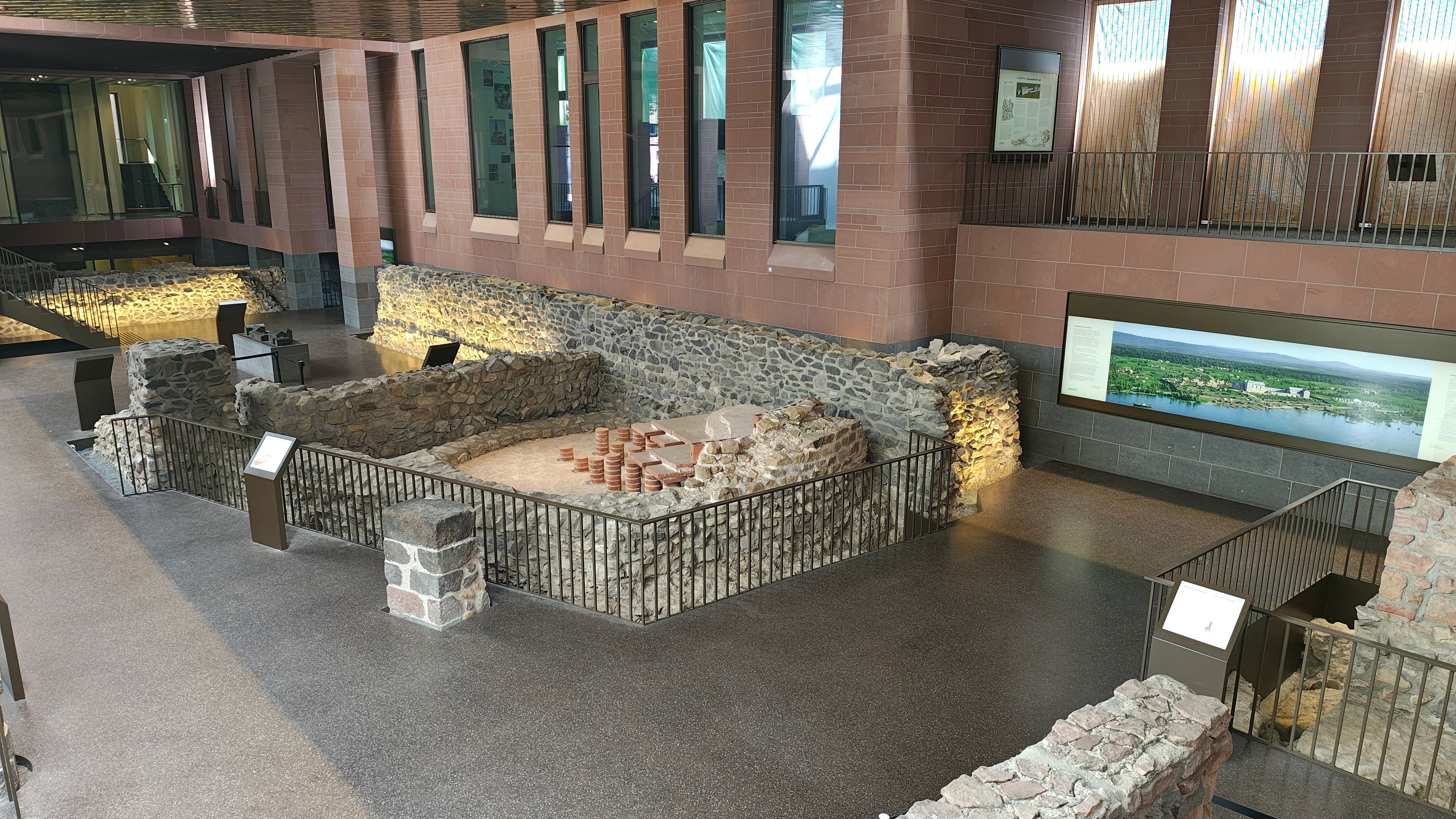
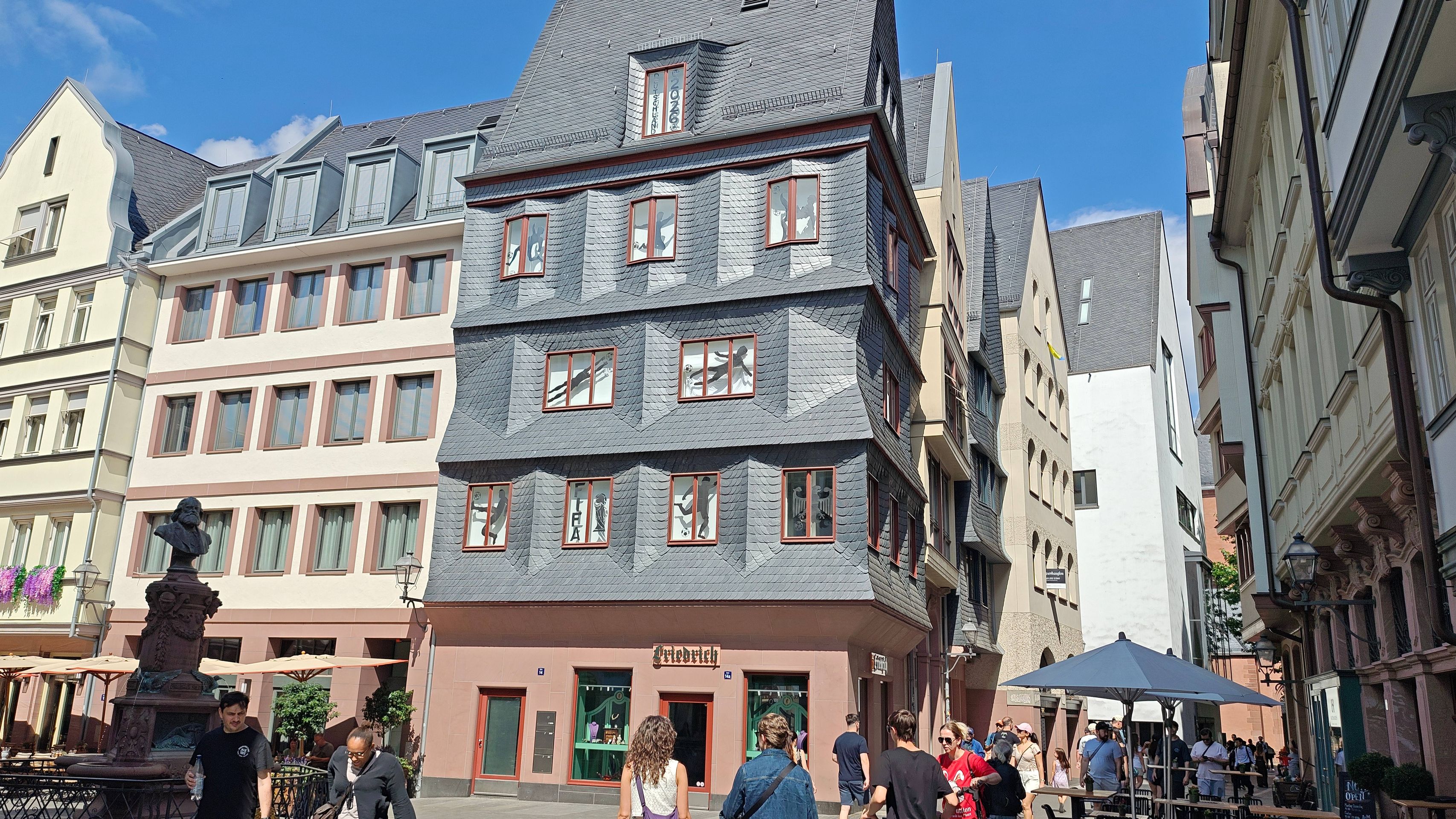
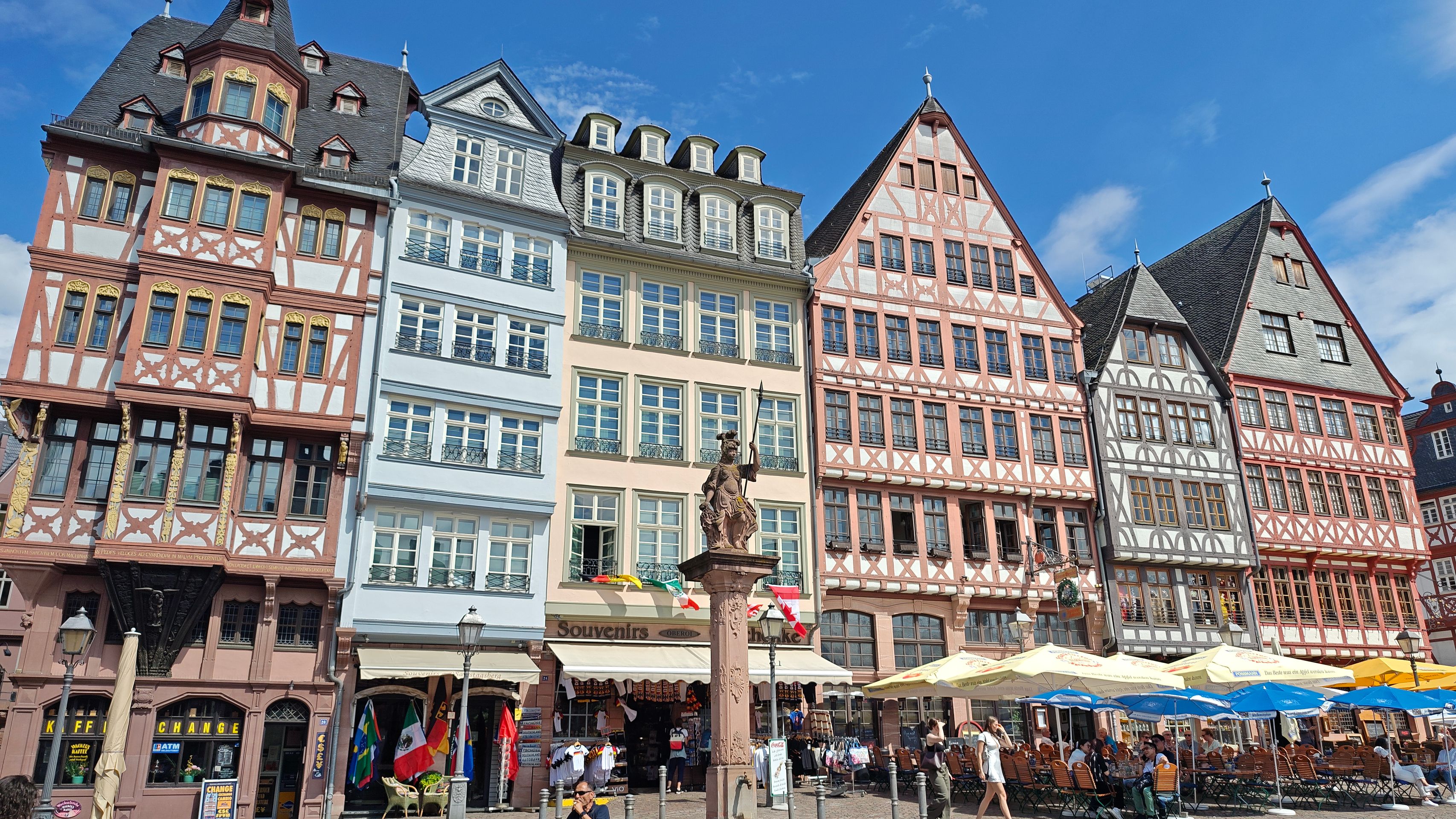
Next, we visit the ruins of the old imperial palace Franconofurd and the remnants of the Roman wall. The archaeological finds have been beautifully integrated into the built-up houses, which has occurred after my stay in the city. Then we stroll to the Römer, the central marketplace of Frankfurt, with its impressive ensemble of houses.
We still have some time and walk to the Zeil, the famous main shopping street. Here (and incidentally also massively at the train station), there are figures loitering about that one could easily assign to a psychiatric institution or drug clinic. They scream uncontrollably, dance, stink, carry all sorts of rubbish with them, talk to invisible people, and are dressed like it's winter or half-naked in the sweltering summer heat. In between, glammed-up shopping ladies and phone-distracted bankers from surrounding financial institutions hurry past, creating a surreal image. Just last Saturday, there was a machete fight here, as I read in the news, and during our stroll, police with flashing lights and sirens drove down the Zeil, likely heading to a new conflict hotspot. I had already noticed such an unpleasant environment in the city centers of Hannover and Leipzig. To add to this, I only managed to shoo away a beggar at the main train station with effort and unfriendliness. Have such conditions existed in German cities before, and I simply didn’t notice them as vividly?
In such a living and residential environment, I would not feel comfortable, and I am glad that we are now embarking on our return journey with Deutsche Bahn to our Lower Bavarian province. With a sprint to change trains at the Munich station, we manage to make up for the delay of our ICE and just catch the connecting train.
In conclusion, it was a successful and eventful day with intellectual encounters with great German thinkers from a better time.