Why do I keep traveling to Singapore? Because the social structures are so fascinating. These go far beyond the high safety and cleanliness in the country. The population has a strong sense of community, which has been created through people-centered and visionary policies.
Especially those who criticize the dire conditions with marauding youth gangs, political ignorance, hatred and incitement between population groups, rampages, and drug crime in the western hemisphere, namely Europe and North America, will find a better alternative social structure in Singapore. I have made extensive comments on this 'Singapore Story' on my website through the autobiographical works of Lee Kuan Yew: Singapore Heritage.
The emergence of community fascinates me repeatedly, and I have already visited many residential areas and facilities related to it. This year, I want to visit an older residential area and a brand new, still emerging, district of Singapore.
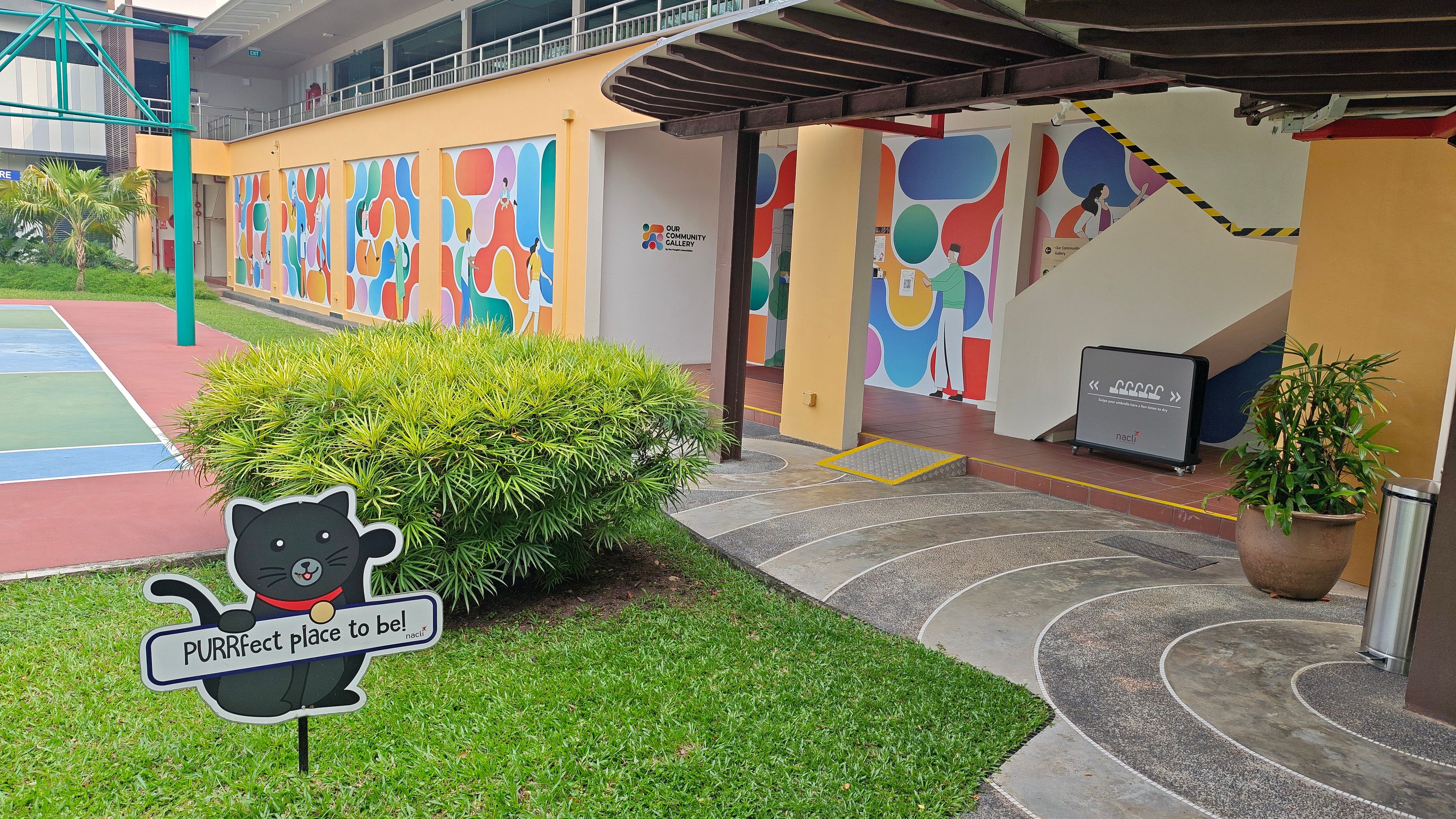
But the beginning is marked by an exhibition on the grounds of the National Community Leadership Institute (NACLI). For the 'Our Community Gallery', I have booked the visit appointment online weeks in advance. And so we take the metro and bus to the foot of Kent Ridge Park at this pre-booked time. At the entrance, we first receive access passes and trek up the path to the exhibition building.
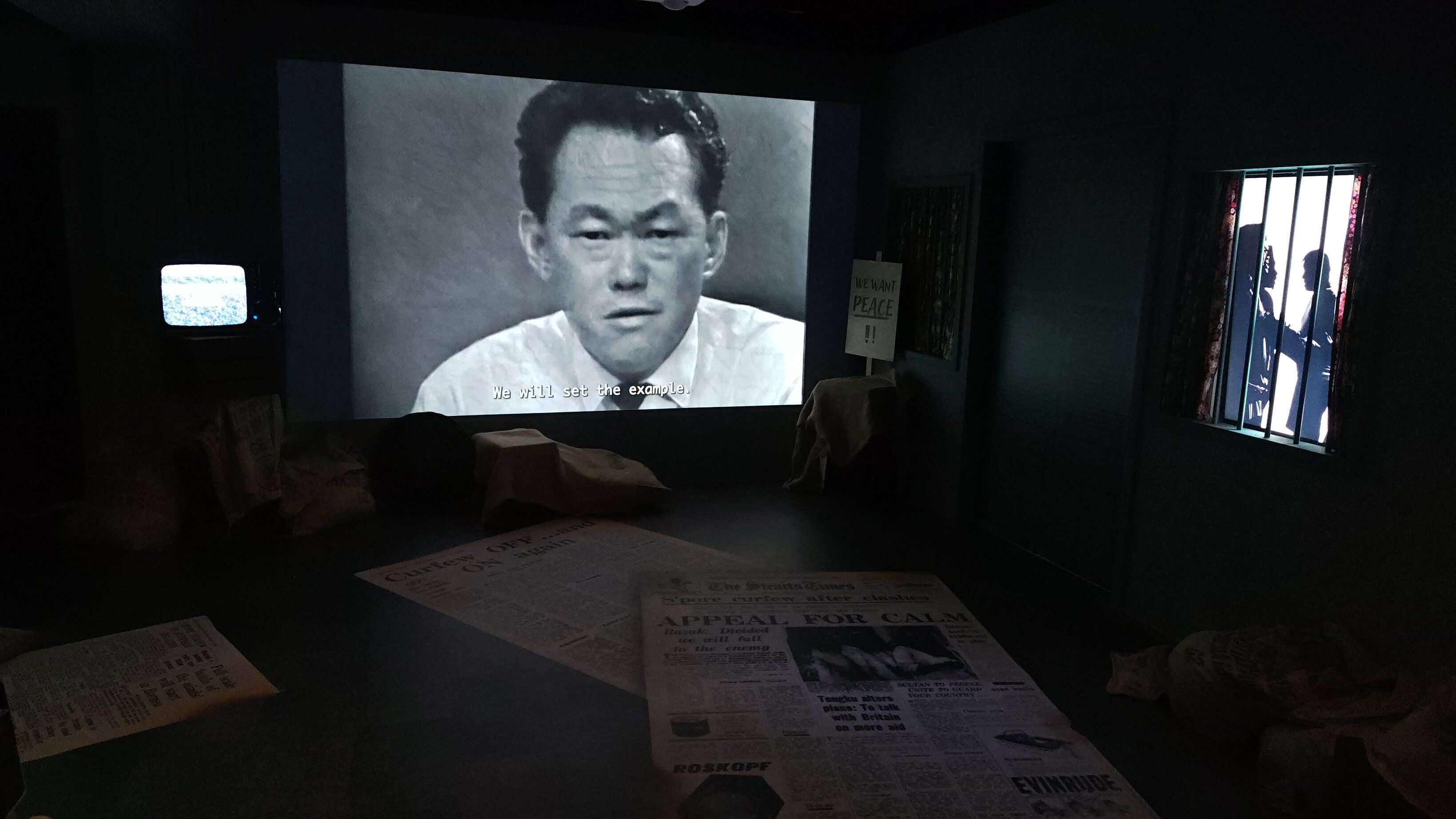
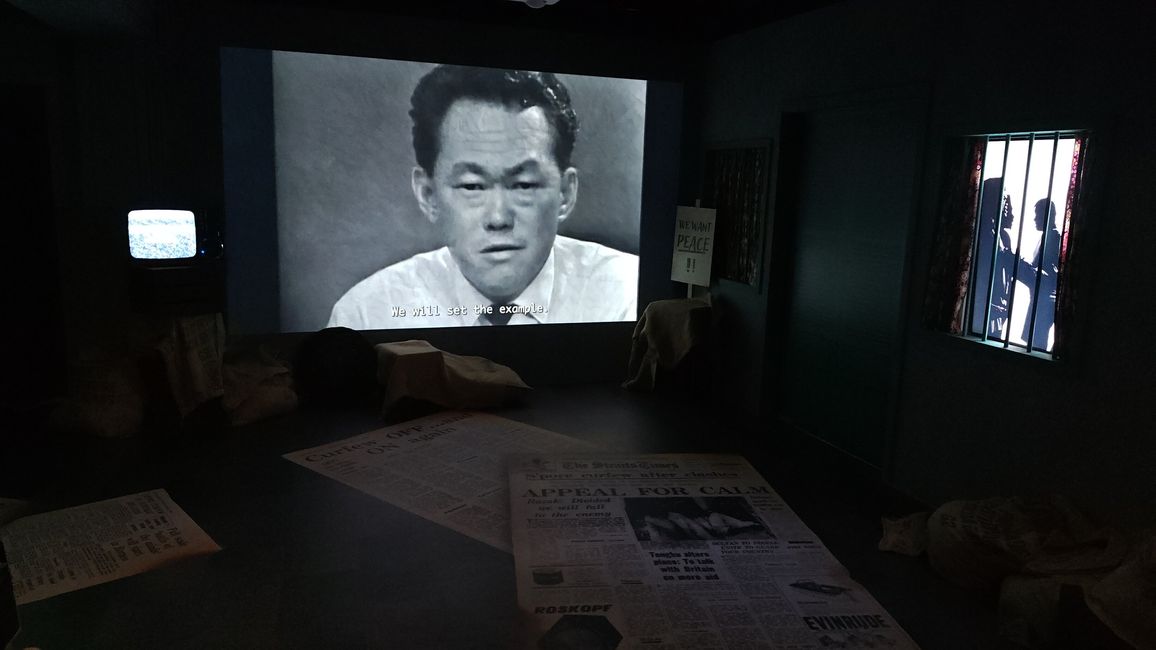
A staff member briefly introduces us to the special feature that we can use interactive stations through an RFID chip. Additionally, a regular video presentation will soon begin. We also watch this, where the short video shows the issues of racial unrest just before Singapore's independence.
Lee Kuan Yew clearly set himself the goal of building a peaceful community in Singapore, where all people would have equal opportunities and participation regardless of ethnicity and religion:
We are going to have a multi-racial nation in Singapore. We will set the example. This is not a Malay nation. This is not a Chinese nation. This is not an Indian nation. Everybody will have his place, equal; language, culture, religion.
We will have a multi-ethnic nation in Singapore. We will set an example. This is not a Malay nation. This is not a Chinese nation. This is not an Indian nation. Everyone will have their place – equal in terms of language, culture, and religion.
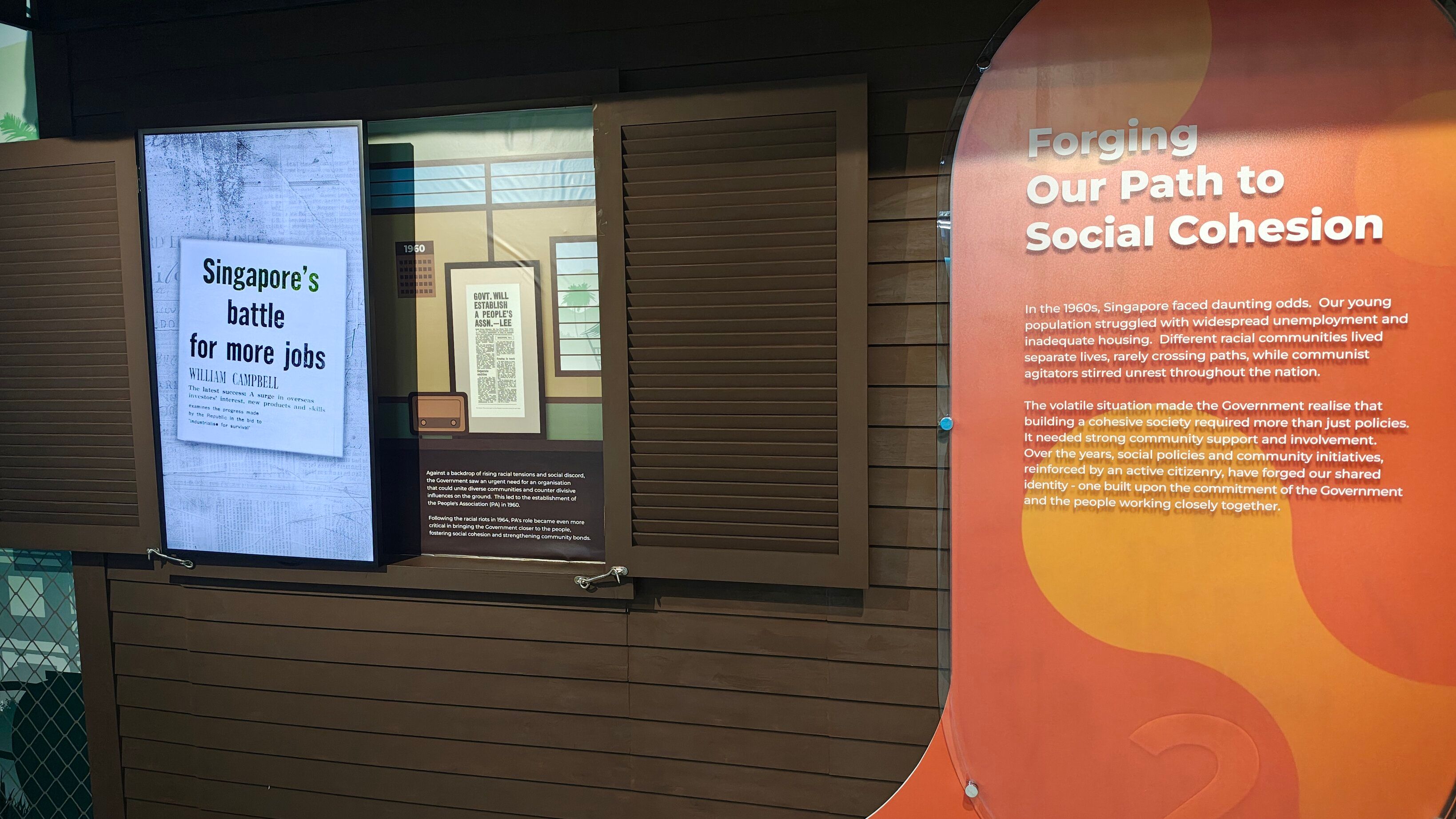
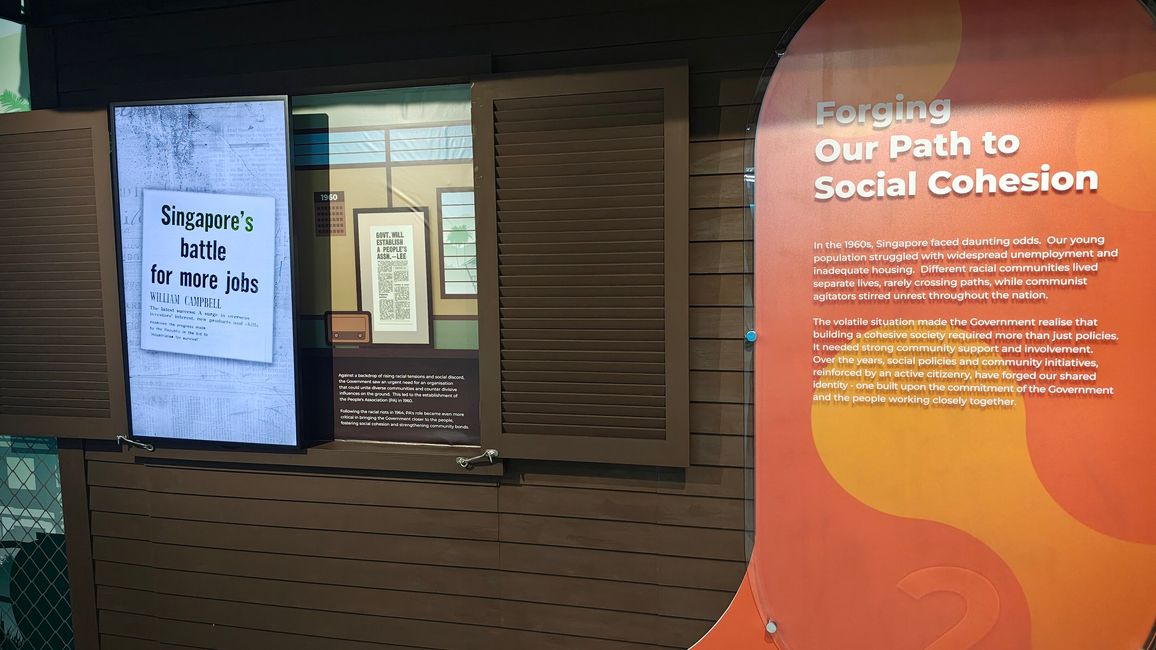
After that, we enter the exhibition, which shows us the diverse path to that goal. I want to touch on just a few important aspects here.
A significant part of the success is labor market policy with the creation of new jobs. From over 10% in the early 1960s, the unemployment rate had a small three before the decimal point by the end of the 1970s. Today, this rate is only 1.9 percent.
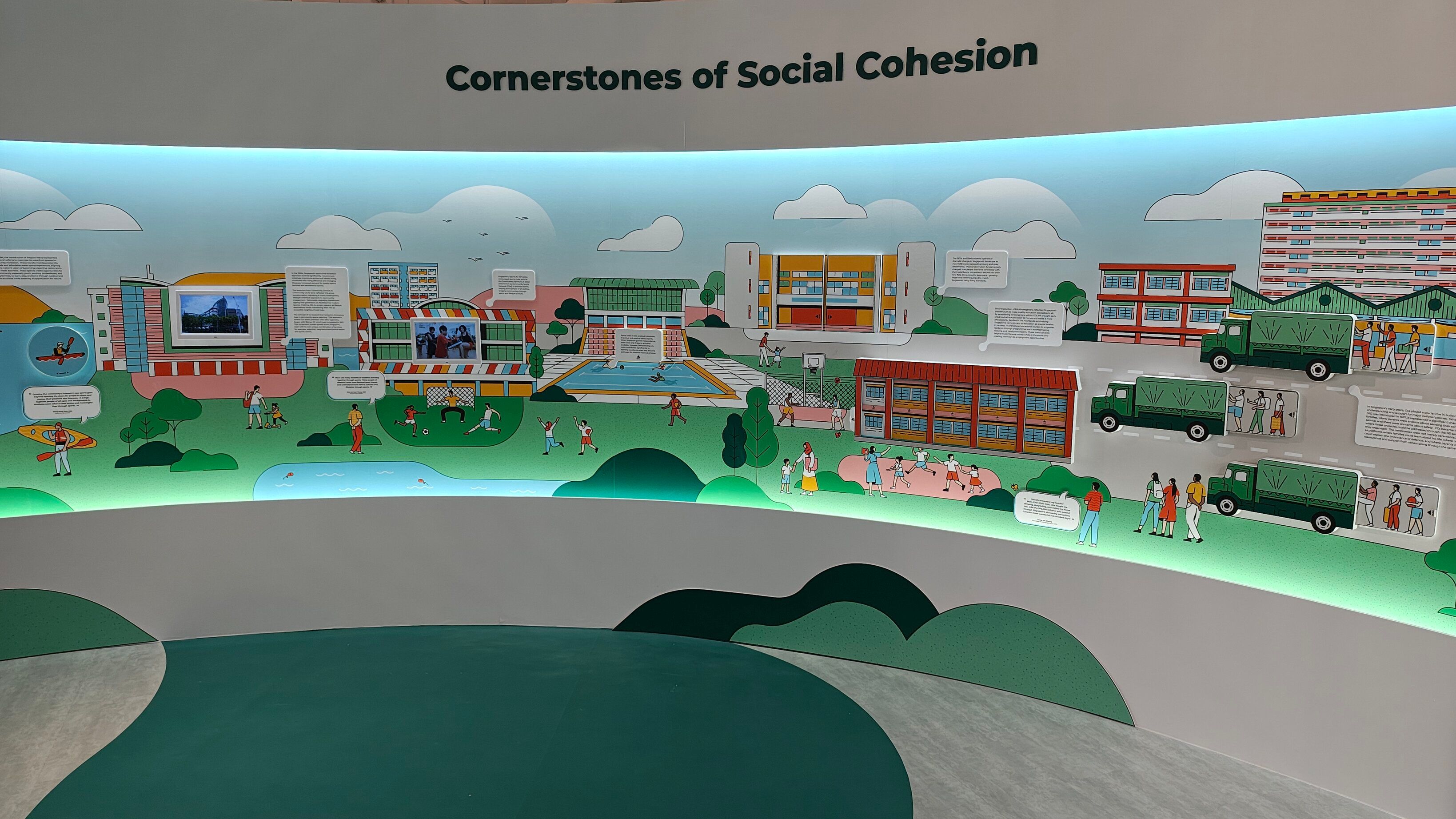
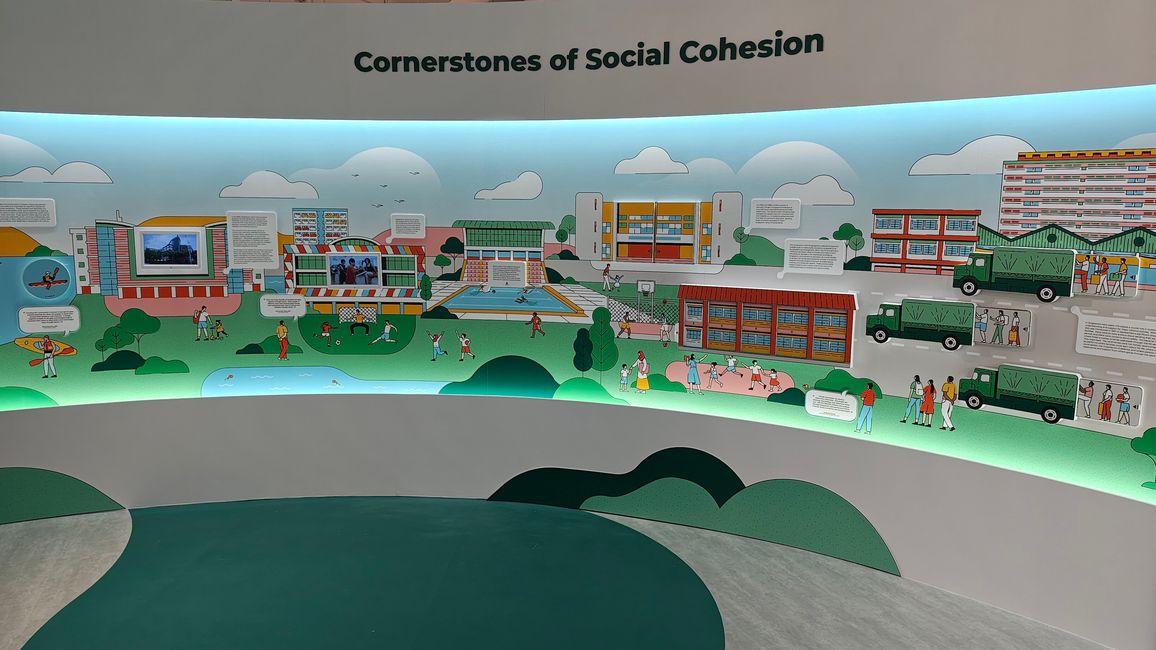
The second major pillar is housing policy, which creates new urban areas on the island at a rapid pace. Quotas for each ethnic group are set for the residential buildings, reflecting the overall ratio in the country. This prevents the formation of ghettos, which was still common in colonial Singapore. Numerous community facilities, such as sports fields, parks, and recreation centers, are built in the new residential areas.
In addition to the local police stations, the integrative education system is part of the success model. Citizens' Consultative Committees provide the first community-focused point of contact to address the needs of the people on-site. Alongside these facilities, there are other neighborhood organizations that contribute to peaceful coexistence in the residential districts.
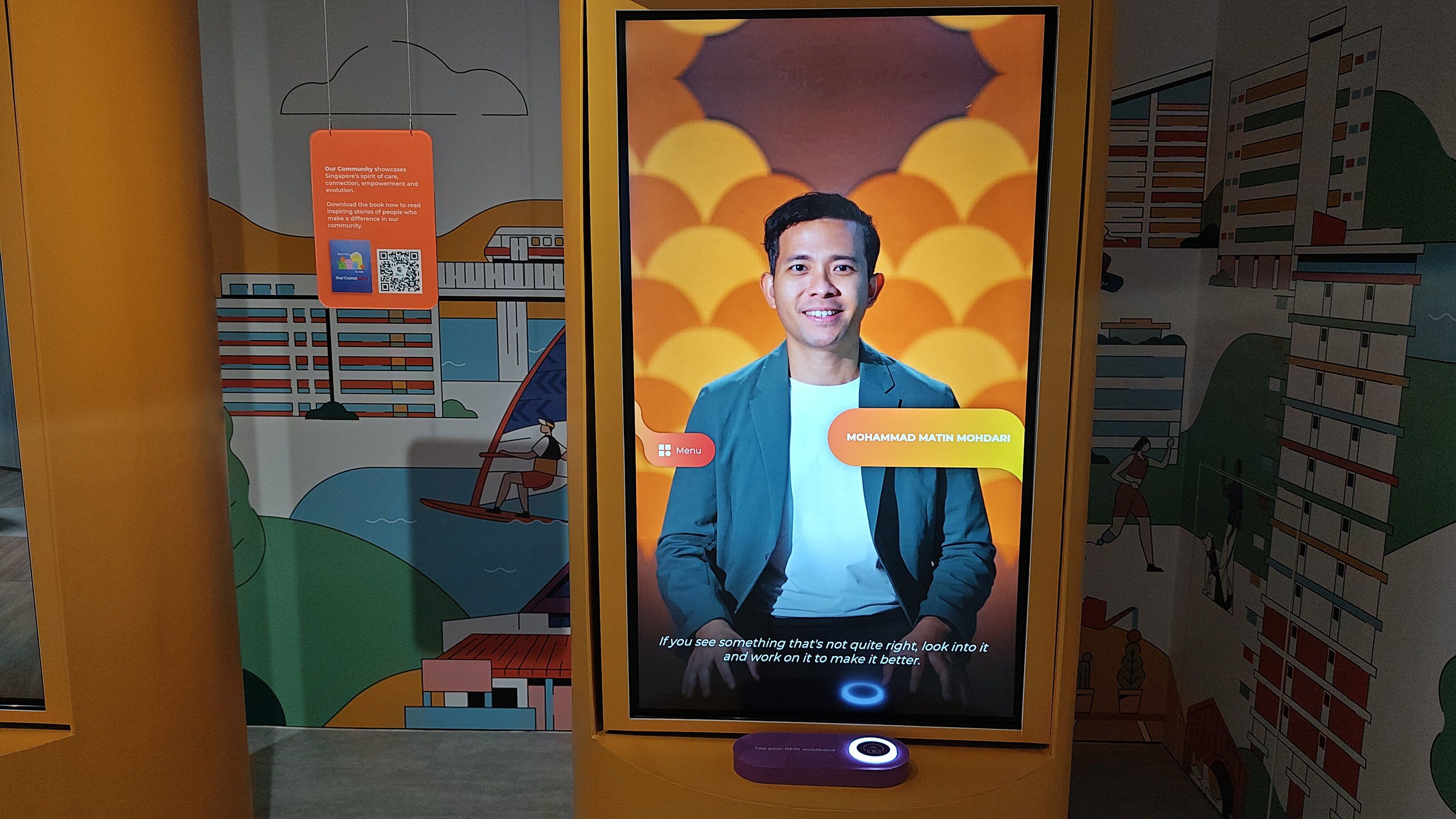
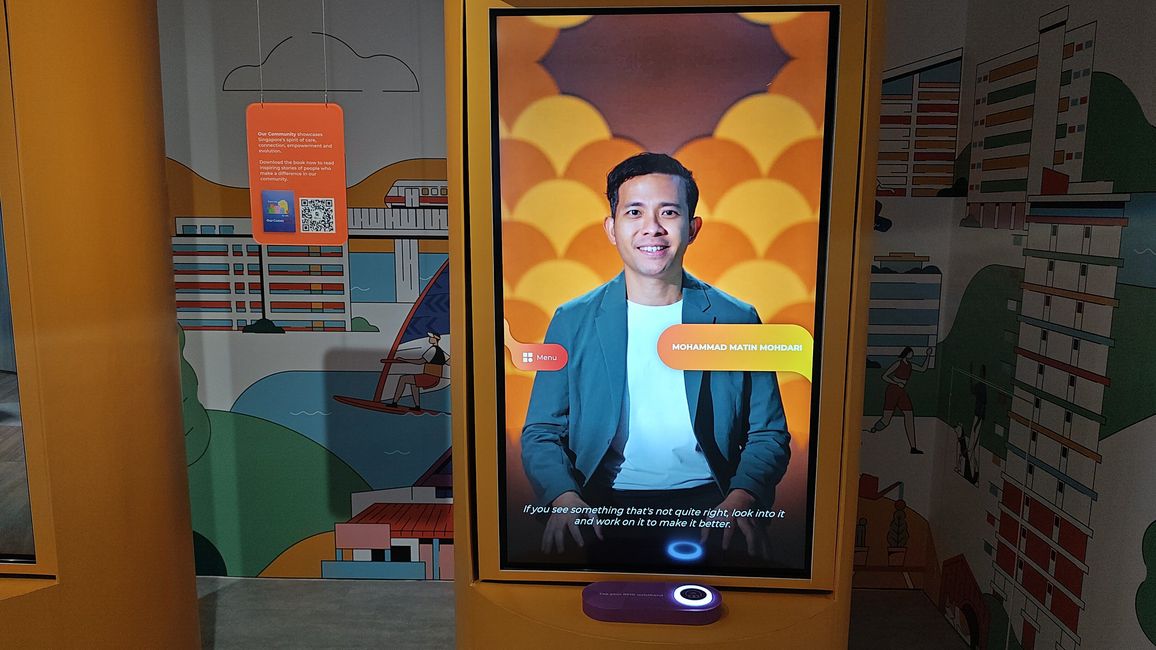
The best impression I had at the exhibition was from an interactive large monitor, where real people explain their commitment to the community and the motivations behind their voluntary efforts.
At the end of the exhibition, my RFID chip is evaluated, which I have used at the various exhibition stations for decisions on community issues. Although I am rated as a good neighbor, the questions are logically oriented toward the residents of Singapore and not an interested tourist.
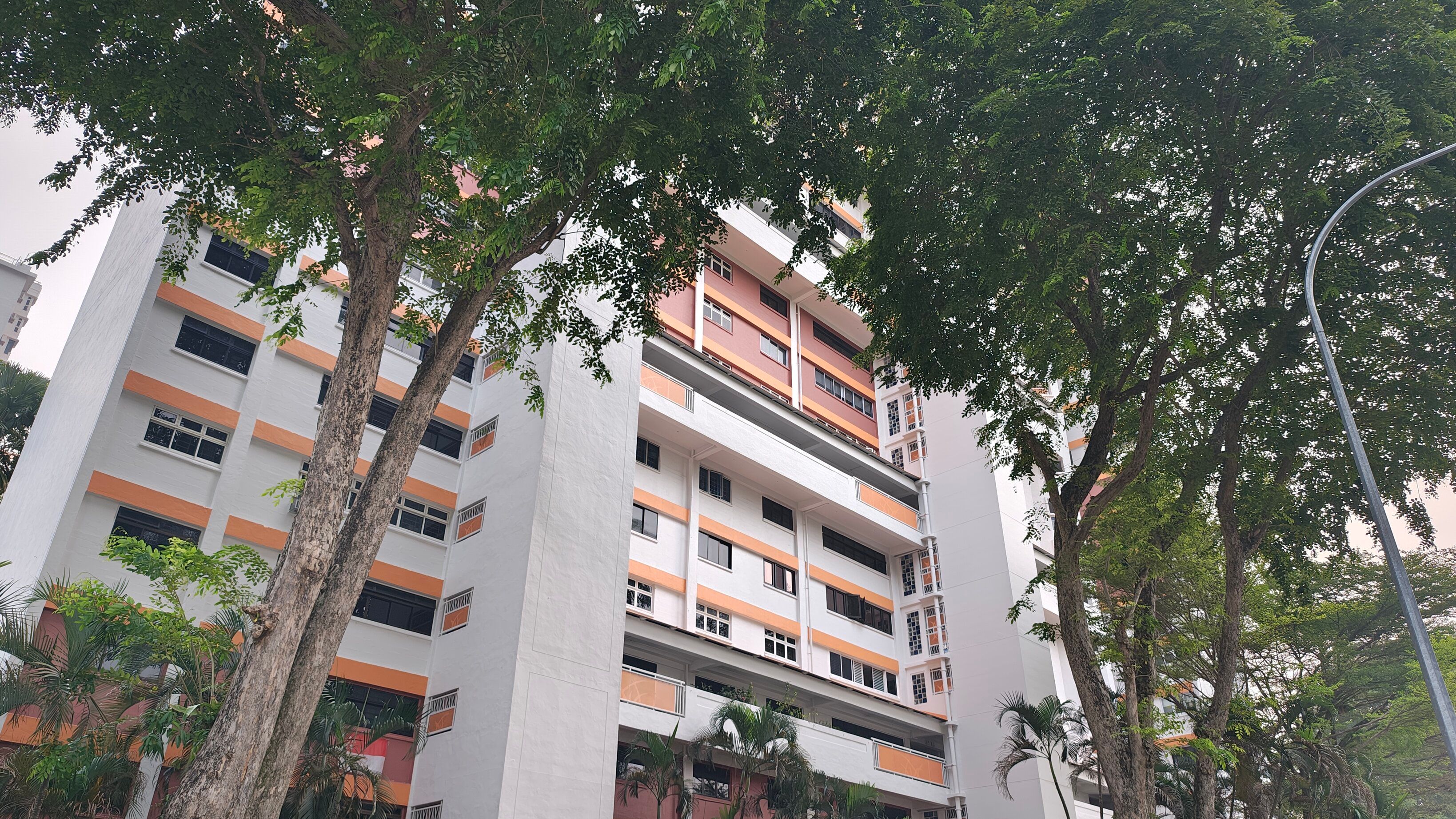
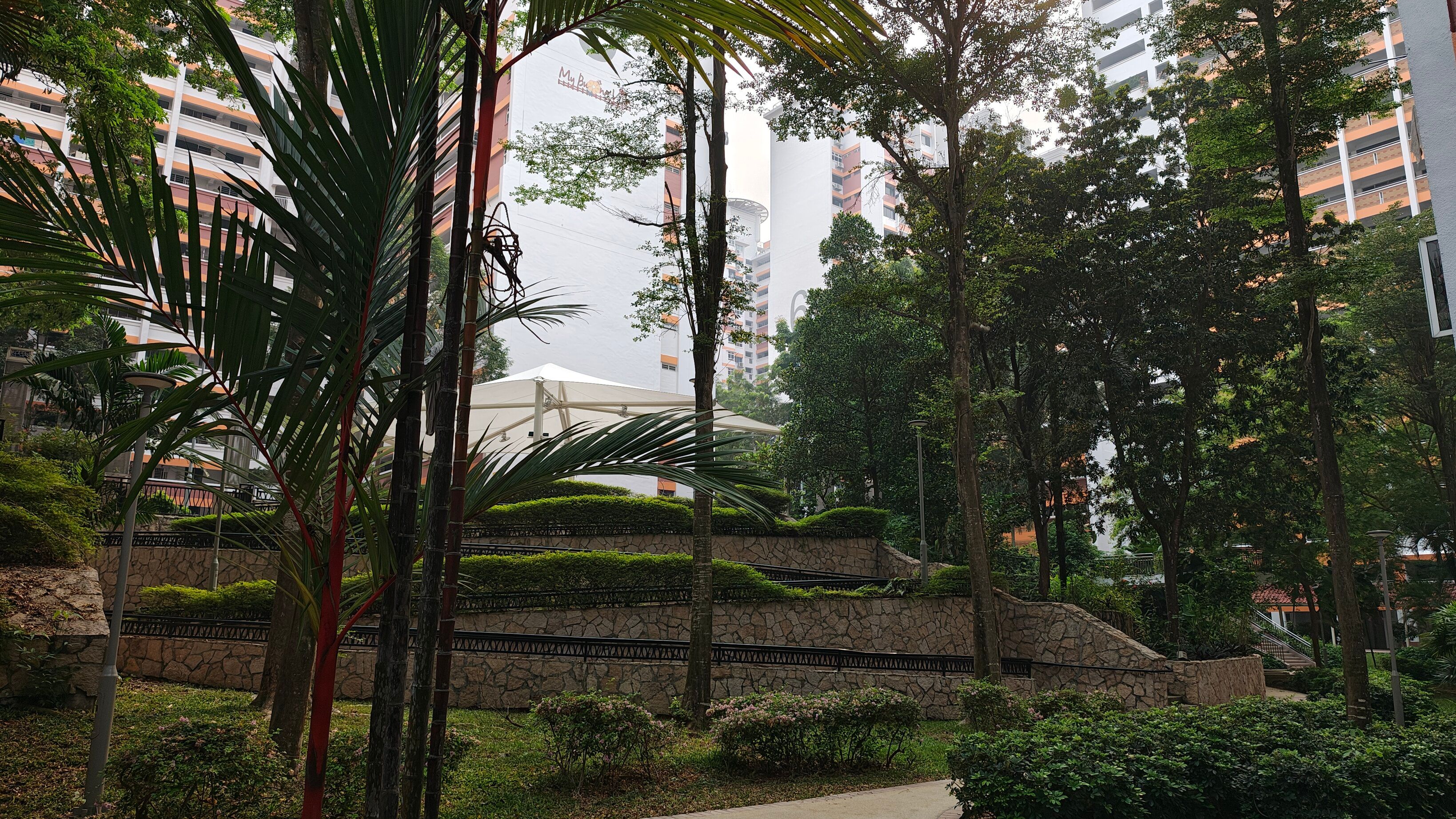
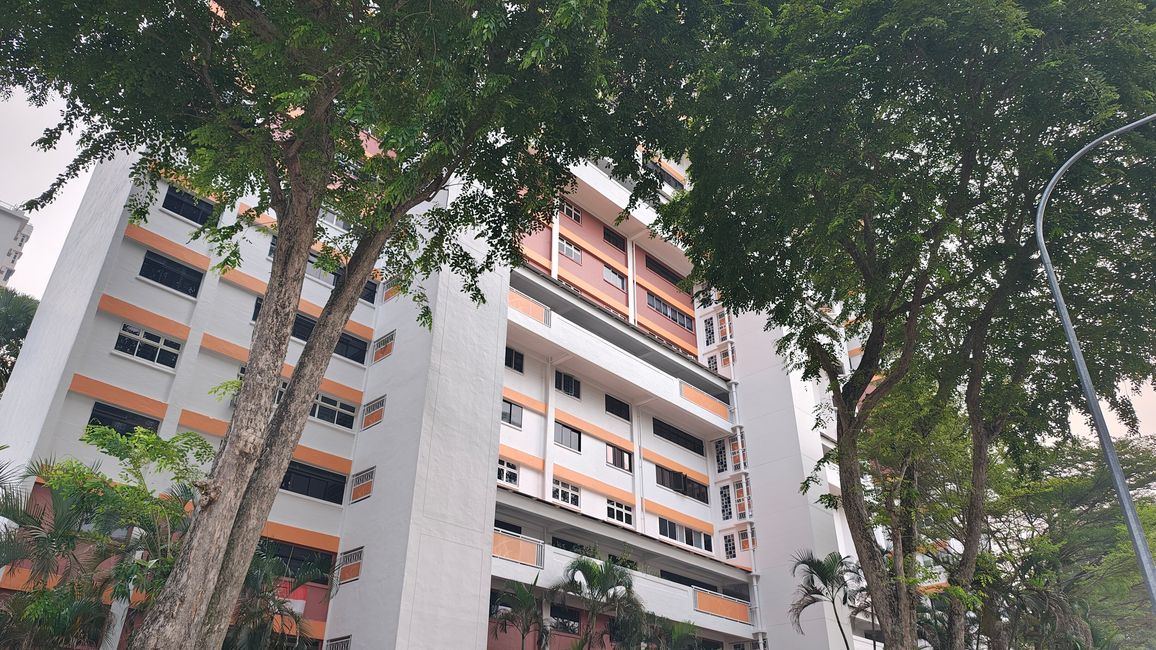
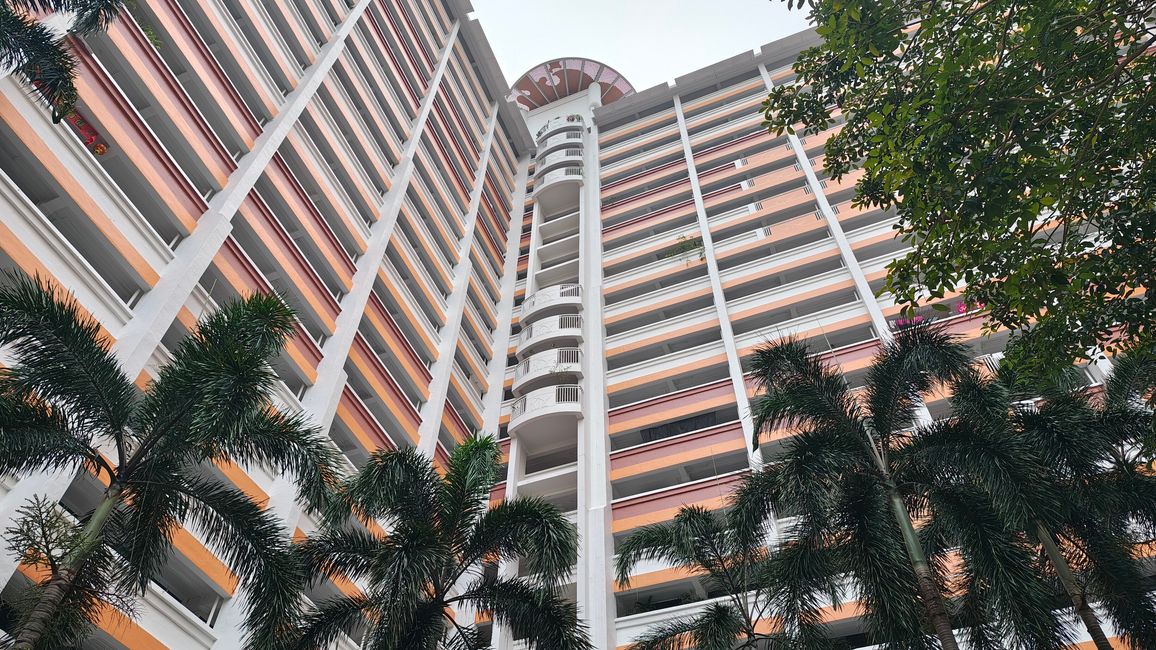
My next destination is the residential area 'Holland Oasis' in the Buona Vista district, an older HDB estate. The houses were completed in 1974, but due to some modernization programs and the good transport connections, they are extremely popular among residents. I start my visit at Block 8, which had already caught my attention from the Rail Corridor due to its architecture.
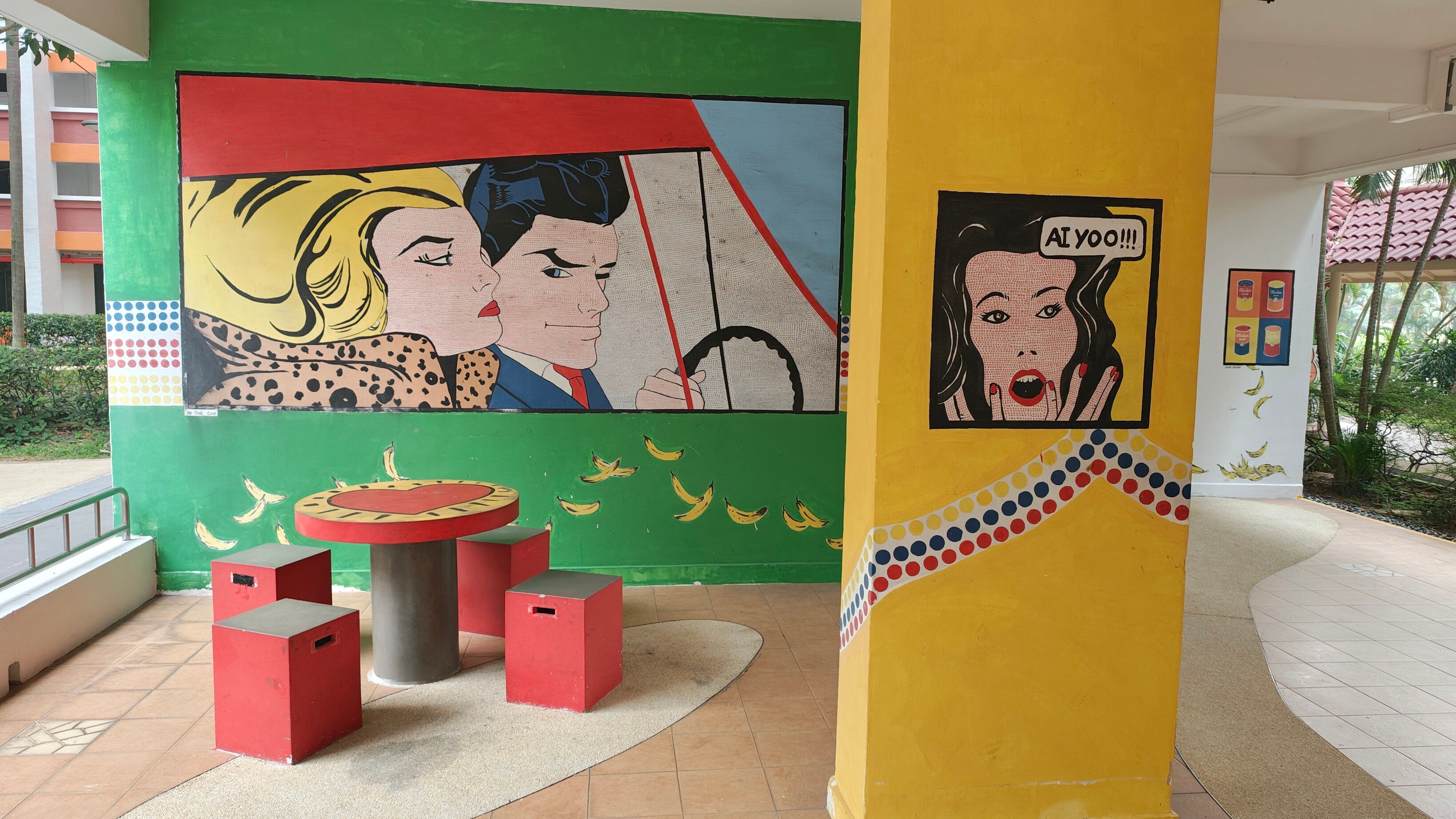
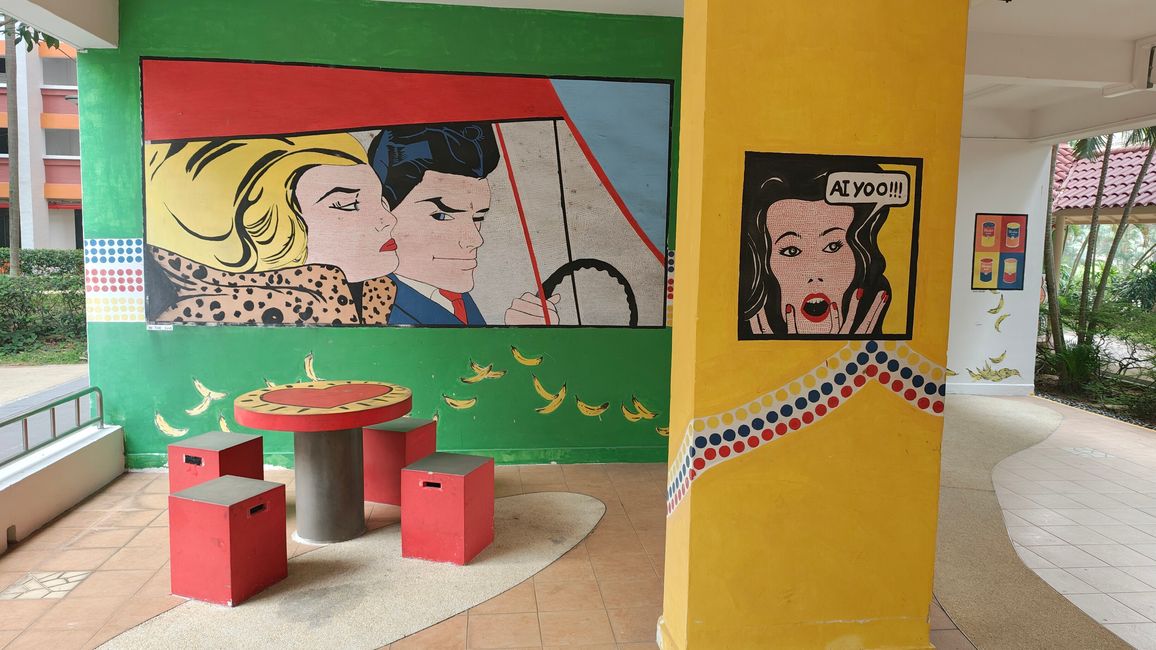
Down in the ground floor, which serves as a continuous community area for most HDB houses and is used for covered seating areas and bicycle parking, artists have established a Pop Art Gallery.
I find the idea that the ground floor is not built with apartments simply brilliant because one can walk freely beneath the large residential blocks and find the entire residential area airy and accessible. Detours around building blocks are completely eliminated, providing new possibilities for the arrangement.
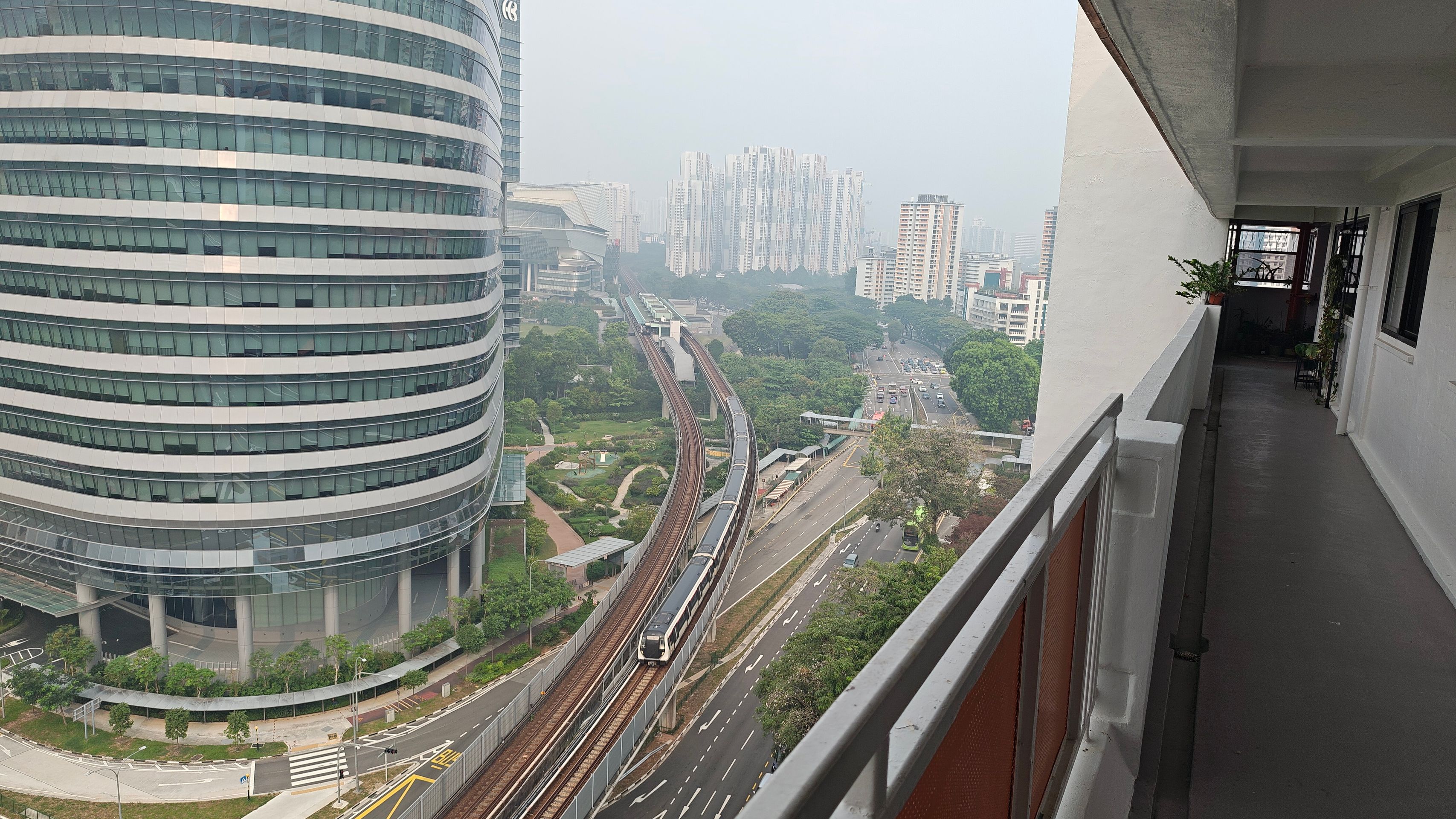
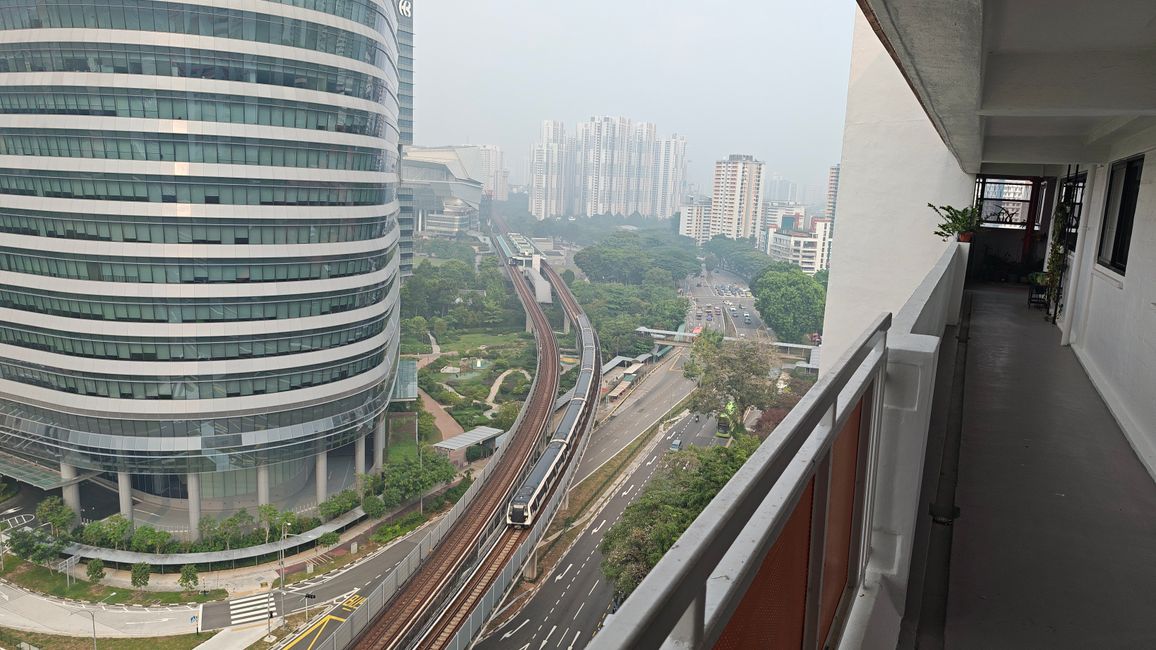
I take the elevator in the building all the way to the top. However, there is no balcony up there, so I go down two floors on the stairs. The special architecture of this residential block makes that necessary. Here I have a beautiful view of the surroundings, as far as the Indonesian smoke allows, and I look at the metro line, where conveniently a train passes by for my photo. In the back, you can see the HDB residential complex 'Ghim Moh Edge', completed in 2017.
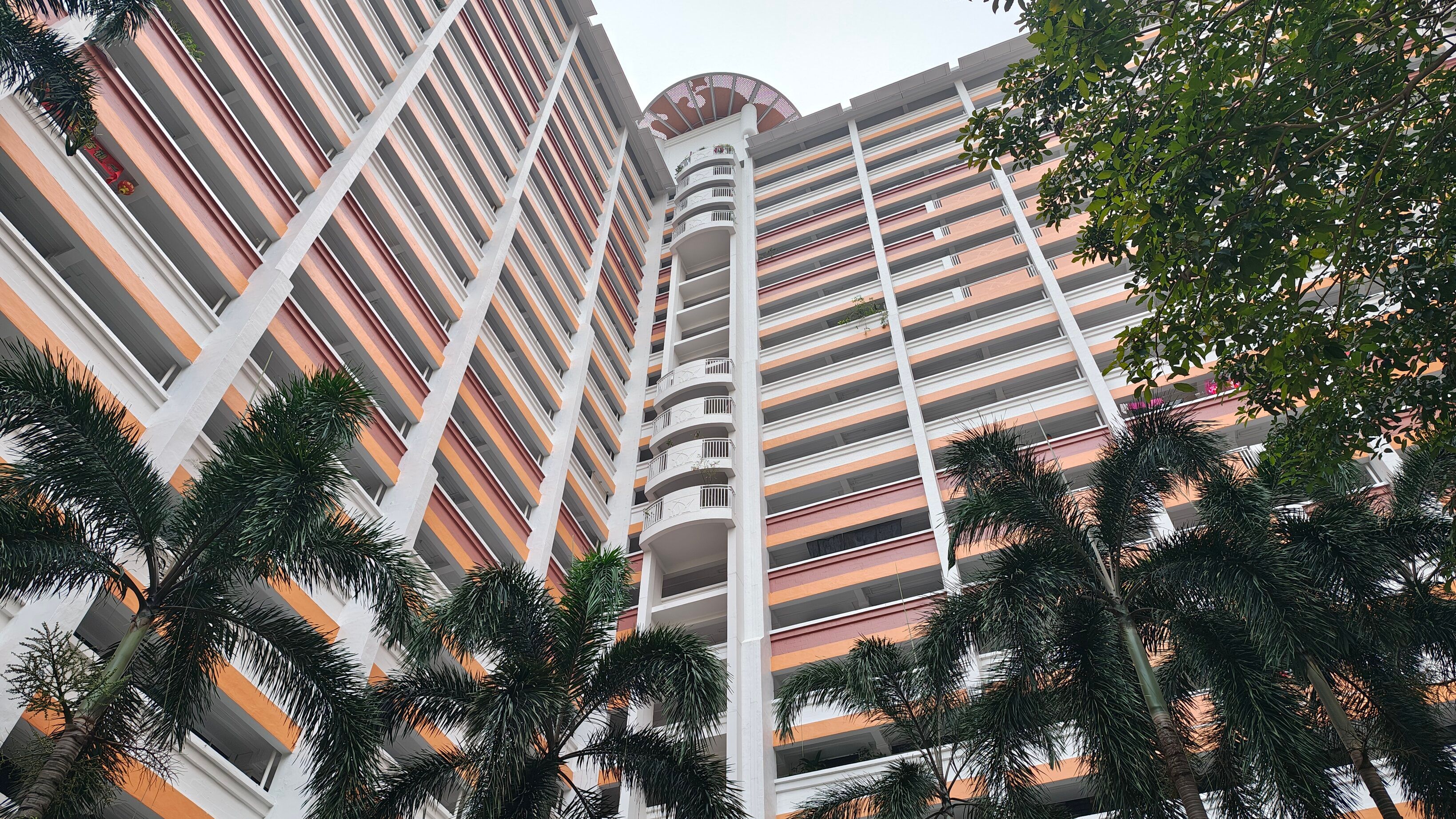
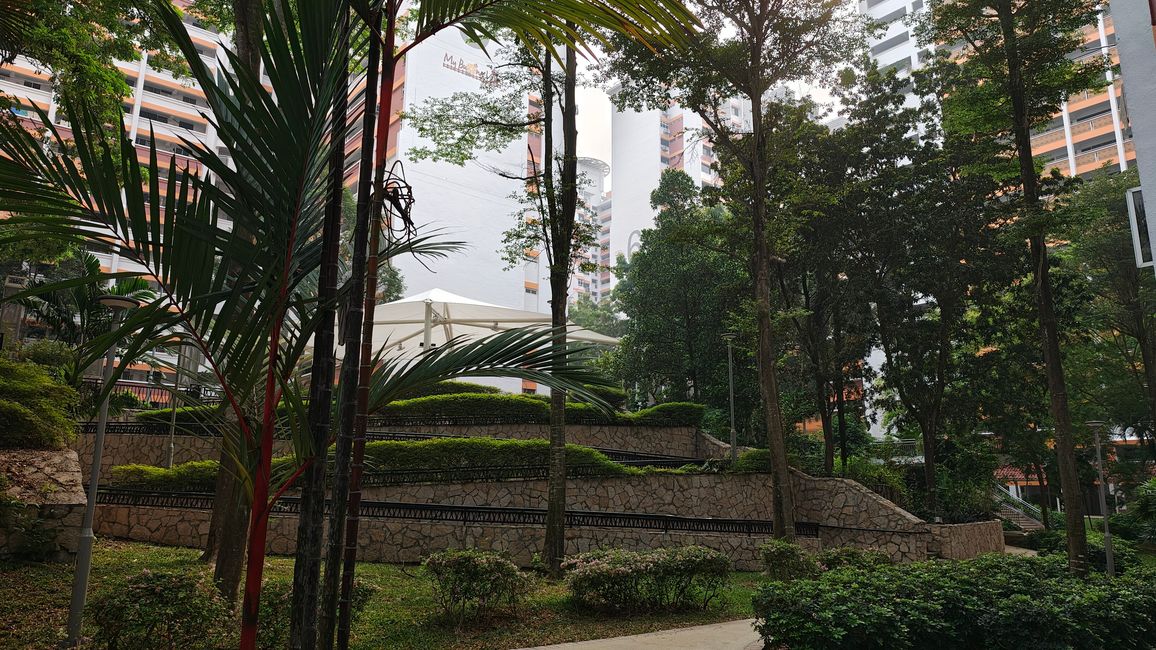
I take the elevator back down and stroll through the courtyard with the many trees. I particularly like the corner architecture of Block 8 very much. The balconies overlooking the quiet courtyard also make sense at this point.
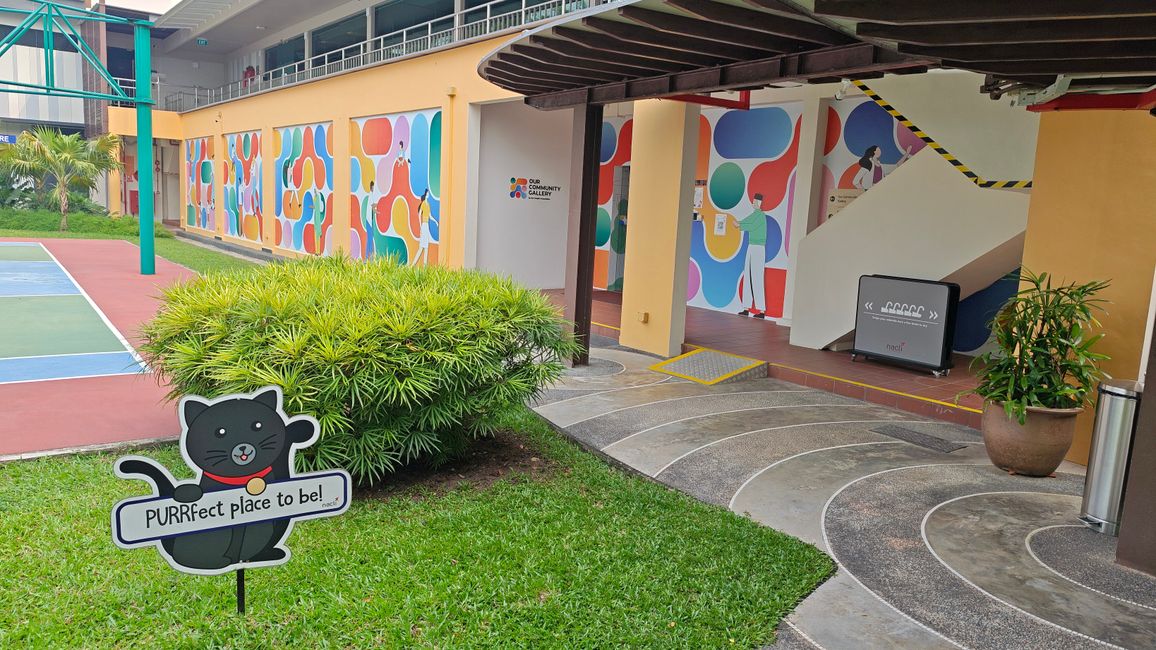
Next to the house towards the neighboring block 9, there is a handicapped-accessible serpentine path leading to the covered community space, which is very popular for celebrations and sports exercises.
For me, visiting older HDB residential districts is always astonishing how high the quality of life the apartments still have through green spaces and nearby food markets, even 50 years after their construction. I do not visit the Holland Drive Market & Food Centre across the street, but instead, we go on the last day of our Singapore vacation to the new HDB district Tengah, which is located in the west of the island near our hotel.
The background to this visit is more extensive than one might think, as I have already dealt with the new district's planning back in 2020. At that time, it was introduced in detail, including a multimedia show in the exhibition rooms of the HDB headquarters in Toa Payoh. I also wrote a detailed blog post about it and linked a video of myself: Housing Policy: Housing and Development Board (HDB). Additionally, I linked an article about the planned district: Tengah’s Park District.
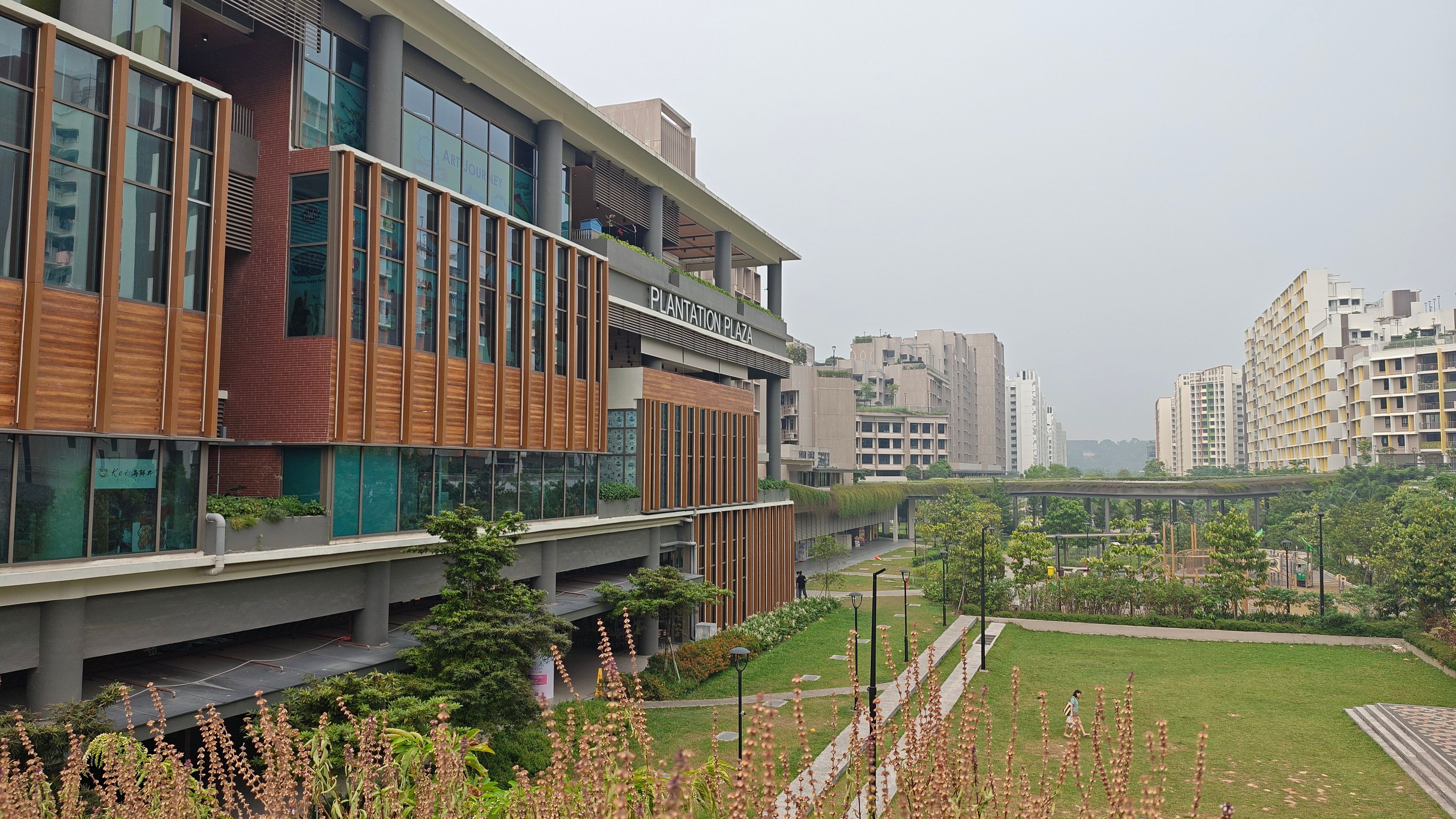
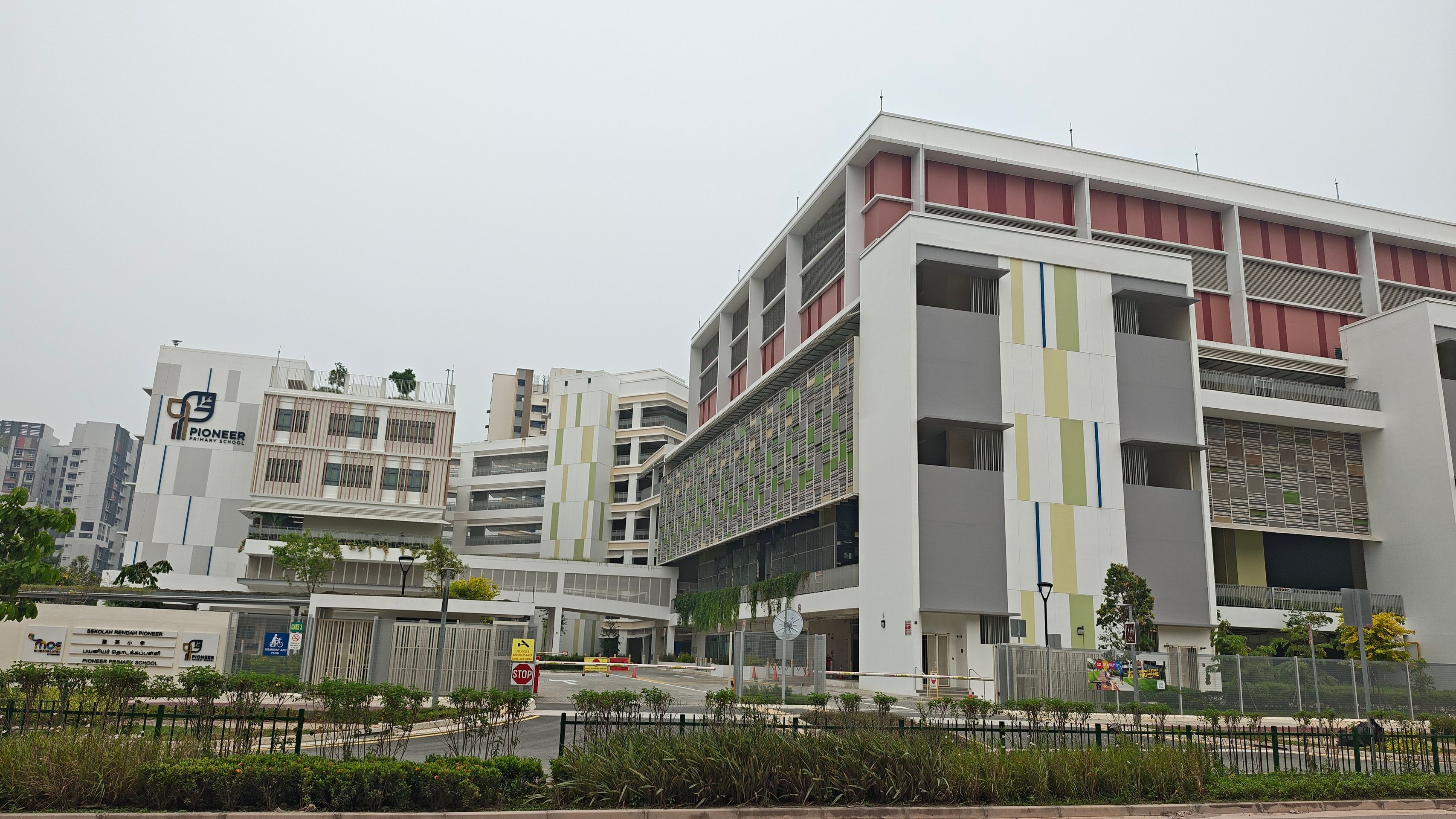
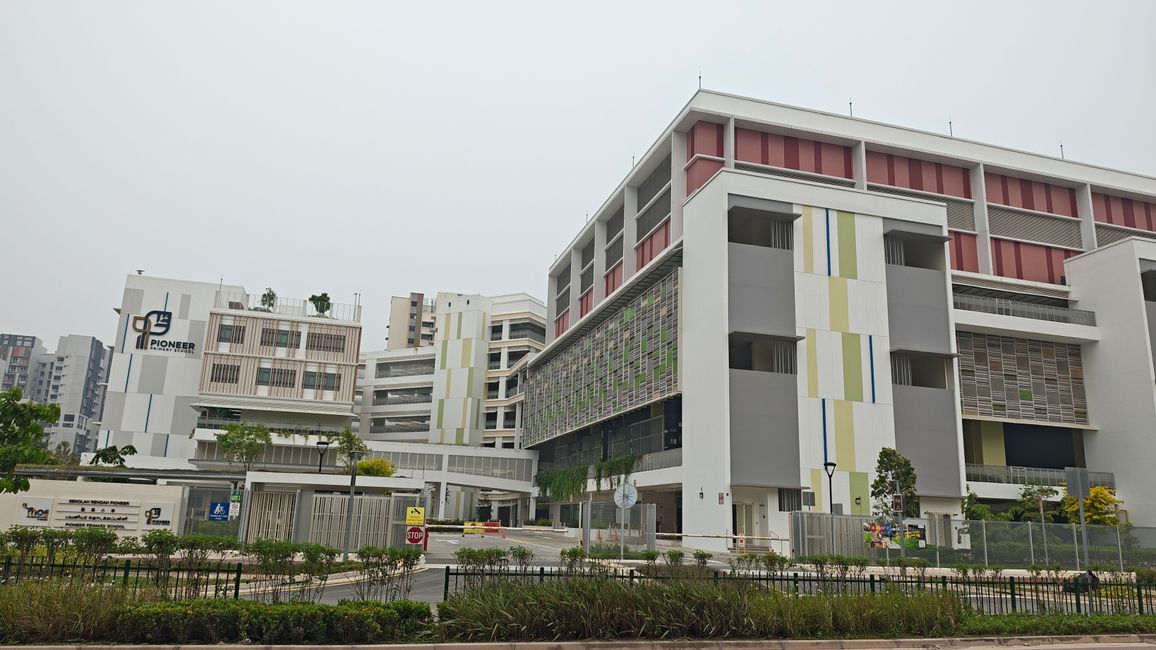
Now, six years later, I want to gather first impressions on-site, even though construction is still ongoing in Tengah. In this new district, the city district center is located along a broad green area called 'Plantation', which I want to walk through completely from southwest to northeast (in the finished part). Therefore, we take the bus to Pioneer Primary School, the starting point of our walk to the endpoint Parc Point, approximately one kilometer away as the crow flies.
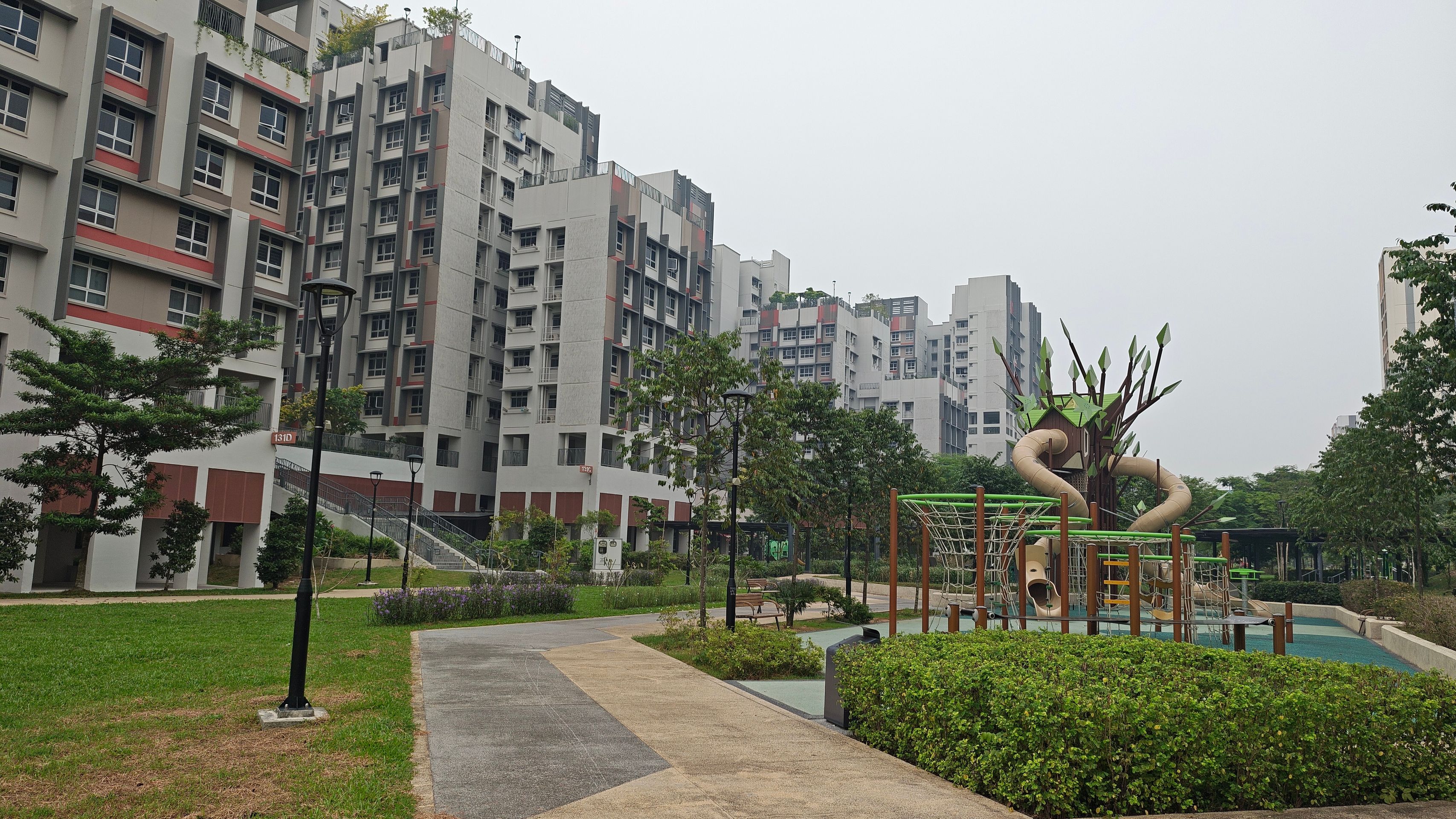
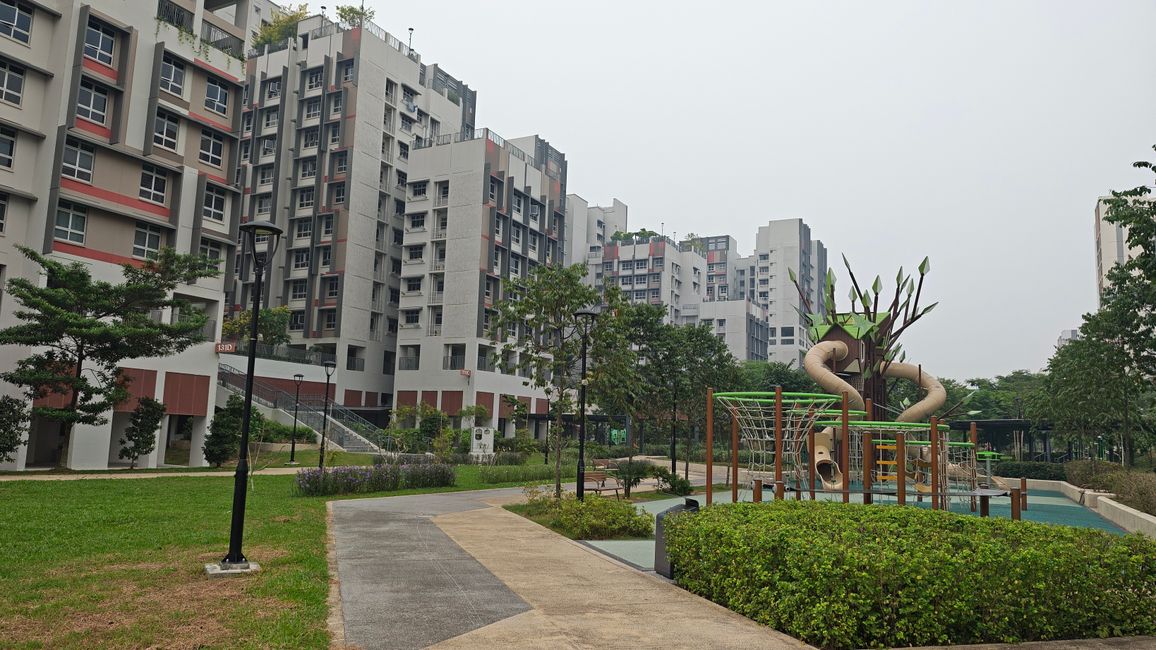
The entire park area is equipped with numerous playgrounds, with the play installations following themes, such as bamboo design here.
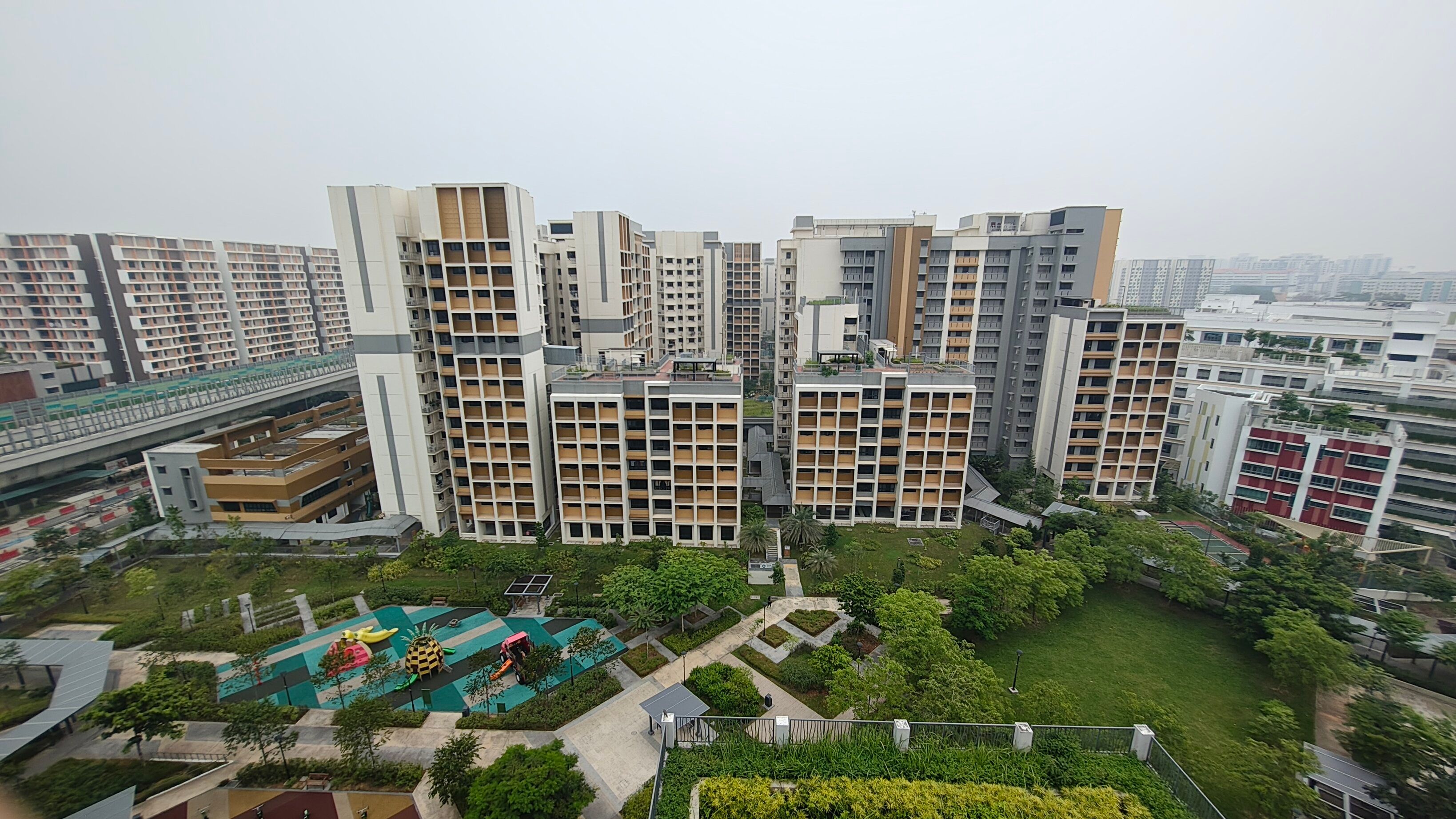
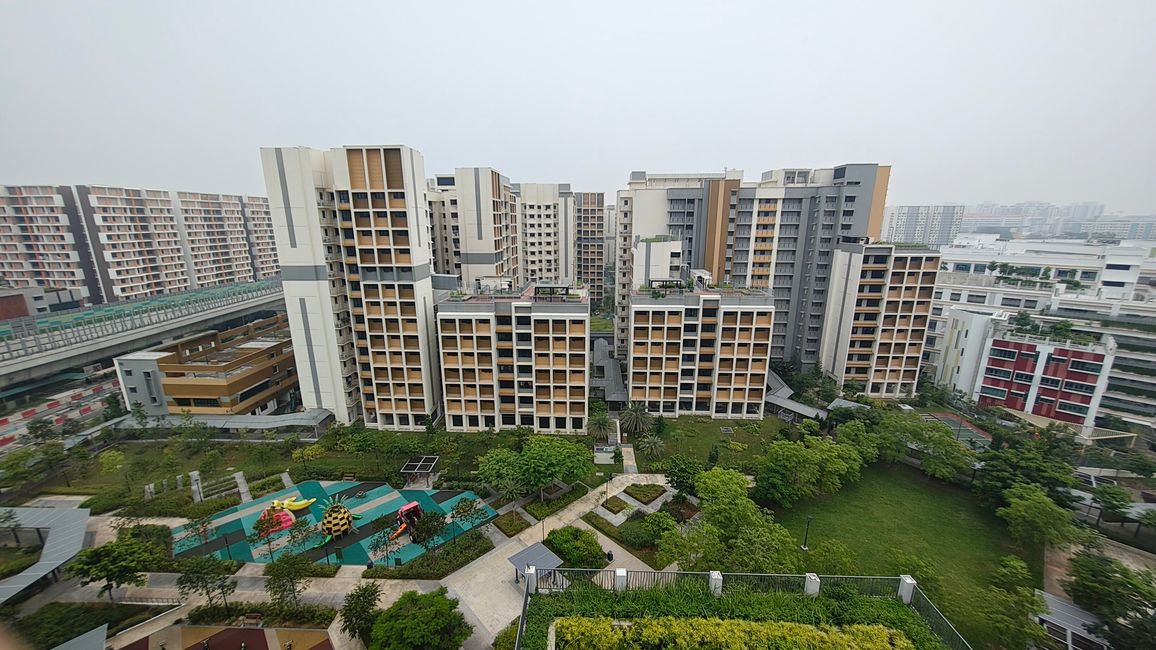
We take the elevator to a rooftop garden, and here we get a very nice impression of the whole idea of living in a green environment. In the left photo, you can see the metro line as an overhead train, which is still under construction.
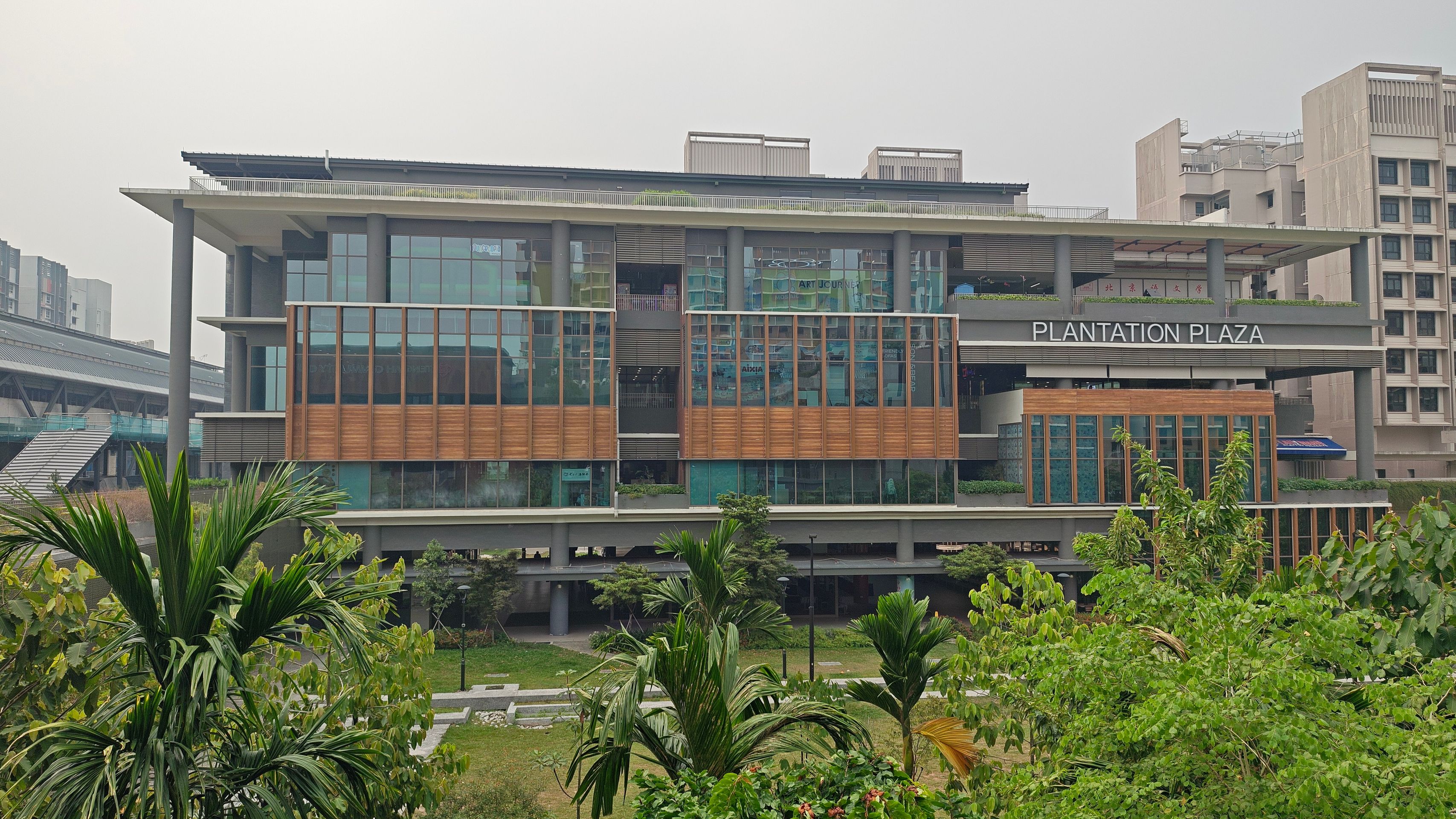
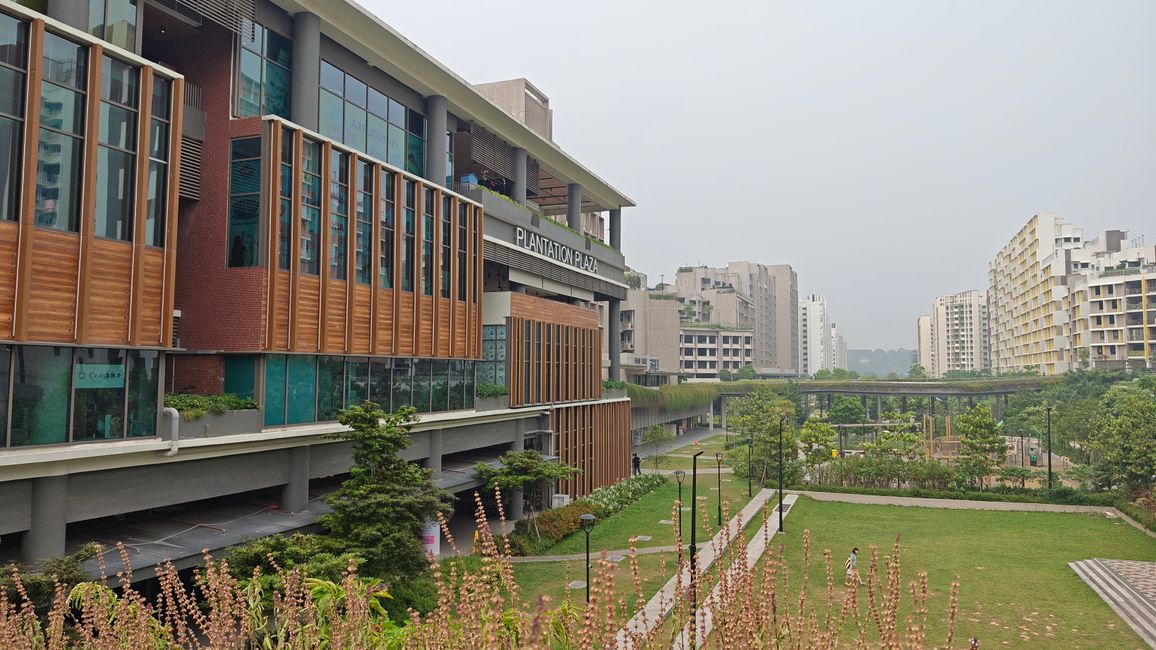
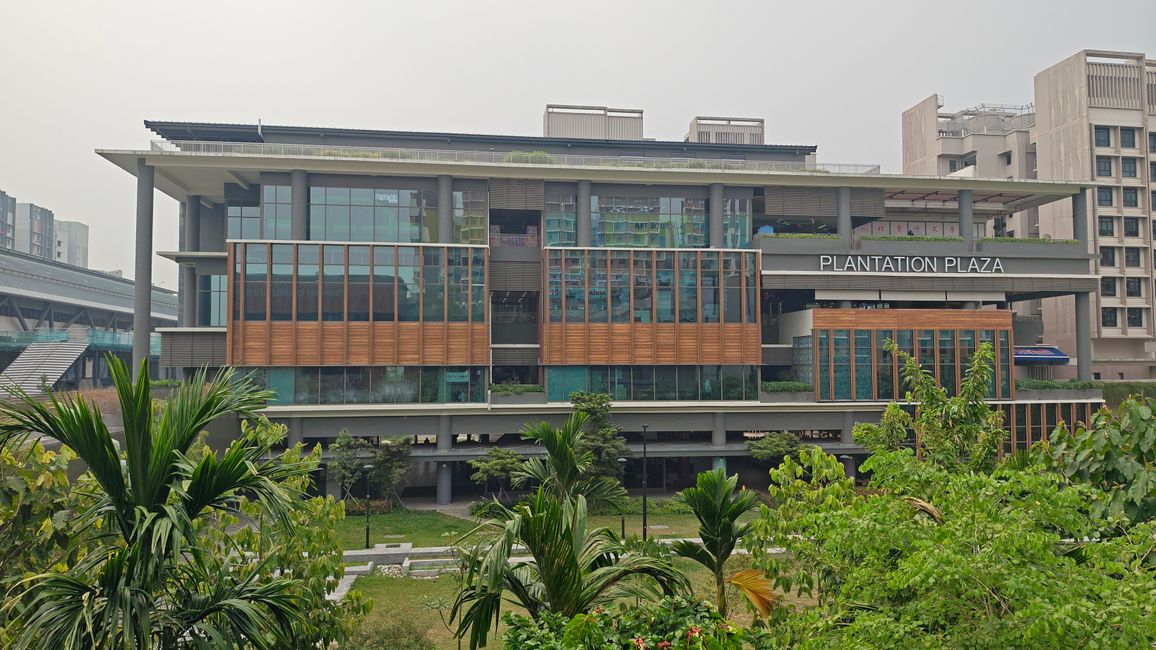
Finally, we come to the first two community facilities. We initially turn left towards Plantation Plaza.
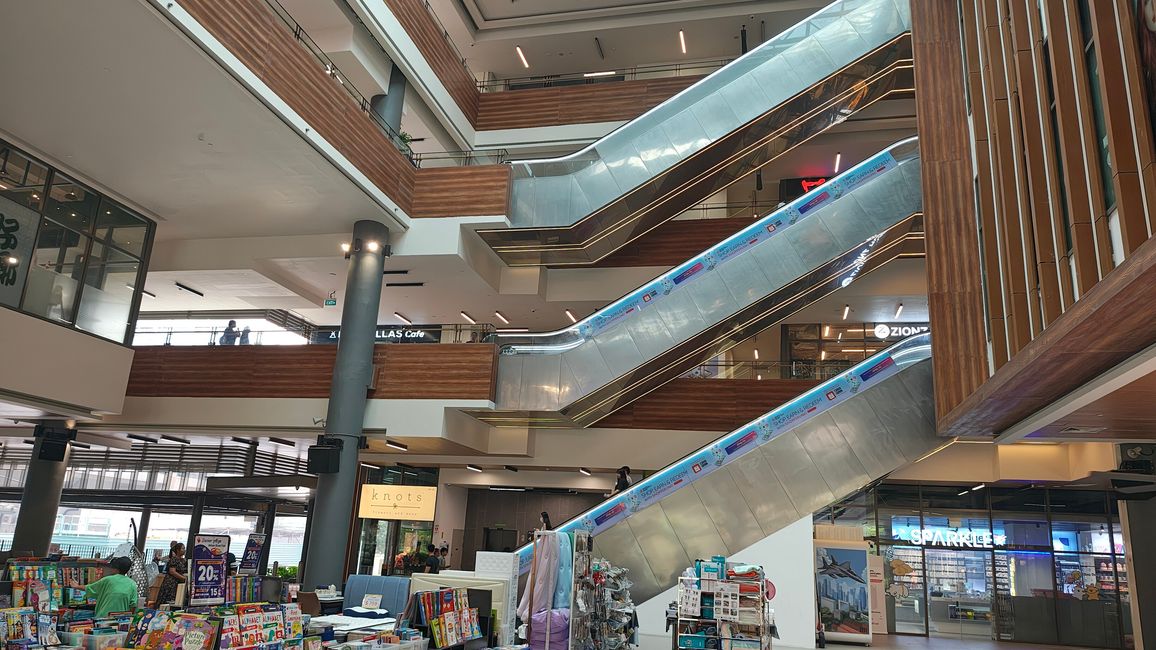
There, we enjoy a delicious lunch at Koufu Food Court and a giant iced coffee drink. The modern hawker center is completely ecological with reusable dishes, even for drinking vessels. Therefore, we fill the remainder of the drink into our own bottles.
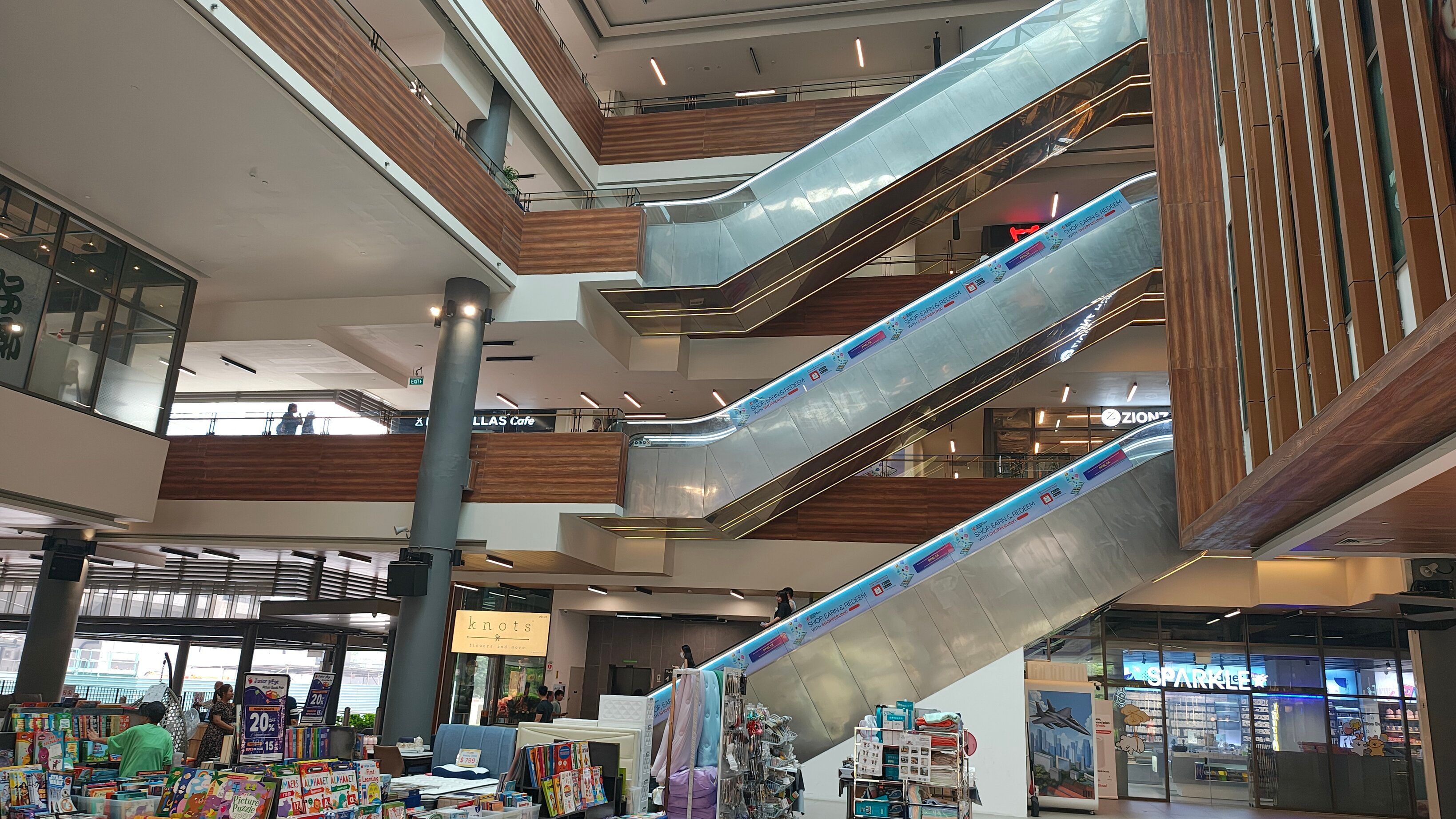
In Plantation Plaza, there is a large community space where several restaurants, shops, and community offices are established on multiple floors.
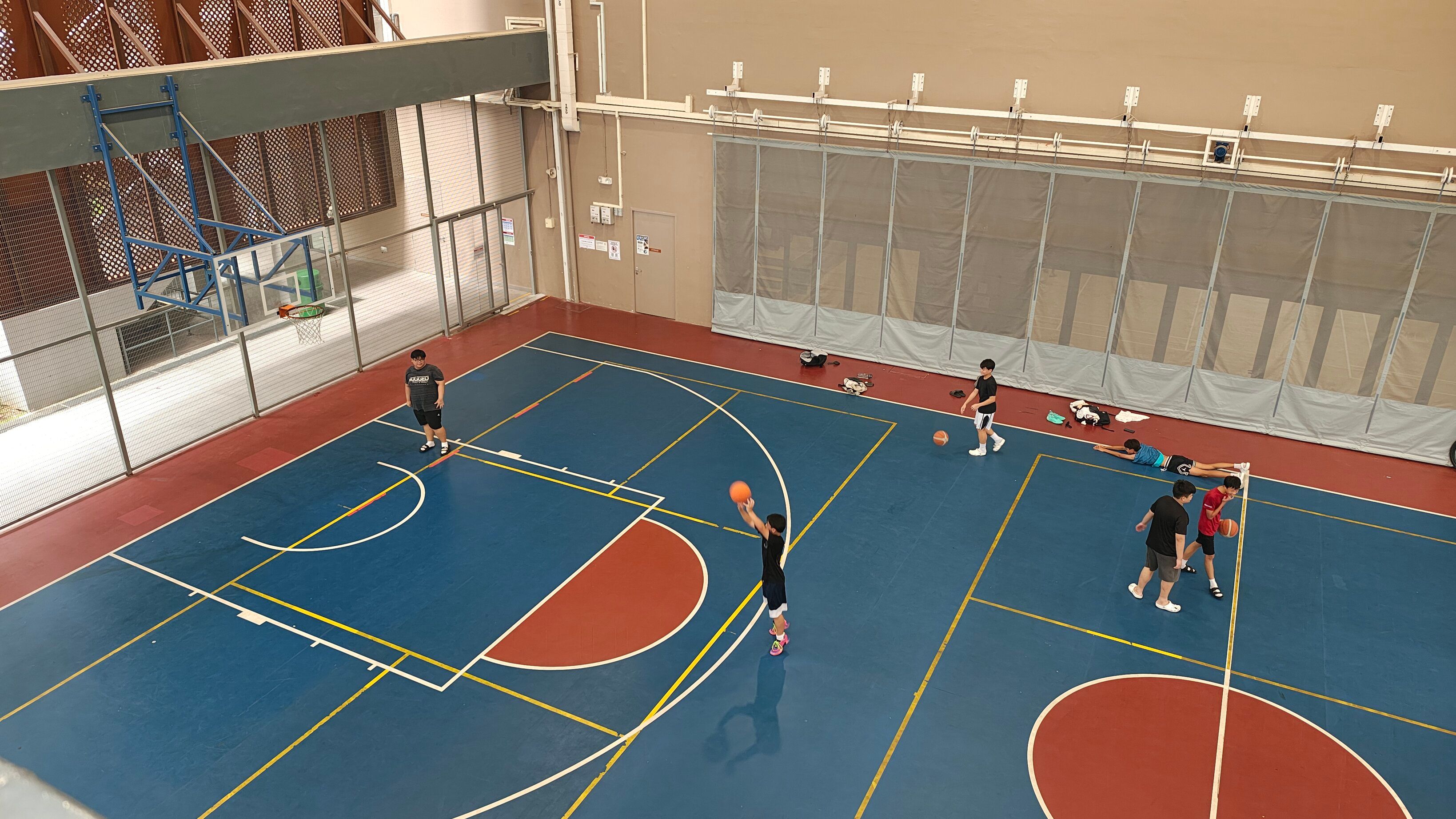
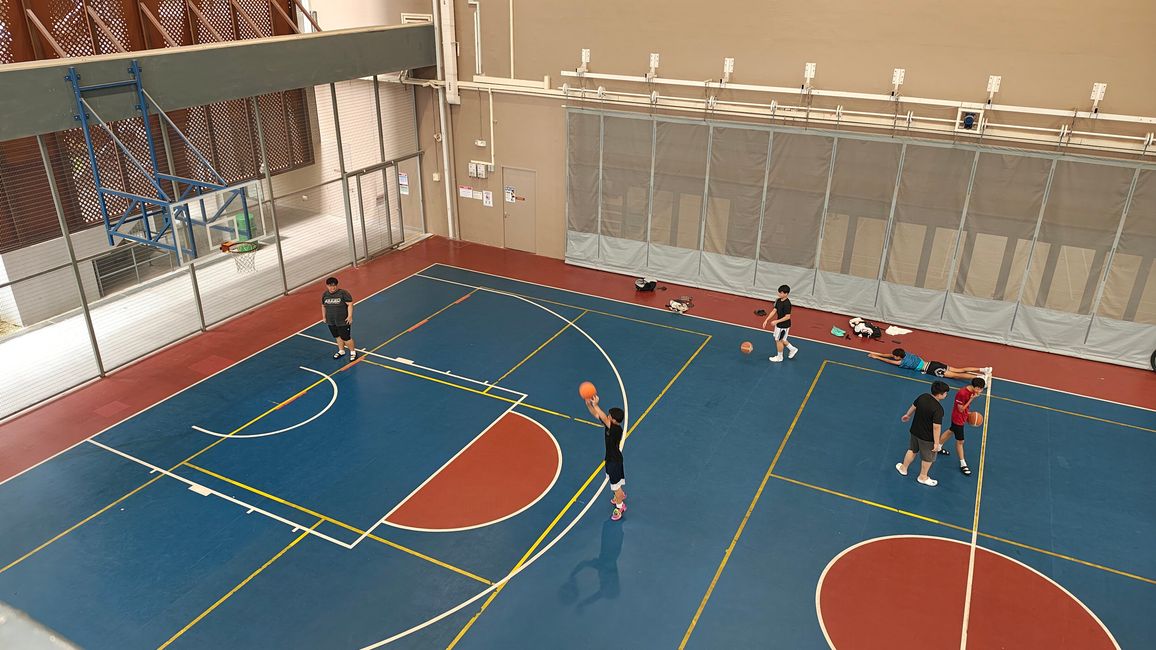
Then we walk over the pedestrian bridge to Tengah Community Club, where some youths are currently playing basketball.
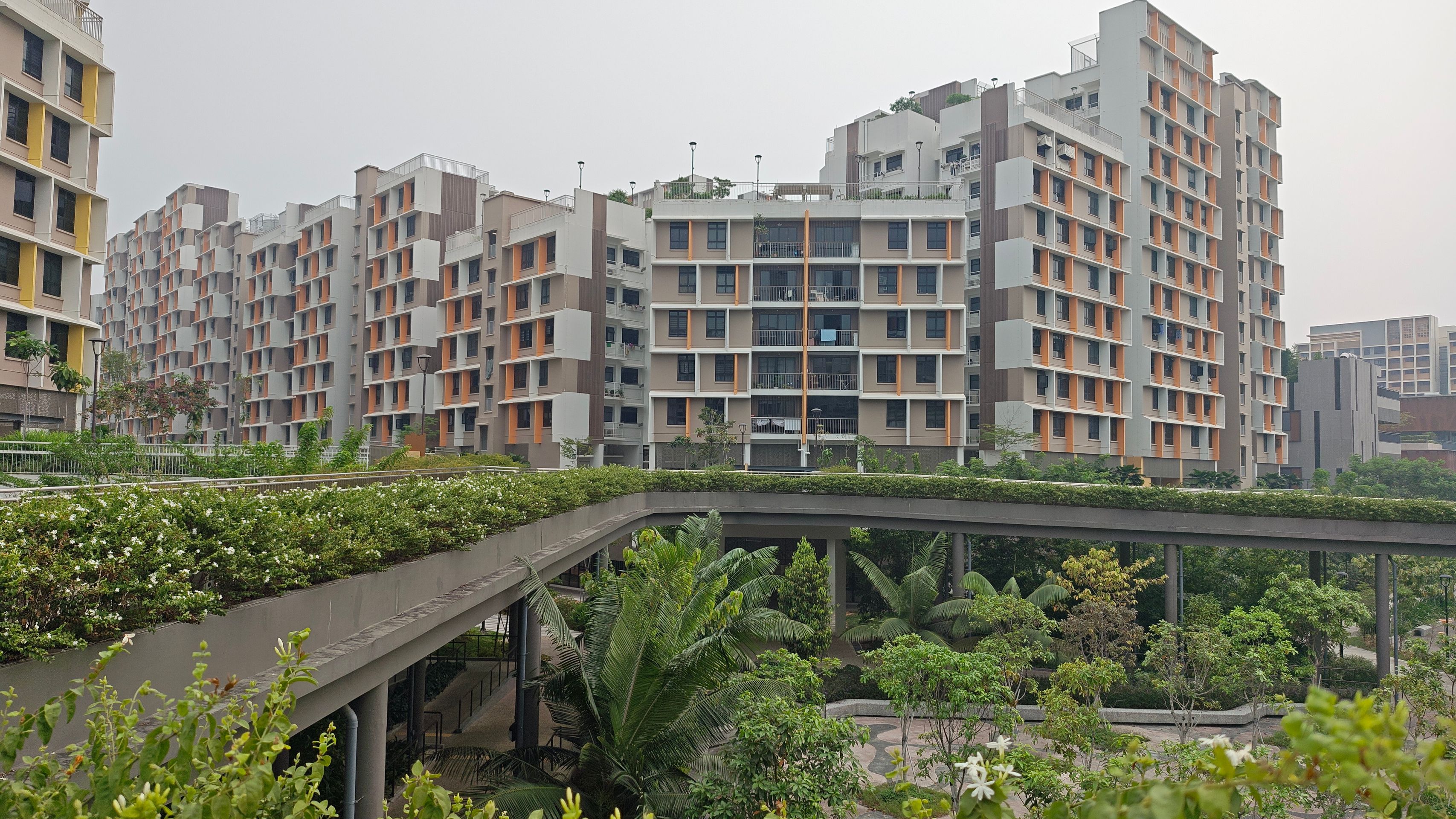
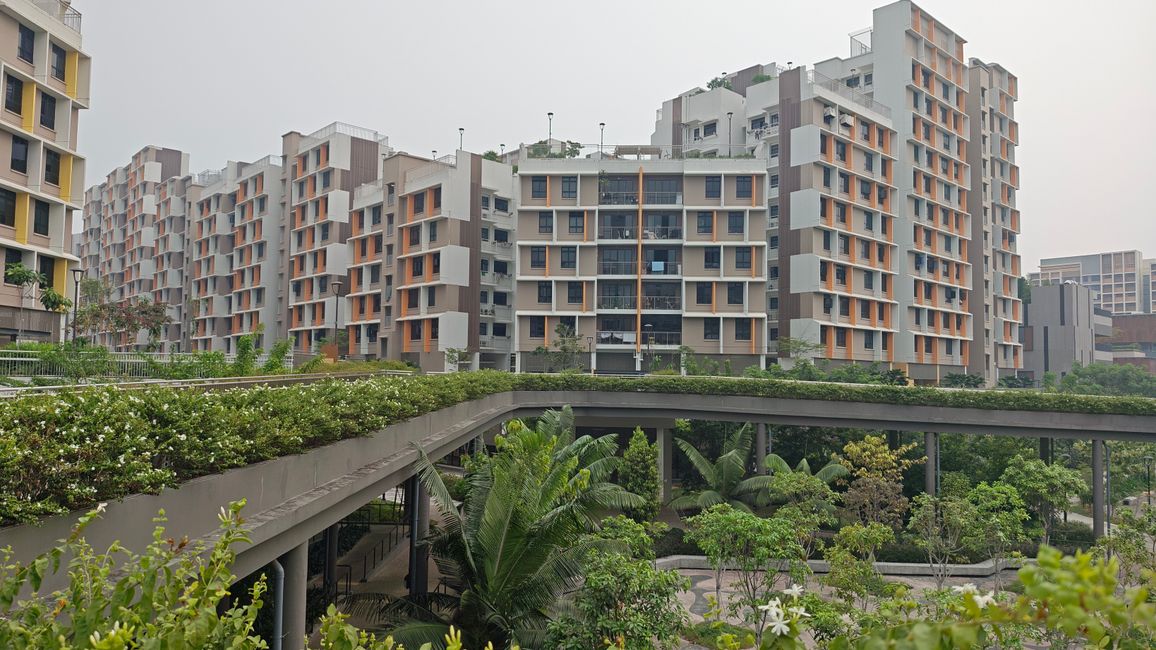
We now stay on the same level and walk along the houses on green elevated pathways over the green area.
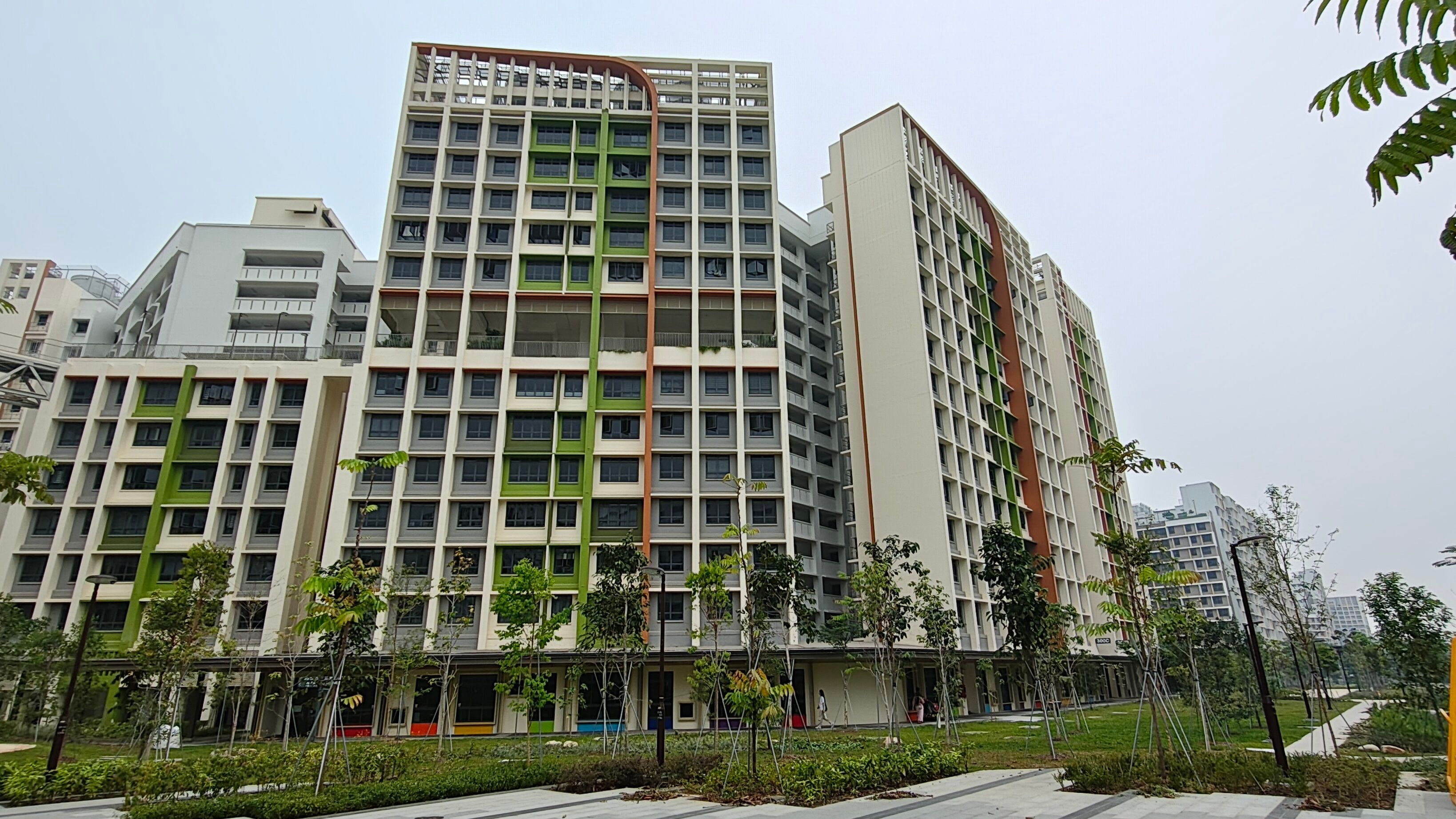
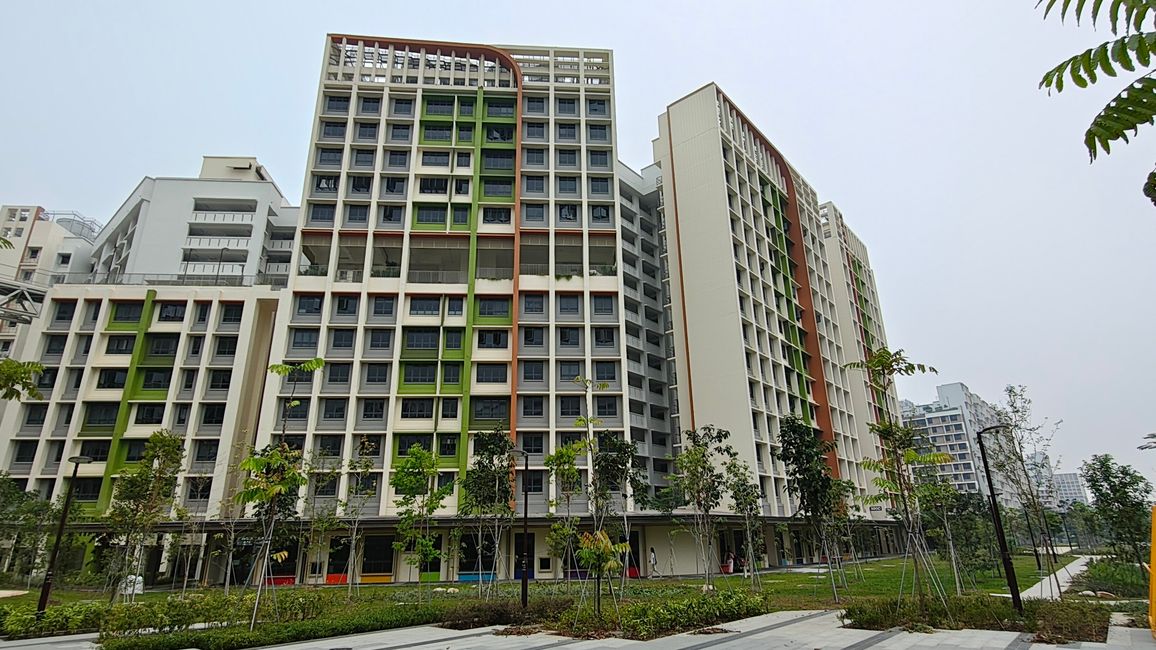
The houses on one side are indeed very beautifully designed, but the earth-toned exterior facade could use a bit more color. In the back part of the Plantation park, the trees are still quite small, showing that they were only recently completed.
We take one more elevator ride to a garden level, which also serves as a connecting corridor to the houses behind and to the parking garages in between. Here as well, playgrounds for children have been established. Large premises are utilized by kindergartens.
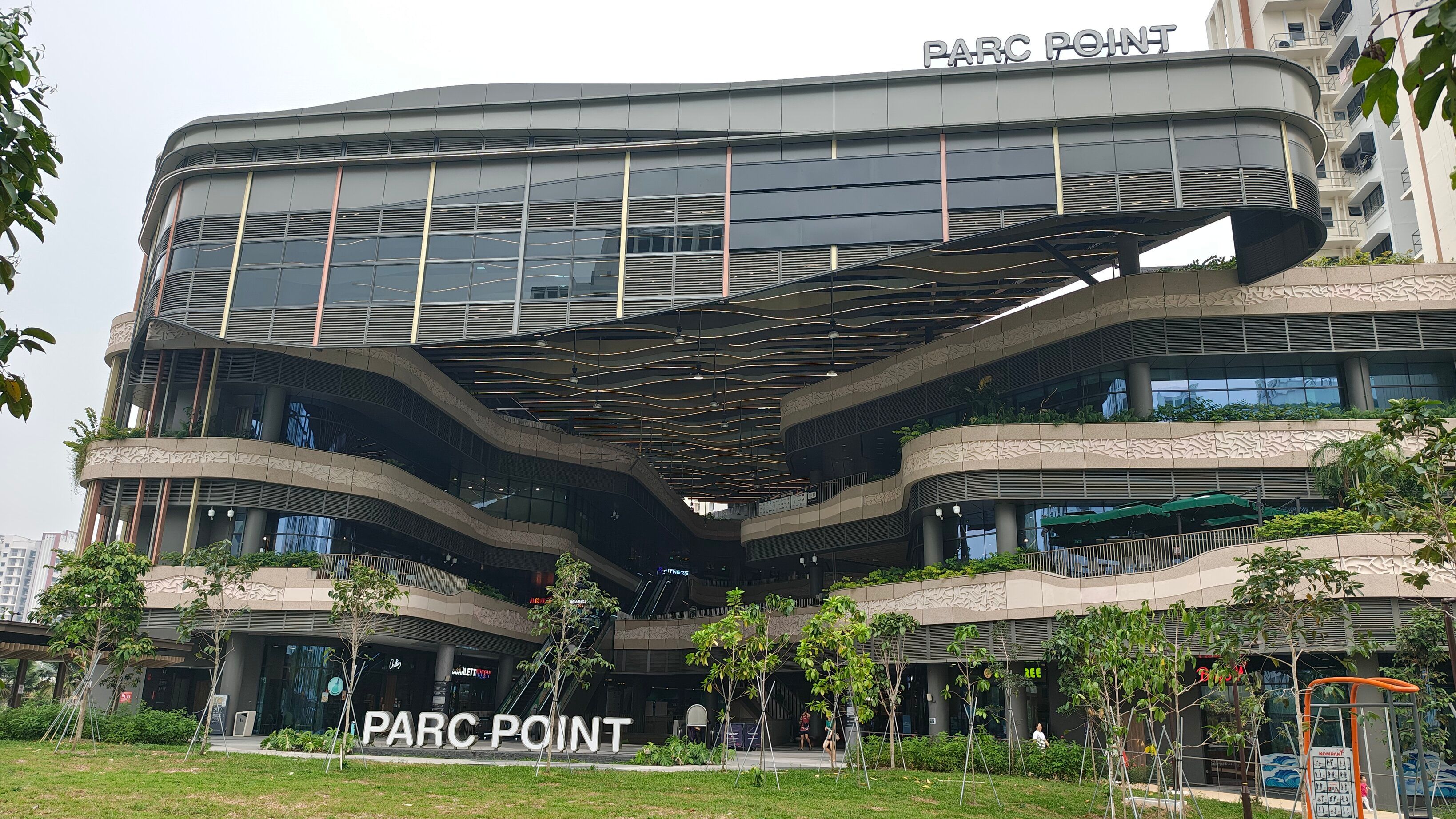
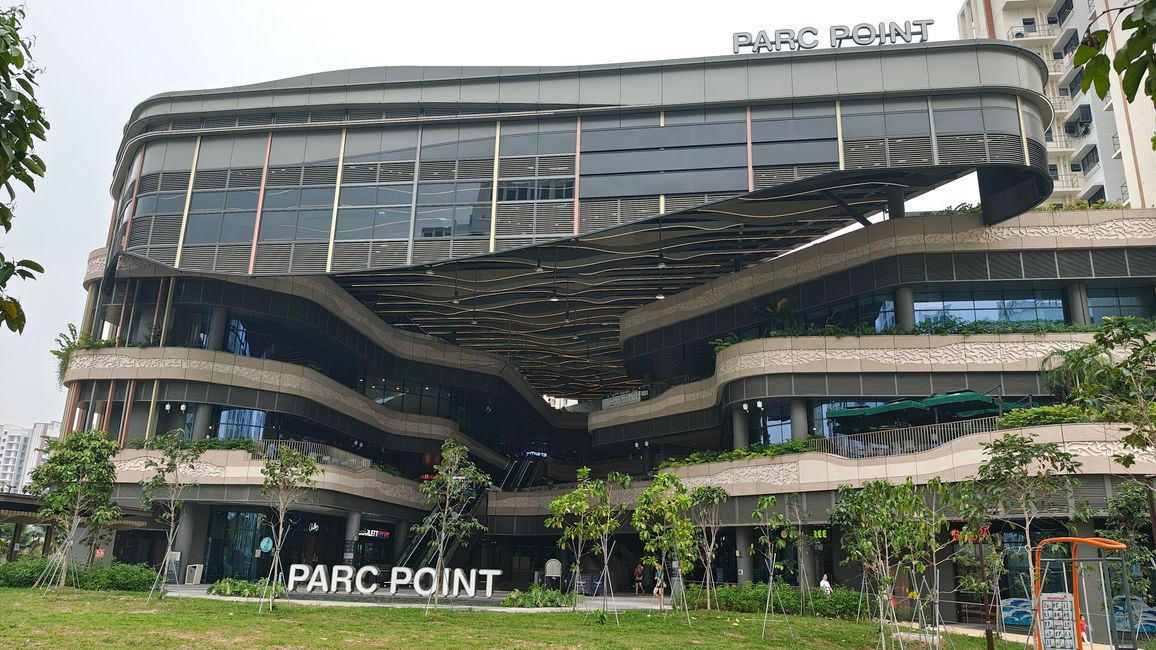
Finally, we reach the Neighborhood Centre 'Parc Point', which is again equipped with a food court, many shops, a tutoring school, doctors, and community offices.
I am overall impressed by the design of the new district. Despite the green car-free center, wide multi-lane avenues intersect the park area, ensuring easy automobile access as well. Nevertheless, it is a peaceful residential environment. When the metro line is operational in the coming years, the transport connection will improve even further.
Today, about 28,000 people live in Tengah. When the district is fully developed, a total of about 130,000 residents are expected. Notably, a significant proportion of young people have already found their homes here. However, even though only 20% of the planned total population has been reached, there is already a diverse range of shops, schools, and restaurants. If I had bought an apartment here, I would already be able to live very well here.
In the last blog post on my Xiefuzi Travel Blog this year, I talk about our long stay at Changi Airport in Singapore while waiting for our flight.
Xiefuzi Reise BlogLike a newsletter: every new post arrives via email.