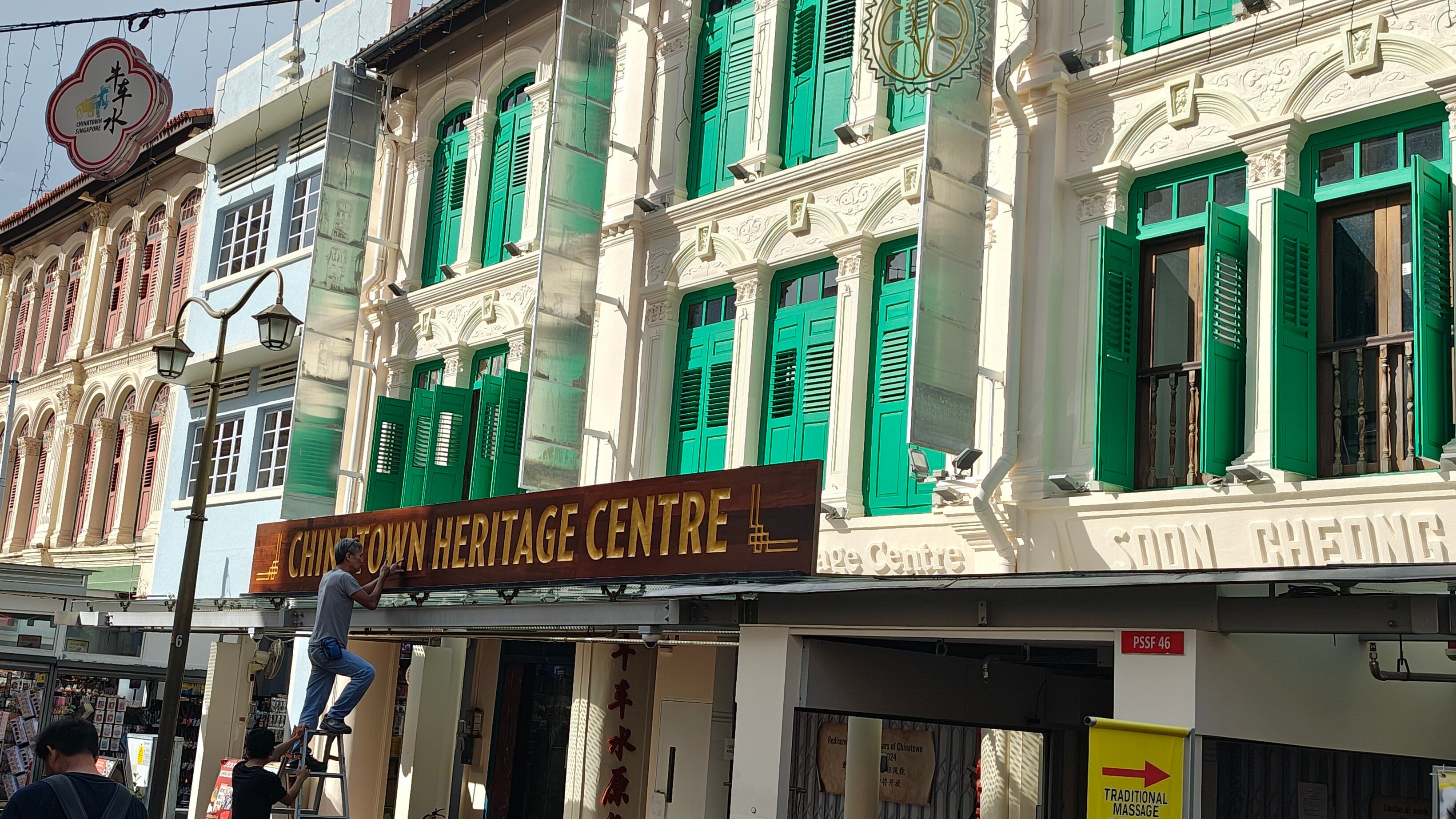
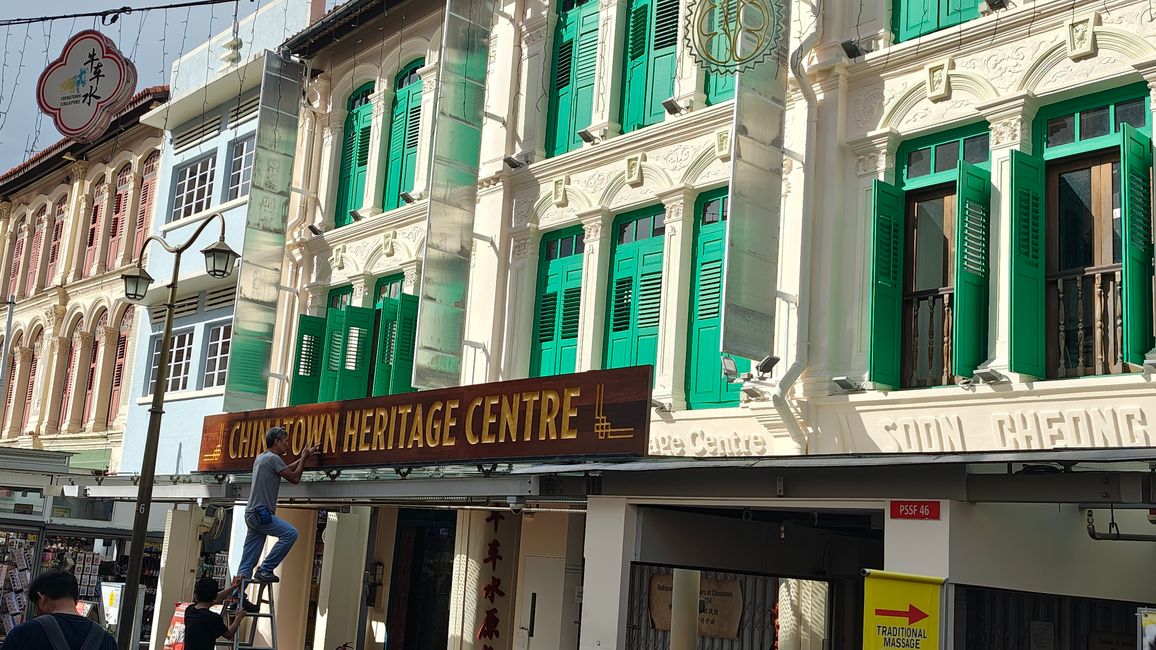
Two years ago, during our stroll through Chinatown in Singapore, a worker was busy giving the final touches to the new large sign above the entrance to the Chinatown Heritage Centre before its reopening after renovations.
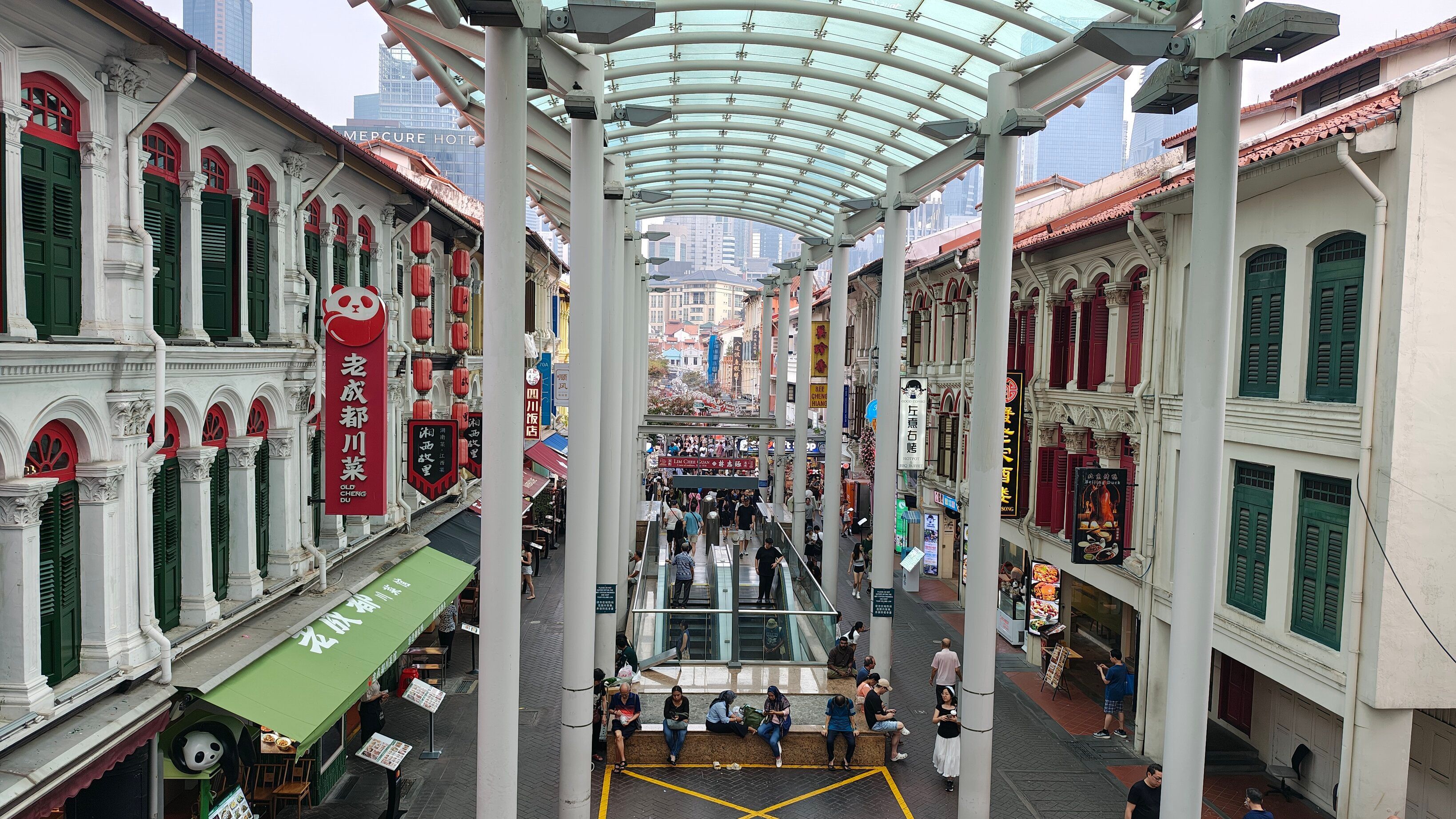
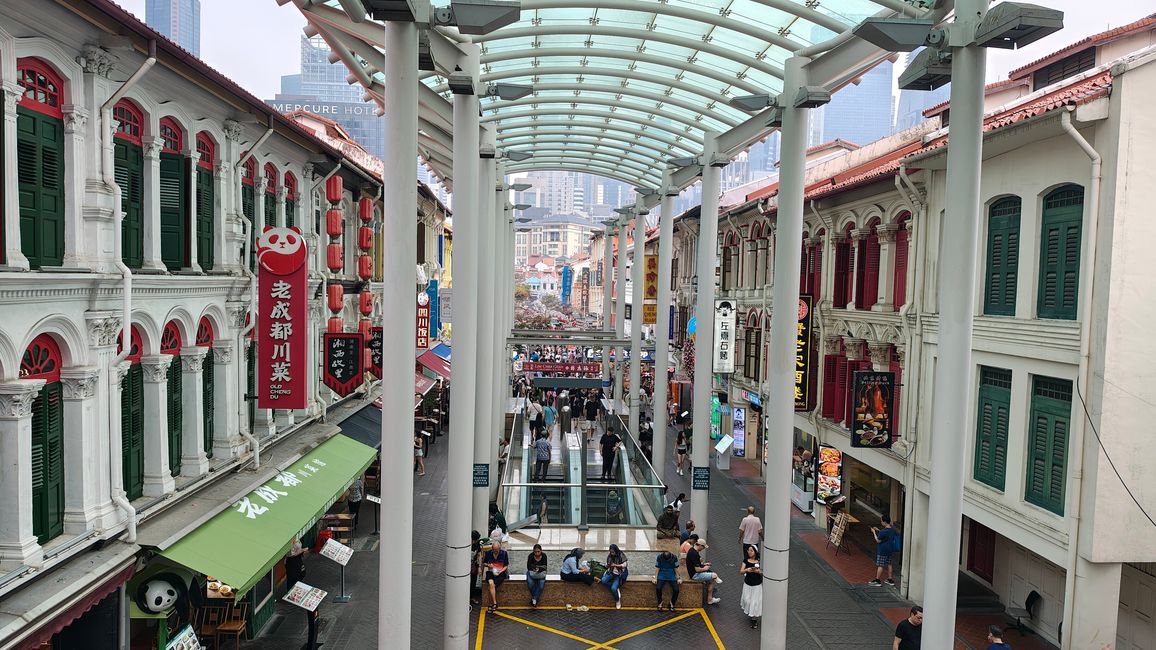
This year, I want to see the results of the redesign, so we walk to Pagoda Street in Chinatown.
The entrance area of the museum has indeed been completely fitted with a new counter and now includes the souvenir shop at the back. However, the entry prices are very high, which was also the case six years ago when I first visited the museum.
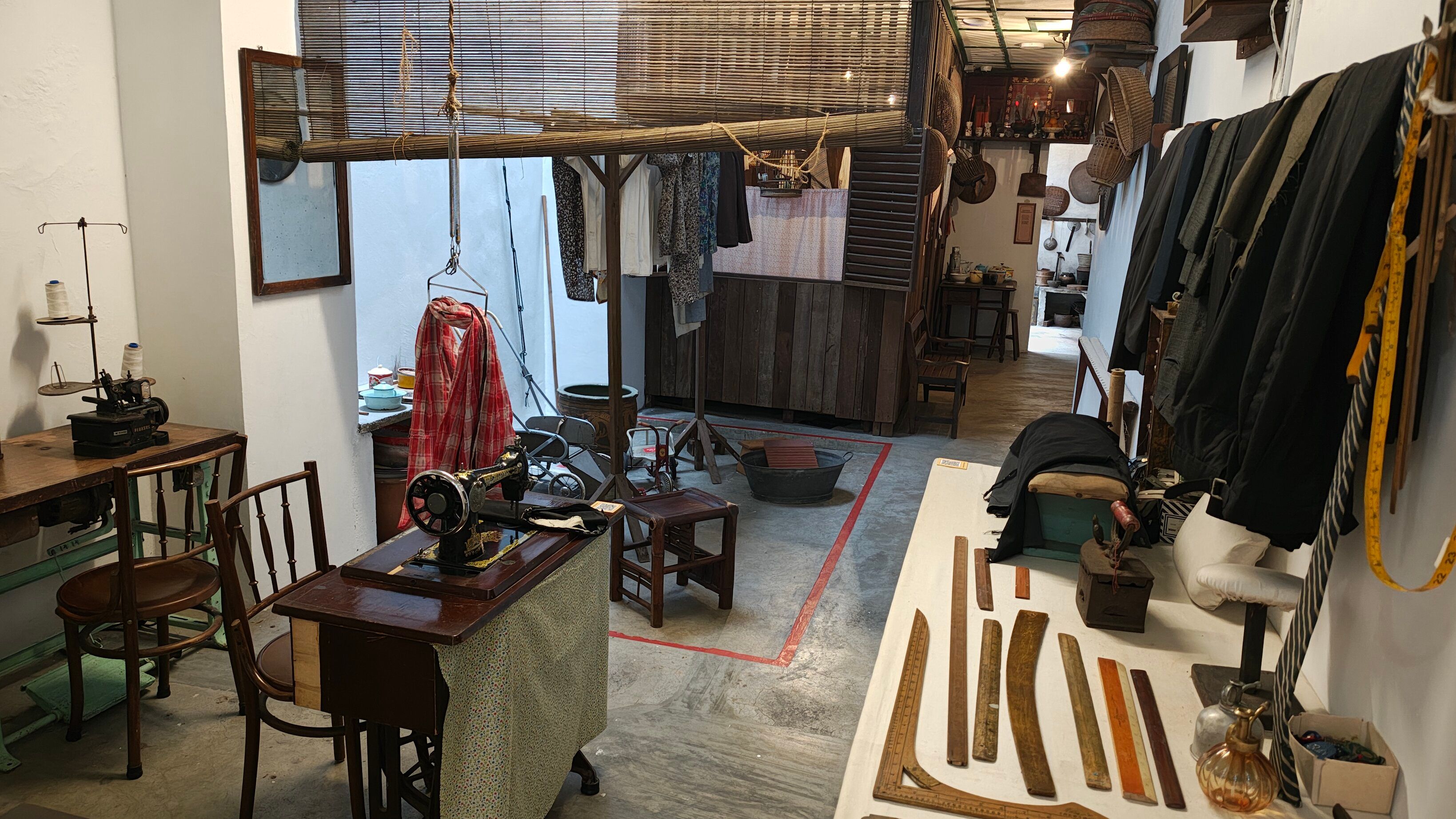
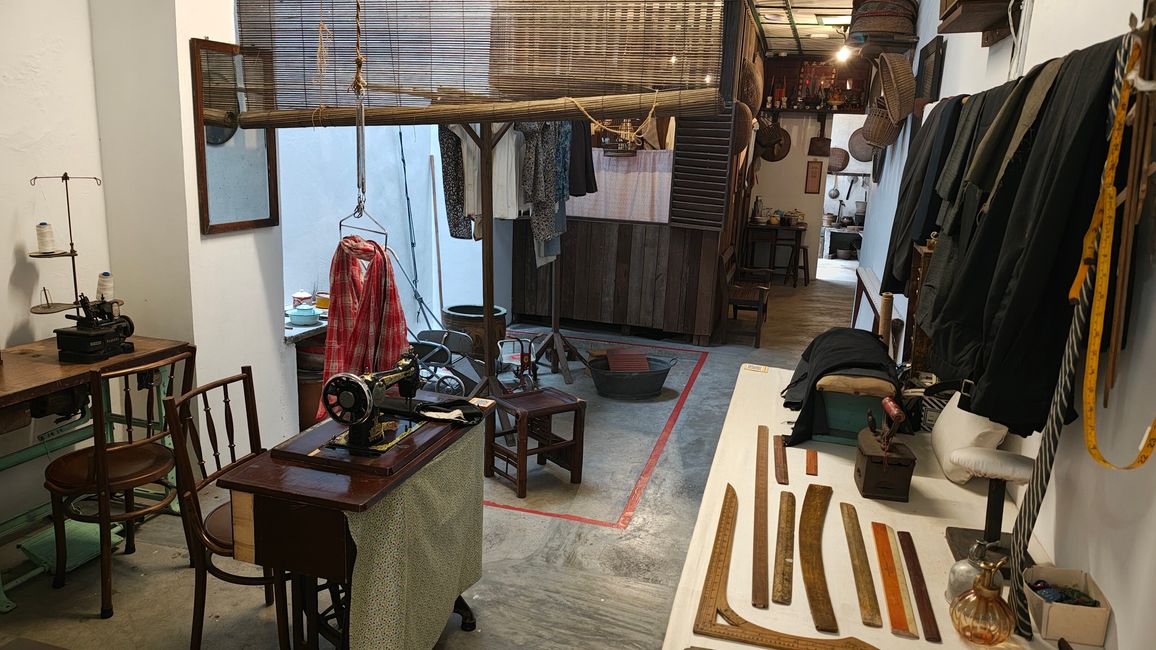
My wife knows the history of her people in Singapore and decides against visiting due to the high price. I, on the other hand, am curious and step into the first exhibition room, which has not changed much or only slightly. Instead of entering from the front, one now enters from the side into the tailor's shop.
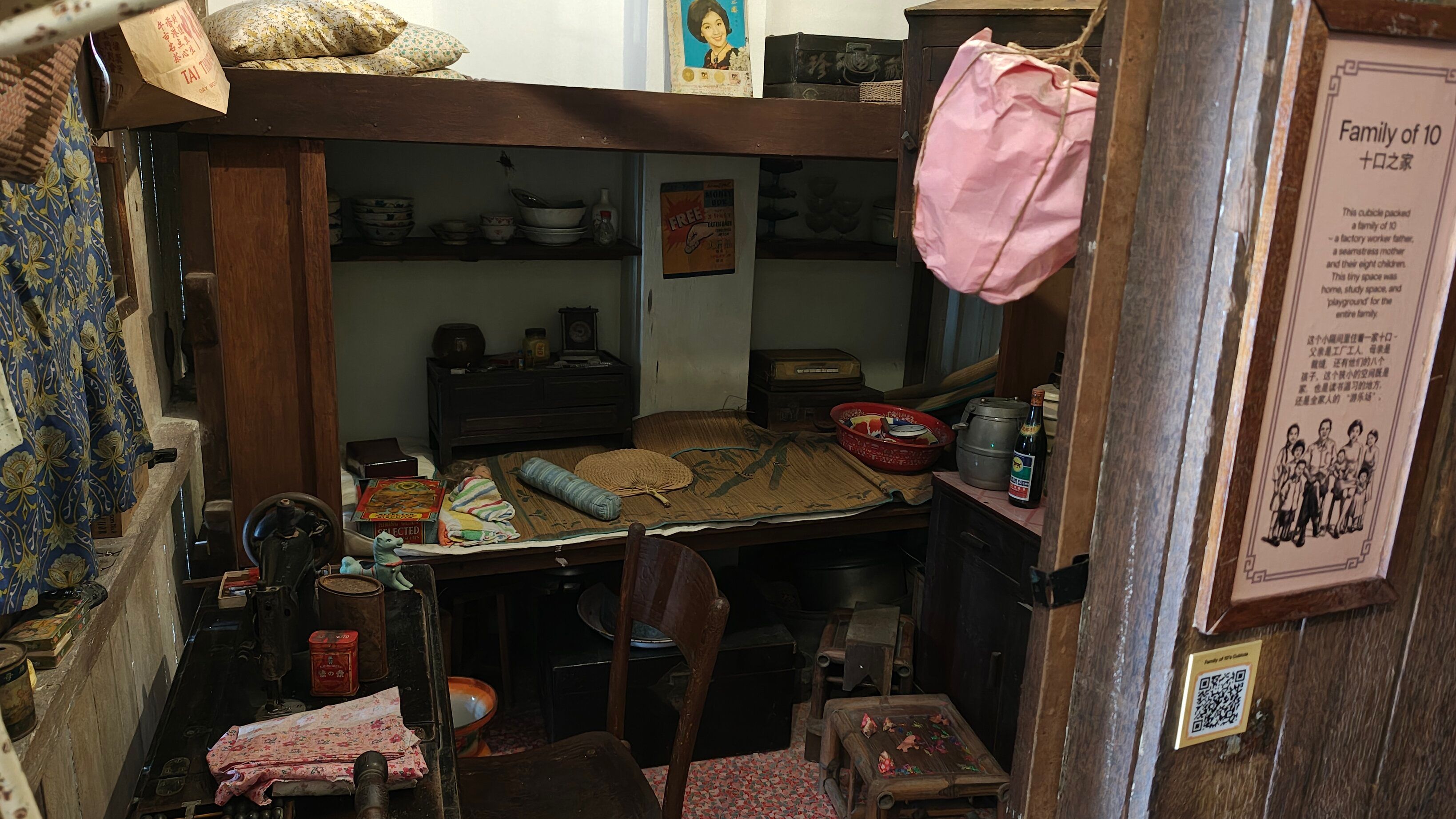
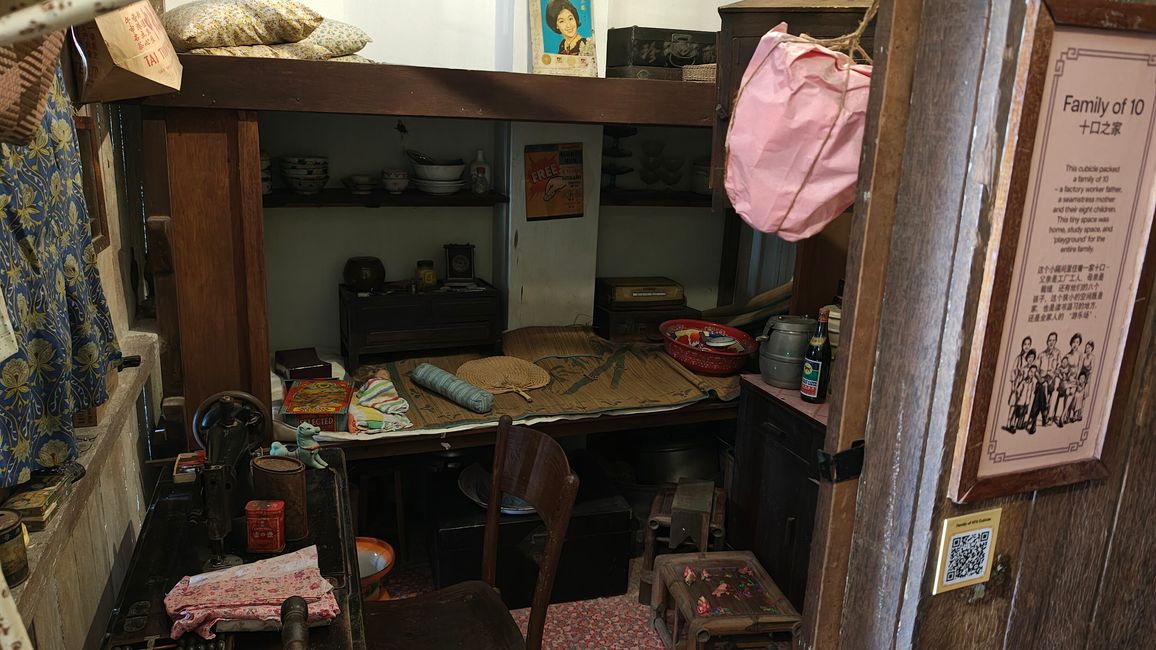
The back area with the kitchen and restroom seems to not have changed, so I trek up the narrow wooden staircase to the second floor, where the small living rooms are located. These are styled according to their professions, and to my surprise, there are also no clearly noticeable changes here.
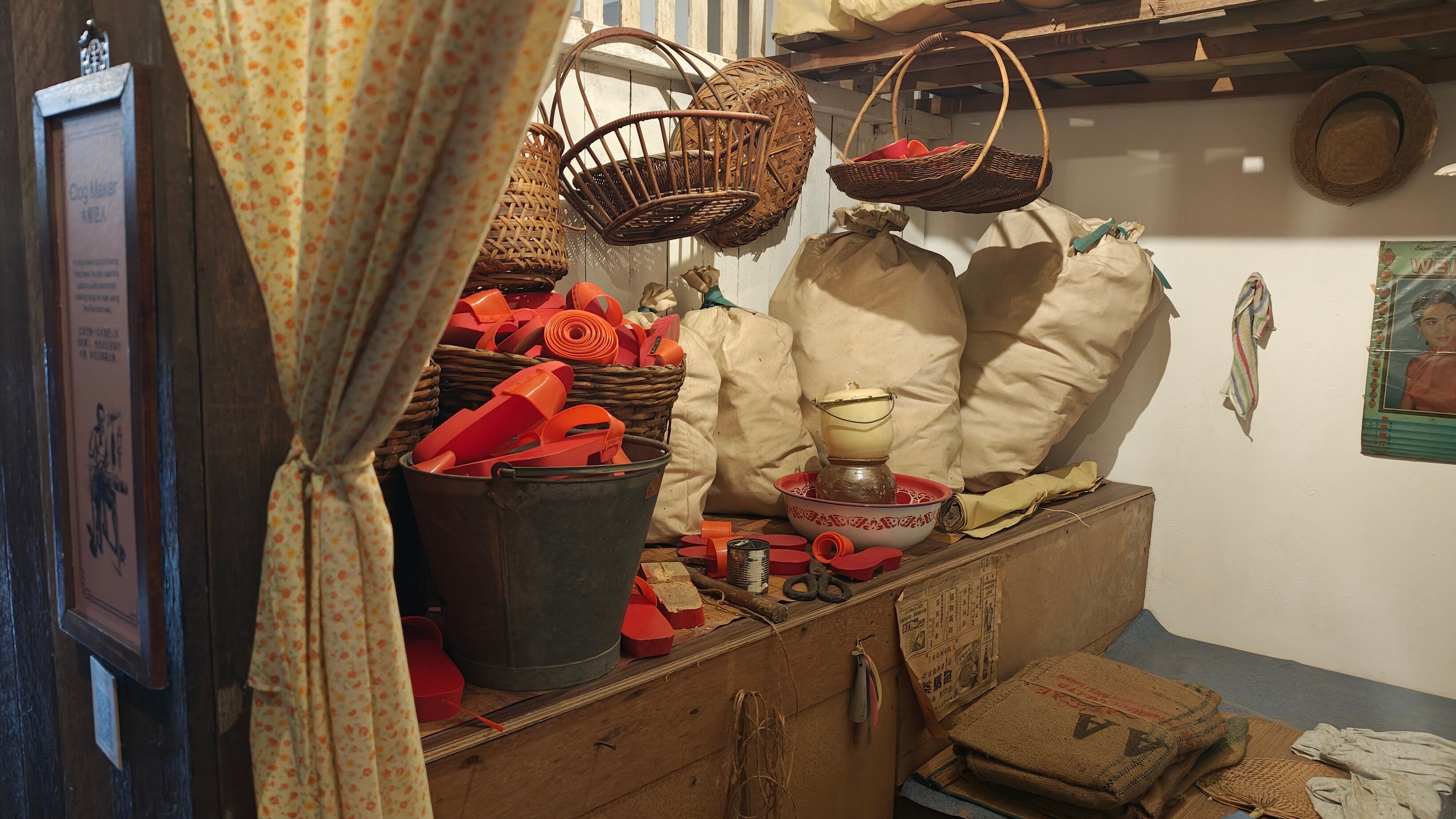
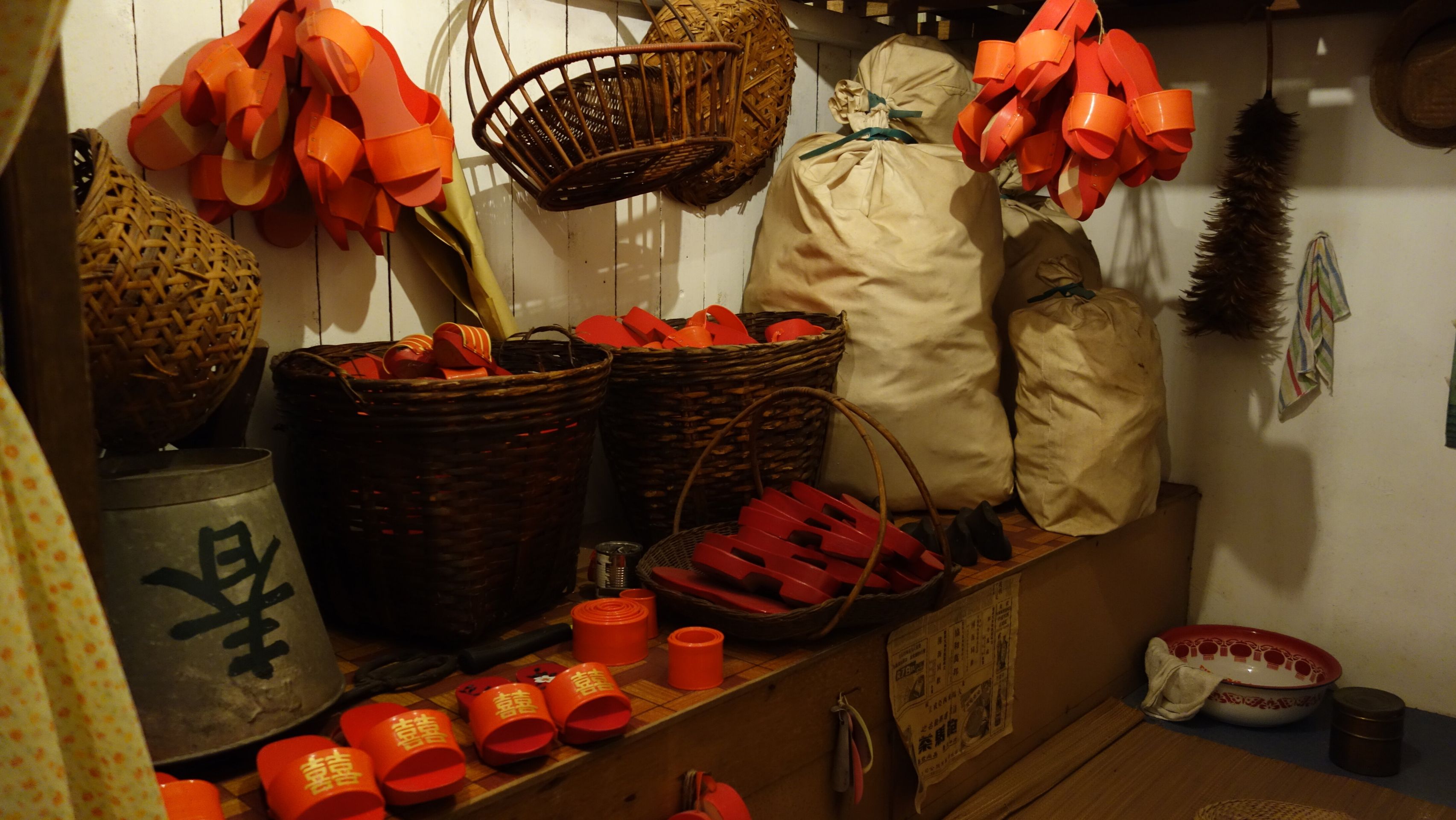
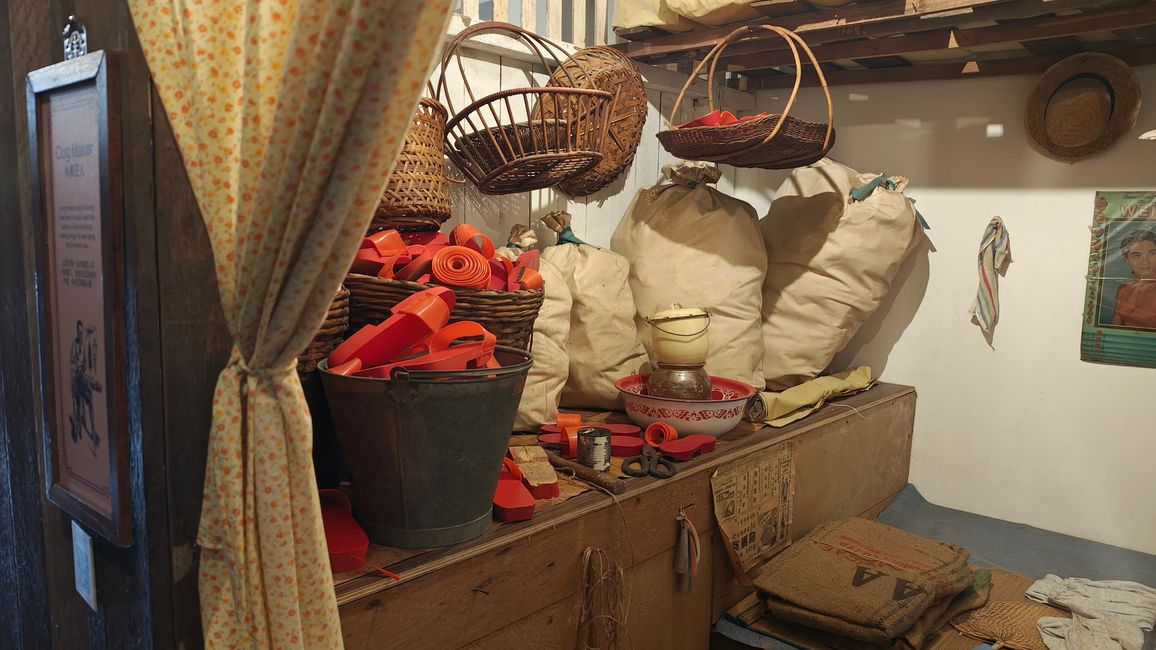
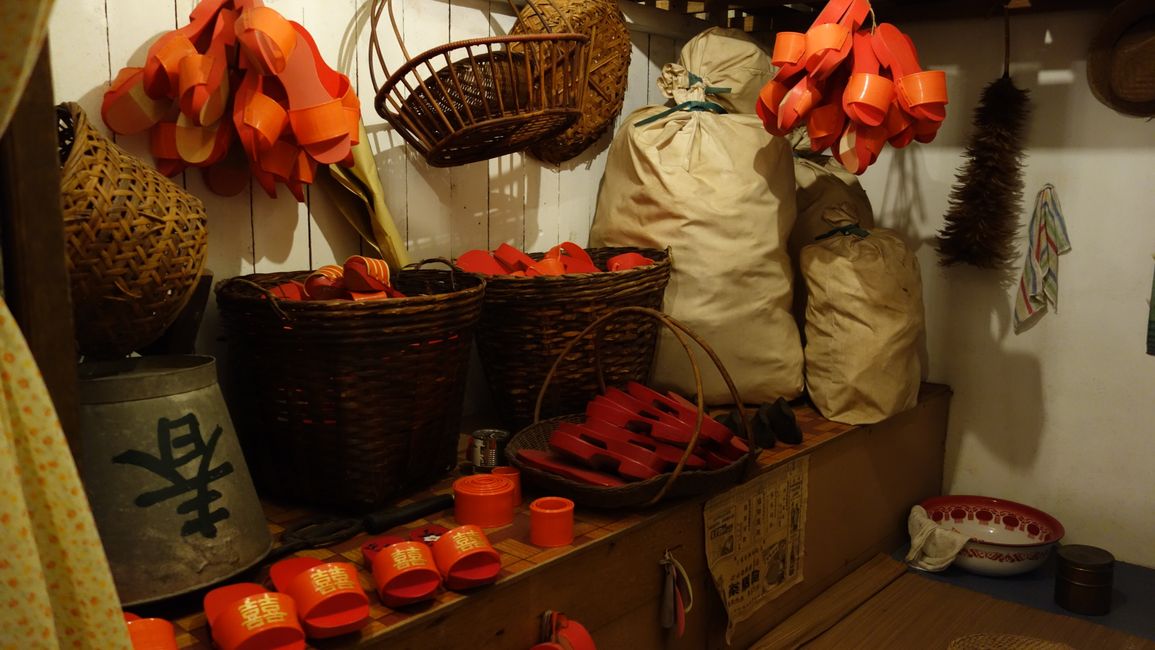
However, I do notice changes in the Clog Maker room because I still remember the many red wooden shoes, and the chamber today no longer glows with such a bright red. Also, the explanatory panel now writes 'Clog Maker' next to each other, while the two words were previously written one below the other.
Here is the photo from my current visit (2026):
And here is the photo from 2020:
So, the presentation of the exhibition has changed, just not visibly at first glance.
Overall, the small living rooms still impress me, especially when one considers that a ten-member family lived in such a tiny space.
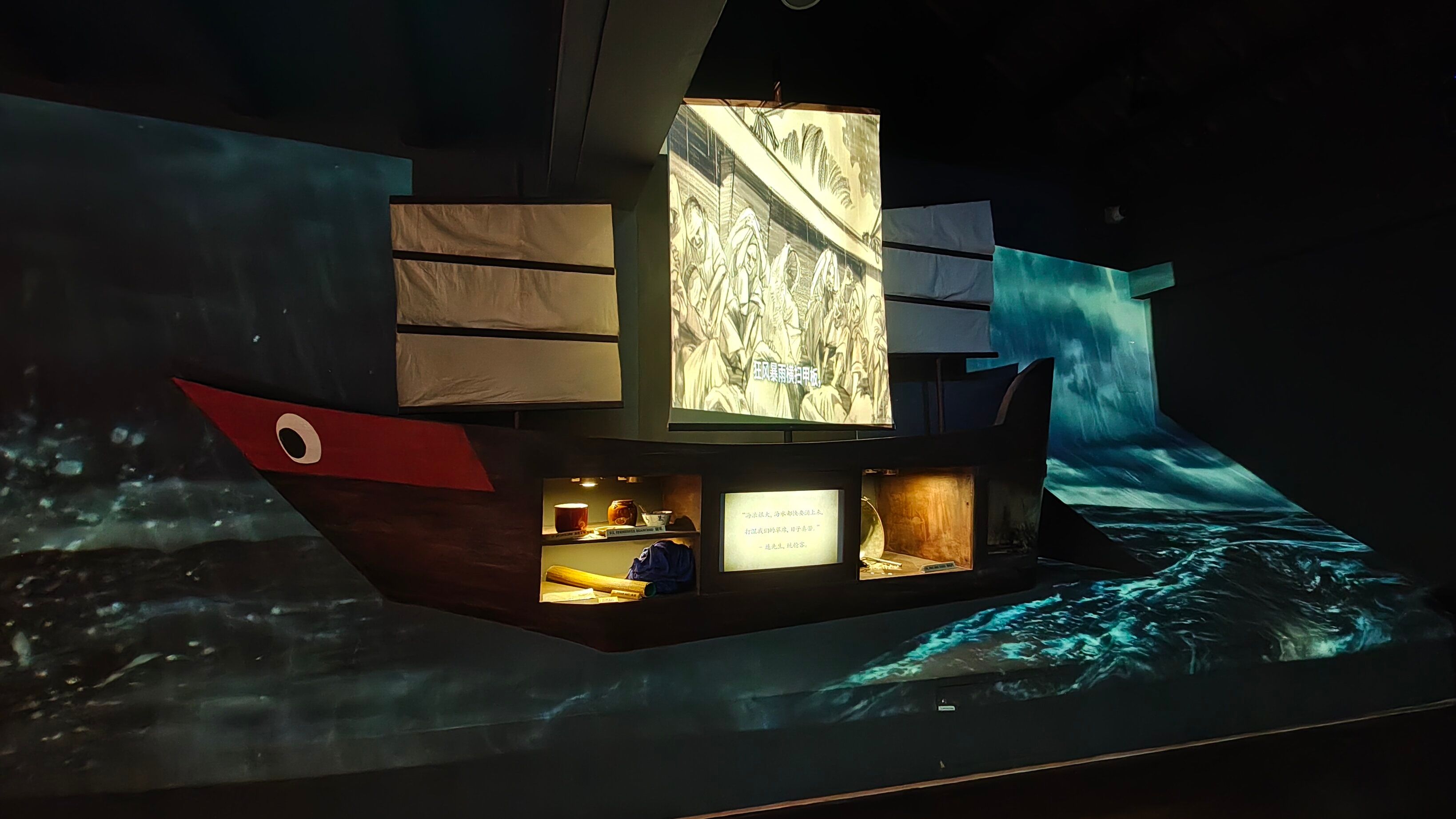
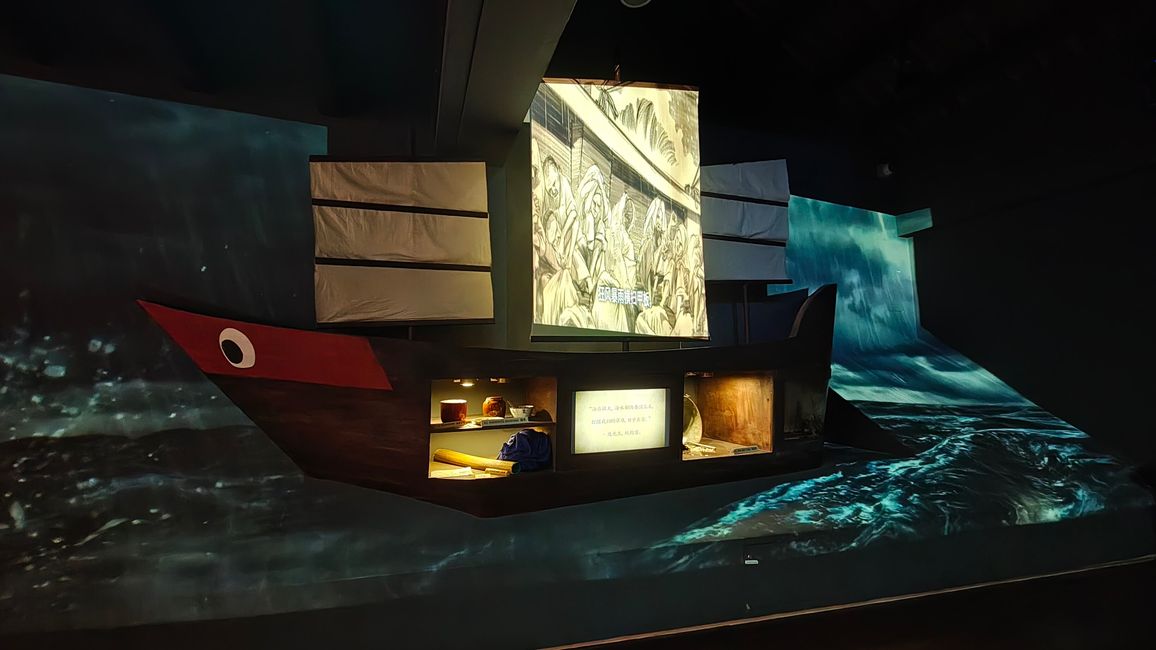
I climb another floor up to the third floor. The ship with the monitor, which depicts the difficult emigration of people from China to Singapore, now has a sketch-like canvas video presentation, with the monitor underneath now being used for Chinese character explanations.
The Jackson Map, depicting the location of Chinatown, was presented as an interactive digital map with explanations on a monitor.
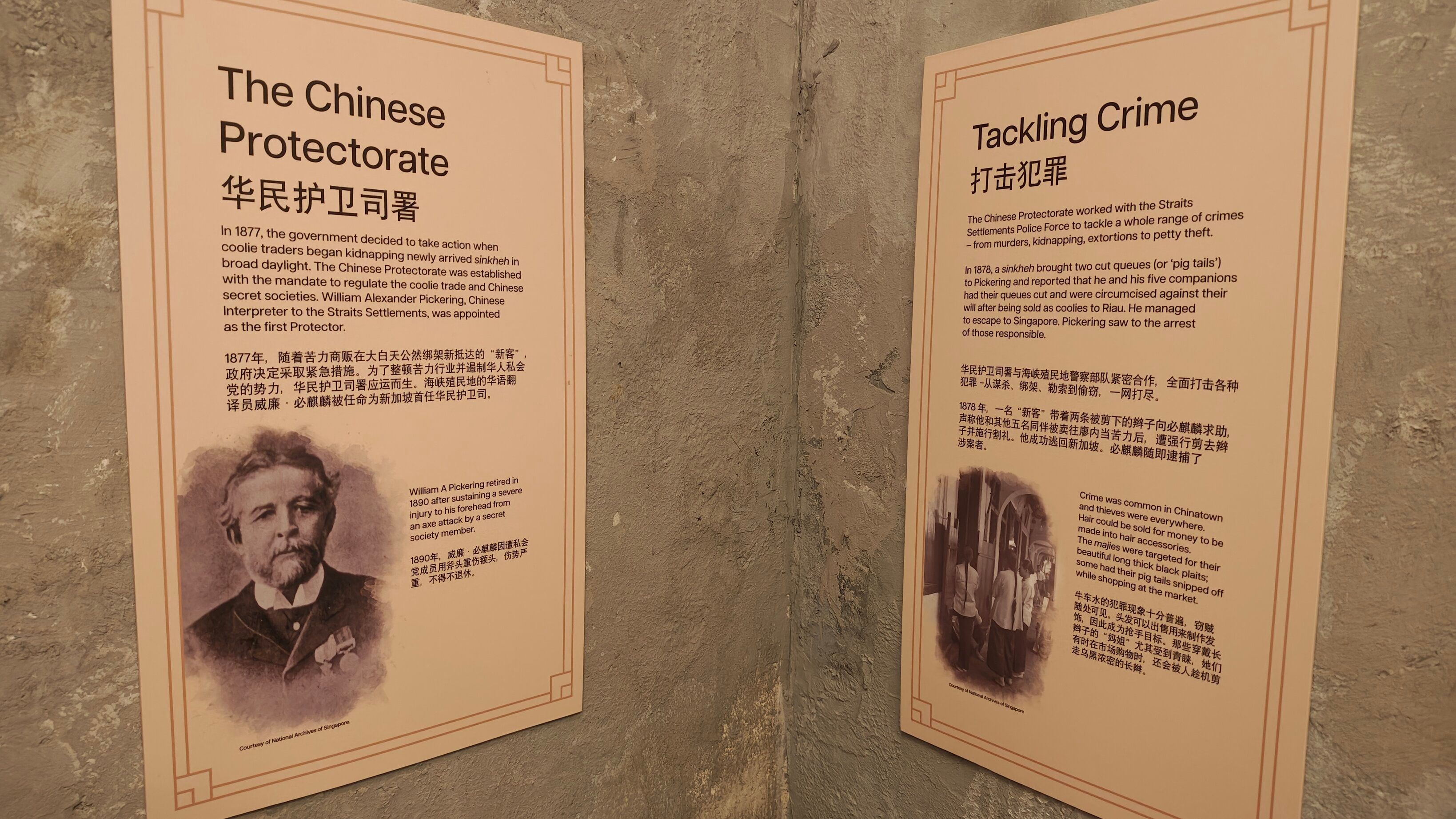
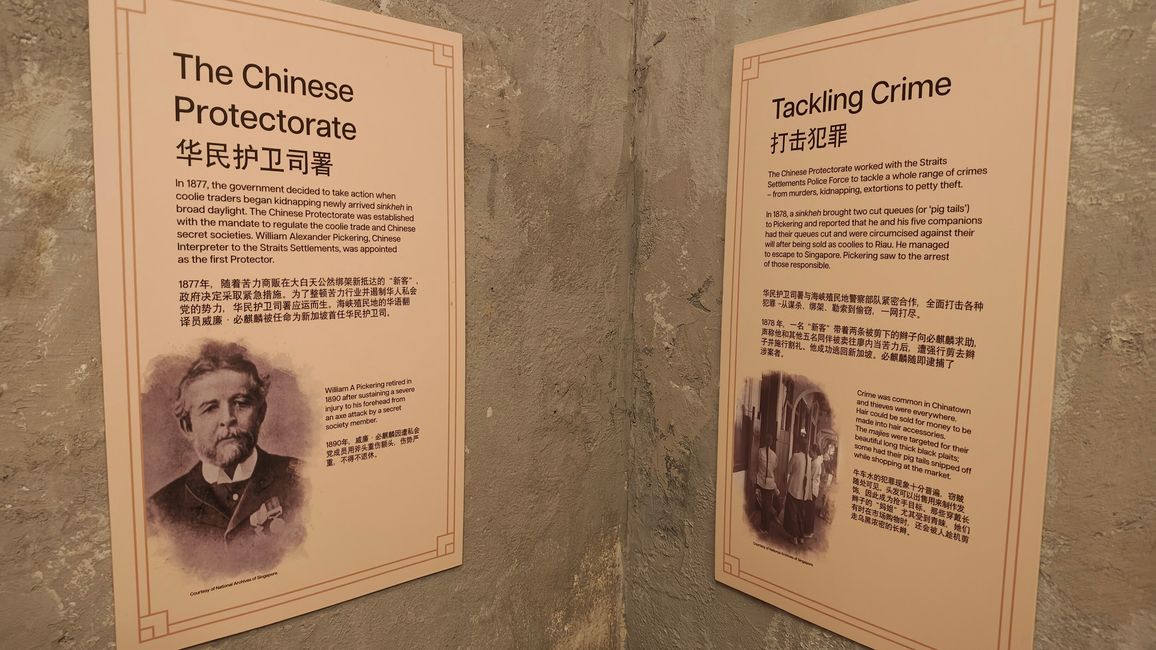
William Pickering and his crime-fighting efforts receive a bit more background explanation, which I find very good, as he selflessly tried to protect the Chinese residents from gang violence. He himself had to retire in 1890 due to an injury sustained three years earlier from an attack by these gangs. After him, a street in Chinatown is named.
After that, I take photos of the displayed philanthropists from a monitor, just to later look up some information about these individuals online.
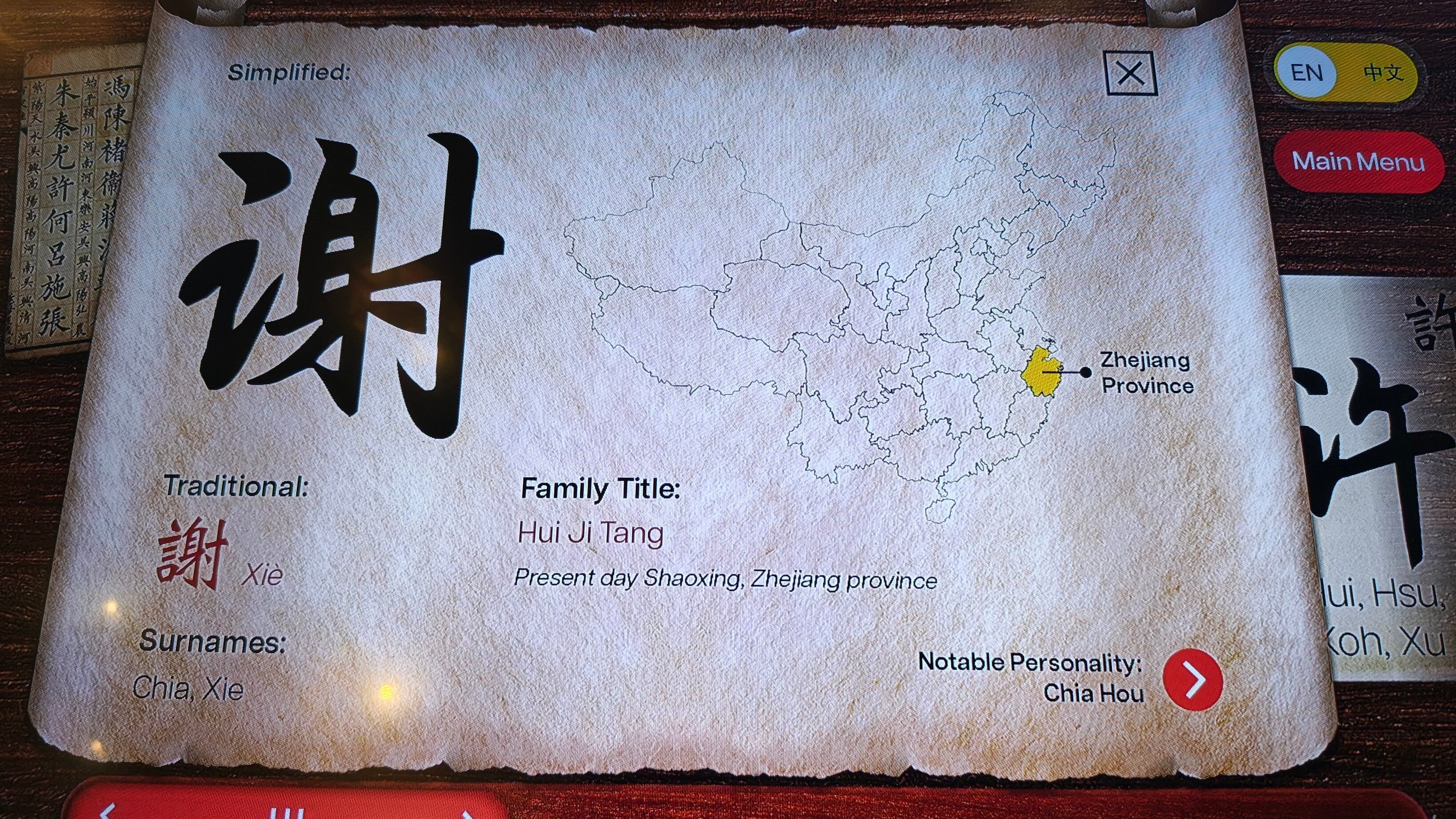
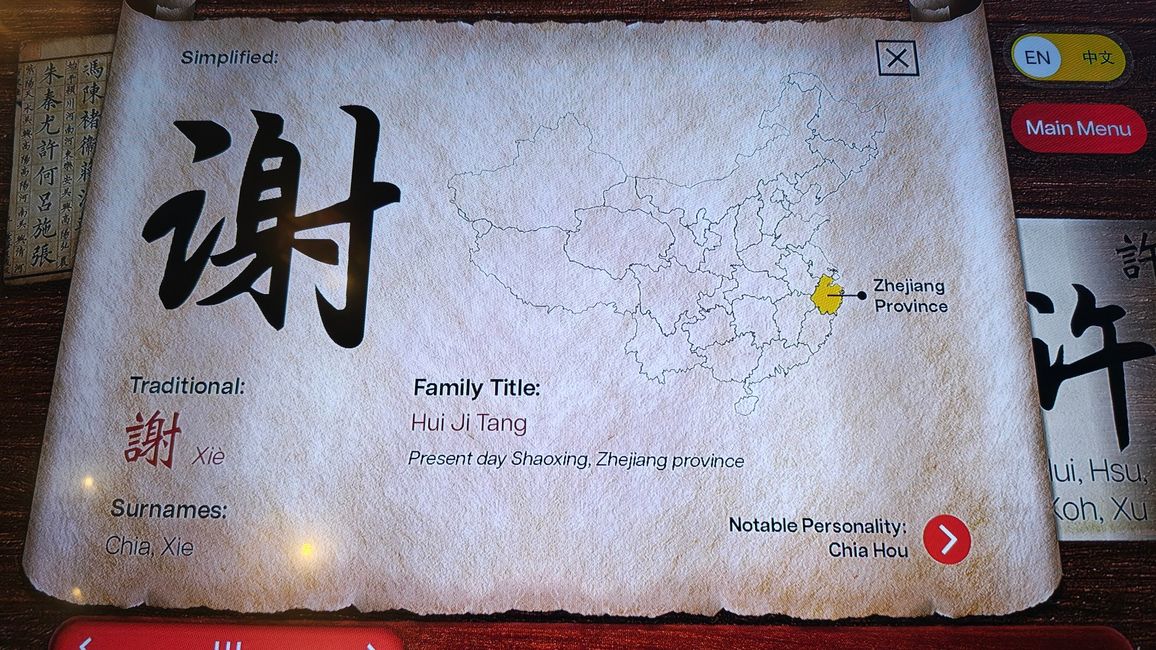
On the same interactive monitor, I also pull up my last name and learn about its origins. The surname Xie (谢) is closely linked to the region of Hui Ji (会稽), present-day Shaoxing city in the Zhejiang province. In Chinese history, the Xie family was one of the most powerful and influential clans during the Jin dynasty (3rd to 5th centuries).
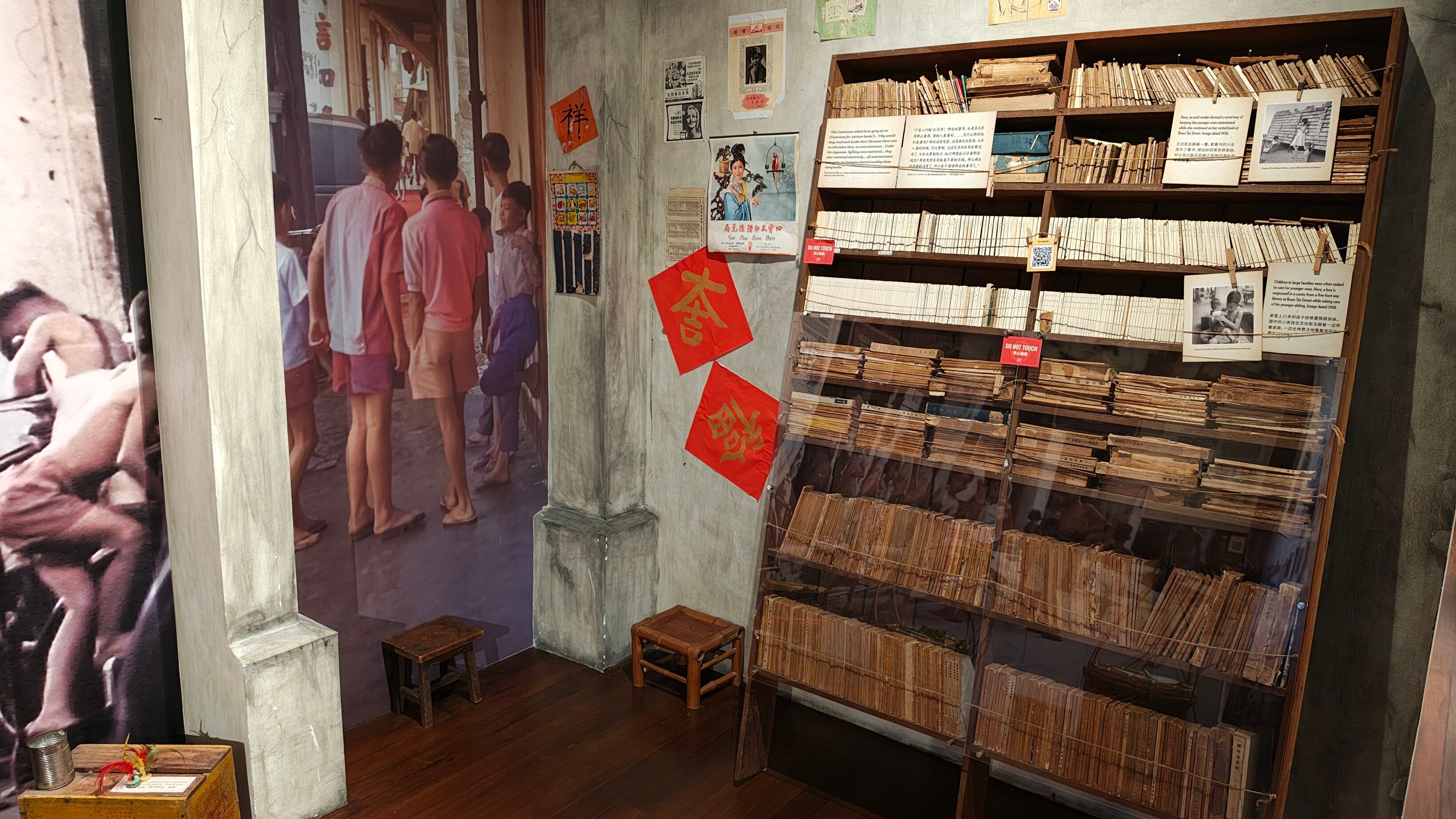
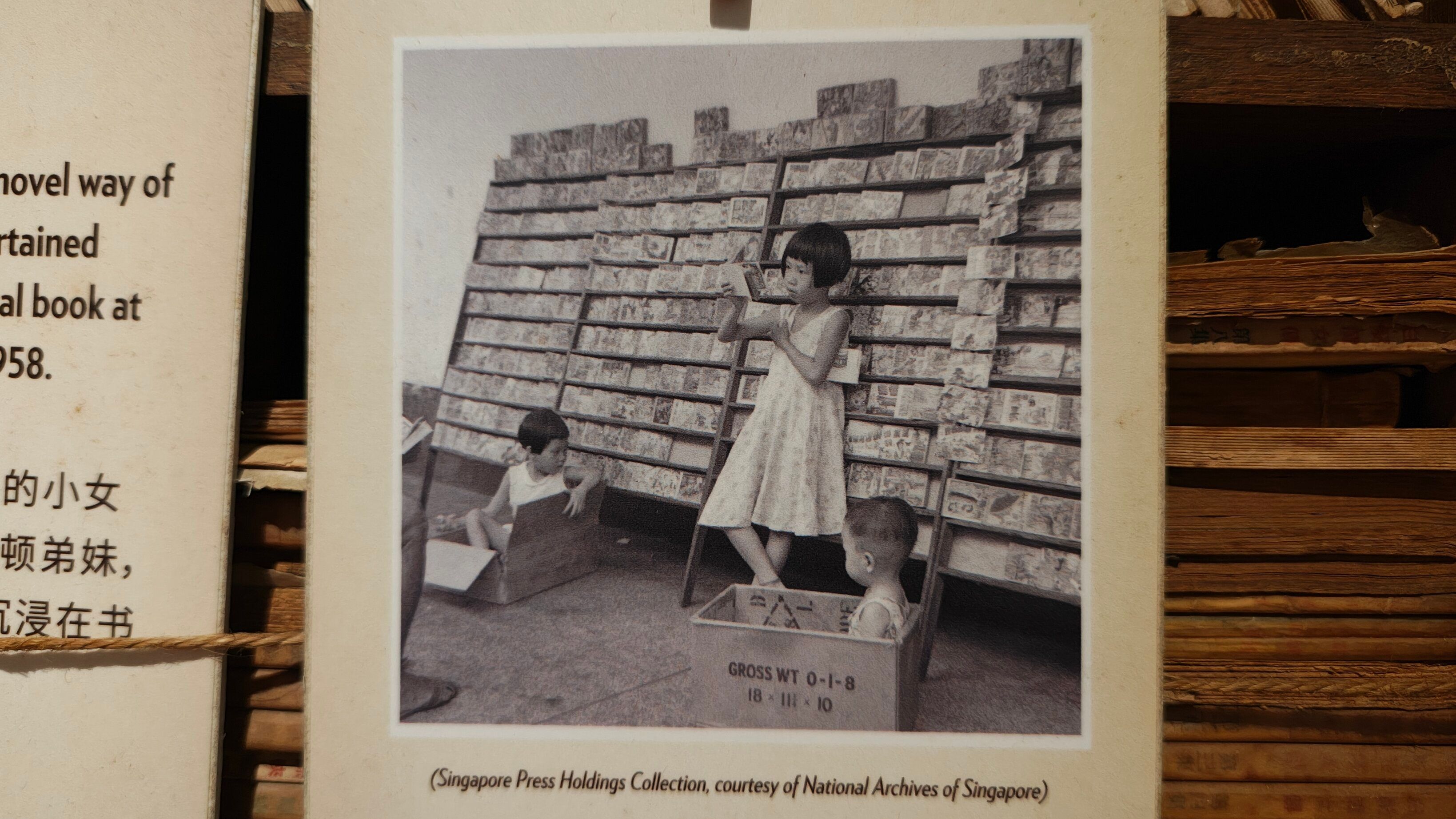
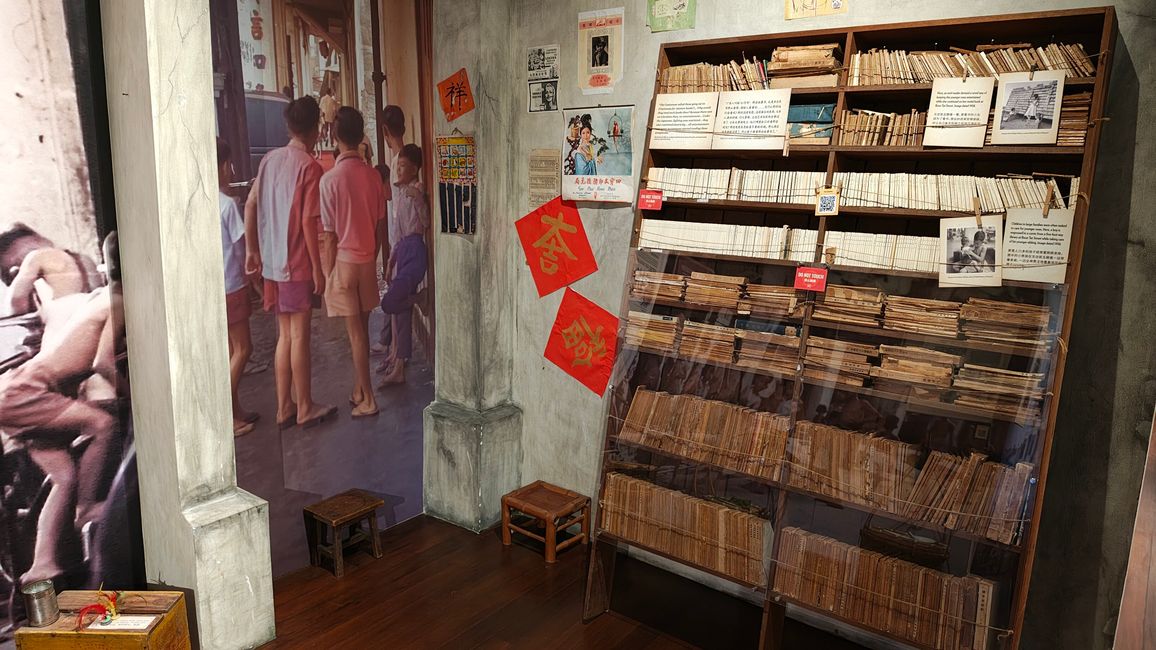
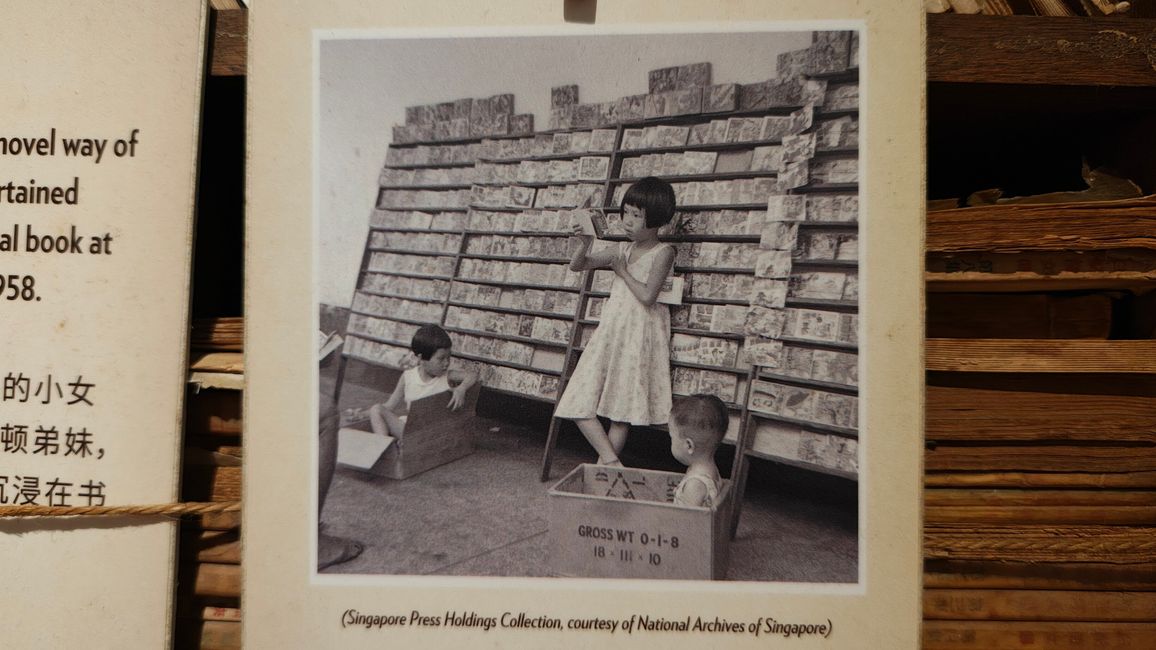
The bookshelf with the photo of the three children from 1958 is still part of the exhibit.
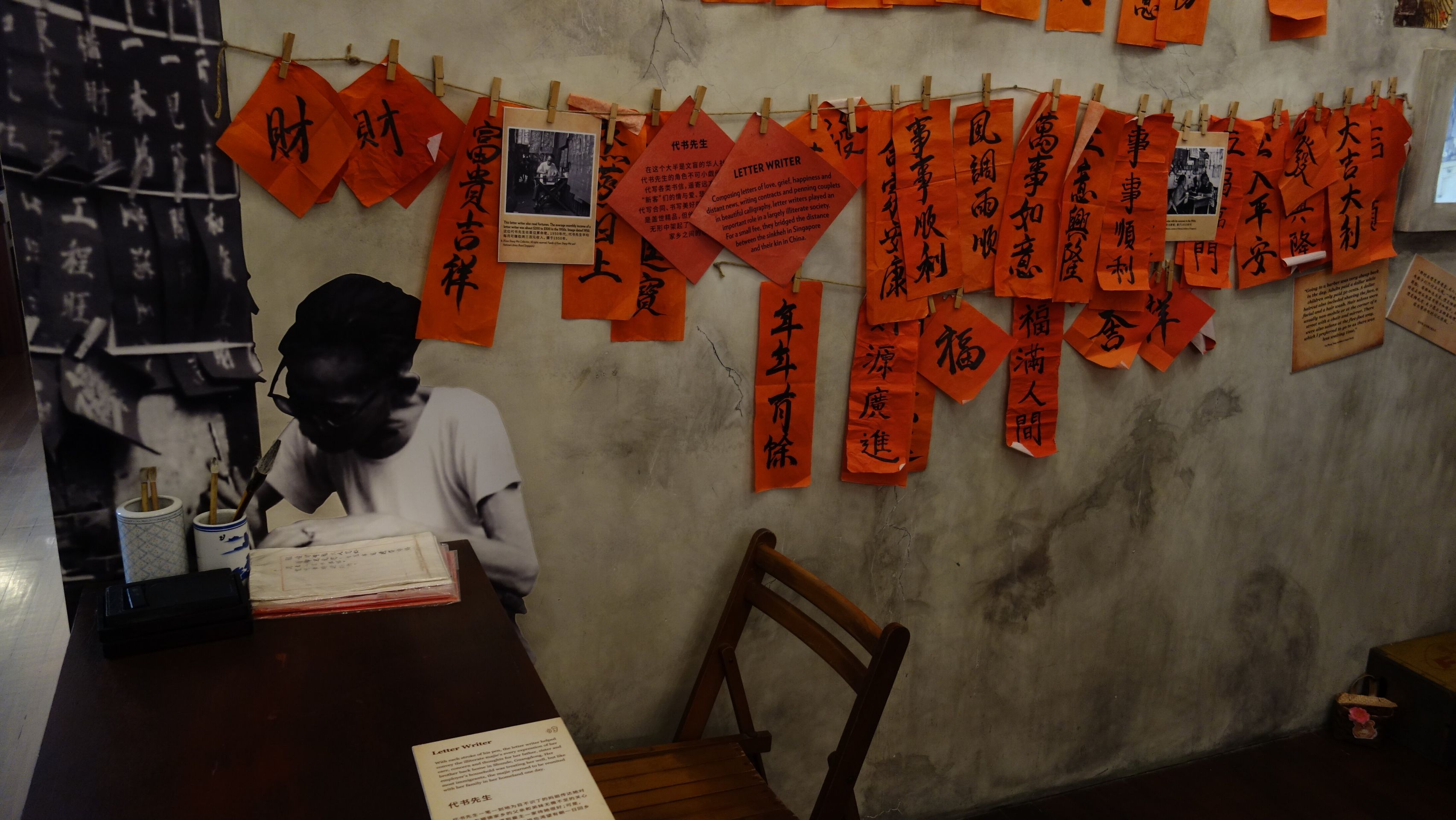
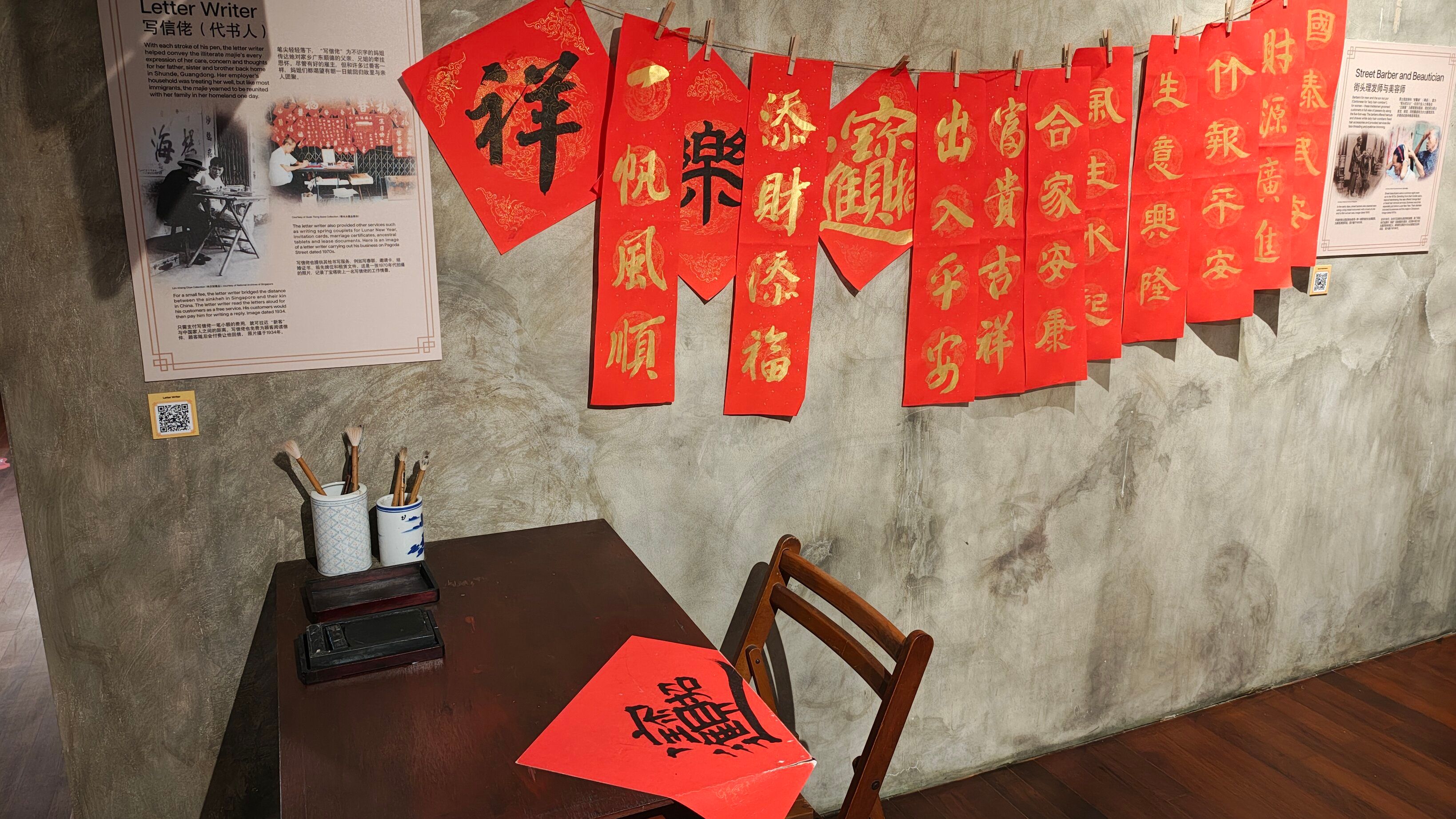
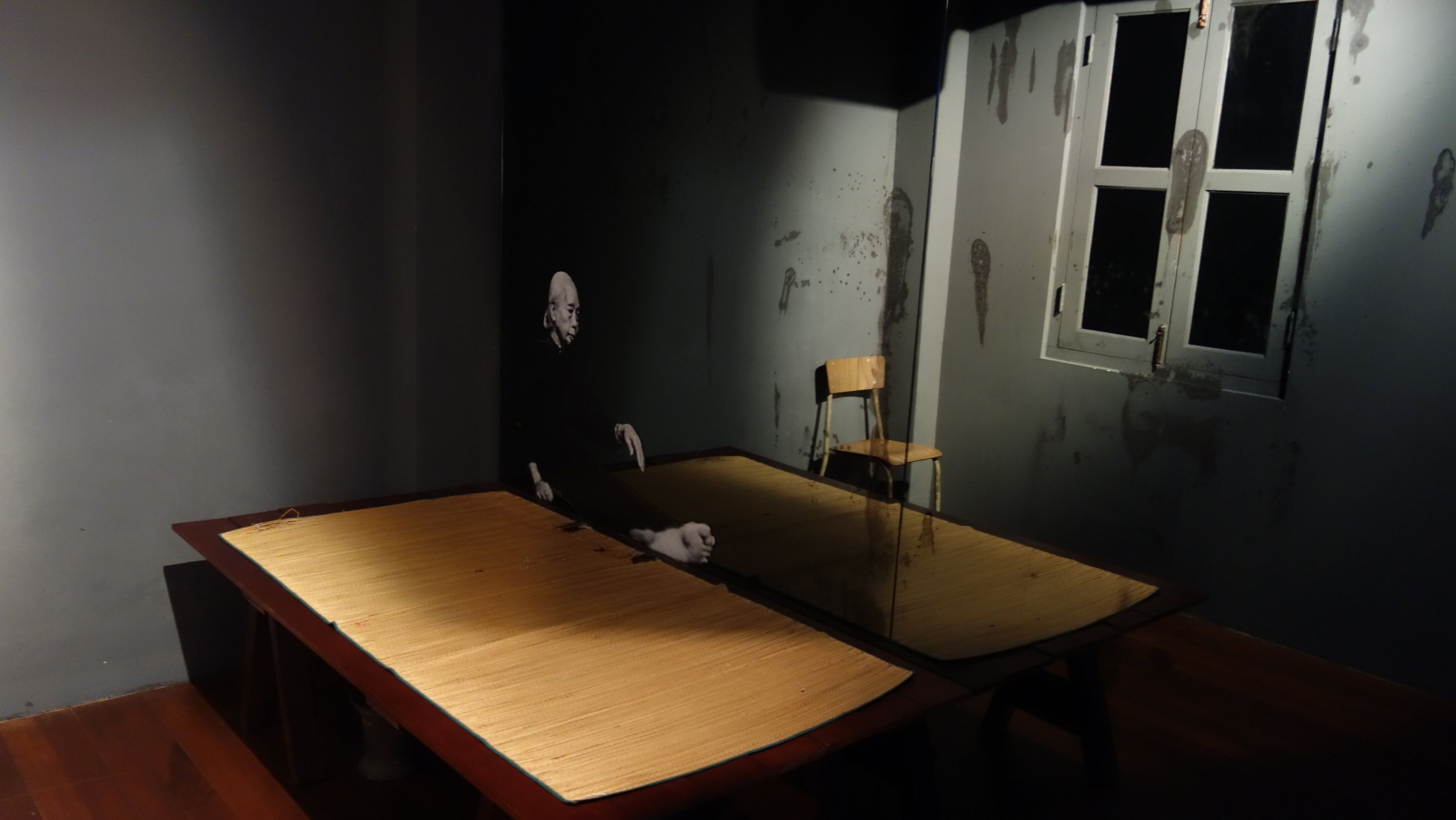
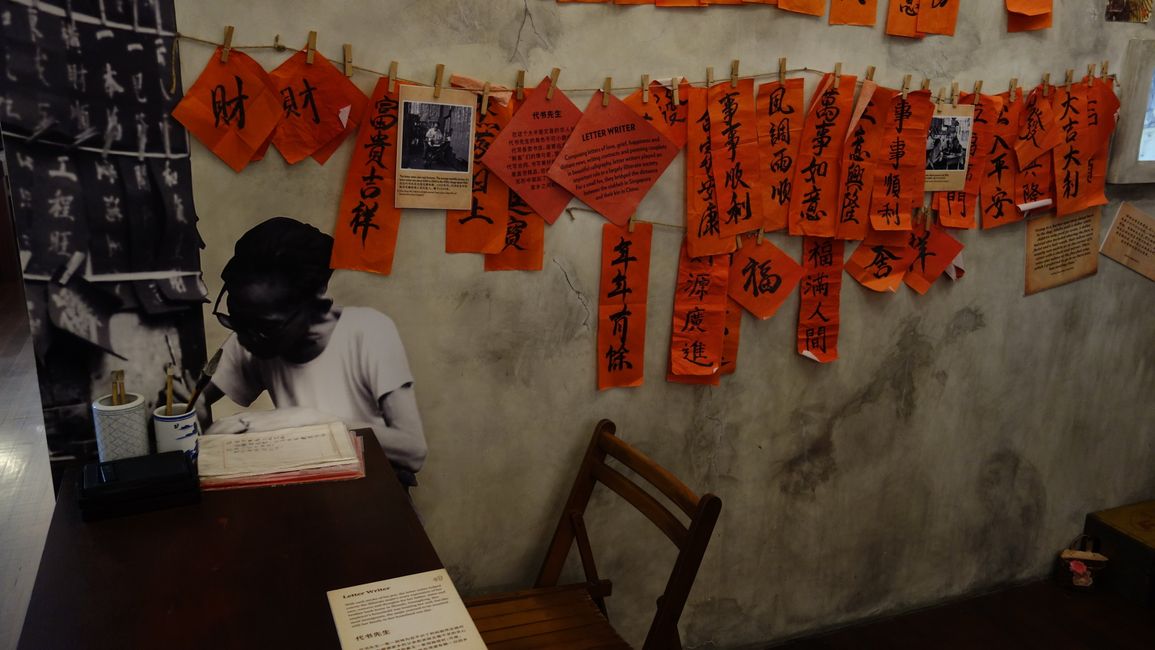
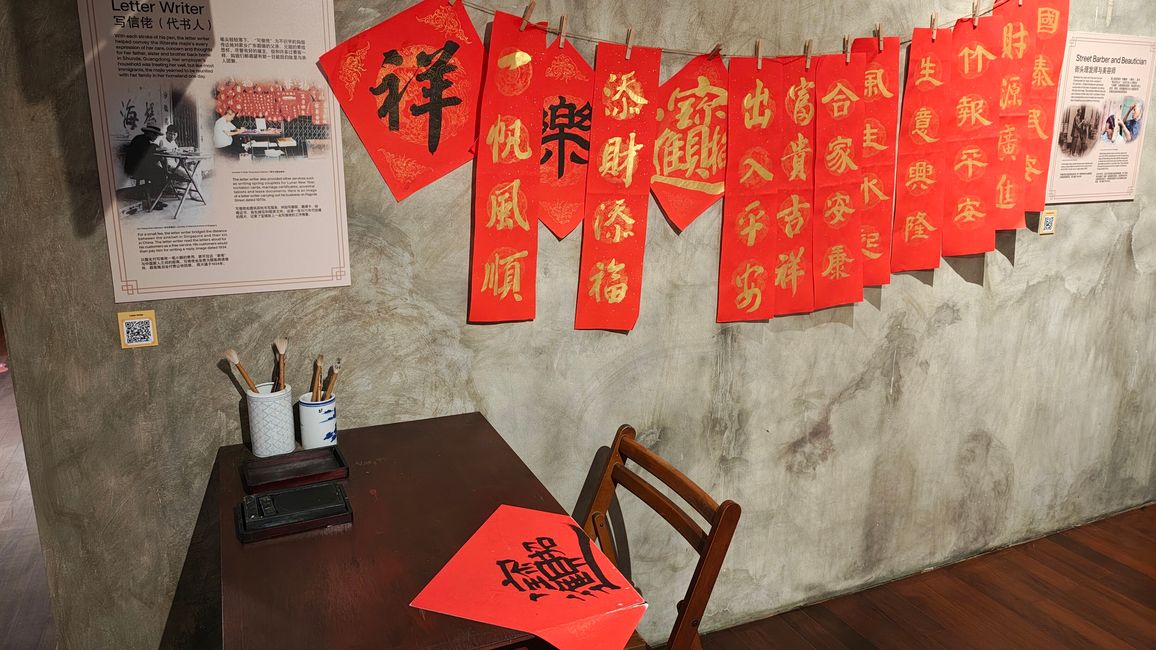
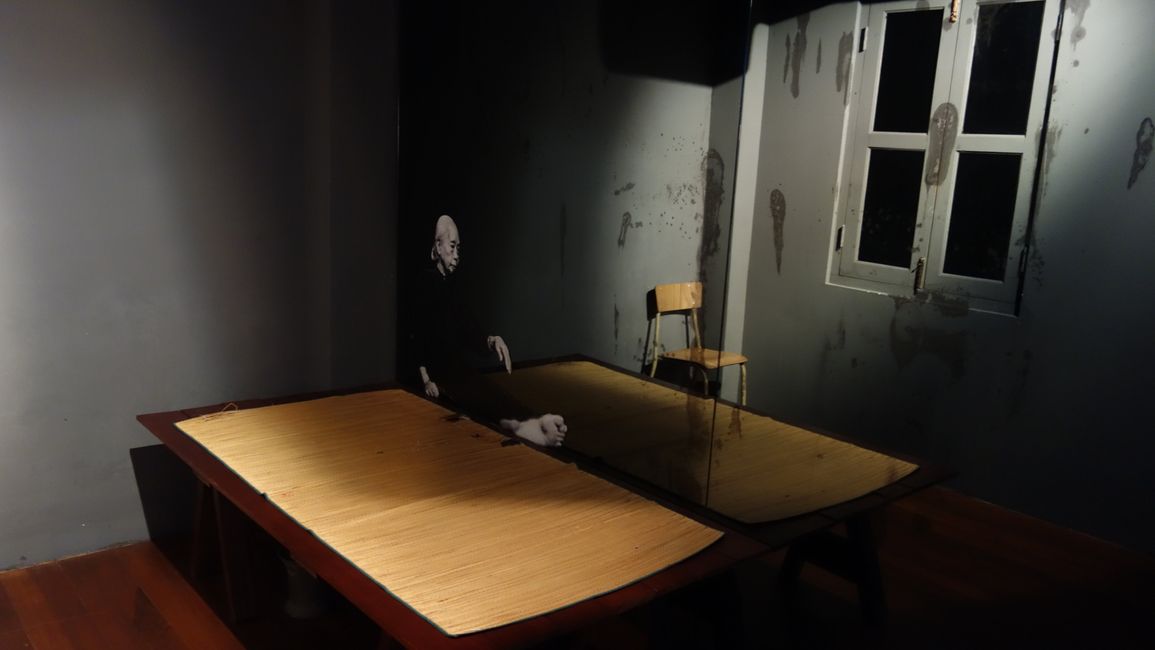
Unfortunately, the writer next door is gone, although his desk still remains. I found the photo figure on the wall so fitting, as it provided a three-dimensional effect.
First, here's the picture from 2020:
And this is the current display:
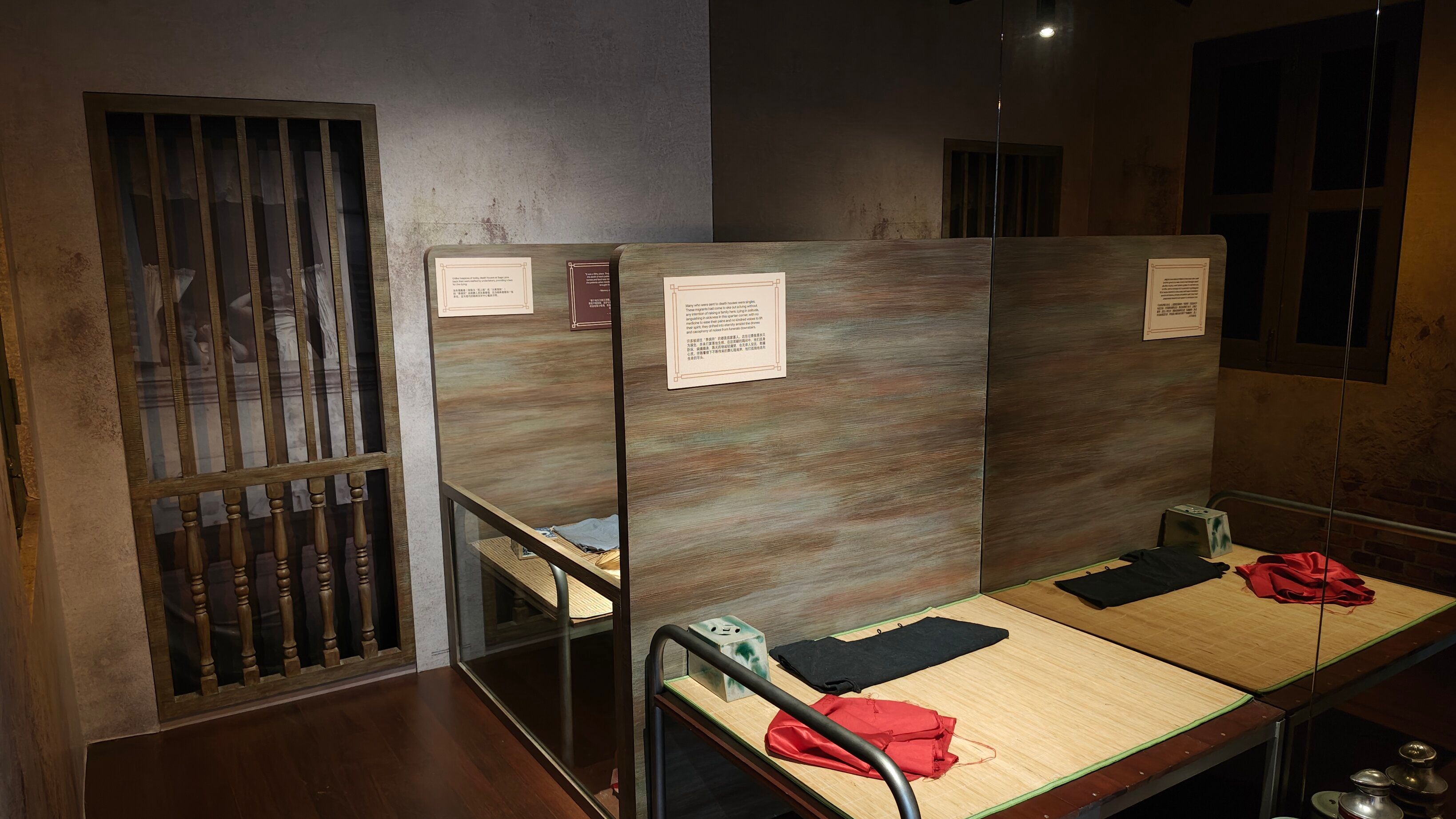
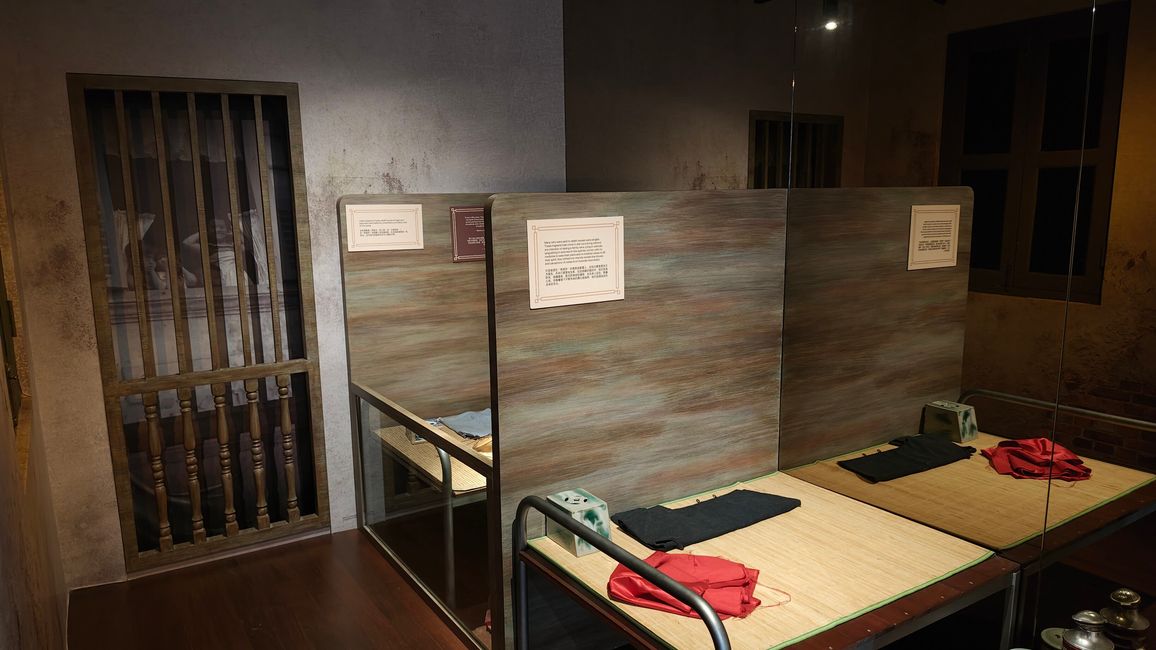
Also, the depiction of the death houses, which were essentially considered palliative living houses, I found more emotionally moving six years ago.
This is the photo from 2020:
And this is the current design:
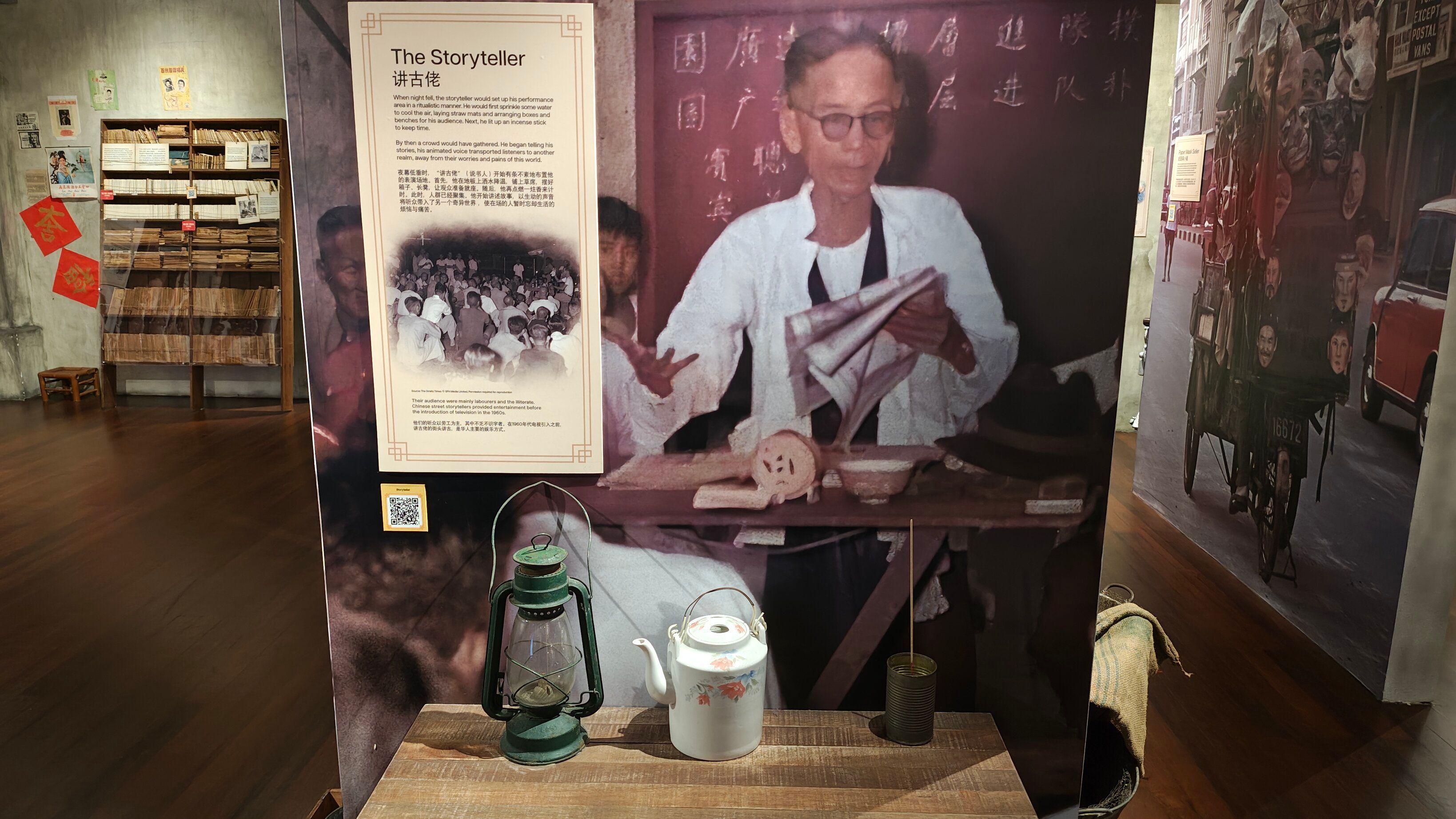
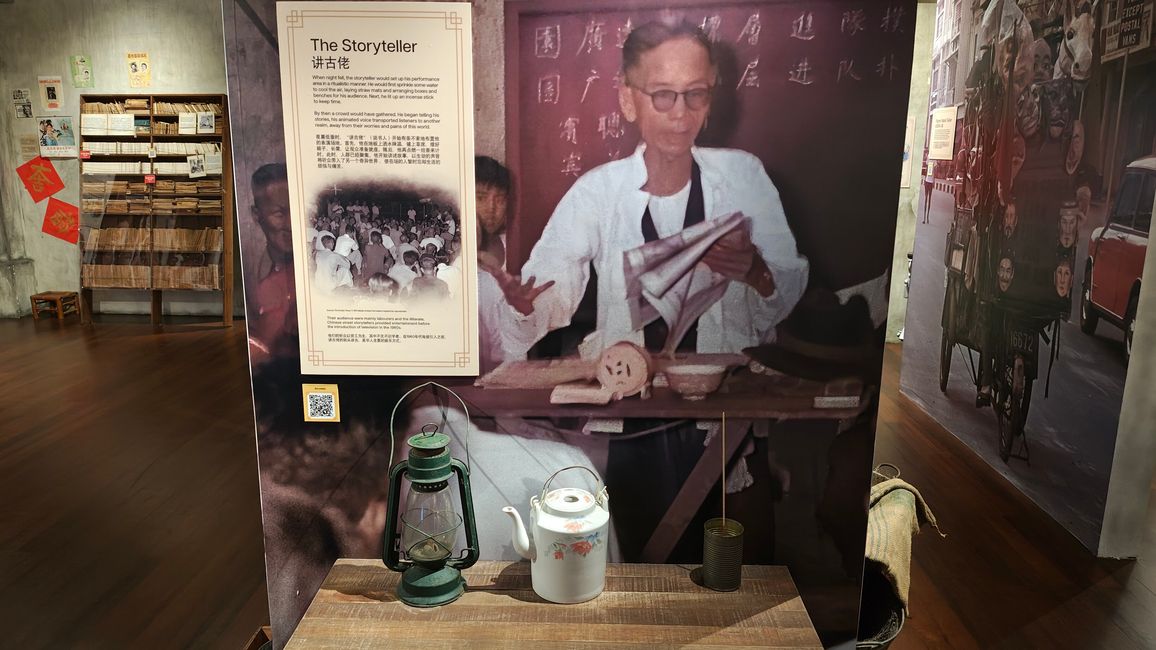
However, I no longer remember the storyteller who used to tell a story via audio playback in the museum. It was very well done.
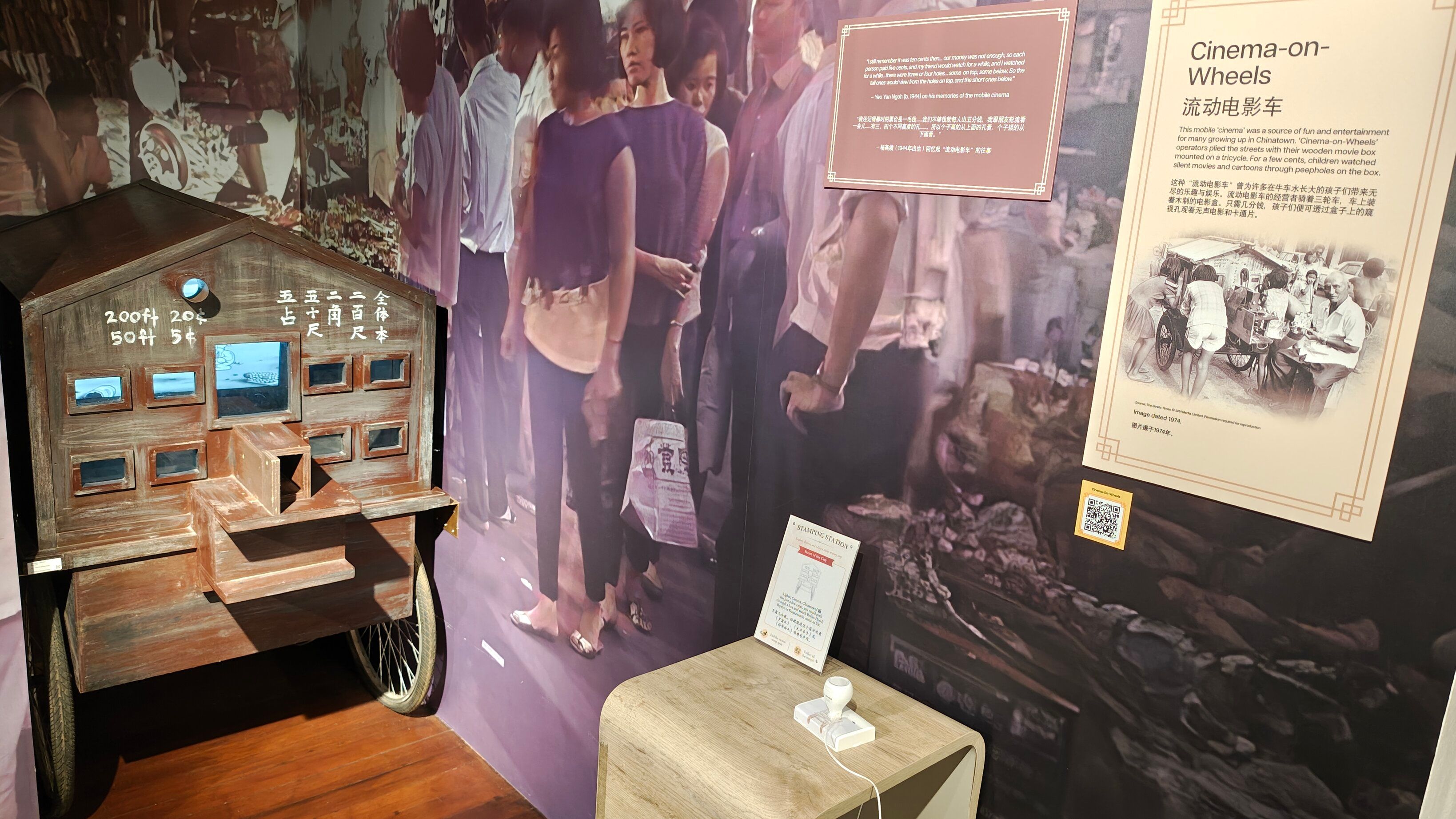
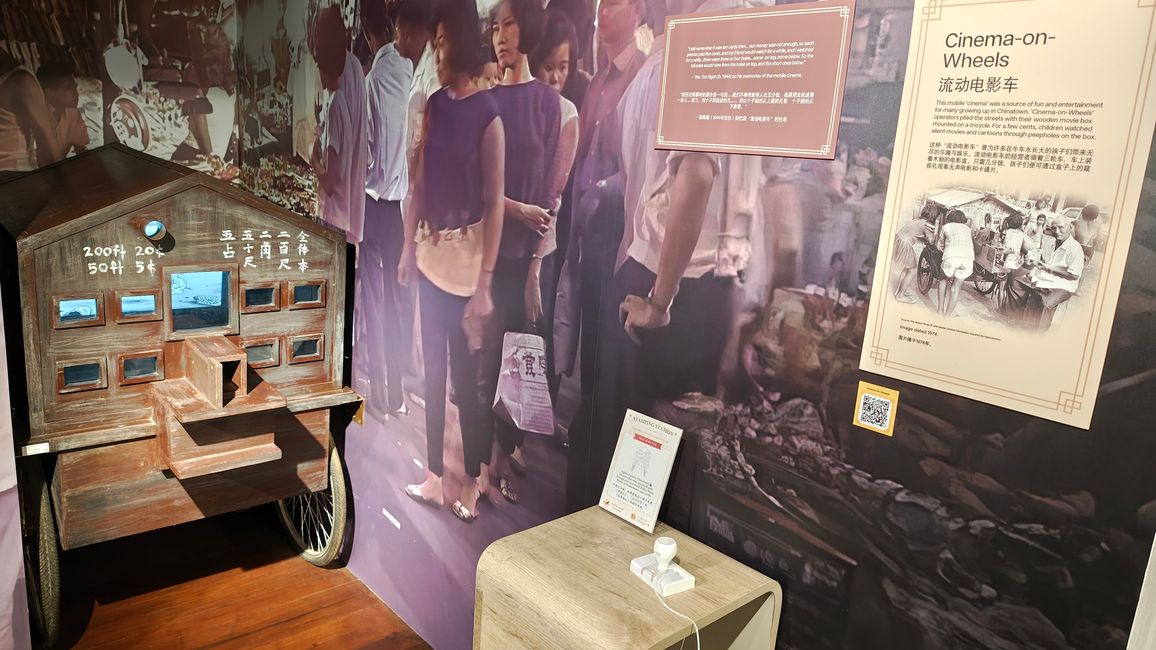
And since there were no smartphones back then, not only the storytellers were well-attended, but also the rolling cinemas that were especially popular with children.
At the end of the exhibition area six years ago, there were photos of Singapore that transformed into a Then-and-Now presentation depending on the viewing angle. Unfortunately, only one photo of New Bridge Road remains in the souvenir shop. In my previous blog video, I attempted to illustrate the change in perspective, which can be seen here from minute 4:38: Chinatown Part 2.
In the same video, I also show through the traditional Chinese educational verse 'San Zi Jing' that Chinese is not just Chinese (from minute 1:43). This interactive monitor still exists in the museum today.
Conclusion: Even though there were hardly any changes to the exhibition, I really enjoyed my visit to the Chinatown Heritage Centre. The exhibition was already excellent before, and I discovered some new small aspects. In particular, the individual living spaces provide a vivid picture of the former lives of the Chinese in Singapore.
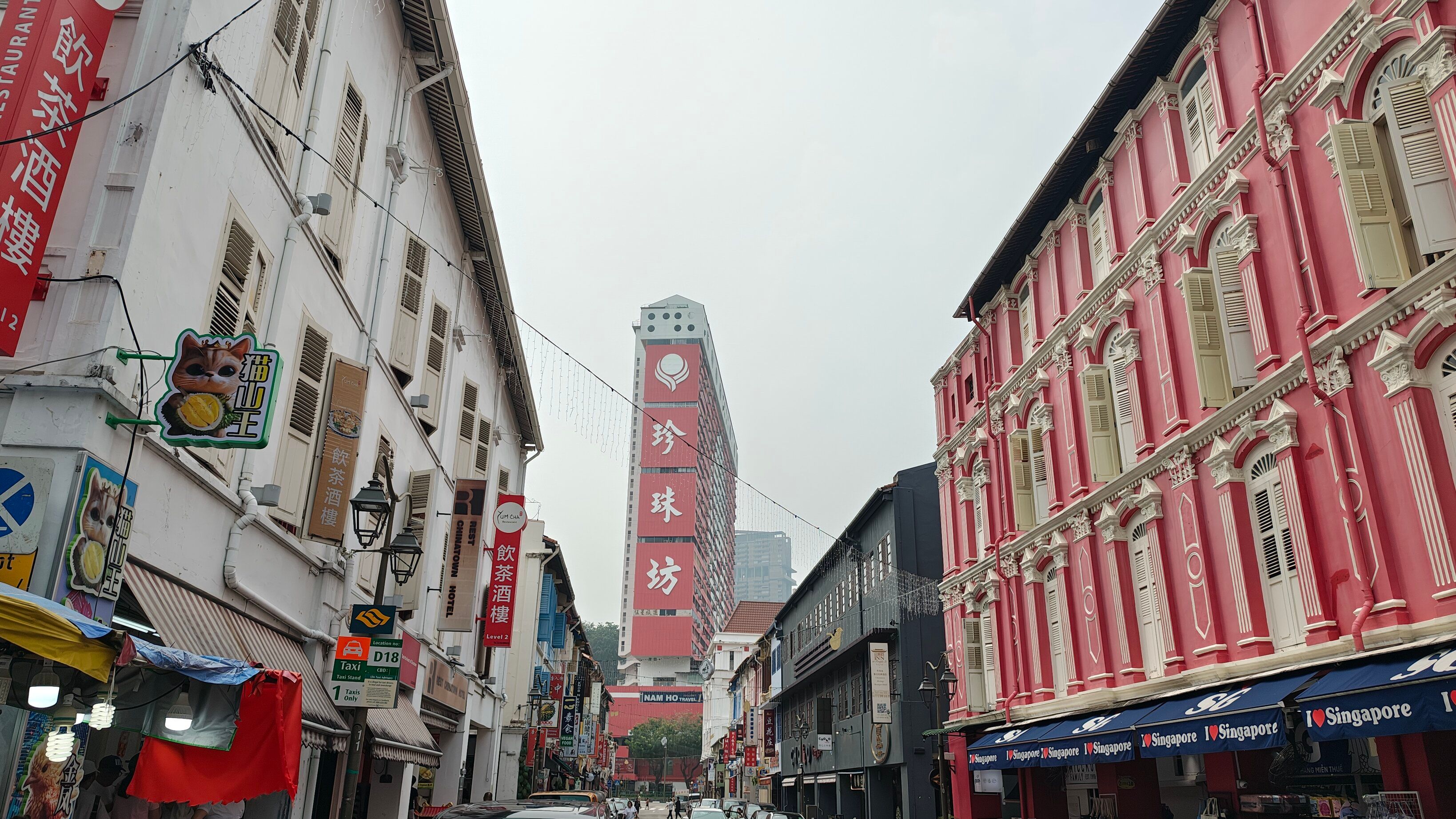
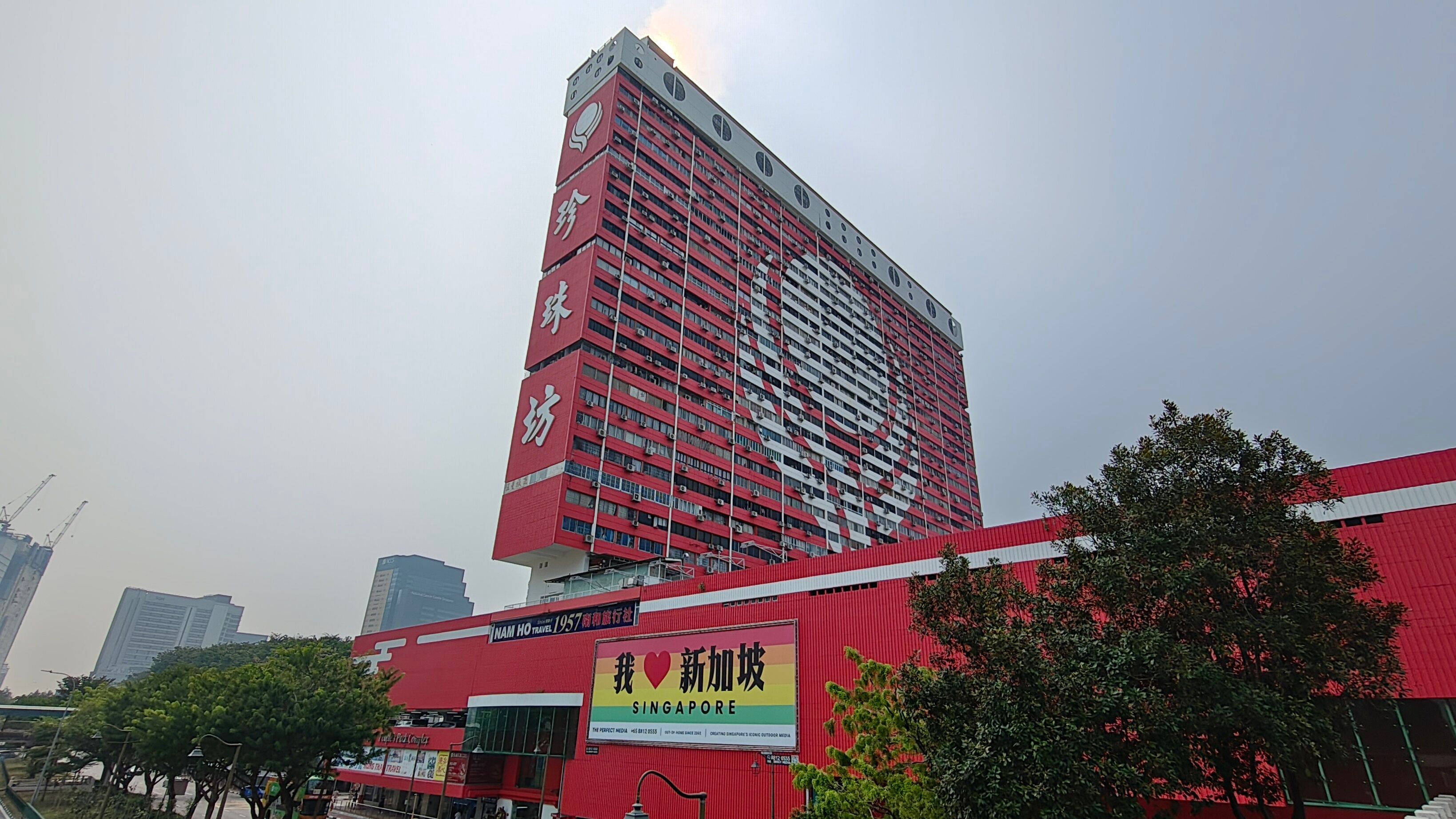
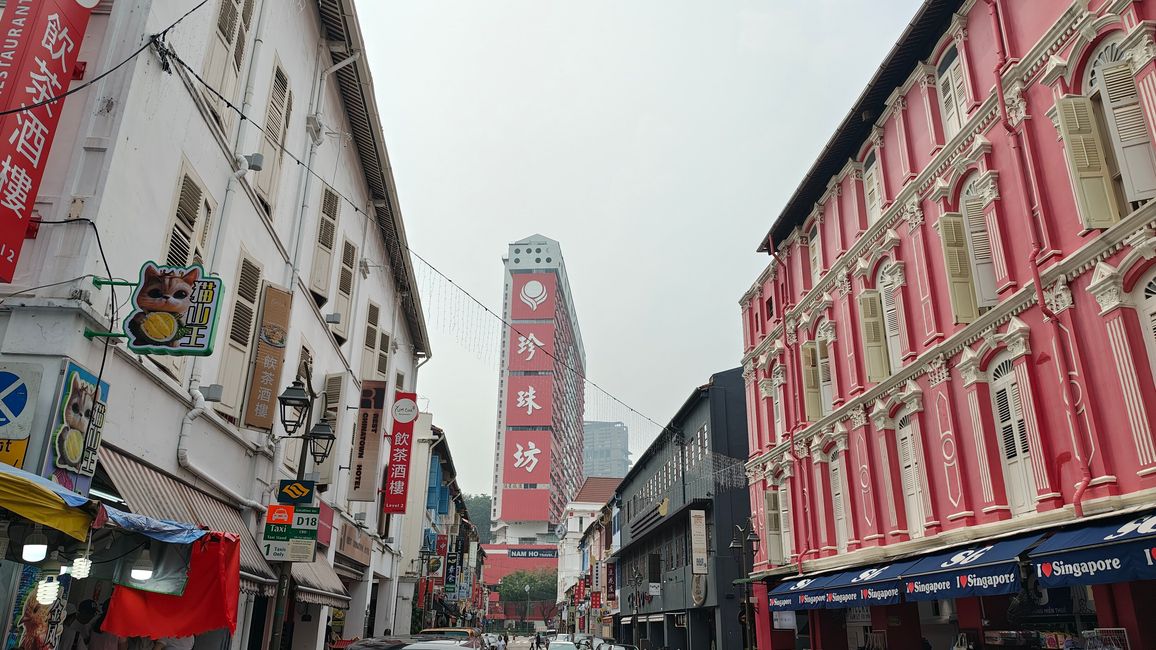
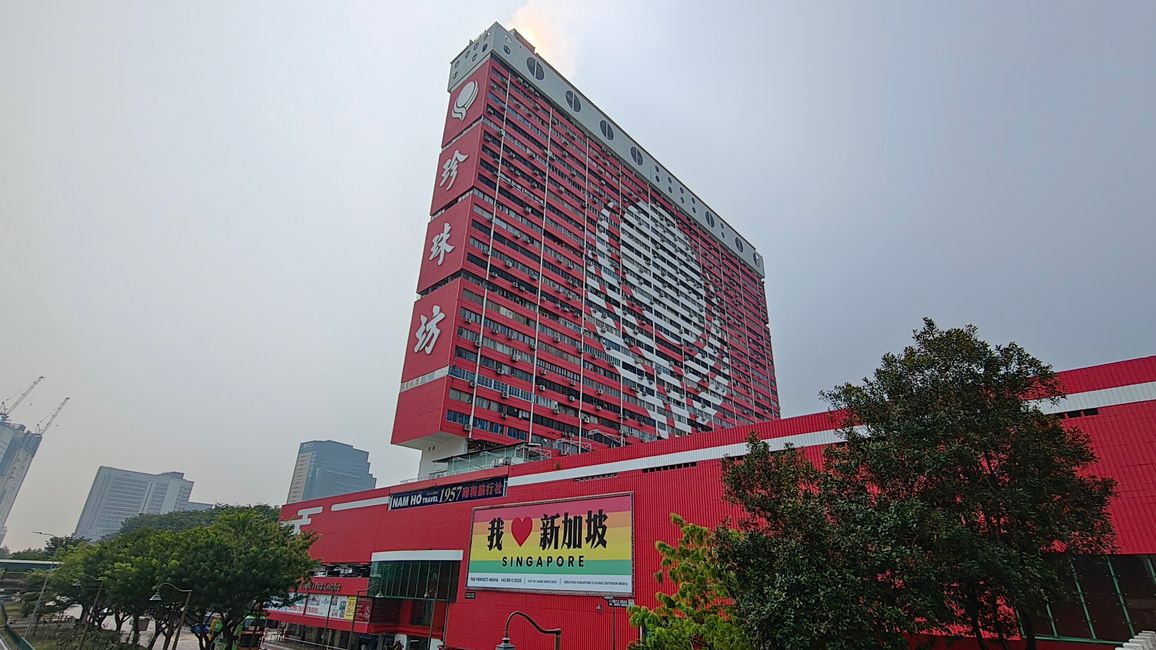
After the museum visit, we stroll to the People's Park Complex, which now shines in a red 'dress' instead of its yellow-green paint in 2020 and is bathed in a mystical light due to the haze from the forest fires in Indonesia.
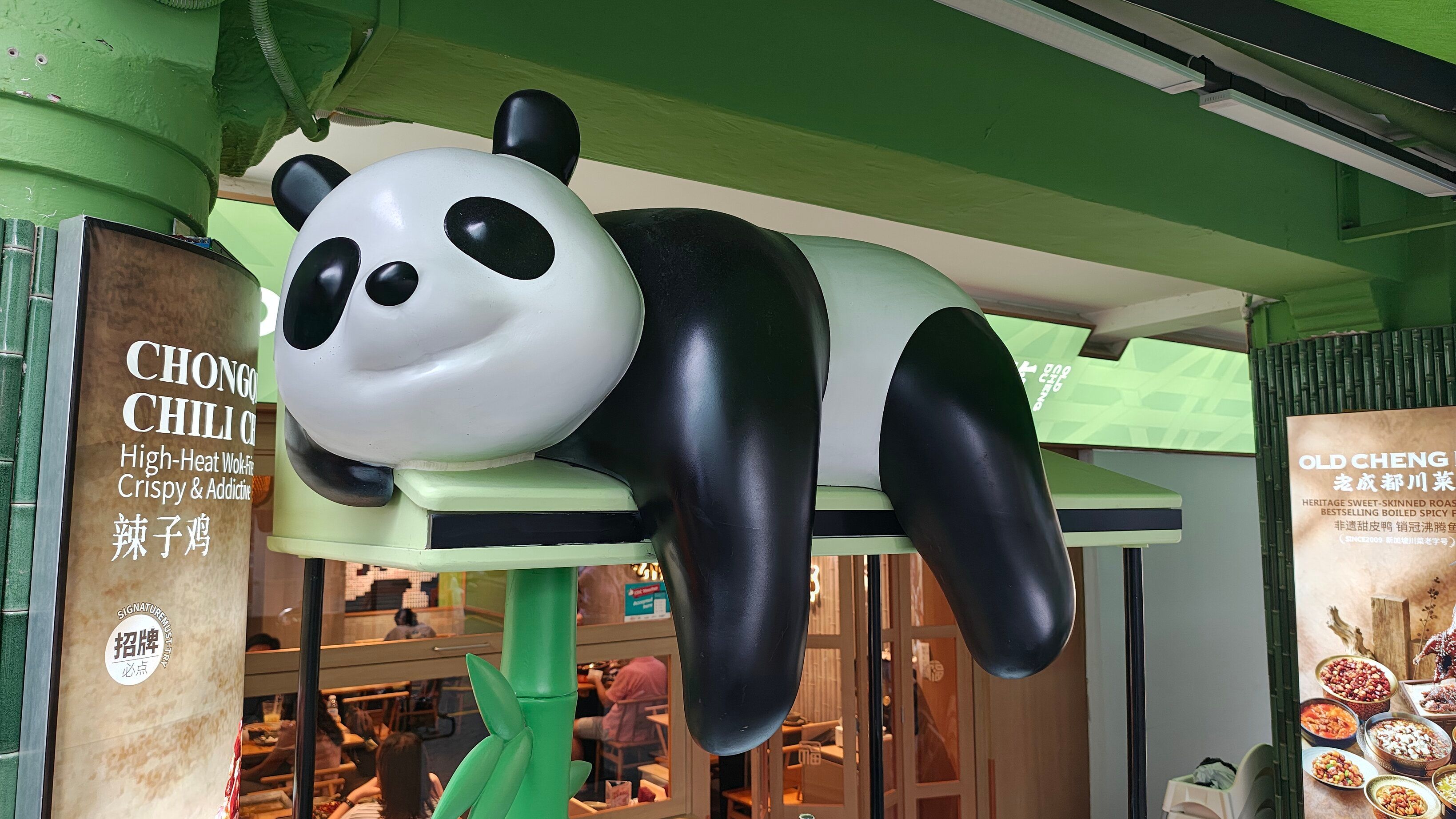
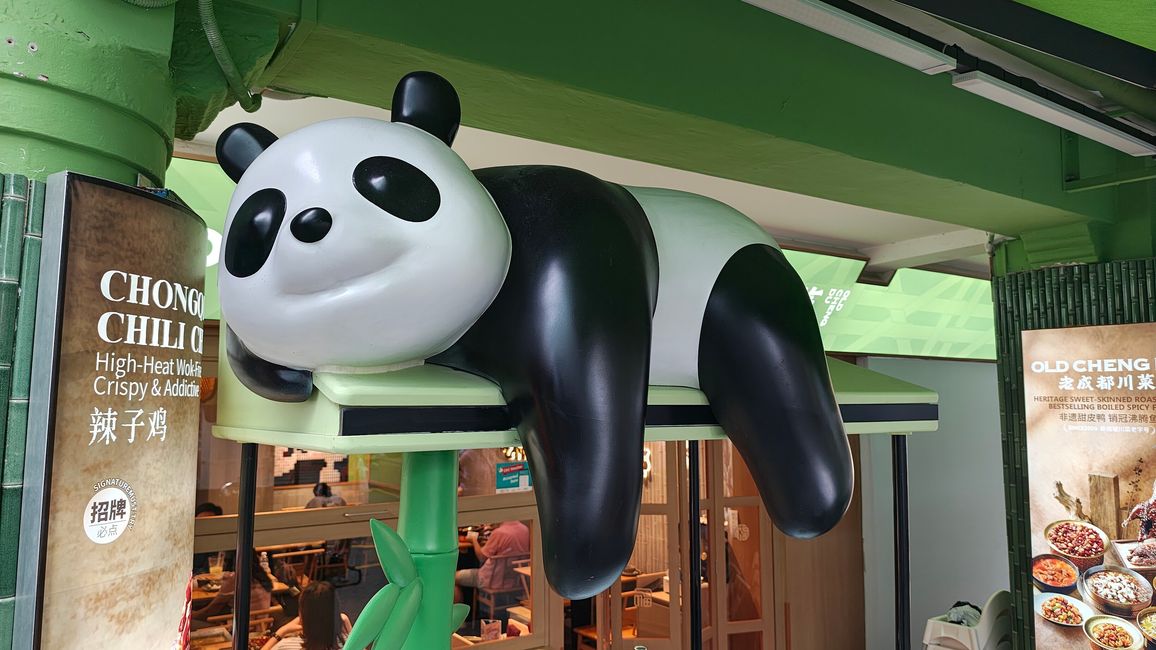
But I would like to conclude my descriptions with a photo of a panda that has made itself comfortable in front of a restaurant in Chinatown.
In the next blog post, I will present the design of new metro stations in Singapore, visit a redesigned section of the Rail Corridor, and showcase a cathedral-like construction of a mixed-use mini-city.
Xiefuzi Reise BlogLike a newsletter: every new post arrives via email.