
and over the Elbe to Schleswig-Holstein
'In the fog, the world still rests...'

Published: 29.10.2026
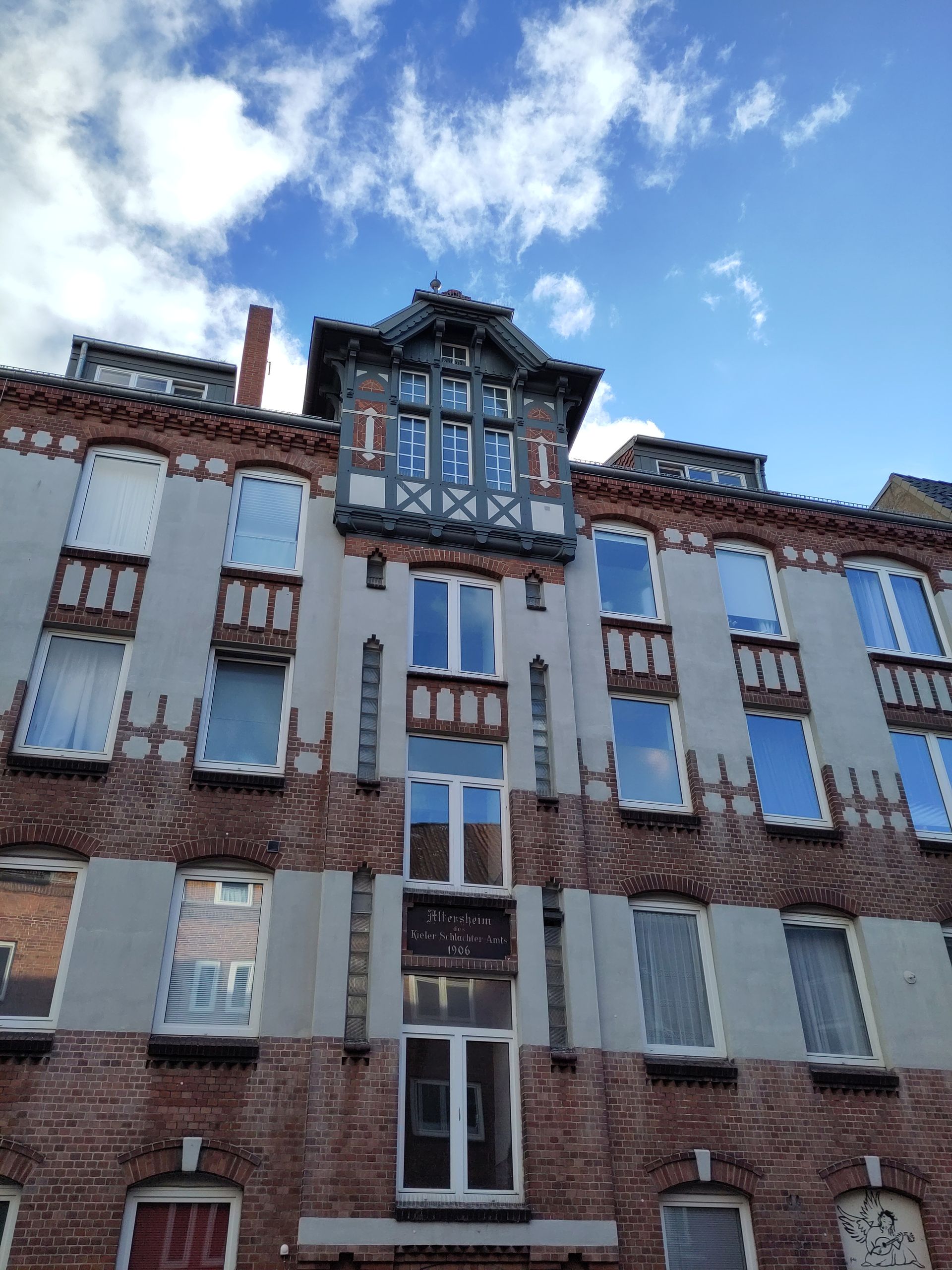
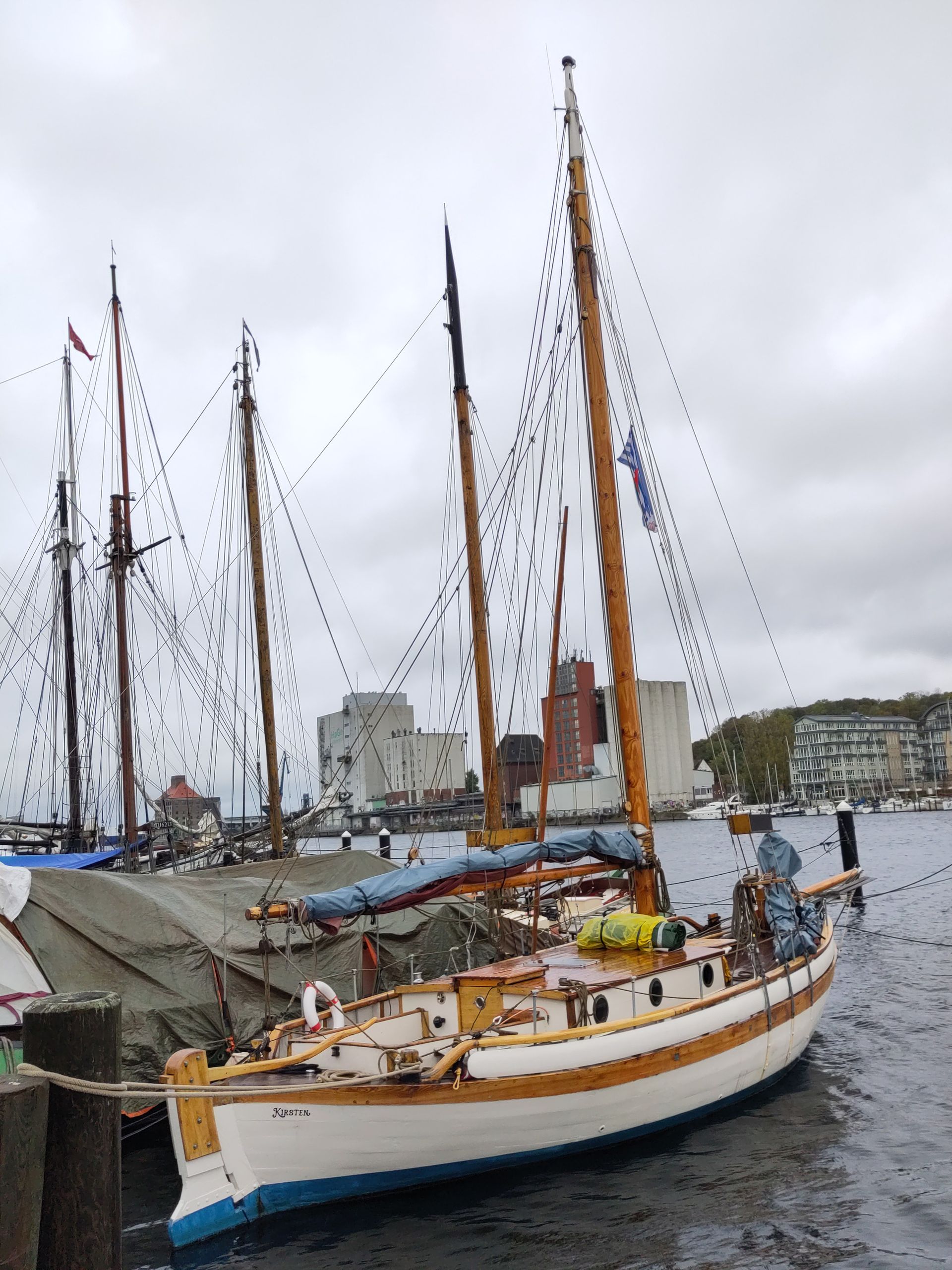
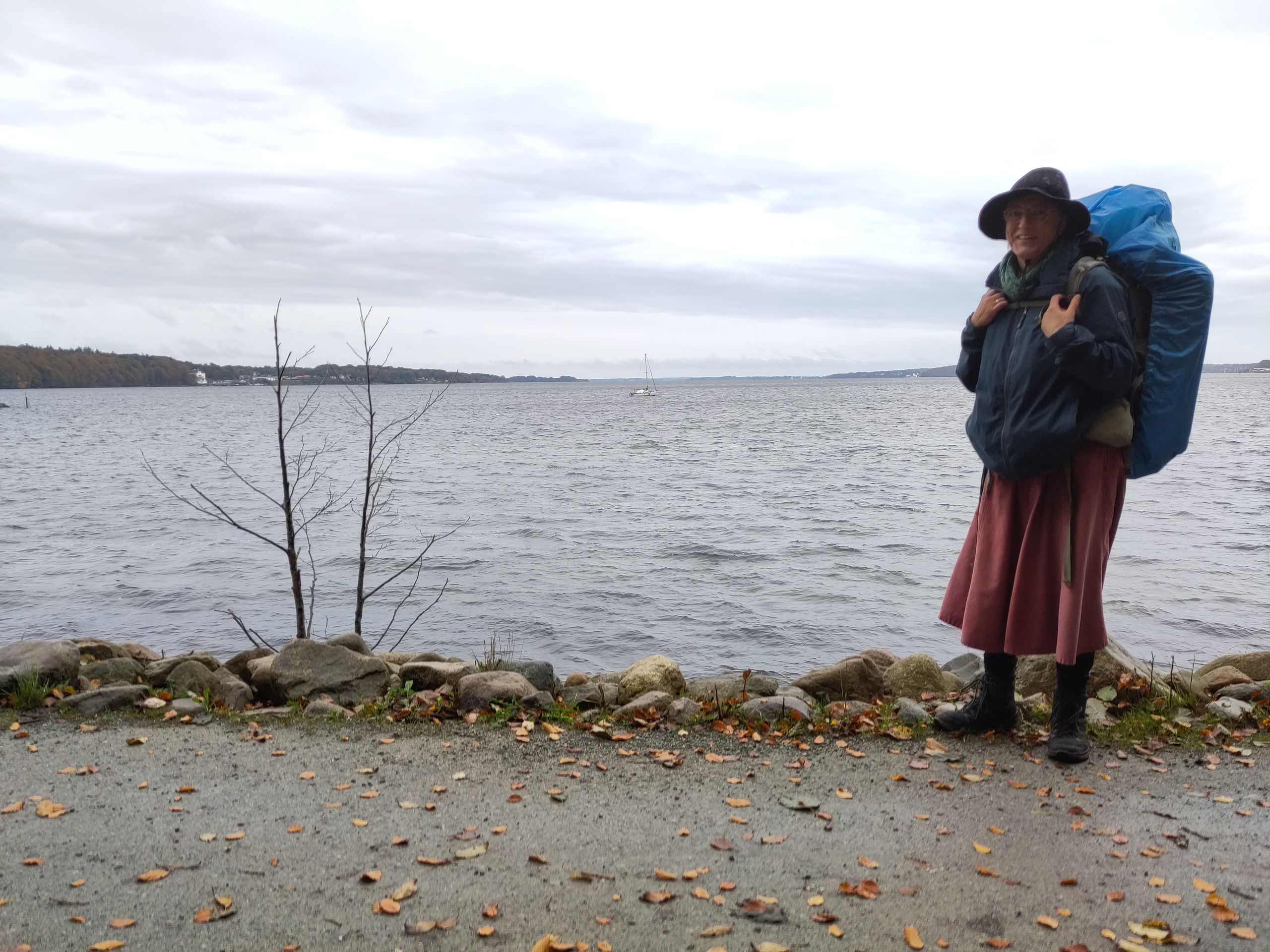
Three days ago, I stood north of Flensburg at the Danish border; light rain, stormy winds, and simply gloomy autumn weather made it easy for me to stick to my own plan: 'maximally until the Danish border' I had been answering for some time when someone asked how far I still wanted to hike this year. And yet: It was hard for me to turn back and return to Flensburg, where I had reserved a bed in the 'Seemannsheim' (today hostel) at the historic harbor for noon, so that I could relax and enter the city only after sunset. It rained and stormed all night long, so I was grateful for the dry comfort of the narrow upper bunk - even though the night in the shared dormitory turned out to be rather restless...
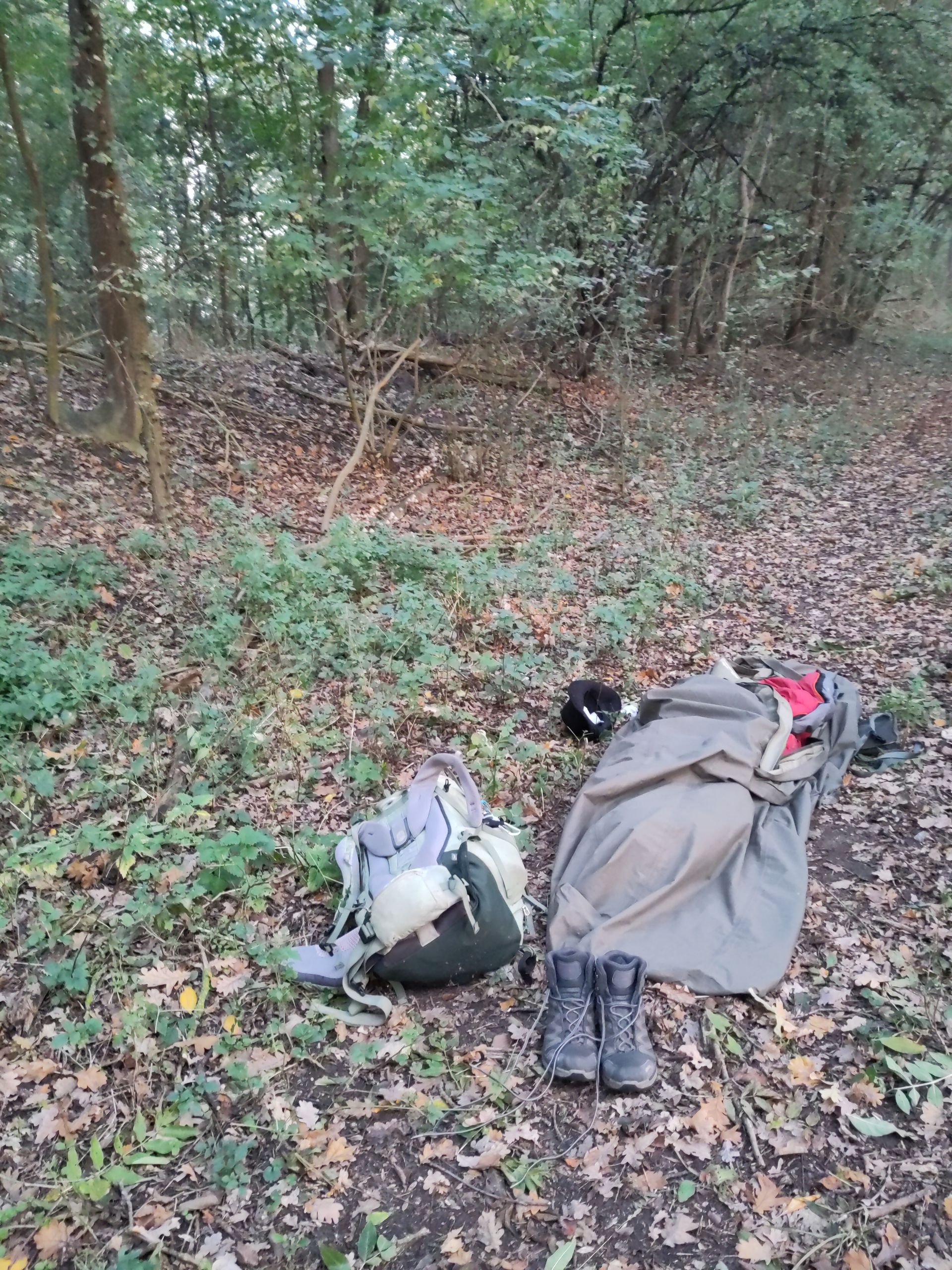
But now the attempt to share a bit about the last hiking days (short) and nights (long) with you. How short the days already are when there are 14 hours between sunset and sunrise, meaning 13 hours of darkness, doesn’t really concern us in normal life anymore, as it means around 13 hours of bed rest. With outdoor sleeping, however, it is significant, because even if a sleeping place is 'taken' just when it gets dark and then left again before sunrise, that feels long. Writing becomes increasingly difficult anyway, as it is usually too cold during the day and definitely in the evening; reading can only be done with one hand, the other used to warm up in the sleeping bag. One morning, I lay in the dark forest when Georg called: he was already on his way, briefly describing a normal work morning just before seven o'clock. I said: here, it is simply still dark and packing up is only worthwhile after a quarter past seven, otherwise, I can hardly see anything walking in the woods...
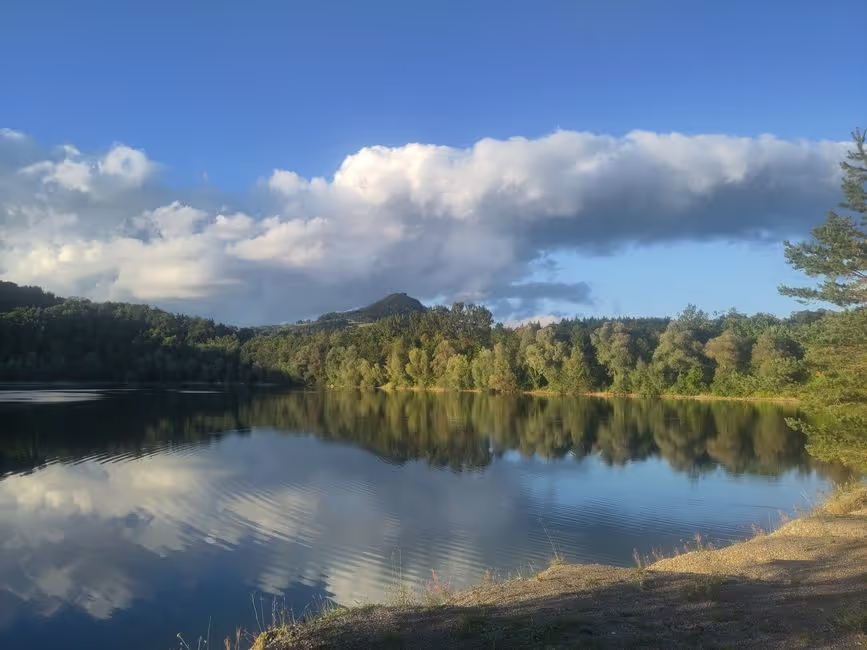
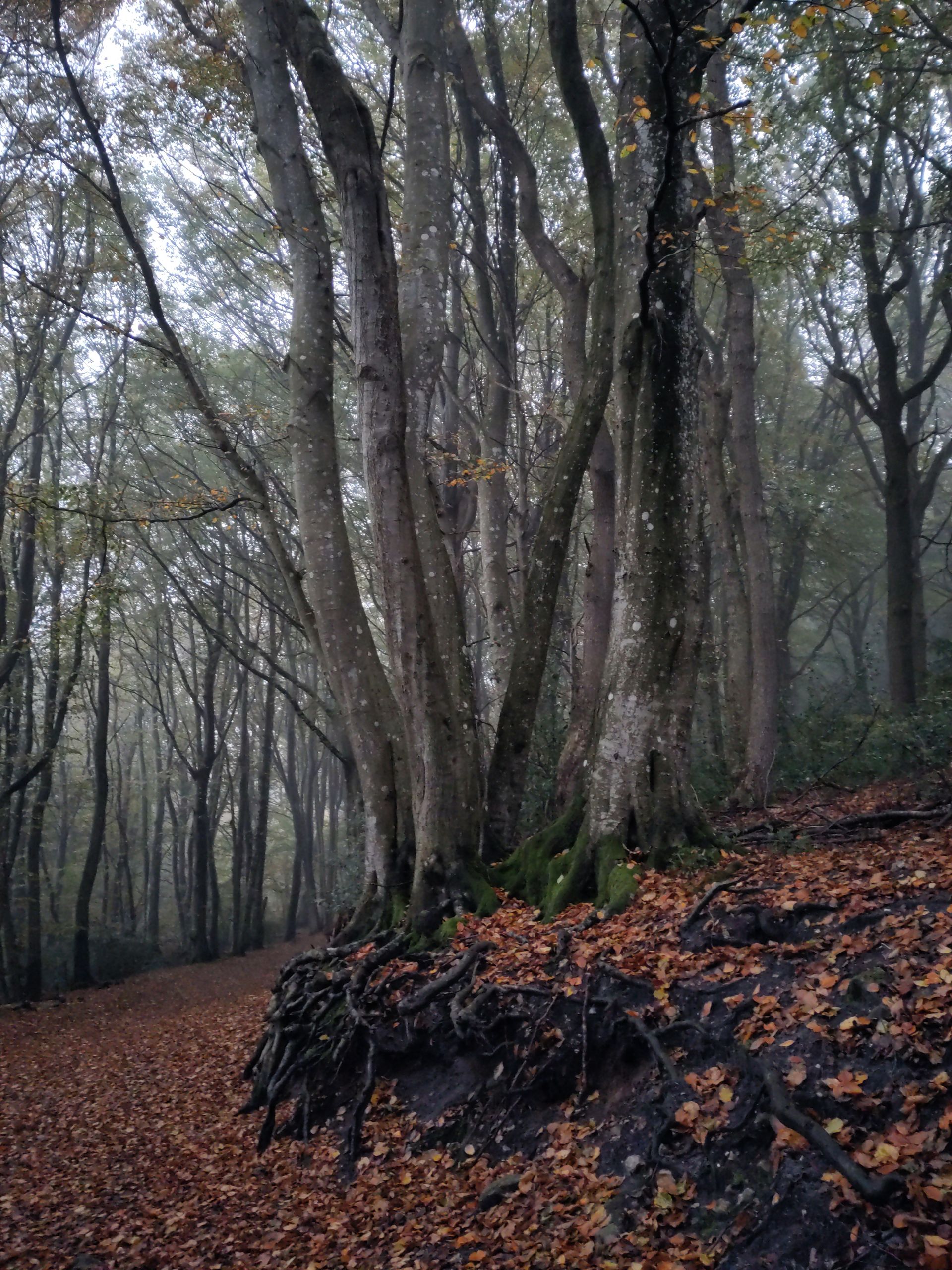
Overall, I find good spots for sleeping: various types of shelters that are wind- and rainproof: Near the coast in Surendorf, a shelter at the sports field, at night the rustling of the nearby large linden trees and the constant sound of the sea lulled me to sleep, and in the morning I found myself covered with blown-in autumn leaves; near Osterburg, there was a small pavilion right by the Osterbek in the woods, so that the bubbling and murmuring of the stream, the rustling of beech and oak trees, the calls of an owl, and other night sounds surrounded me, fitting for the almost full moon, barely discernible behind the clouds. The bivouac sack serves me well, so it's not a big deal to lie on the meadow without a protective roof; daring to dip into a lake in the evening and early morning (brrr, refreshing!), listening to wild boars foraging nearby, or again the poignant barking of a buck - it is this feeling of being right in the middle that makes such nights so special, even though it takes effort to crawl out of the sleeping bag at 3 or 4 °C and pack all that wet and clammy stuff, with fingers already icy cold before it even starts - shoes and socks never really dry out anyway... House, bed, enclosed space... - as cozy, sensible, and indispensable as all this is, it inevitably separates one from the surroundings outside, from this immediate dependence on weather and daylight. So, I lie in one of the last nights under a roof that has become leaky in the woods, with only support posts, no walls: I find myself on a small dry oasis while the rain rushes around me and is just recognizable as a silver curtain against the eerily shadowed moonlight, otherwise it is forest darkness and sounds of rain in the woods; from time to time, it drips through the roof onto the bivouac sack. It is more chilly than really warm, but I feel happy, safe, and sheltered on this little island in the rain, and, as I said, not at all separated from everything like behind house (or even just tent) walls. Even though these last nights are mostly rainy and cloudy, now and then, there is also the gift of a few stars.
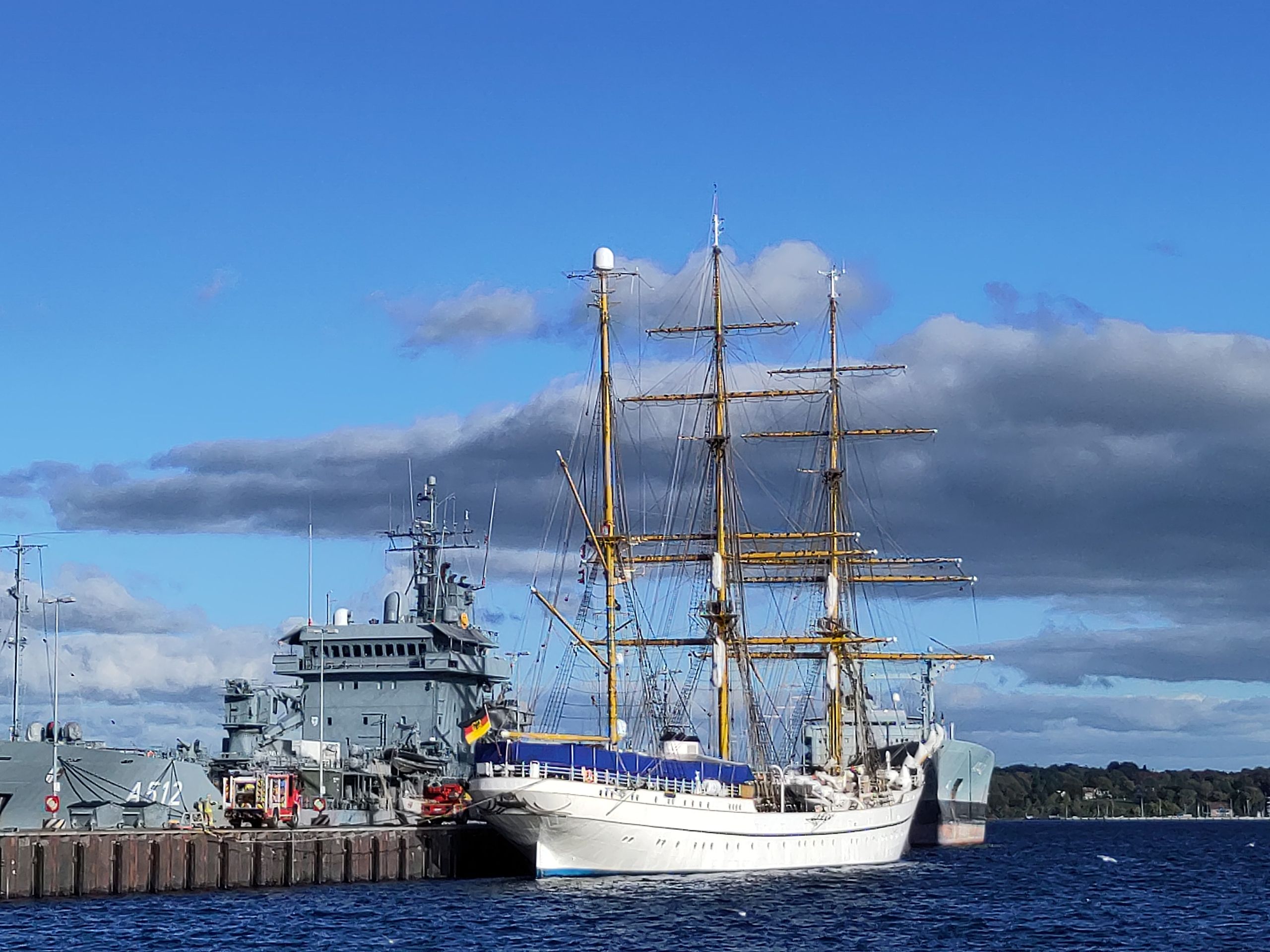
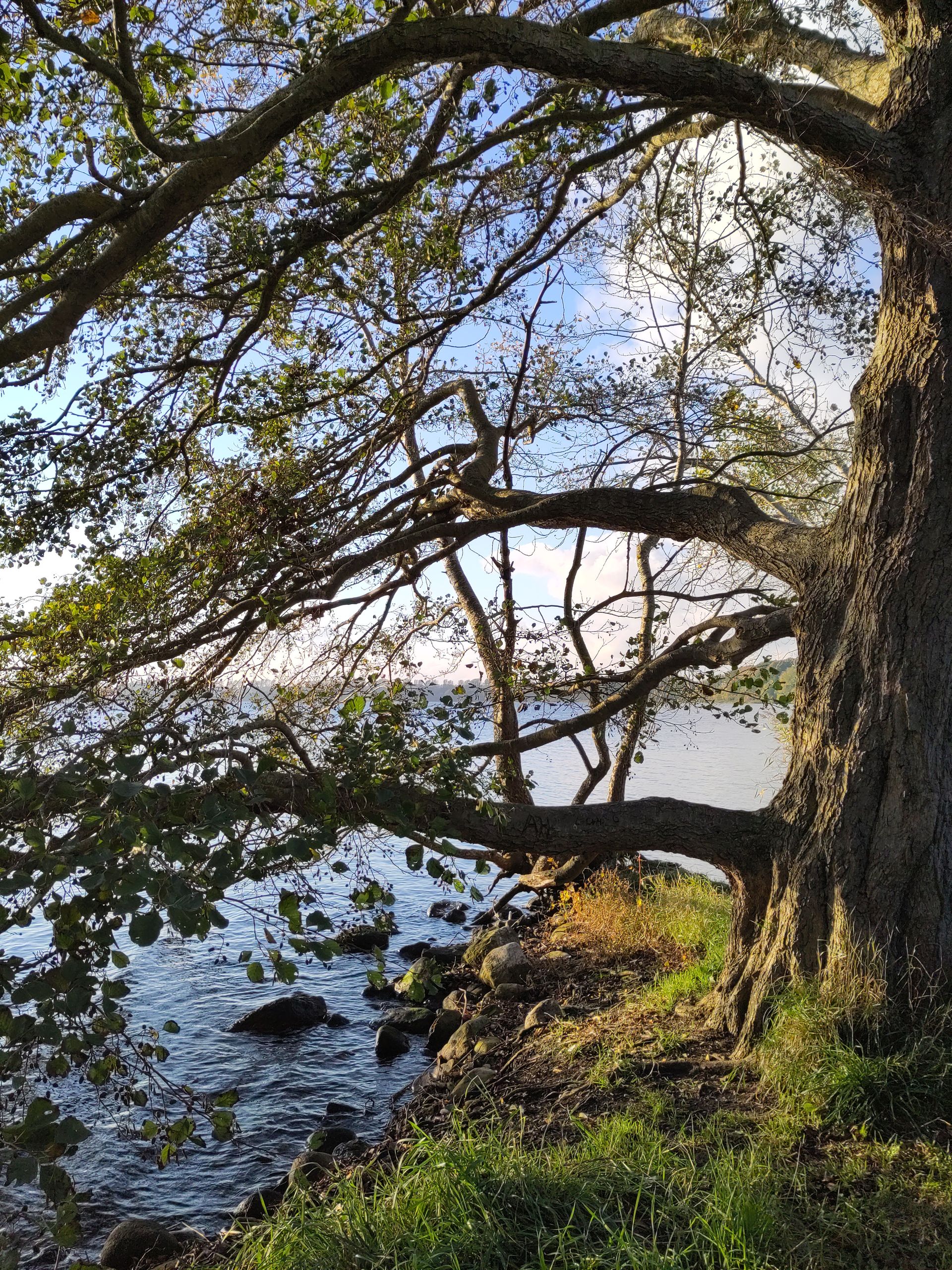
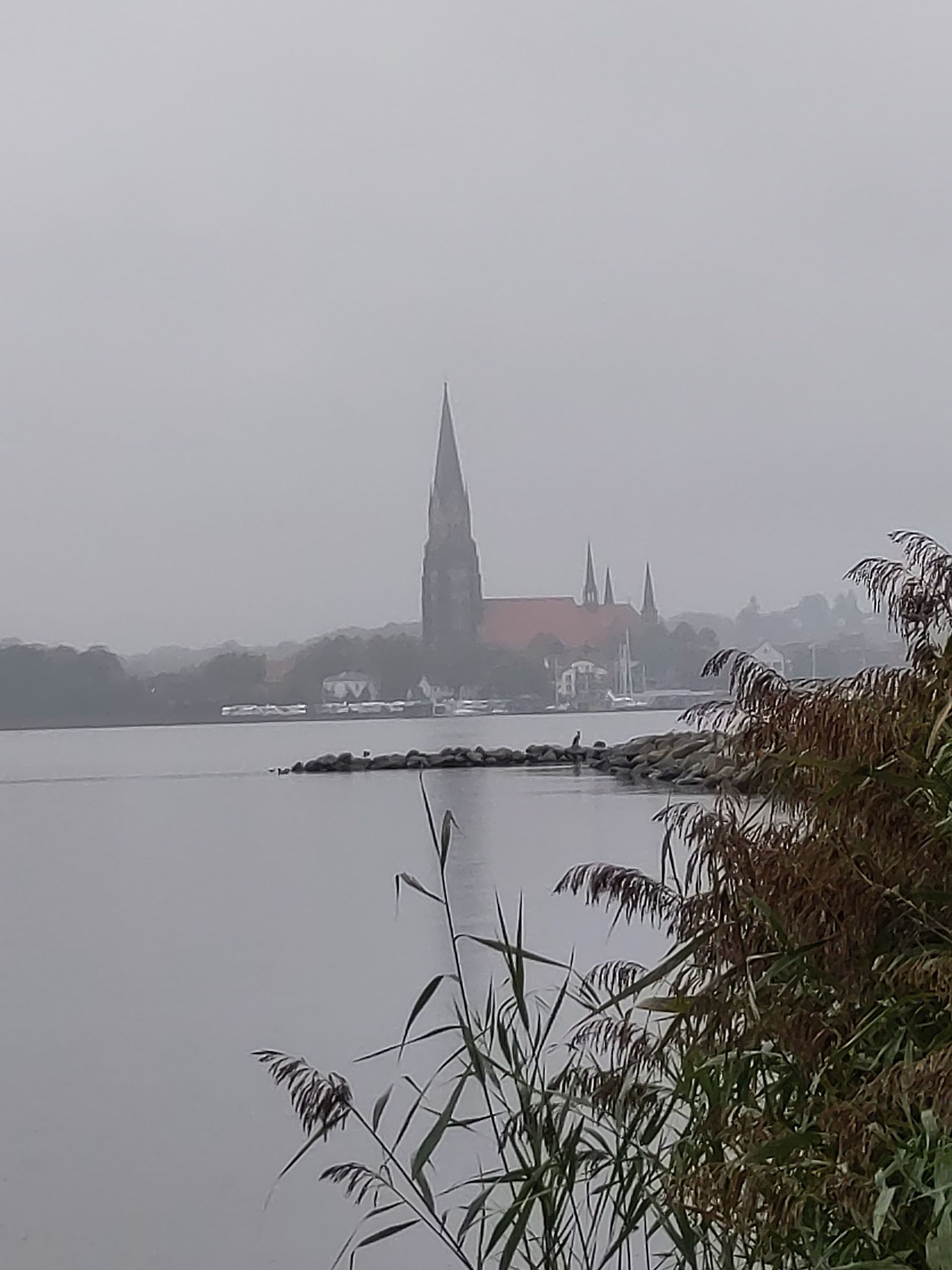
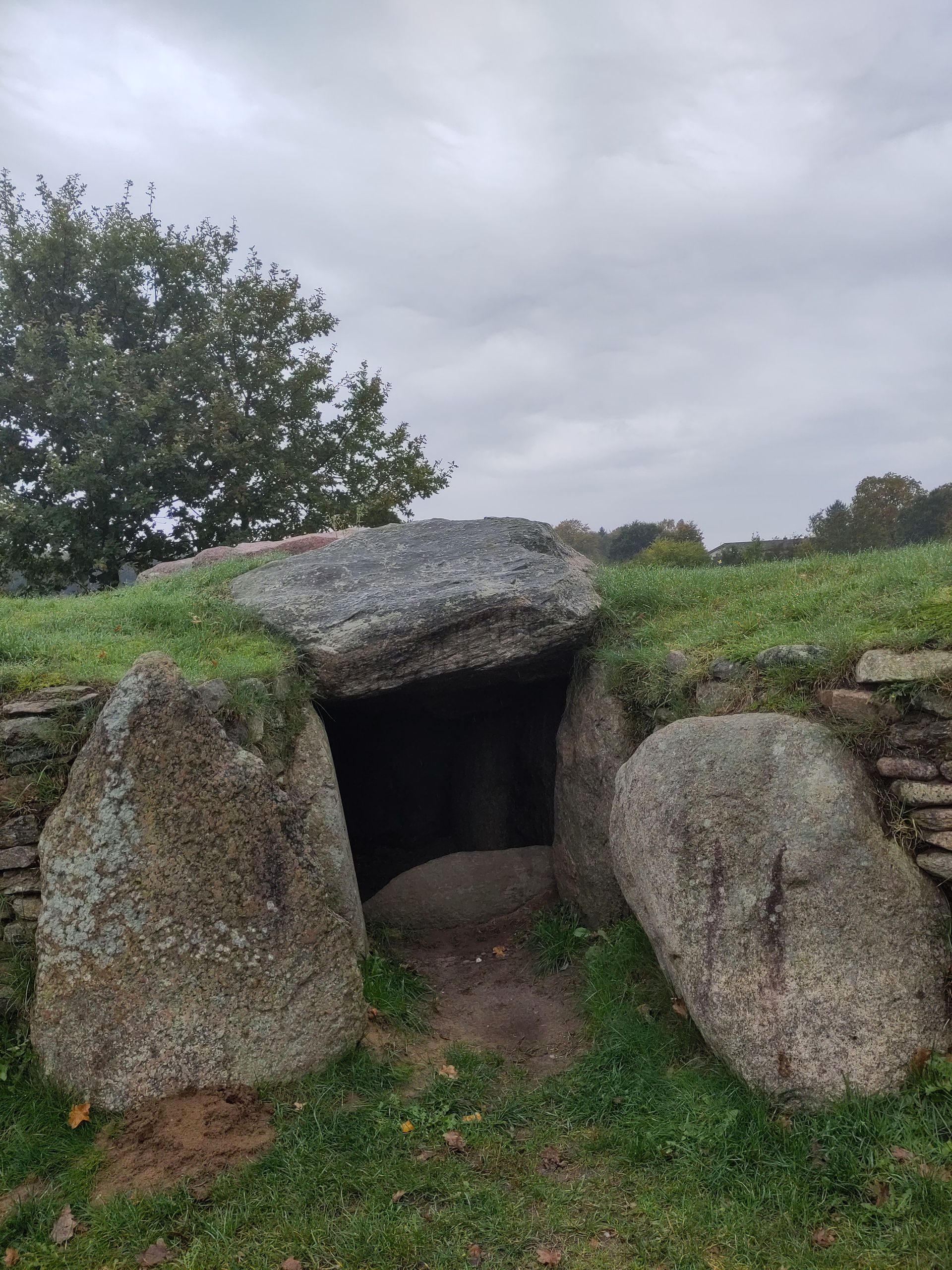
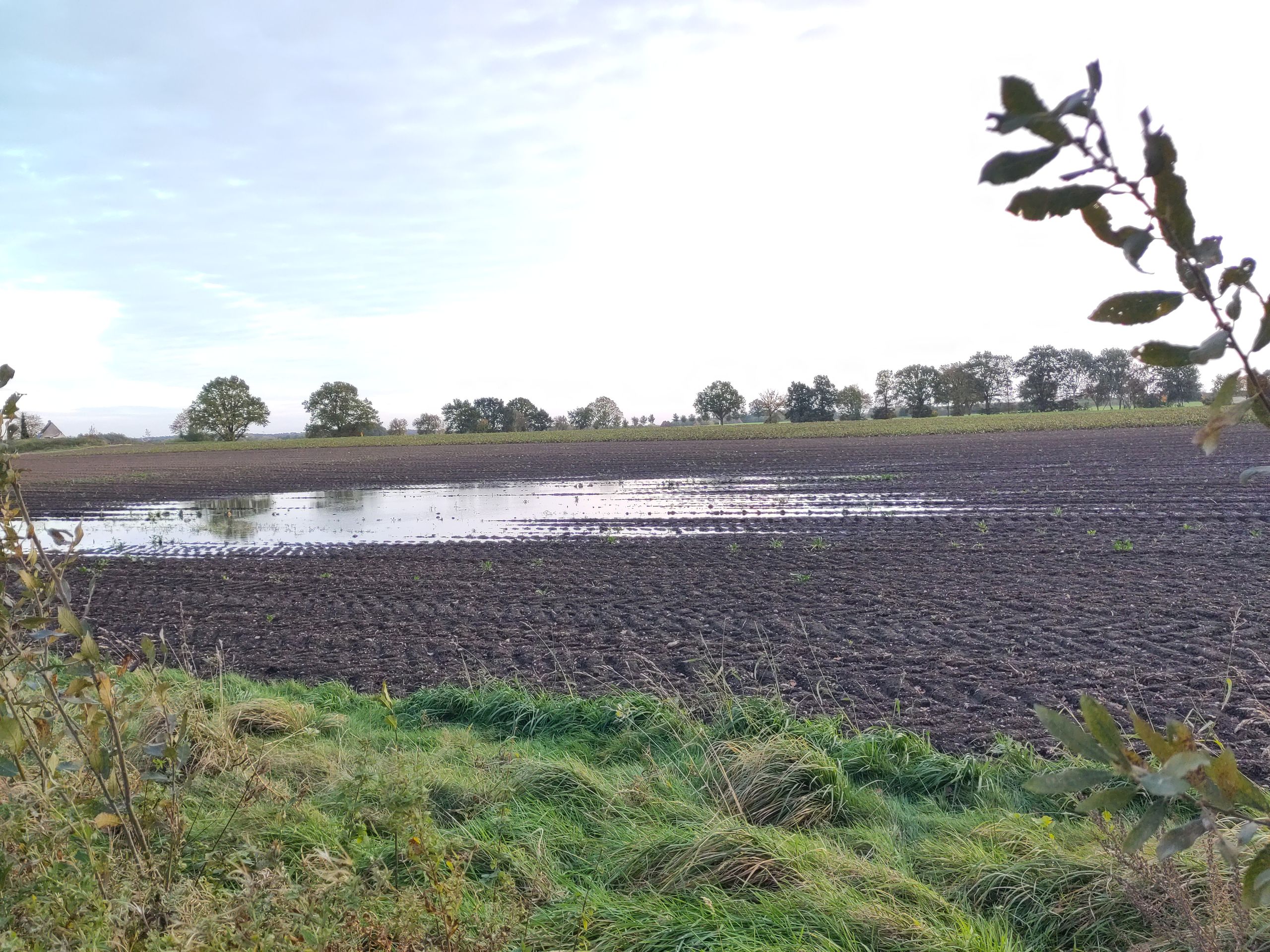
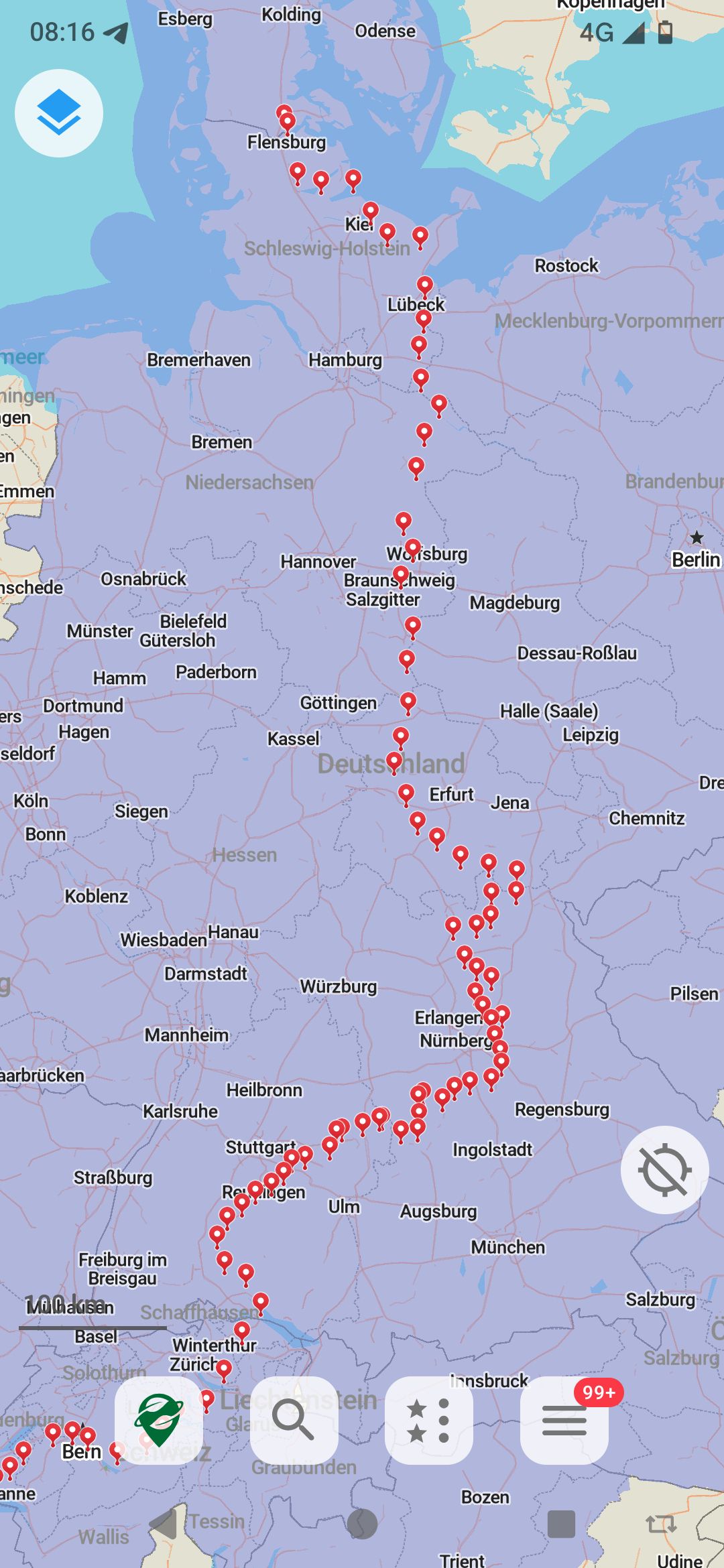
But now to the days: The last good 200 km in Germany from Preetz to the Baltic Sea and via Kiel, Eckernförde, and Schleswig to Flensburg were - alongside the autumn weather and the short days - marked by the beautiful landscape of Schleswig-Holstein, with water and wind. So many lakes, the sea, rivers like Schwentine and Schlei, the large waterways like the North-East Sea Canal, moors, and also again (reminds me of all the floods at the beginning of the way in Spain) water standing on meadows and fields... The landscape shaped by the Ice Age is largely quite undulating, and there are even - for example, around the Fröruper mountains - real ups and downs with heights of up to almost 100m! Additionally, I explore several 'tomb' sites, megalithic structures made of tons of heavy stones, like the 'Idstedter Räuberhöhle' (named so because robbers supposedly sought refuge there in the Middle Ages) or the structures in 'Arnkielpark' near Oeversee, where, among other things, a 75 m long 'tomb bed' with over 130 large stones was reconstructed; at Kiel, the hiking path leads over the water, i.e., you take the ferry from Wik to Reventlou, where the Gorch Fock is moored. Somehow, it seems unreal and incongruent that next to and behind the three masts of the sailing ship lie newer, large warships - once again, the past and the present do not convey the same image. I feel the same way when several military jets roar overhead in rapid succession over the fog and rain-shrouded Viking museum village of Haithabu near Schleswig (hardly visited this time of year), while I admire the sleekly designed Viking boats and ships at the reconstructed landing stage at Haddebyer Noor: That doesn't fit together. The same feeling overcomes me when I stand in small towns like Idstedt, where, in the context of Danish-German border disputes, over 6500 Danish and Prussian or Schleswig-Holstein soldiers lost their lives in a large battle in July 1850. The church in Oeversee is thus indeed a proper old fortified church with thick fieldstone walls and a real watchtower. Overall, I now find myself on the so-called 'Ochsenweg', a historical army and trade route, alongside the E1 and E6. This historic route is also followed by the Jakob pilgrimage path 'Via Jutlandica'. So, on the morning of the (currently) last day of this hike, I stamp a pilgrim stamp of the St. George’s Church Oeversee into my diary... ...in the cemetery, there are grave inscriptions in both German and Danish.
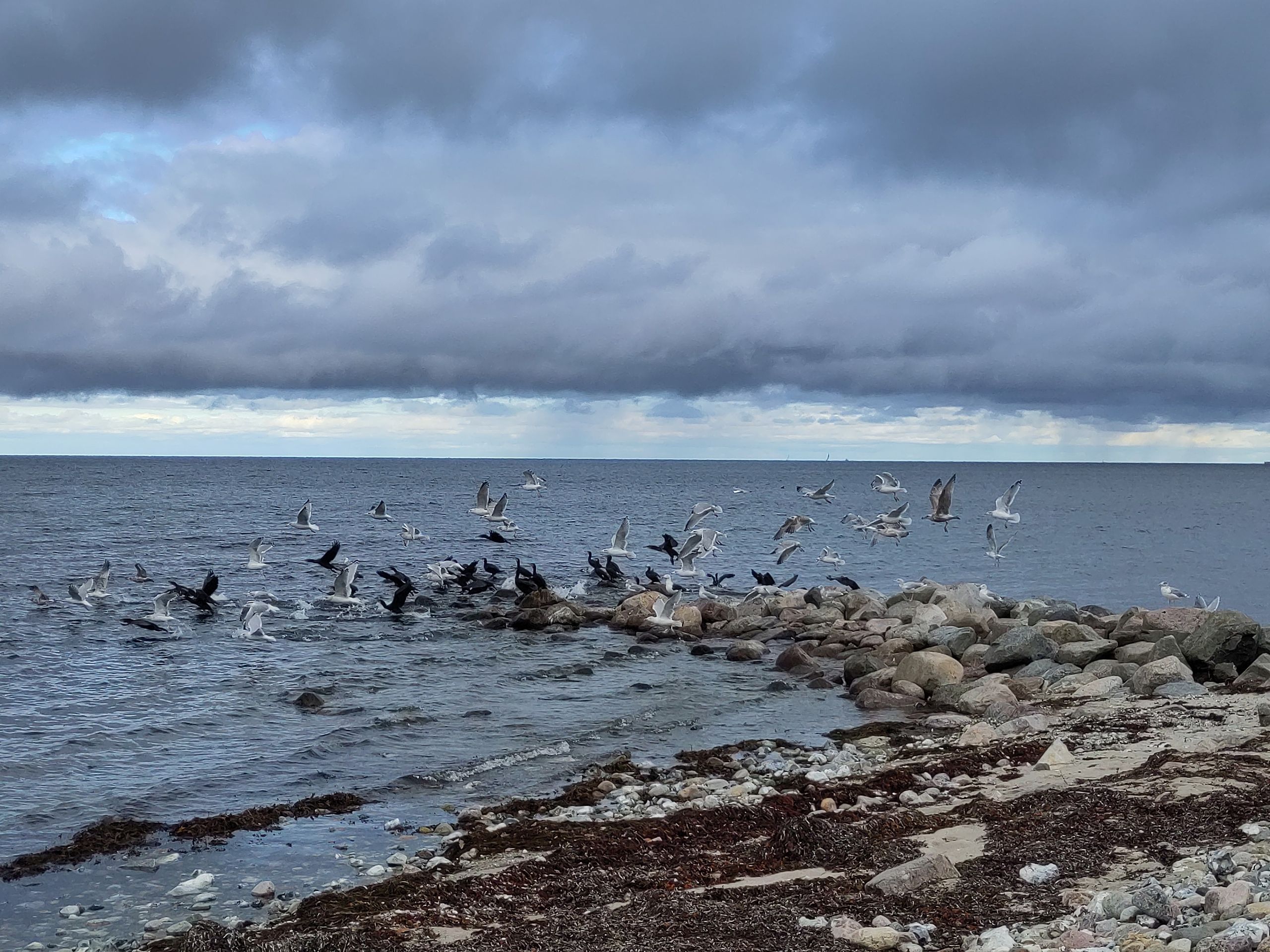
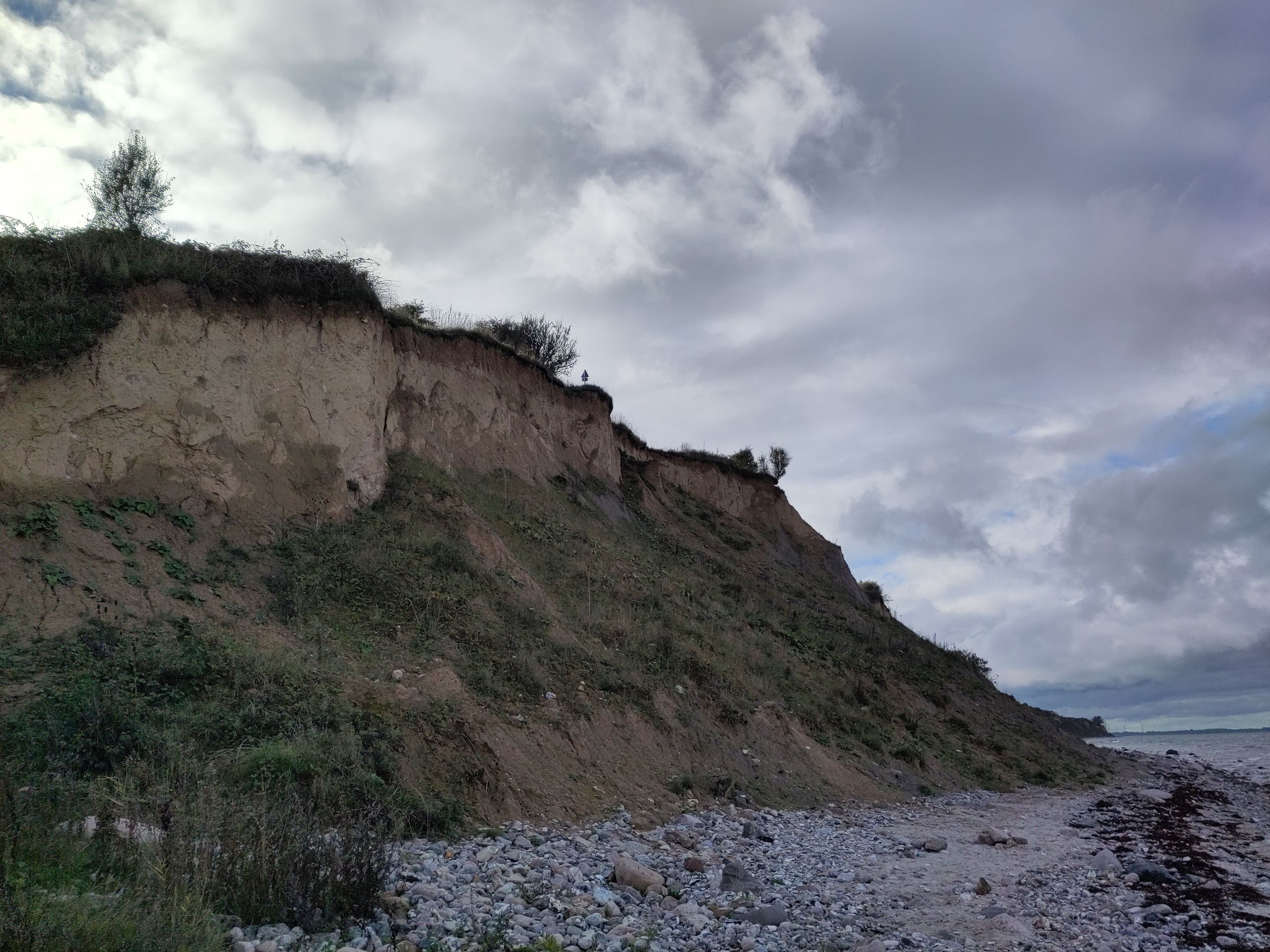
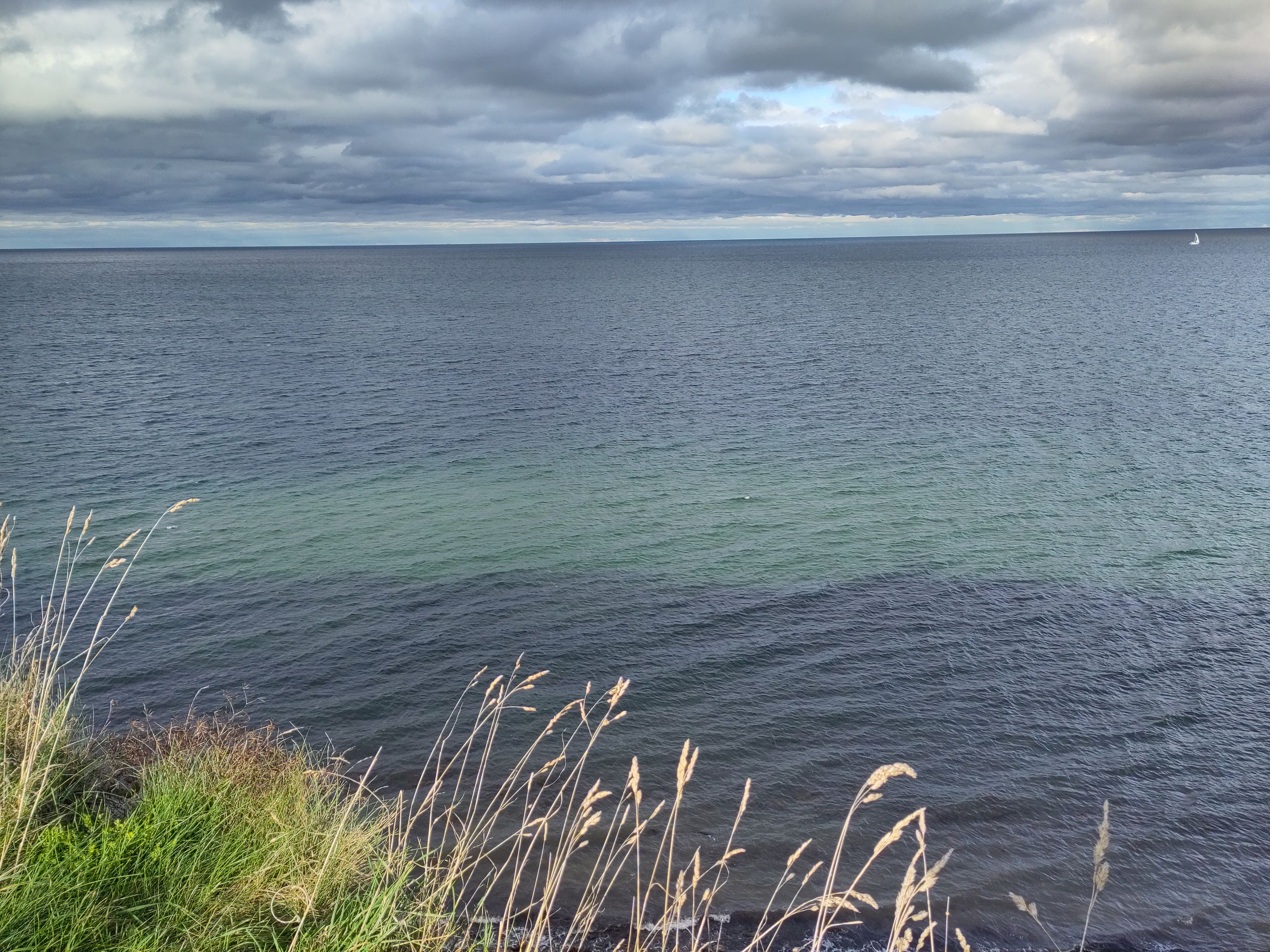
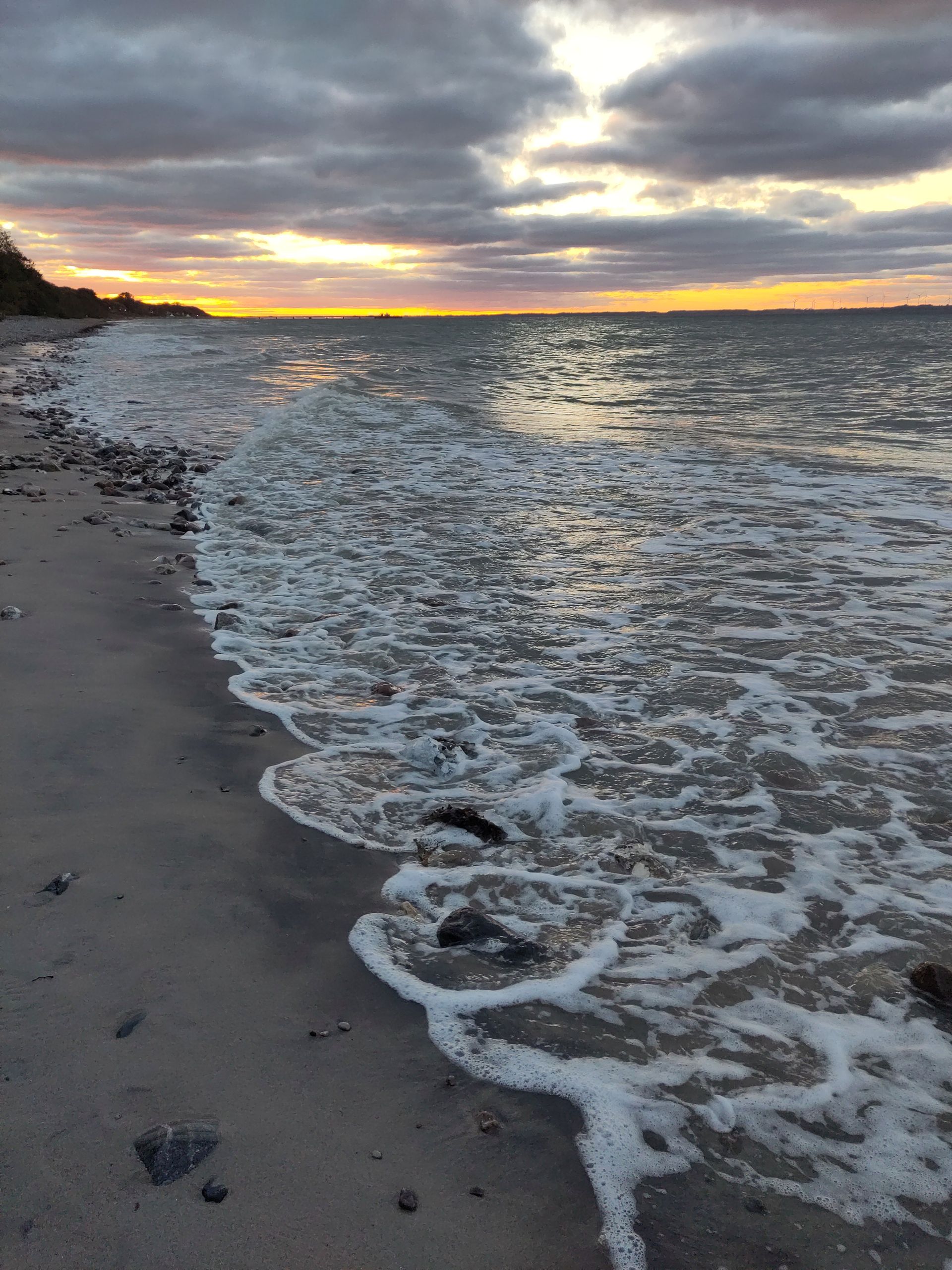
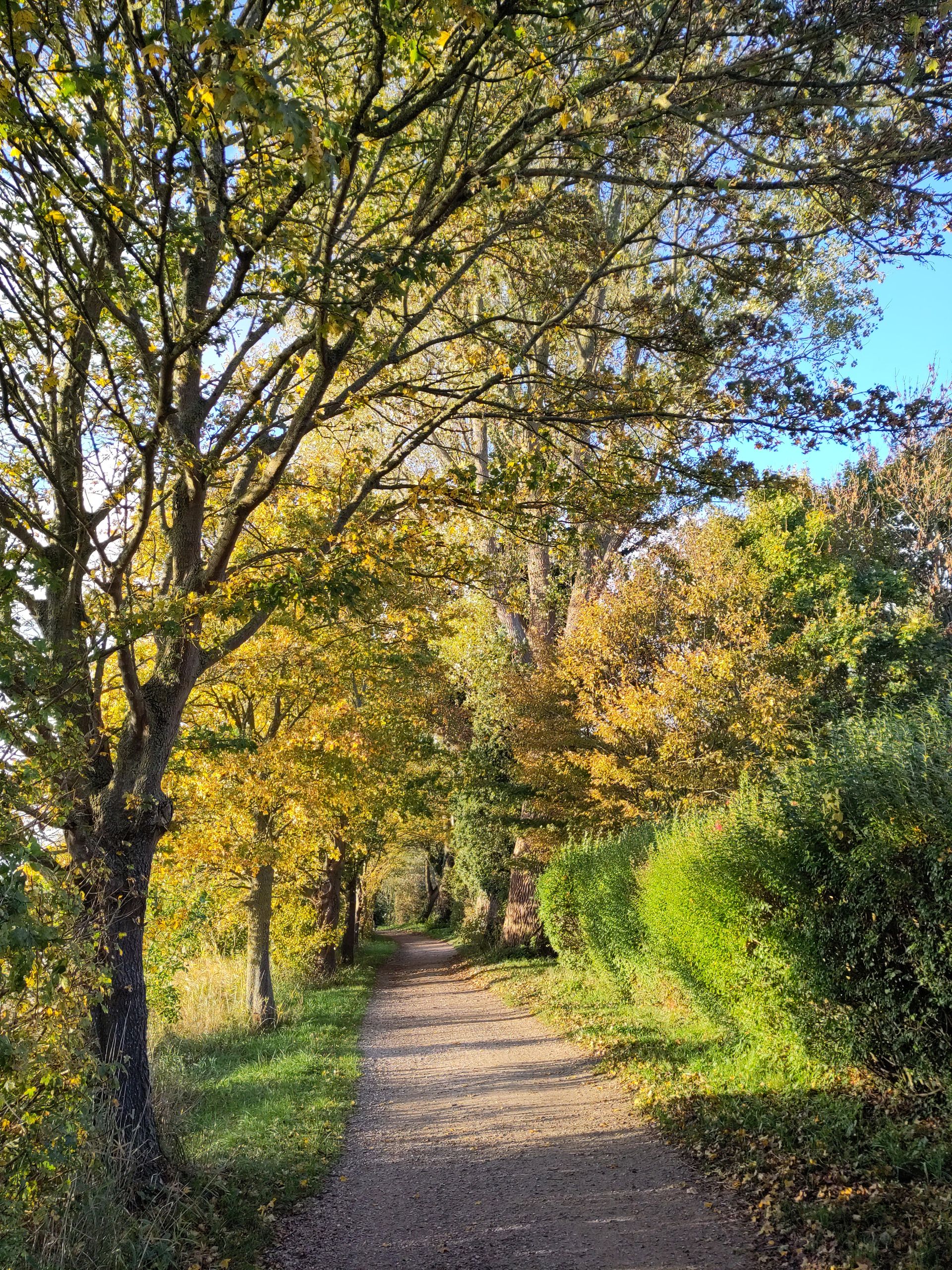
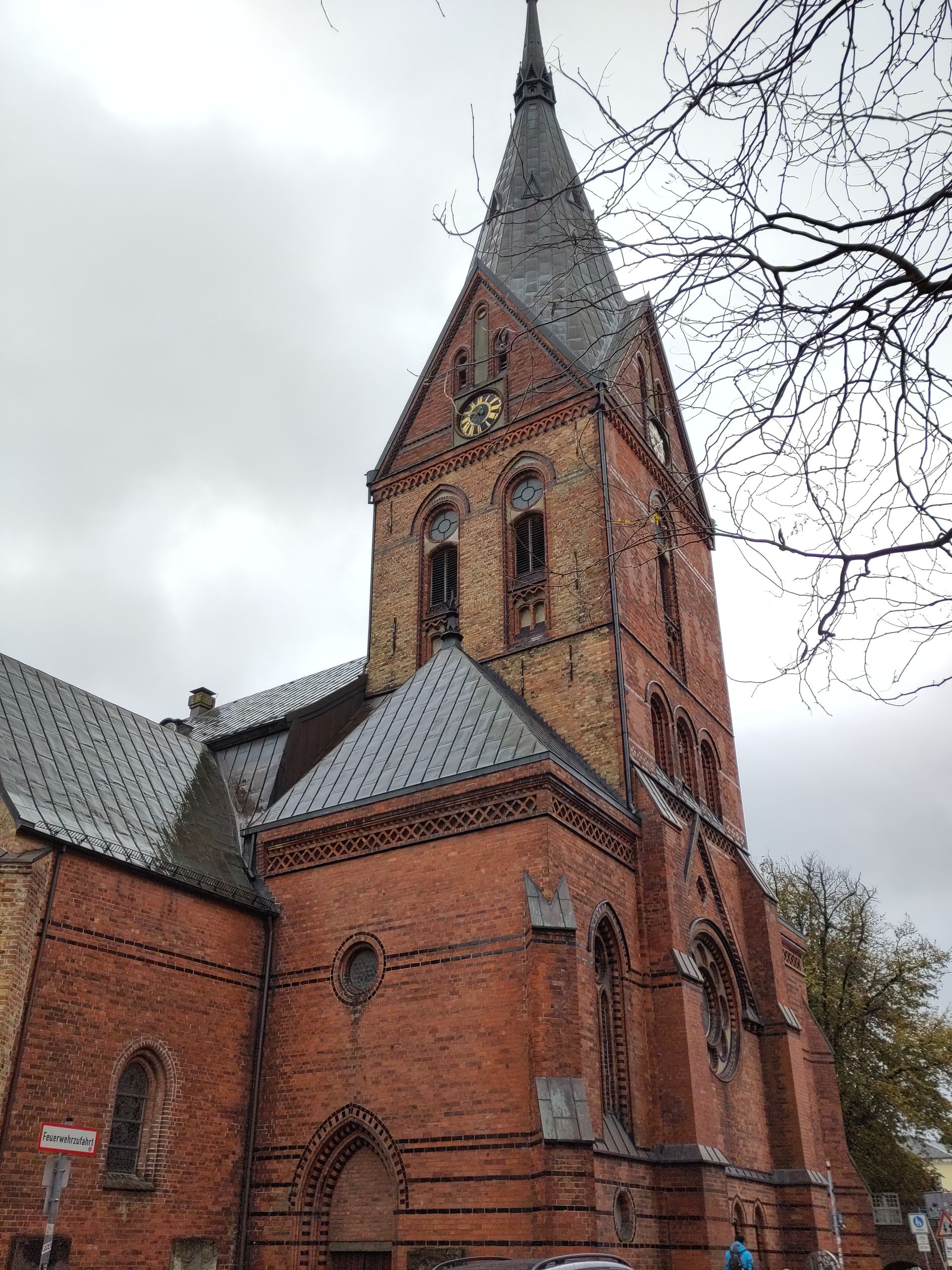
Fortunately, this fortified church is at least open; otherwise, it has remained that I could only view almost all churches from the outside, even the large brick monastery church in Preetz (I am truly sad that it is closed!), St. Mary’s in Flensburg, or the picturesque little church St. Andreas in Haddeby, just to name a few. Fortunately, it doesn’t just rain, even though it may have sounded like that here: there are also autumn sun hours, then everything shines, glistens, and sparkles even more, and I enjoy the warmth and light, the splendor of the colorful leaves, and the shimmer of the water. Not only on the (steep) coast do I hear the calls of countless waterfowl and migratory birds. The coast from Strande over Dänisch-Nienhof to Eckernförde is mostly steep cliffs, which are washed away and retreat about half a meter every year. The way atop the cliffs is blocked for miles due to the risk of landslides, so I hike directly along the rocky shore, which is tiring but feels good. On the beach lie various types of stones: Schleswig-Holstein’s hilly landscape consists of glacial fluvial deposits, and some of the stones have traveled long distances with the ice before settling here, now to be uncovered again by storm floods and winter storms. Scandinavian ferries and several smaller (sailing) ships on the water, but mostly 'only' the sea in all its vastness and with all its indescribable shades of green and blue, glowing in sunlight and (far more often) the strangely colorless dark gray-brown in clouds and rain.
So it came to be 1920 kilometers, which I hiked from Lake Constance to Denmark through Germany - a total of almost exactly 4800 km since the beginning of this journey in Tarifa over half a year ago. How many individual steps! How many impressions and experiences! It still seems almost unreal to me, not to walk further daily. If winter did not come, I would love to just continue hiking unchanged! At the moment, I am still taking the opportunity to visit dear people I haven't seen in a long time far in the north of the country (since I'm already there...). In November, I would definitely like to write at least one blog post as a sort of 'summary of the journey so far' when I have more peace and a bit more distance from the last parts of the journey.
Once, a woman (with a dog) met me in the woods. 'You are on your way,' she noted, while assessing me. 'Yes,' I said. 'Looks good!' she means. I laugh: 'it is!!'