


Royal Reminiscences in Luang Prabang
In March 2025, I was in Luang Prabang for the third time, the old Laotian royal city. It is one of my favorite places, but gradually the mass of tourists is getting out of hand.
Published: 08.05.2026
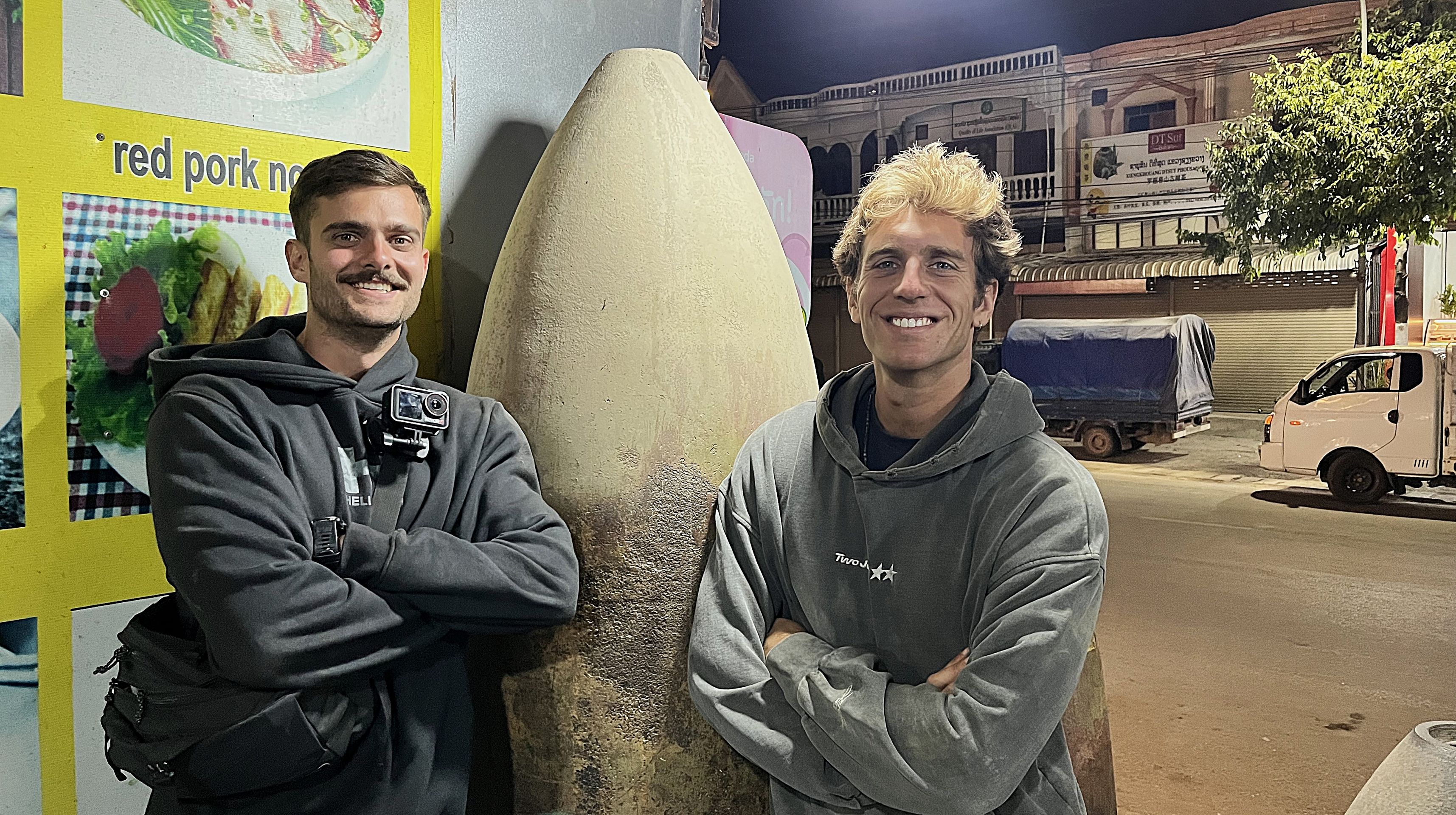
Enrique, a financial advisor, and Álvaro, a lawyer, have given up their promising careers in Madrid. The two nearly thirty-year-olds have been traveling around Asia as bloggers and YouTubers for many months. But they have never experienced anything like this in Laos.
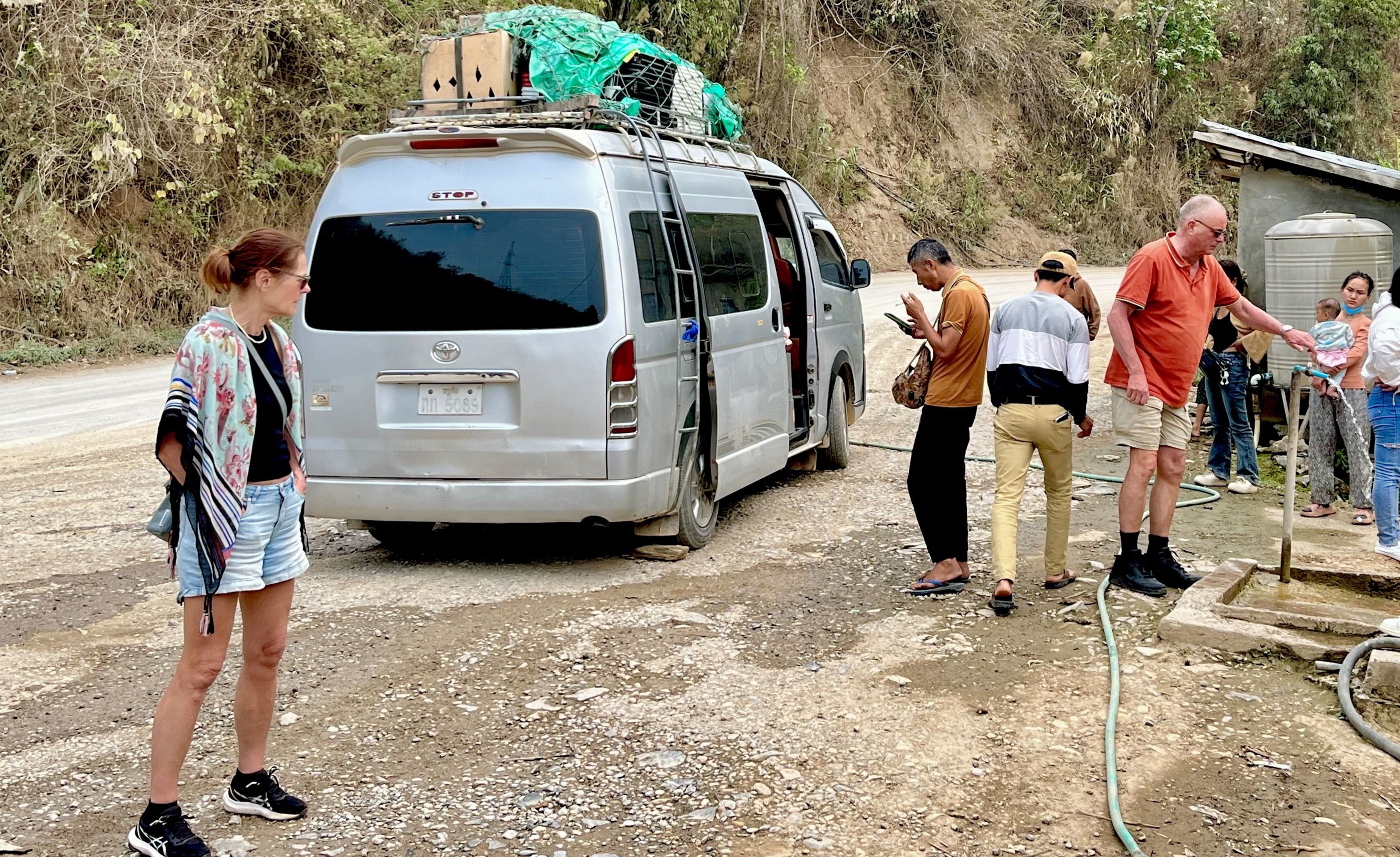
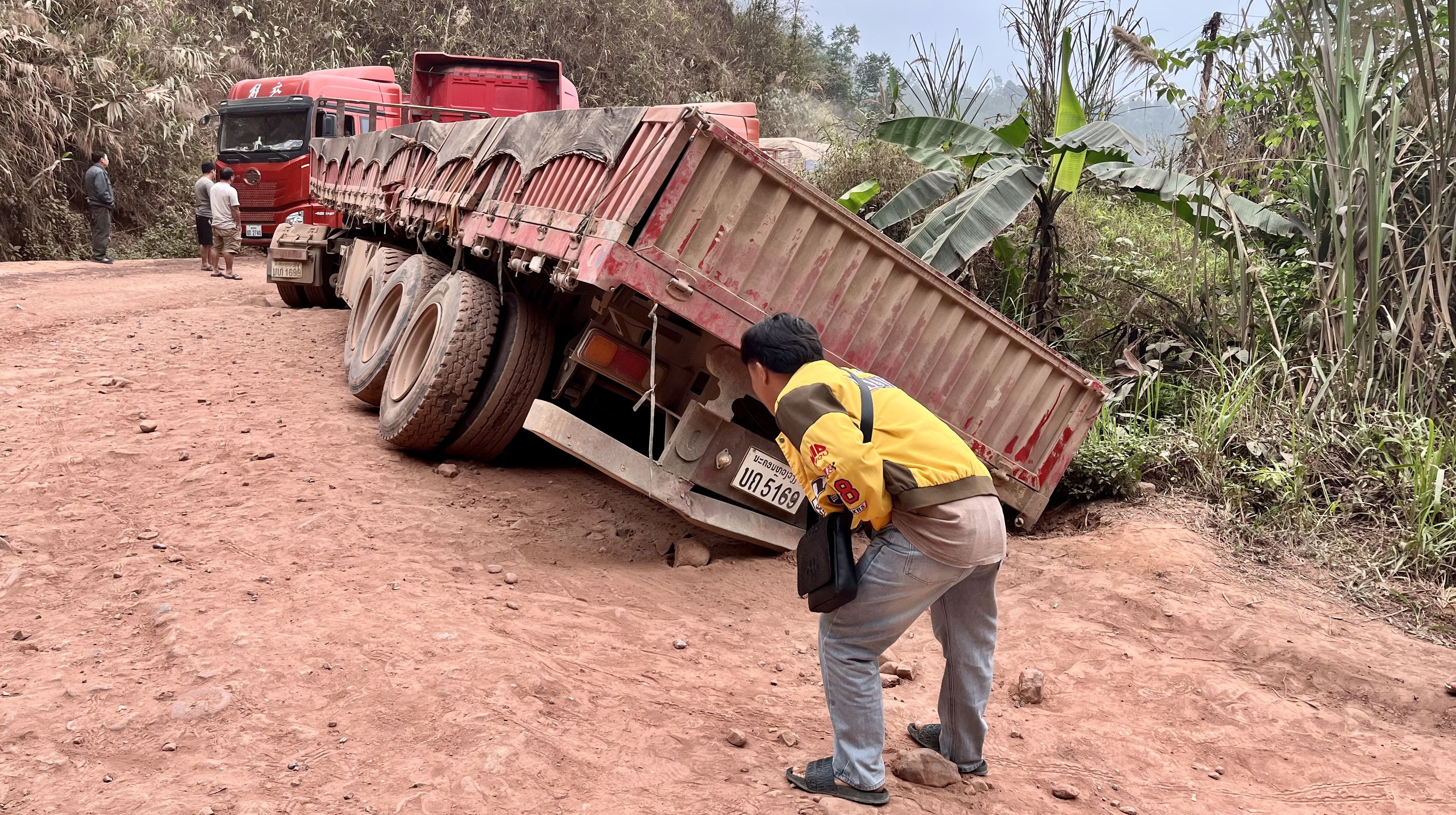
It was said to the Spaniards that the minibus ride for the 260 kilometers from Luang Prabang to Phonsavan would take five hours; I was told six. However, the road is in a condition unlike anything I've seen outside of Africa: The surface washed away for kilometers or crushed by six-axle 40-ton trailer trucks transporting the ore from the mines in the mountains down to the Mekong. Sharp, tire-shredding stones; ground swells like thrown up by a giant plow; bathtub-sized potholes.
Thus, we reach Phonsavan on March 16, 2025, only after a ten-hour journey mostly at a snail's pace, battered by the eternal ups and downs, the jolting, rattling, rumbling, and creaking of the decrepit, tightly packed minibus, on whose roof our luggage travels.
Wine – or corpses?
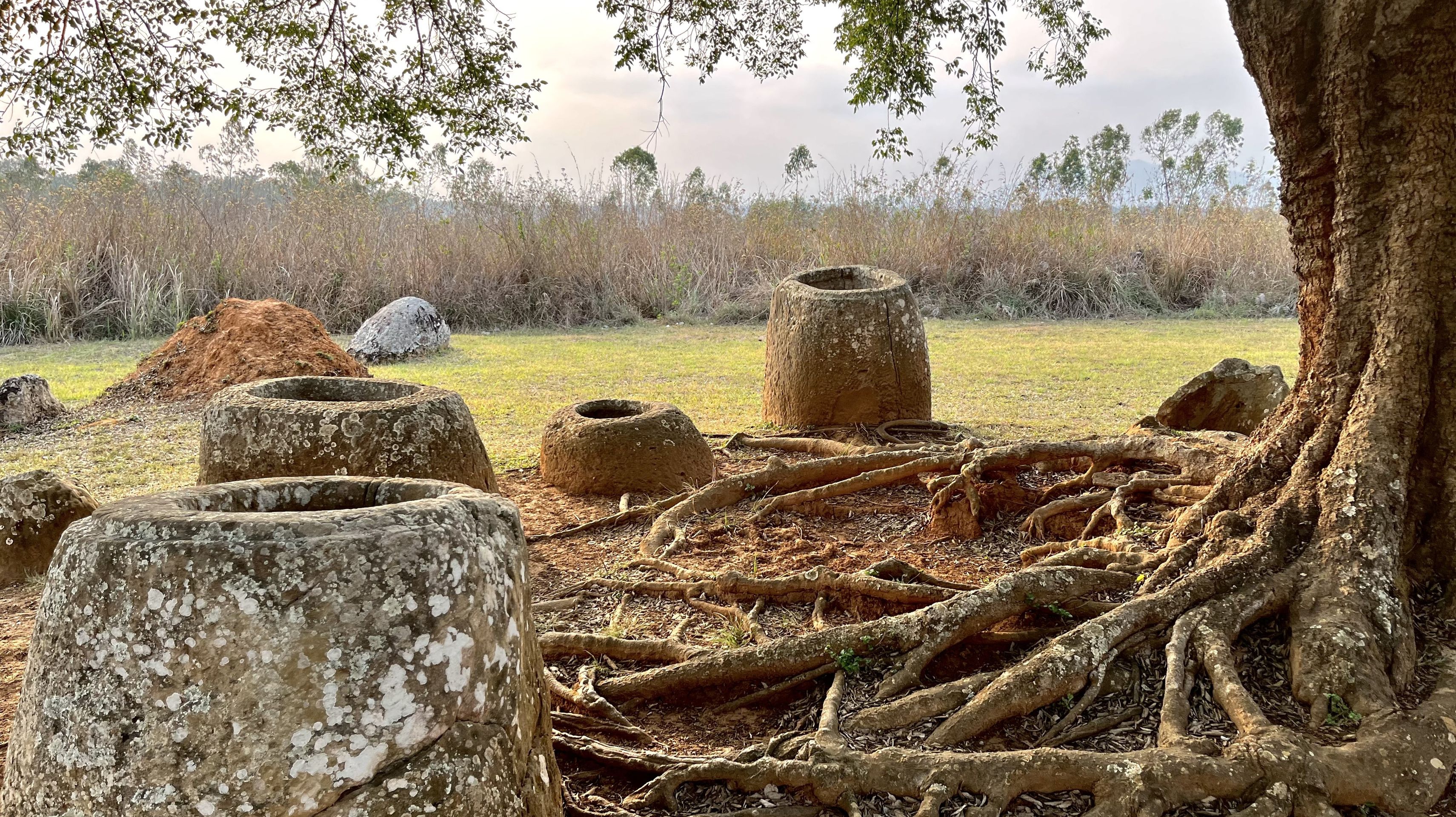
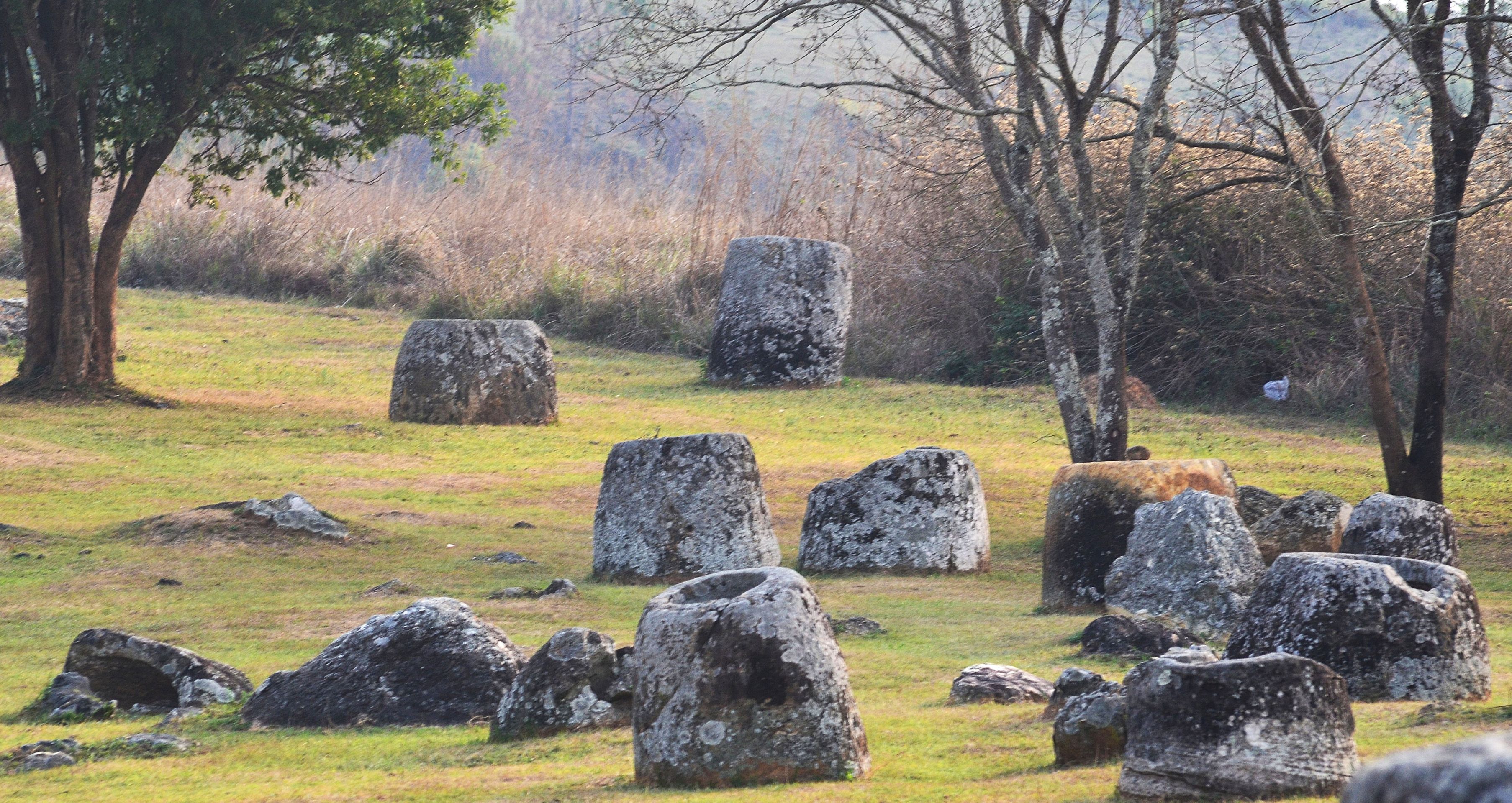
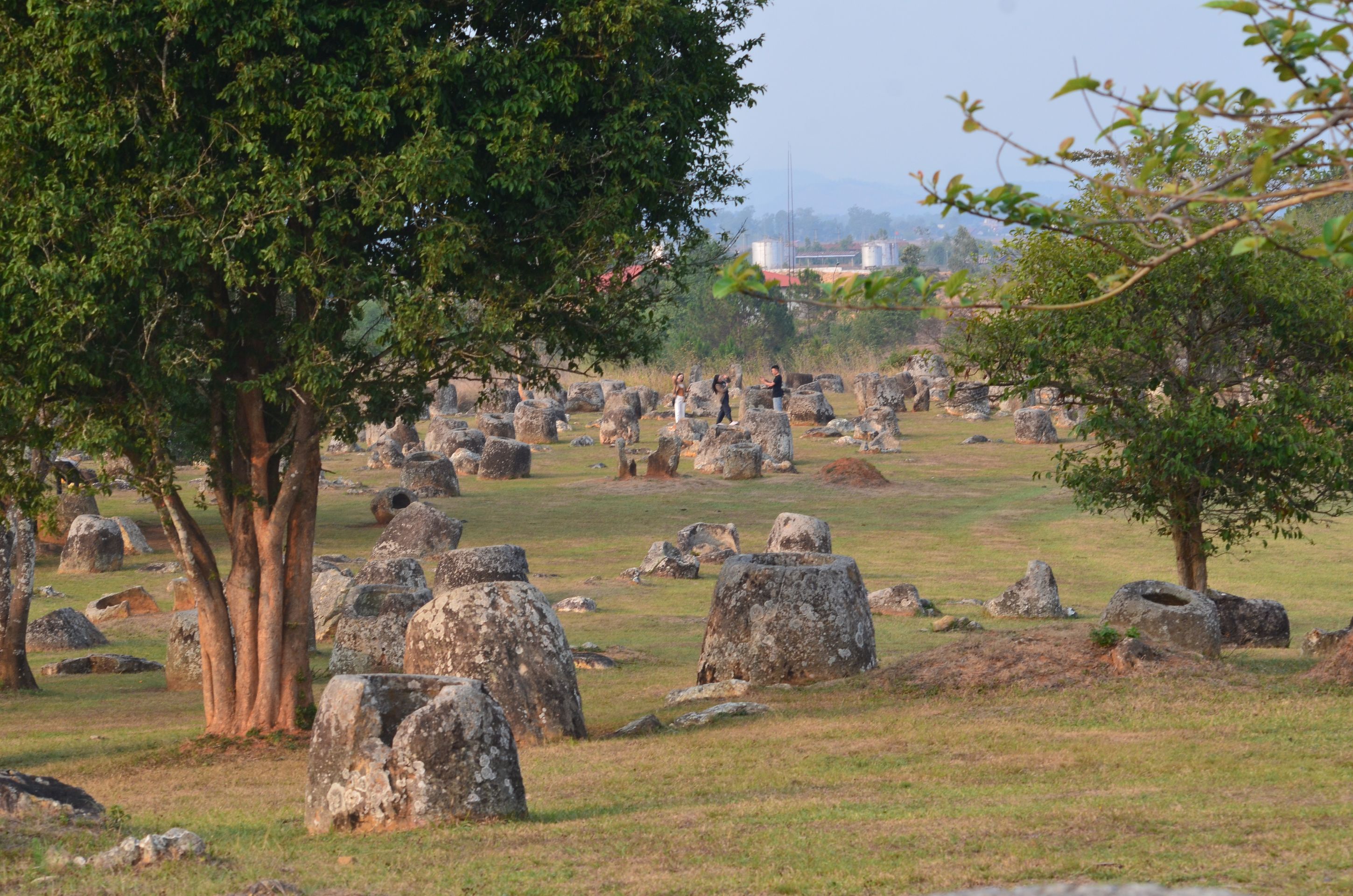
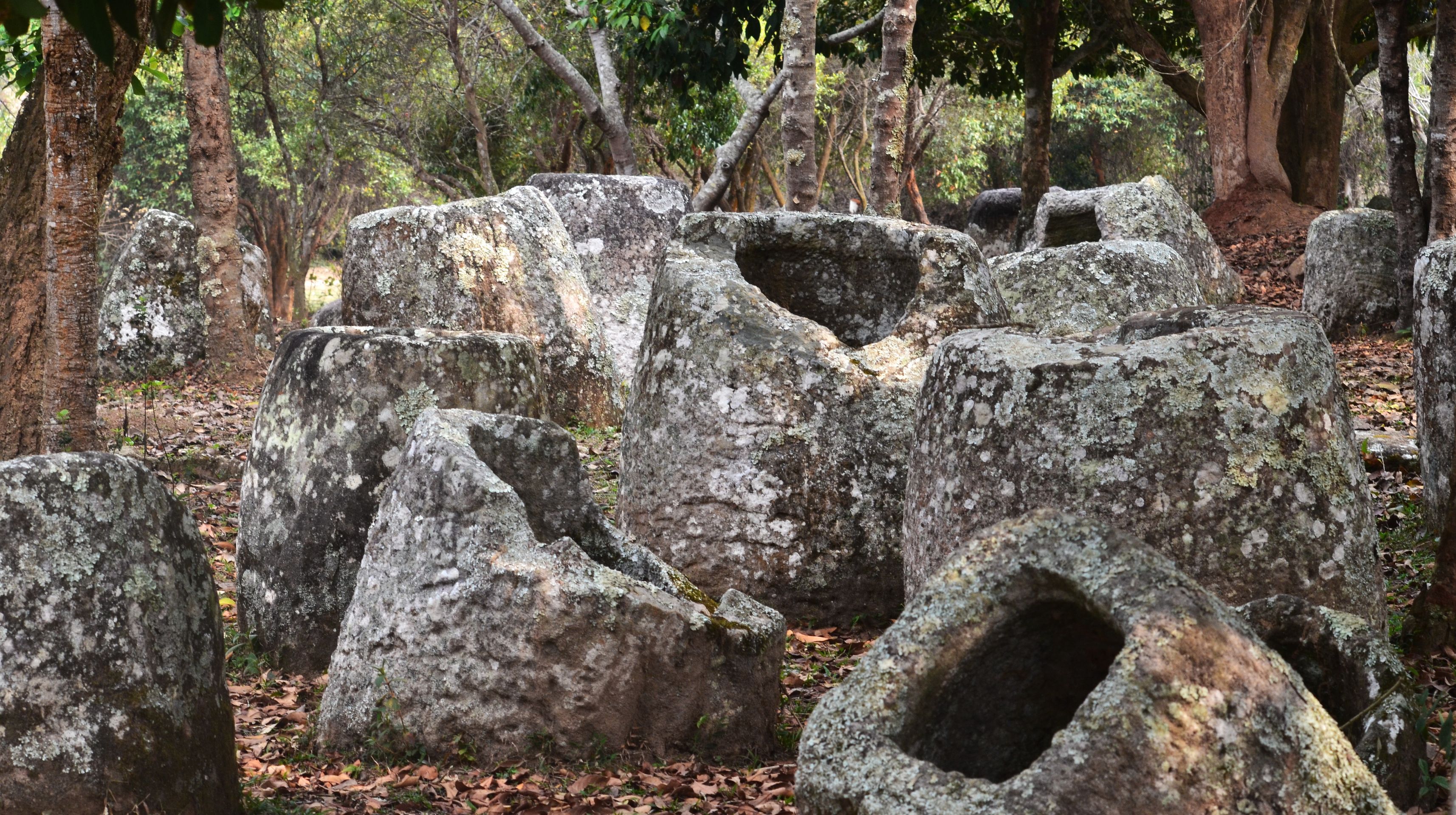
Few people have likely heard of Phonsavan, with a population of 50,000, located 1,100 meters above sea level in the Laotian hinterland. I undertook the grueling journey for another story: I want to visit the plain of stone jars, a mysterious archaeological site. It consists of more than 2,100 massive, tube-shaped jars at several sites, quarried from the rock in nearby quarries, ranging from half to three meters in height and weighing up to six tons.
The stone jars are between 1,500 and 2,500 years old. Their purpose is not definitively clarified and fuels legends and theories. One suggests that King Khun Chuang filled the jars with wine to celebrate a victory over his enemies. However, the existence of Khun Chuang, who is said to have ruled in the 6th century AD, is not historically documented. Similar to William Tell for Switzerland, he serves as a figure of national mythology for integration.
The most plausible theory, my guide Souk explains, comes from the researcher Madeleine Colani. The French archaeologist studied the megaliths in the 1930s and published a series of scientific articles about them. Colani found bone fragments, teeth, ceramic shards, and glass beads in, next to, and under the jars, as well as massive stone lids and concluded that they served as urns, where the deceased were mummified for several years before their remains were buried or cremated.
Only one tourist
Phonsavan is not a tourist hotspot. The journey on the damaged highways is laborious, whether you come from Luang Prabang like I do, from Vang Vieng, where I will travel later, or from Vietnam, whose border lies 130 kilometers to the east. Moreover, the regional airport has been out of service for months due to expansion work.
This has severe financial consequences for the people who rely on tourism; for us tourists, it is a blessing: Of the three stone jar sites opened for visitors, I had two entirely to myself, which generated a pleasant, contemplative mood in me. Only site 1, a vast plain crowned by a hill, with trees, grazing cows, and more than 250 megaliths, did I have to share with a handful of other visitors.
Site 1 is not only a testament to an earlier culture. Recent history is also readable here. At the hill, trenches run along, which the communist fighters of Pathet Lao dug during the civil war and the