
On the mother of all waters
are quite chaotic. This means there is a risk of missing the boat. Contemplation instead of efficiency I was also told I should arrive at least an hour before departure to...
Published: 08.05.2026
On March 11, 2025, after a two-day journey on the slow boat along the Mekong, I arrived in Luang Prabang for the third time. For me, it is one of the most pleasant places in Southeast Asia – at least for now. There are now too many tourists here for my taste. Especially the Chinese are arriving in droves thanks to a direct train connection all the way from Kunming.
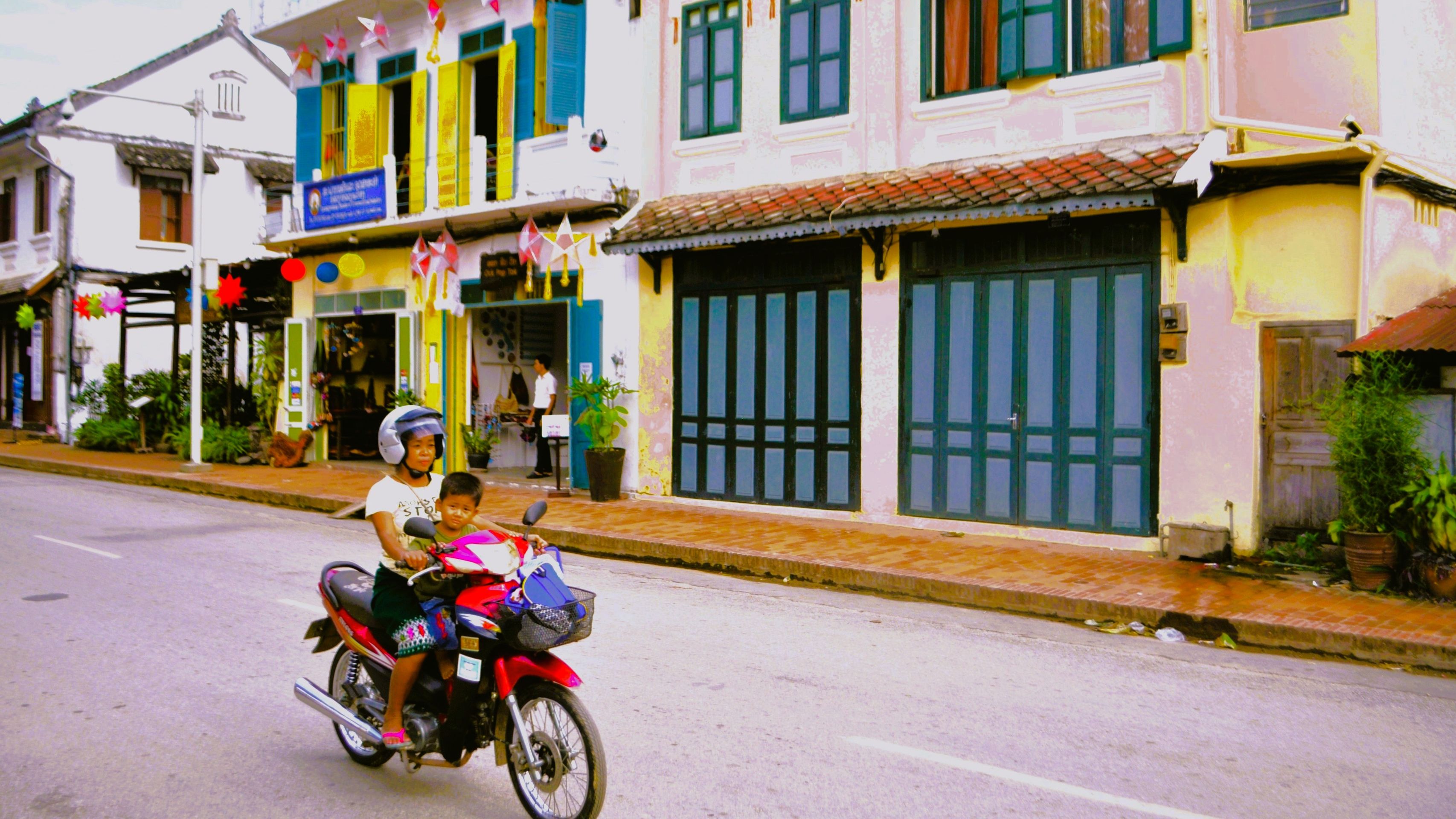
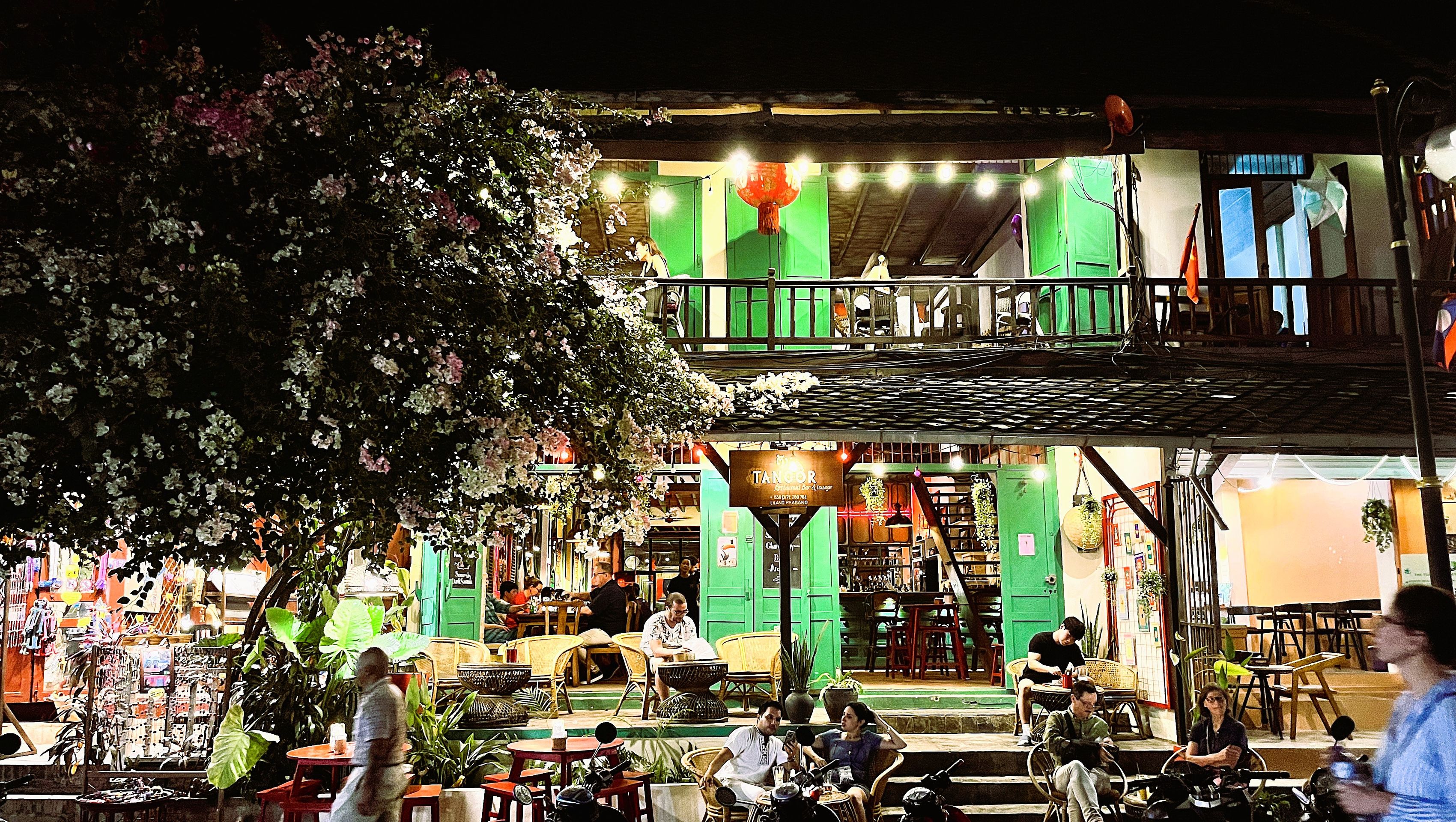
With around 70,000 inhabitants, Luang Prabang is especially distinguished by its historic center on a peninsula between the Mekong and its tributary, the Nam Khan. Almost all the sights can be reached on foot, and this is also where tourists gather in large numbers. Together with the old town in French colonial style, which is now a vibrant nightlife district, they make Luang Prabang an incredibly attractive travel destination. In 1995, the city was added to the UNESCO World Heritage List.
Please forgive me a small historical detour: From 1353 to 1560, Luang Prabang was the capital of the Kingdom of Lan Xang. Lan Xang, the “Land of a Million Elephants,” existed from the 14th century until 1707 and encompassed large parts of present-day Laos as well as neighboring regions in Thailand and Vietnam. Until 1560, Luang Prabang was the capital; then King Setthathirath moved it to Vientiane. In 1707, Lan Xang broke apart into several smaller kingdoms; one of them was Luang Prabang, which thus became a royal seat again. Although the French colonizers later moved the administrative center again to Vientiane, the king's residence remained in Luang Prabang, even after the French withdrawal in 1953.
The last monarch was deposed in 1975 after the end of the Vietnam War. This war is referred to in Laos as the “American War” and caused severe devastation in this country as well. The Marxist-Leninist revolutionary people's party took power, which it still holds today. The communists imprisoned the royal family in a camp, presumably in the northeast of the country, where the king, queen, and crown prince died between 1978 and 1984 under inhumane camp conditions from hunger, illness, or the effects of forced labor.
What Remains of the Kingdoms
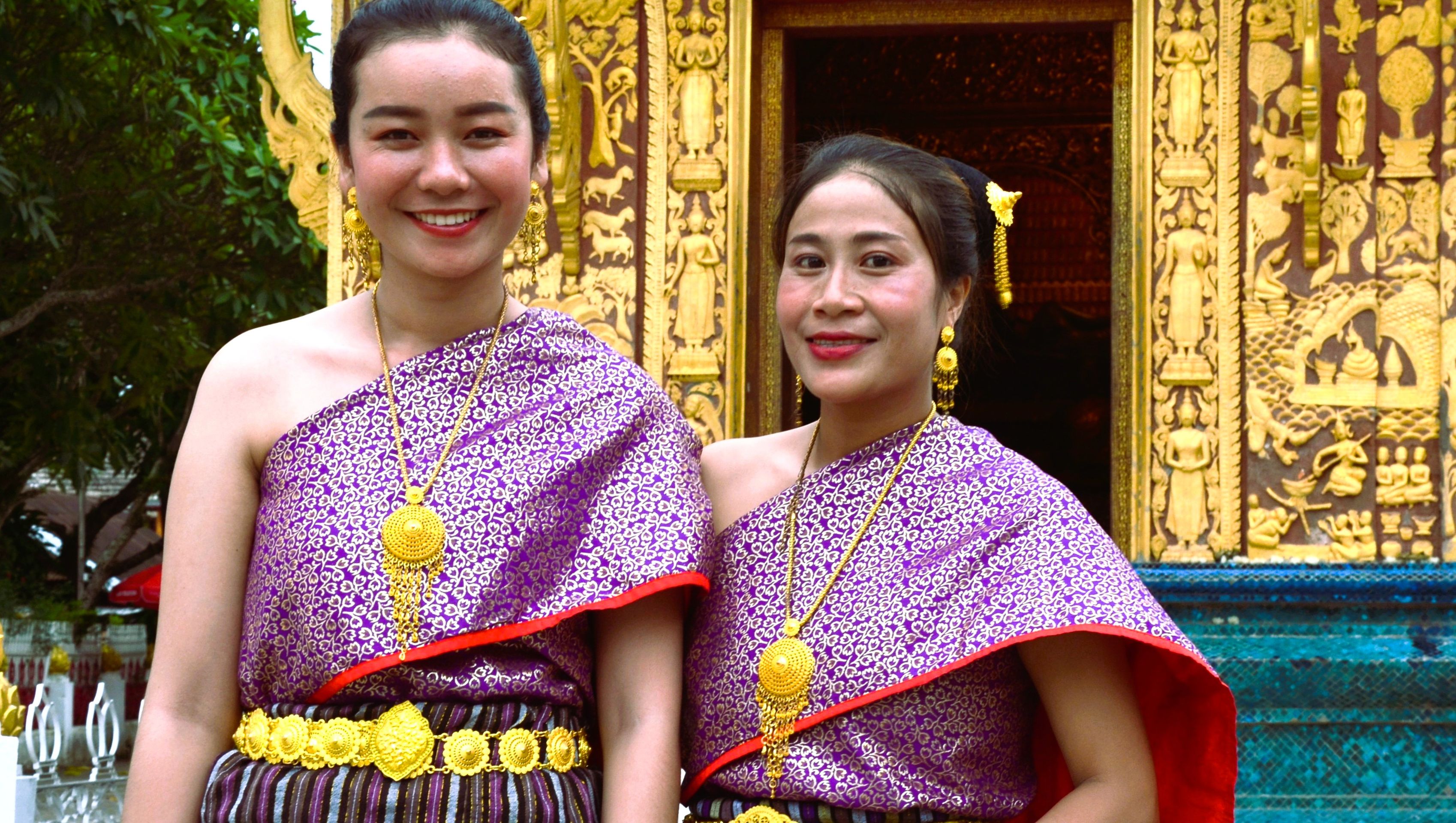
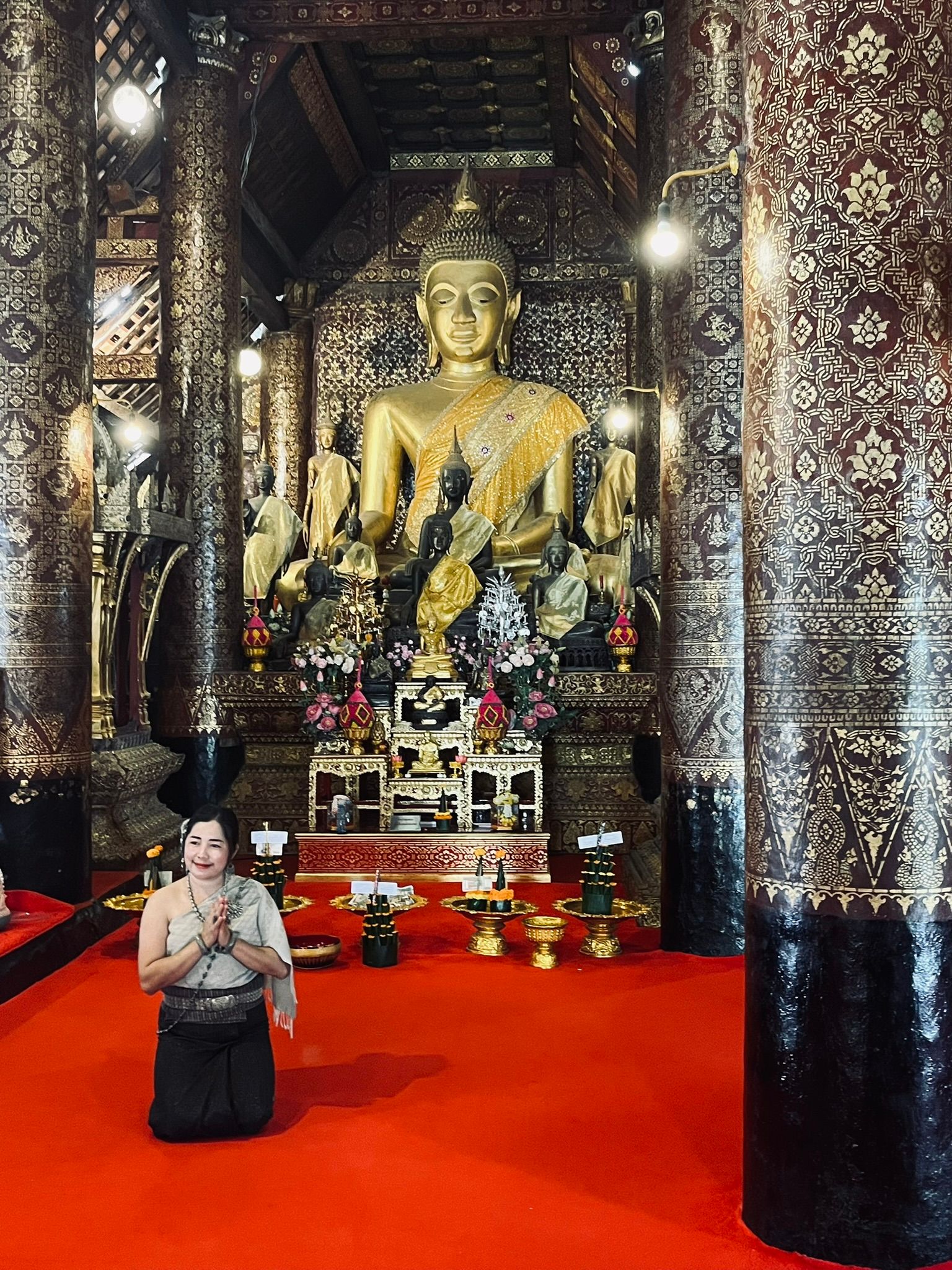
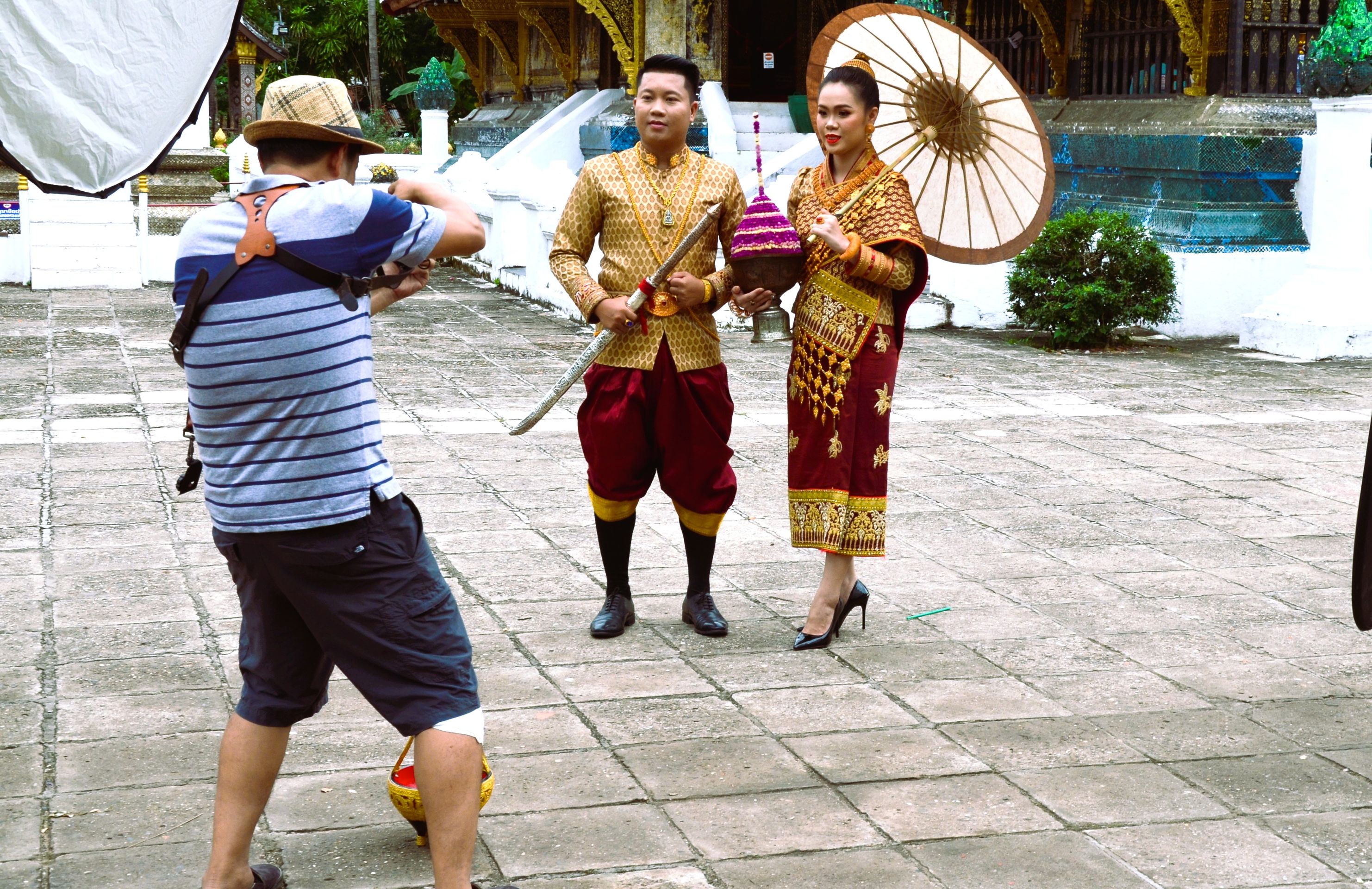
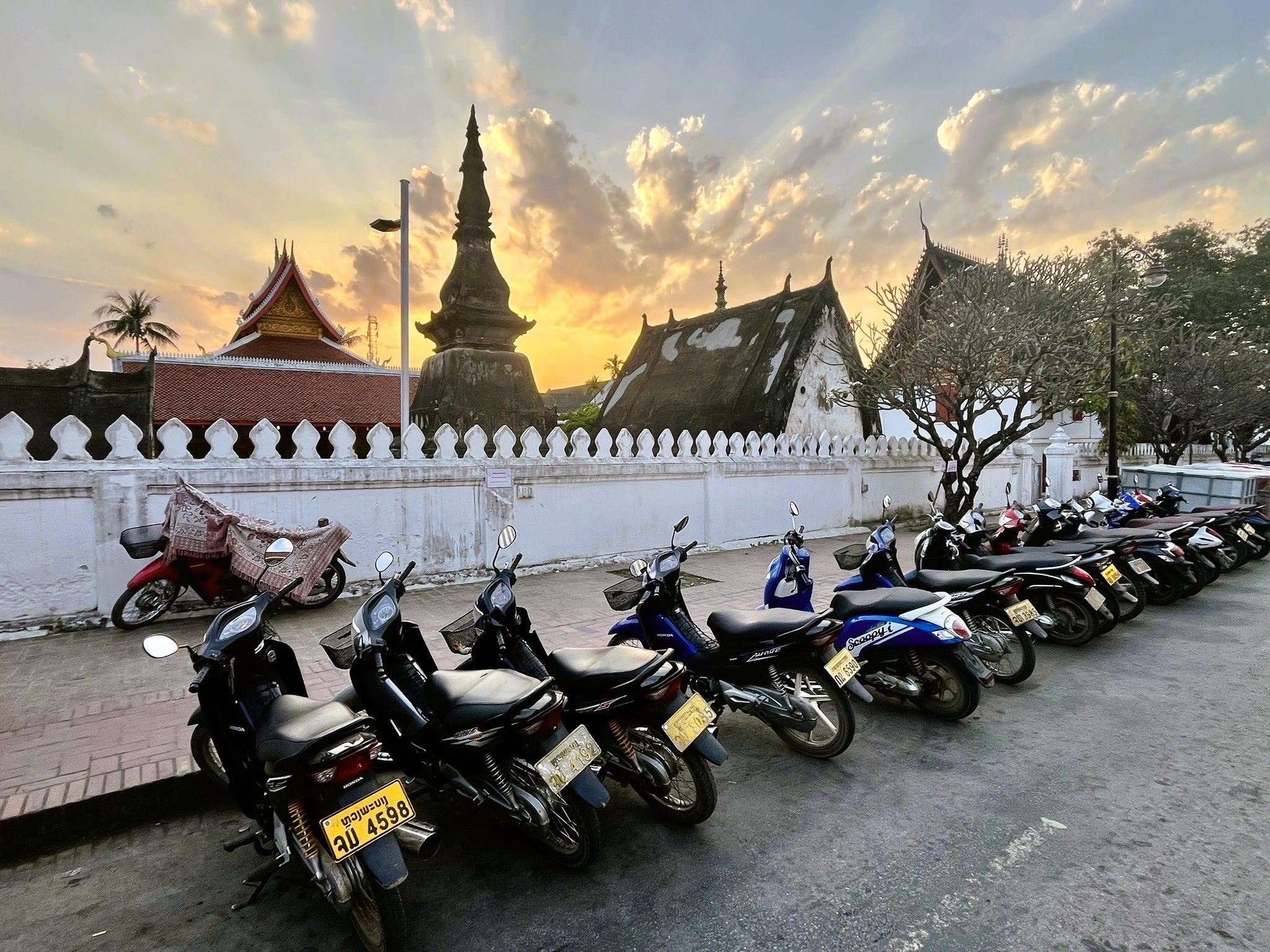
What remains of the monarchy in Luang Prabang are several palaces and dozens of traditional, richly decorated Buddhist temples with pointed roofs. Wat Xieng Thong, the Temple of the Golden City, is a nearly 500-year-old ensemble and one of the most significant, oldest, and best-preserved Buddhist temple complexes in Laos. Xieng Thong is both a tourist magnet and an active monastery, home to monks living there, hosting religious festivals, and where devotees come to pray and pay homage to Buddha. For centuries, the temple also served as a grand setting for royal ceremonies and coronations.
The elegantly curved roofs of the main building are staggered in several tiers and almost reach the ground. Facades and columns are lavishly adorned with black lacquer and intricate gold ornaments. They depict scenes from the life of Prince Siddhartha Gautama, who lived in present-day northern India and Nepal during the 6th and 5th centuries B.C., acted as a religious teacher and itinerant preacher, later received the honorific title Buddha (“The Enlightened One”), and is revered in many Asian countries as the founder of Buddhism.
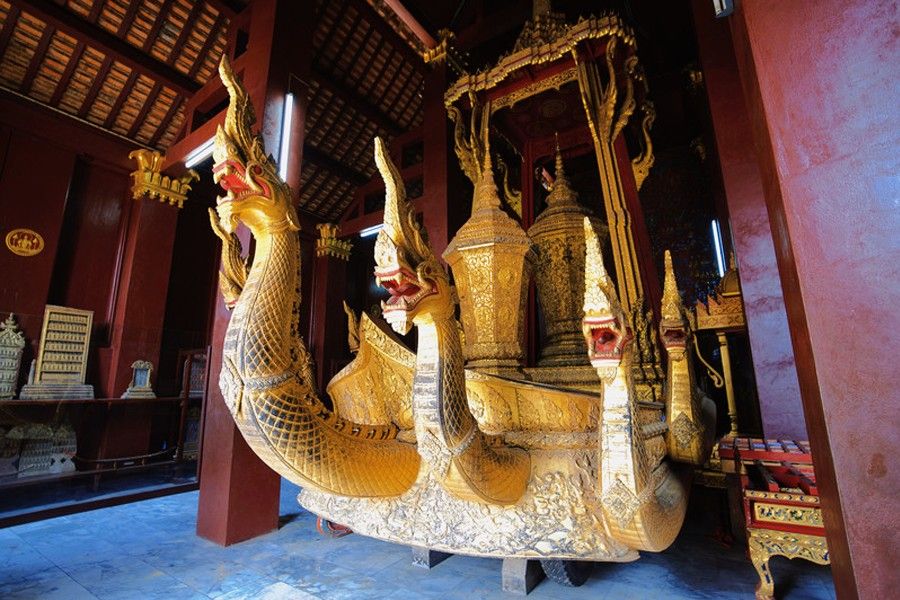
On the back wall of the main temple, there is a luminous mosaic made of colorful glass stones, representing a magnificent tree of life. In the royal burial chapel shines the imposing golden hearse adorned with dragon heads of King Sisavang Vong (1885–1959). He was the last ruler of the Kingdom of Luang Prabang and founded the Kingdom of Laos in 1946 while collaborating closely with the French colonizers. In 1953, Sisavang Vong led Laos to independence from France.
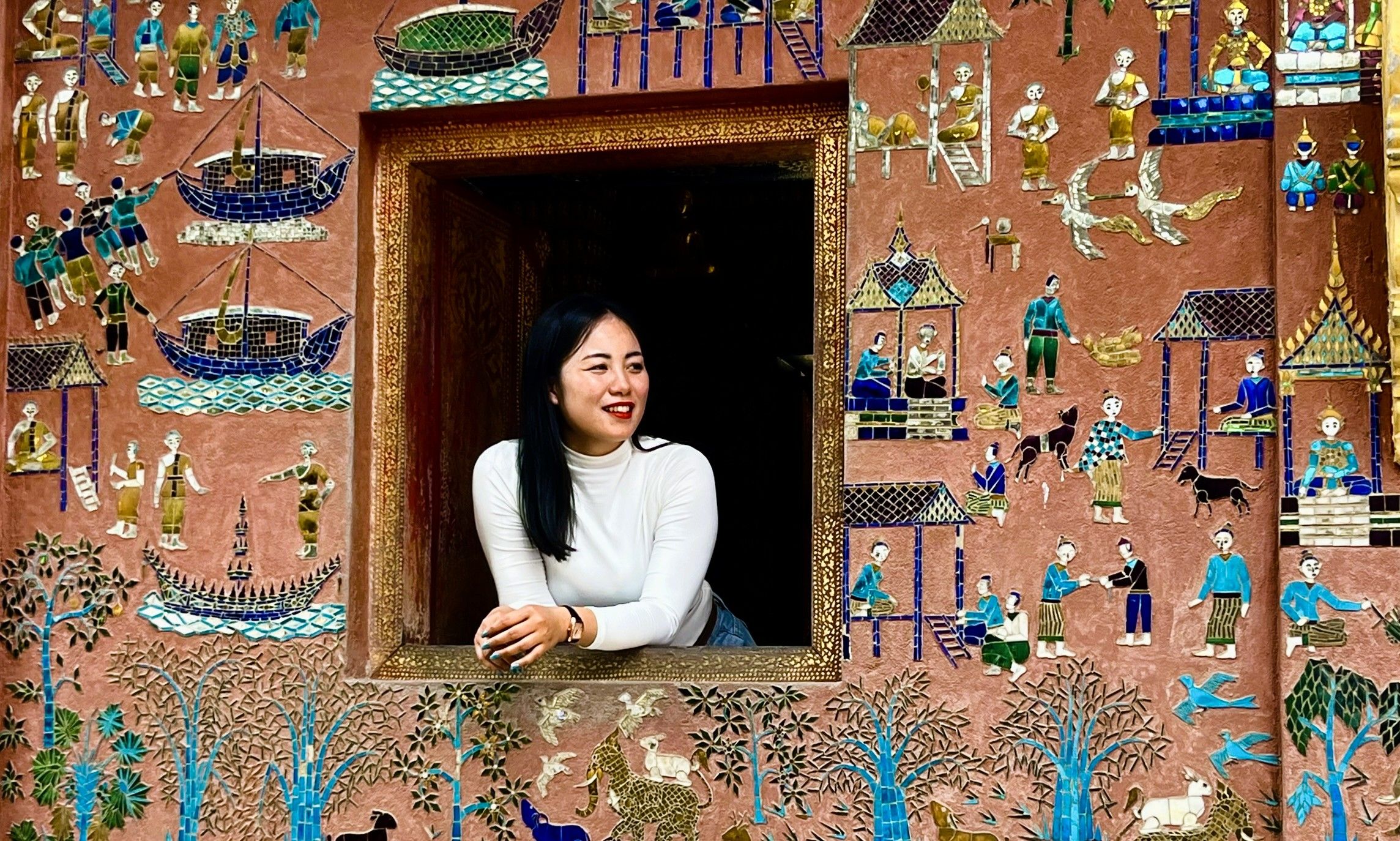
A smaller building, the Red Chapel, houses a reclining Buddha. However, the most interesting aspect lies in the exterior walls. They are completely covered with mosaics that tell Laotian folk tales.
A supervisor on the temple grounds tells me that Luang Prabang was plundered and almost completely destroyed in 1887 by a Chinese gang of murderers known as the Black Flags. Wat Xieng Thong was spared as one of the very few temples; the gang leader had actually studied here as a novice in his youth.
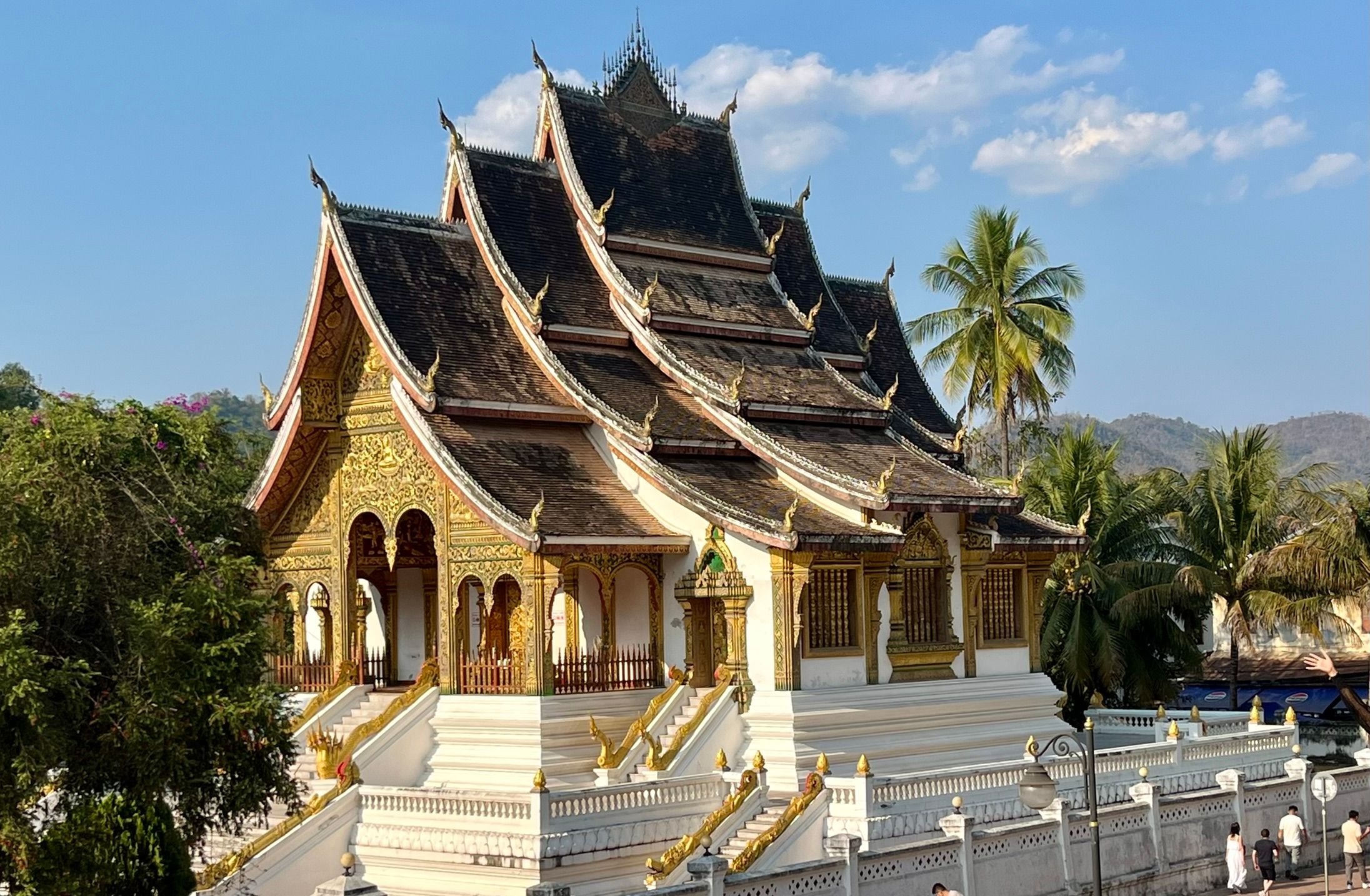
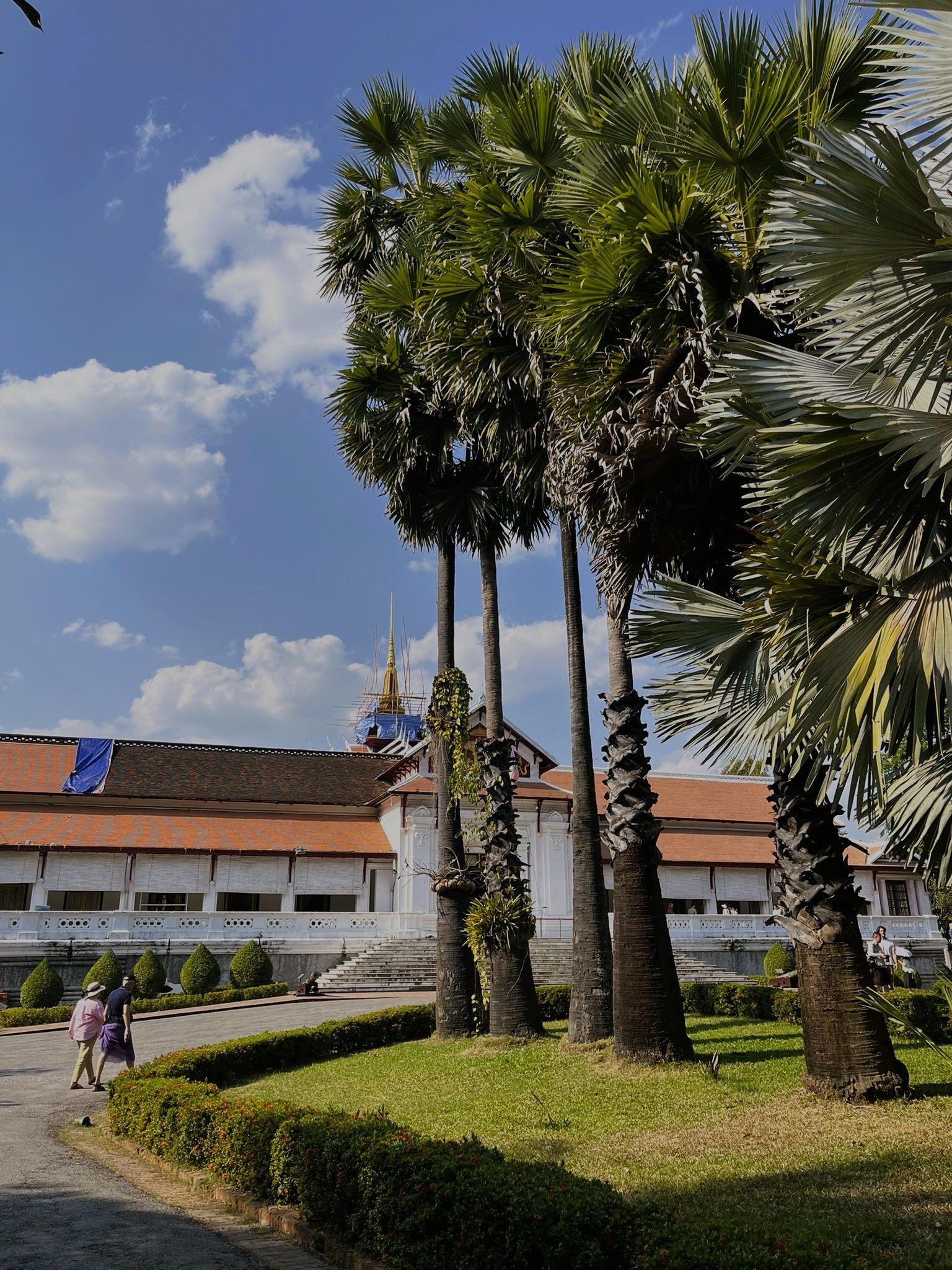
The royal palace in Luang Prabang, also known as Ho Kham or “Golden House,” is, at first glance, quite disappointing. Compared to the pompous palatial complexes of the kings of Thailand in Bangkok or those of Cambodia in Phnom Penh, it appears modest. It was built between 1904 and 1909 during the French colonial period for King Sisavang Vong in a mix of Laotian traditional style and French Baux-Arte architecture. The buildings served as the residence for the royal family until the communists abolished the monarchy in 1975.
Shorts are Taboo
I would have liked to visit the museum. Inside, there is the former throne room, the original living quarters, bedrooms, and dining rooms of the royal family, royal insignia, religious artifacts, and gifts from around the world, including apparently a piece of moon rock that the USA gifted to the Laotians. However, I am denied entry.
In Luang Prabang, it is very hot; I am wearing shorts (tailored, well-fitting, pressed), but am brusquely turned away by a guard, for there is a strict dress code “out of respect for the royal family.” I can't help but laugh internally: the communist Laotian rulers once let this very family, for which they are now demanding respect, perish miserably in the camp.
If not the national museum, then at least the royal garage. But this is disappointing too. No Rolls Royces or Bentleys, just a few beige American cars, an aesthetically unfortunate Ford Edsel from 1958, a few Lincoln Continentals from the 1950s and 1960s, a Jeep standing in the shed, and a black Citroën DS 19 in rather pitiful condition. At least the entire royal ensemble is located in a park with tall, shade-giving palm trees.
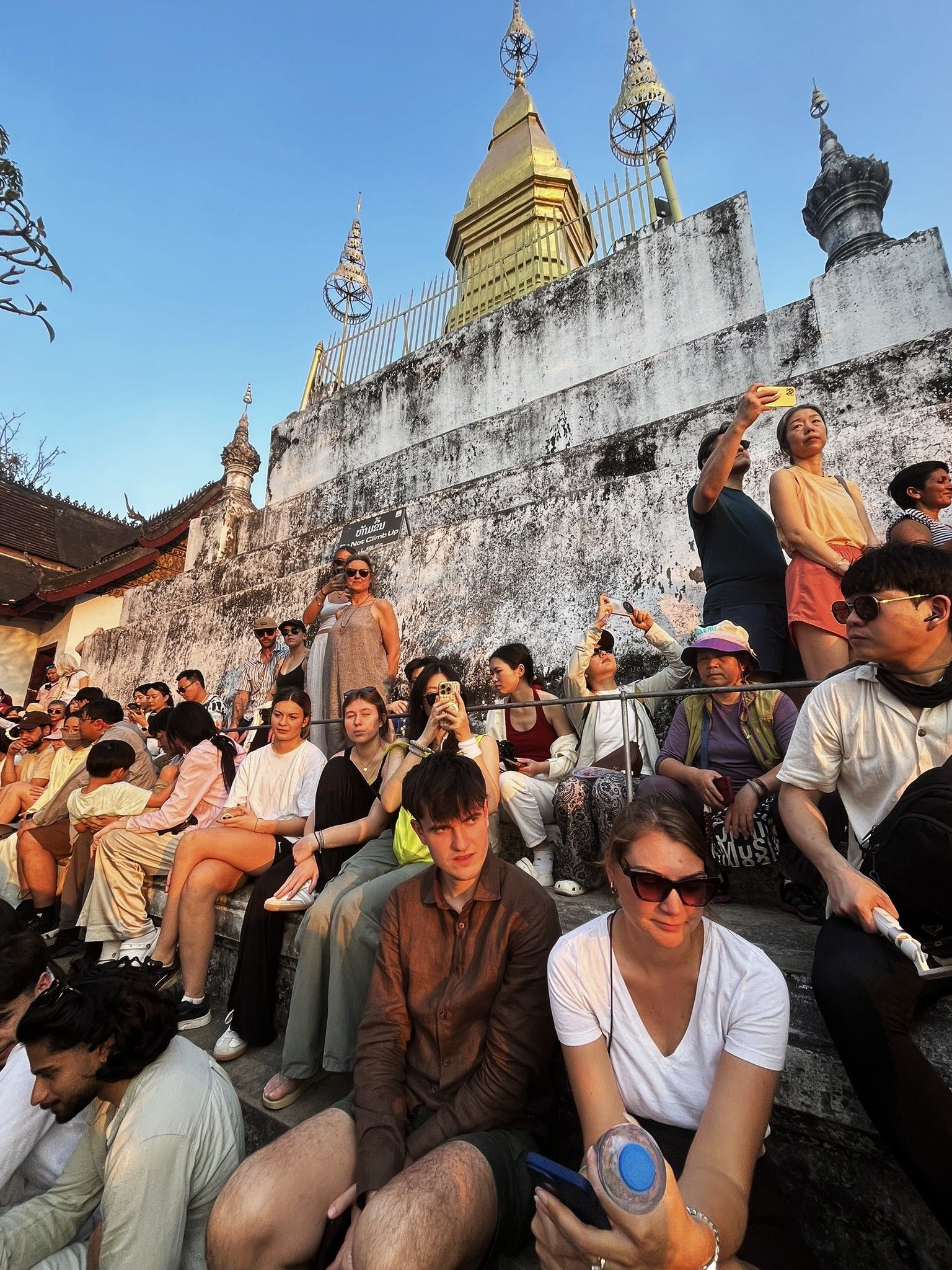
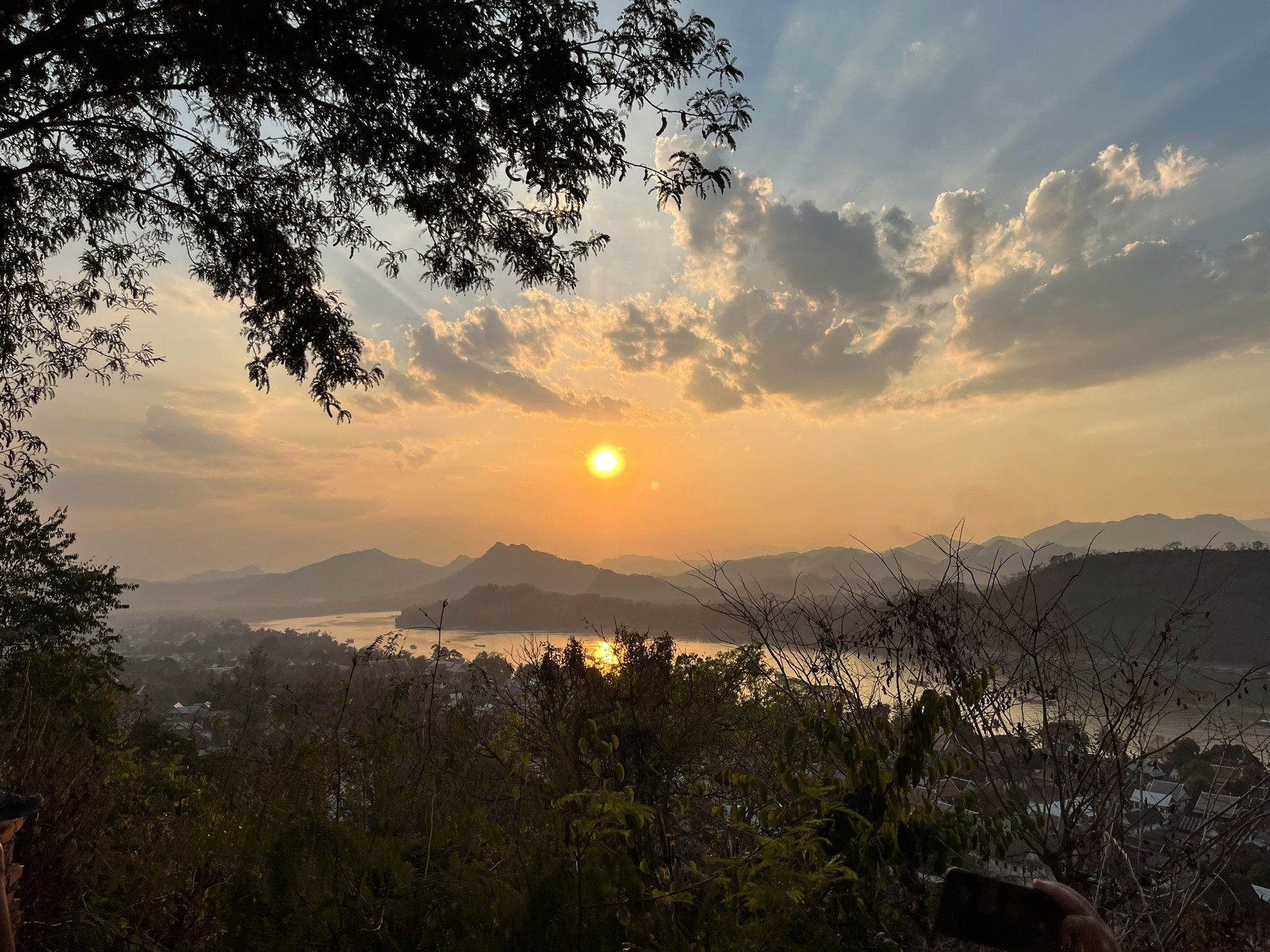
One hour before sunset, the other side of the street, opposite the entrance to the palace grounds, comes alive: hundreds of tourists want to climb the Phou Si Mountain with its long staircase of about 350 steps, which rises 100 meters in the middle of the old town. At the top stands a temple, Wat Chom Si, with a golden stupa. However, this is not the reason for the late afternoon influx of people. Rather, from the mountain, there is a panoramic view over the city, the Mekong, and the Nam Khan, and the sunset is quite spectacular – if one can find a spot to look over the crowd.
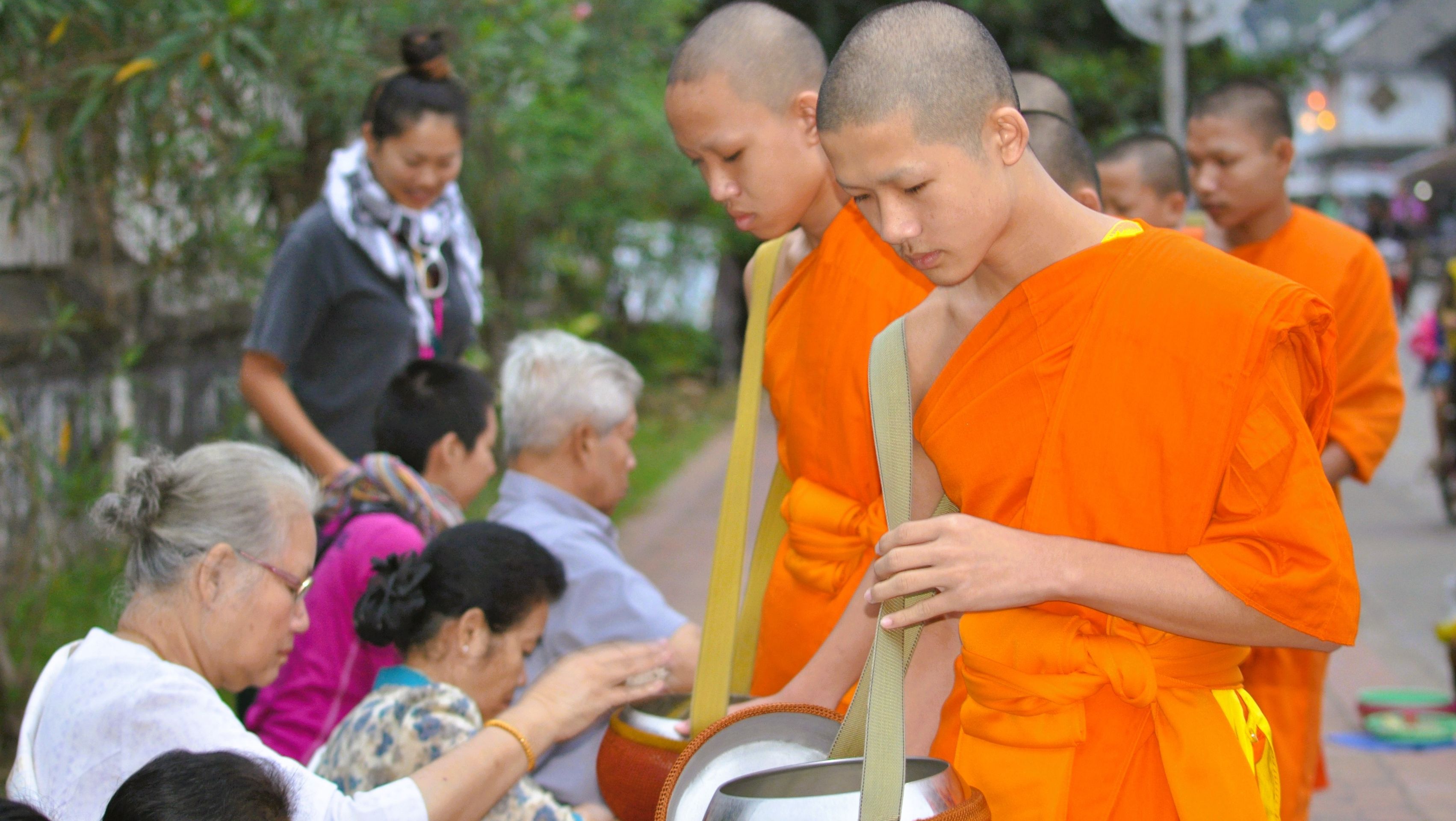
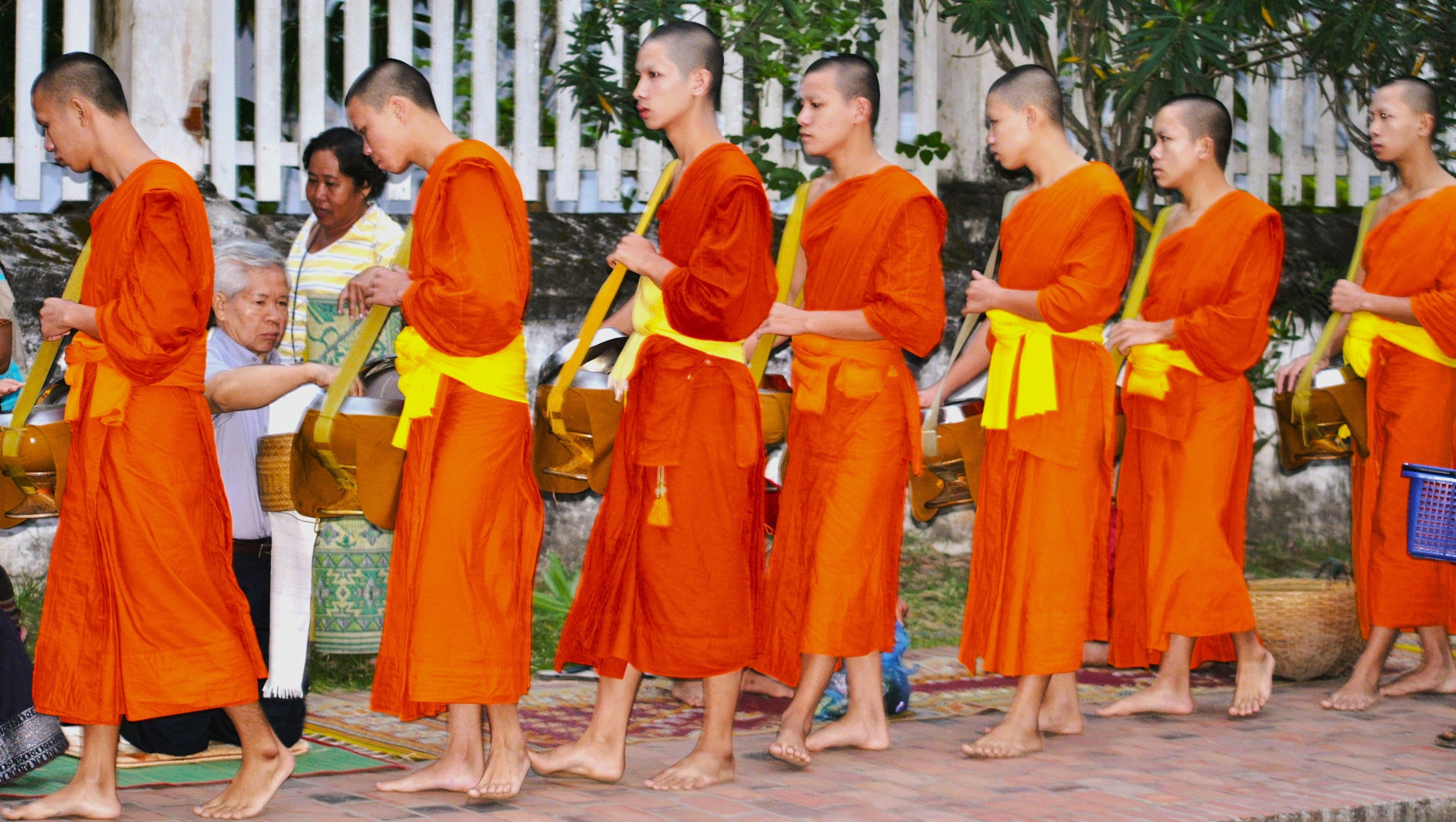
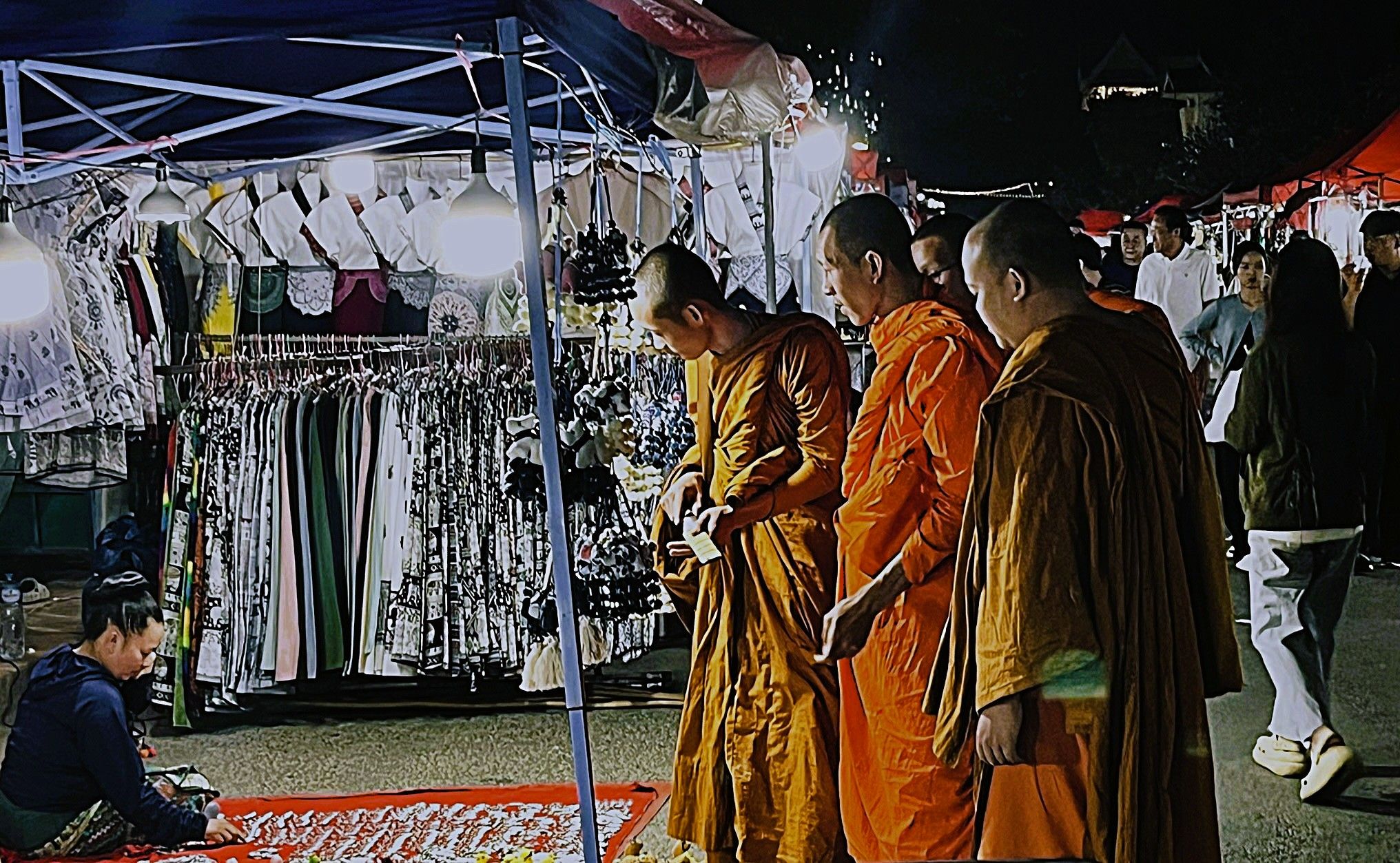
At dawn, there is a completely different spectacle in the old town: the feeding of the monks. Men and women kneel on mats by the streets, holding their offerings ready, mainly cooked rice, vegetarian curries, and bananas. Clothed in vivid orange robes, hundreds of shaved-headed, bare-footed Buddhist novices and monks pass in single file with their bowls to collect the donations.
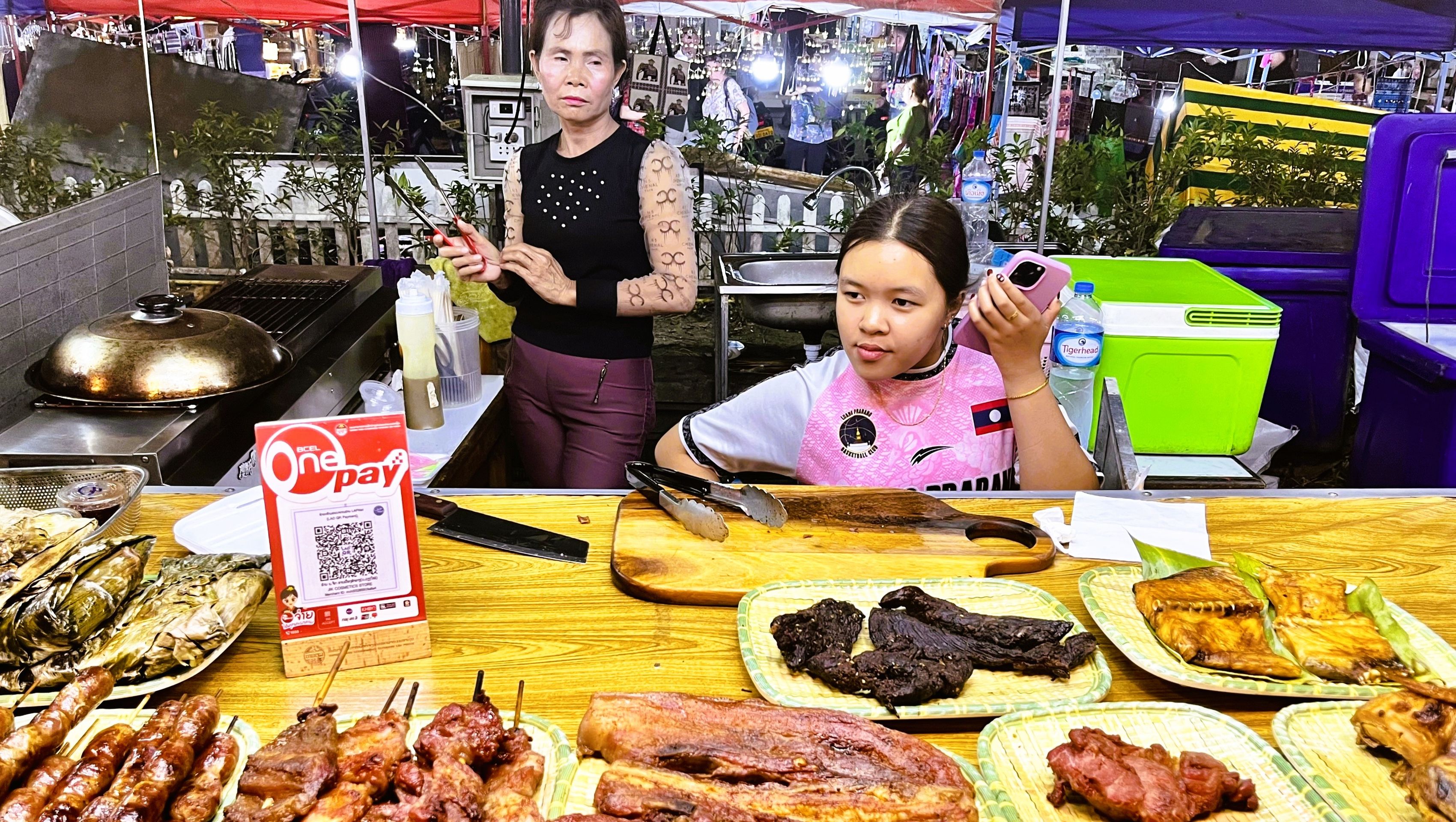
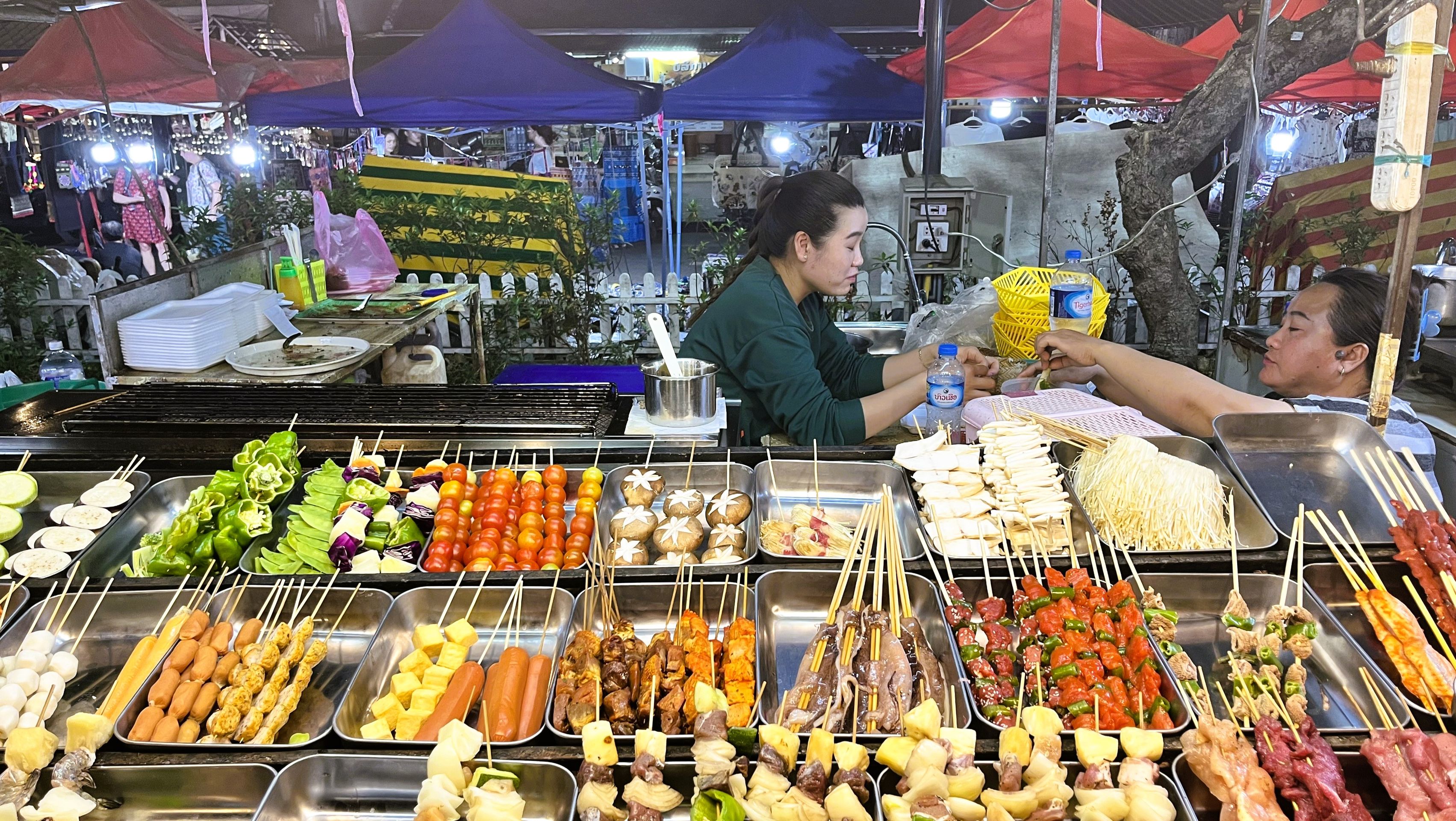
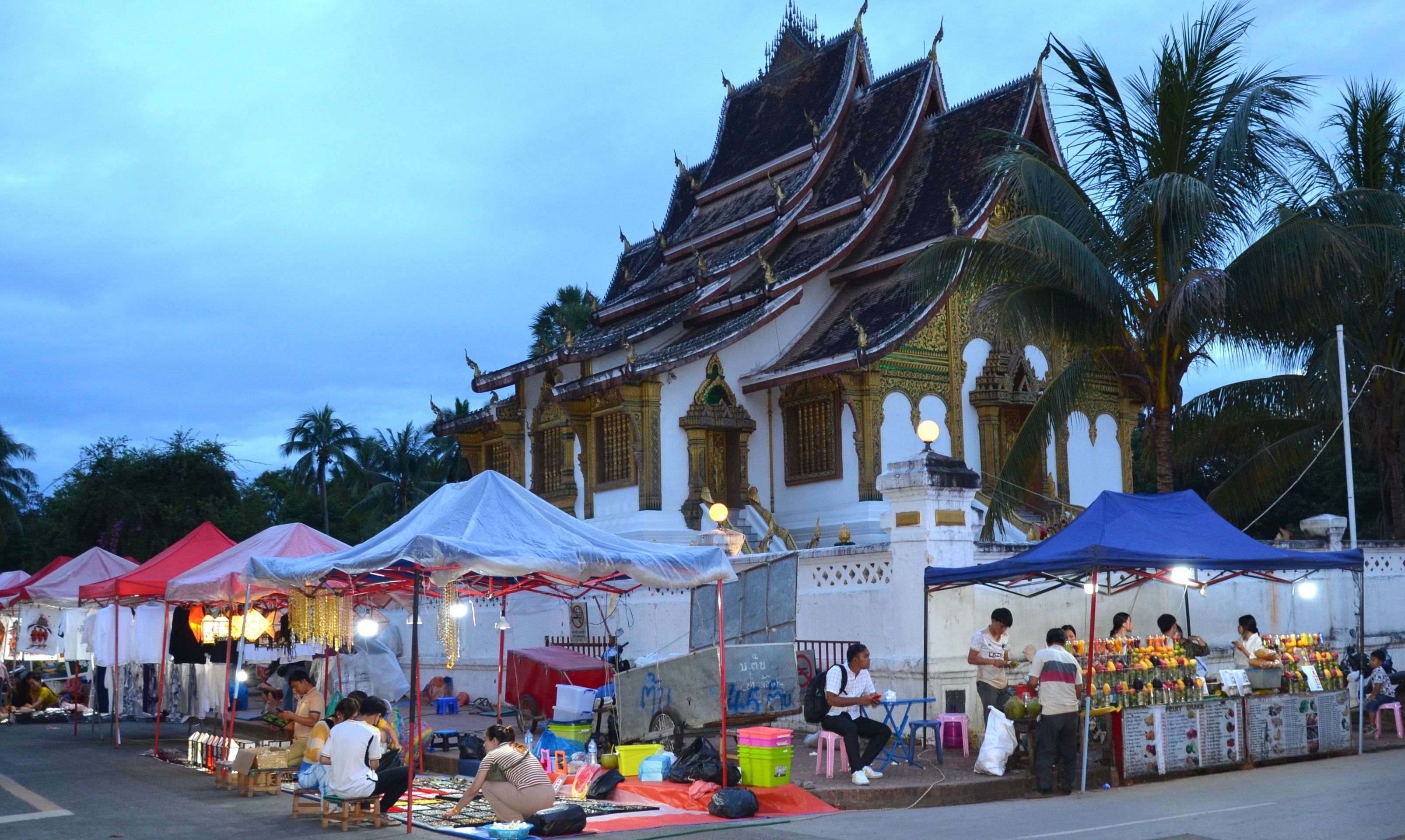
When I feed myself in the evening, I am once again astonished by Laotian prices: At the entrance to the night market, there is a food court with dozens of street kitchens. For local delicacies (or, if absolutely necessary, also sausages prepared in the German style or sushi, which are lying unrefrigerated in the display and therefore I keep my hands off), plus one or two Laotian beers, one can get by with about five euros. The woman who serves me rice noodles with fish and vegetables is amazed when I tell her that for this price, you would only get an espresso in a Swiss café.
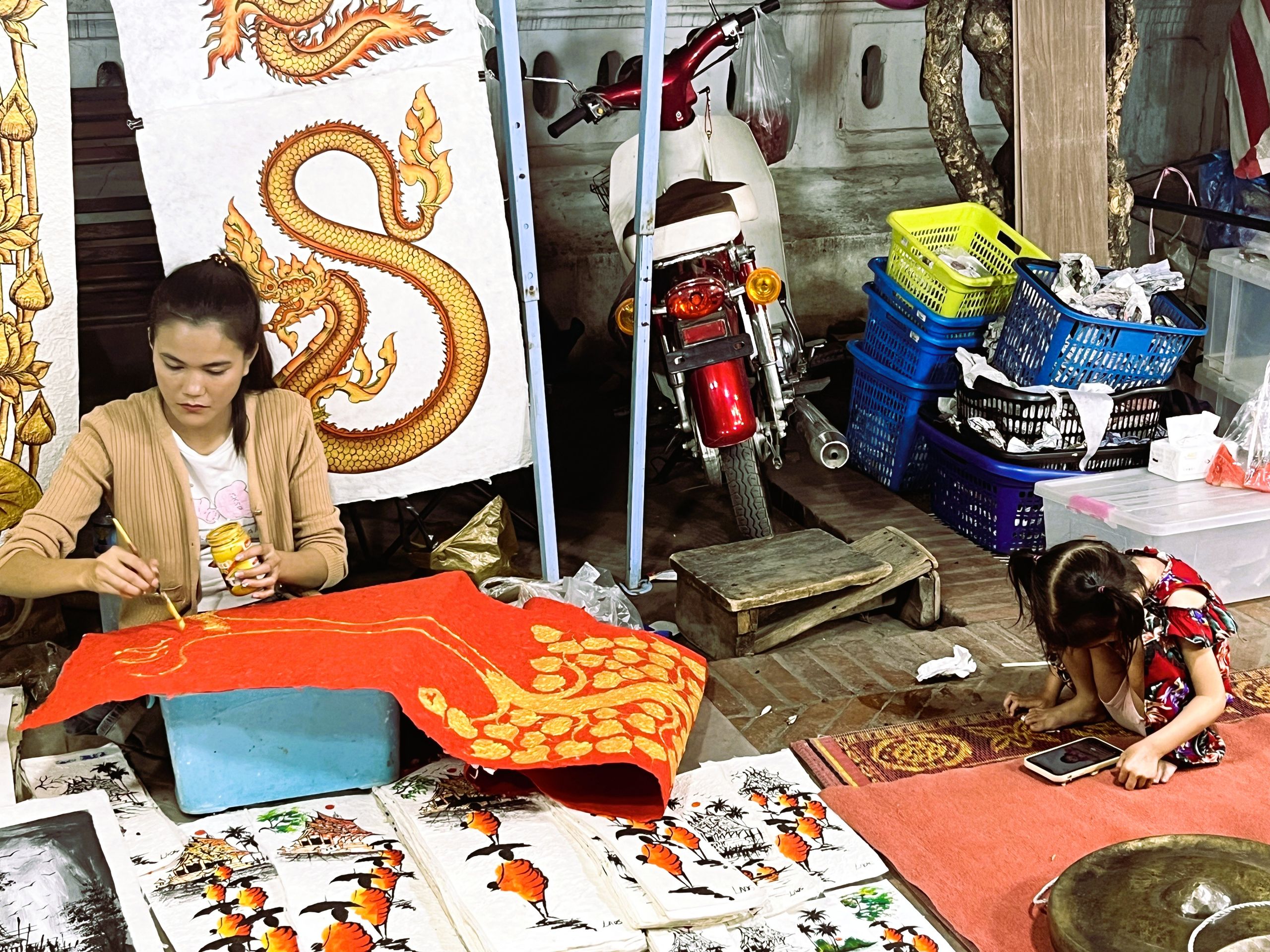
The night market itself, located along Sisavangvong Street, which also leads to the entrance of the royal palace and the ascent to Phou Si Mountain, is an attraction in itself. The street, which is closed to car traffic during market hours from 5 PM to 11 PM, is lined on both sides with countless stalls. Handcrafted local handicrafts, clothing and textiles, some also produced in Laos, as well as the usual souvenirs mass-produced in Vietnam or China are offered here. Alcohol-soaked snakes, scorpions, and other creatures in bottled form, which are said to be effective against various ailments, are not to everyone's taste.
Impressive Waterfalls
As mentioned, Luang Prabang is an attractive city. But eventually, you have seen it and need some space. A boat trip on the Mekong is a good option, for example, to the Buddha Caves of
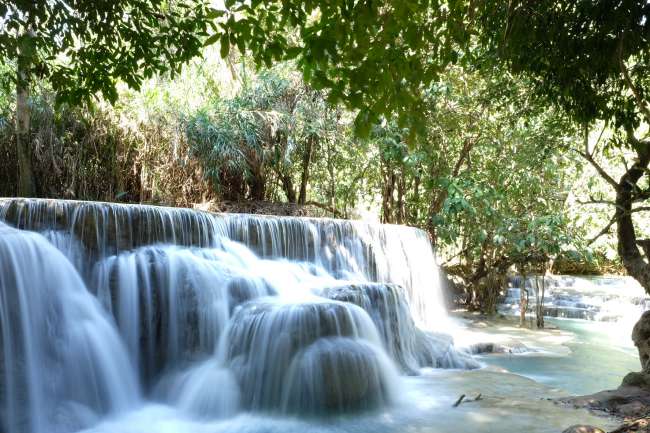
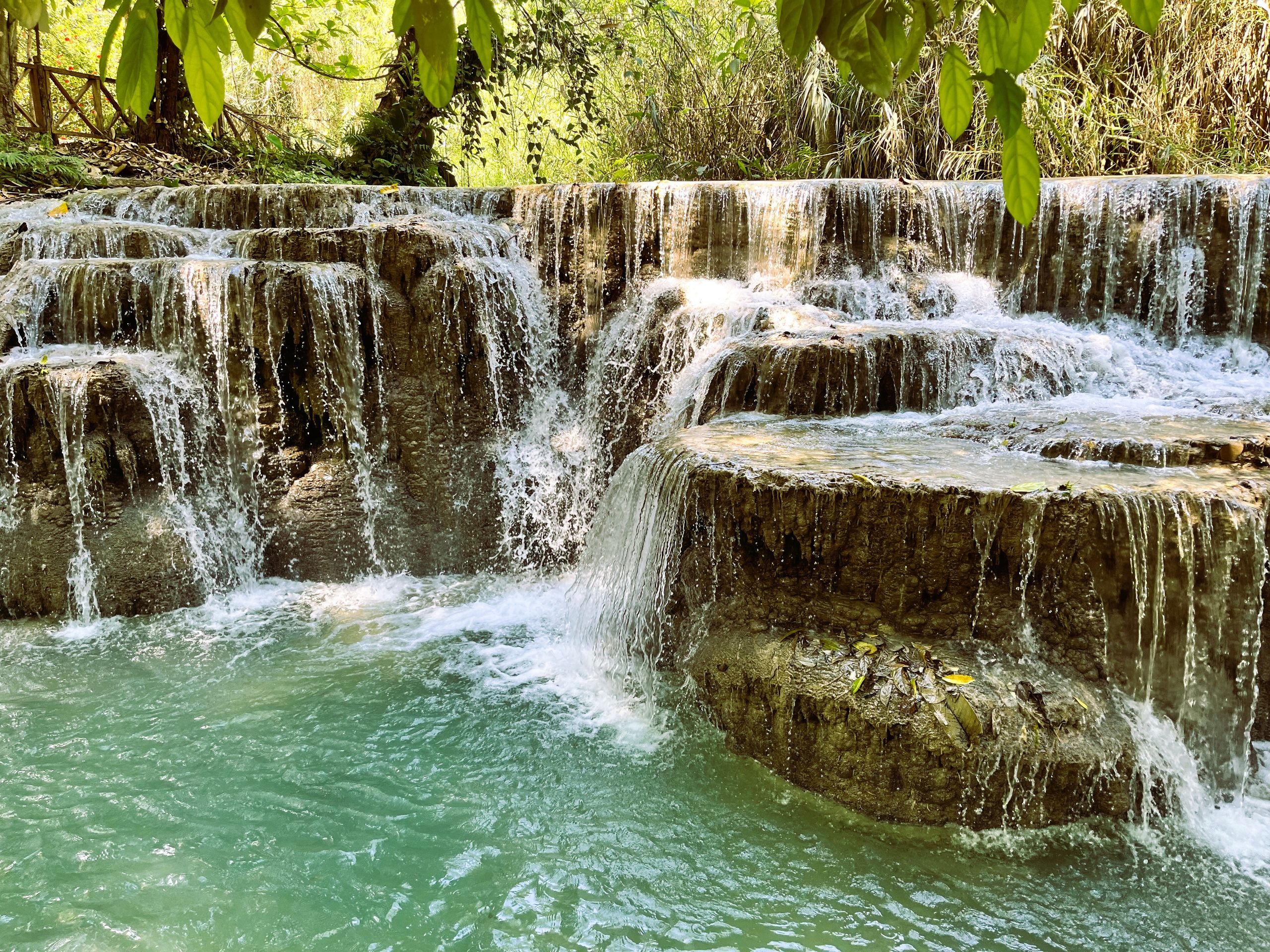
Or you can take a minibus to the Kuang Si Falls about 30 km downstream on the Mekong: The multi-tiered waterfalls, which flow into pools where whole families frolic and where young men and women perform daring dives, are impressive. A dip in the water, even though it is not really cool, feels refreshing in the sultry heat that prevails here just before the onset of the hot months of April and May.