Another Day in Paradise
The young driver is way too hyper for this time of day. I tumbled out of the train at half-past five. The enterprising taxi drivers welcome you immediately at the train door: 'Hoi...


Published: 18.09.2025
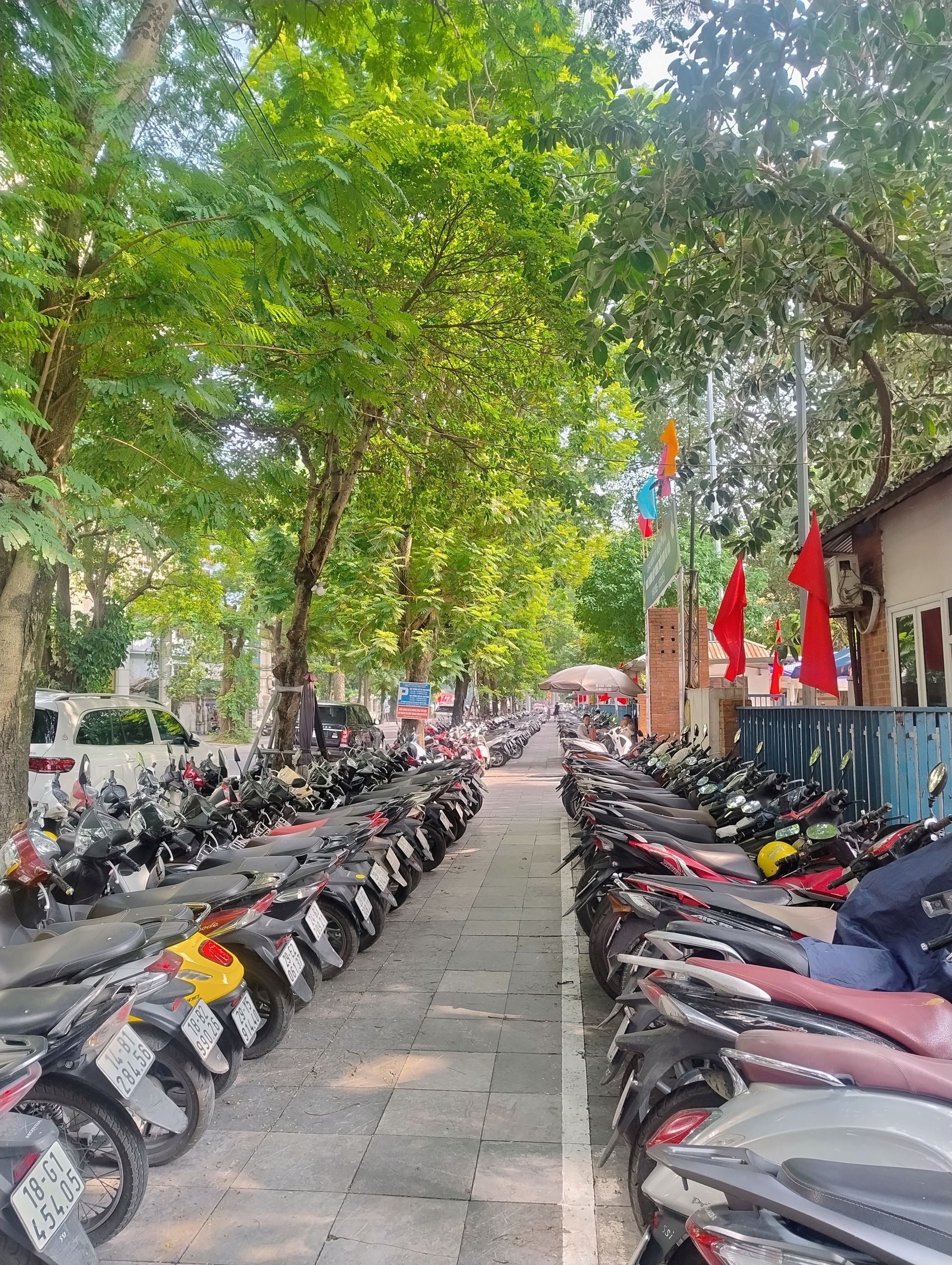
Why walk when you can ride a scooter? Westerners who are not leisurely strolling or shopping on the crowded sidewalks filled with mopeds, but rather purposefully heading from point A to point B are immediately offered rides: 'Sir, where you going?', 'Grab?' Grab is the Uber app in Southeast Asia, which also allows you to hitch a ride on the back of a motorcycle.
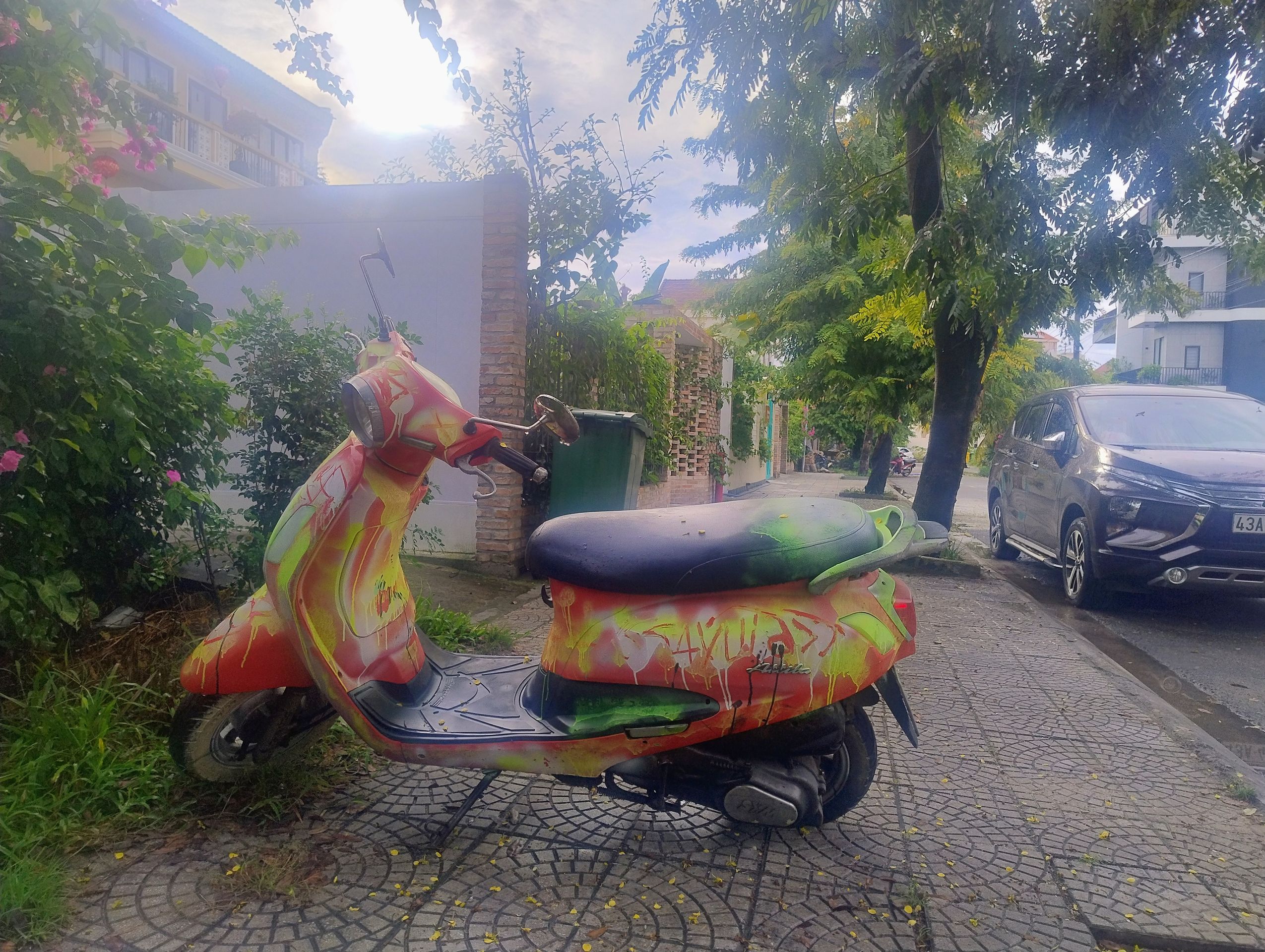
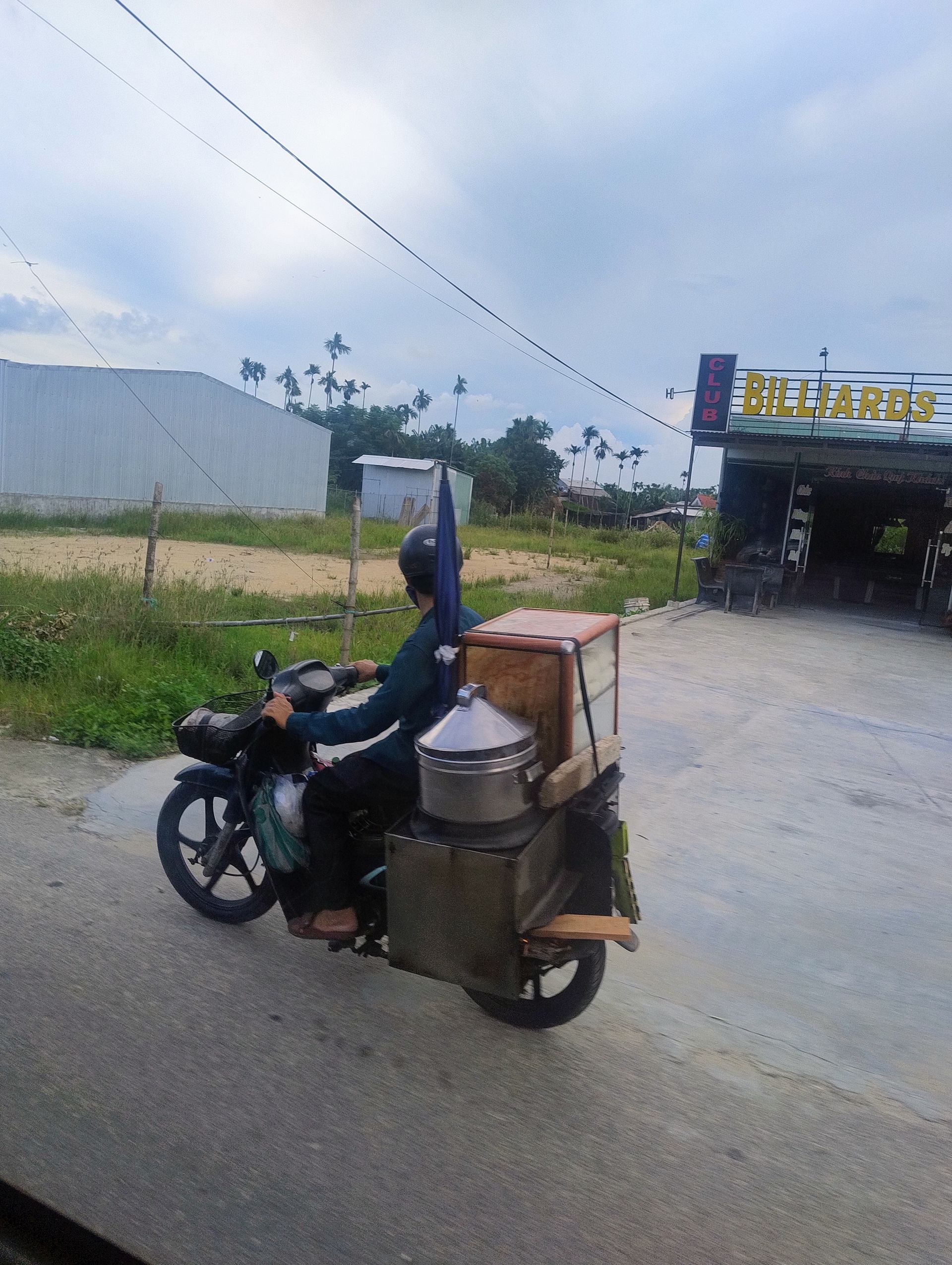
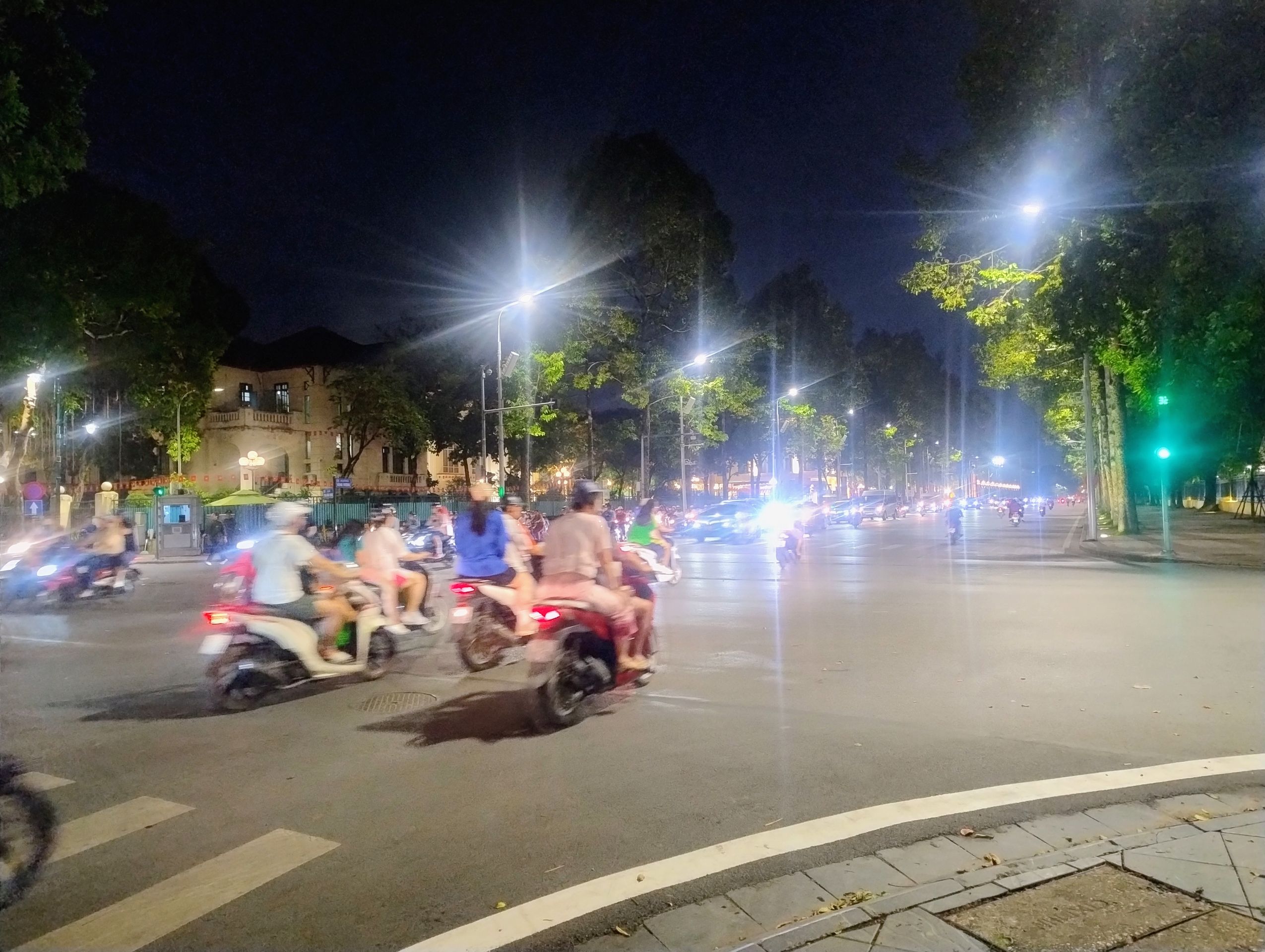
Life in Vietnam takes place on, next to, and between the number 1 mode of transportation. Some Grab drivers have converted their seats into actual lounge chairs, where they take siestas between rides. You want to applaud like at a circus performance when you first see a mother riding her three children to school on the scooter. For her, it's just another morning. Motorcyclists transport piles of boxes stacked three high and tightly bound, which wouldn’t even fit in a Sprinter van during a German shared apartment move. Peeking out happily between the handlebars is a dog panting while its owner swerves to avoid the hesitant tourists swaying across the street at 50 km/h. A side-fitted wood-burning stove continues to burn, heating the dumplings while driving. This saves time when the baker is moving from one sales location to the next.
Since the economic boom that the country experienced in the 1990s, the rate of motorcycle usage has been at least as high as the literacy rate. A tax on cars, calculated by size, which can be up to 150% of the purchase price, ensures that this remains the case in the future. Another reason may be the often narrow streets in cities and the dilapidated roads in the countryside, which are more easily navigated by scooter than by car.
But even before the scooter took over, the Vietnamese were already traveling on two wheels. Bicycles became popular through French colonial power. Up until the 1980s, traffic on the streets of Hanoi must have been just as busy as today, only much quieter and slower. The squeaking horn eventually replaced the bright bicycle bell.
A new change in transportation is currently taking place through the rise of a Vietnamese electric car company named VinFast, which focuses primarily on the production of electric scooters.
The love for plastic in Vietnam can best be observed when ordering coffee. When ordering coffee at a sit-down establishment, one might wonder why it is often served in what seems to be a take-away plastic cup. If someone orders for takeout, the plastic cup is then additionally handed over in a heat-sealed plastic bag with a plastic-wrapped plastic straw.
When an enthusiastic Vietnam backpacker returns, a common phrase you might hear is: 'The Vietnamese food there is so different from here.' This is natural but can be best illustrated with the national dish Pho. Instead of having all the ingredients in the bowl from the start as in German Pho restaurants, in the homeland of this popular noodle soup, you are served a plate of herbs and salad leaves. What the Vietnam newcomer might easily misinterpret as an appetizer is actually the side that is then freshly added to the hot soup bowl. The little mobile kitchens can be found at every corner and are often specialized in Pho Ga (chicken soup), Pho Bo (beef soup), or Pho Chay (vegetarian soup). You learn to use chopsticks intuitively, whether you want to or not. The many soup shops, where forks are sought in vain, are exclusively aimed at locals, who sit on the numerous 30 cm high plastic stools and enjoy their lunch Pho while slurping loudly.
The age pyramid in European countries is inverted; in Vietnam, the top points upward. The birth rate was so high a few decades ago that a two-child policy was introduced, which was officially abolished only this year. Despite increasing Western influences, the younger generation remains so traditional in their values and roles that couples still tend to have relatively many children at a young age. What is new compared to the war and post-war generation: The opening of the country and resulting Western influences have led many young Vietnamese not only to speak fluent English but also to give themselves English nicknames – similar to the Taiwanese. Dong, aka Harry, is a Harry Potter fan. Kat, originally Thao, loves cats.
Certain gestures and behaviors do not change even in Generation Z: As is customary in Southeast Asian countries out of respect, money is handed over for payment with both arms. One hand holds the bills, while the other is bent at the elbow of the other arm. Private homes and Buddhist temples, but also some hotels, pharmacies, or massage studios should not be entered with shoes.
The beauty ideal follows that of Korea. The paler, the more attractive. This is also why you see most women on scooters covered from head to toe in clothing. To avoid exposure to the tanning sun, many wear hats and face masks outdoors, which sometimes even include the forehead. Aside from foreigners, only fishermen or farmers in the countryside wear short pants.
You only see many young couples holding hands at most. Kissing in public is taboo. However, questions about age or relationship status are no problem. Often one might encounter a waitress asking her foreign guests: 'How old are you?' or 'Are you married?'. This should not be misunderstood as flirting but rather as a harmless small-talk suggestion.
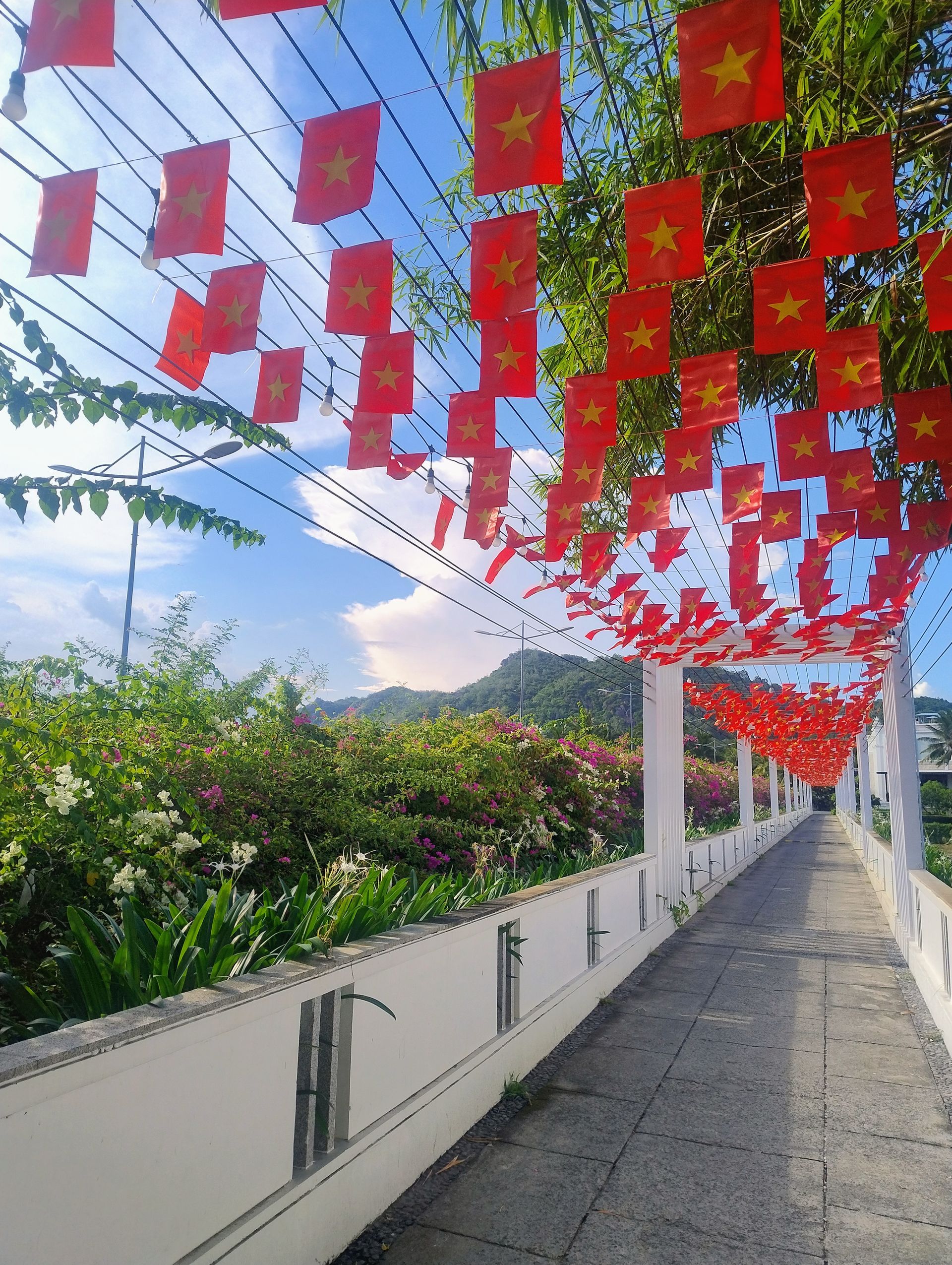
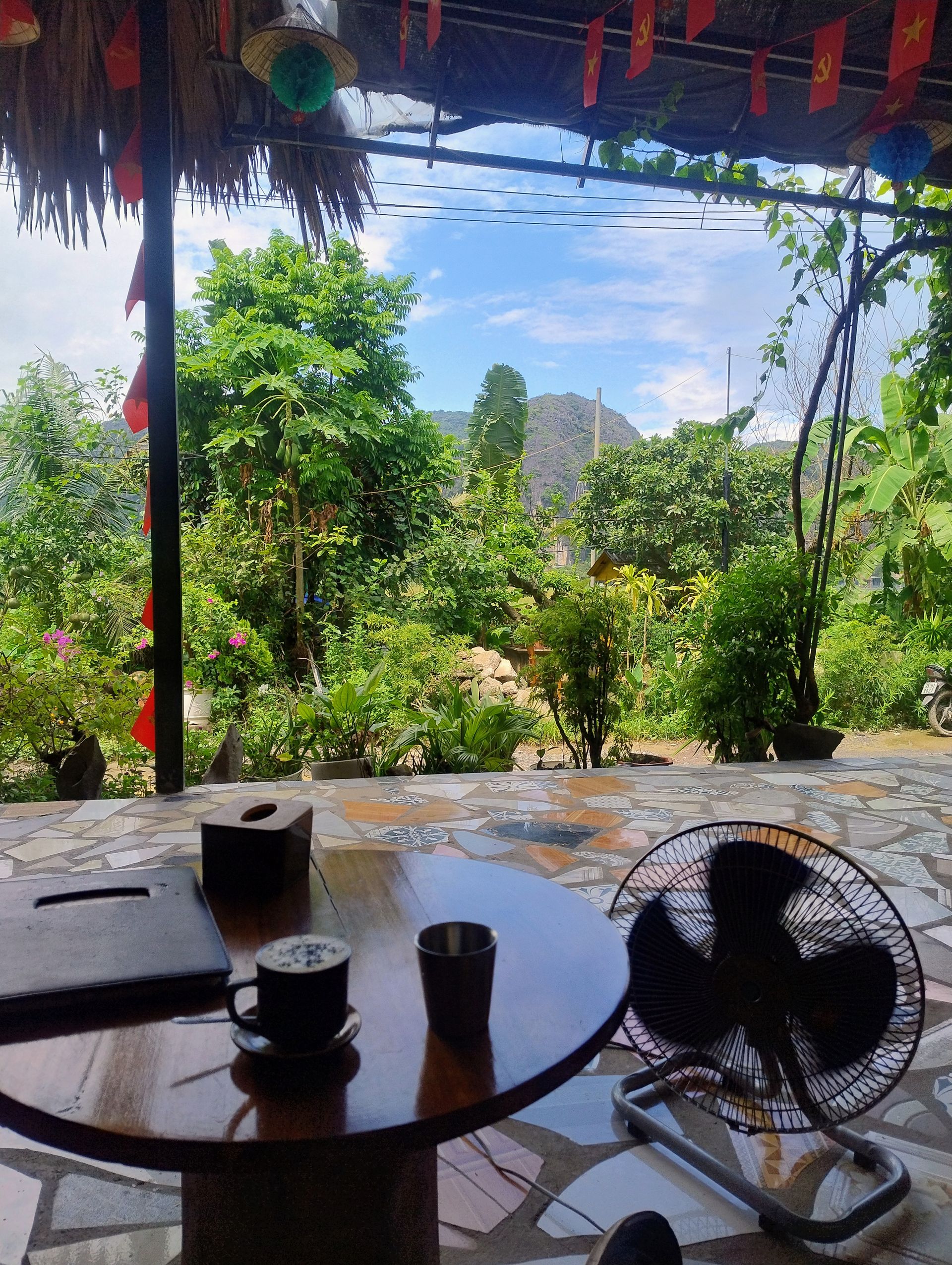
However, it is undeniable that Vietnamese history can easily be read as a success story. Progress has been palpable for most Vietnamese since market liberalization began in the 1990s. Media control and censorship as all-encompassing as in China is, therefore, considered unnecessary by the government. It weaves nationalism with communism and loyalty to the party. The red flags remaining from the anniversary of Independence Day symbolize this. In a row hang the golden star and hammer and sickle side by side.
Even among the more critical, non-conformist Vietnamese, one will find a certain acceptance of the status quo. This probably also speaks to the pragmatism of the resilient people. They are rather glad not to live in a completely controlled society like the Chinese one. A comparison that seems more prevalent due to political and geographical proximity than with the Western hemisphere.
For a large part of Vietnam's young society, their system is one of many in the world, fundamentally neither better nor worse than others. It works for their country, and the past seems to justify this.
The poorer North is to be equalized through regulatory measures such as targeted industrial settlement. The weakness of the economy is still explained in the government’s narrative with the effects of the war. Given the magnitude of the bombings by the American air force, this is likely more than mere propaganda.
In contrast, the two decades under capitalist auspices and US economic aid have led to more people living in the middle class in the South. Structures and mentalities that still exist there may have contributed to the fact that after the 1986 reforms, the economy developed more dynamically than in the northern part of the country. These and other reasons may contribute to the stereotype of the laid-back, open, and friendly South Vietnamese and that of the industrious but somewhat reserved North Vietnamese. As the mobility within the country increases due to the departure of younger generations for studies or job-seeking, such differences are fading more and more. But still, even Western tourists in search of 'authenticity' and traditional Vietnam feel more comfortable in the North, while those preferring tourist infrastructure spend more time in southern metropolises like Ho Chi Minh City or Da Nang.