Robert and I sat in the back row for biology. It was one of those basic courses that always flew by because we could pass the time with bad jokes and comments. It was also one of the courses whose final grade I didn't include in my high school diploma.
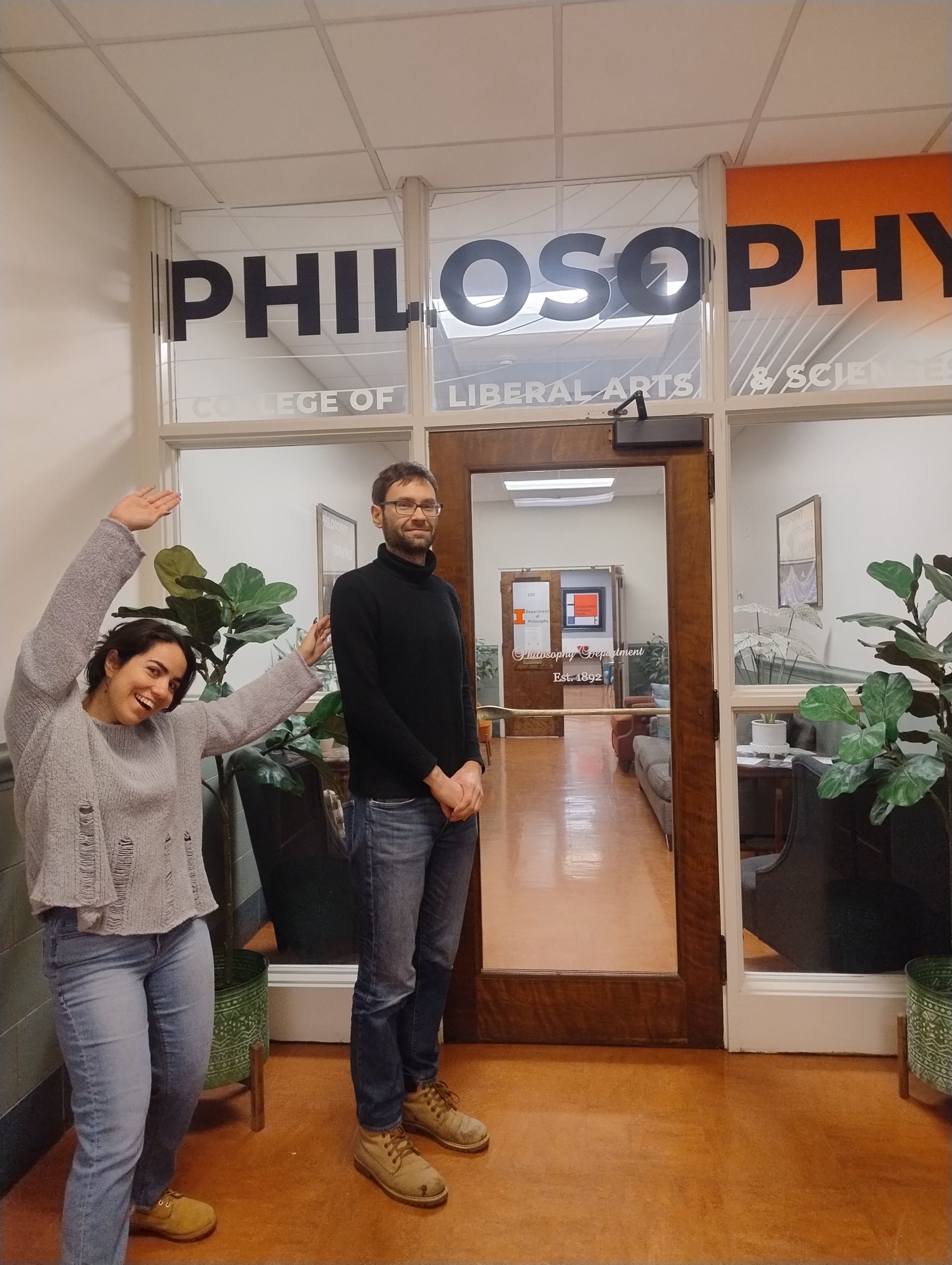
That was 17 years ago. Now Robert teaches philosophy at the university in Champaign Urbana. The small town with the cumbersome double name lies three hours south of Chicago.
My old school friend is picking me up by bus. The bus stop is in western Champaign, and his apartment, which he shares with his girlfriend Ana, is in eastern Urbana. Ana is a warm Mexican woman in her late twenties who, like Robert, teaches at the philosophy department. That's where they met. With the small white plastic Christmas tree and the stockings for presents on the wall, they've decorated for Christmas in a very American style, and I'm slowly starting to feel the Christmas spirit myself. We eat pizza and play a board game, which they even let me win. I feel a bit like I'm at a cozy Leipzig house party, where we're either the first or last guests to leave.
The next day, her boyfriend Dan has his dissertation defense, and they spontaneously invite me to the event, as it's open to the public. Dan is writing his doctoral thesis on AI and how it differs from humans through emotions. At least, that's my layman's interpretation of the topic. He uses terms and theorems that I can't grasp without a basic knowledge of neuroscience and philosophy. However, an analogy helps me understand the main thesis: When AI and chatbots encounter minors without adult intervention, it's a bit like letting a psychopath babysit your children.
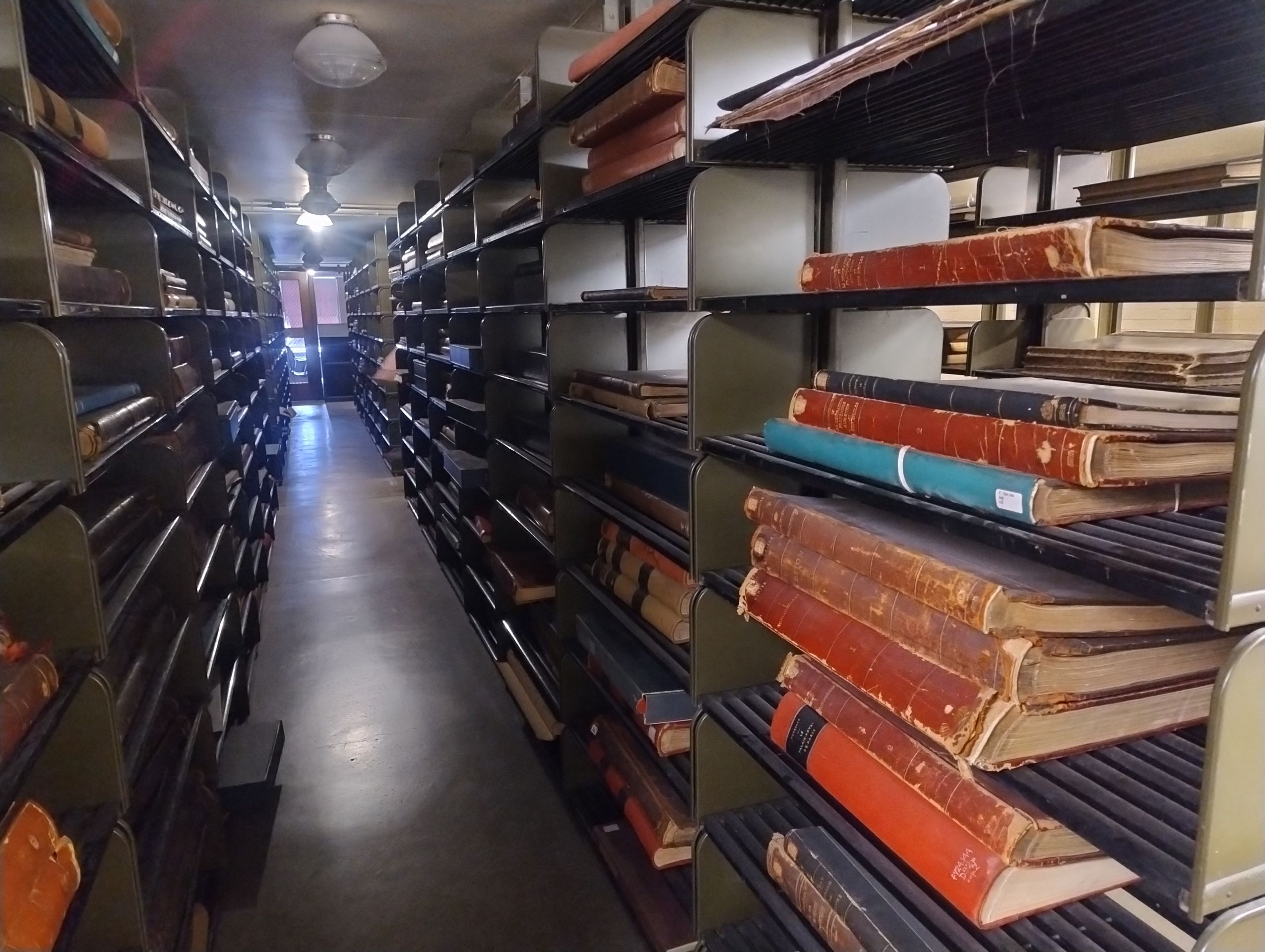
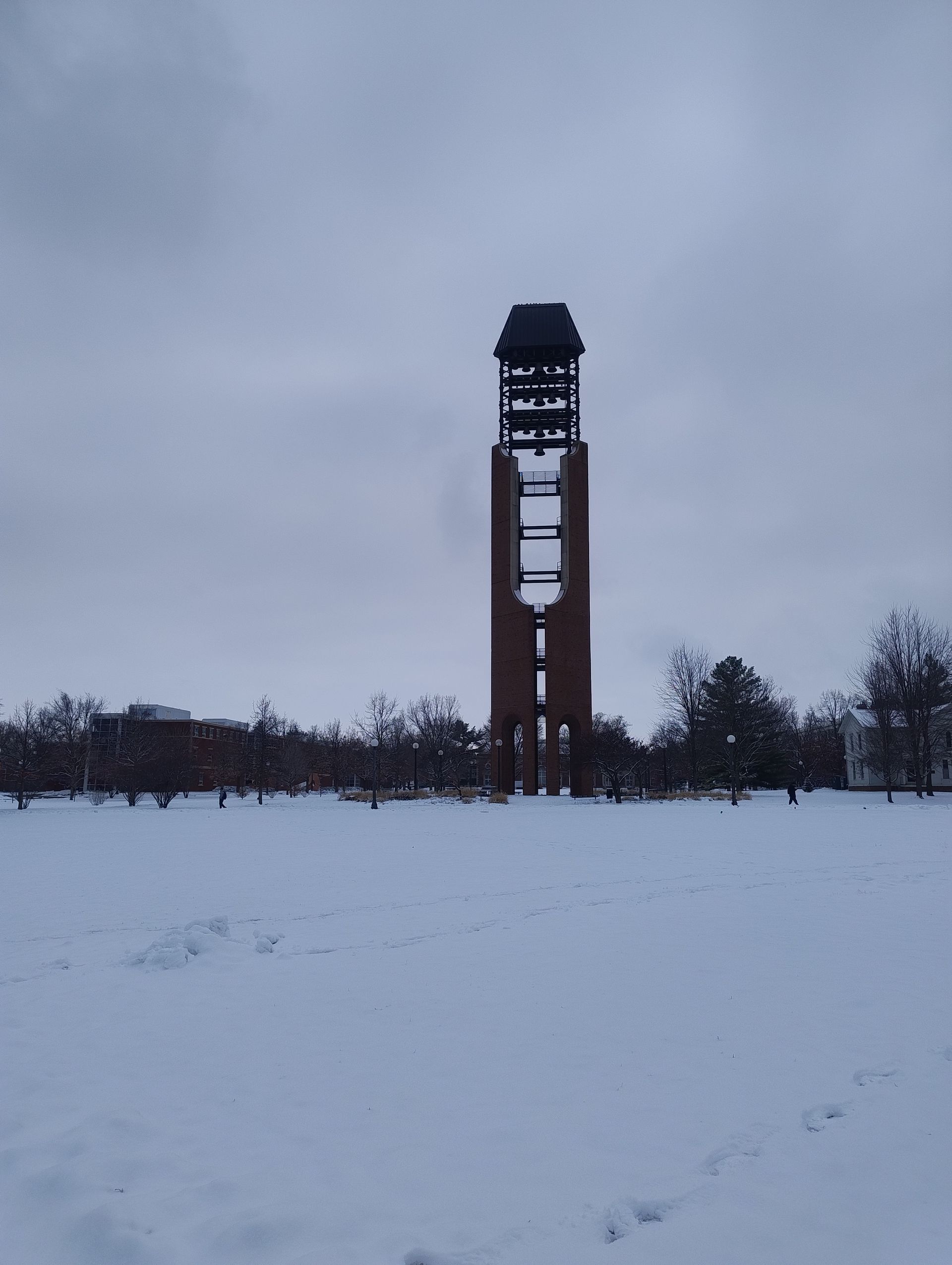
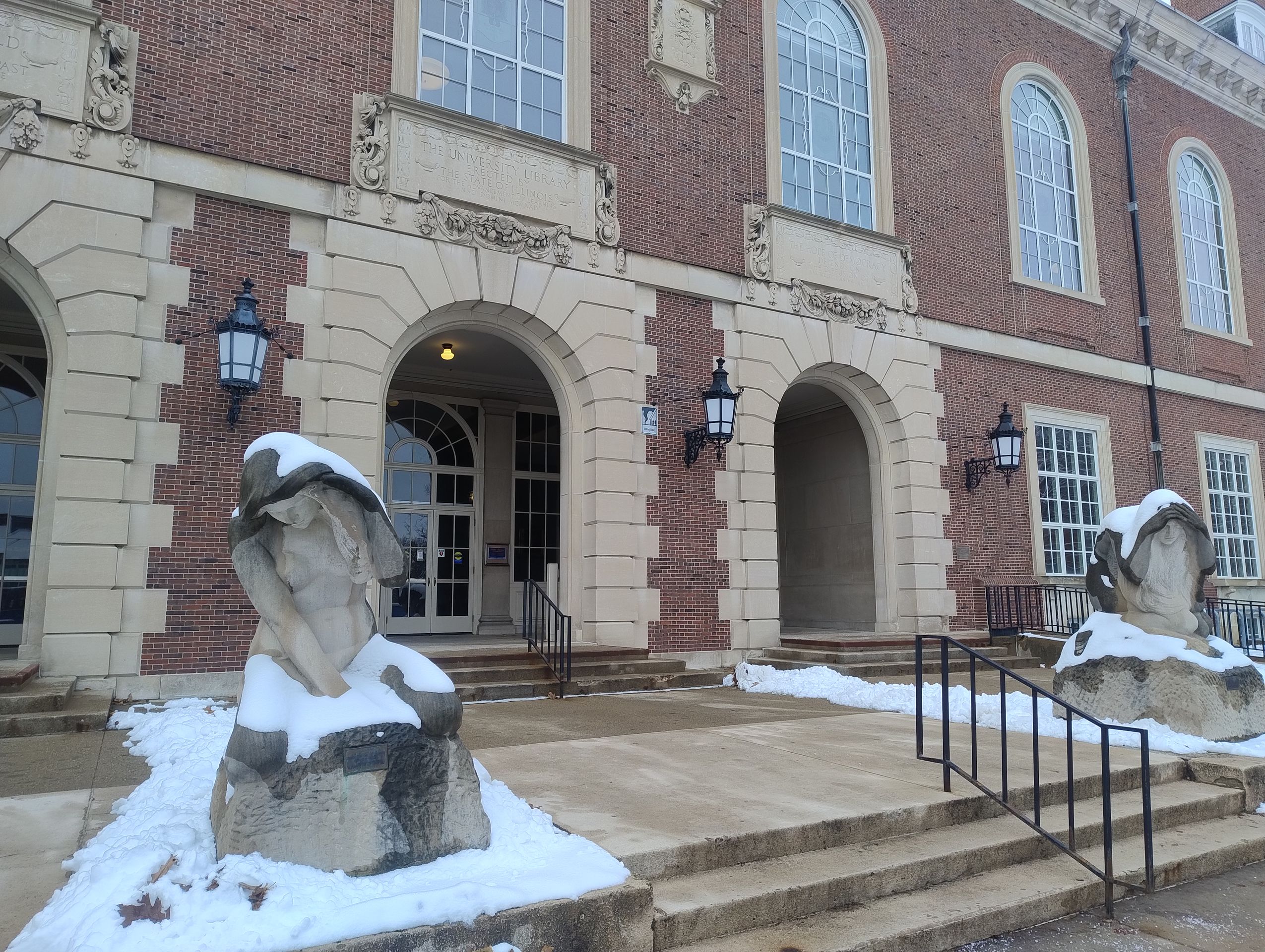
After Dan passed his defense, Robert and Ana showed me around campus. Gray squirrels, much larger and less shy than our European counterparts, hopped on the snow between the bell tower. The university library held old newspapers from the 1950s. In the stacks, we leafed through dusty 19th-century German editions filled with architectural drawings. The archivist in me was in his element. The University of Champaign Urbana is historic by American standards, and its rooms and halls exude a college atmosphere.
Despite his years studying in Berkeley and living in Urbana, Robert has retained some German habits: he can't seem to break the habit of recycling. He collects the many plastic bags that are forced upon you here with every purchase. When I throw a glass bottle in the trash, I apologize, because Robert is actually saving it for the unlikely event that Illinois introduces separate bottle containers sometime in the distant future. "It's okay. There's no right life in the wrong one." There speaks the philosopher.
In the evening, we visit the "Christmas Mart," a shop that sells Christmas items. Ana affectionately teases Robert about one of his German traits, which I share with him: constantly complaining about things we can't control. Now, at the Christmas market (which isn't really a market), Robert and I each have "two complaints" free. In the first few minutes, every time we glance at a price tag, we exceed both our limit of complaints and our set budget. Ten dollars for a chocolate Santa Claus—"This is ridiculous." Of course, we still buy things and fill the shopping cart with German Christmas treats like dominoes and Dresden stollen. The two of them are easily persuaded to watch my favorite Christmas movie, "Muppet's Christmas Carol," while we eat our German chocolate cat tongues. A little piece of home. Sometimes, real life does exist, even in the wrong place.
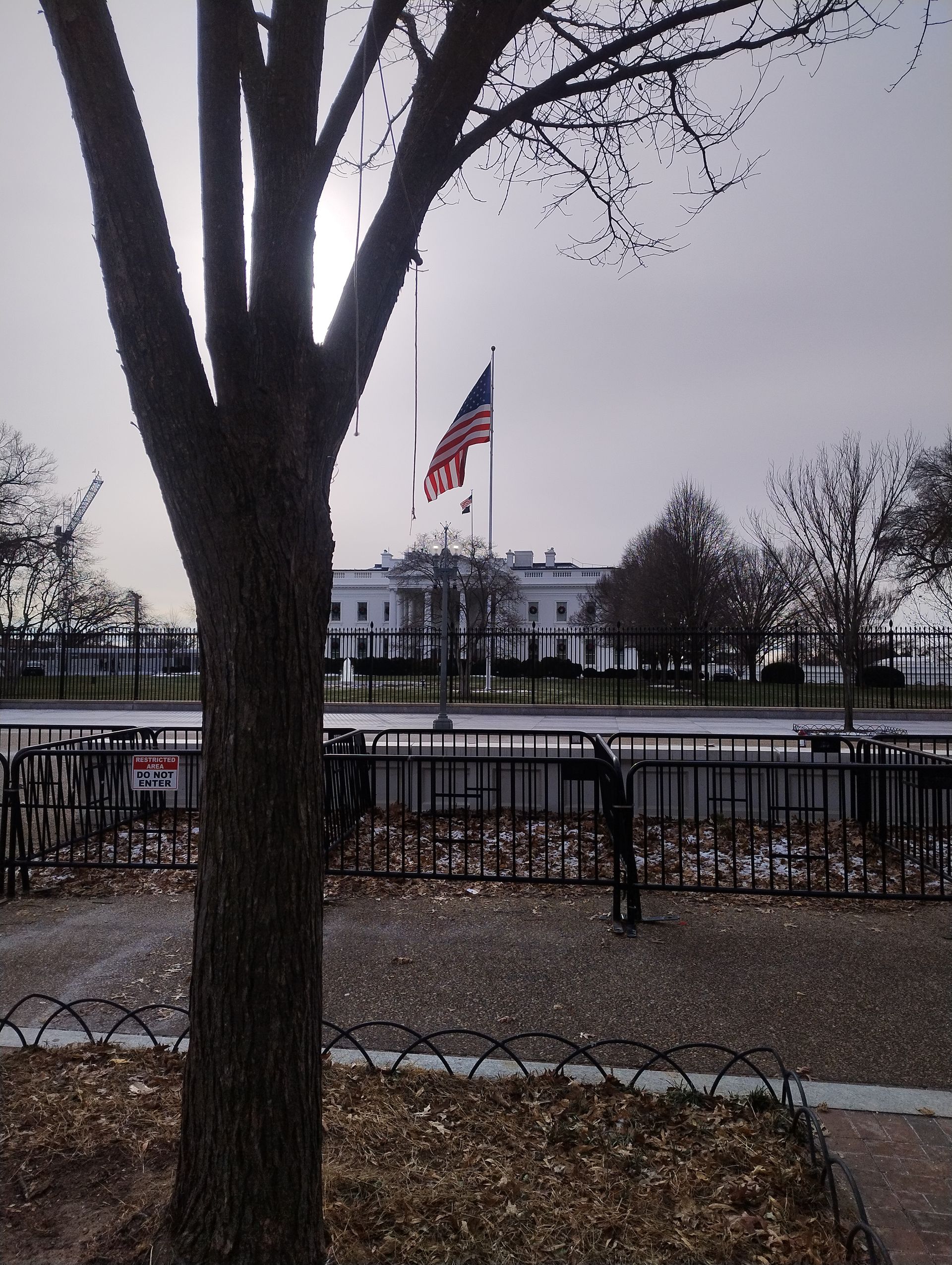
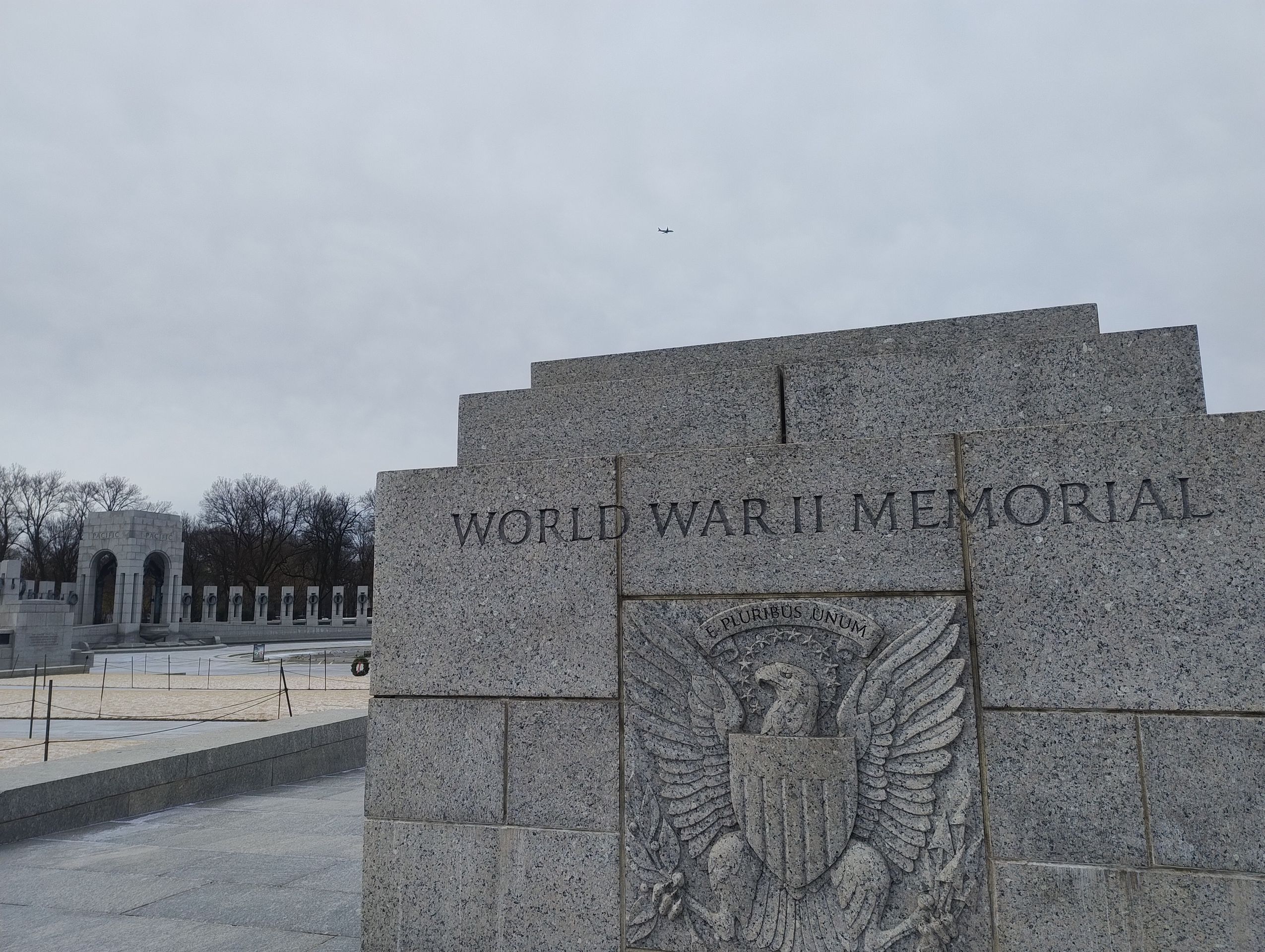
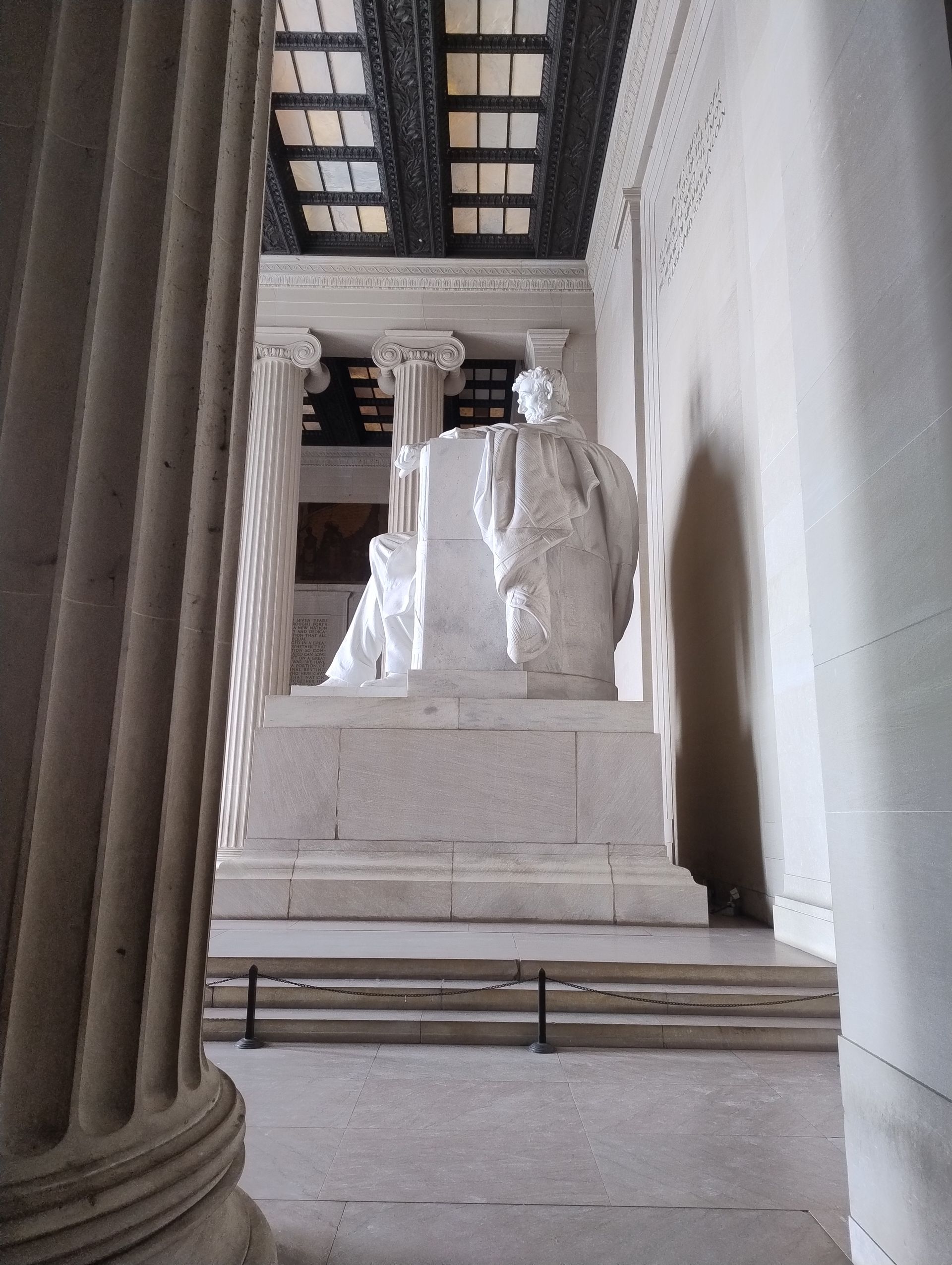
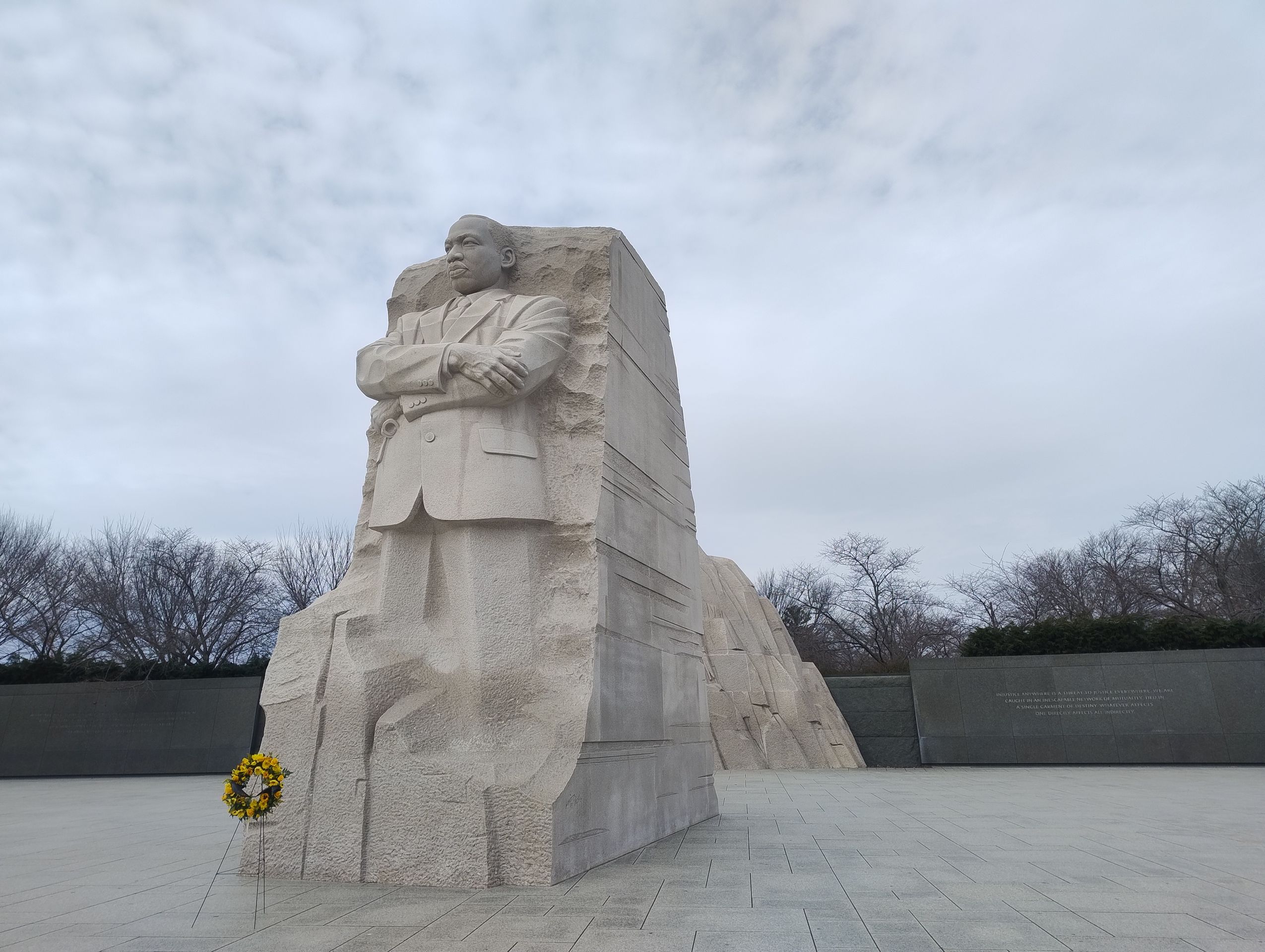
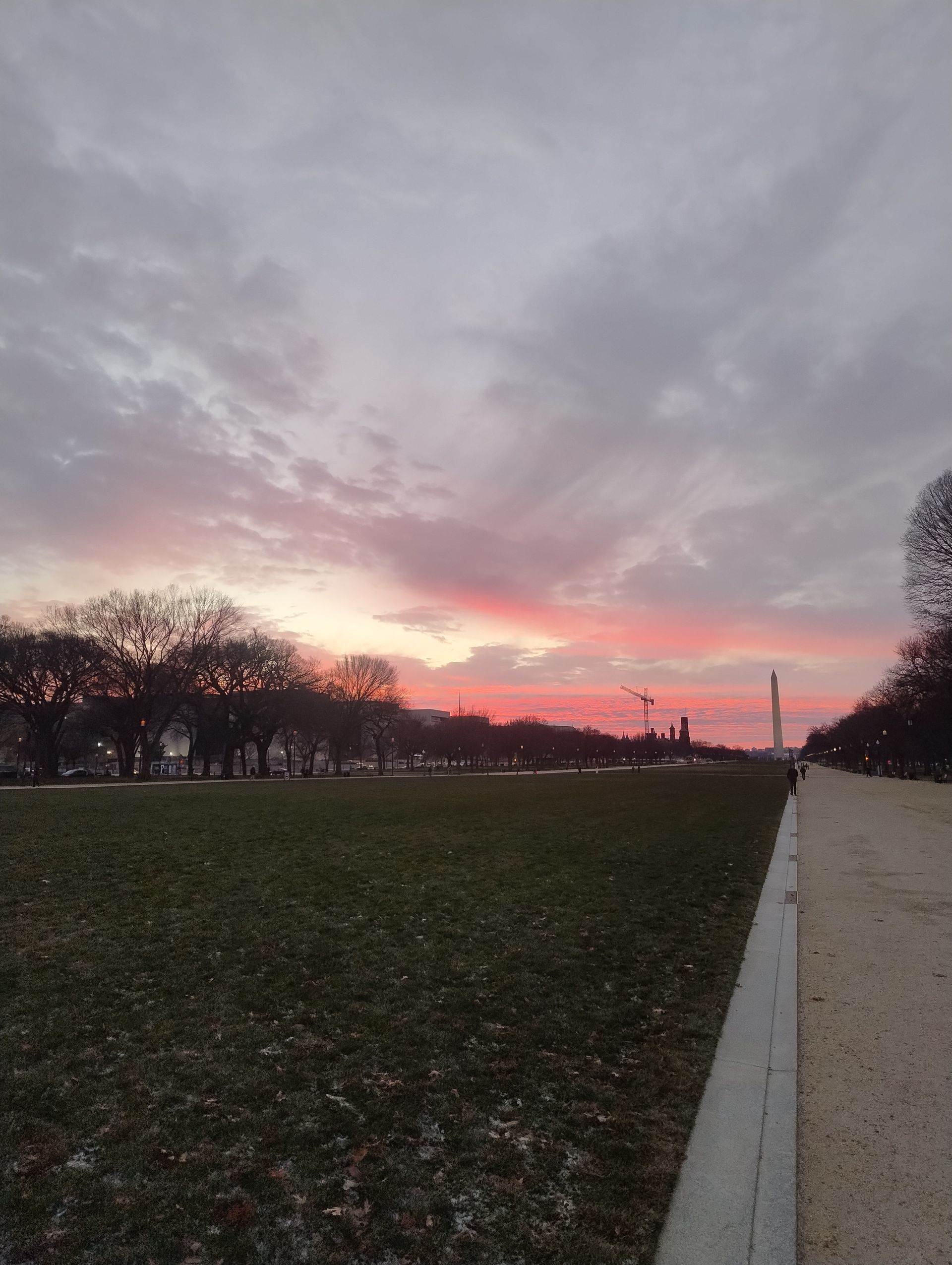
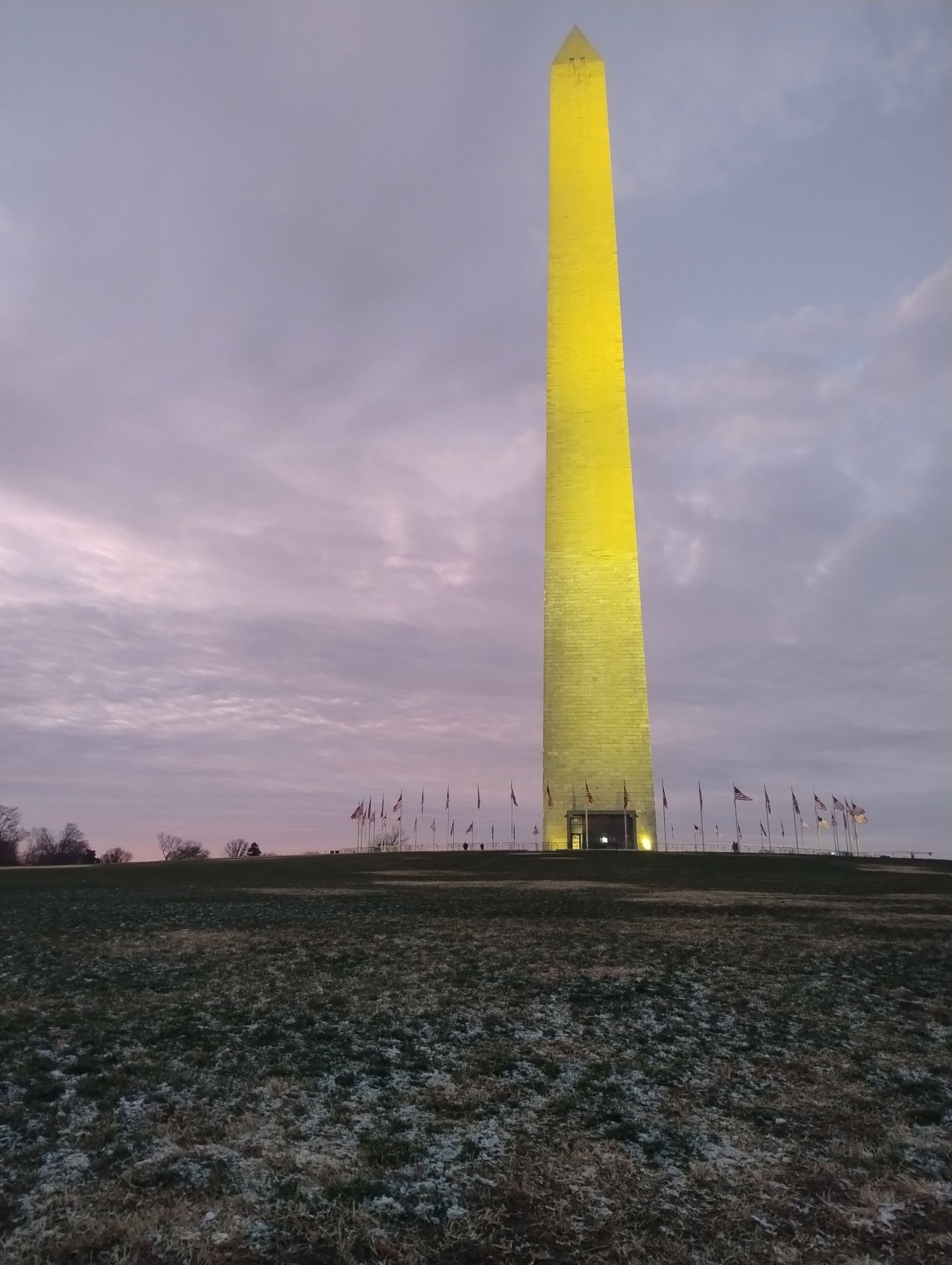
In the American capital, I'm walking from one point to the next. It's minus 5 degrees Celsius. So I have to keep warm by moving. There lives the Orange Man, there lunatics played Civil War on January 6th, here sits the marble Lincoln, my toes are freezing, on and on and on... Luckily, at every other memorial and statue, there are a few information booths with bookstores where you can warm up.
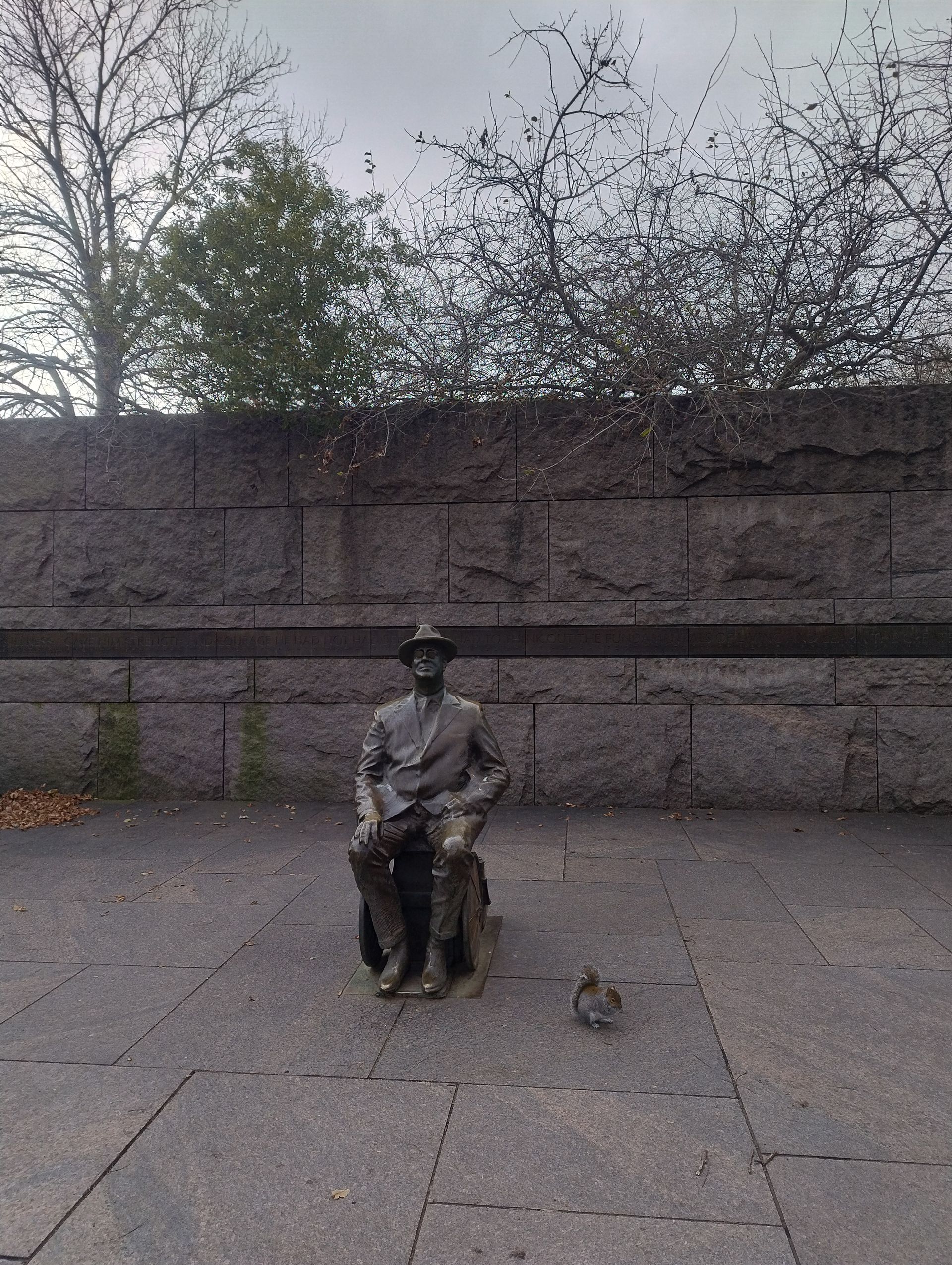
The stereotype of the ignorant American was finally shattered for me the other day. At the information center by the Franklin D. Roosevelt Monument, right at the entrance, stood a gentleman in his early seventies who, after the initial question, "Where are you visiting from?", showed me an open map of Europe and told me about Woodrow Wilson and the first League of Nations. His name tag on his visitor guide jacket identified him as "Joseph Mohr." He has German heritage and was named after the priest "who wrote the Christmas carol Silent Night." I only had to give him a few keywords, and he launched into historical accounts of the rights of ethnic minorities in Hungary, diplomatic relations between
Germany and
Turkey after World War I, the isolationism of the
USA in the 19th century, and the transformation of the Democratic Party into an anti-segregationist party under Franklin D. Roosevelt. He was far more knowledgeable about the subject than I was and also well-versed in German culture. The Goethe-Institut here in Washington, D.C., regularly shows films. When he mentions "Go Trabi Go", my heart warms and I am dealt with in typical American fashion, thawed out again into the cold: "Well, nice talking to you. Have a good one!"
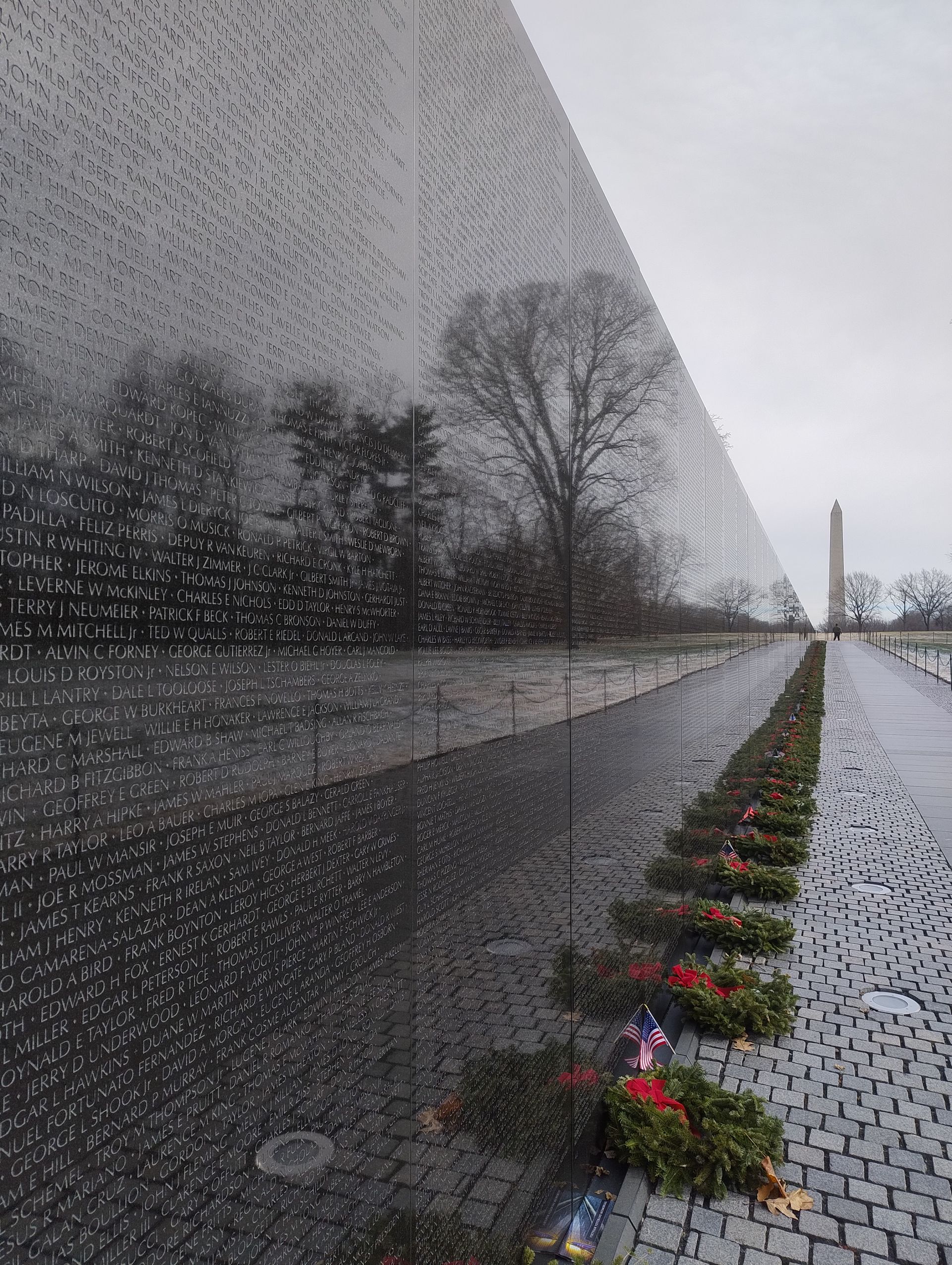
I wonder if there's a difference between a memorial and a monument in English. At the
Vietnam War memorial, I join a tour and glean some free facts about the plaque listing the names of the fallen soldiers and participants. Only a third of them "...finished high school." A disproportionate number were African Americans, some of them minors who—like some privates in the First World War—forged their birth certificates. The tour guide tells the British participants that the Black teenagers were driven by a desire to contribute to their country. He doesn't address the potential role of poverty and lack of opportunity.
An African American veteran marches and salutes the tour group in a manner worthy of a film. As they continue walking, I ask him about his comrades who returned to Vietnam after the war and what motivated them. "You have to ask them why they went there." I cautiously approach the question that truly interests me: what he ultimately thinks about the meaning of the entire war. He clicks his boots together and stands ramrod straight before me: "Sir, this is above my pay grade. I was there to serve. We had one job, and that was to watch each other's asses." Oliver Stone couldn't have captured it better on camera.
"Merry Christmas. How do you say it in German?" I wish Hamilton, the Vietnam veteran, a Merry Christmas. Beforehand, he asks for a small donation. He says he isn't employed anywhere. "Thank you for your service" remains a symbolic phrase in the USA. Social security is never truly granted to anyone—all men are created equal. This is inscribed as part of the Gettysburg Address next to the white marble Lincoln, whose memorial stands before the monuments to the Korean and Vietnam Wars.
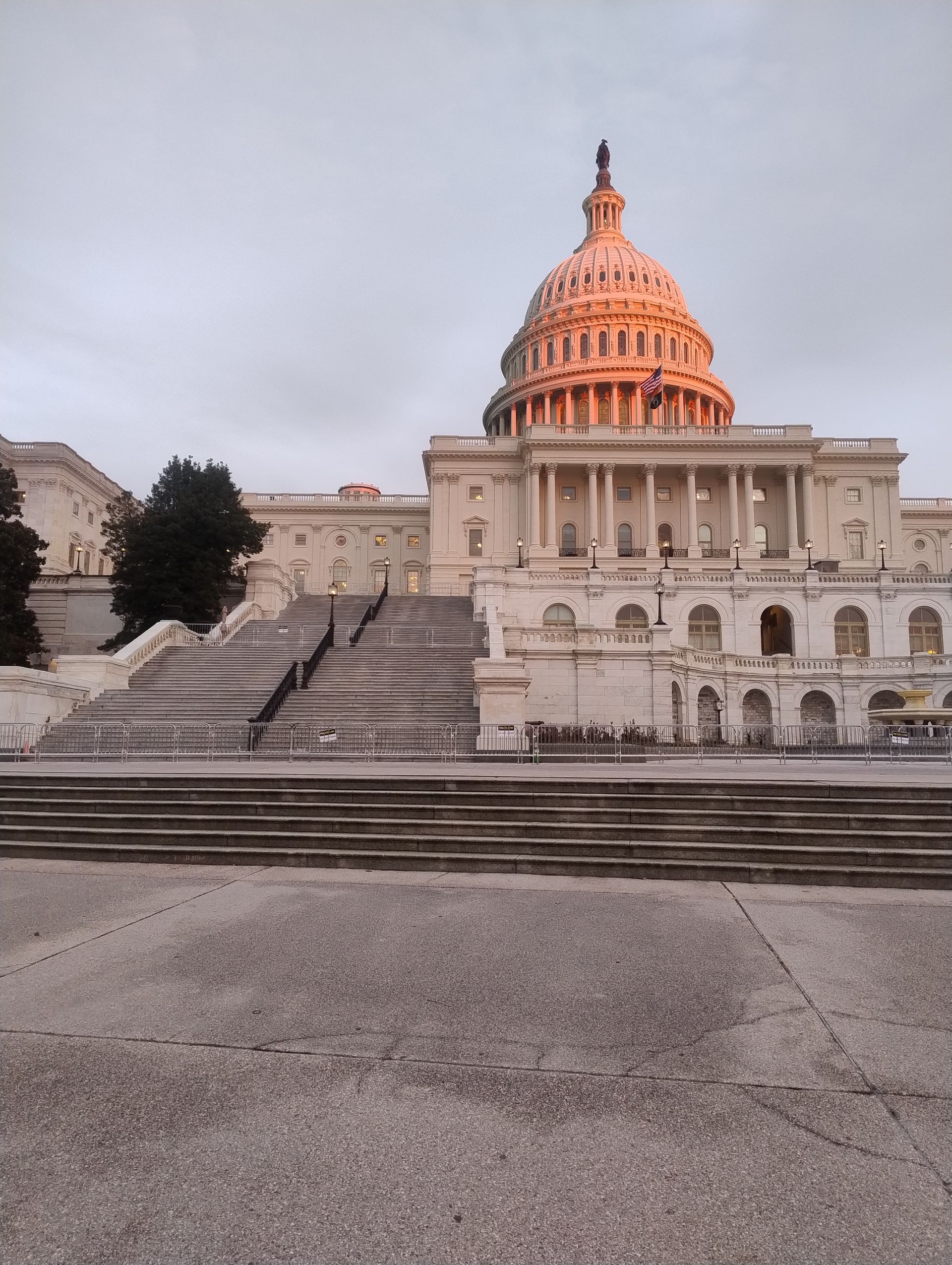
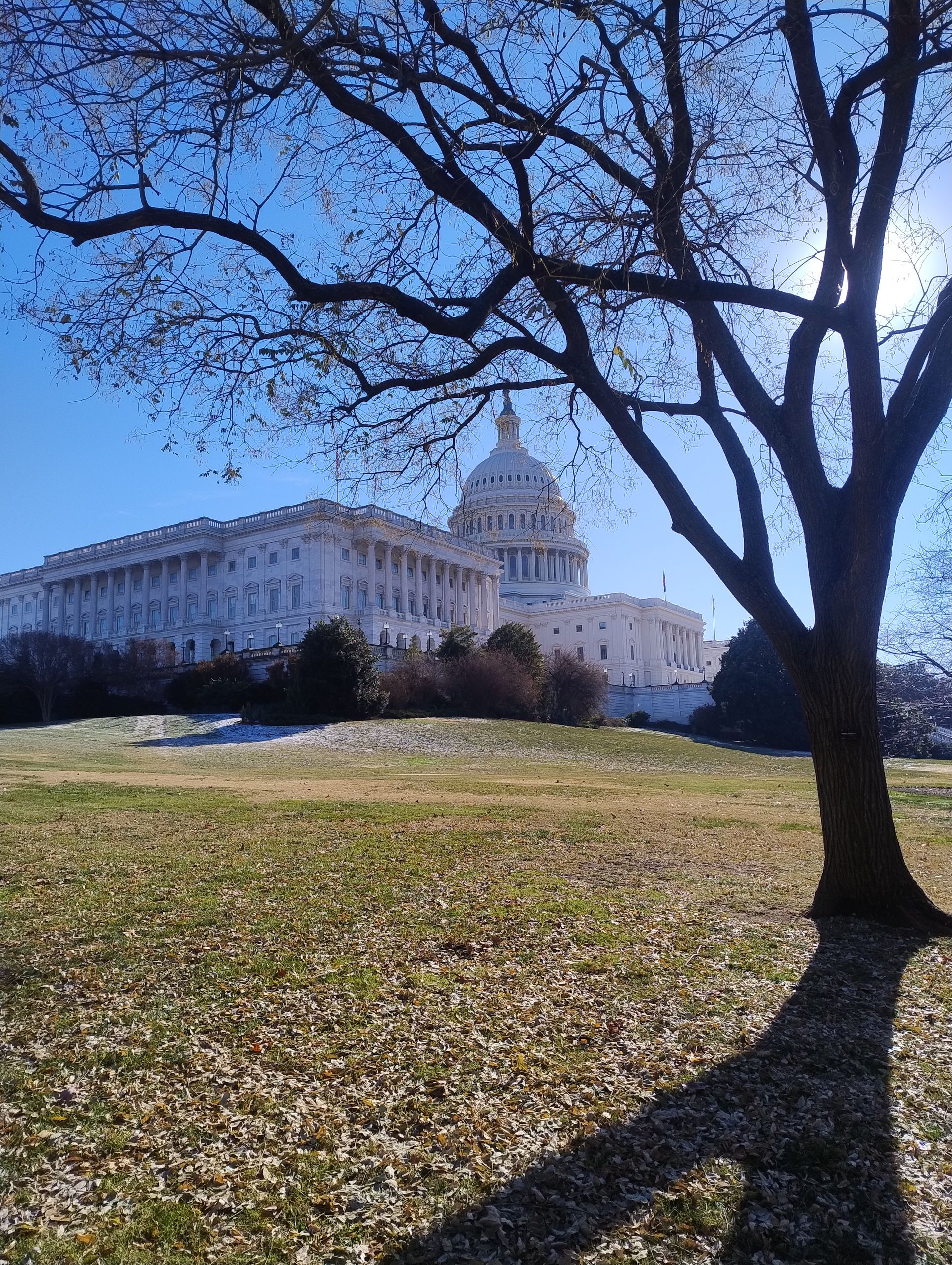
The Capitol is bathed in evening light. My image of the USA may be as divided as the country itself. But it's an awe-inspiring sight. I wonder how deeply one can sink into the algorithm of conspiracy theories to march up all those stairs and attack a handful of self-defense police officers.
Washington, D.C. – that's the grandiose buildings of political power. But it's also the abundance of free museums. I want to visit one of them on my last day – the National Archives Museum. There's also the National Library, a regular at the Sweet Lemon Café, where I've left my backpack, tells me. "Seems like I have to come back," I assure him. He explains that this area west of the Capitol was originally inhabited primarily by German immigrants. The churches, in particular, bear the imprint of these immigrants. German or not, when I enter one of the churches, an organist is practicing, and I stay for a few minutes to listen.
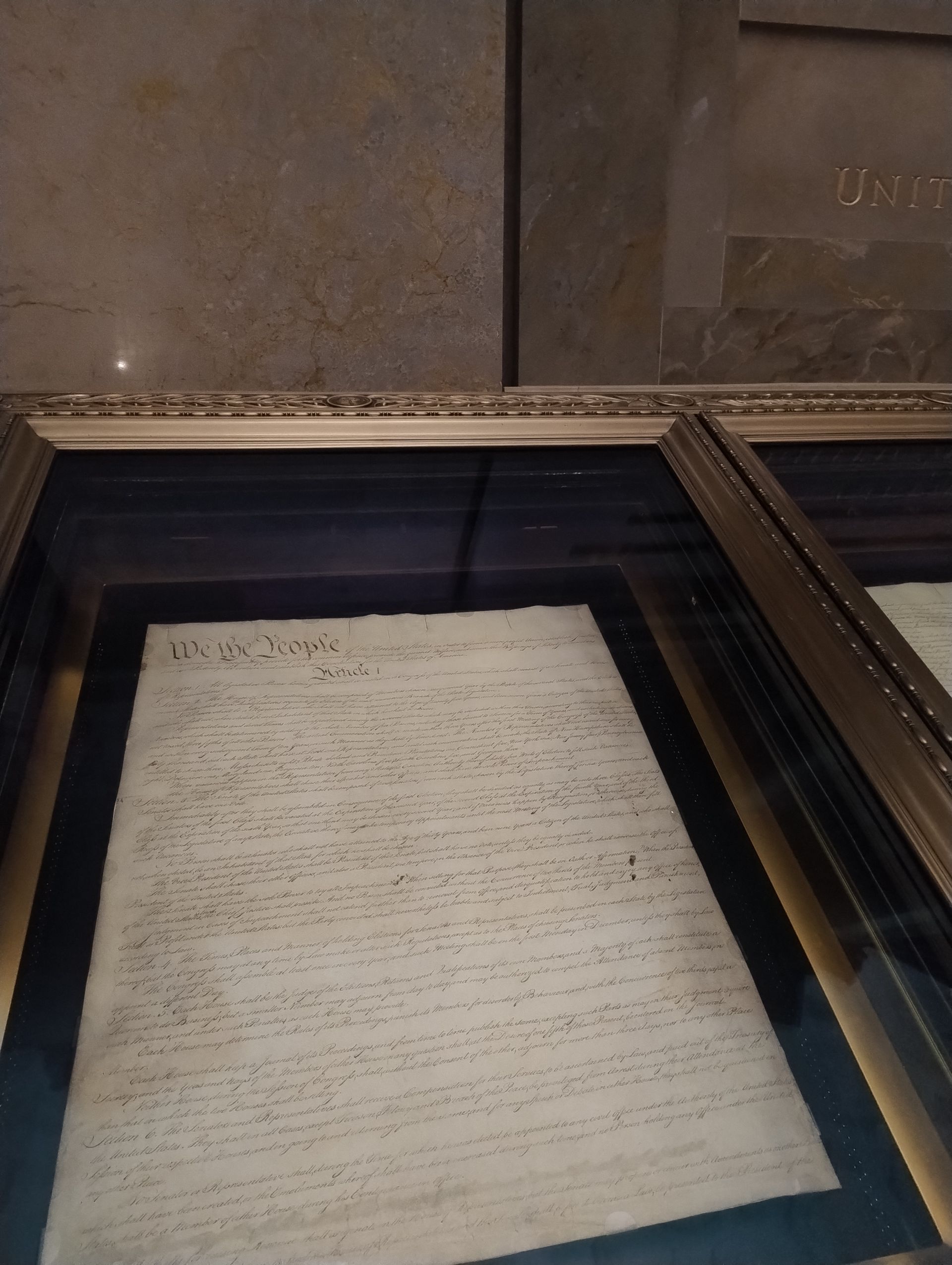
In the rotunda of the National Archives Museum, I ask an archivist at the information desk if the Constitution isn't a copy. It's hard to believe it's the original. But it is the actual document with which the USA was founded almost 250 years ago. We discuss the details. A particularly controlled microclimate prevails in the glass case, which is flanked on both sides by a guard for good reason. Every few decades, the technology is updated, and the ink is renewed under a microscope by conservators.
The US knows how to stage itself, and I think we can learn a lot from the National Archives as well. In one of the archives' four exhibitions, users explain, briefly and concisely, the projects for which they used the holdings, accompanied by original documents and videos. "Killers of the Flower Moon" is Martin Scorsese's last film, which in turn is based on the book of the same name by David Grann. The journalist researched in the archives and found manipulated documents that helped him in his investigation into the Osage Murders.
"And half a year out of this backpack?" asks the Belarusian woman who runs the café where I've stored my backpack. "Yes, half a year," I reply, as if I'm only just realizing it myself. My trip is drawing to a close, but at least I'm in the Christmas spirit.