'Masimian, where are you going?', asks the hostel owner in Busan as I am about to step out the door. I actually intended to go to the jjimjilbang and get a haircut there. But I can’t respond quickly enough before he invites me to a round of Soju, the Korean liquor. A Taiwanese woman, a regular at the hostel, pours me a drink. I learn about the Korean rules of pouring drinks. With each new round, the younger person pours for the older one first and then for themselves. More and more hostel guests are invited to join the round. An Australian, a Dutchman, and a Brazilian join in, while a Vietnamese person works remotely on their laptop and occasionally chimes in on the increasingly merry conversation. The one drinking the most is primarily our host. He pours one shot after another with beer, while we guests alternately hold out our glasses to be topped off, just to keep him from getting upset. We likely all have plans for the next day.
Our host puts out a decent spread too. Sashimi, Korean chicken, kimchi, and chips. Thanks to his generosity, my dinner is already secured. I can still get my haircut tomorrow.
Our friendly, beaming host's already modest English becomes more and more fragmented after each round of Soju until he eventually switches almost entirely to the phone, where he speaks Korean and then holds out the English translation for us. He mentions that he had worked at Samsung until a few months ago, then quit his job to pursue his dream of running a hostel. He wanted to meet people from different countries. After telling us, while quite tipsy, that he has to drive home for 40 minutes tonight, where his family is waiting for him, we cautiously express our concerns. He reassures us: ‘It's okay, I take Taxi.’ and ‘Alcohol is food too.’ is displayed on his phone, which he extends towards us with his silver look. Well then, that settles it.
I only see my host the next day in the afternoon. He greets briefly. Either he can’t remember anything or he feels embarrassed. Before he led us up to the rooftop terrace with a view of the night harbor of Busan and gave us an alcohol-soaked hug, he confessed to us that he has been having an affair he has kept secret from his wife for years. From the looks of the others, I could read what we all likely thought in response to the confession: ‘Too much information.’ Traditional marriages in which separation is not common meets oversharing in drunkenness - which we suspected might not be so atypical in Korea.
On my way to the hairdresser, I walk through the square in front of the train station. ‘Busan is good,’ is written on an official sign, the modest slogan of the port city. I like the understatement. With that expectation, things can only get better.
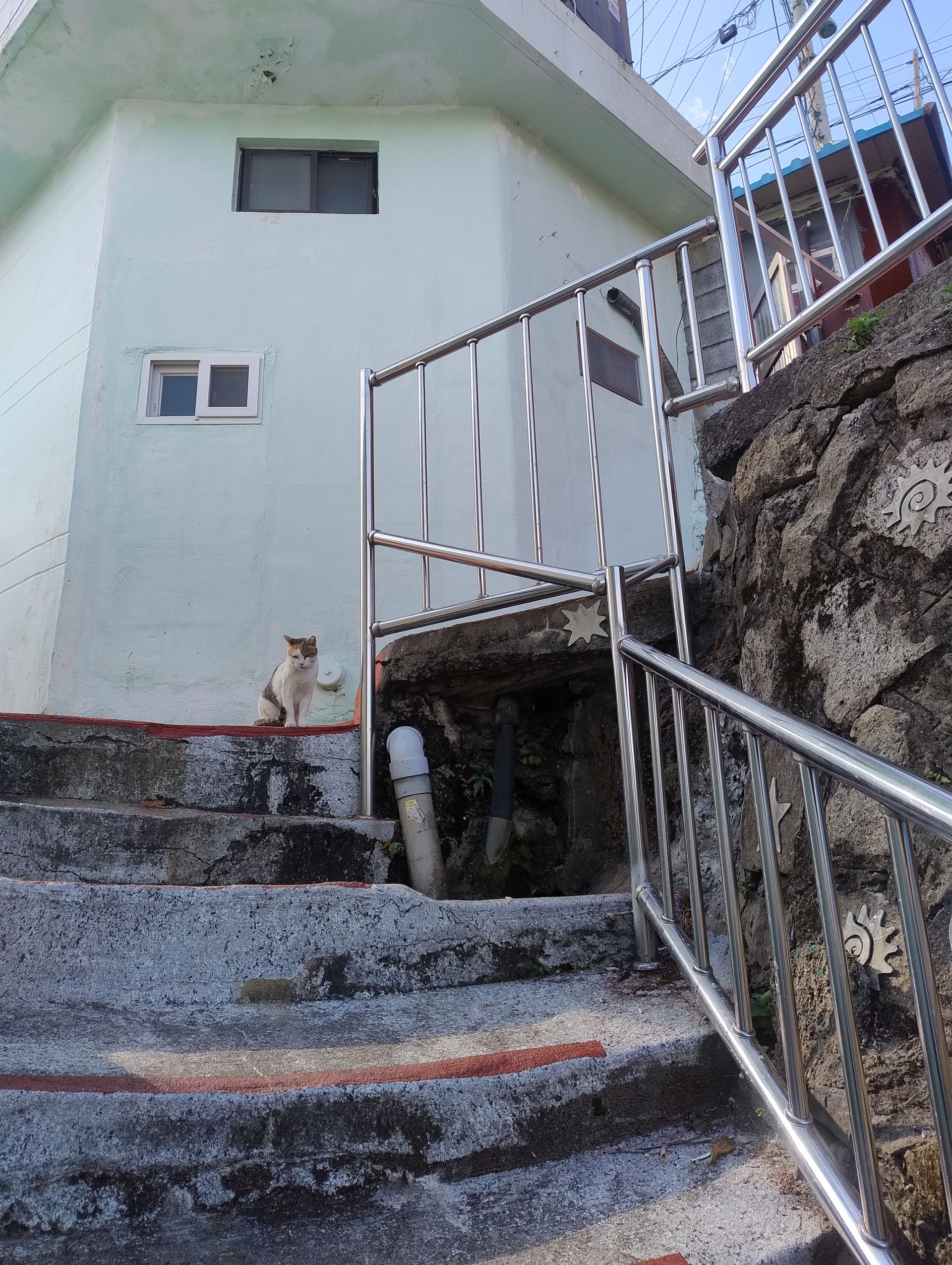
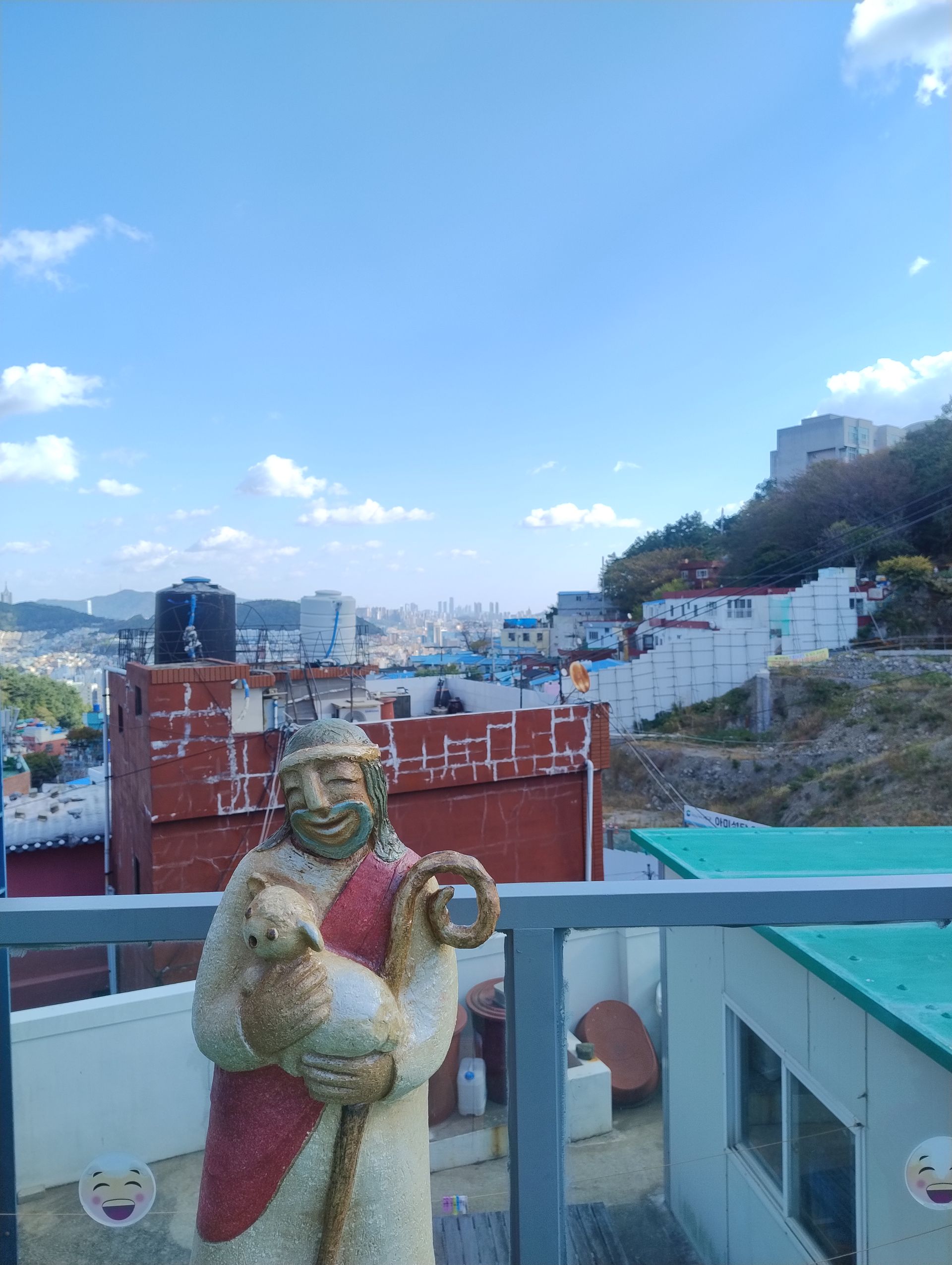
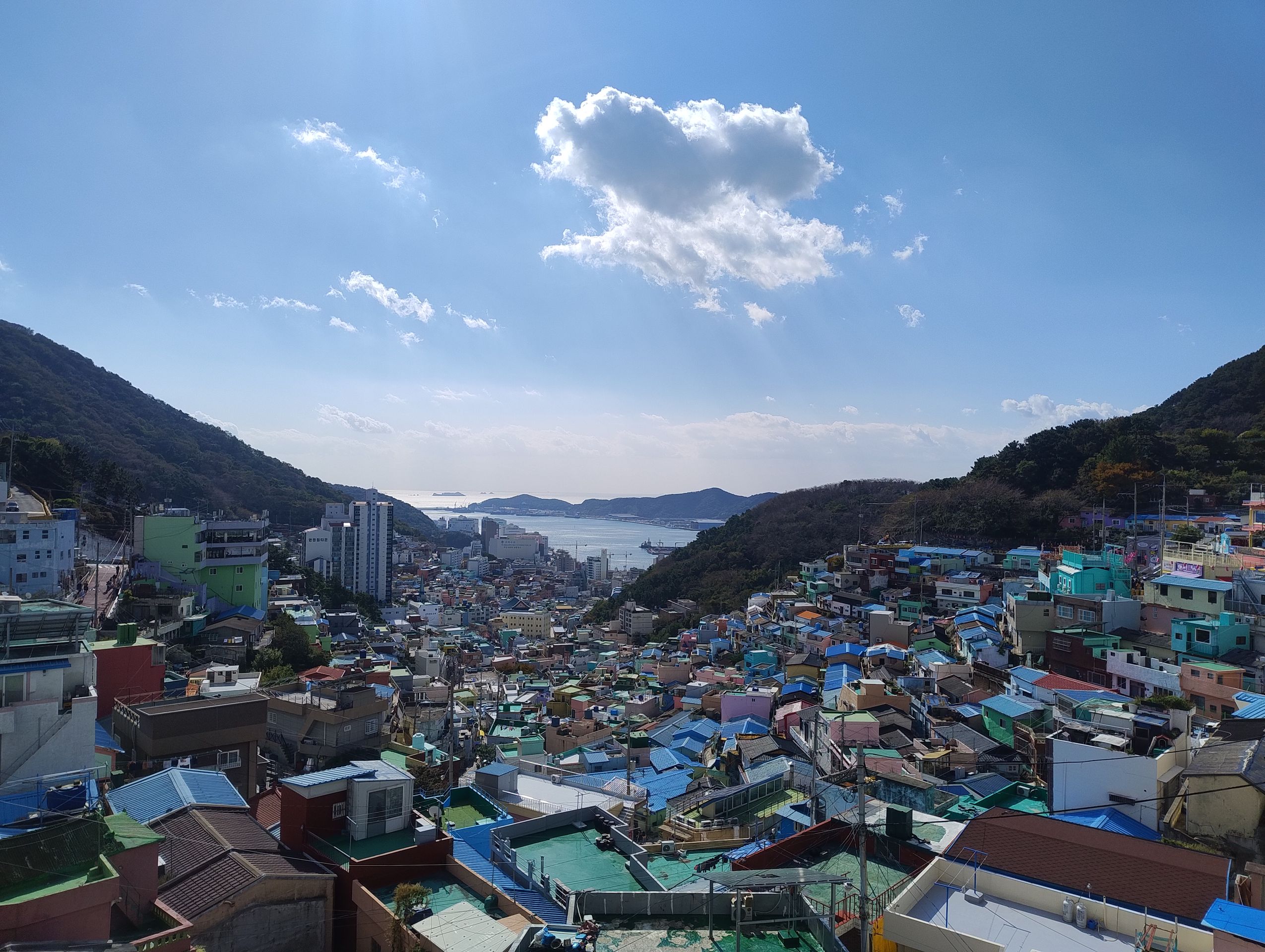
Gamcheon-dong is a quaint place on one of Busan's hills. Over the years, it has transformed from a district for refugees from the Korean War into an attraction for tourists. The winding alleys, steep steps, and colorful facades and roofs were renovated as part of a project that began in 2009. On my way up, I try to find somewhere to dispose of my coffee-to-go cup. Trash cans are as rare in South Korea as they are in Taiwan. I find one near a church. It’s Sunday, and the congregation is gathered outside for the Mass. As I walk past the entrance door, a smiling Korean gestures with his hand. An invitation to enter. I accept it. Go with the flow.
Some of the mostly older congregation members smile at me. Most don’t notice me in my seat at the back at all. I try to translate some passages of the long sermons using my phone and realize that Christian services in South Korea can be just as boring as in Germany. In the end, I dare to go forward for communion. Before I'm offered the wafer, the Catholic pastor asks me if I am baptized. Fortunately, I am. We practice ecumenism.
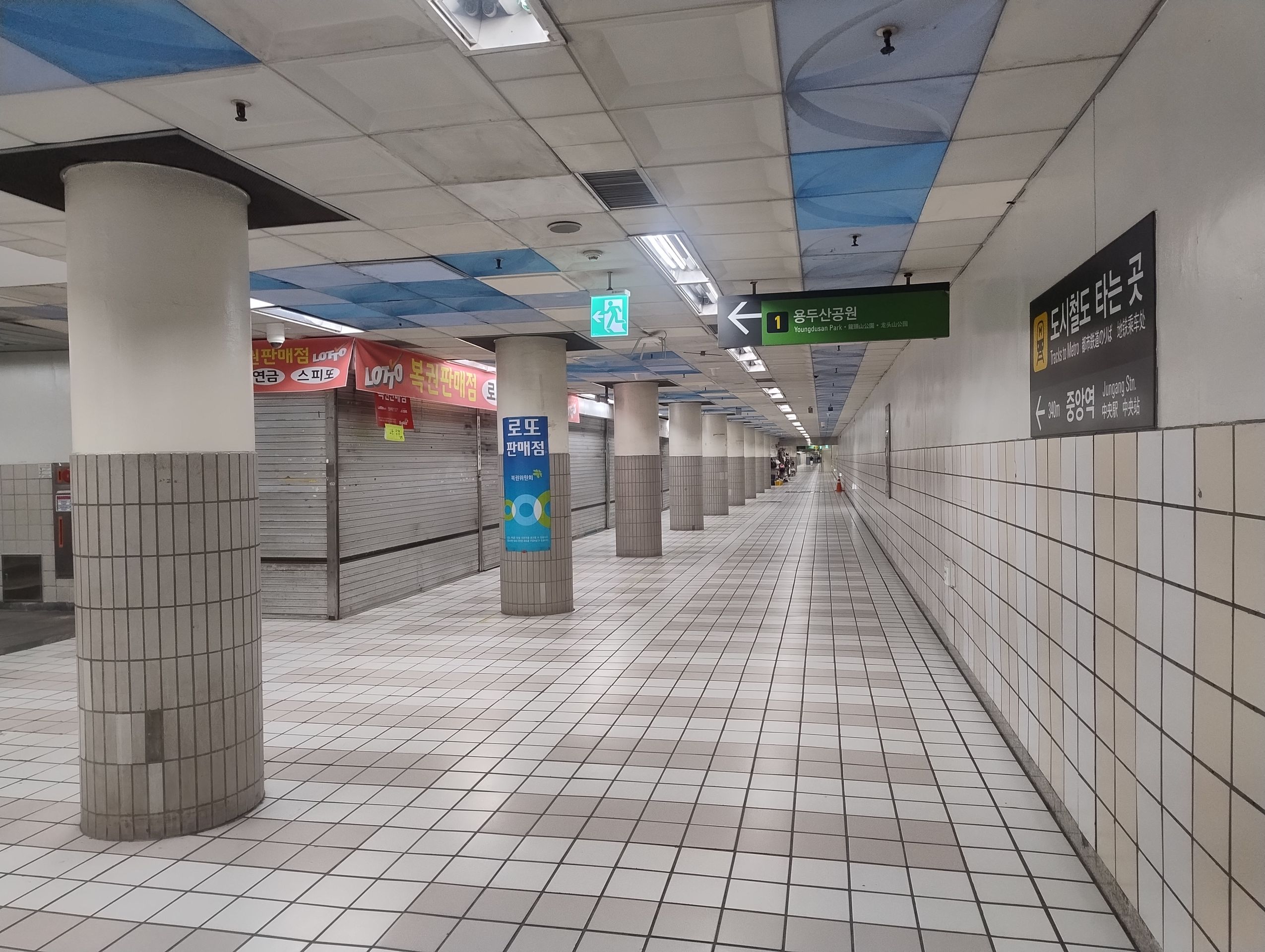
From Gamcheon, I walk down to a harbor and find a restaurant offering kimchi soup. I ask in advance if they accept card payments. Two days before my departure to Japan, I have no cash left. But the card machine doesn’t accept either my debit or credit card. So I set off to find an ATM. In Seoul, that was already a challenge. It was only the fifth ATM that accepted my card. Now the tenth one won’t either. I trek through the entire district and collect ‘Transaction failed’ receipts. I shamefully stuff them into my pocket, as I can’t even find a trash can to throw them away. I had wanted to watch ‘Godfather 2’ in a retro cinema that evening. After an hour of unsuccessful running around and with 45 minutes until the movie starts, I return to the restaurant frustrated and have to ask the owner to postpone until tomorrow. She takes it calmly, doesn’t even want a deposit, and trusts me to bring the 15,000 won in cash tomorrow.
I miss the arrival of the young Vito Corleone at Ellis Island, but otherwise, the experience of seeing the best Godfather part on the big screen gives me the motivation to keep looking for ATMs on my way home. My task of paying for lunch is still open, but at some point, it has to work out. On my first try at an ATM in the next 7-Eleven, I am successful.
After settling my debts the next morning, there are still a few hours until the ferry to
Japan departs. I stand at the train station, could walk back to the hostel or take a bus towards the Korean War Museum. Busan was the last bastion of South Korean and UN troops during the war before they could push back the North Korean army. I also have a booked ticket for a ride in a Sky Capsule Train. My past self has once again taken on too much, and my present self has to now deal with the dilemma between FOMO and hakunamatata. Just as I am about to simply sit down in a café for the rest of the day, I see the bus line that goes directly to the capsule train station and decisively hop on. Go with the flow.
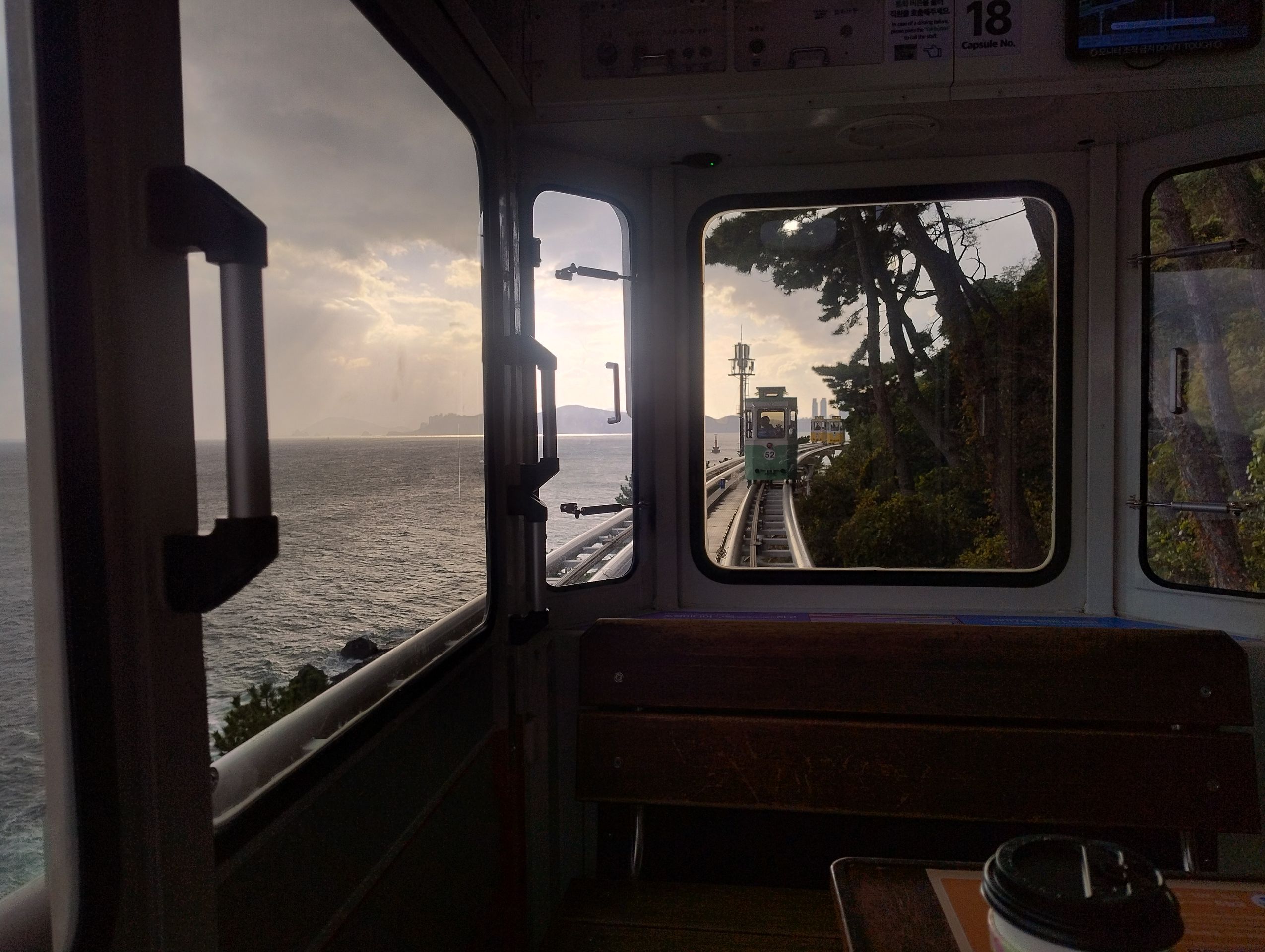
Despite having a time ticket, I have to wait half an hour in the queue full of couples before I can board my private train. The capsule trains are essentially mini-trams with up to four seats that run in a line at ten-meter intervals. On the panoramic route along the cliffs overlooking the sea and Busan, the journey between the two stations takes no longer than 25 minutes. When my gondola arrives at the final station, I see someone on a rooftop café taking photos of the individual cabins against the sunset with a DSLR. I recognize the photographer and the camera. I walked along a coastal hiking trail with Aleks from
Denmark and two other Germans the day before yesterday. I open the solo travel app through which we organized the hike. ‘If you put the pictures with me on the train for sale, I want my fair share,’ I write to Aleks with a subsequent winking emoji. We meet briefly over coffee, and he shows me his previous photos. The small colorful trains with the sea and sun in the background look cute in the pictures.
My ferry to Fukuoka doesn’t leave for another four hours, but the bus alone takes an hour and a half. It’s half an hour to the terminal, and the gangway closes two hours before departure according to the ticket. Suddenly everything seems tightly scheduled, and my inner calm once again gives way to stress, just like when I was running around looking for ATMs between lunch and the cinema yesterday.
In the end, I work myself up unnecessarily once again. In Busan, everything is good, and everything will be fine. After the border control, I wait at the gate for an hour before I can even board the ferry. In front of the ticket control, everyone has lined up their bags and backpacks like dominoes in a row. The Asian version of standing in line. When it starts, you can still stand next to your luggage.
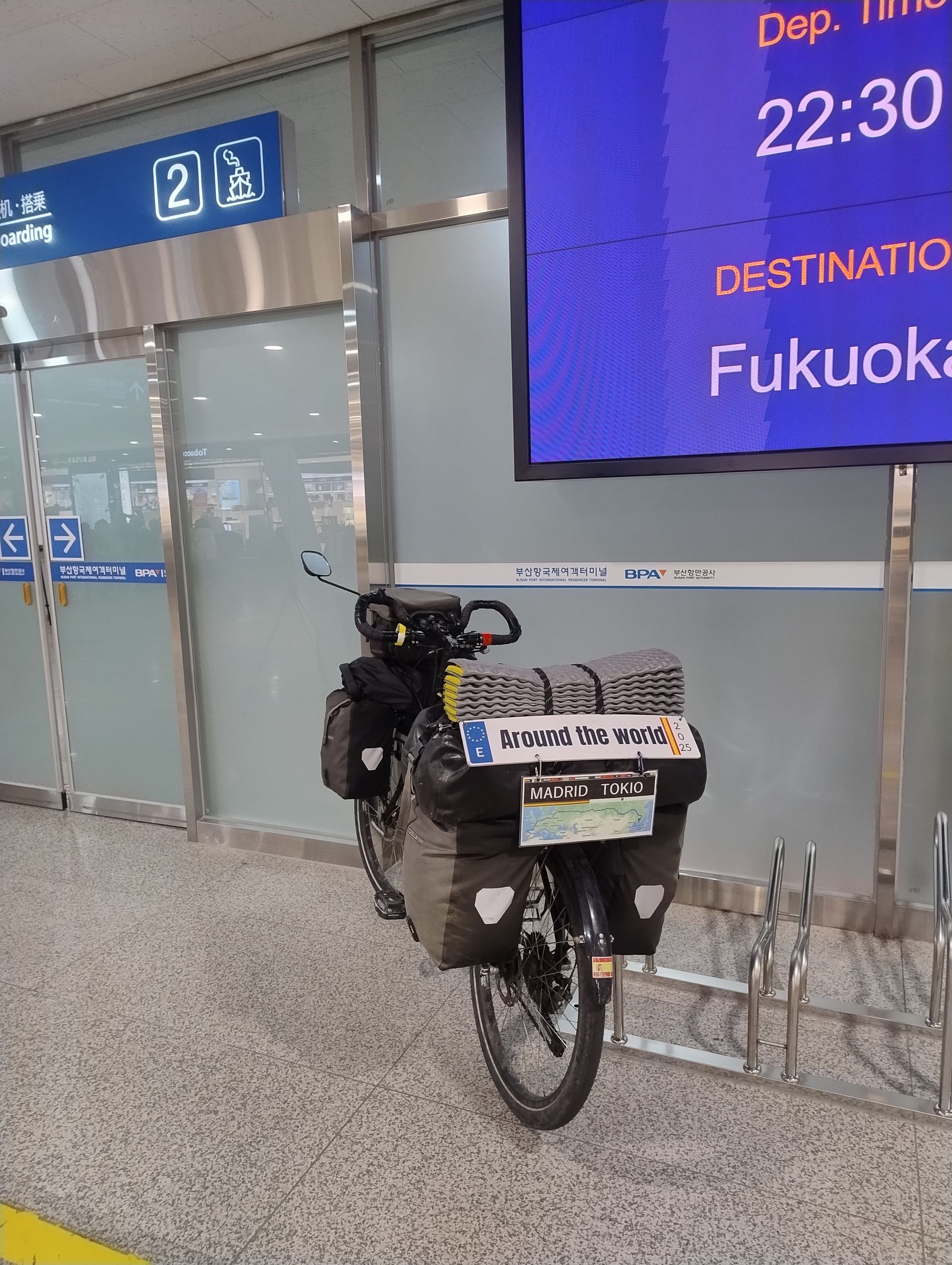
A bike leans against the wall at the front. On the back of the carrier is a license plate that reads ‘Around the world,’ underneath a map of Europe and Asia with a black line connecting Madrid and Tokyo. In the seat rows, I quickly spot the world traveler from the bicycle helmet lying next to him. The Spaniard is in his mid-50s and is named Sel. He gives me a brief rundown of his route. I ask him if and in which country it has been hardest to progress. 'No problems,' he says, shaking his head. As it looks, Sel could not be shaken by anything on his journey across two continents. Meanwhile, I’m already losing my cool on my bus ride to the ferry. I tell myself to practice more calmness in the next country. Where else, if not in Japan...