
Busan is good (Busan)
'Masimian, where are you going?', asks the hostel owner in Busan as I am about to step out the door. I actually intended to go to the jjimjilbang and get a haircut there. But I...

Published: 27.11.2025
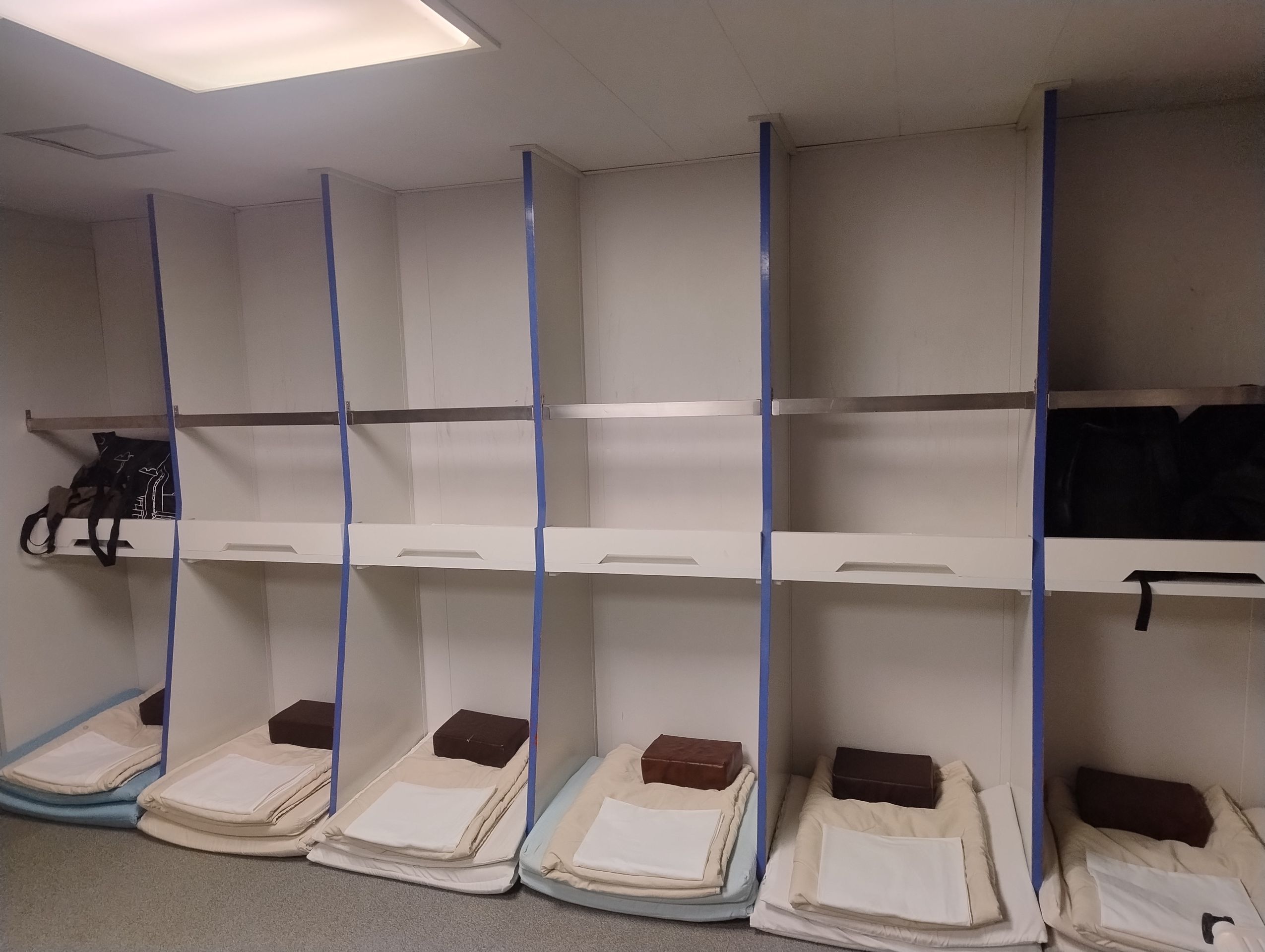
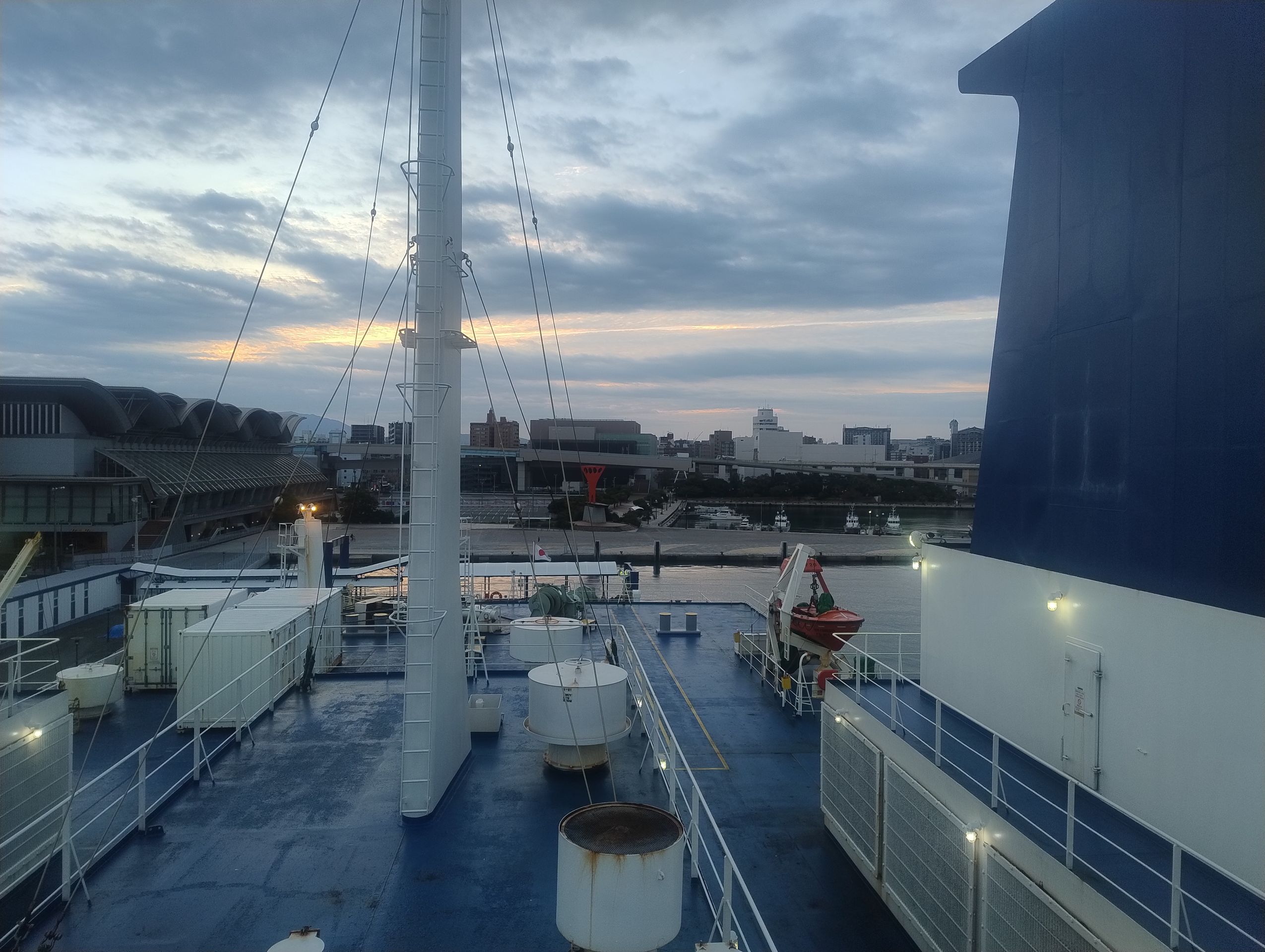
The ship finally sets off. The outer decks are closed, and at sea, we quickly realize why. The ferry, with its three levels, rocks so strongly in the waves that I have to hold my bottle of green tea, which Alex has made hot from his thermos, tightly so it doesn't fall off the table. We navigate our way to the karaoke rooms, the drink and slot machines using the railings and walls. Everything runs on cash, which we both don't have. Right now, I'm longing for a pill against seasickness. But the effect of the tea or habit soon sets in, and after we crawl into our bunks past midnight, I sleep better than in the last nights in the overly soft hostel beds. The rocking of the ship has a soothing effect.
If someone once again tells me with good intentions that I 'must' see this or that, it will immediately go to the must-NOT-see list. I don't want to visit a single temple or shrine, I tell Alex. But that's the wrong address for him. He describes himself as not particularly religious, but shrines give him a sense of peace. He could sit at shrines and meditate forever. So less than an hour after our arrival in Fukuoka, I break my plan and we stand at the first Shinto shrine. Alex explains to me that these basically house spirits that have different functions. Depending on what strength one wishes for, one goes to the respective temple and prays or asks the spirit for help. The Shinto gates are access points to the area where the spirit resides. Often entire city blocks are surrounded by these gates. Shintos, therefore, do not only live in shrines and temple complexes.
With the metro, I travel to my accommodation in the west of the city. I use my credit card at the station for the payment barrier. The train is silent. A sign instructing to silence phones hangs above the seats with the quiet passengers.
At my destination station, the barrier denies me exit with my credit card. Confused, I walk to the station office and speak to the station staff. Every interaction in Japan has a theatrical quality due to the many mindful gestures. Everyone plays their role. I forget my lines and have to improvise. In each of these encounters, I probably break polite customs a dozen times without knowing it, sprinkling in small bows and 'arigato gozaimasus' all the time. Enter stage: railway employee. Bow from him. Bow from me. He sees my credit card and knows what to do. He speaks something in Japanese and tilts his gaze toward the card I offer him. I nod, he takes it. 'Arigato gozaimasus.' 'Arigato gozaimasus.' He types at a device and holds the card to it. He smilingly hands it back to me along with a small card-sized slip of paper with a short English instruction to submit it as a kind of deposit at the next counter to reset my credit card to zero. 'Arigato gozaimasus.' 'Arigato gozaimasus.' We both smile. Bow from me. Bow from him. 'Arigato gozaimasus.' 'Arigato gozaimasus.' The railway employee exits, I step through the metro barrier. End scene.
Axel's language level is sufficient to place our order. The atmosphere in the izakaya reminds me a lot of the bar from Wim Wenders' 'Perfect Days', where the protagonist winds down his evening after work. Two regulars sit at the counter. An older couple runs the place, decorated with typical Japanese interior from the 80s but could also be from the 50s. Timelessly simple. He is the cook; she is the waitress. 'Arigato gozaimasus!' 'Arigato gozaimasus!' Axel has ordered us sashimi. It's my first proper dish in Japan, but I can already claim that it's the best food I've had on this trip.
His expat friend Tommy from Bavaria joins us. He has been living in Japan for twelve years and speaks fluent Japanese. It seems to be a good life for the two of them, who have adjusted to the country's peculiarities through their families and the foreign community.
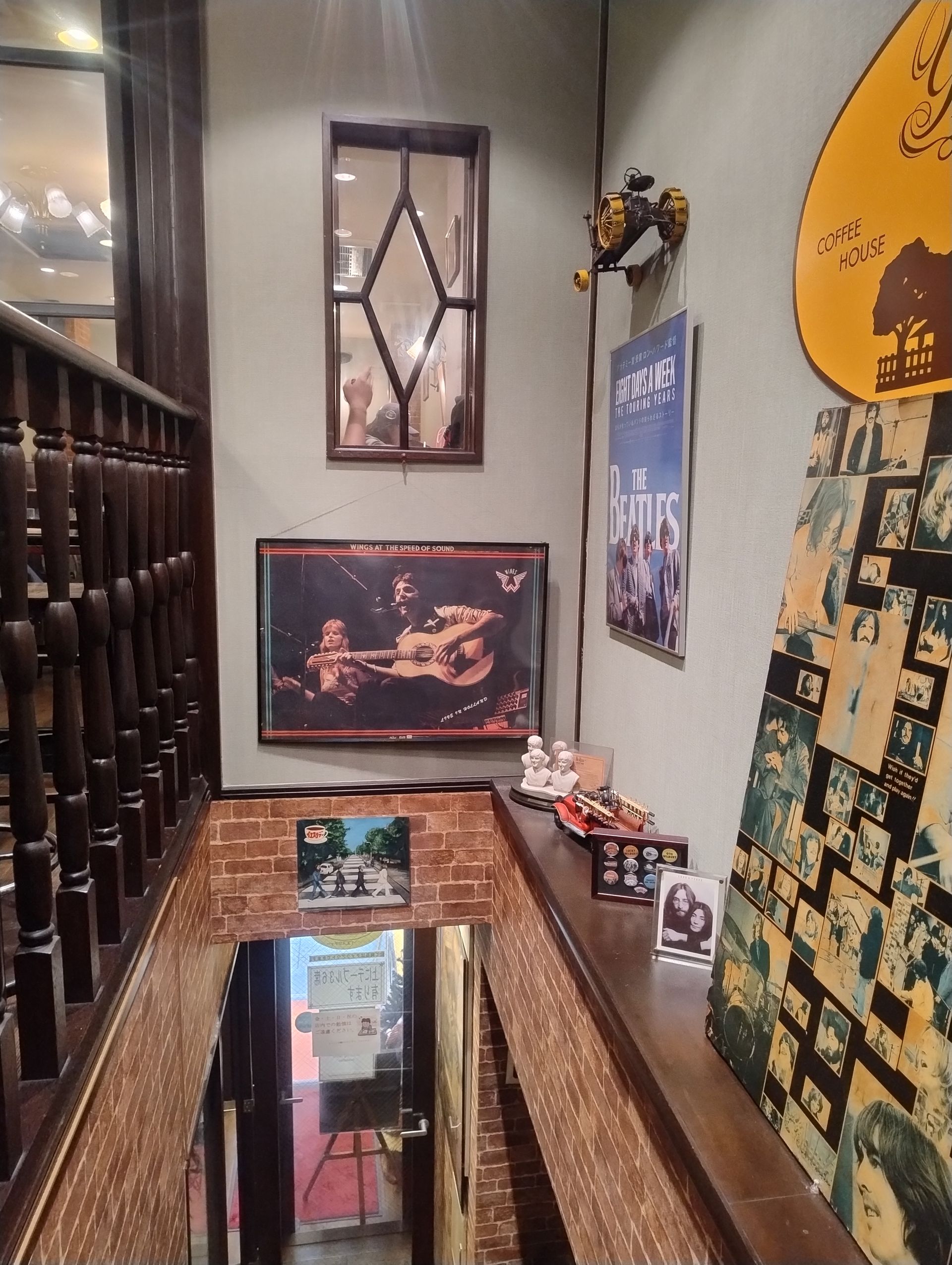
In one of the typically Japanese passages with glass roofing, I find a Beatles café: 'Yesterdays.' With its English wooden-panelled interior, record covers, and original concert posters with Japanese characters, it feels like a perfect set. Well copied. I climb up the narrow wooden staircase and sit before the smoking room, which I can look into through the interior windows. Axel was right - smoking is a habit of outsiders. Here at Yesterdays, the avant-garde has gathered to smoke. A guy in his early 30s sits with his rainbow glitter pants and elephant plush handbag next to an older gentleman in a plaid shirt. A beautiful contrast to the black-and-white suit world outside in the rest of the city.
In one part of the memorial hall, you can watch eyewitness interviews on PCs. One particularly touches me. A woman recounts how she accompanies her brother as he dies after the bombing, after which she decides to become a peace activist. In her writings and speeches, she not only raised awareness of the horrors of Hiroshima but also did not shy away from mentioning Japanese war crimes.
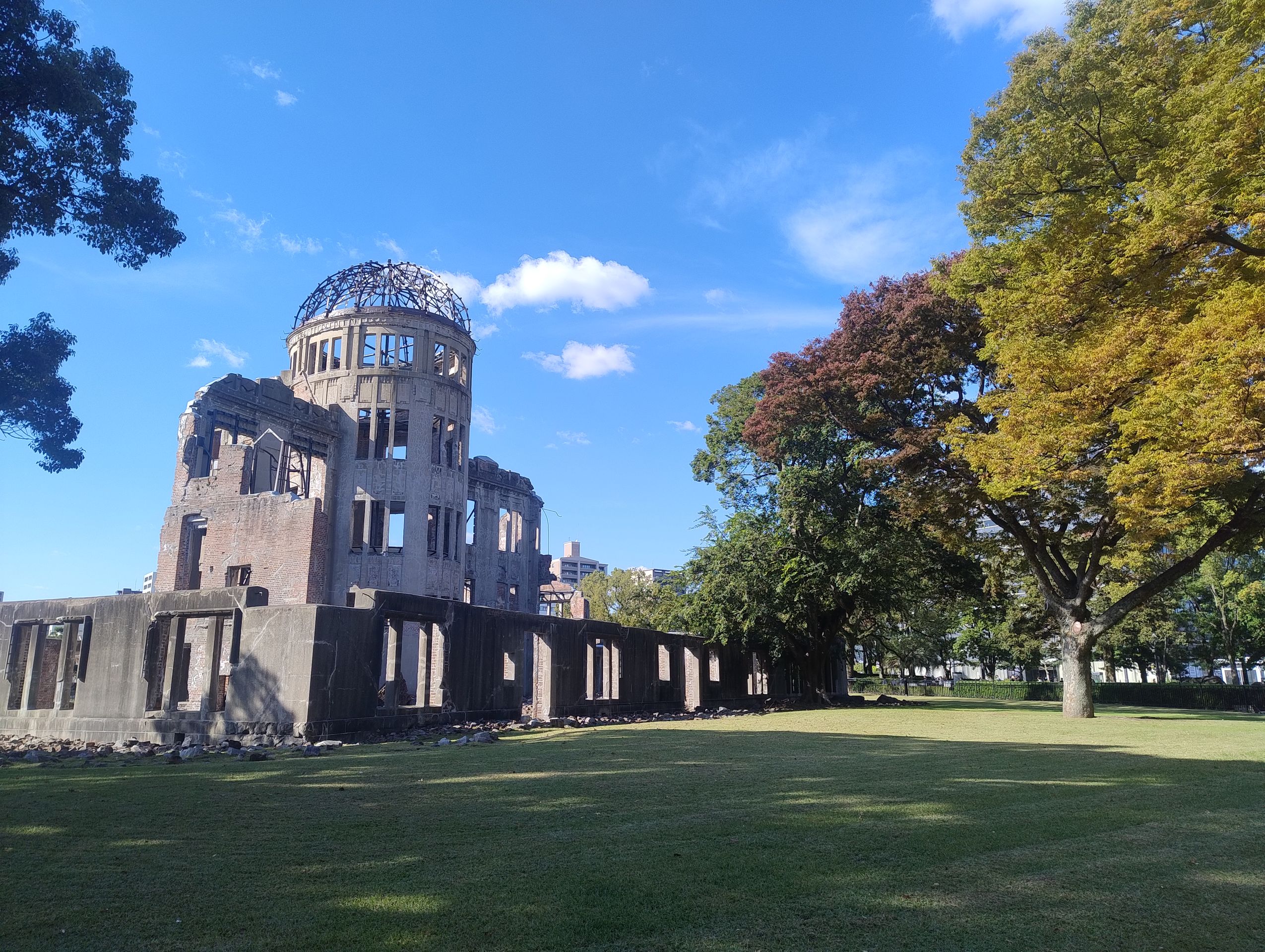
Only three structures in the epicenter of the detonation survived the inferno. The technical city hall, now a memorial at the river's edge, a gate of a Shinto shrine near the castle, and the steel-reinforced basement of an office building on the river island Tokaichimachi. There, a single employee survived the disaster because he went down at the moment of the drop to get a file. On a memorial plaque at the entrance of the reconstructed house, it says: '...we recall with great sorrow the many lives taken sacrificed to mistaken national policy.' Aha, lives that were sacrificed to misguided national policy... a way to deal with the past. Through convoluted passive sentences. With non-apologies like this, I am not surprised that South Koreans are still waiting for an official apology from the Japanese for the crimes in World War II.
On the tour with the Pakistani guide, I get the impression it is the latter. The engineering student does the thematic tour on the atomic bomb drop to earn some extra money in the process. Accordingly, he rattles off emotionlessly data on fall and detonation height, repeats the same information on various memorial plaques four to five times, and lists facts about the radiation radius and casualty numbers. With a Canadian in the group, I agree that we could have given ourselves a tour packed with superficial Wikipedia knowledge.
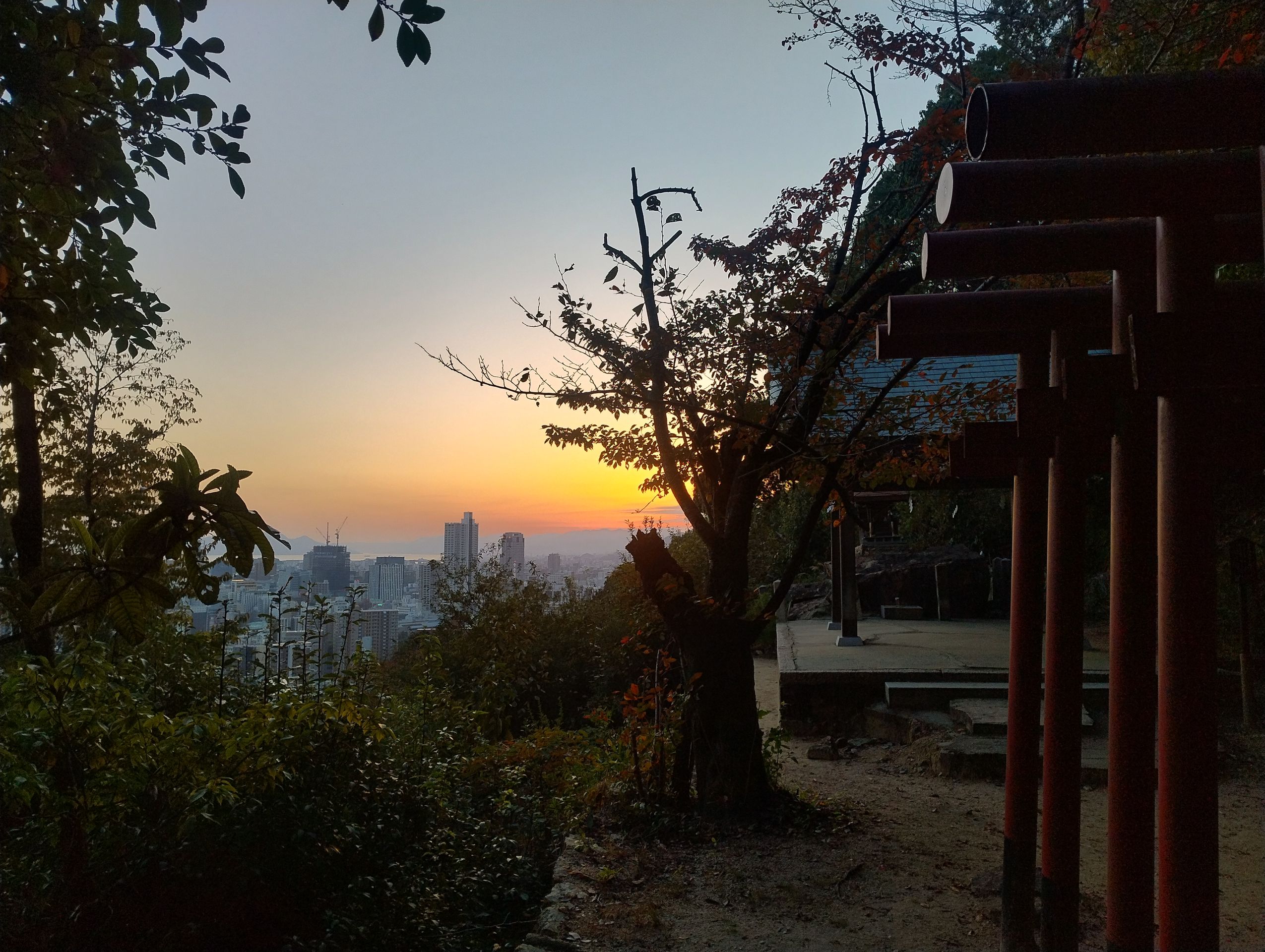
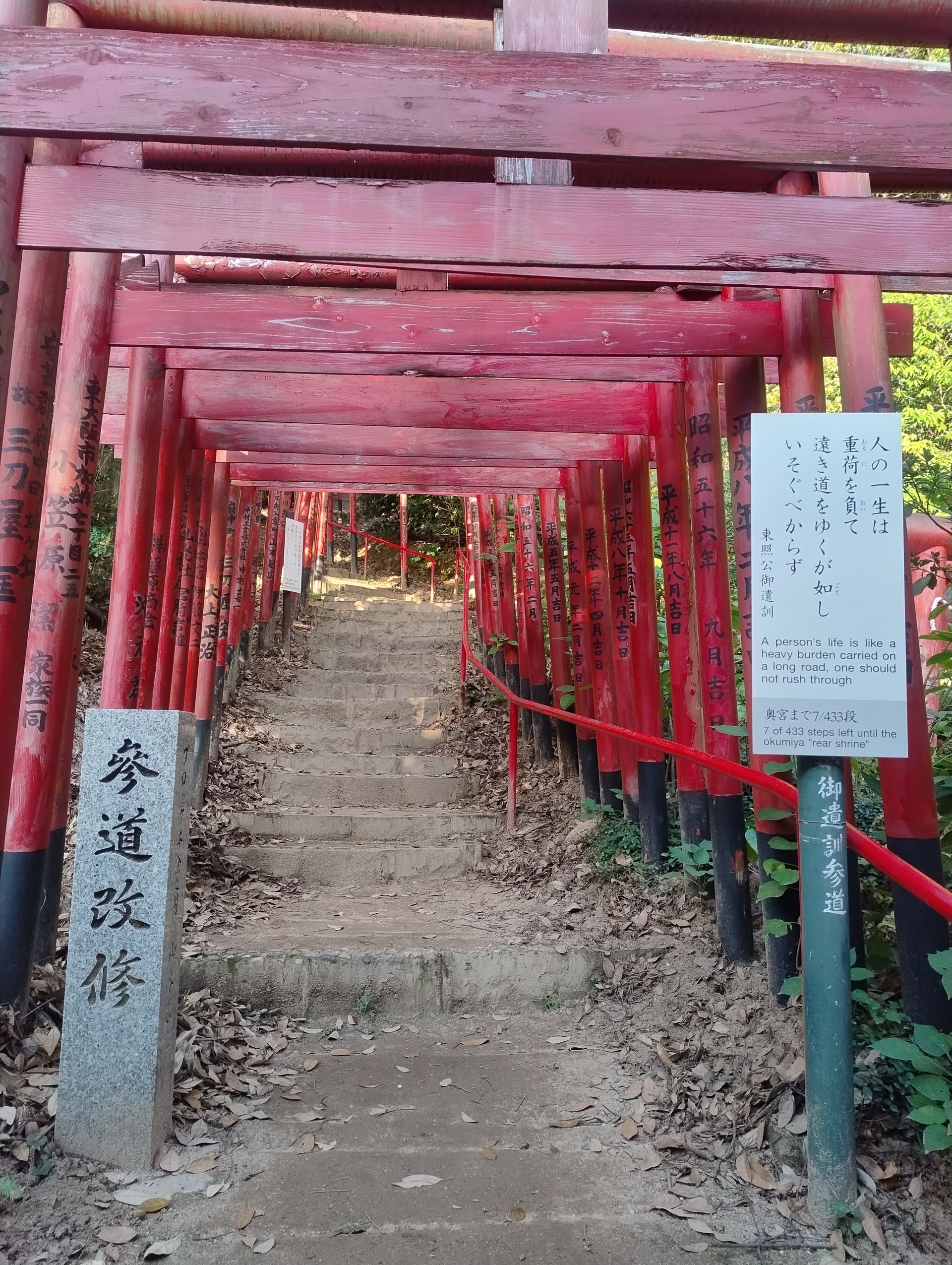
Alex, the German dropout hobo, is hitchhiking and camping on his way to Kyoto, passing through Hiroshima, he writes to me. The day before, he had set up his tent on the same hill between the shrine and a former WWII observation tower. At 3 am, he heard a noise. A bear or wild boar, he wasn't sure. After sunset at the Peace Stupa over the rooftops of the city, I walk back down the hundred red Shinto gates the steep steps toward civilization.