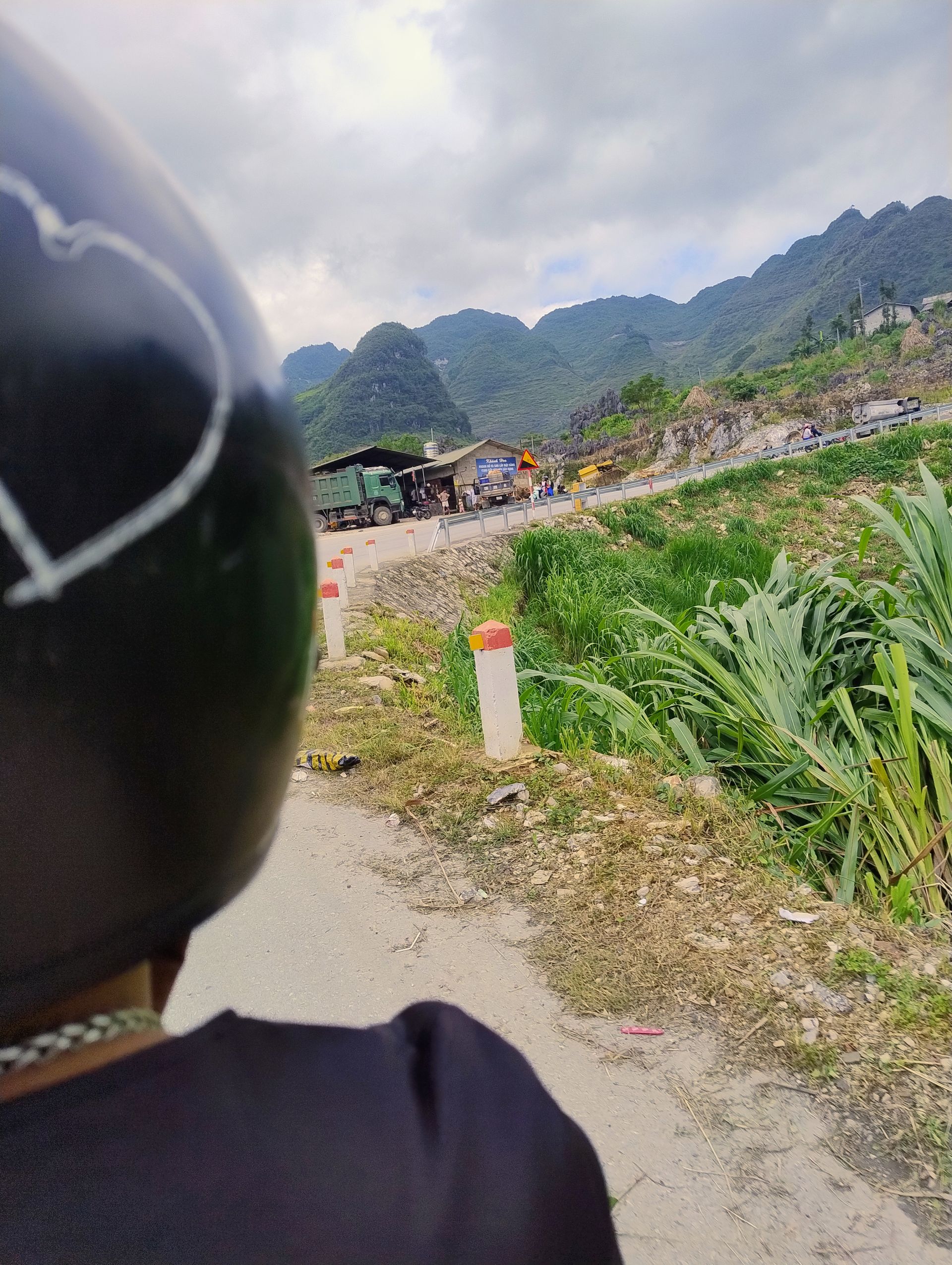
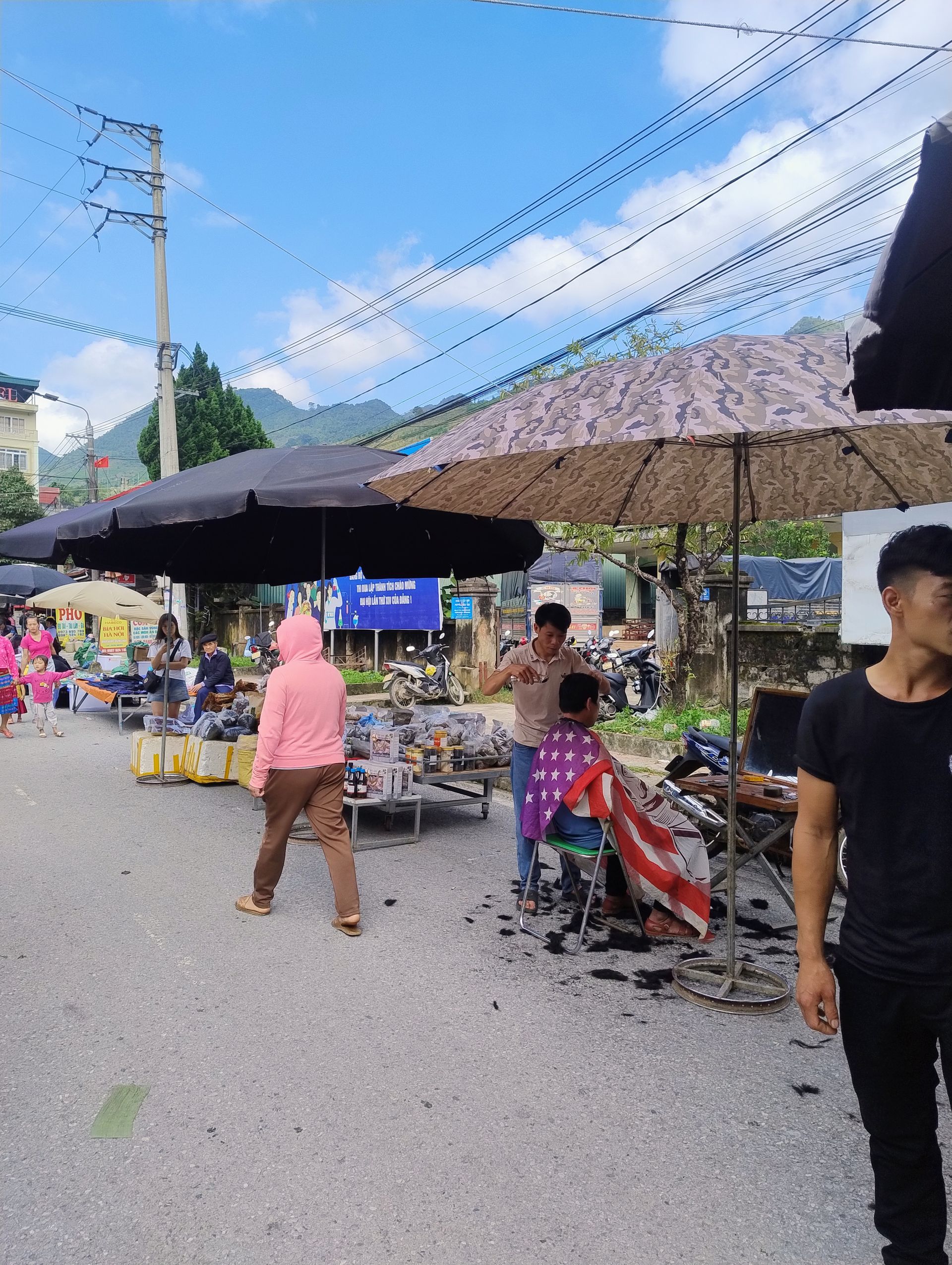
'Squeak, squeak, squeak.' Leo is walking ahead again in his Crocs, this time uphill. We take the motorcycle out of the barn and head to the Sunday market. It's just before 8 AM, and Leo explains to me that many of the villagers are already up by 4 AM to go to the market. They come from all around to do business in the town of Meo Vac, which has a population of 20,000, primarily to buy groceries for the week. Some don’t have motorcycles and the only way for them to get to the market is on foot. By 10 AM, the first vendors are already packing up their stalls, so people walk early in the dark with lanterns in hand from the mountains to the weekly market. Leo repeatedly points out children idling by the roadside holding some candies. They just bought those at the market. They walk up to 8 km back and forth over the tall mountains into the valley. If they weren’t alone, the children would easily get lost from their parents at the marketplace. The vast area is crowded with people. A colorful hustle and bustle. Not just food and live animals are sold, but also household goods and services. Between pig cages and vegetable stalls, boys are sitting and getting haircuts in front of small cracked mirrors. We buy some sweet pastries from the baker and fruits for the journey.
At the viewpoints, there’s always at least one café established. Groups of ten to fifteen people with their Easy Riders stop frequently. While they rest in deck chairs, the tourists line up at the balustrades to take pictures and drink beer and coffee while gazing into the valley. There are noticeably many young Brits here. The Ha Giang Loop is trending there right now.
Additionally, at maximum volume, K-pop and 2000s hits are booming from the speakers: 'Come on Barbie let's go party.' Sure, go ahead, but why in the northern Vietnamese mountains, Ken? The entire scene loses its charm for me because of this, and I often signal to Leo after just three to five minutes that we can move on.
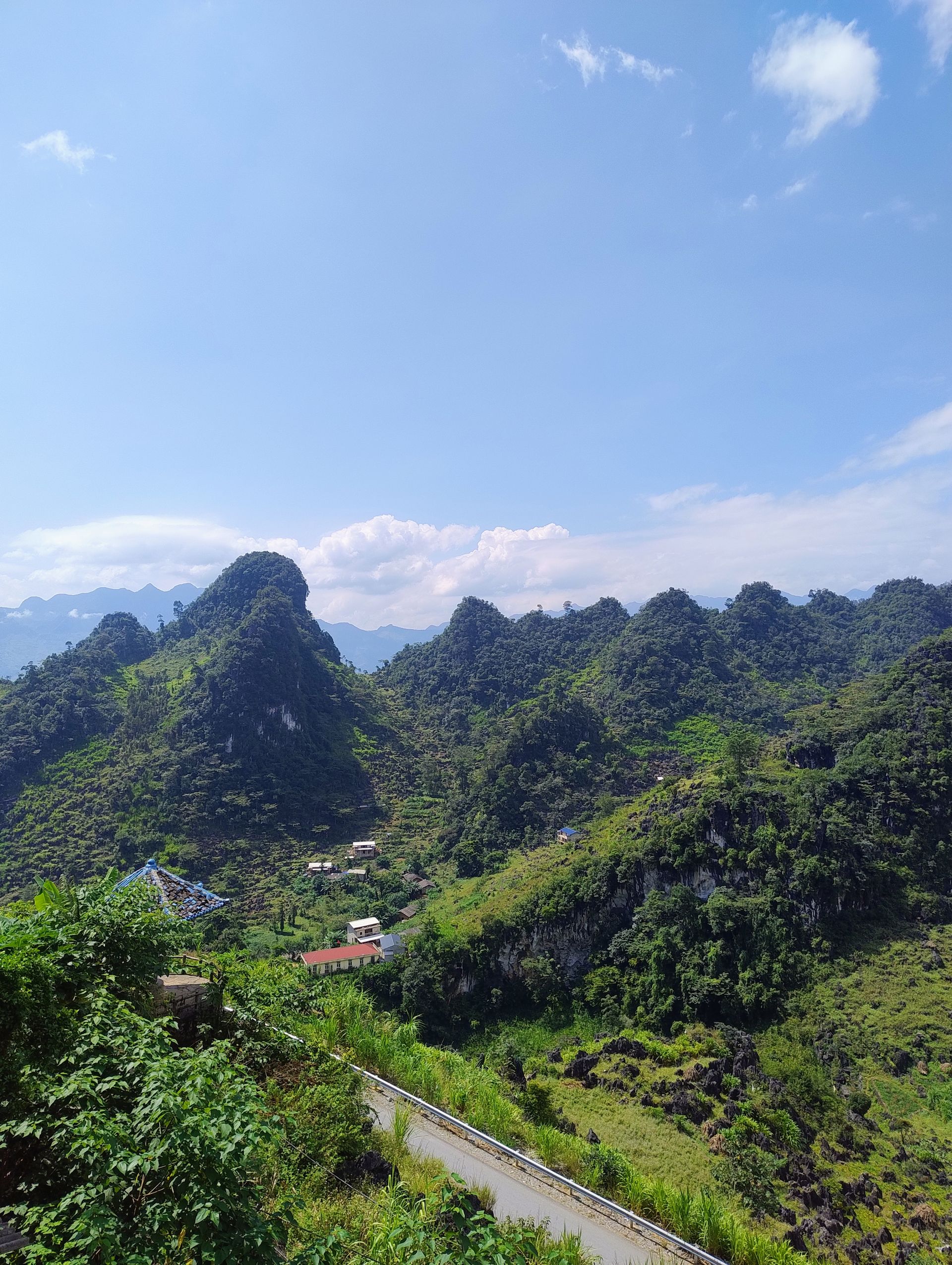
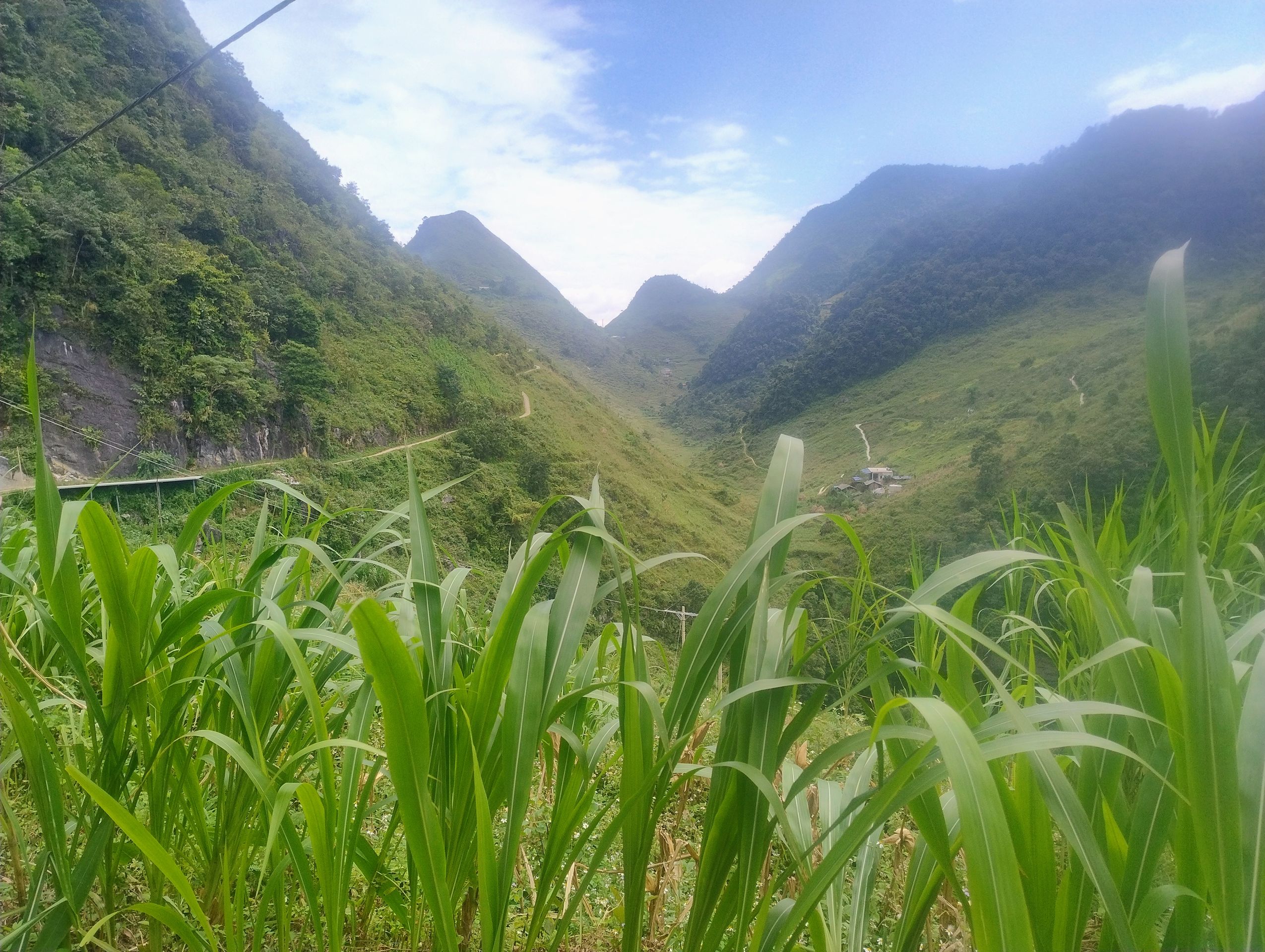
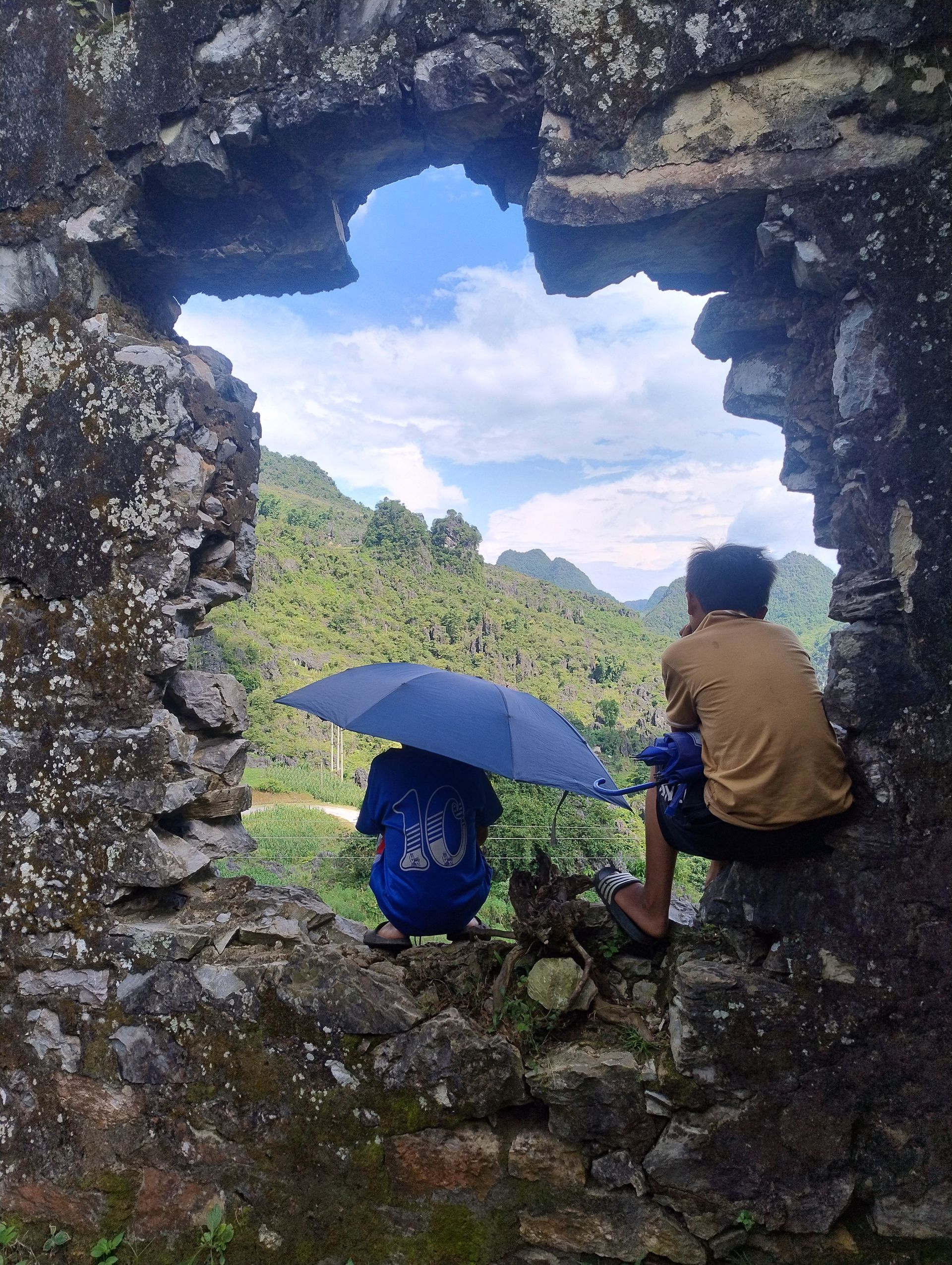
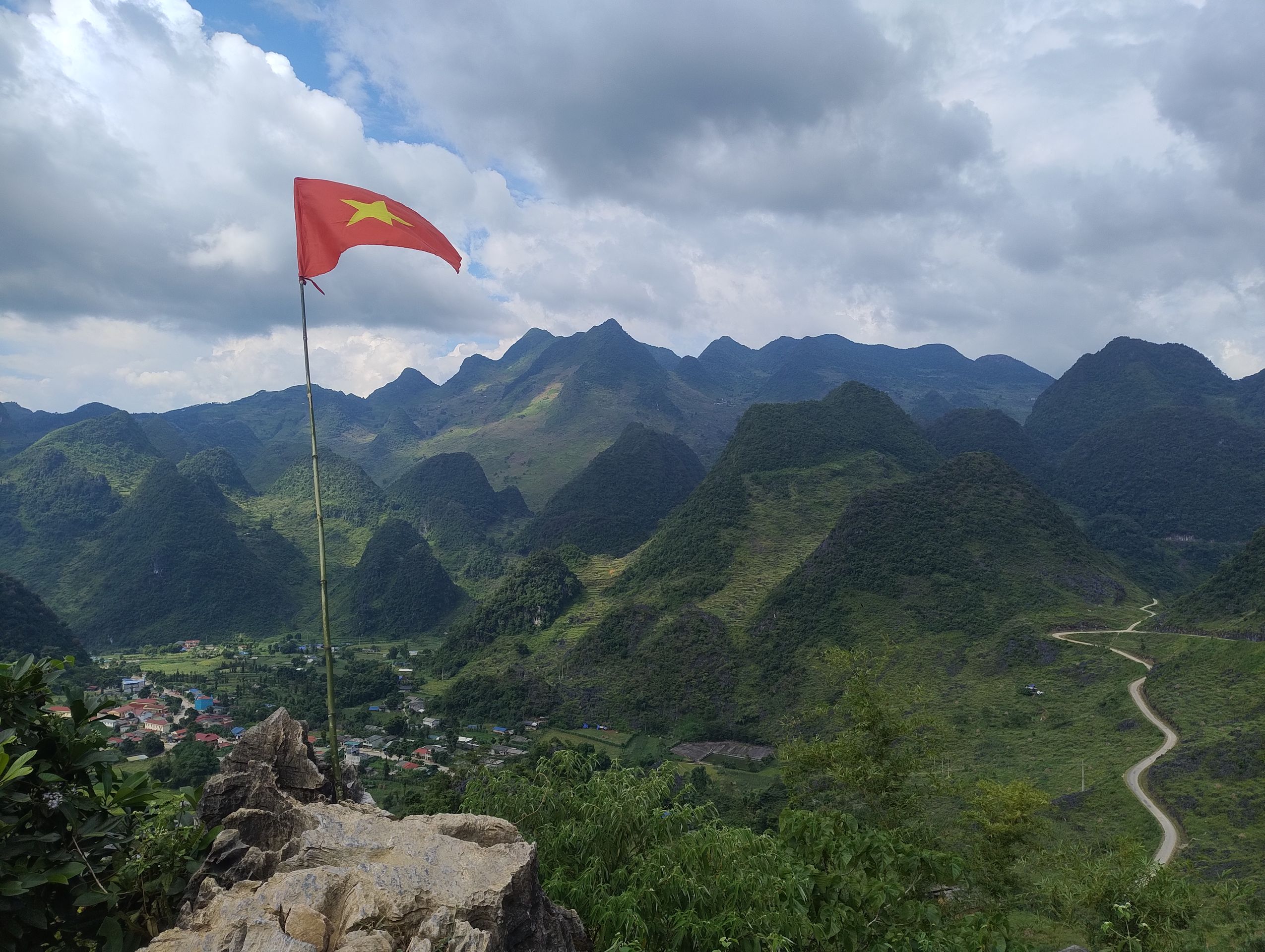
Leo seems to read my signals and makes a suggestion that I like. He would take a narrow side road up to a mountain, and I could follow him on foot. So we did, and I quickly realize I'm outside the usual Ha Giang route, as a few children widen their eyes upon seeing me and wave to me yelling 'Hello.' I enjoy the thirty-minute freedom hiking up the mountain and am amazed at the sight of a small remote valley dotted with houses and rice fields. At the top, Leo happily eats his instant noodles. He is surely pleased with the break, and we share the fruit we bought at the market that morning. Dragon fruit and small fruits that look and taste like lychees but, according to my driver, are not lychees.
Continuing on steep serpentine roads, I spot a Hmong man who is clearly swaying. Behind him is his wife, staring ahead in annoyance. 'Happy Water!' Leo laughs over his shoulder to me. So it seems to be true – in Coc Phuong National Park, the guide spoke somewhat disdainfully of the Hmong. He showed us a leaf from a tree. It’s toxic, and some depressed Hmong women use it to take their own lives. Many men from the ethnic minority are serious alcoholics who just lay lazily in the corner and have no work. What seemed to me like an advantage of the Vietnamese majority society appears to at least contain a kernel of truth, I think to myself. Another Hmong wobbles across the road and gives me a thumbs-up. The Hmong women, on the other hand, are almost always seen with a basket full of animal feed on their backs or bent over in the rice fields. Most of the children are out in groups without parents. Little girls carry their even younger siblings in their arms. We often drive through villages and streets, and I see only children sitting on the entrance steps. The adults are gone, free as a bird, lord of the flies.
In the evening, I meet again with the New Zealand-American group of young adults. Where were they today, I ask one in the group. Shrugging. They don’t know. A New Zealander, who overhears that I’m from Germany, excitedly tells me about her favorite board game: 'It's called Secret Hitler, it's so fun!'. 'Okay, and why are you telling *me* this?' I ask with a smile. 'Cause you're from Germany!' she exclaims with delight. Next to her, the Australian laughs and makes a gesture that means: 'She’s digging herself in deeper.' Well, at least not a 'fan' like the Nazi-Russian on Cham Island with 'Mein Kampf' quotes.
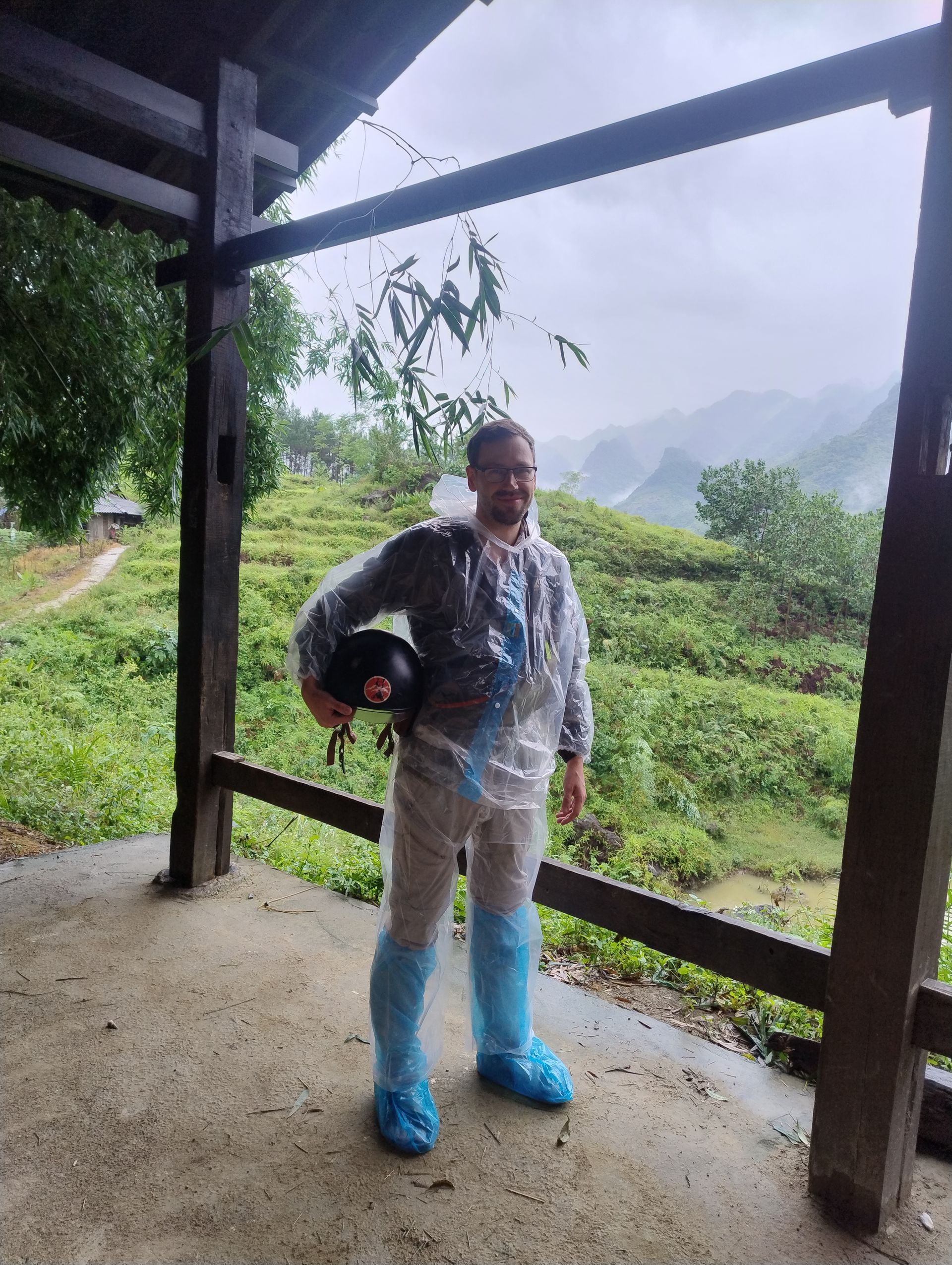
From my bungalow, I have a clear view of the Milky Way this time. From the surrounding villages, lights flicker sporadically; otherwise, there is no light pollution. The next morning, I’m awakened by heavy rain. Leo texts me that we can start later until the wind and rain settle down. But by 10 am, thick clouds are still in the sky, and we set off in our rainproof garbage bags. From Leo, the Slovak who is riding the Ha Giang Loop alongside another group, I hear via WhatsApp that they had to turn back due to a landslide and take a detour. The other Leo, the Vietnamese one, already knows. The group my Slovak friend is with is led by his uncle, he says. The Easy Riders apparently keep up-to-date. The day remains rainy, and Leo navigates through valleys using back roads with puddles, gravel, and potholes, making it hard to hold on to the back seat. The program for the day is limited to the return trip to Ha Giang, but my Easy Rider takes me to his home for lunch. I am happy that he combines business with pleasure. He has been on tour for ten consecutive days and has only seen his daughter for a few hours in between.
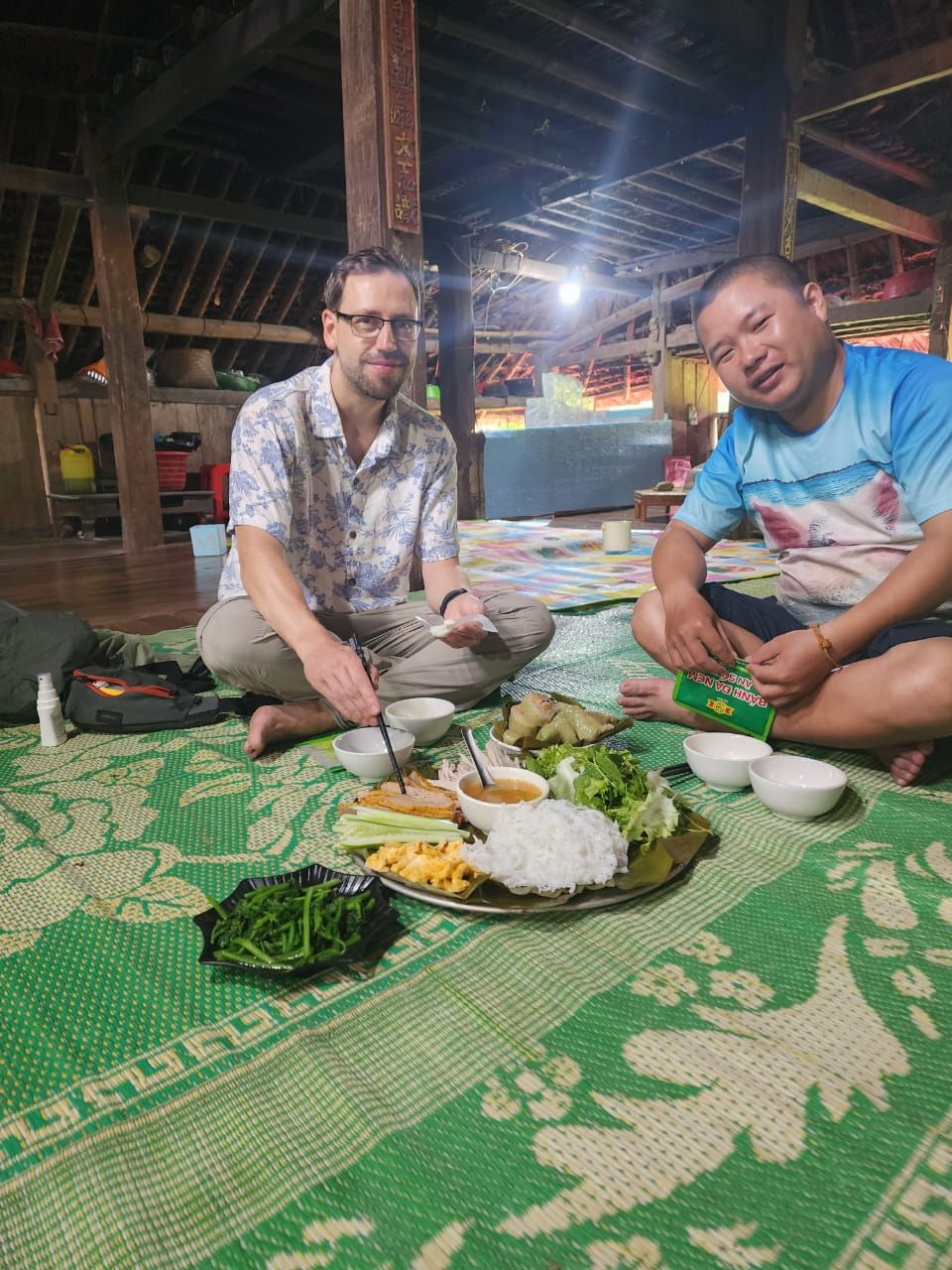
Leo's wife has prepared lunch. Rice paper with meat and vegetables to roll yourself. On the first floor of the wooden house is the living area, which consists of just one large room with a few sleeping niches. His grandfather is lying in a hammock, his grandmother is walking around and smiling at me. His father is taking care of Leo's daughter and his nephews, who are just home during the school break. Four generations under one roof. Family portraits typical for Southeast Asia hang on the walls and wooden pillars. In one corner, there’s a shrine set up with incense sticks. No Buddha statue or other depicted deities. They only remember their ancestors as Tay, Leo explains to me. His father built the house together with other villagers. When someone builds a house in the village, they support each other. Leo wants to build his own homestay soon and then offer various hikes and tours. If he designs them as personally and authentically as my trip with him, they will surely be successful, I tell Leo at farewell when he drops me off at the hotel.
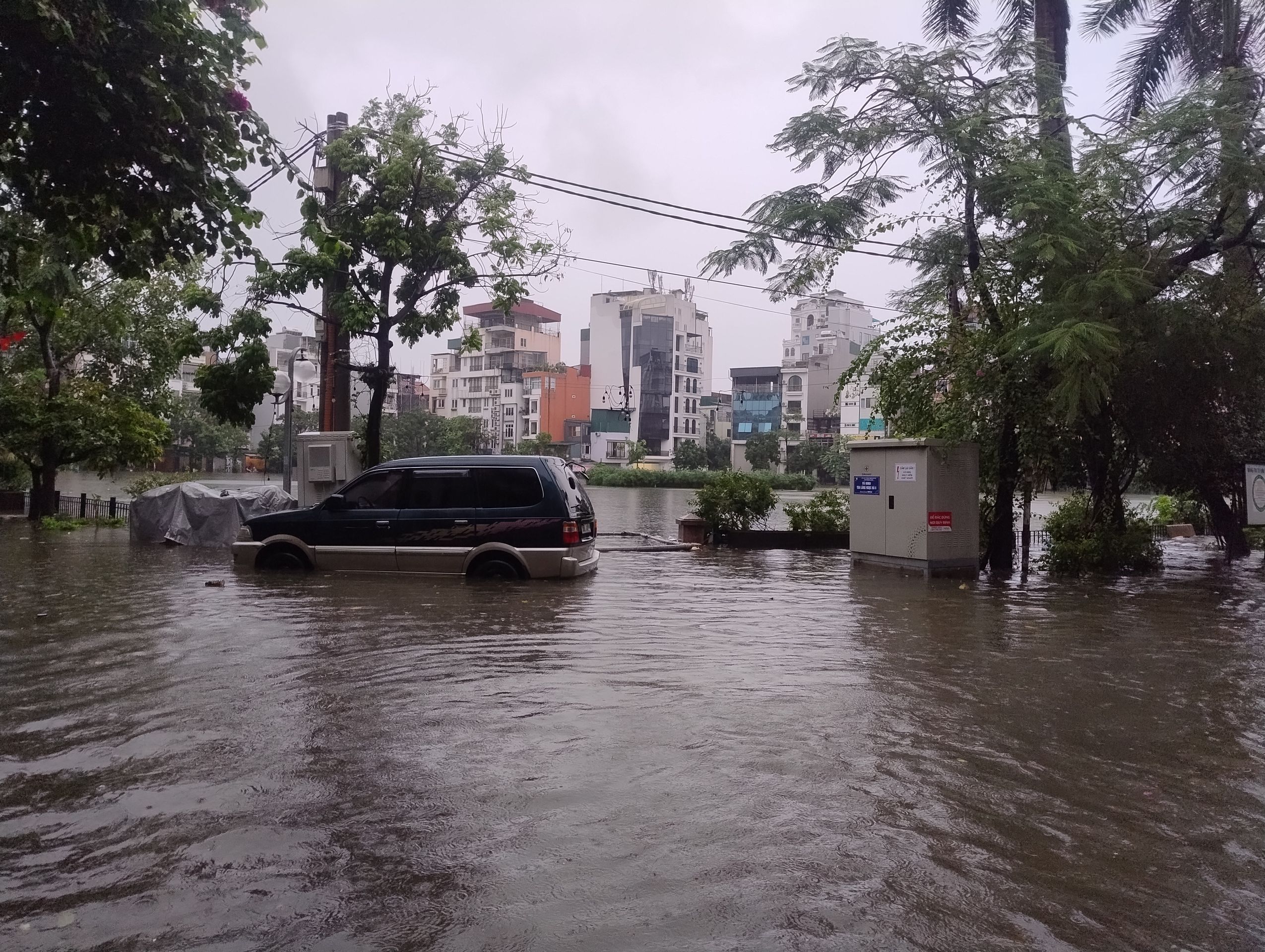
The second typhoon has now become a tropical depression but is directly over the capital. Back in Hanoi, I stare out of the hotel window. On the day before my departure, I can’t do much more. The heaviest rain I have seen so far in Southeast Asia began that morning. Unlike previous showers, it doesn’t stop until night falls. I learned from my driver in Crocs in Ha Giang and wade barefoot in sandals through the floods to the next restaurant. Up to my ankles in water on the way there, knee-deep on the way back.
The next day I can walk in the dry again. Everywhere, people are sweeping up the dirt from yesterday's flooding.
Before my Grab taxi picks me up for the airport, I order my last iced coffee with condensed milk. When I hand him my last dong, the café owner says: 'Thank you.' In German, of all languages. Coincidence or what gave me away? Often, there is no distinction made between the individual countries. Leo said that foreigners with white skin are all 'nguoi Tây' to Vietnamese.
Tam biet, goodbye, see you in seven years.