

«Templo de los monos» sin monos en Lopburi
Tras visitar Ayutthaya, en febrero de 2026 también visité Lopburi, una ciudad tailandesa que desempeñó un papel importante en la historia.
Publicado: 23.06.2026
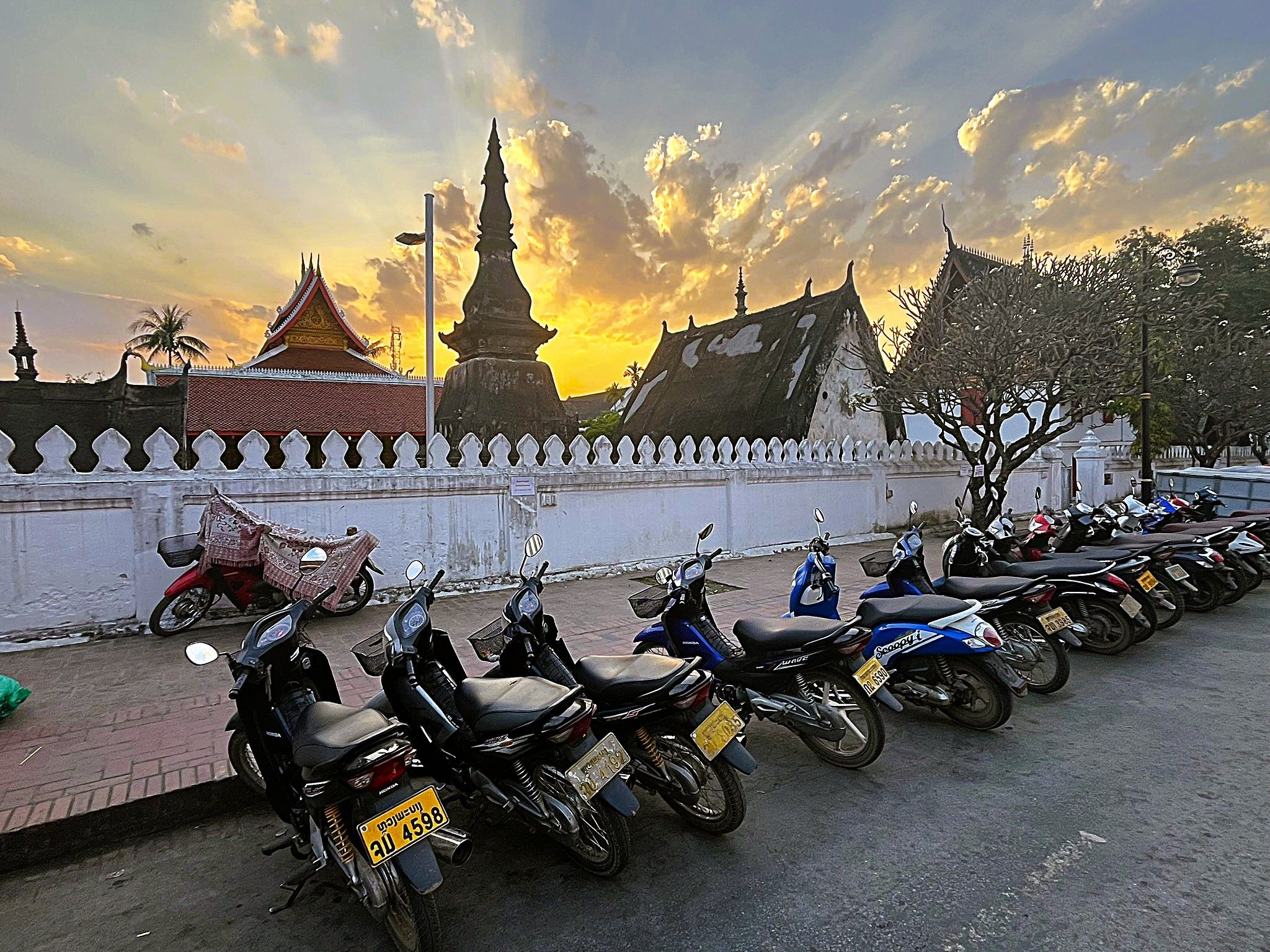
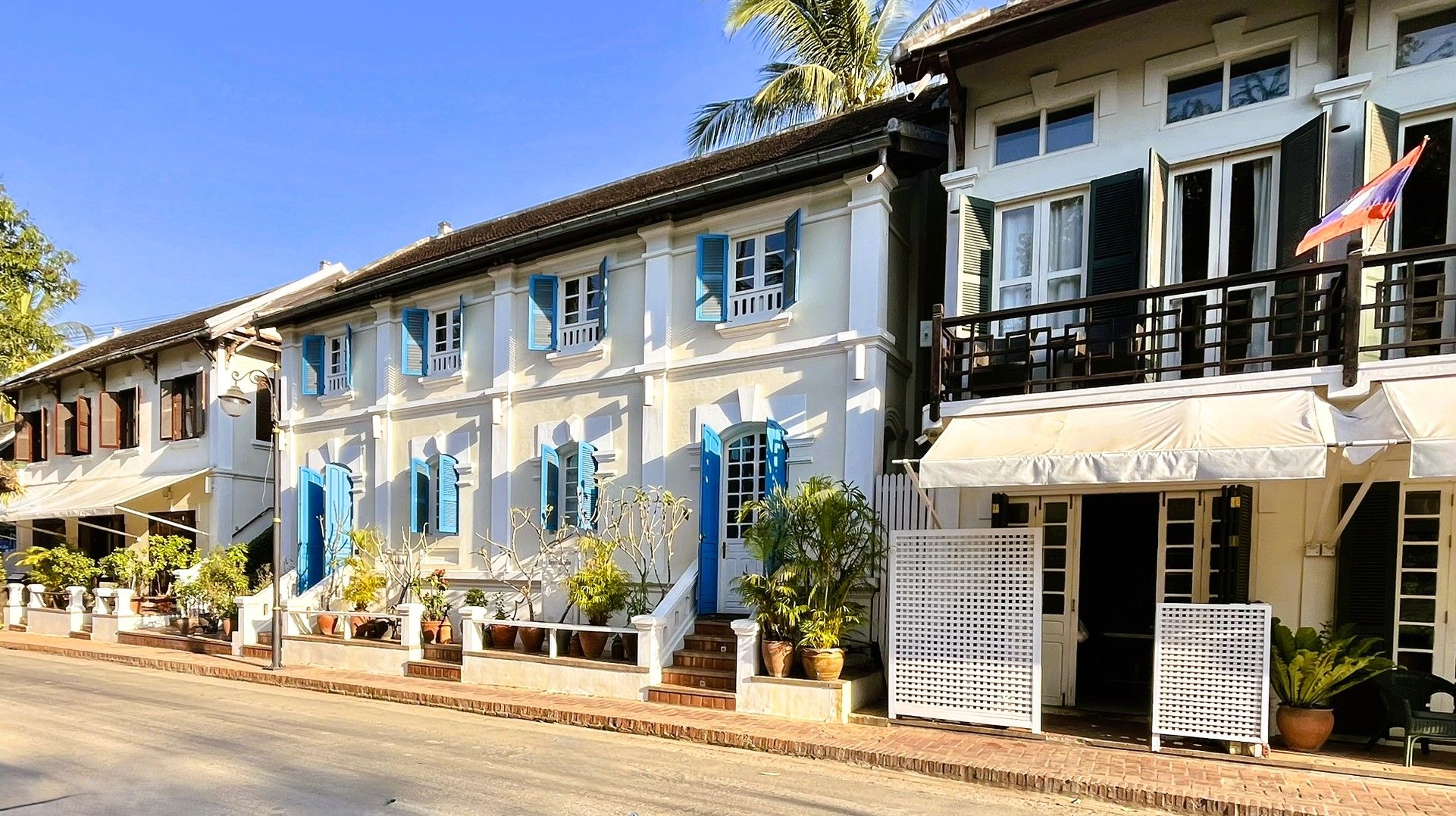
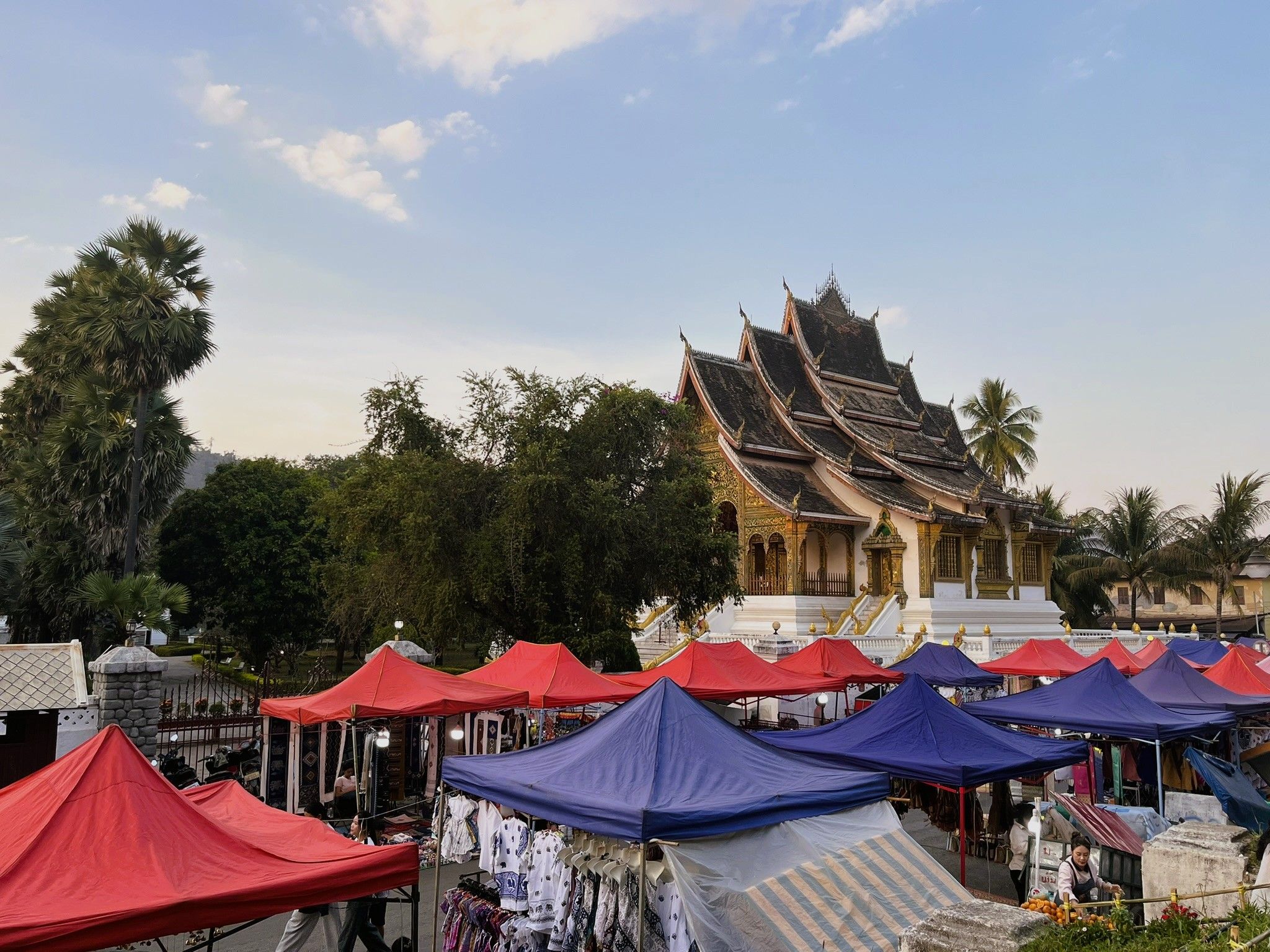
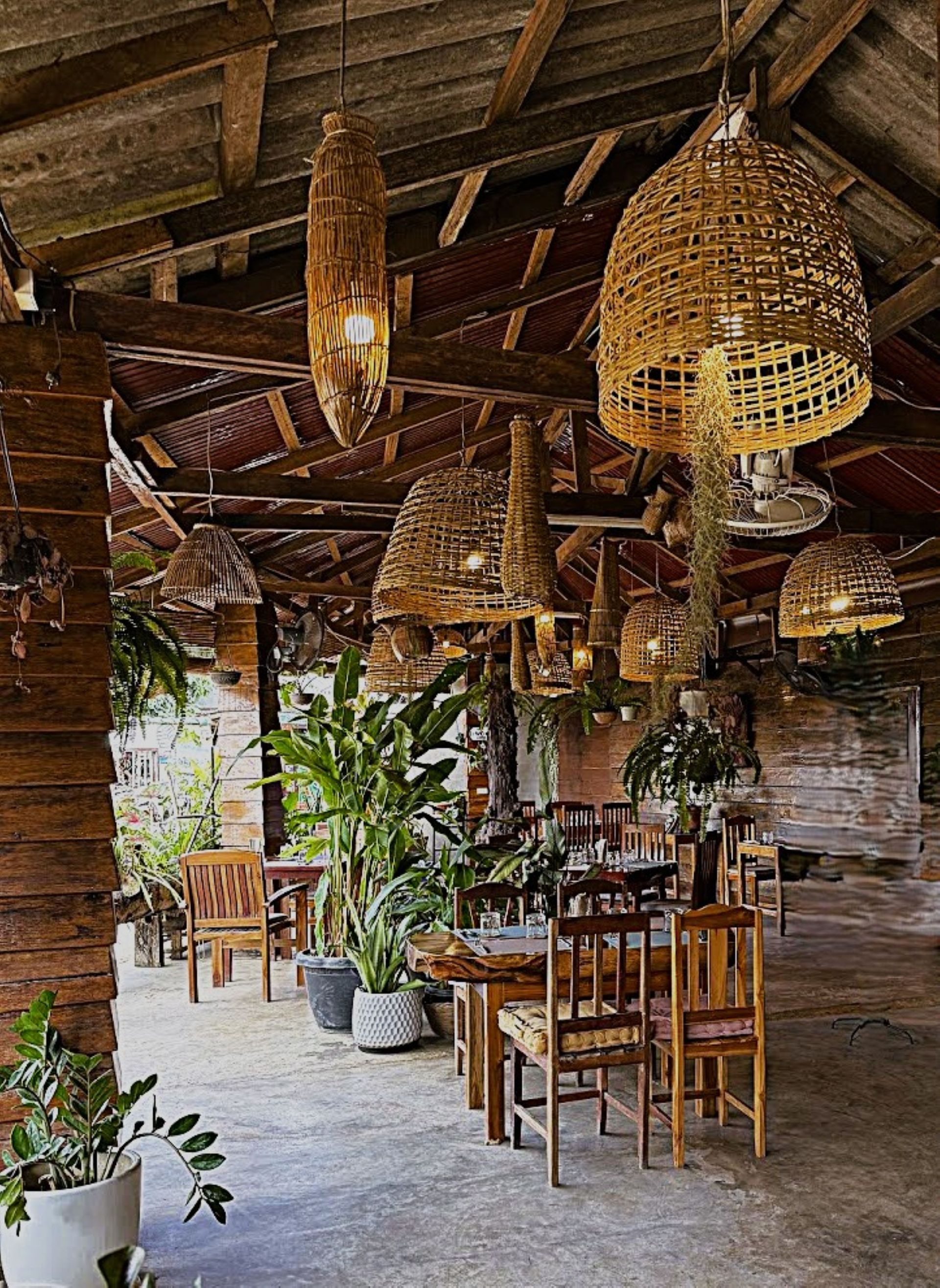
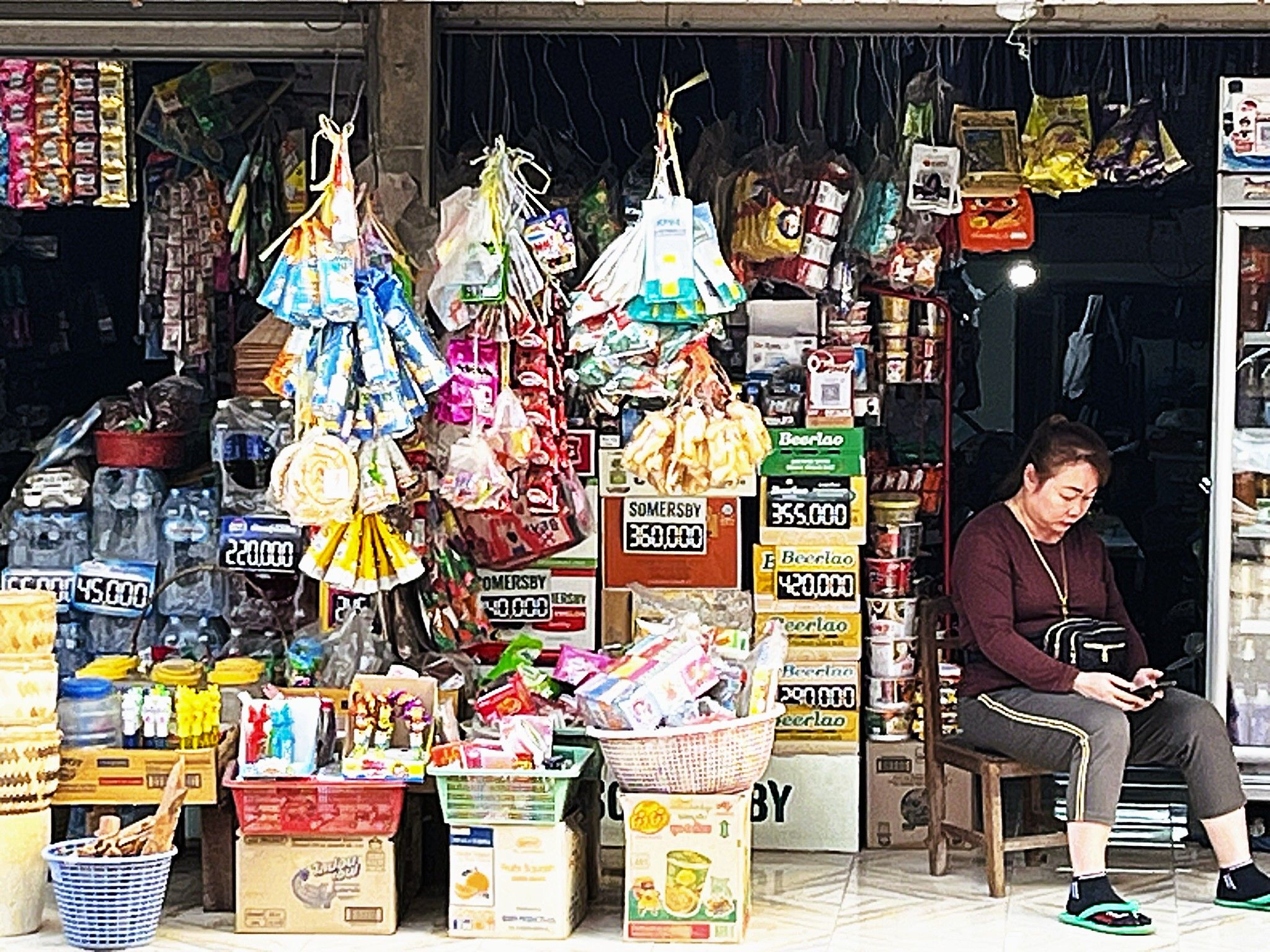
After the intensive royal program in Ayutthaya and Lopburi, I took the bus back to Bangkok, stayed there for two days, and on February 10, 2026, boarded an AirAsia Airbus A320 from Bangkok to Luang Prabang. Luang Prabang? That's right! I'm back in Laos. There are several reasons for this: Laos is a country that always manages to restore my peace of mind and put me in a state of carefree abandon. And in Laos, my travel budget can recover after I've overstretched it elsewhere with culinary escapades and billiard-bar binges.
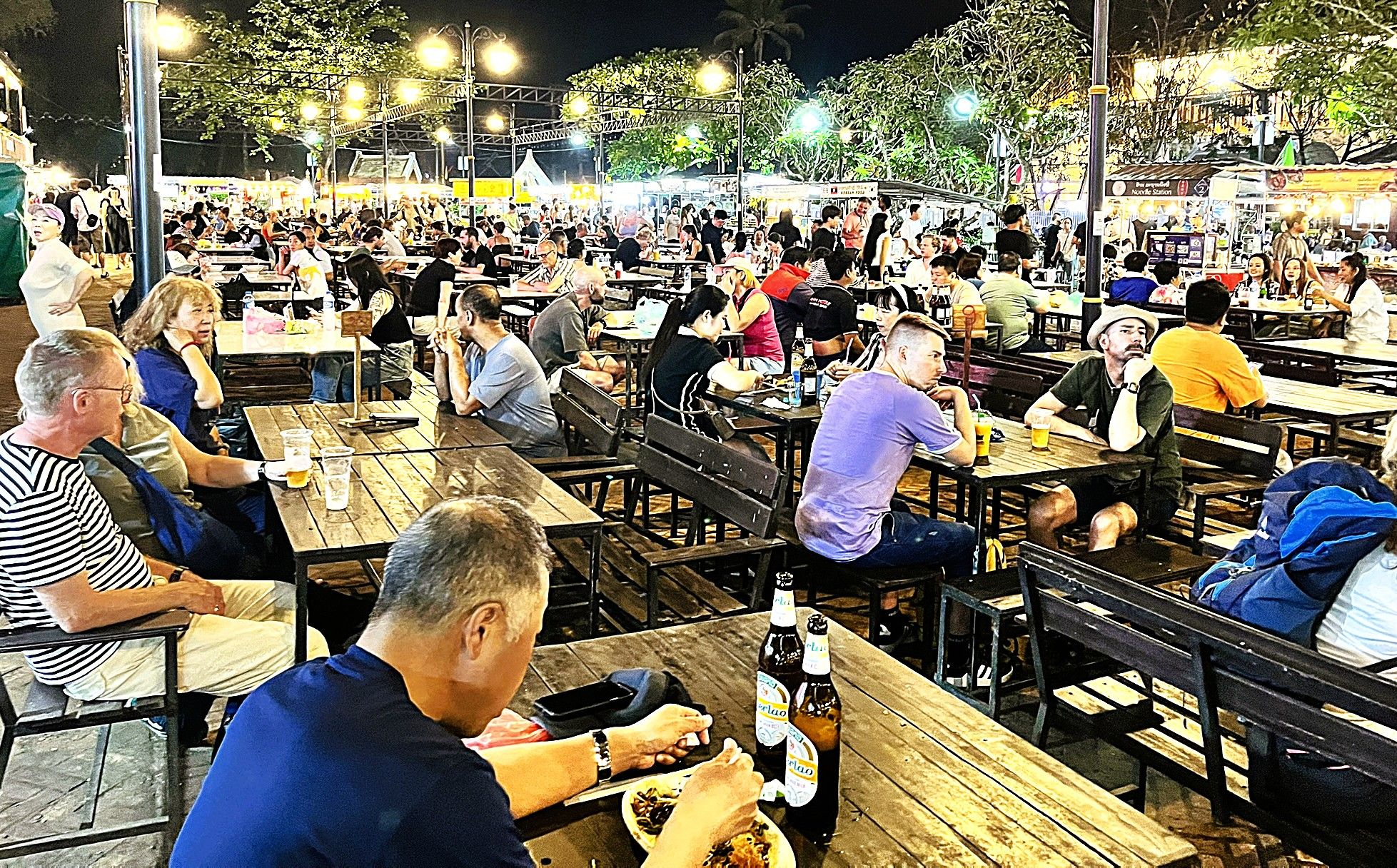
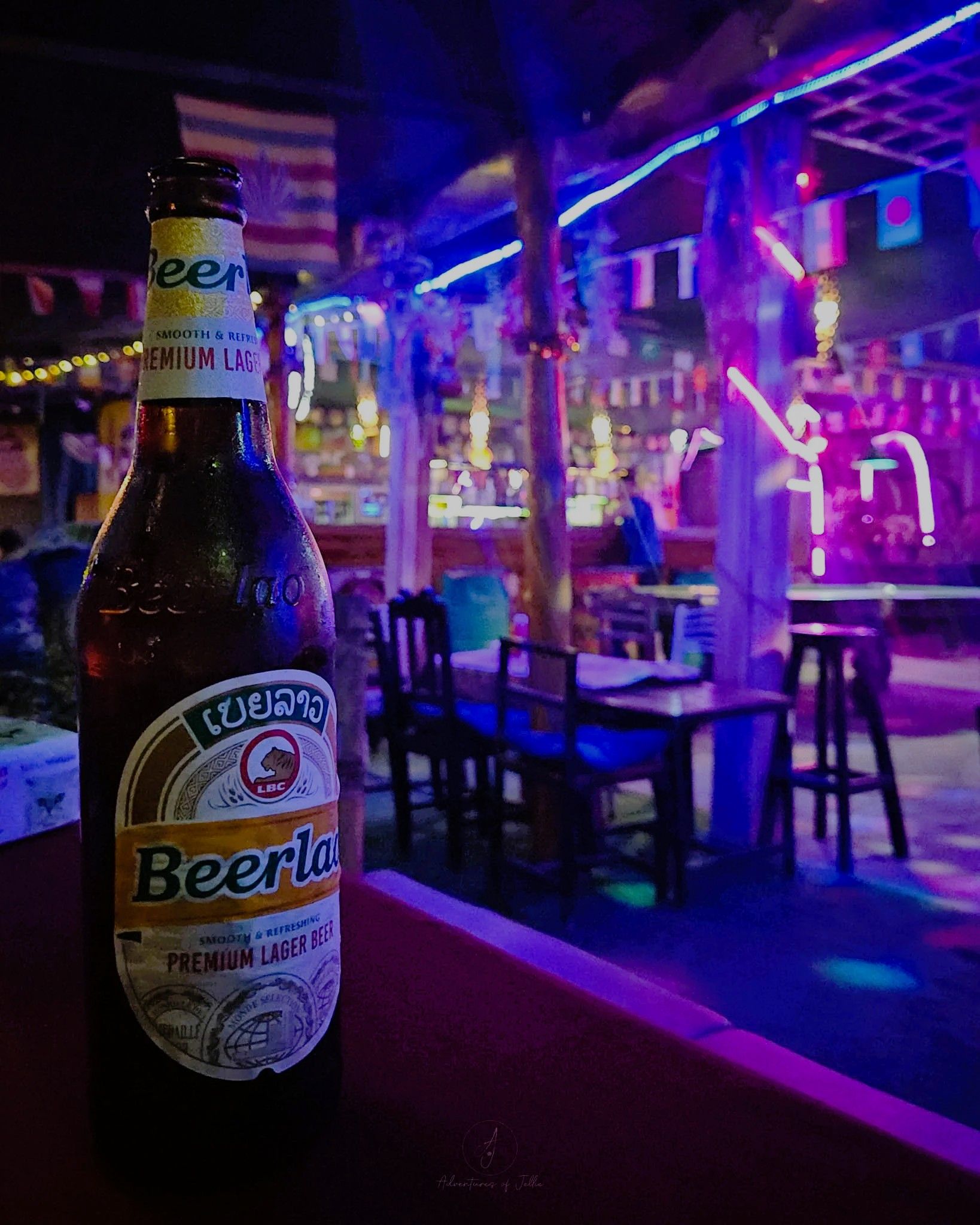
Laos is considered the most affordable country in Southeast Asia. For four or five euros, you can easily enjoy delicious Laotian food in the food courts and night markets, including a bottle or two of the local beer. While this may seem expensive at first glance—20,000 kip for a large bottle—at an exchange rate of 0.00004 to the euro, that's only 80 cents.
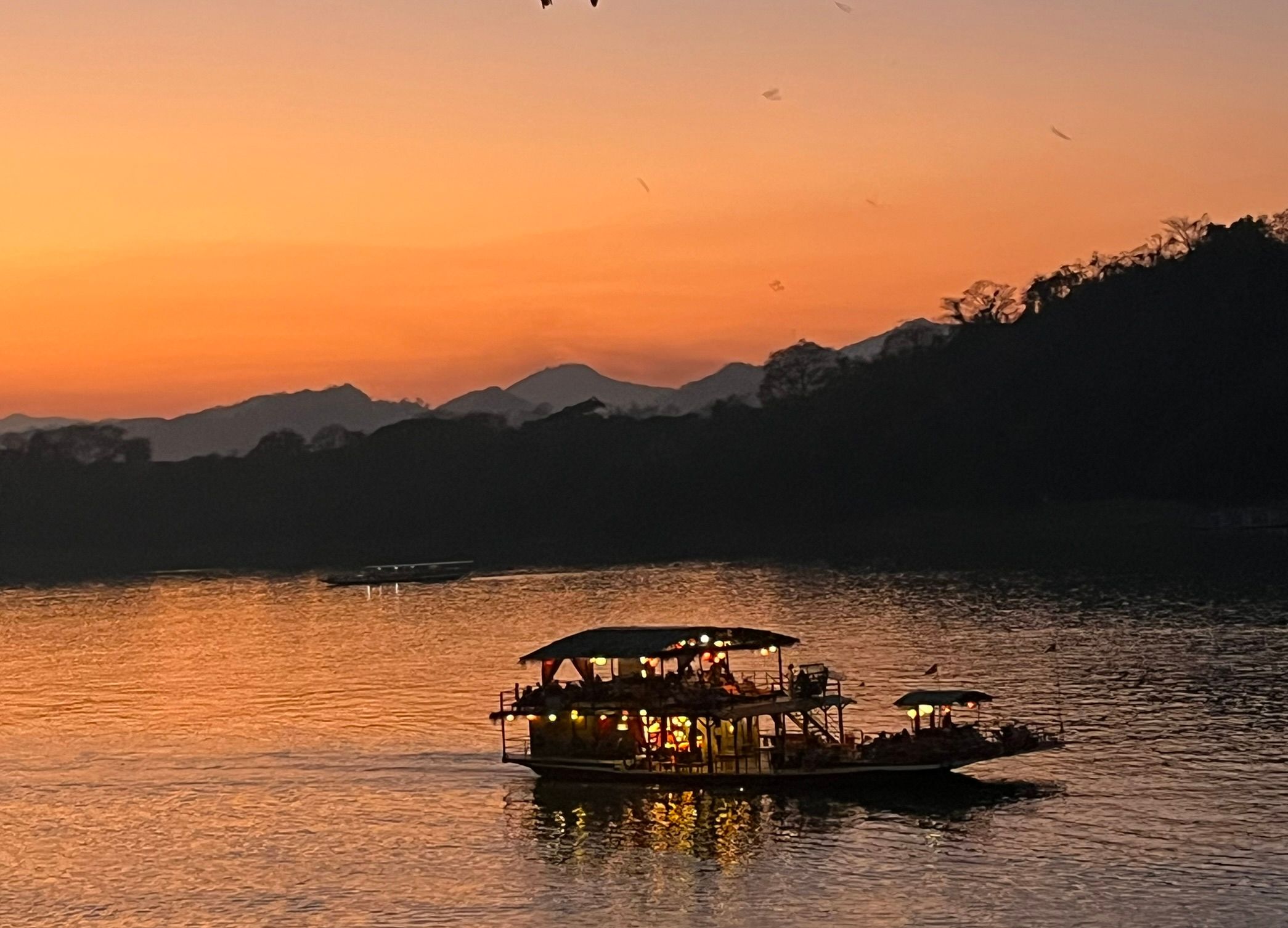
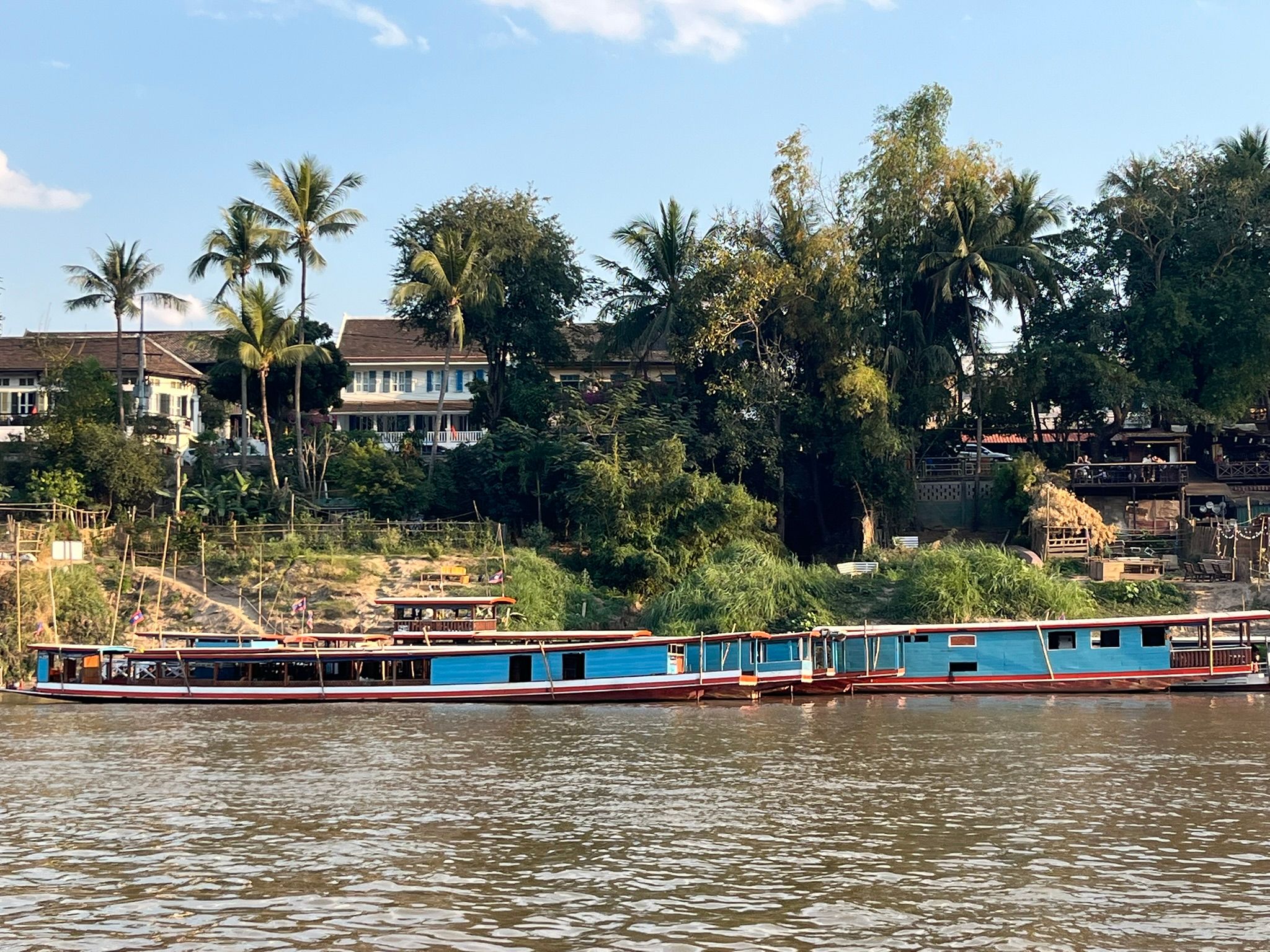
For 26 euros a night, I found a hotel right in the heart of the old town, the very creatively named "Rainforest Lodge"—a simple guesthouse, by no means a lodge, and no rainforest in sight. For a week, I wandered the streets of the UNESCO World Heritage city: long walks along the Mekong and its tributary, the Nam Khan, during the day; boat trips; visits to temples and the former royal palace; professional Thai massages, much cheaper than in Thailand itself; and time spent in coffee houses with espresso and croissants (a relic of the French colonial era), reading the "Neue Zürcher Zeitung," the "New York Times," and the "Economist" on my phone and jotting down travel notes.
Doing nothing and no routine
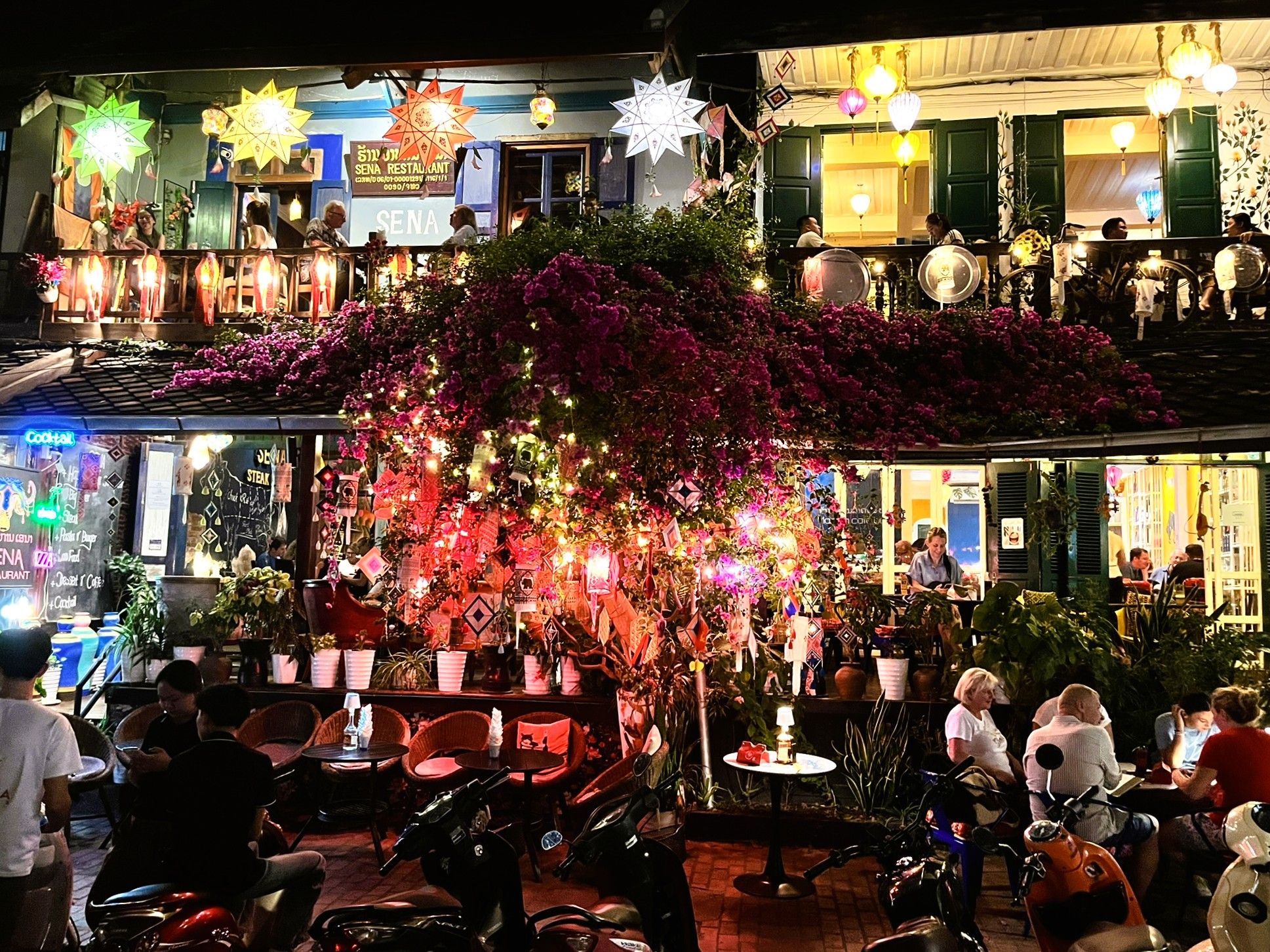
An evening stroll through the night market; a Laotian meal with a Beerlao in the food court at the market's exit; perhaps a performance of traditional dances; later in the evening, an ice cream at Gelato del Lao on the old town's main street, Sisvangvong Road, and a nightcap in one of the picturesque, brightly lit, and lavishly decorated bars on the same street. I won't repeat the sights of the former royal city here; I described them in my blog post "Royal Reminiscences in Luang Prabang" from March 14, 2025.
From first grade until retirement, we are trained for roughly sixty years to focus on performance, efficiency, and optimization. This existence is sometimes compared to a hamster wheel, in which one pedals and pedals but never reaches a destination.
However, I must confess that my job as a journalist never bored me for a single minute of my working life, that no pressure was needed to motivate me to perform, and that the bullying by malicious colleagues and, at certain times, also by people who were hierarchically subordinate to me, was kept within limits.
Nevertheless, it feels like a rebellious act of liberation, not having to do anything, not having to pursue any specific goals, not having a daily routine, and not being accountable to anyone.
On the train to Vang Vieng
After a week of doing nothing in Luang Prabang, I traveled on February 17, 2026, to Vang Vieng, halfway to Vientiane, for another week of doing nothing. I've already covered this destination in my blog post "Vang Vieng – Backpacker's Paradise" from March 21, 2025. I booked a first-class train ticket for the approximately one-and-a-half-hour journey.
There was also a modern high-speed train on the Kunming to Vientiane route, built by the Chinese, but it was fully booked that day. The road, on the other hand, would have been far too poor in places, and the arduous bus journey would have taken four to five hours.
What I got, however, wasn't the expected first-class seat, but a place in the sleeper car of the train that had come from China and was packed to the brim with exhausted, unwashed Chinese travelers. The space reserved for me, or rather the bed, was in a four-berth compartment where a family with a considerable amount of luggage had already settled in.
Since no one spoke a word of English, and I didn't speak Mandarin either, a wordless discussion ensued, using gestures and signs. This was only ended by a conductor who, while also not speaking English, declared my ticket valid and my claim to the seat legitimate. (At least, that's what I assume, because the family then vacated the one seat intended for me, albeit not exactly enthusiastically.)
Oversized train stations
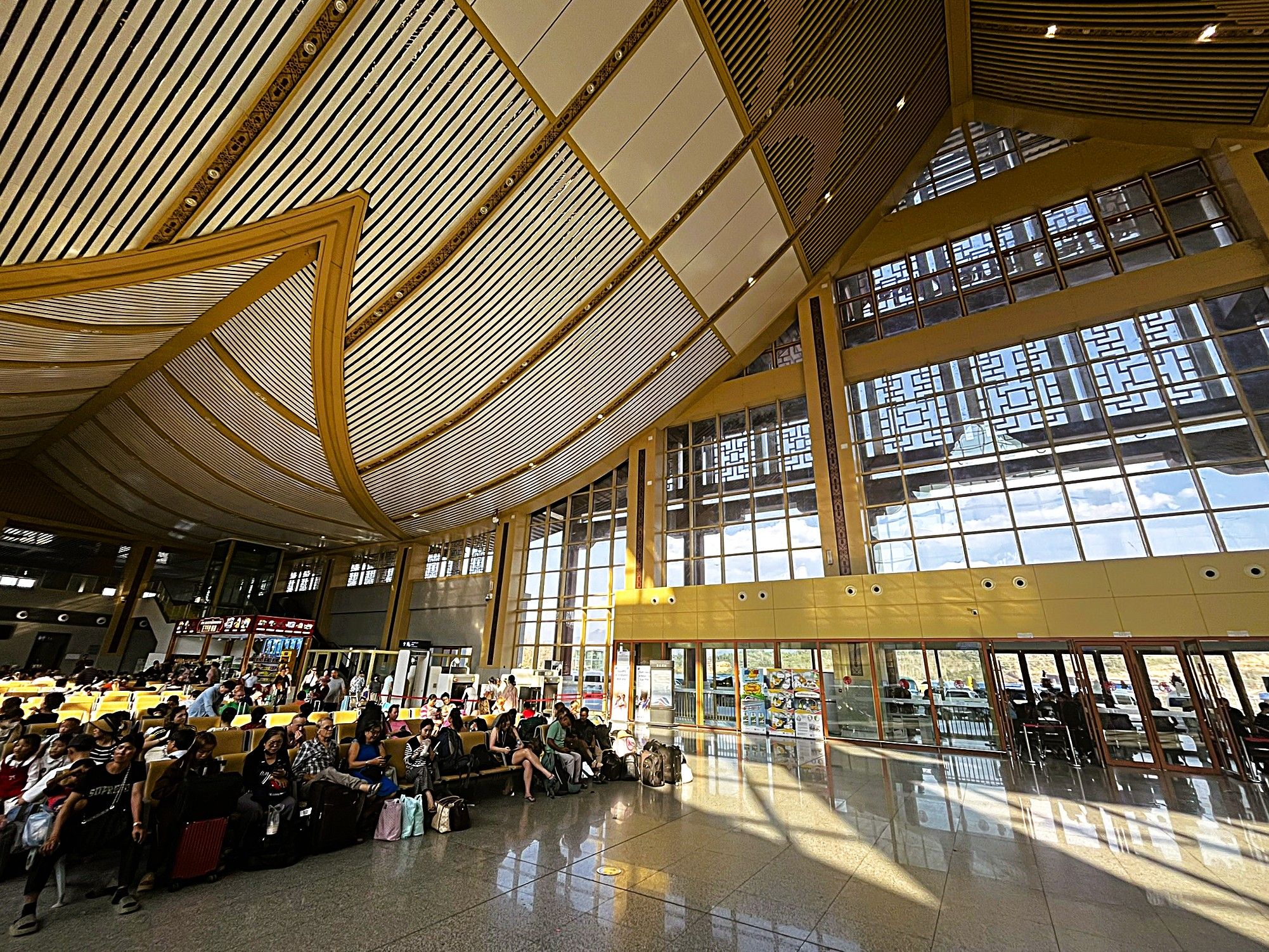
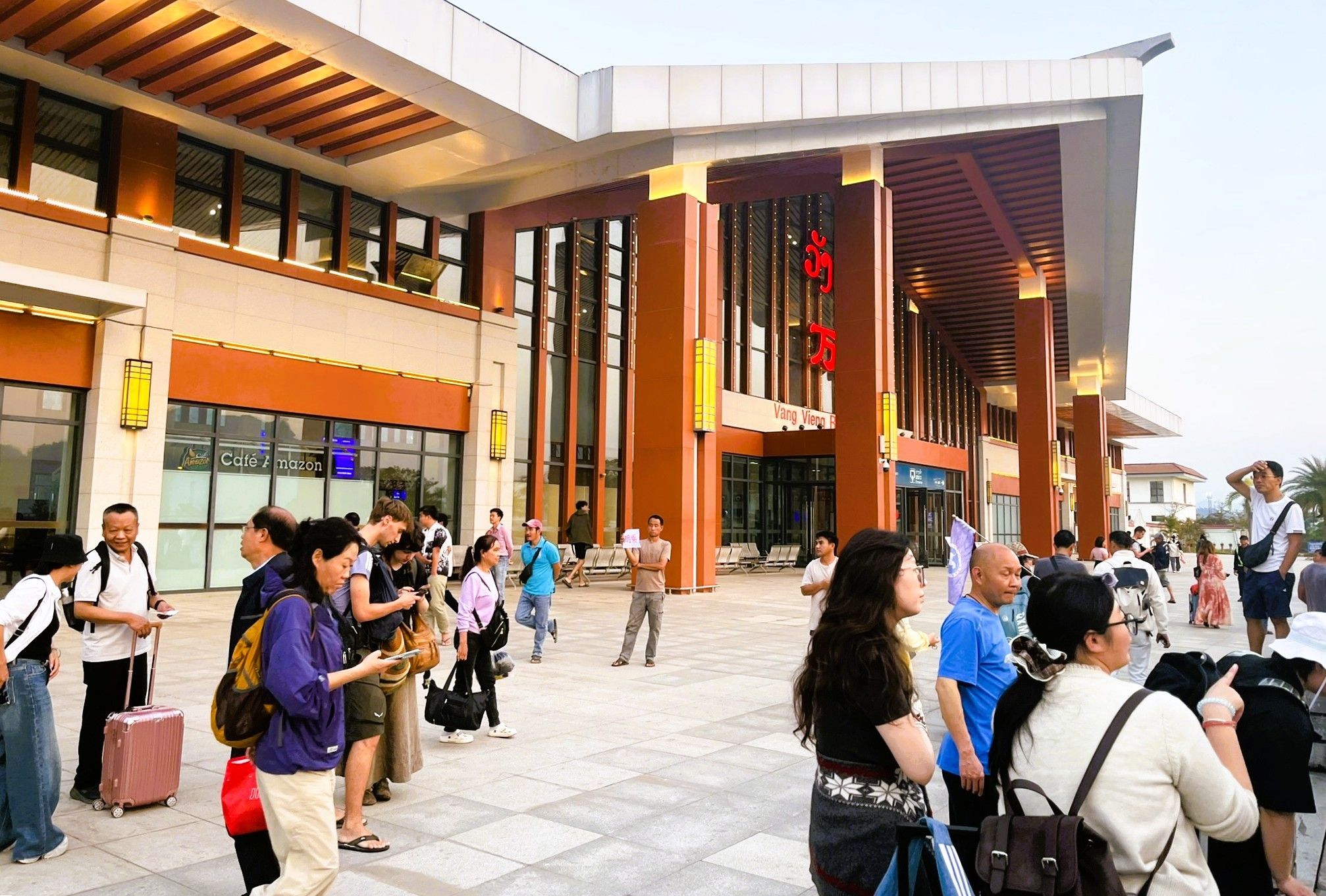
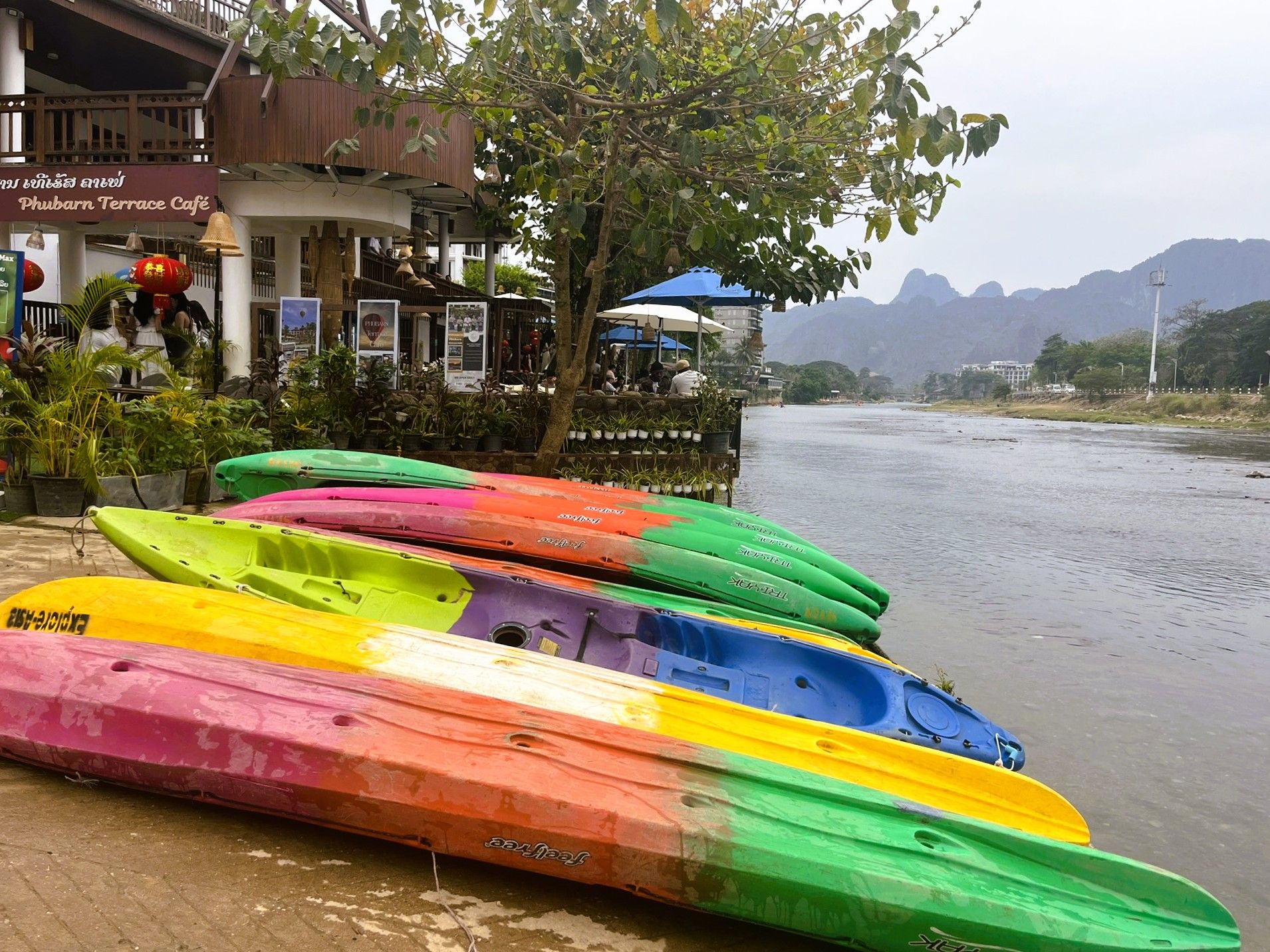
The train stations in Luang Prabang and Vang Vieng resemble modern cathedrals, typically Chinese, as I remembered from a train journey through China at the end of 2019. The one in Vang Vieng is far too large and immaculate for the rather shabby and dusty resort town. Vang Vieng ranks a clear category below Luang Prabang: no UNESCO World Heritage Site, no Mekong River, only the Nam Song River, albeit nestled in a fantastic landscape.
Everything in Vang Vieng is also a bit cheaper than in Luang Prabang. My accommodation, for example, the Bountang Riverside Hotel, costs €23 per night including breakfast (which wasn't offered at the Rainforest Lodge in Luang Prabang). However, the breakfast is so meager that I skip it and eat at the surrounding restaurants or food stalls.
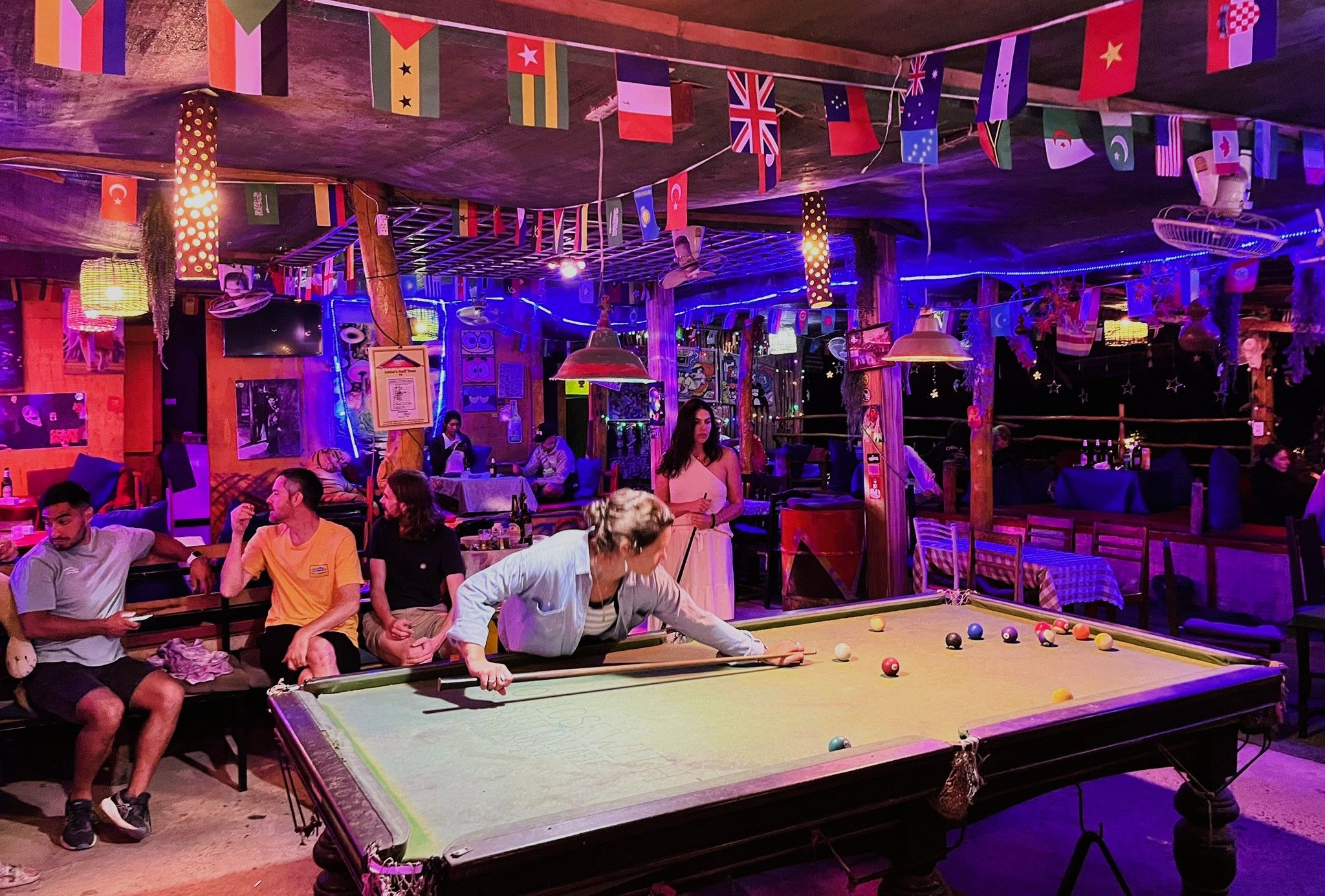
The days in Vang Vieng pass by just as leisurely as those in Luang Prabang, blending gently into one another without any noteworthy events. With one exception, there are no temples or royal palaces to visit. Instead, every evening I play pool in the marijuana haze of the Jaidee Bar or the neighboring Full Moon Bar on River Road, the backpacker promenade.
Right at the top of the street, just around the corner from my hotel, a married couple—she Laotian, he French—run one of the best restaurants in town, the "Golden Bamboo." The wife worked as a chef in France for twenty years; her cuisine, a fusion of Asian and European dishes, is outstanding. Dining there every night would be beyond my budget, but I still treat myself to a meal at this elegant establishment a couple of times instead of eating at the night market.
From Vang Vieng to Vientiane, another 125 km south, it's only an hour and a half by car on much better roads than further north. Instead of lugging my luggage to the train station, I'll be picked up from my hotel by a minibus on February 24, 2026, and driven comfortably to the capital.
Lost face
The habit of bus drivers combining steering with endless chatter on their mobile phones had annoyed me several times before. This one took it to the extreme: driving, talking on the phone, and simultaneously checking text messages on a second device. Every guidebook warns European tourists never to raise their voices in Asia: if you lose your temper, you lose face. Shortly before Vientiane, I lost mine: when the driver, distracted by two mobile phones, had to slam on a brakes to avoid crashing into a car in front of us, I snapped at him to put the damn phones away and concentrate on the road.
An awkward silence fell over the bus, not because of the idiotic driver, but because of the loud foreigner. The effect was exactly the opposite of what was intended: the guy devoted himself with twice the fervor to his dual telephone and text-based communication. I was extremely relieved when we finally arrived safely in Vientiane and I had a tuk-tuk take me to the Hotel COSÍ.