
Relaxing in Laos
After the exciting days in Ayutthaya and Lopburi, I flew back to Laos in mid-February 2026 - for dolce far niente and to conserve my travel budget.
Published: 25.06.2026
I have been to Vientiane, the capital of Laos, several times before, but always just for a layover or at most one night. Vientiane is considered boring and sleepy. However, this time I wanted to learn more and planned for two days.
I arrived on February 24, 2026, on a minibus from Vang Vieng, and the first thing that caught my eye was the skyline: Vientiane, located on the north bank of the Mekong, has spread more horizontally than vertically; there are only a few skyscrapers here; no comparison to Bangkok, Kuala Lumpur, Shanghai, or Saigon. Although Laos borders the People's Republic of China in the north and is also governed under a communist regime, Chinese investors seem to have shown less interest here than in other Southeast Asian countries.
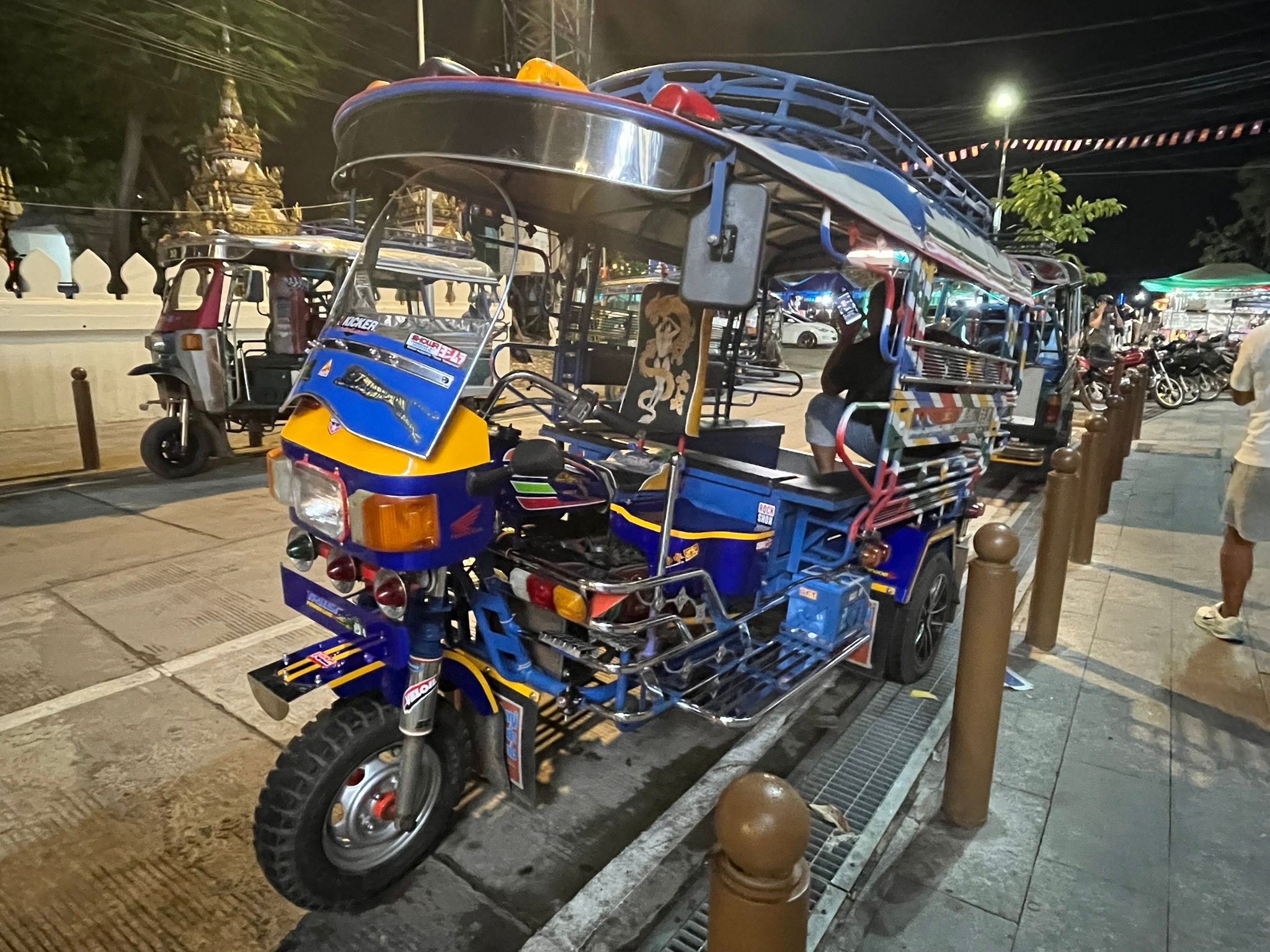
Certain neighborhoods in Vientiane still have a distinctly rural feel, resembling a collection of lined-up villages. In between are streets lined with French colonial buildings in various stages of decay and Buddhist temple complexes. Traffic flows rather lazily. Like almost everywhere in Southeast Asia, motorbikes dominate; tuk-tuks buzz through the streets.
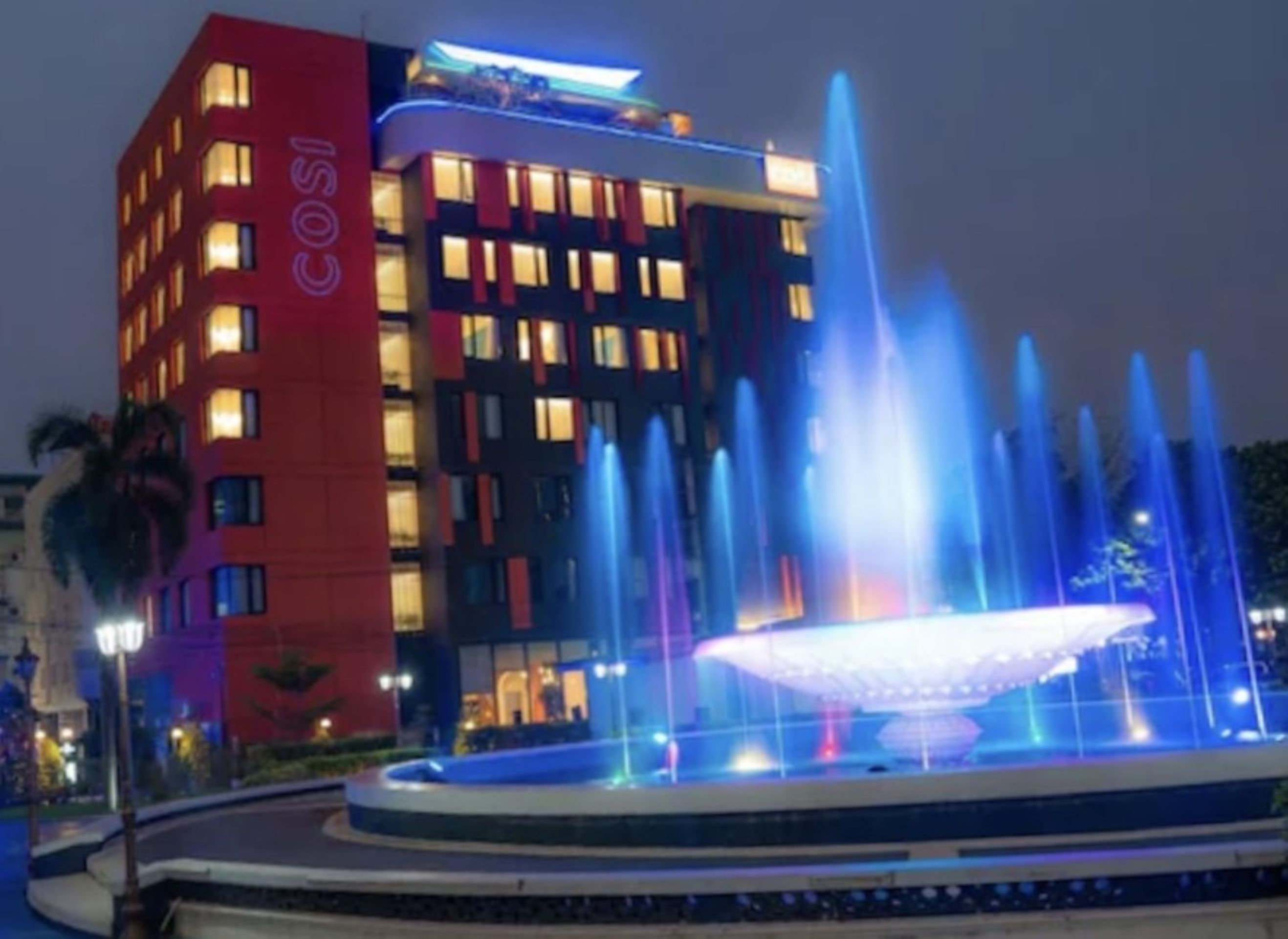
I arrived in the early afternoon, during the hottest part of the day, around 34 degrees Celsius, and first cooled off at my hotel, COSÍ. I chose this accommodation because, firstly, it is centrally located, secondly, it is relatively affordable at around 33 euros per night, and thirdly, it has received very good online reviews. As a greying person in my seventies, I definitely do not belong to the target audience – the hotel chain caters to lifestyle-oriented travelers, digital nomads, and generally the younger generation. I should much rather be staying in a Centara Hotel & Resort, the parent company of COSÍ Hotels (which I actually used to do), but those are far above my travel budget.
Centara Hotels belong, just to mention, to the Central Group, a powerful, dominant Thai corporate group owned by a billionaire family. In Europe, the Central Group is known among other things as the owner of luxury department stores like KaDeWe in Berlin or Globus, which has several branches in Switzerland.
Street food stalls and a Lamborghini
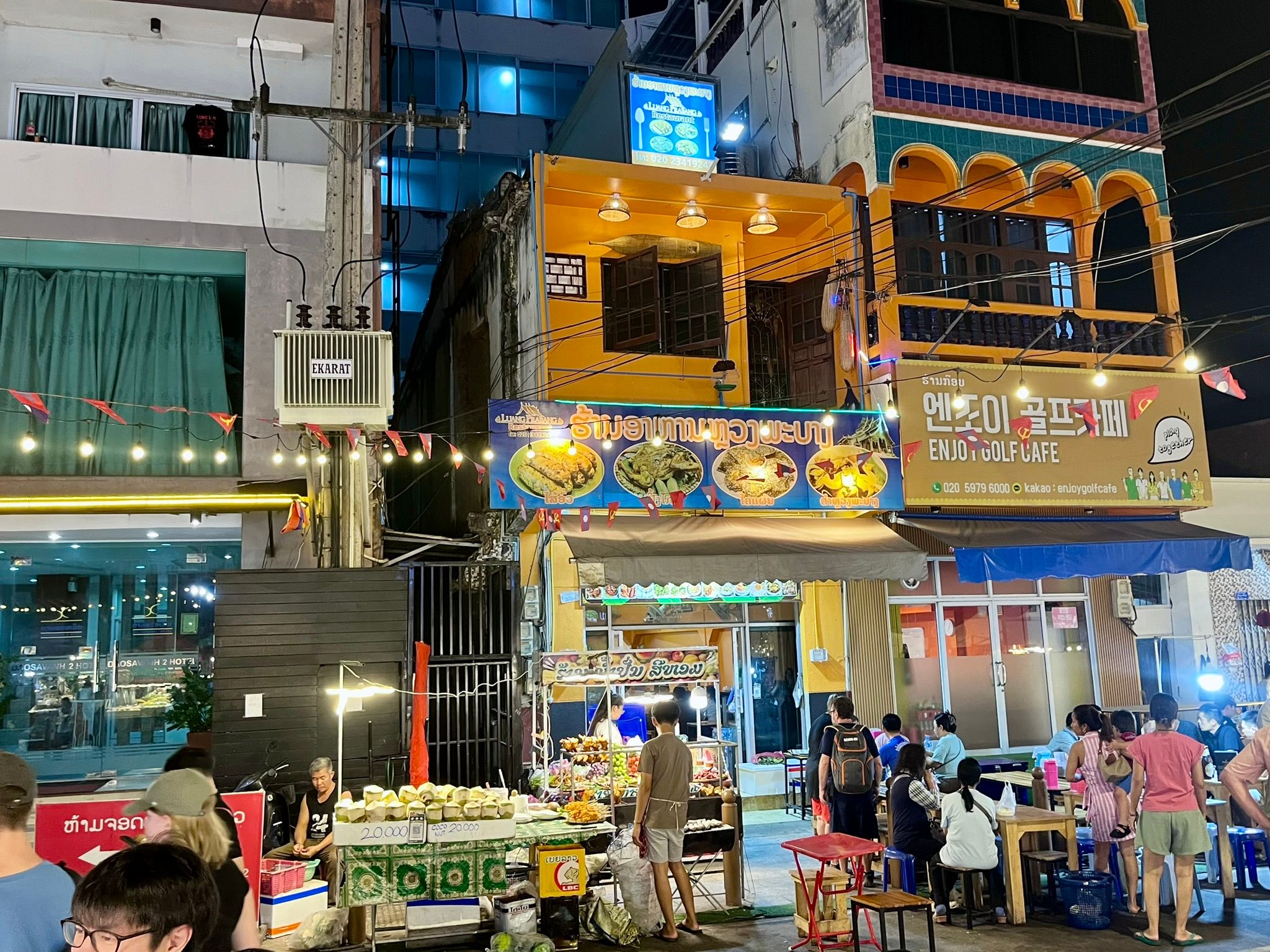
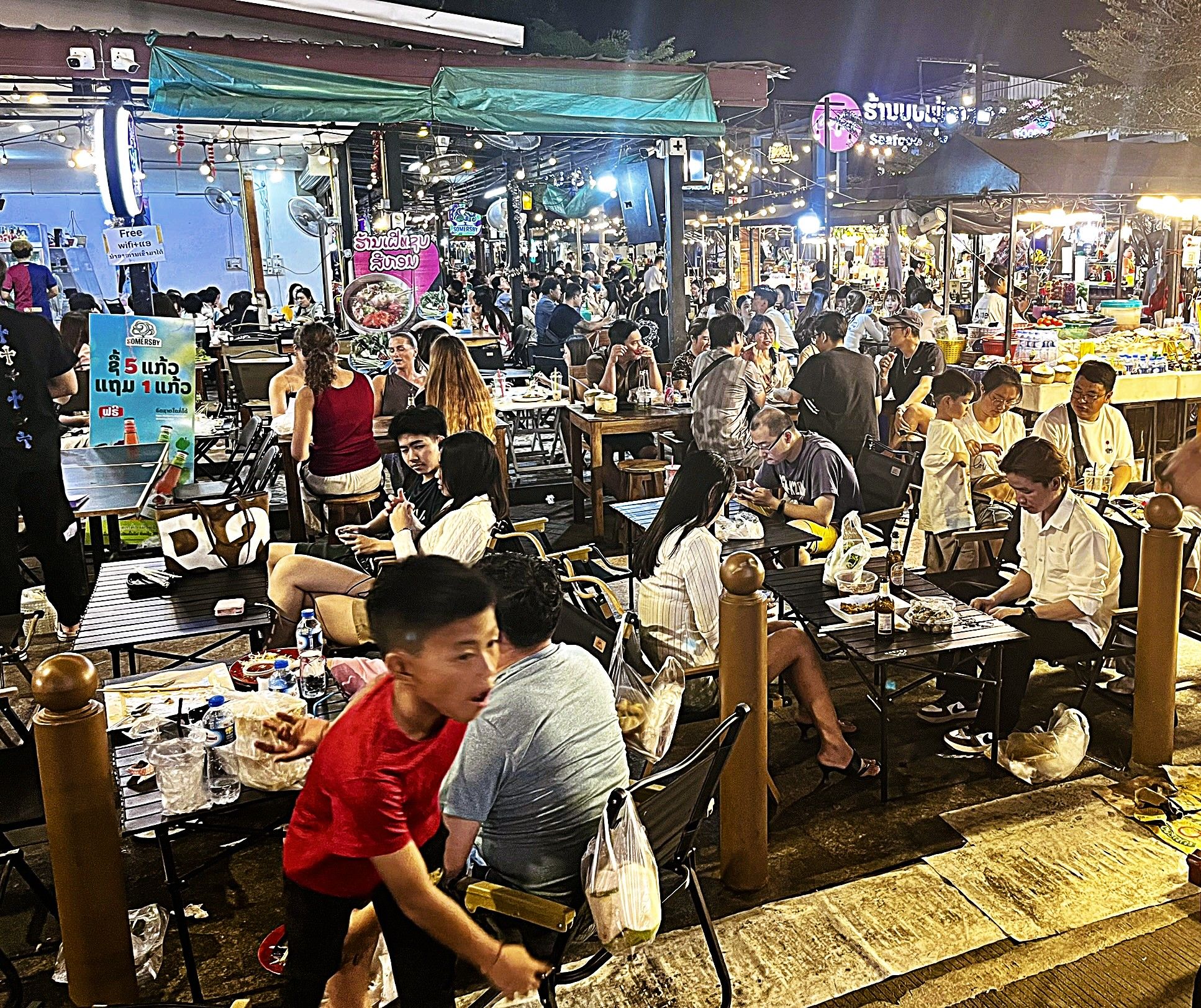
In the evening, while it does not get noticeably cooler, I head a few blocks away from the hotel to Rue Hengboun for a meal. The charming street, lined with houses from all eras from colonial times to today, with small hotels, shops, and bars, is officially called the “Food and Culture Street”.
But today I only care about food. I face the dilemma of choosing between dozens of food stalls, where Sai Oua, coarse sausages seasoned with lemongrass, ginger, garlic, and chilies are grilled, whole river fish, and skewers of chicken. Women prepare delicious omelets on hot griddles, while others crush strips of unripened papaya with lime juice, chili, and shrimp paste in wooden mortars for the Tam Mak Hoong, the hellishly spicy papaya salad. This is served with Khao Niew, the traditional sticky rice, in woven bamboo baskets. Eating is done with fingers; prices are modest; a meal costs about two or three euros.
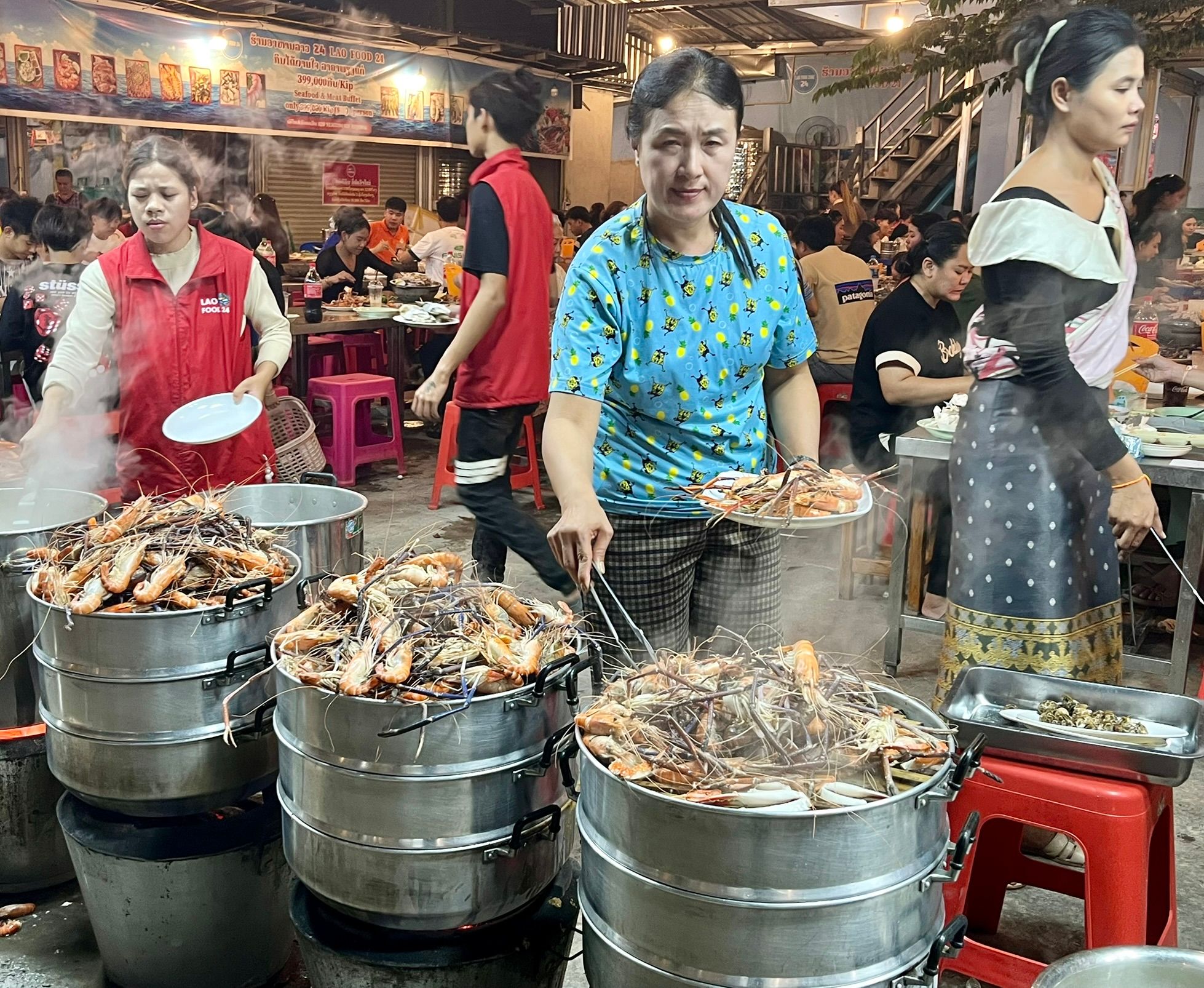
In a side street, there is a very popular local place where mass quantities of giant shrimp and other seafood are sizzling and simmering over open grill fires and in huge soup pots, enticing you to indulge: “All you can eat,” is the promise.
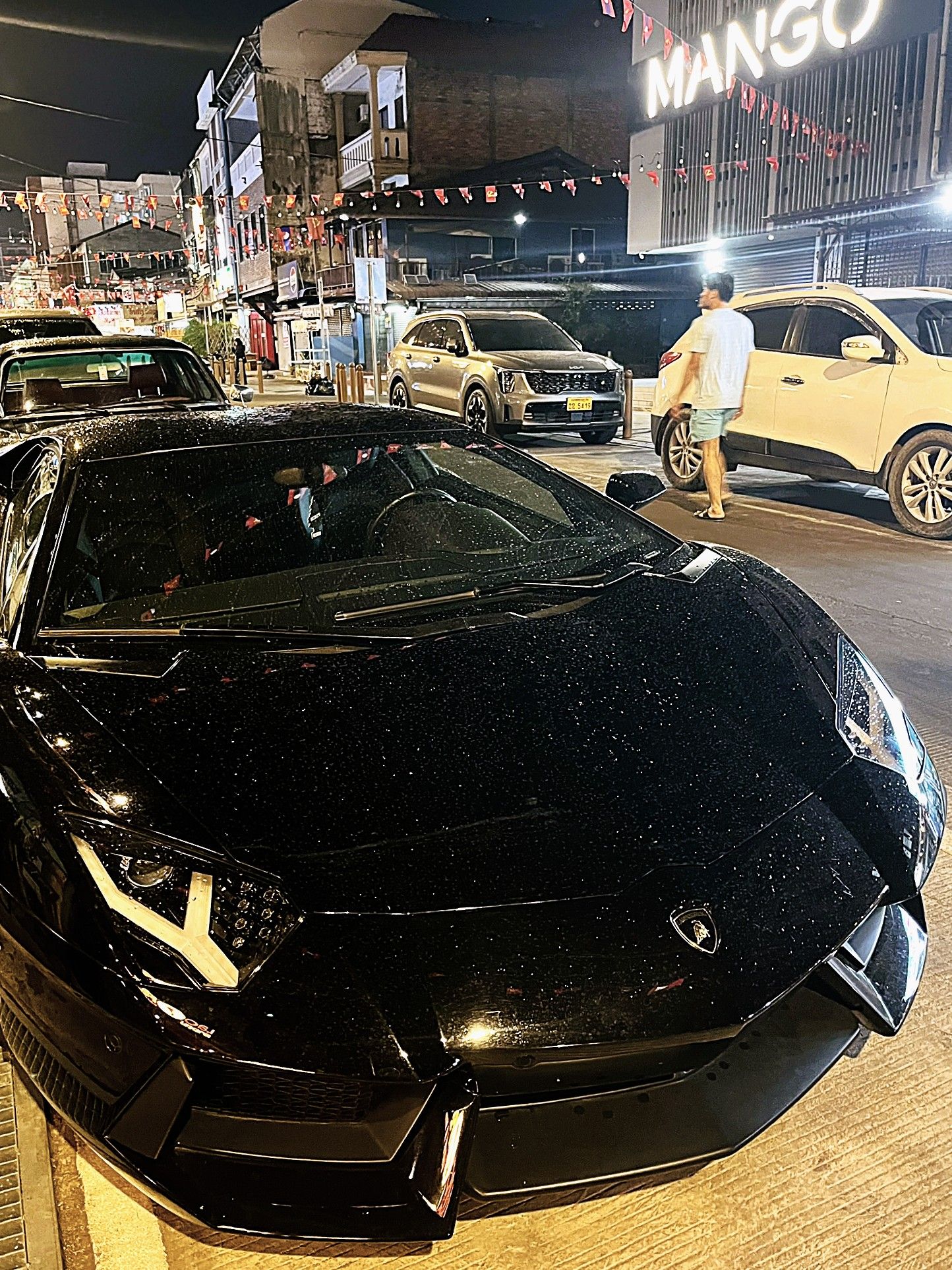
Later, I treat myself to a late drink in a bar on the same street and wonder who might own the black Lamborghini outside. Around nine or ten, it gradually becomes quieter in Rue Hengboun, while surrounding streets have already fallen asleep.
On the “Victory Gate”
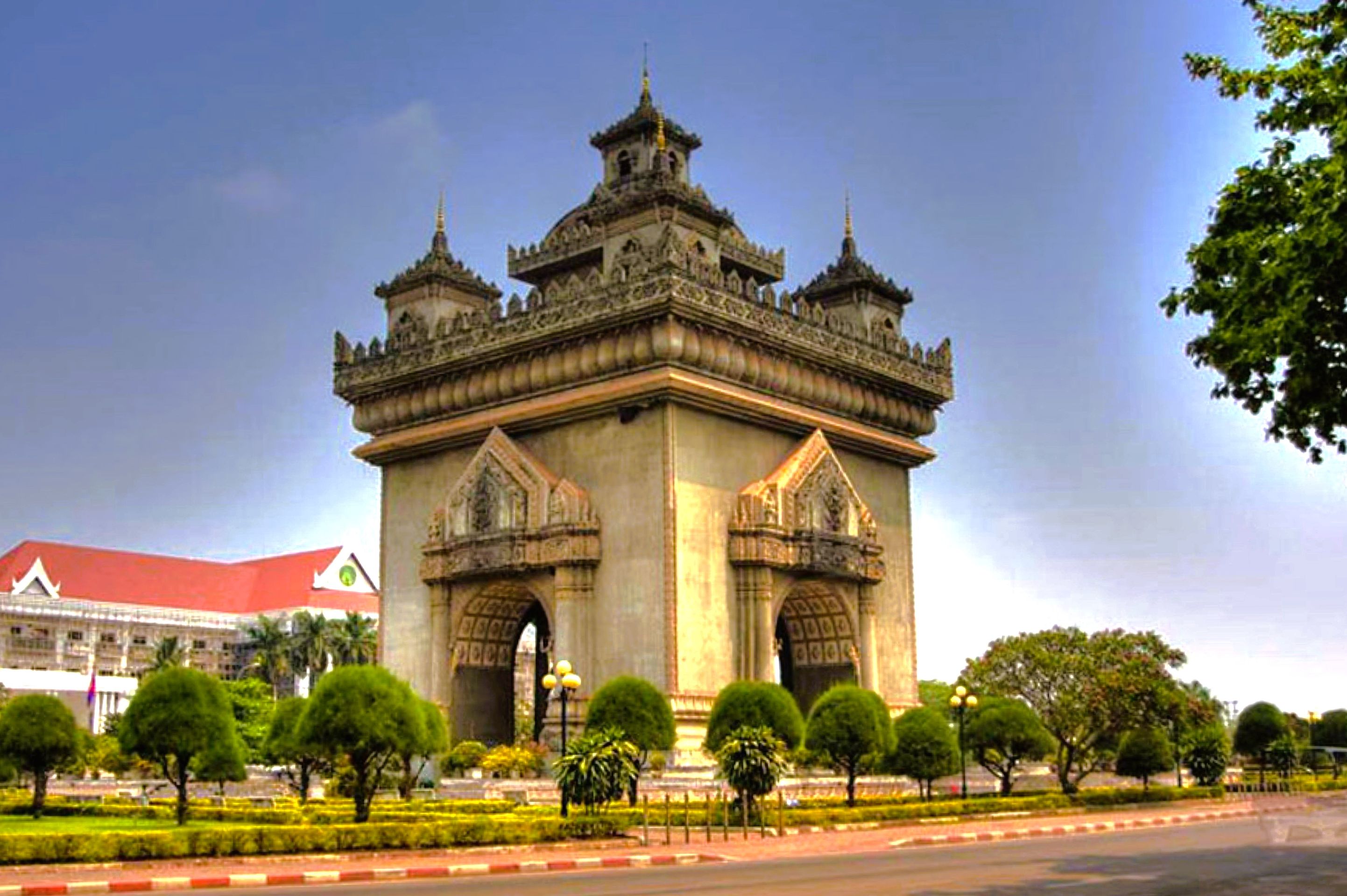
The next day, I set out on an exploration, soon feeling quite sweaty. First on the agenda is the Patuxai, the “Victory Gate,” built after independence from France in the 1960s to commemorate the Laotian soldiers who died in World War II and the subsequent struggle for freedom against France. The victory gate, designed by a Laotian architect and sculptor, is inspired by the Arc de Triomphe in Paris, but decorated with many Laotian and Buddhist elements.
My guide Tham tells me with a smile that there are two curious stories about the Patuxai. First, the monument was built with American development aid, albeit with “diverted” funds: money and concrete were originally intended for the expansion of the airport by the USA. Therefore, the Patuxai is also called “Vertical runway.” Second, the monument was never completely finished because King Sisavang Vatthana, the driving force behind its construction, was overthrown by the communists in 1975 and died in a re-education camp around 1980.
We ascend to an observation deck inside the arch, where we have a view over extensive green spaces, government and parliamentary buildings, and foreign embassies.
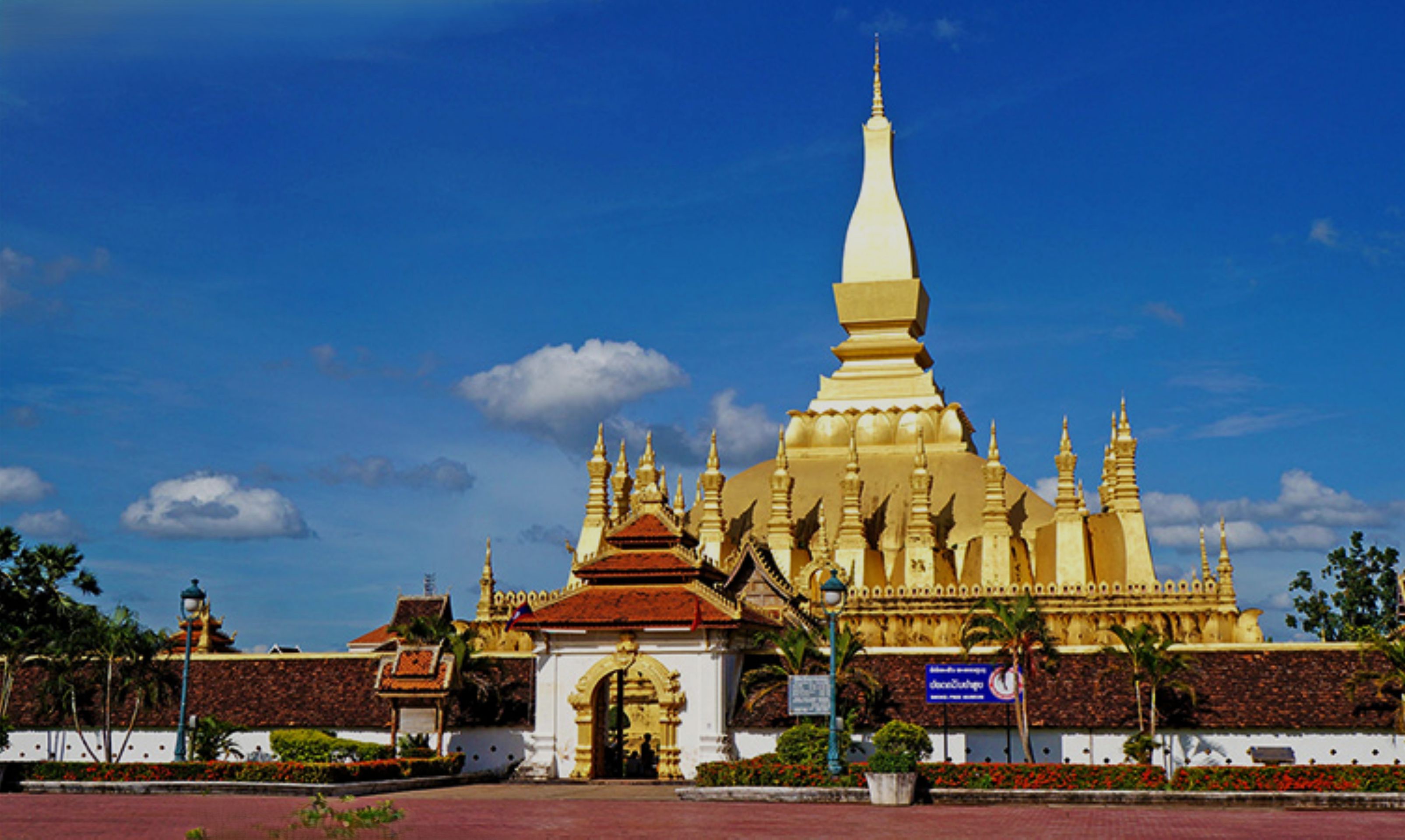
Just a few kilometers east of the political center lies the religious heart of the country: Pha That Luang. The stupa completely covered in gold leaf reflects the bright midday light. There are hardly any visitors to be seen on the concrete forecourt. Under sun umbrellas, a few vendors sit and try to sell tourists incense sticks and lotus flowers, which are to be offered to Buddha.
Concrete Riverside
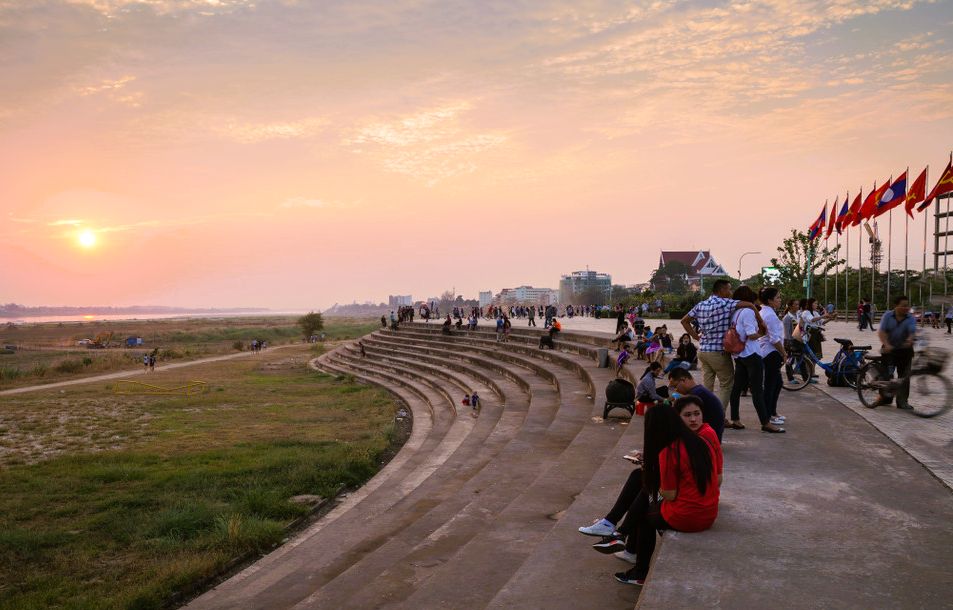
In the late afternoon, activities shift to the banks of the Mekong. The promenade at Chao Anouvong Park is a wide, concrete expanse that sits high above the actual riverbed. During the dry season, the water recedes hundreds of meters, exposing sandy islands and strips of shallow vegetation. Not a pretty sight, I have to say to myself.
On the promenade, an organized and deafening hustle and bustle begins. Dozens of speakers are being connected, and to loud pop music, women perform group aerobics. Meanwhile, joggers and walkers use the concrete paths, while others sit on the concrete steps to watch the sunset painting the river. The wind rising from the Mekong is not as cool as hoped.
Immediately behind the promenade are the stalls of the night market, arranged in long rows beneath red tent roofs. Laotian families, students from the nearby university, and scattered, mostly very young tourists stroll between them. Unlike that in Hengboun Street, this night market offers clothing and everyday items and is geared towards the needs of the local clientele: pans, pots, and dishes, cheap clothes, mostly imported from China and Vietnam, sports shoes with fake Adidas or Nike logos, mobile phone cases, cosmetics. The vendors are unobtrusive, many are more busy with their own phones than with the customers.
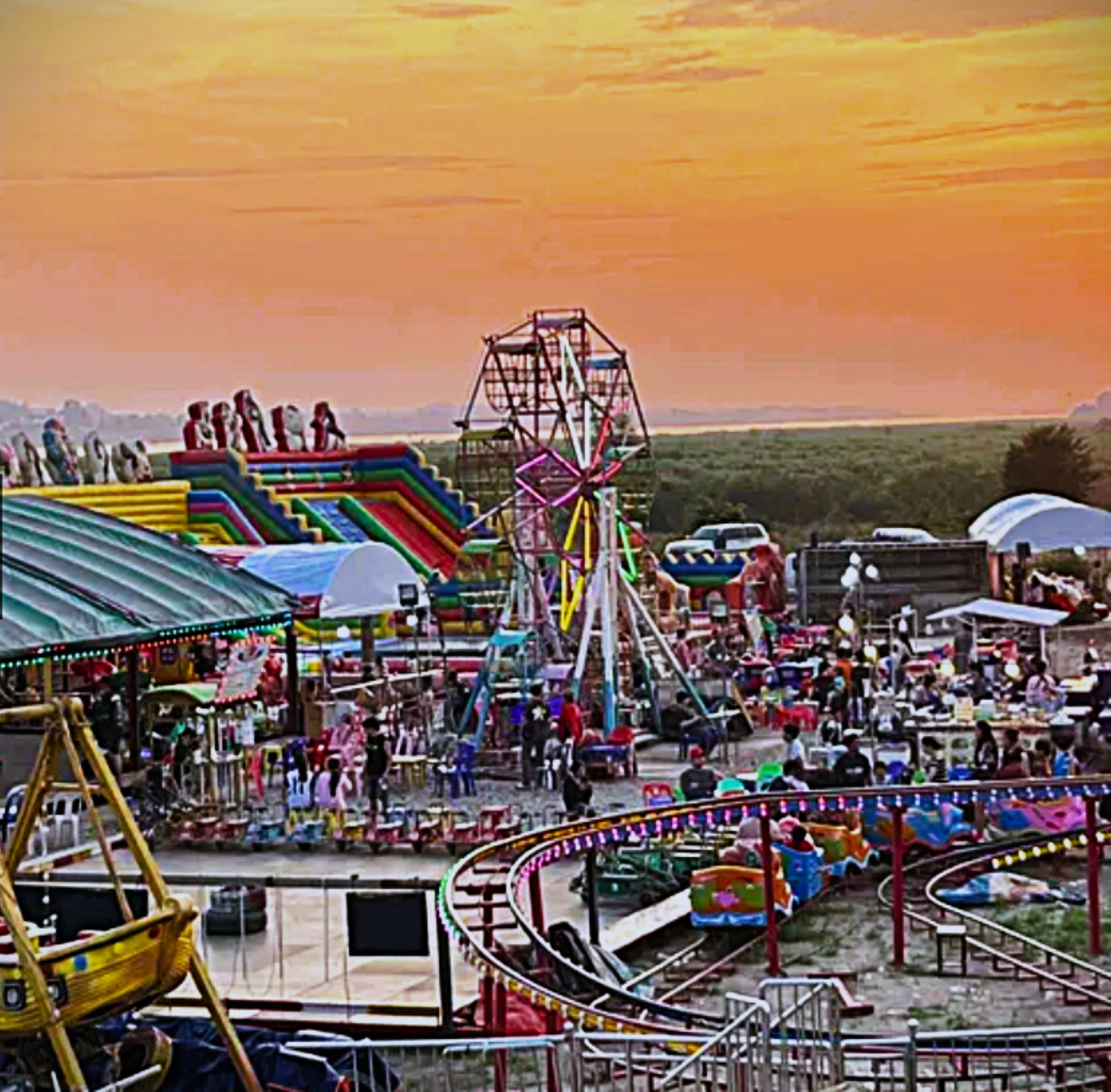
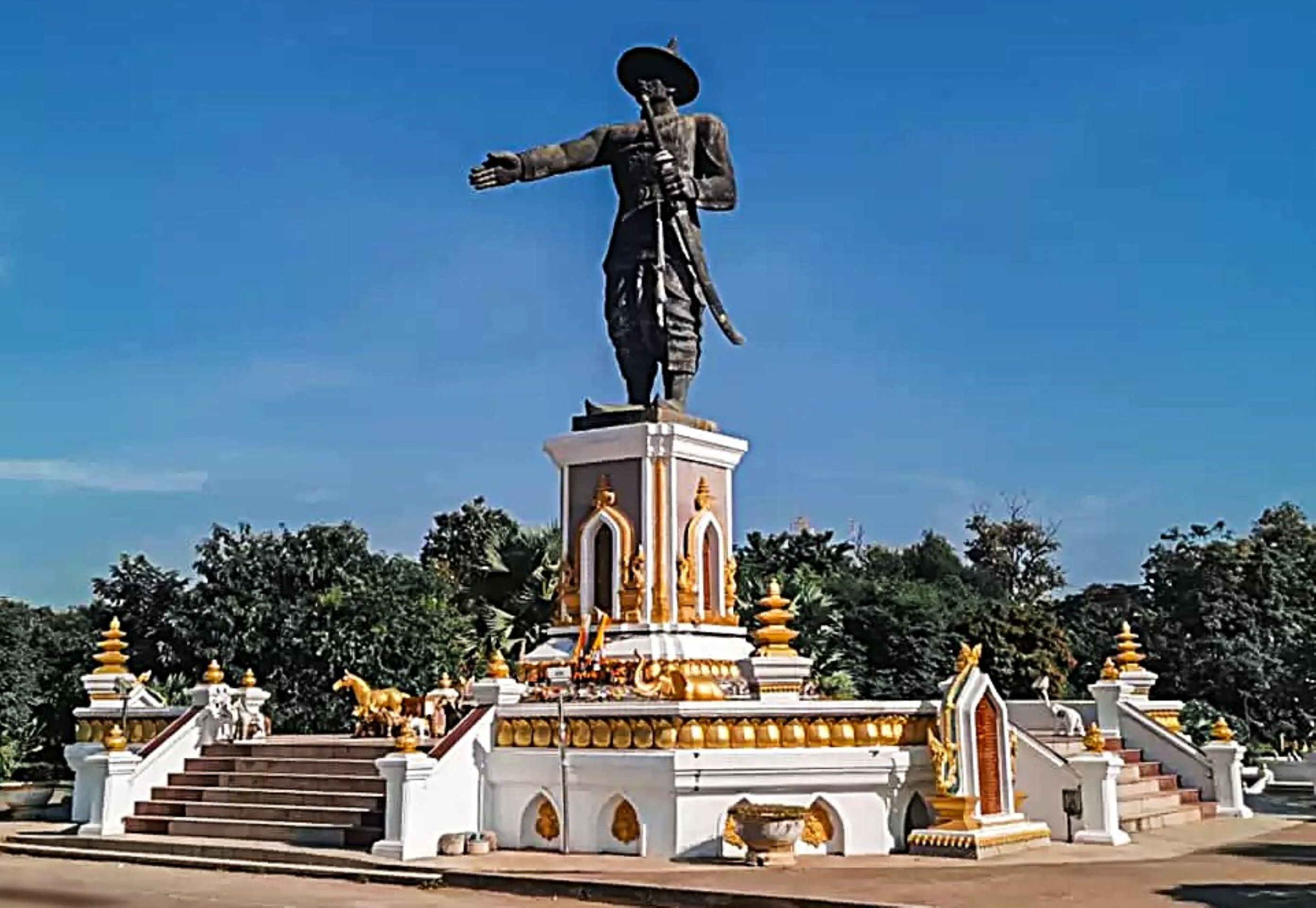
On the Mekong promenade, the wind dies down; the speakers of the aerobics groups fall silent. In the amusement park, the lights gradually go out. The statue of the rebellious King Anouvong, who tried to free Laos from the grip of the Kingdom of Siam, now Thailand, at the beginning of the 19th century, stands lonely by the riverbank.
Vientiane, the “most boring capital in Asia,” as a TikToker put it, goes to bed early, contrasting with Bangkok, Saigon, Kuala Lumpur, or Phnom Penh. The view remains over the dark river to the opposite side. There lies Thailand, and the neon signs shimmer deeply into the night while on the Laotian side, peaceful night prevails.