

Vientiane, Asia's "most boring capital"
Vientiane is considered the most boring capital in Asia. At the end of February 2026, I wanted to form my own judgment.
Published: 25.06.2026
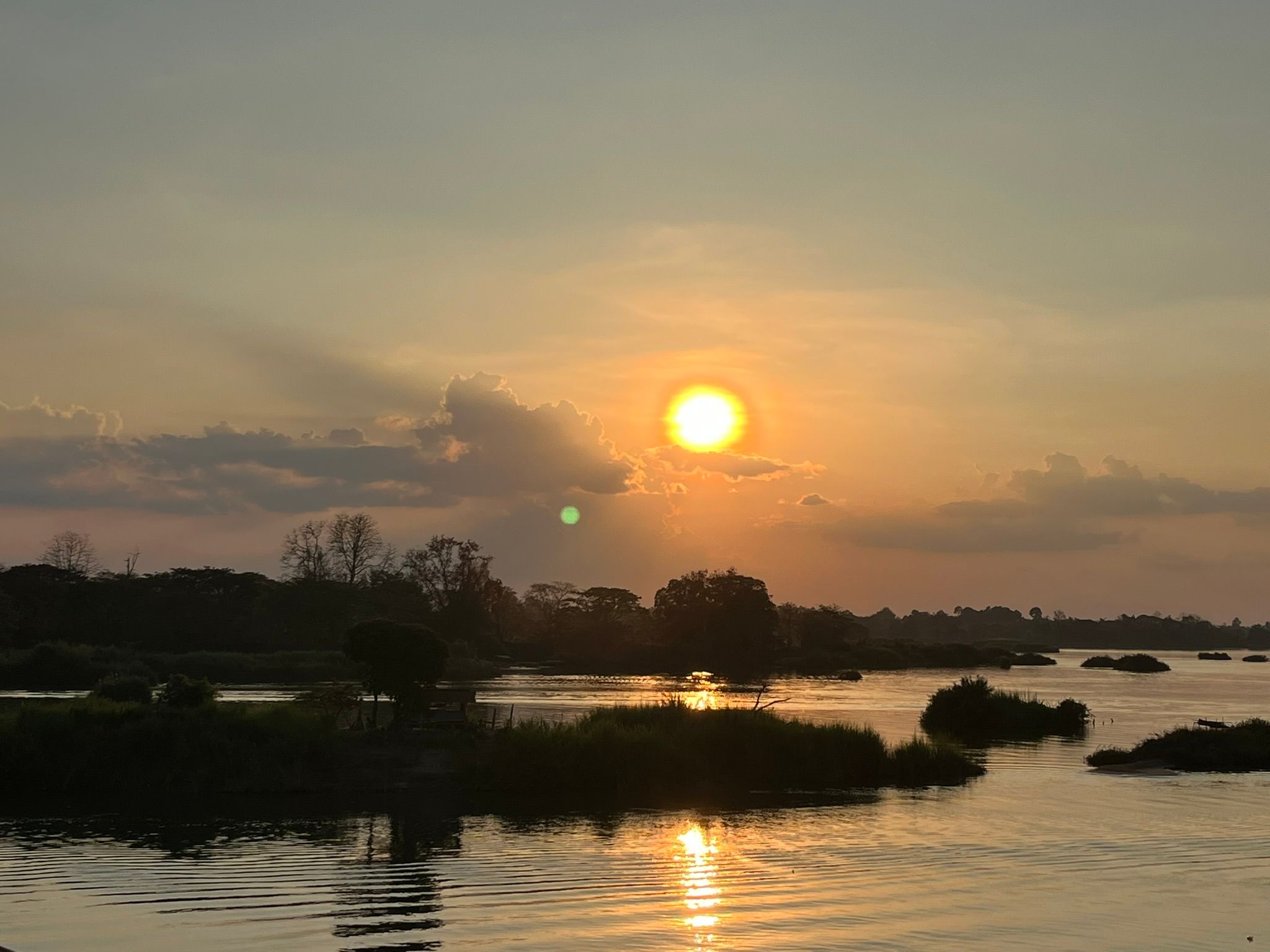
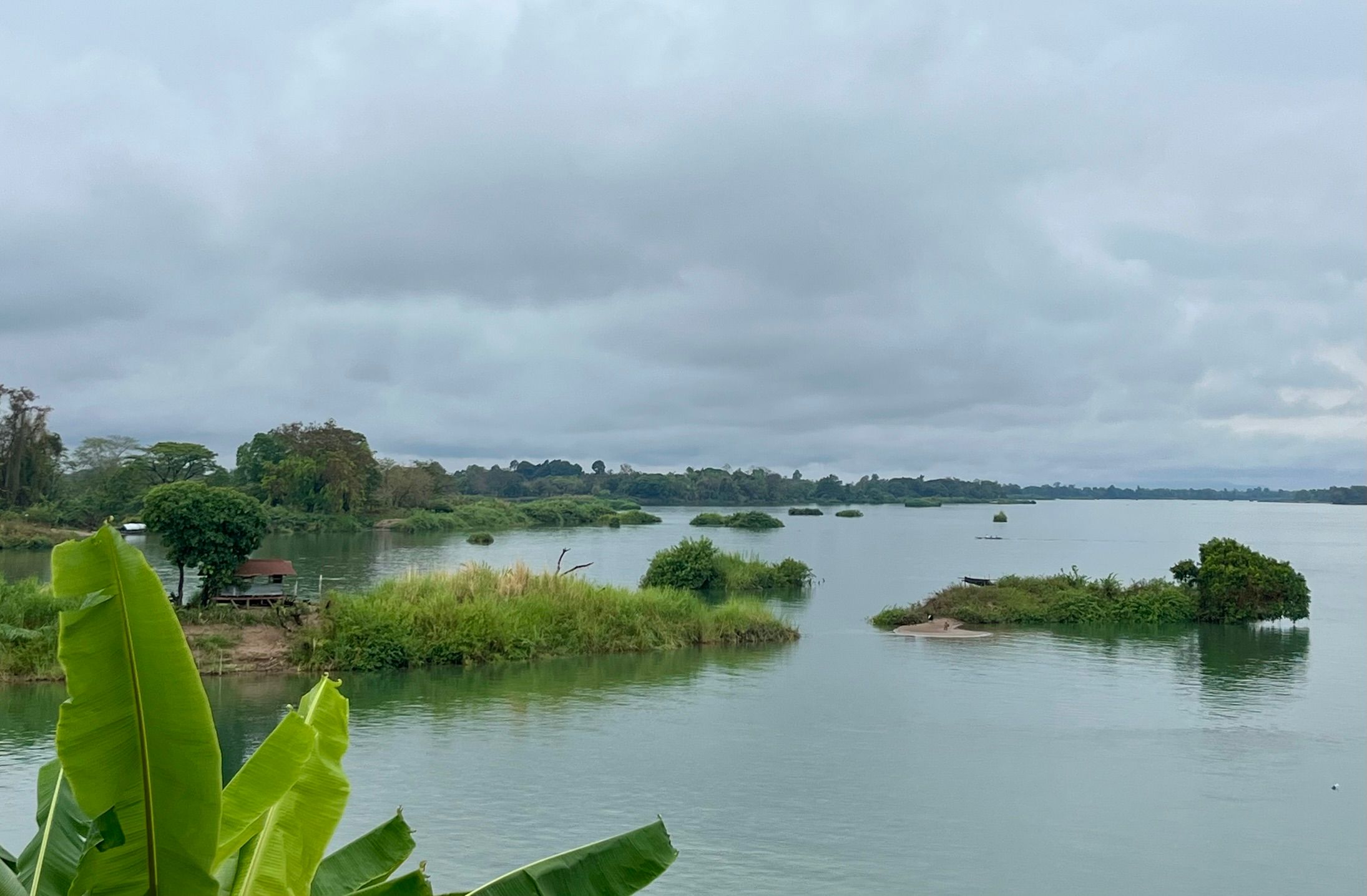
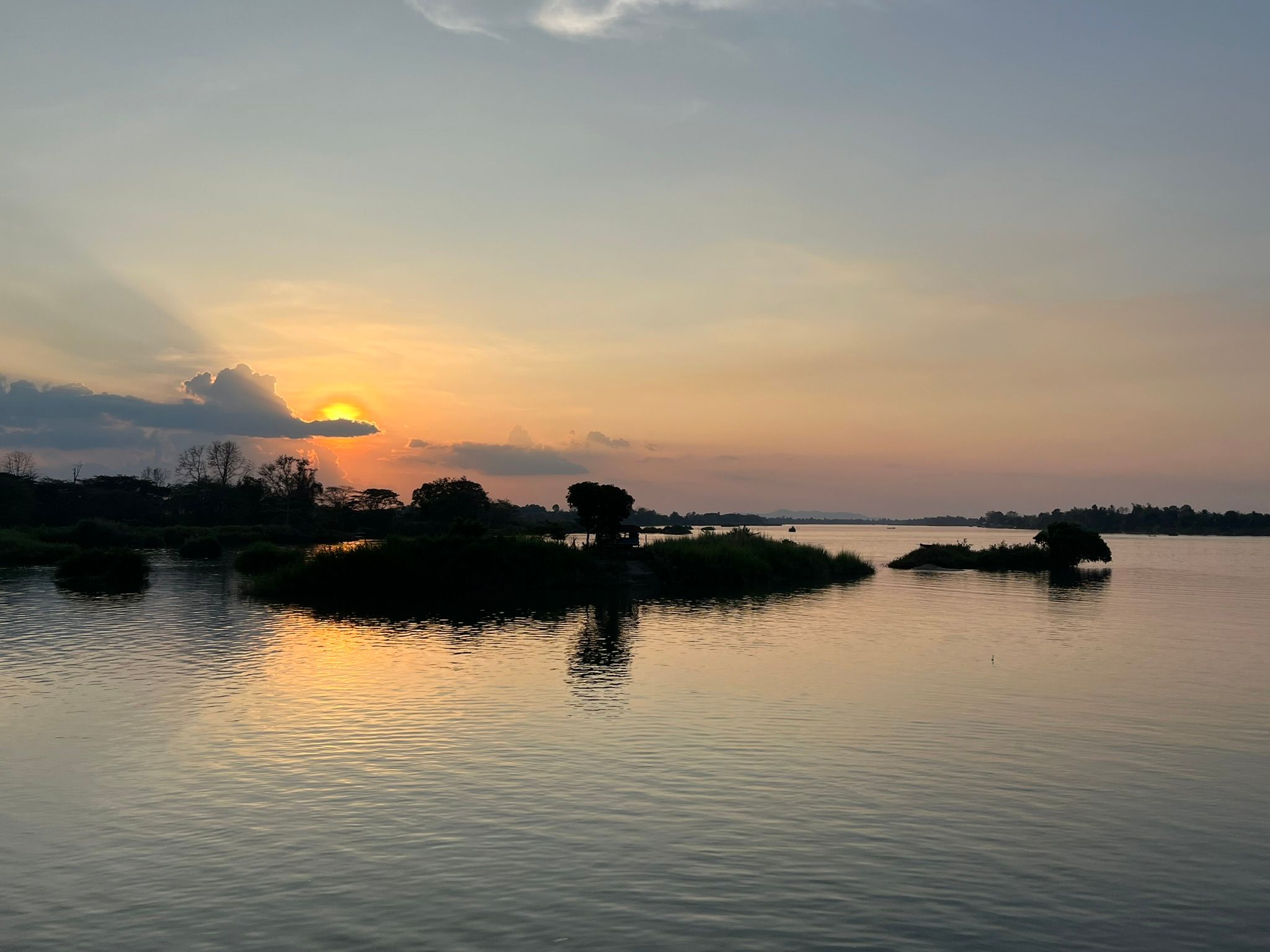
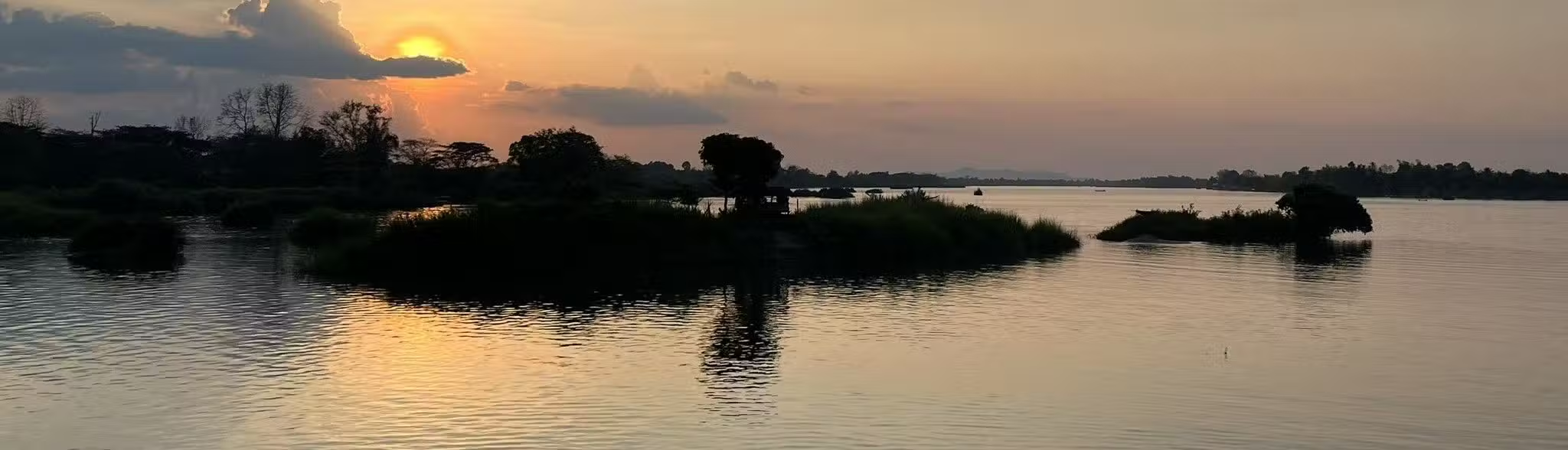
In the south of Laos, thousands of smaller and larger islands create a vast patchwork in the Mekong river stretching wide - a journey away from the beaten paths.
A friend spoke enthusiastically about Don Det, a Laotian island in the middle of the Mekong at the border with Cambodia: “The vibe here is similar to certain Thai islands thirty or forty years ago,” he raved: “Simple, remote, incredibly cheap, and totally laid-back.” So off I went!
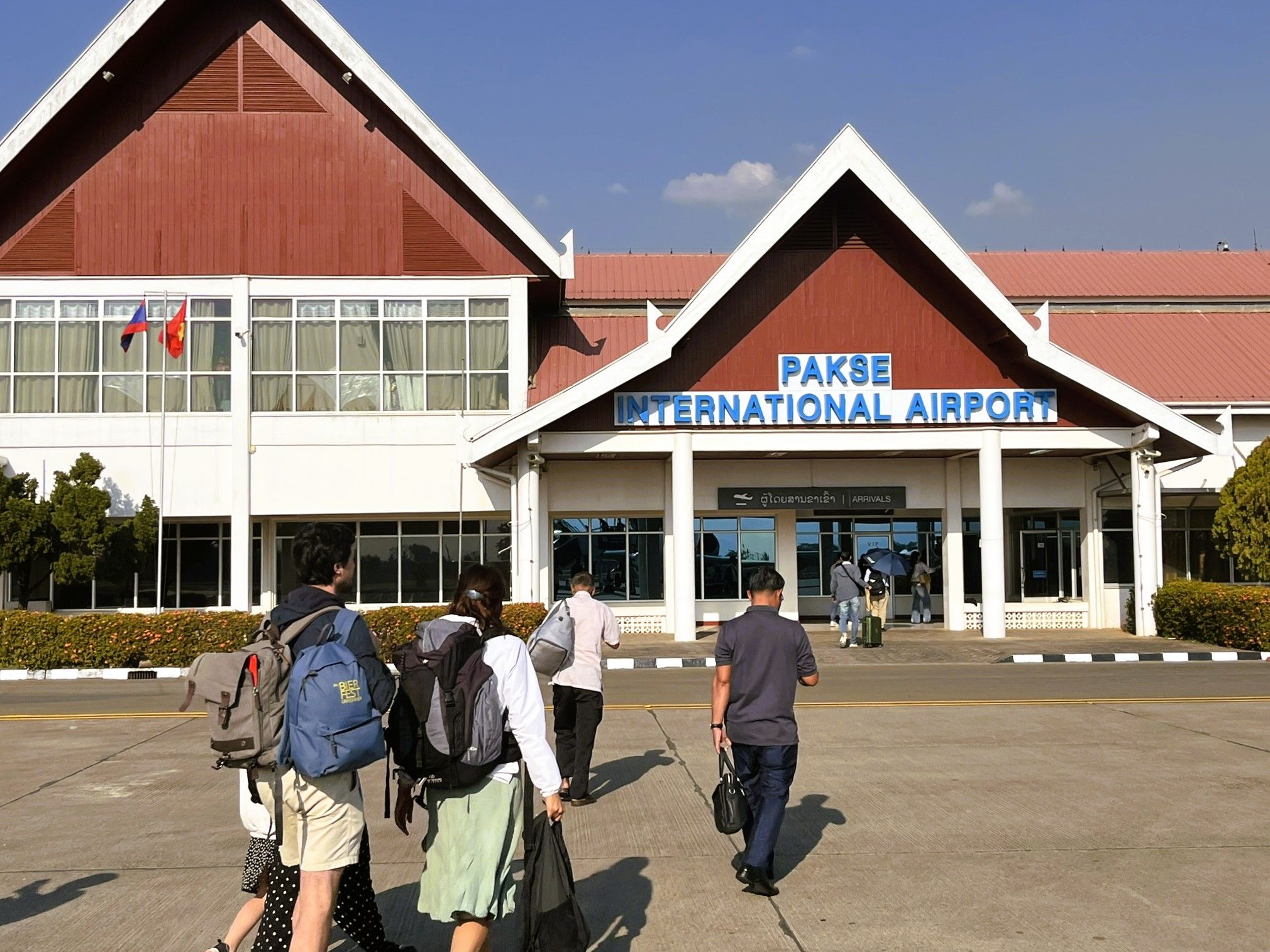
However, this is often easier said than done. Because the journey is tedious. First, I had to get to Pakse in southern Laos on February 26, 2026, the third largest city in the country. By bus from the capital Vientiane, I would have spent a grueling ten hours on roads of questionable quality. So I flew with an old turboprop plane from Lao Airlines.
Pakse airport, built in a local chalet style, looks quaint and is hardly a hub of international air traffic with only five to ten arrivals and departures per day. However, it has a tragic history: On the same route from Vientiane, a scheduled flight crash-landed into the Mekong on October 16, 2013; all 49 people on board lost their lives. But such events don't influence one's choice of transport.
By Longboat to the Island
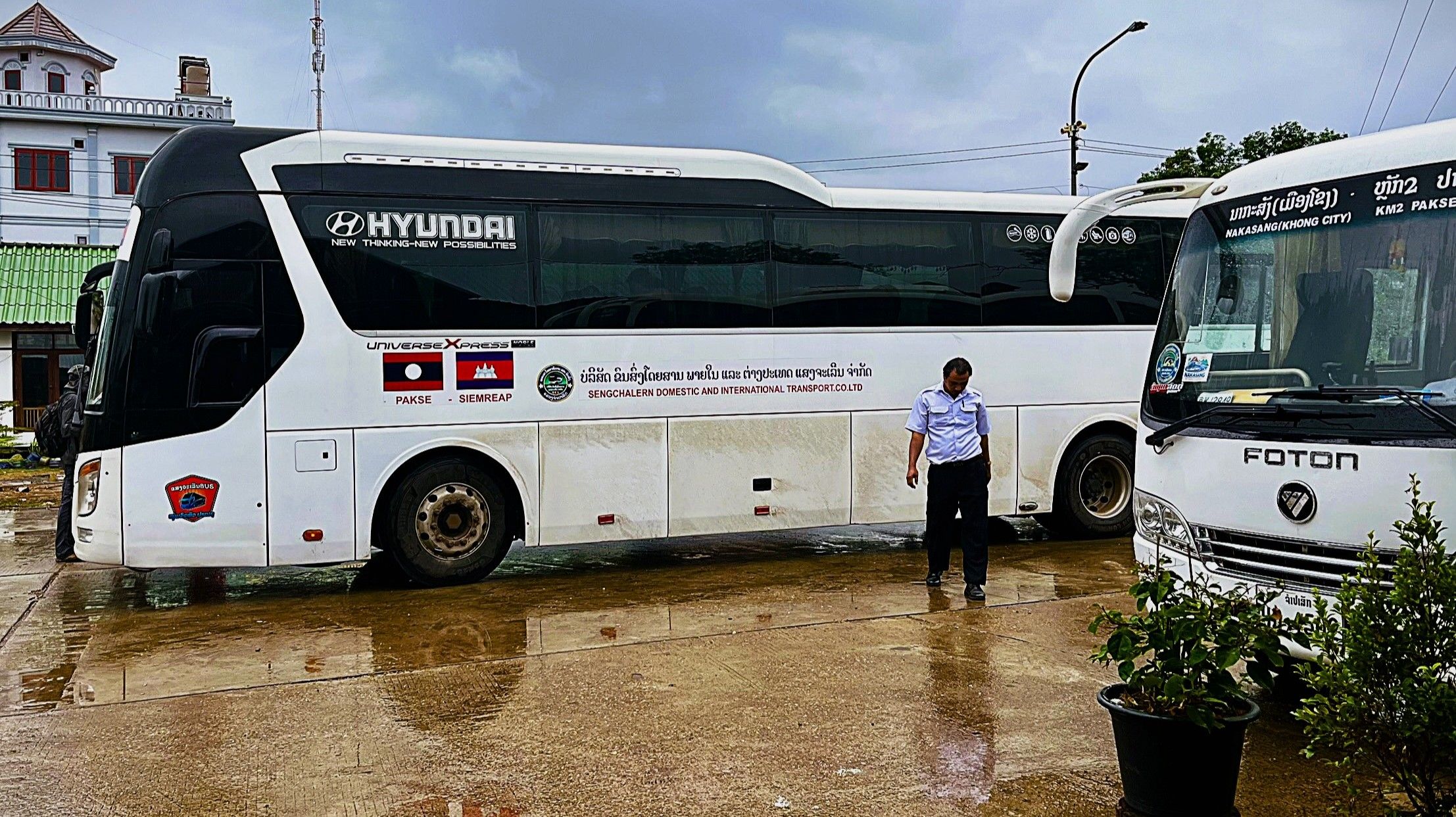
From Pakse, it takes about three more bus hours to reach the island paradise. Alternatively, one can enter Laos from Cambodia over the provincial town of Stung Treng. The long-distance buses between Phnom Penh and Pakse (10 to 12 hours) or Siem Reap and Pakse (9 to 11 hours) stop in a small village called Nakasong.
In hindsight, I think Pakse would have been worth a stay as well. But I left on February 27 after just one overnight stay, and reached Nakasong in pouring rain with a bus that continued to Siem Reap.
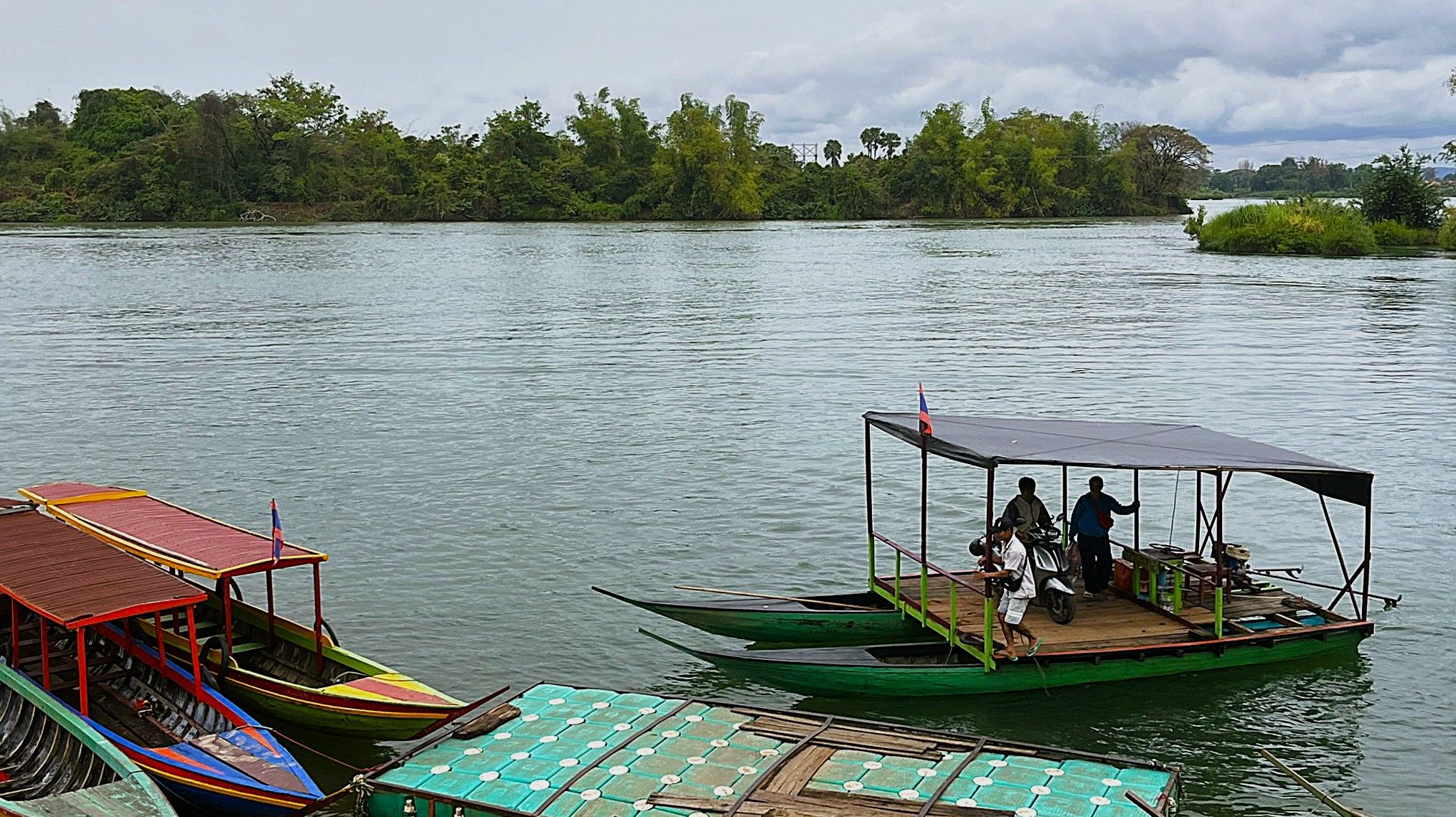
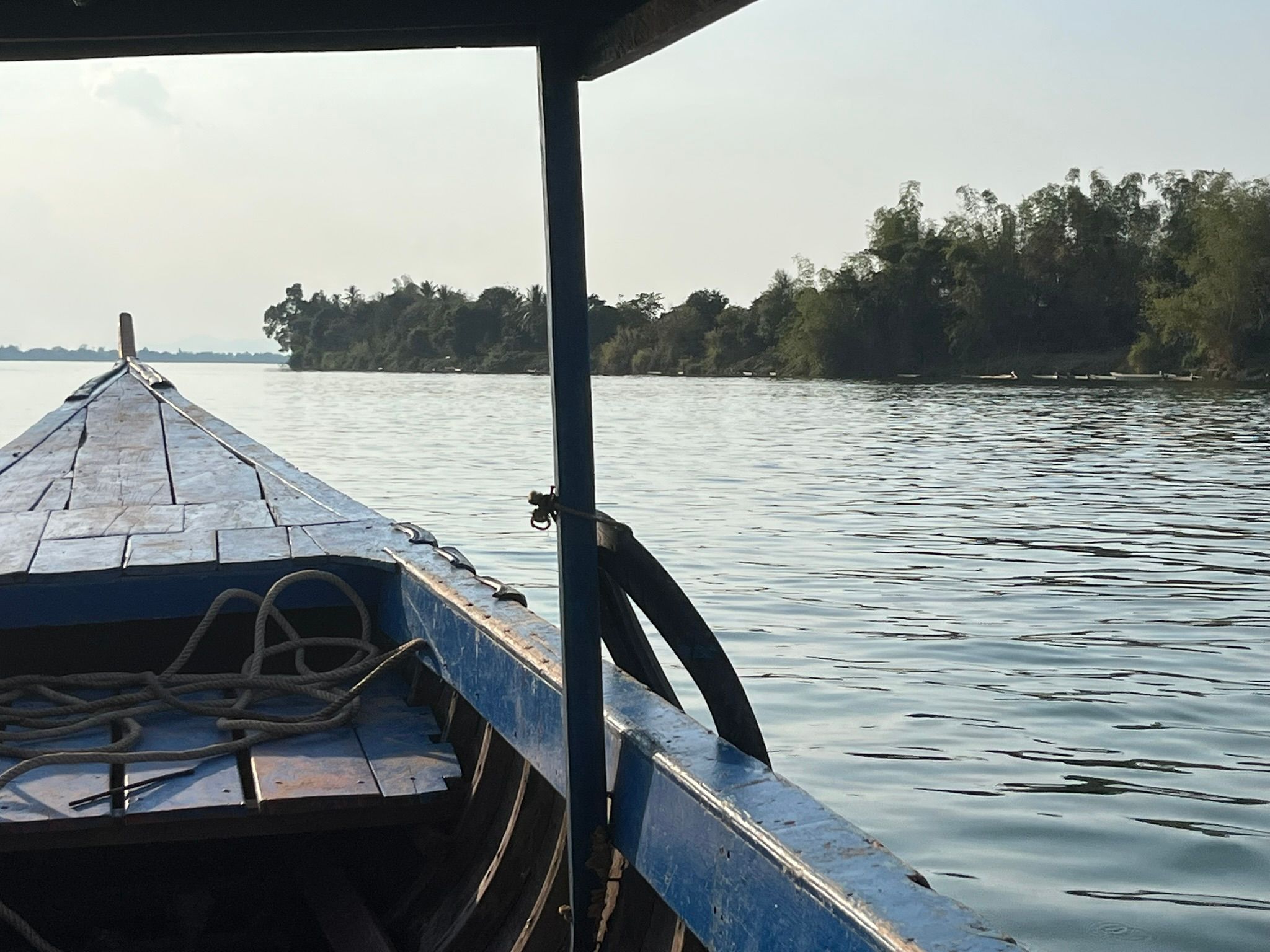
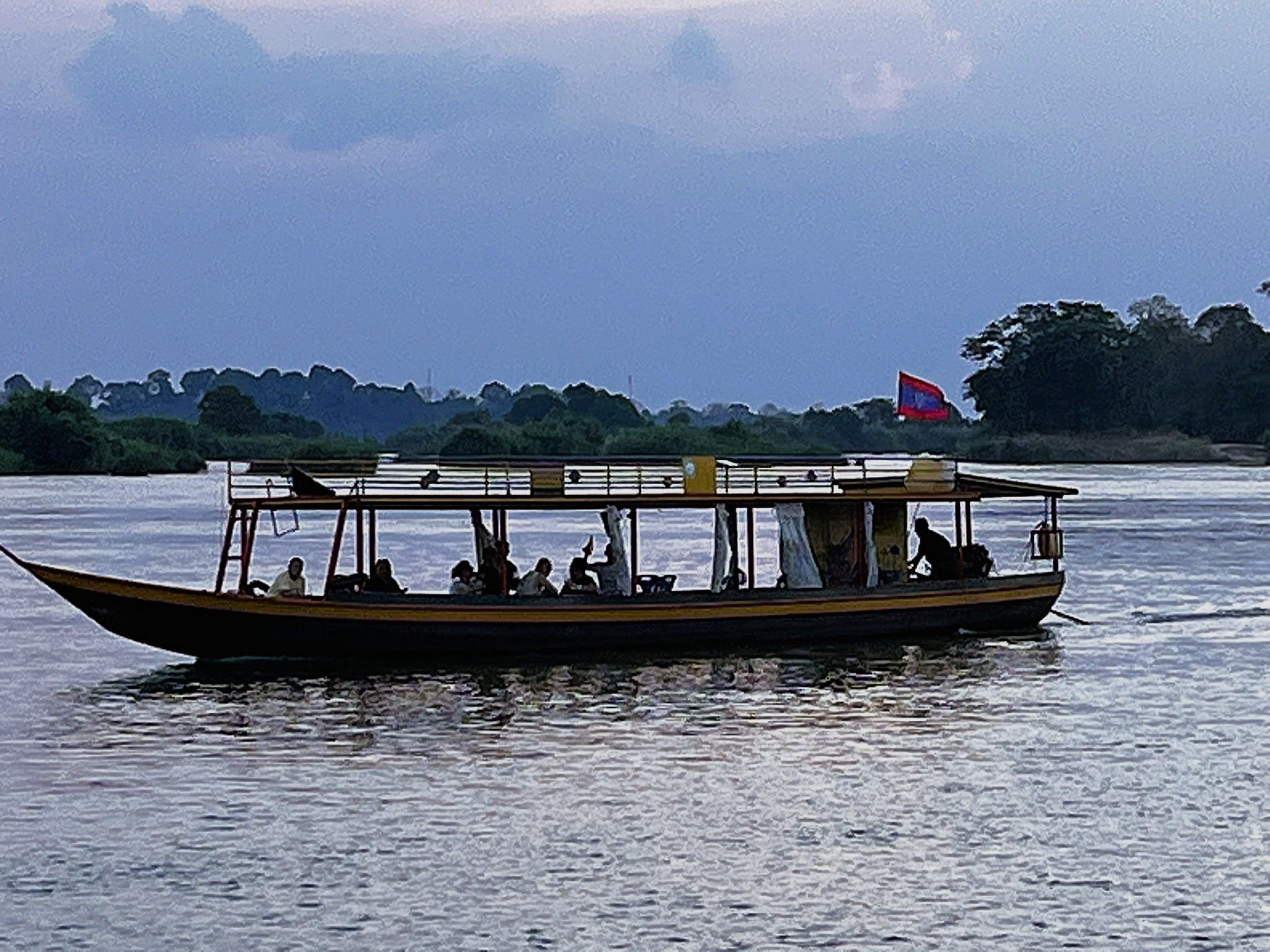
From the bus station in Nakasong, you are taken in an electric golf cart to a landing stage on the river, where a wooden longboat awaits, the sight of which is disconcerting for those averse to water. Heavy suitcases and hitchhiker backpacks are hoisted onto the boat over a swaying gangway. The ferry to Don Det island is included in the bus ticket; otherwise, you pay 20,000 Laotian Kip, which corresponds to about 80 cents.
Don Det and the neighboring island Don Khon are the most developed for tourism, but they are not the largest islands in the Si Phan Don area, the “4000 Islands” on the Mekong, where the Democratic People's Republic of Laos borders the Kingdom of Cambodia. The river splits into numerous arms and channels, estimating 4000 to 8000 islands, some as large as ten or twenty square kilometers, while others are merely patches of grass or sandbanks that disappear under elevated water levels during the rainy season.
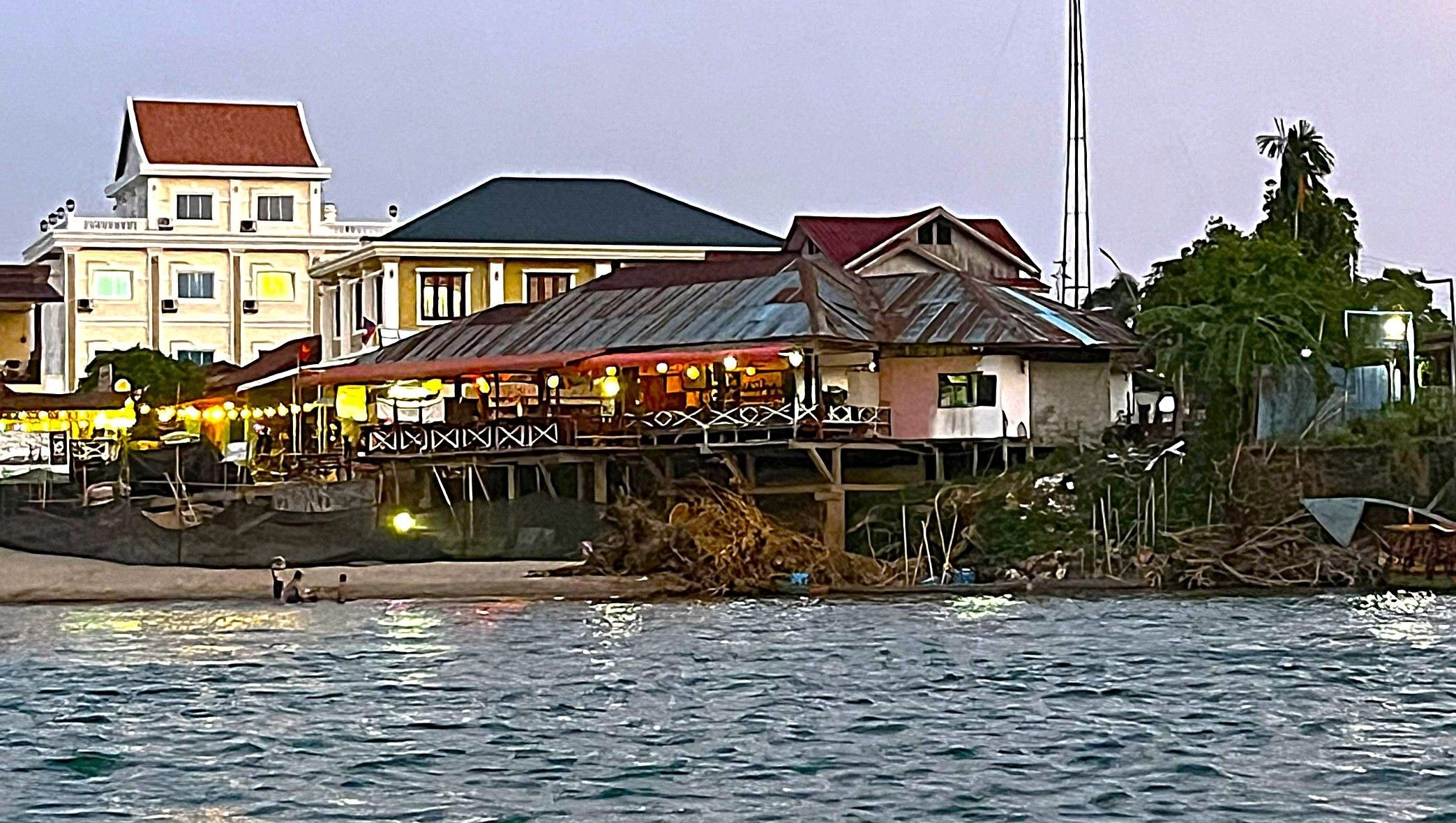
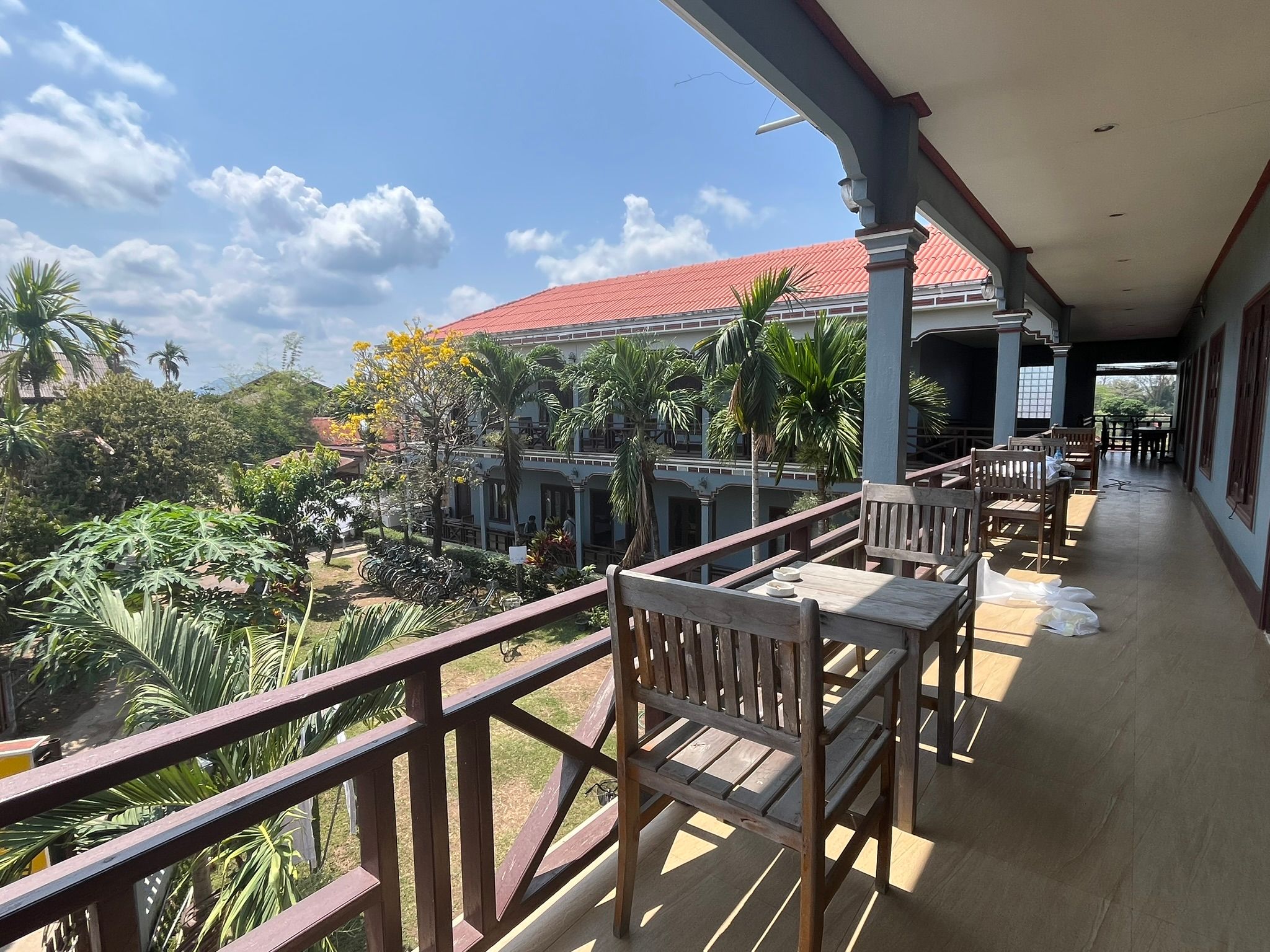
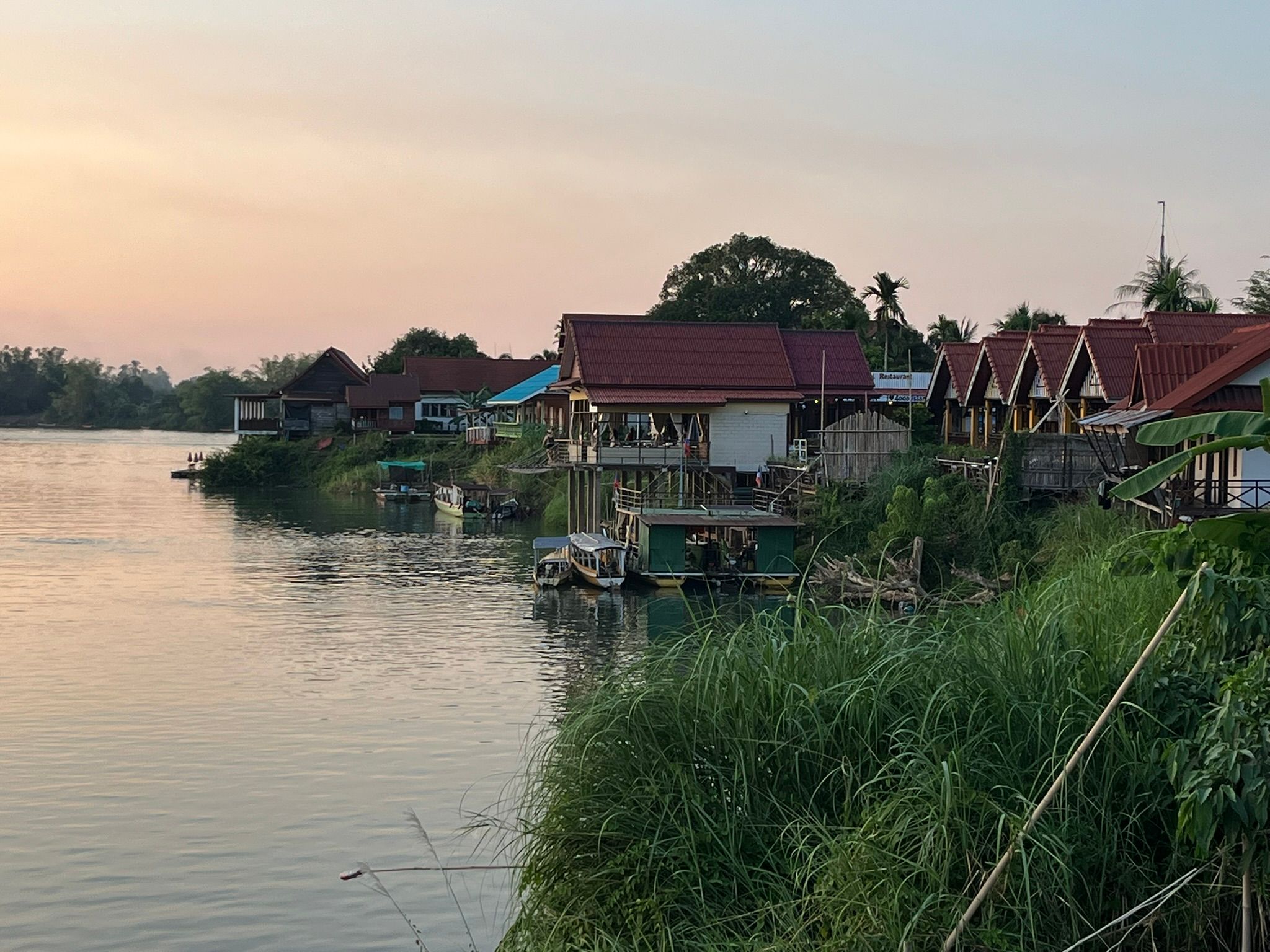
On Don Det, several hotels and many holiday bungalows line the shores and the main road, leaning more towards wooden cabins or simple guesthouses than luxury resorts. Much seems improvised, hastily assembled, rudimentary. Accordingly, the prices are: For the equivalent of eight to ten euros per night, you can get an acceptable accommodation; for 14 to 20 euros, a double room in a hotel with a bathroom, air conditioning, and Wi-Fi. Even the best place in the area with a swimming pool, “Lebijou,” charges less than 30 euros per night for two.
Young Tourists and Old Hippies
Mass tourism does not take place here despite the idyllic setting and cheap prices. The region is simply too remote. About 100,000 tourists come each year. Most of them are quite young; many hail from Germany, France, and Israel. However, there are also a few old hippies who have settled in Don Det. For example, Jason from Nottingham in central England.
Jason, who generally goes barefoot and would have been labeled as “grumpy” in the past, runs a small restaurant called “Vipah Secret Kitchen” with his local wife Vipah, which consists of a covered wooden terrace and a counter behind which Jason and Vipah prepare primarily English breakfasts with steamed tomatoes, white beans in tomato sauce, homemade sausages, bacon, and toast. The couple lives with their small son in a room directly behind the restaurant, which is usually open and can be seen by guests without shame.
At the counter of Philipp's Bar, whose owner Philipp is from Germany and the barmaid Kelly from England, a drunken group has gathered to passionately engage in pool and loudly debate politics. Kelley immediately takes newcomers under her wing. Some of her guests wear Palestine T-shirts and shout anti-Semitic obscenities, which is why I leave the place in a hurry after just one whisky, without having played a single round of pool.
Or Rüdiger from Dortmund, who looks fairly worn out and is about my age (which is near expiration). I meet him on the longboat at my departure. In Nakasong, I want to catch the long-distance bus to Phnom Penh. Rüdiger, who lives in a simple wooden hut on Don Det, fled a disastrous divorce ten years ago, as he says. Now he has to go to the mainland for medical treatment.
Cows in the Temple
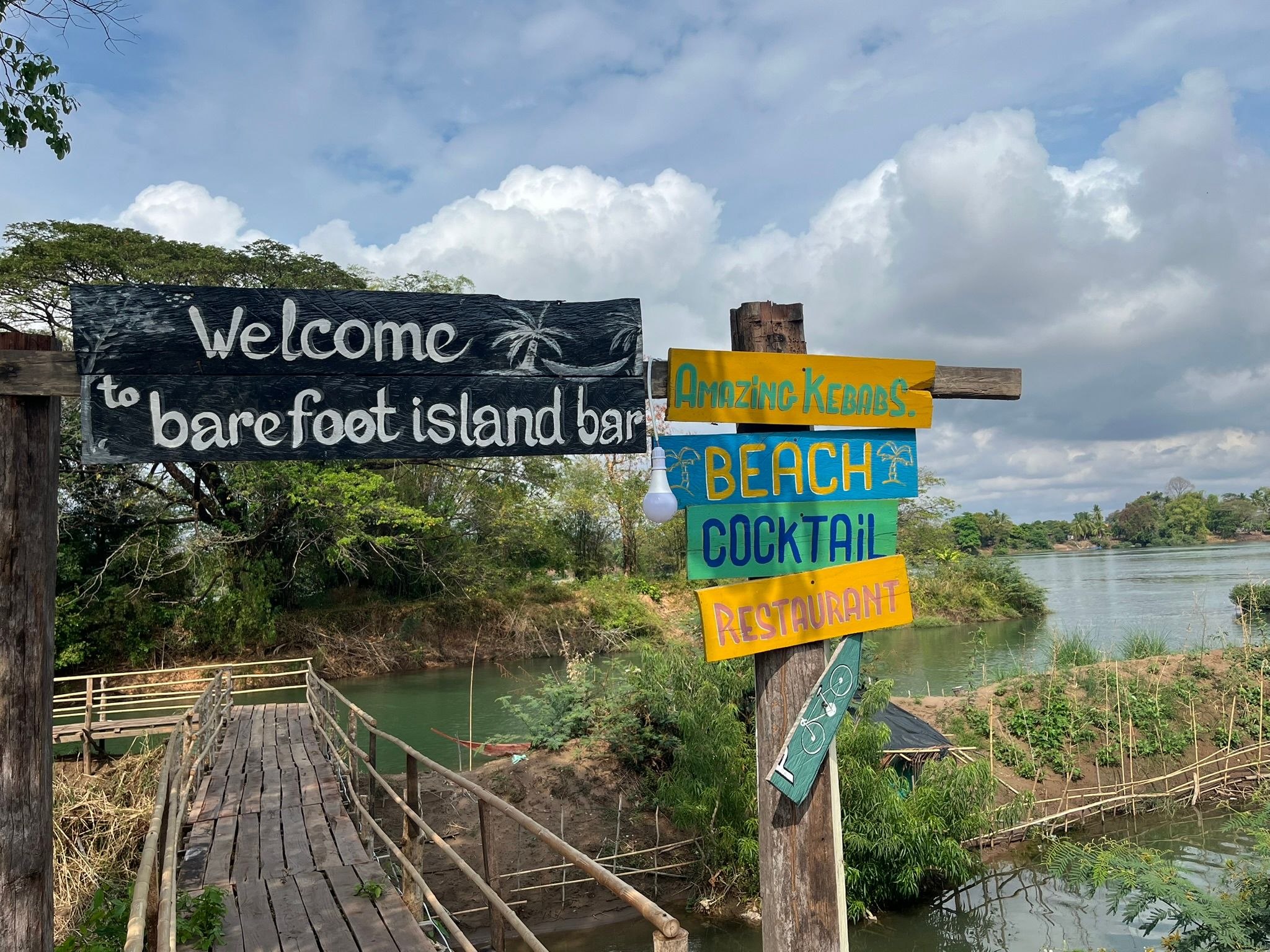
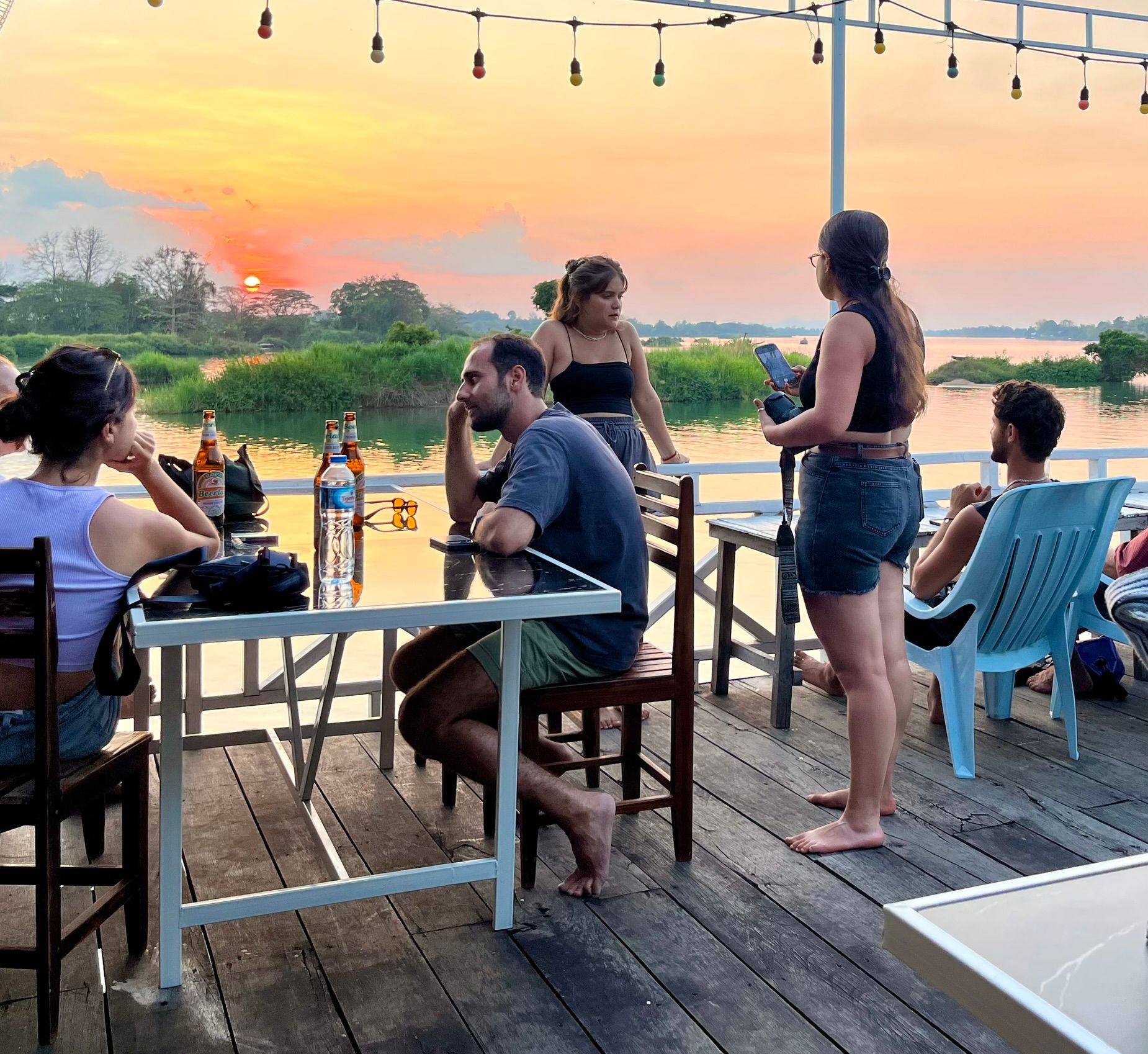
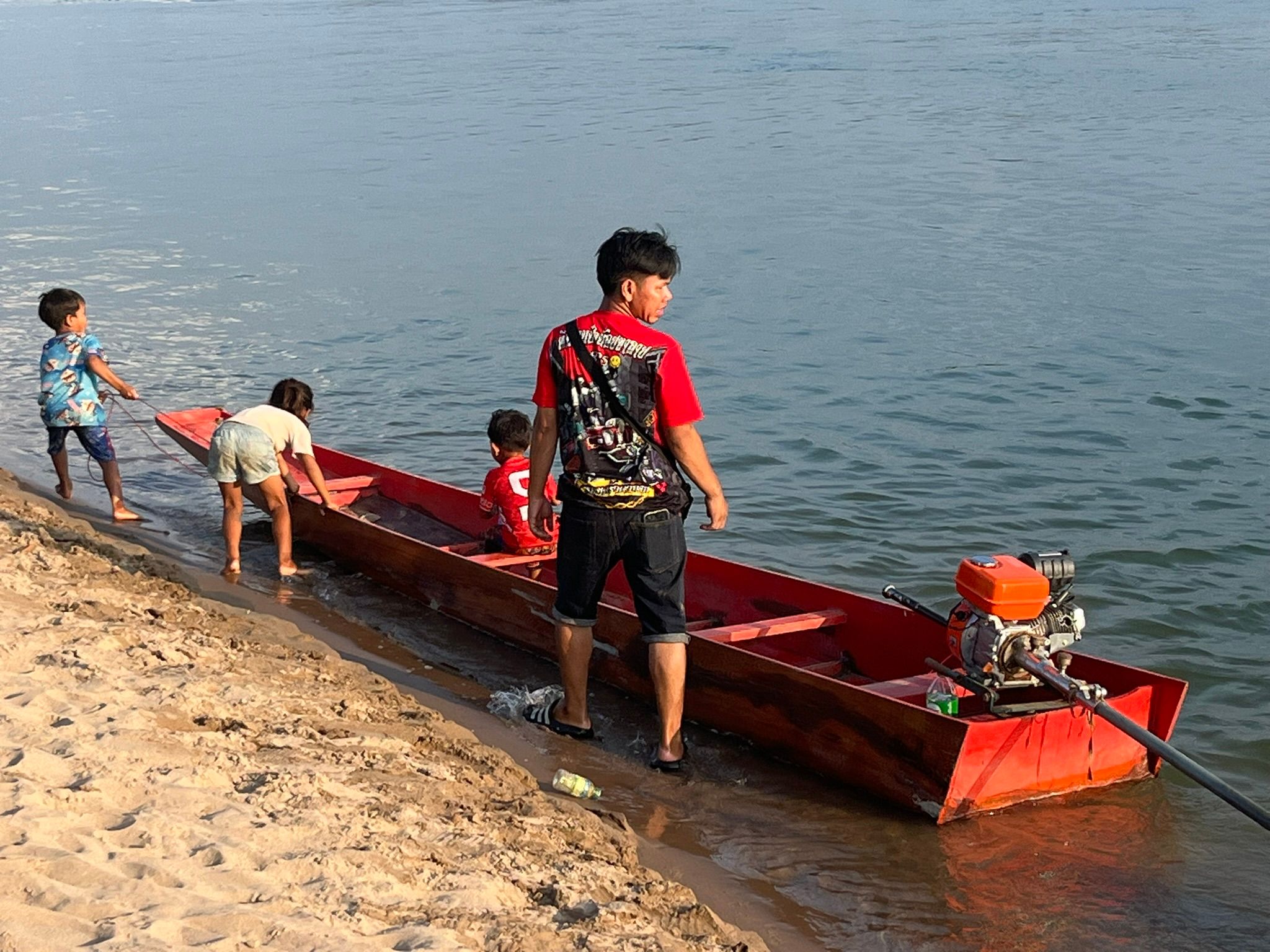
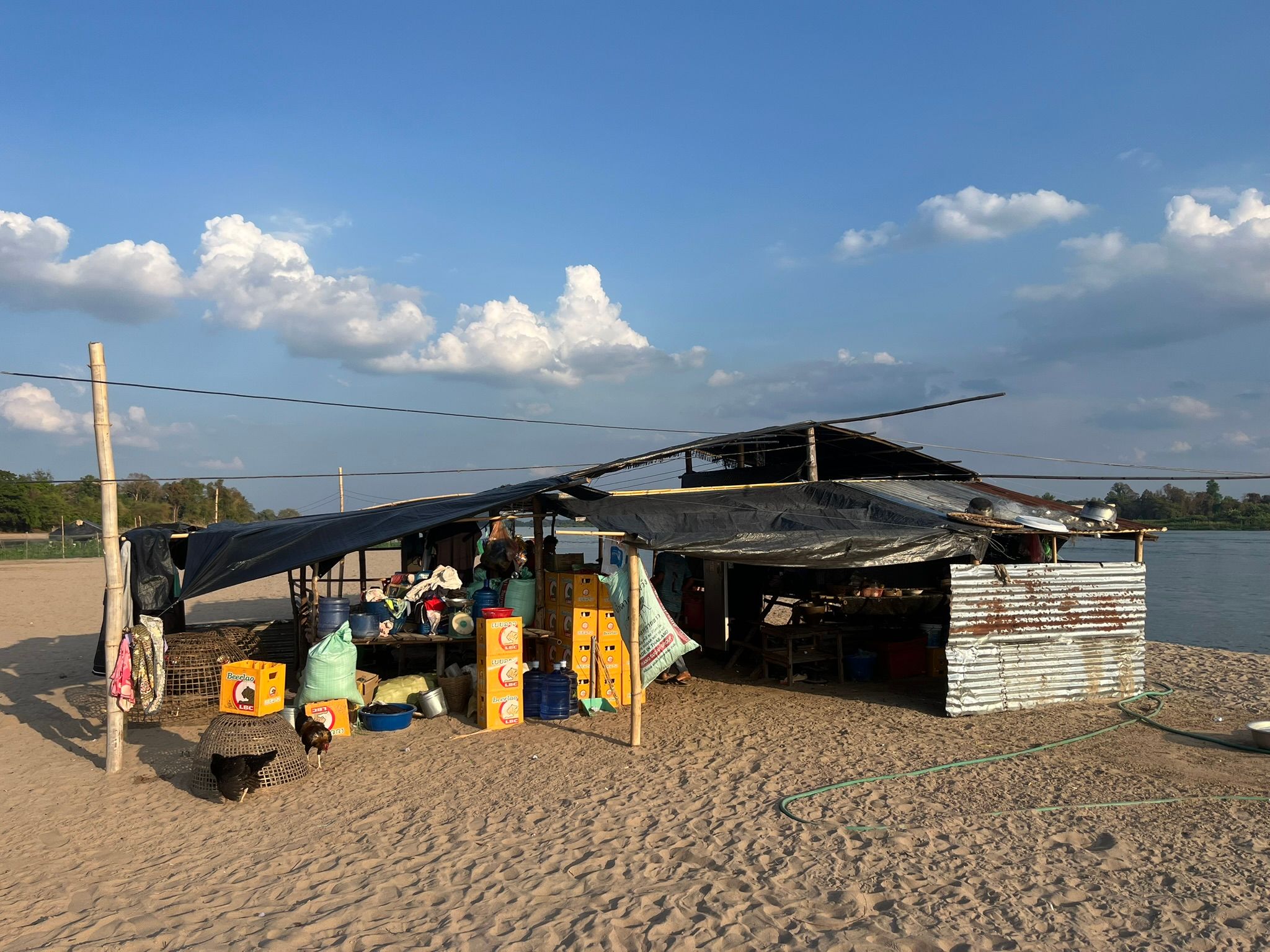
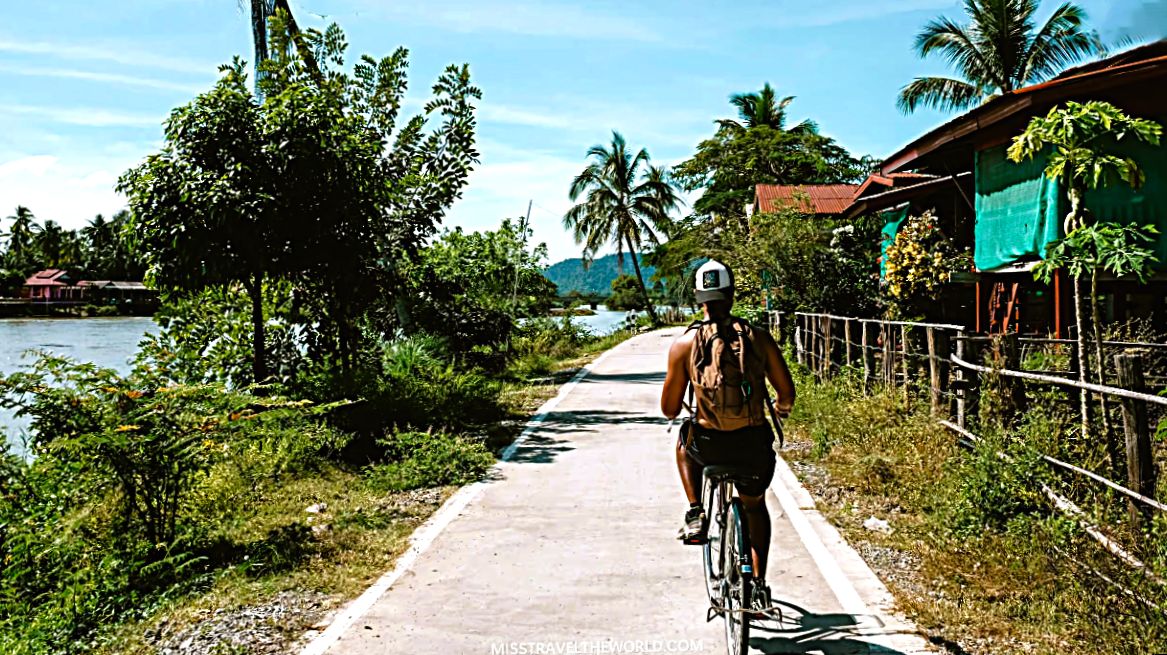
You can walk around the island in about an hour. As soon as you venture inland, Don Det becomes rural with distant rice fields, palm groves, traditional houses on stilts, and a Buddhist temple complex with a village cemetery where cows graze. During the day, you can rent a bicycle to explore Don Det and Don Khon. In the evening, you book a sunset boat trip for 100,000 Kip or just over three euros and land on the small sandy island of Don Nang Quad, where Laotian families with motorized simple wooden boats gather, the SUV substitute for transport through the watery landscapes. On Don Nang Quad, you can bathe in the warm Mekong and have a cold Beerlao served in an improvised bar.
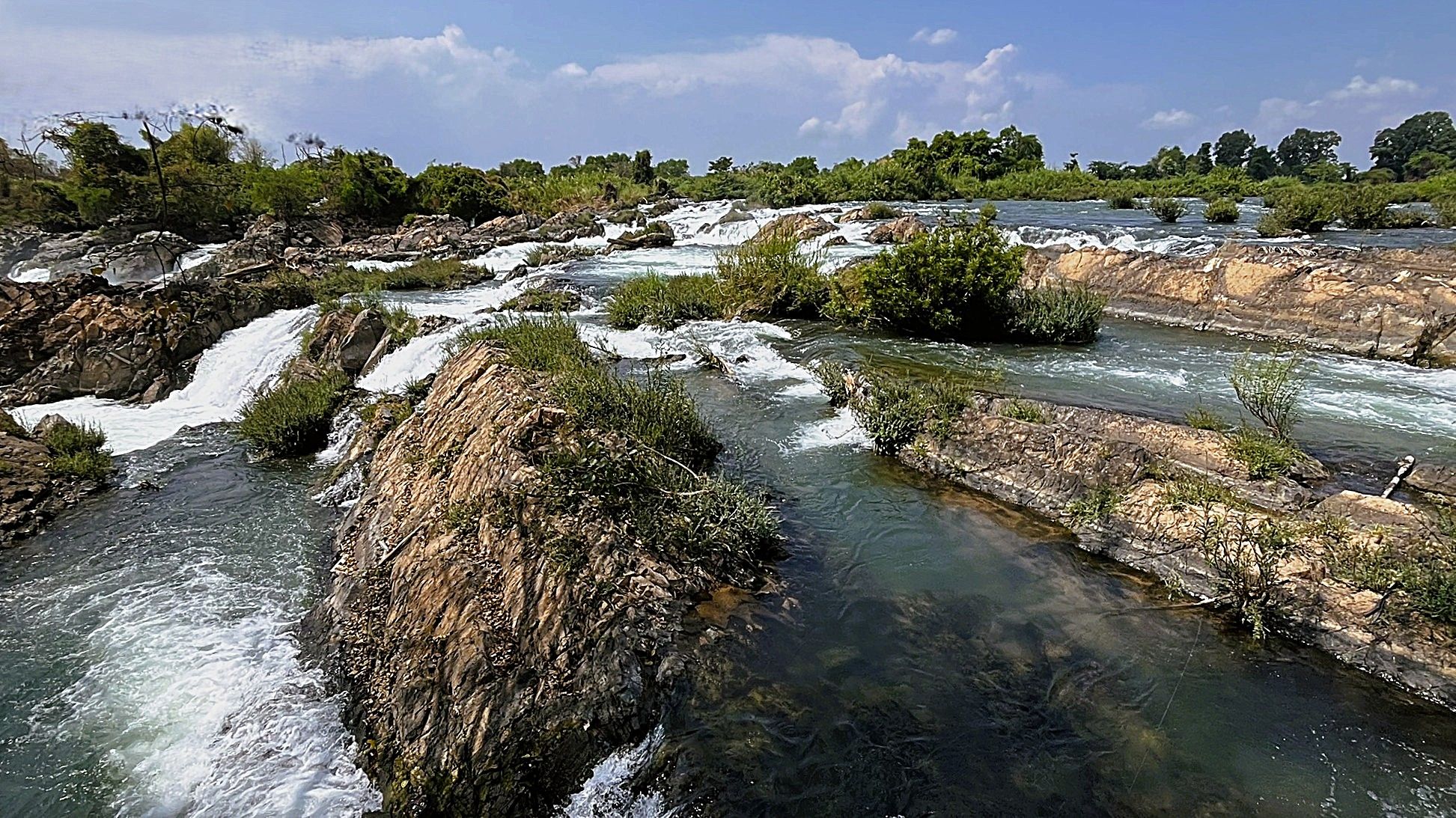
Despite their seclusion, the 4000 Islands also have a colonial history. For the French, who colonized present-day Laos, Cambodia, and Vietnam in the mid-19th century, this area was of strategic importance. They wanted to use the Mekong for shipping to China, but in the region of the 4000 Islands, they encountered natural barriers: rapids and a series of waterfalls, the most famous of which, the Li Phi Somphamit Falls, are located near the southern tip of Don Det and at the neighboring island of Don Khon. Here, the Mekong overcomes a drop of up to 24 meters - no chance for ships to get through.
Elephants and Locomotives
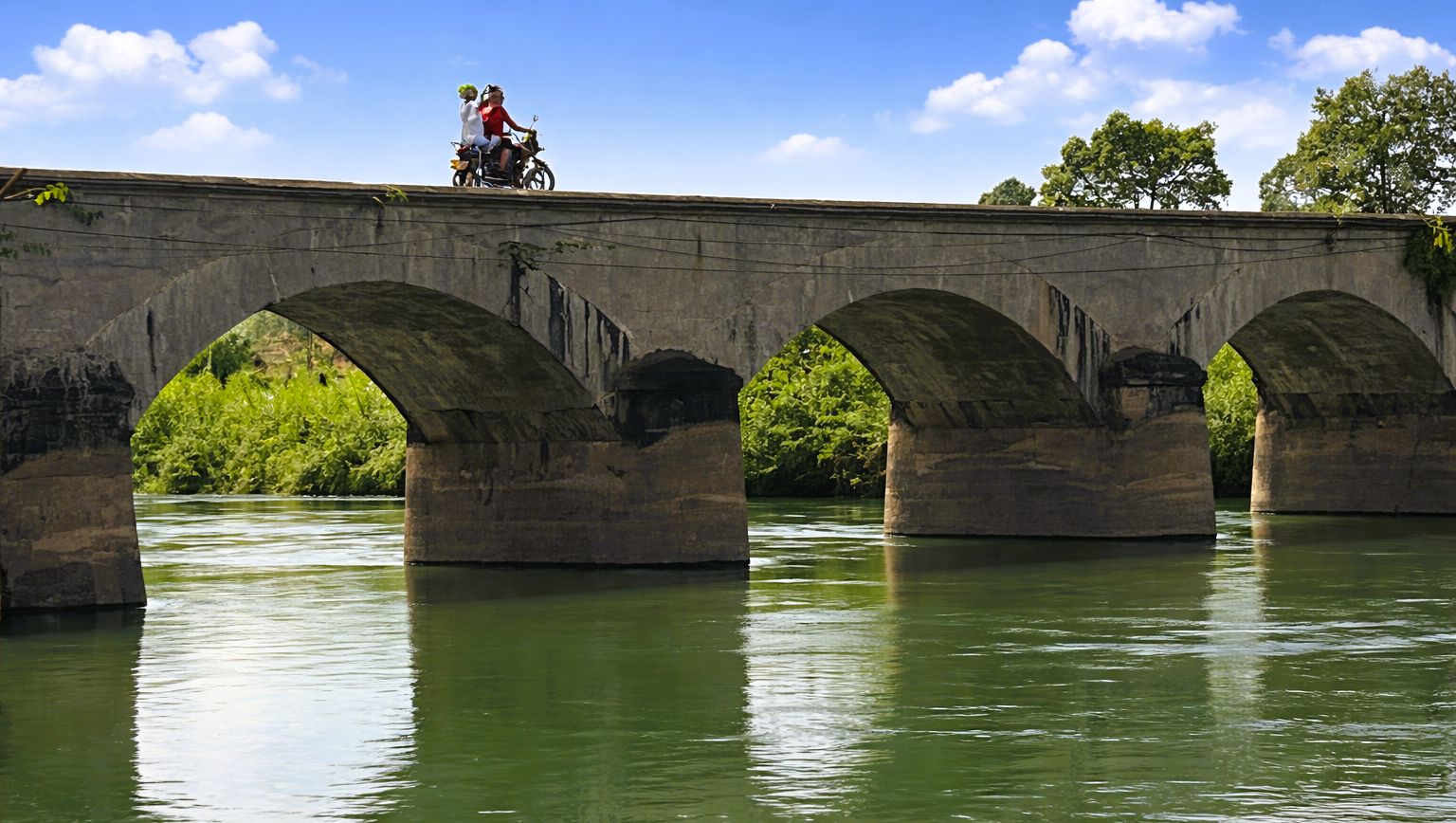
Around 1900, the French began building a narrow-gauge railway from Don Khon to Don Det to transport goods and passengers over land past the waterfalls from one Mekong port to another. They connected the two islands with a railway bridge. On the meter-gauge track, elephants were used as draft animals for transporting materials, and small steam locomotives carried up to 100 tons per ride.
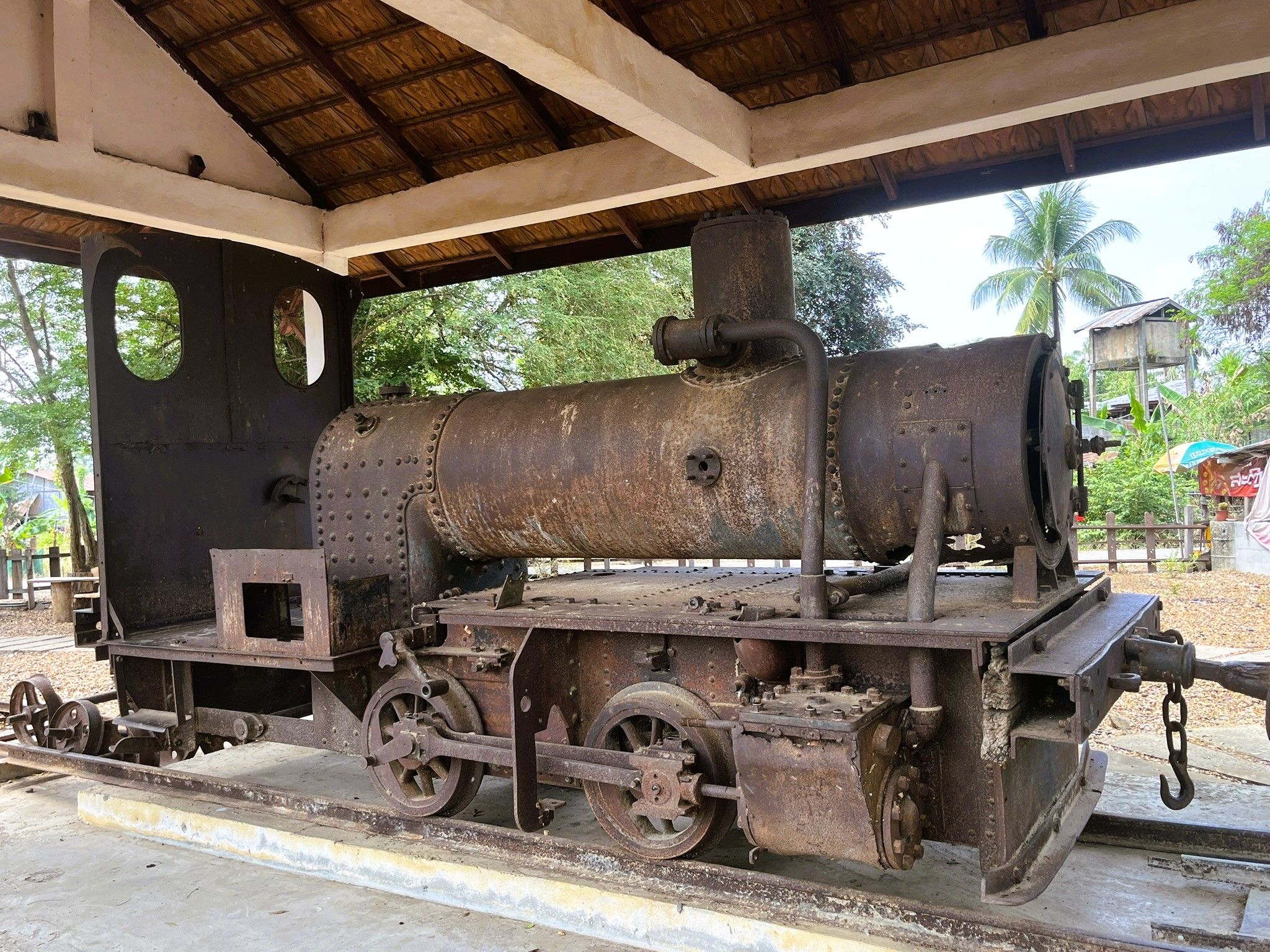
After the French left in 1953, railway traffic was halted. Near the bridge on the Don Khon side, a rusted steam locomotive can still be seen. The tracks on the bridge were removed; bicycles and motorcycles, tuk-tuks, and pedestrians now use it to cross from one island to another, while in the jungle, tracks, half-overgrown with vegetation, remind us of the colonial past.