
In Langkawi slow down the pace
After an exciting journey through Malaysia, I want to slow down and travel for ten days on the island of Langkawi.
Published: 04.05.2026
In February 2025, after departing from Malaysia, I spent a few weeks vacationing in Thailand, first at Patong Beach on the island of Phuket, then in Hua Hin about 200 km south of Bangkok. Phuket was the first place I visited in Thailand. It has been nearly thirty years: I was in Hong Kong for work in 1997 and decided to extend my stay with a few vacation days, and a clever travel agency employee sold me a luxury stay at the Banyan Tree Resort on Bang Tao Beach.
However, Phuket has changed so much to its detriment in the past three decades, partly due to much Chinese money, that I firstly don't want to return and secondly don't want to write about it.
At the beginning of March 2025, I flew to Chiang Rai, not to be confused with the more famous Chiang Mai nearly 200 km to the south. Chiang Rai is Thailand's northernmost large city and at first glance appears to be a typical Thai provincial town: pedestrians navigate between roaring tuk-tuks and motor scooters across the streets. There are the usual massage parlors and bars, but on a much smaller scale than in the popular tourist hubs, a night market, street kitchens, and a 24-hour open 7Eleven supermarket on every corner.
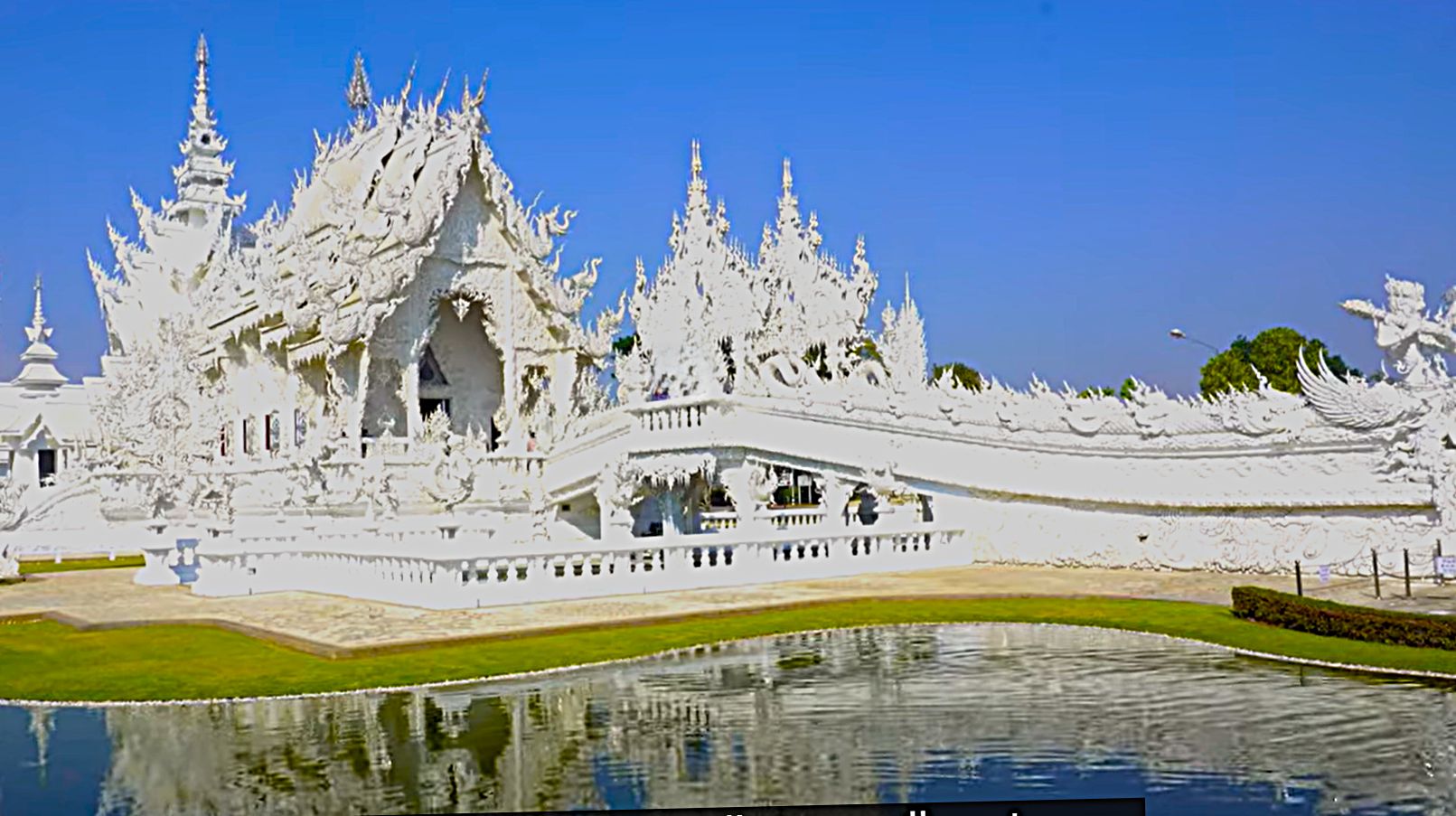
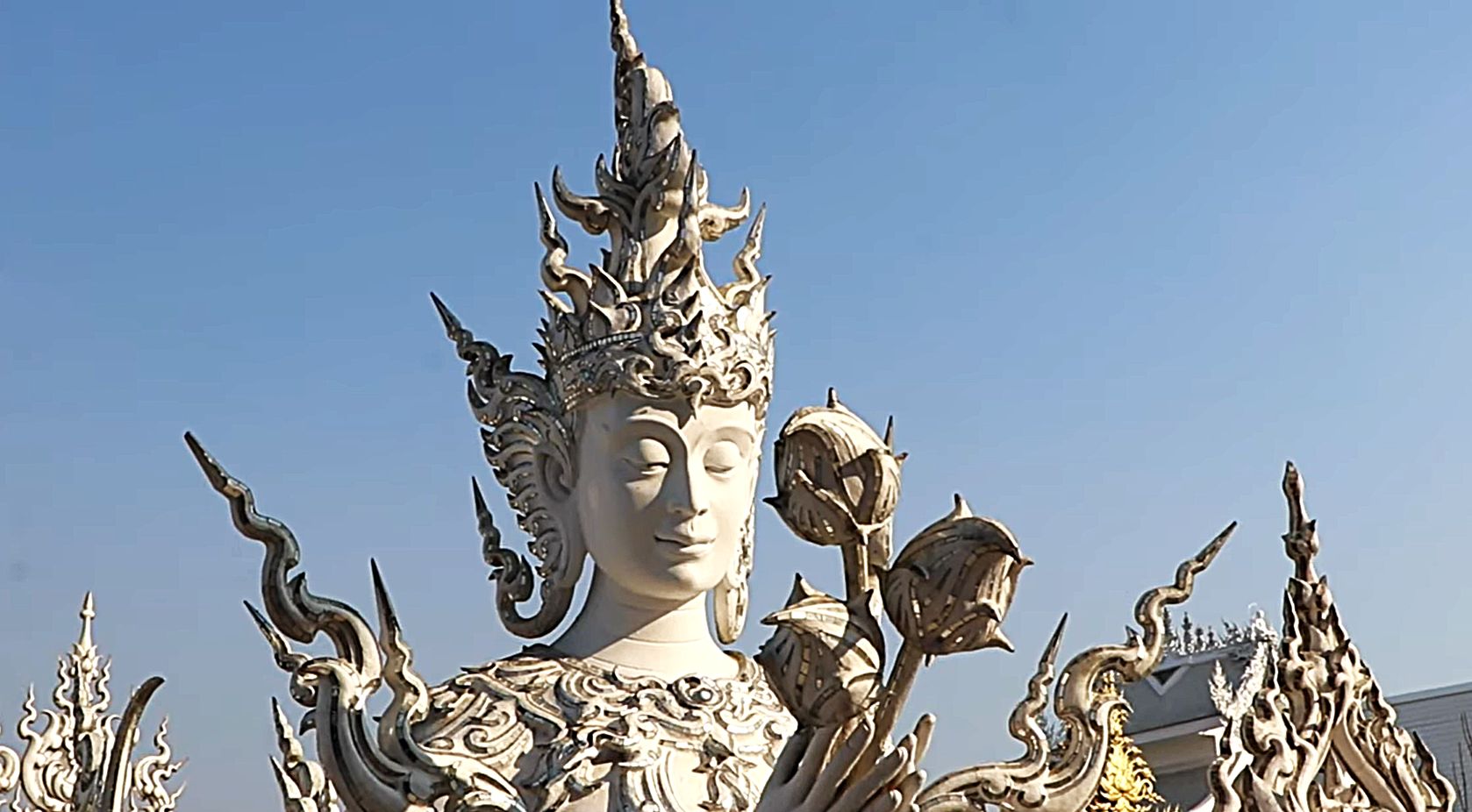
Yet Chiang Rai indulges in a few eccentricities that make the visit an unforgettable experience, even if they are quite recent and resemble a kind of Buddhist Disneyland: First, there is Wat Rong Khun, the so-called White Temple. It was designed by the famous artist Chalermchai Kositpipat and opened in 1997. The intricate structures with their white façade, adorned with thousands of shards of glass, glisten in the sun and dazzle their visitors.
The temple's architecture, with its pagoda rooftops, is traditional. However, it is adorned with symbolic elements, with hundreds of hands reaching out towards you, oversized elephant tusks, and figures from popular culture like Michael Jackson or Superman. I could wander around here for days discovering new things. Like Antoni Gaudi's Sagrada Familia in Barcelona, Wat Rong Khun is also far from finished.
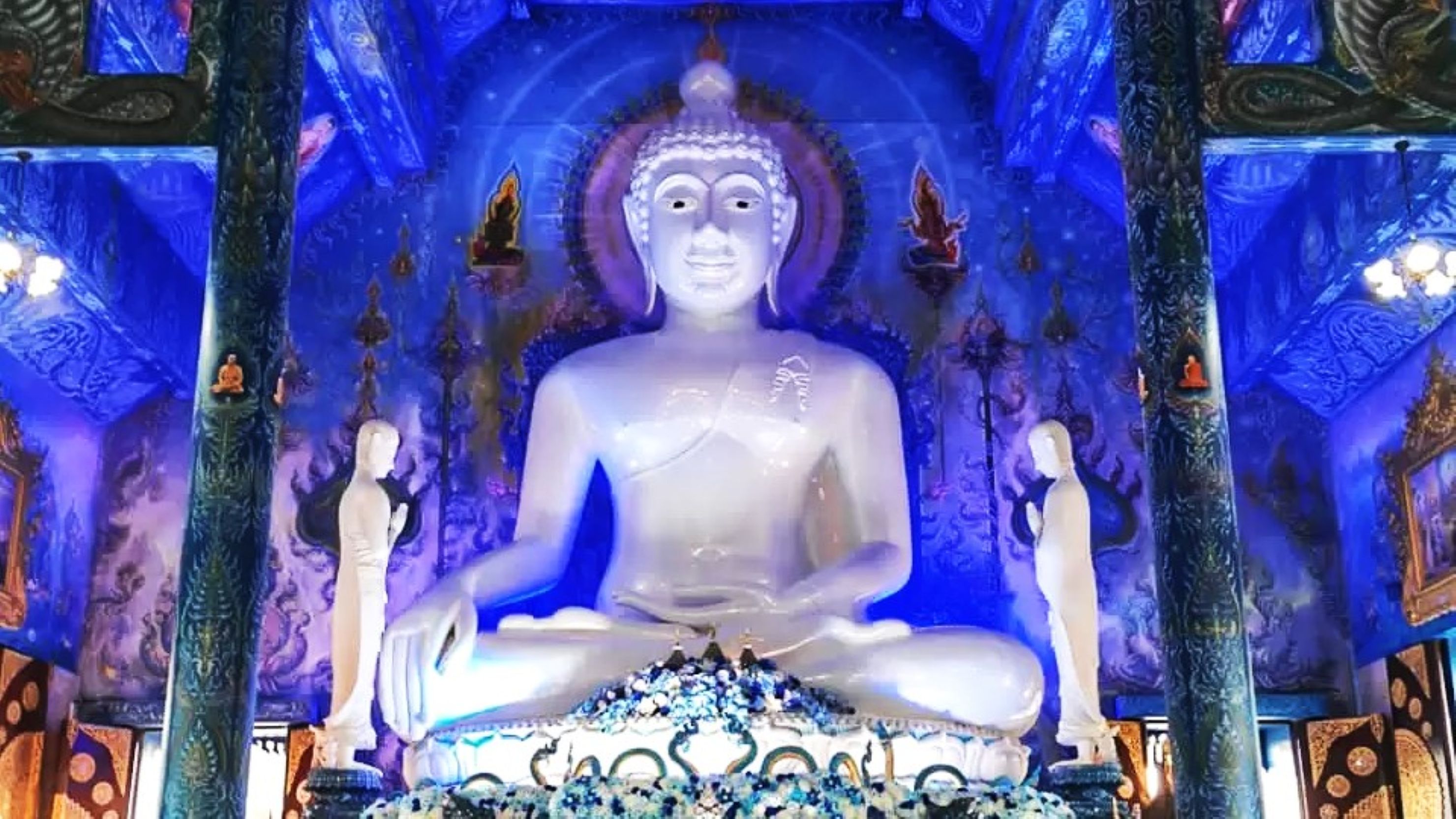
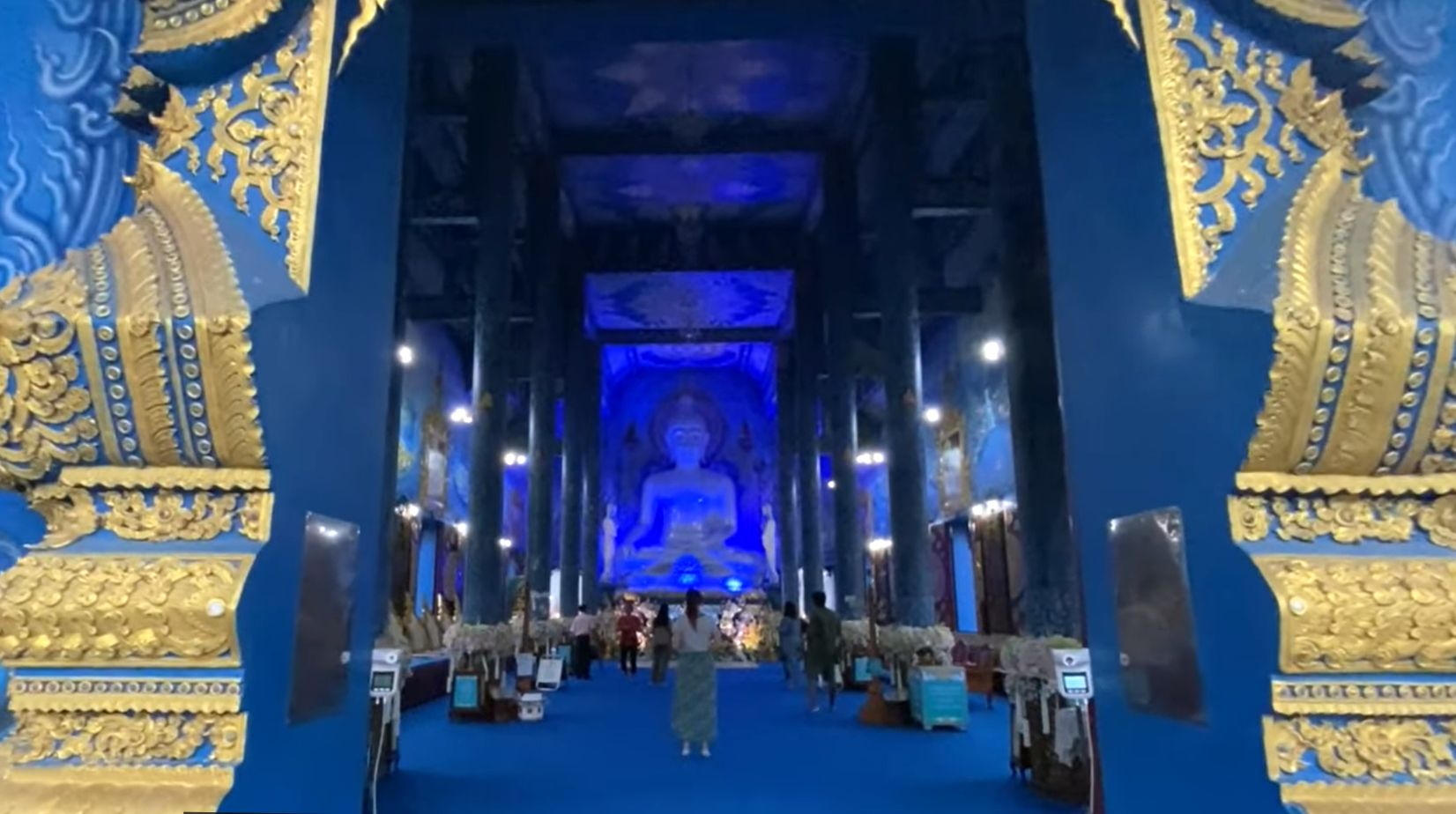
Equally psychedelic as the White Temple is the Blue Temple, Wat Rong Seur Ten. It was built from 2005 on the site of a dilapidated old temple. The design is by the artist Phuttha Kabkaew, who previously worked with his master Chalermchai Kositpipat on the White Temple. The Blue Temple is also lavishly adorned with magnificent ornaments and statues.
Hollow Goddess
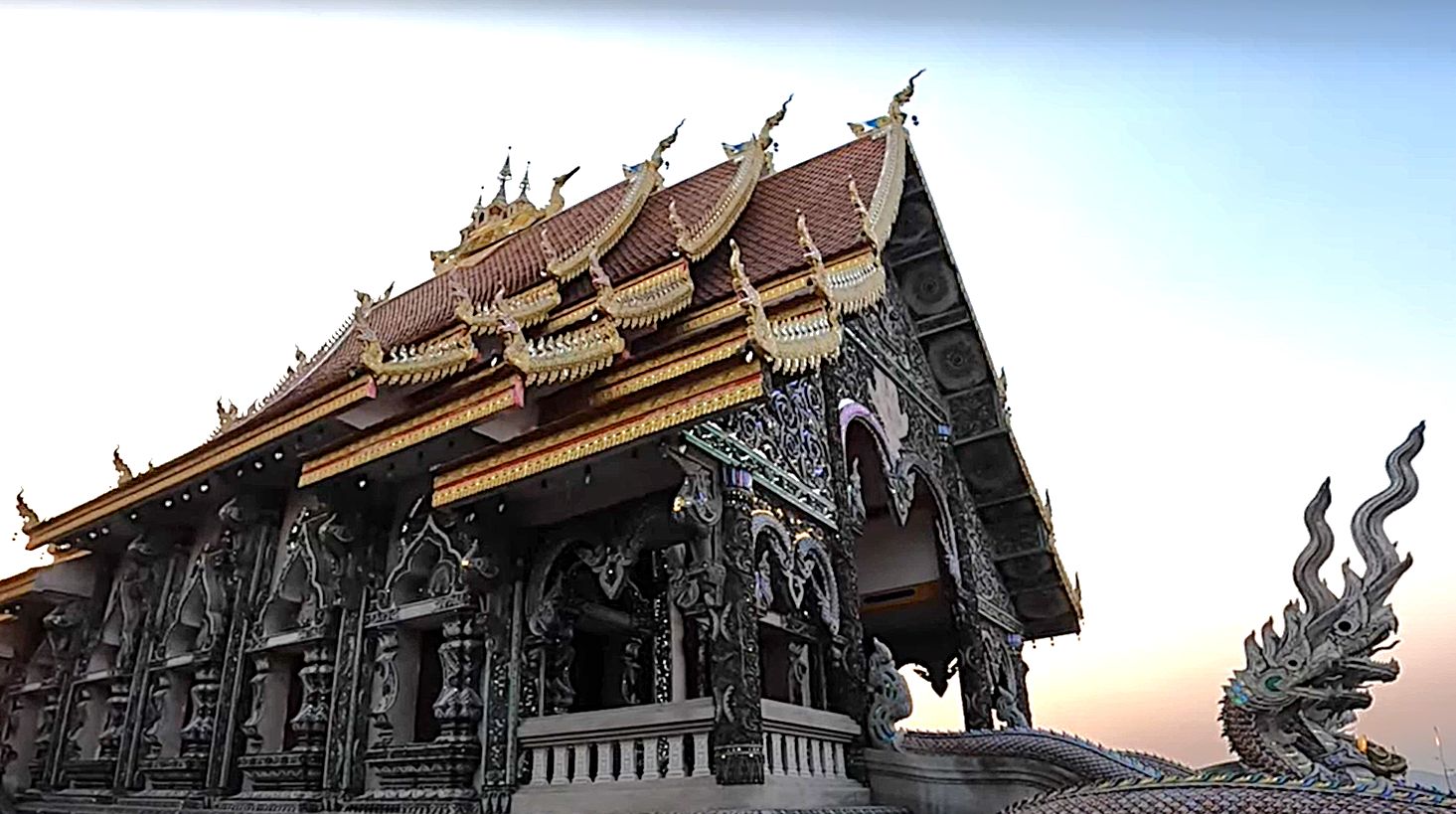
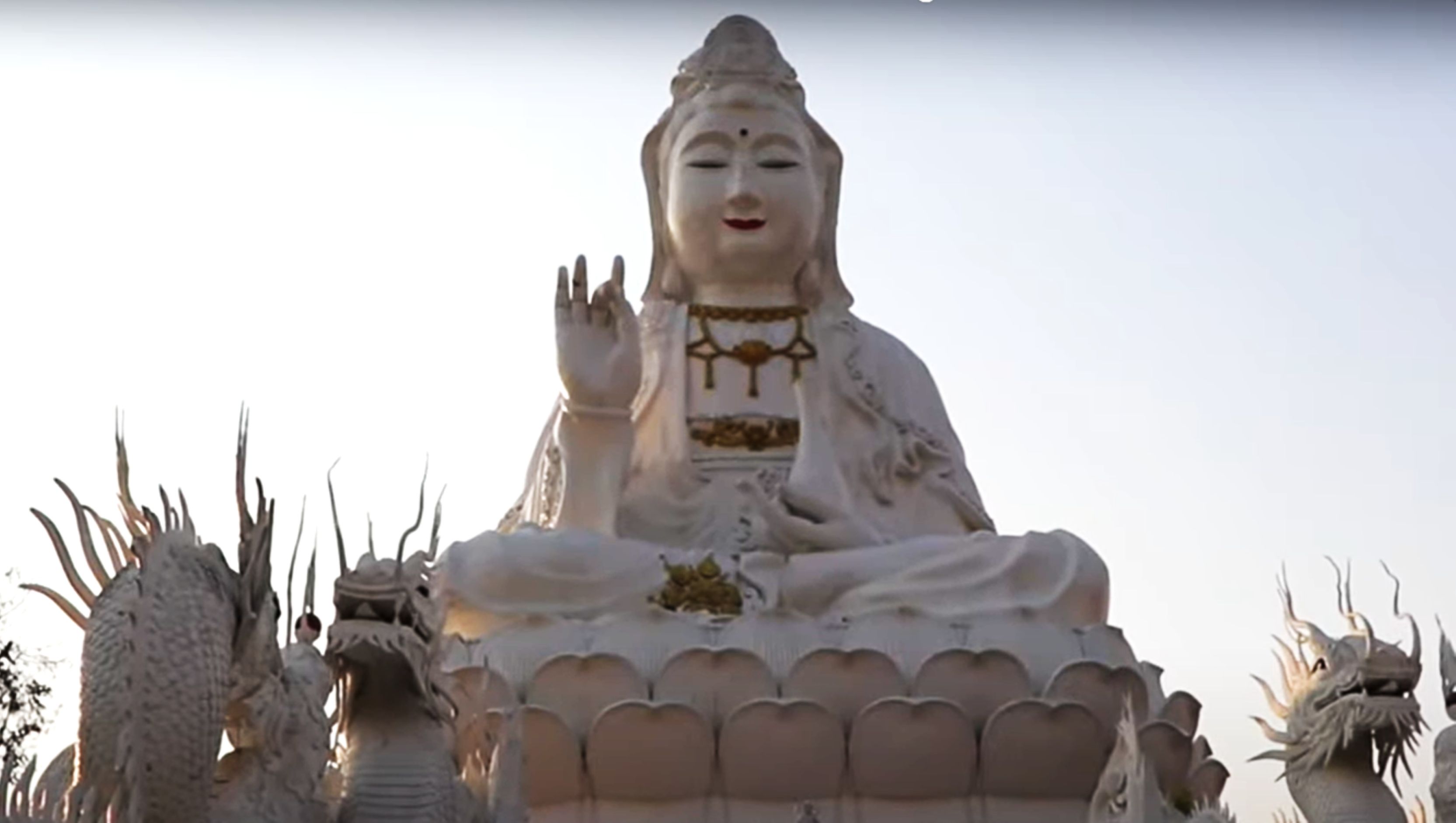
Thirdly, I visit the gigantic, 70-meter-high statue of Guan Yin, the Buddhist goddess of mercy, in Chiang Rai. The goddess is hollow: Inside, an elevator ascends 25 stories high. From the windows, you have a stunning view of the hilly landscape, the rice fields, the city, and above all the temple complex right next to the giant statue, Wat Huai Pla Kung. Its pagoda is also impressive: it resembles a nine-story pyramid.
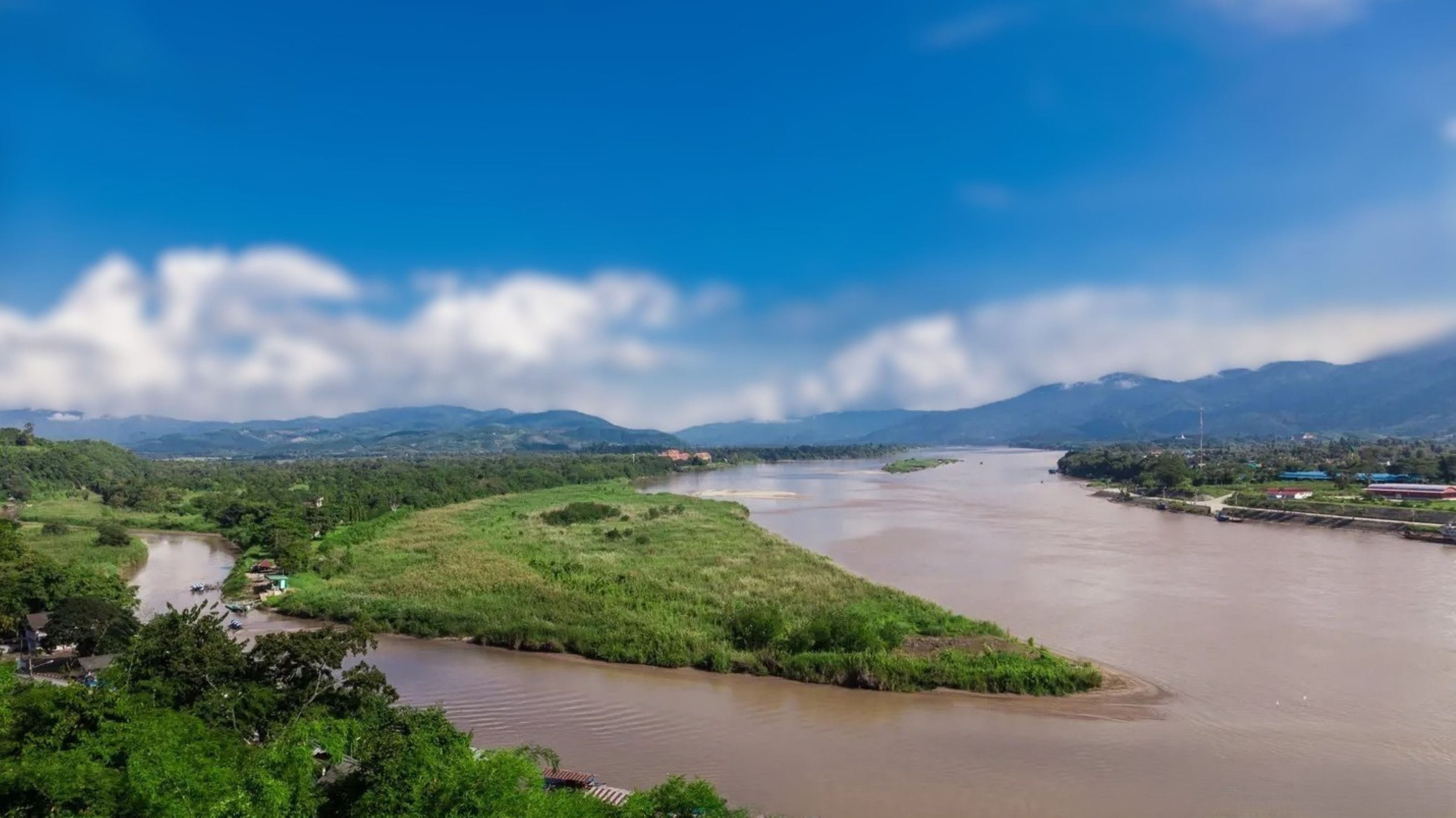
I did not come to Chiang Rai solely because of the temples but also because I want to travel down the Mekong to Luang Prabang in Laos from here. But first, I visit the Golden Triangle. It is called a “triangle” because here Thailand, Myanmar, and Laos meet, and “golden” because the opium traders found an inexhaustible goldmine here.
Starting from the early 19th century, French and especially British colonists began commercially exploiting the opium produced in the area. The British promoted its sale in China and Southeast Asia, which developed into an immeasurable, widespread addiction problem.
War over Opium
Great Britain even waged the so-called Opium War against the Qing Dynasty of China from 1839 to 1842 because Chinese authorities had dared to confiscate opium stocks of British traders to combat the opium trade. The Chinese lost the war and had to submit to British dictates.
After a prolonged lull, in the 1950s, a large portion of the world's opium production was relocated to this mountainous region, as the main producers China and Iran interrupted cultivation. More than two-thirds of the world's opium sold, a significant portion refined to heroin, was ultimately produced in the area. Instable political conditions, especially in Myanmar (Burma) and Laos, further propelled the drug trade, as insurgent groups and government-backed secret armies financed their civil wars with it, and corrupt officials filled their pockets.
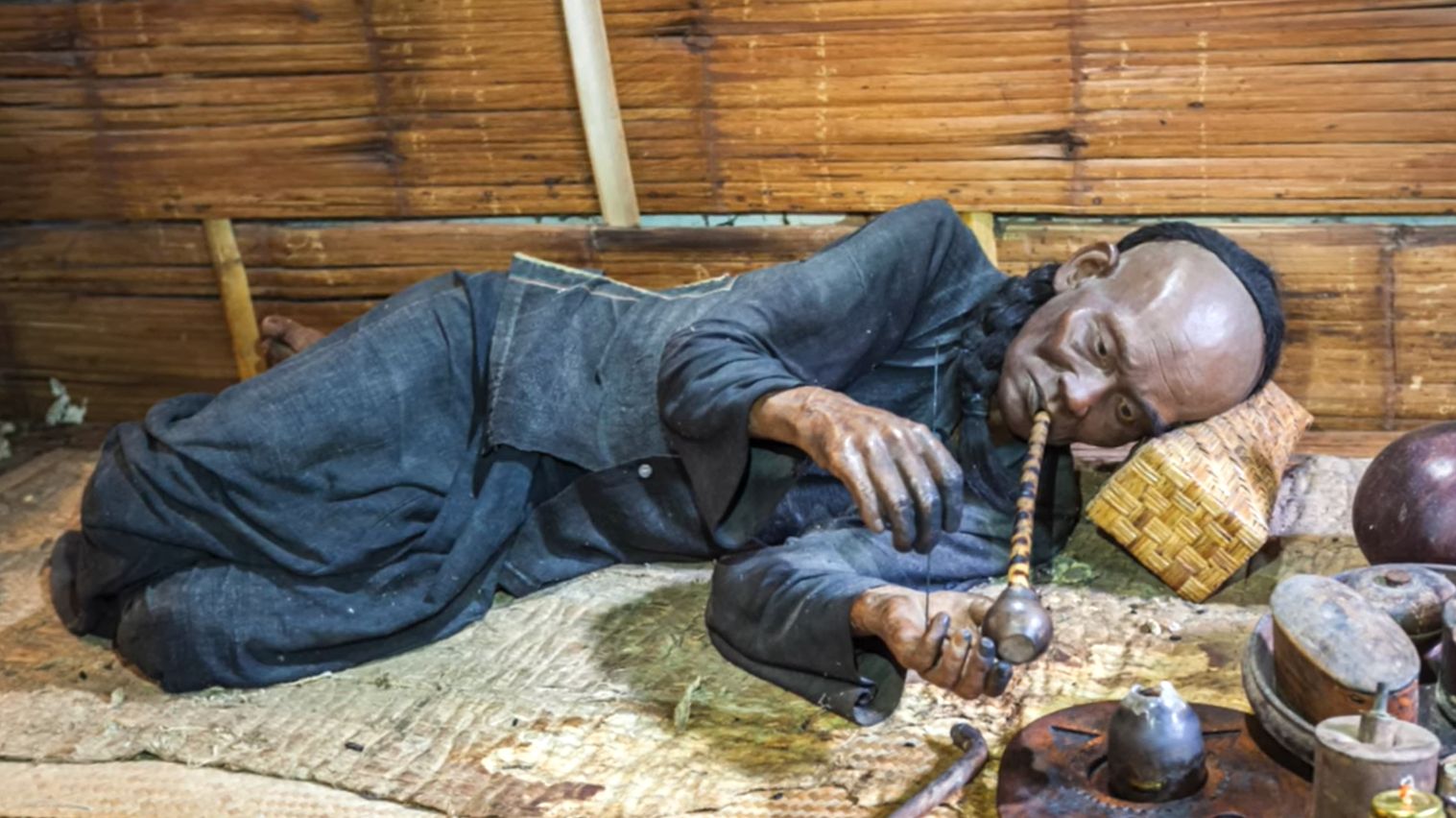
Thus, I associate the “Golden Triangle” with images of vibrant blooming poppy fields, opium-smoking indigenous people, and secret drug laboratories.
In fact, all of this is history. In recent decades, the cultivation and trade of opium have been drastically reduced. The affected countries, particularly Thailand, have made partly successful efforts to replace opium with other agricultural products such as coffee, tea, and macadamia nuts, which provide new sources of income for the local population.
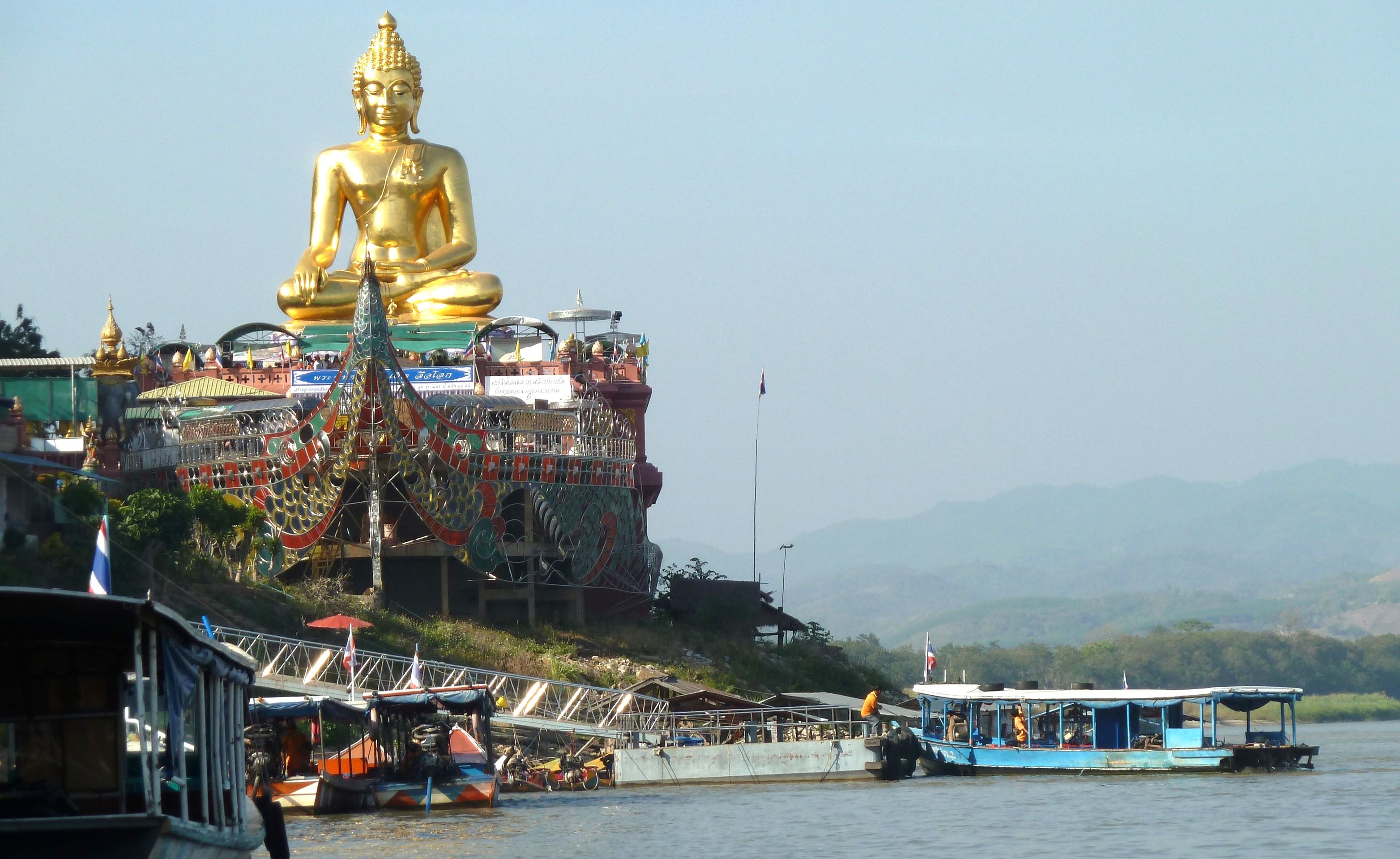
Chiang Saen on the Mekong, right at the border with Laos, is not only a pleasant locality with a huge golden Buddha statue. The House of Opium in Chiang Saen displays the history of poppy cultivation, the production of opium, and trade, along with its cultural and societal impacts.
Chinese Laboratory City
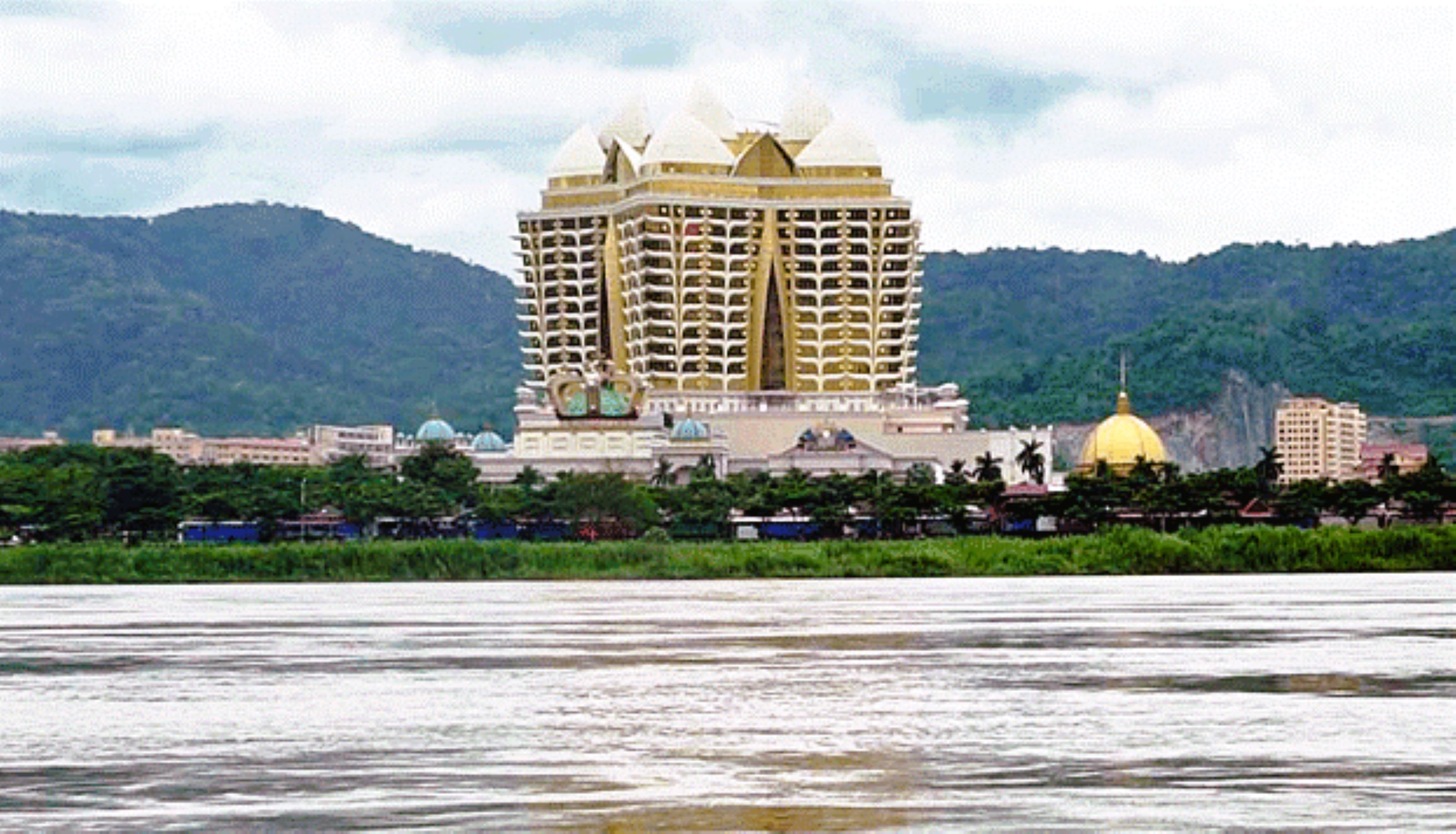
Across the Mekong stands the symbol of a new addiction: Laos has set up a special economic zone here and leased it to Chinese companies for 99 years. Along the riverbank, a pompous laboratory city is being erected, with casinos, hotels, apartment blocks, schools, and shopping centers. A “new Macau” is to emerge here.
The casinos in Macau itself, in the former Portuguese colony 60 kilometers west of Hong Kong, which was handed over to the People's Republic of China in 1999, now surpass those in the American gambling paradise Las Vegas: In the first quarter of 2025, gross revenue from gambling in Macau was about $7.2 billion, compared to an estimated $4.5 billion in Las Vegas, as reported by relevant publications.
Here, in the middle of the Laotian pampas, everything is Chinese: the workers and employees, the owners of the hotels, the businesses, and the Kings Romans Casino, which cost about half a billion dollars to build. Guests largely also come from the People's Republic, where almost all building materials for the new laboratory city were delivered. The international airport Bokeo was financed and built by Greater Bay Area Investment and Development Limited from Hong Kong at a cost of about $225 million.
Many Germans and Swiss likely have incurred unpleasant experiences with the special economic zone without knowing it: it is a hotspot for cyber fraud. Hoards of young people, lured by false job promises and partly held like slaves, attempt from here (and from other locations in Laos and Cambodia) to defraud unsuspecting internet users of their money with all sorts of sophisticated fraud techniques and schemes. Romance scams, investment and crypto fraud, and other methods to squeeze money out of the ignorant or naive are carried out here on a large scale and obviously with success.