

Sights, Pagodas, and Bad Food
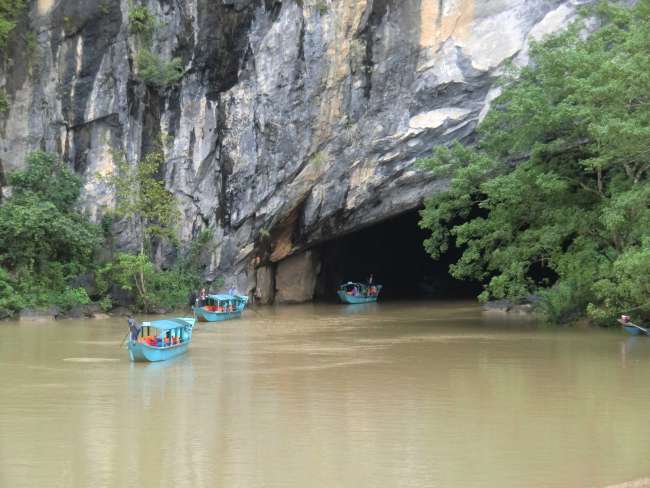
Ninh Binh Province in the Red River Delta is known as the 'Halong Bay on land' because majestic rocks rise from the rice fields and lakes here as well.

Published: 27.04.2026
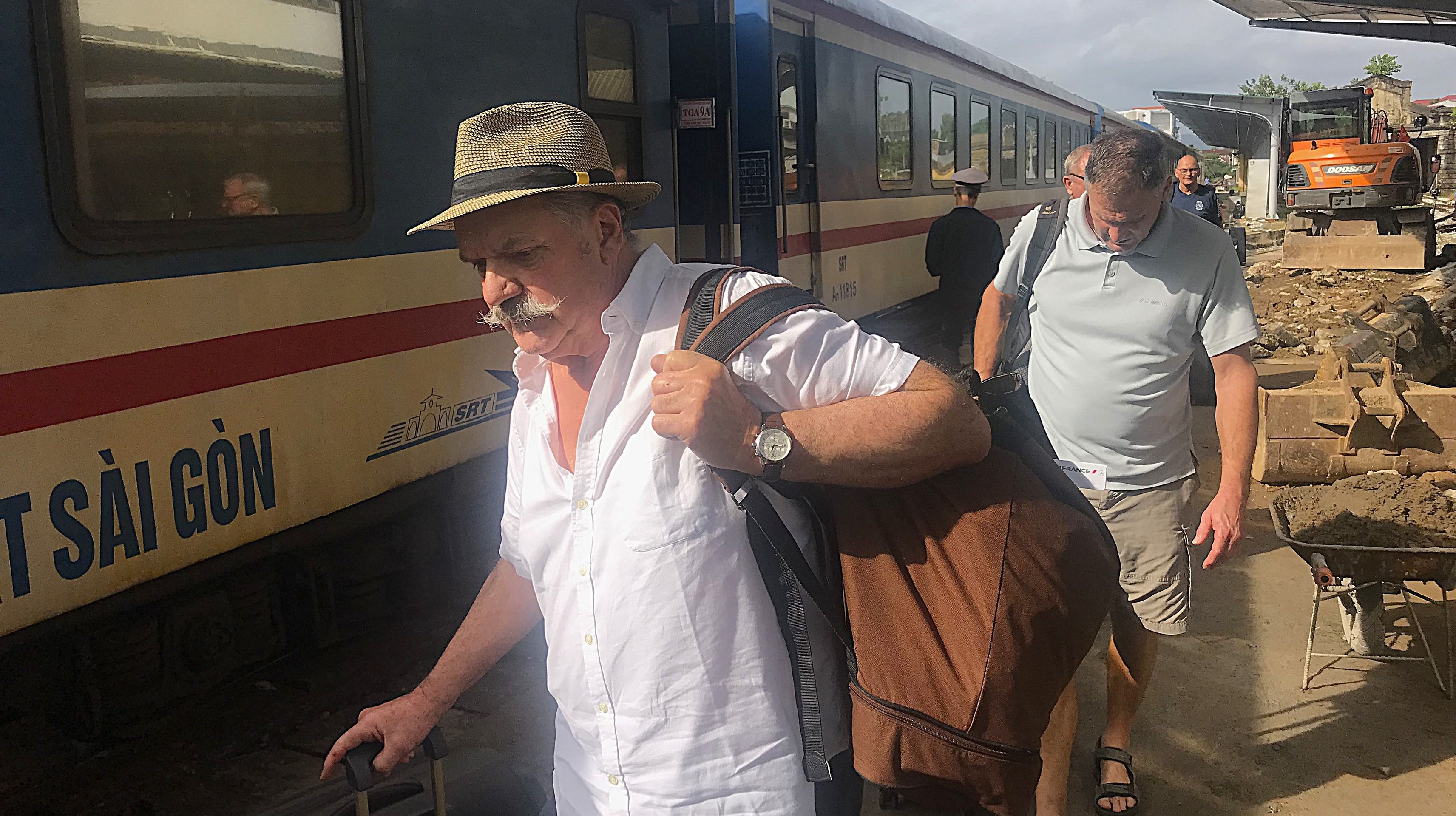
For the nearly twelve-hour journey from rural Ninh Binh to the former imperial city of Hué, I opted for the night train. I have used this mode of transportation several times in Europe as well. To say I became a fan would be an exaggeration: For my comfort, dining cars, comfort, and refinement are lacking.
The Vietnamese train wasn’t much better either, which travels the 1726 km long route between Hanoi and Ho Chi Minh City (formerly Saigon) multiple times a day. I could choose between a regular carriage with unpadded or padded seats, a six-person or a four-person sleeper cabin. I opted for this one – one must indulge oneself. The journey over twelve hours or 600 km from Ninh Binh in the north to Hué in central Vietnam cost me about 40 euros.
When I boarded, a well-groomed Vietnamese couple had already taken the upper beds; a German holiday traveler settled into the berth next to me. The sleeping space was cramped, hard, and equipped with a pillow, a sheet, and a musty duvet. I lay down in my clothes and then slept soundly for eight hours.
Mother Mary in the Taxi
On the early morning of November 27, 2024, we stumbled with our bumpy rolling suitcases over a construction site out of the Hué train station, and of all the taxi drivers who swarmed and surrounded me outside, I chose the only woman, Linh. She identified herself as a Christian by planting a statue of the Madonna on the dashboard.
About eight out of around one hundred million Vietnamese are Catholic, about 20 million are Buddhist; 70 percent identify as atheists. Yet, I have rarely witnessed the Nativity of Christ celebrated as fervently as here. It wasn’t always this way. Until the French and their missionaries invaded the country in the mid-19th century, Christians had been persecuted by the Vietnamese emperors.
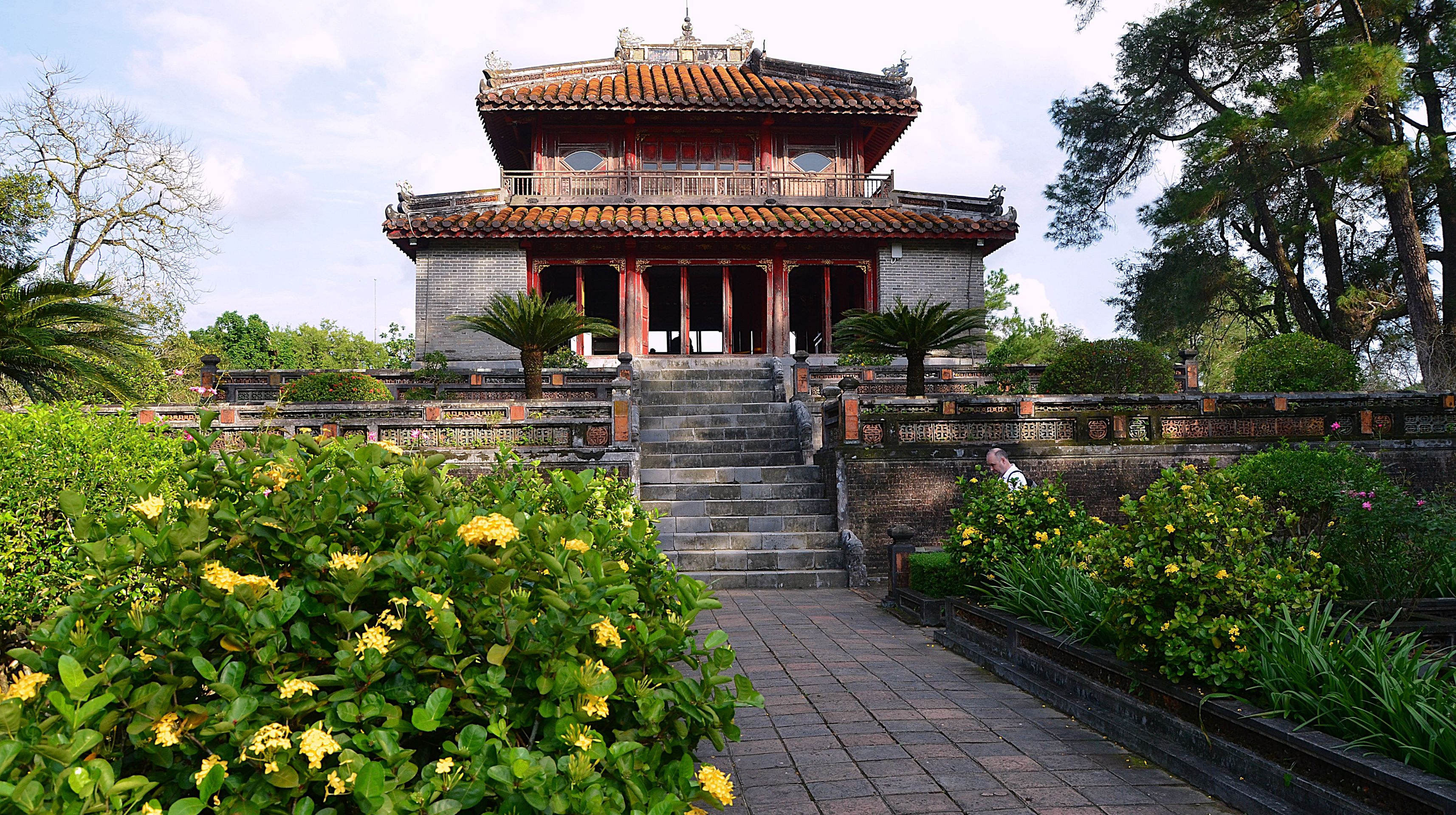
For more than a thousand years, imperial families ruled parts of Vietnam. The last was the Nguyen dynasty from 1802 until 1945, which made Hué its capital.
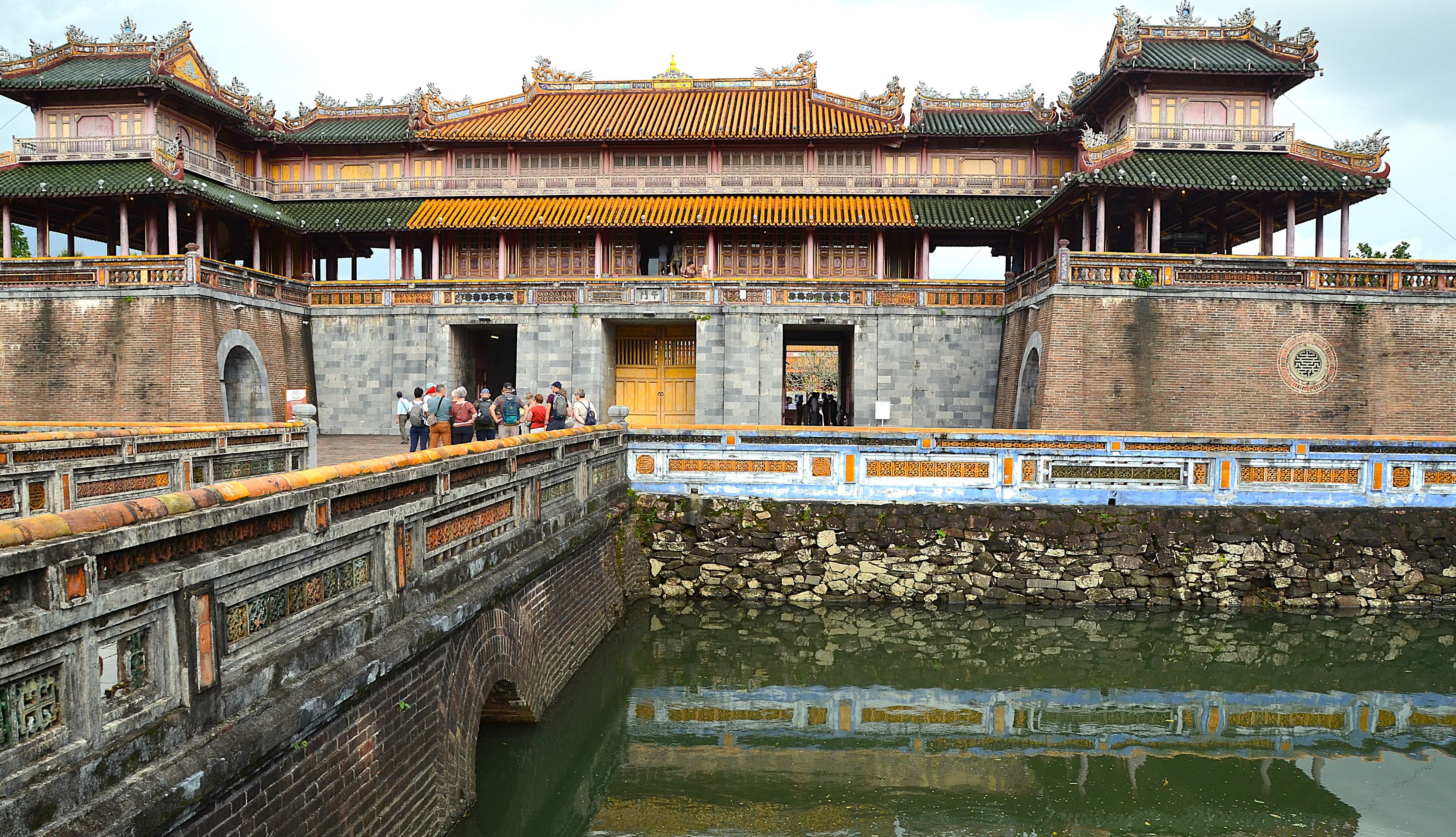
The Nguyens collaborated with the French and, from 1941, with the Japanese conquerors and were swept away after their surrender in 1945. However, 143 years of Nguyen rule were enough to fill Hué with countless UNESCO-listed relics. First of all, there is the Citadel and behind it the Forbidden City, which could only be entered by members of the imperial family and their guests, by the ruler's concubines, and the most important court attendants.
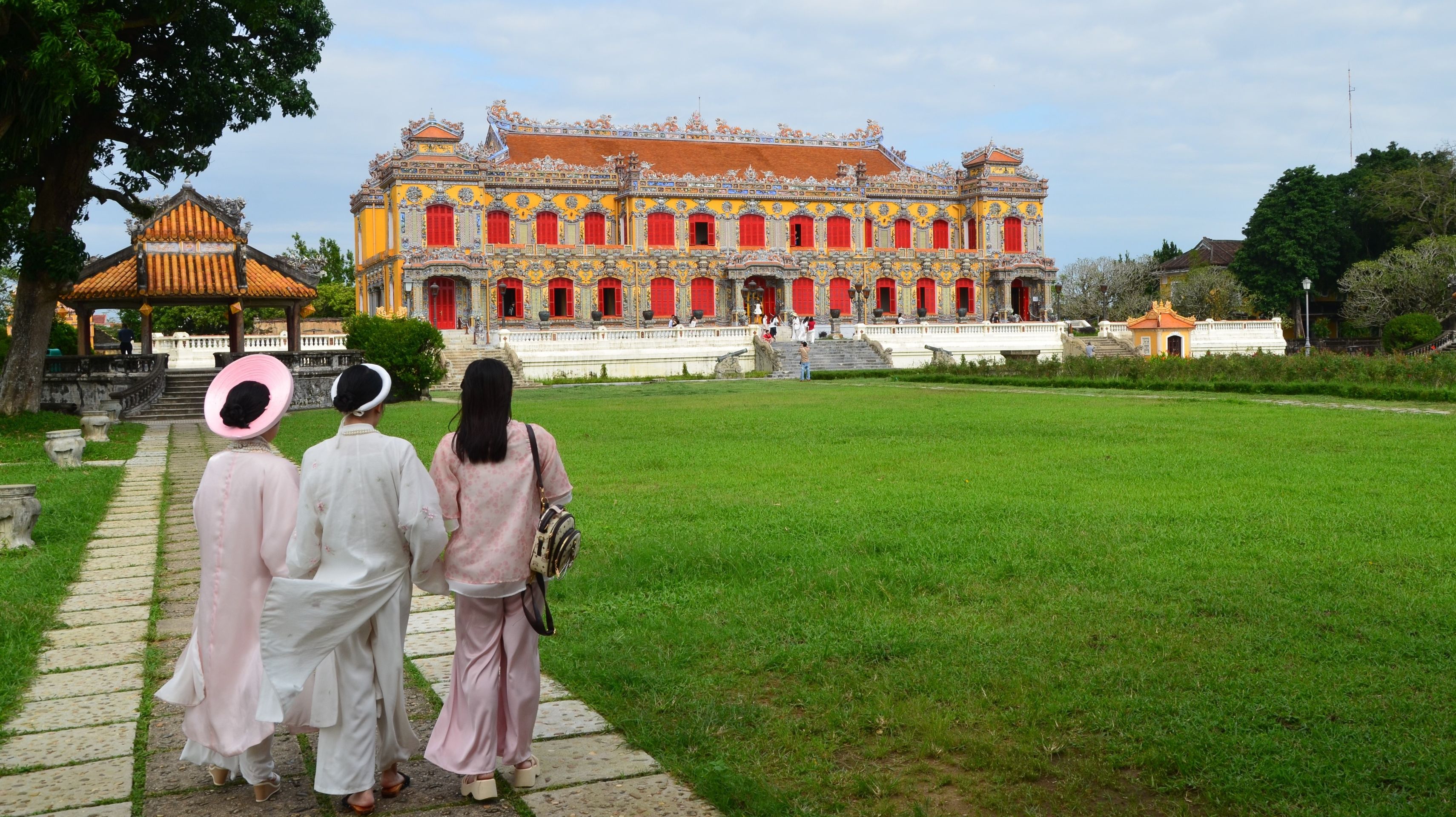
Today, in real existing socialism, young Vietnamese women stroll here in borrowed royal garments and take selfies in front of the palaces and pagodas. However, as old as the buildings appear, they are mostly not: the Kien Trung Palace, for example, was only built from 1921 to 1923.
Pomp and Potency
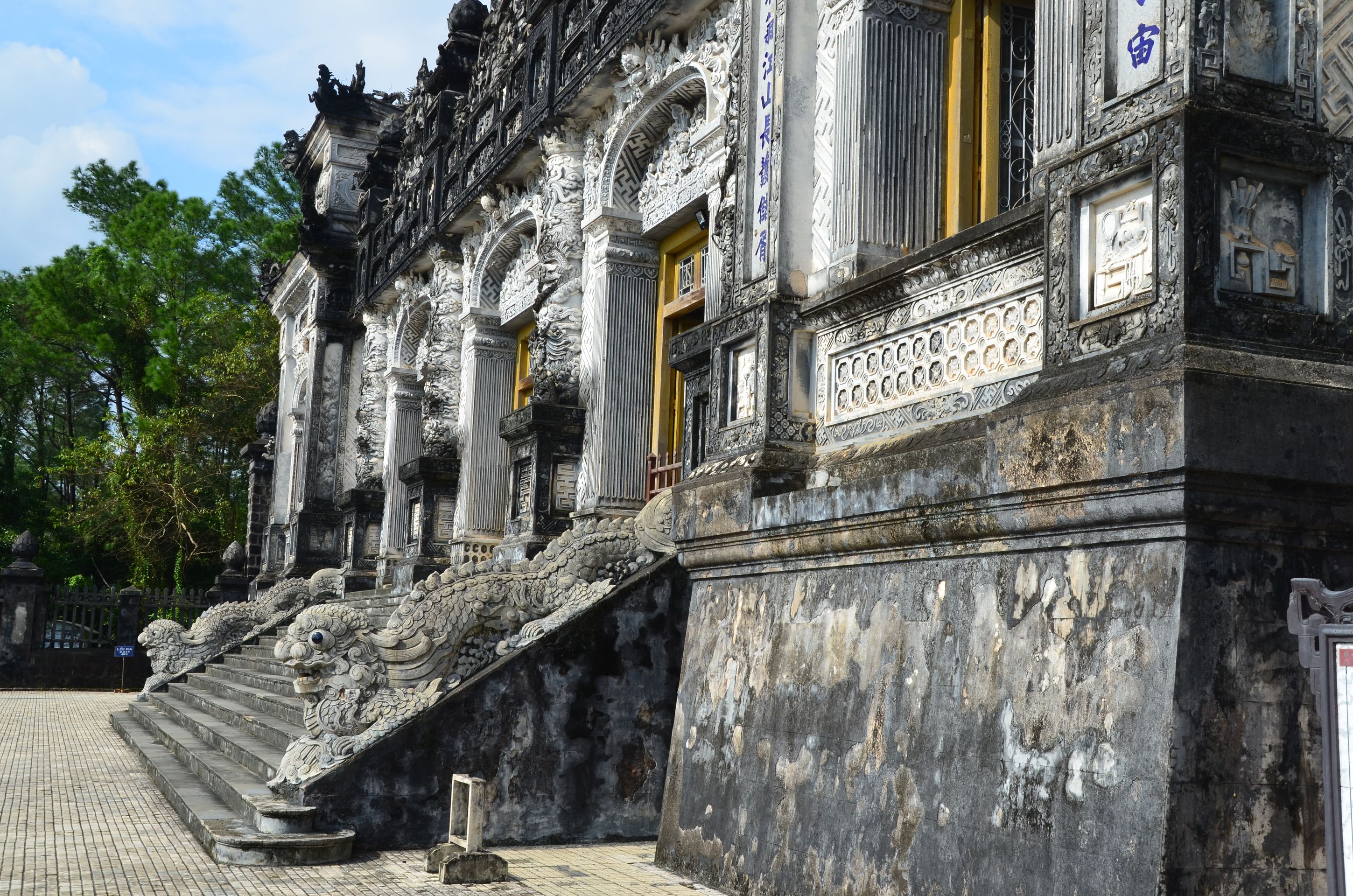
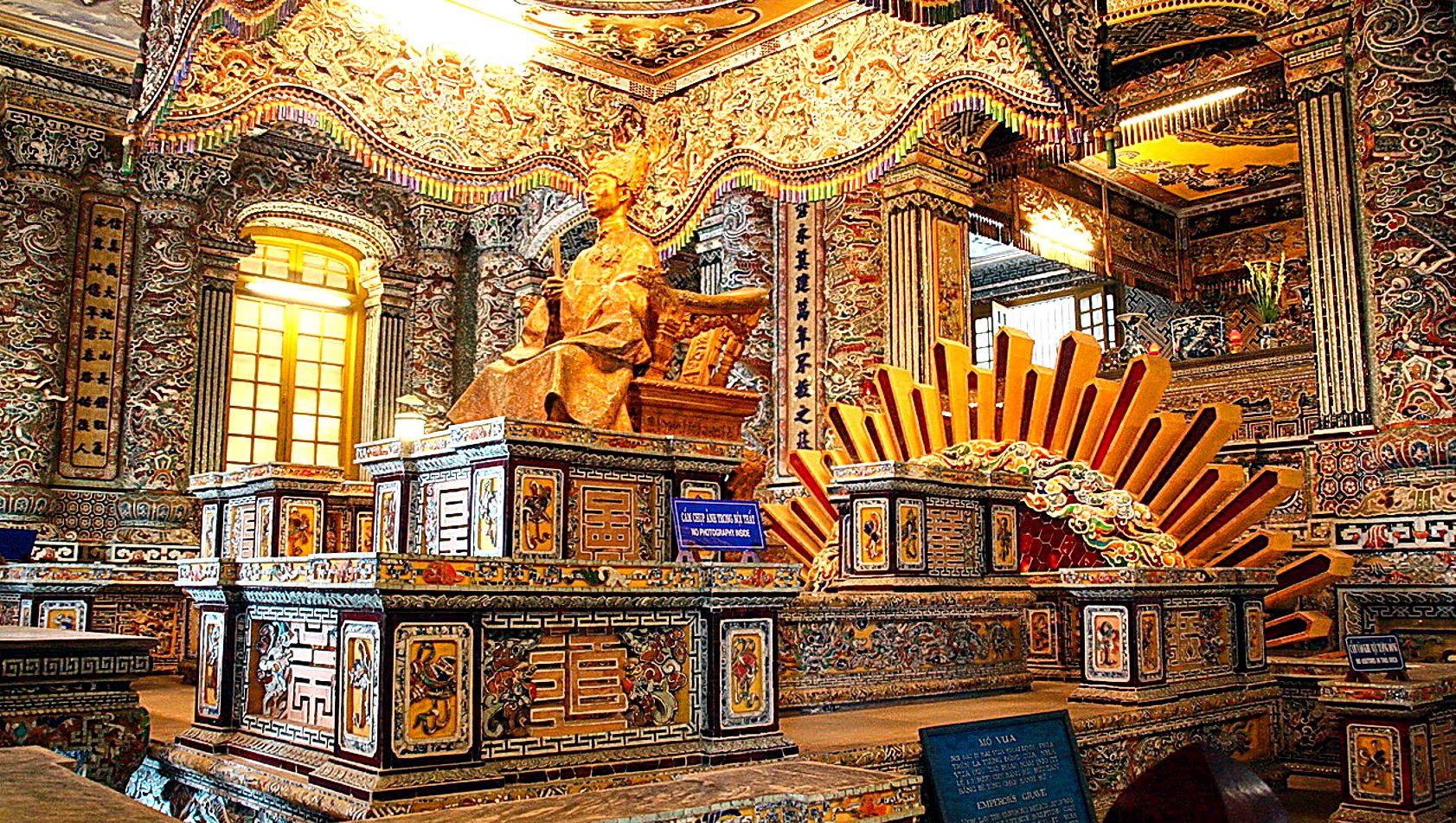
As part of imperial customs, it was customary to commission a mausoleum for oneself. The strangest is that of Khai Dinh, the twelfth and second-to-last Nguyen emperor. The building on a slope, which is ascended via a wide staircase, stands in stark contrast to Khai Dinh's significance with its pompousness. He became emperor in 1916 and was despised by the Vietnamese as the