

A defining experience
An accident in the countryside of Vietnam could have gone into my eye.
Published: 27.04.2026
The next morning after my accident, which was now November 24, 2024, I indulged in self-pity before a minibus picked me up and took me, along with Chrissie, a social worker from Leipzig, to Tam Coc in Ninh Binh Province, located 130 kilometers southeast of Pu Luong and nearly 100 kilometers south of Hanoi.
Ninh Binh Province is situated in the Red River Delta, which begins in the Yunnan Province of China and flows into the Gulf of Tonkin after 1,150 kilometers. The region is known as the 'Halong Bay on land' because majestic rocks rise from the rice fields and lakes here as well. The vibrant resort town of Tam Coc, filled with hundreds of restaurants, hostels, souvenir shops, and massage parlors, sits by the lake of the same name. In a pharmacy, a friendly older pharmacist changed my bandage for three consecutive evenings; the wound healed well, and soon I only needed a band-aid.
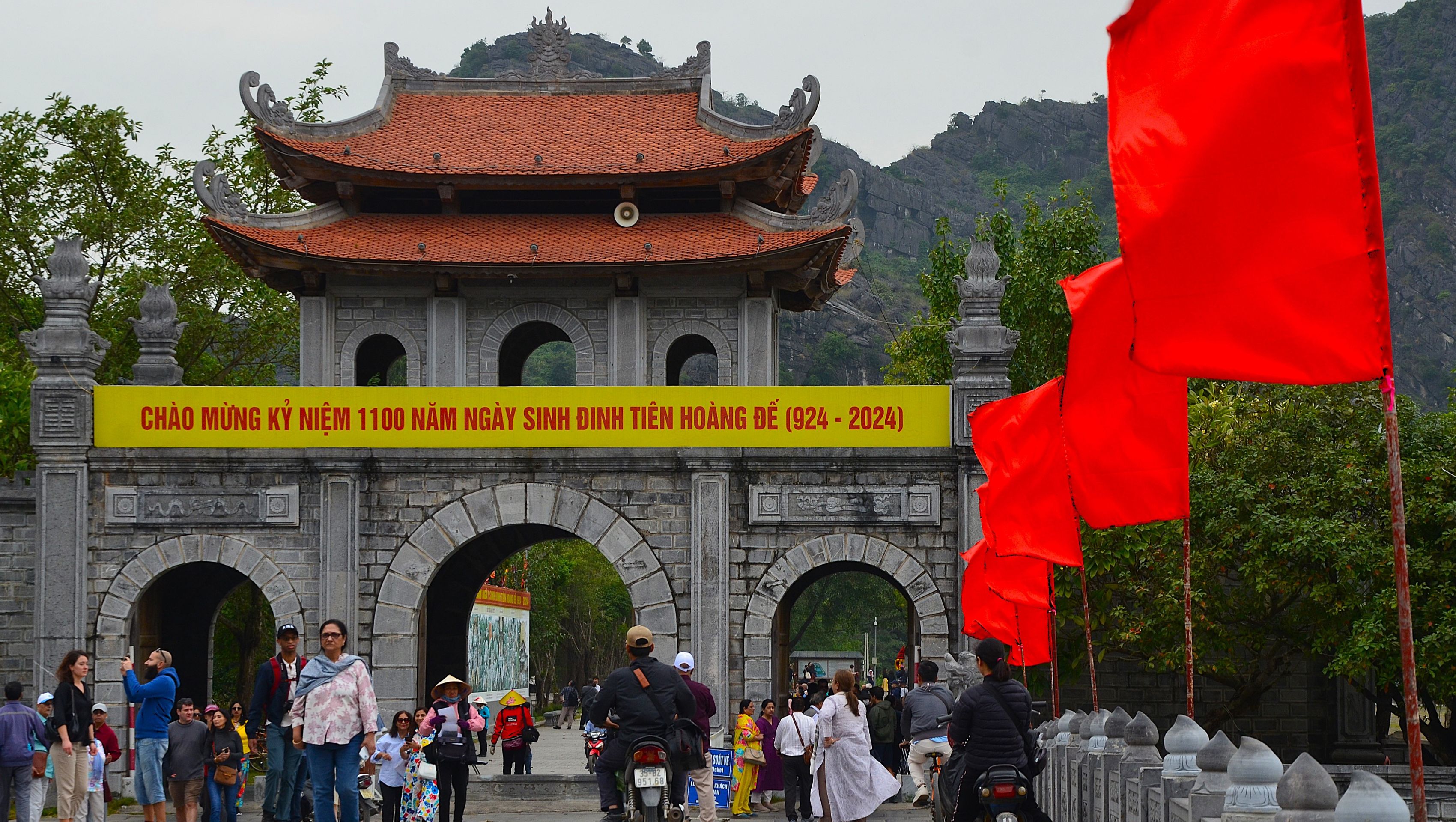
The area behind a historic entrance gate of Hoa Lu, the former capital of Vietnam from the 10th century, is vast, though little remains here besides a small wooden temple that was rebuilt 400 years ago.
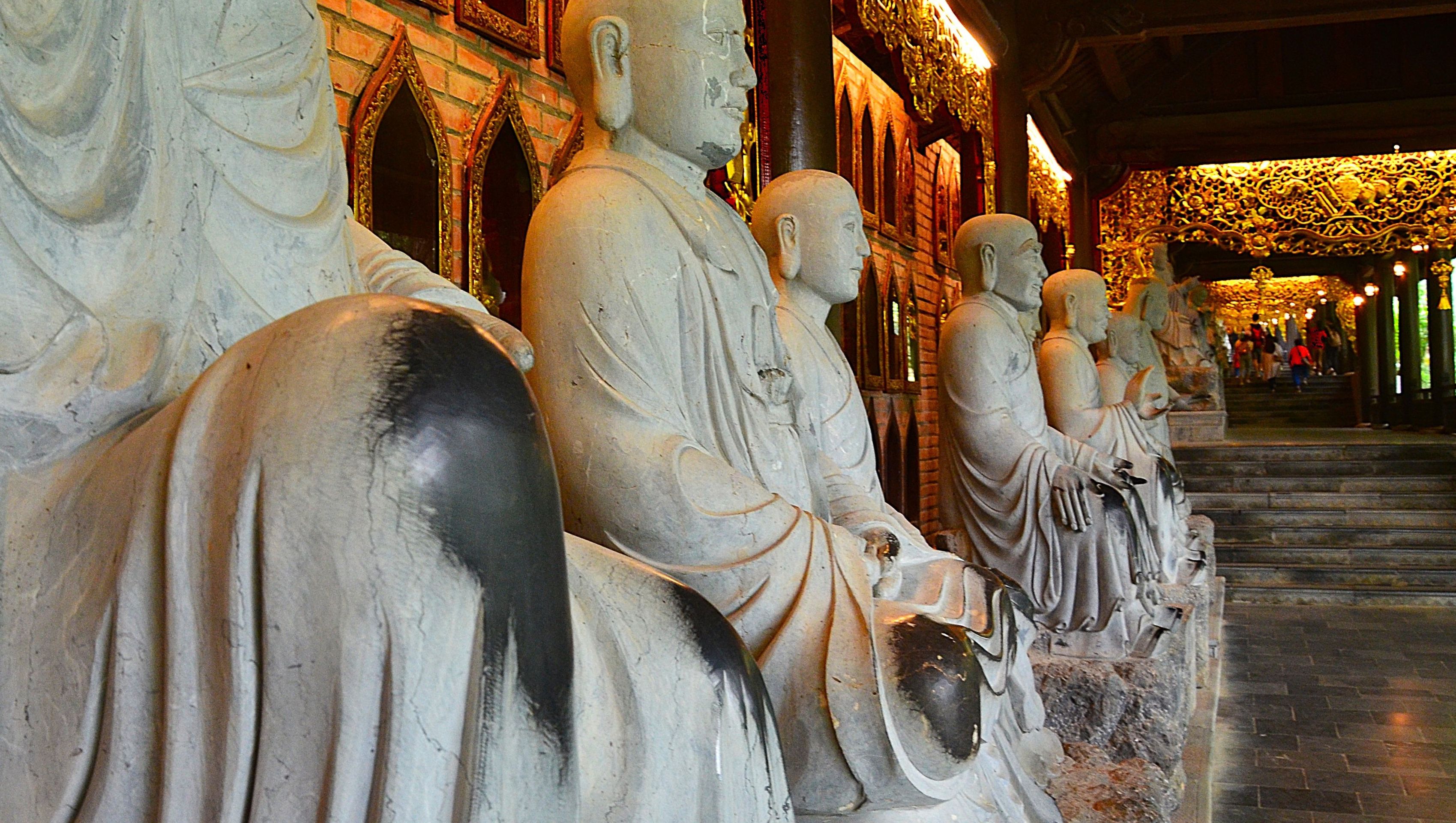
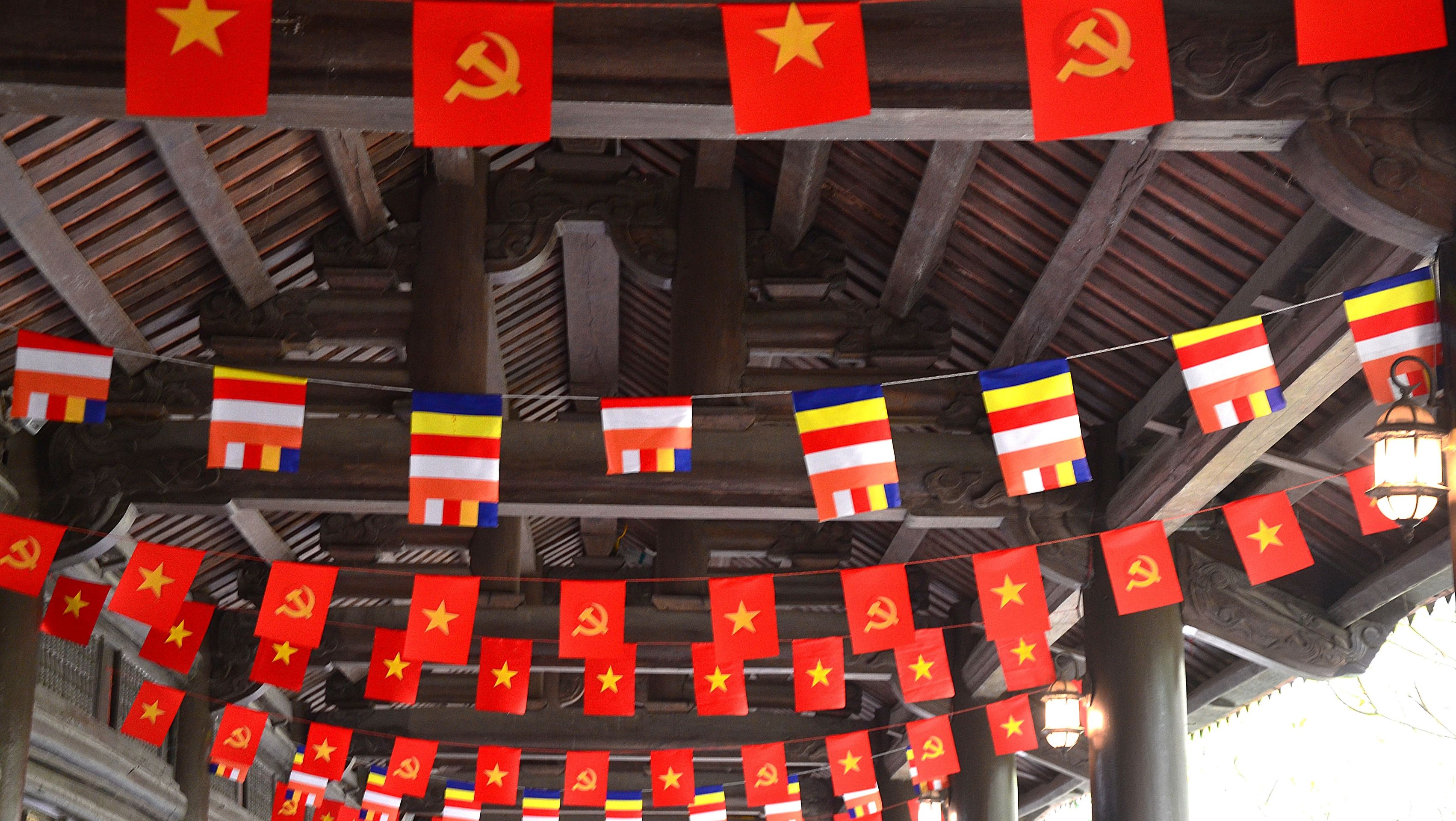
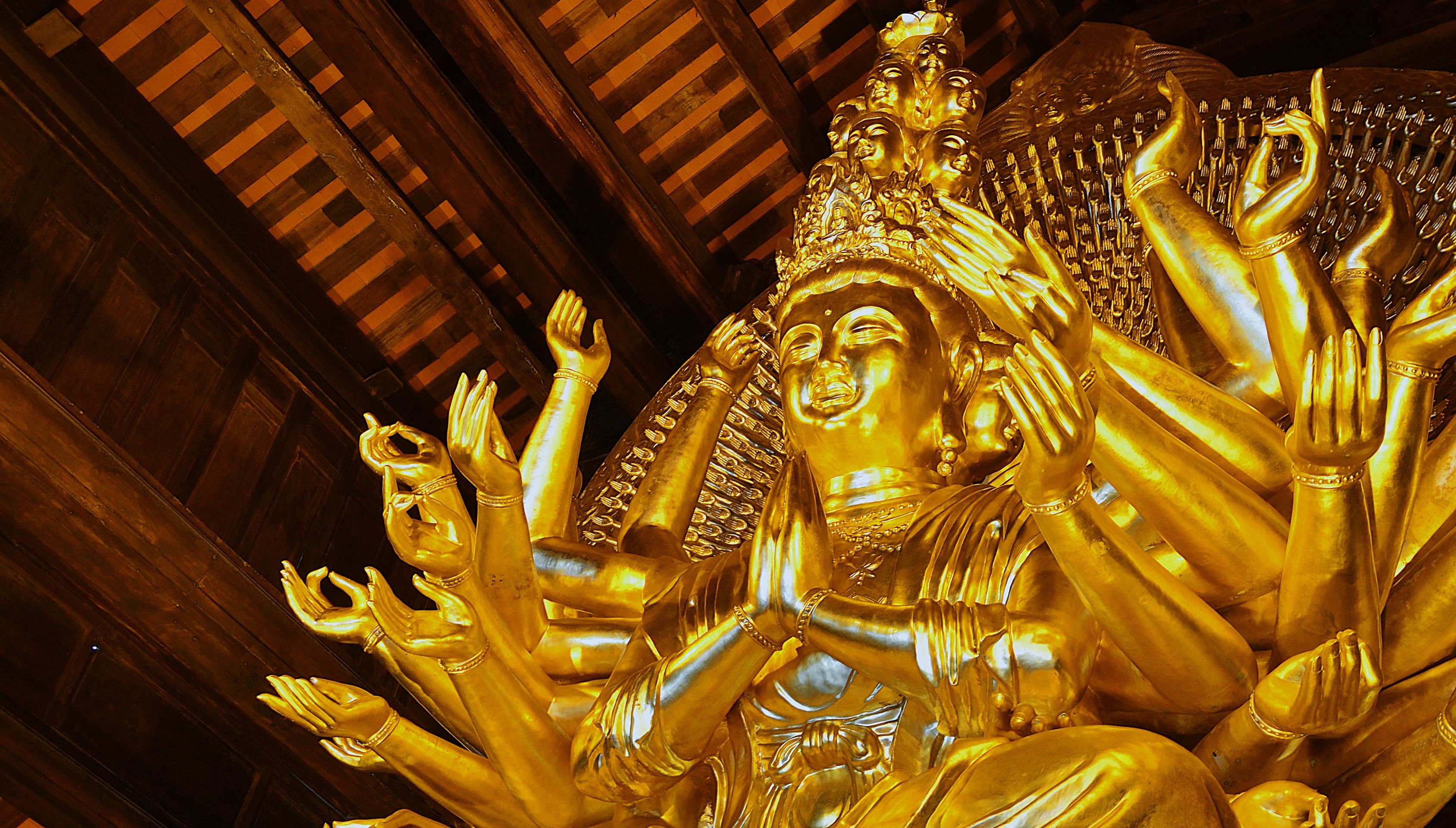
On the other hand, the Bai Dinh Pagoda, the largest Buddhist temple complex in Vietnam, is gigantic. White Buddha statues, polished black only where touched by worshippers despite explicit prohibitions, line endless corridors, temples, towers, and stairs. As a forest of flags indicates, Buddhism, communism, and nationalism are peacefully united here. However, what appears old was built in the last twenty years.
Rowing with Feet
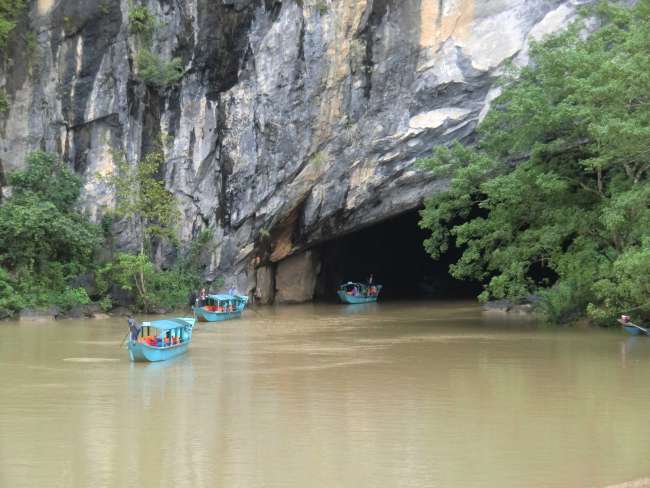
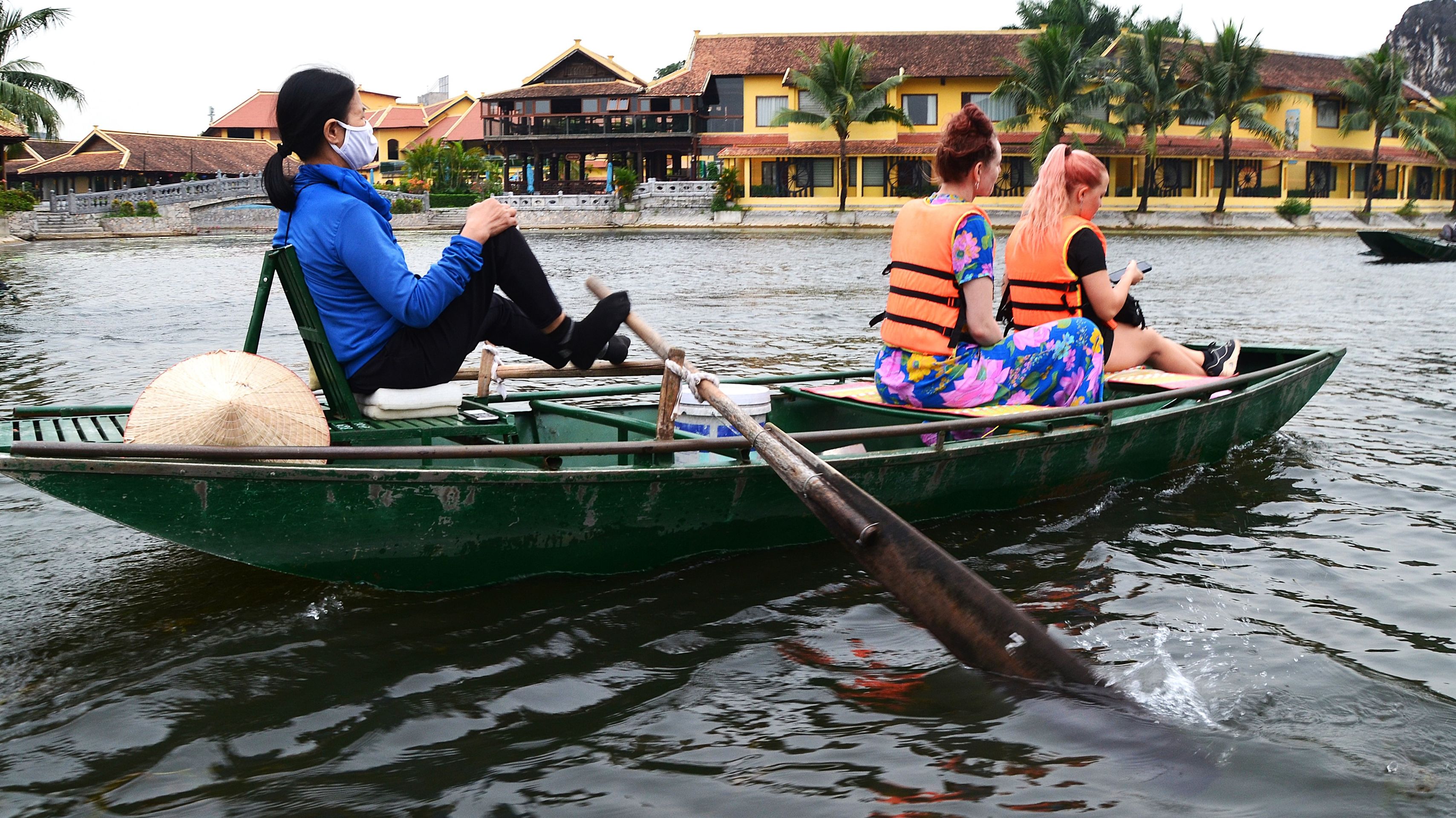
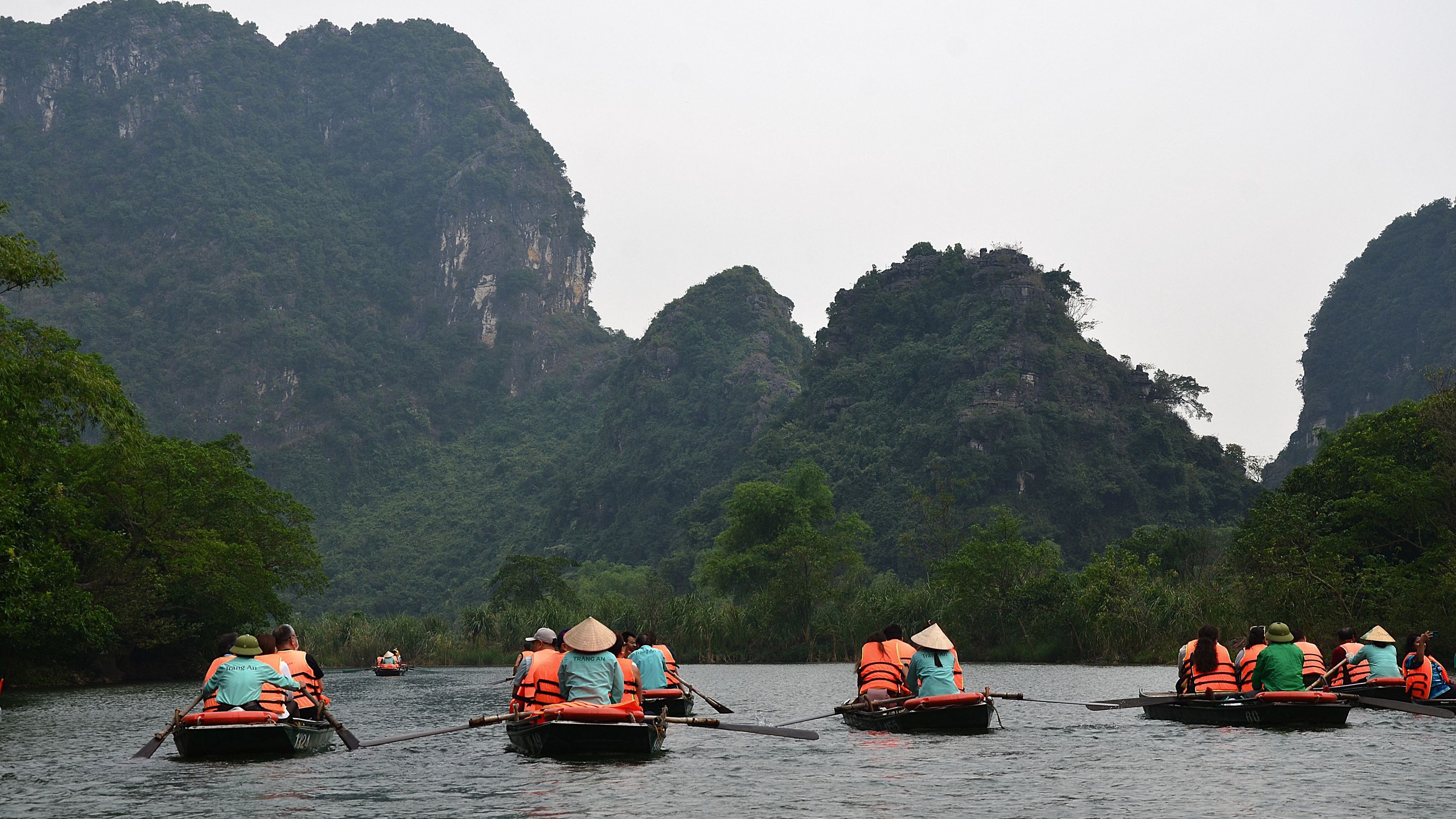
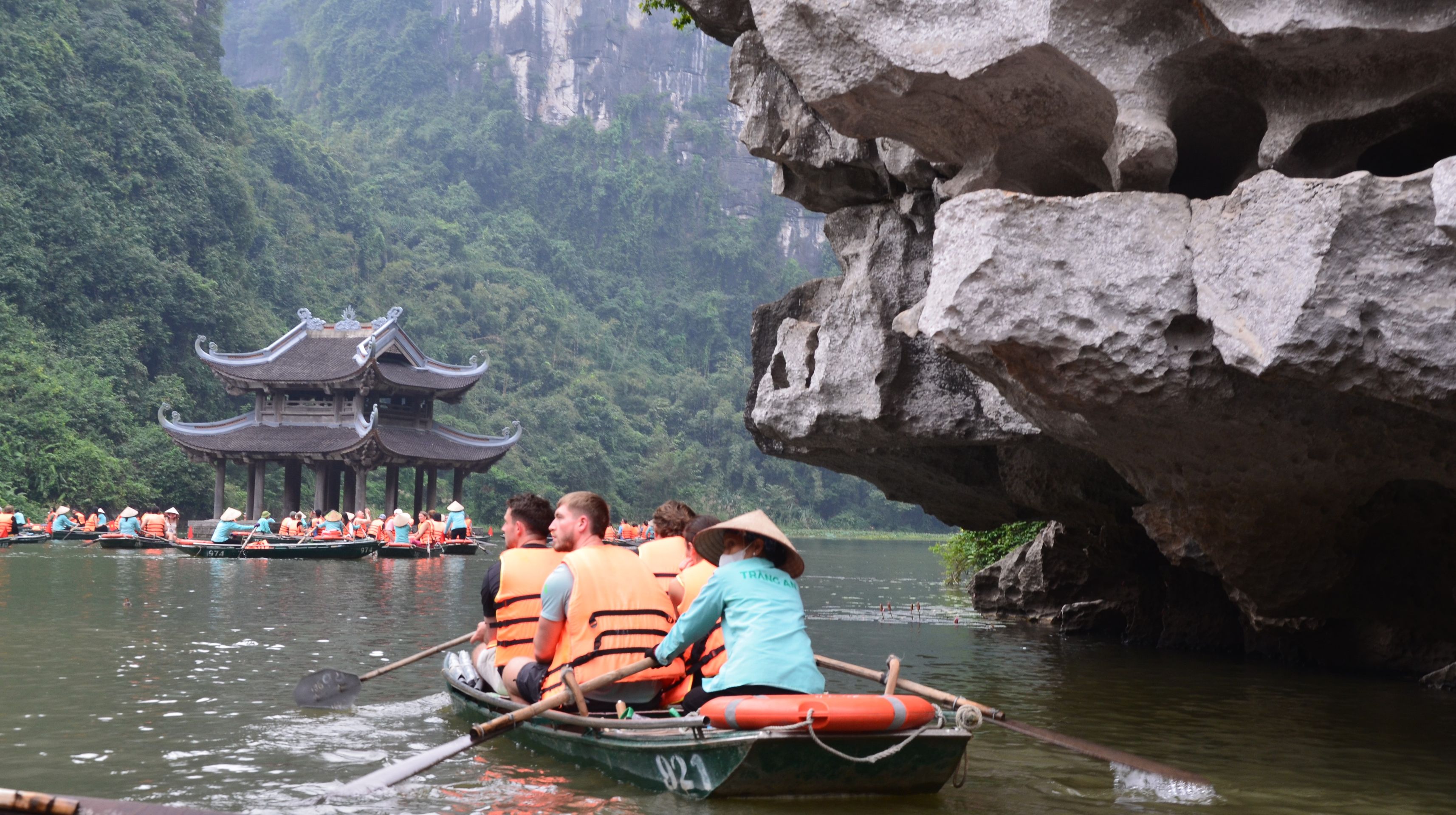
On Trang An Lake and the following day on Tam Coc Lake, we experience a slowdown: In rowboats, we glide past powerful, steep rocks and floating lotus carpets, navigate through caverns, and disembark on islands with temples, toilets, and souvenir sellers. Most boaters on Tam Coc Lake row with their feet, which is a curious sight, as is our crew: the young rower is slender; Zoran from Serbia and I as passengers are hefty and overweight, causing laughter on other boats.
In stark contrast to the natural grandeur of the Ninh Binh region are the two lunches served to us on the tour. Vietnamese food is usually fresh, varied, imaginative, and also affordable: one can enjoy a wonderful meal for five or six Swiss francs, including a local beer.
The Cozy Vietnam Restaurant proves that it can be different: the human load of nine tour buses spills almost simultaneously into the establishment, which, despite the name 'cozy', exudes the neon-lit charm of a train station hall from the 1960s. At the buffet, there is a scramble, push, and shoving, and one wonders why: the food, brought by women in huge buckets and transferred to the buffet in containers, tastes like nothing. The beautiful area of Ninh Binh experiences its banal antithesis here.