

Coolies and capitalists in Medan
I arrived in Medan, the largest city in Sumatra, at the end of May. Others only use it as a stopover. I stayed and experienced Medan's fascinating history.
Published: 17.07.2026
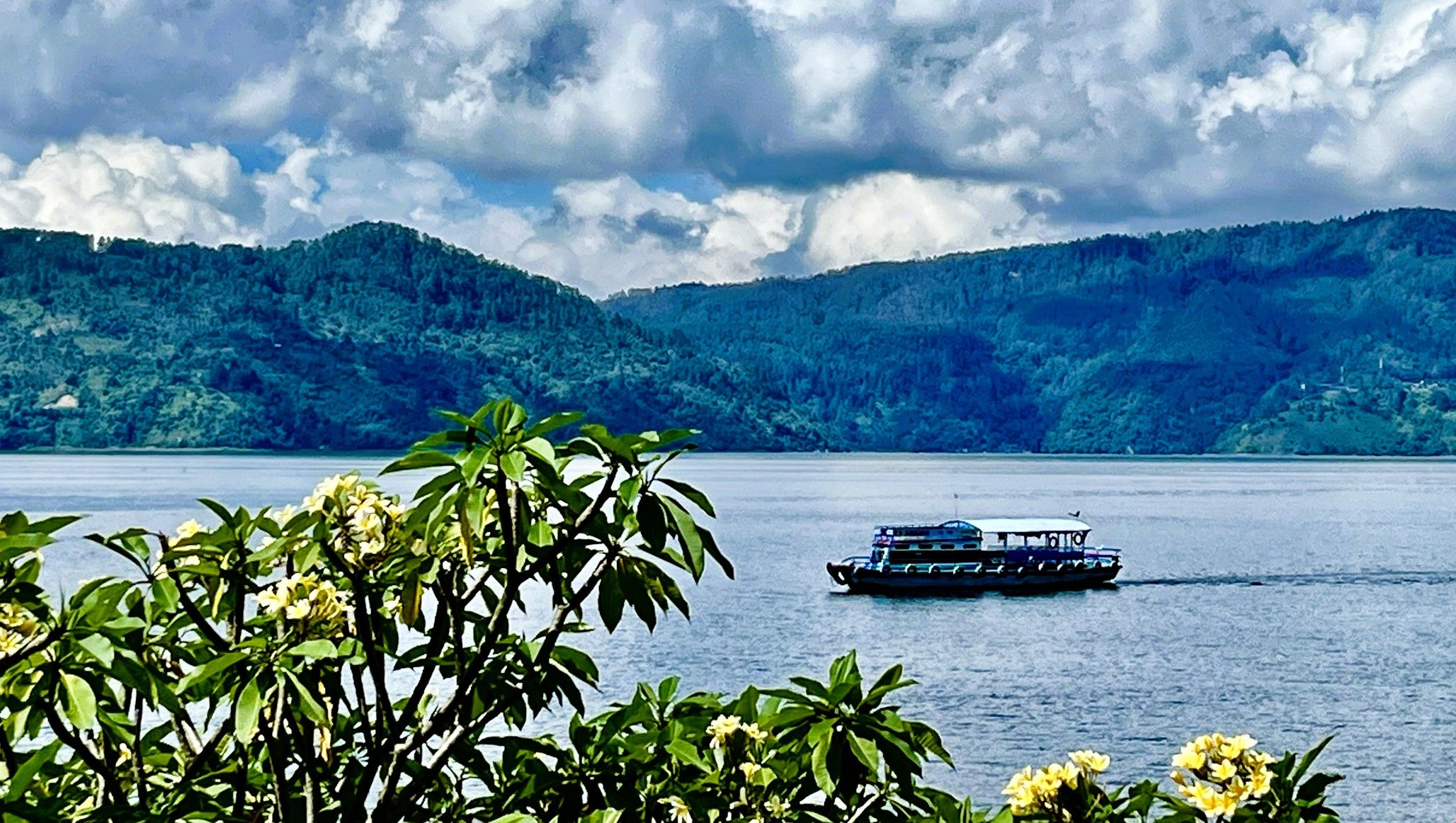
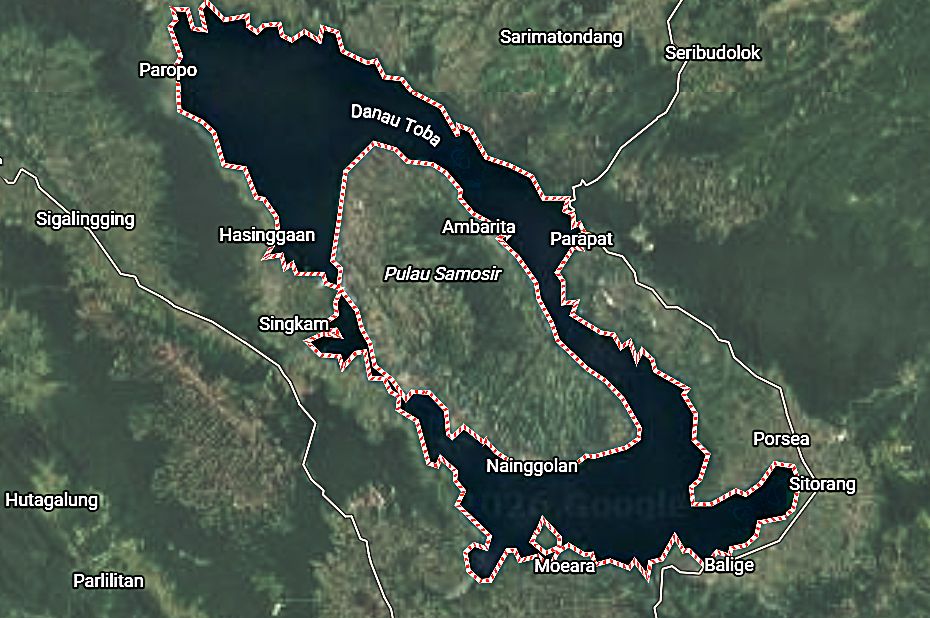
Lake Toba is located 900 meters above sea level, and I hoped to escape the oppressive, humid heat that I had experienced in Banda Aceh and Medan. On the map, the lake looks like an elongated fried egg, with the island of Samosir in the middle resembling a yolk that has slightly slid toward the western edge.
What is often underestimated on the map are the proportions: Lake Toba has twice the area of Lake Constance and is also twice as deep at its deepest point, exceeding 500 meters; Samosir is larger than well-known Mediterranean islands like Ibiza or Corfu.
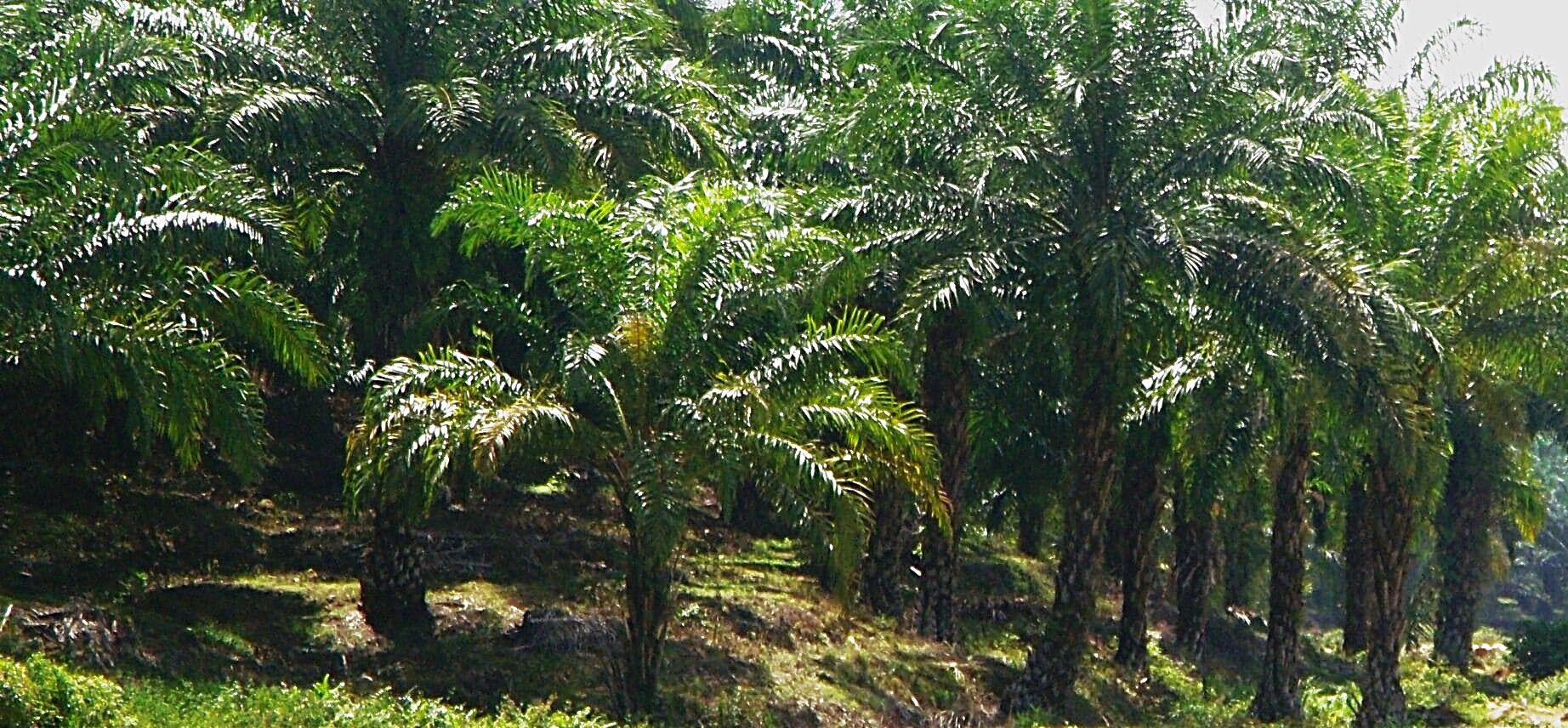
On June 1, 2026, I drove from the big city of Medan to Siantar, a significant provincial town. Along the way, we passed massive plantations of rubber, coconut, and oil palms, interspersed with rice fields stretching to the horizon. Indonesia is the world's largest producer of palm oil, the second largest of coconuts, and the fourth largest of rice, as my driver Ringgo proudly noted. To establish these plantations, thousands of square kilometers of rainforest were destroyed; that's the other side of the coin.
In Siantar, the highway ends; the road now winds steadily uphill. There are more churches and fewer mosques and women with headscarves here. The Toba-Batak, the main ethnic group on Samosir and in the Lake Toba region, are predominantly Protestant Christians; some are also Catholic.
Massive Volcanic Eruption
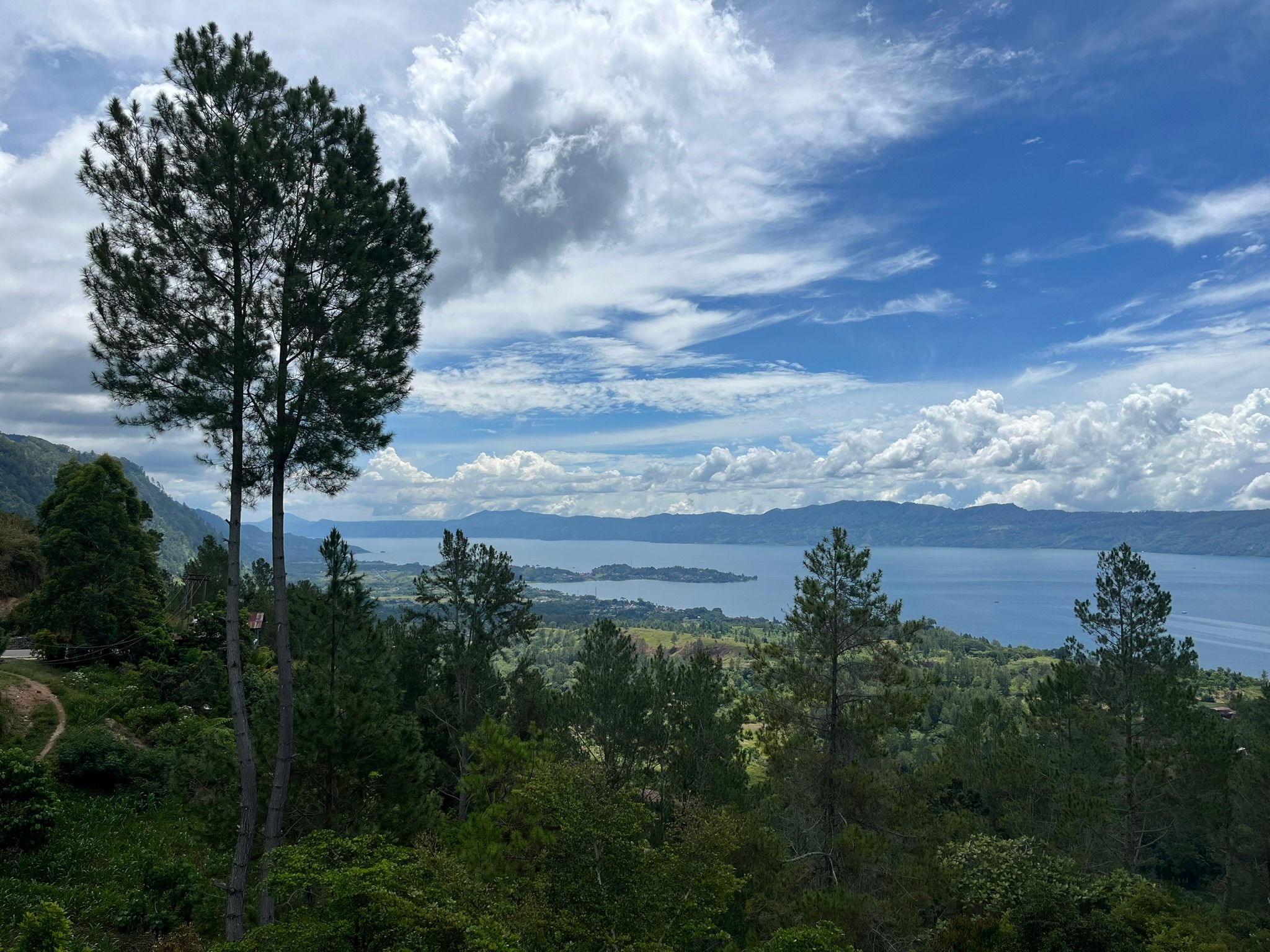
Finally, the lake emerges before us, nestled in a lovely green hilly landscape. However, its formation was anything but peaceful: Lake Toba resulted from the most massive volcanic eruption ever experienced by the world, occurring 74,000 years ago. 2800 cubic kilometers of rock, ash, and sulfur dioxide were ejected into the stratosphere; this led to massive climate changes.
The collapse of the magma chamber left behind the enormous caldera, 100 km long and up to 30 km wide, which later filled with water. In its center, through further volcanic activity, the island of Samosir rose.
Whether humanity almost went extinct back then, as older theories suggest, or whether the effects were less dramatic, as newer research indicates, I cannot assess. One thing is certain: Toba was the epicenter of the Earth back then. Today, it is a rather remote area in Sumatra, which contributes to its charm.
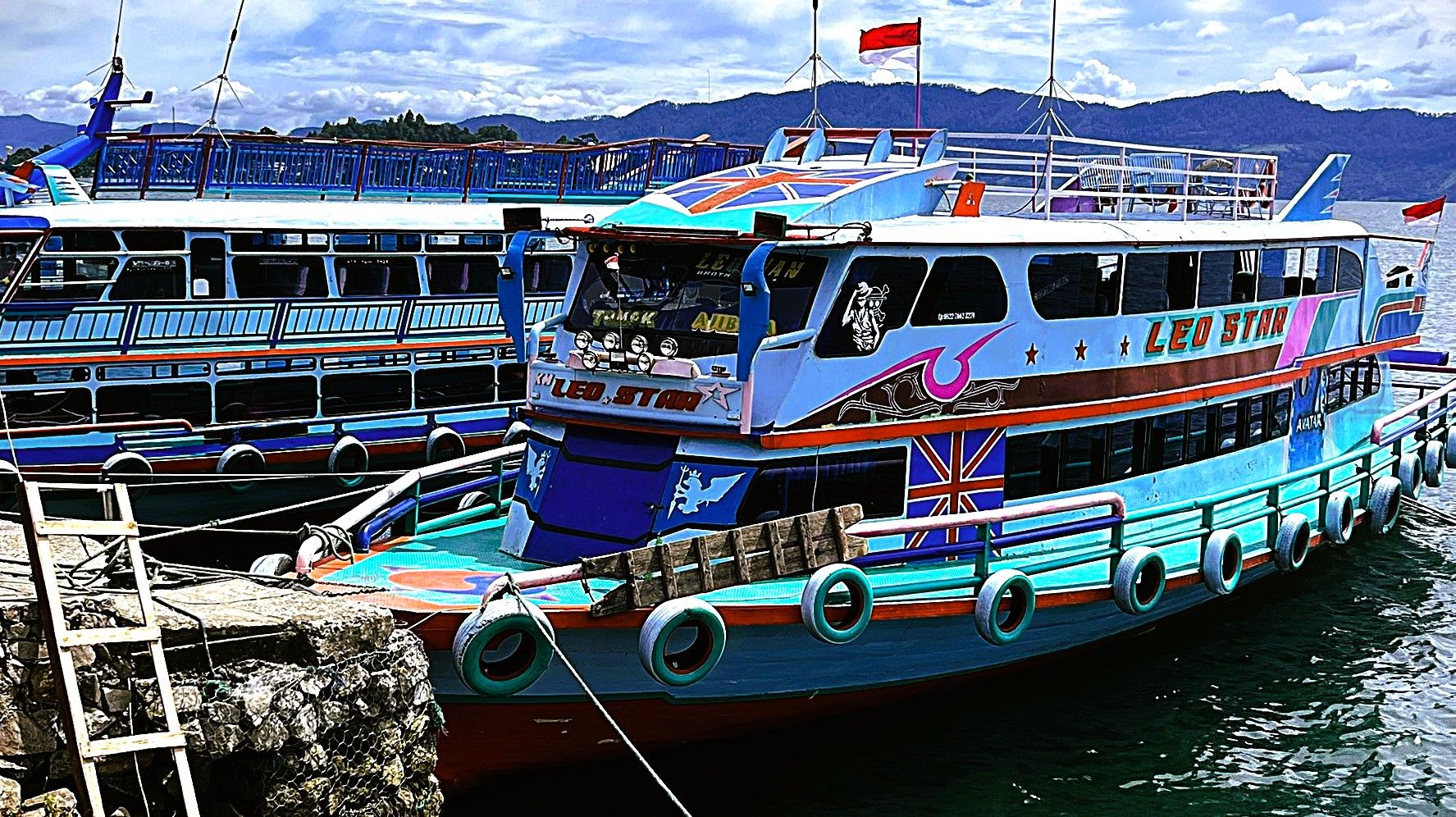
Ferries operate on the lake between the mainland and Samosir, alongside fishermen in narrow wooden boats and tourists in annoyingly loud speed boats. After arriving in Parapat on the eastern lakeshore, I boarded the ferry over a narrow wooden plank and took a ride to the holiday resort Tuktuk Siadong on the island of Samosir for 25,000 Indonesian rupiahs, which amounts to one franc and twelve cents or just under 1.20 euros.
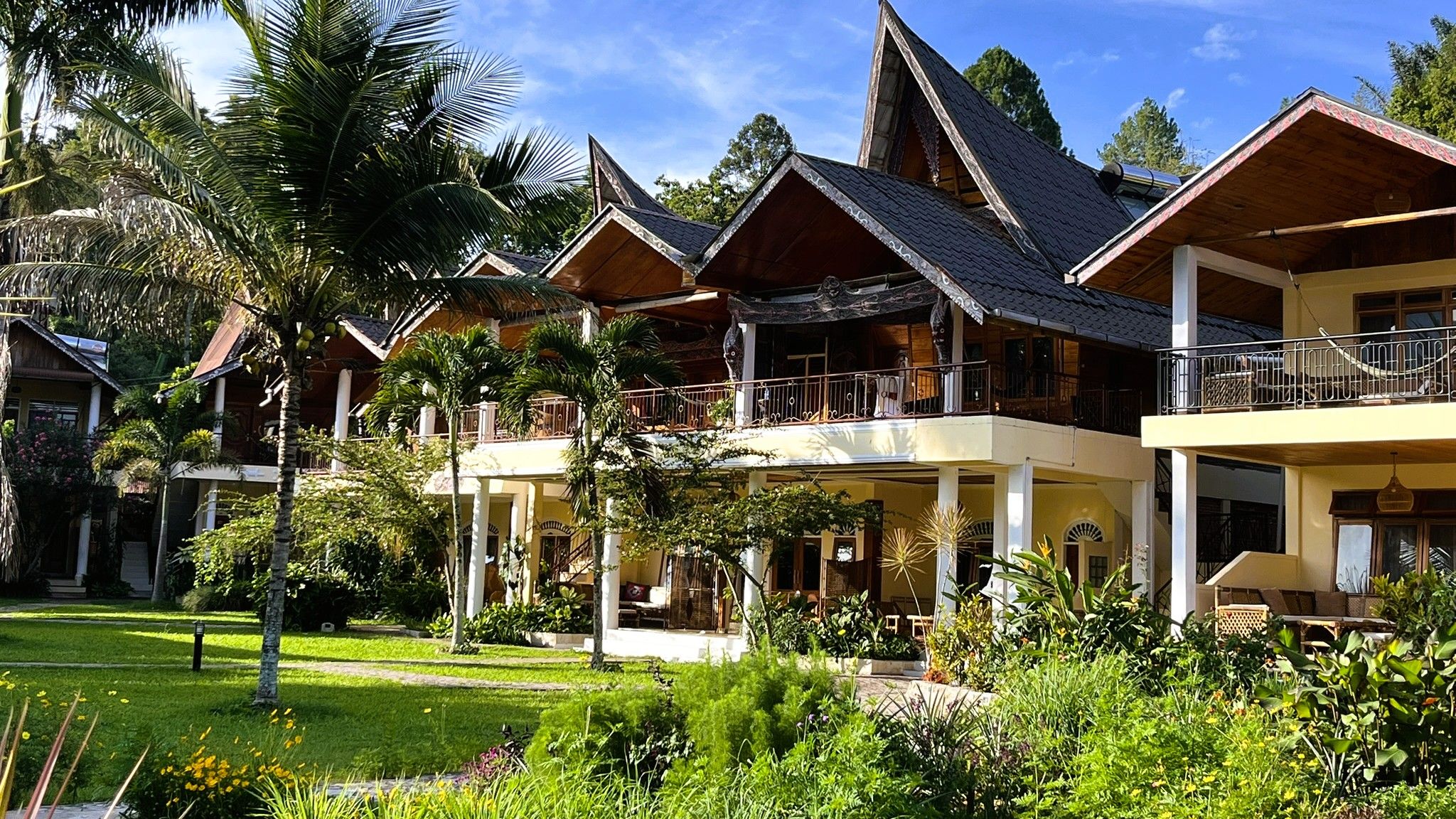
The wooden boat docks directly at the resort, which is set to become my personal epicenter for two weeks: The Tabo Cottages are owned by Annette Horschmann from Witten in the Ruhr area, who has lived here for many years. Despite its lakeside location, well-maintained gardens, a pool, an excellent restaurant, and a German bakery, a night with breakfast included costs only about 30 to 50 euros, depending on the room category.
A Peninsula for Everything
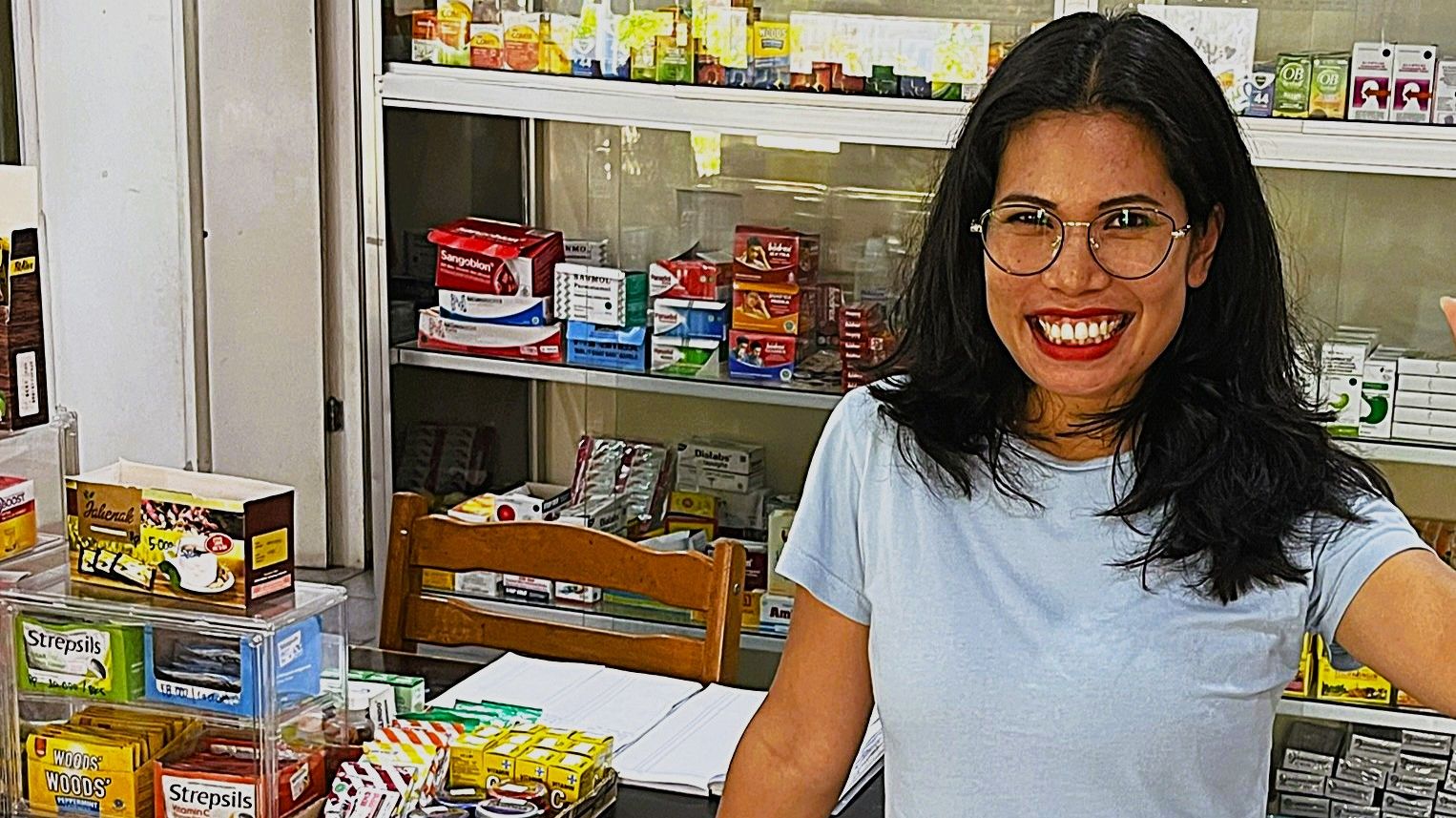
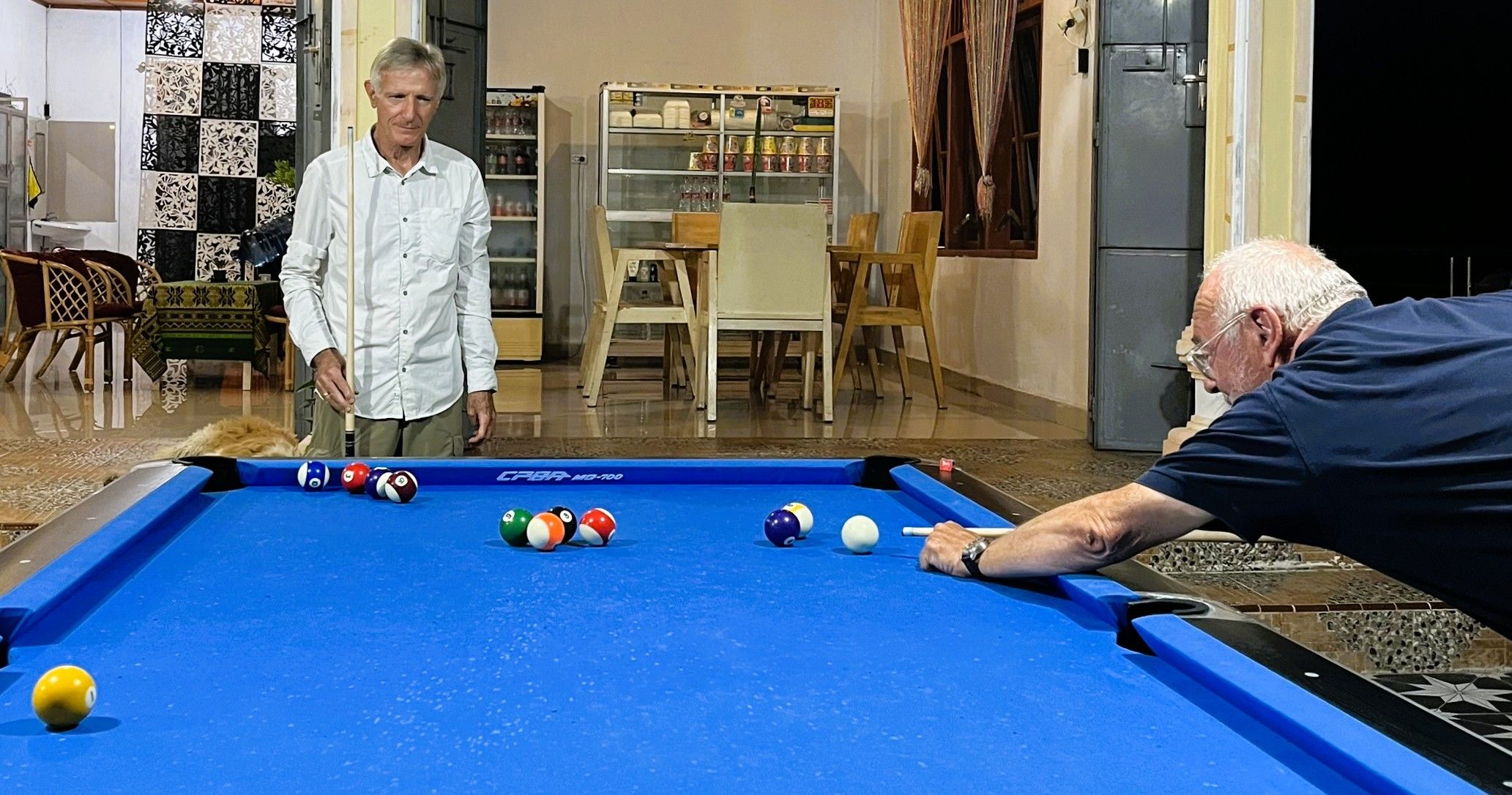
Tuktuk Siadong is the tourist center of the island. Its curious name has nothing to do with the similarly named motor rickshaws used as a means of transport in many Asian cities. Dewi Siallagan, who owns a pharmacy in Tuktuk and is currently building a small resort with her husband, the Swiss Felix Amann, explains to me: In the language of the Toba-Batak, to which Dewi belongs, Tuktuk means 'cape' or 'peninsula', and indeed, the place sits on a prominent little peninsula. (In the evenings, I play pool billiards with Felix while Dewi has to tend to the pharmacy.)
The second part of the official name (Siadong) derives from the Batak word for 'give' or 'to be present' and was introduced in the 1970s when the place transformed into the tourist center of the island. Tuktu Siadong thus means something like 'the peninsula where there is everything'.
The shores of the Tuktuk peninsula are lined with small hotels, guesthouses, and restaurants. From the lakeshore, the gaze wanders over the calm waters to the steep, green slopes of the former crater. A single large five-star hotel looks like an architectural blemish in this setting.
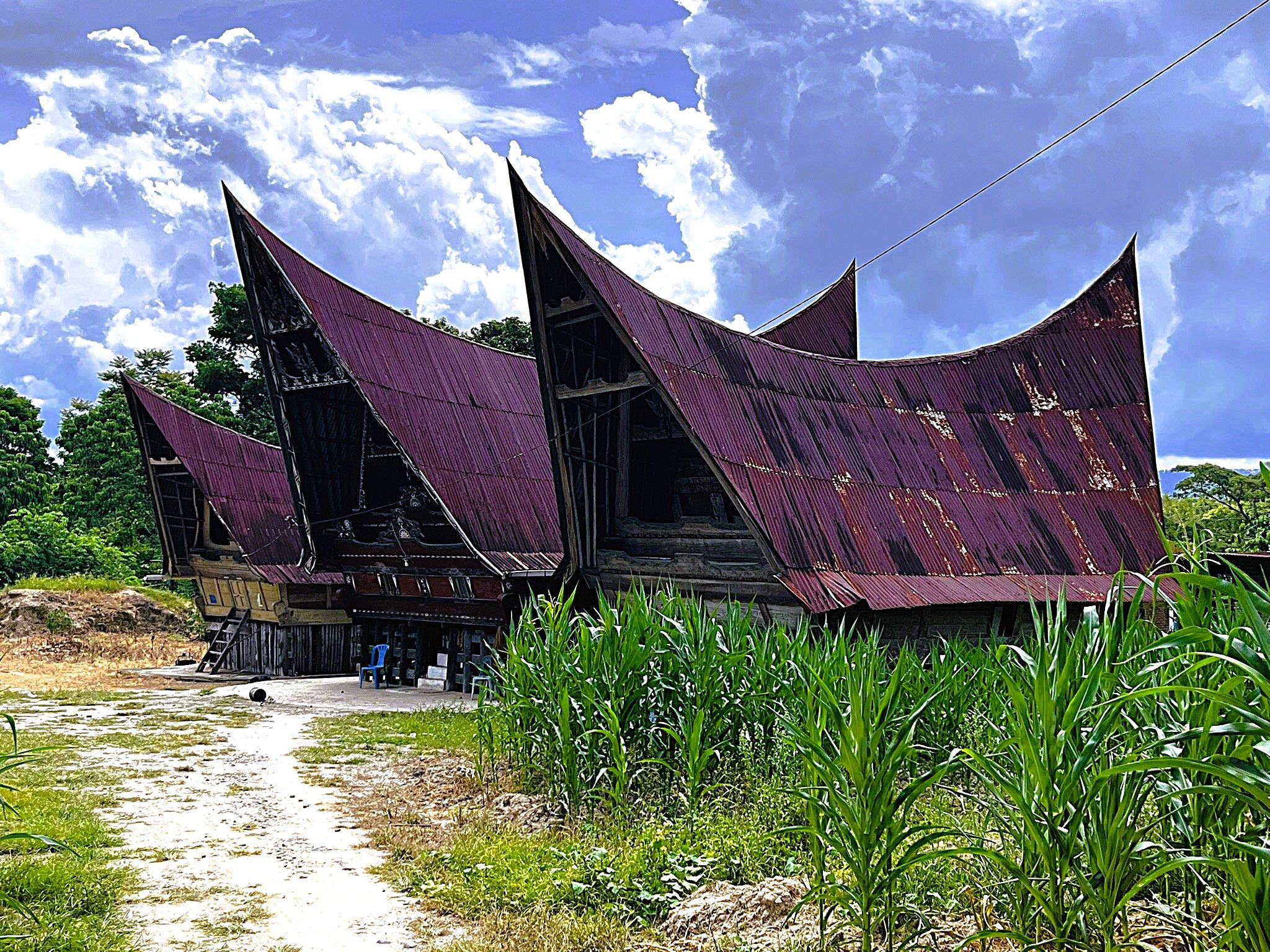
The inhabitants around the lake predominantly belong to the Toba-Batak. The Batak do not constitute a uniform ethnic group but comprise several culturally related communities in the highlands of North Sumatra. The Toba-Batak are the largest among them. For centuries, they lived relatively isolated and developed their own language, script, and legal tradition. I will dedicate my next blog post to them.
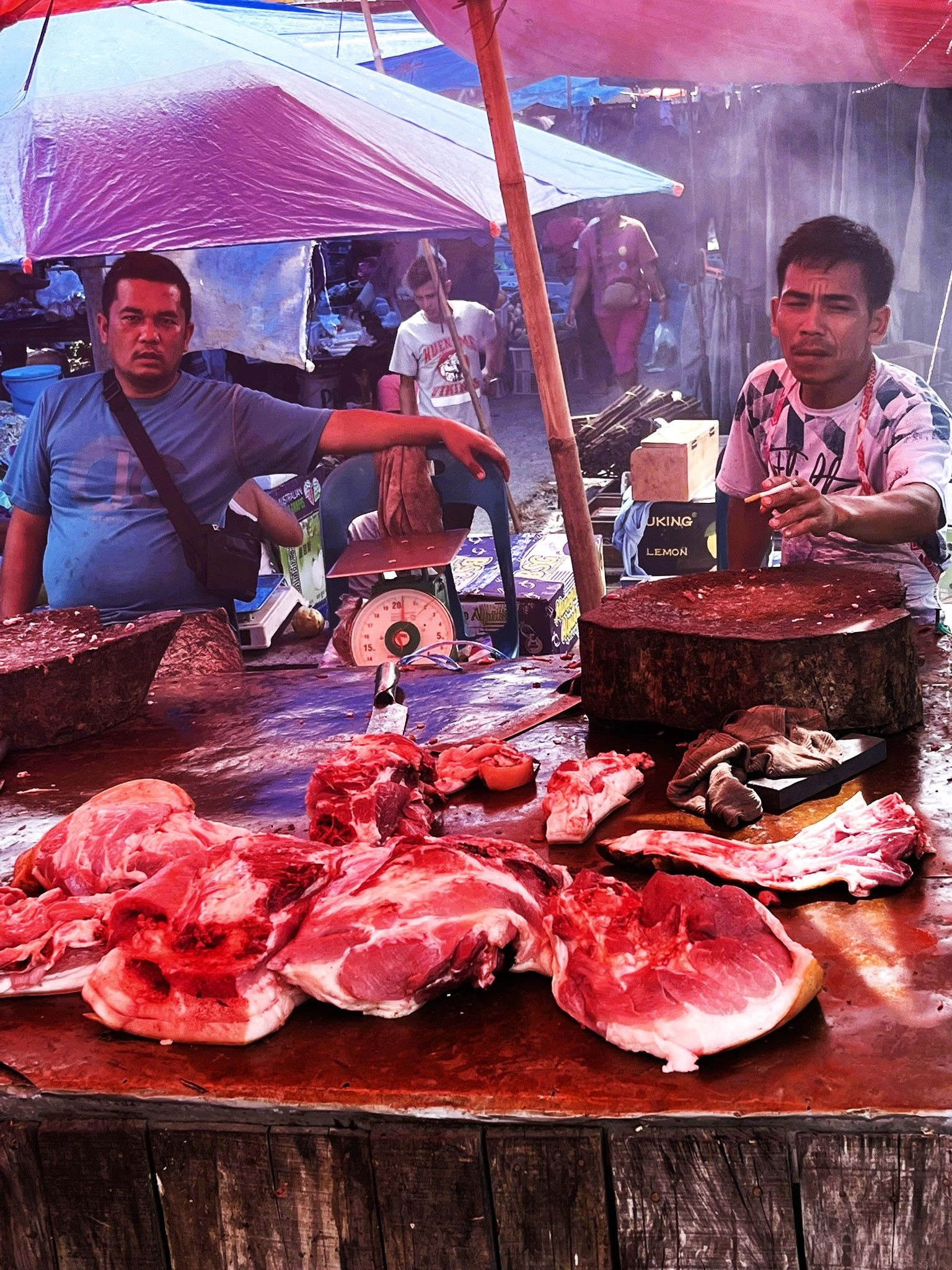
Not only culturally but also culinarily, the region is distinct from the rest of Indonesia. Most Toba-Batak are Christians, and pork plays a significant role in their cuisine — unusual in a predominantly Muslim country. At the Tombok market every Saturday, butchered pigs are sold in large pieces, while the severed pig's head stoically gazes from the slaughterhouse.
Typical dishes include grilled fish, usually tilapia (barramundi) from Lake Toba, and pork, prepared in various ways with different spices. Sambals, as found throughout Indonesia, are often served with them: spicy sauces made from tomatoes and chili with garlic, onions, tamarind, or other spices; they accompany rice, vegetables, fish, or meat or are served as dips. I particularly enjoyed rendang, chicken or beef simmered for a long time in coconut milk and spices, making the meat tender and juicy, with a wonderfully creamy sauce.
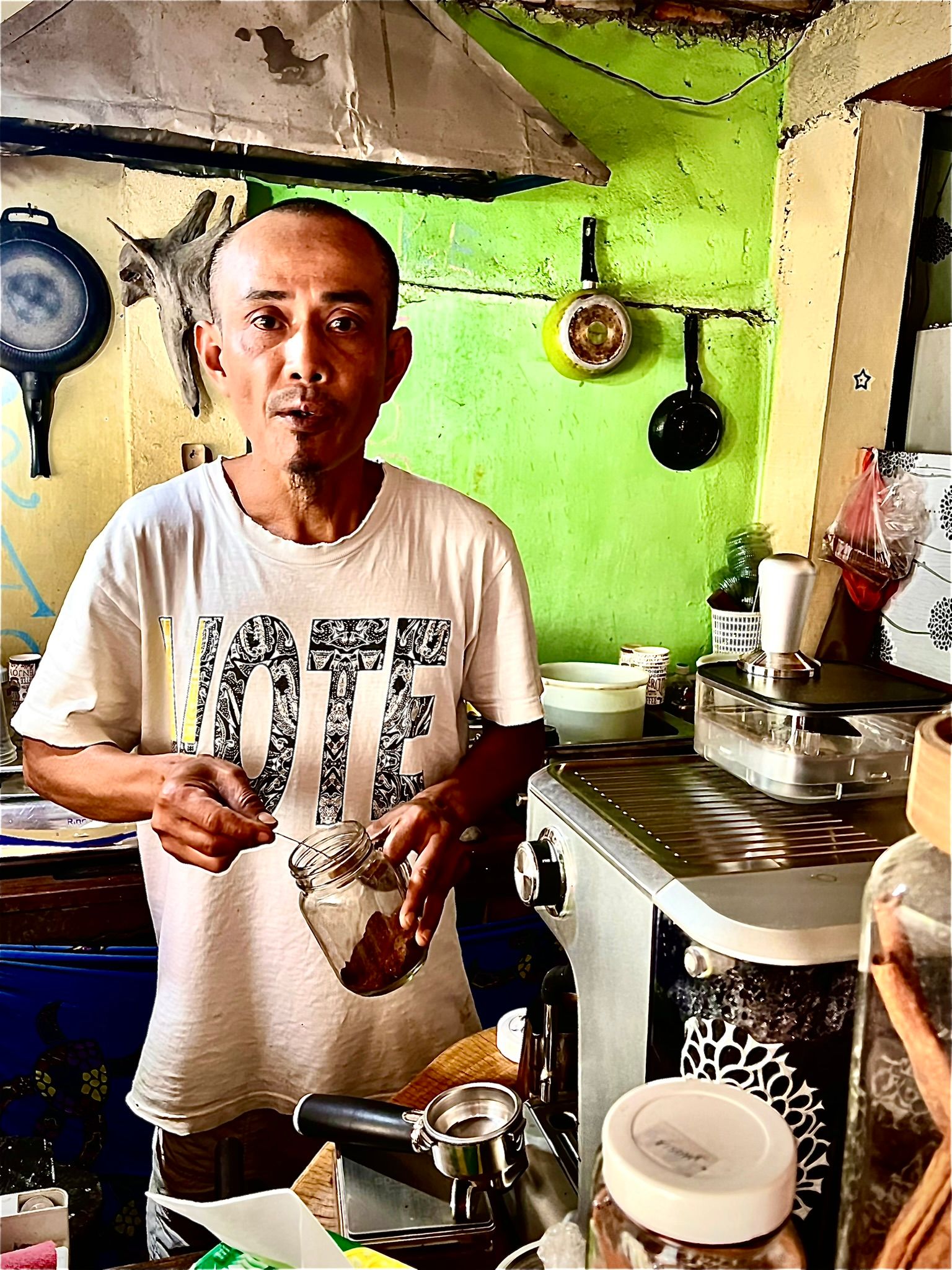
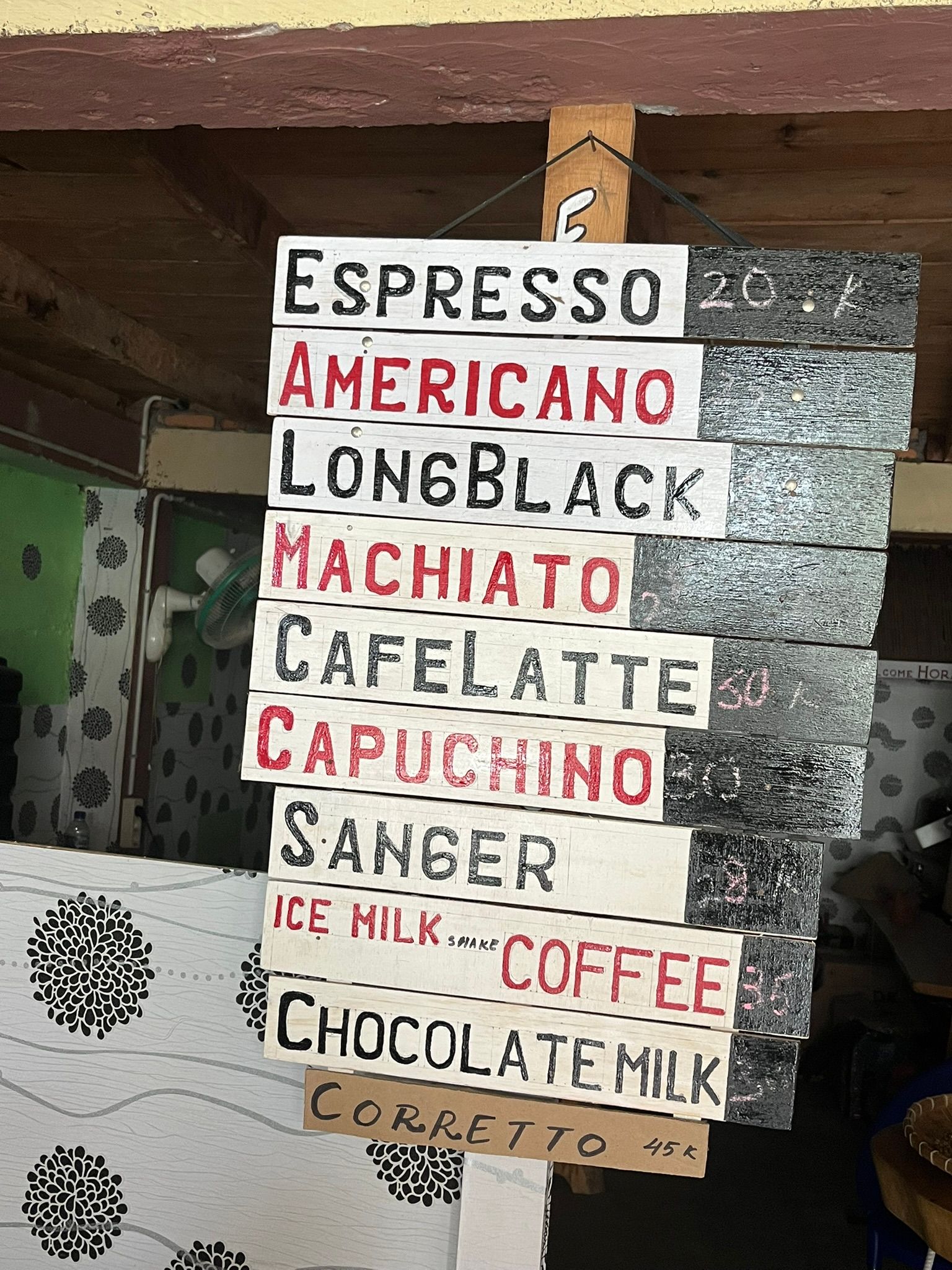
Coffee is also cultivated on Samosir — the best in the world, as Edi emphasizes. He runs a small coffee shop in Ambarita, the neighboring village of Tuktuk, where he also lives, roasts his own coffee beans, and praises the brew to the highest degree. Together with Marcel, another Swiss tourist, I try the black brew. And? It's just coffee; good, but nothing more.
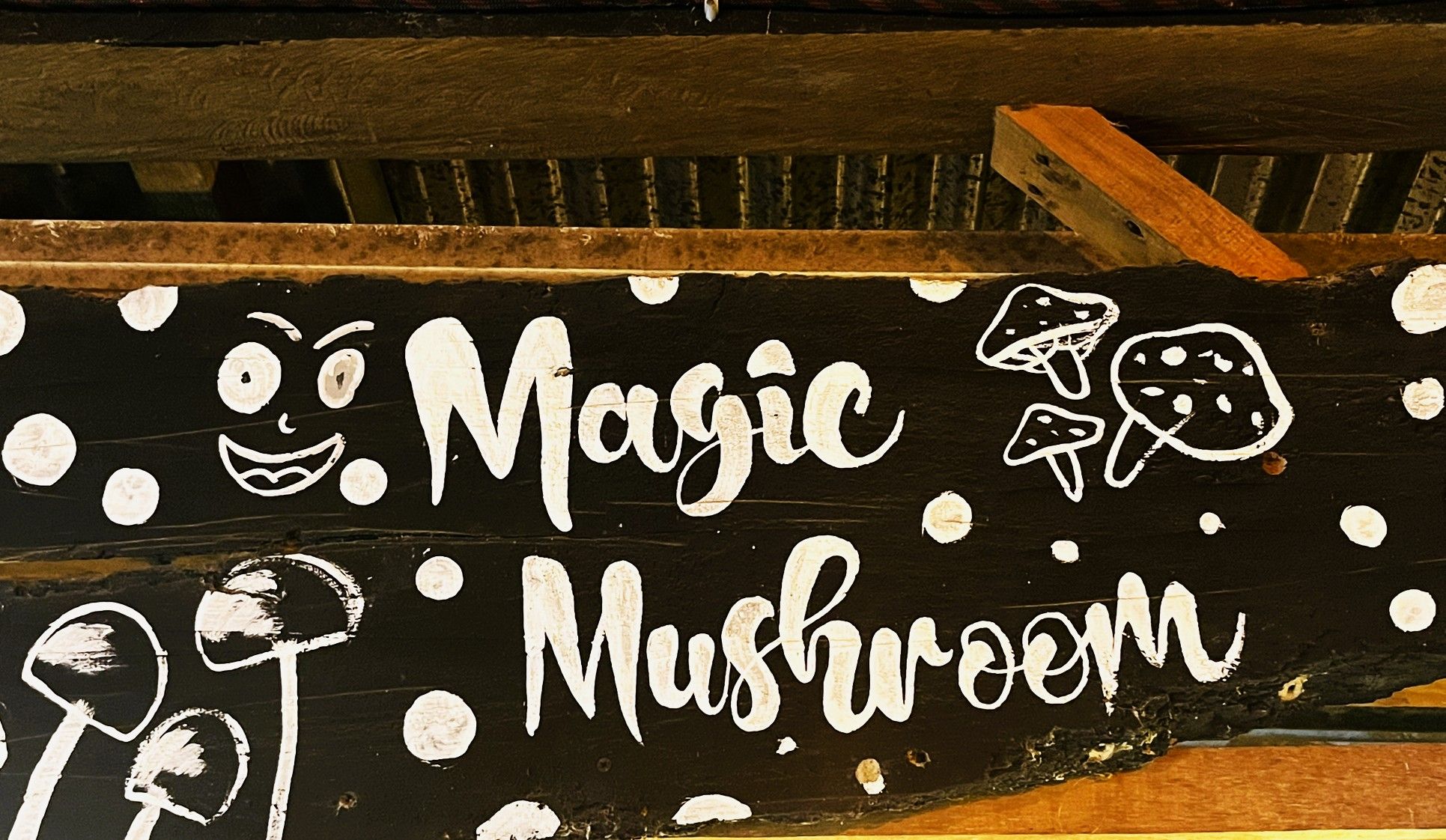
What stands out, not only with Edi but in many other places, are the openly offered 'magic mushrooms'. Although drugs are strictly prohibited in Indonesia, authorities seem to turn a blind eye, or even two, to the consciousness-expanding mushrooms on Samosir.
Controversial Swiss Fish Farming
The mention of 'tilapia' makes Thomas Heinle emotional. Thomas originally hails from Garmisch-Partenkirchen in Bavaria and came to Samosir 14 years ago. Together with his local wife, he operates an 'ecovillage' directly by the lake but in a more remote area only accessible via a bad road. Heinle shows us around the expansive land that belongs to his wife's family, which climbs steeply up the mountain.
Thomas Heinle knows every plant, is aware of its uses, and possibly its healing effects. From the huge quantities of mangoes that grow here as if by themselves, he produces wines, liqueurs, and brandies, all of which bear labels featuring his wife's image. However, Marcel and I cannot try too much, as we are on rental motorcycles.
Right in front of Heinle's 'village' is a massive fish farm in the lake. It was established in 1988 by Swiss entrepreneur Rudi Lamprecht. The fish are bred in floating cage systems in the deep water of the lake and are transported by truck to factories on Sumatra for processing for export after fattening. The fish farming is an economic factor that provides jobs, but Thomas Heinle and other local critics argue that the ecological damage from industrial fish farming far outweighs its positive aspects. Leftover feed, medications, and the excrement of the hundreds of thousands of fish crammed into this confined space lead to excessive enrichment of the lake with nutrients such as phosphorus and nitrogen.
Years ago, the 'Kassensturz', a consumer program from Swiss television SRF, was here to report on fish farming. Thomas Heinle criticizes that this report was completely one-sided and uncritical. I pull out my phone and find the criticized broadcast almost immediately in the SRF archive. We watch it together; modern technology allows access to almost any content even in the most remote corners of the world. We can reassure Thomas in that the TV piece was indeed critical and did not hide the sensitive aspects. However, the situation on-site naturally does not change, even if major Swiss retail chains have removed Toba tilapia from their offerings.