

A huge crater lake in Sumatra
After spending a few days in Medan, I traveled on June 1, 2026, to Lake Toba in the interior of North Sumatra. The largest crater lake in the world is full of myths and stories.
Published: 18.07.2026
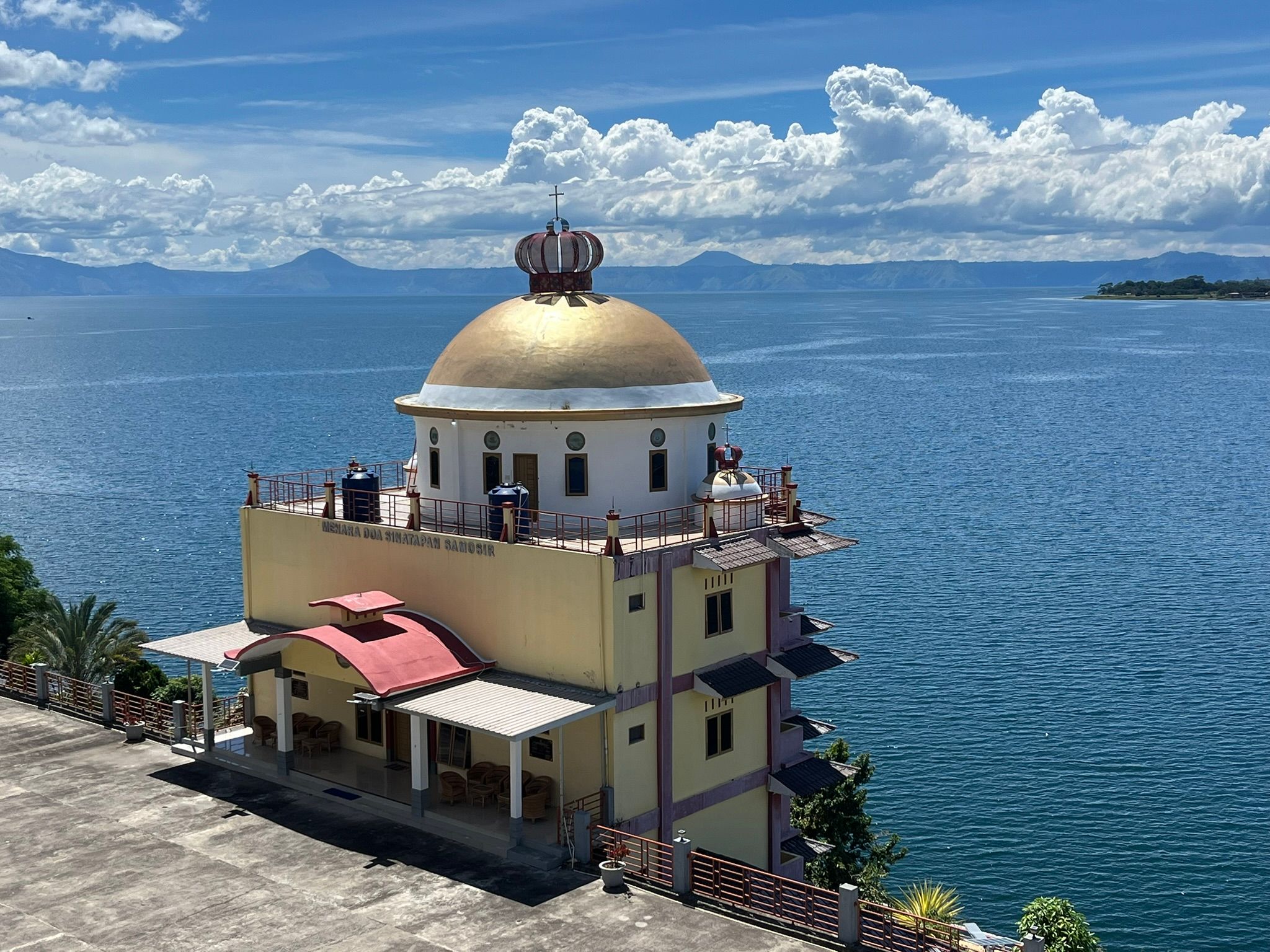
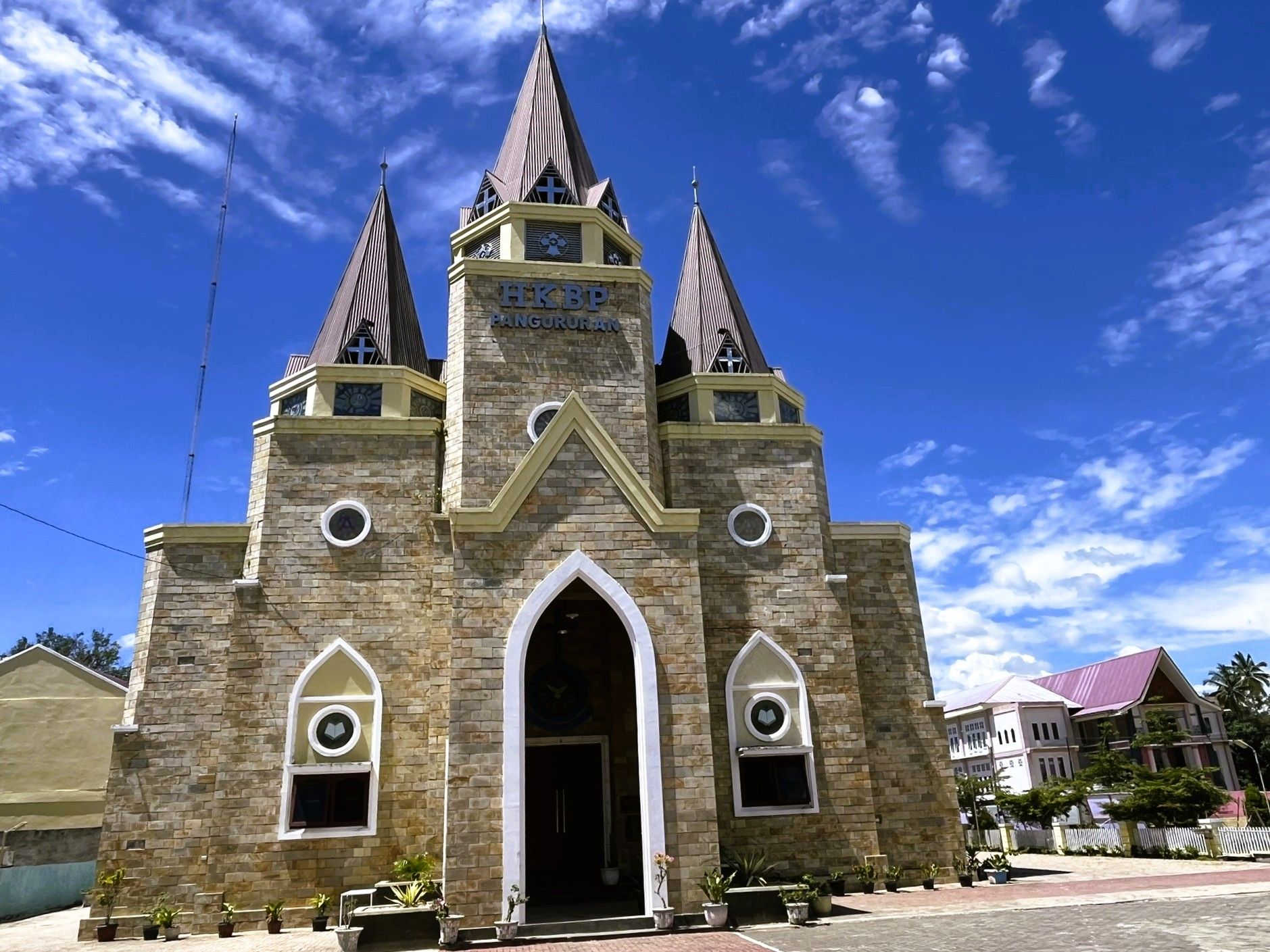
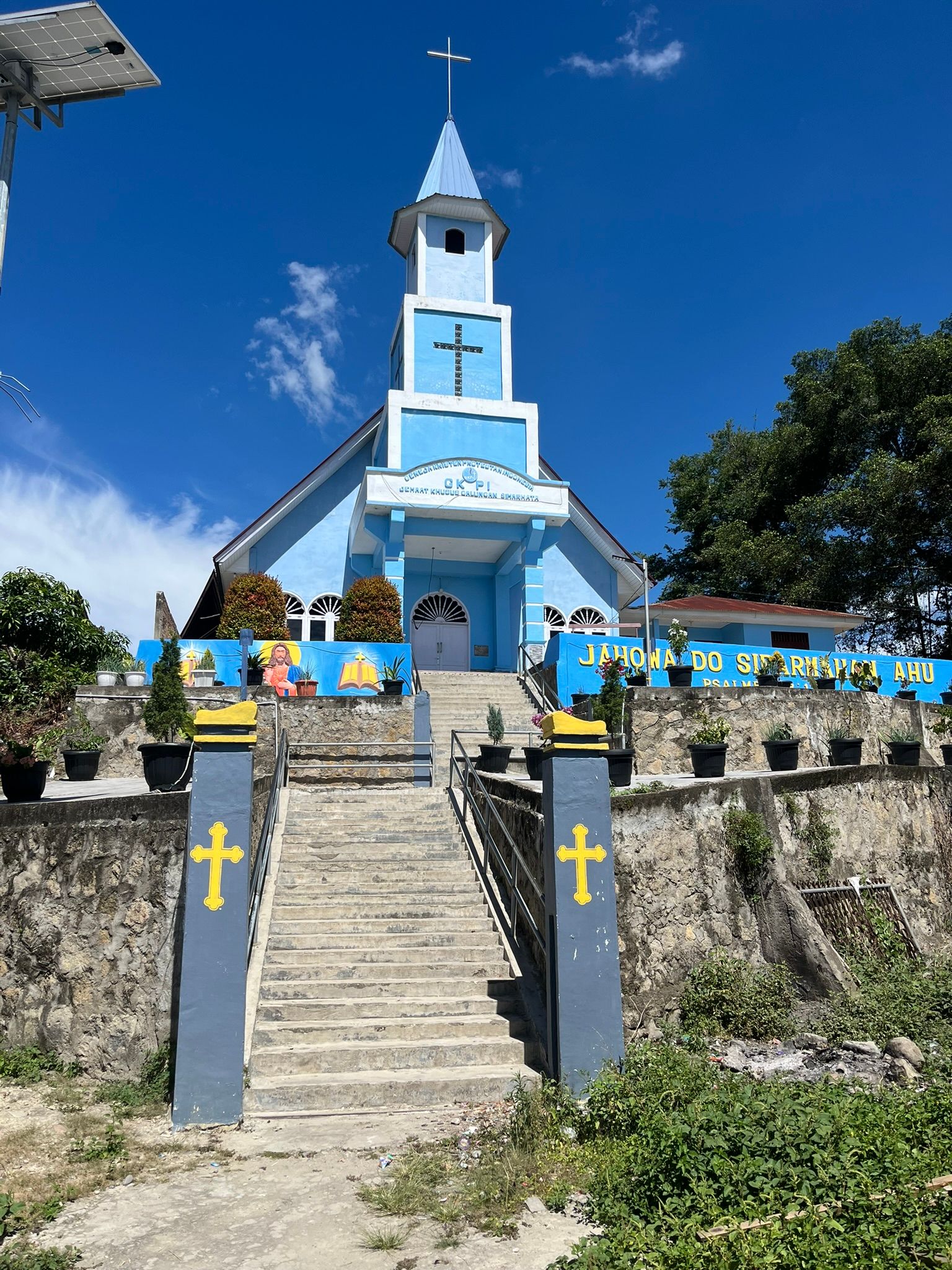
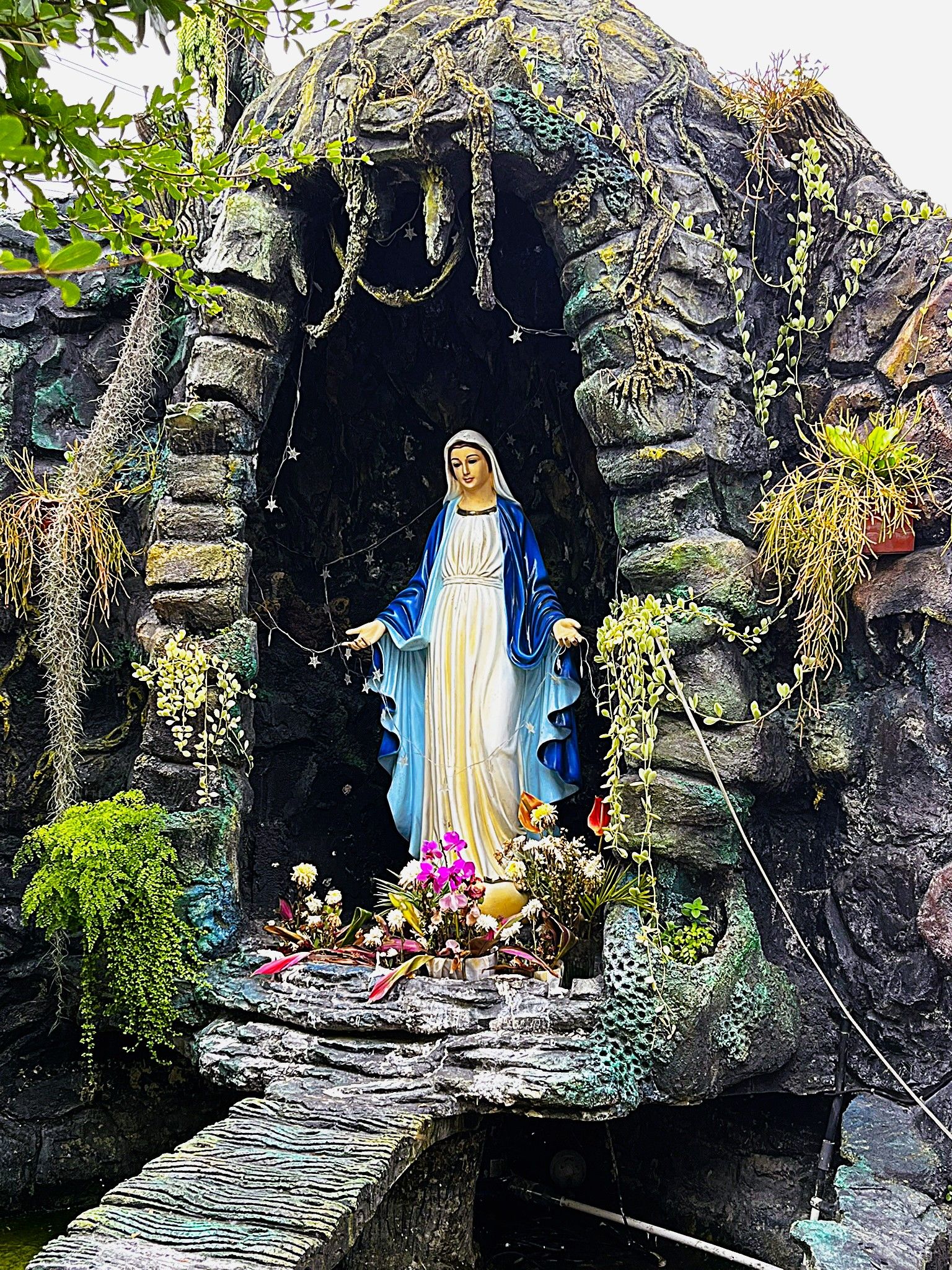
I spent the first two weeks of June on the island of Samosir in Lake Toba in the interior of Sumatra. Although Samosir is a popular tourist destination, even for Indonesians themselves, it is less crowded than islands like Bali, which appears on almost all lists of places to avoid due to 'overtourism' alongside places like Barcelona, Venice, Machu Picchu, or Dubrovnik.
Samosir seems peaceful and relaxed, but it has a bloody history: As recently as the 19th century, European travelers reported with sensationalist horror about headhunting and ritual cannibalism of the Batak. 'My ancestors were indeed cannibals,' laughs Dewi Sia-gallan, a Batak woman who owns a pharmacy in the resort town of Tuktuk Siadong and is married to Swiss entrepreneur Felix Amann.
Dewi invites me to visit the historical site named after her clan: Kampung Huta Siallagan in the district of Ambarita, located about a fifteen-minute ride on a rented scooter from Tuktuk.
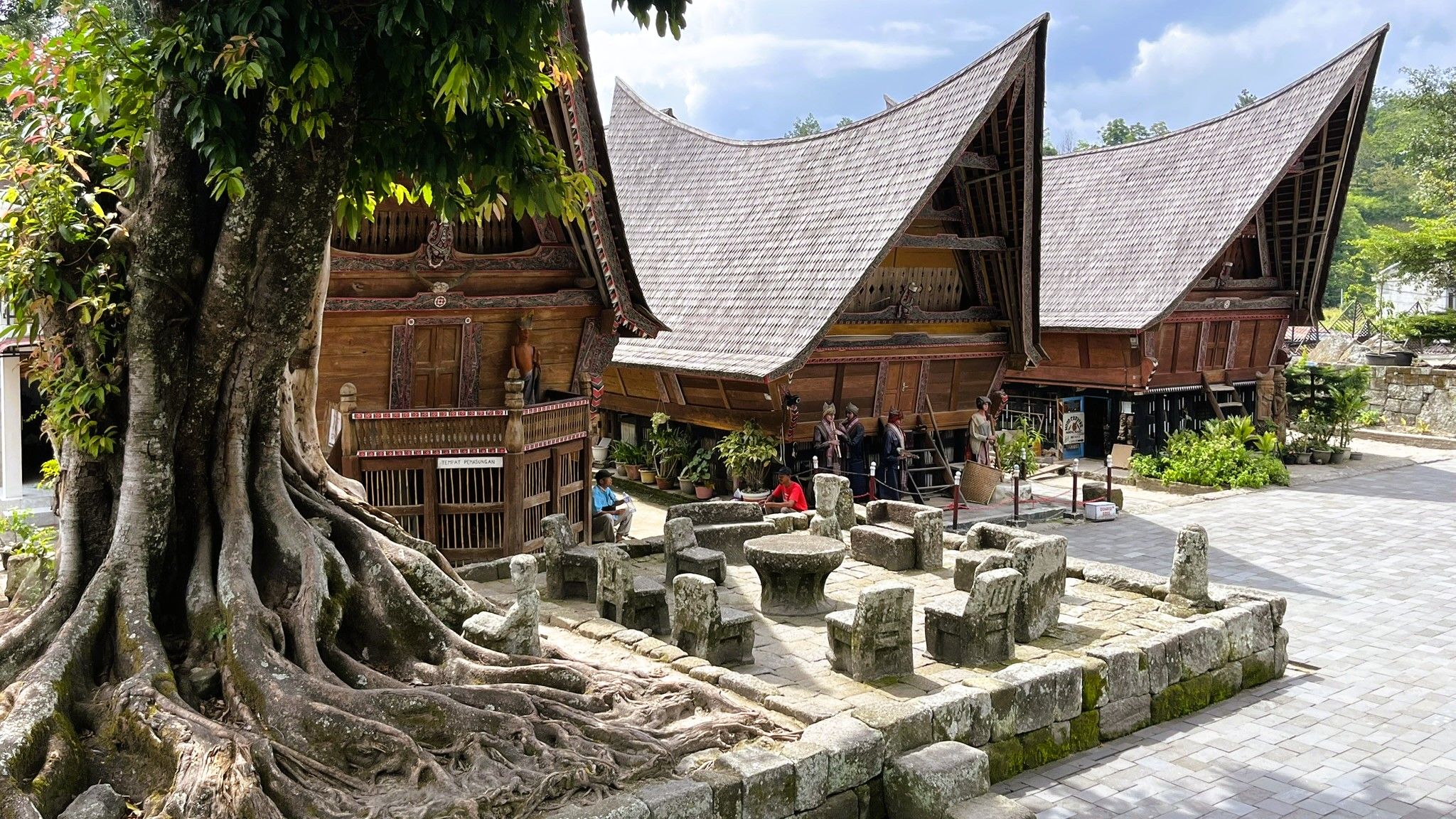
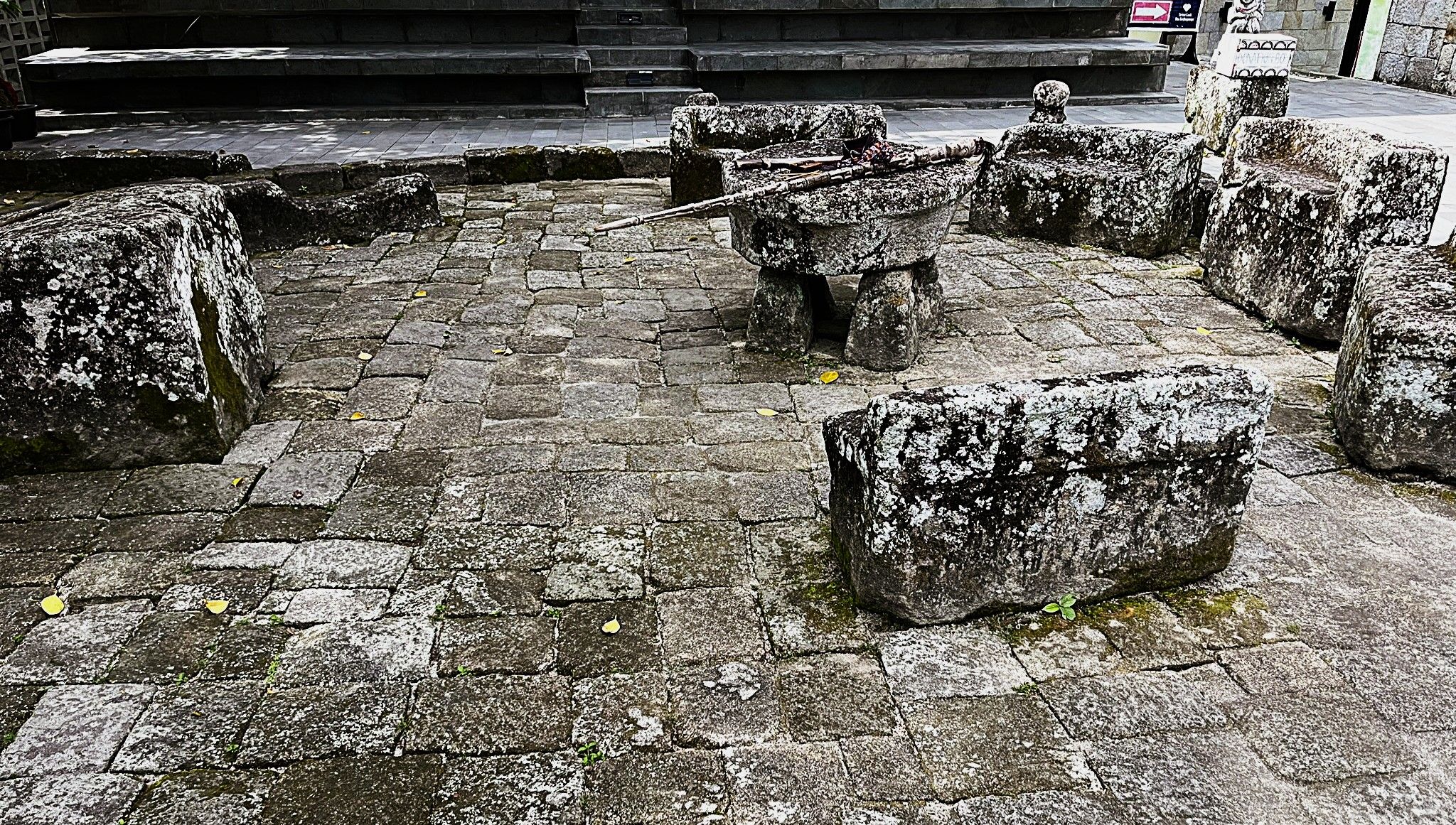
Entering the village through a stone gate, I pay an entrance fee of approximately 45 cents and see two rows of traditional Batak houses as my first sight. In their midst stand the remnants of a bloody past: Beneath a tree, weathered like an ancient person, stand some stone chairs. Here, the king, the shaman, and the village elders judged the accused and prisoners of war. A bit outside the rows of houses stands the execution site, where death sentences were carried out by decapitation.
During the execution, body parts like the heart and liver were taken, of which the Raja (king or village chief) consumed; important men or elders received smaller pieces from the chest, shoulders, or thighs; other villagers received only small portions. The distribution was strictly ritualized. It was not about satiating oneself with human flesh, but rather a belief that one absorbed the strength and characteristics of the condemned or captured person through this ritual. At the same time, the ruler demonstrated his authority.
Headhunting often took place in connection with a raid or a battle. Captured or killed enemies were beheaded; the heads were then taken to the cult site or the village and presented in rituals. Skulls were often nailed to houses; sometimes entire heads were preserved. The act of obtaining enemy heads was believed to transfer the opponent's spiritual life force to one's own village and strengthen its defenses.
Missionary Activities in the 19th Century
Starting in 1860, the region was missionized by German Lutherans, later also by Dutch Catholics, leading to the disappearance of cannibalistic practices. Even today, there are stories about missionaries from the Rhine Missions Society, especially Ludwig Ingwer Nommensen, who worked here from the 1860s onwards. He learned the Batak language, translated biblical texts, and established schools.
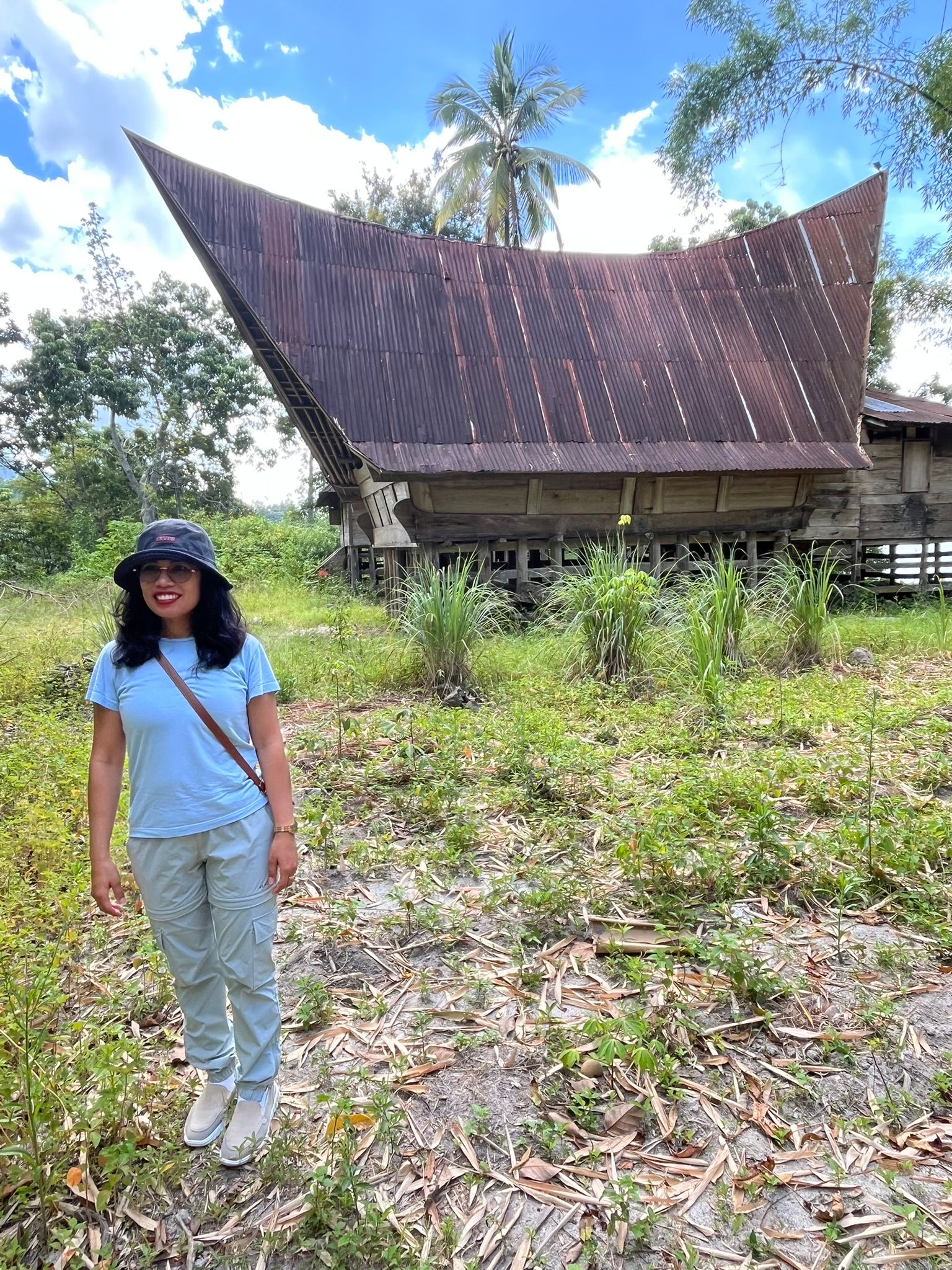
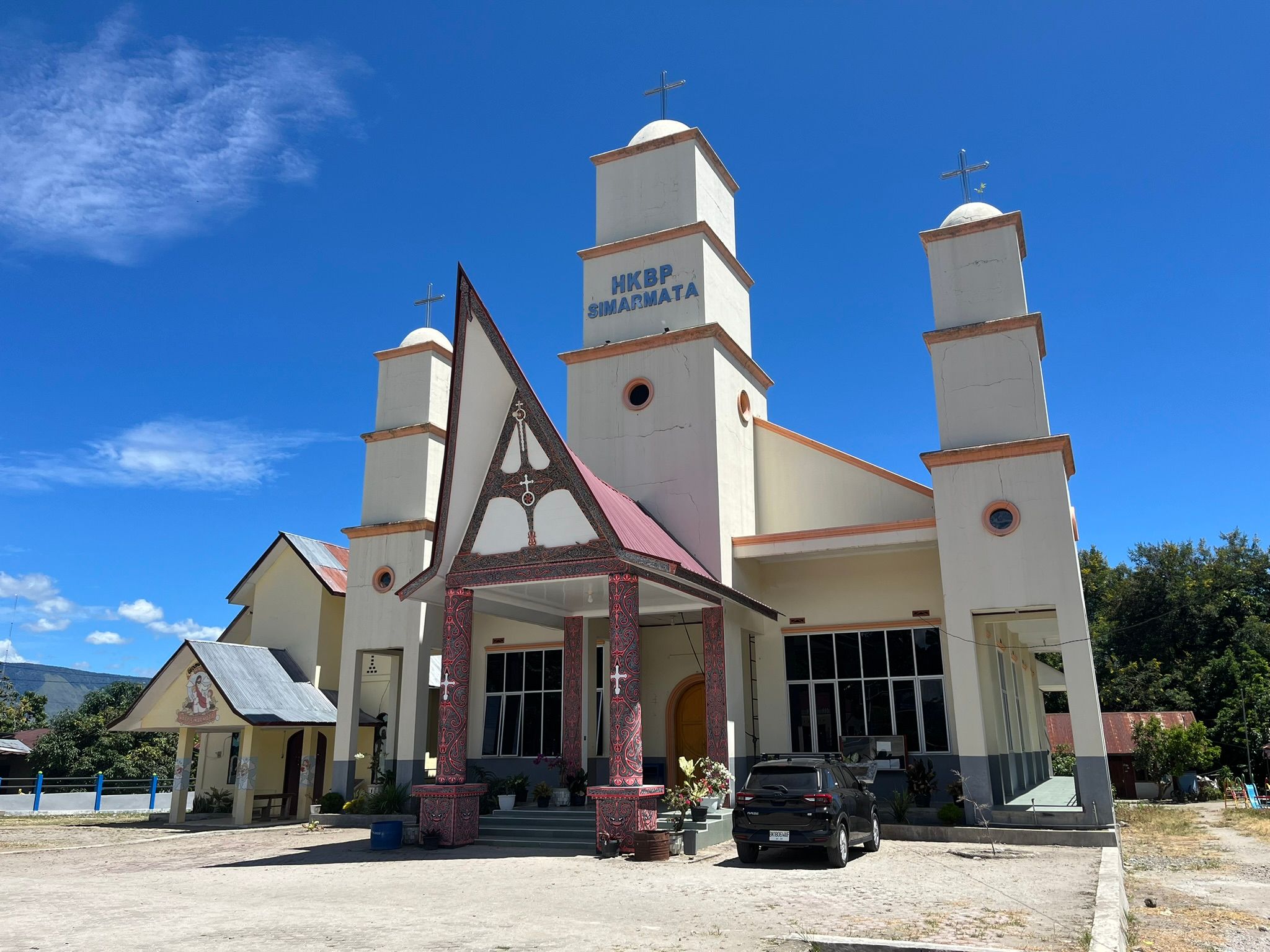
Today, churches, which often seem quite exotic to me, coexist with traditional Batak houses featuring their curved gables, shaping the landscape of Samosir. The most significant Protestant community is the Huria Kristen Batak Protestan HKBP (Protestant Christian Batak Church), which, with more than four million members, is regarded as the largest Christian community in all of Indonesia.
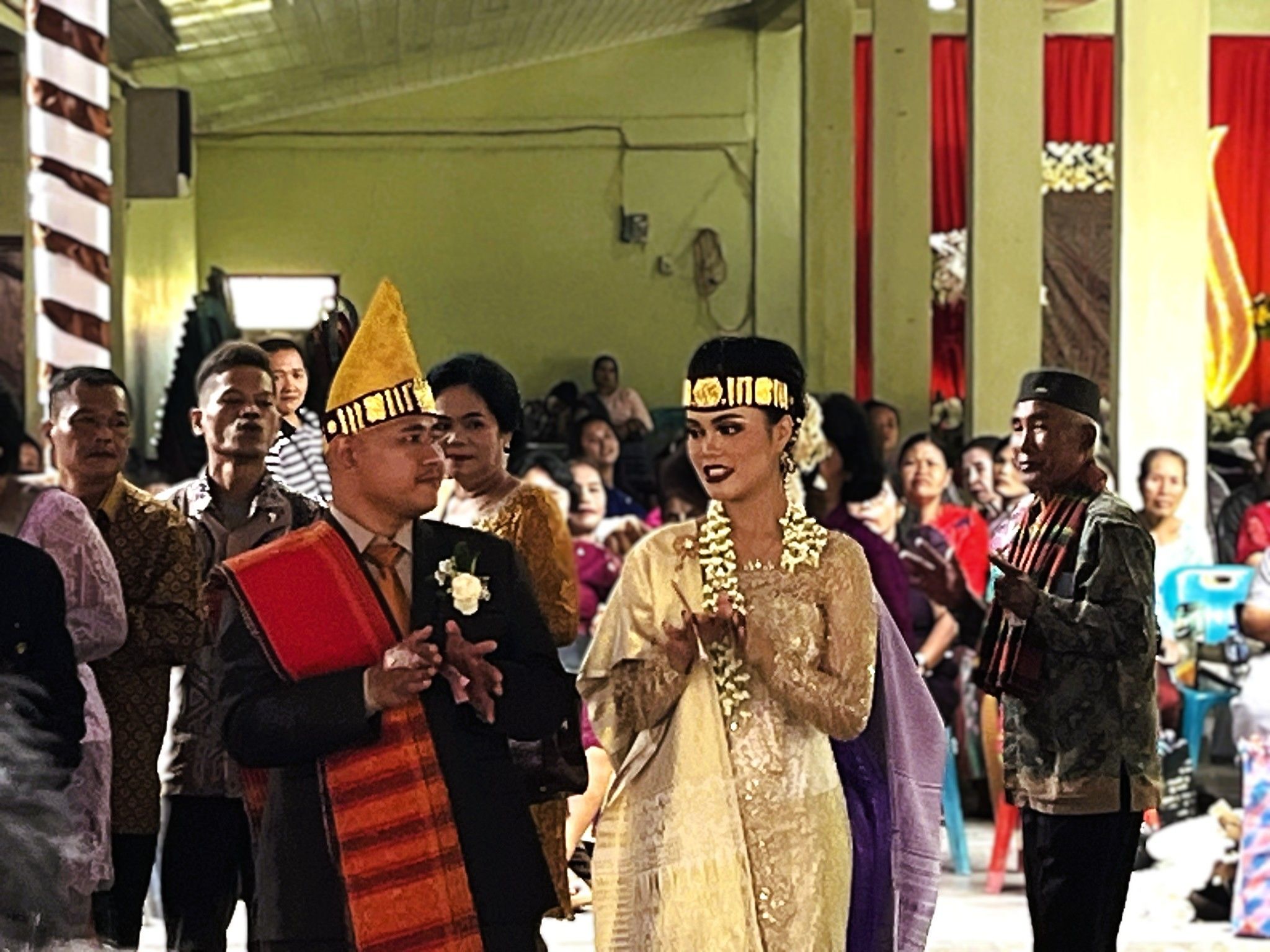
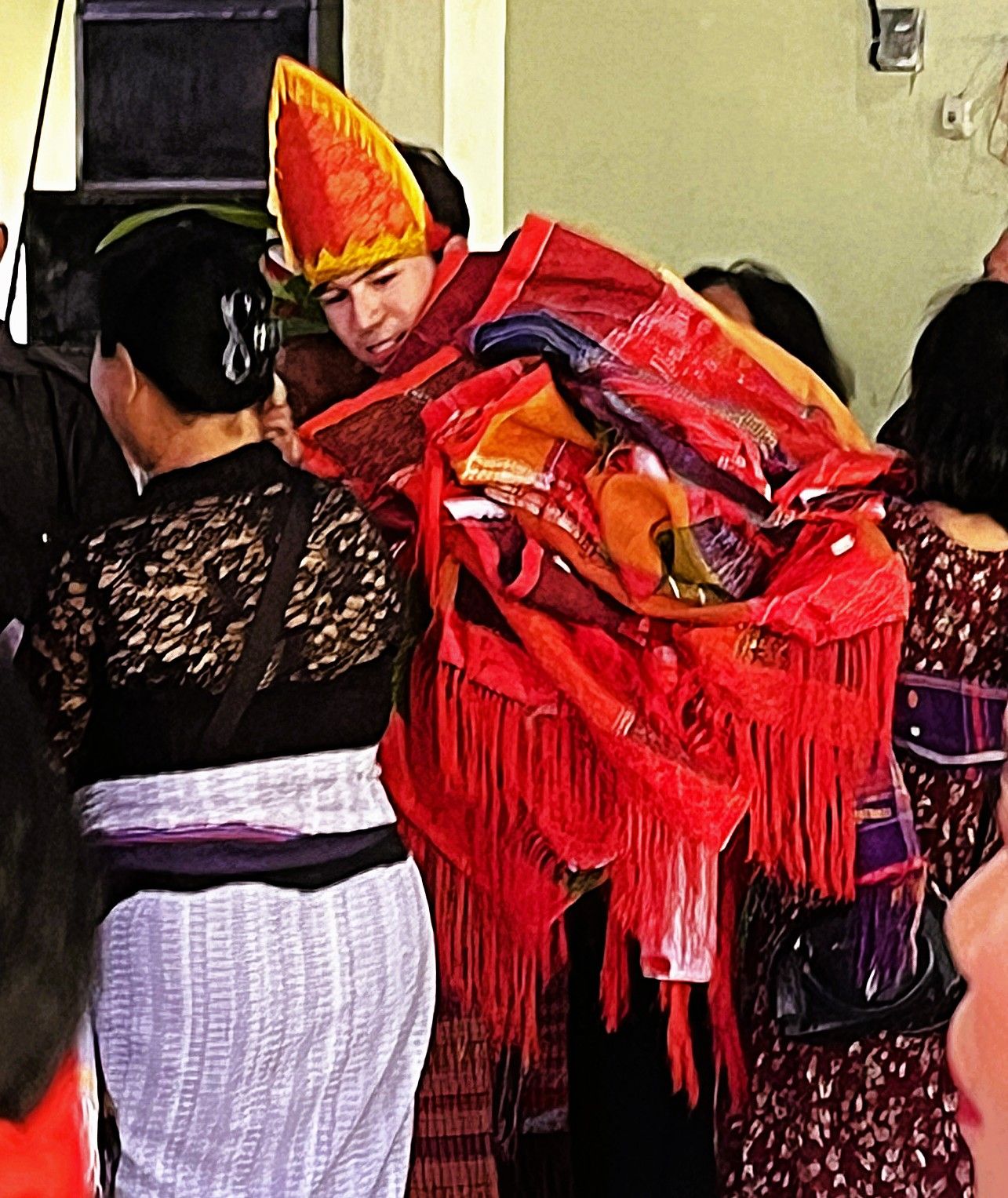
Some traditional customs have been preserved despite Christianity, such as elaborate family celebrations and multi-stage burial rites. Dewi takes me to a wedding celebration and, a few days later, to a funeral in her extended family circle.
Although the wedding couple and the deceased grandaunt are Protestant, the celebration has chosen an event hall next to the Catholic church in Tuktuk. The relationship between the denominations here is relaxed, Dewi says, but she makes a small exception: It is not entirely easy with Muslims. She speaks from experience; she was once married to a Muslim, the father of her two teenage daughters.
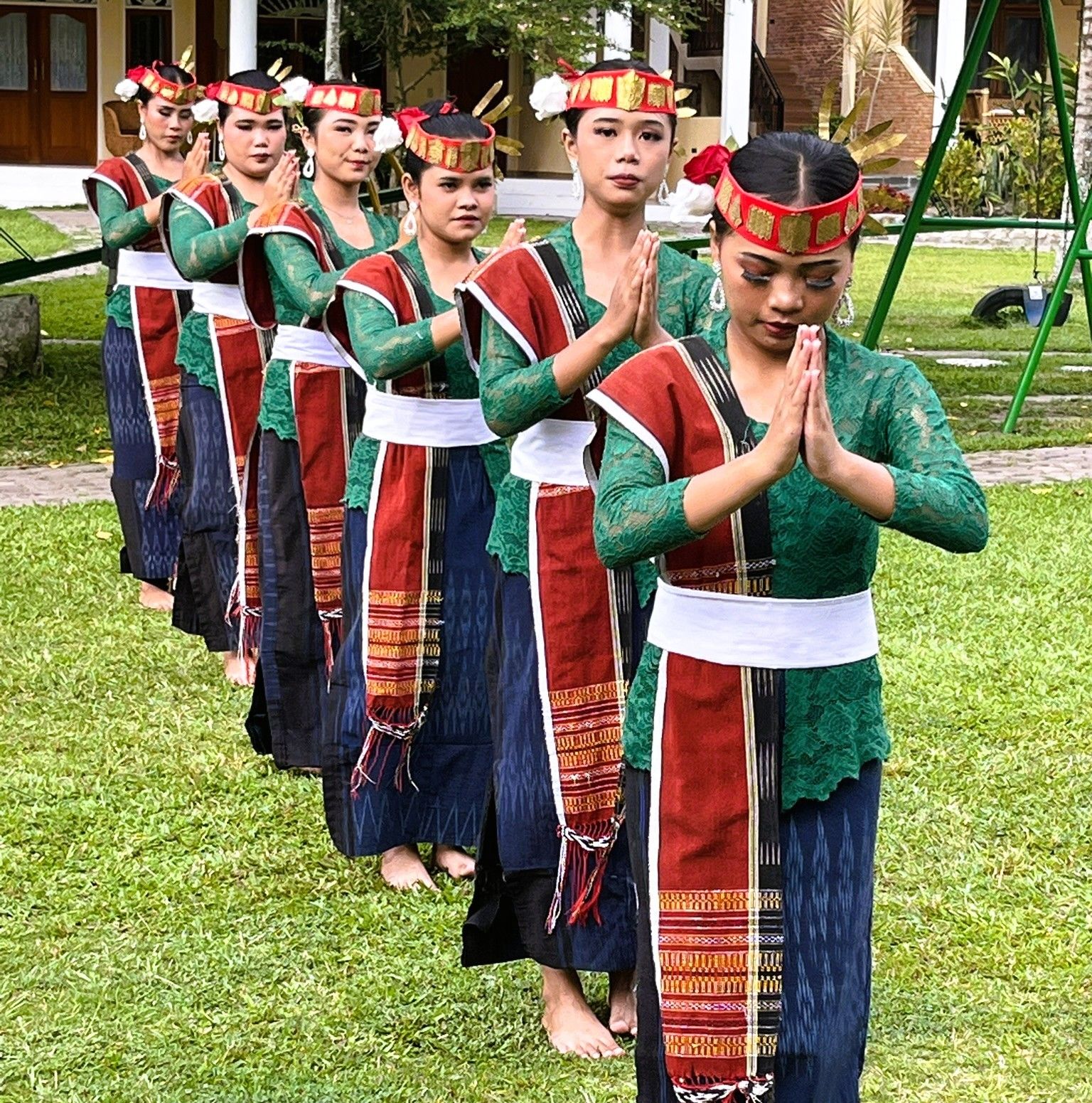
Both celebrations are accompanied by thundering traditional music and equally thunderous speeches. And both proceed according to clearly defined rituals. For example, it is specified how heavily women must be made up for the occasion – the closer the familial relationship, the more makeup they wear – as well as how much money and which Ulos to gift to the wedding couple or the bereaved. Ulos are traditional, handwoven fabrics that are worn draped over the shoulder during celebrations and are considered symbols of divine blessing, protection, respect, and family ties.
A Landscape Full of Gravestones
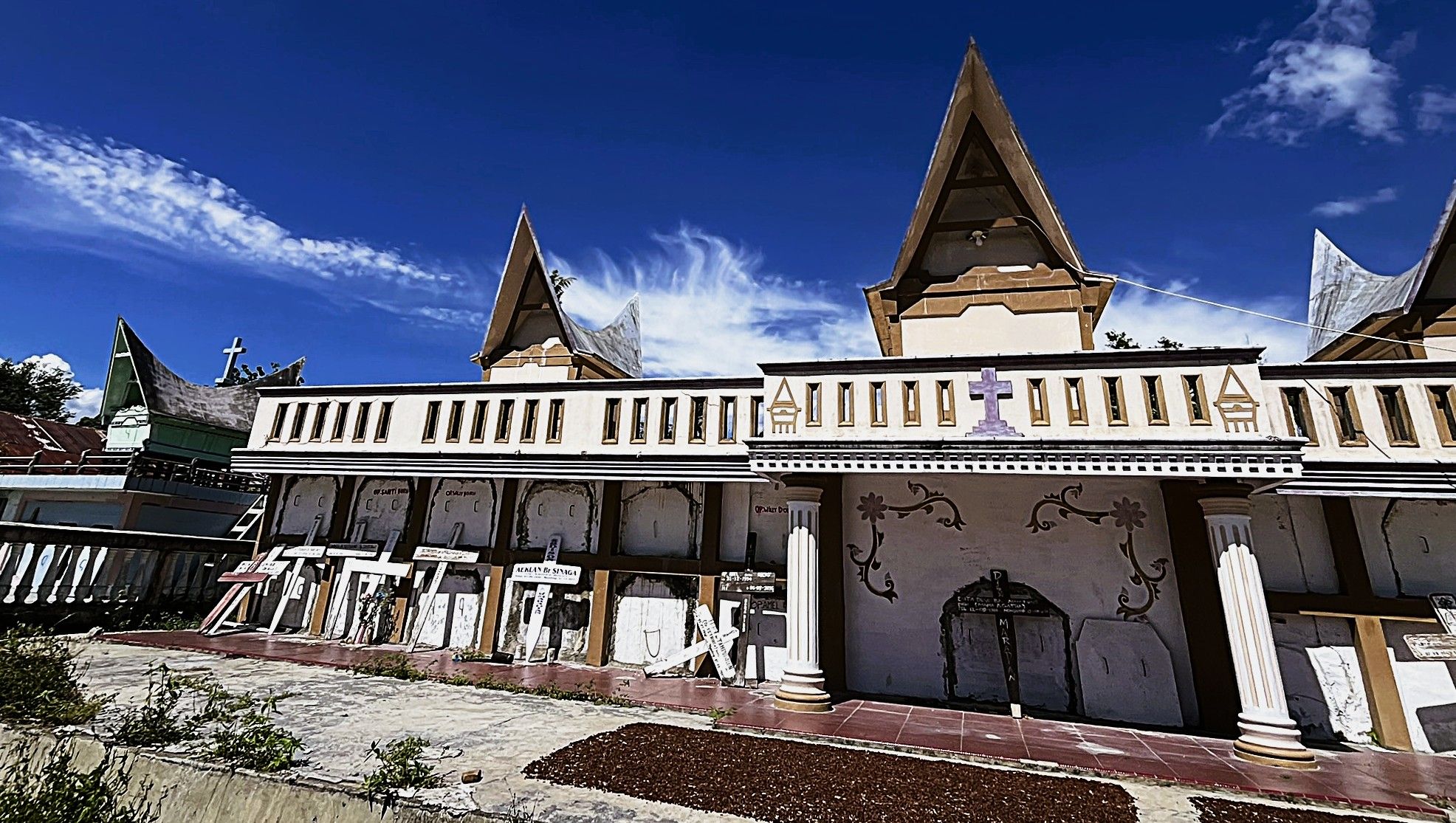
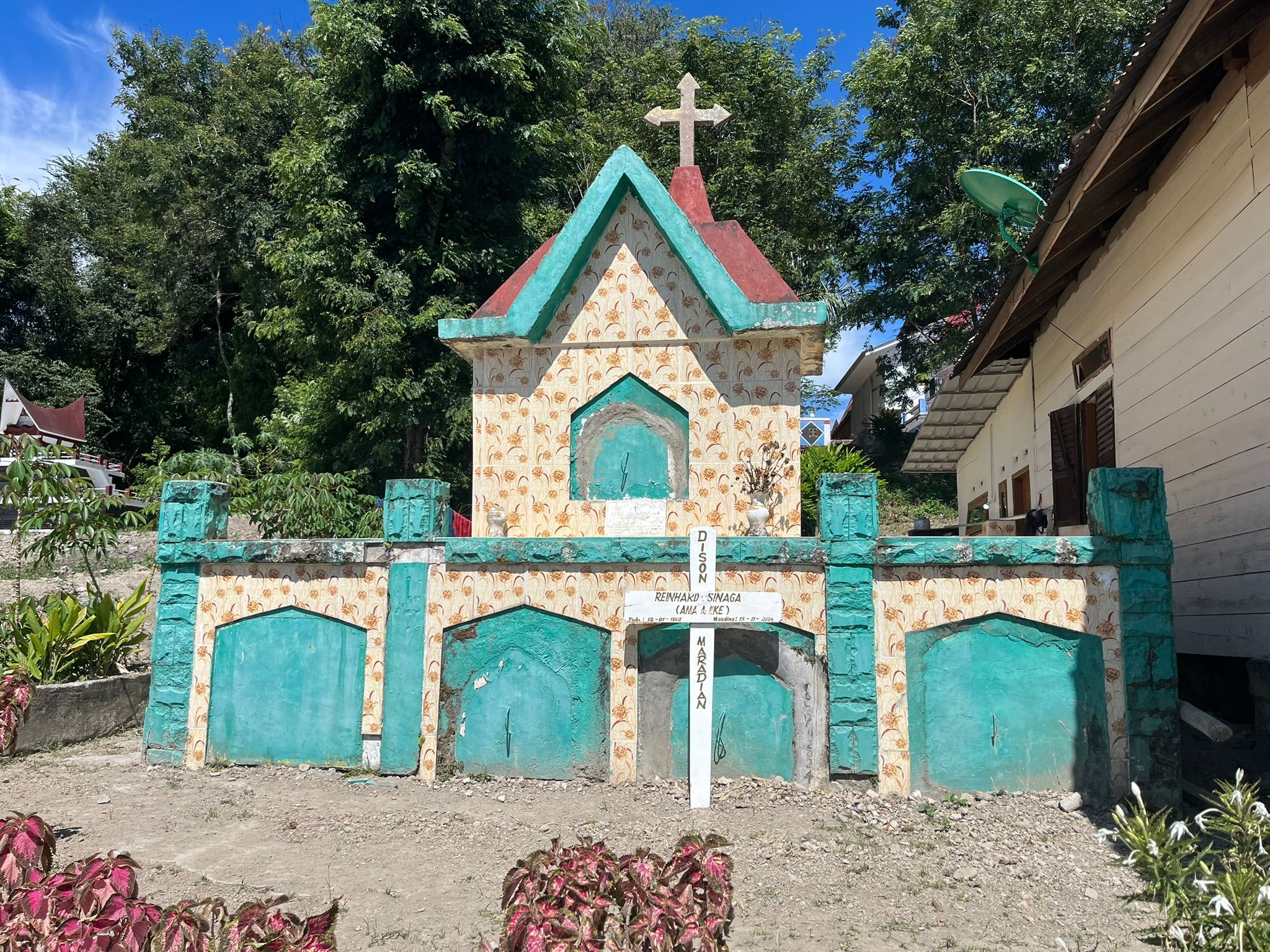
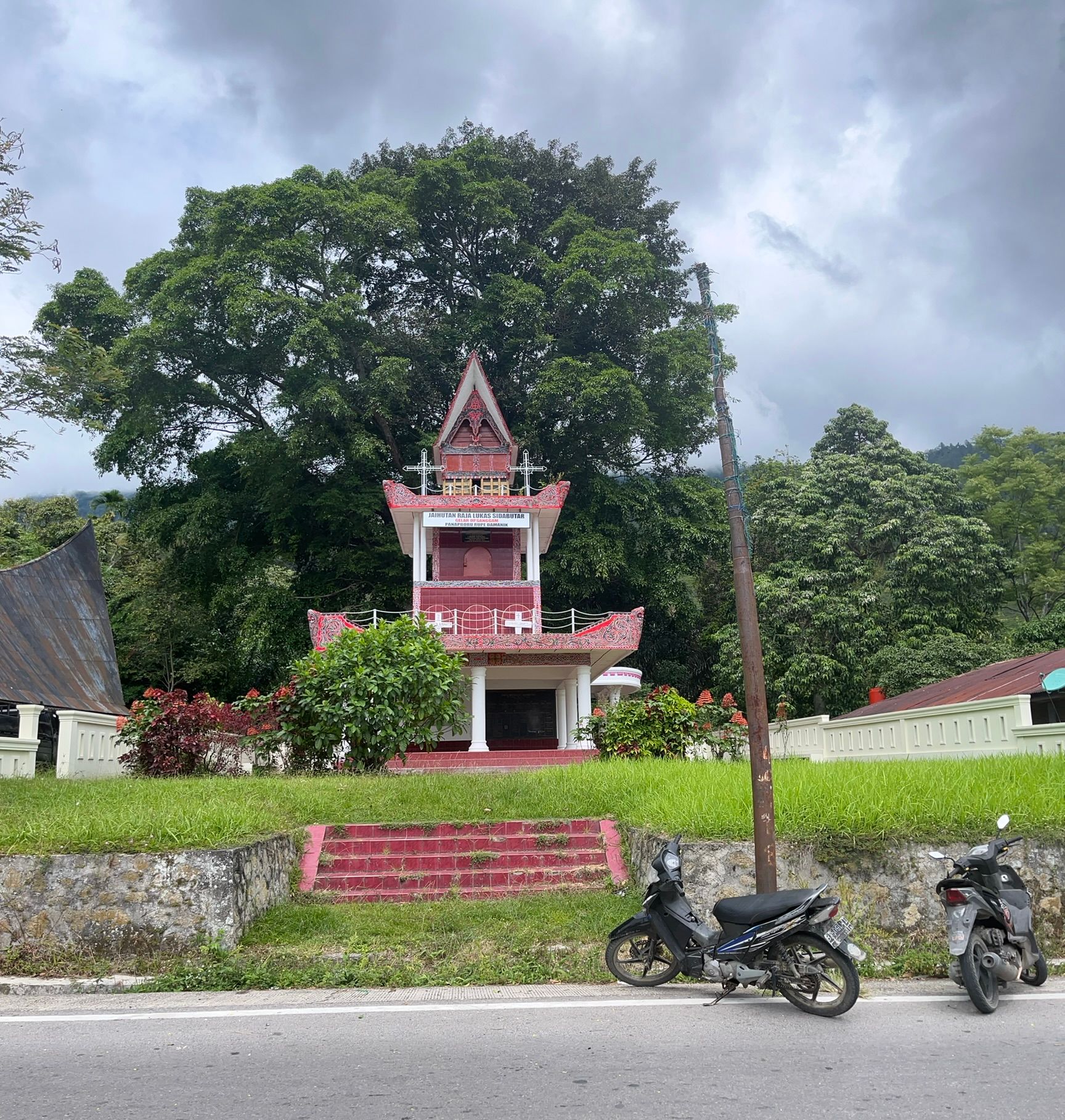
Ancient burial rites manifest in the landscape, just like the churches and Batak houses: In the middle of the fields or even in the middle of villages stand multi-story stone family tombs that often resemble small houses or small churches. In the lower chambers rest earlier generations, while upper levels are reserved for later burials.
The deceased are first buried in normal graves, but years or decades after the initial burial, they are reinterred during a grand family ceremony. This second burial is seen as an important expression of respect for the ancestors and simultaneously strengthens the cohesion of the extended family. It is very expensive; for the celebrations, water buffaloes must be slaughtered, among other things.
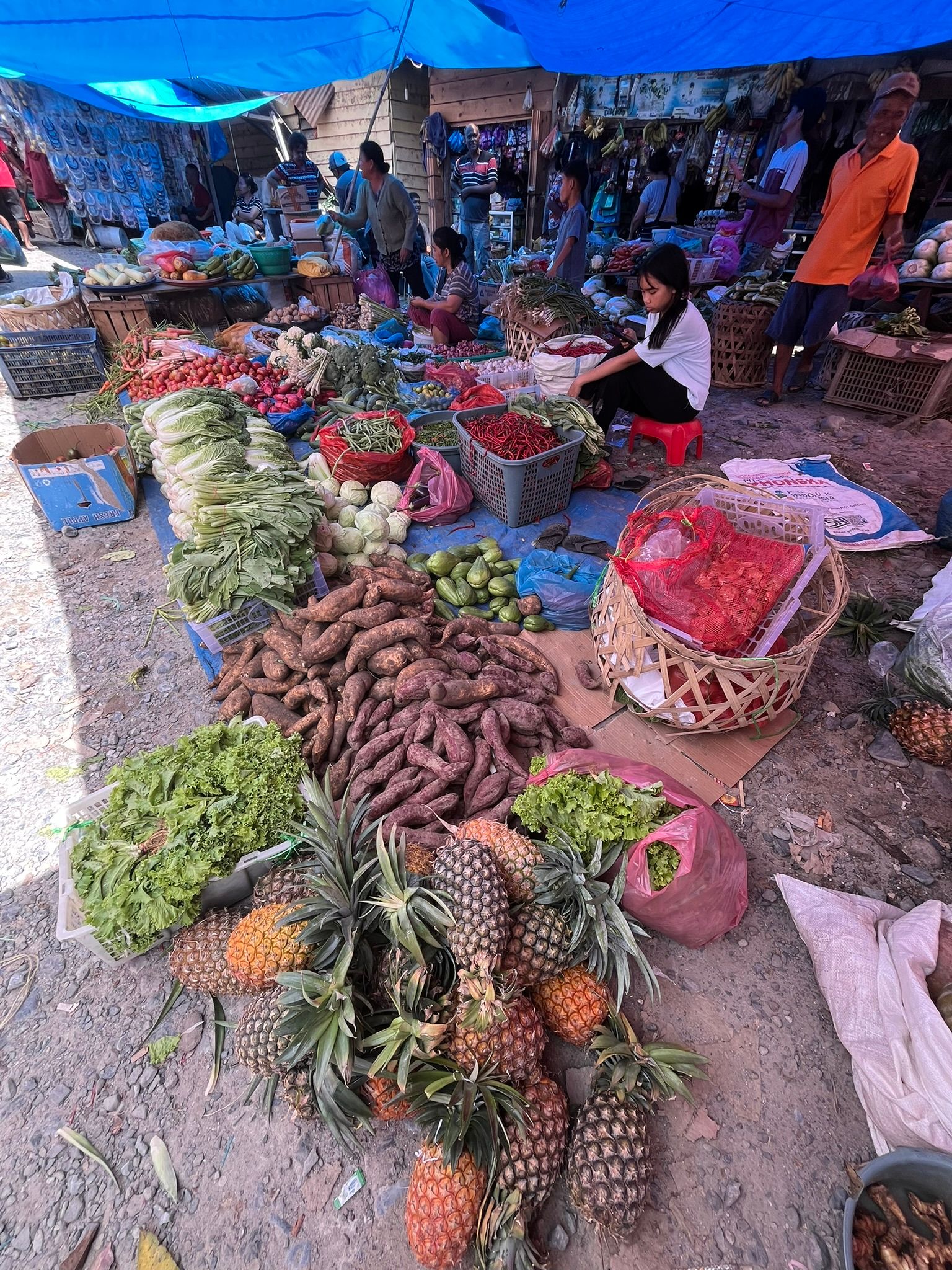
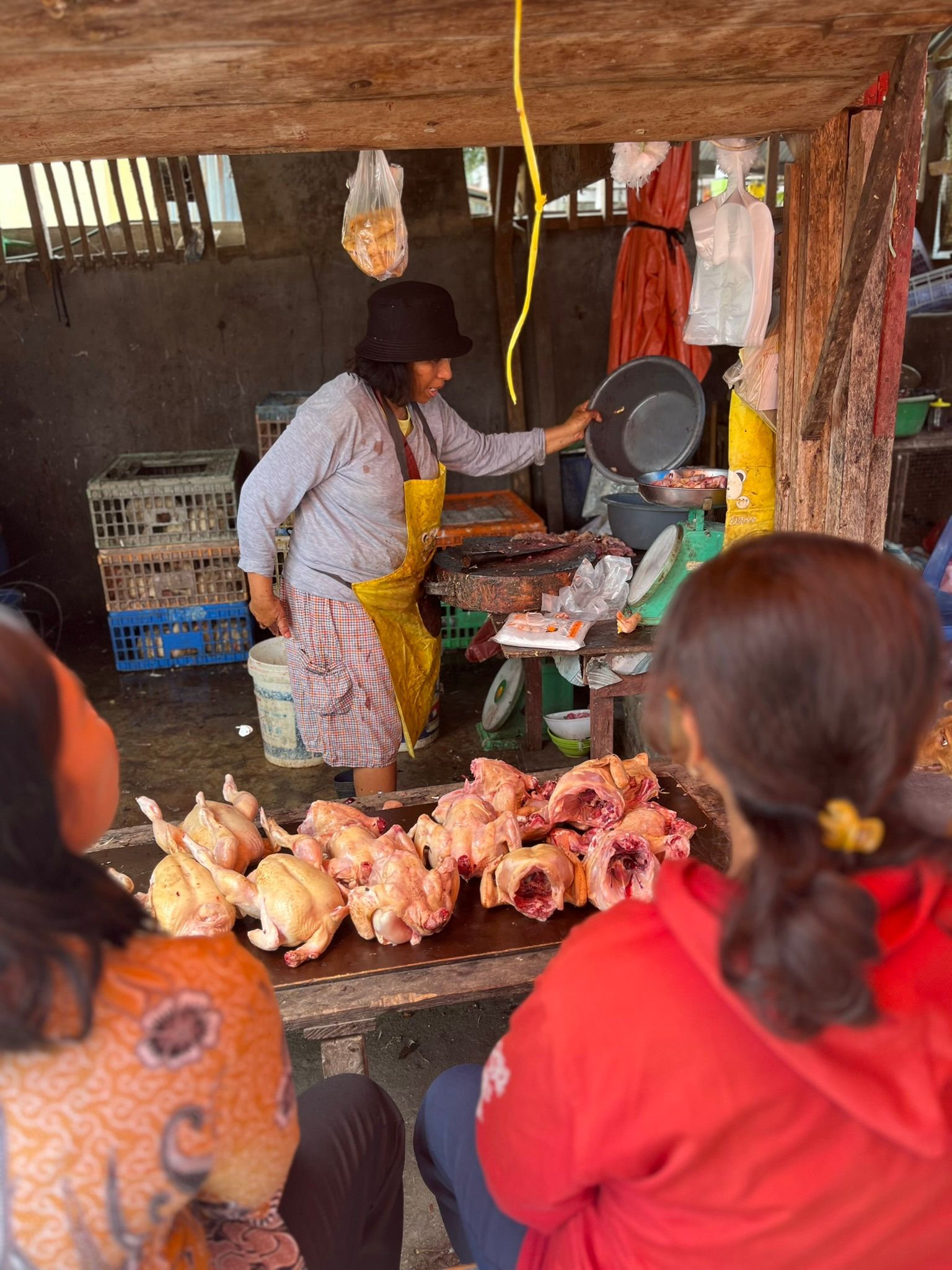
I have not witnessed a buffalo slaughtering. However, a bloody trade is also the sale of fresh chicken meat at the weekly market in Ambarita. The animals are delivered crammed into plastic cages. On the order of a customer, a young man takes a flapping and squawking chicken from the cage and cuts its head off with scissors. The still twitching animal is briefly dipped in hot water and then placed in a machine that feathers it.
In the few days before I left Samosir, I had difficulty ordering chicken for meals.