
Traveling through Northern Sumatra
In several stages at the end of May 2026, I traveled from Banda Aceh through Northern Sumatra, via the cities of Lohsuemawe and Langsa to Medan.

Published: 17.07.2026
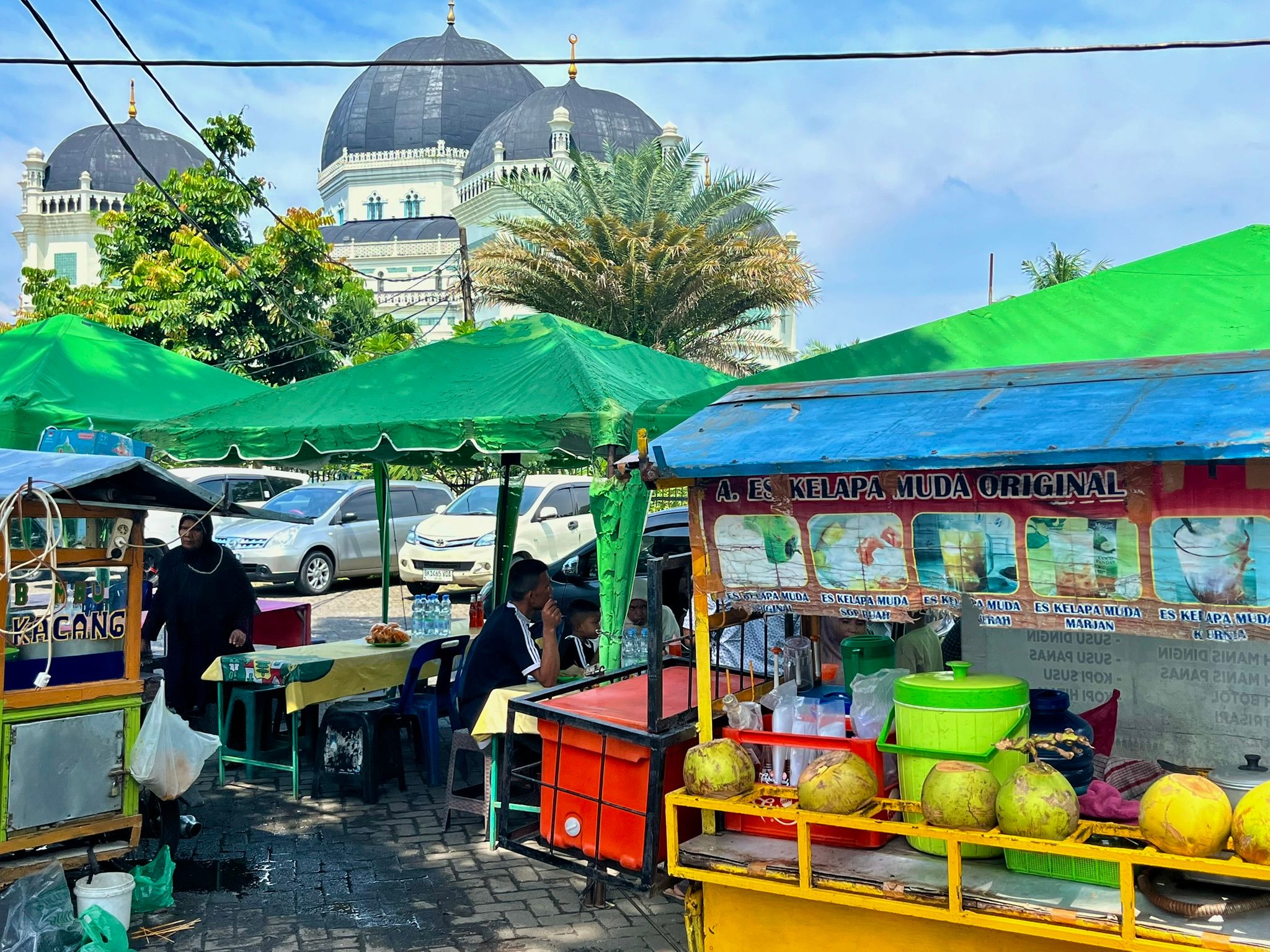
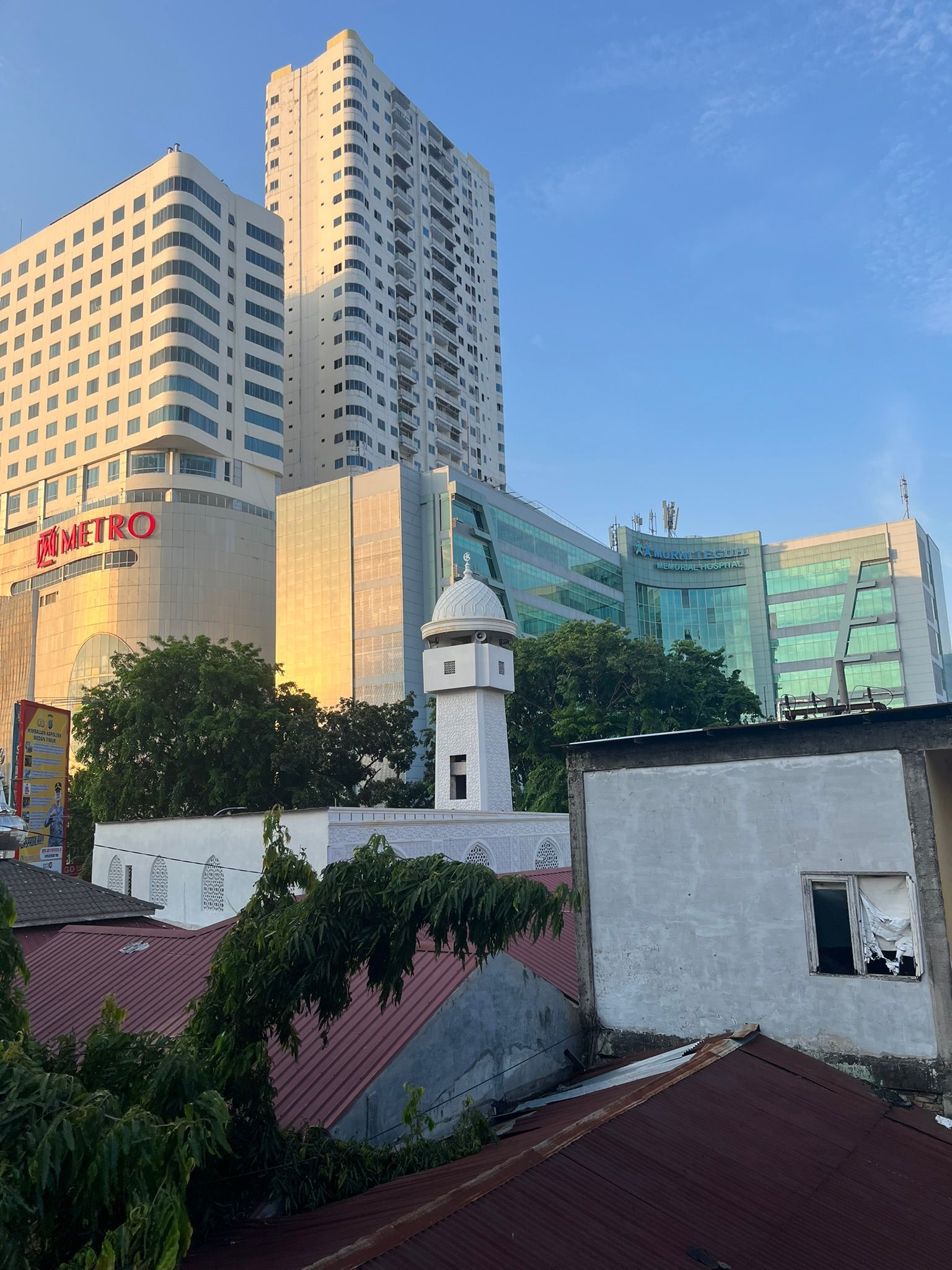
On May 28, 2026, I arrived in Medan after a multi-day journey through northern Sumatra. The highway exit was labeled «Helvetia». Naturally, the question arose immediately as to how the Latin name for Switzerland had made its way here, and I found myself in the midst of Medan's history, the metropolis on this vast Indonesian island. Most tourists do not stay here but travel straight on to Lake Toba or the mountains of Bukit Lawang, where they book jungle treks to catch a glimpse of the last Orangutans.
Those who do not stay miss out on what they are missing in Medan. The Sultanate of Deli, which Medan would become the center of, was founded around 1630/1632. Its name refers to the Indian city of Delhi, from where the royal family had emigrated. A few years later, the Dutch conquered the area. The Sultan sided with them. In the second half of the 19th century, the Dutch began to establish massive plantations after a compatriot named Jacobus Nienhuys (1836–1928) had made successful attempts at tobacco cultivation at the behest of the Sultan starting in 1864.
Having become extremely wealthy with tobacco...
A short time later, around 1865, the Swiss Albert Breker (who died in 1884) came to Sumatra and received a concession for tobacco cultivation from the Sultan of Deli. Breker had previously worked in British India for the trading company Volkhart from Winterthur near Zurich. He named his estate in Sumatra «Helvetia». The plantation name remained even as the city of Medan became the administrative center of the whole area. Today Helvetia is one of the 21 districts of the million-city, hence the sign at the highway exit.
In 1869, Breker brought another Swiss to help, a man named Carl Fürchtegott Grob (1830–1893). He later became self-employed with a colleague from Lindau. Grob became unimaginably rich in a few years. He returned to Zurich around 1880 and had the Villa Patumbah built in the Zurich district of Riesbach from 1883 to 1885 to manifest his financial power, which now serves as the headquarters for the Swiss Homeland Protection. When I lived in Zurich, I wondered where the magnificent palace in the neo-Renaissance style had gotten its exotic name. Now, here in Medan, I know: Patumbak was the name of the place where Grob established his first plantation, which he also named Patumbak.
The aforementioned Jacobus Nienhuys founded the Deli Maatschappij (Deli Company) in 1869 along with other Dutchmen after he had made contracts for land concessions with the Sultan. With its premium tobacco, the company became extremely profitable. At the same time, Medan, where the Deli Company established its headquarters, transformed from a small village into a major center, at times becoming the wealthiest city in Indonesia. The Deli Company built roads, schools, hospitals, and a railway line and established telephone and telegraph connections.
...thanks to modern slavery
However, the enormous wealth of the Europeans had its dark sides: The planters recruited tens of thousands of workers, known as Kulis, primarily from China and Java. One could consider their situation to be modern slavery. Around the turn of the 20th century, there were international protests against this. Nienhuys himself had to leave Sumatra early to escape prosecution. He was accused of being responsible for the death of seven Kulis who had been beaten to death in 1867 or 1868.
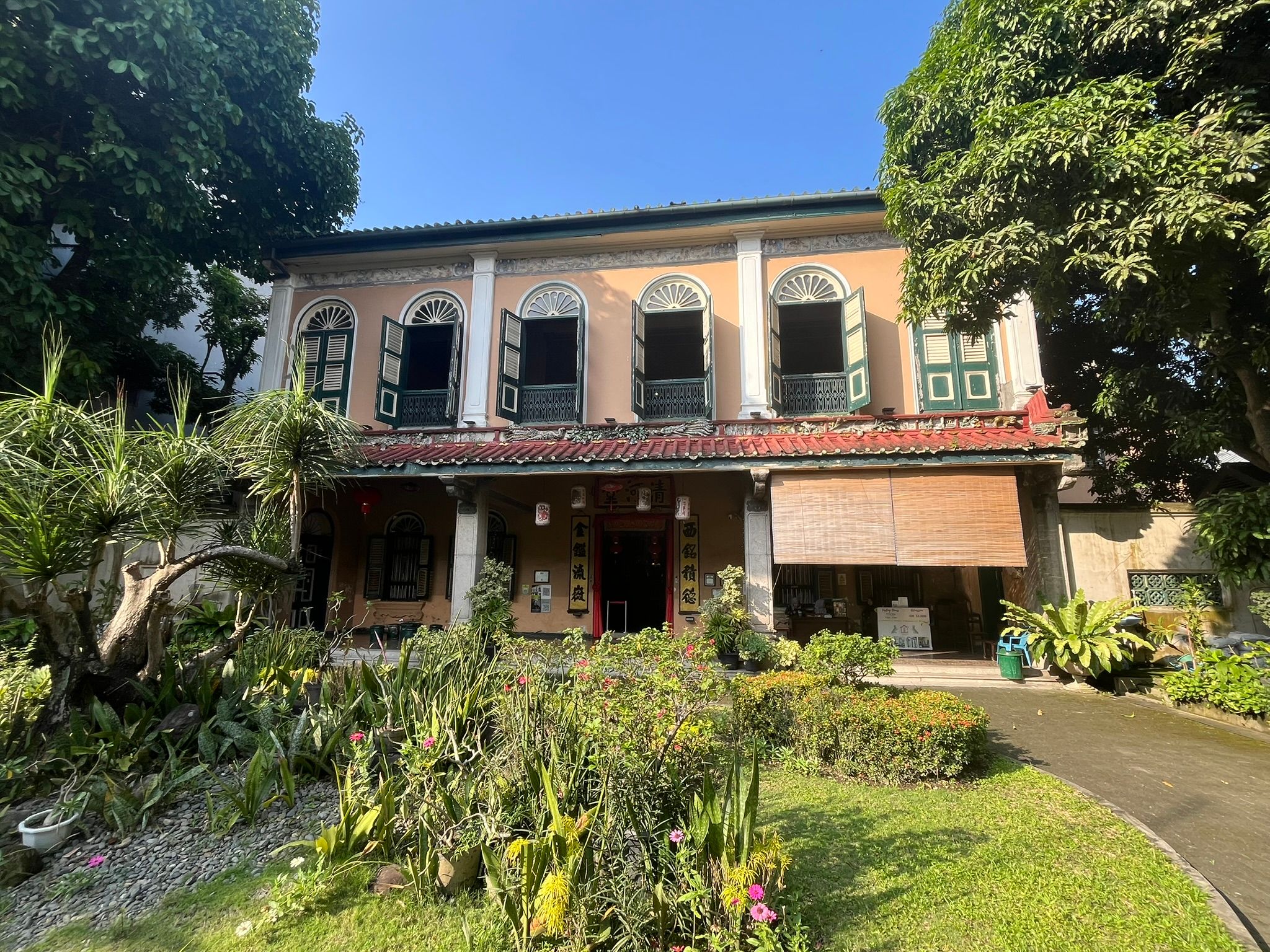
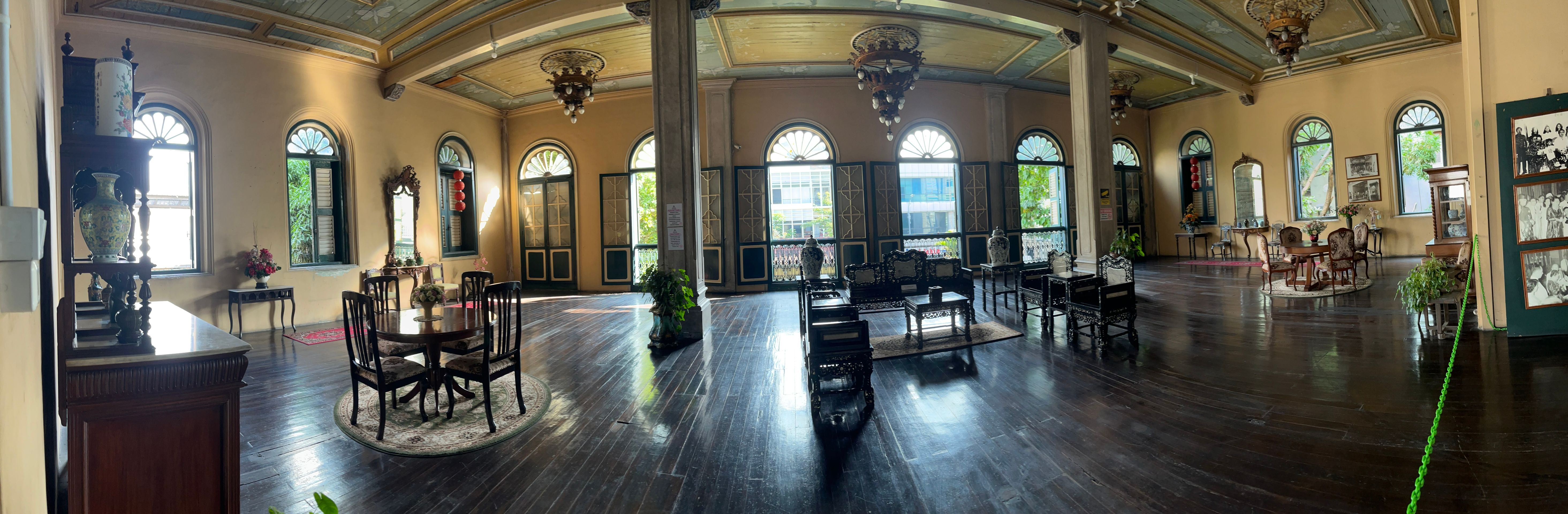
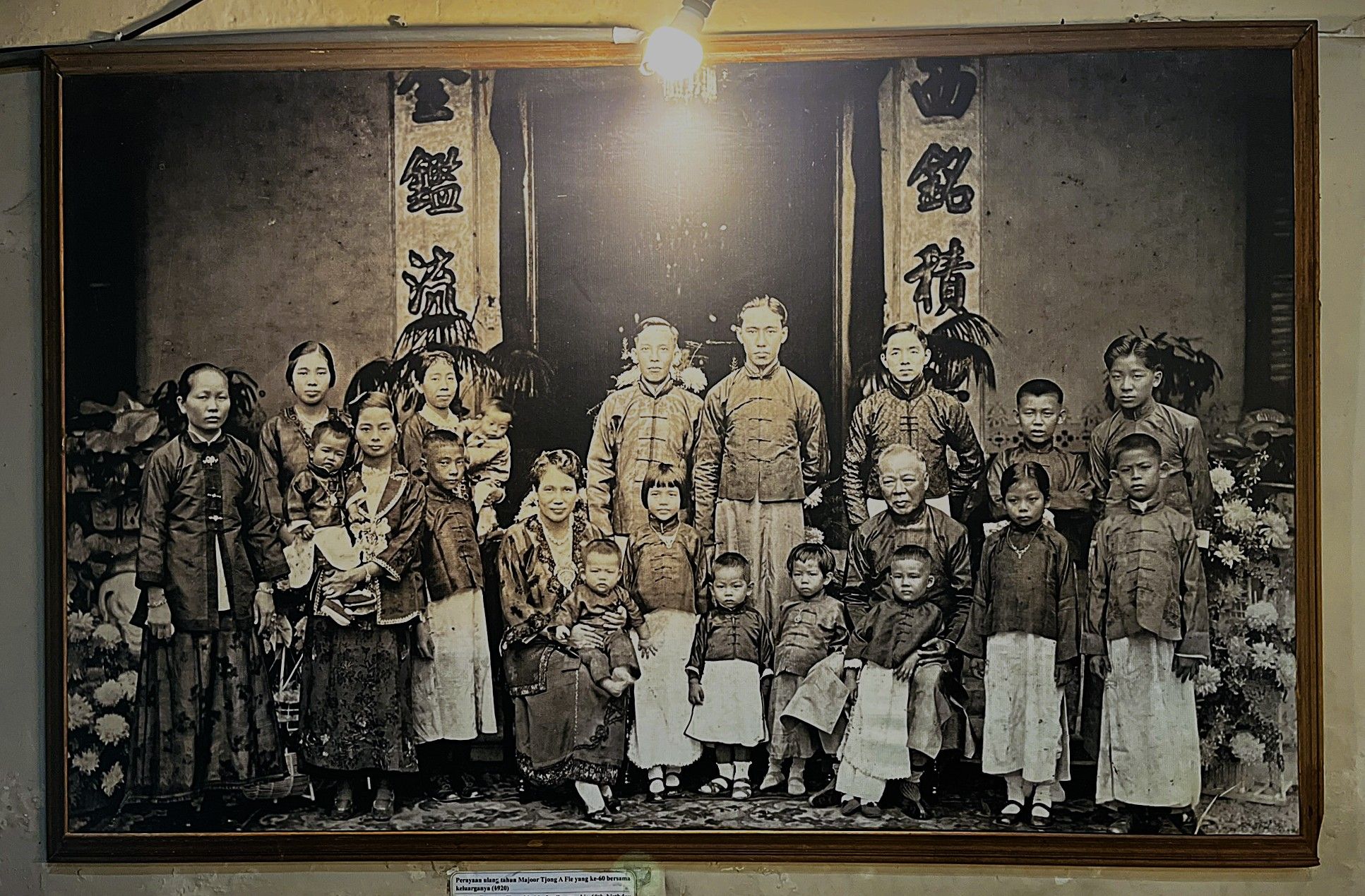
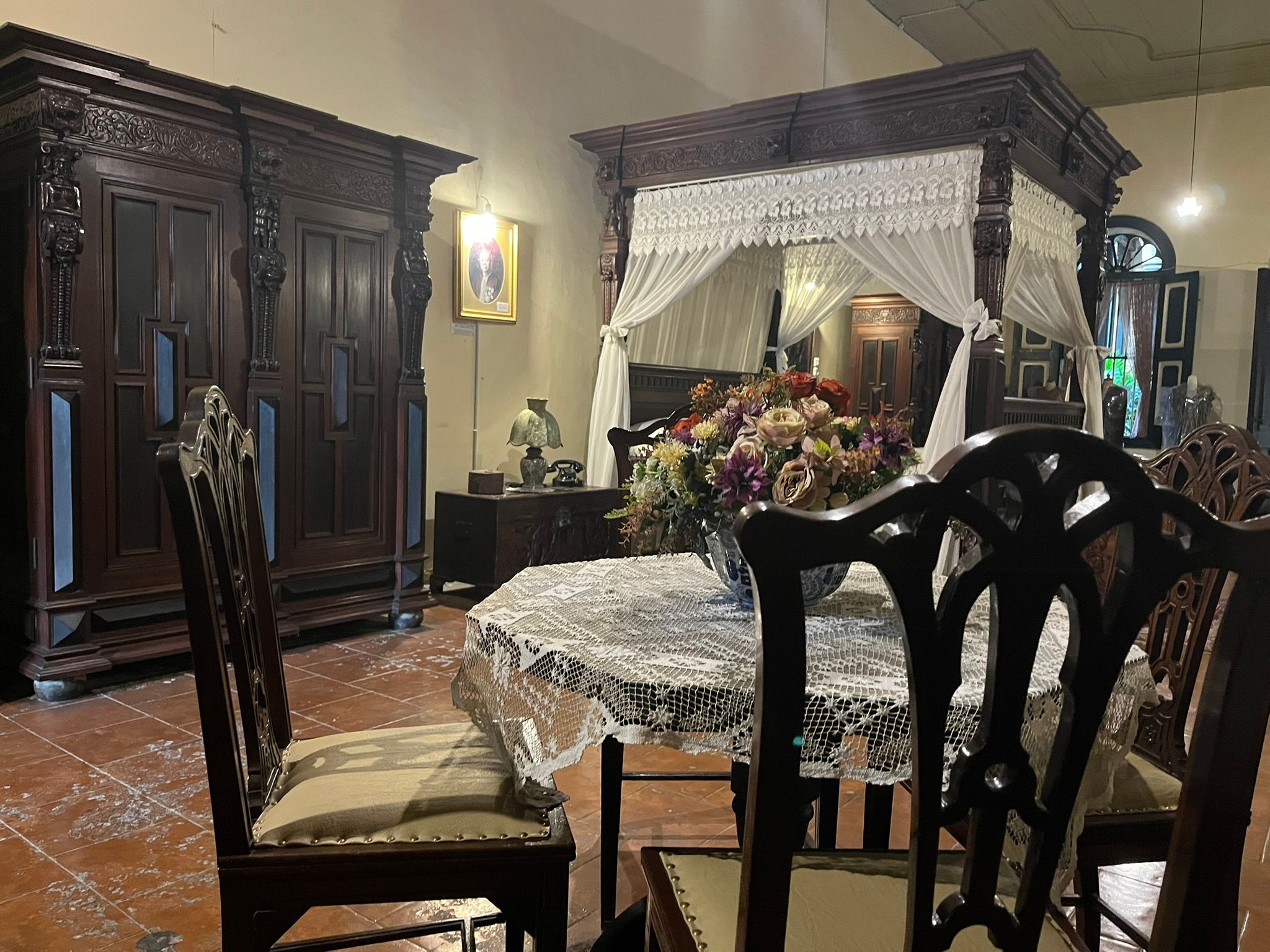
Not all Chinese, however, worked for starvation wages and under atrocious conditions in the fields. There were also several incredibly wealthy Chinese businessmen and Indian entrepreneurs. The most famous was Tjong A Fie (1860–1921), originally from the Chinese province of Guangdong, who amassed a vast fortune through opium trade, tobacco, rubber, sugar, banks, transportation companies, real estate, and landownership, skillfully maneuvering between the Dutch colonialists, the Chinese, and the Sultan's court. Tjong A Fie’s magnificent urban residence is now accessible as a museum. Its 35 rooms and representative spaces, constructed in a mix of traditional Chinese and Victorian style, are a testament to immense wealth.
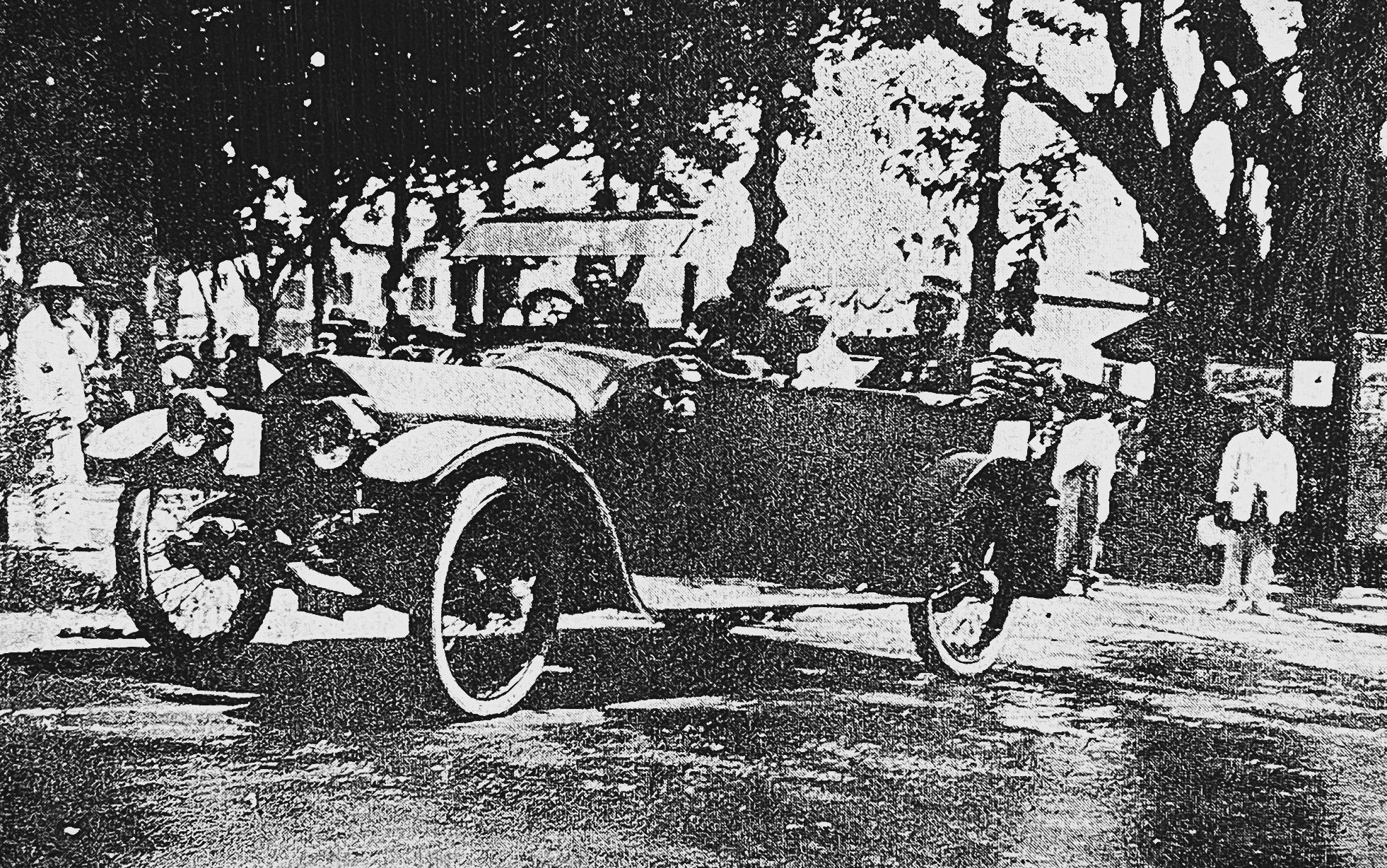
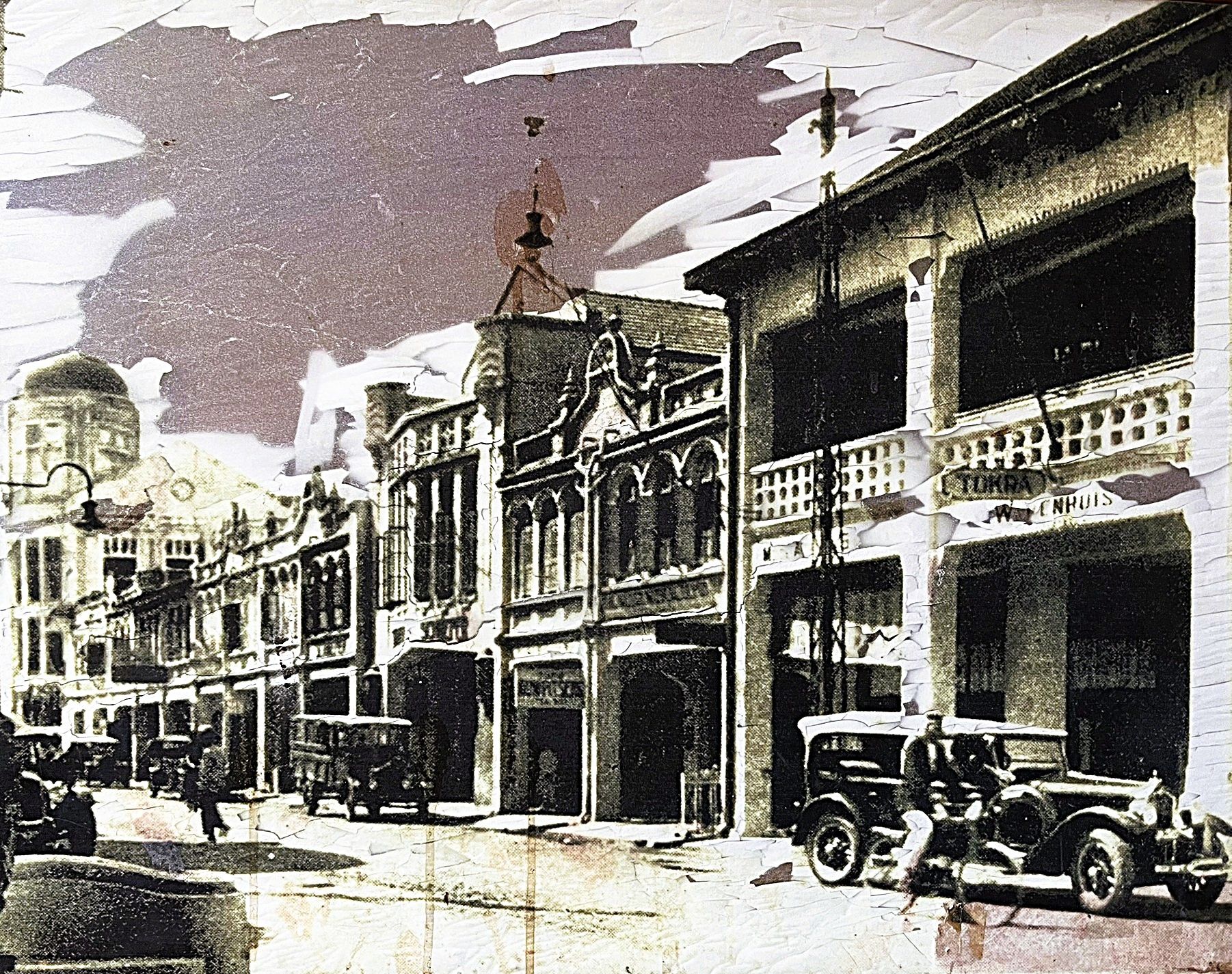
The city palace stands in the historic Kesawan district, once the pulsating center of the city. Old photographs hanging on the walls in the museum hint at how elegant this district once was, with streets lined with well-kept buildings in the late 19th and early 20th-century style. The first automobiles had not yet congested and polluted the city, unlike today, where Medan, like most other million metropolises, suffers from almost permanent traffic jams. By the way, Tjong A Fie was involved in a firm that imported Studebaker cars from the USA, which he himself drove as early as the 1910s.
Nostalgic Charm
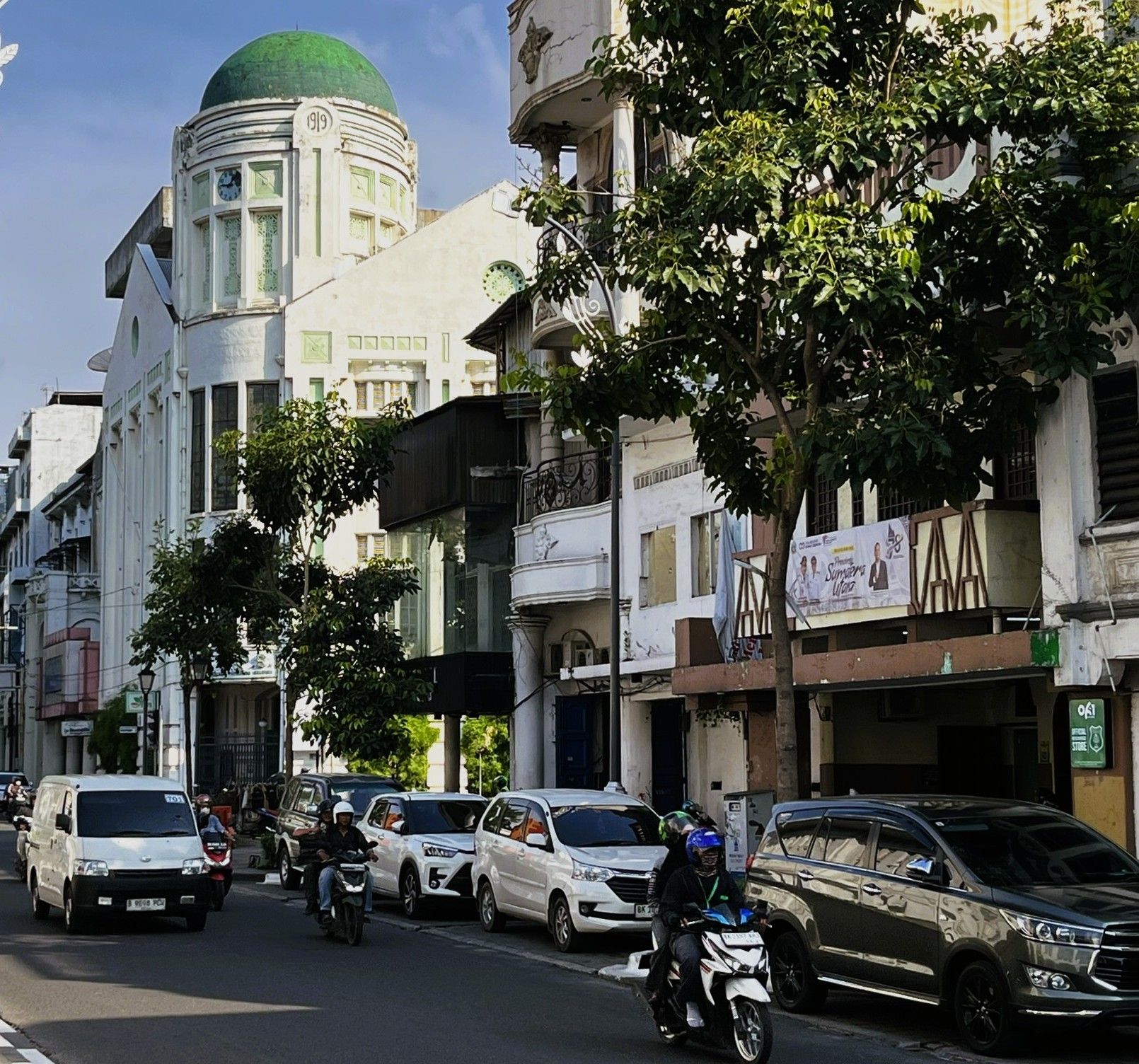
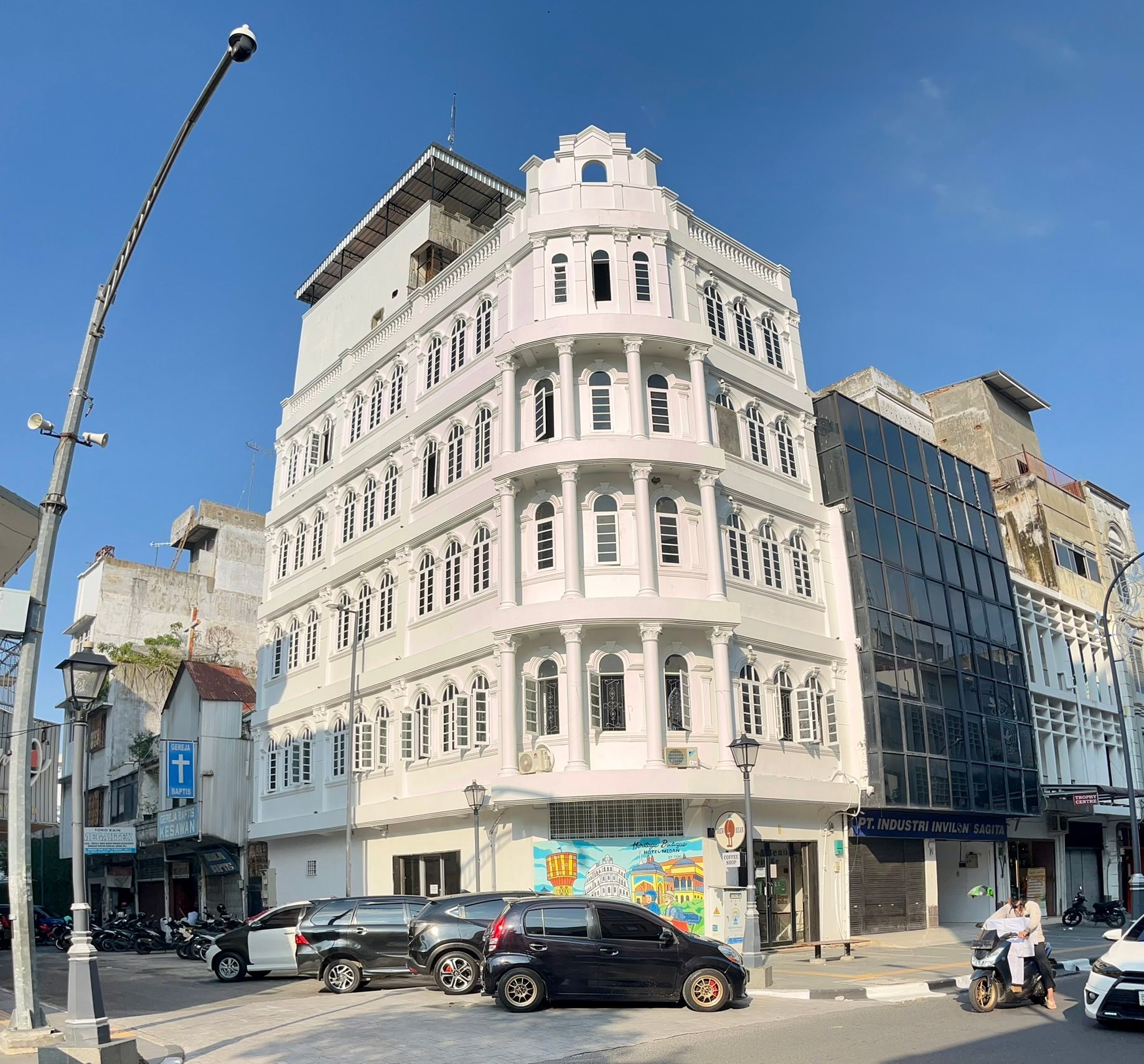
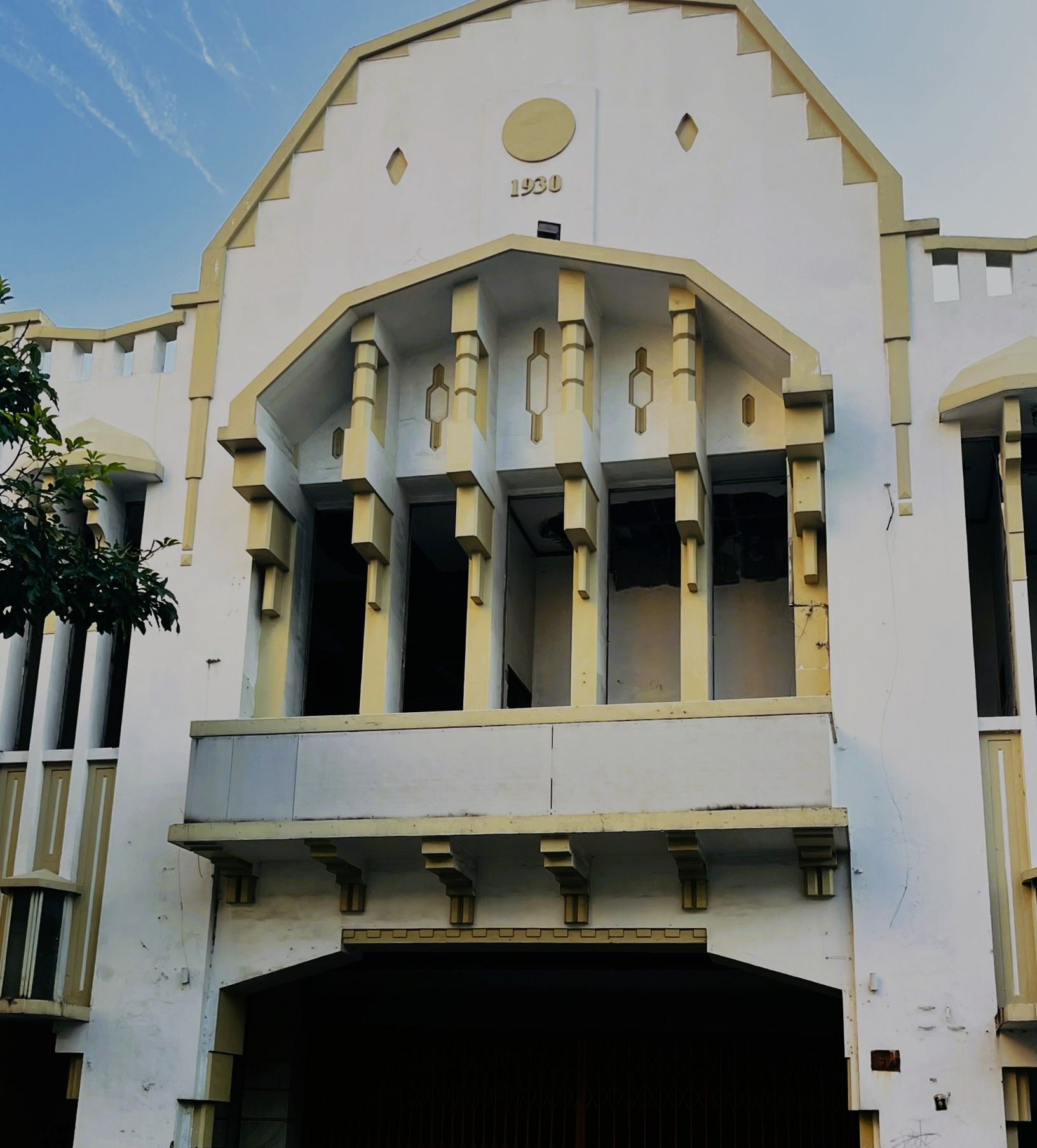
Today, one can still sense the former nobility of the Kesawan district, even though tasteless modern buildings have been crammed into the rows of houses, and another part of the old building stock is crumbling. The former seat of the Planters' Association is very well preserved, a striking white building with a tower, built in 1918/19 by a Dutch architect with a strong inclination towards Art Nouveau. It houses the Indonesian Plantation Museum.
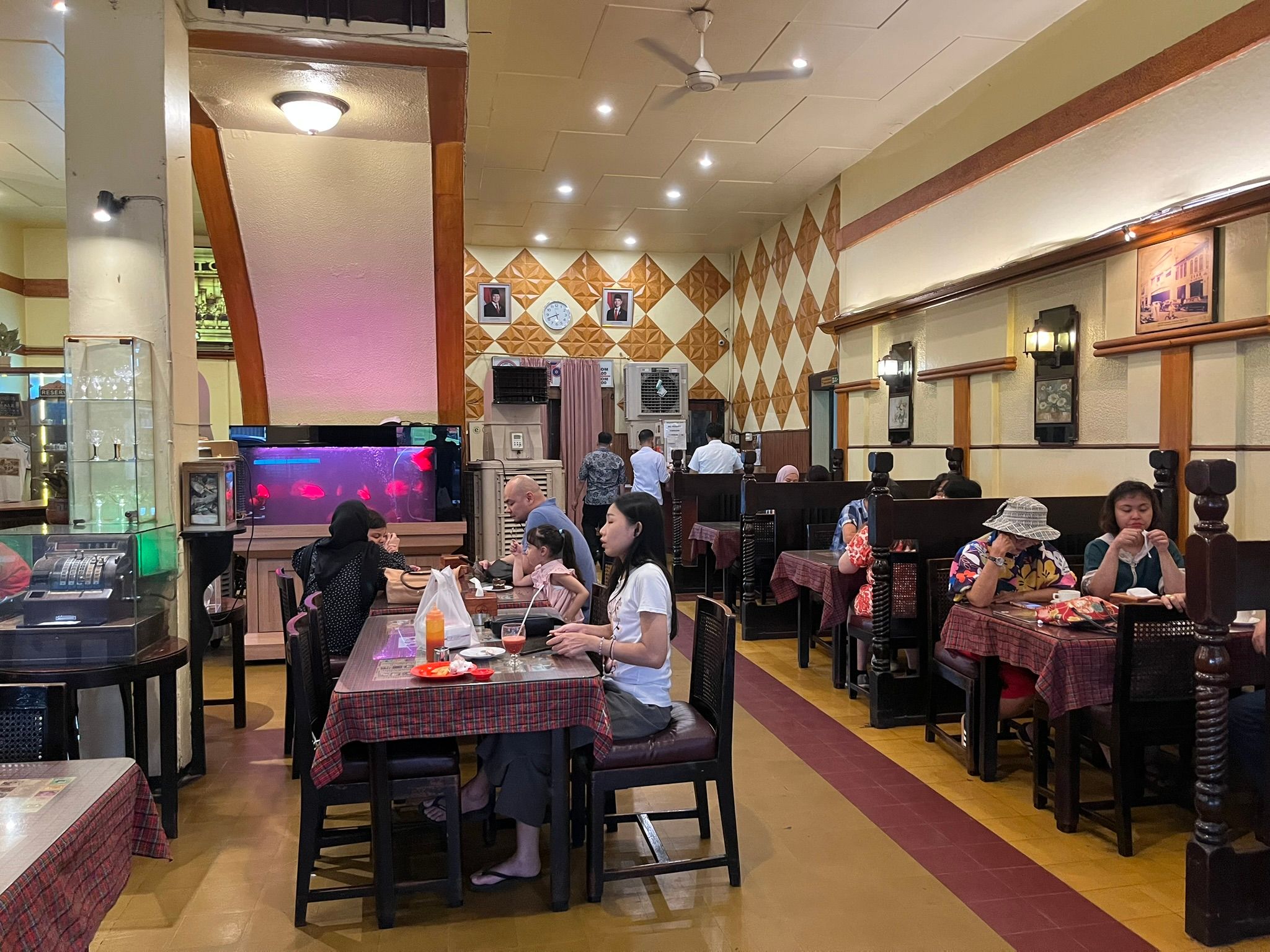
Other historical buildings on Kesawan Street are also noticeable. And since I am already here, I naturally must indulge myself at «Tip Top», a restaurant that opened in 1934 and has since preserved its nostalgic charm with vintage furniture, rattan chairs, and ceiling fans. Many recipes, both for Indonesian and European dishes as well as Dutch pastries, date back to the 1930s.
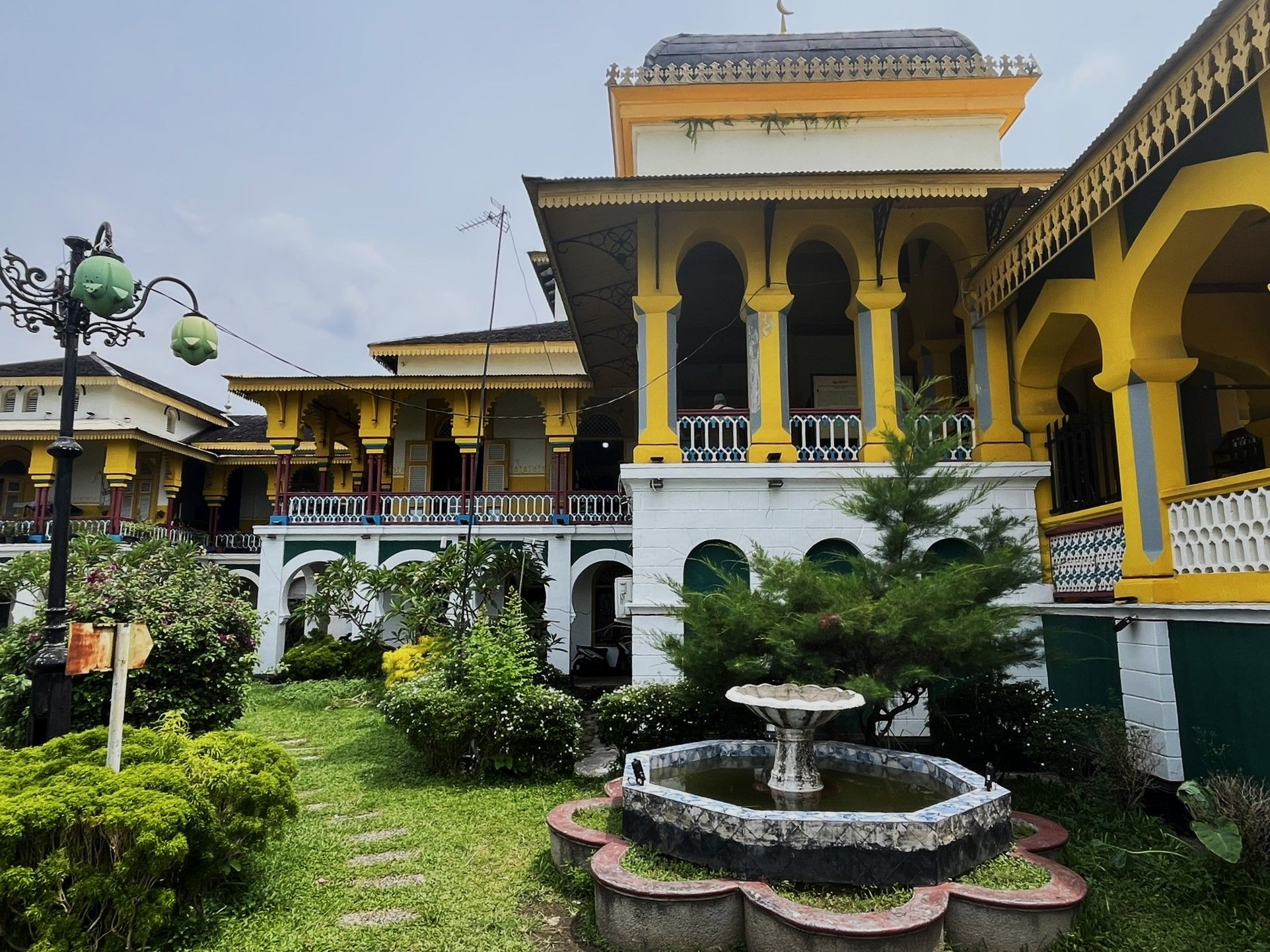
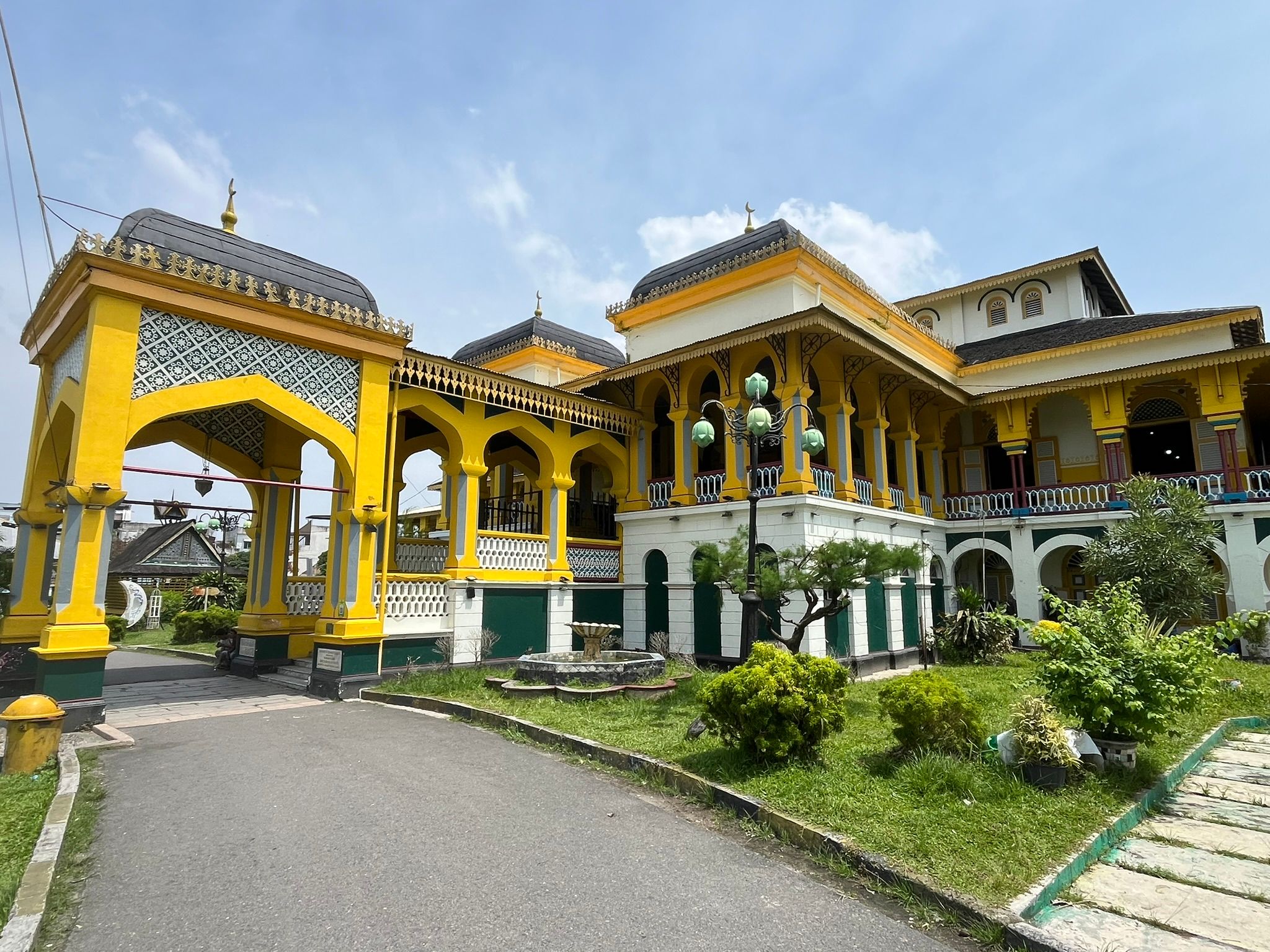
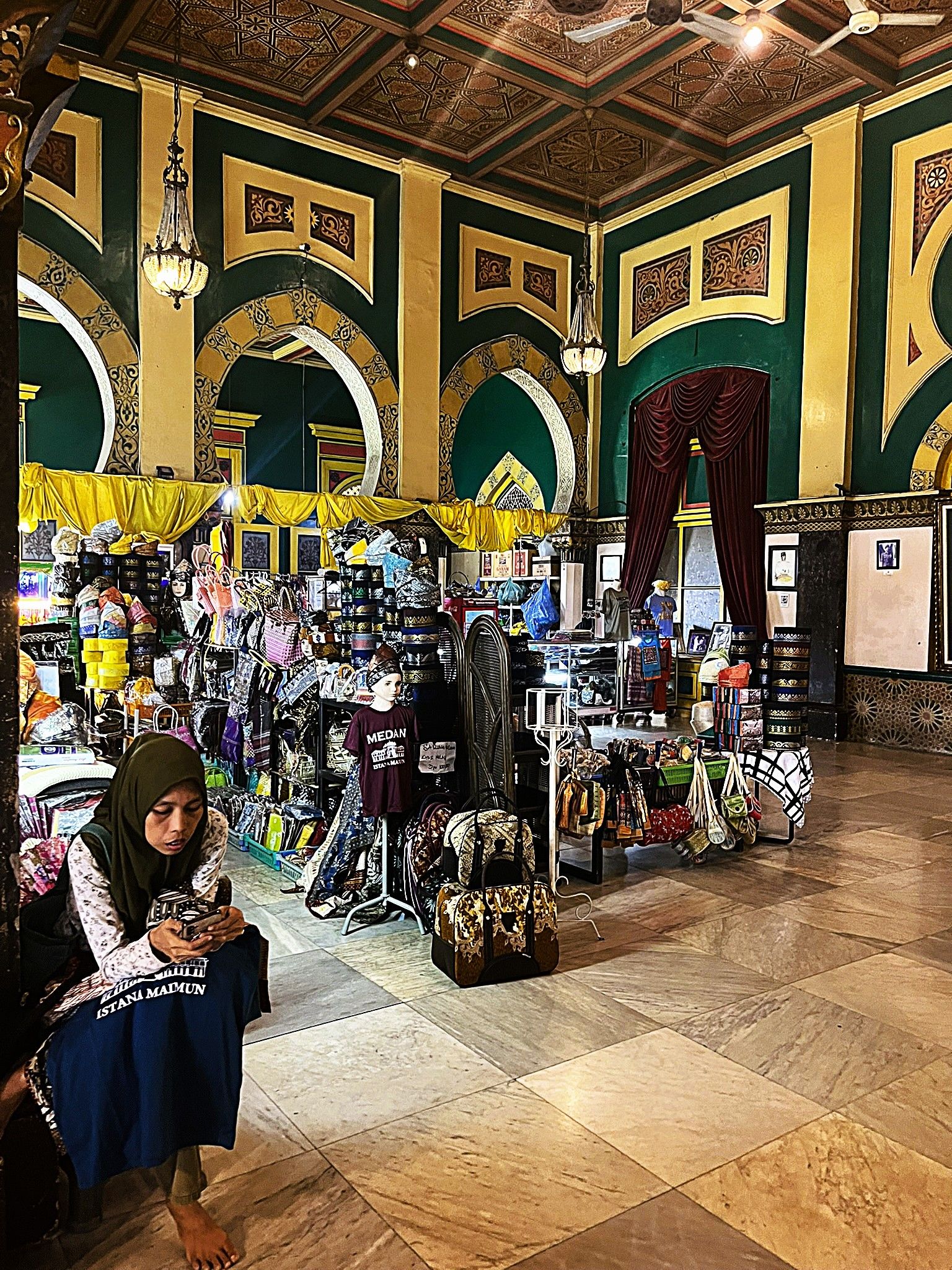
Of course, the Sultans of Deli, as landowners, also benefited from plantation agriculture. The ruling family had the Istana Maimun (Maimun Palace) built at the end of the 19th century. The palace is a colorful architectural mélange: The prominent dome roofs are influenced by Arabic architecture, the horseshoe arches by Islamic-Moorish style in North Africa and Andalusia. Inside, Spanish tiles were laid, and the windows and furniture combine European, primarily Italian, and Malay culture. The distinctive yellow corresponds to the royal color of neighboring Malaysia. Inside the palace, it is rather profane: A tourist bazaar has settled here.
Dutch rule abruptly ended in 1942 with the Japanese conquest of Sumatra. However, the Japanese formally left the Sultan in velvet to manage the war-critical plantations (rubber and palm oil) and to avoid unrest among the locals. Following Japan's defeat in World War II, revolutionary conditions and a genuine civil war erupted in parts of present-day Indonesia, including Sumatra. Many old ruling families were murdered, but not the Sultan of Deli. With the founding of the Republic of Indonesia, he lost all political significance, but was allowed to retain his title.
Muslims, Christians, Buddhists, Hindus
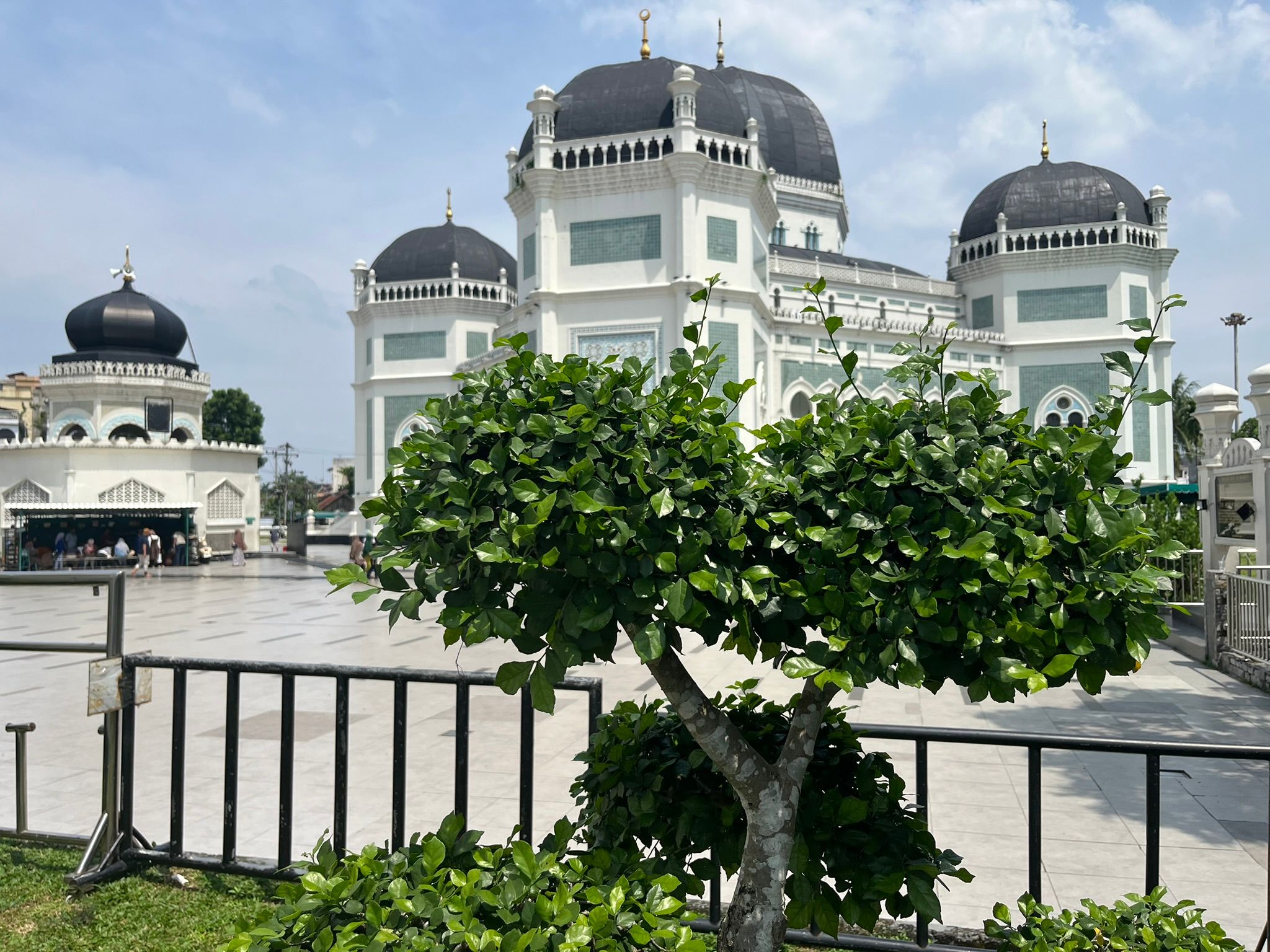
Near the Sultan's palace, I visit the Masjid Raya Al-Mashun, the Great Mosque. This impressive sacred building, inaugurated in 1909, harmoniously combines elements from various cultures: The building has a cross-shaped floor plan, conforming to European construction principles. The five black octagonal domes recall the traditional Indo-Islamic architectural style of the Mughal period from the 16th to the 18th centuries. The main entrance and windows are designed as horseshoe and pointed arches, typical of Moorish architecture. The interior decoration, however, featuring marble, stained glass windows, and chandeliers, was imported from Italy and France.
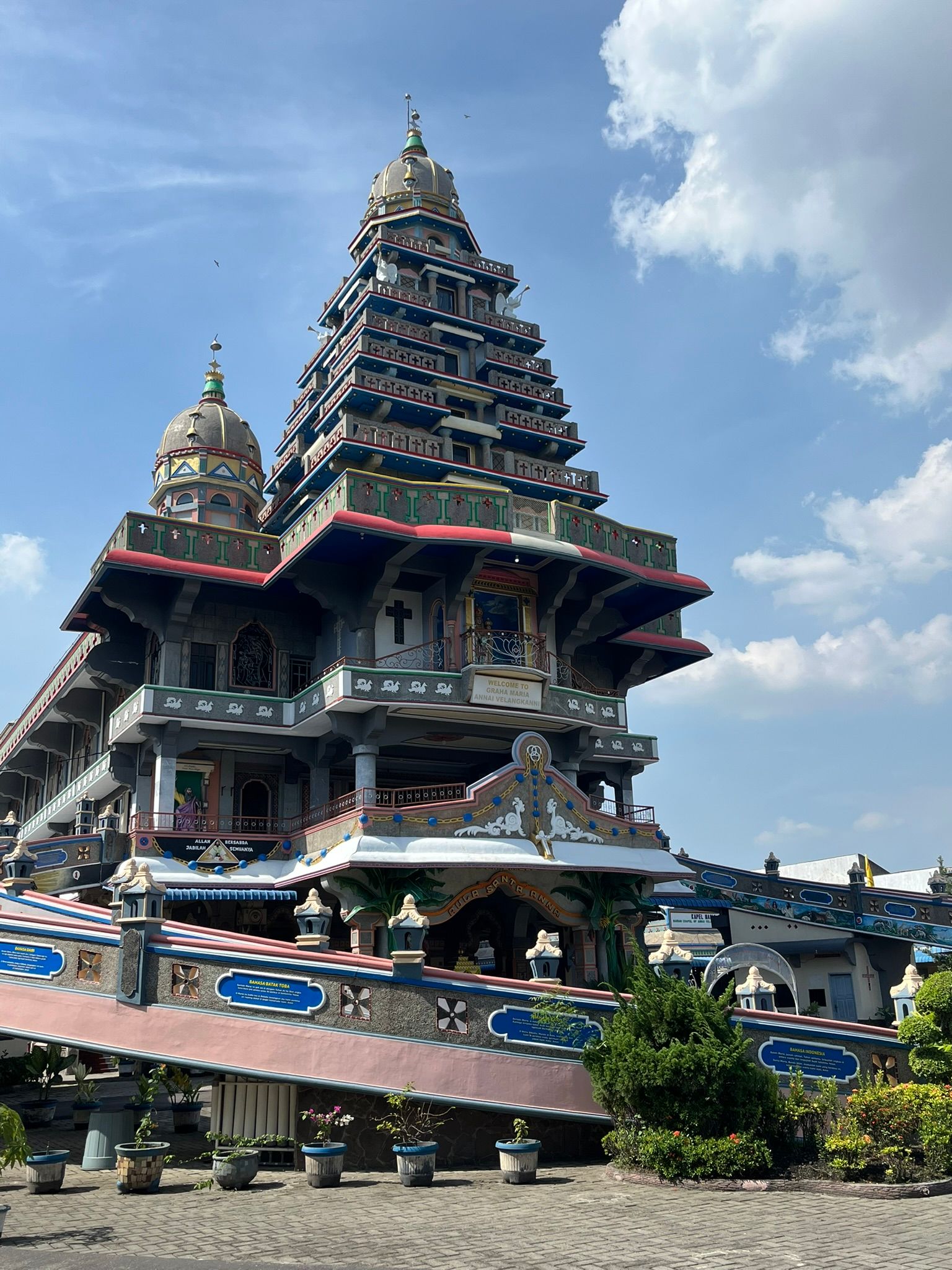
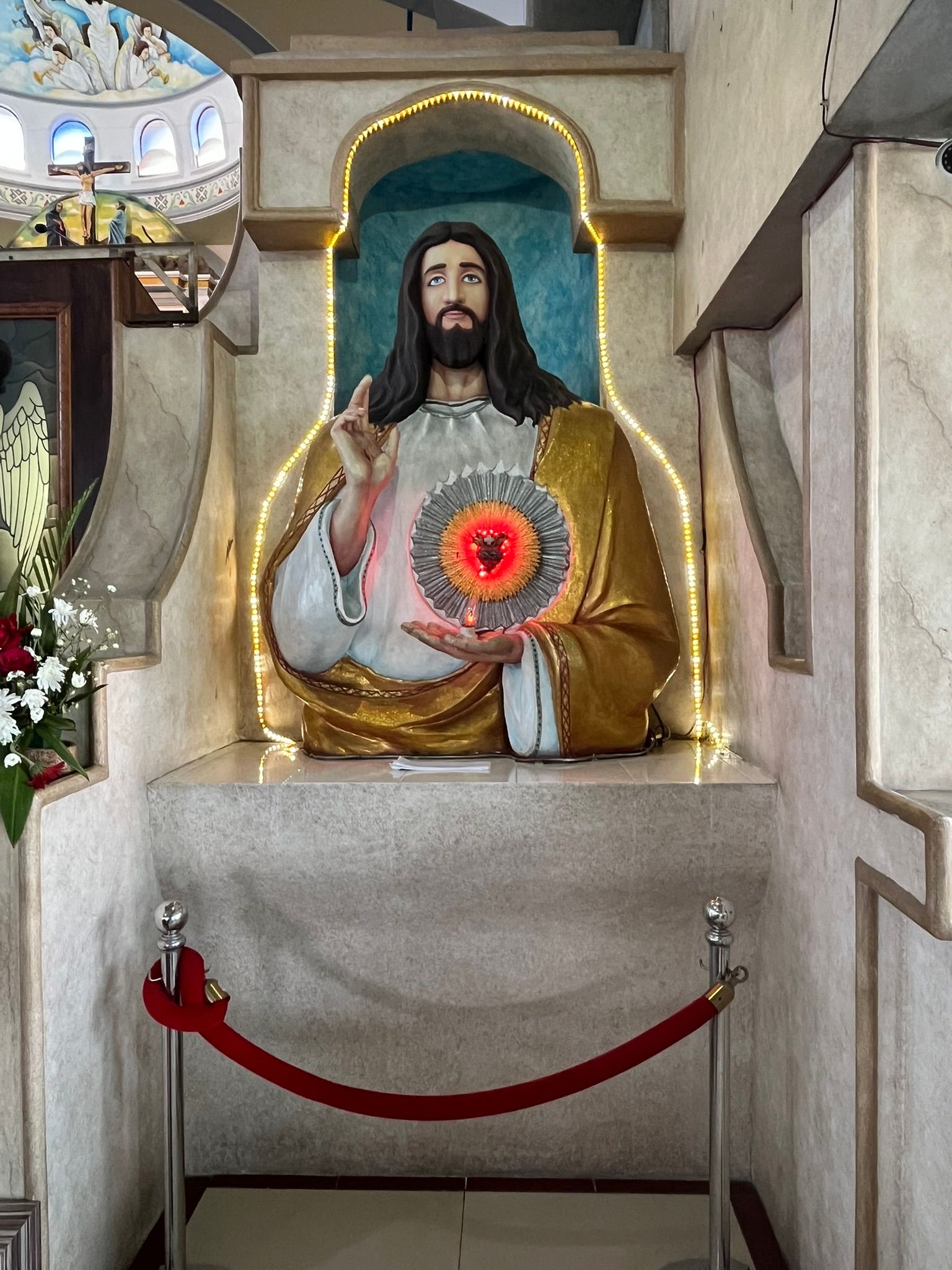
Medan is a religiously mixed city, where Muslims make up about two-thirds and Christians a quarter of the population, alongside Buddhist and Hindu minorities. Sometimes their symbols get confused. For instance, the Shrine of Graha Maria Annai Velangkanni initially looks like a Hindu temple. In reality, it is a Catholic pilgrimage church dedicated to the Virgin Mary, established about 20 years ago by an Indian Jesuit.
A nun from Bali, who speaks to me in a side room, explains the name of this peculiar structure to me. It means «Sanctuary of Mary's House, the Mother of Velankanni» and is a jumble of several languages: Shrine (English), Heiligtum or pilgrimage site. Graha (Sanskrit/Indonesian): house, temple or palace. Annai (Tamil), mother. Velangkanni refers to the coastal town in the southern Indian state of Tamil Nadu, the “Indian Lourdes.” There, Mary is said to have appeared several times in the 16th and 17th centuries to poor Tamil children and worked miracles.
No, I don't believe in miracles. But staying in Medan for a few days and delving deeply into its history was, intuitively, a good decision. I raised a gin tonic to myself in my favorite pub in Medan, Healy Mac’s.