BLOG 22: Granada / Nicaragua
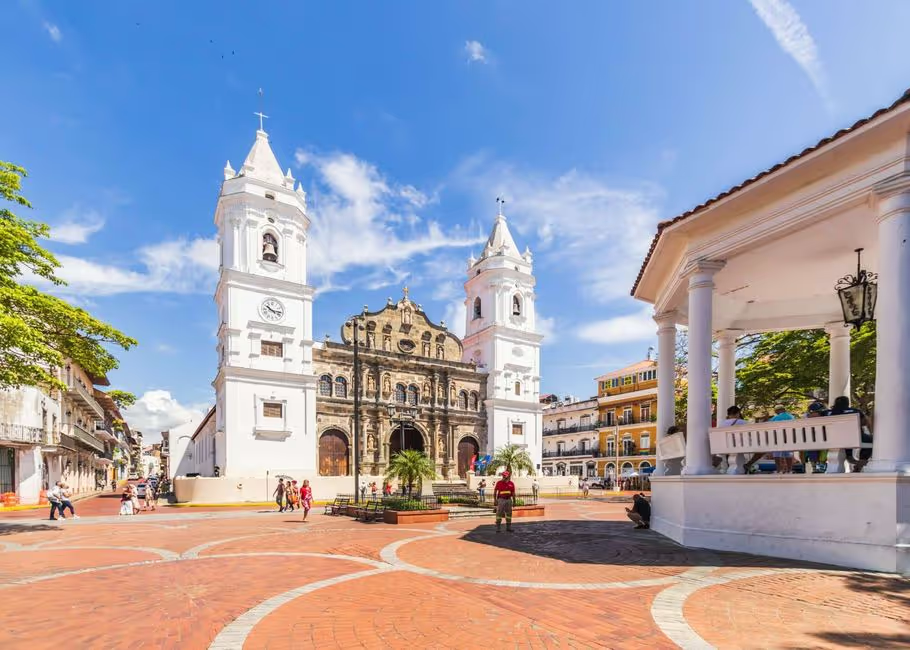
Granada was founded in 1524 by the Spanish conqueror Francisco Hernández de Córdoba. During the colonial period, Granada was one of the

Published: 18.03.2026
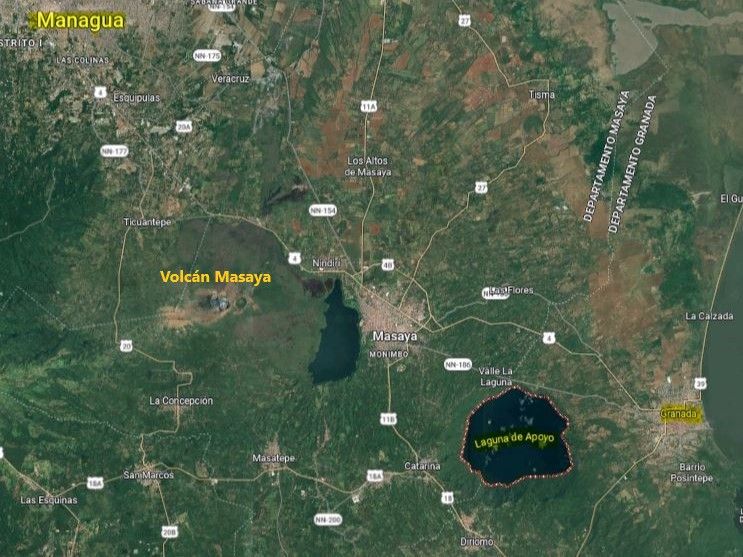
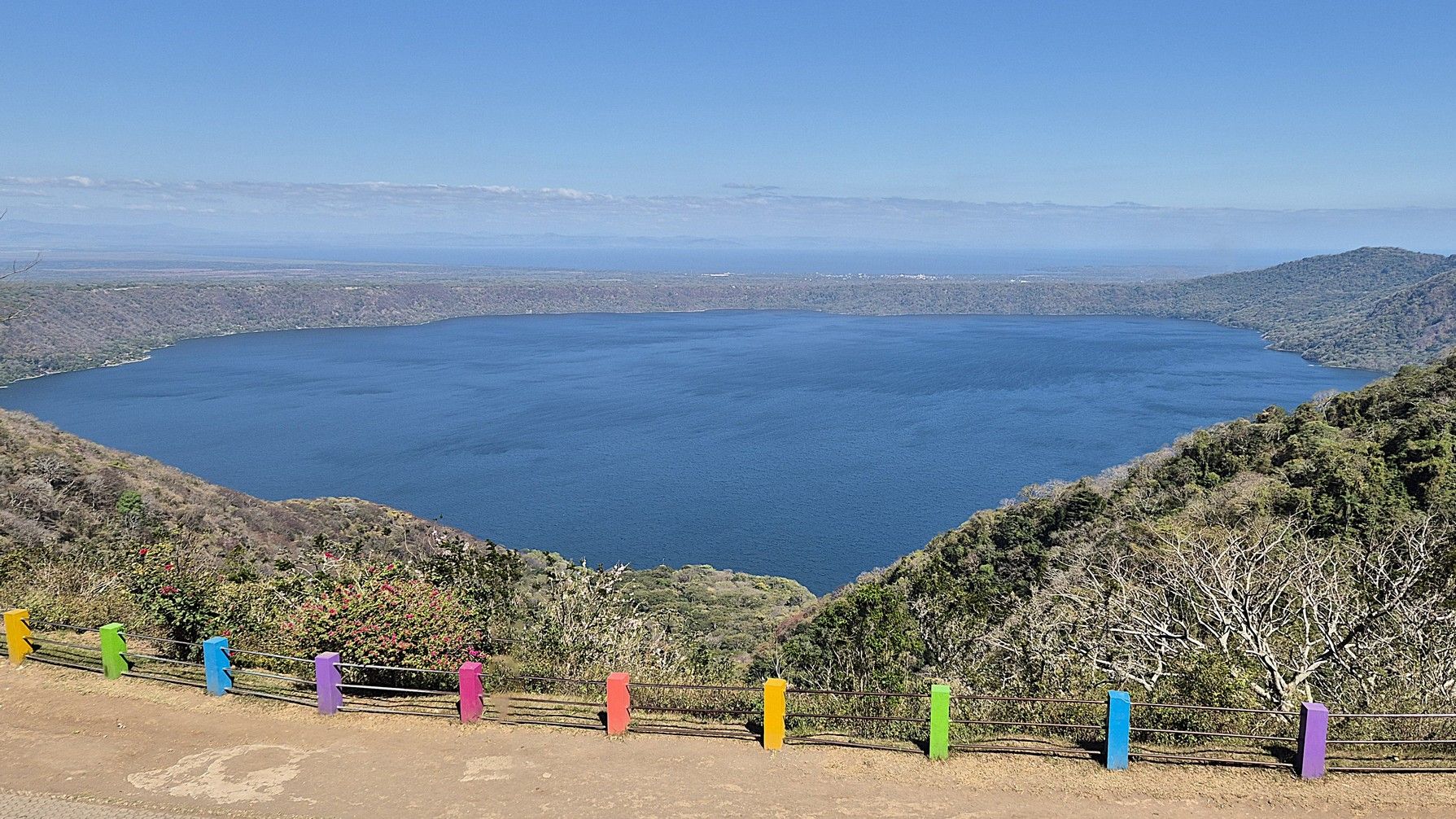
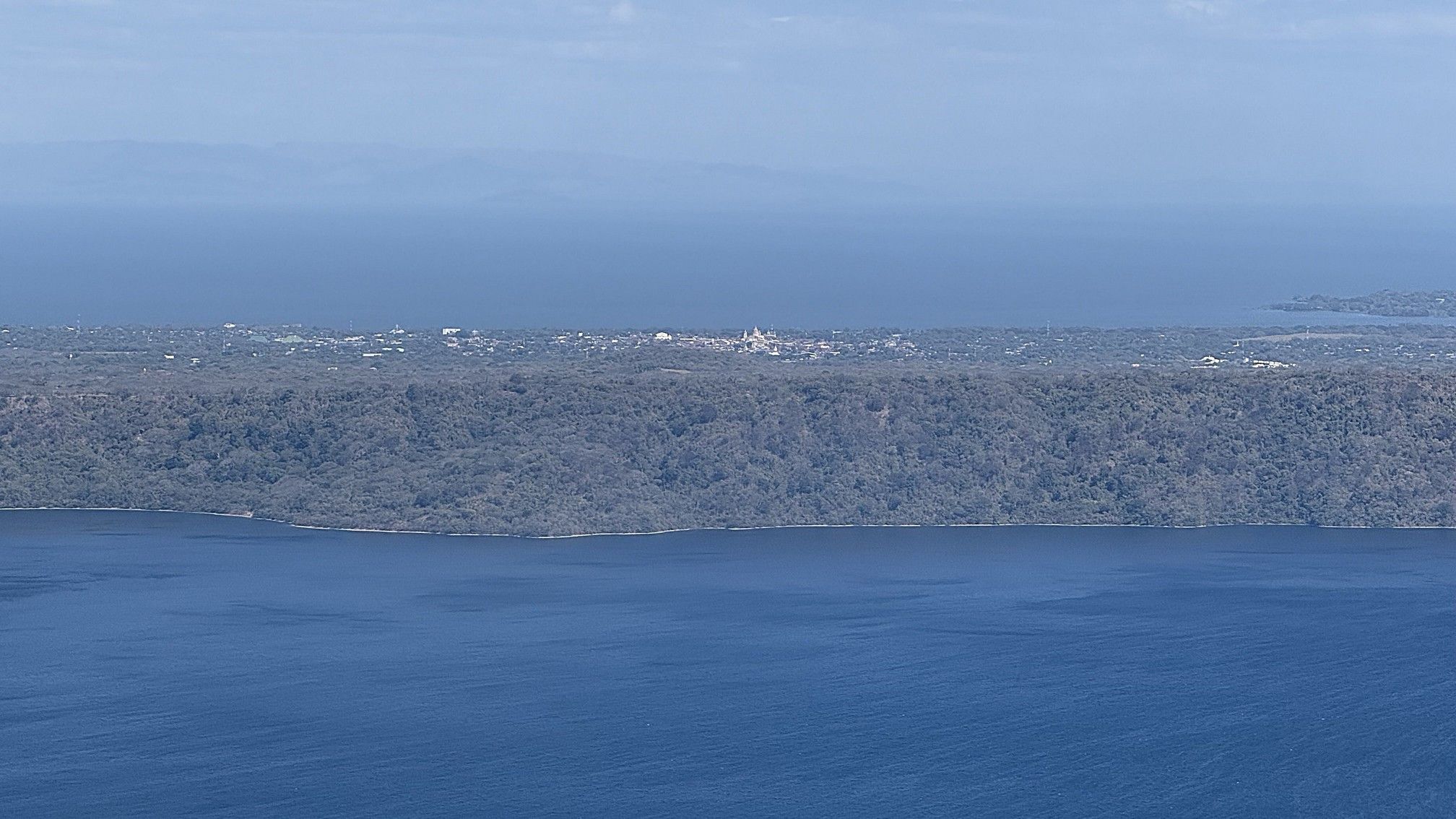
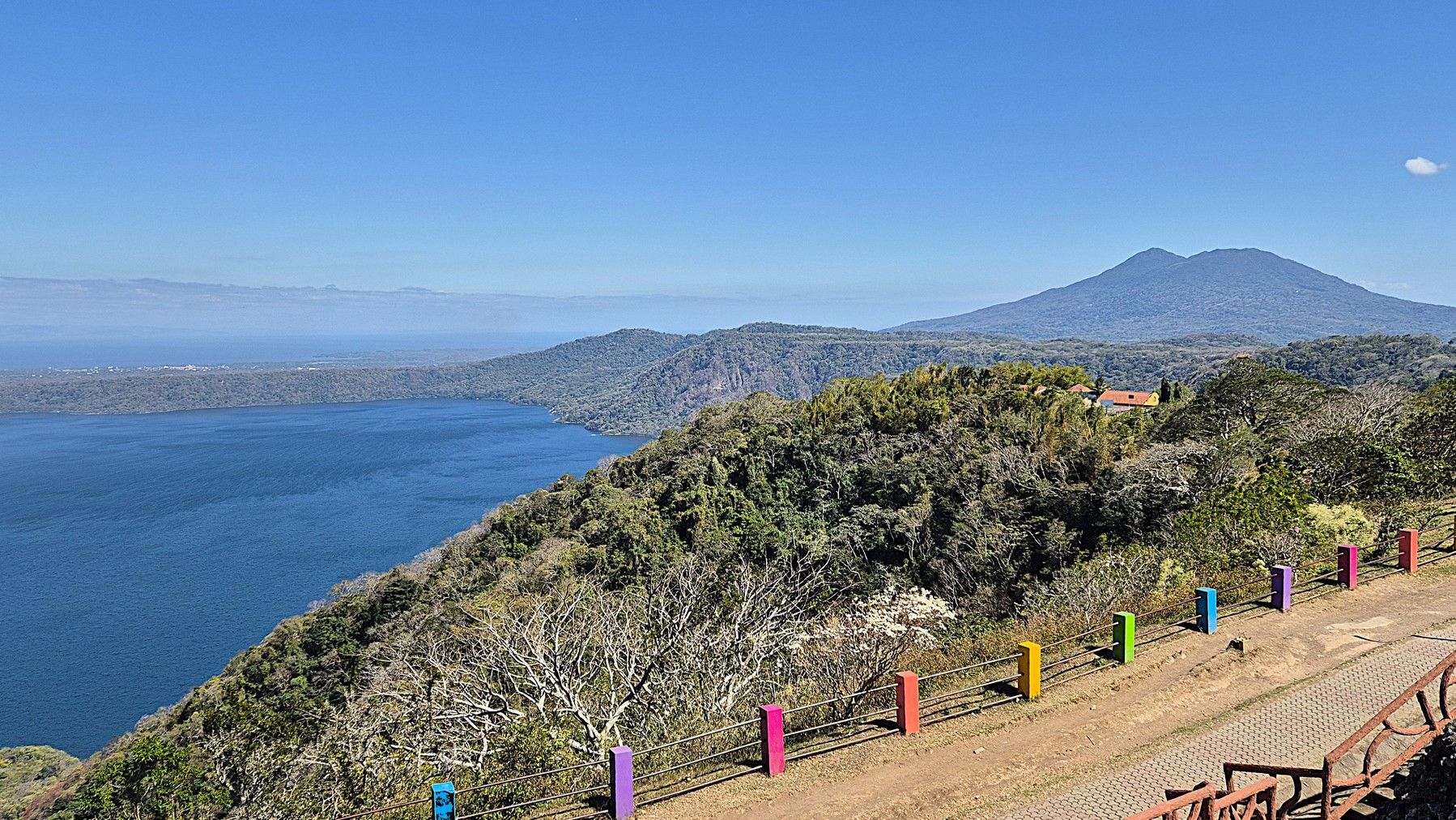
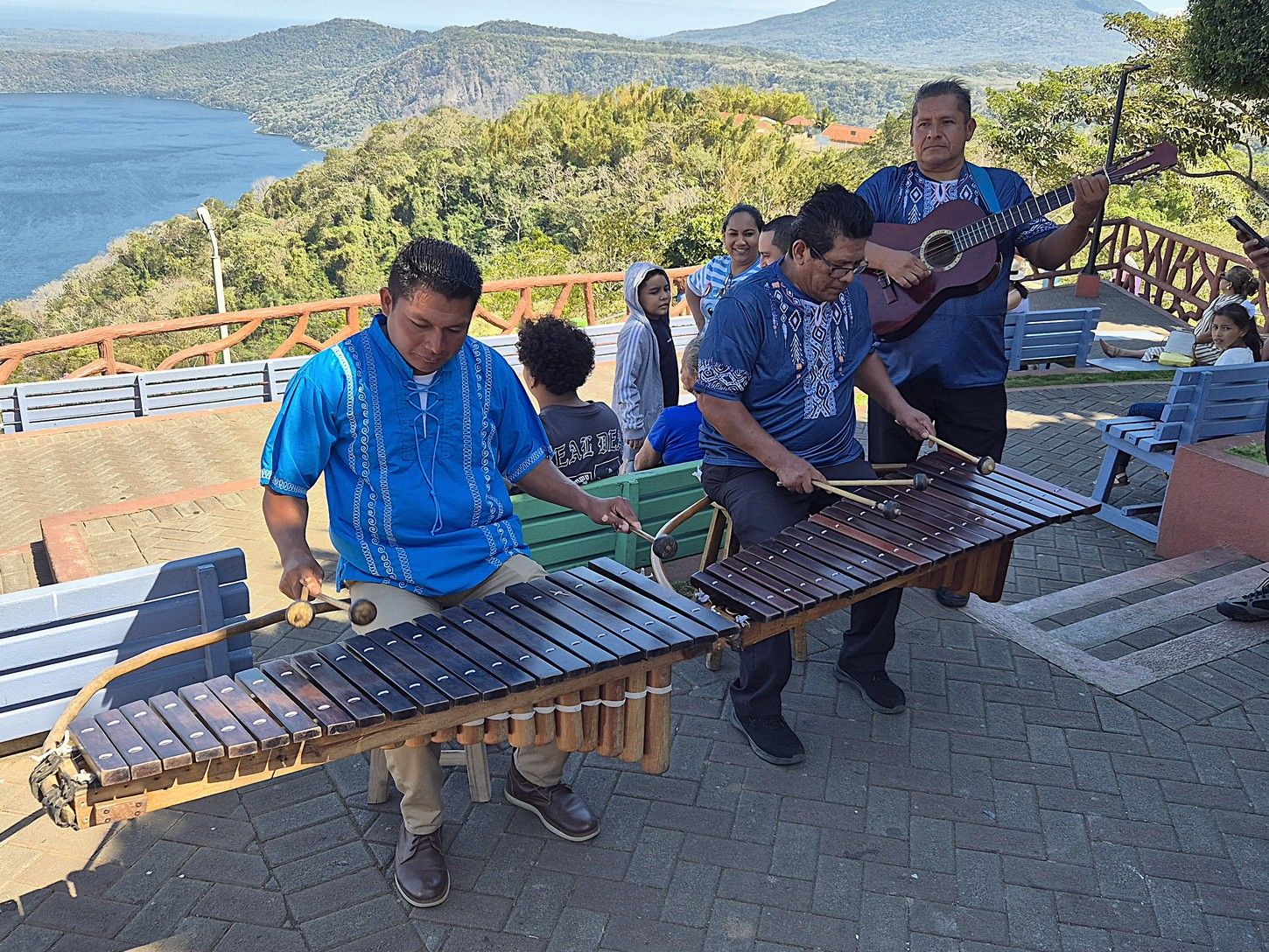
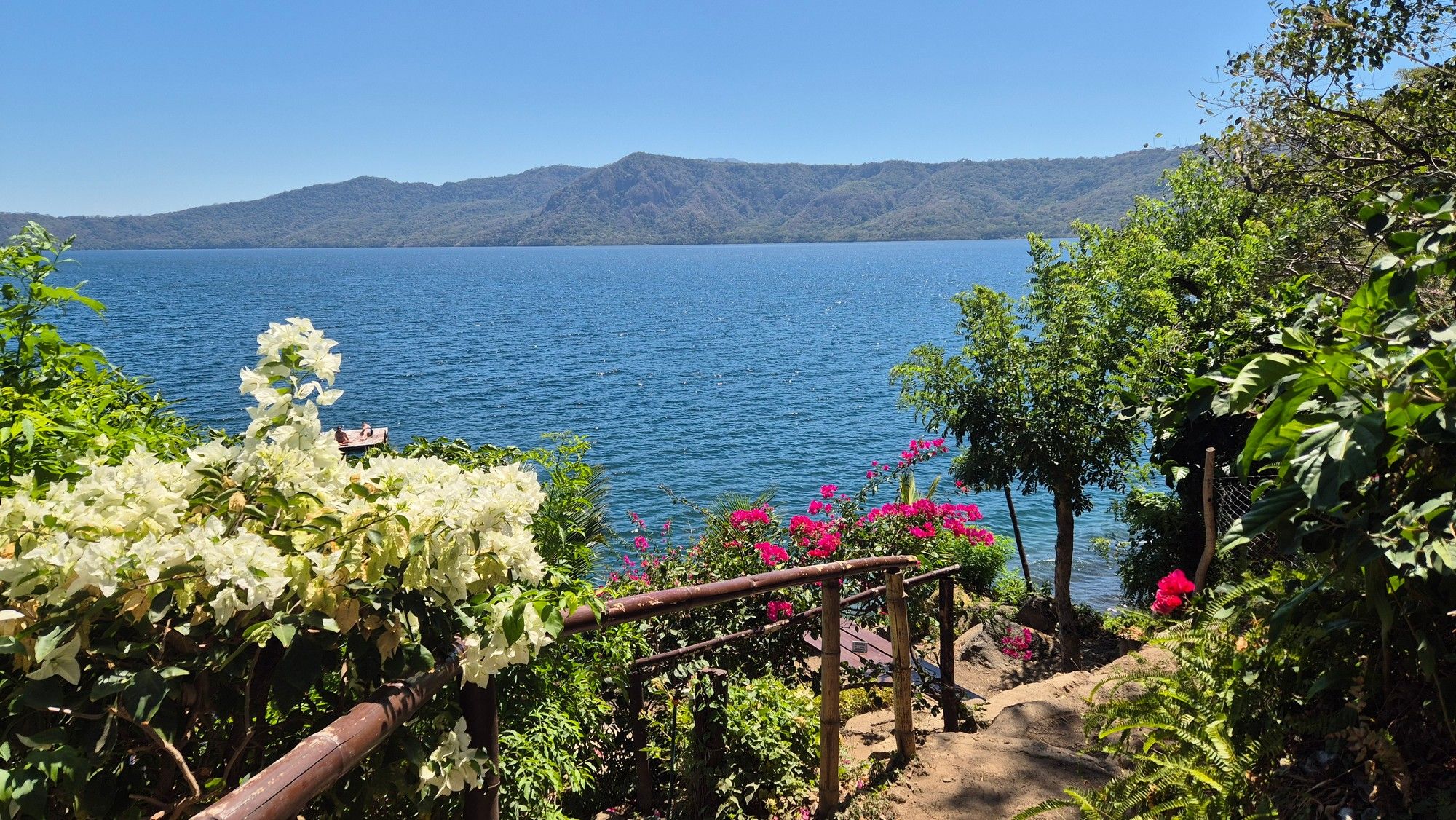
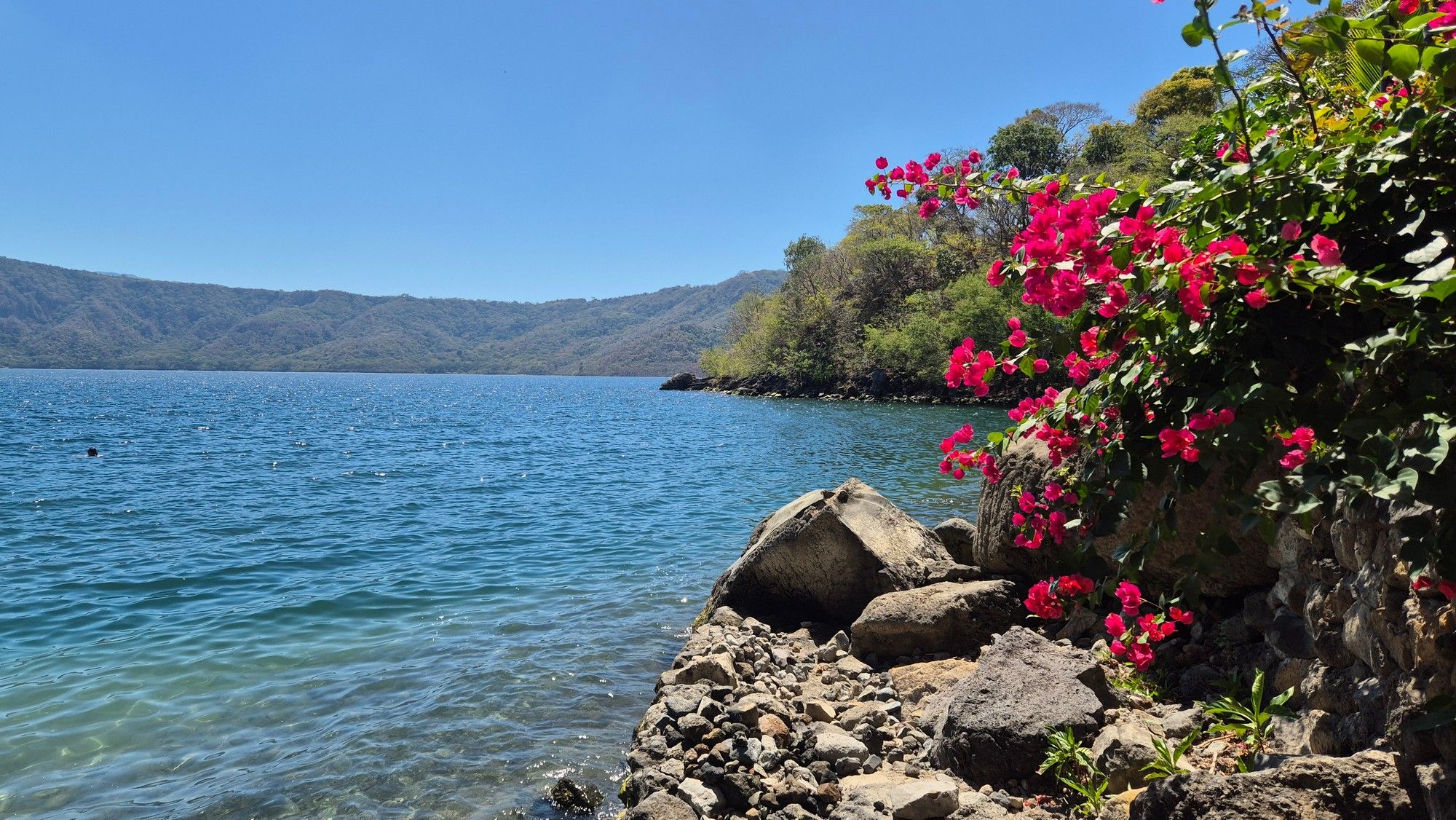
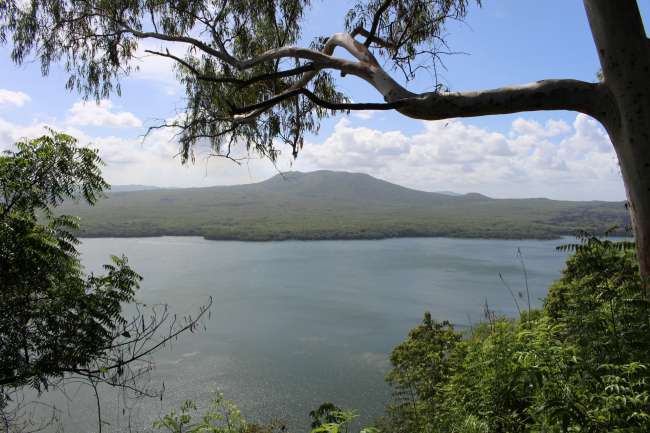
Today, two destinations west of Granada are on the agenda: first, we go to the crater lake “Laguna de Apoyo.” From the viewpoint “Mirador de Catarina,” there is a beautiful overview of the lake and towards Granada as well as the Volcán Mombacho. Here, we also encounter a music group that plays the xylophone-like marimbas, which are very common in Central America, with great skill. The sound bodies are made of wood, which gives the marimbas a darker and fuller sound compared to a European standard xylophone with metal sound bars. It is also notable that both players are working with three mallets each.
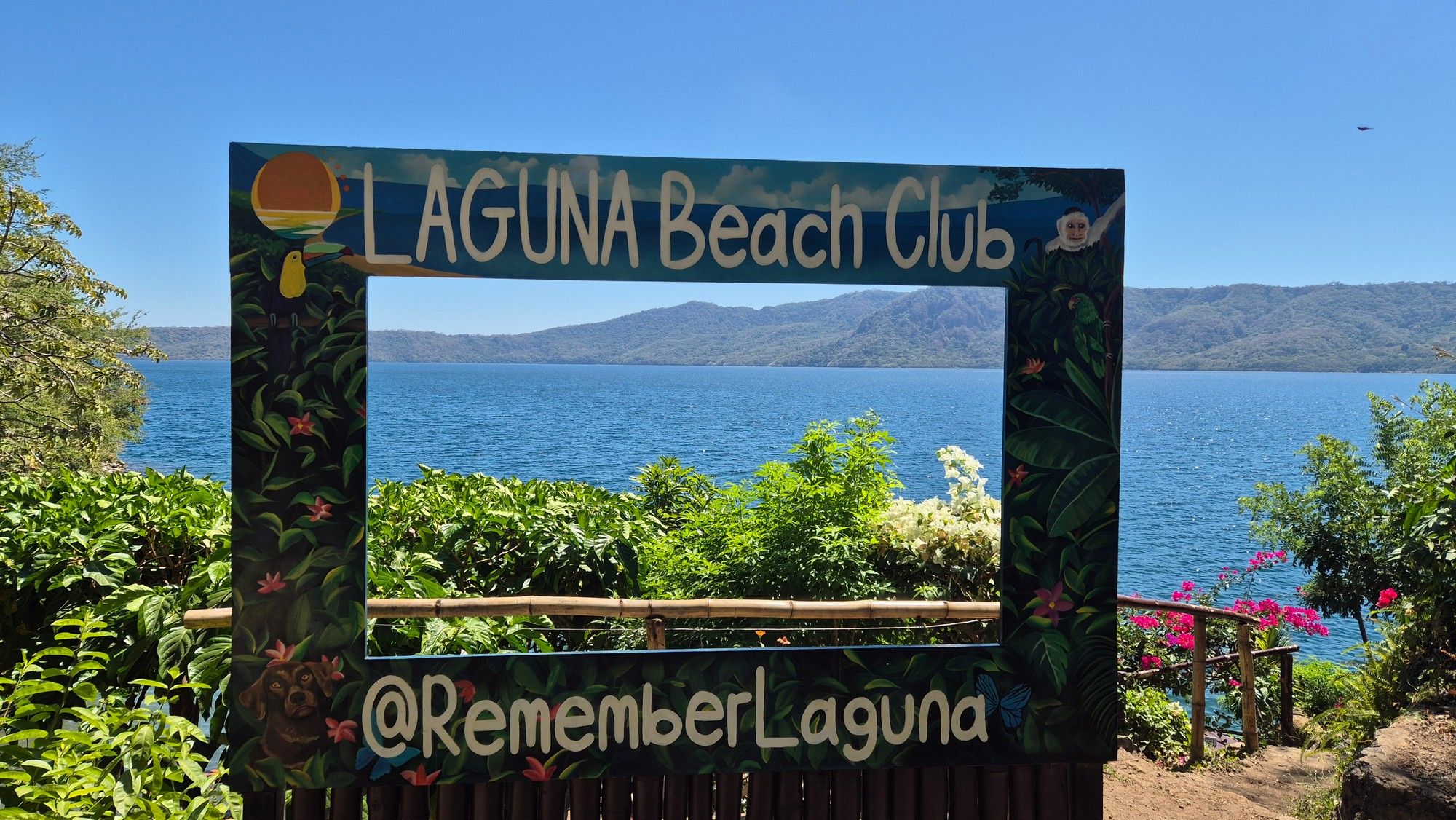
Now we head down a steep road to the “Laguna Beach Club,” right by the crater lake.
The lake is situated in a caldera that was formed about 23,000 years ago by a volcanic explosion. It has a diameter of about 4 km and an area of 20.92 km². The water is slightly salty and is kept pleasantly warm throughout the year (about 27–29 °C) due to underground geothermal activity.
With a depth of up to 200 meters, it is considered the deepest crater lake in Central America and has neither inflow nor outflow on the surface.
Laguna de Apoyo was declared a state nature reserve in 1991.
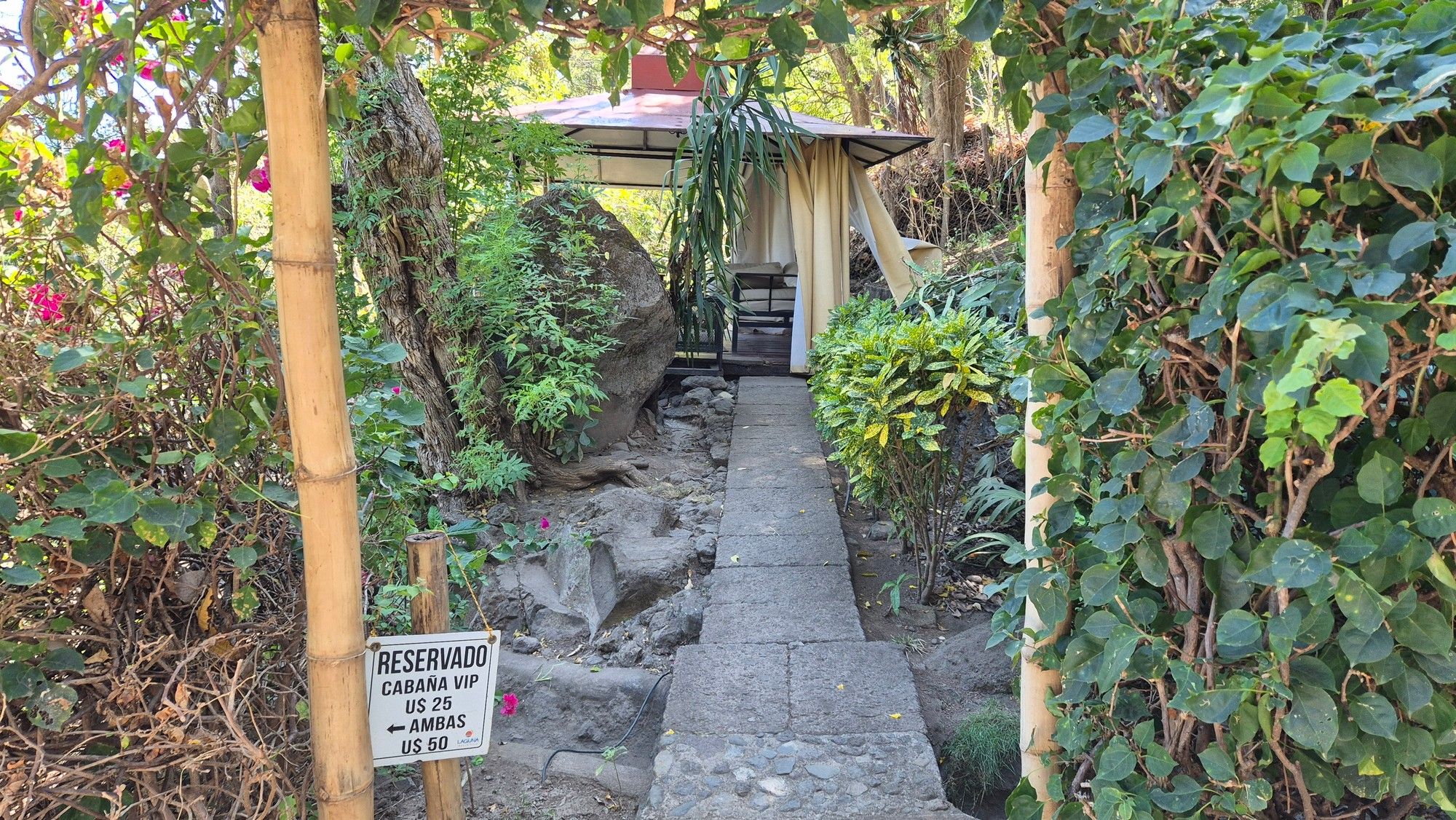
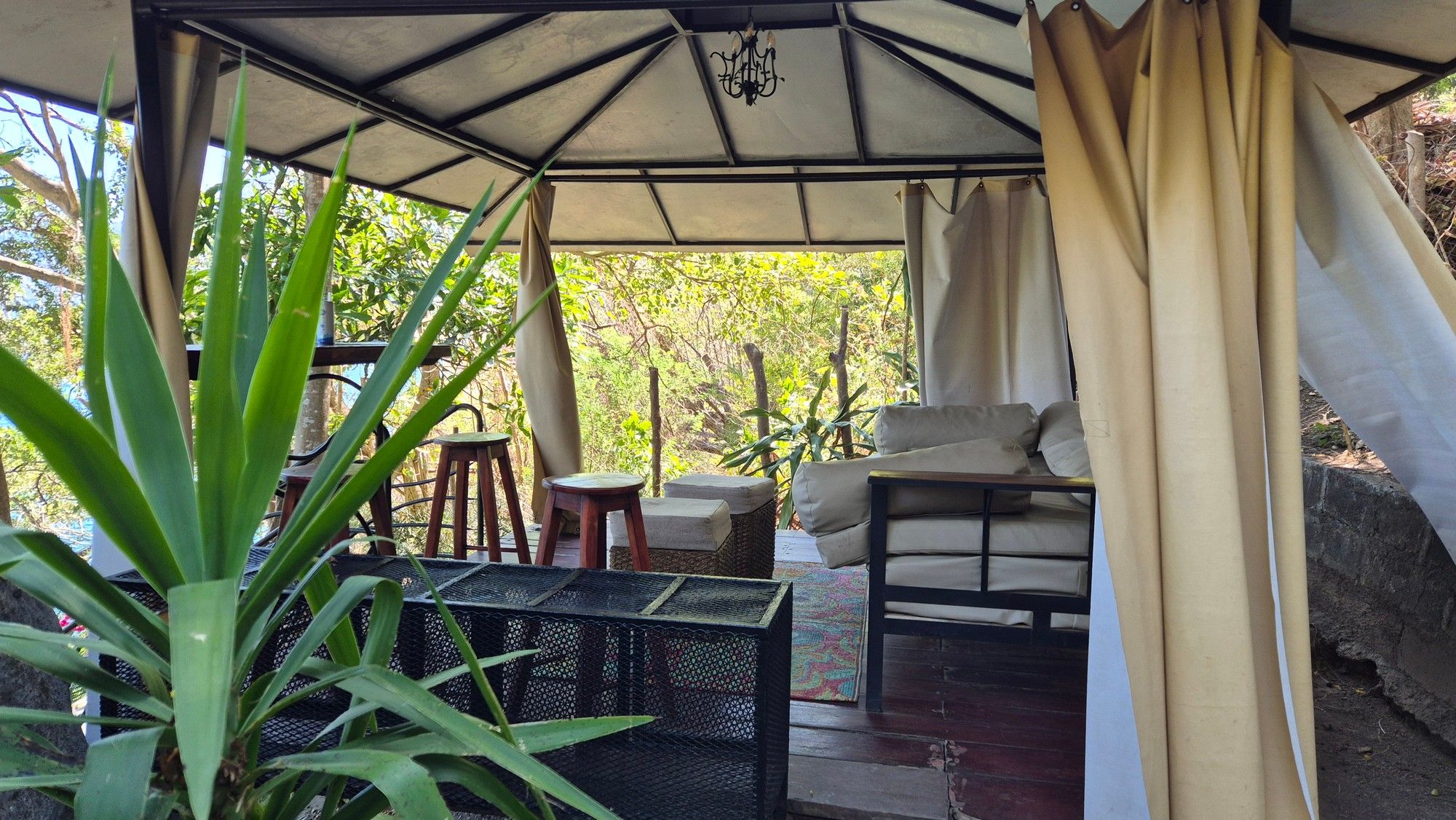
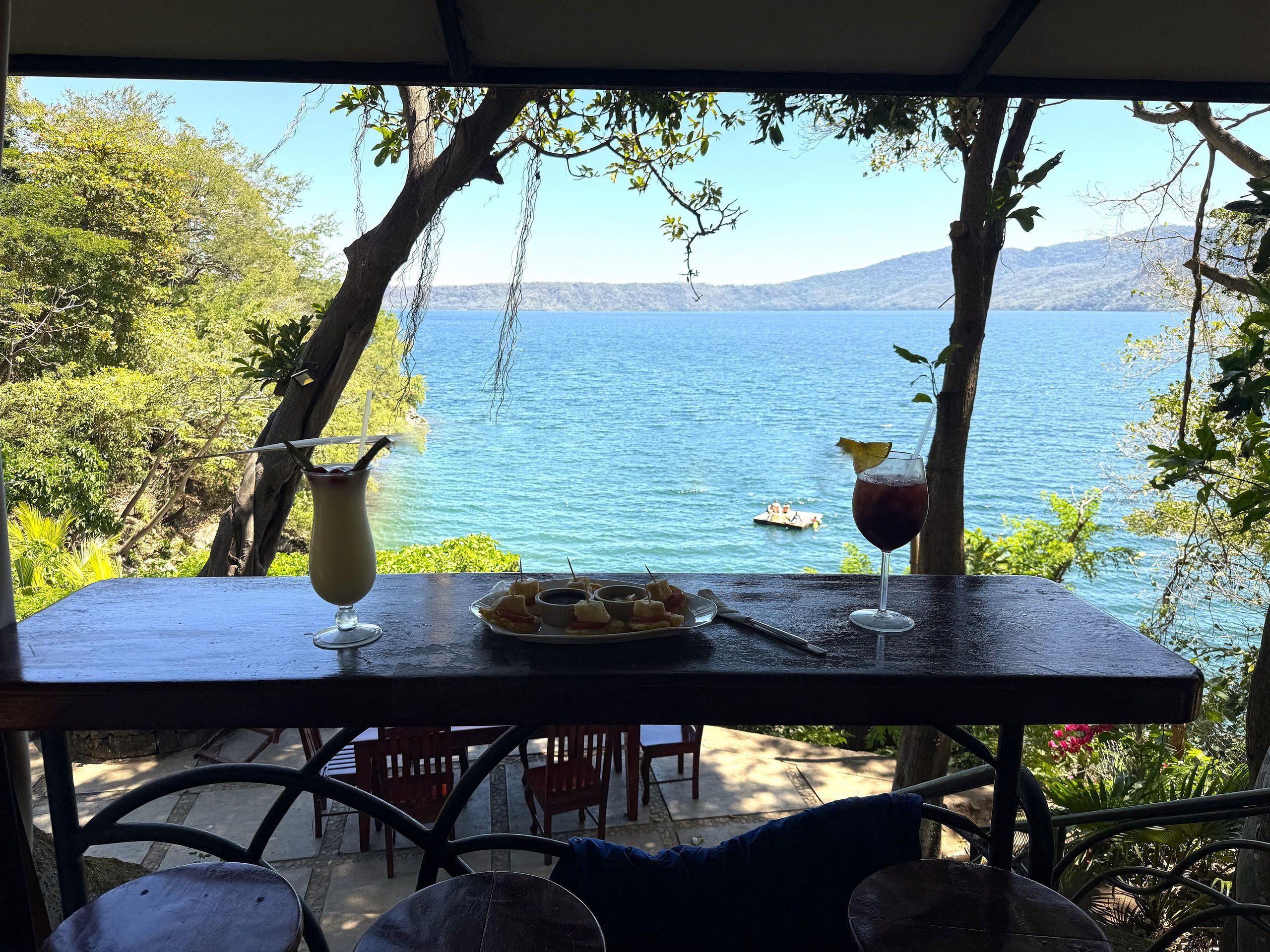
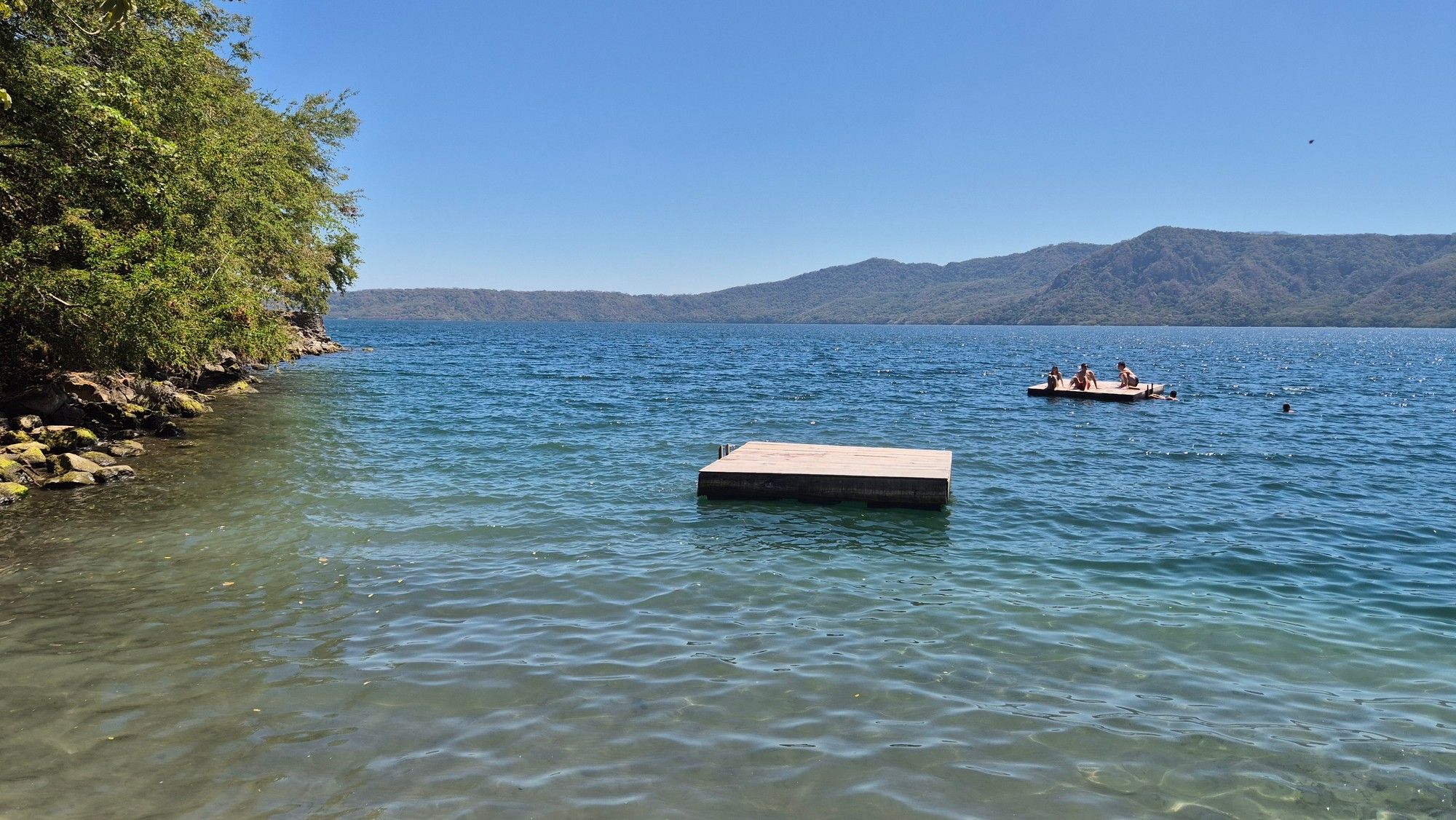
We spend a few hours in our rented “Private Cabin” – it offers a great view of the lake and drinks and food are also served. Of course, we also go all the way down and test the truly pleasantly warm water while swimming.
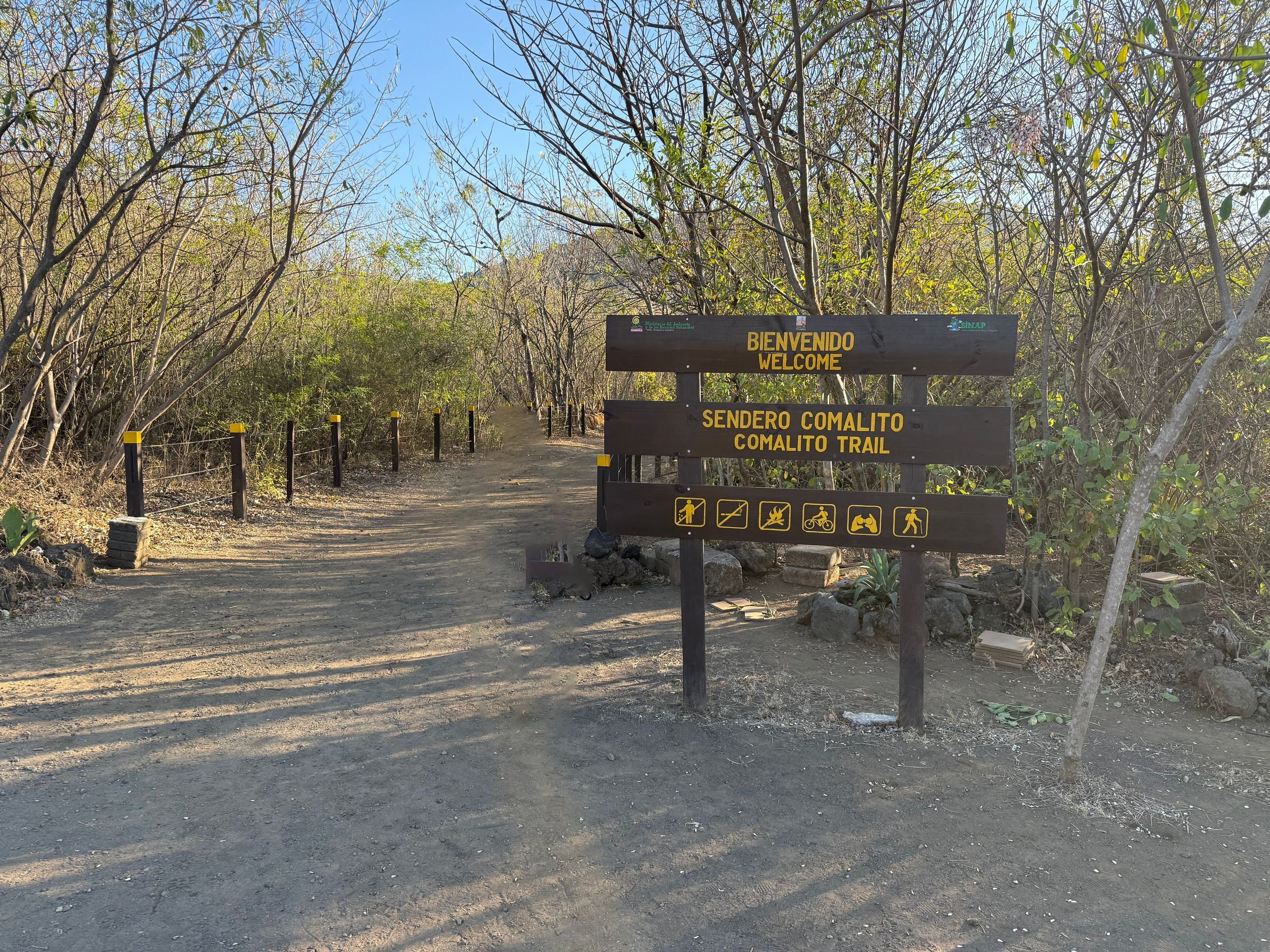
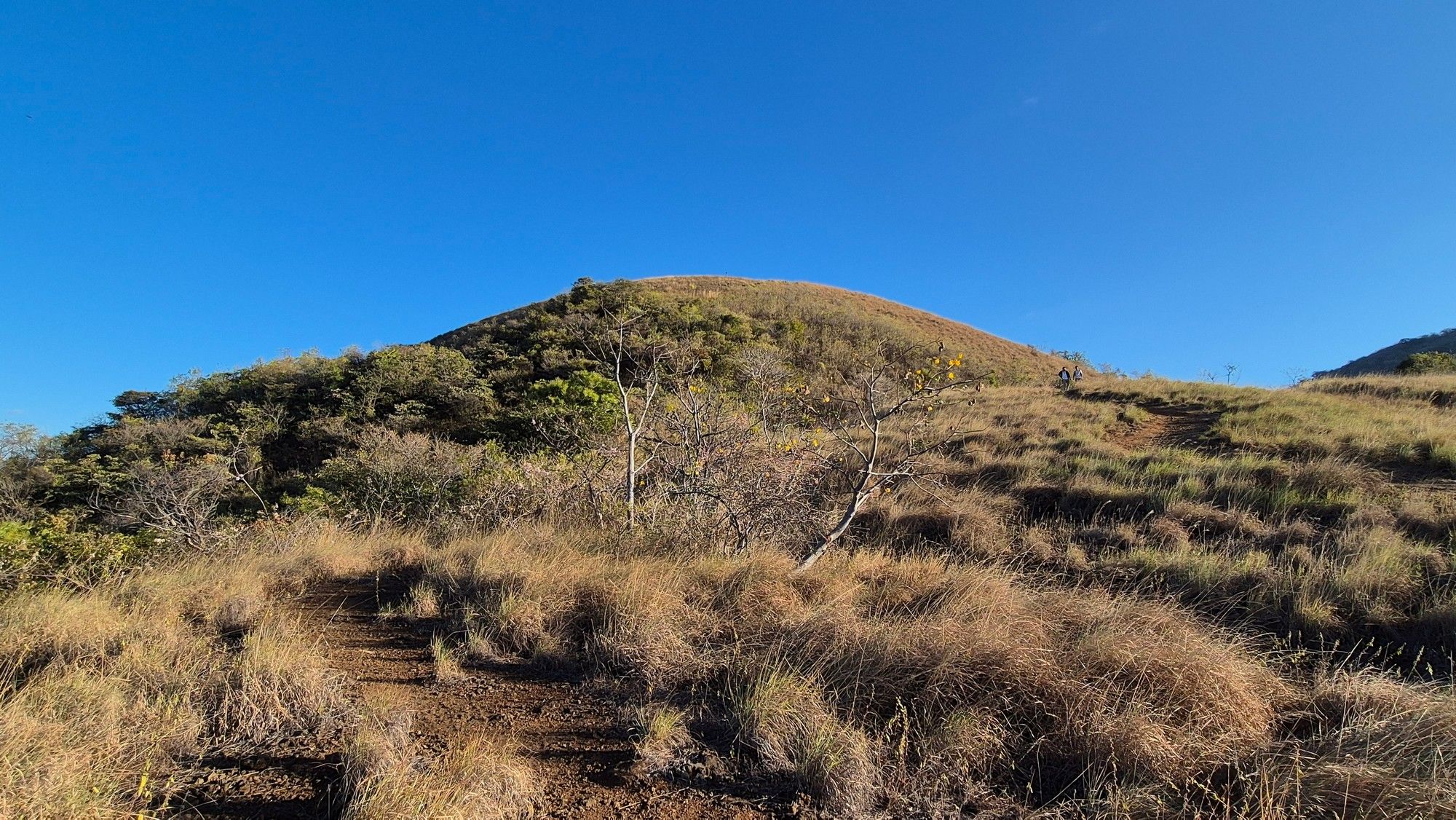
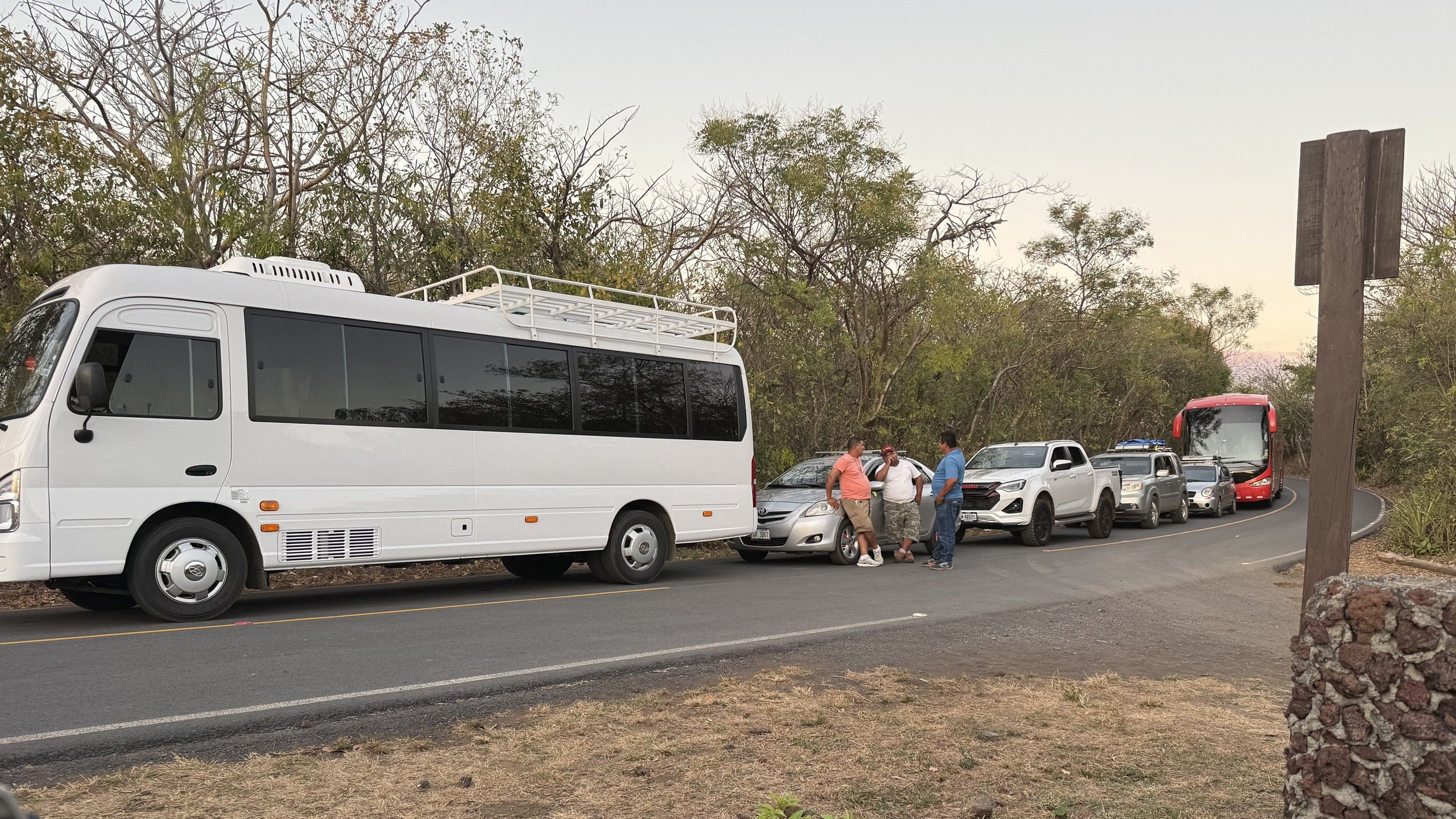
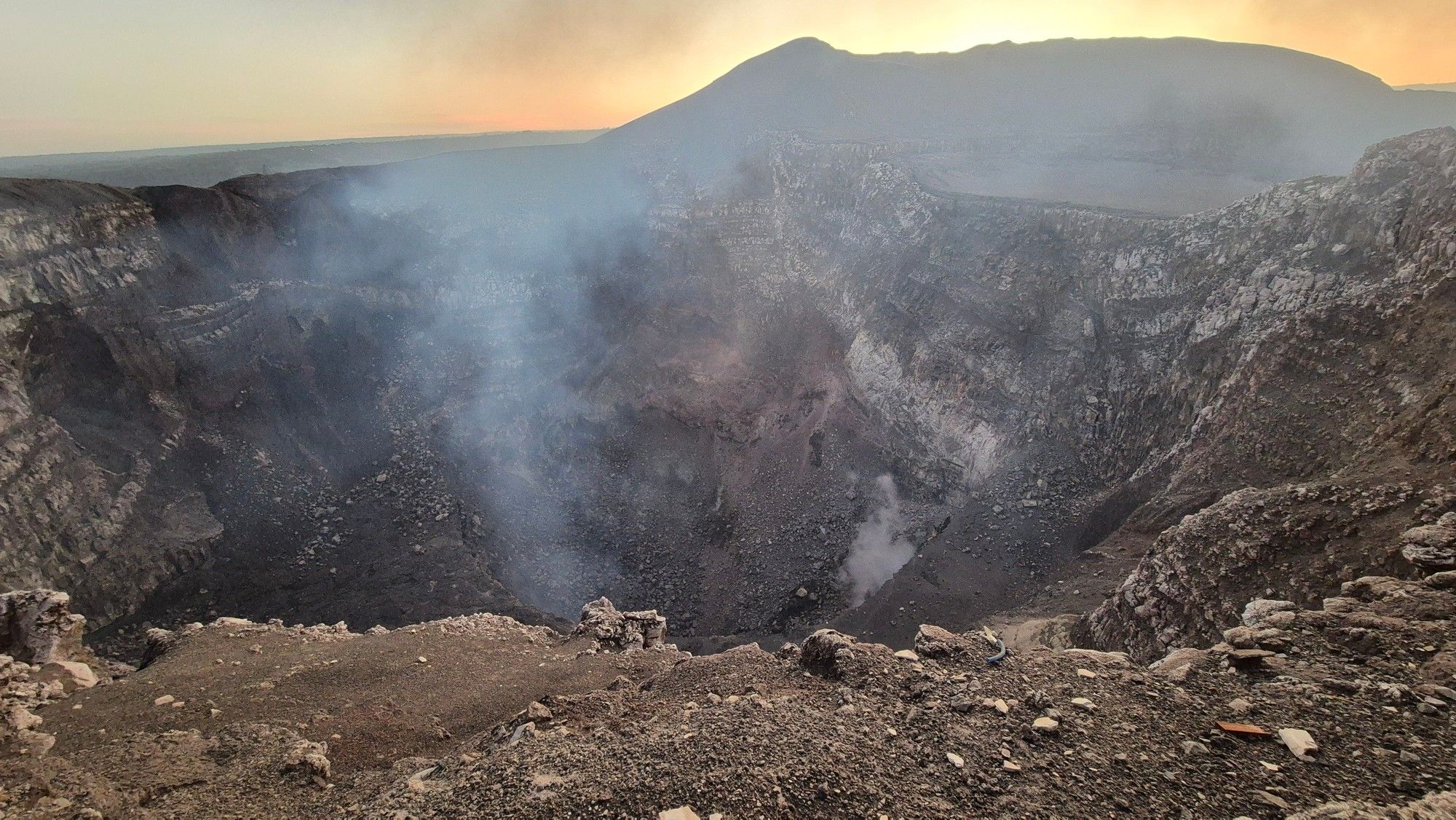
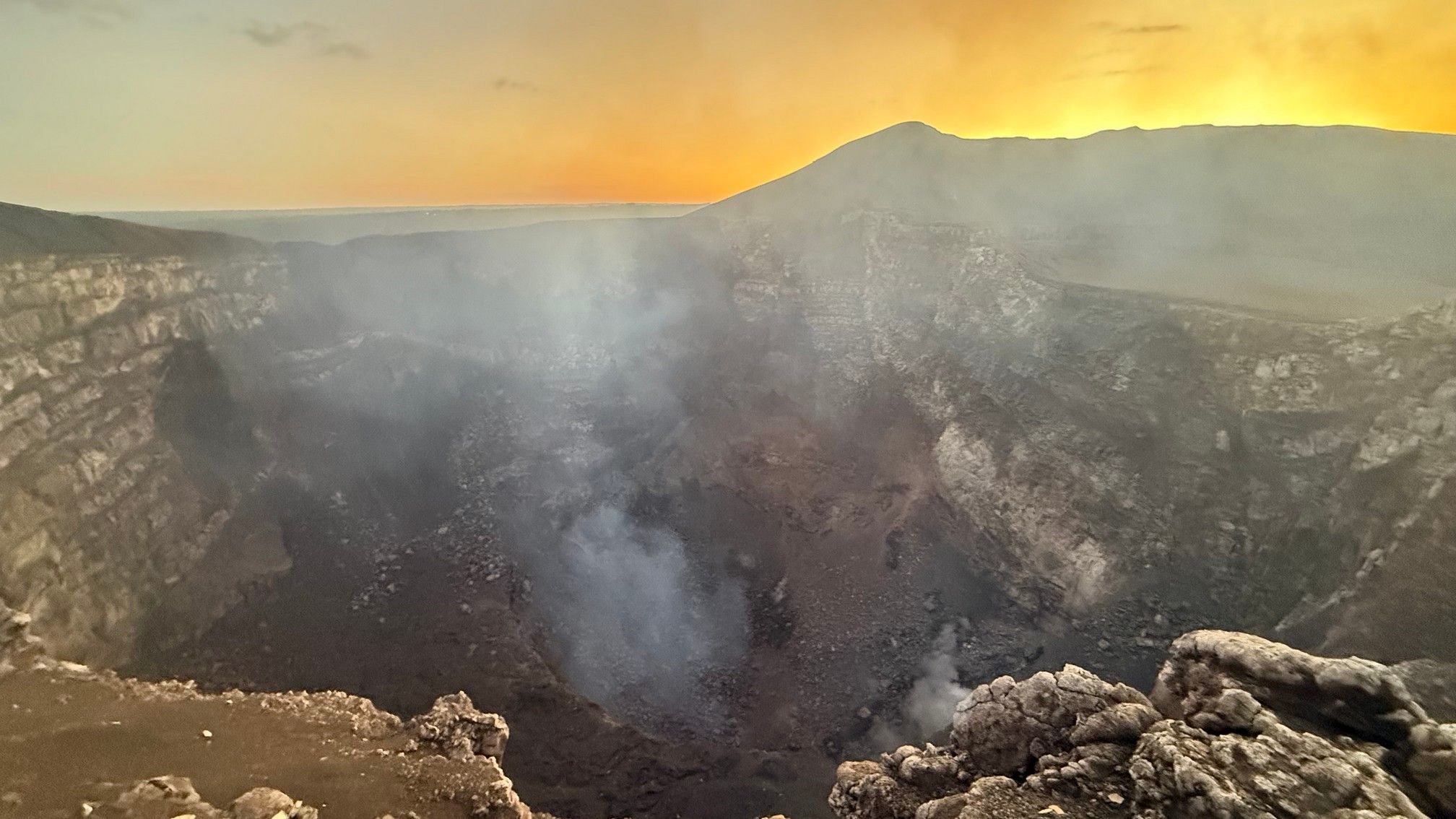
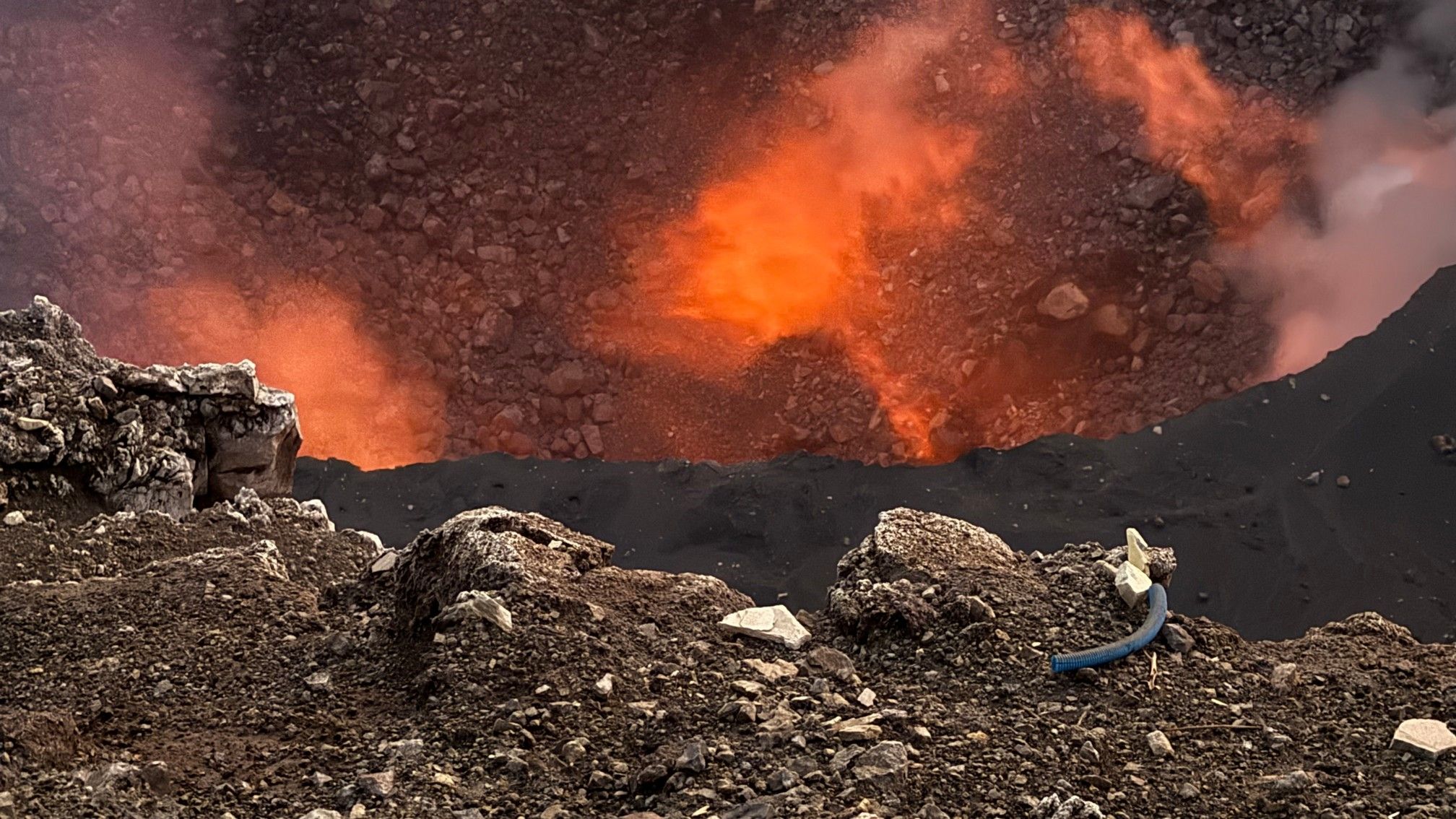
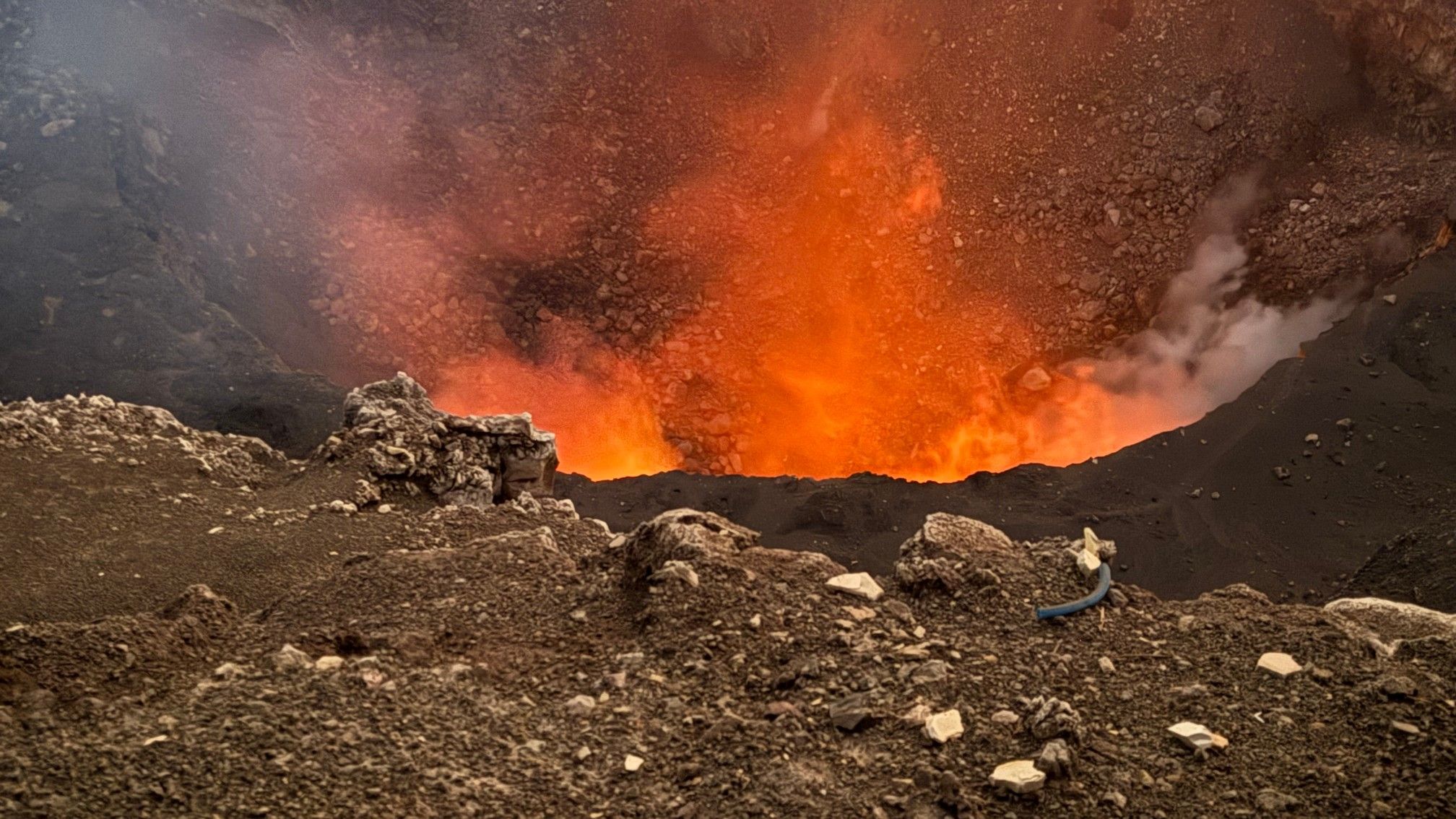
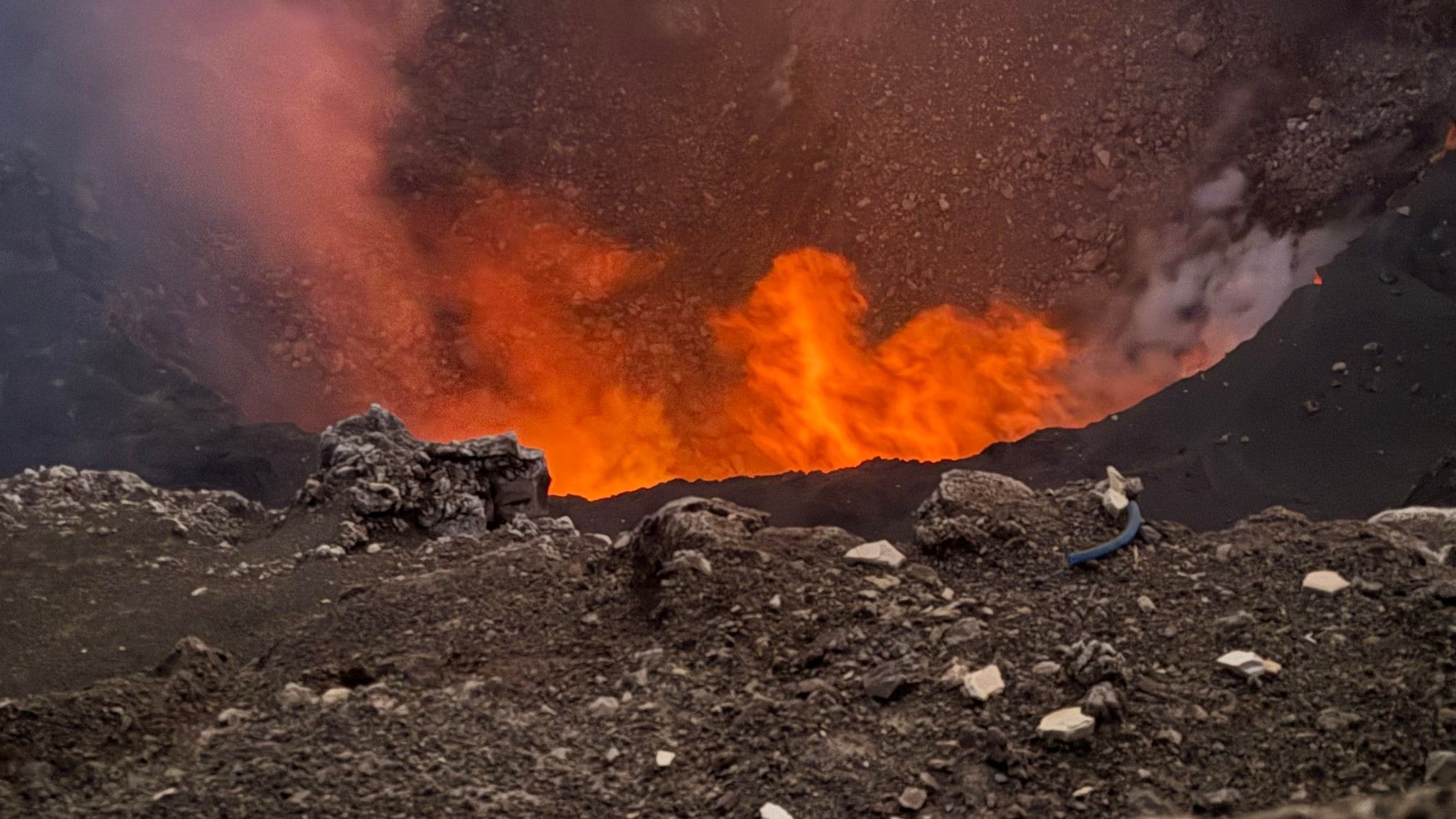
The second destination is the Volcán Masaya – here the local expertise of our guide Huascar is required, as there are a few peculiarities to consider for access. The national park only opens to visitors at 5:00 PM, but we arrive quite a bit earlier and join the – still relatively short – line of waiting cars, which later extends much longer onto the main road. Then we are allowed to drive a little, but only up to the Comalito Trail, where the cars are stopped again. However, we have already been assigned to the first group that will later be able to drive up to the actual crater.
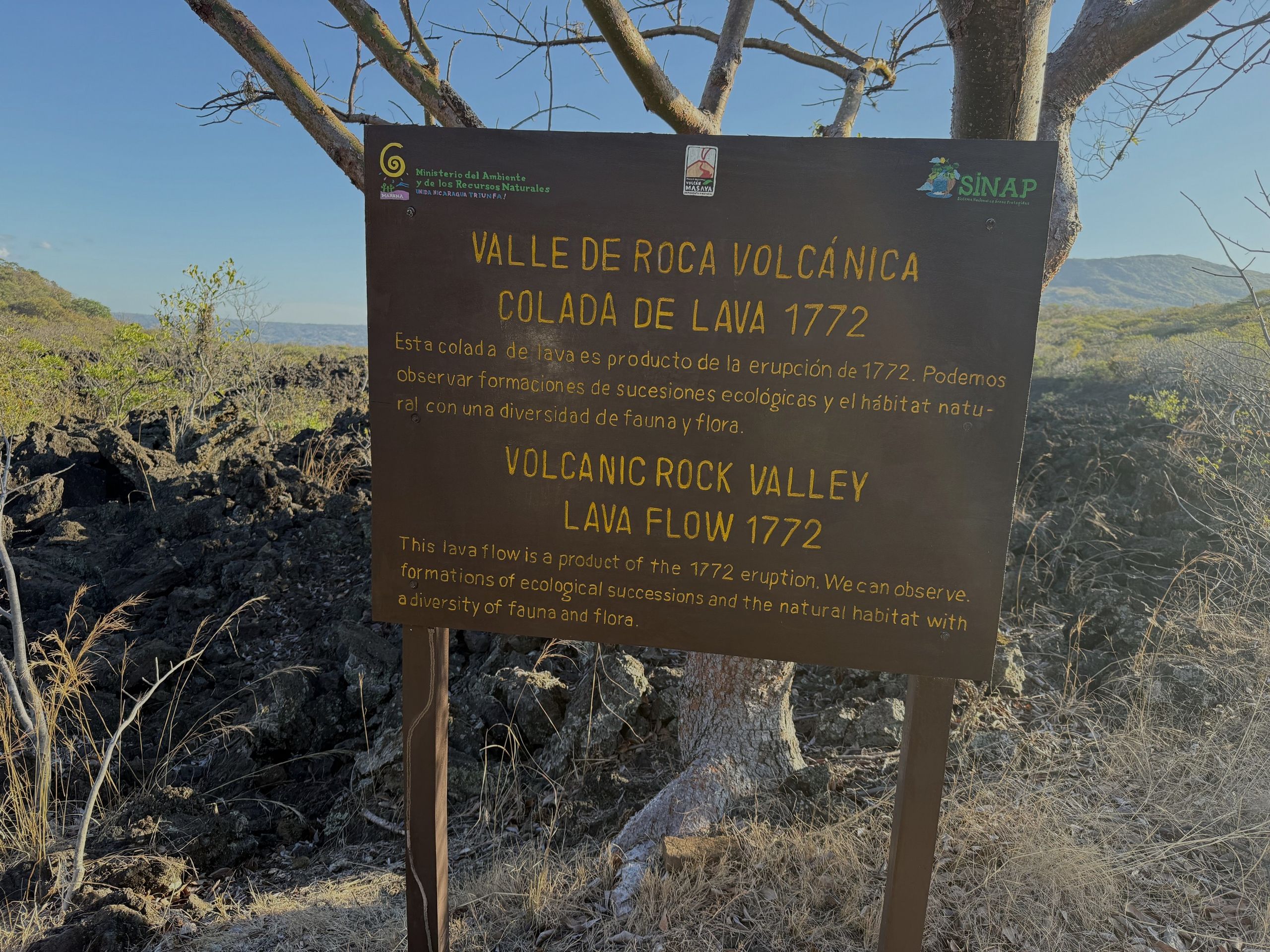
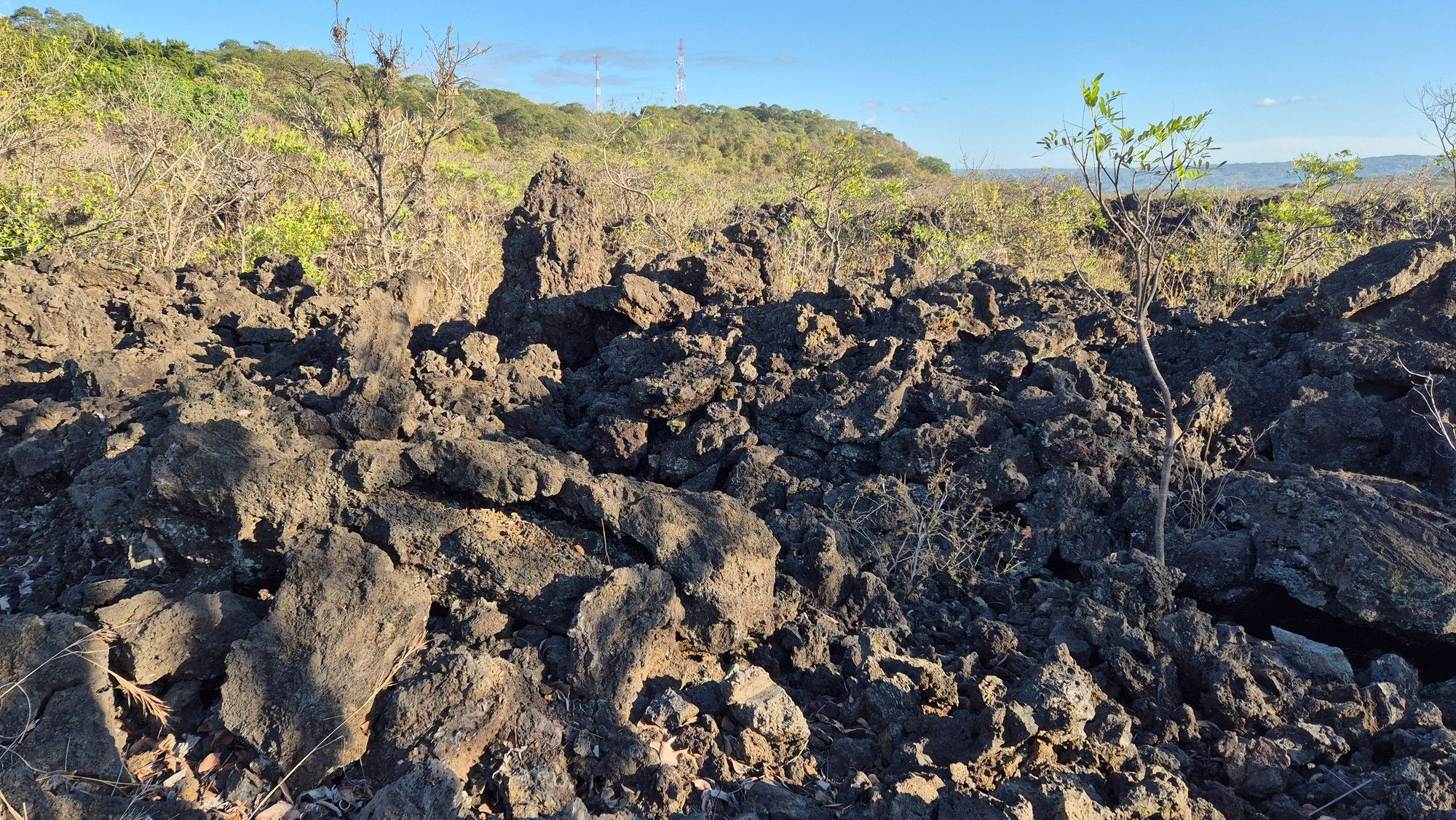
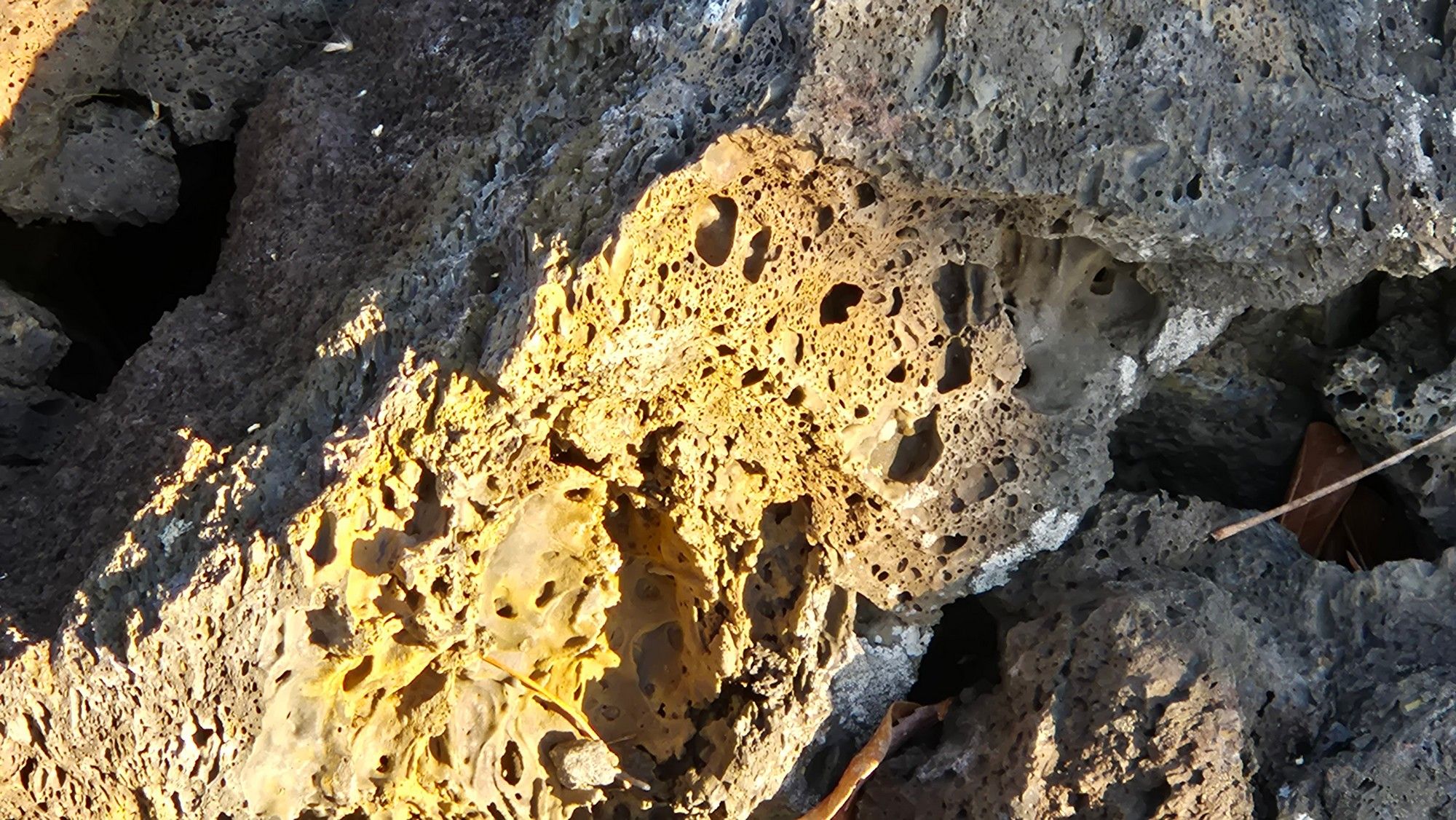
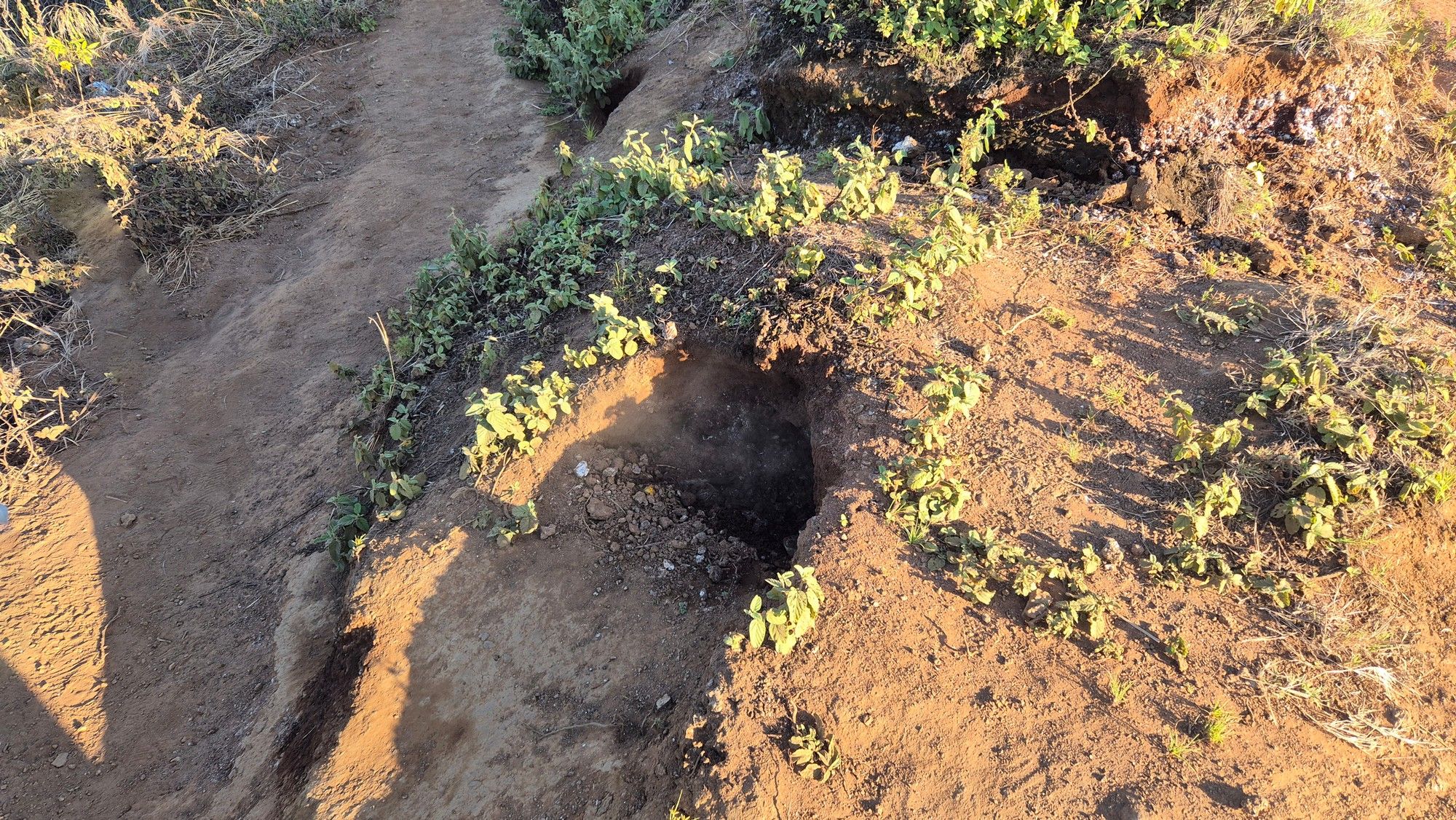
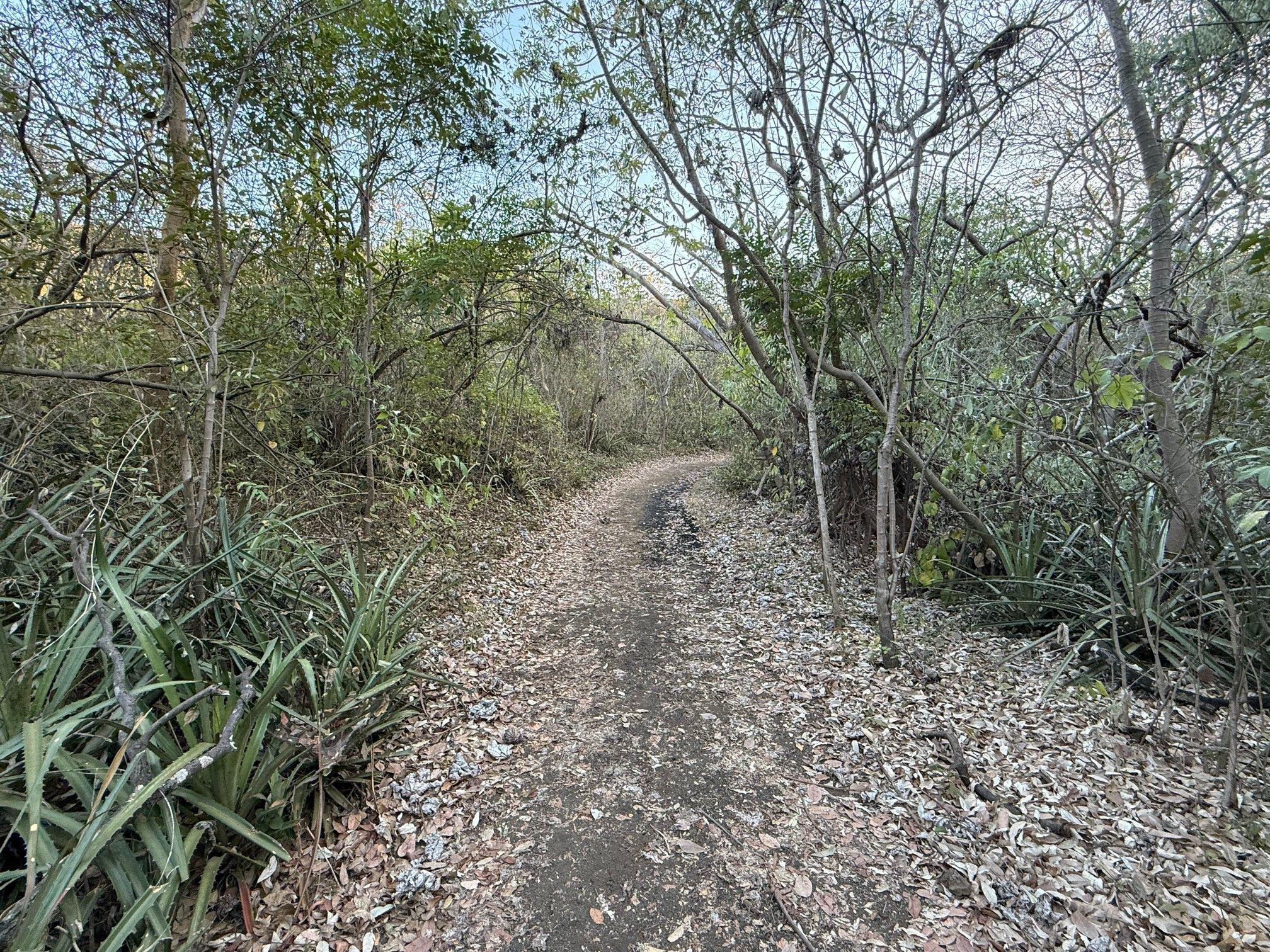
This side volcano Comalito seems to be inactive; however, there are some fumaroles on the tour we take to bridge the waiting time, from which hot gases escape that are not easily visible but are much stronger in smell – and foul smelling.
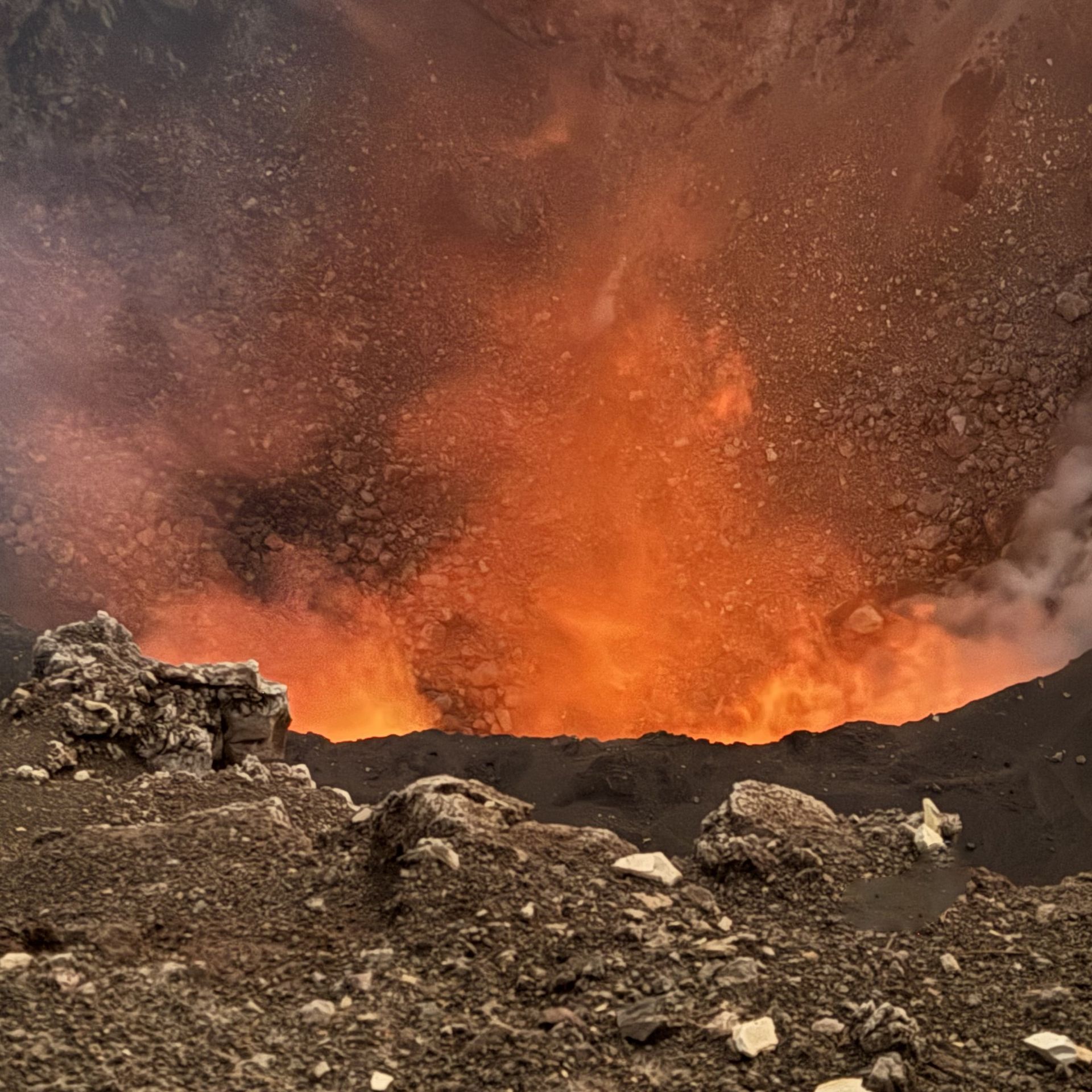
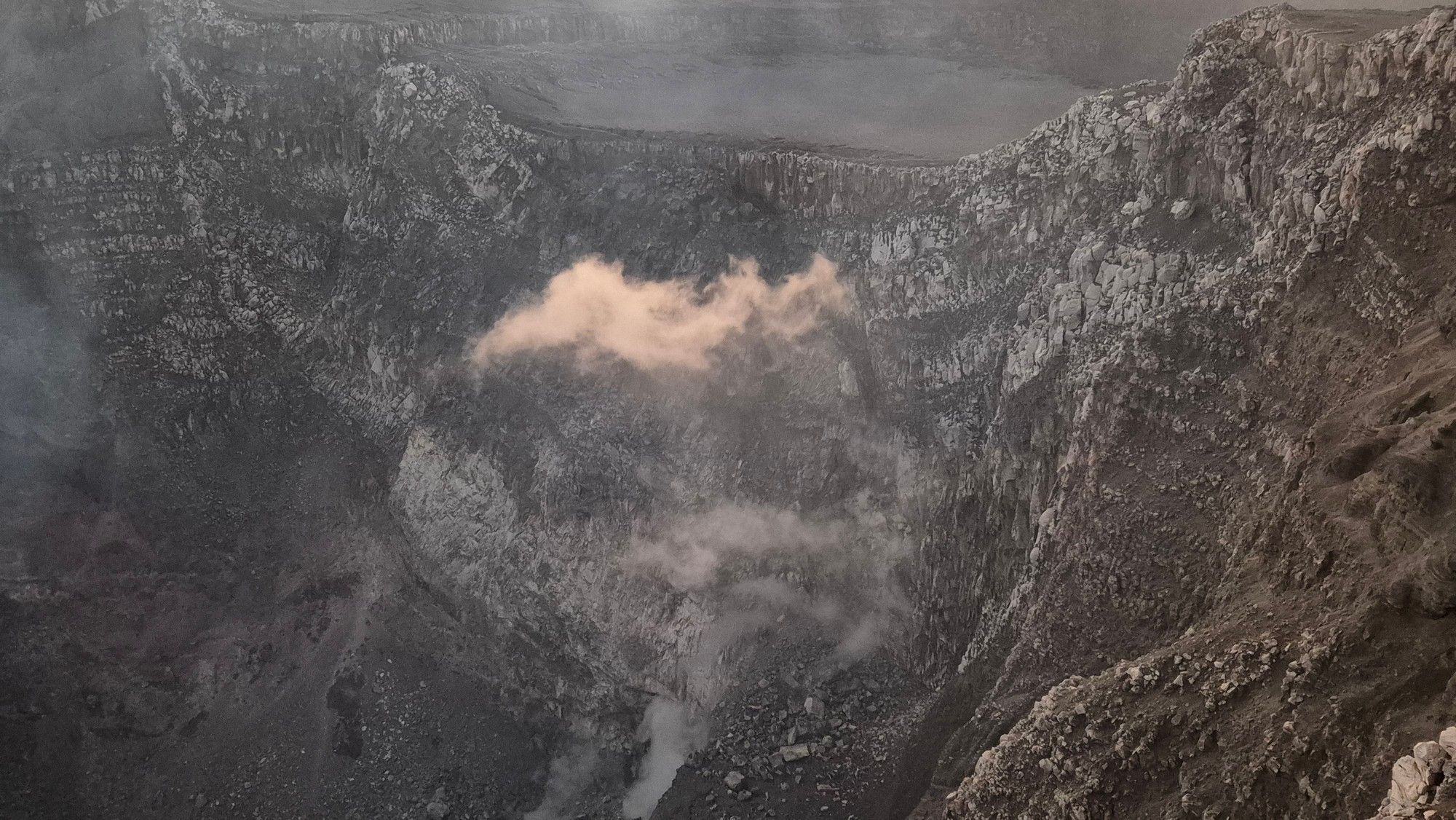
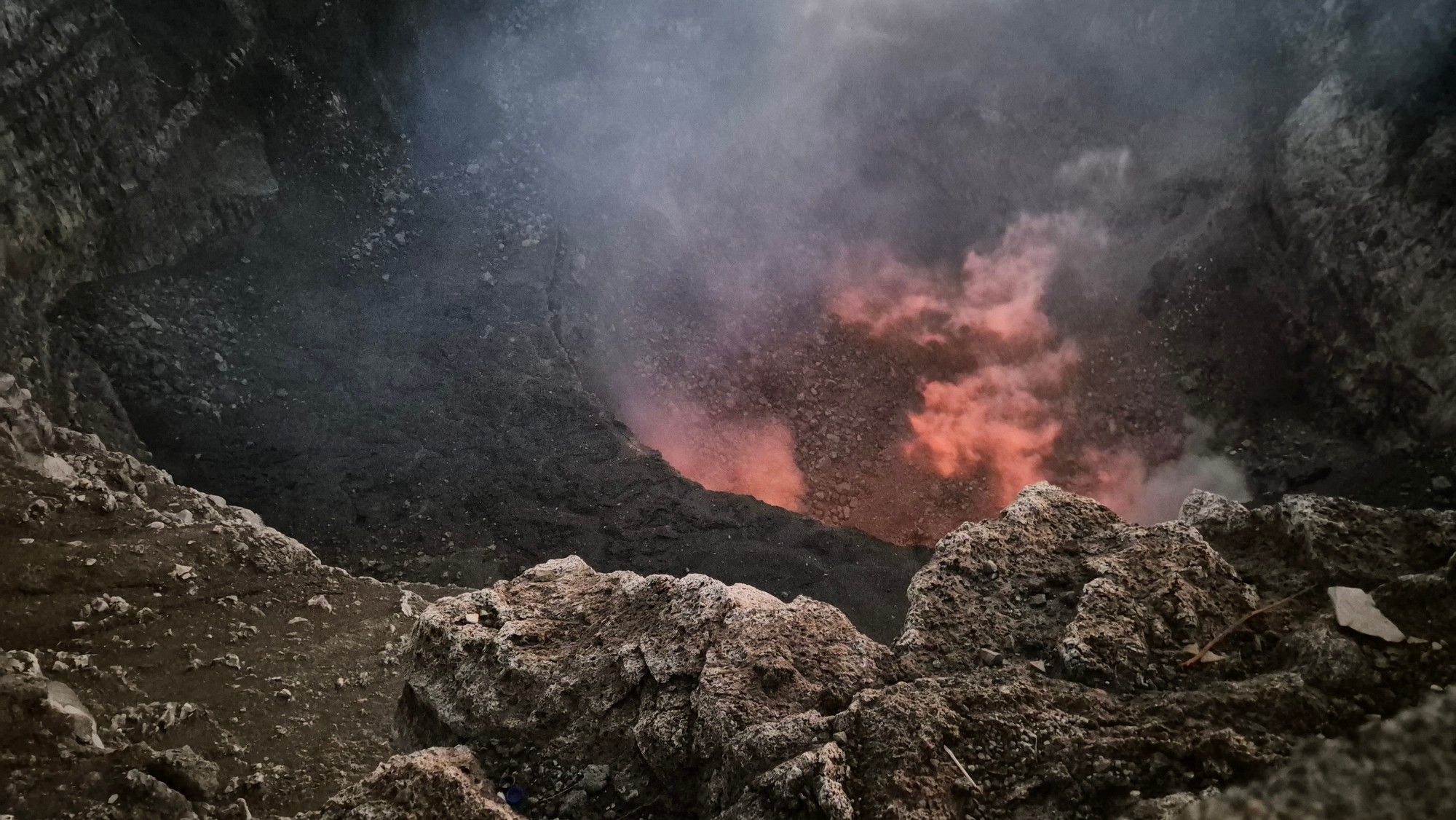
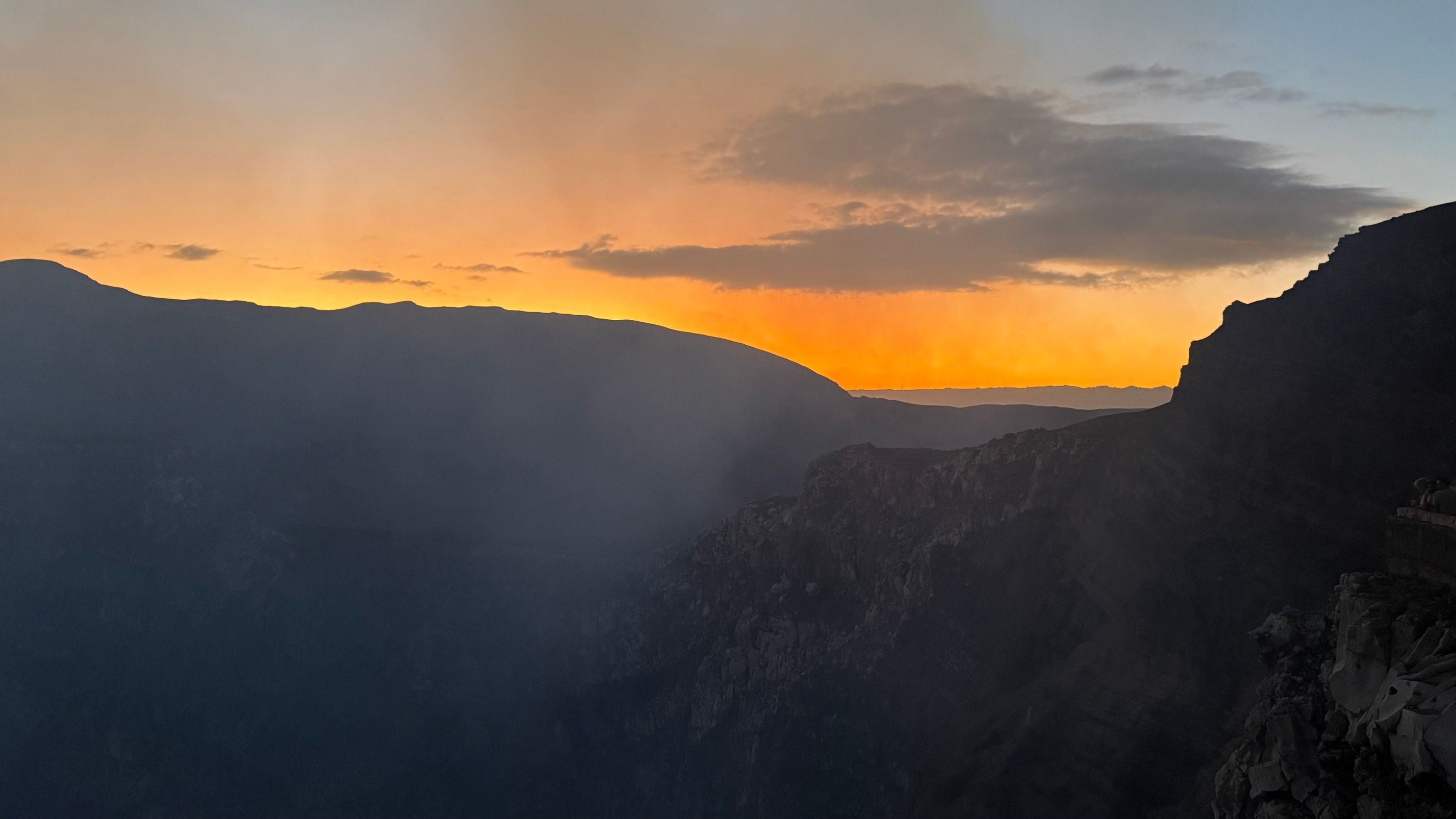
Back at the parking lot, general hustle and bustle ensues, and soon we are allowed to drive all the way up in the first group. This first group has the unique advantage of seeing the crater in daylight and then witnessing the quite spectacular sunset behind the rising vapors and gases. The twilight here is very short, and in the dark, one can see the spectacular red glow at the crater bottom. Due to some earthquakes and rockfalls in recent years – the crater access was also closed for an extended period until last year – it is no longer possible to see the liquid lava directly, but the sight is still very impressive. The stay at the viewpoint is limited to 10 minutes for later groups, but we were able to stay significantly longer. This visit was certainly one of the highlights of our trip!
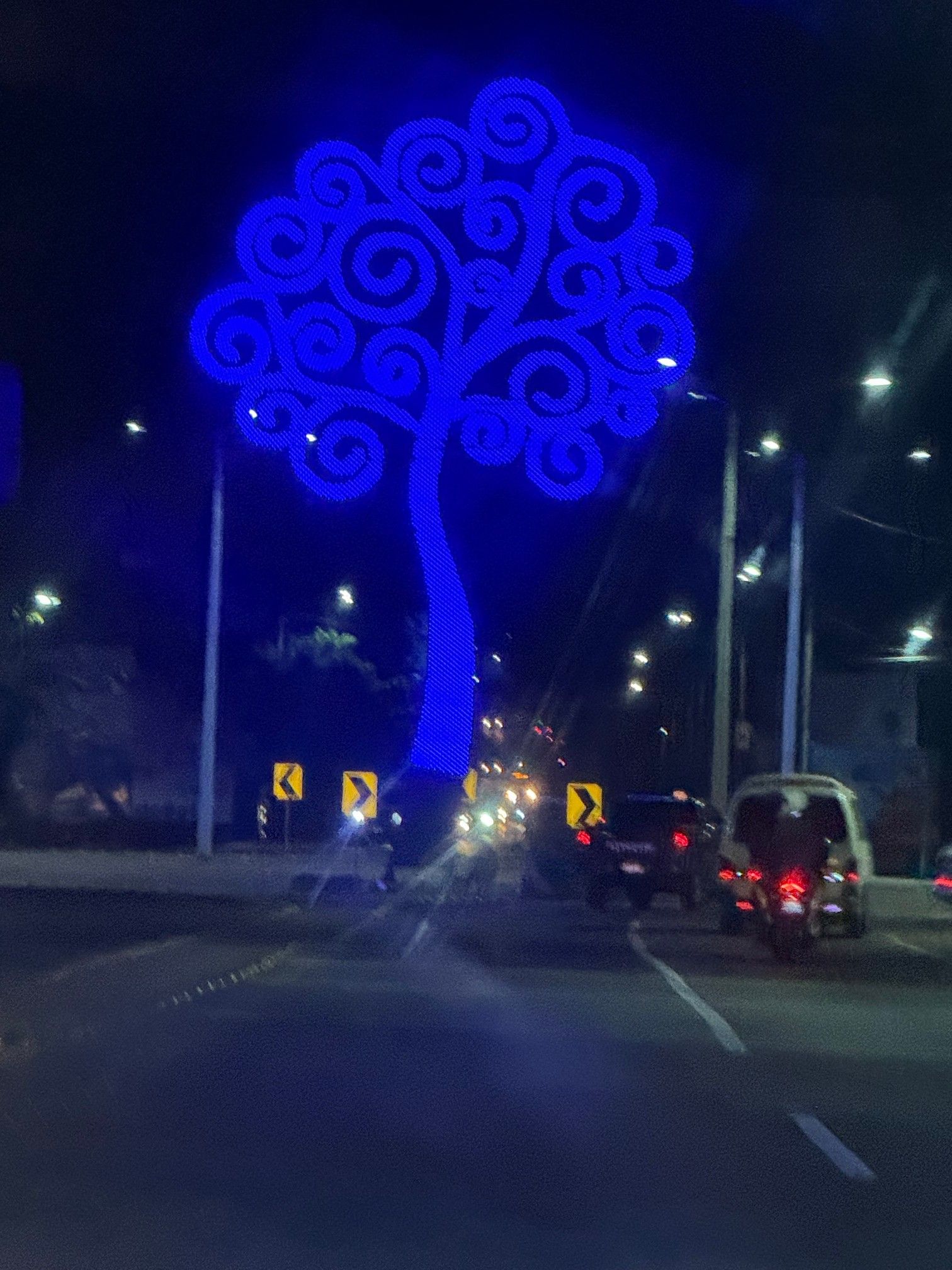
On our way back to the city, we once again pass one of the many “Trees of Life” (“Chayopalos”), now illuminated.
The Chayopalos were erected in 2013 under Ortega's government by Vice President Rosario Murillo (the wife of Daniel Ortega) as part of a national beautification program.
Although the tree is a universal symbol, the specific design of these metal structures is inspired by Gustav Klimt's work “The Tree of Life.” Characteristic are the organically twisted branches that symbolize growth and spiritual connection.
For the government, they represent “victories of the people,” peace, life, hope, and happiness; according to our guide, they also represent friendship with Venezuela and are in honor of Hugo Chavez.
For critics and opponents, they became a symbol of the power of the presidential family and state expenditures. During the protests in 2018, many of these trees were cut down by demonstrators as a symbolic act of rejection of the government, but were later rebuilt by them.