
Triathlon Training
What an eventful two days it has been! Let's dive in: Yesterday, we had the day off and decided to take a trip to Silk Island, a small island in the Mekong River just outside...

Published: 07.10.2025
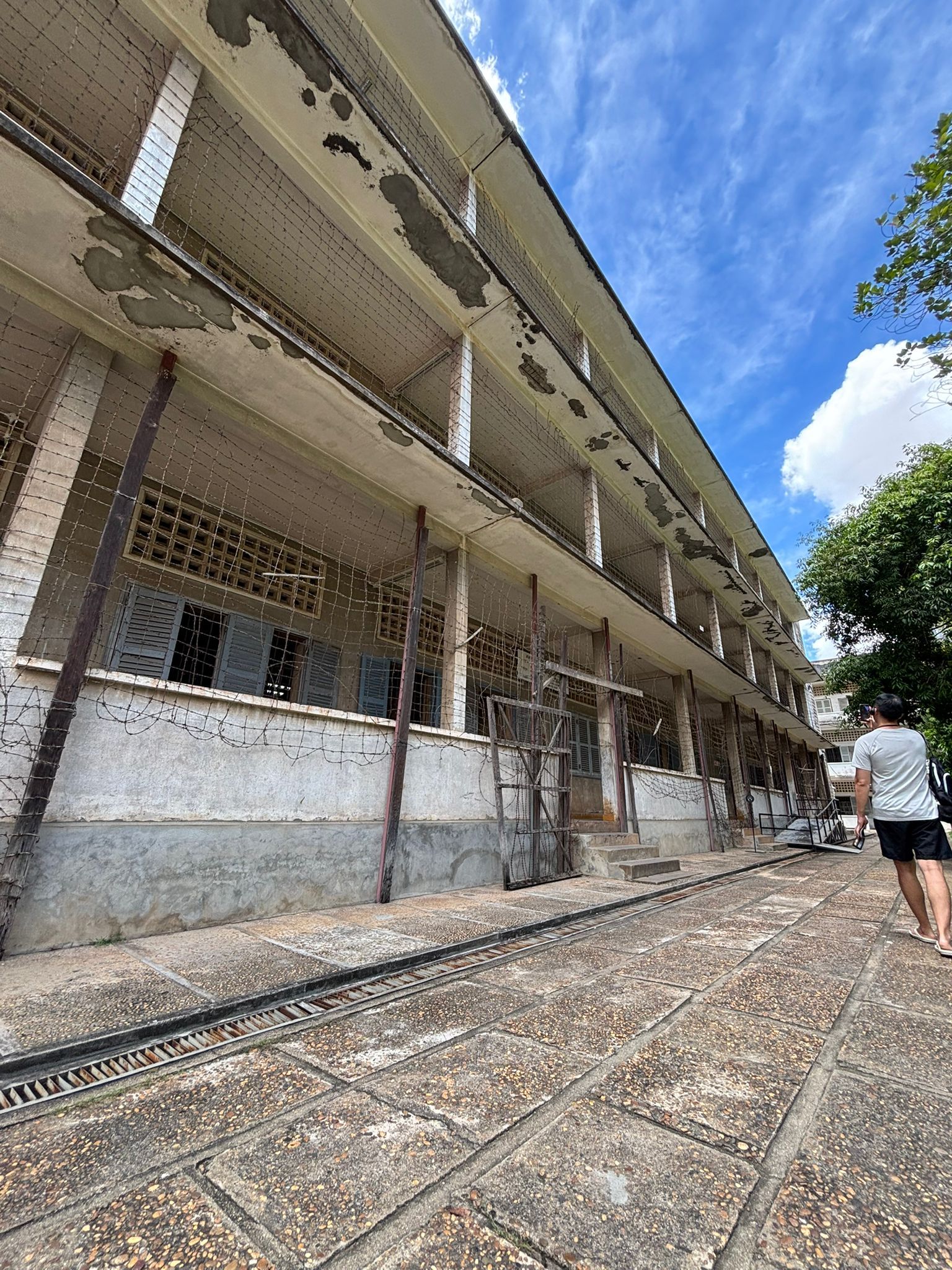
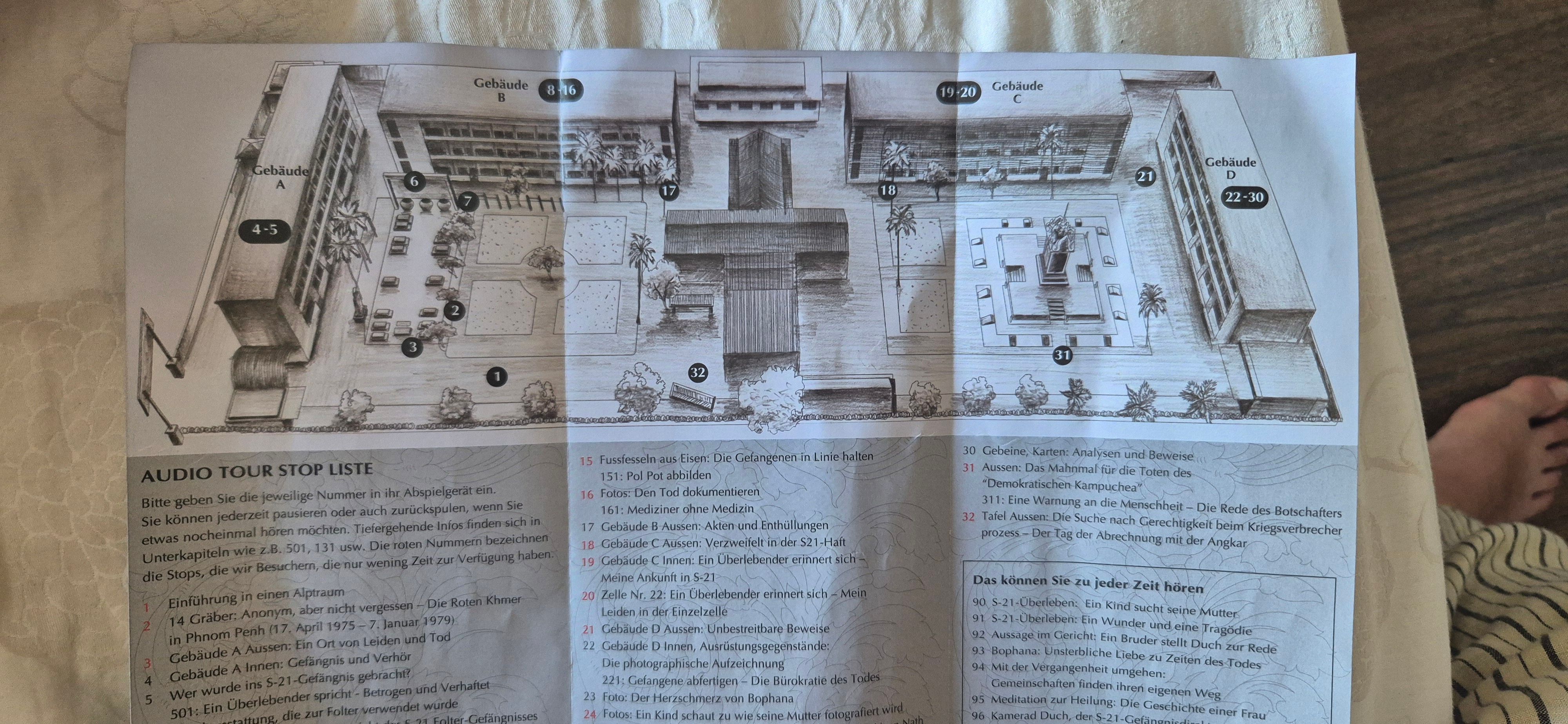
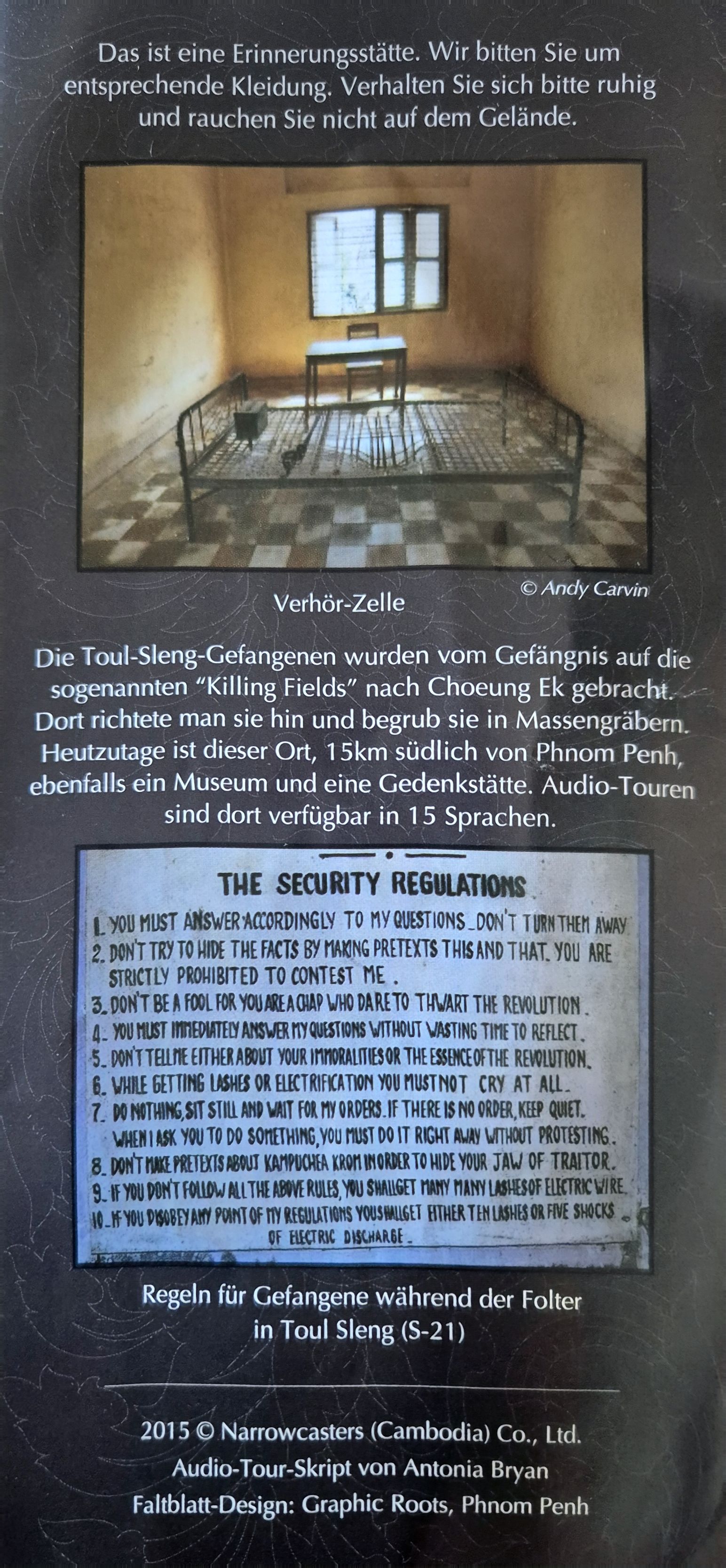
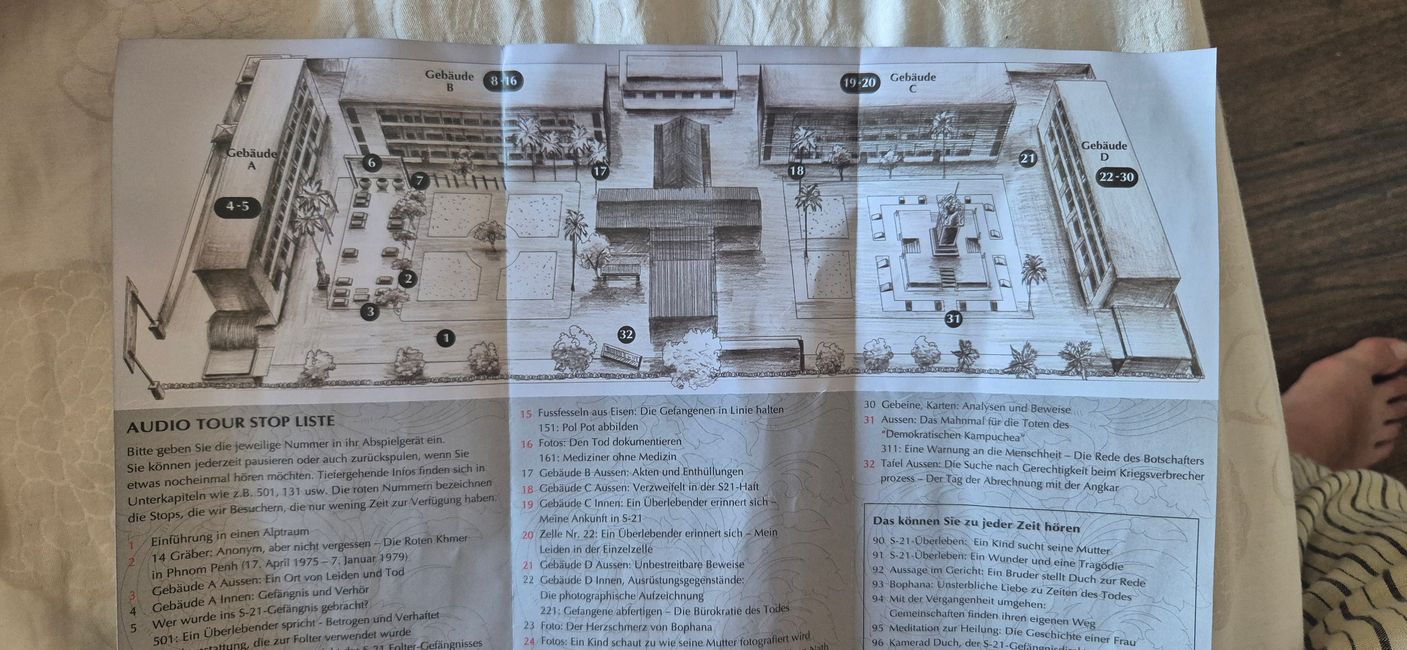
As not many patients came today, we wanted to use the time to reflect on Cambodia's recent past and visited the Genocide Museum, also known as Tuol Sleng or S-21. Thus, today's entry may not be quite as cheerful as the last ones.
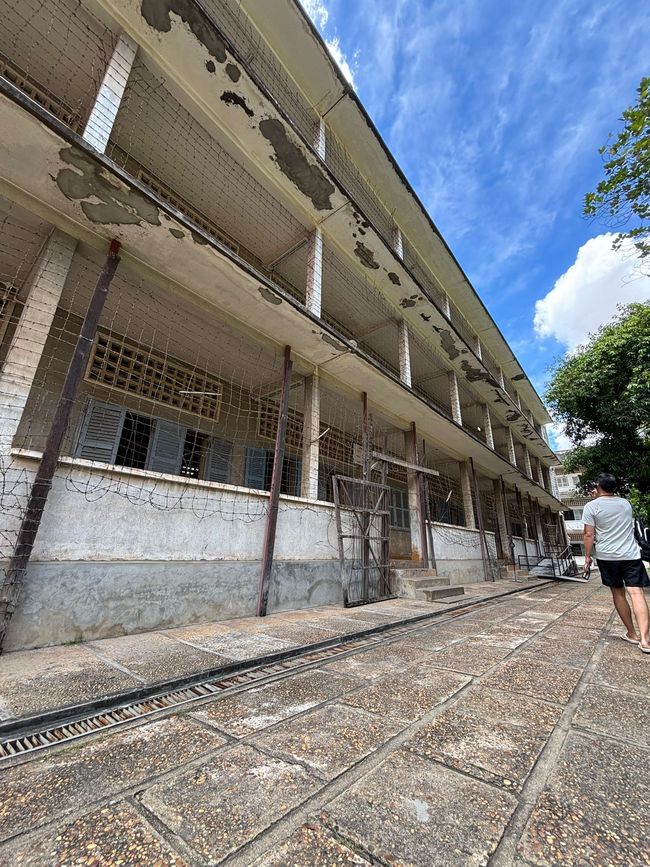
Between 1975 and 1979, the Cambodian population suffered under the regime of the group known as Angka (meaning 'Organization'), led by Pol Pot, the 'Brother Number One'. This was a communist party that sought to 'clean up' after the attacks by the USA during the Vietnam War. Their main enemies were educated people (including anyone wearing glasses), artists, and other politicians. They accused them of having contacts with Western intelligence agencies and aimed to extort confessions regarding their alleged connections and misdeeds through torture. Once confessions were coerced, the orders for execution were signed. It is estimated that around 20,000 people were killed in the S-21 prison alone, including the children of the tortured, 'so that there couldn't be any future revenge'.
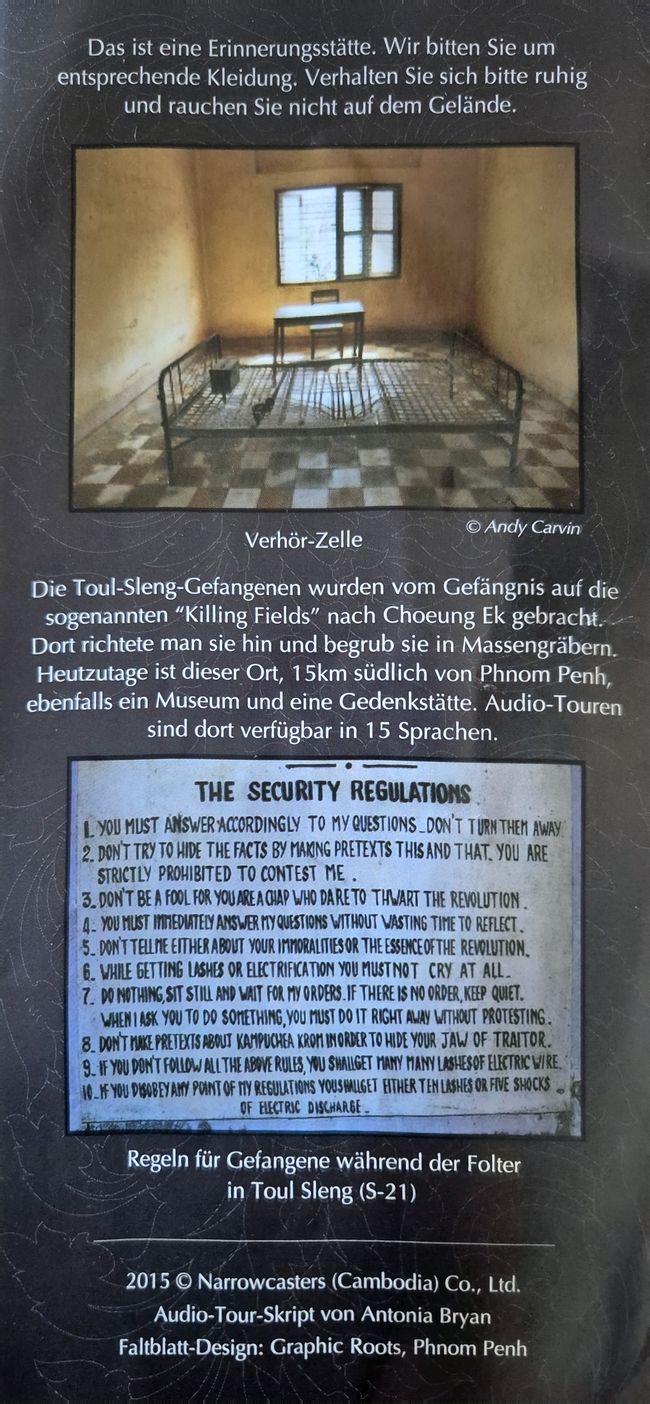
There are said to have been about 200 of these prisons in the country. In addition, thousands of people expelled from the cities perished in the fields due to forced labor. To illustrate the circumstances: on April 17, 1975, the soldiers of Angka arrived in Phnom Penh, where 3 million people lived at that time. Three days later, almost all people had been driven into the countryside, and the city was virtually empty. By 1979, approximately 2 million people were dead.
The Vietnamese soldiers found only 14 corpses and 2 surviving children in Tuol Sleng when they dismantled the regime, as the perpetrators destroyed everything else, including most of the records. In total, there were 12 survivors from Tuol Sleng.
It was not until 2007 that the first trial against the leaders of Angka began. In a second trial in 2009, the prison director of S-21, 'Brother Duch', who was responsible for the methods of torture and the orders for execution, received a 35-year sentence, against which both he and the prosecution appealed. In the second instance, he received a life sentence.
Of course, we do not wish to only name the perpetrators, but most names of the victims remain untraceable due to the destruction of records and entire families. The surviving artist Vann Nath used the remainder of his life to create paintings that depict the atrocities of Angka. Some of these can be found online for those interested who cannot travel to Phnom Penh to see them. Chum Mey and Buo Meng are also well-known names of survivors. The latter actually sat at an information table today to talk about his experiences.
We hope to have summarized the most important points for you. For those who wish to research further, countless information is available online.