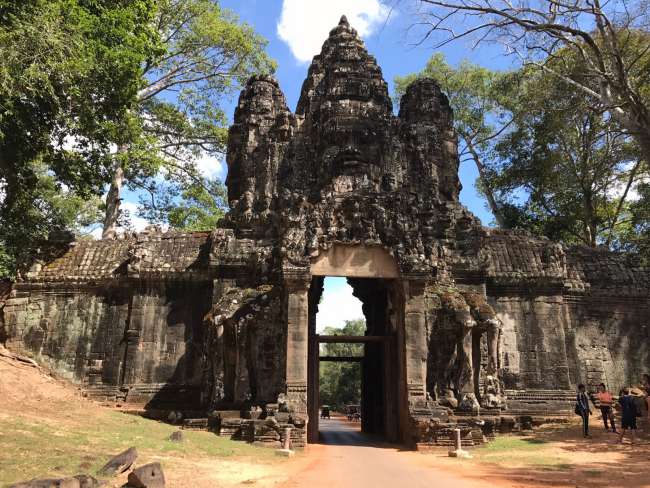


Angkor, the former world city
Spung Tree, with their silvery, massive above-ground roots encircling the roofs. The temple gained worldwide popularity thanks to the Hollywood film “Lara Croft: Tomb Raider,” a...
Published: 02.07.2026
A popular excursion from Siem Reap is to the Tonle Sap Lake. I traveled over the lake in late 2024 to reach the city of Battambang by boat with Swiss friends (Blog Temples and Floating Villages» from December 24, 2024). The direct distance between the two cities is just under 80 km, but as the road takes a wide loop around the northern part of the lake, the journey by car is more than twice as long.
The Tonle Sap is a truly curious lake, and the river of the same name, which flows into the Mekong directly in front of the Royal Palace in Phnom Penh, is just as fascinating. During the rainy season, the river flows backward: the Mekong carries so much water that it pushes the Tonle Sap upstream. The lake is then filled up; its water level rises by several meters, and the surface area increases dramatically.
Even in the dry season, the Tonle Sap Lake is quite expansive: about 2500 to 3000 square kilometers, which is five to six times the size of Lake Constance. At the peak of the rainy season in August and September, it can expand to up to 16,000 square kilometers. It then floods the entire state of Schleswig-Holstein or the Swiss cantons of Bern, Vaud, and Valais combined.
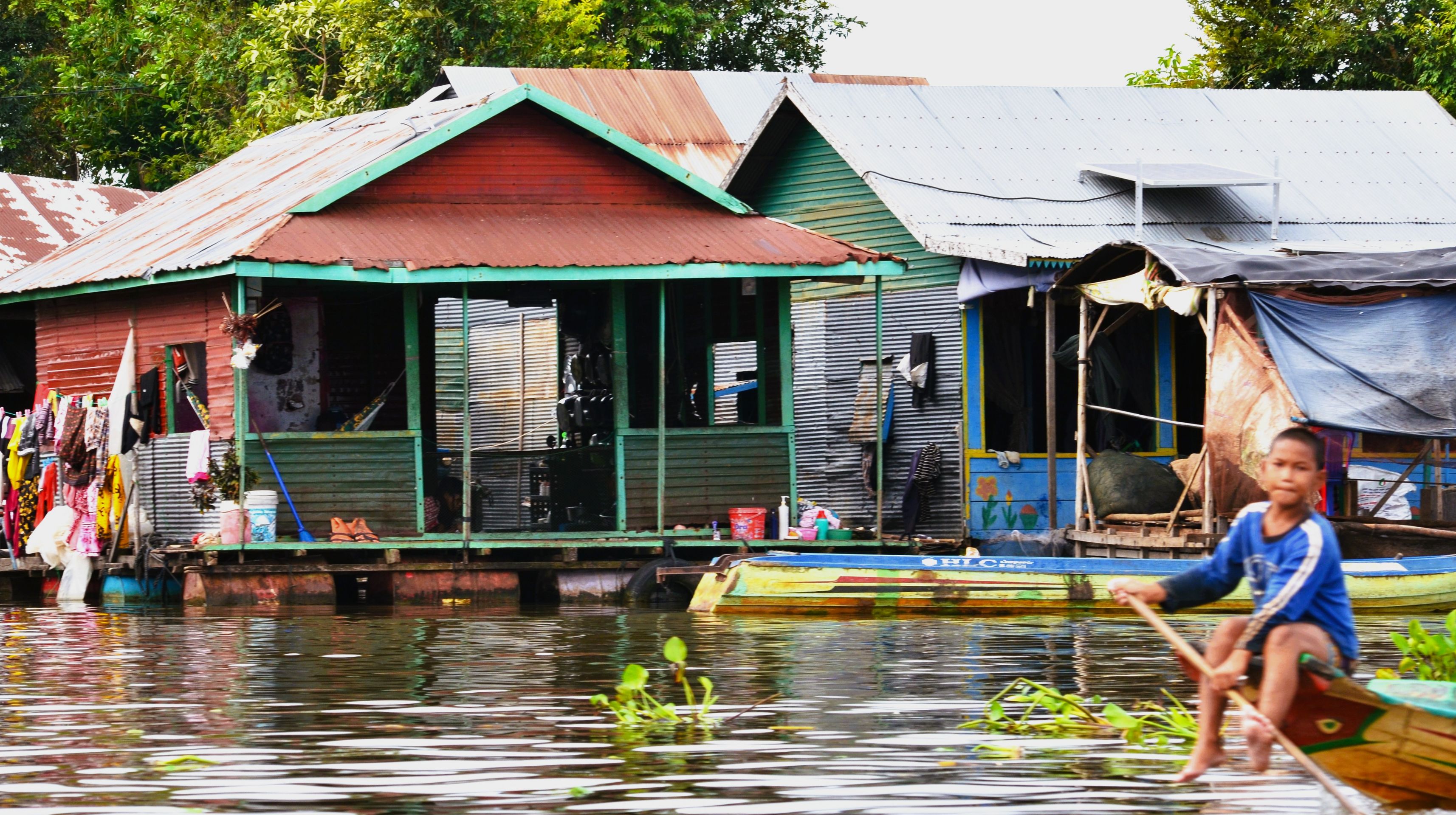
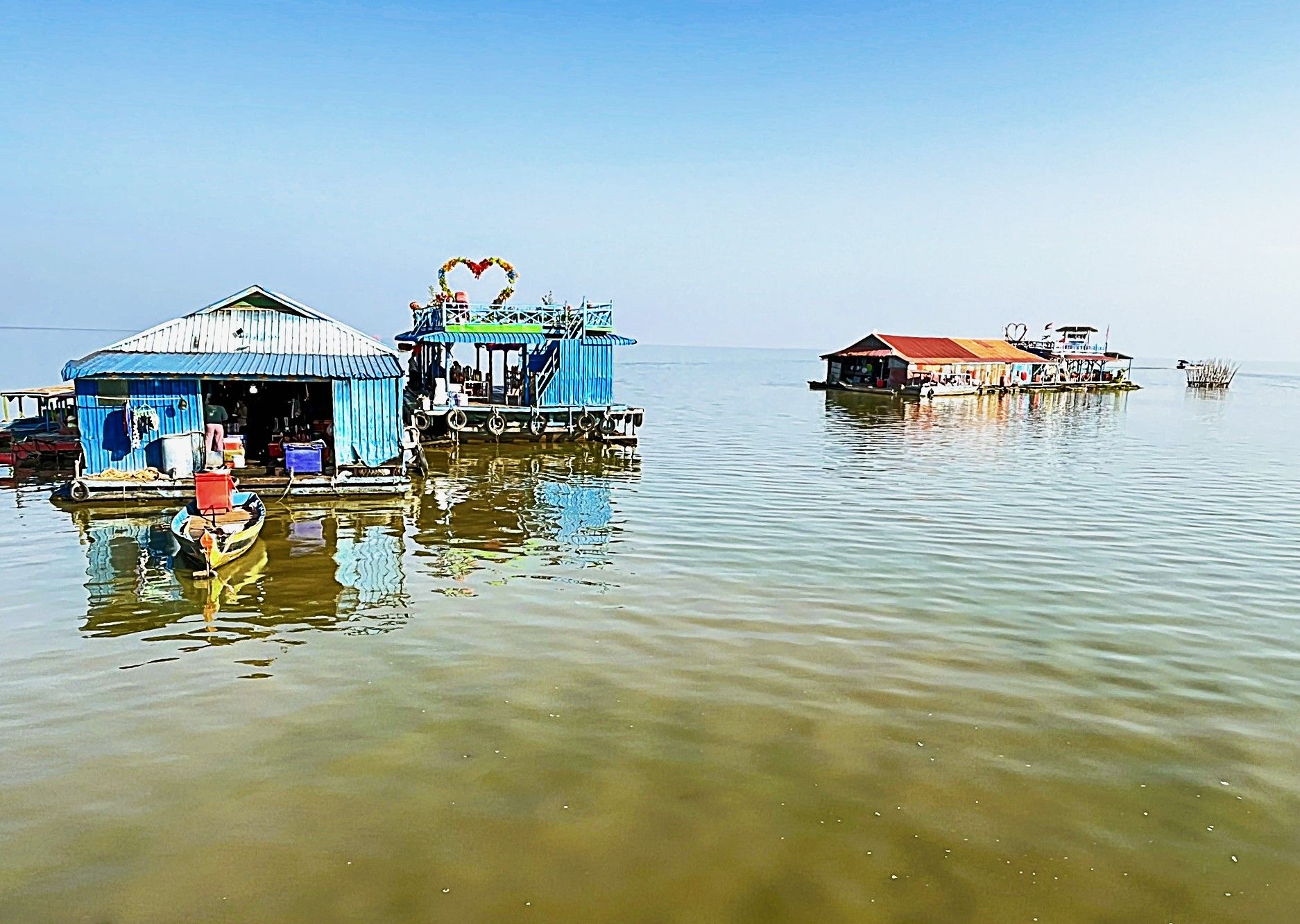
The people living at and on the lake have adapted accordingly: either entire villages float on the water. We observed and photographed them from the boat in December 2024, equipping ourselves with sandwiches and beer from a floating supermarket.
Houses on Stilts
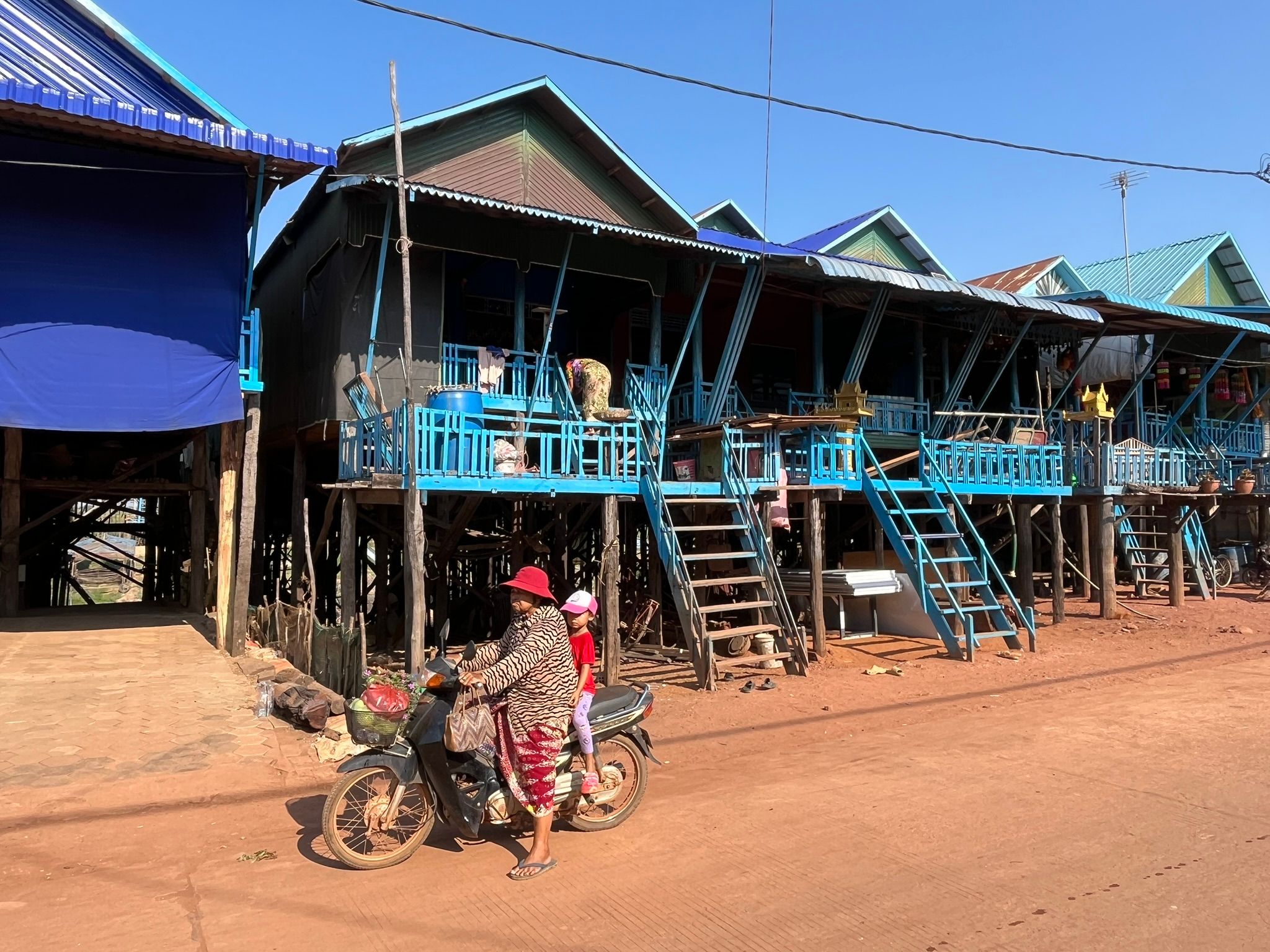
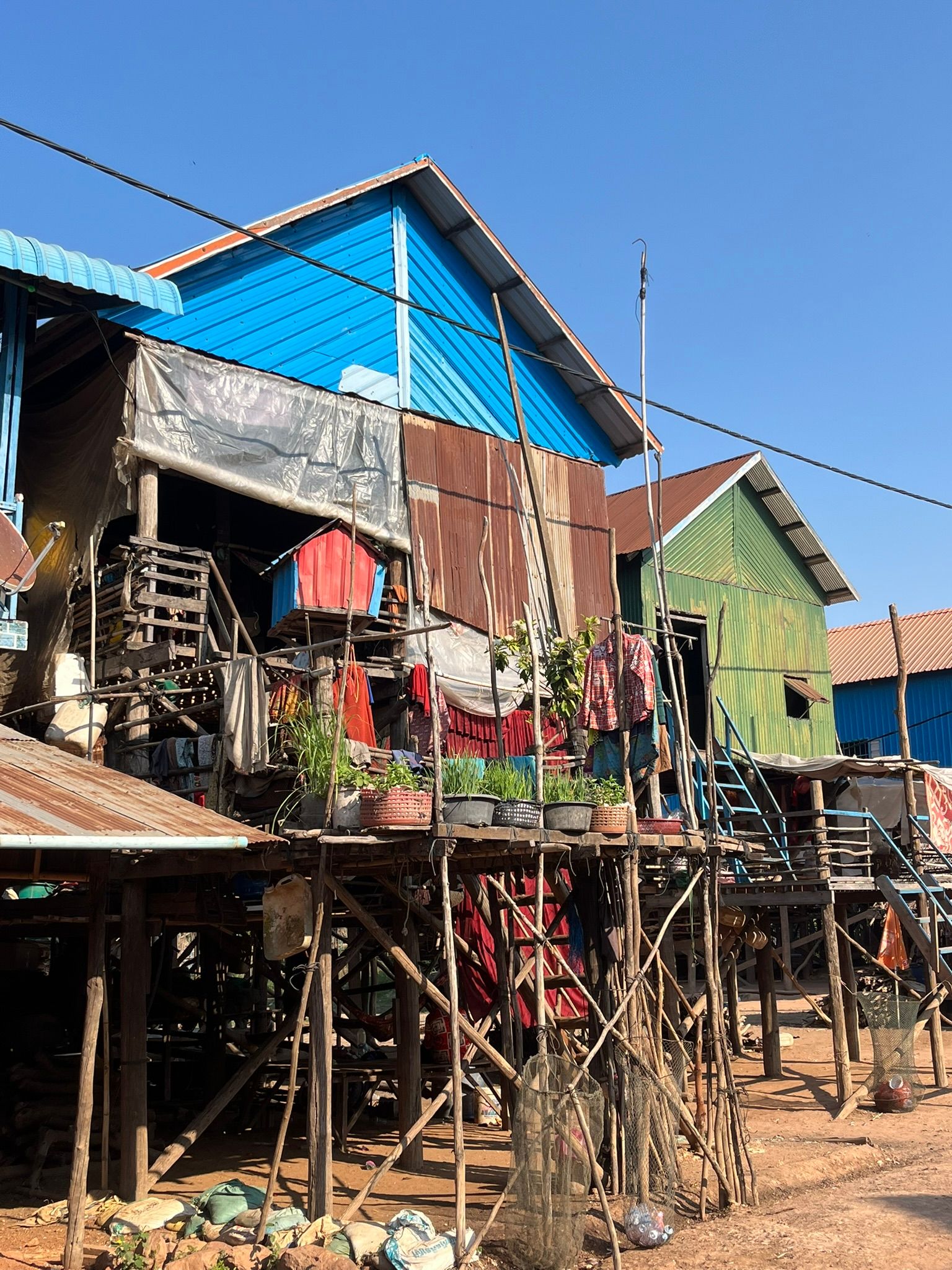
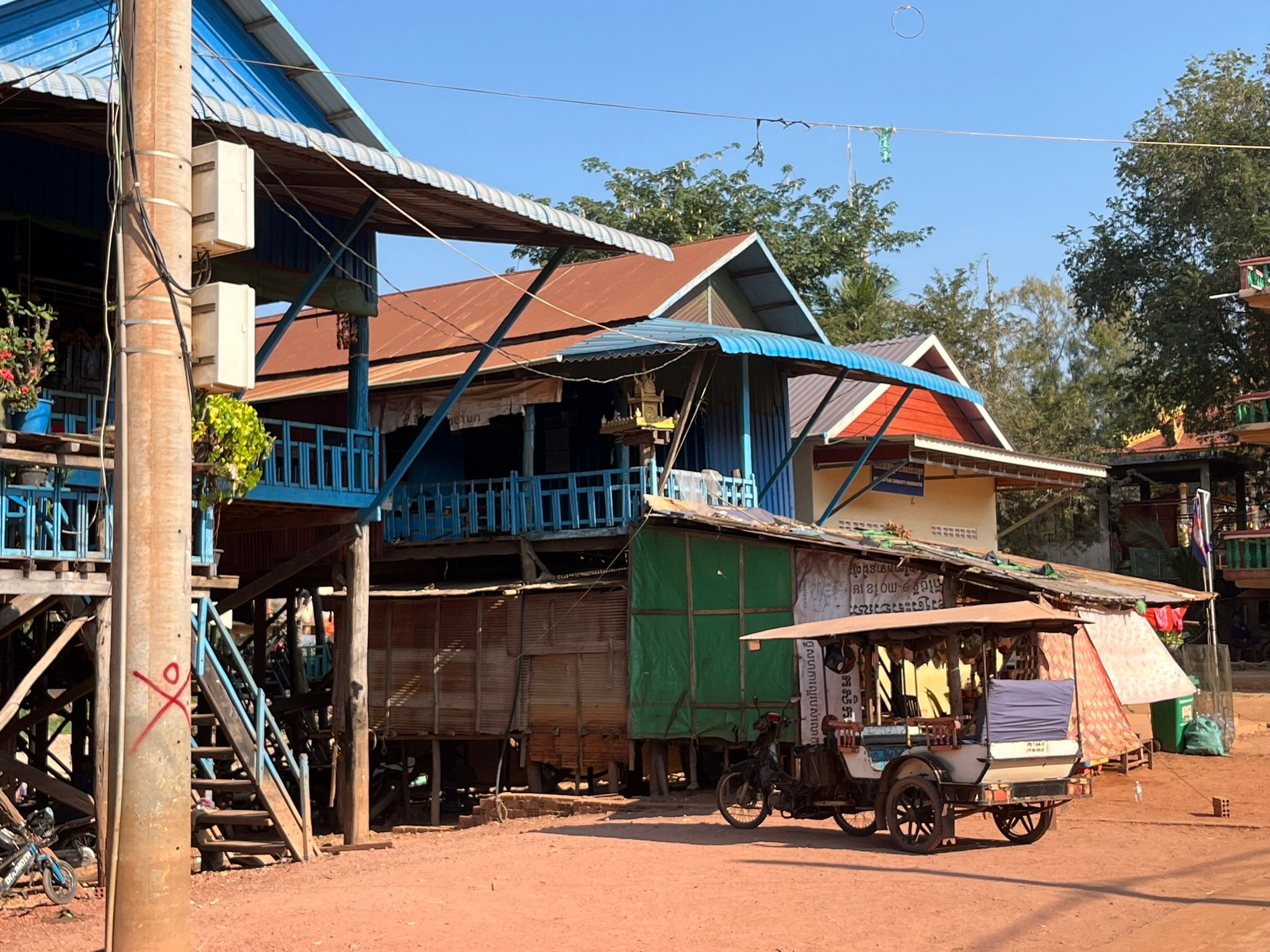
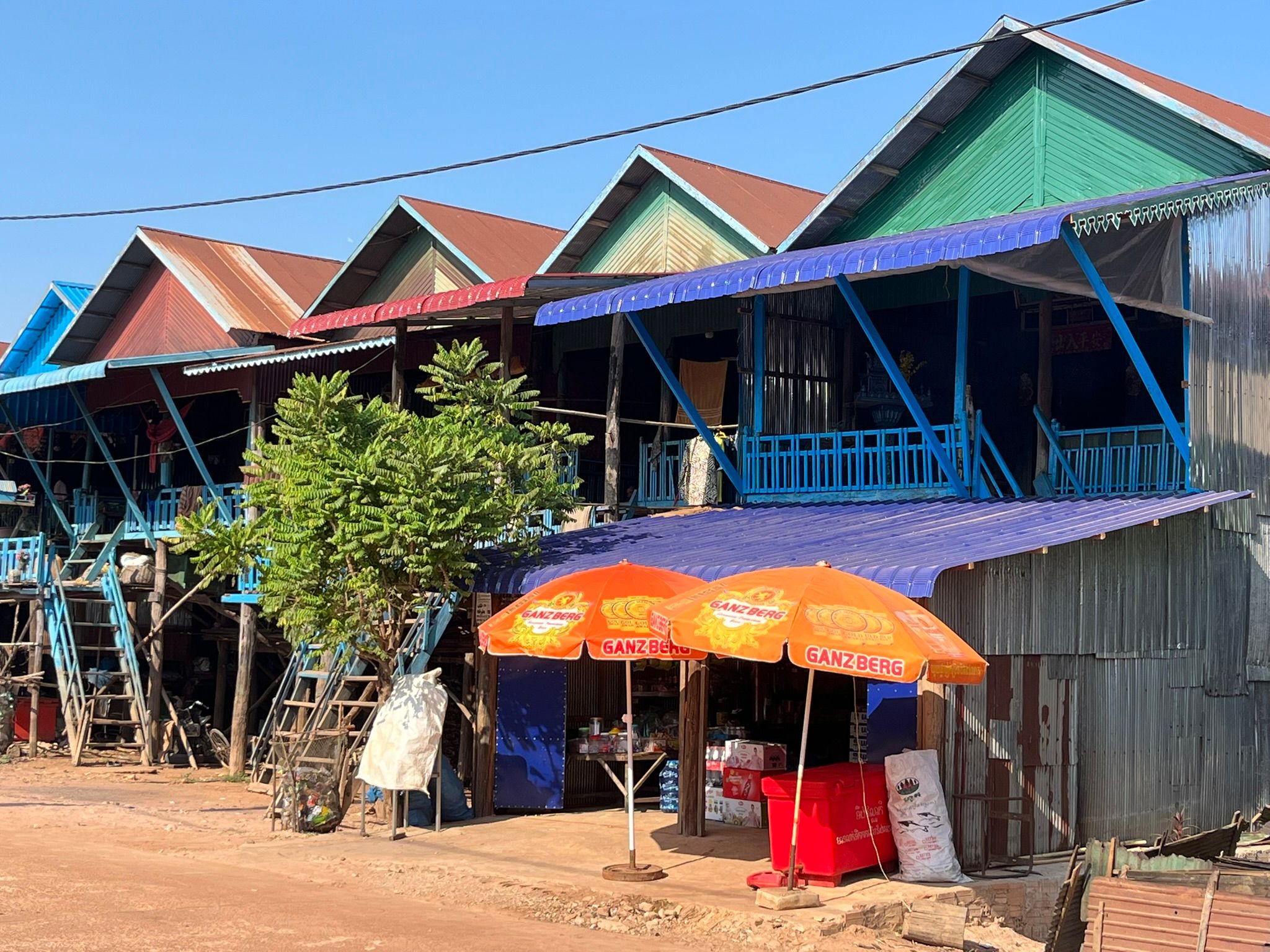
Or they do it like in Kampong Phluk: During the rainy season, one can navigate through the village by boat. It is then completely underwater; the individual houses, the school, and the temple rise like small islands above the surface. All buildings in Kampong Phluk are built on meter-high stilts, mostly made of wood, sometimes concrete. Their height is adapted to the summer floods: the lower the ground, the longer the stilts.
We know from YouTube videos how it looks in Kampong Phluk during the monsoon season. But now, at the end of December, everything is dry and the lake has shrunk to its minimum. Instead of gliding through the village street in a boat, we walk over the dusty, dried-out ground. There are no boats tied to the stilts now; instead, motorcycles and tuk-tuks are parked by the houses or in the space beneath them. And rather than going directly from the boat to the house, residents must climb long, steep wooden stairs.
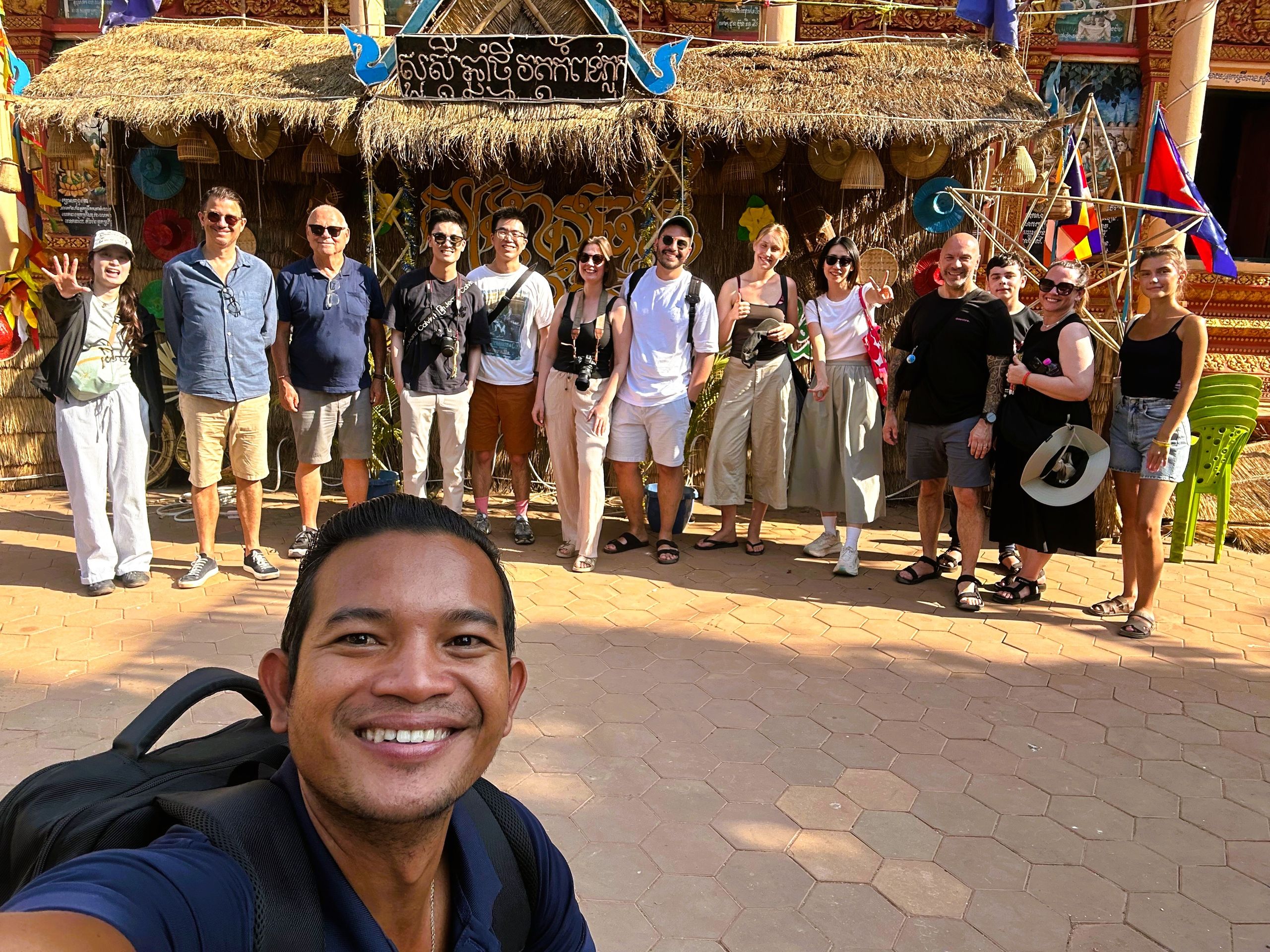
Our guide grew up in the village and knows every house and almost all of its residents. He answers all our questions patiently: Where do the motorcycles go during the rainy season? They are parked inside the house and brought out again only when the water recedes. And how do the elderly cope, who no longer have the strength for the steep stairs? They stay at home and are cared for by family. And where are the toilets in these stilt houses? They are in the back; the wastewater flows through a pipe – where to, we don't really want to know.
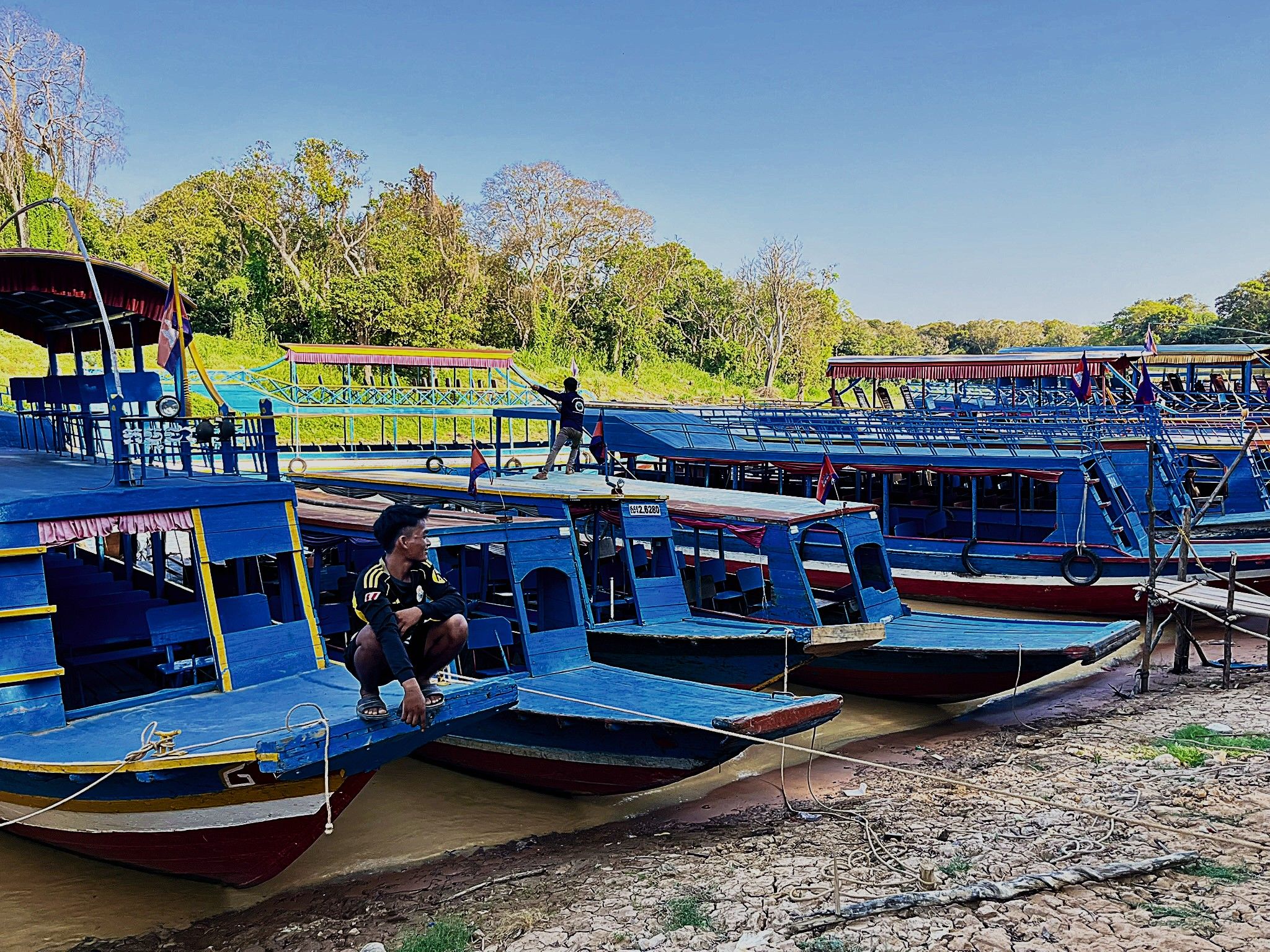
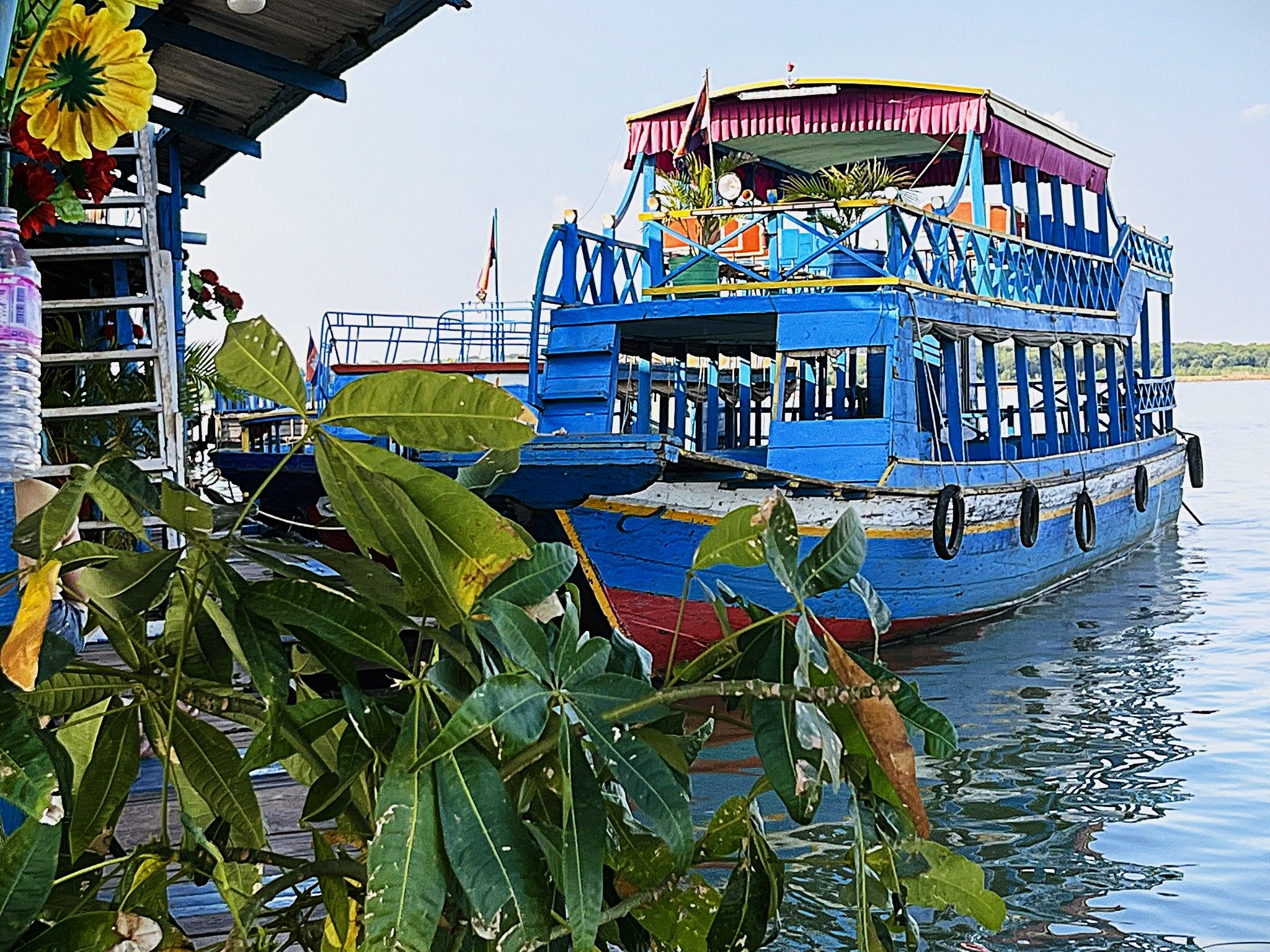
The lakeshore has thus moved far away from the village; only a river arm still reaches close to Kampong Phluk. Upon arrival, we see a whole line of moored wooden sightseeing boats, all painted blue, most of them two-storied with a covered observation deck. Each boat belongs to a family, the guide explains. The village is organized so that each family gets a turn: When more tourists are present, there are more trips; otherwise, there are fewer.
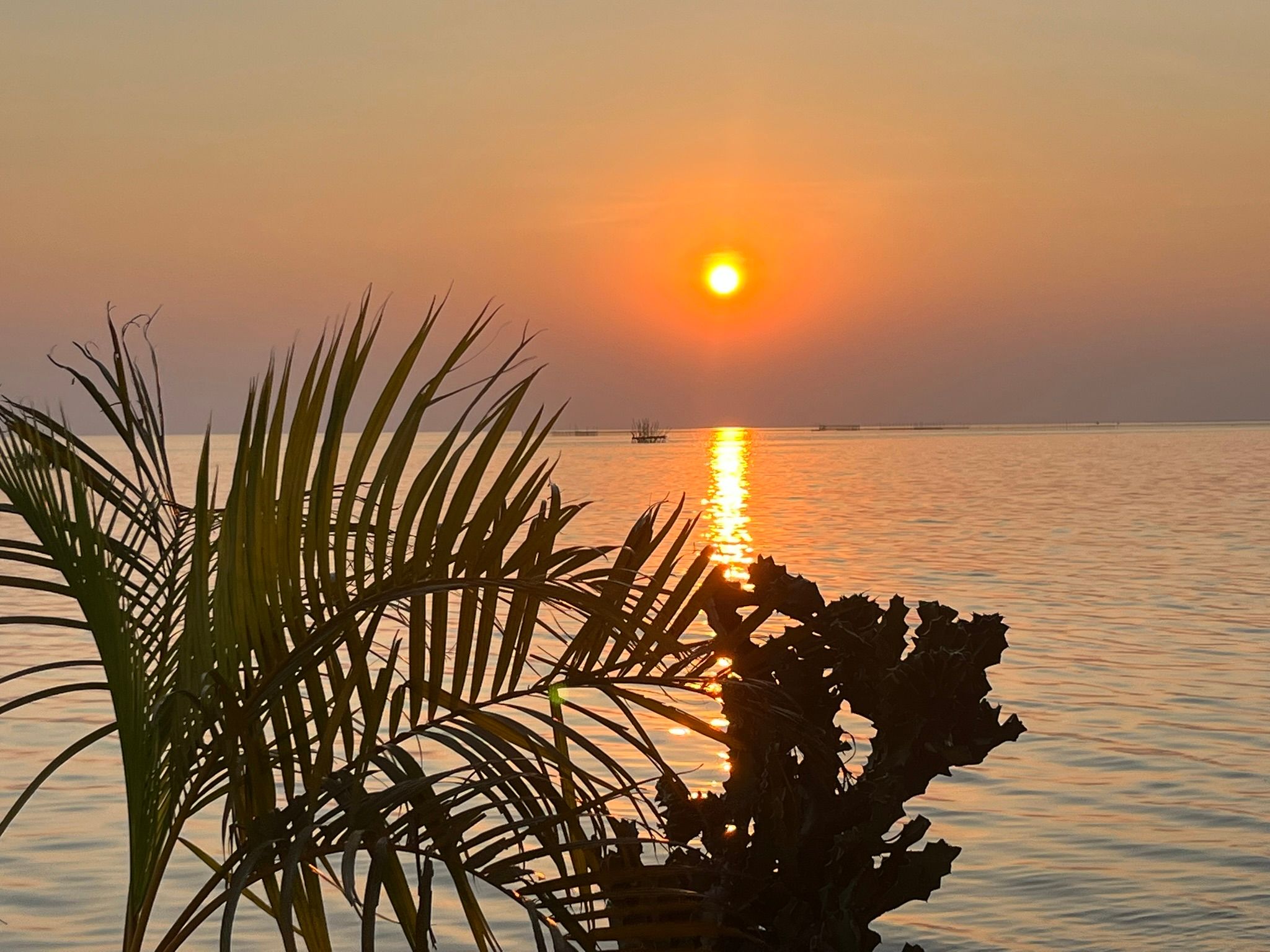
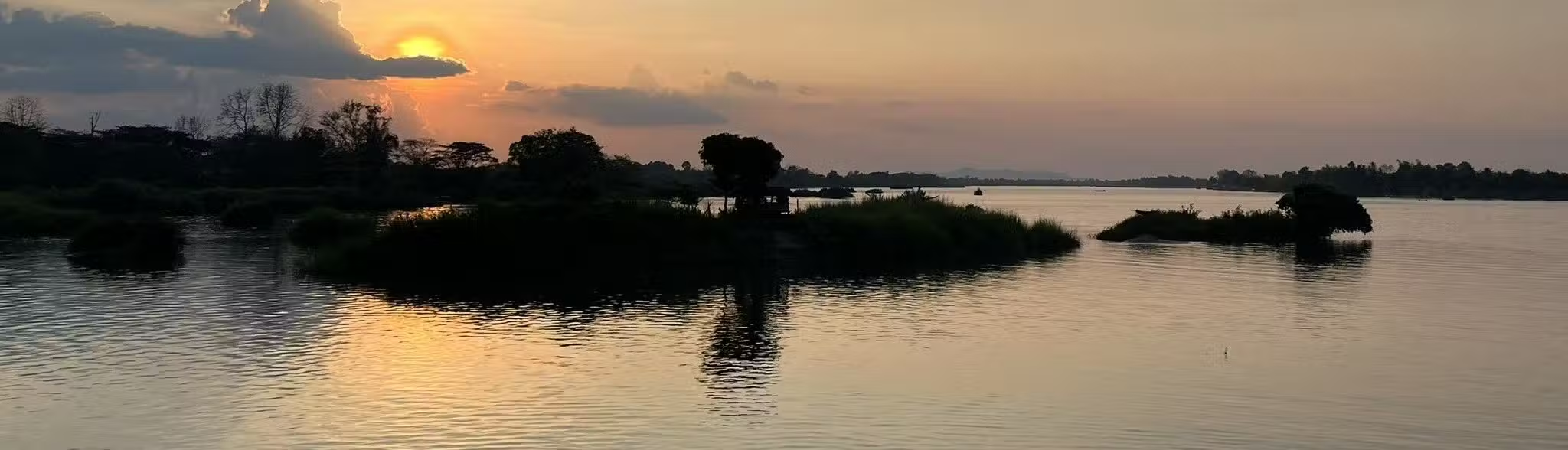
We now putter out onto the lake on the old-fashioned wooden boat, which is still so large in the dry season that the shores soon recede into the distance and it almost feels like being at sea. Like little islands, individual restaurant boats float on the lake; artfully moored to prevent drifting away. We will wait for the sunset on one of these boats with a cold beer and indulge in idleness.
Penned Crocodiles
One thing only irritates the visitors from Europe: In an enclosure right next to the floating restaurant, equipped with a high wire fence and warning signs, three large crocodiles float, nearly filling the enclosure. There is no room for swimming here. The crocodile, the guide explains, plays two divergent roles in Khmer mythology and Buddhist tradition: On one hand, it embodies greed, temptation, and the danger of water; on the other hand, it represents the connection between humans and water as a source of life and nourishment.
In the past, people in Cambodia were attacked and killed by crocodiles every year; children playing along river and lake banks were particularly at risk. In the 1980s and 1990s, there were several campaigns aimed at exterminating wild crocodiles, which were very successful, as the guide tells, because today there are significantly fewer incidents.
No wonder: Only about 1000 Siamese crocodiles are believed to live in the wild. This freshwater crocodile, which once populated large parts of Southeast Asia, is considered critically endangered and is listed on the IUCN Red List. Therefore, there are efforts to reintroduce the Siamese crocodile. The people living by Tonle Sap Lake and river consider this a bad idea. They prefer crocodiles only in safe enclosures, not at the lake and riverbank.