

Koh Samed – back on the island again
I just can't help it: By the end of March 2026, I am already back on an island, specifically on Koh Samed, which remains unspoiled by mass tourism.
Published: 30.06.2026
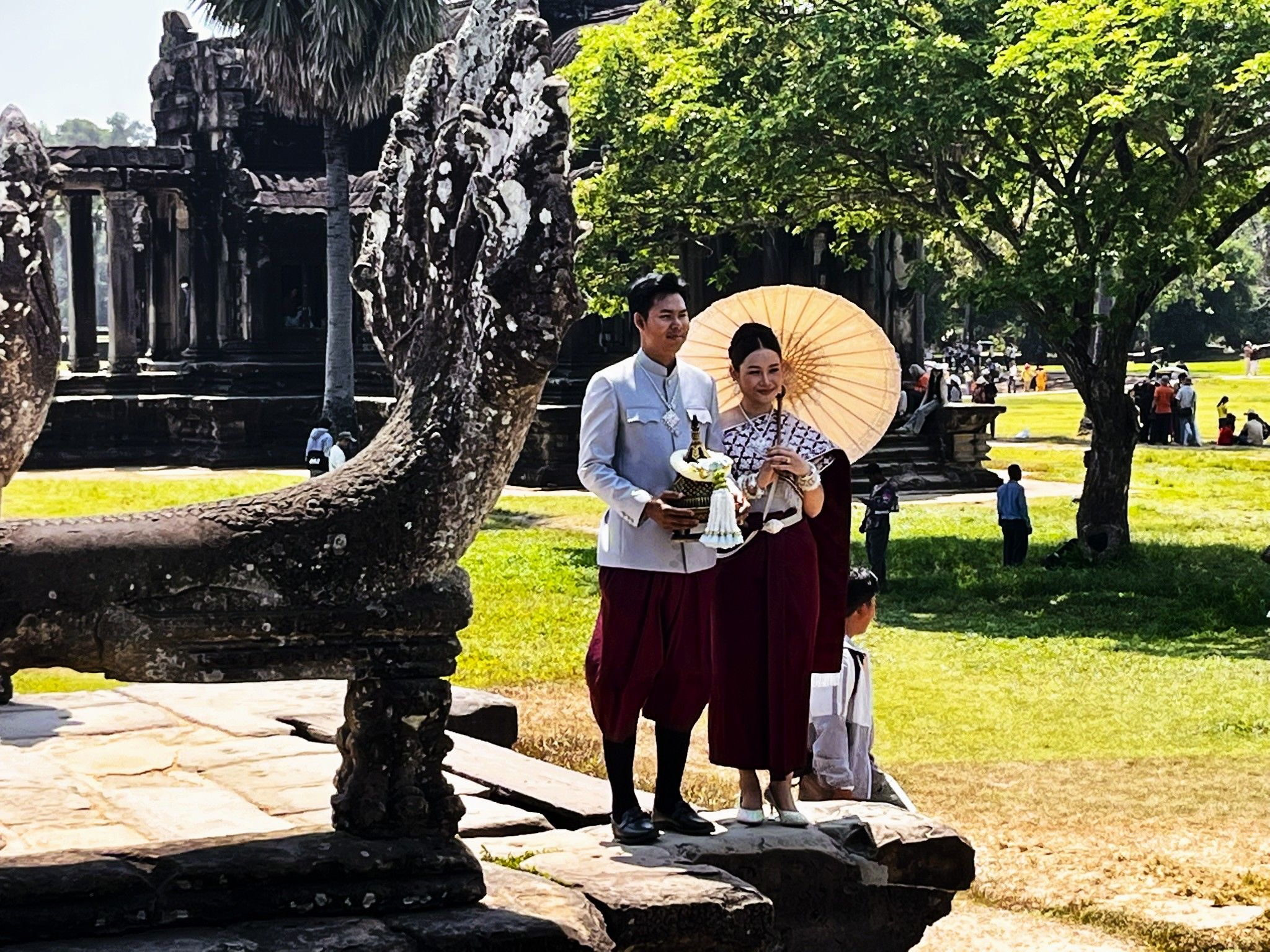
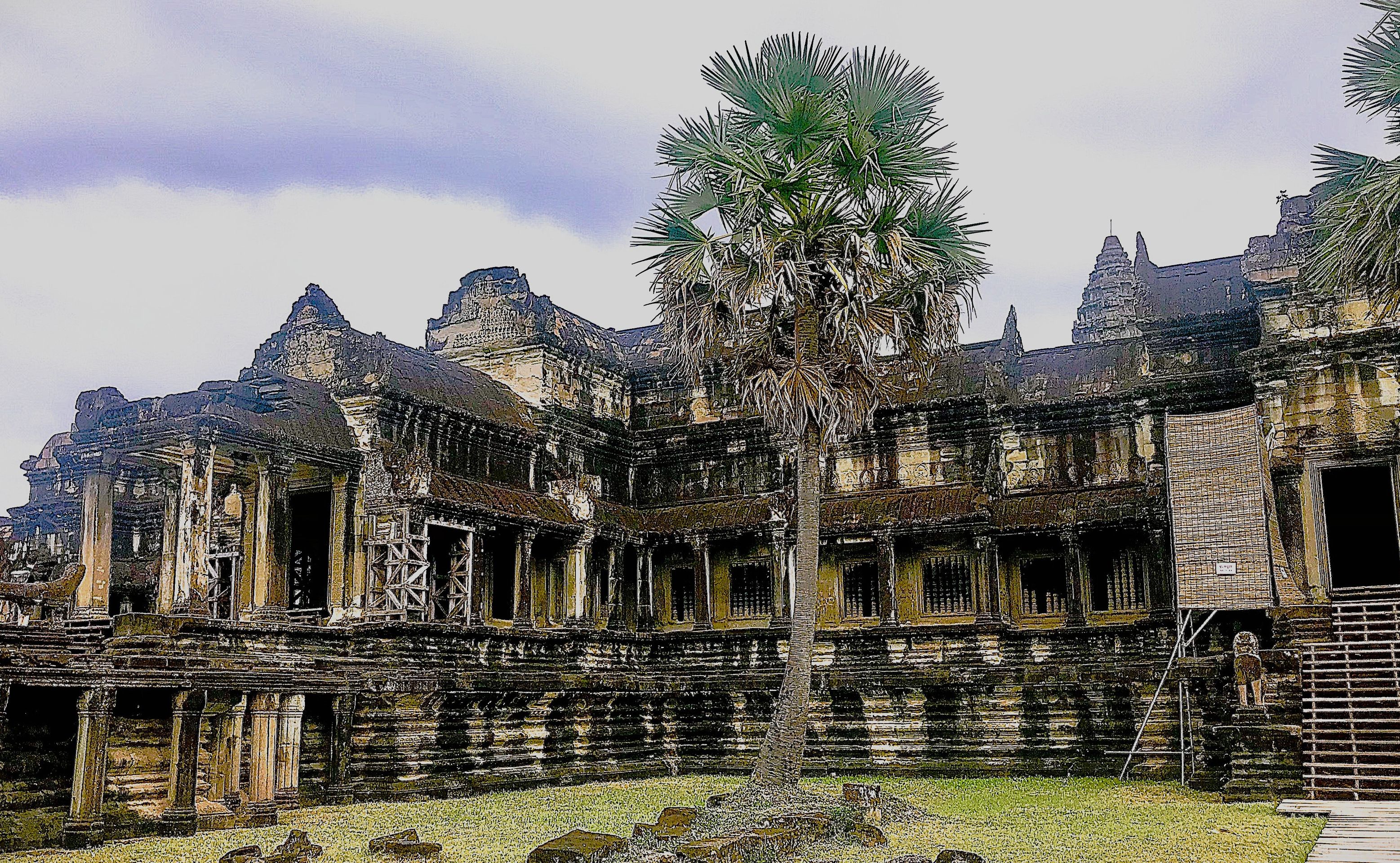
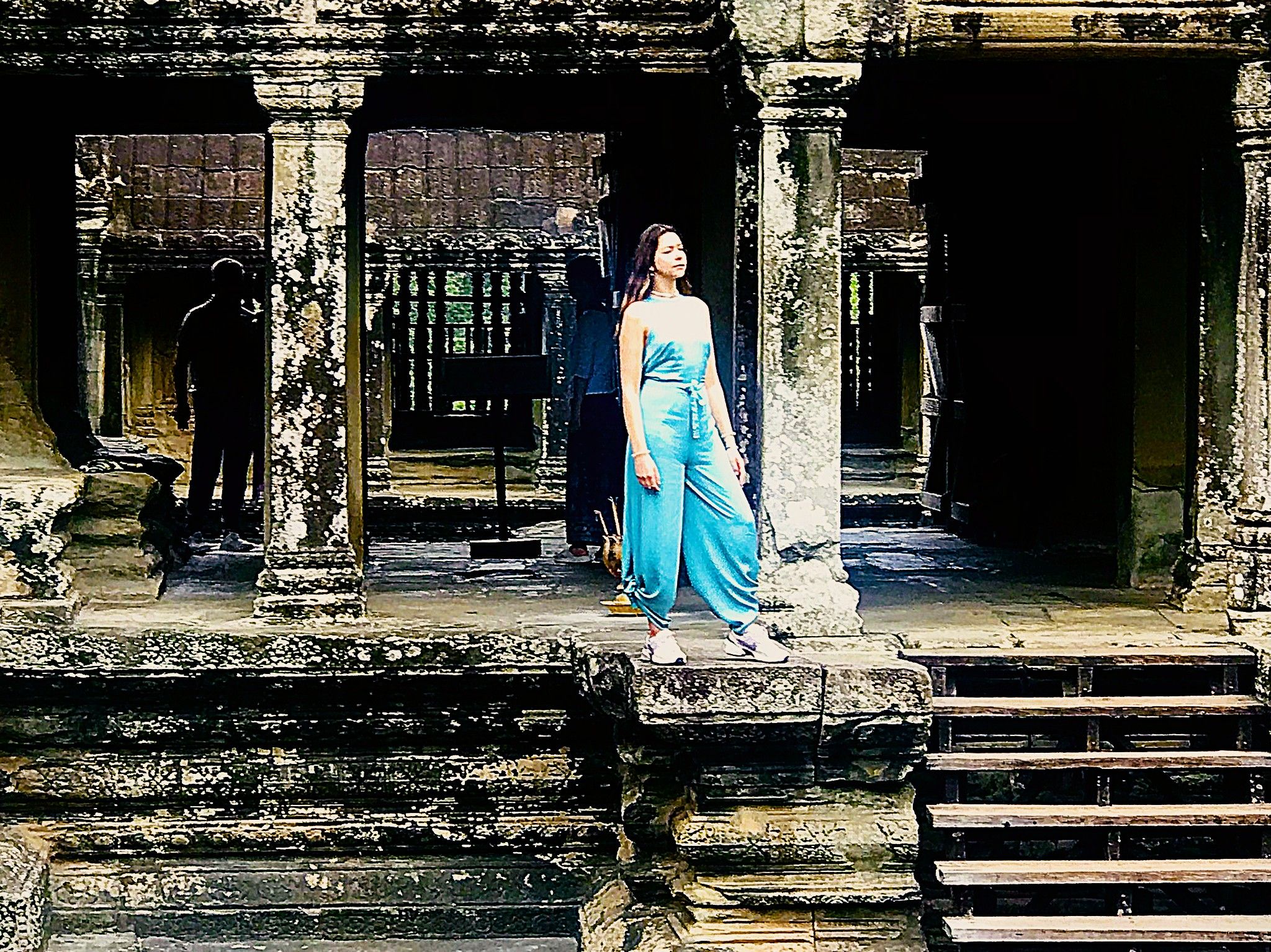
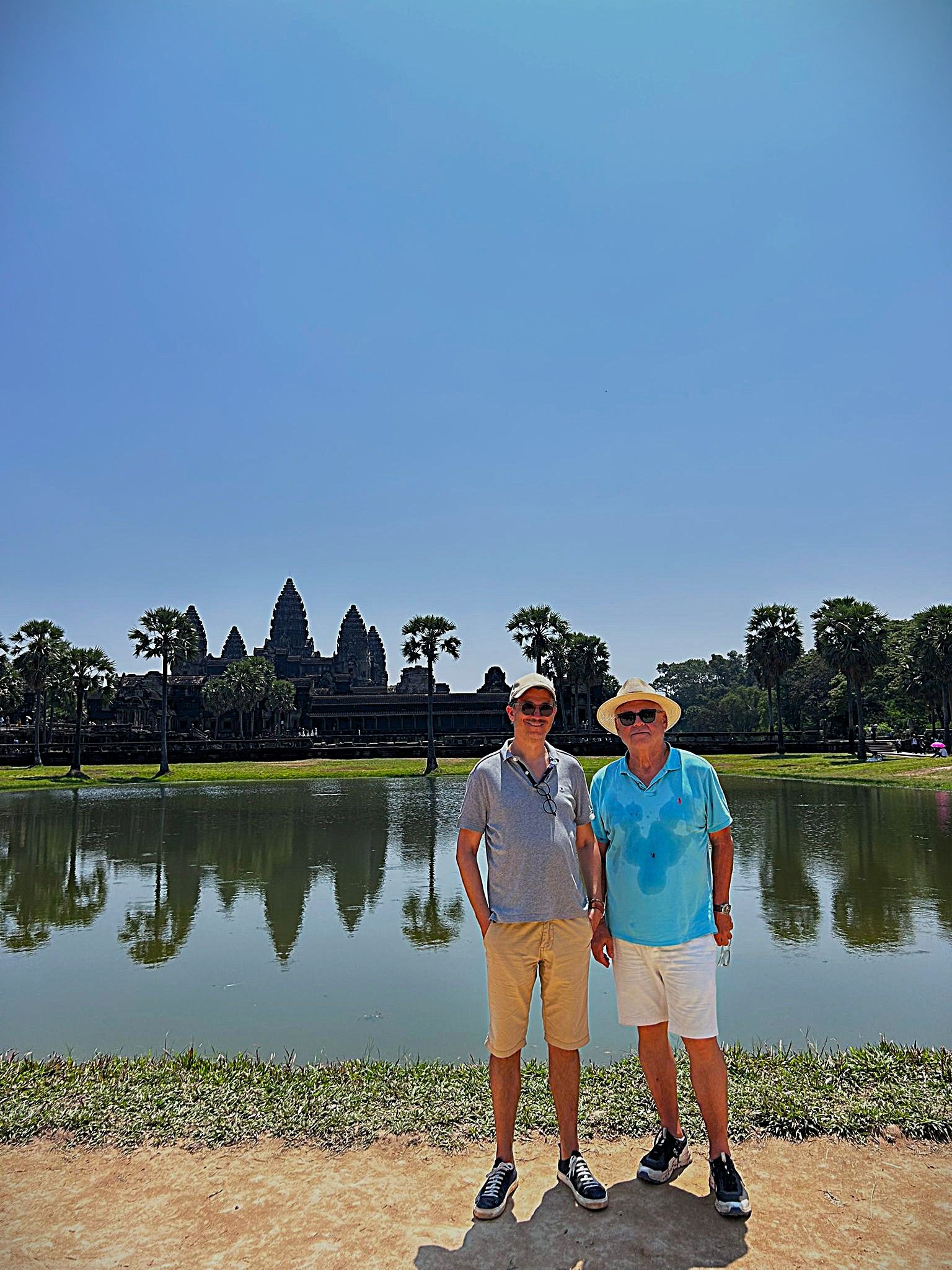
On March 5, 2026, I returned from Koh Samed via Bangkok to Siem Reap. Although Thailand and Cambodia are embroiled in an ongoing conflict, you can fly directly from the old Don Mueang Airport in the Thai capital to the former capital of the Khmer Empire. I was planning to travel for three weeks through Cambodia and Thailand with Martin, a friend from Switzerland. (Martin also appears in my earlier blog “Back in Switzerland – temporarily.”)
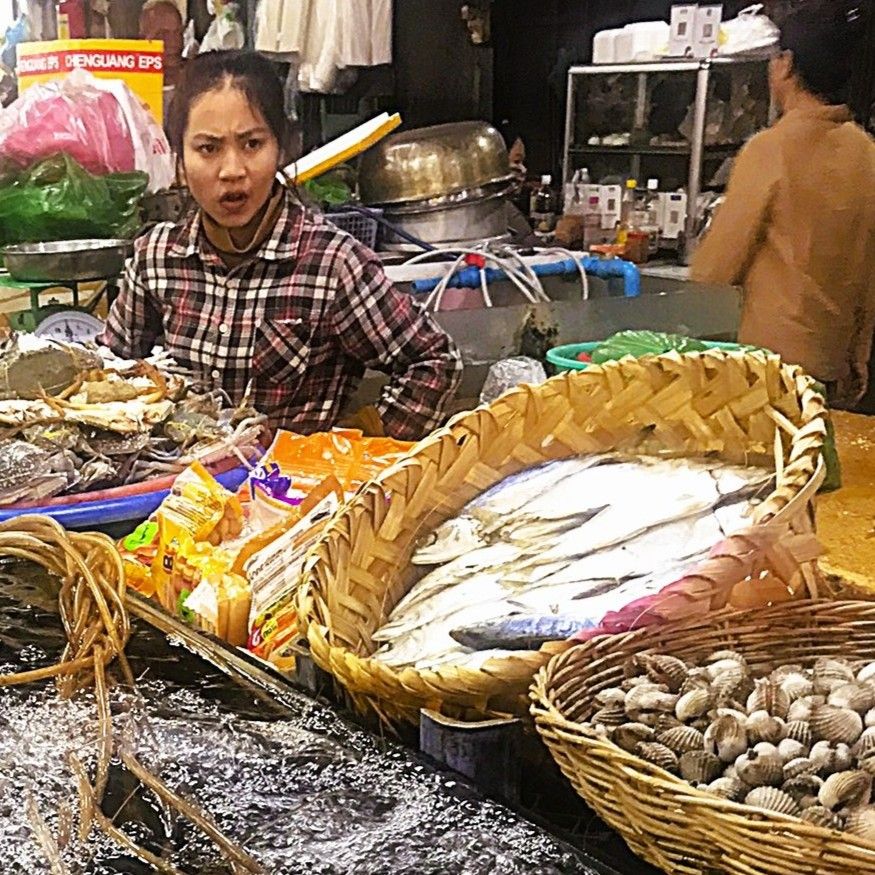
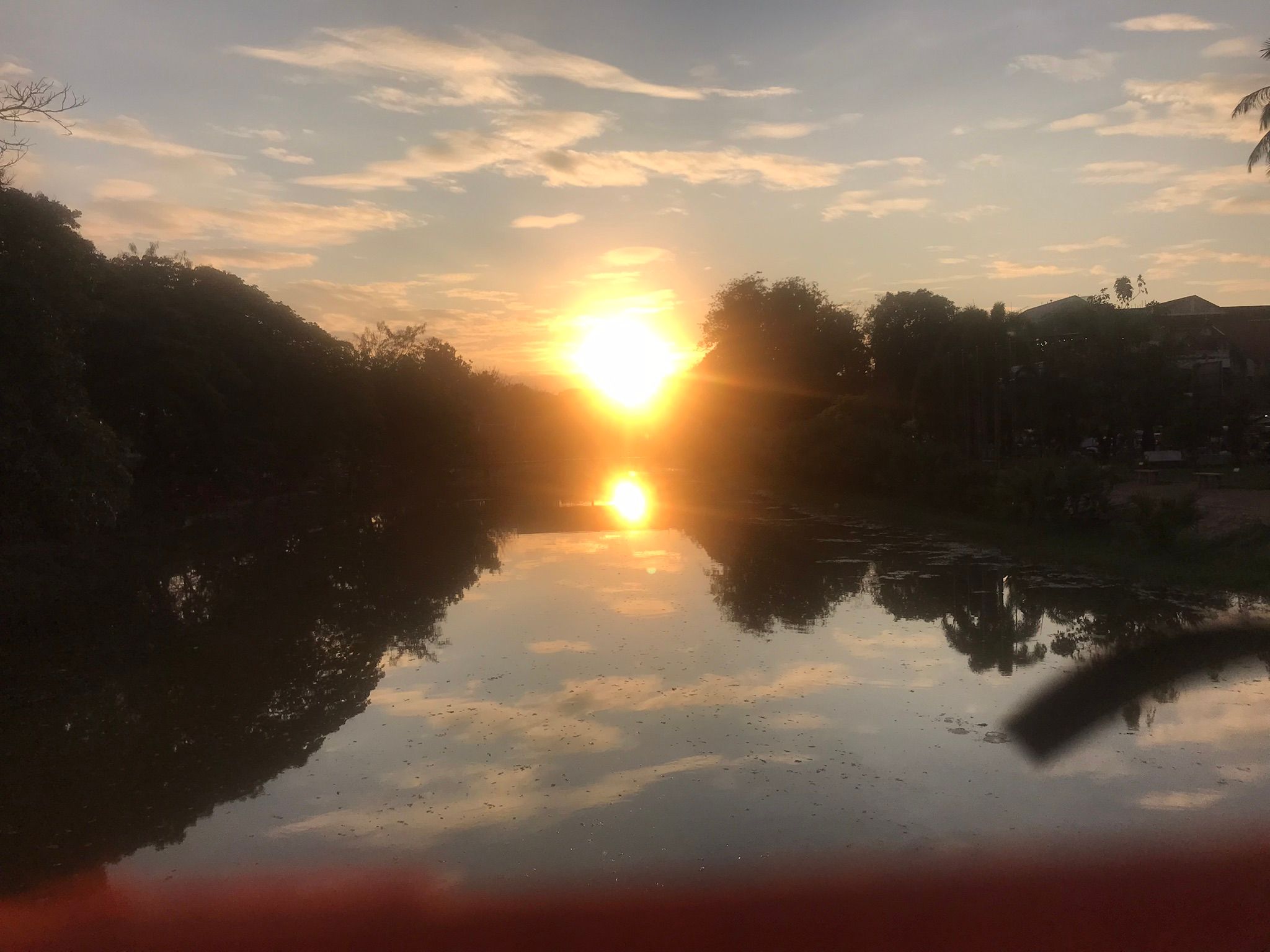
I stayed again at the “Dusit” hotel, which is not related to the luxury hotel group “Dusit Thani,” but offers a modern and clean room for about 25 euros per night, exceptionally friendly staff, a swimming pool, and a rather modest breakfast offering. The hotel is located right by the Siem Reap River and just a few minutes’ walk from the large covered market, street food vendors along the river, the bar street, and many restaurants, making it ideal for an evening out.
On Pub Street, we also found a pool table, although I must admit that Martin plays better than I do. However, we primarily came for the famous temples of Angkor and joined a guided group for that purpose.
Largest City in the World
Angkor was the center of the Khmer Empire from the 9th to the 15th century and for a time one of the largest cities in the world, if not the largest. Recent archaeological research has fundamentally changed the perception of Angkor. It is believed that in the 13th century, at the height of its glory under the late Khmer kings, between 600,000 to one or even 1.2 million people lived in the greater Angkor area.
Only a few cities in China and India came close to these numbers. Paris, then the largest city in Europe, had at most 200,000 inhabitants, Milan and Venice roughly 100,000 each, and London between 40,000 and 80,000. In the most populous city in the German-speaking world, Cologne, there were 40,000 to 50,000 residents, while Basel, the largest Swiss city, had between 5,000 and 8,000 people.
For a long time, researchers could not imagine the actual dimensions of this metropolis either. Because aside from the sacred buildings, historical Angkor was almost exclusively constructed from wood and other perishable materials, which is why almost no residential or administrative buildings have survived. Only modern investigative methods, including laser scans, made the vast settlement area of Angkor visible over approximately 1,000 square kilometers.
Cambodia's Pride
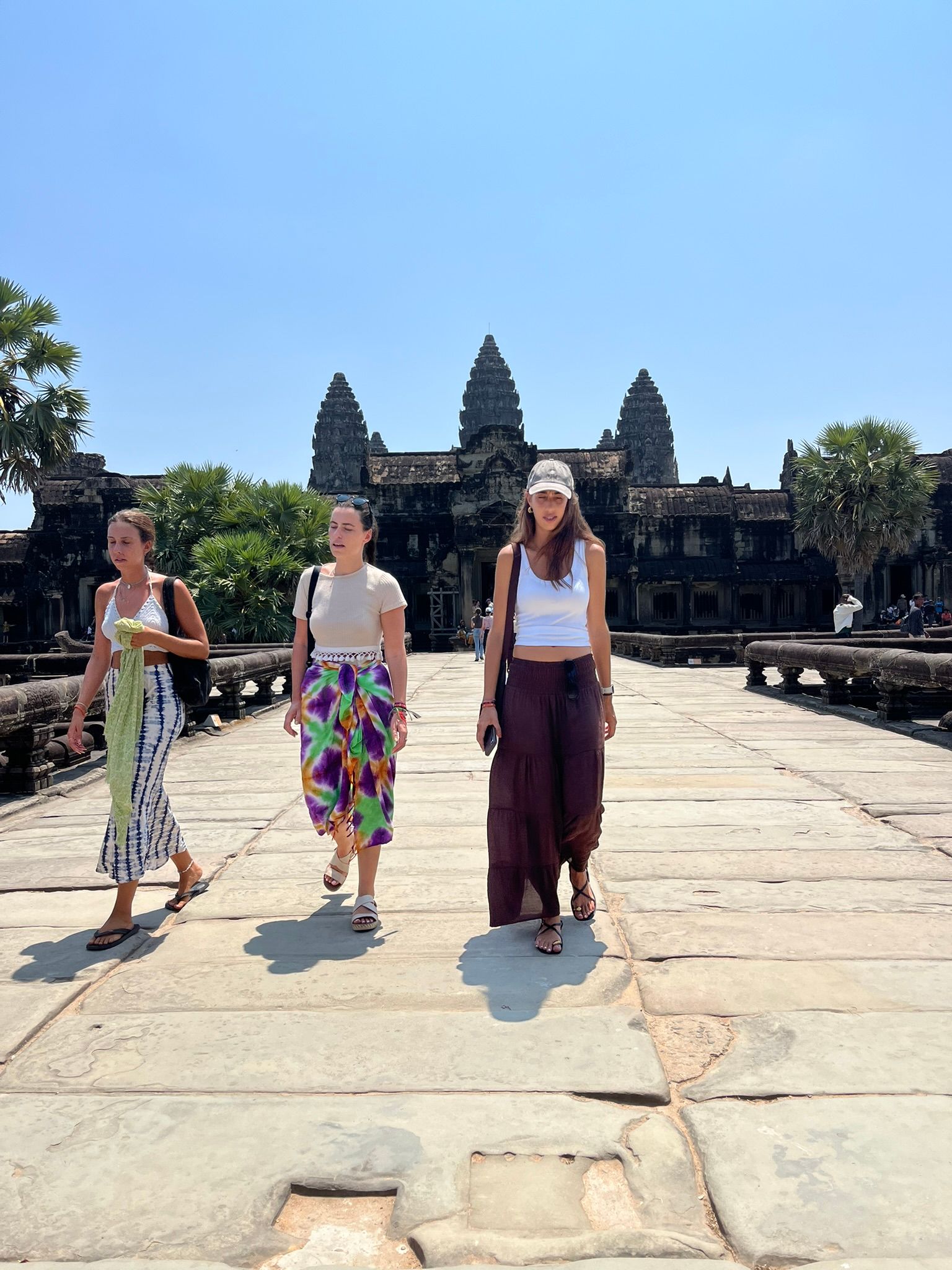
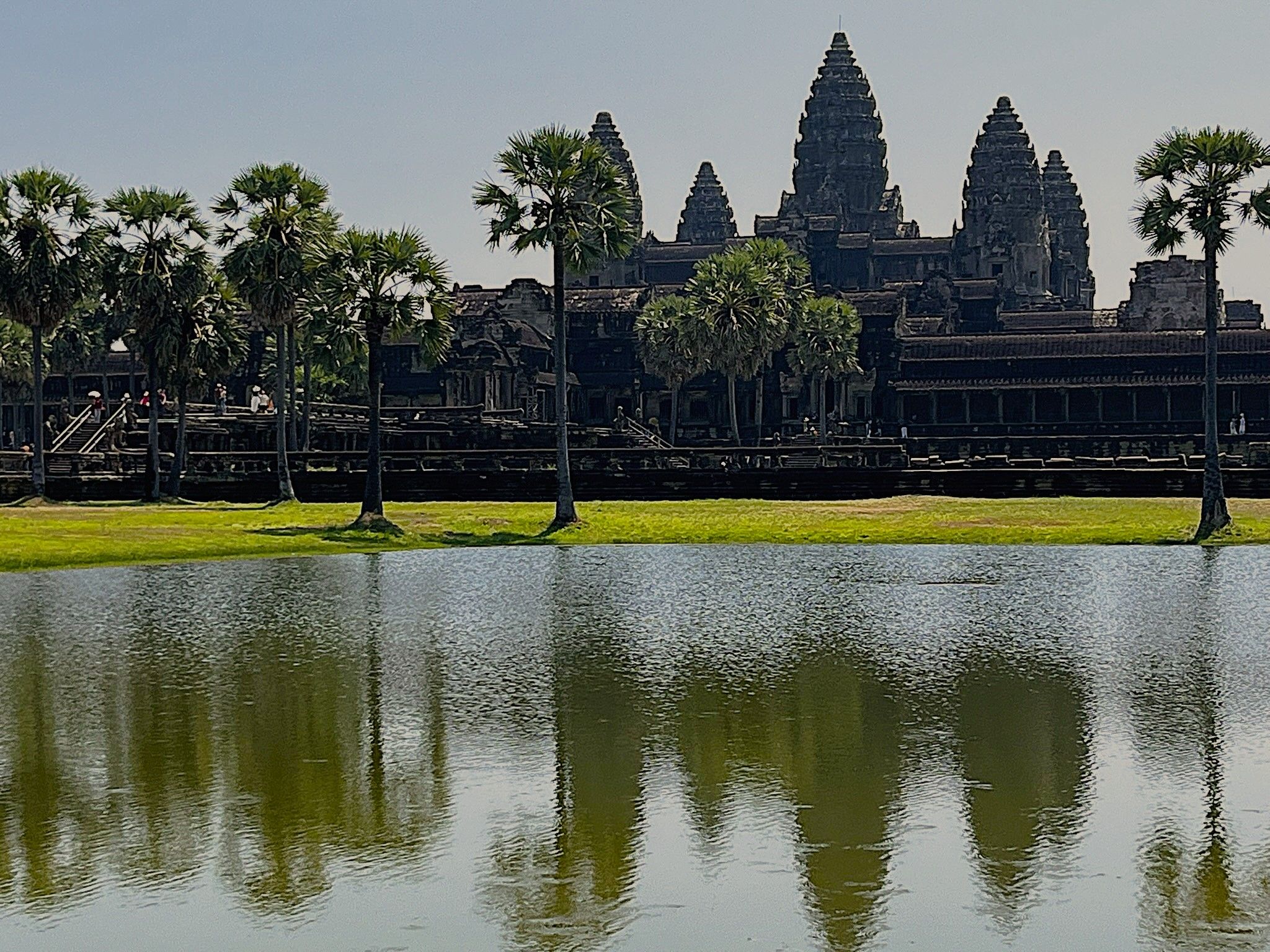
In the scorching heat, we set out to explore what remains of this empire. At the center is Angkor Wat, the largest sacred structure on Earth (which I had already visited in late December 2024 with two other friends from Switzerland; see my blog “Temples and Floating Villages”). The site is nestled in an artificial lake landscape; you approach the temples via a wide stone bridge.
Here is what I noted during the tour: Angkor Wat was built in the early 12th century under Suryavarman II, who ruled from 1113 to 1145 or 1150 and led the empire to its greatest territorial expansion. Suryavarman was Hindu; the official state cult of the Khmer Empire was a form of Hinduism that attributed divine legitimacy to the king. Angkor Wat symbolizes the sacred mountain Meru, the center of the universe in Hindu and Buddhist mythology. Five towers in the shape of lotus blossoms, the central one rising 65 meters high, form the silhouette that is visible from afar.
Angkor Wat is still the pride of Cambodia today. Not only foreign tourists but also throngs of Cambodians admire the magnificent complex. Wedding couples rent traditional dresses and come here to have their photos taken by professionals.
The facades are adorned with an almost seamless relief depicting thousands of Apsaras, heavenly nymphs. Upon closer inspection, one notices that each of the figures carved in sandstone has its own facial features and individual jewelry.
Angkor's Golden Age
Just a few kilometers to the north, we enter Angkor Thom, the “great city.” Angkor Thom was the last fortified royal city and was built at the end of the 12th, beginning of the 13th century under King Jayavarman VII. He ascended the throne in 1181 at the age of 60. Previously, he had successfully ended an occupation of Angkor by a neighboring kingdom. Jayavarman ruled for more than 35 years, and his reign is considered Angkor's golden age.
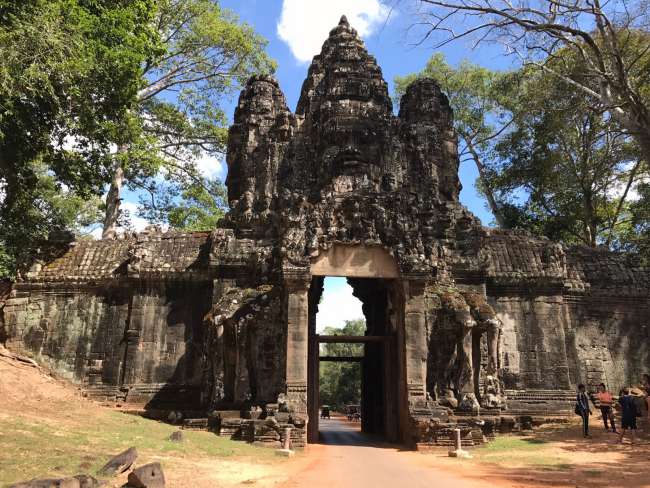
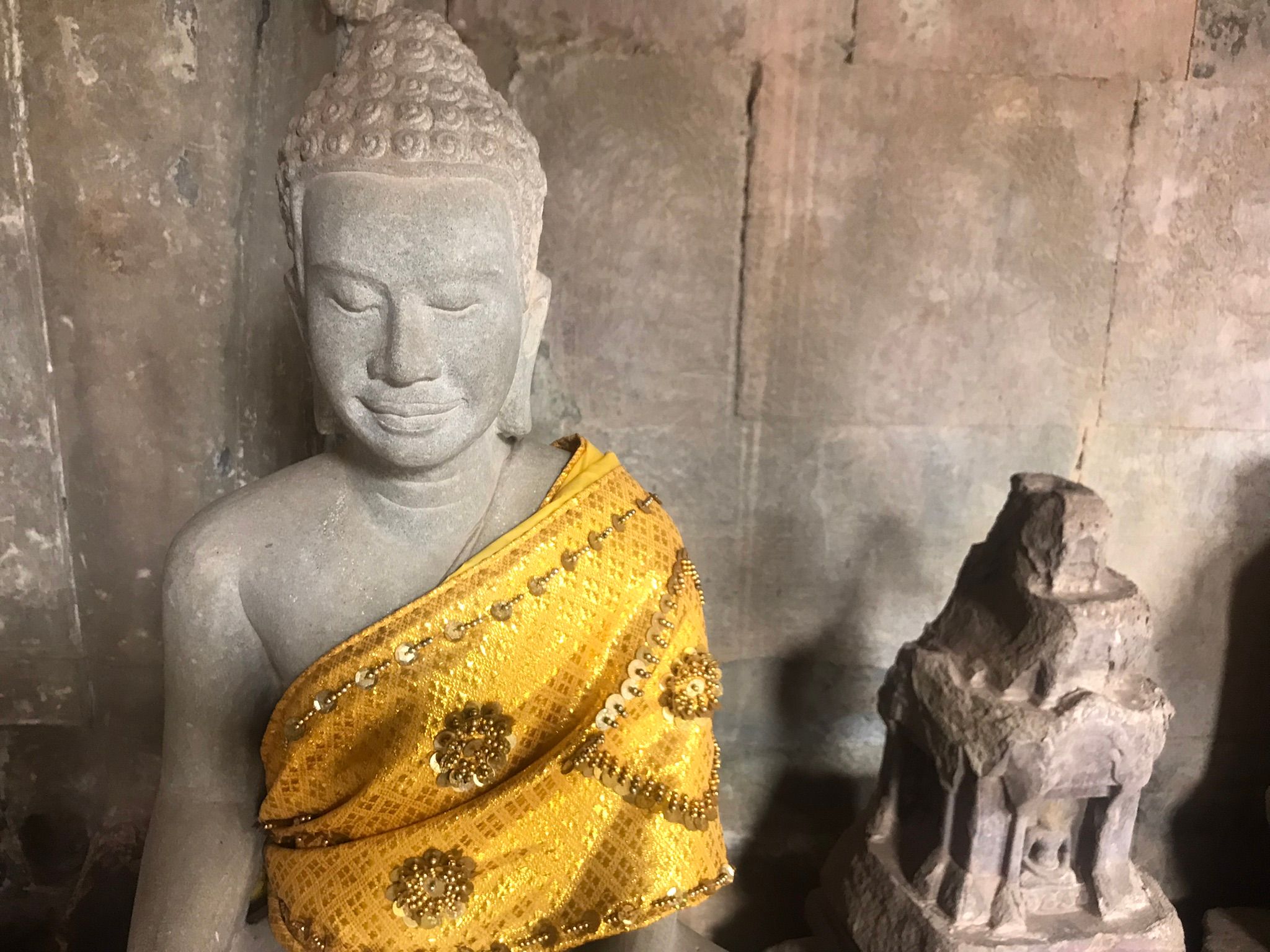
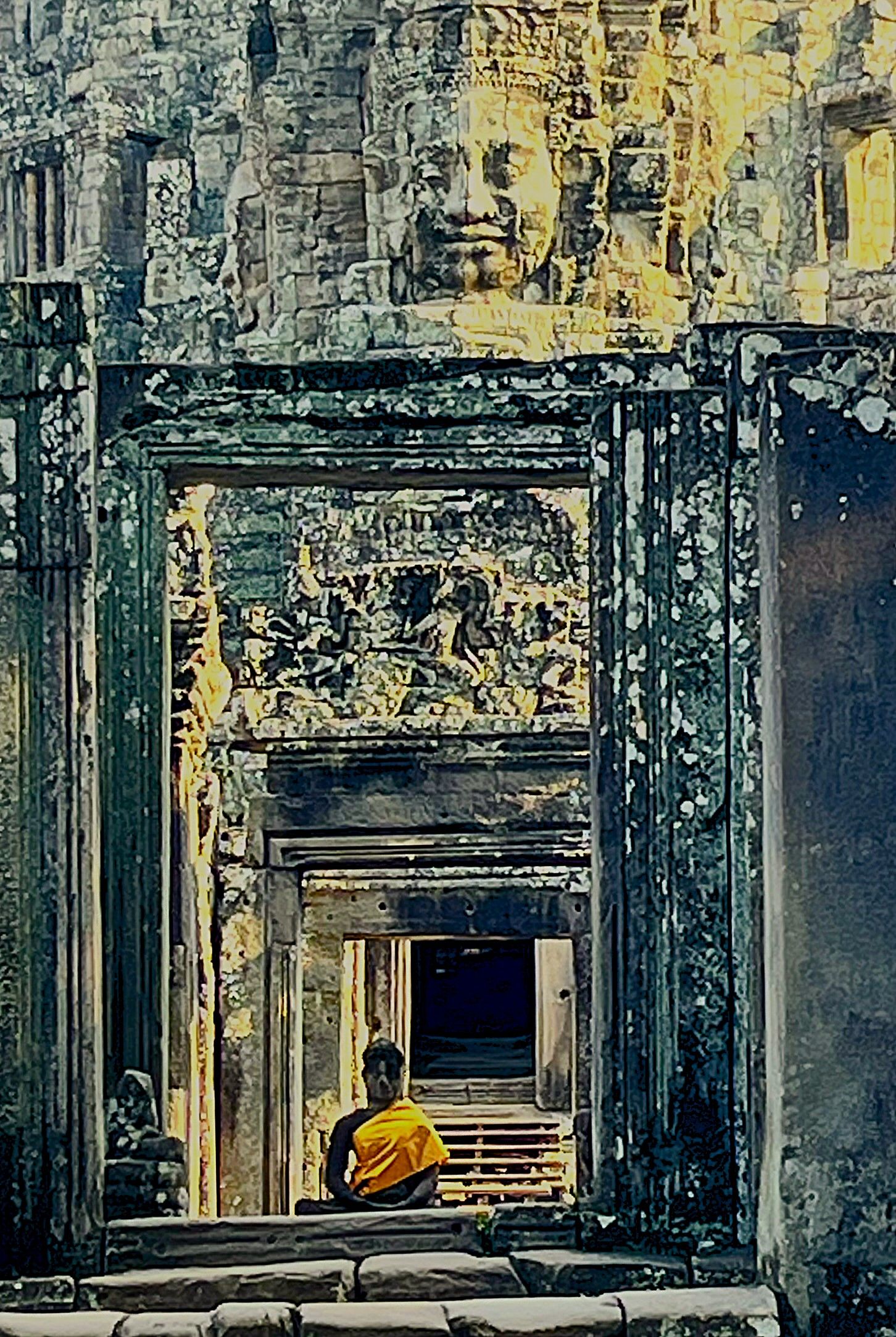
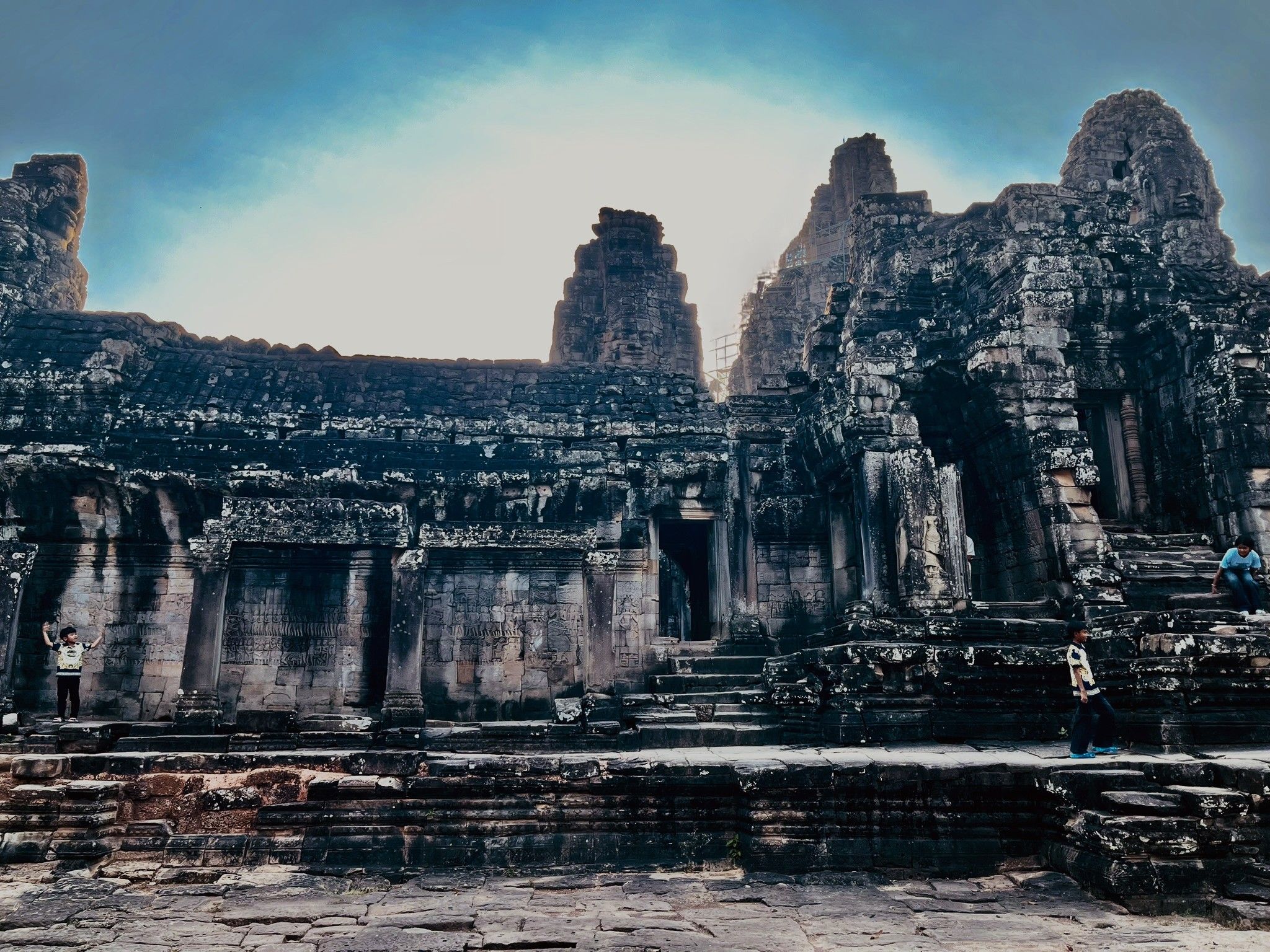
The Bayon Temple in the center of Angkor Thom does not adhere to the classical symmetry like Angkor Wat. 54 towers made of gray sandstone rise up, their facades carved with hundreds of faces. Wherever you look: from everywhere, the stone Avalokiteshvara smiles slightly melancholically, and the legend persists that here Jayavarman VII immortalized his own visage.
Avalokiteshvara is a revered figure in Buddhism. He is a Bodhisattva, meaning a being who has attained enlightenment but does not yet wish to enter Nirvana in order to serve humanity. Jayavarman VII himself was a devout Buddhist and had several Buddhist temples built, like the Bayon. The established Hindu elite lost power and influence.
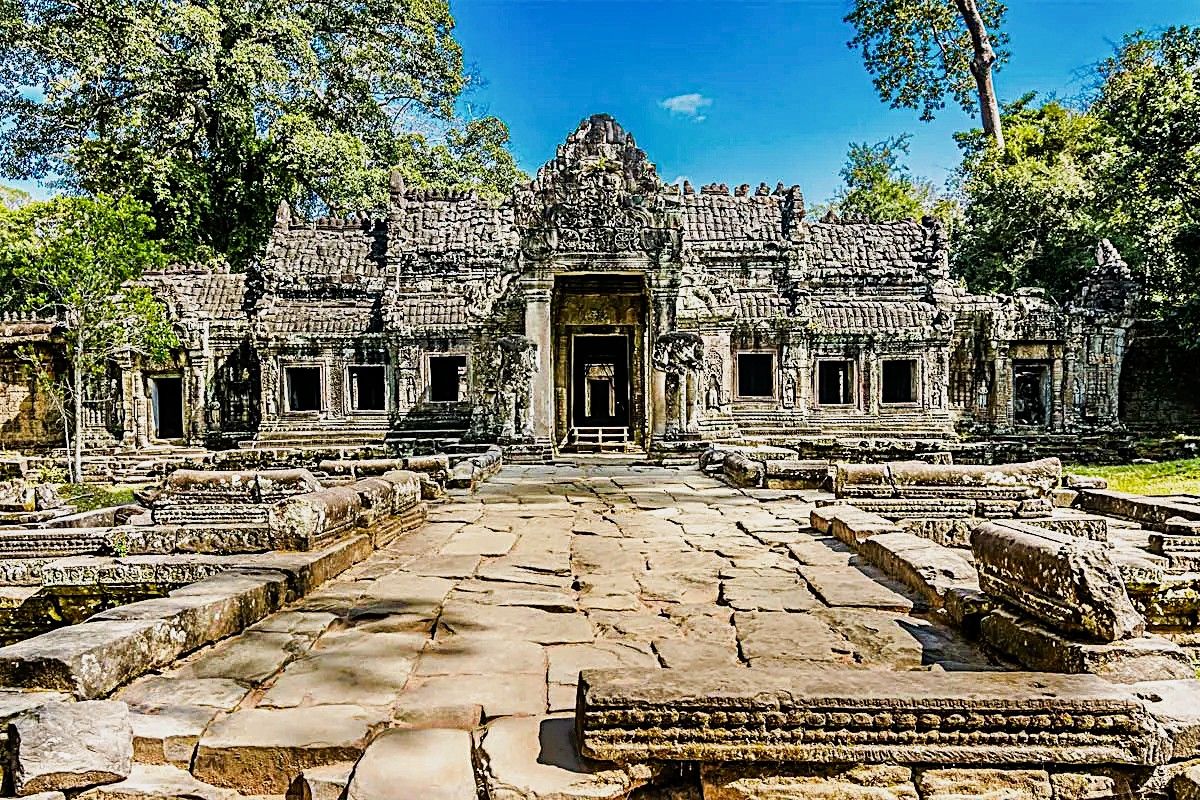
The next king (so much history must be told!), Jayavarman VIII, was on the other hand a fervent Hindu. Under him, there was an unprecedented iconoclasm: thousands of Buddha statues in temples like the Bayon, Ta Prohm, and Preah Khan were destroyed or transformed into Hindu symbols. While the rulers decided which religion the country should adhere to, for the common Khmer, the separation was not so strict: they prayed to spirits and idols, to Buddha and to Hindu deities simultaneously.
Jayavarman VIII ruled from 1243 to 1295, but during his reign, the Khmer Empire came under the influence of the Mongols and the Thais. Under their influence, Buddhism ultimately became established as the state religion in the 14th century until the communist terror leaders of the Khmer Rouge attempted to systematically eradicate religion starting in 1975.
Reclaimed by Nature
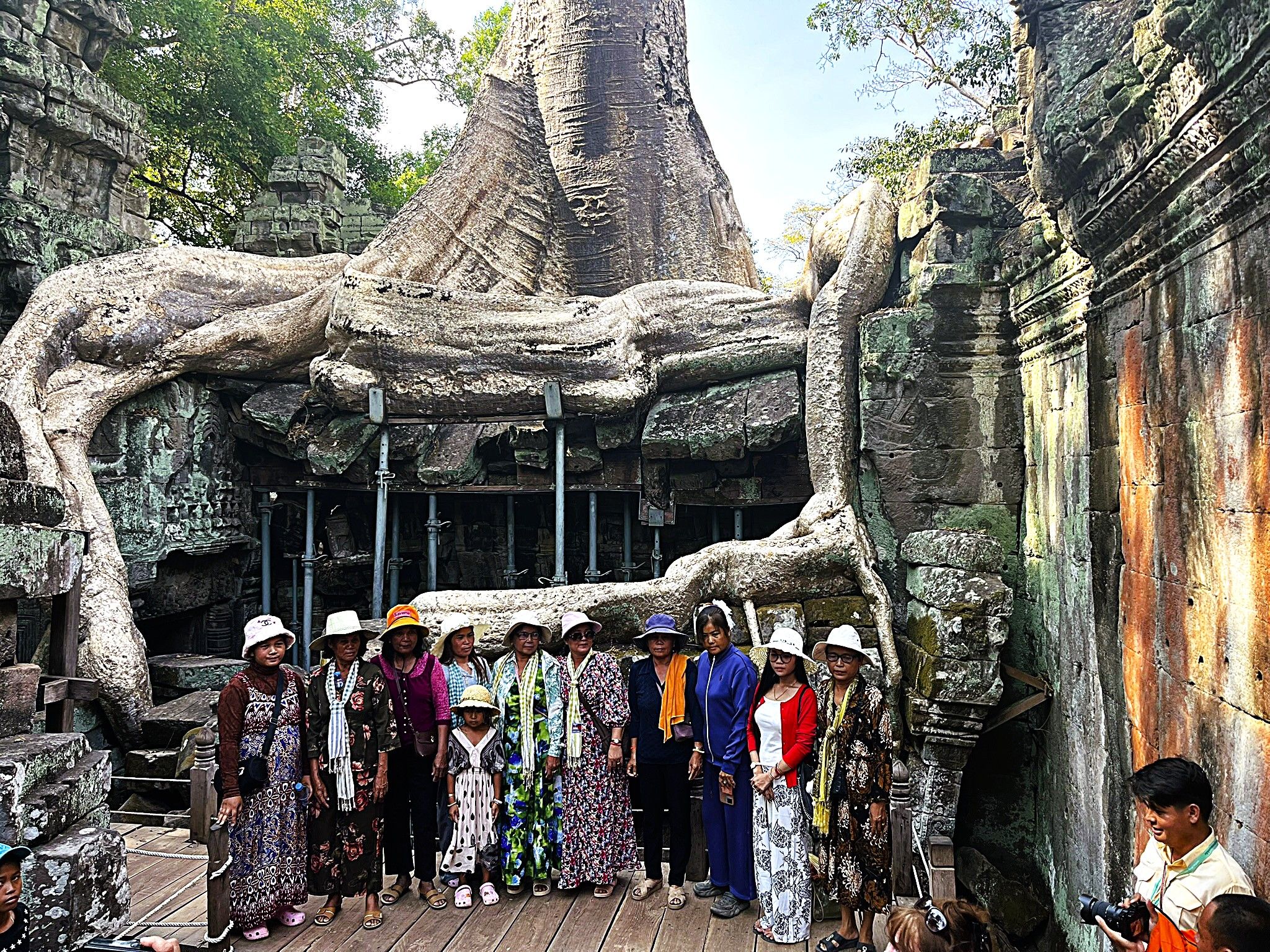
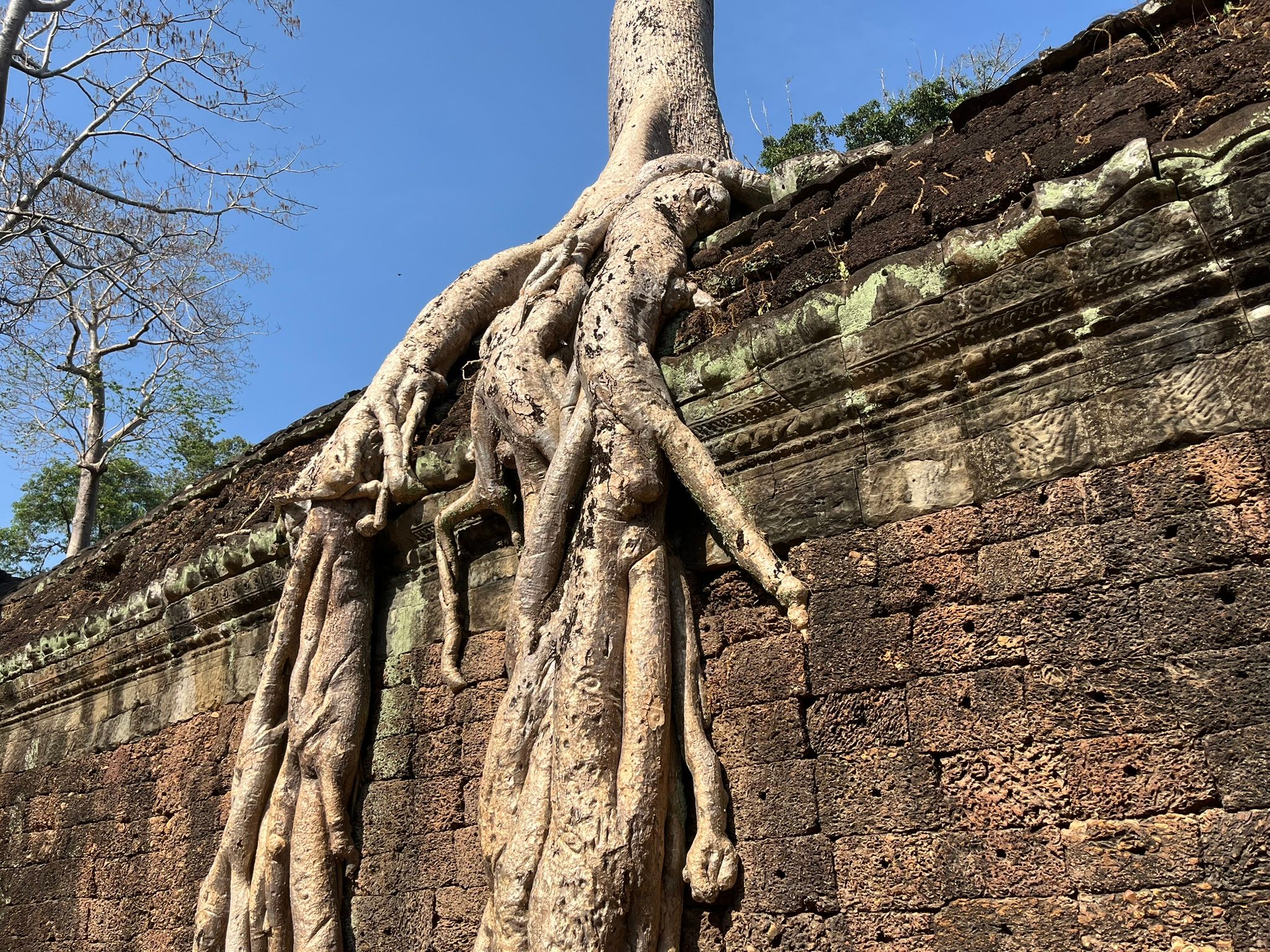
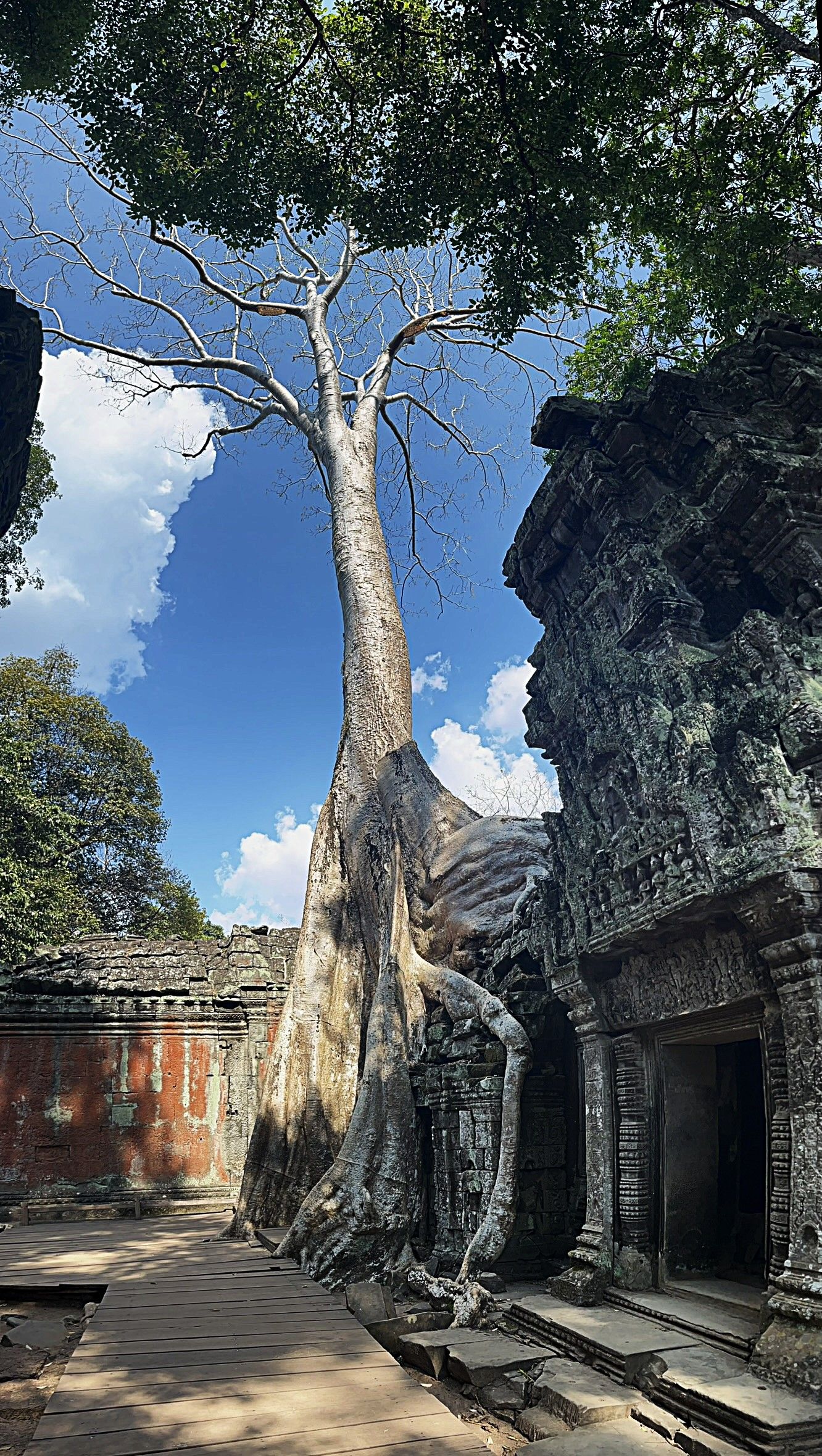
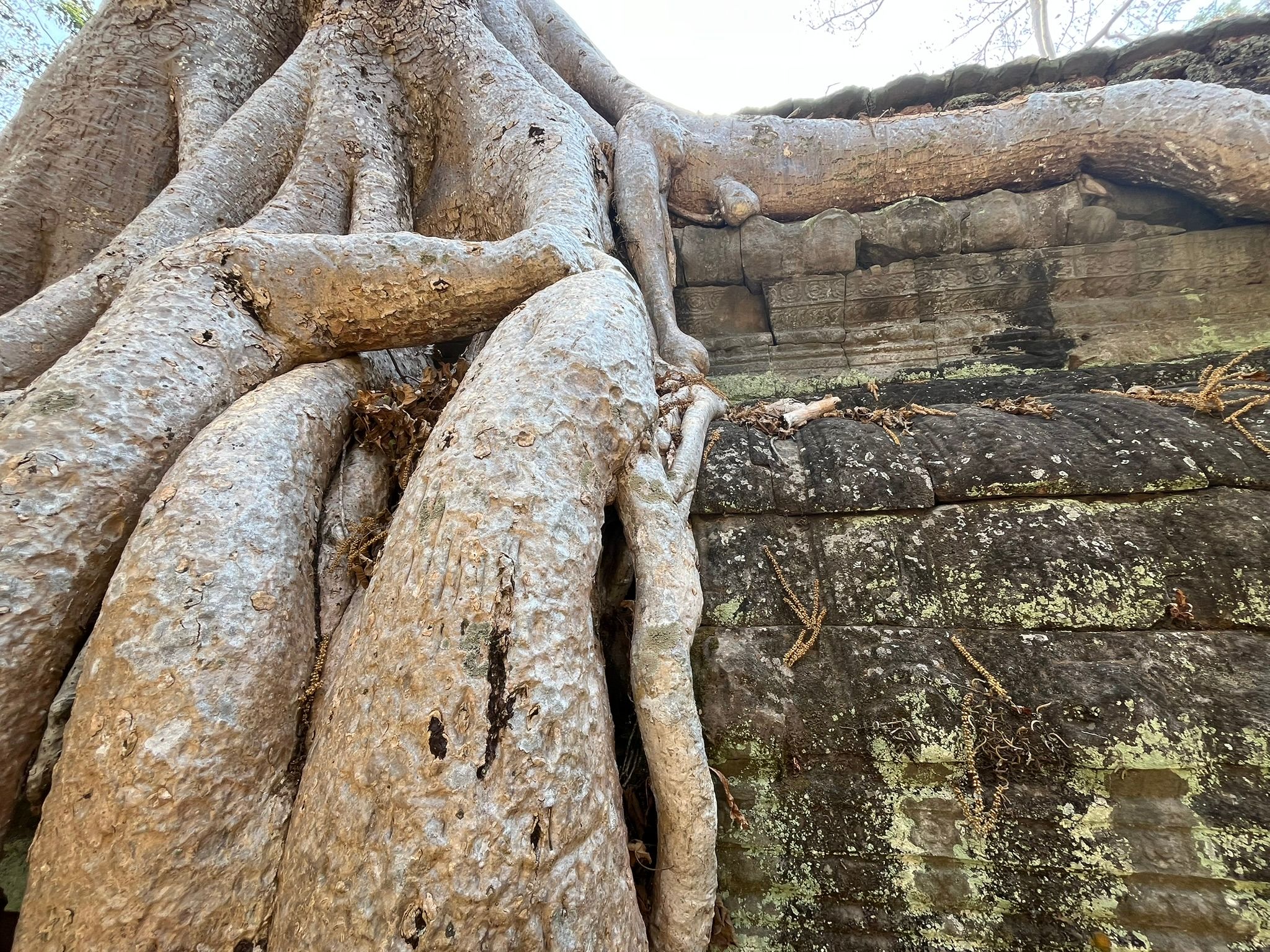
The next temple, Ta Prohm, is a striking example of the antagonism between architecture and reclaiming by nature. Thick limbs of Banyan tree roots embrace the outer walls and corridors of the temple, while other giant trees (scientific name: Tetrameles nudiflora; there is no German name; locally they are called