When you change countries as frequently as others change their bed linen, you often find yourself at train stations or airports dealing more with practical matters rather than the historical and cultural background of the country during the short preparation phase. What does 'Hello' and 'Thank you' mean? How high is petty crime in big cities? Which bank has the lowest fees for withdrawing cash, what is the exchange rate, and what is the currency called? The answers for
Cambodia are 'reabsuor' / 'arcoun', 'better not to casually hold up your phone on the street, or it will be gone', 'Canada Bank', '5000 = 1.06 Euro', and 'Riel and US Dollar'. Prices are generally announced in dollars, but you mostly pay in the local currency. What should make life easier for a foreigner confuses me even more. Due to the Thai-Cambodian border conflict, tourism is doing even worse in the country than usual during the sluggish rainy season. Thus, street food vendors and tuk-tuk drivers are even more desperately searching for customers. The few potential Western buyers are courted with friendly 'Hello Sir!' and 'Tuk Tuk?' calls.
On the 'S21 Prison and Killing Fields' tour, besides me, there are only two Koreans and a
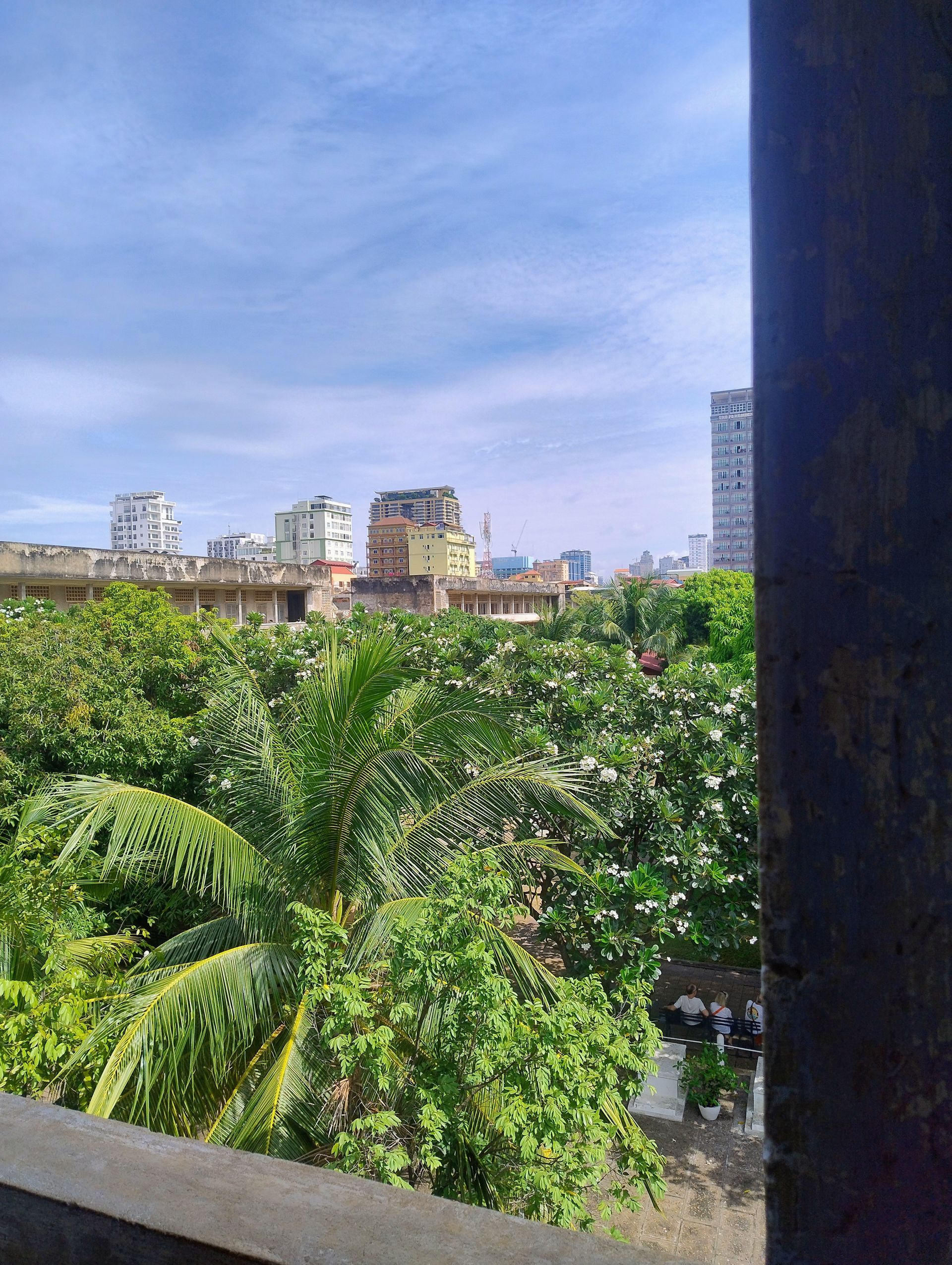
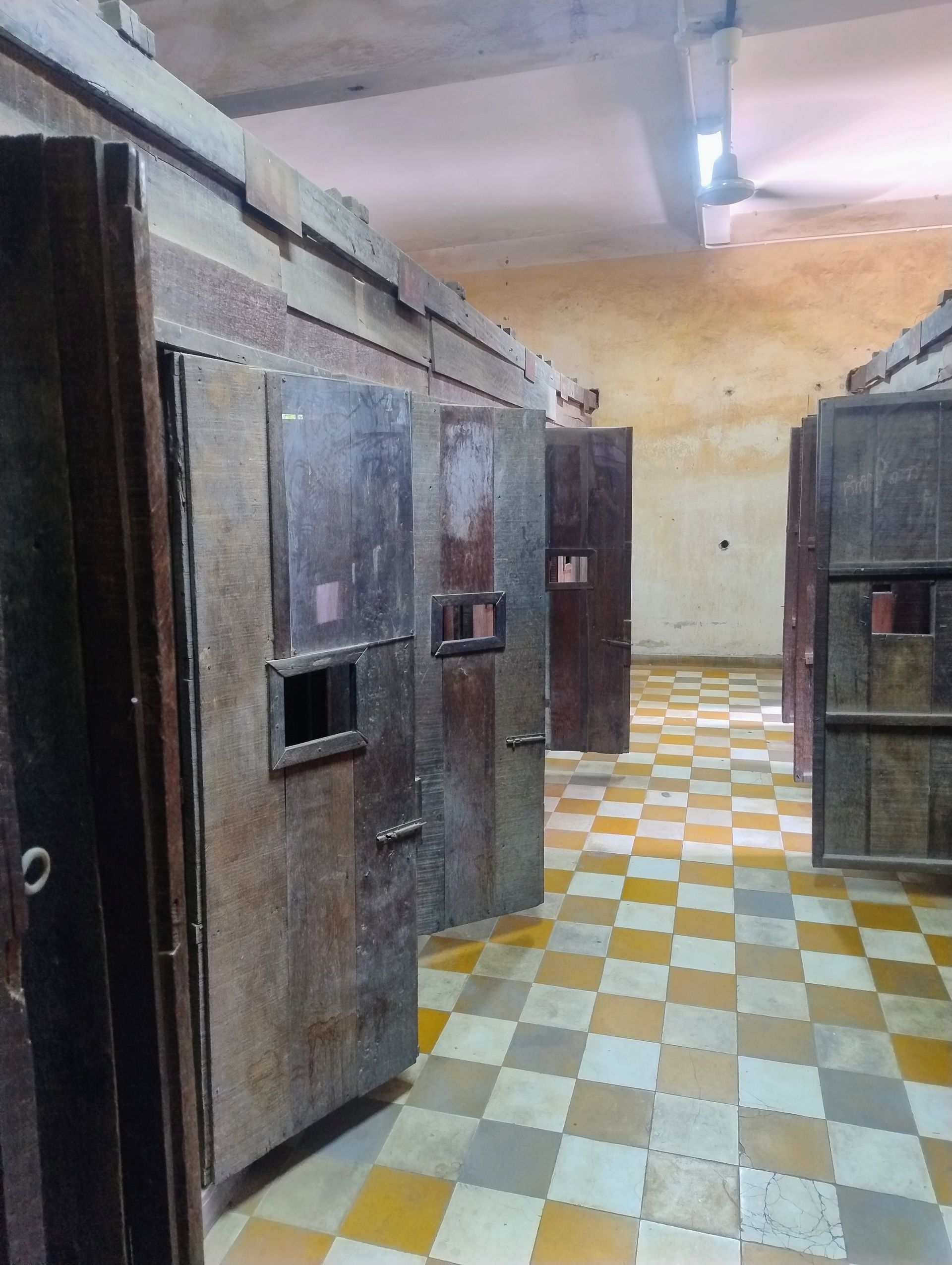
New Zealand couple as the only participants... which may also be due to the fact that the subject of the tour is significantly more depressing than that of the number one travel destination for Cambodia tourists, Angkor Wat. Unlike the Khmer high culture, the Khmer Rouge did not build their empire but let it degenerate into collective suicide. There’s no other way to describe it after visiting the torture prison in Phnom Penh and the Killing Fields where the atrocities of the Pol Pot regime are detailed. The approximately 60-year-old lady guiding us through the prison was smuggled out to
Vietnam at the age of eight and was the only one in her family to survive the murders along with her mother. At the liberation by the Vietnamese army, there were only seven survivors in the Tuol Sleng prison, which was a school building before its perversion.
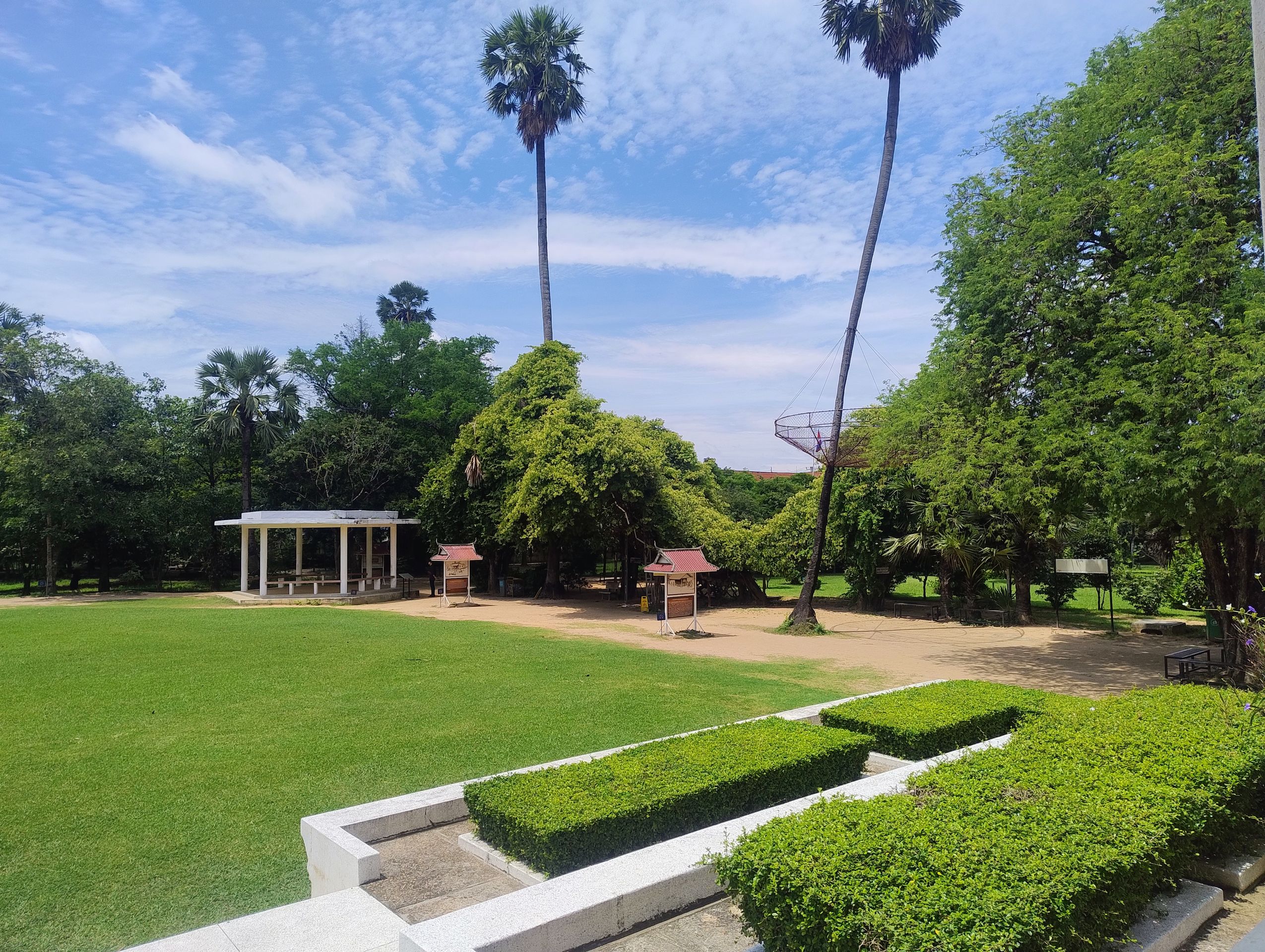
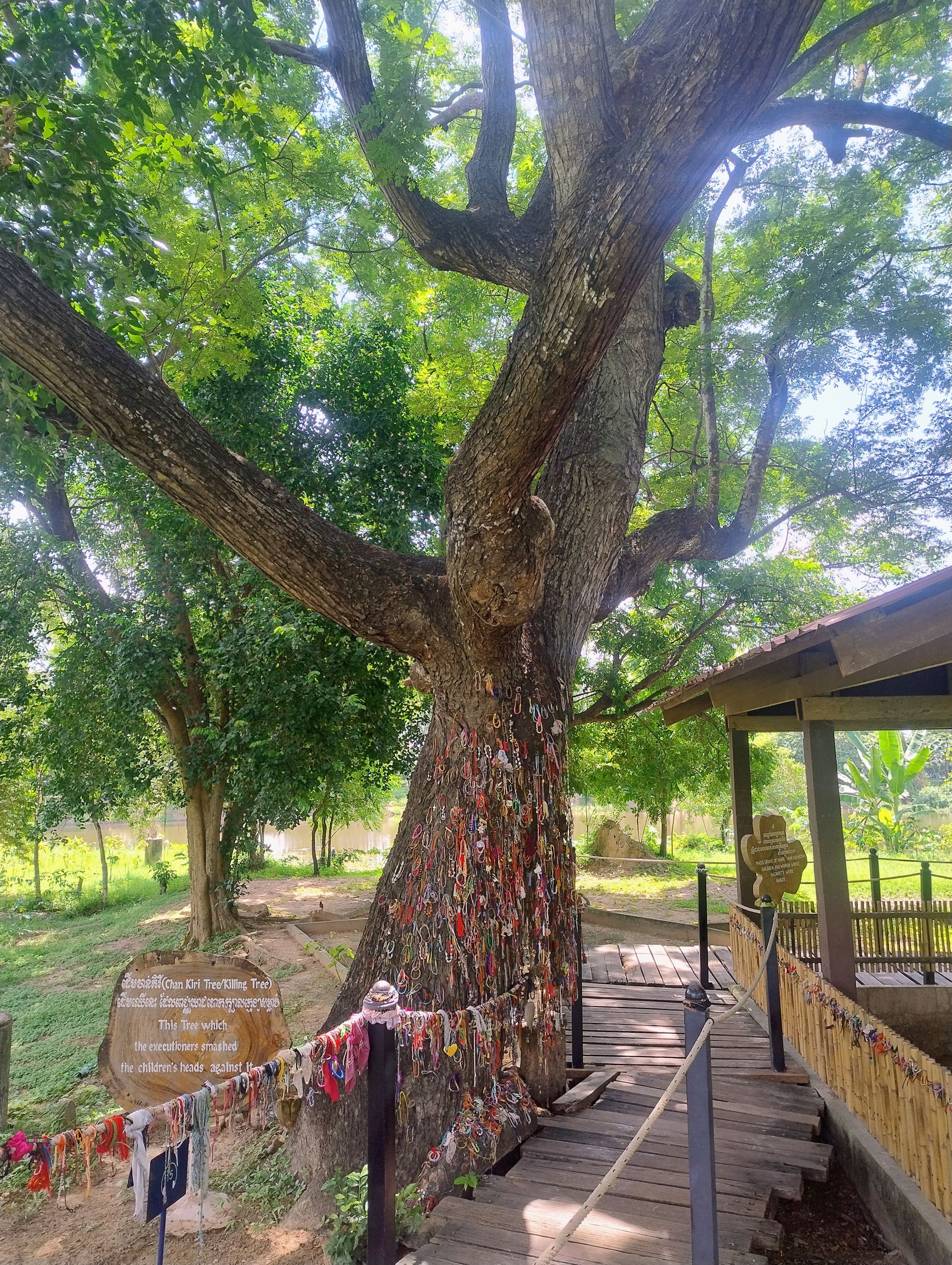
The extent of the massacres is hard to grasp even at the Killing Fields outside Phnom Penh. The sun shines down hotly on grassy-covered craters and hills amidst palms and bushes, which were mass graves less than 60 years ago. Occasionally, one glimpses scraps of fabric and bone fragments peeling out of the ground. Even now, more remains are washed up to the surface during the monsoon season and collected in the bone tower. It stretches high in the center of the former Chinese cemetery, which the Khmer Rouge used as one of the many execution sites for their insane societal transformation. Not even the executioners themselves survived the mass murders, as there were to be no witnesses, so the old executioners were 'relocated' in regular intervals, with new ones brought in, often peasant children of adolescence without schooling, easily subjected to brainwashing.
I think of the love film named after a Thai proverb 'Same same but different' by Detlev Buck, for which I still had to find some slides from the shoot before my departure. Back then, I only watched it in the office on the side. Now, in the sleeper bus to Siem Reap, I find the film on YouTube. In one scene, David Kross's character Ben, who has fallen in love with a Cambodian woman, describes Khmer culture to a friend in Germany: 'They are always together, they even sleep together. The whole family sleeps in one room. If they had to sleep alone, they would feel very strange.'Walking through the streets of Phnom Penh, I involuntarily glanced into different faces and wondered what role each person or their parents and grandparents played back then. I find it nearly impossible to imagine overcoming such trauma with over 2 million dead in such a family-oriented society. No one was safe from the terror, not even the loyal party supporters, as Pol Pot's paranoia knew no bounds. People betrayed their own relatives under torture and the most insane accusations. It resembled a witch hunt. Some Cambodians were still victims of the Khmer Rouge rebels in the border region to
Thailand in the 90s. They burned down houses and killed, even years after being driven into the mountains by the Vietnamese occupation.
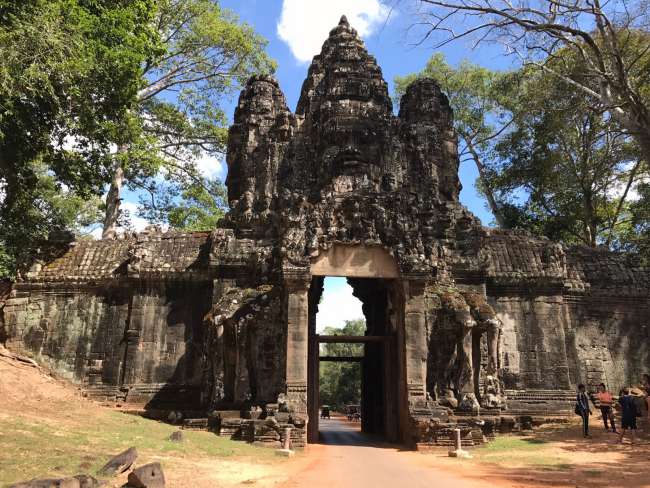
Some historians argue whether the terror regime of the Khmer Rouge should be defined as a consistent final stage of communism or as fascist ethnic nationalism. In the end, it was simply the realized vision of an egomaniac who drew inspiration from all inhumane forms of oppression of the 20th century. In any case, Pol Pot's state ideal had little to do with the Khmer Empire to which he wanted to refer. While he depopulated Phnom Penh and turned it into a ghost town, the ancient Khmers created a mega-city in Angkor, of which only the sandstone temple ruins remain today. Between them stood wooden houses where at the peak of high culture a million people lived. In Rome and Athens, modern cities have overgrown the ancient ruins, in Angkor, the jungle has done so. Massive trees wrap around the buildings, some over a thousand years old, which were once covered in gold and are now marked black and gray by the weather. Thus, one gets the impression of standing in a film set for Indiana Jones and not among the numerous temples of a former metropolis from the 11th century.