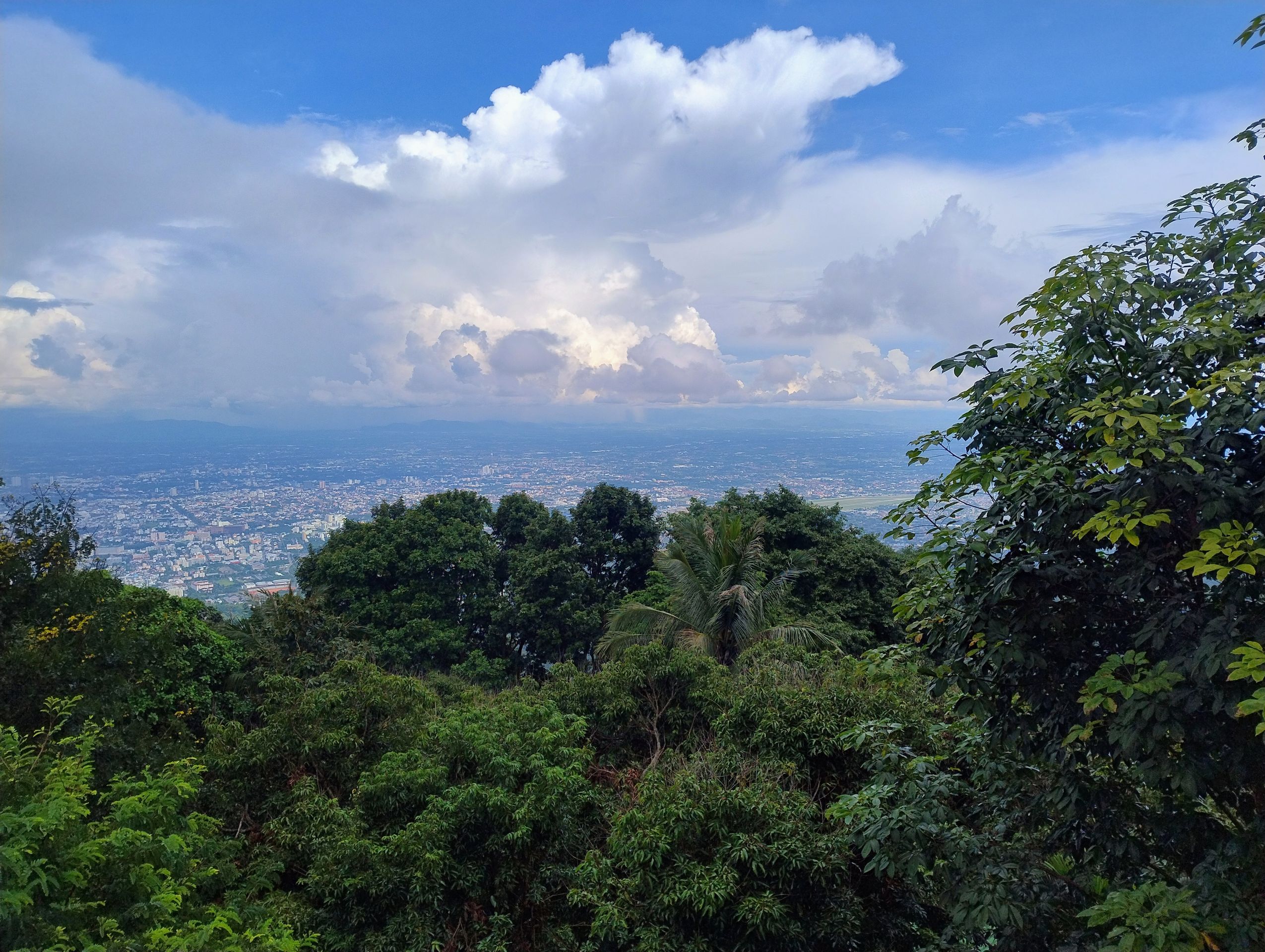
'One day it started to rain. And it didn't stop for four months. We had pretty much every kind of rain there is. Rain with small pattering drops. With really nice thick drops. Rain that came from the side. And sometimes even rain that seemed to come from below. And such nonsense, it even rained at night.' The rainy season in Southeast Asia leaves an impression not only on Forrest Gump. Typhoon Kajiki has formed over the South
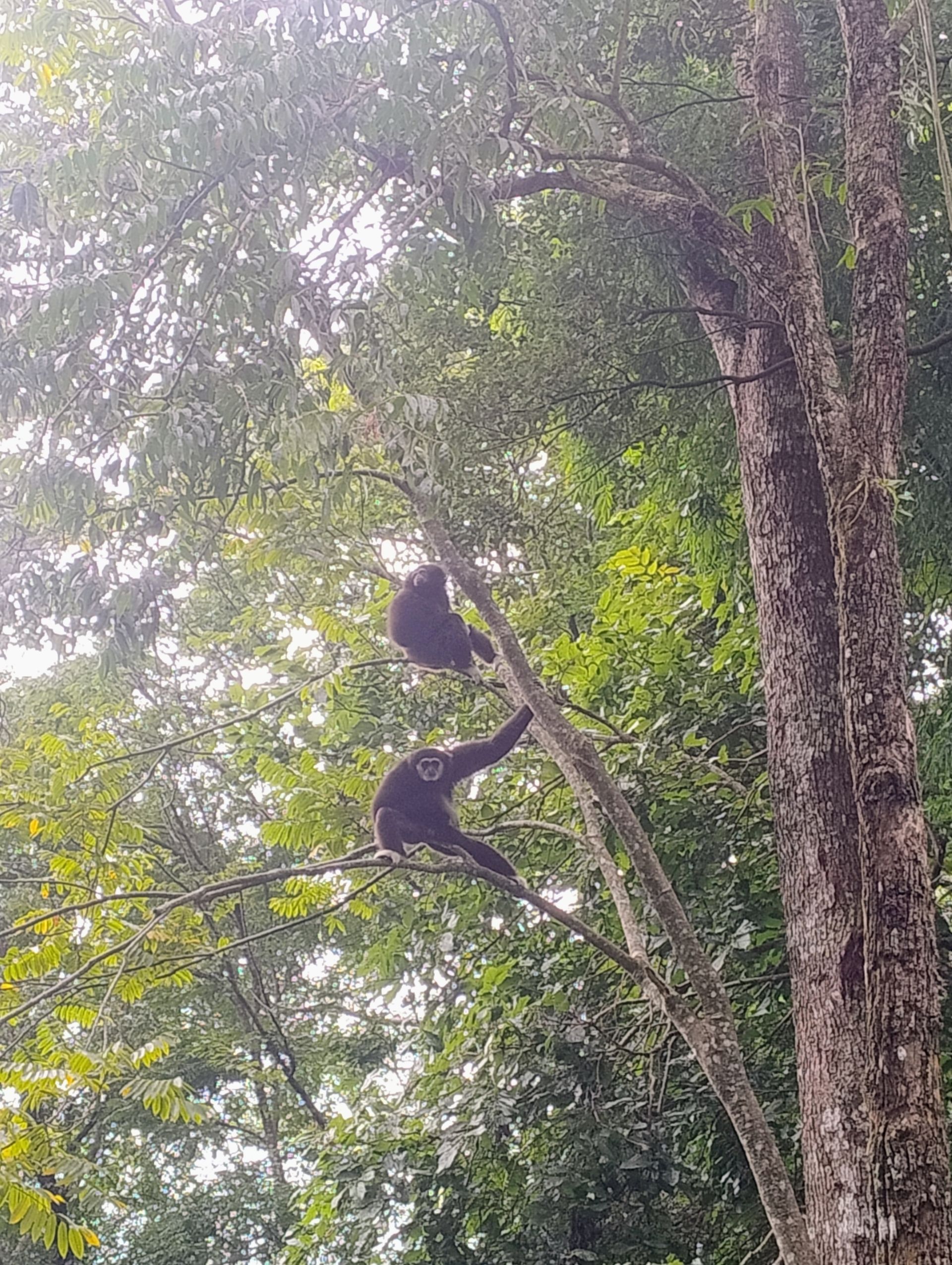
China Sea and is raging over Hainan and central and northern Vietnam. On my return from Gibbon watching in the rainforest west of Chiang Mai, I receive a warning message from the Thai government on my phone: 'Heavy to very heavy rainfall in
Thailand between 24/08 - 28/08. Beware of flooding.' 'Did you also just get this alert on your phone?', I ask Cat from Wales, who was on the Gibbon tour with me. Our driver doesn’t exactly reassure me when I share my plan to travel over Northern
Laos by the so-called slow boat on the Mekong to Luang Prabang: 'Oh be careful, stay safe.'
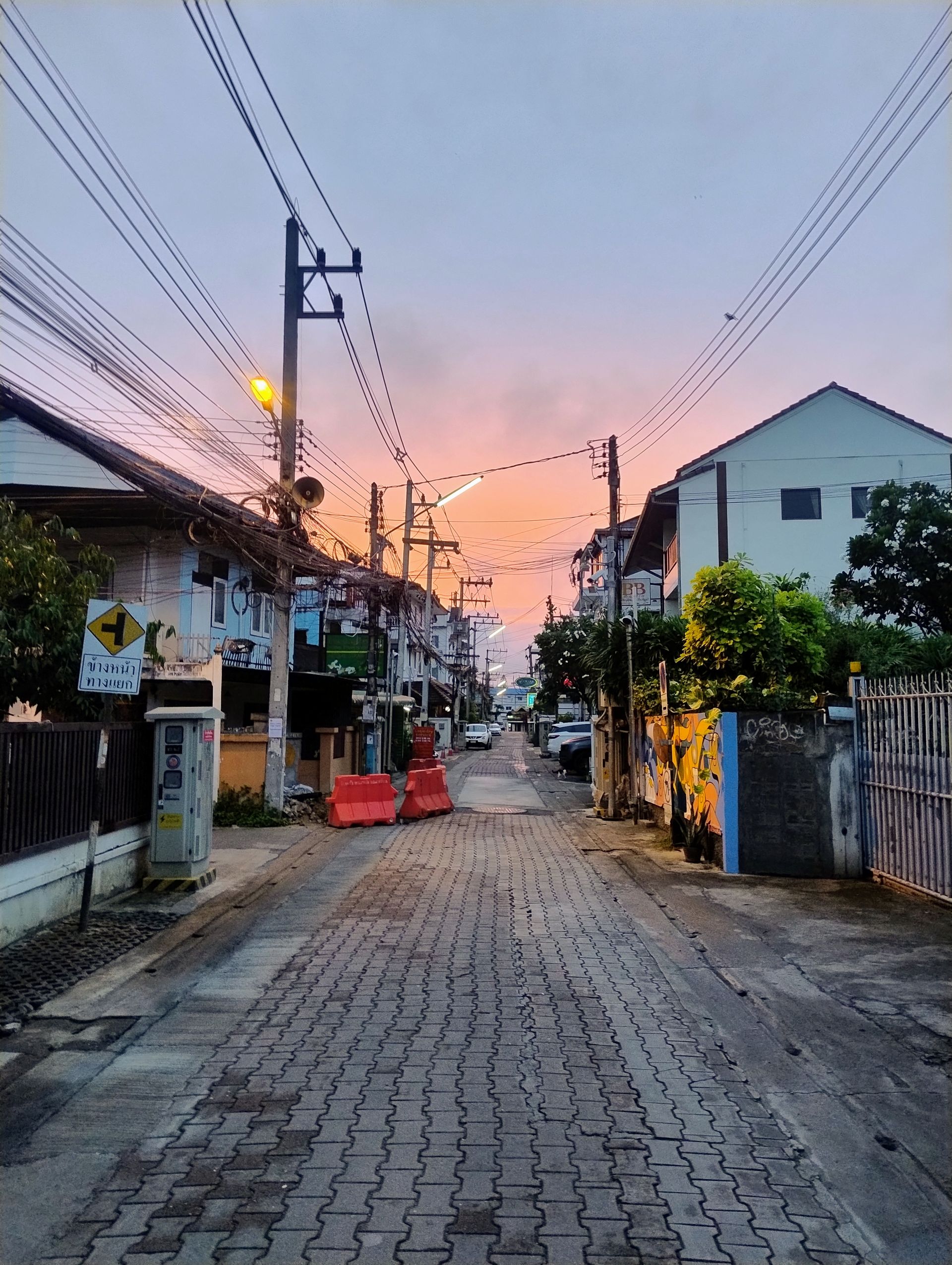
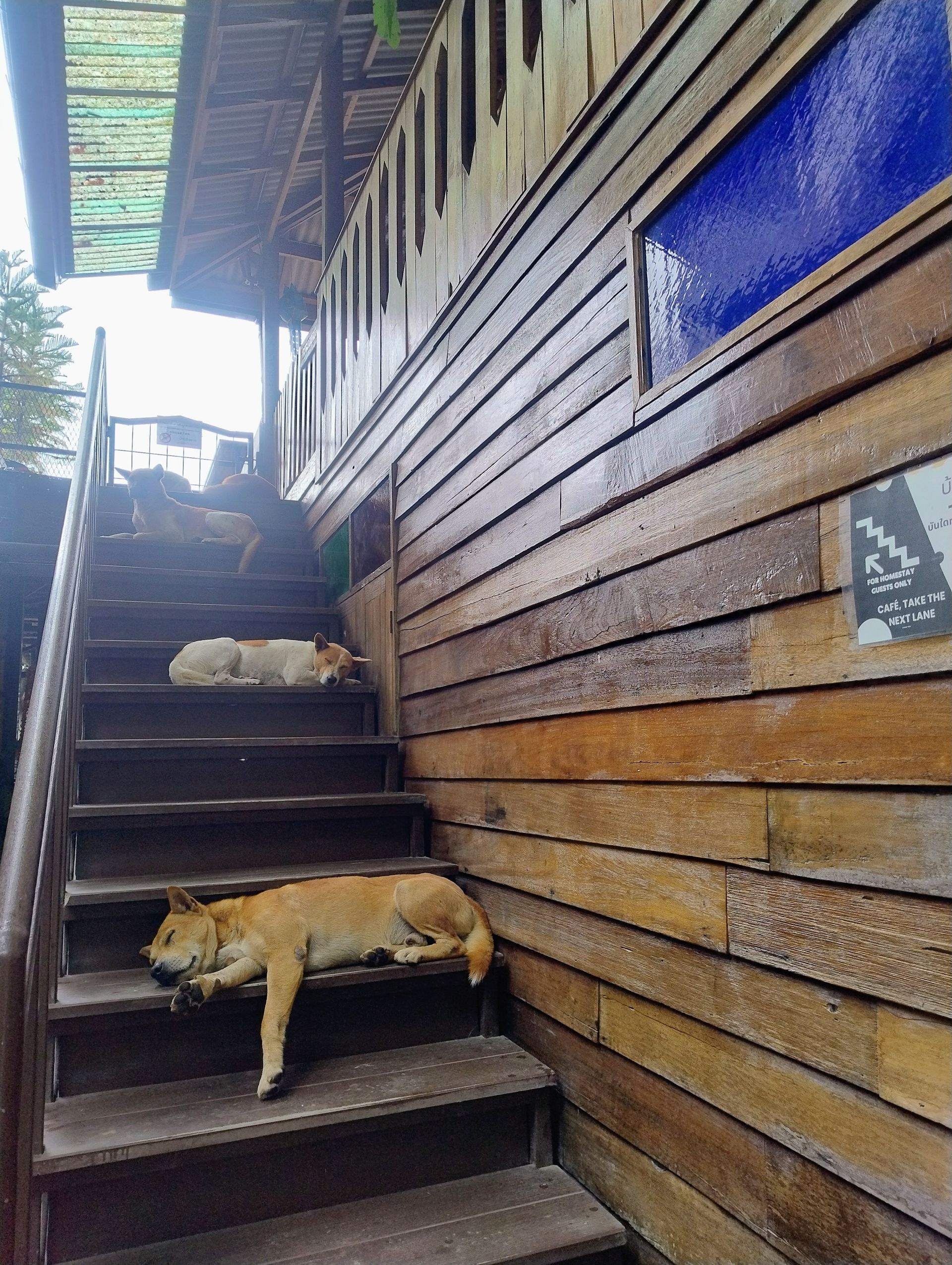
My hostel is located right in the old town of Chiang Mai. It is a multi-story apartment that I share with the owner's family, and I am the only guest. The little granddaughter is the pride of the friendly hostel owner. When I walk through the living room in the entrance area, she is usually in front of the TV watching cartoons, alternating with grandpa, grandma, great-grandma, or mom, who patiently sit beside her. On the terrace lies a dog that apparently is never taken out but has to wear a chain instead. The always smiling hostel owner becomes my weather man and contact person regarding the typhoon in the pre-flood era. Every evening we talk about the latest developments and forecasts, and his advice is always: Wait and sleep on it. This proves quite difficult for the planning German in me. I need certainty and at least a sense of what the next two or three days will look like.
On the day after the nationwide mobile alert, it is pouring rain and the streets are partially flooded to knee depth. I get a bit caught up in my typhoon panic and find a YouTube channel of an American nerd who shares and comments on meteorological graphics of typhoons. 'It could become a category 4!', in the excitement in his voice, I recognize that he is certainly sitting in his house in the States and not in
Vietnam or Laos. Additionally, my snake phobia is triggered when I read on a local news website that a python has been sighted in the outskirts of Chiang Mai, fishing for rats in the flooded street garbage. I am aware of how irrational my fear is, but that doesn’t prevent me from feeling unsettled. On the hike to the gibbons, the guide tells us he found remnants of a python skin on the path here a few months ago. We look in disbelief at the supposed proof photo on his phone, which he slowly zooms out of. It’s a pug in a dog hoodie with a snake pattern. 'I would believe you anything,' says Cat to our laughing hiking guide. No one is easier to fool than western tourists in adventure mode.
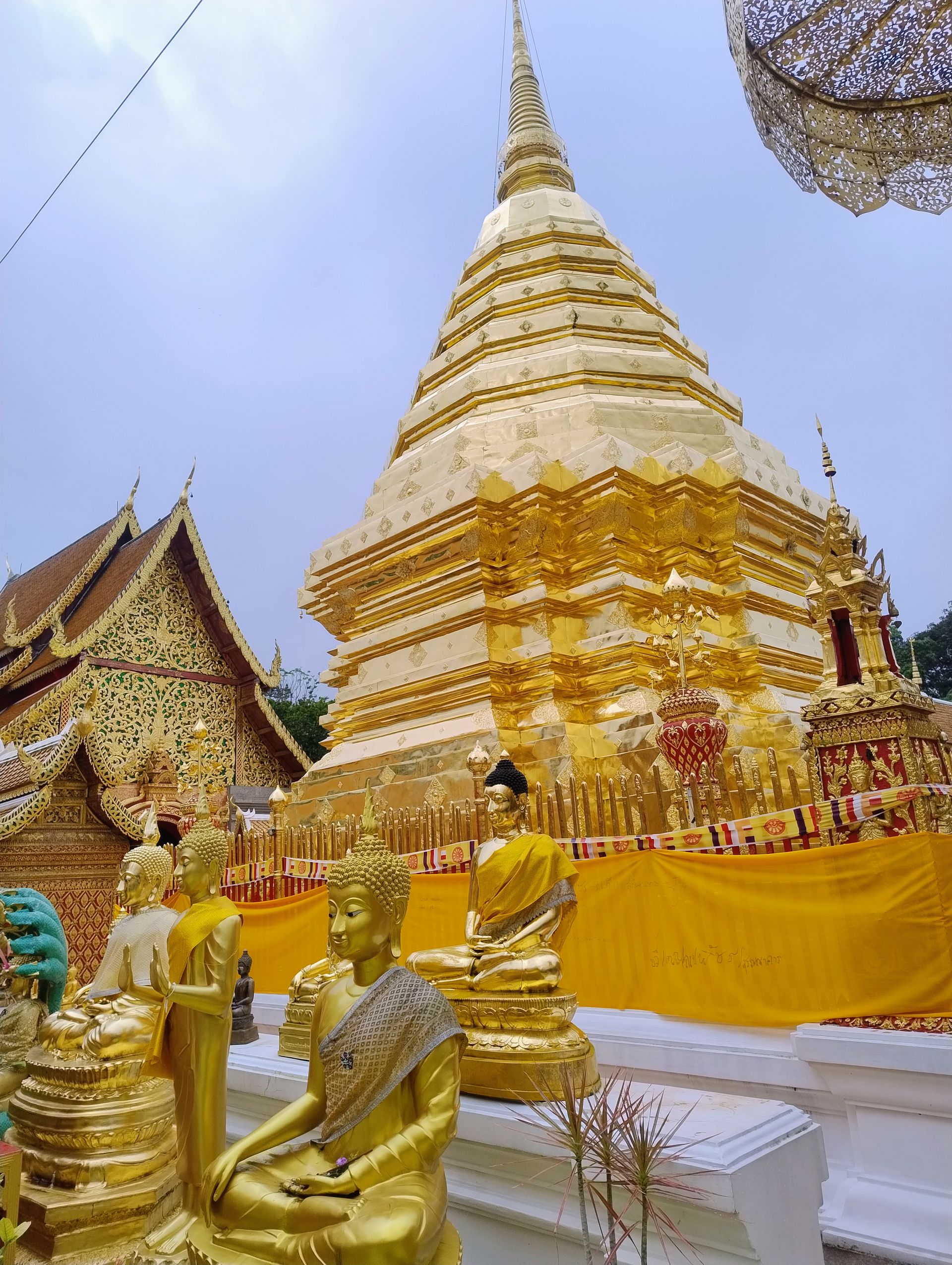
On day 2 after the alert, the current weather looks better, but the forecasts are gloomier. Vietnam has been devastated in the north, and heavy rains are expected for Northern Laos and Northern Thailand. Traveling downstream on the Mekong would not be a good idea now, my gap-toothed smiling host confirms to me. So I stay one more night and visit a jazz club together with Saranna and Daniel, with whom I visited a Buddhist temple on my arrival day in Chiang Mai. At least I am in good company before we sink. The day before the big flood, I imagine how I, as Noah, would only let small pairs of dogs dressed as snakes into my ark instead of poisonous reptiles, hoping God wouldn't notice it up above.
But the apocalypse doesn’t occur once again. It only drizzles steadily and sometimes the sun even shines. Instead of staying calm and patient, I have meanwhile made arrangements and booked a flight to Phnom Penh for the next day. With that, I have not only discarded my plan to travel through Laos but also completely exploring Southeast Asia overland. At the same time, I have reflected that my original travel route was more a result of various recommendations from my fellow travelers than my own ideas. My transit through Laos would have meant spending much more time in uncomfortable buses and less time in Vietnam. And at the same time, I have to refrain from working through bucket lists like 'XYZ countries and counting.'
I really try to meet all people, regardless of their background, without prejudice, and so I also strive for open-mindedness with the three Gen-Zs from Munich that I meet on my tour to the 'Sticky Waterfalls.' But after listening for 10 minutes to their conversation about their SUVs and top speeds ('180 average is really crazy.' - 'Check, check, safe.'), I mentally classify them with a shrug as 'Munich folks.' I exchange notes with one of the three, Lukas, about Vietnam. He is one of many other travelers who recommend the Ha Giang Loop to me, a motorcycle tour where you can either drive yourself or sit on the back while meeting local people at various stops. Usually, these multi-day tours are organized by different hostels. In 'my time,' seven years ago, this was not a trend in Vietnam.
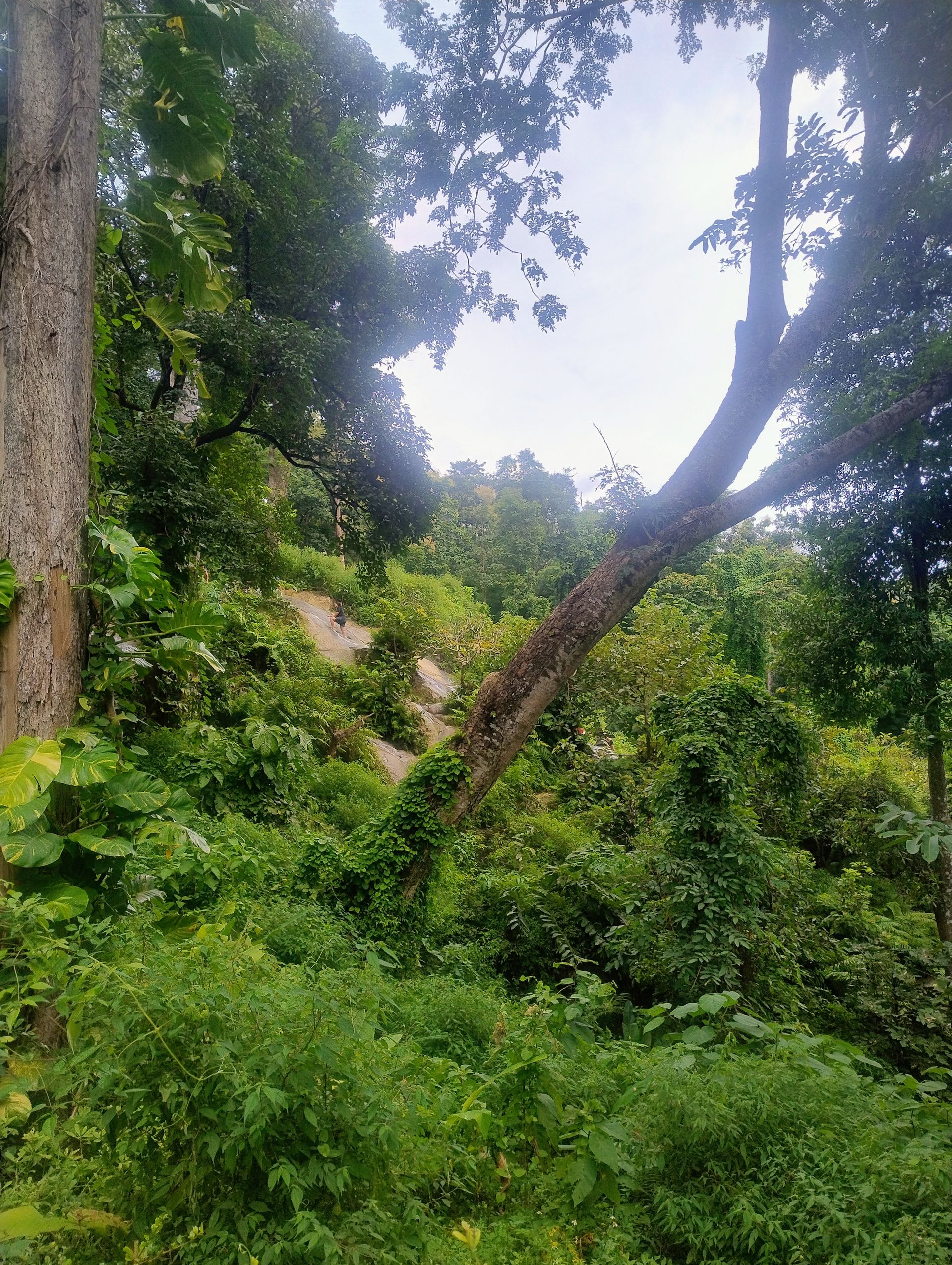
The 'Sticky Waterfalls' are a natural phenomenon converted into a tourist attraction. Something to do with evaporation and oxidation. Instead of a slippery smooth surface, the rocks of the waterfall have grip and can be climbed. After walking up twice, I lose my interest. Groups take photos and create jams in the water. I sit down next to an Australian who is similarly underwhelmed. He also recommends the Ha Giang Loop again, this time a different hostel. 'You gotta do it, mate. I've done a lot of traveling, Southeast Asia, South America. But this was one of the best experiences of my life.' It’s difficult to make 'independent' decisions when you hear so many enthusiastic reports like that..