Petrified wood and African opening hours
and April 4th Yesterday passed without any major events. We drove on relatively nice roads to our meeting point with our travel partners in Khorixas. The grader driver did a...

Published: 05.04.2025
This morning over coffee, there is a noticeable tension among our travel companions. And while discussing the day's itinerary, it comes out: they don't want to go north as long planned for the trip, but rather to Etosha National Park, because someone said that it had been raining heavily in the north and the roads were impassable. We visited Etosha seven years ago and it was already quite touristy back then. We had already stated during planning that we did not want to go there. A dispute could have easily arisen now, but we managed to resolve the matter elegantly: they should go to Etosha and we will head north to the land of the still quite original Himba people. We will meet again at the final major point of our trip, Khaudum National Park.
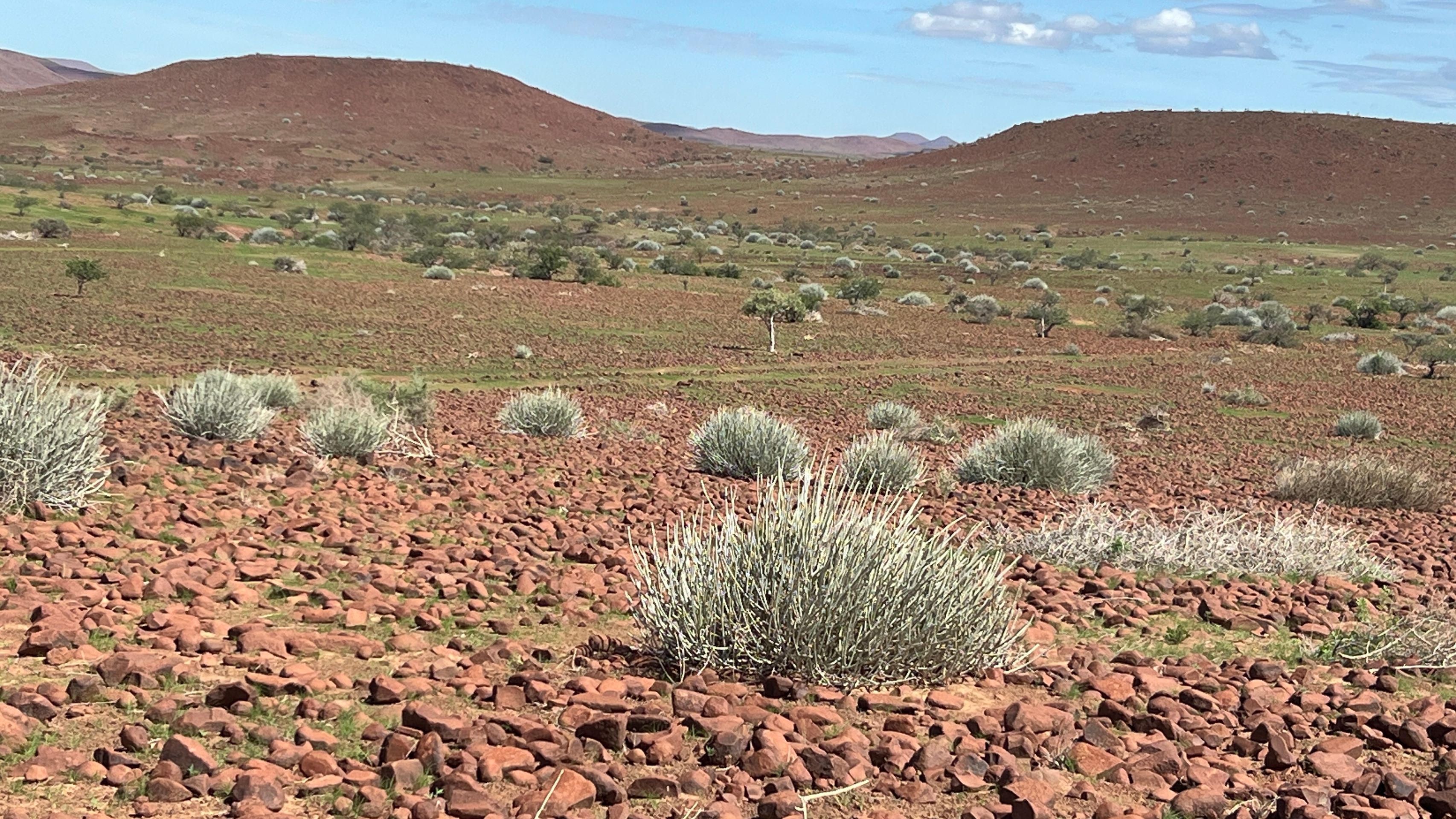
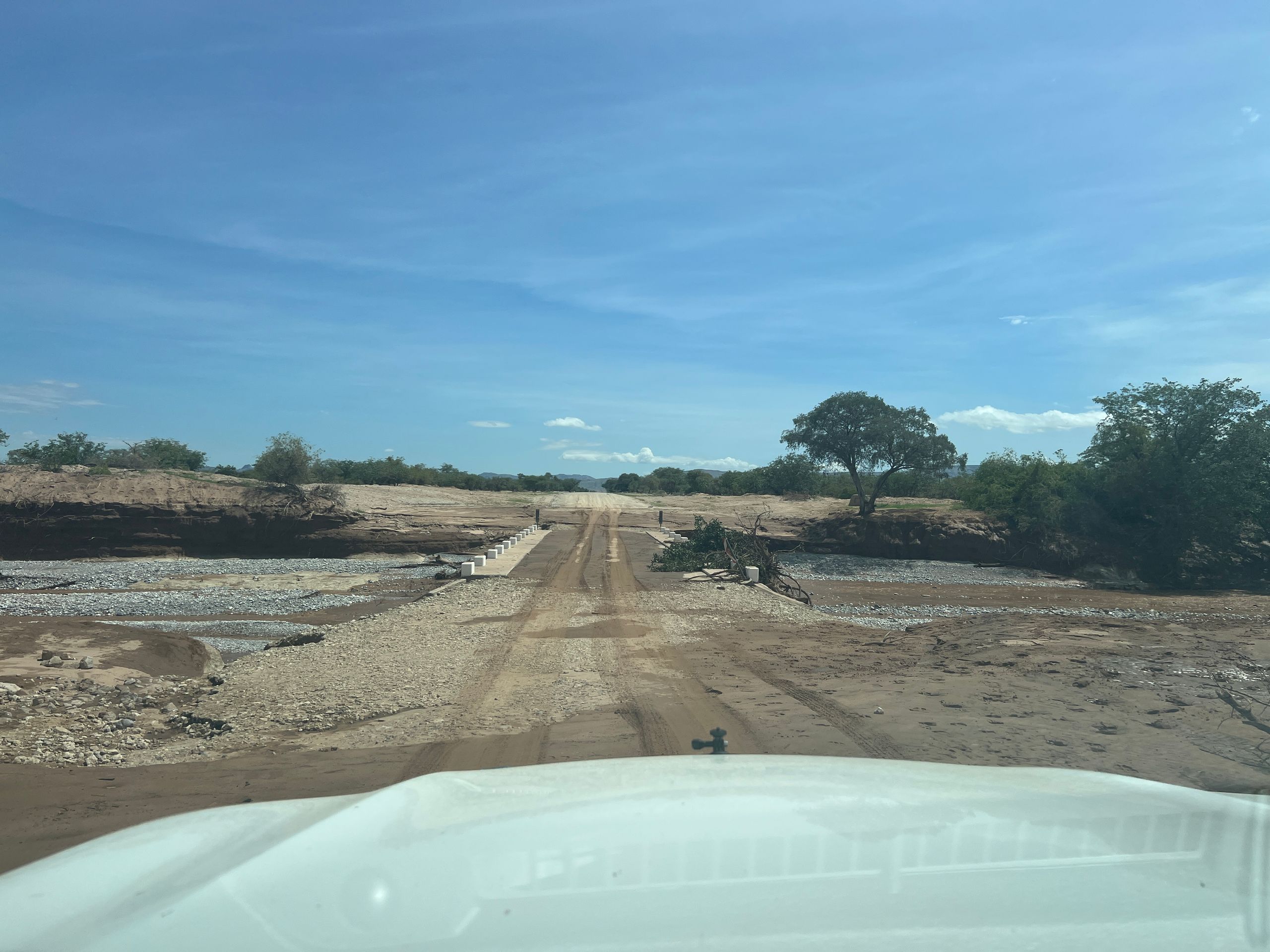
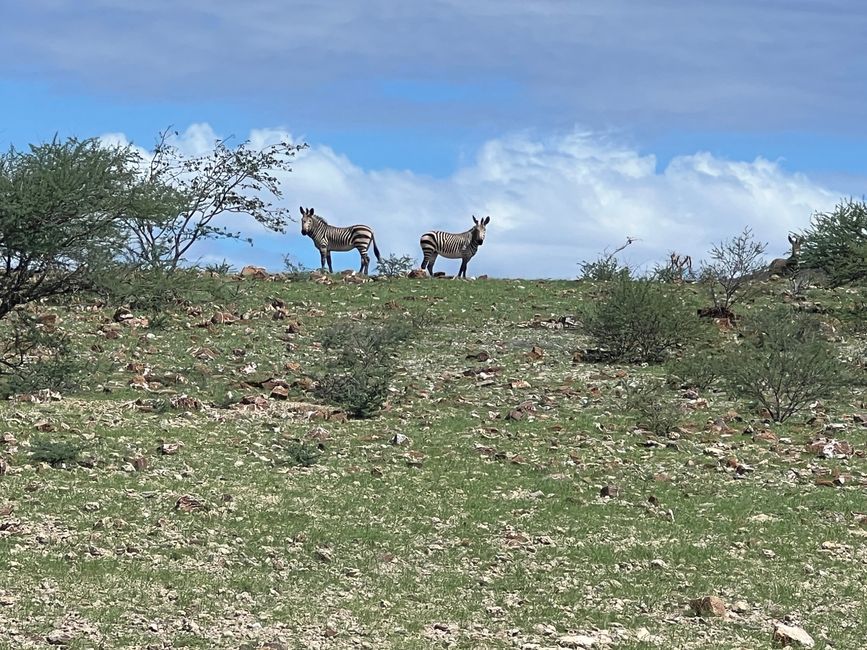
So, a warm farewell and off we go for about 220 km north. About halfway there, we encounter a livestock disease checkpoint, where the car is registered. The official there tells us that we cannot go to Sesfontain because the river has too much water. However, there is a camp before the river, and as quickly as the rivers here fill up, they can also empty just as fast. We decide to drive to the river and stay at the camp in case the crossing is not possible. Along the way, we see some zebras and many springboks!
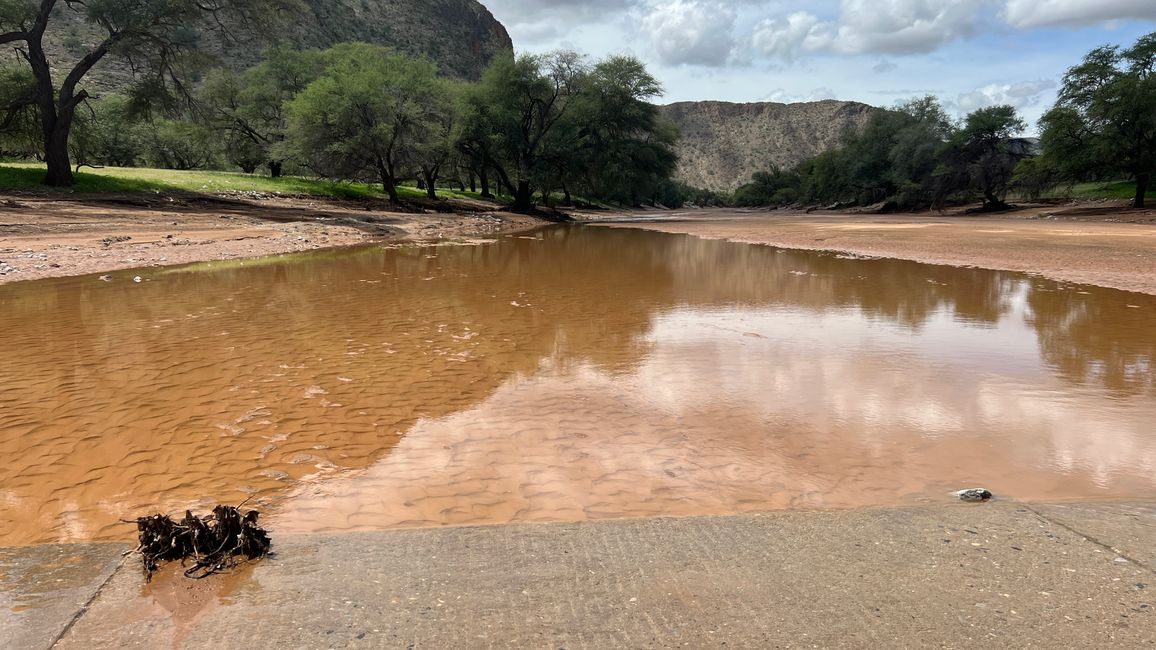
When we arrive at the river, we are astonished: the river is only a small trickle - so onward.
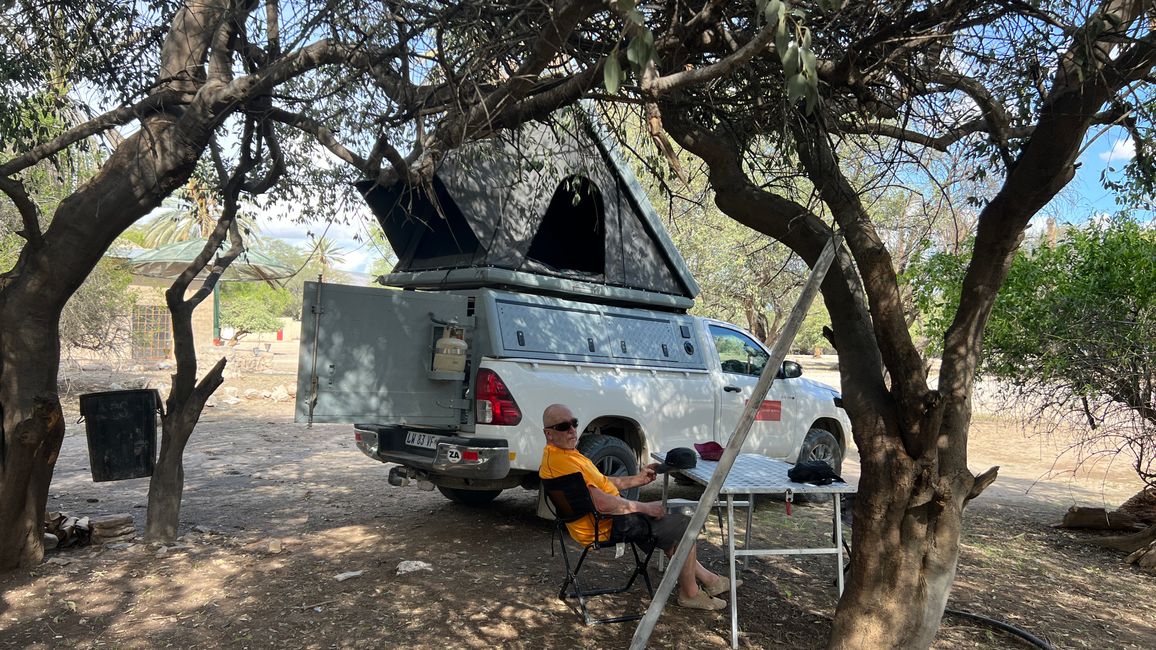
However, the onward journey is quite challenging: the road is often littered with large stones and traversed by deep ruts that, although dry, are difficult to navigate without the vehicle getting stuck. The car is being shaken violently, and I often get out to find the best way over the obstacles. Suddenly, there’s a piercing siren sound!!! What is that???? It takes us a while to realize that Wilfried's phone wants to send an emergency message to the emergency numbers due to the strong vibrations. At the last moment, we can prevent this! We bravely fight through, forgetting to take photos while concentrating on driving and co-driving, and finally arrive in Sesfontain, where the only campsite is closed. What to do? There is an old German fort in the village that was converted into a lodge about 20 years ago, and we ask there for a place to camp. They invite us to pay €15 to camp under the shade of some trees and use the sanitary facilities in one of the rooms for which we receive the key. We accept gratefully.
It's evident at this lodge and throughout the area that tourism has come to a standstill. There was a massive flood here in December, and the damage is visible everywhere. Package tourists with their buses have not been coming since then. This already quite poor region is struggling to cope, and the state apparently lacks the will or the means to intervene helpfully.
The lodge has no guests, and we enjoy a cool drink at the bar. Then we cook something nice for ourselves and spend a quiet evening under the watchful eye of Reinhard, a pitch-black security guard who speaks relatively good German. He learned from the German guests in the past.
Tomorrow, we continue to Opuwo - the road is said to be somewhat good. We’re looking forward to seeing what awaits us!