
Frankenwald, Forêt de Thuringe et Hainich
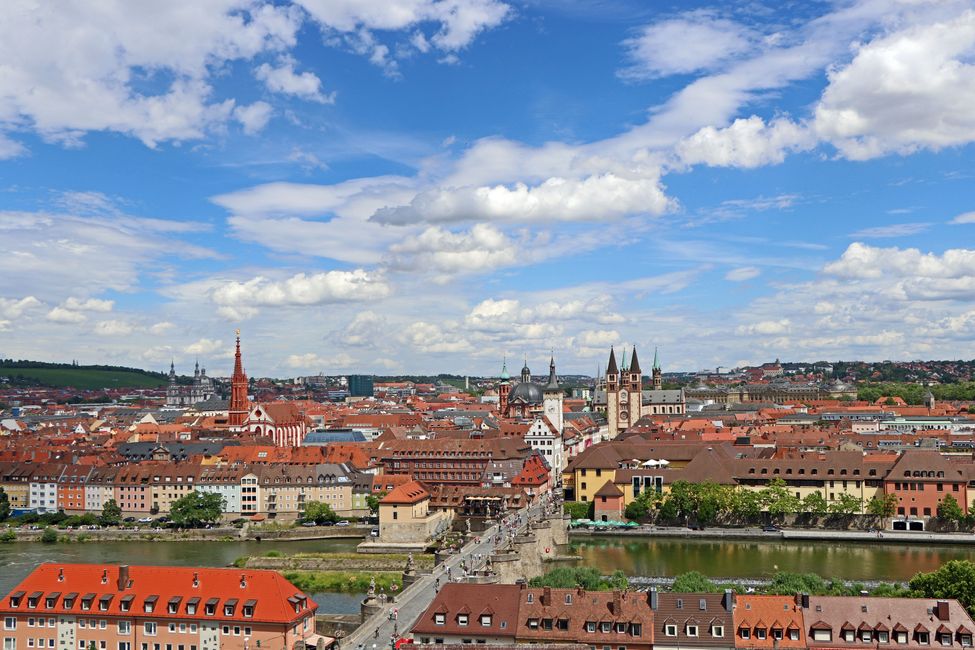
Vue du Döbraberg, 'point culminant de la forêt de Franconie'

Publié: 03.10.2026
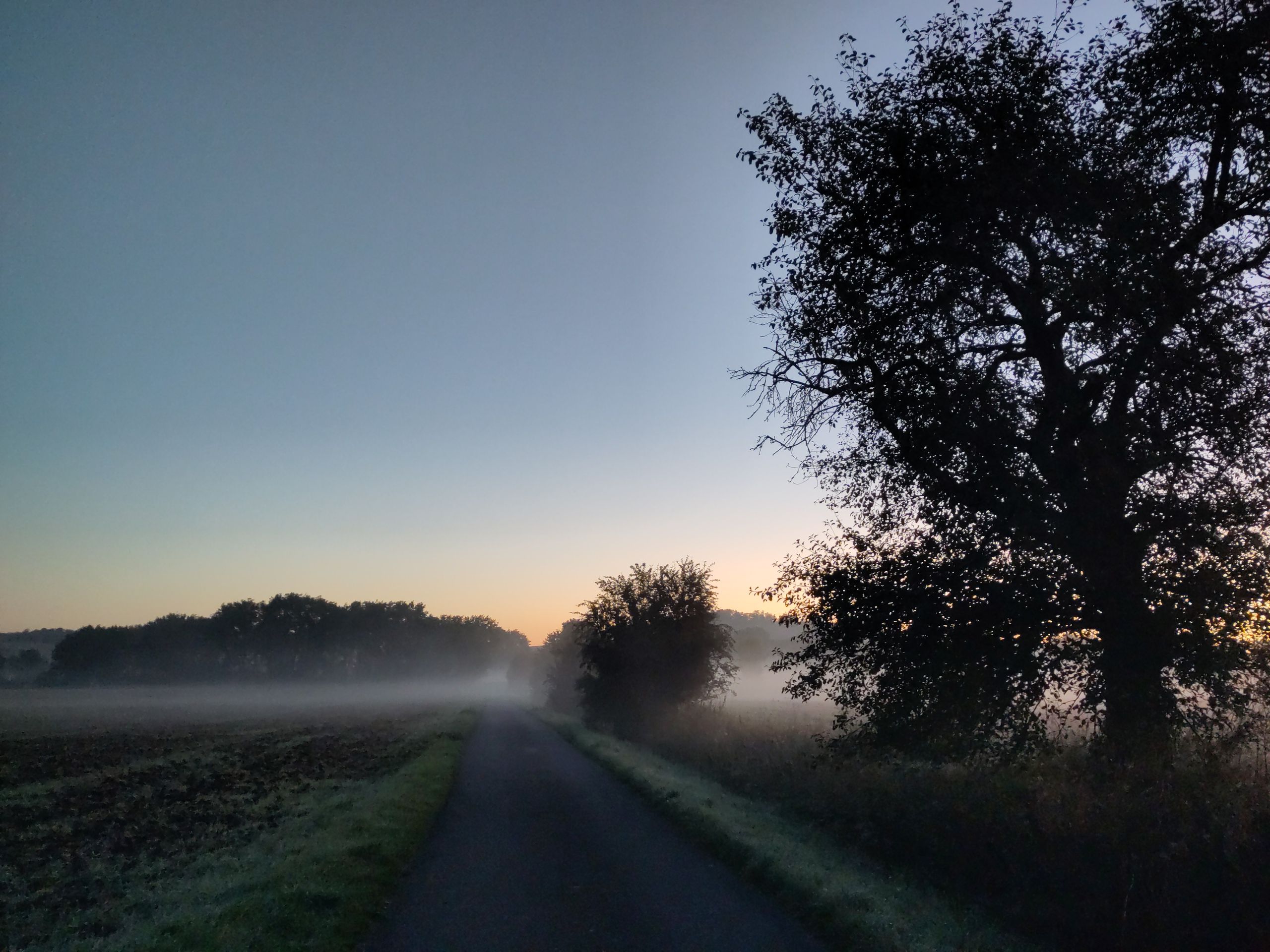
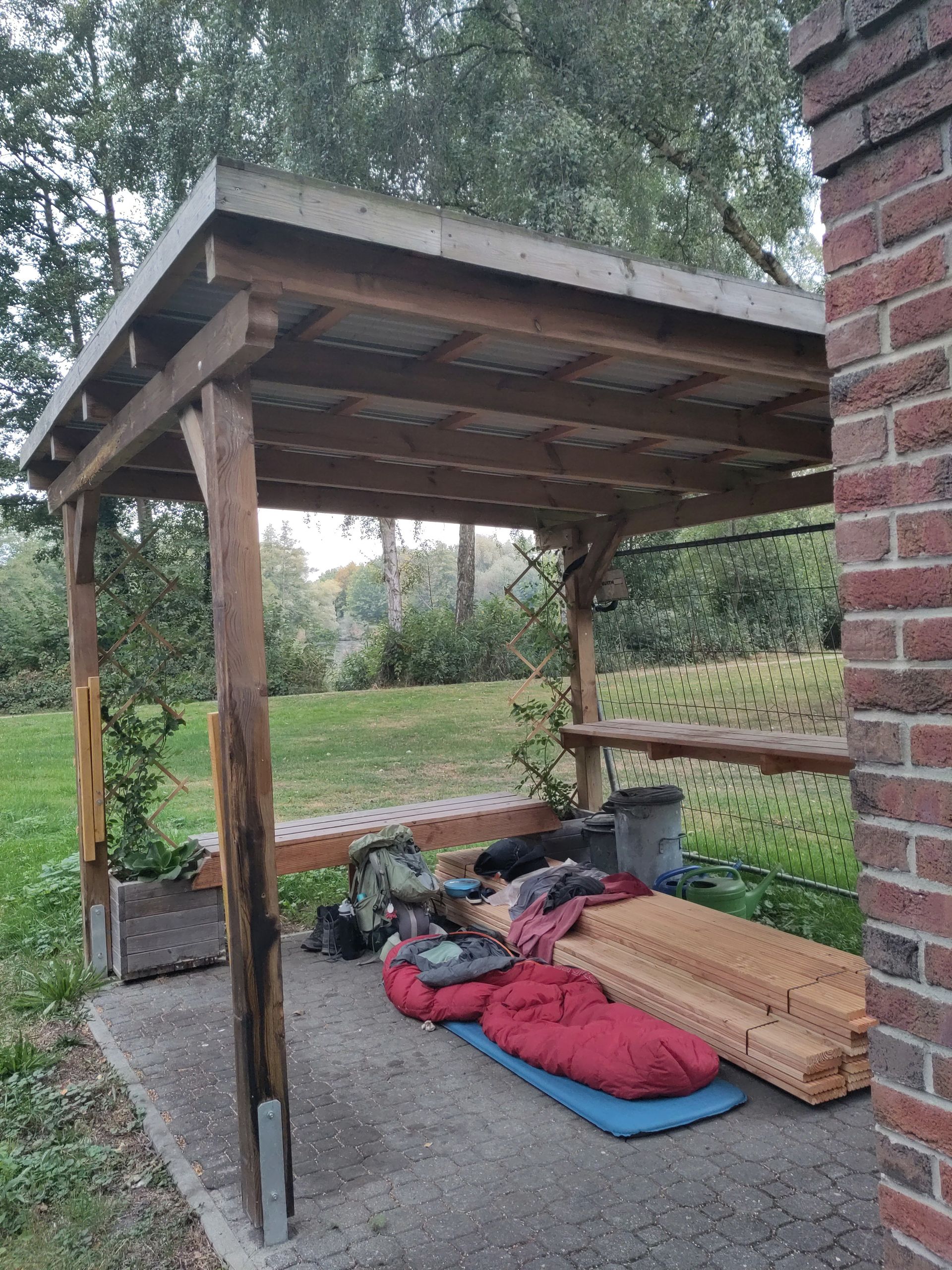
In the twilight of September 22nd, I was back in Niedergebra in Thuringia after yet another day of train adventures. Since it had gotten so late, I could only set up my sleeping area outside the town by the Wipper River and within earshot of the motorway, using a covered picnic table. After three nights in a cozy bed, this is certainly not a comforting night: cold, windy, and noisy, with little help from the stars and moon. It’s the early start before sunrise that 'reconciles' me with the path and everything that comes with it. My fingers are icy from packing the damp sleeping bag, and although it's already 6:30 AM, it’s still quite dark, with only the eastern sky reddening. White mist hangs over all the meadows and waters, bright and cold. I love this early morning – and wish I had packed gloves... Unfortunately, the A38 roars through the otherwise quiet, still sleepy countryside. At the Wipper, sheep graze, the brown fields steam, the riverbanks glow, and everywhere sparkles in the dew-kissed grass as the first sun rays gradually touch down. In the distance, the ridges of the Harz are already coming into view. I actually pass a 'Pigeon Release Station' (in Wippendorf), but can't quite tell if the area is still in use; in any case, I don't see or hear any birds. Only around 9:30 AM does the sun warm me enough to enjoy a cozy break on a hunting lookout.
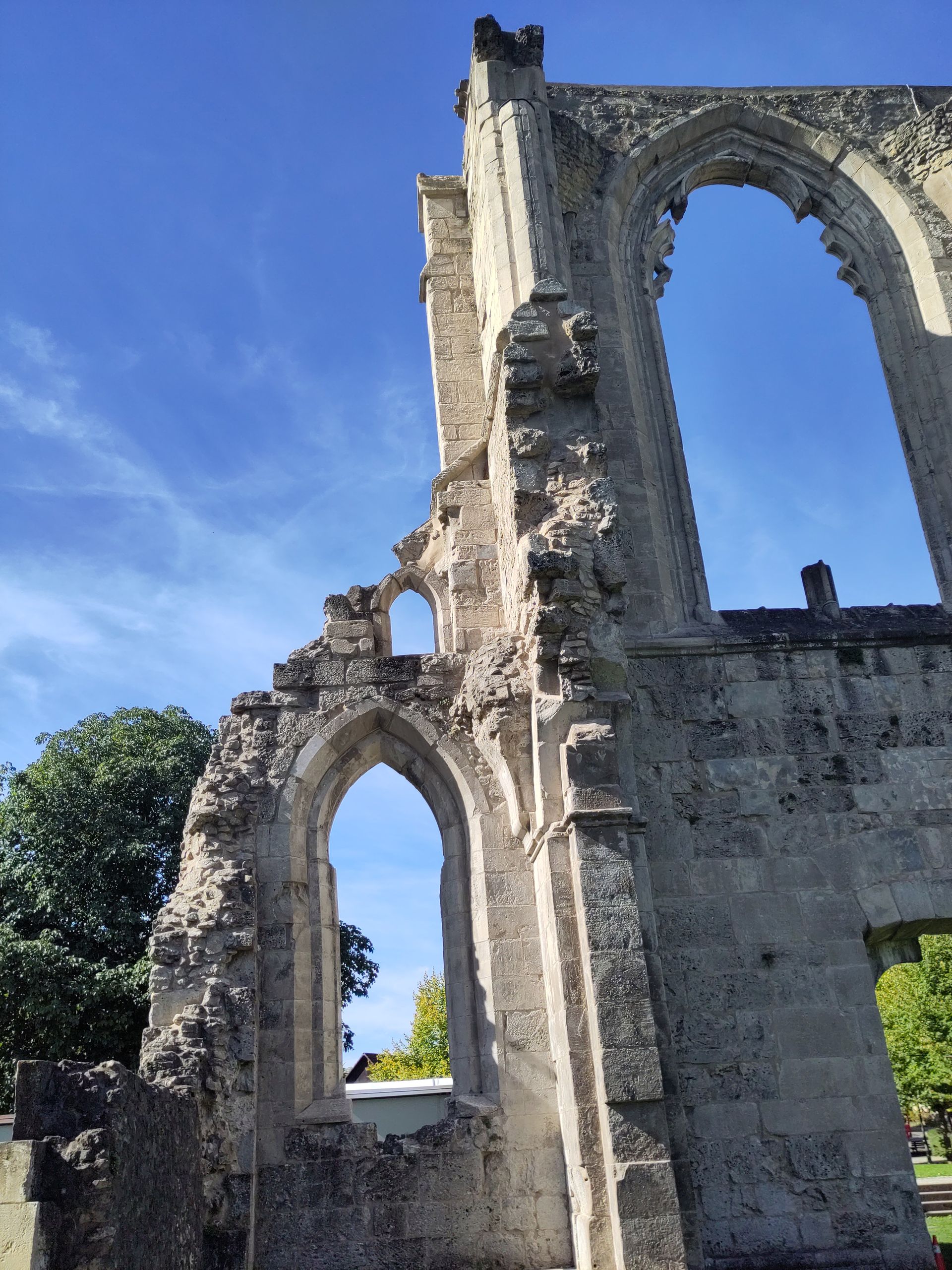
As the weekend approaches, it becomes warm and sunny again, reminiscent of Indian summer, but initially, autumn shows me its rather unfriendly face for my 'Harz hike.' On the other hand, I experience such 'drama' in the weather, which fits quite well with the Harz and makes these hiking days very impressive. The former Cistercian monastery of Walkenried is already one of the sights of the Harz. Founded in 1129, today it features powerful Gothic ruins, some of which (cloister) are still intact and open for visits (which I do), and I then stop by the monastery café before moving on. I am particularly impressed by the massive, high remnants of the walls, this so obvious 'juxtaposition,' the 'contemporaneity,' the encounter of 'then' and 'now,' of history and the present. As I wander along the edge of a light deciduous forest beside the Wieda, I contemplate that I often sense and intuit this abundance of the 'past' even in today – in a case like here, this feeling becomes quite literally visible, with the walls still standing and revealing something of what usually remains hidden 'behind the present' yet is still there.
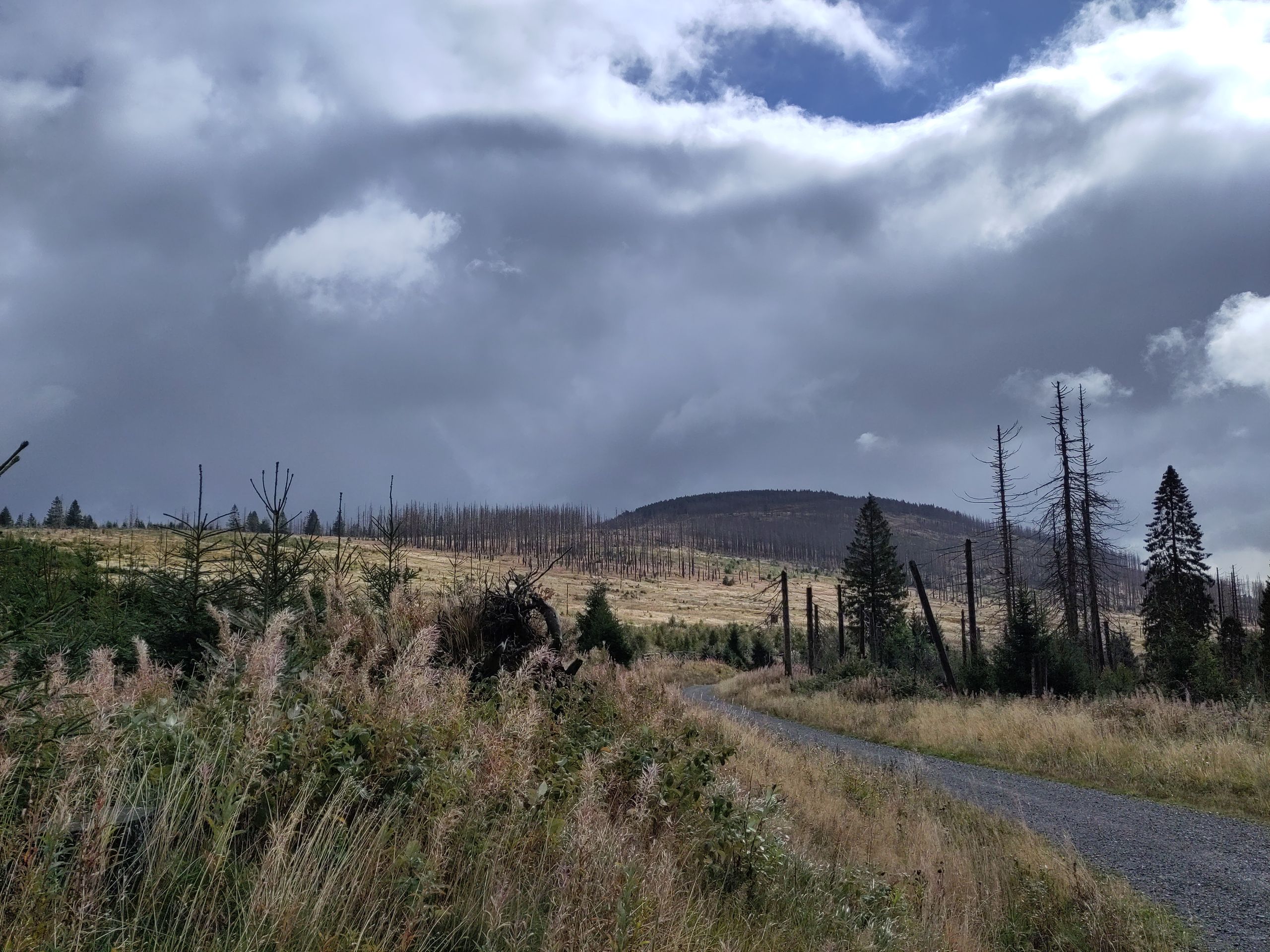
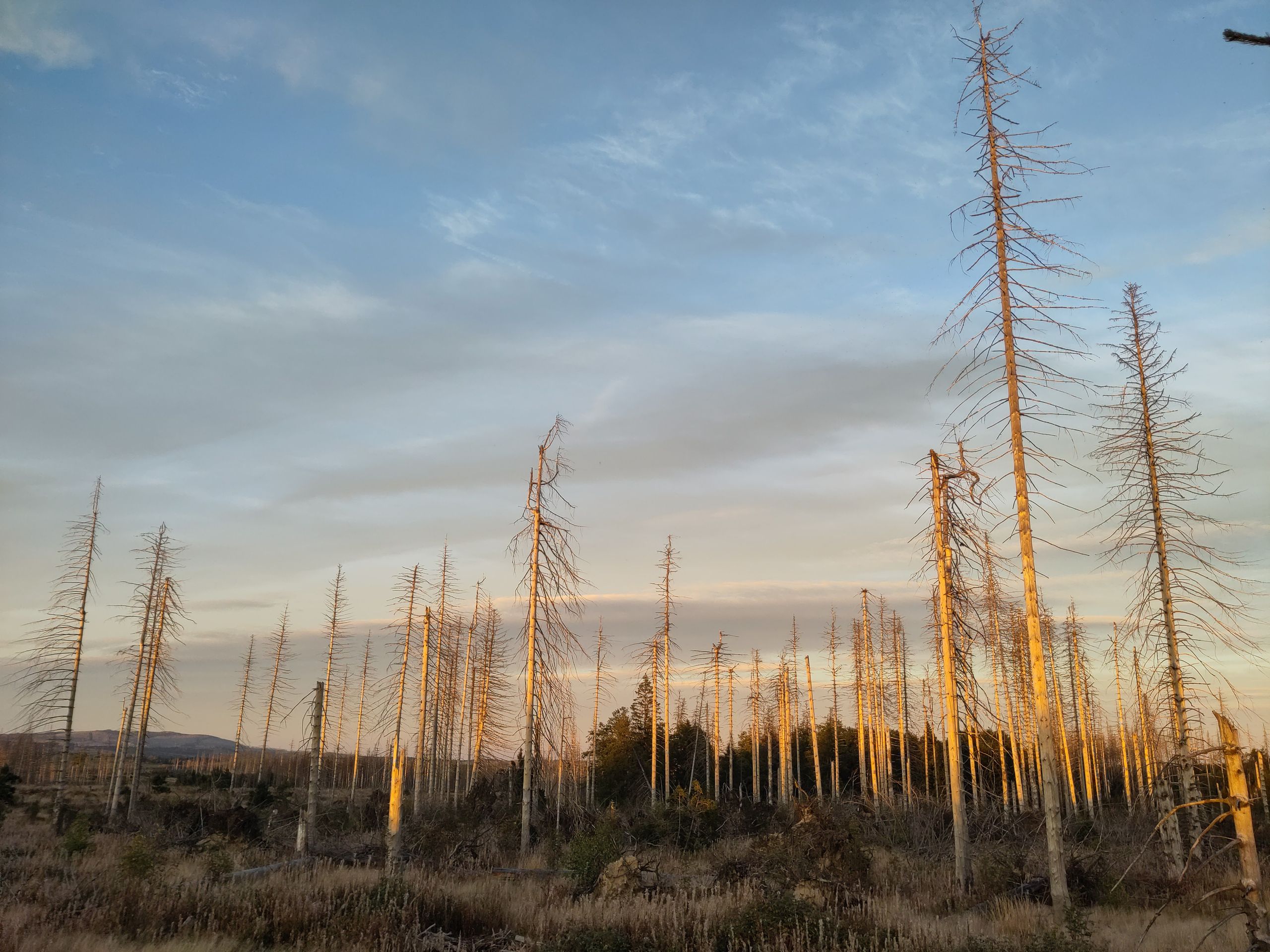
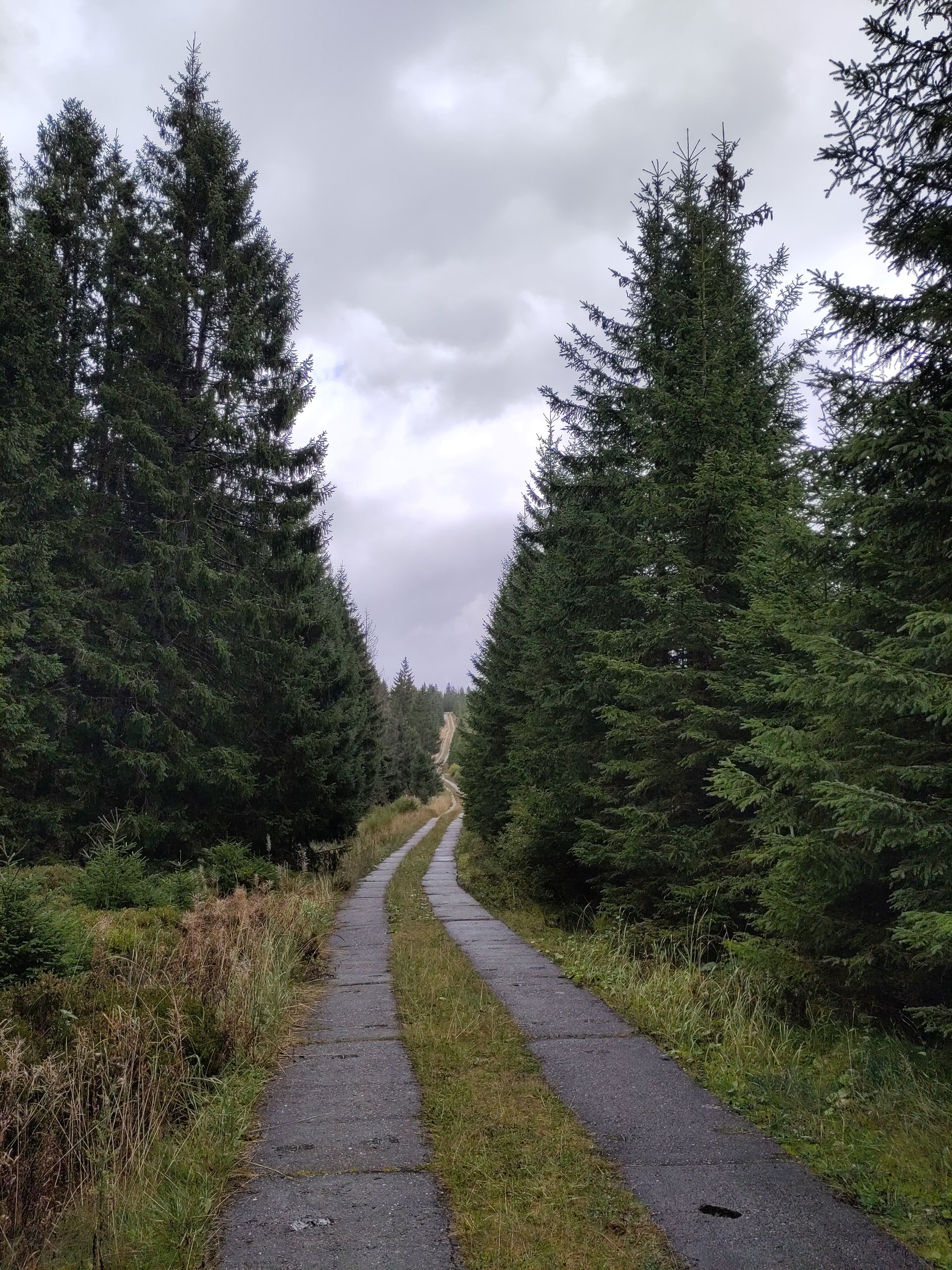
In the evening sun, I climb up to about 600 m in the Harz. Most ridges are 'skeletoned': the bare remains of spruce glow eerily bright when lit by the low-hanging sun. Lonely forest paths (often wide gravel forestry roads) and many more dead conifers than in the Thuringian forest. Somewhere in the solitude between signs for ski trails, I find a shelter for the night, which hardly deserves that name. Like a slightly undersized bus stop, this barely-covered narrow bench stands about unrealistically. The wind protection – and it will get very windy and cold this night, (wetter.com says around 5°C for Braunlage, the town below, so it might be 3 or 4°C up here at most…) is felt rather than genuinely present, and even the little roof isn't really waterproof, as I find out when it starts raining around 3 AM and drips onto my sleeping pad after a while, luckily only in the foot area... But even though I am shivering, I find myself fascinated by all the light-dark-cloud-night sky-moon-rain-wind happenings, and the shadowy outlines of living and dead trees: on the gravel in front of the narrow bench under the scant roof, I feel blissfully 'unprotected' and right in the midst of all this nighttime silence filled with wind and mountain solitude.
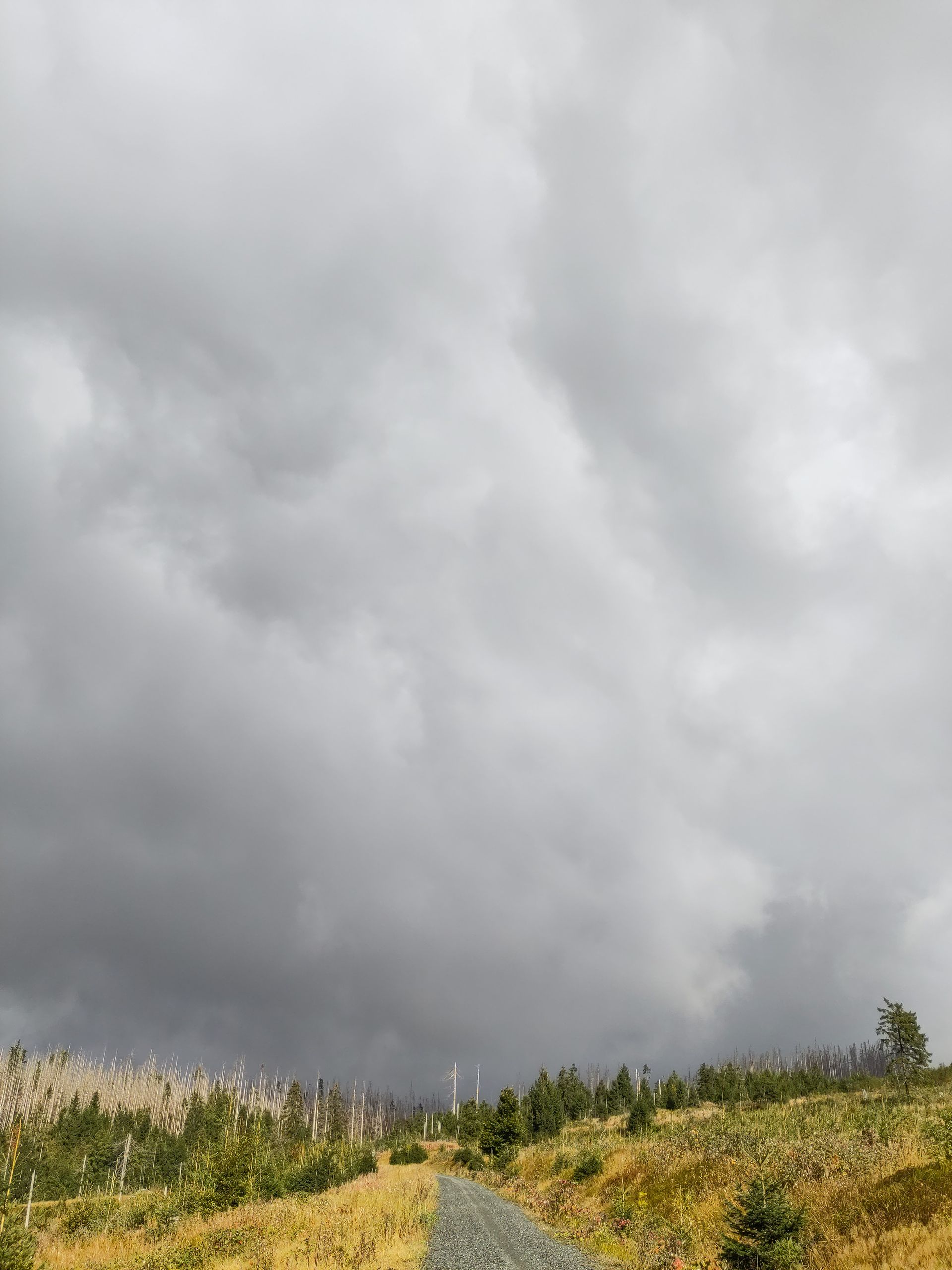
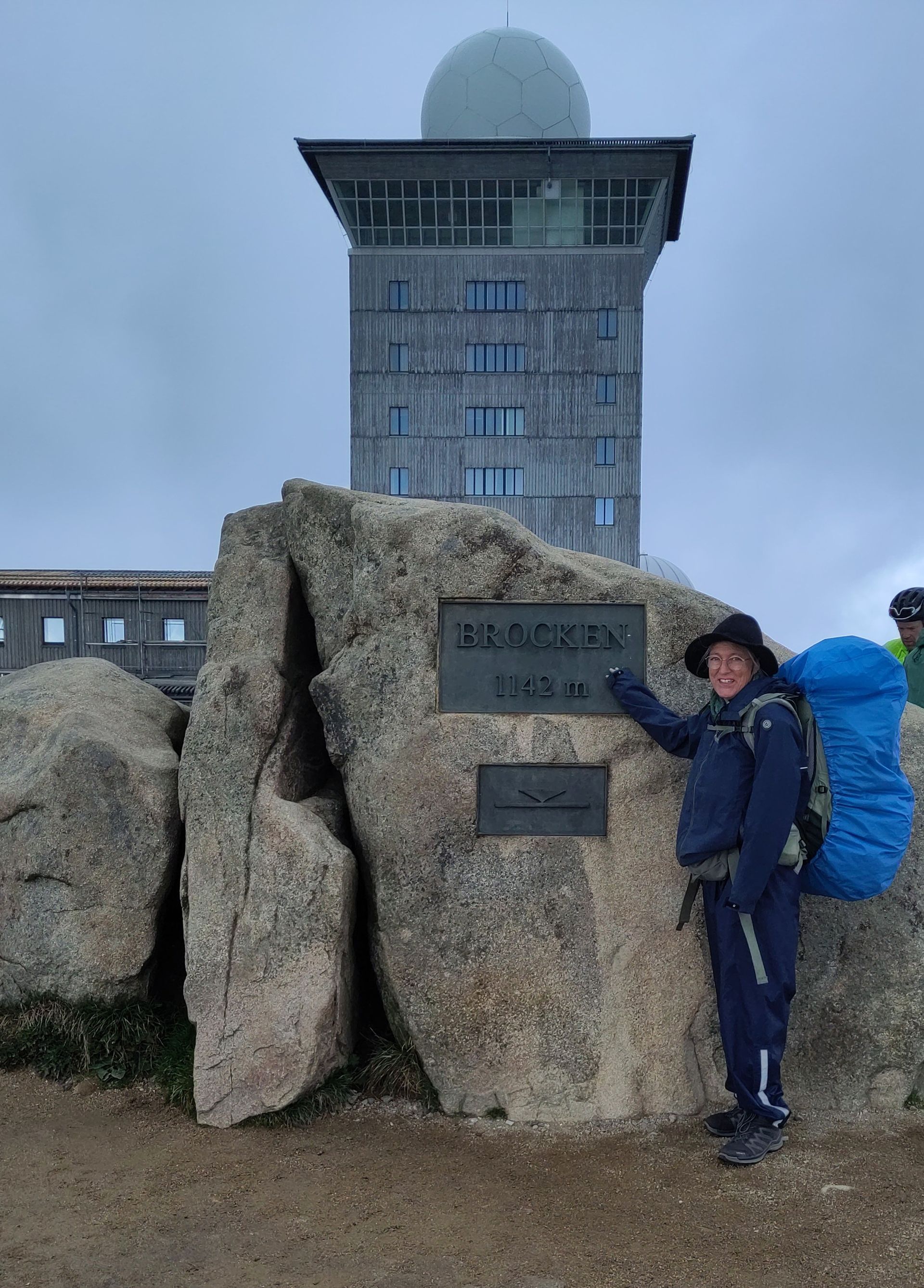
Early in the morning, I hike through all this wonderfully beautiful rain + light + wind atmosphere to Braunlage in the chilly damp, but I don’t arrive dry at the Edeka, where I seek refuge in the associated café, and I set off again just before 11 AM. It remains stormy all day, with rain now and then, and in between, the sun shines ever brighter when it finds a hole in the clouds. I'm glad to have my warmer sleeping bag, plus rain jacket and pants with me, and I wear both until evening to somewhat protectedly enjoy this 'delightfully nasty weather.' But hardly ever do I feel warm throughout the day. Over the legendary Brocken, at 1142 m the highest mountain in northern Germany, and already above the tree line, the border of the GDR stretched, not only with Stasi listening devices but also (further strictly secured) Soviet ones. Some buildings were demolished (on the neighboring Wurmberg in Lower Saxony stood 'against' it a US listening tower which was also blown up), and the tall concrete barriers around the summit have disappeared. Today, among other things, a red and white telecommunications tower stands at the summit, a hotel, and a former Stasi building repurposed as a museum. Of course, there are monuments and commemorative plaques for famous visitors like Goethe or Heinrich Heine... On several floors, there are many informative displays about the Harz National Park, about legends and tales of witches, Walpurgis Night, etc., about GDR history and the listening technology of the past, plus short films and info about the narrow-gauge railway that still puffs smoke and stinkily crawls up here (since Wernigerode, tourists can take a ride for 65, just like back then). The rooftop terrace is unfortunately closed due to high winds, but the renowned view up to the Erzgebirge is missed today (as on over 300 other days of the year) anyway. In the attached café, there are baked potatoes and hot chocolate with a shot – both are incredibly good, but it only warms me temporarily. I have to lean against the icy wind to avoid being blown away. Despite the weather, some people are up here, most came with the puffing steam engine.
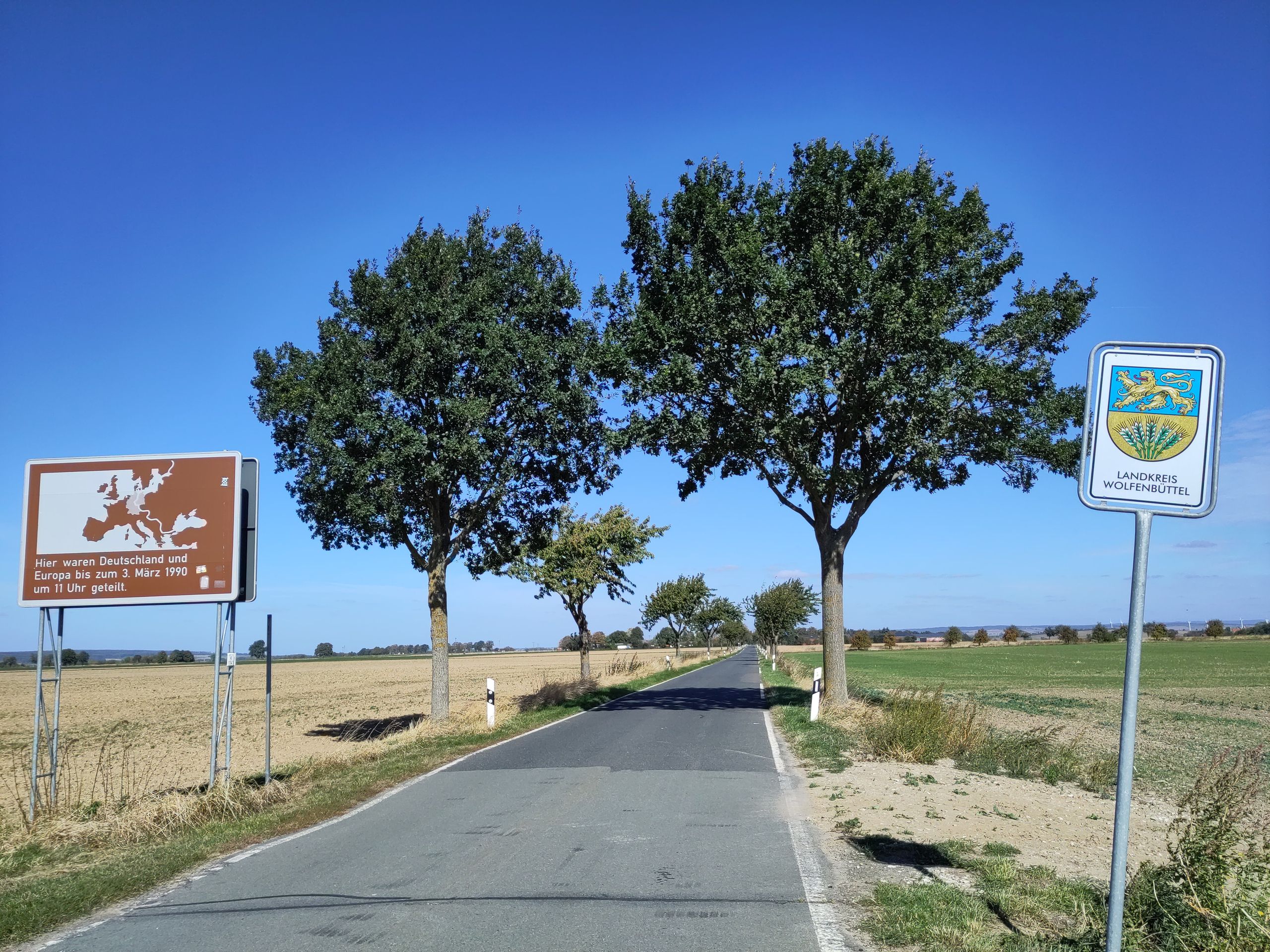
The former border plays a significant role on this day as I move a lot along the 'Green Belt' or the 'Harz Border Trail' (often on convoy paths). Straggly 'wind-blown' trees at the 'bonebreaker curve,' for example. A steep descent to the Eckertalsperre, a large drinking water reservoir; the border ran right through here, significantly complicating its management for decades. In the middle of the dam stands a border post – the only colorful thing in today’s weather. Overall, there were about 2735 of these black-red-gold posts along the inner-German border, spaced 500 m apart! Otherwise, the lake has a distinctly Scandinavian feel; looking back, the summit of the Brocken greets me. Withered, brown heather and more than a handful of blueberries, massive boulders again. Then another 10 km on narrow forest paths along the small river Ecker until I leave the national park just before dark and find a special, protected sleeping place: a 'natural healing institution Jungborn' founded about 125 years ago. The old photos on the information panels look very young and vibrant. In the most beautiful nature, it seems that people 'bathed naked in air and light,' lived on raw food and healing clay, and similar things. An association took care of a partial reconstruction of some of the old 'light and air houses' and pavilions; there’s also an outdoor kitchen, a fire pit and among the trees three shepherd's wagons that can be rented... one of the houses is actually unlocked – whether intentionally or forgotten, I sleep in there anyway. Rustic wooden furniture and candles are all the furnishings, with enough space on the floor for my sleeping bag.
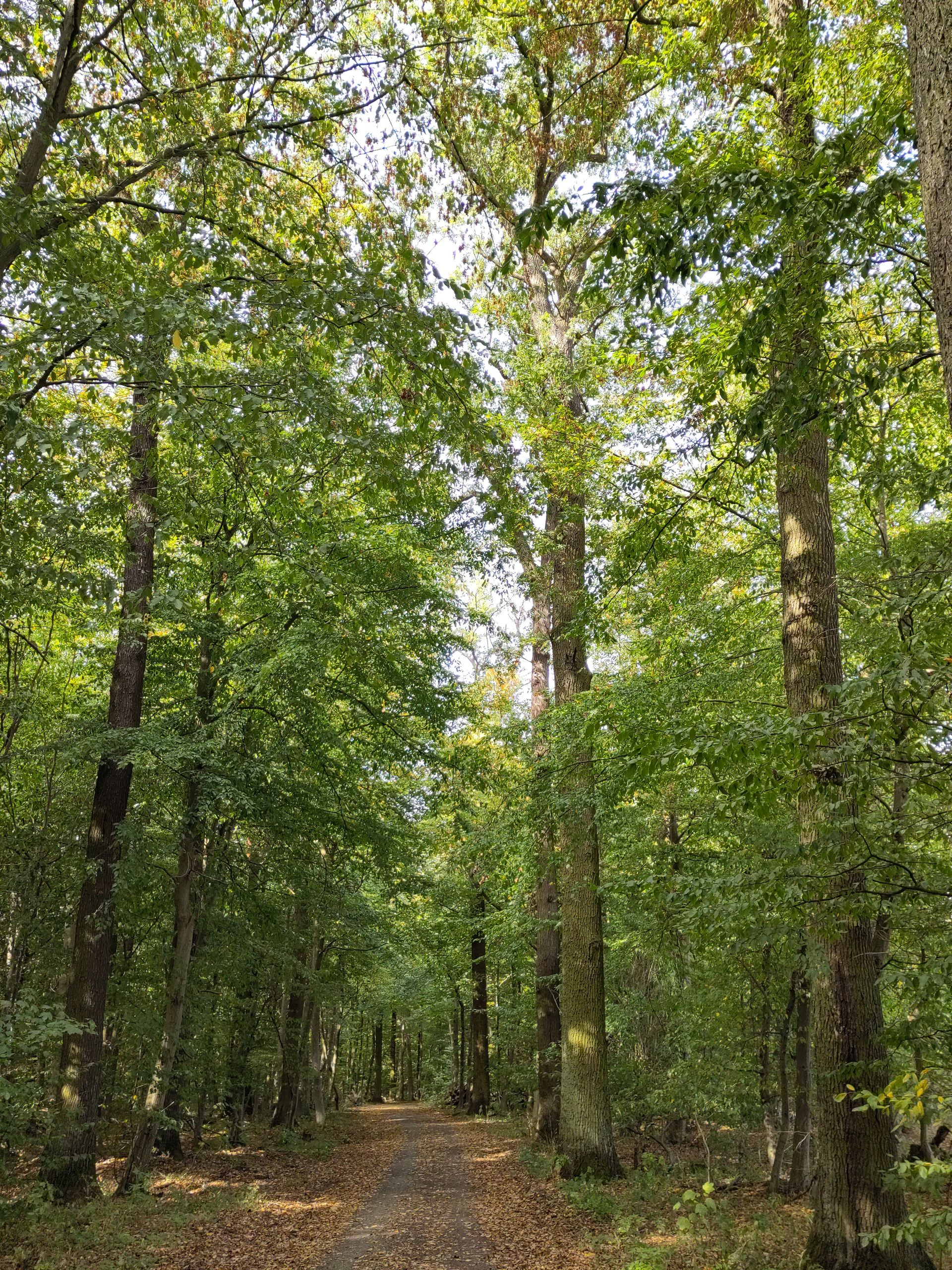
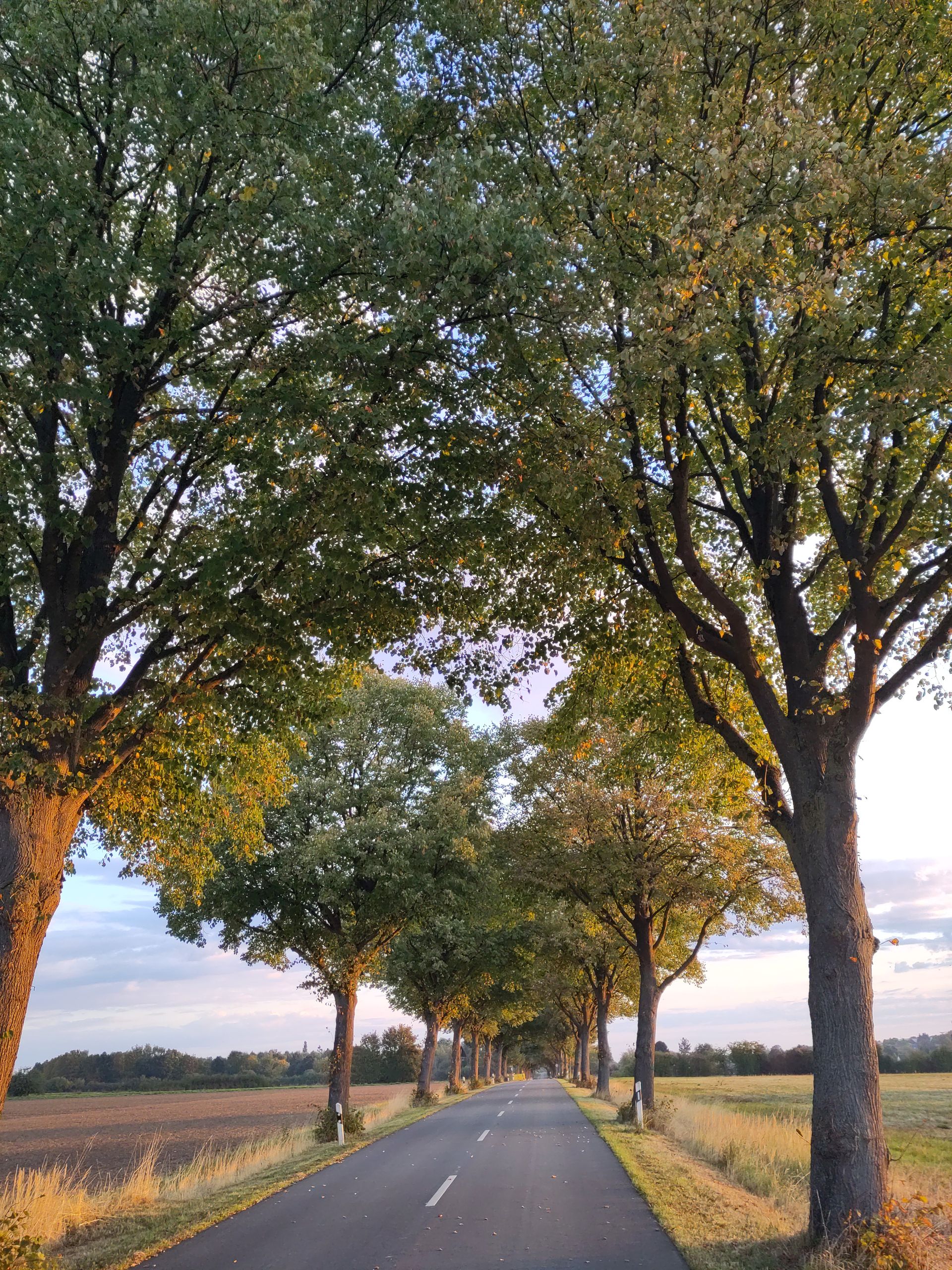
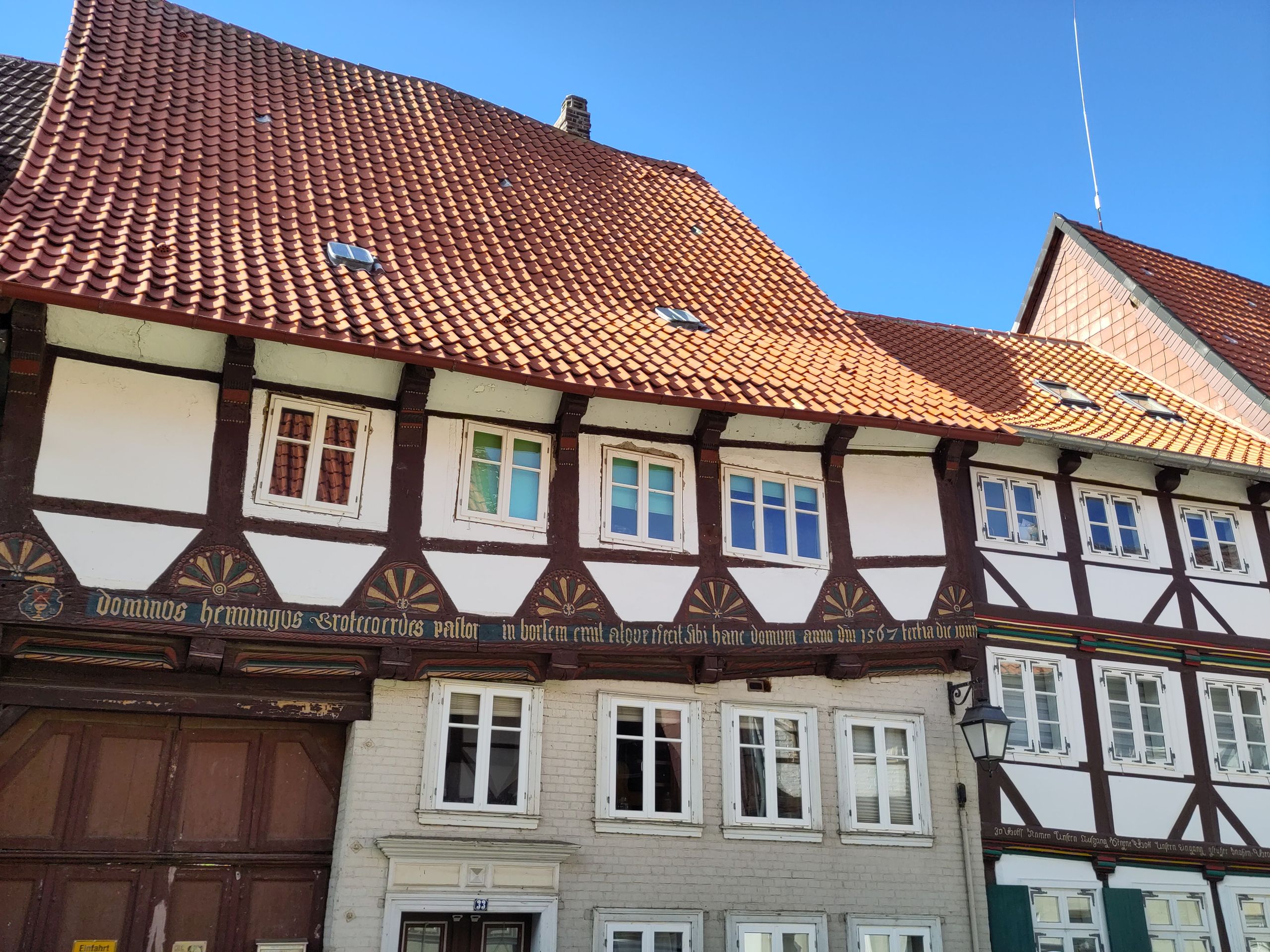
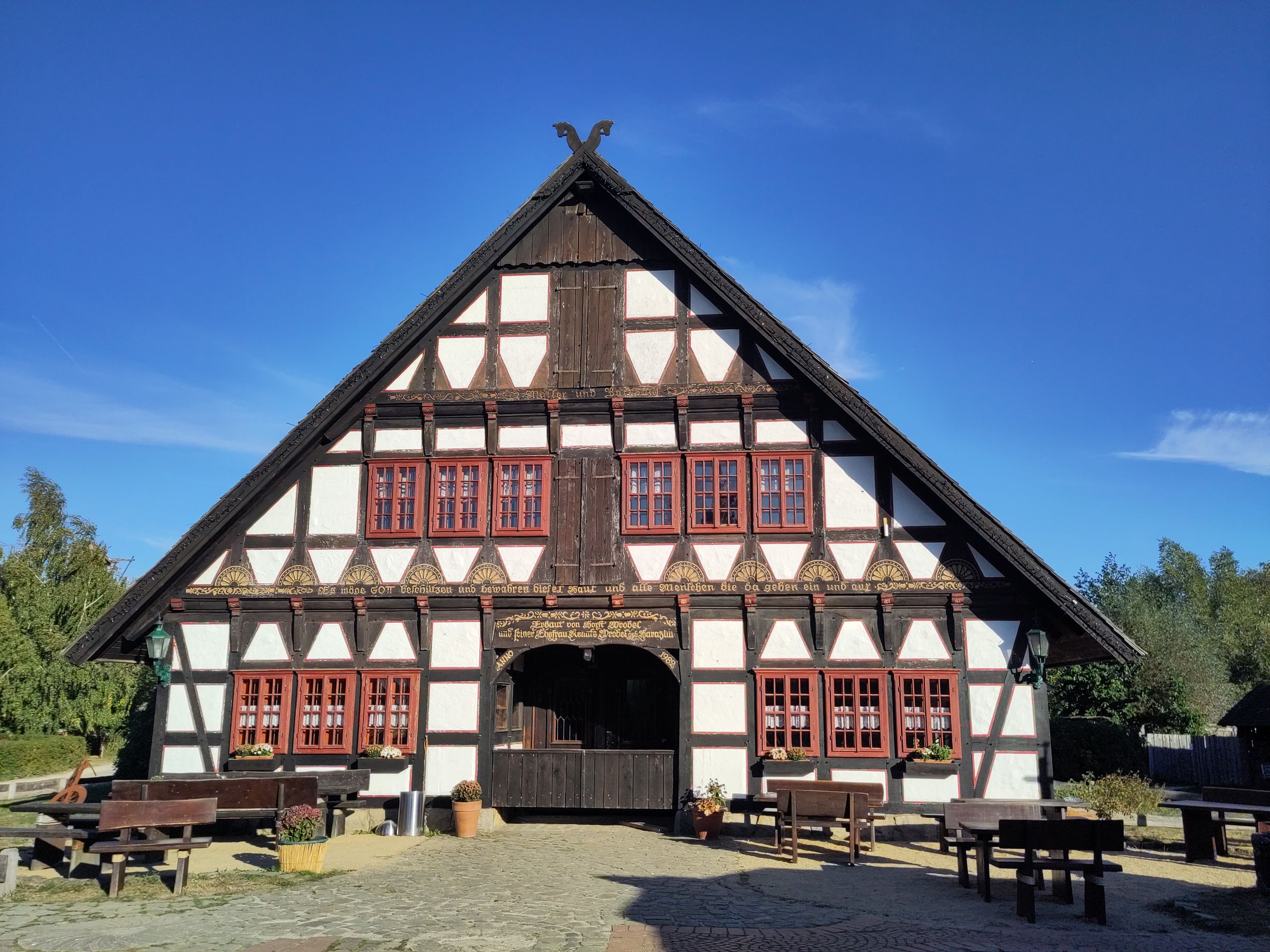
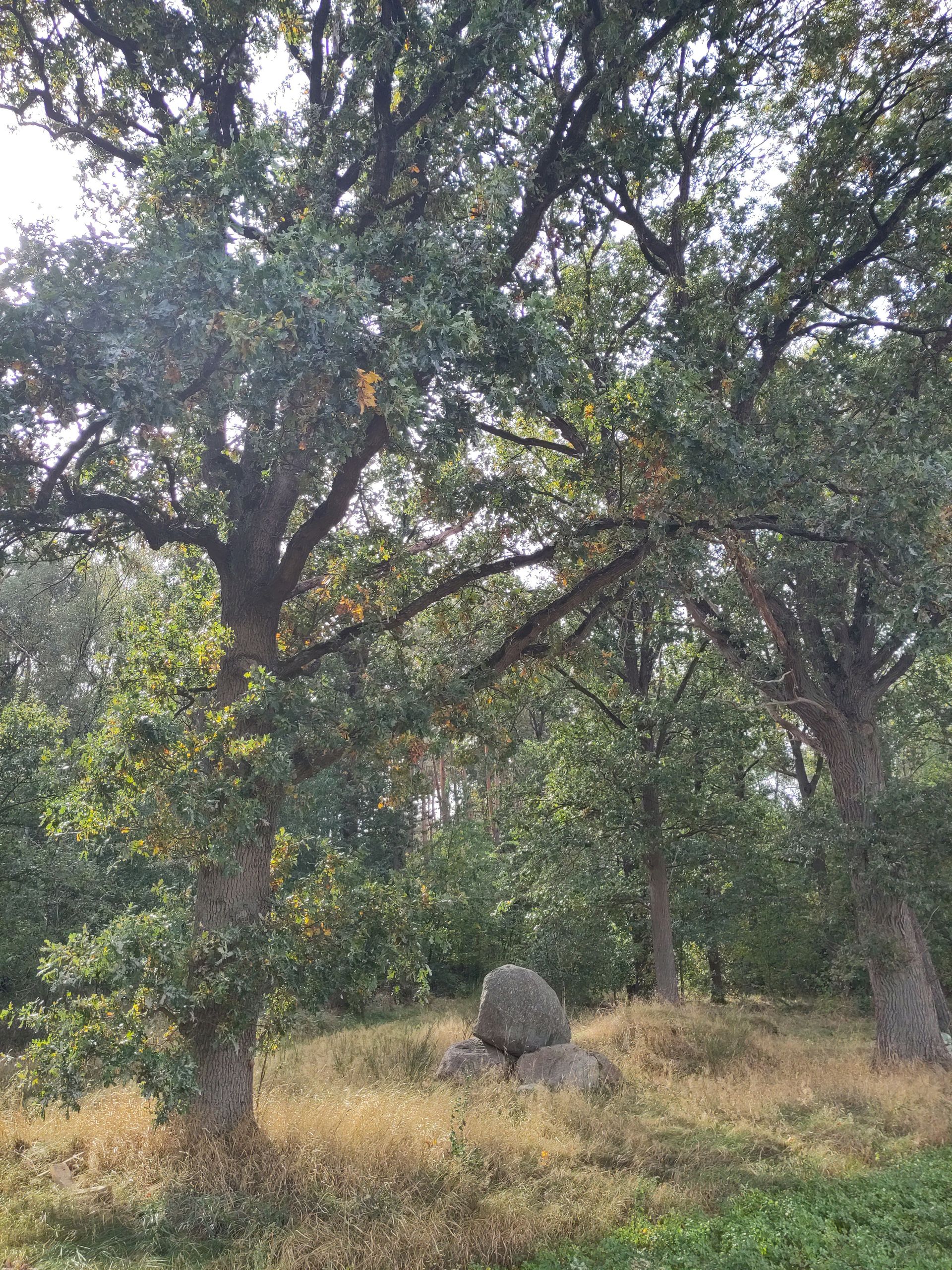
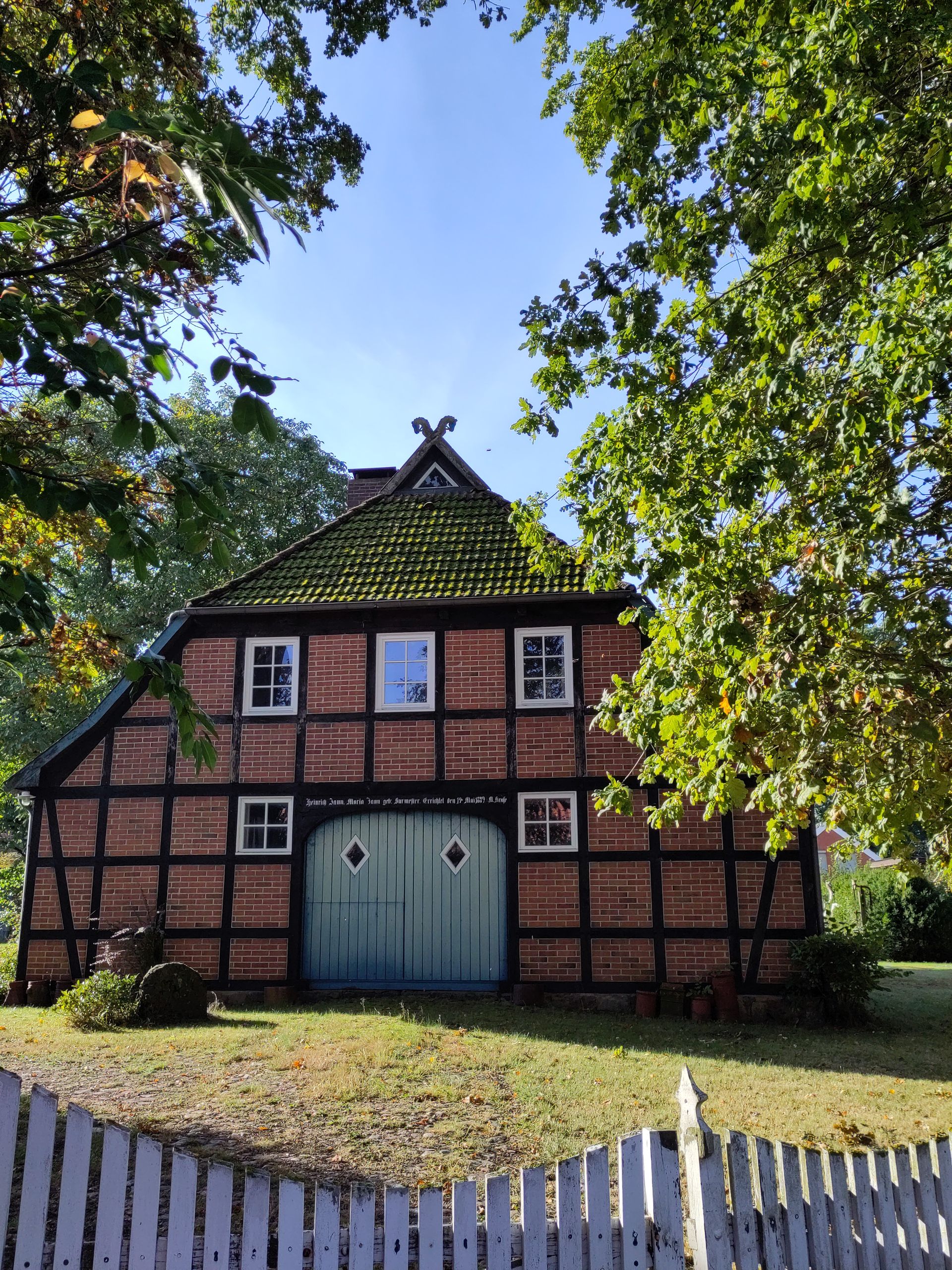
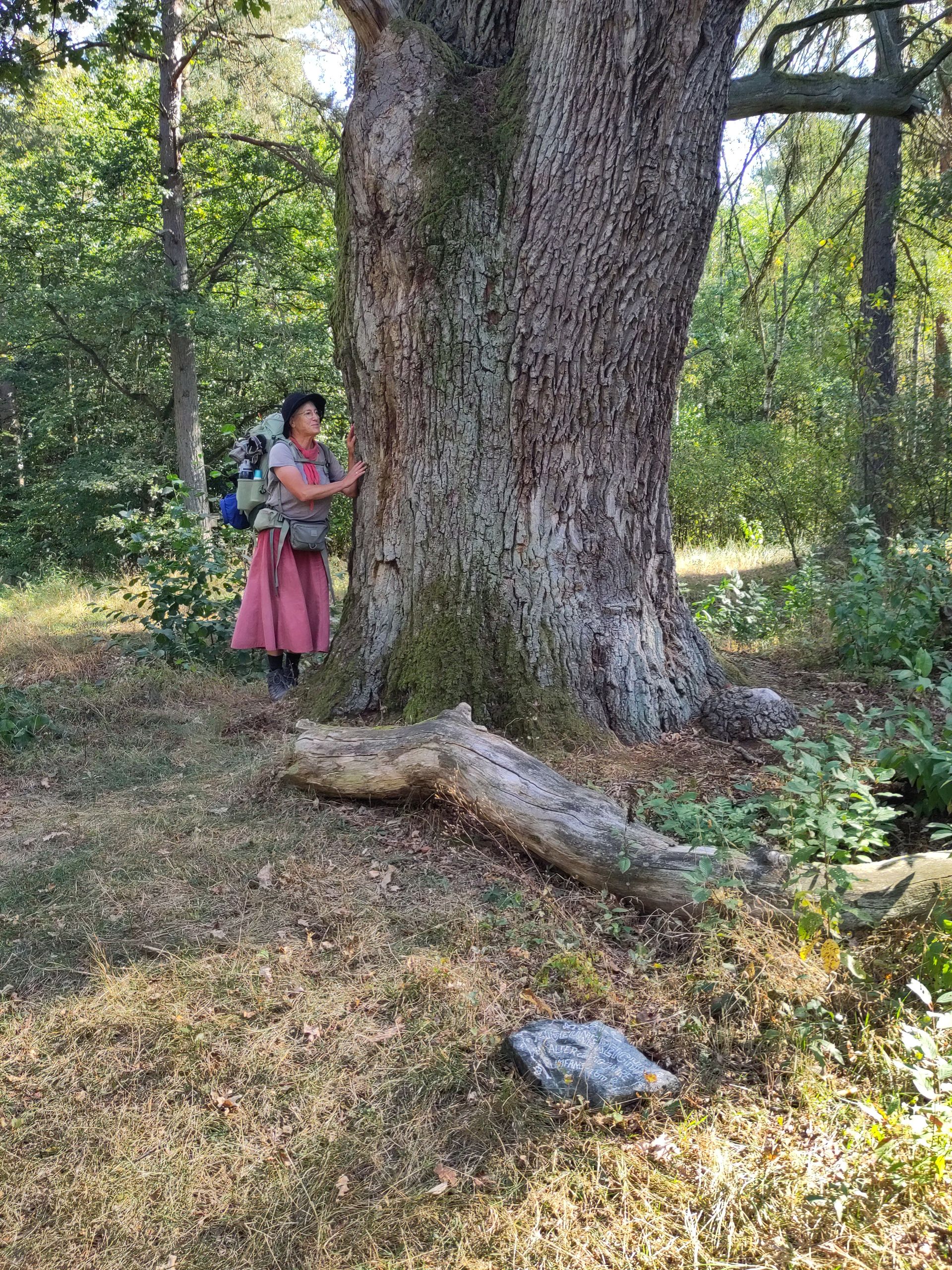
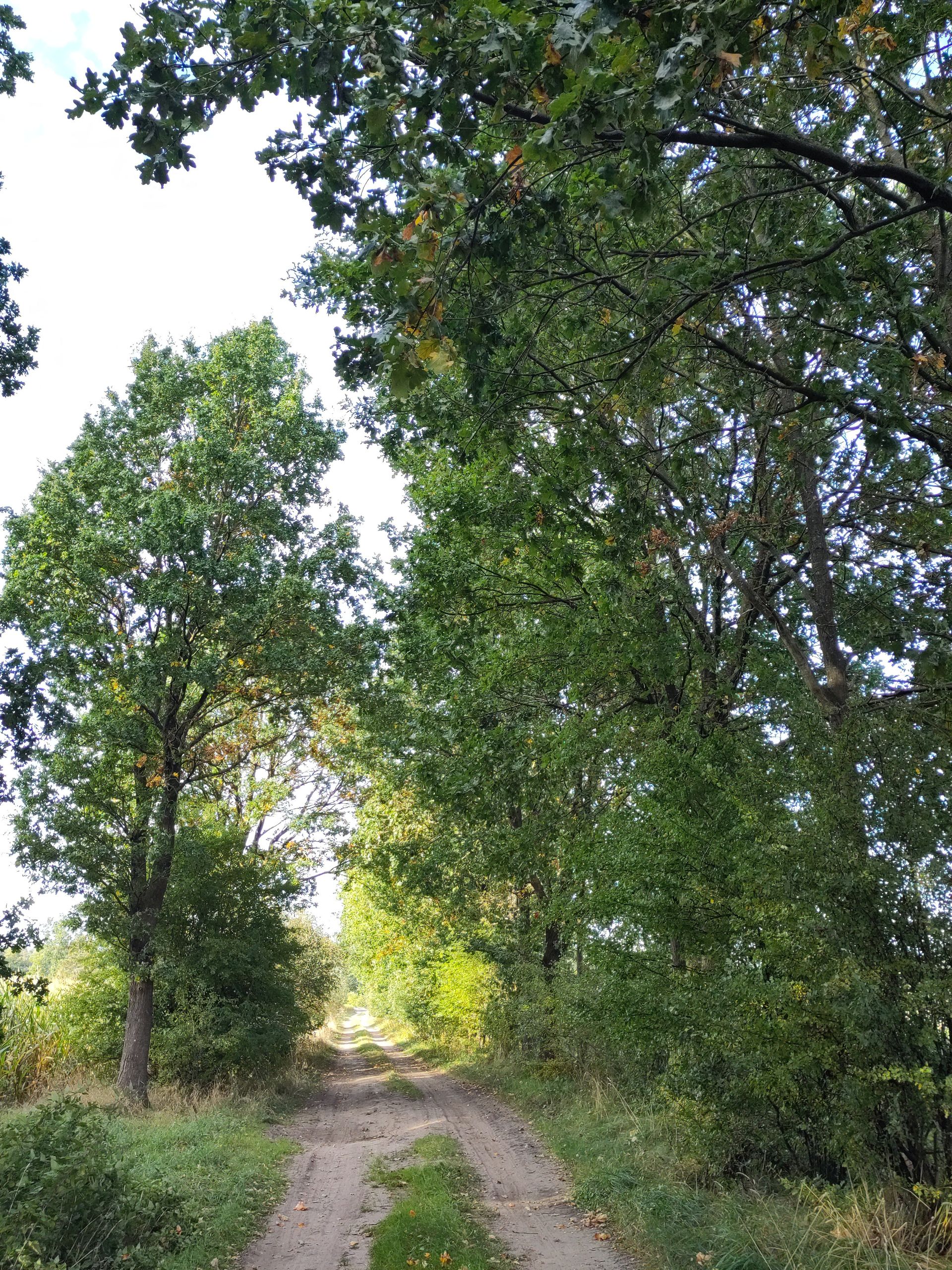
The next few days, the weather will become drier and warmer again – in the morning often still fresh, but during the day on the weekend, up to 20 or even 26°C. I hike out of the Harz and finally out of Saxony-Anhalt, arriving in Hornburg, a wonderfully pretty half-timbered town with carvings and ancient inscriptions on the crooked beams, back in Lower Saxony. Overall, I am now mainly orienting myself around E6 (though not particularly well marked). Almost imperceptibly, I gradually find myself in this vast, flat landscape of the North German Plain. Now the hiking days are characterized by sandy paths, avenues, oak and pine forests, red brick houses and farms with crossed wooden horseheads at the gables. Mushrooms, harvested onion fields, roadside sales of heather potatoes and heather honey, squirrels, mighty linden trees (e.g., at the entrance of Bornum) and 'thousand-year-old' oaks (as in the protected area Barnbruch about 10 km southeast of Gifhorn). South of Wolfenbüttel, when I turn around, I have a good view of the now sunlit Brocken with its towers – farewell glimpses of the Harz and of the ridges in the landscape. When a 'summit' is marked on the map, the elevation given, for example, is only 84 m (like the 'Braune Berg' north of Wendhausen) – and hardly any elevation can be detected in the landscape...
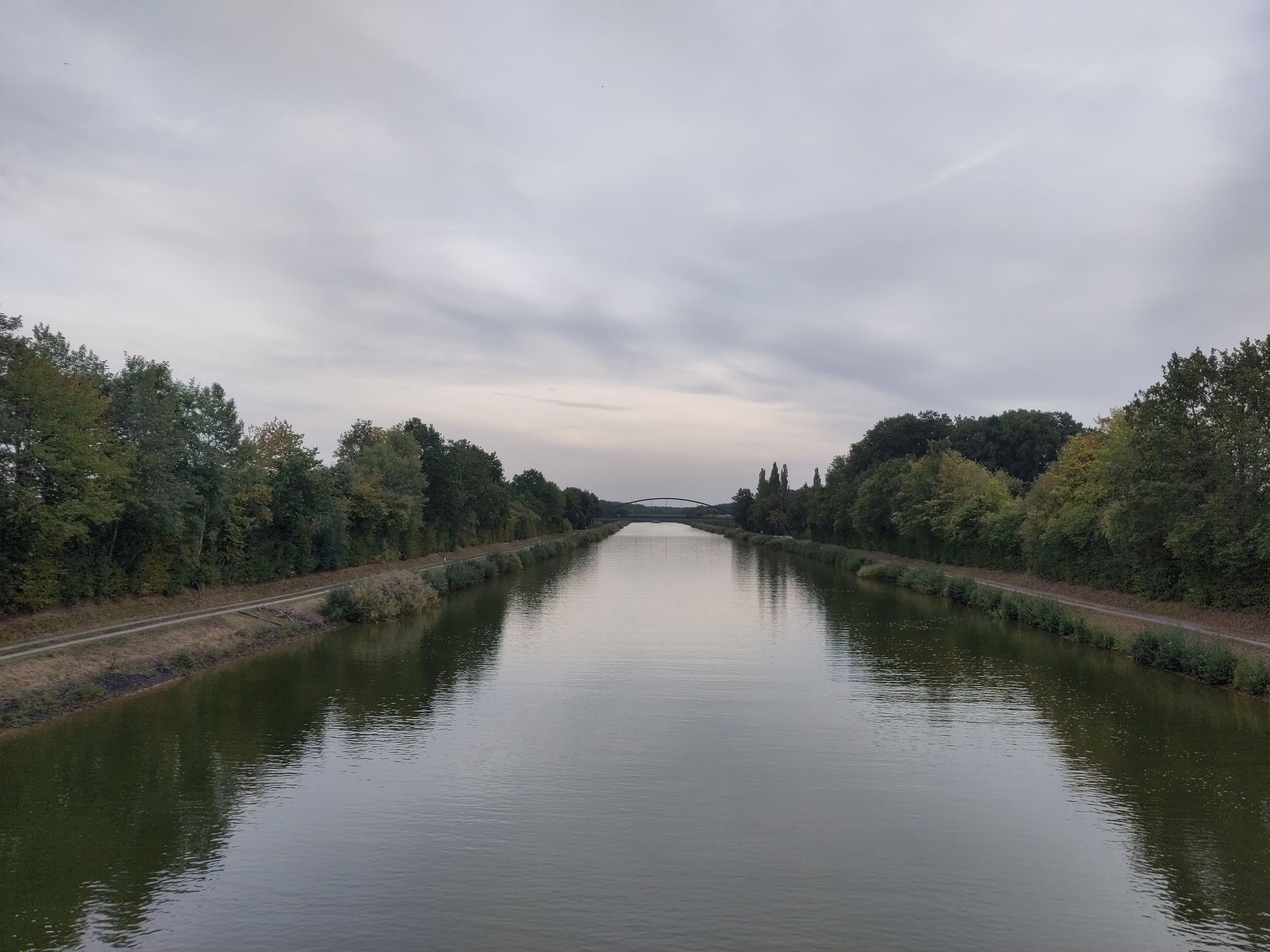
I sleep in a forest rest pavilion north of Wolfenbüttel, on a bird observation platform, in a half-collapsed hut at the forest edge, or in the Kurpark of Bad Bodenteich under a covered wooden storage area by the lake (however here mosquitoes disturb my sleep). During the day, I enjoy the autumnal, North German landscape, cross the Mittelland Canal and walk many kilometers along the Elbe side canal (little freight ship traffic), taking a break in the sparkling sunshine at Tankumsee, where on this beautiful last Sunday of September, many people still enjoy the sun, and white sails dance merrily on the water. Later, I head towards Gifhorn, along the Schlosssee – and I'm very surprised when the gold-glittering and star-decorated blue domes of a Russian wooden stave church appear over the shore, along with picturesque windmills. In fact, on a kind of island, there is the international windmill museum and also the Church of St. Nicholas 'in traditional Russian wooden construction style.' (It was supposedly built by a private family in 1995 '50 years after the end of World War II as a symbol of reconciliation and a bridge between the German and Russian people.') In Hankensbüttel, there’s then the Isenhagen Lake with the 'Otter Center,' where you can take a pleasant break and have a coffee.
As I set off early from the bird observation platform, it is still almost dark, with only the eastern sky shining colorfully, the full moon still glowing under a cloud layer, and a buck 'belling' loudly in the nearby forest. Everything is still as if in a twilight between night and day – I love this slow and almost imperceptible brightening. However, I then arrive in Groß Brunsrode, where the streetlamps shine far too brightly and dim the magic. Yet again, I wonder why so much street lighting is necessary: everything is still asleep and as if deserted, I encounter no one when I walk through the town at half past six. Really, much energy could be saved here! Again and again, good conversations arise, nice encounters, heartfelt interest in my hike, the spontaneous refilling of water bottles, or sometimes even a cup of coffee 'from a private person.' And increasingly, I hear 'wolf stories.' In the area around Göhrde, a vast forested area south of the Elbe, almost everyone seems to have seen wolves and shares their tales. It rained yesterday and last night, but tomorrow I'll be hiking through Göhrde – and hopefully won't encounter any wolves...