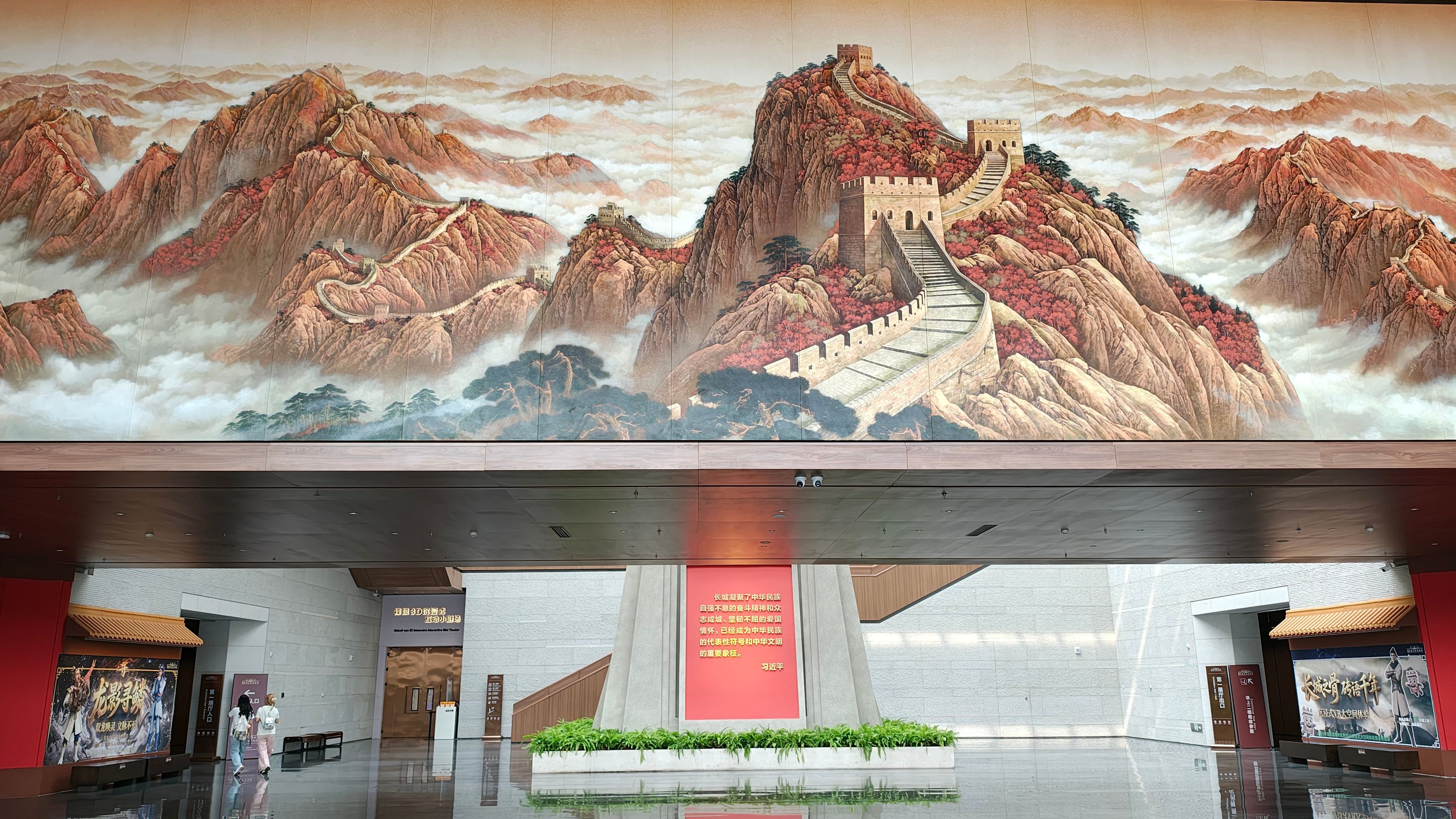
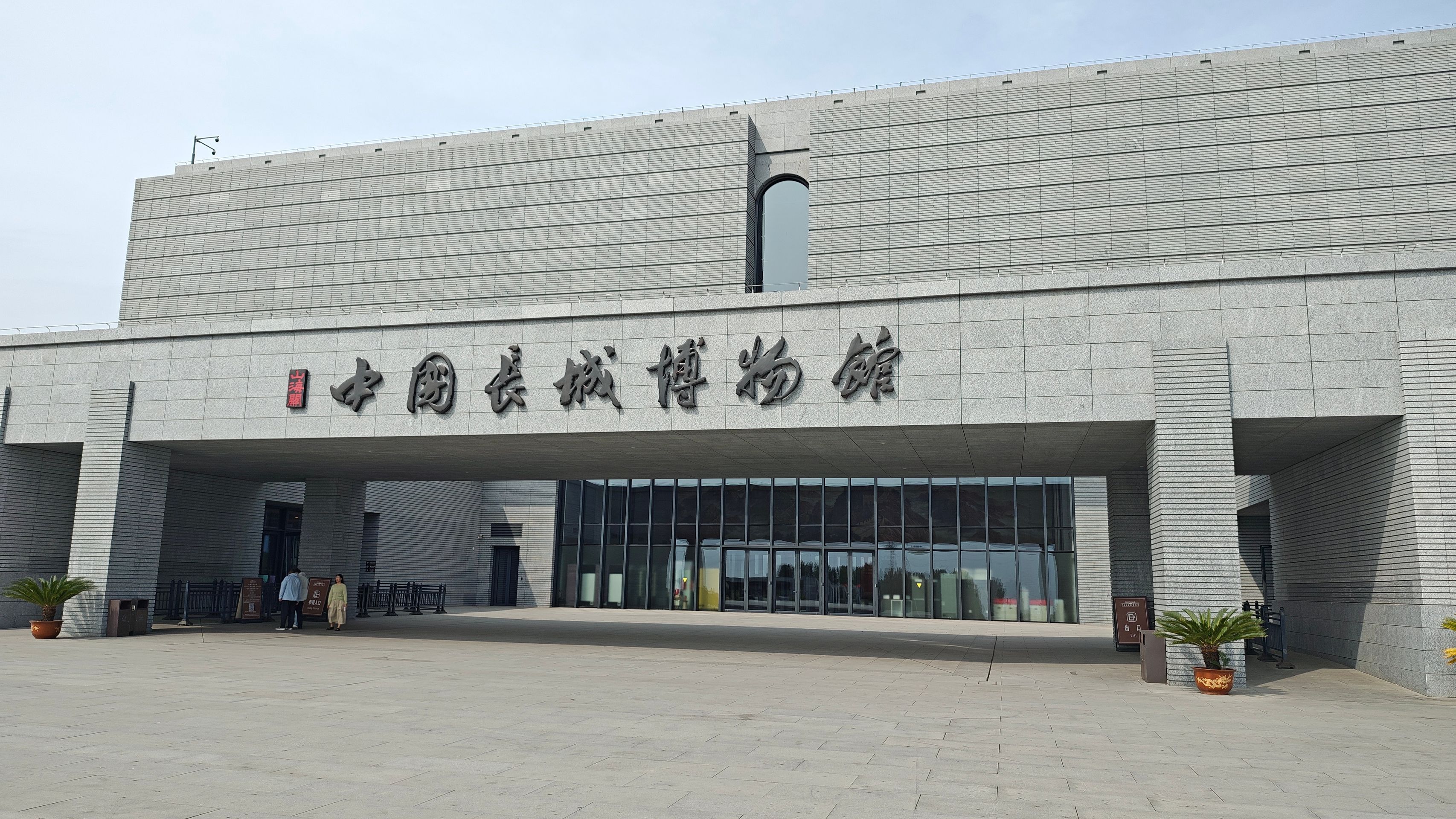
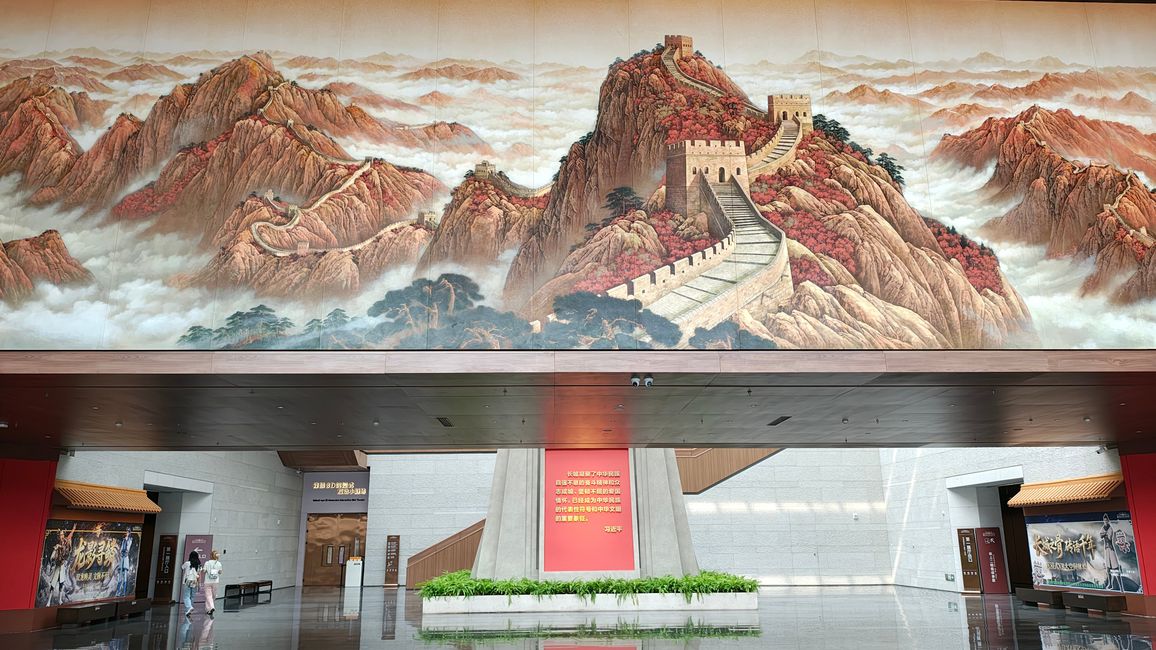
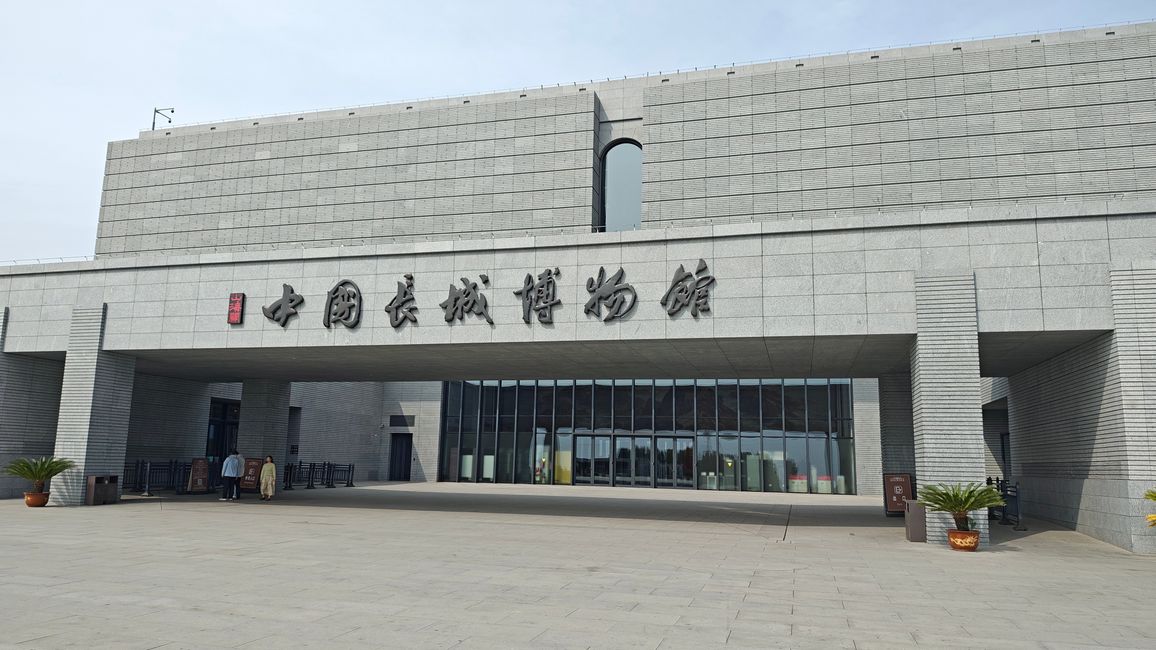
Perhaps some readers have already noticed: In two photos of the Great Wall with a view into the plain in the blog post 'The Almost Missed Wall Section', there is a large rectangular gray building visible. This inconspicuous massive 'box' is the Great Wall Museum Shanhaiguan at the Jiaoshan Nature Park.
There is also a large museum in our hometown Cangzhou dedicated to the culture of the Grand Canal. We visited this museum last year and also three years ago, and you can find my respective blog posts here: Grand Canal Culture & Regional Culture in Cangzhou.
The themes and content of the exhibits in such large museum temples are always immense, elaborate, and very vividly presented. The extent of the Wall Museum we visited is so vast that I will not be able to write as many blog contents here due to time constraints as I did for the earlier museum visits mentioned. I will touch on some interesting aspects and conclude with an anecdote about our return journey. I warmly recommend a visit to this museum for travelers in this region and suggest bringing a good amount of time along.
First, we set off with the ride service from Beidaihe. Coincidentally, a student who is going to his school is in the car. During the conversation, it turns out that he also comes from the Cangzhou region. How small the world is even in the vast China.
Upon arrival, we enter the museum, which, by the way, is free of charge and only requires a reservation for a time slot in the app, and we sensibly begin our tour in Hall 1 and work our way up to Hall 4 on the third floor.
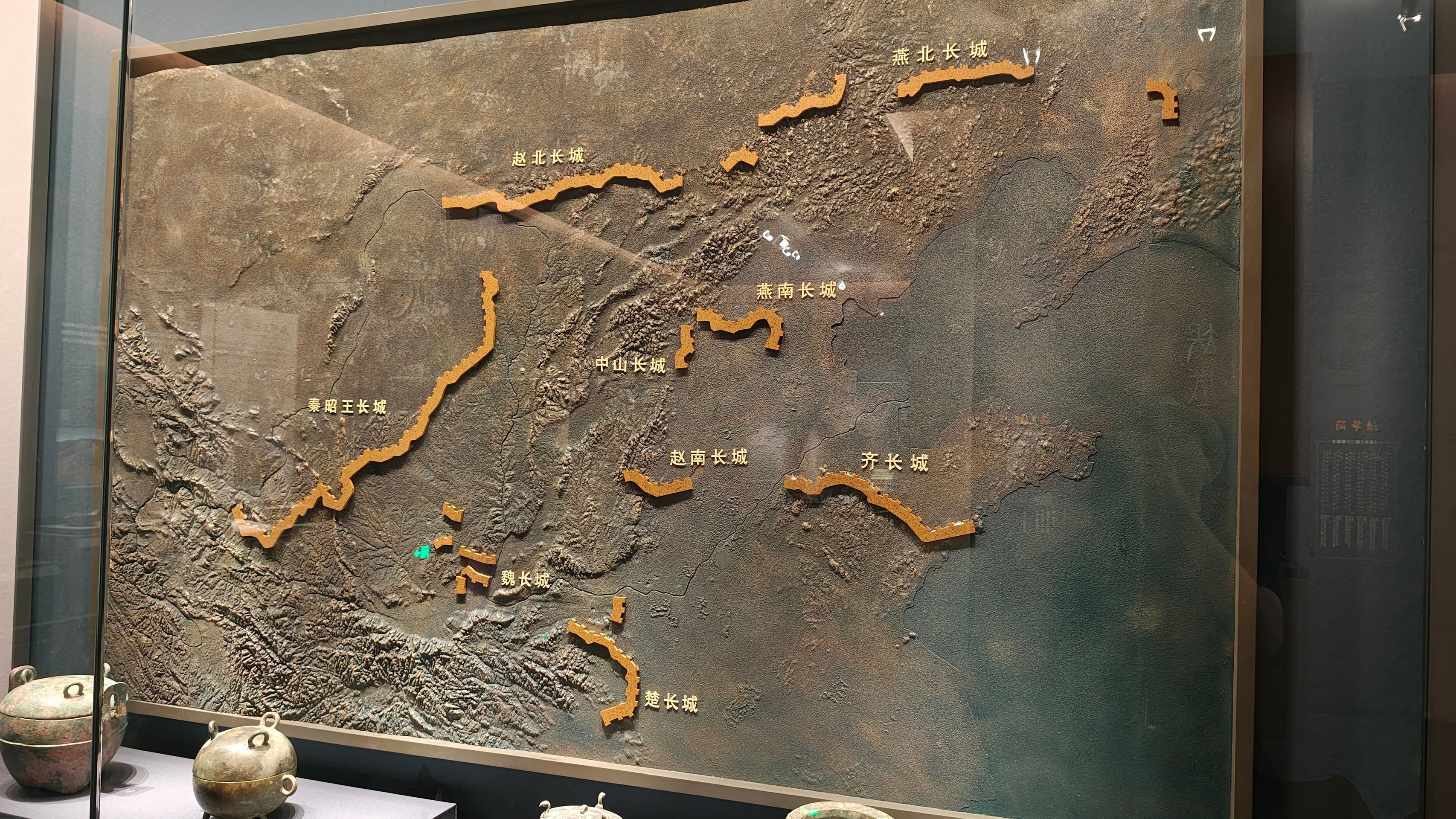
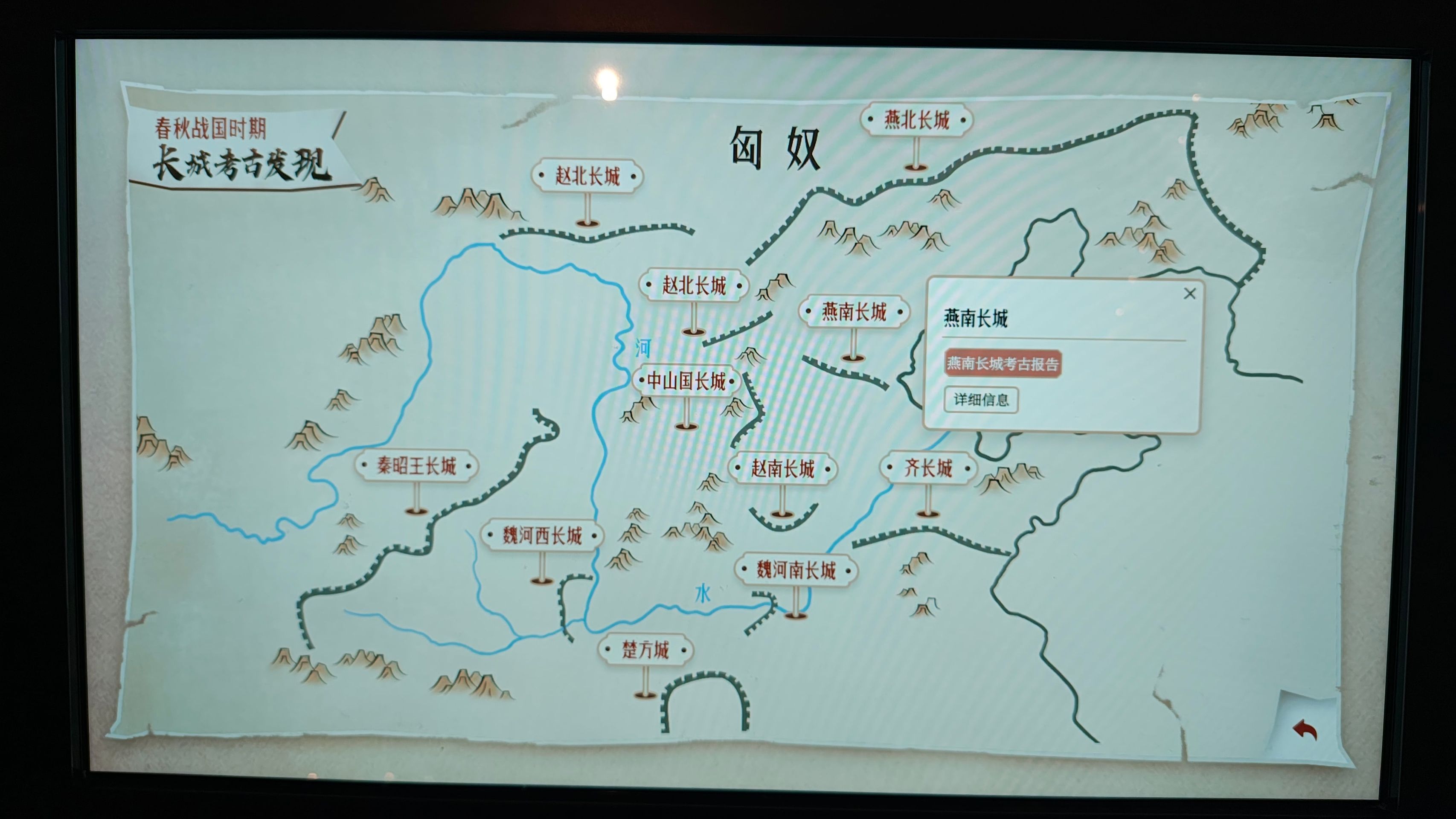
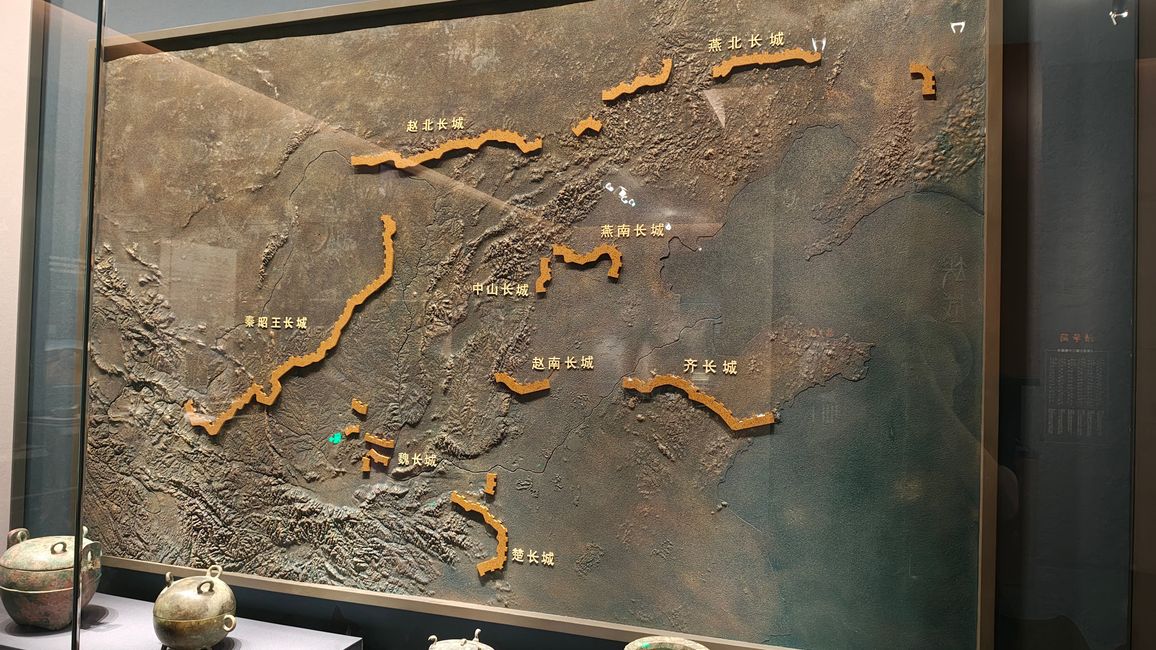
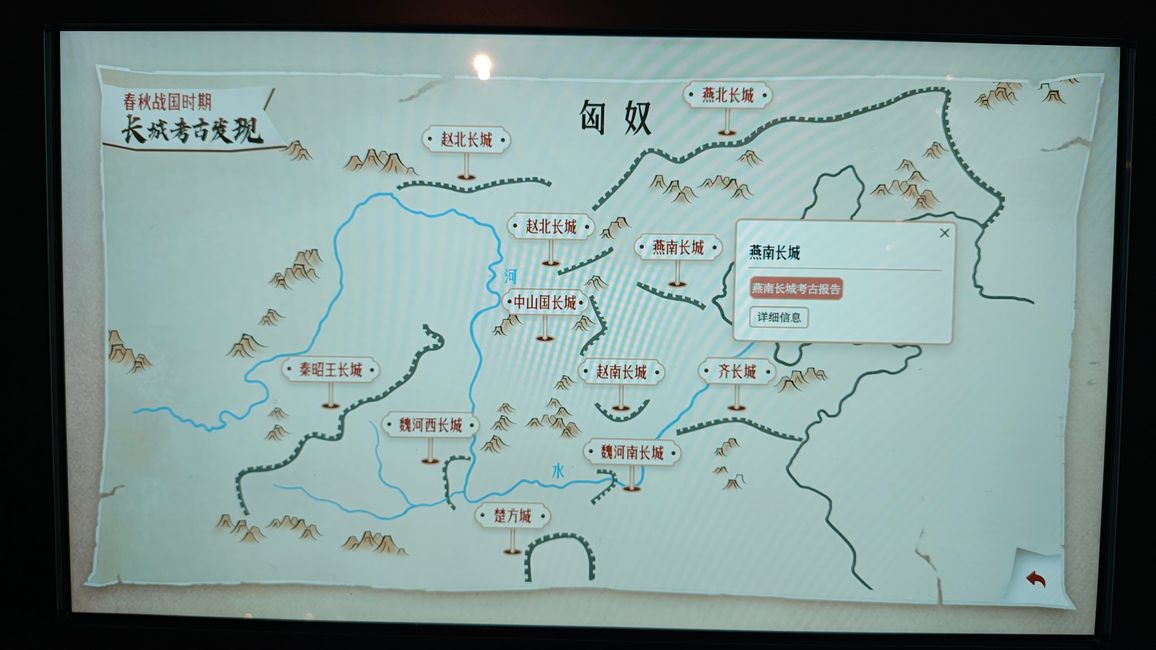
Initially, a map shows that the Great Wall already existed in pieces during the time of the Warring States, as nomadic raids from the north occurred even before the unification of great China. Each principality had thus built its own protective walls.
There is even a section of the wall, the Yan-Nan Wall, just 130 km northwest of Cangzhou. A well-preserved 9 km section remains near the city of Xushui, which I save as a travel destination in my map app (Amap). The history of this section of the wall is explained multimedia on a monitor.
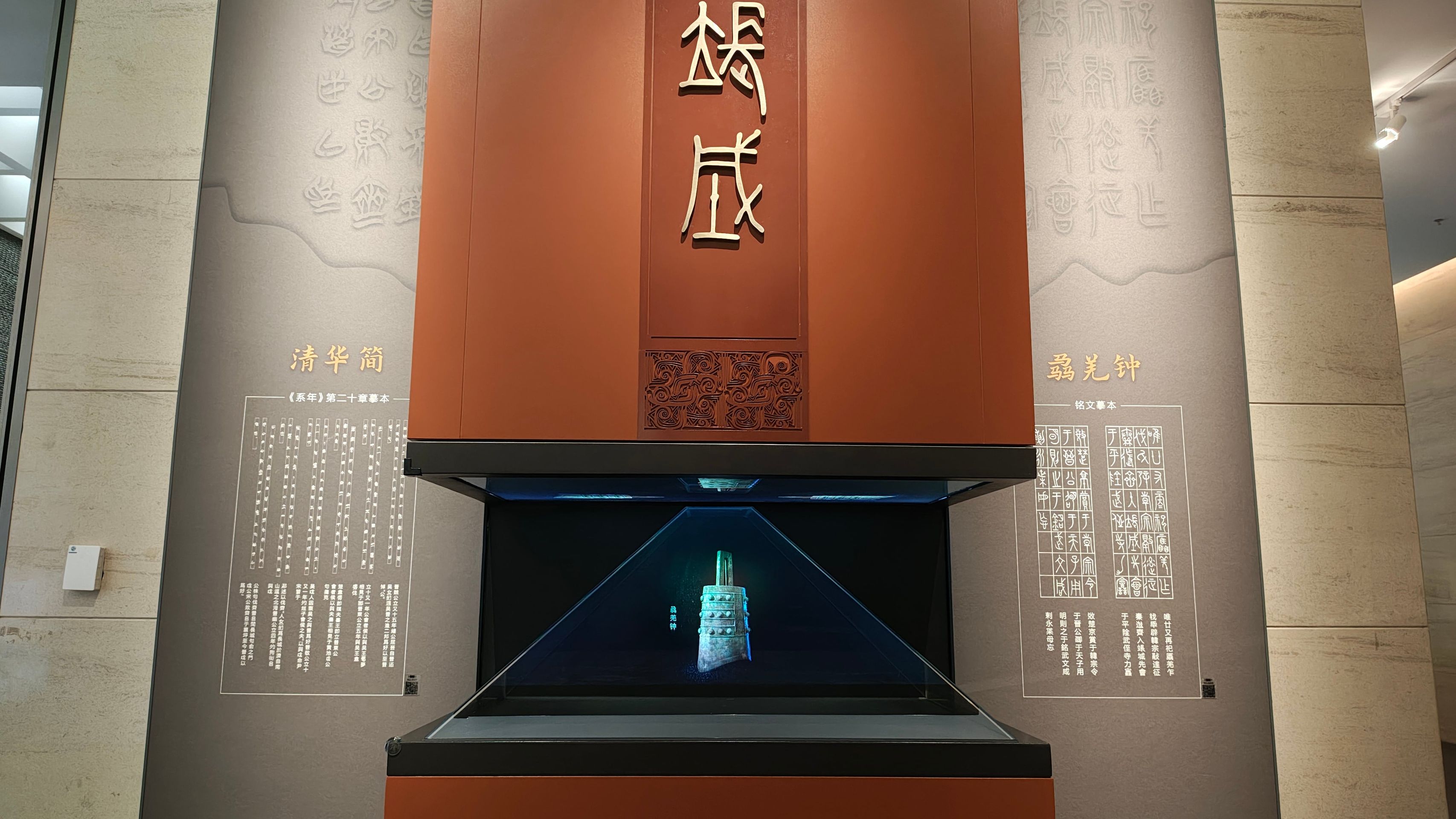
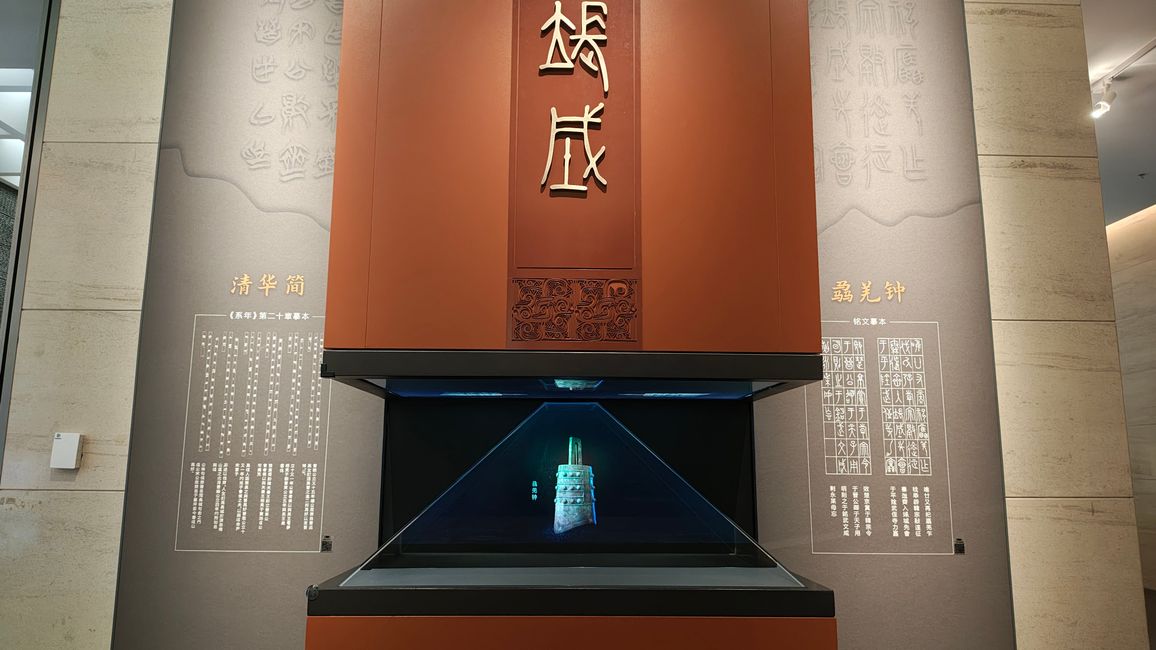
A holographic installation displays the inscription of a bronze bell from the Eastern Zhou Dynasty in archaic seal script, before the unification of script by the first emperor Qin Shihuangdi.
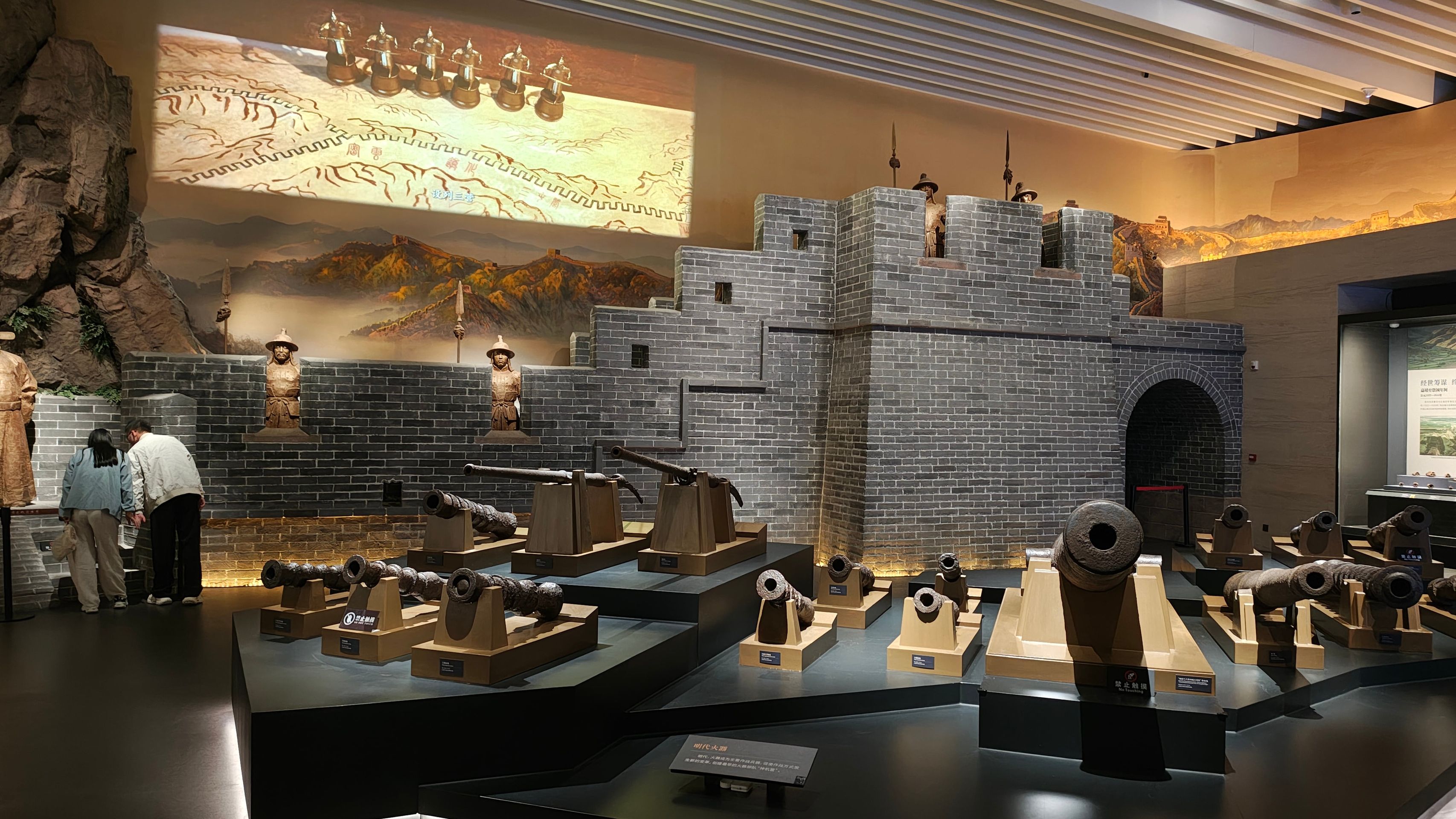
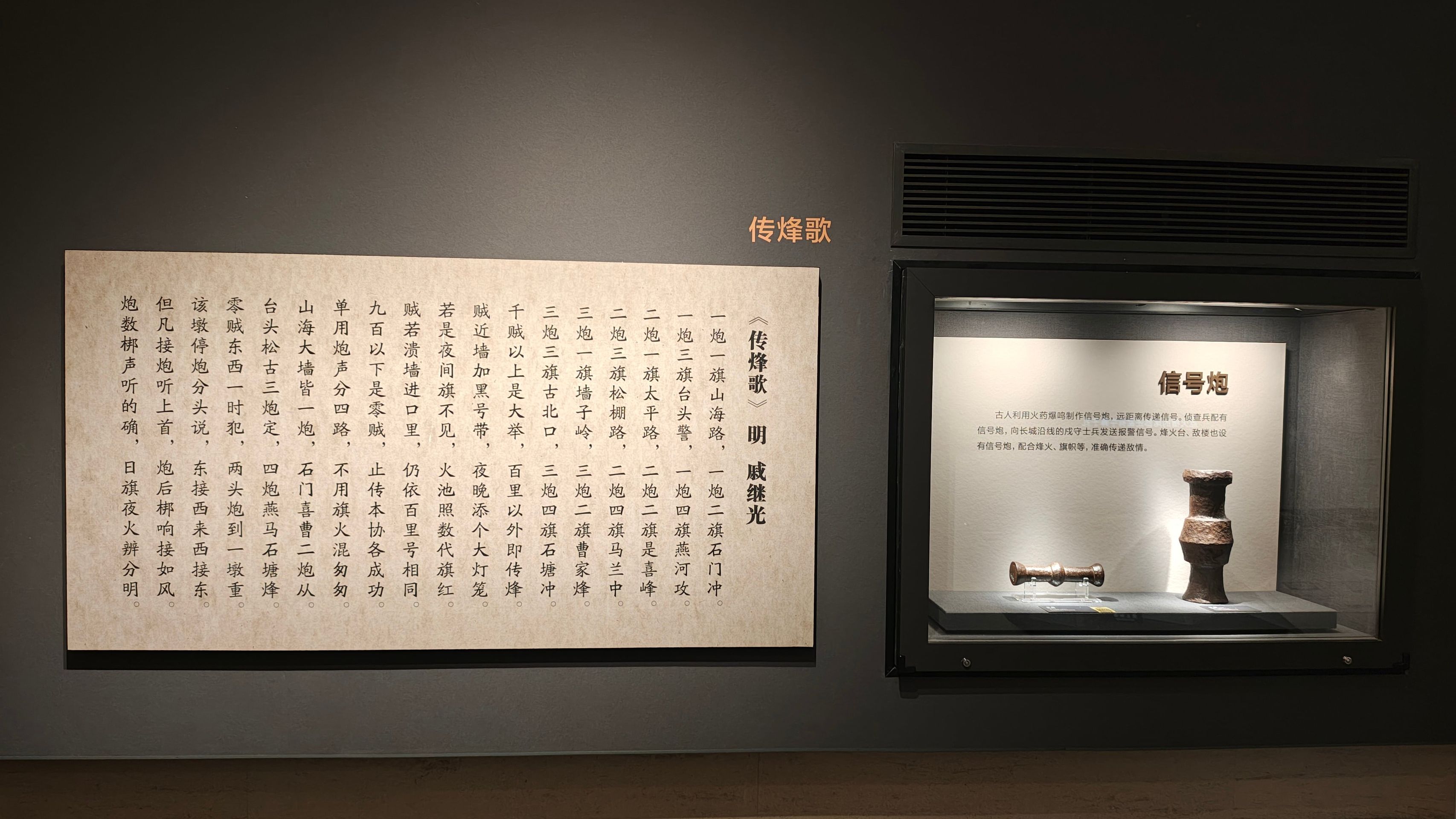
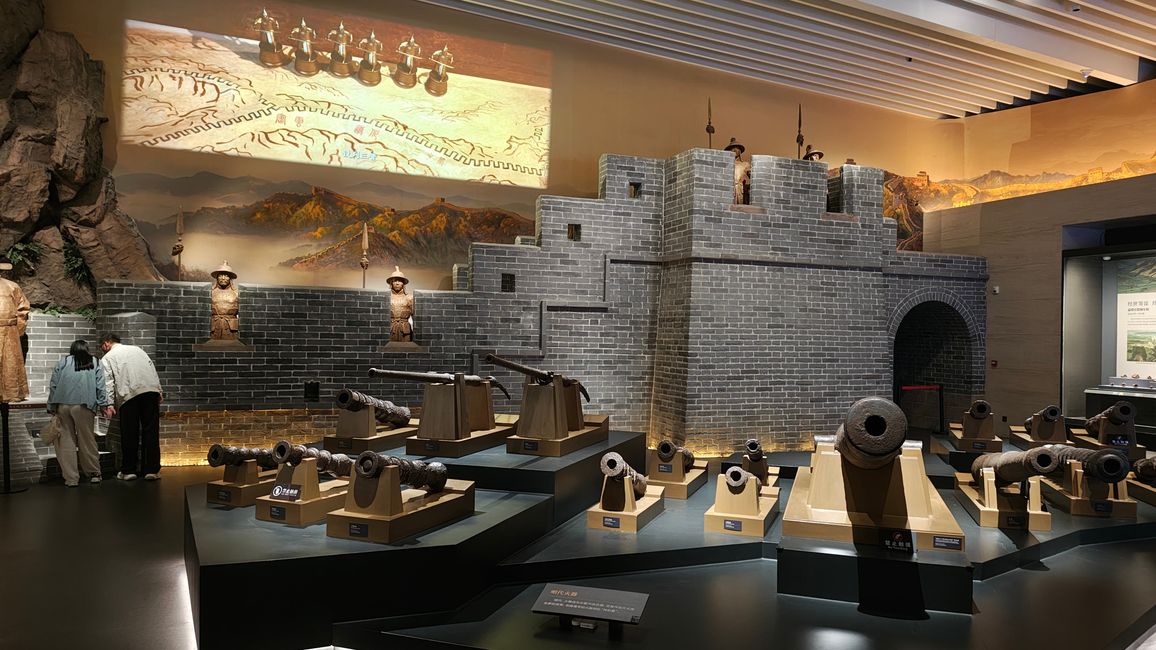
Staying with bronze, numerous cannons made of this material and some made of iron were also used for the defense of the country, especially during the Ming Dynasty (1368-1644) along the wall. They were already well established in China, where Europe was just beginning to develop its first bronze cannons.
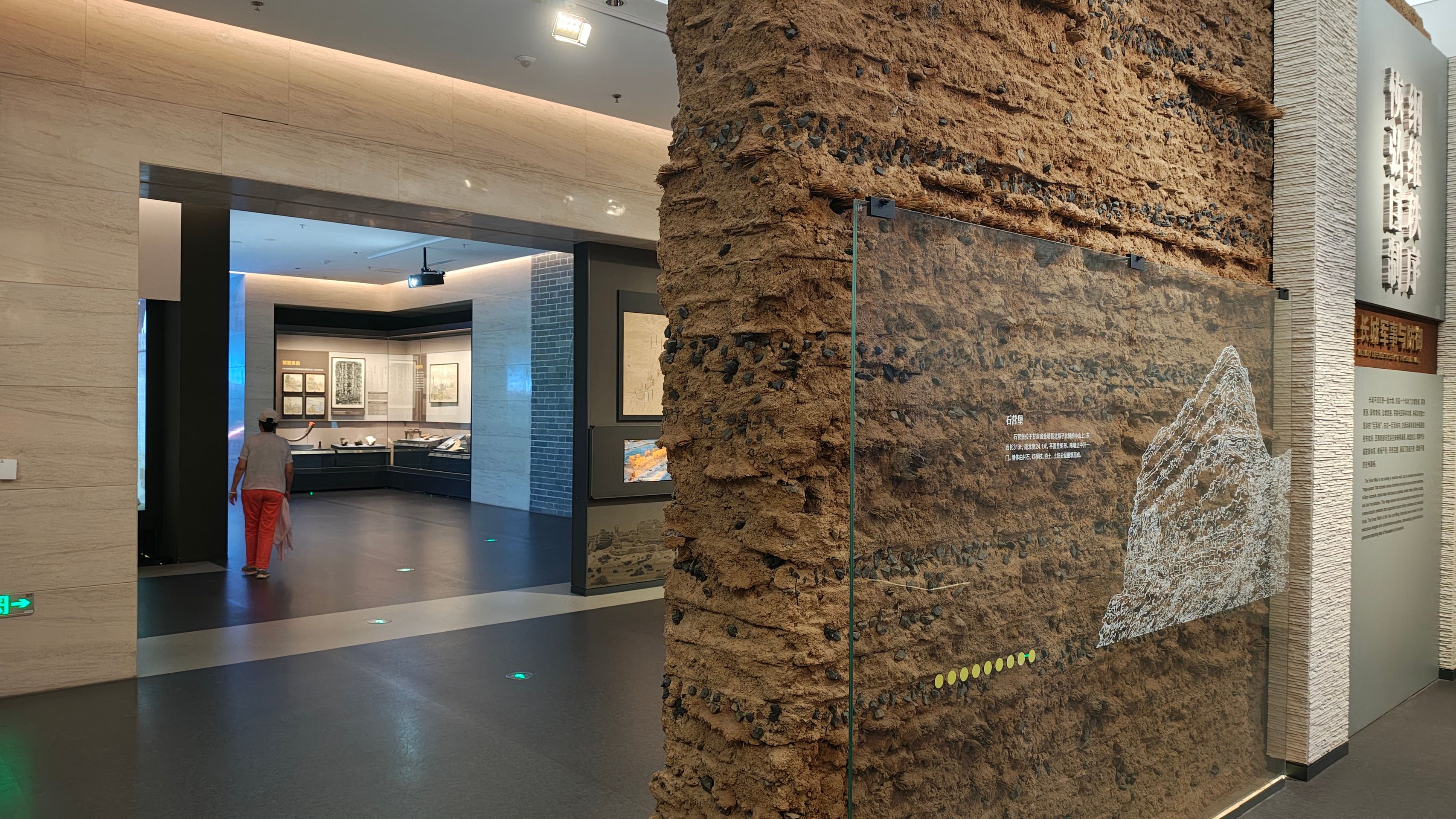
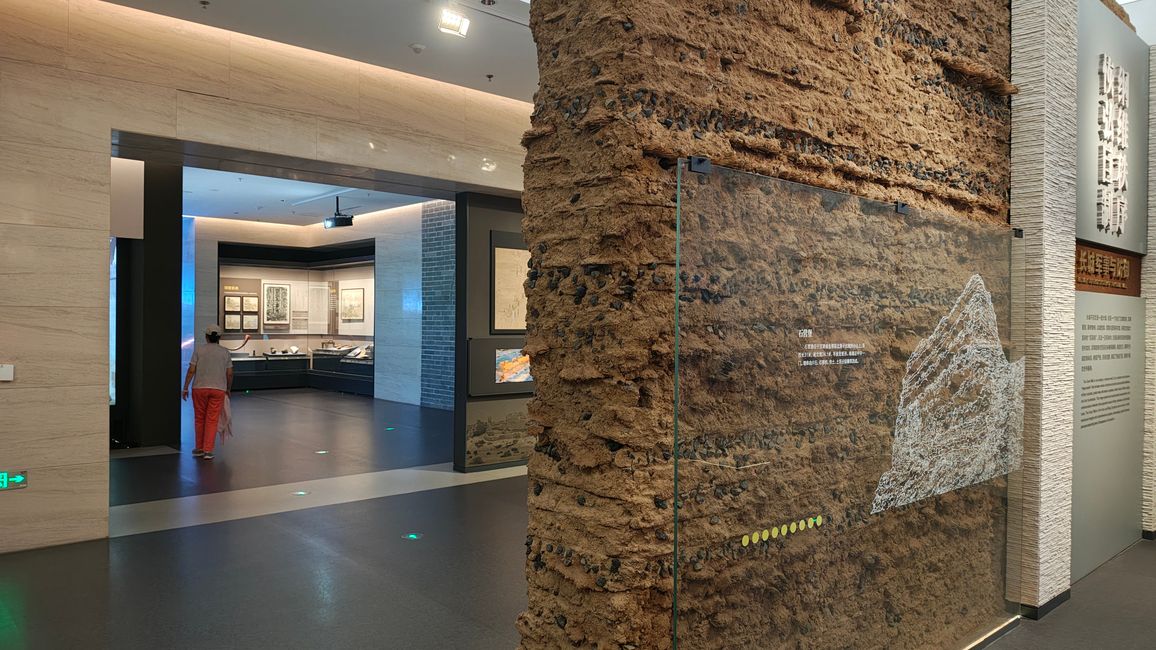
The Jurchens in the northeast also protected themselves against the nomadic Mongols with a wall, which was however built mainly from rammed earth. With this inexpensive and quick construction method in flat terrain, the protective goal was also achieved. A piece of such a rammed earth wall is set up in the museum.
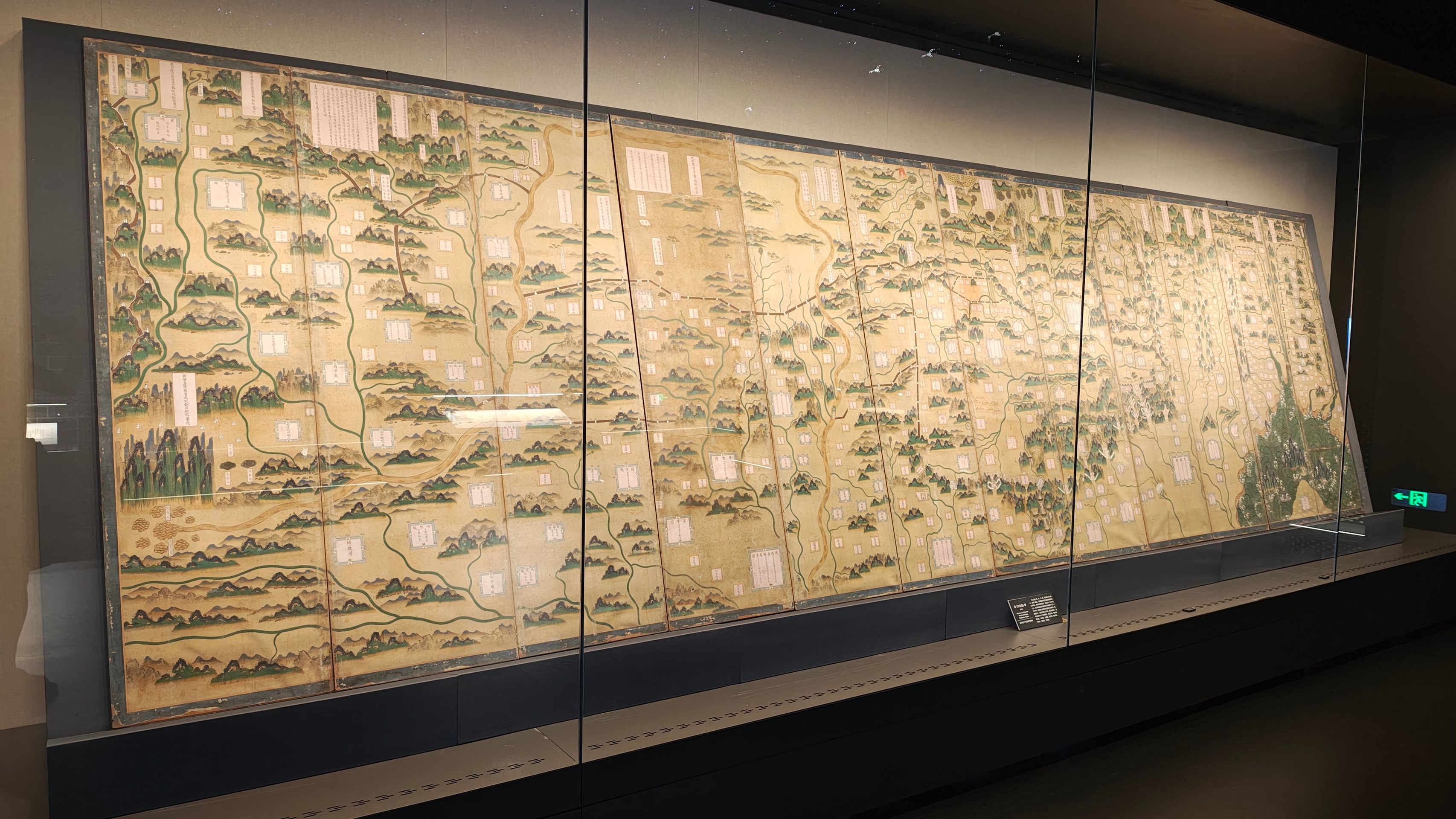
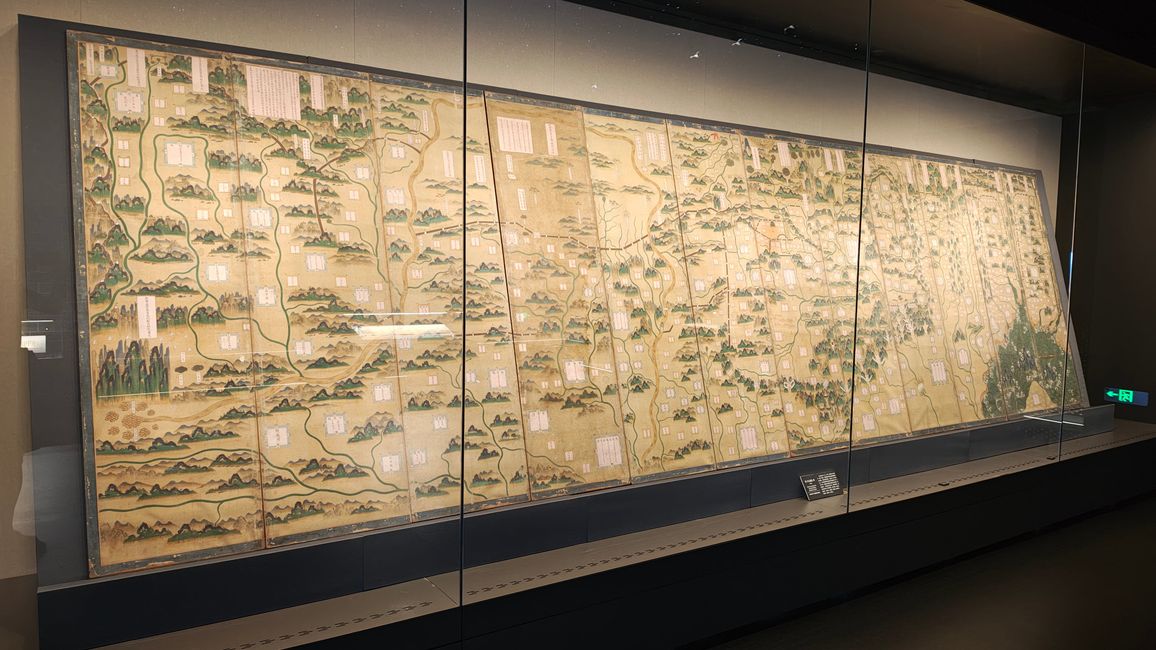
However, let's return to the architecturally more demanding Ming Wall. In 1534, the official Xu Lun in the Ministry of War compiled a large map of the nine border regions. These northern defensive zones were of great importance for the Ming empire. The 12-part map is nearly 1.84 m tall, with a copy displayed here in Shanhaiguan. The original is in the National Museum in Beijing.
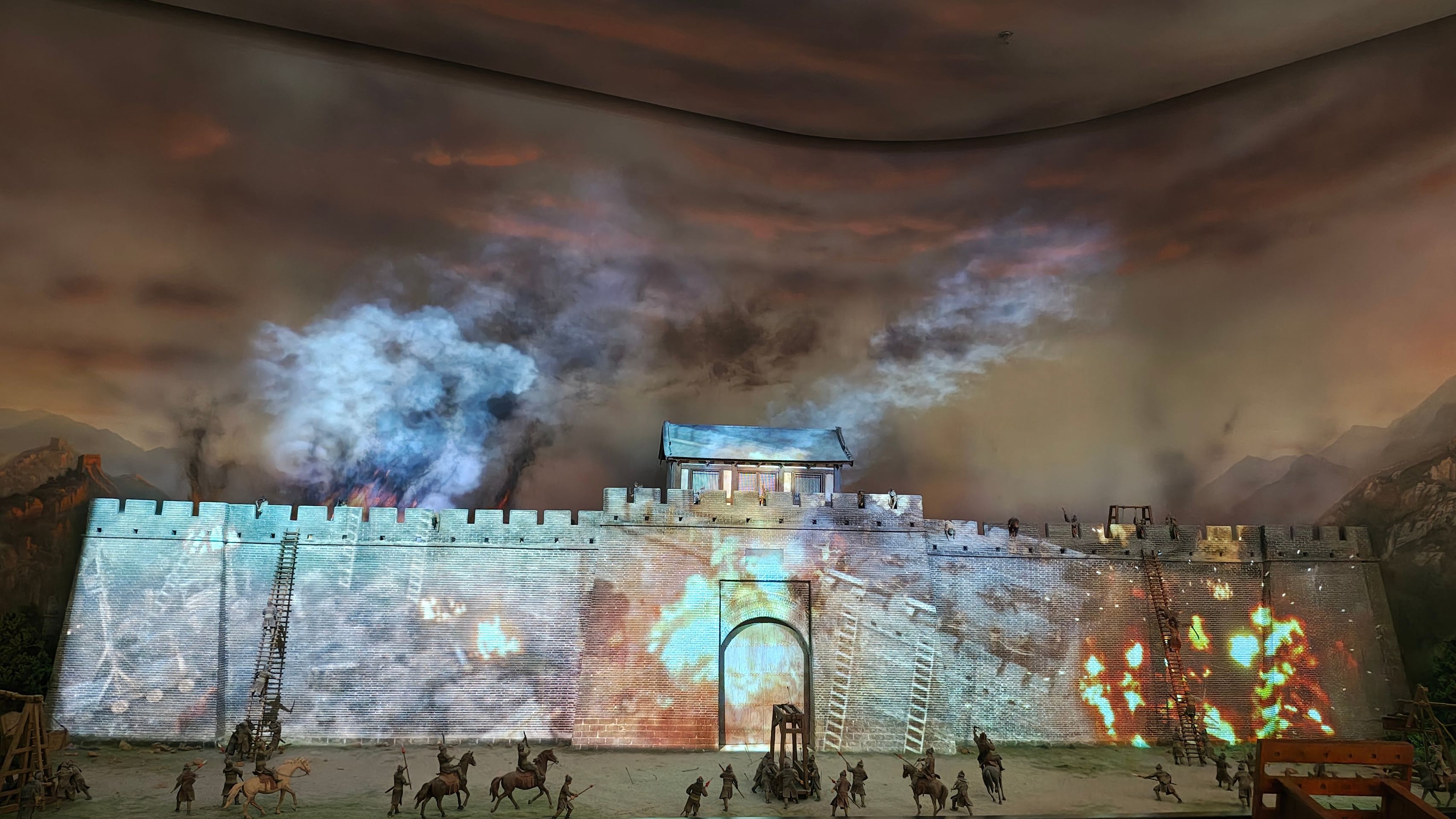
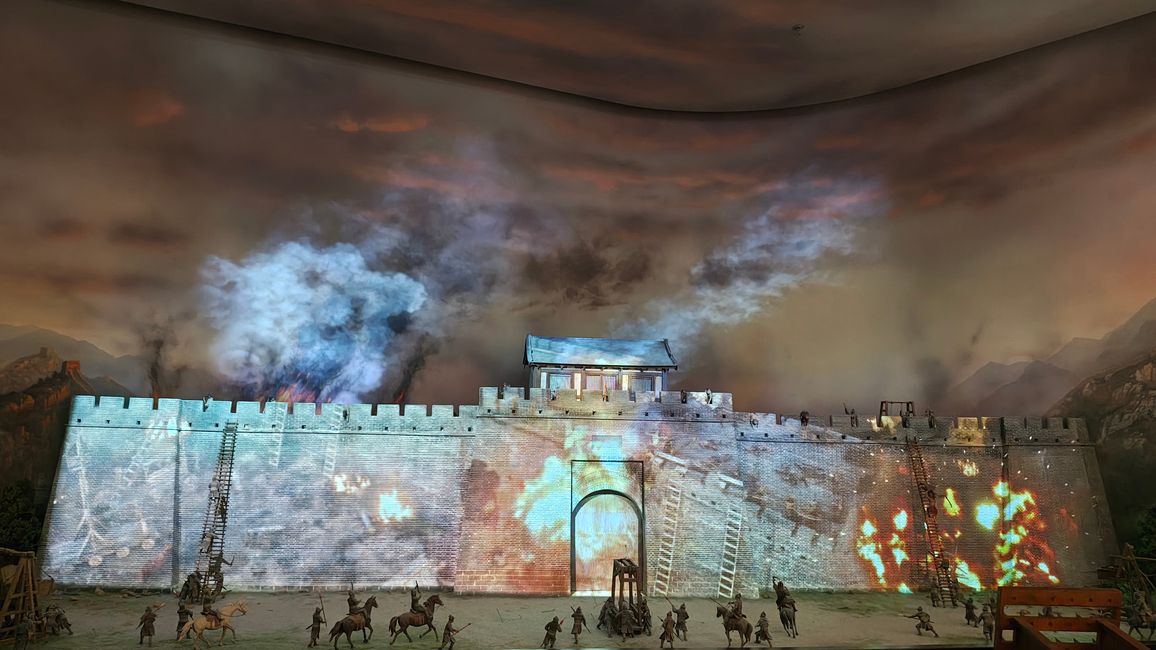
A wall model vividly shows the battle tactics using video projection.
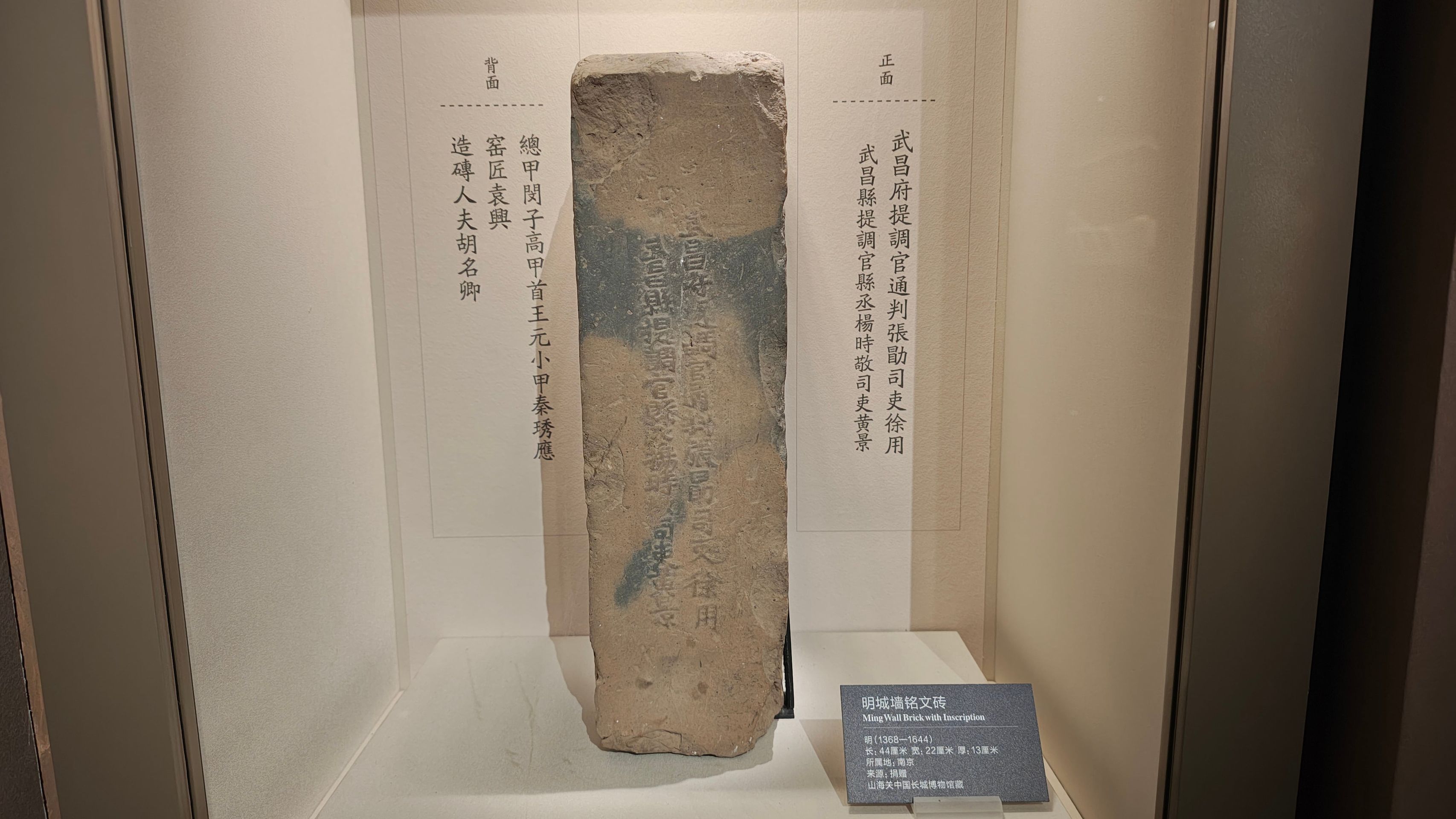
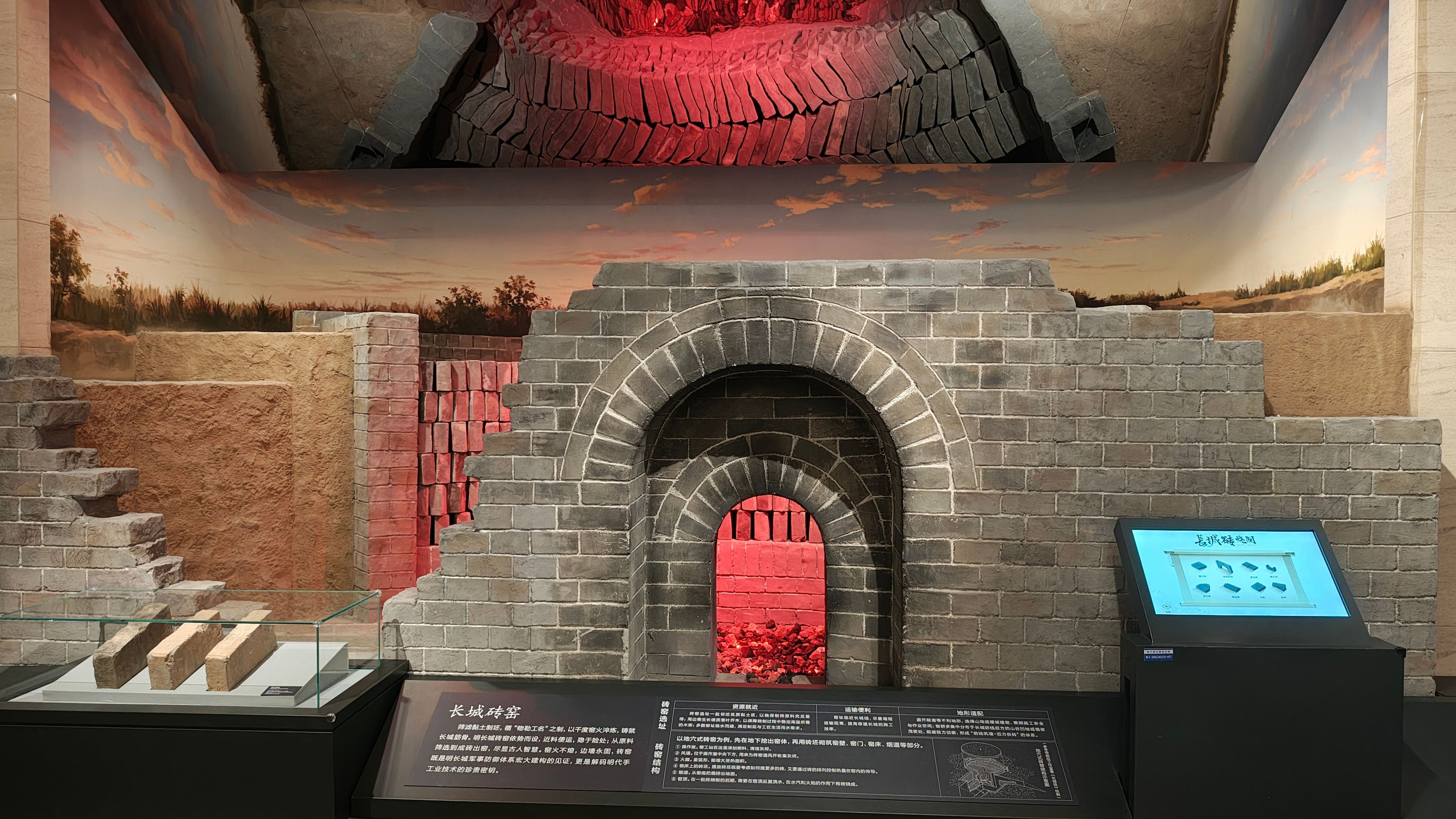
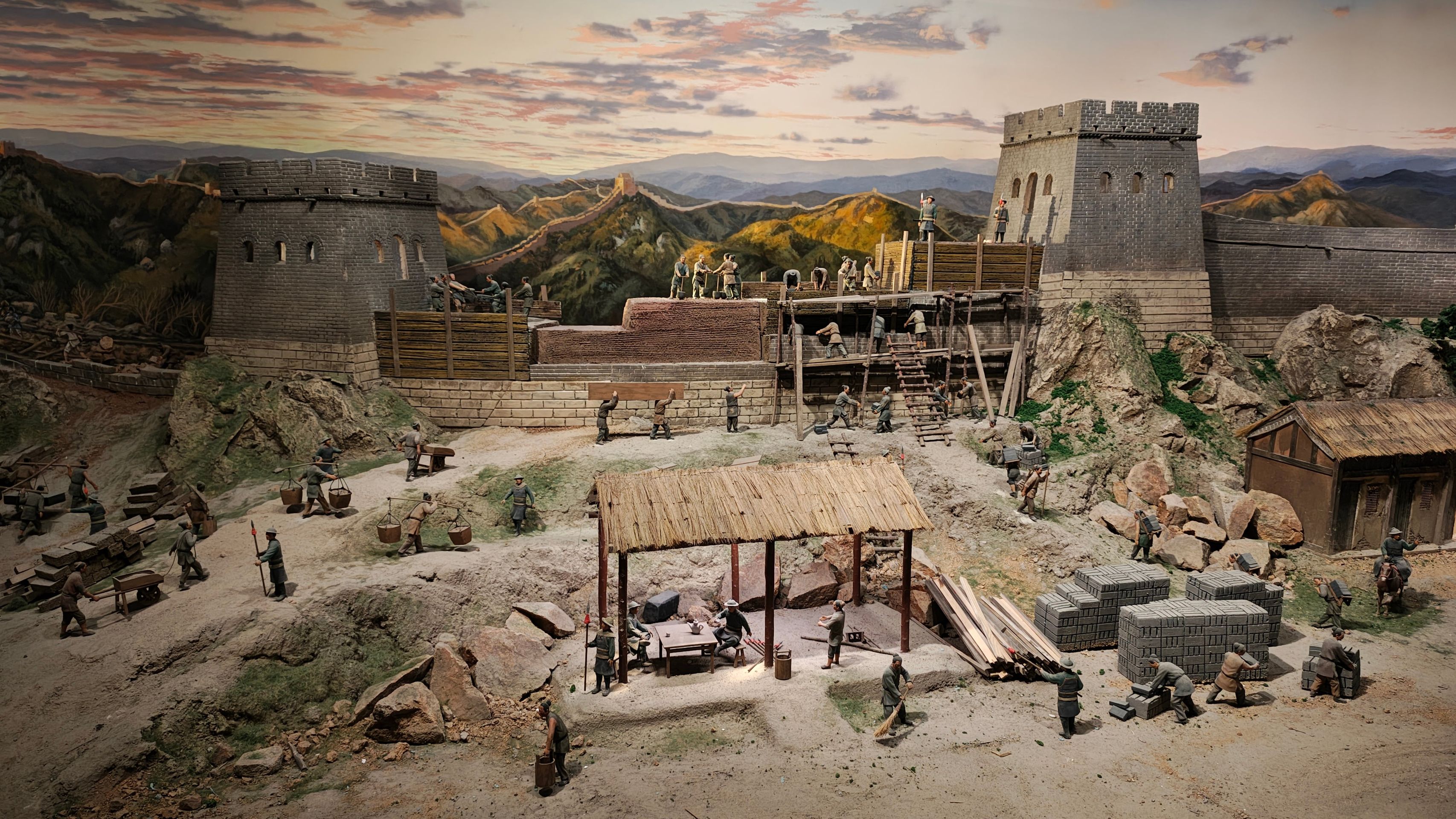
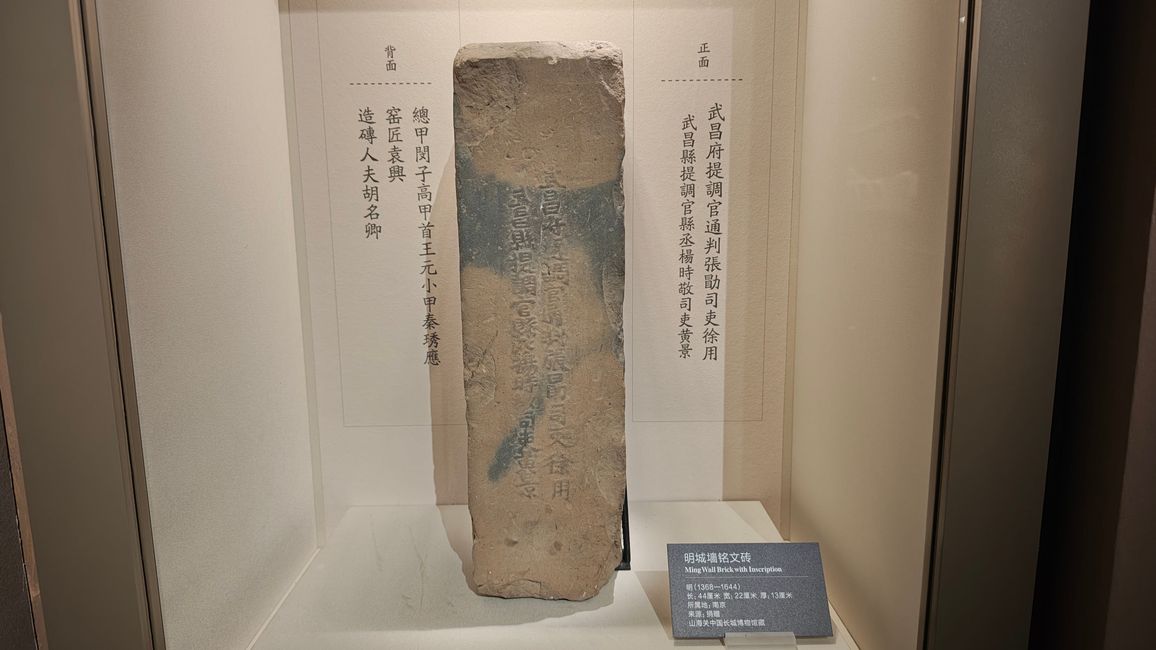
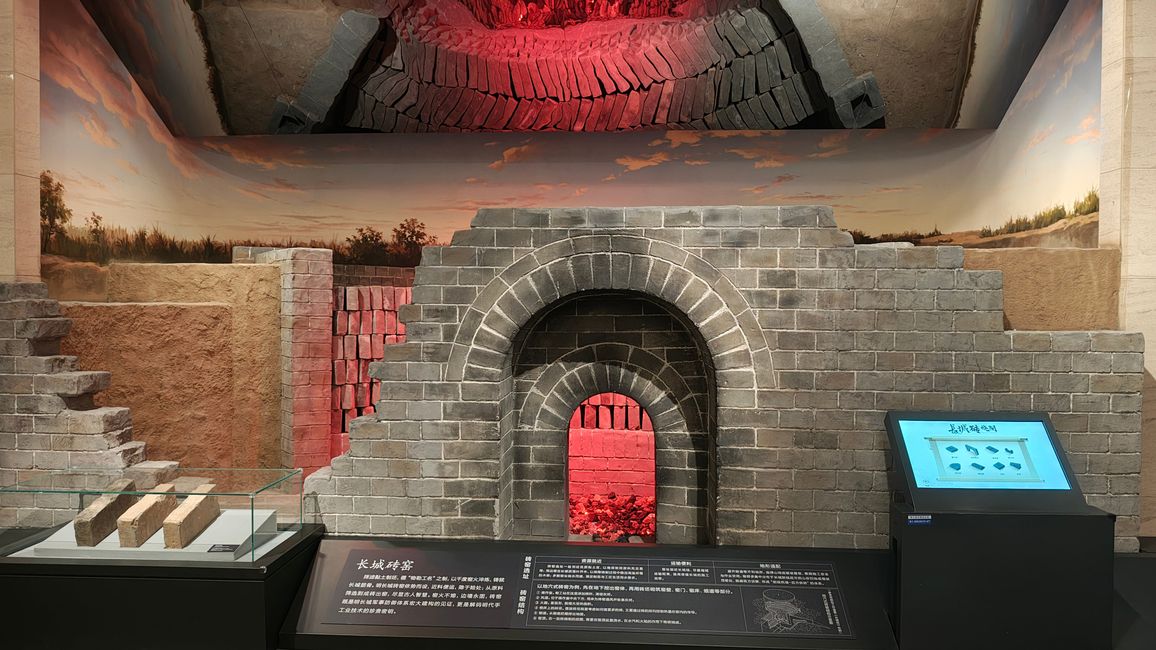
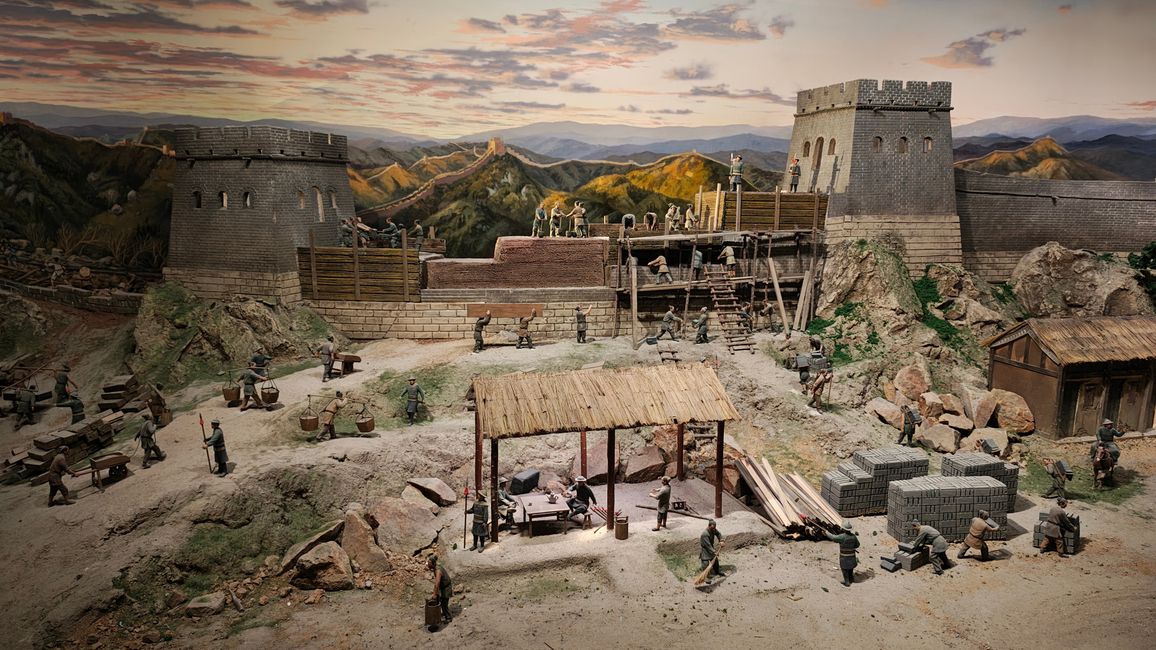
A large area of the exhibition is dedicated to the production of bricks from the Ming era, which were used to fortify and build the wall. The bricks are labeled to indicate their origin and ensure quality control. It illustrates the bureaucratic system of the Ming period and the hierarchical organization in the production of building materials for the Great Wall.
From the high officials in the prefecture and county to the group leaders on-site, down to the simple workers and the kiln master, everyone was named and responsible for their work. The following shown brick is labeled with these responsible individuals on the front and back:
Prefectural Supervisor Wuchang: Zhang Xu
Administrative Officer: Xu Yong
County Supervisor Wuchang: Yang Shijing
Administrative Officer: Huang Jing
Chief Group Leader (Zongjia): Min Zigao
Group Leader (Jiaoshou): Wang Yuan
Subgroup Leader (Xiaojia): Qin Xiuying
Kiln Master / Brickmaker (Yaochang): Yuan Xing
Brickmaker / Worker (Zaozhuan Renfu): Hu Mingqing
The kiln itself consists of the fire chamber, the oven bed, the stoking area, and the chimney.
And so it went at the construction site.
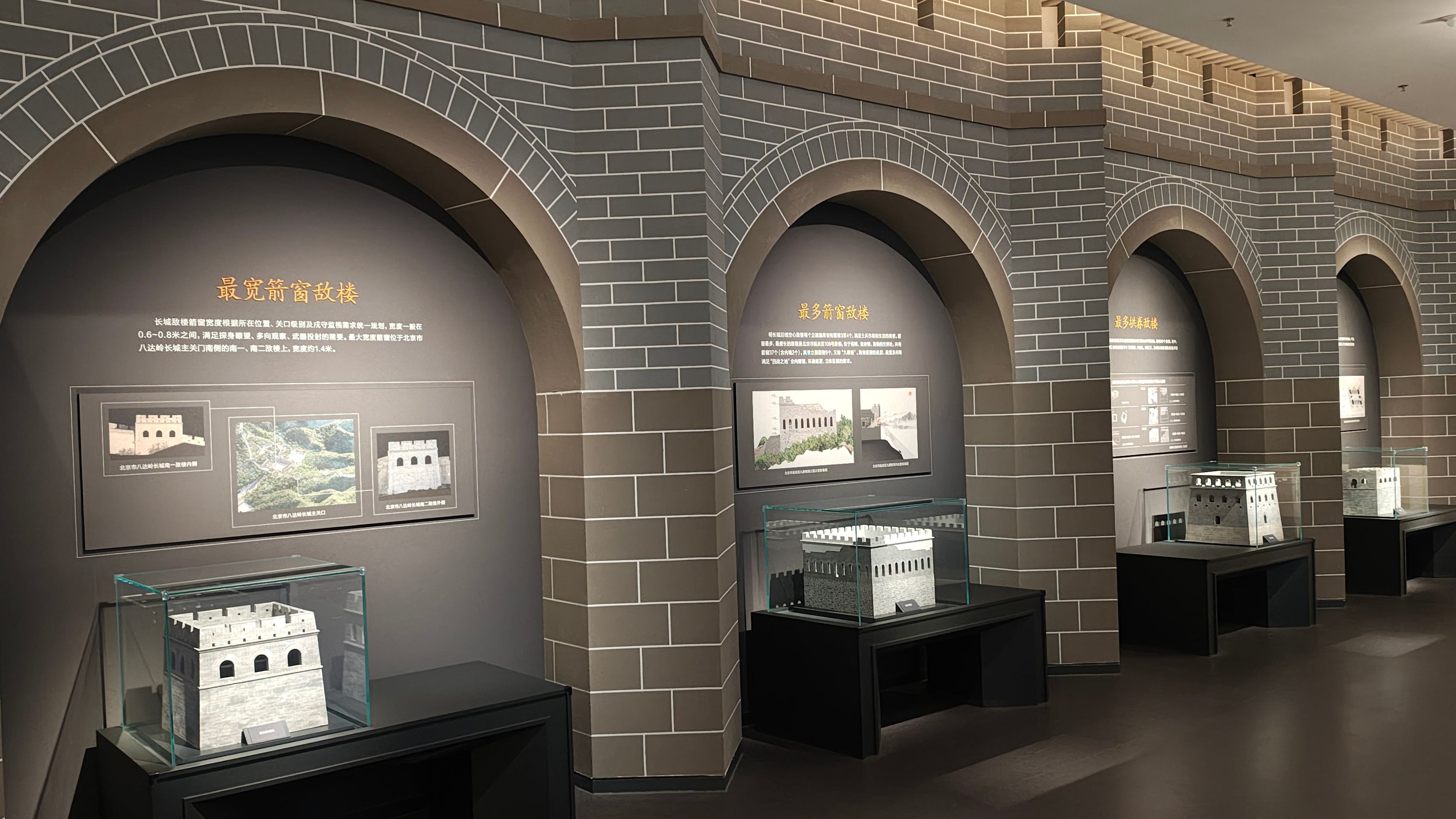
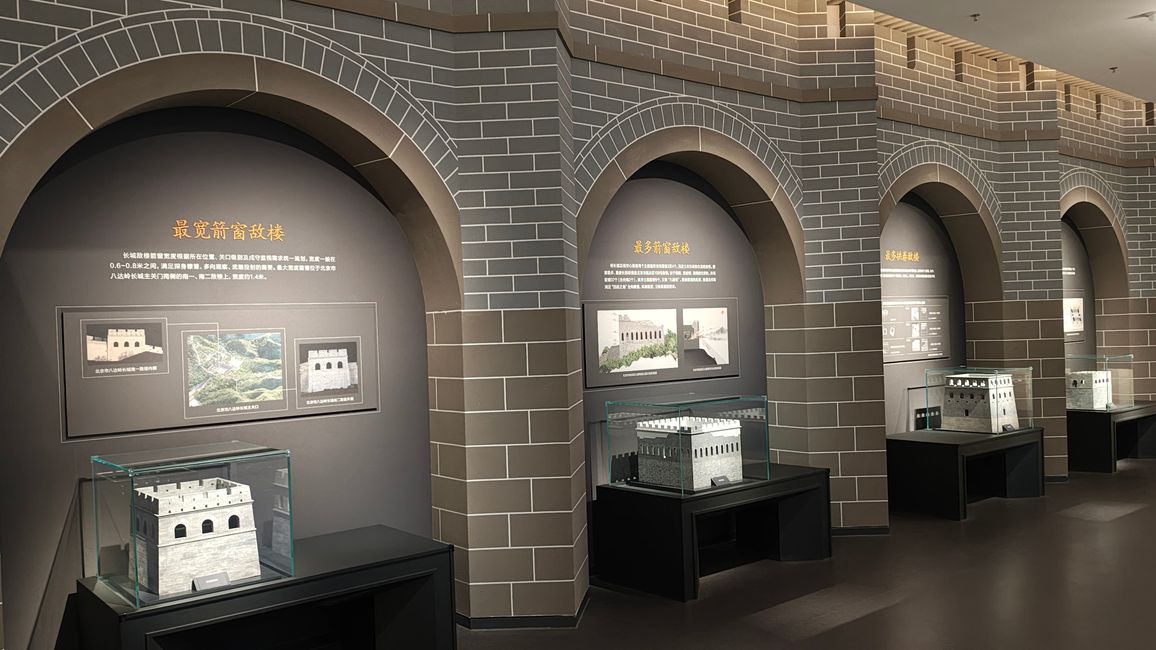
There were standardized designs for the watchtowers.
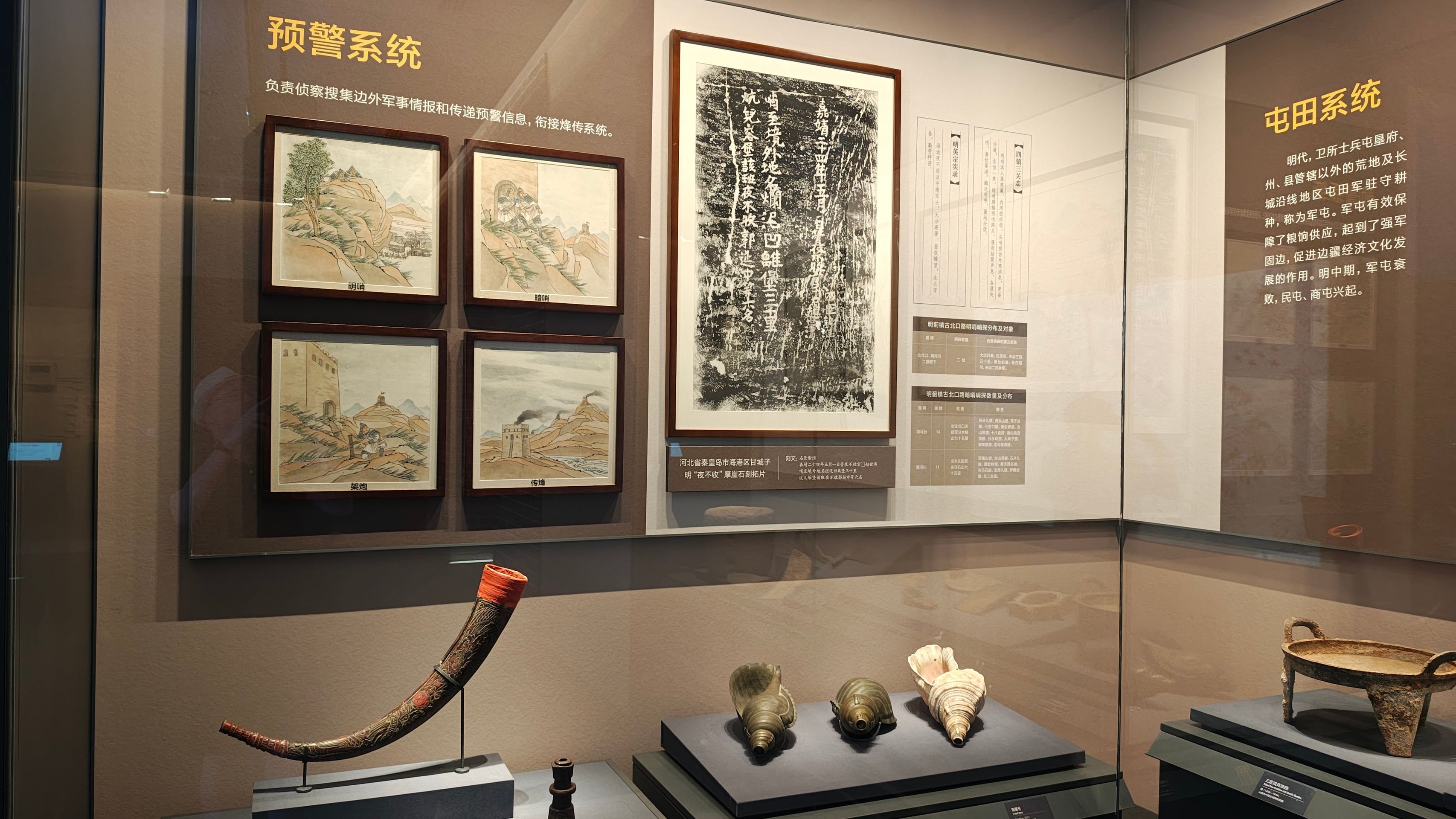
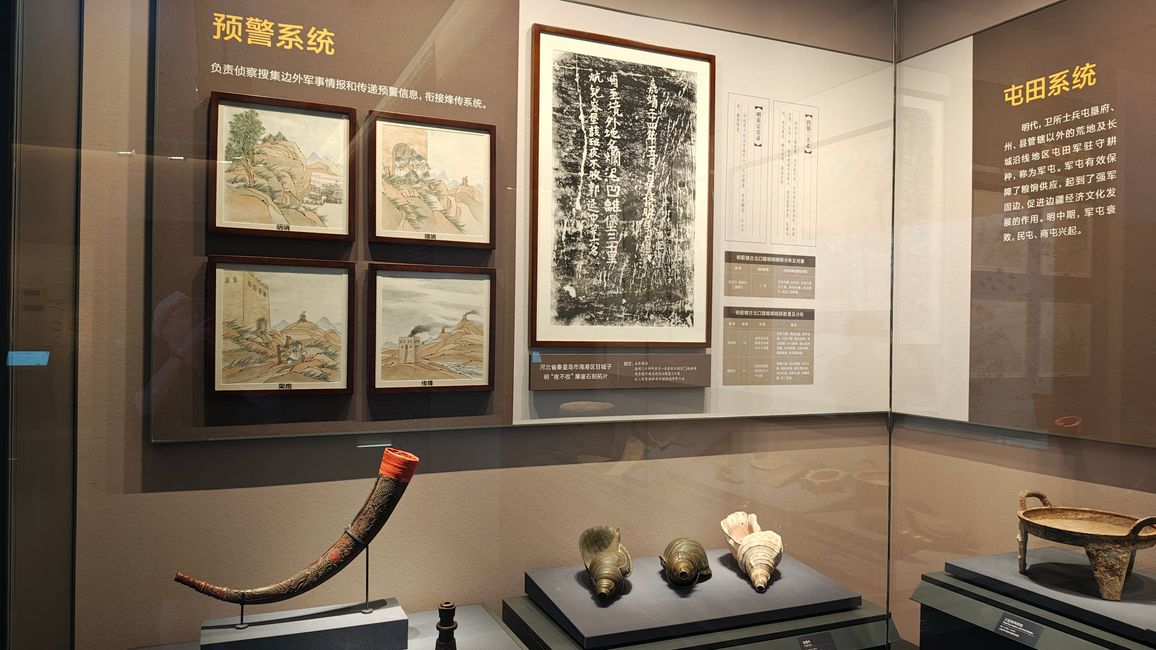
The explanations that interest me the most are about the signal and communication system on the Great Wall. Signal horns (Haojiao) and signal shells (Hailuo) were used for sound signals.
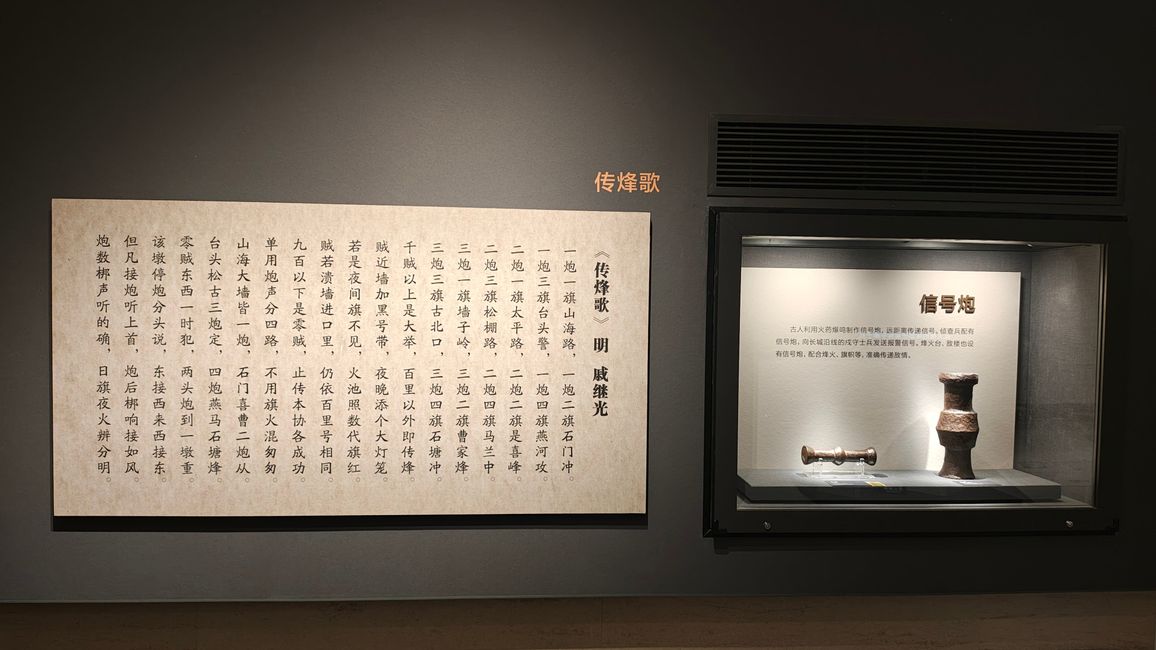
Using a telegraph code, similar to Morse code, optical and acoustic signals were transmitted via small cannons and flags. General Qi Jiguang wrote the song 'Chuanfeng Ge', which helped soldiers remember the individual signals better. This system allowed for the quick and accurate transmission of enemy movements over long distances from watchtower to watchtower.
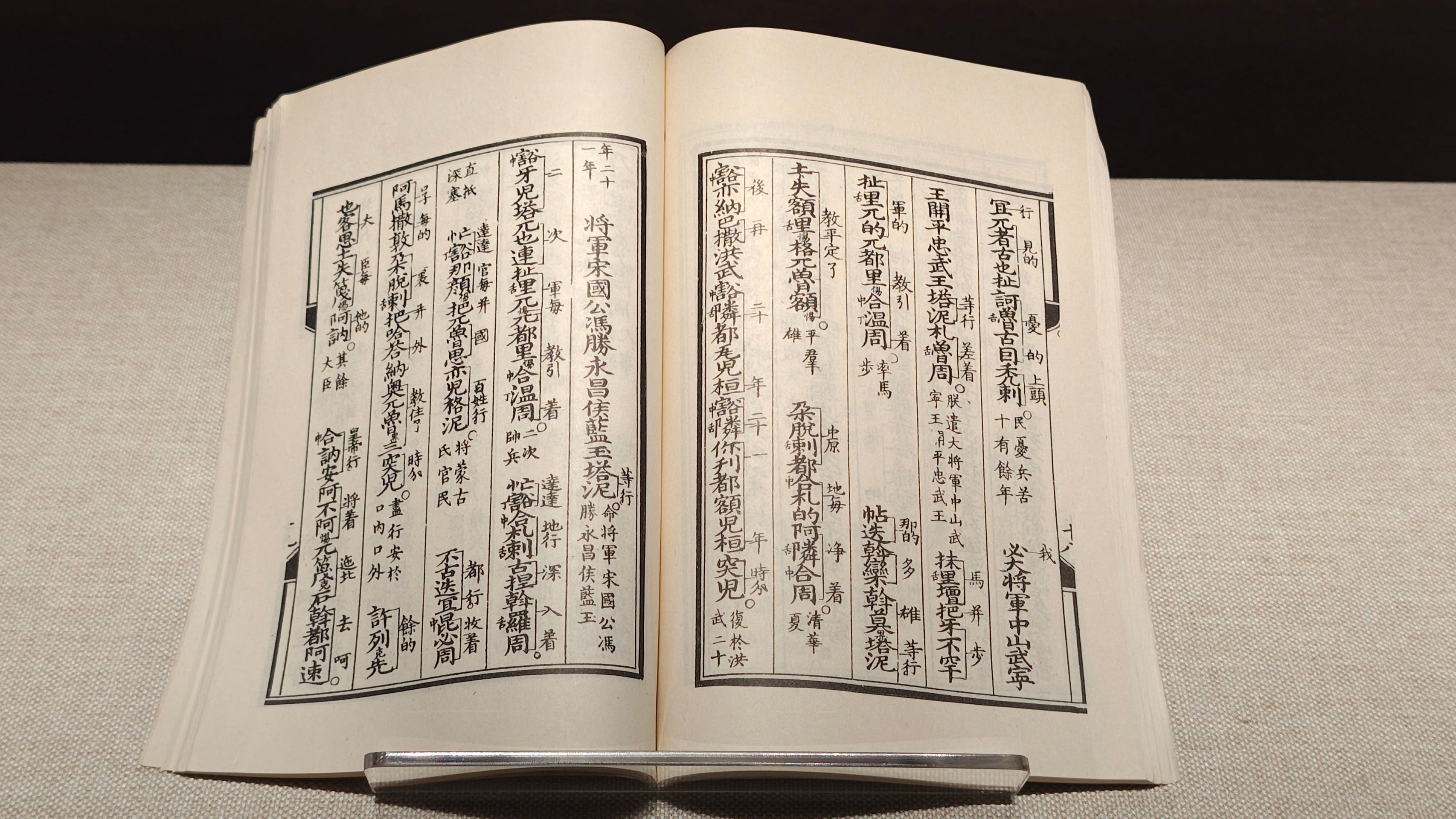
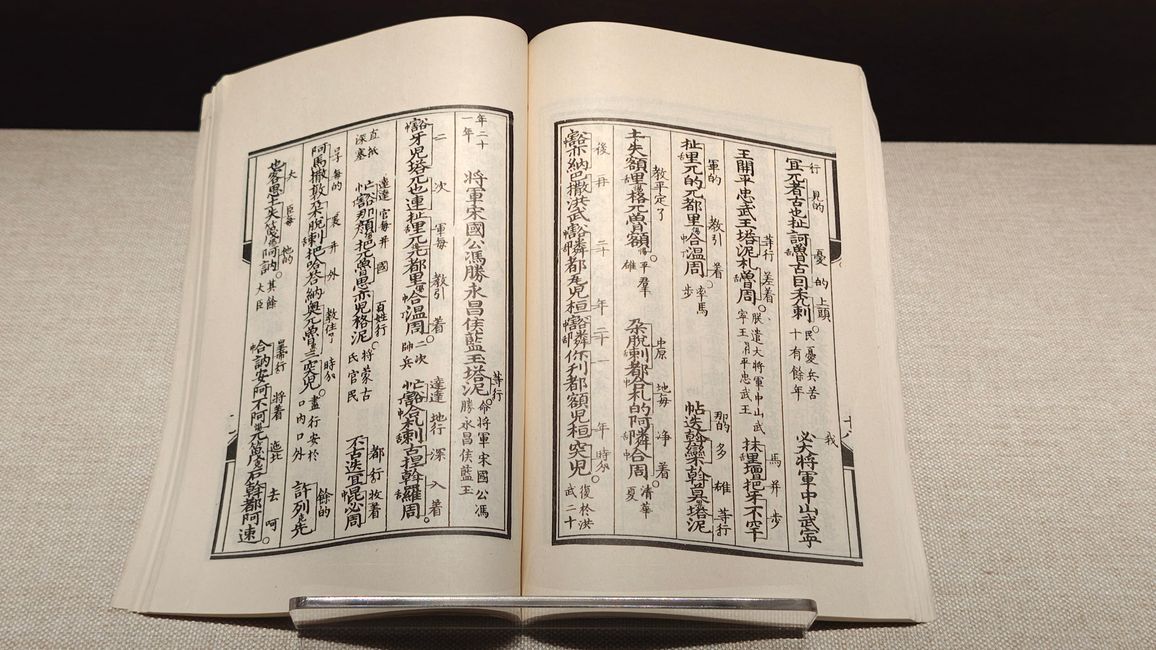
A section of the museum also highlights the cultural significance of the wall for trade and economy. Dictionaries were written to facilitate communication with the peoples beyond the wall.
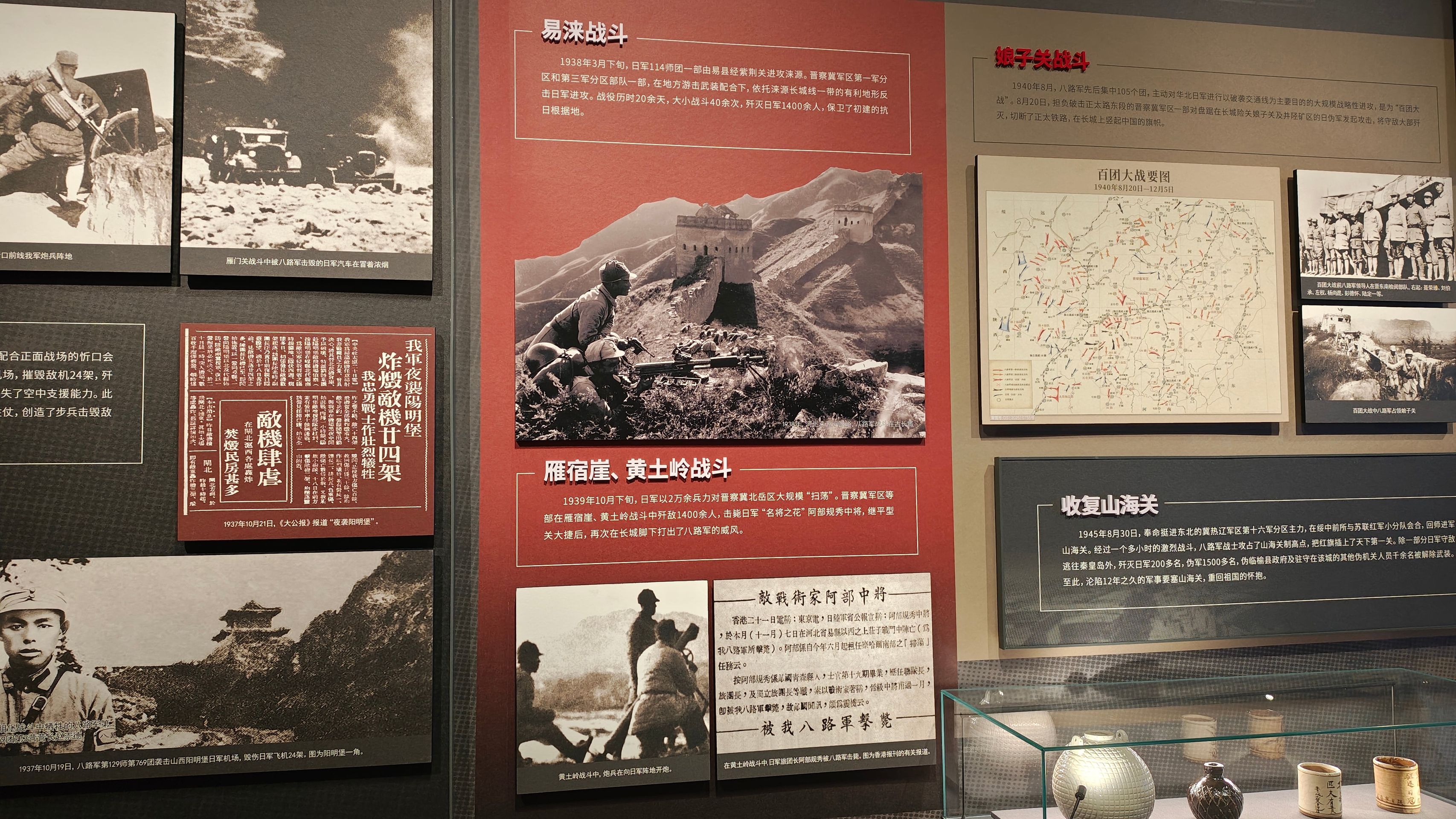
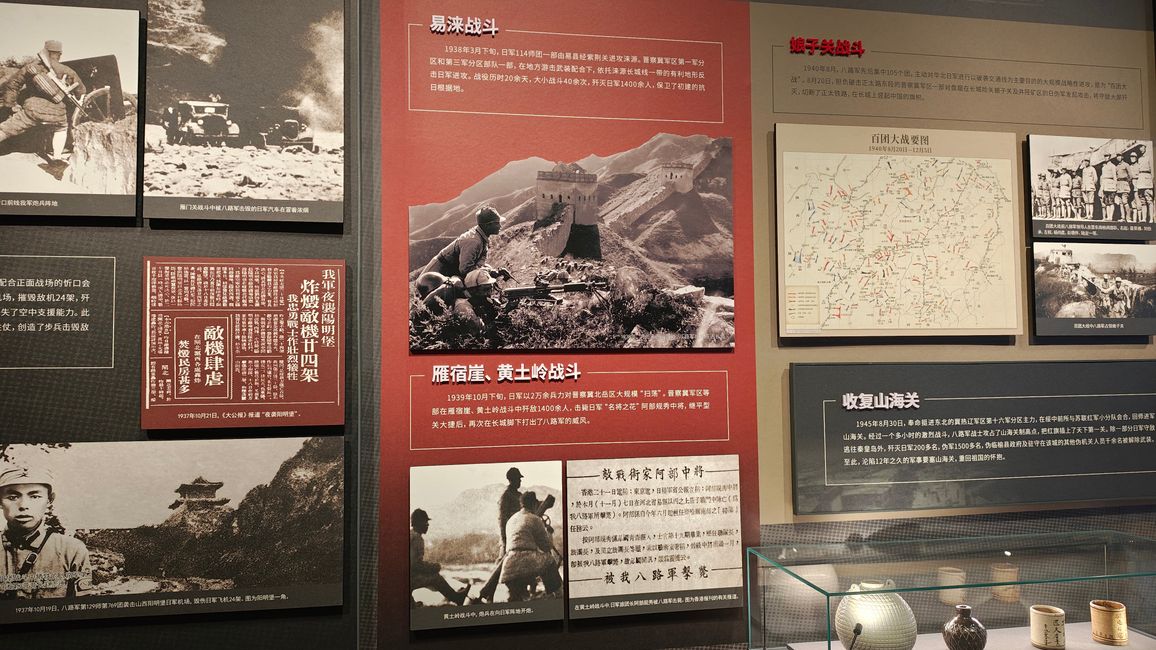
Finally, the role of the Great Wall in the war against Japan is addressed, where it was of course also used as a protective wall.
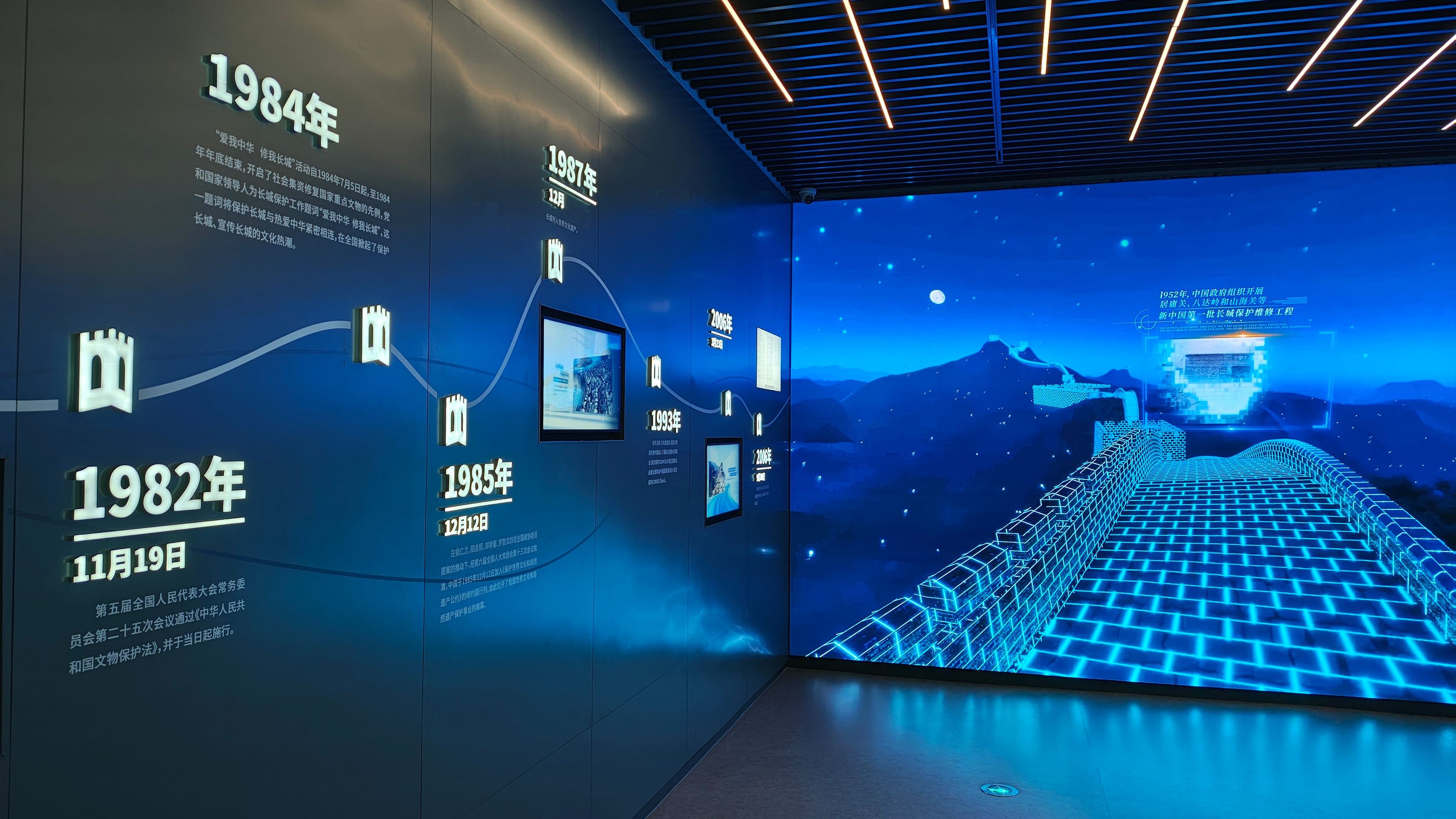
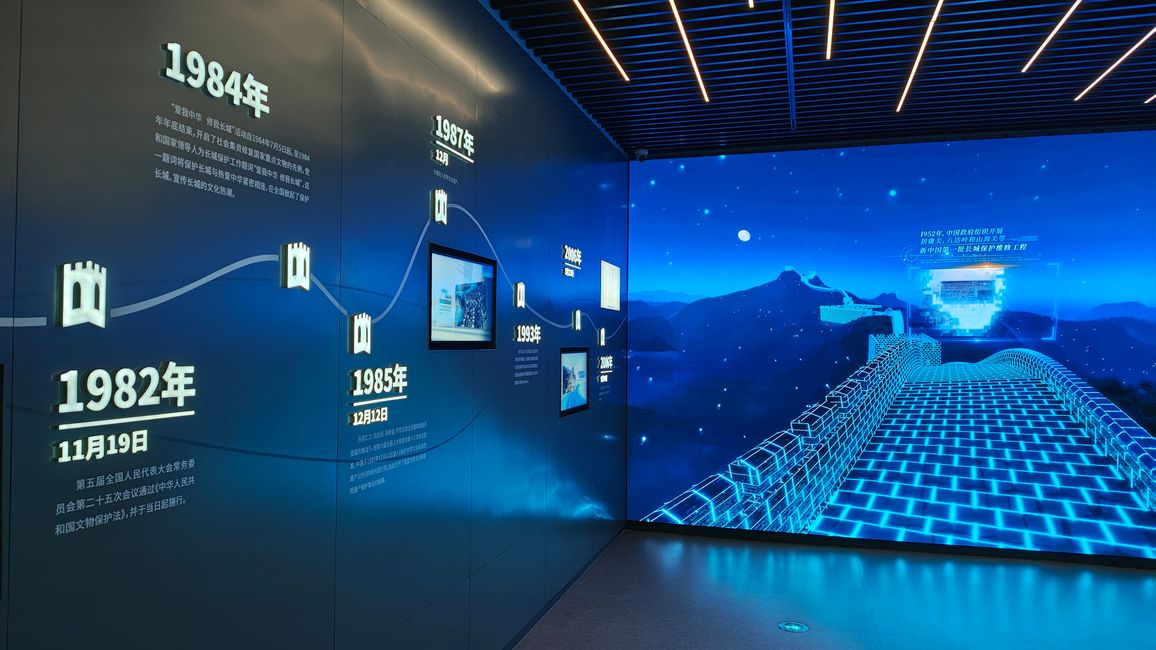
At the end of the exhibition, the enormous effort of the current restoration of the wall and its significance for Chinese culture is discussed. The construction of large museums along the wall preserves and showcases the cultural heritage with its numerous historical informations.
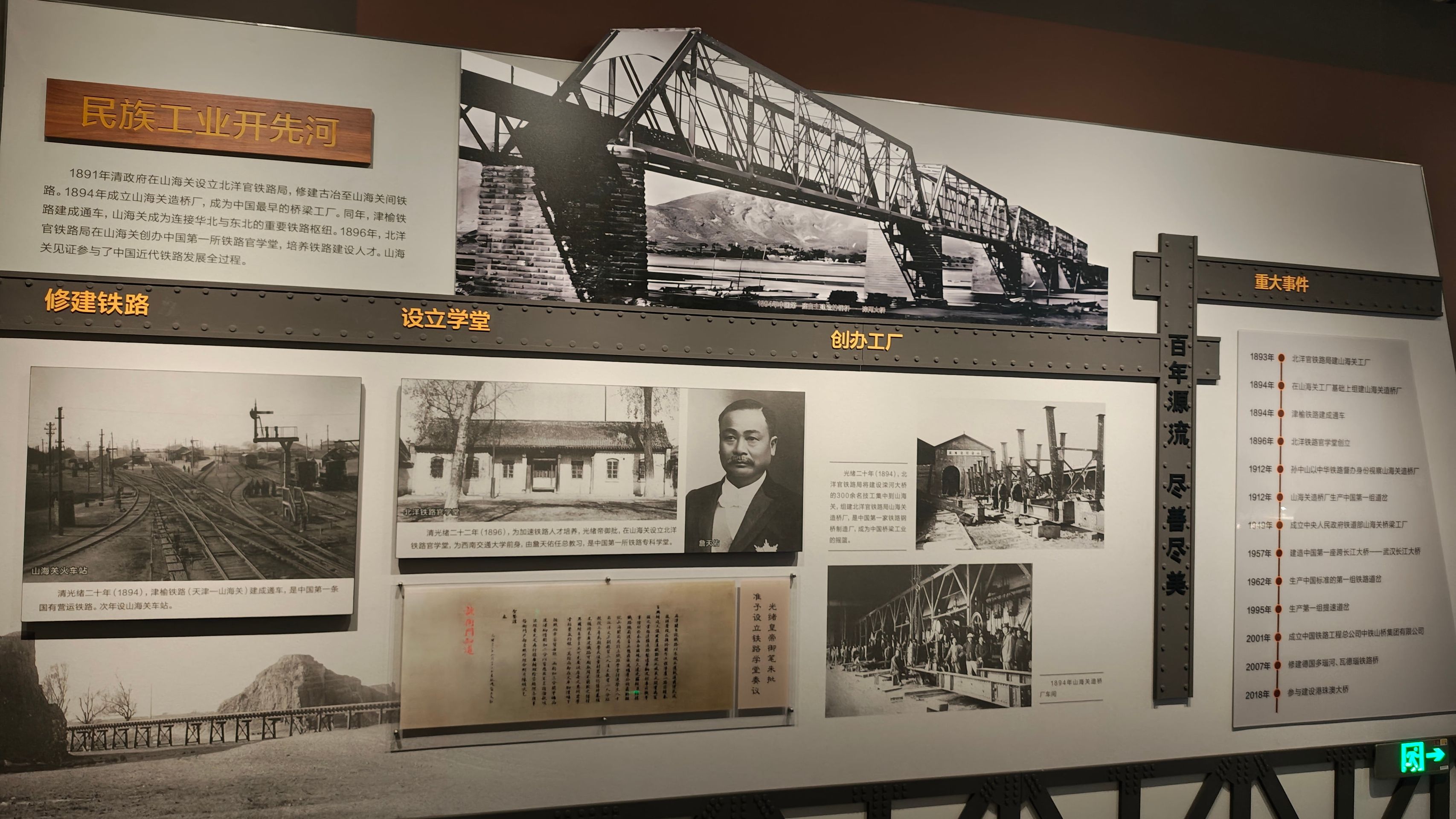
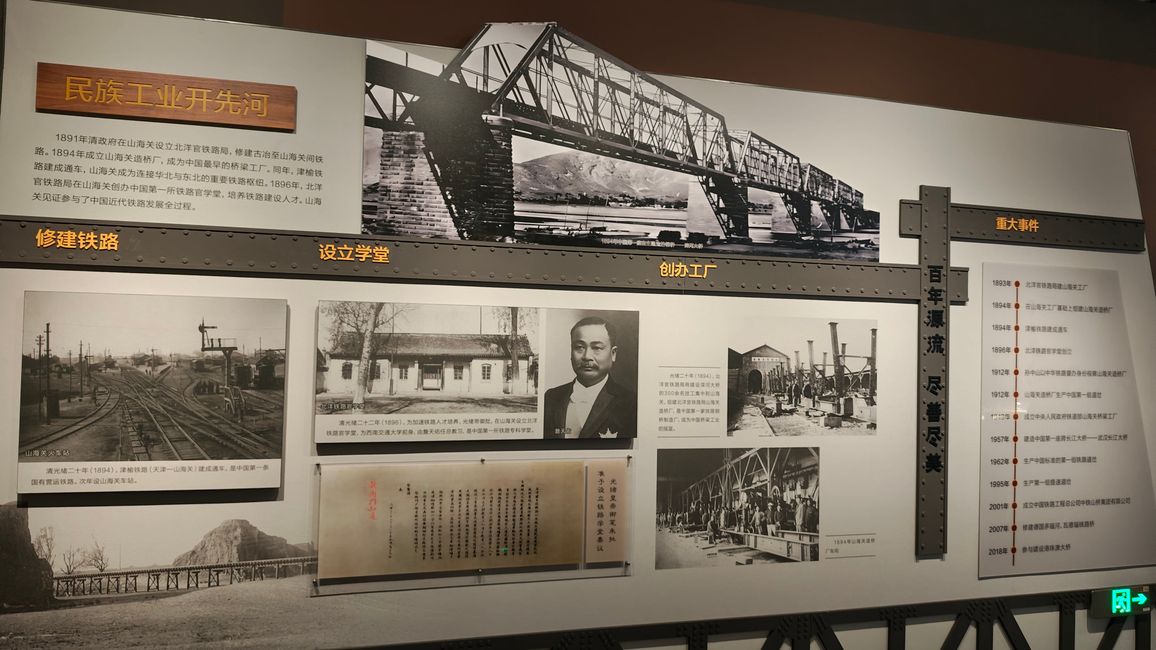
For my own professional reasons, my last photo from the exhibition shows an information board about the railway. What does the railway have to do with the wall? Actually not much, only that an important railway line was also built here in Shanhaiguan at the 'First Pass Under Heaven', and this city saw the establishment of the first state railway school in 1896.
We step out quite exhausted from all the information in the last hall and rest on a bench. Now, crowds of students are streaming into the exhibition rooms, and I am glad that we have already finished our visit.
Outside the building, we search for a ride service for the return journey via smartphone. A taxi driver continues to talk to my wife. He wants to take us back to the hotel but does not name a price. My wife waves him off. He keeps chatting us up. Eventually, he agrees to my wife's price proposal. We get into the taxi, and he drives over the parking lot. The intense chatter continues in the taxi. Behind the parking lot, the taxi stops, and my wife urges me to get out. What happened?
Sitting in the taxi, the driver suddenly wanted more money for the ride, which my wife would not stand for, yelled at the driver and made it clear that we would not pay that price and he should stick to his initial agreement. Since the driver did not want to comply, we got out again.
This is the first time I have experienced such a ruckus with a taxi driver in China. But my wife remained persistent. Cursing, the driver turns his car and drives back over the parking lot. Eventually, a ride service that we ordered through an app arrives and takes us back to the hotel in Qinhuangdao for our price proposal.
This taxi driver could not trick us and is not exactly thrilled to drive back:
Xiefuzi Reise BlogLike a newsletter: every new post arrives via email.