
Craft Towns around Hoi An - Part 2
Ngô. (Wood Art and Workshop)”. The exhibition pieces were imaginative and beautifully executed, and we learned a lot about wood processing. For example, jackwood (wood from the...

Published: 24.07.2026
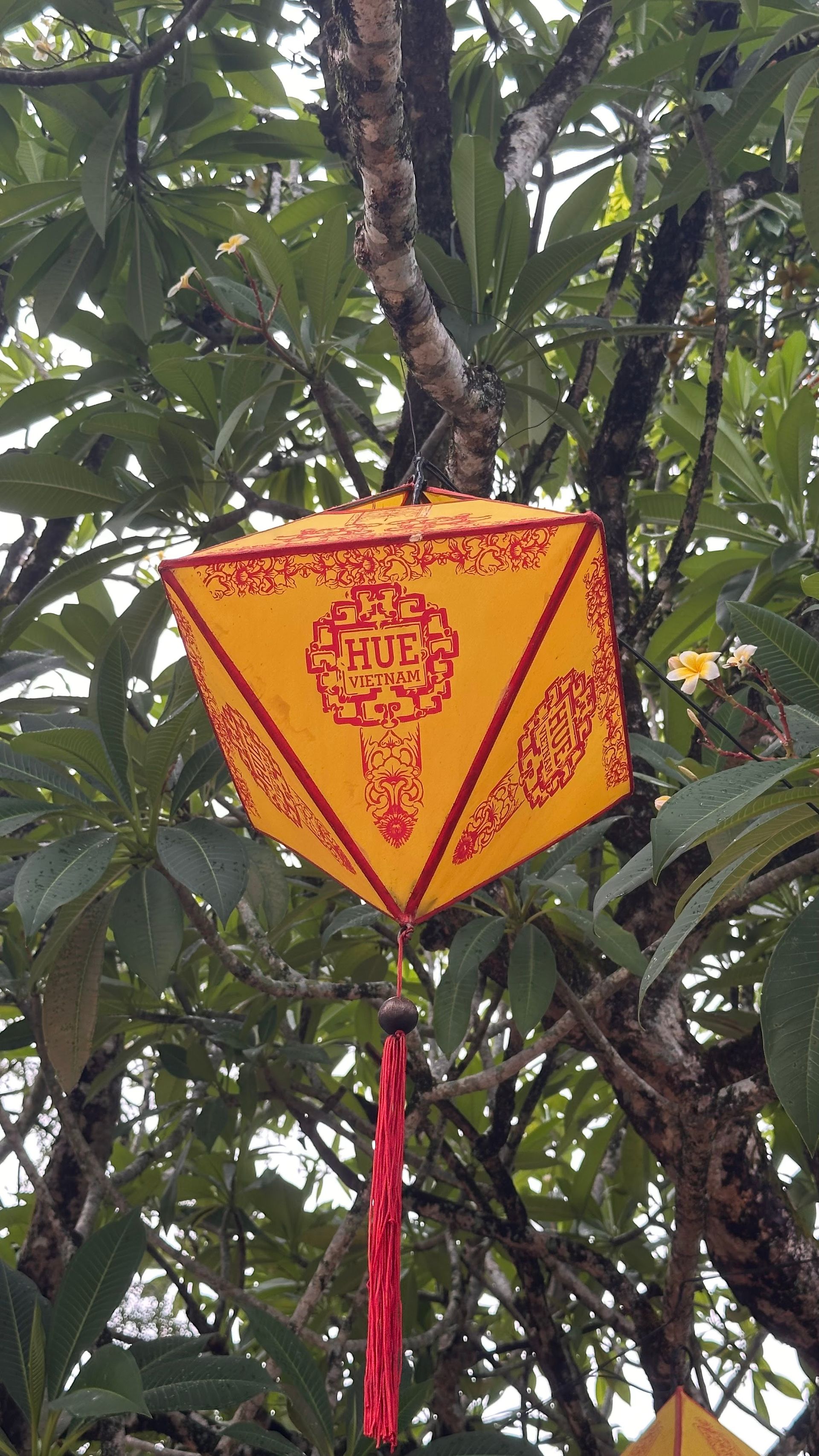
We decided to take a few days off from our vacation. However, we mainly wanted to explore a few nearby places, so we booked two spots on a bus to spend a few days in the ancient imperial city of Hue and then have some time in Da Nang. The booking was easy online, but the exact bus stop was initially a bit unclear.
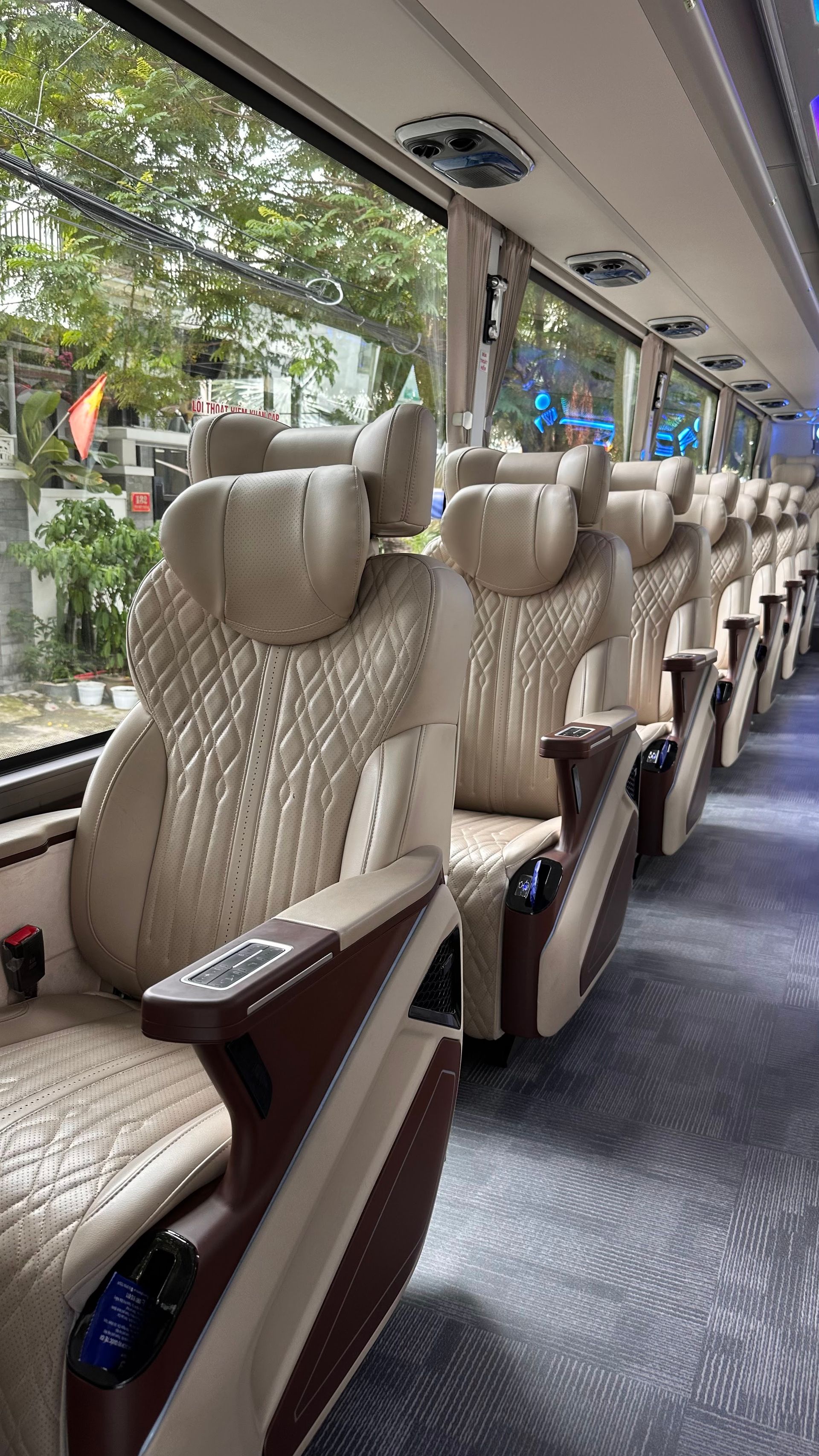
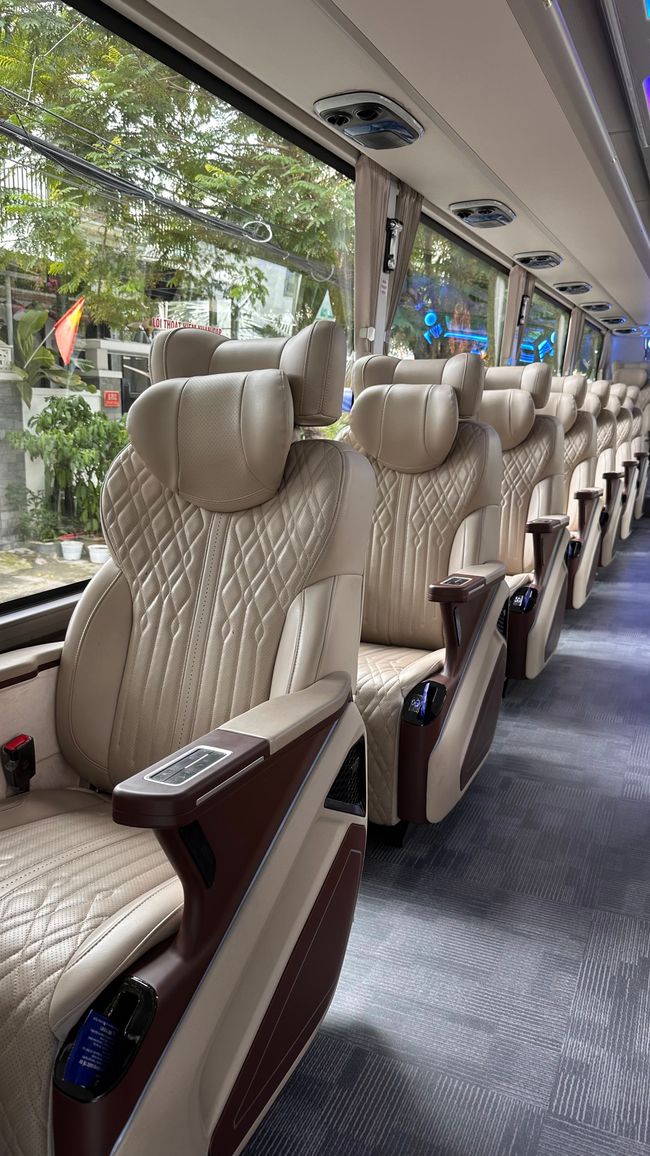
The three-hour journey flew by, as we had a fantastic view through the huge windows. The seats had cooling and massage functions, and there was plenty of legroom – all for just ten euros per person.
From the bus stop in Hue, it was not far to our accommodation, so we quickly dropped off our luggage and headed straight towards the old imperial city.
I had imagined Hue to be similar to Hoi An – rather small-town and rural, with markets instead of department stores. In reality, Hue is more comparable to Da Nang: There are high-rises and malls, as well as some parks with displayed art and well-developed walkways.
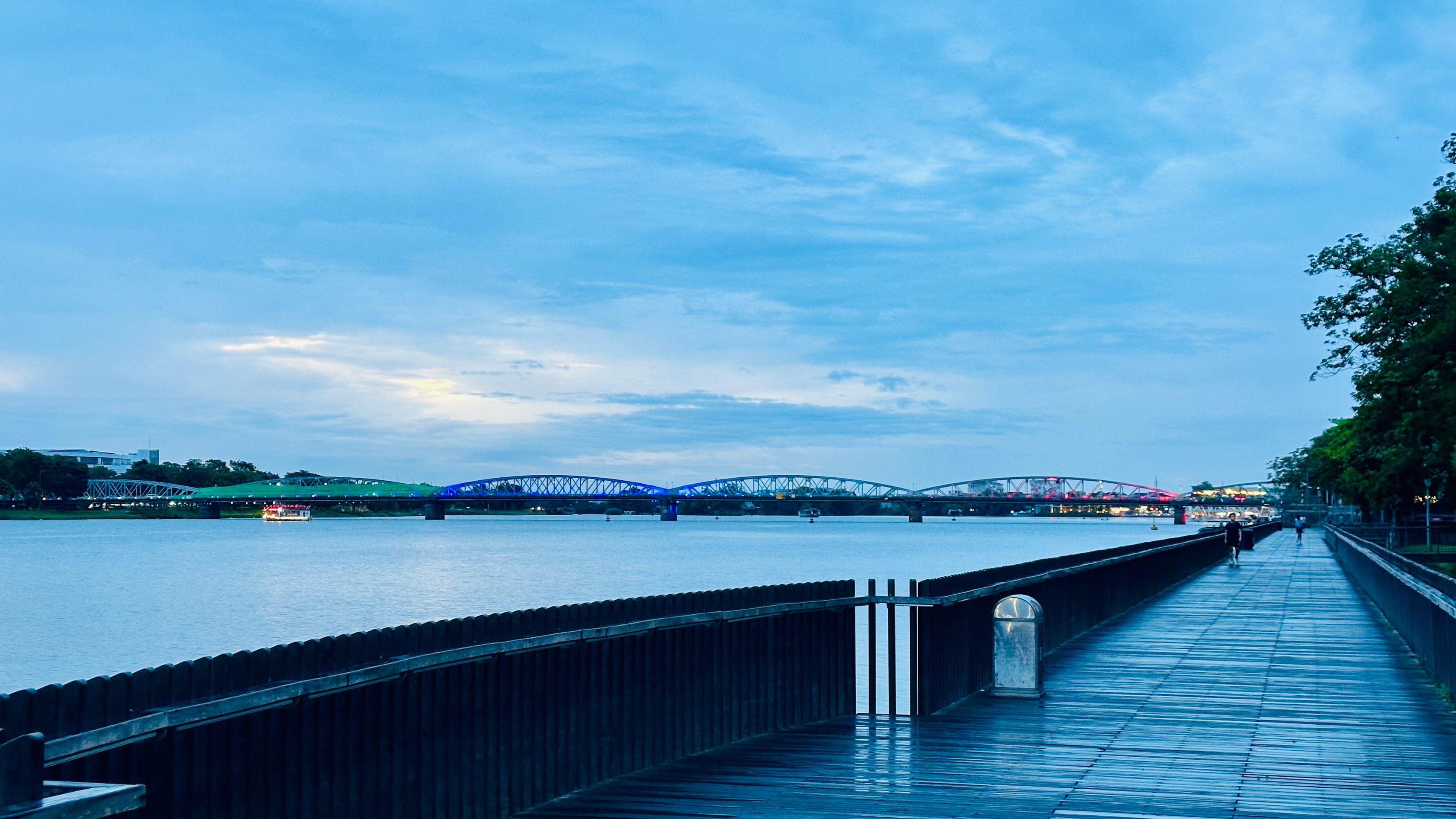
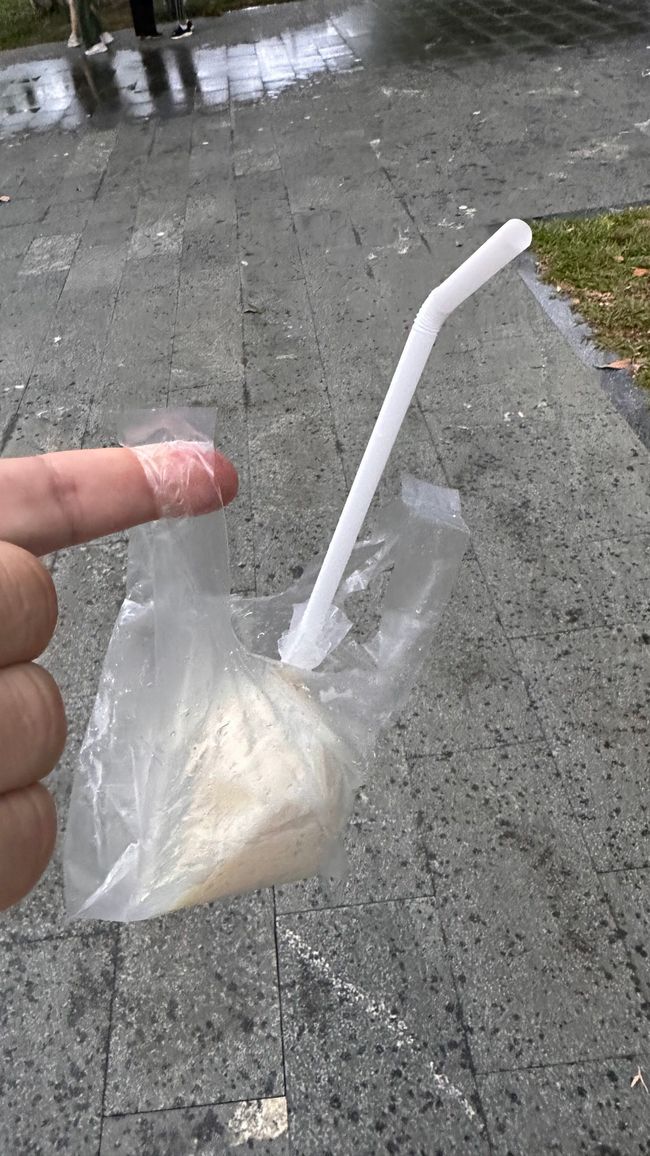
We strolled along the beautiful wooden promenade by the banks of the Perfume River and tried Sữa Chua for the first time – a frozen yogurt in a plastic bag. An interesting change and a welcome refreshment.
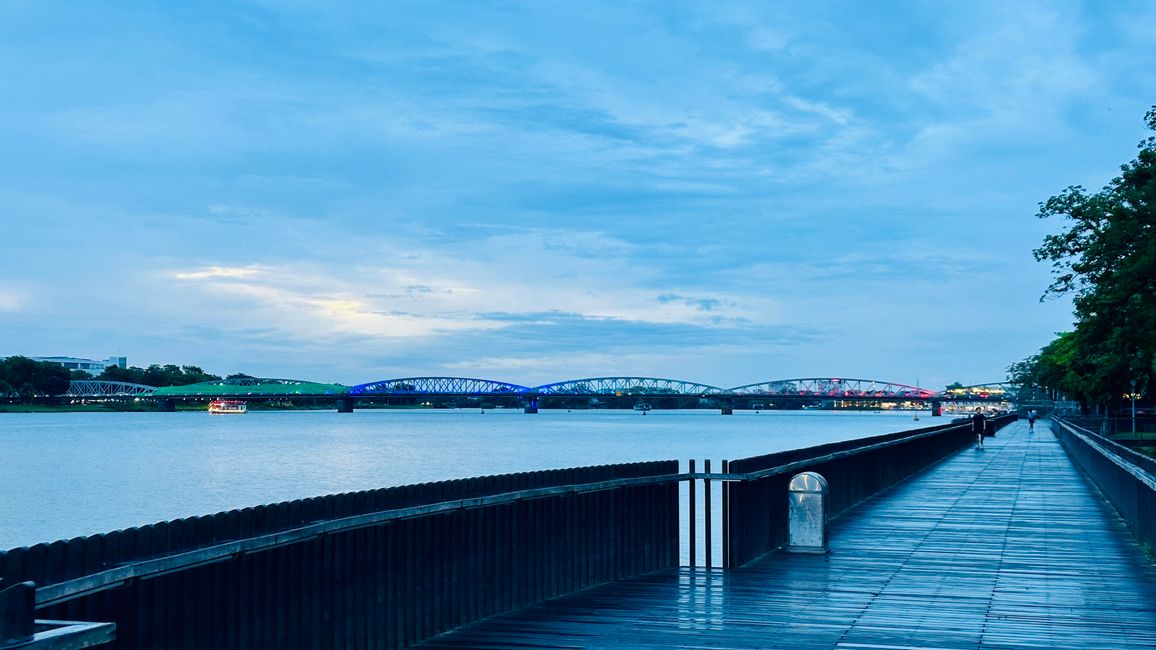
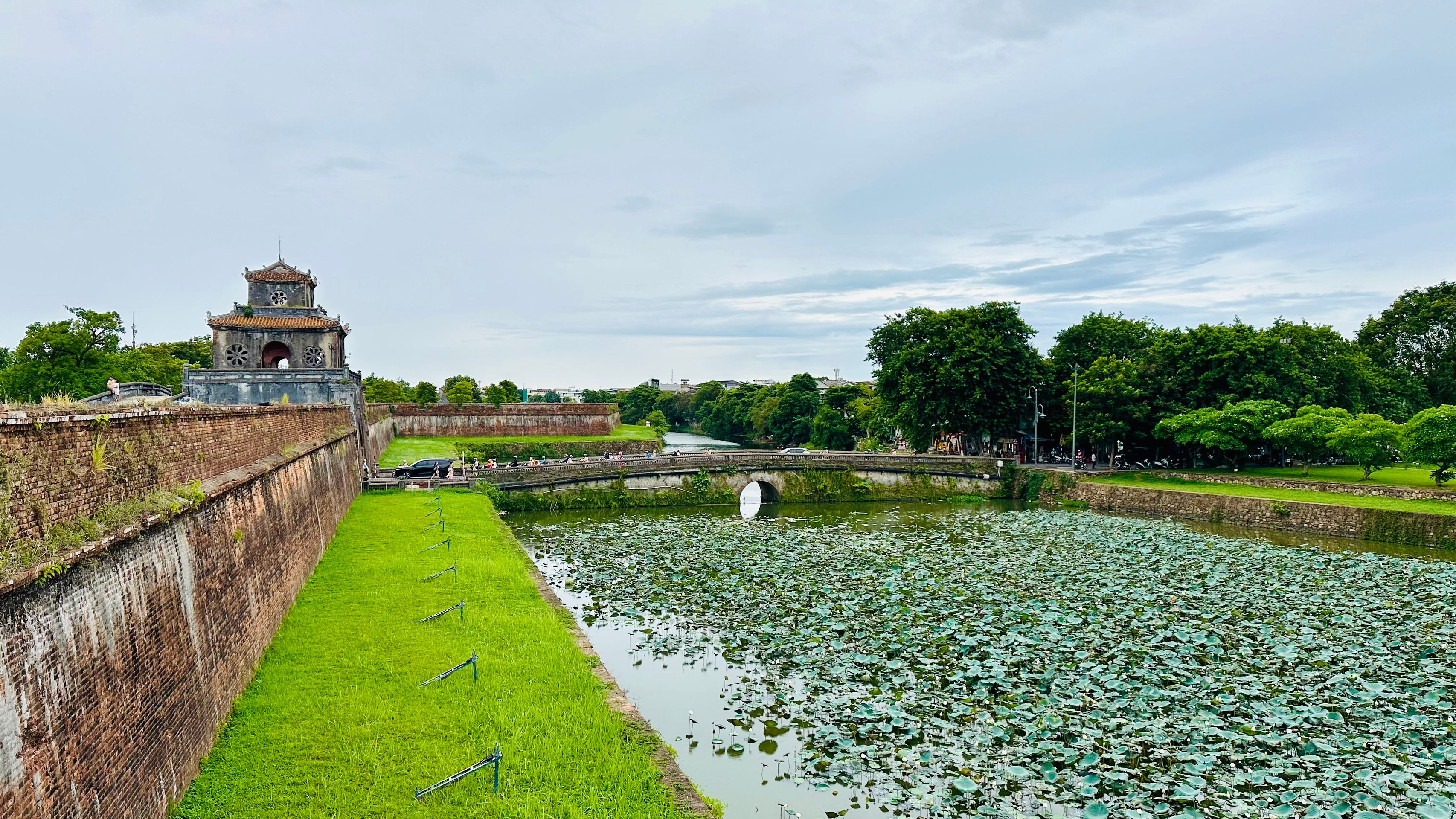
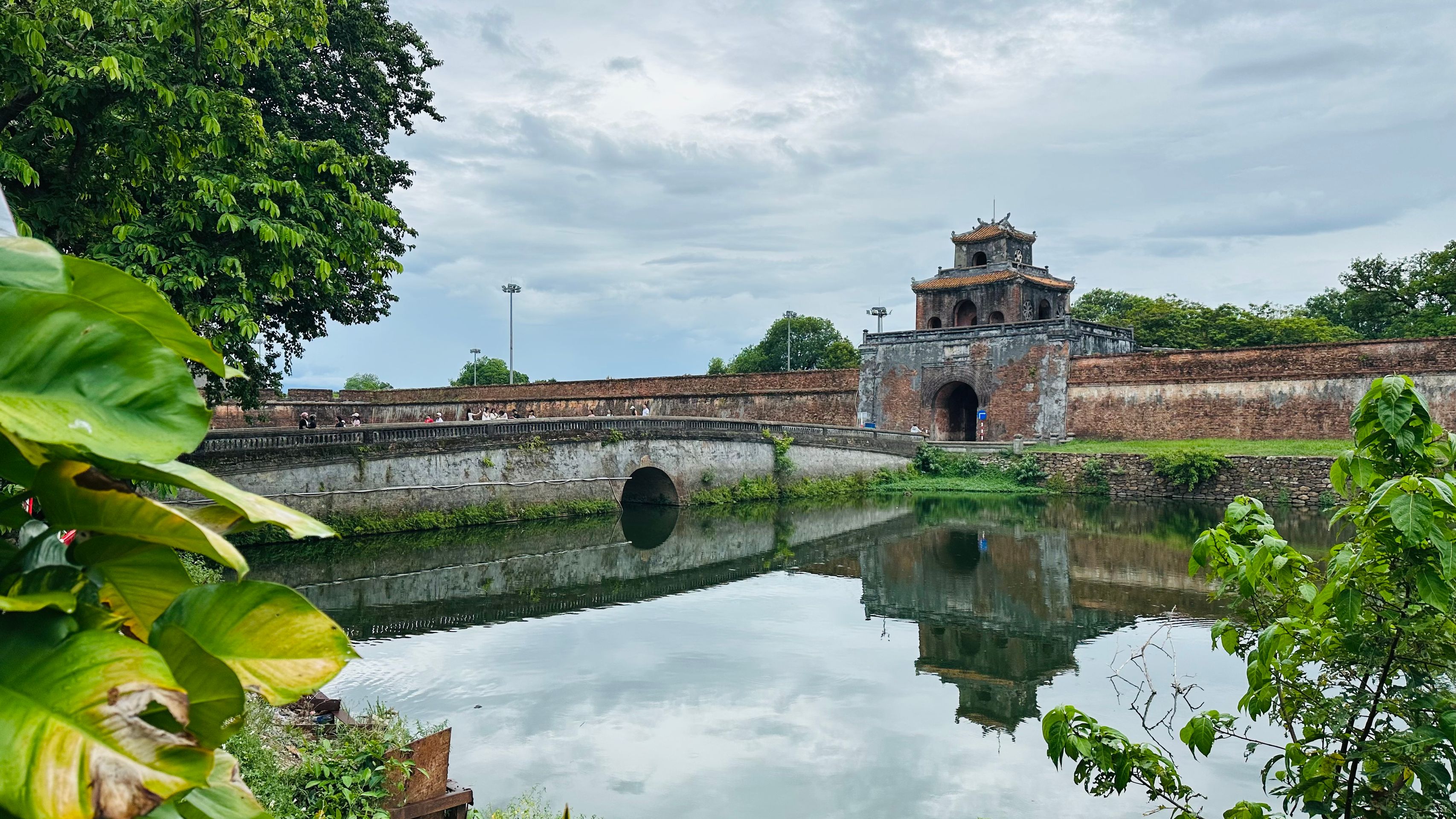
On the first evening, we made a short detour to the city wall of the old imperial city and were even able to walk along the top. The old town is surrounded by a moat full of lotus flowers – a truly beautiful sight.
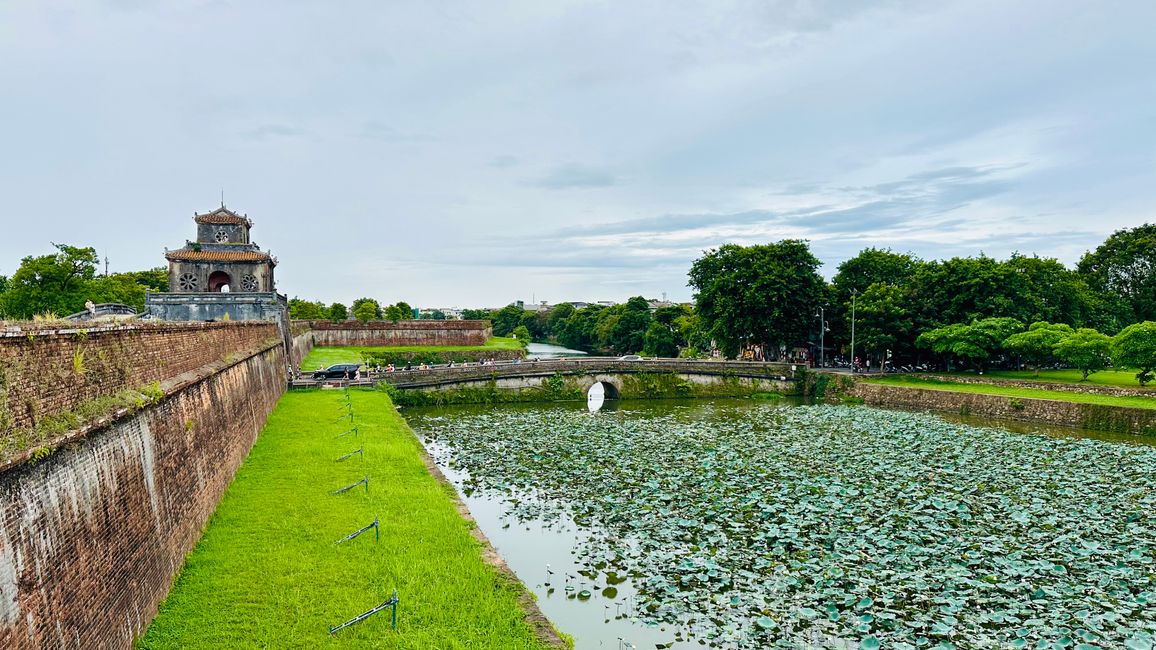
What we didn't expect: the timely closing of the attractions. When we wanted to go down the steps to the street again, we found ourselves in front of closed gates. We walked along several gates, but they were all shut.
This vividly reminded me of Madeira, where we also got stuck in a park and had to climb adventurously over the wall – not that a little climbing would really bother me.
So I was already on the lookout for a good way down when a local on the other side of the street noticed our predicament. With lots of arm waving, he guided us to a spot where we could descend and even organized a wooden ladder for the last bit. We waded through tall grass for a short distance, then down a small ledge among metal scrap and brush. We finally managed the second ledge over the wobbly wooden ladder. We were very grateful to the local, but not entirely sure if he was having a bit of fun with us, as a little further on, the descent would have been significantly easier.
The next day, we visited the surrounding imperial tombs of the Nguyen dynasty. There are a total of seven official mausoleums, which are also part of the UNESCO World Heritage Site. At the respective ticket booths in front of the sites, you can purchase access tickets individually or as a combo ticket with the other tombs and the citadel.
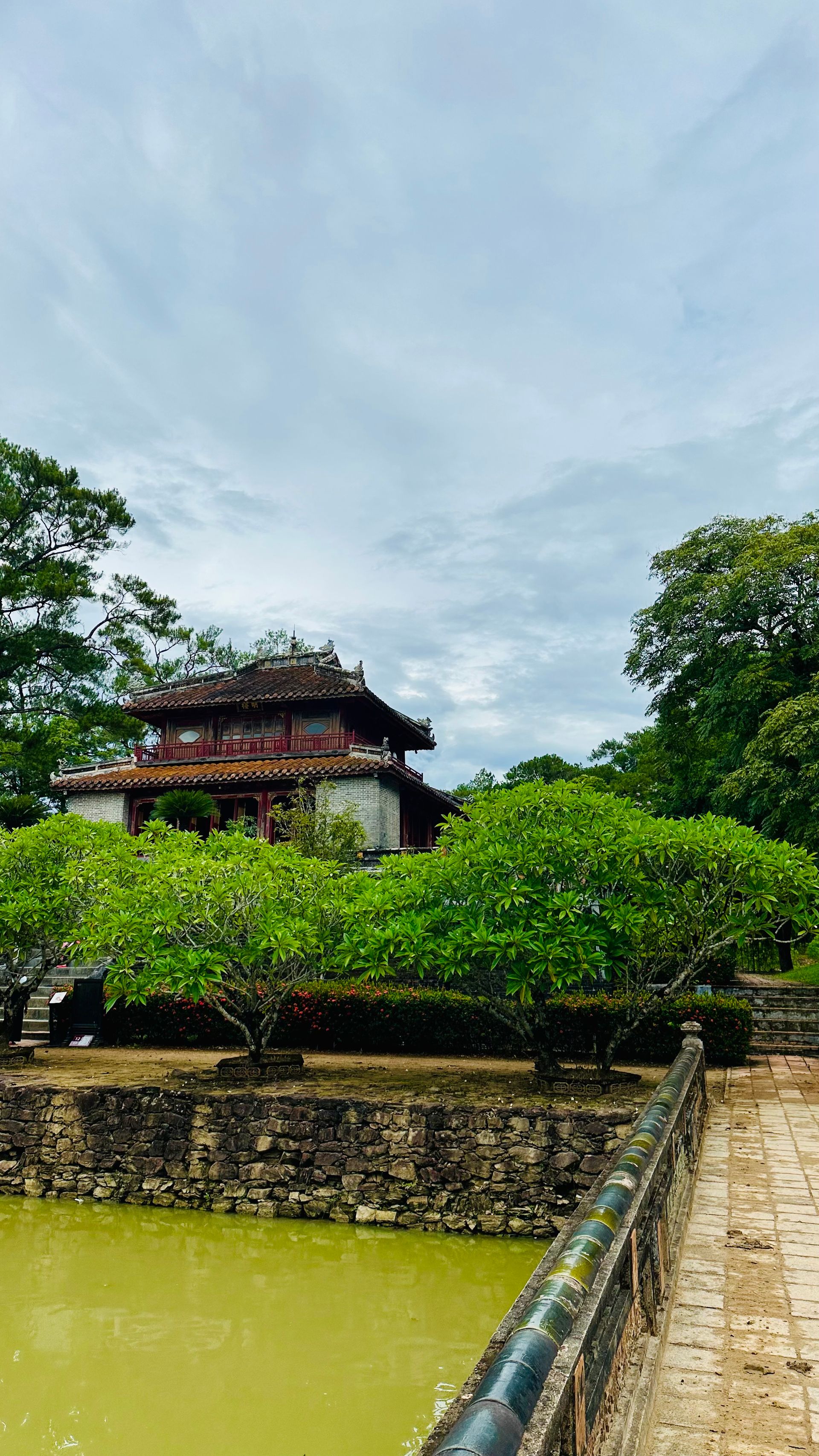
We started with the tomb of Minh Mang. A sprawling park was established here – not quite as grand as expected, but definitely worth seeing with lovely ponds, some shrines, and statues. We were unable to visit the tomb itself, as it is only open to the public once a year. Many Asian tourists took advantage of the backdrop to pose for countless photos. All in all, a worthwhile site – however, we didn’t need the indicated two hours, more like 45 minutes.
At the exit, our tomb driver (taxi) from the outbound trip was already waiting for us. He must have anticipated that we or other visitors would book a further ride.
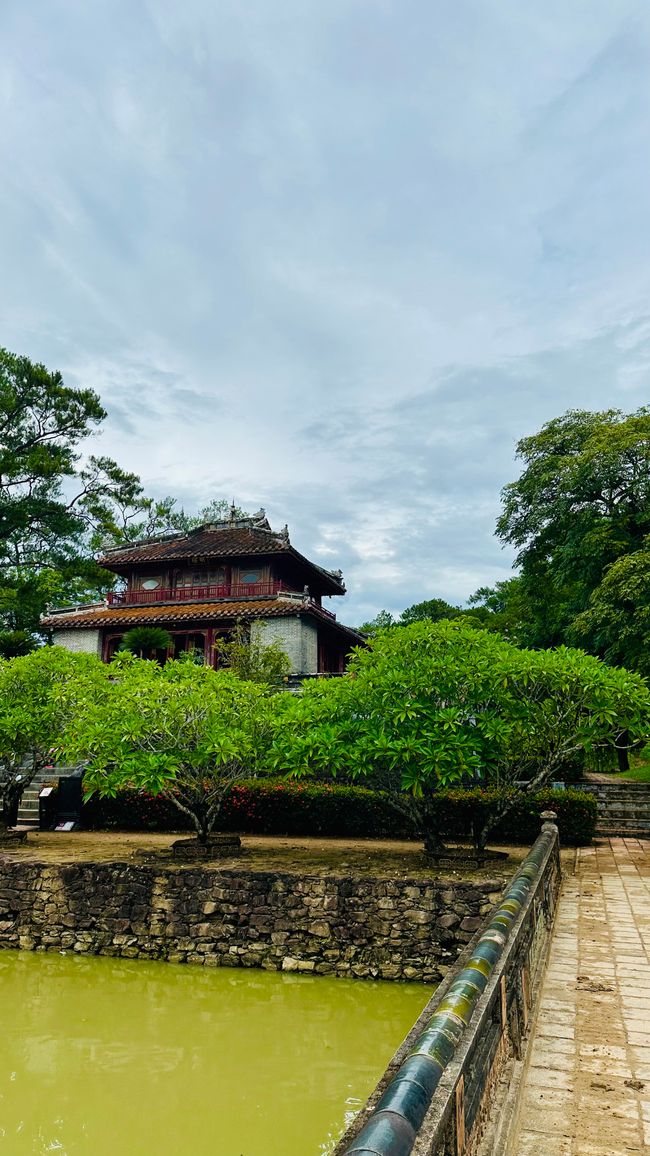
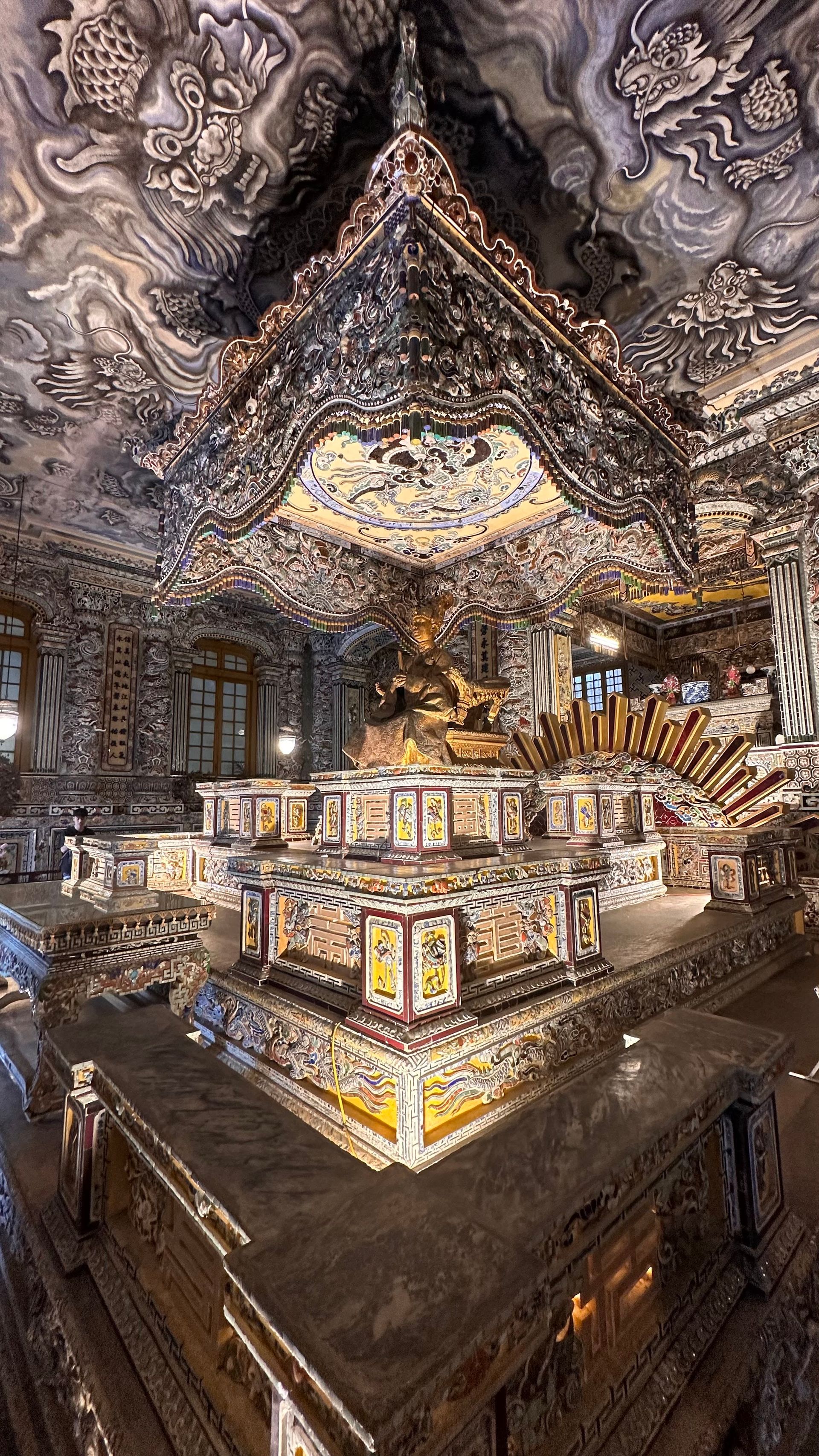
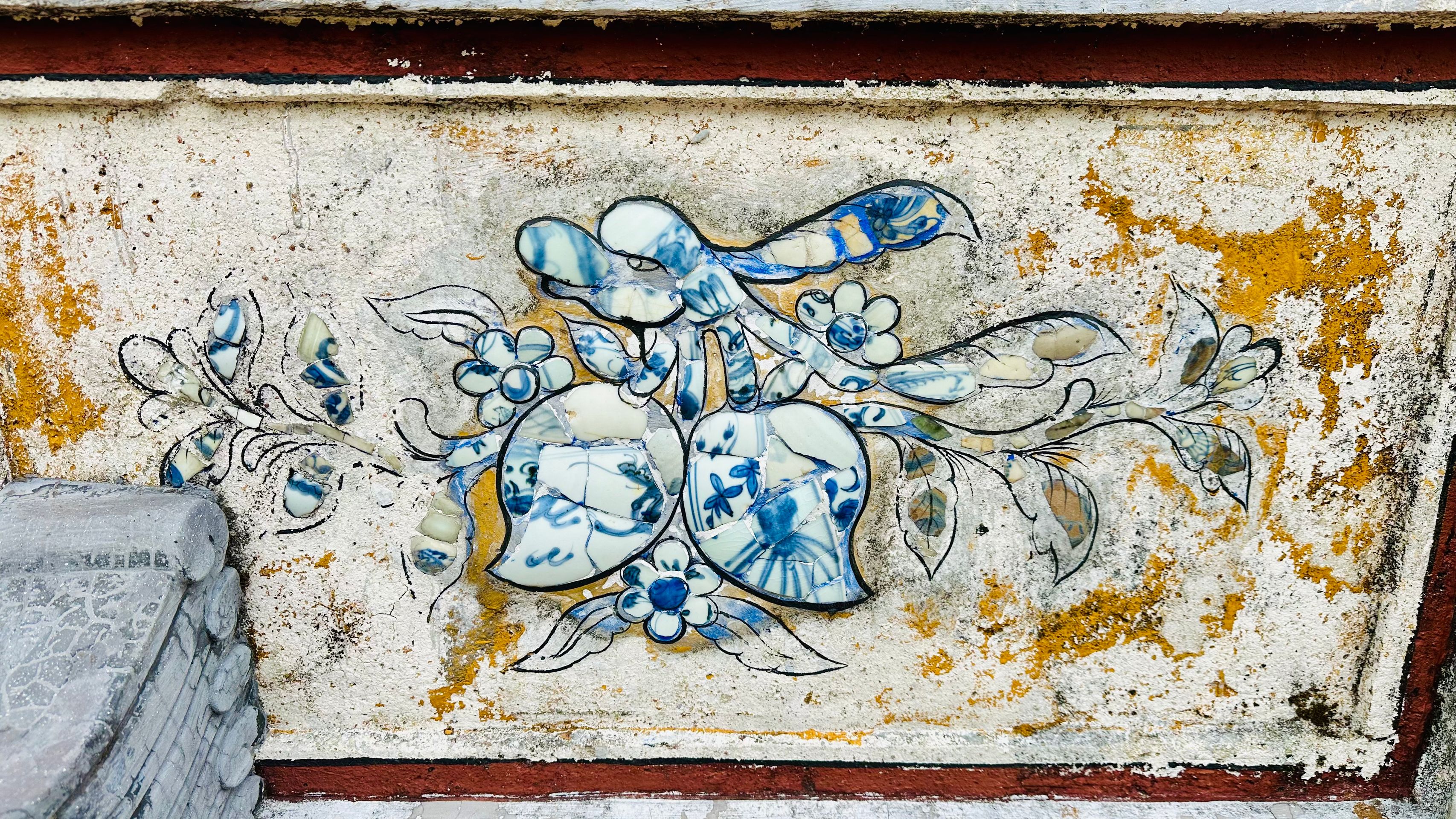
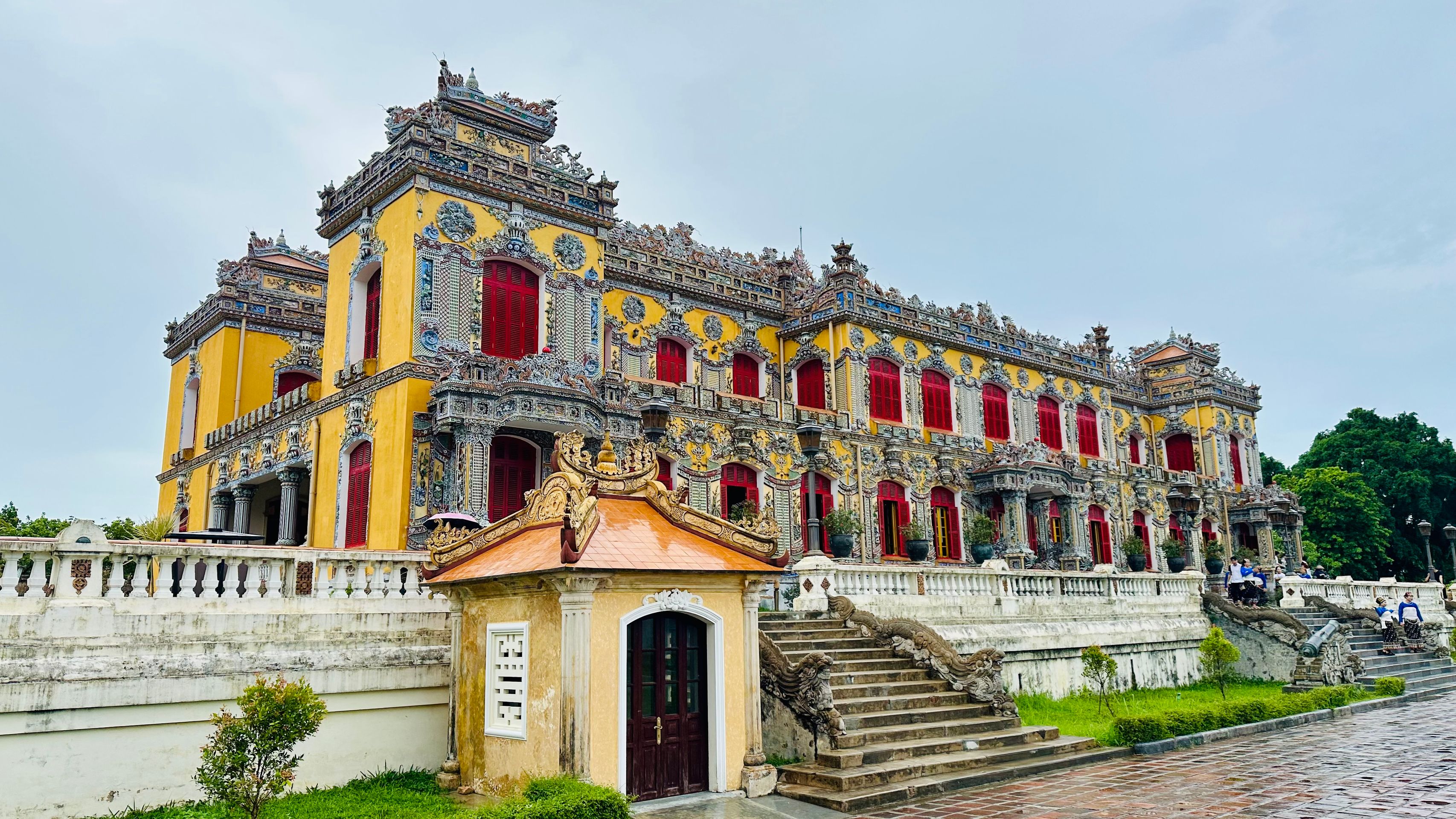
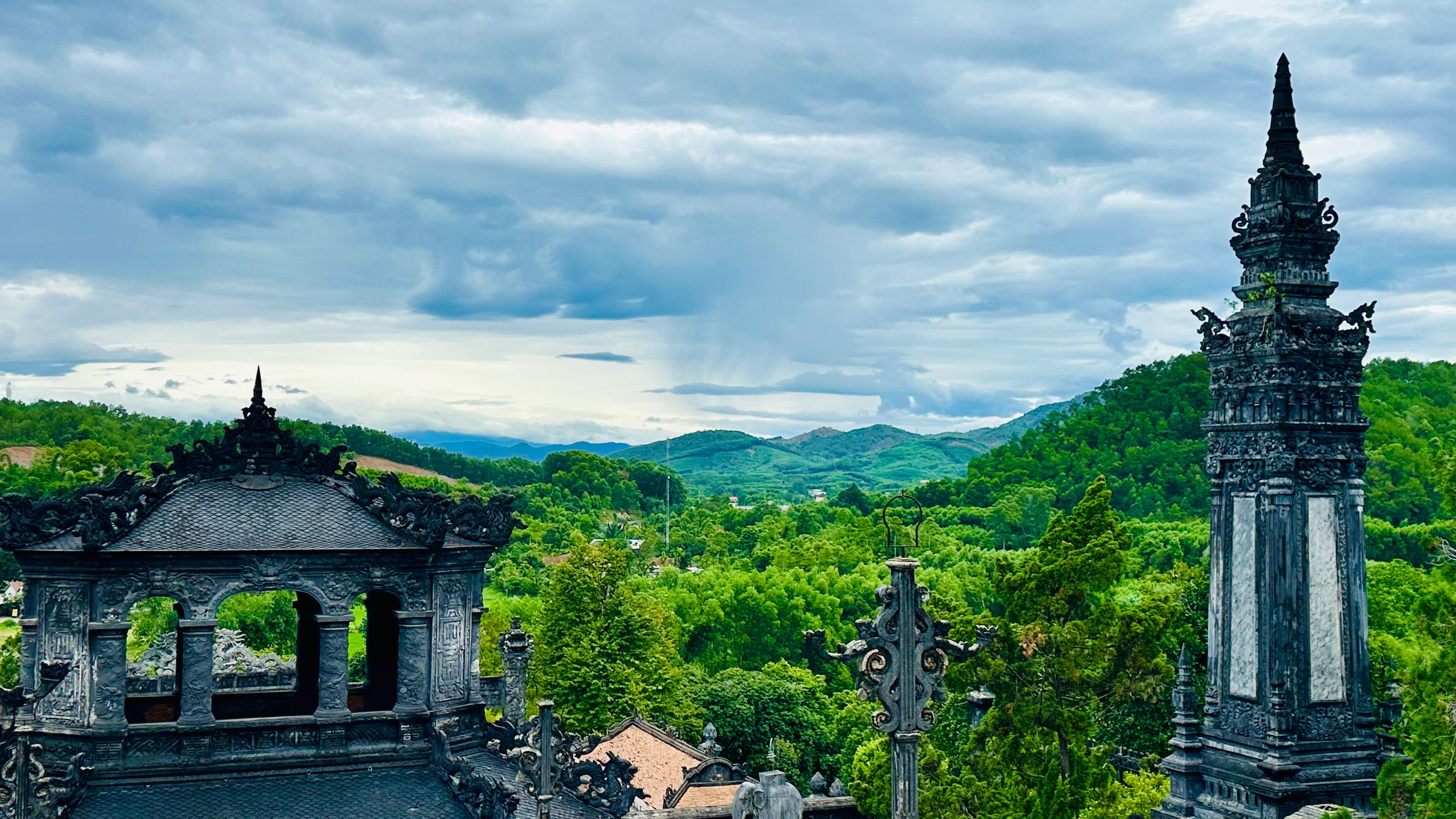
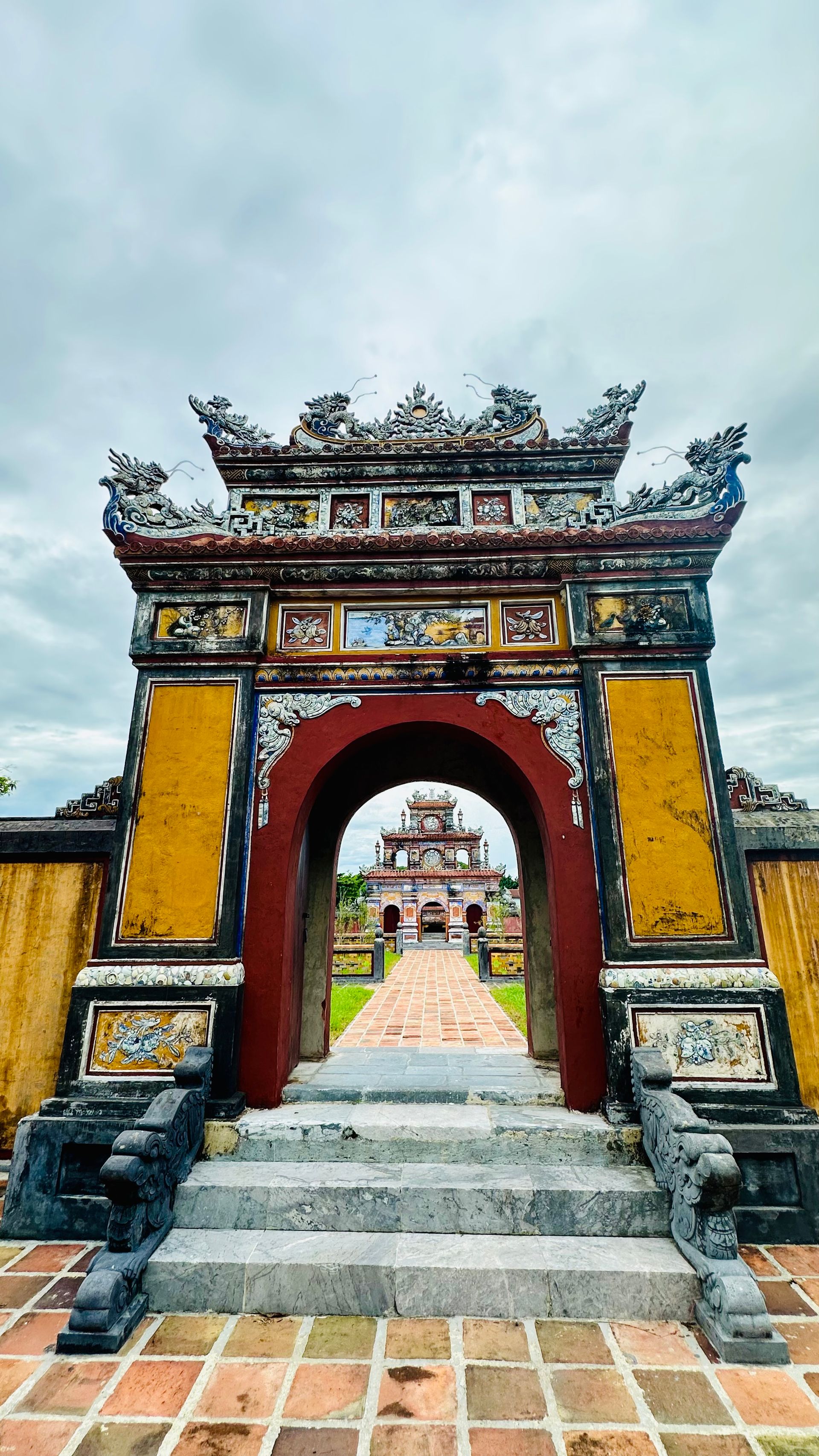
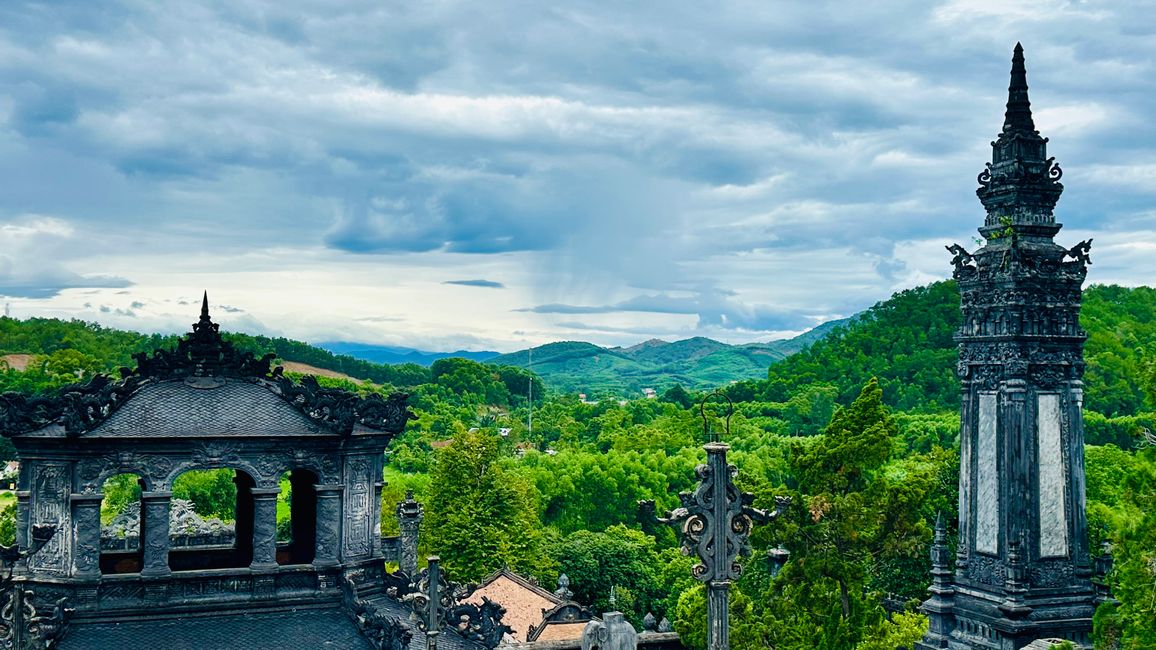
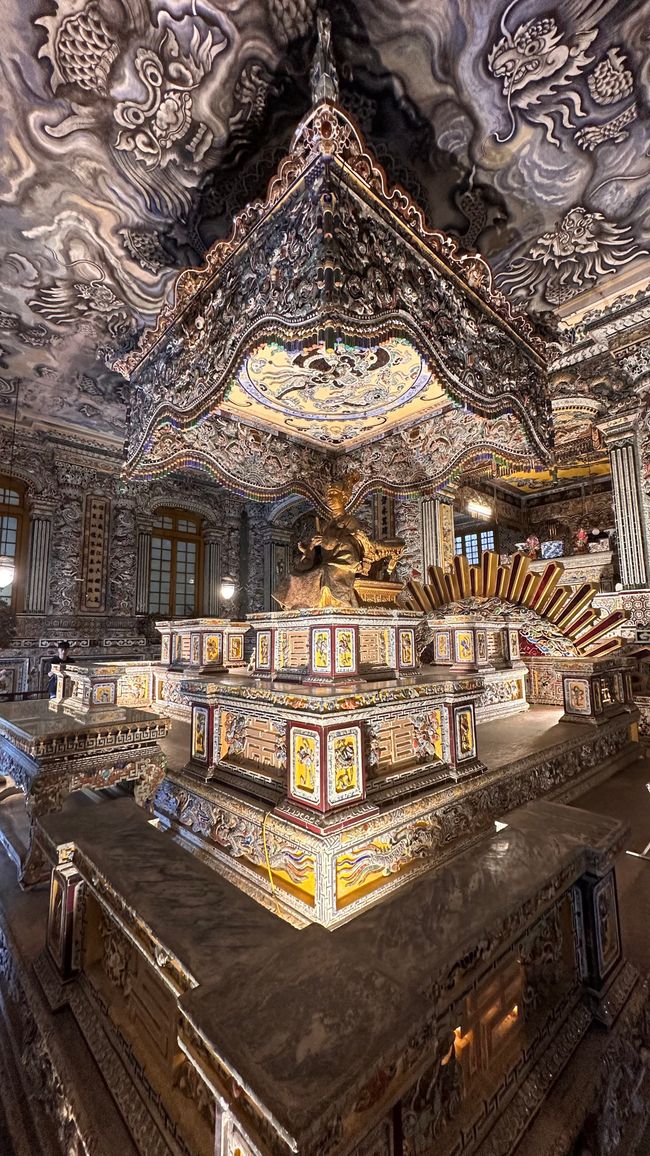
Our next stop was the tomb of Khai Dinh. The grounds were smaller than at Minh Mang, but much more magnificent. Beautiful buildings, columns, and staircases made of dark stone against a breathtaking landscape background. Since the ruler was heavily influenced by the West, a fascinating mix of styles emerged here: European elements in Gothic and Baroque style meet Vietnamese and Chinese ornaments. The tomb itself resembles a throne room – full of splendor and decorations. The walls were entirely covered with ceramic mosaics. Here too, many Asians posed for pictures in every corner and hallway – even in the souvenir shop, photos were being taken.
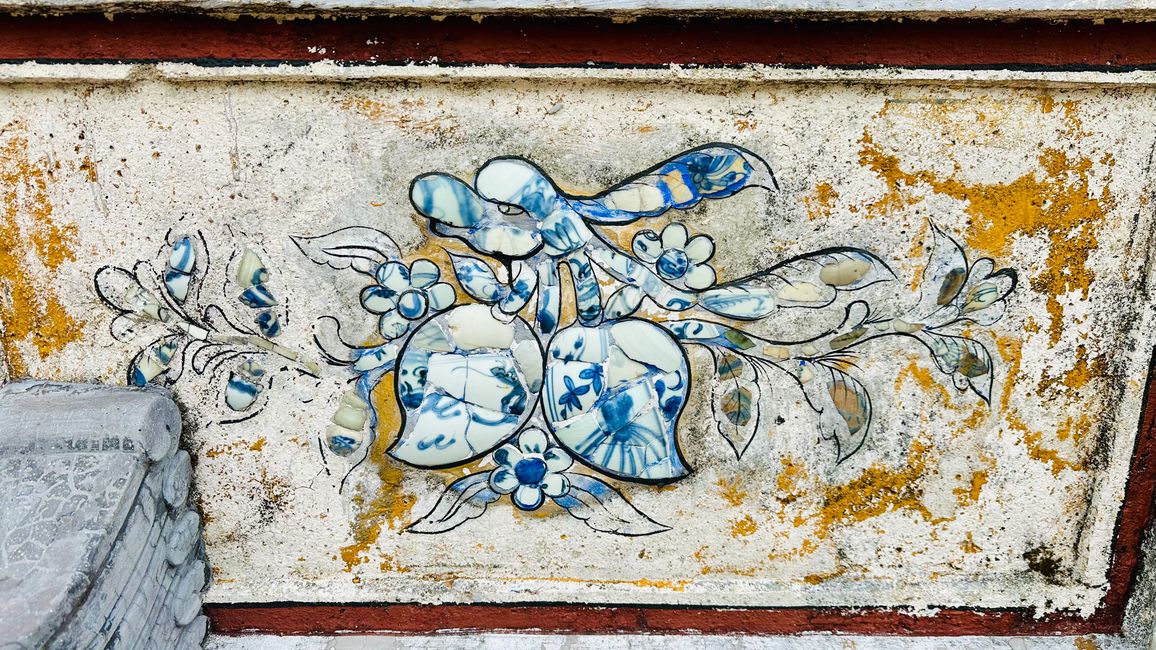
Our last tomb was that of Duc Duc. The Google reviews here were rather mixed, but we can genuinely recommend it as a hidden gem. The entrance fee was only 50,000 VND, and we had the entire site all to ourselves. While the other tombs were overrun by tourists, we could quietly take in the intricate mosaic artwork and structures – beautiful architecture in a serene, nature-friendly landscape. A real highlight. The staff member took his job very seriously: he first sold us the tickets, then guided us through the entrance, and later checked and stamped the tickets in the gatehouse.
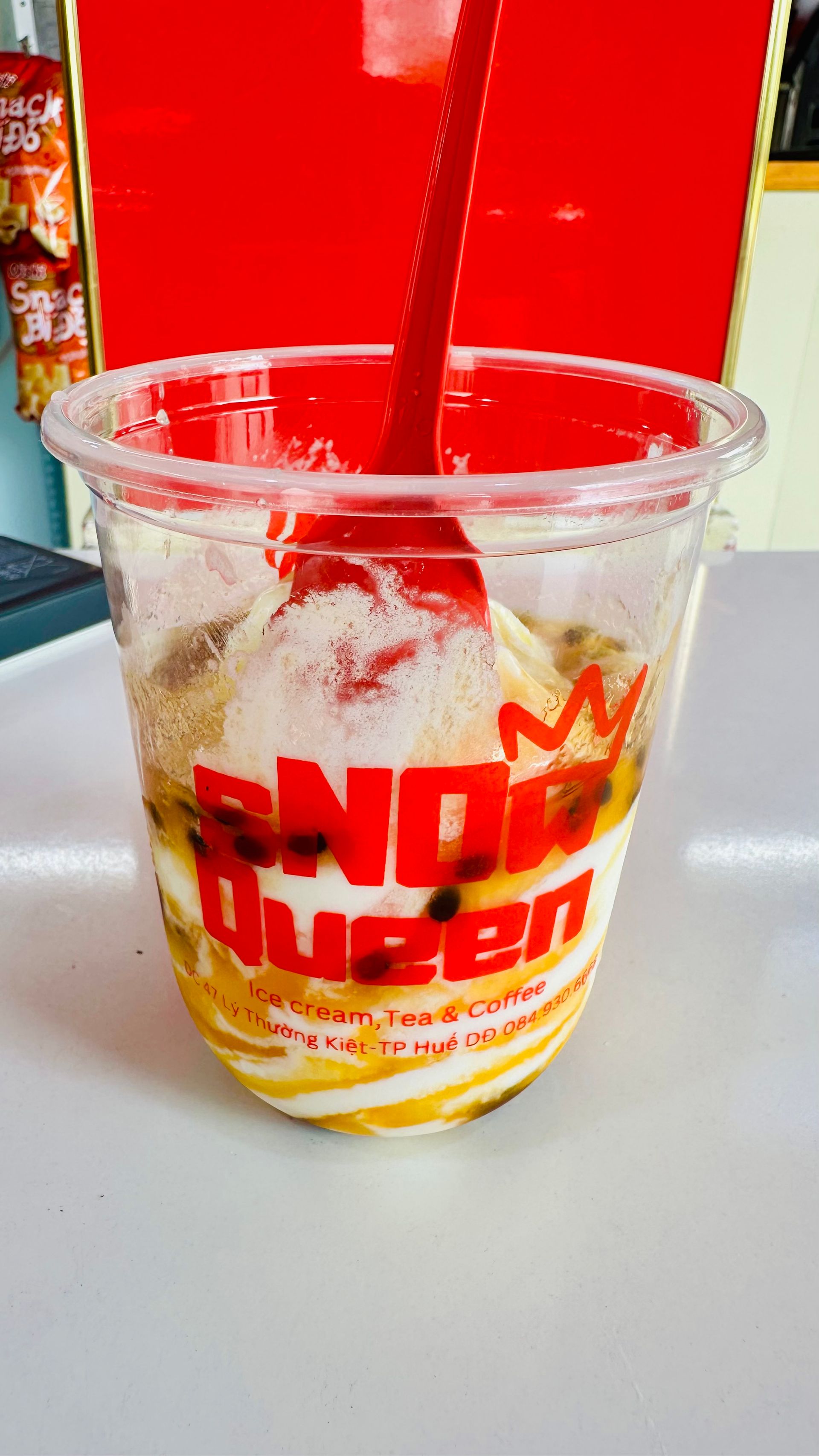
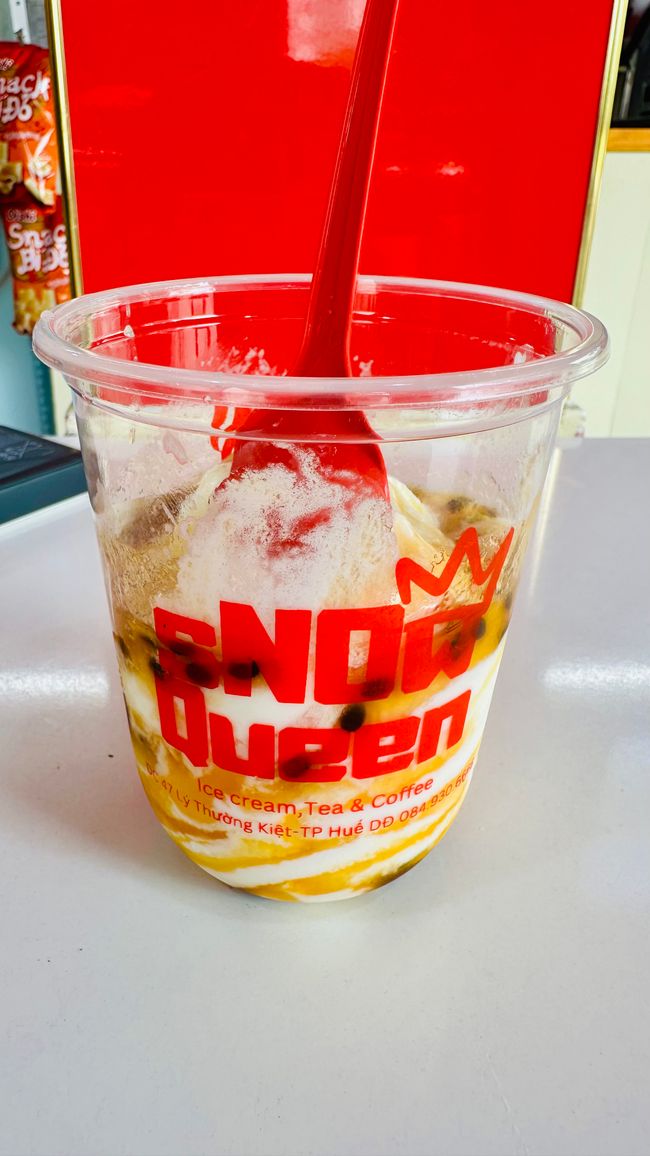
We passed the hot midday hours with cold drinks and a visit to the “Snowqueen.” They serve a kind of frozen soft-serve ice cream with fruit sauce that tastes exactly like fruit cake with a sponge base.
As our last cultural point, we visited the old imperial city again, this time to see the inner area, the citadel. We first walked to a lake further north and then wanted to enter through the northern entrance. But that was only our plan, as passage does not automatically mean entry and exit here: you could only go out. The only entrance is the southern main entrance. Why our tickets were checked at the other passages remains a mystery to me – we were checked and then not allowed inside. So we walked back the entire length.
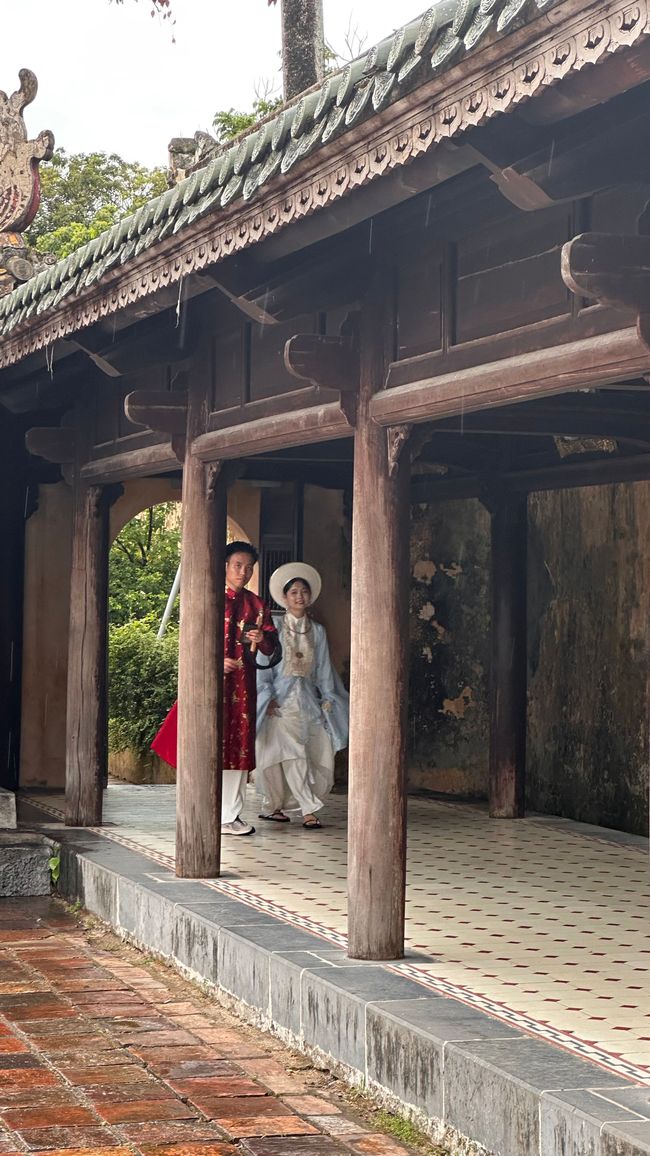
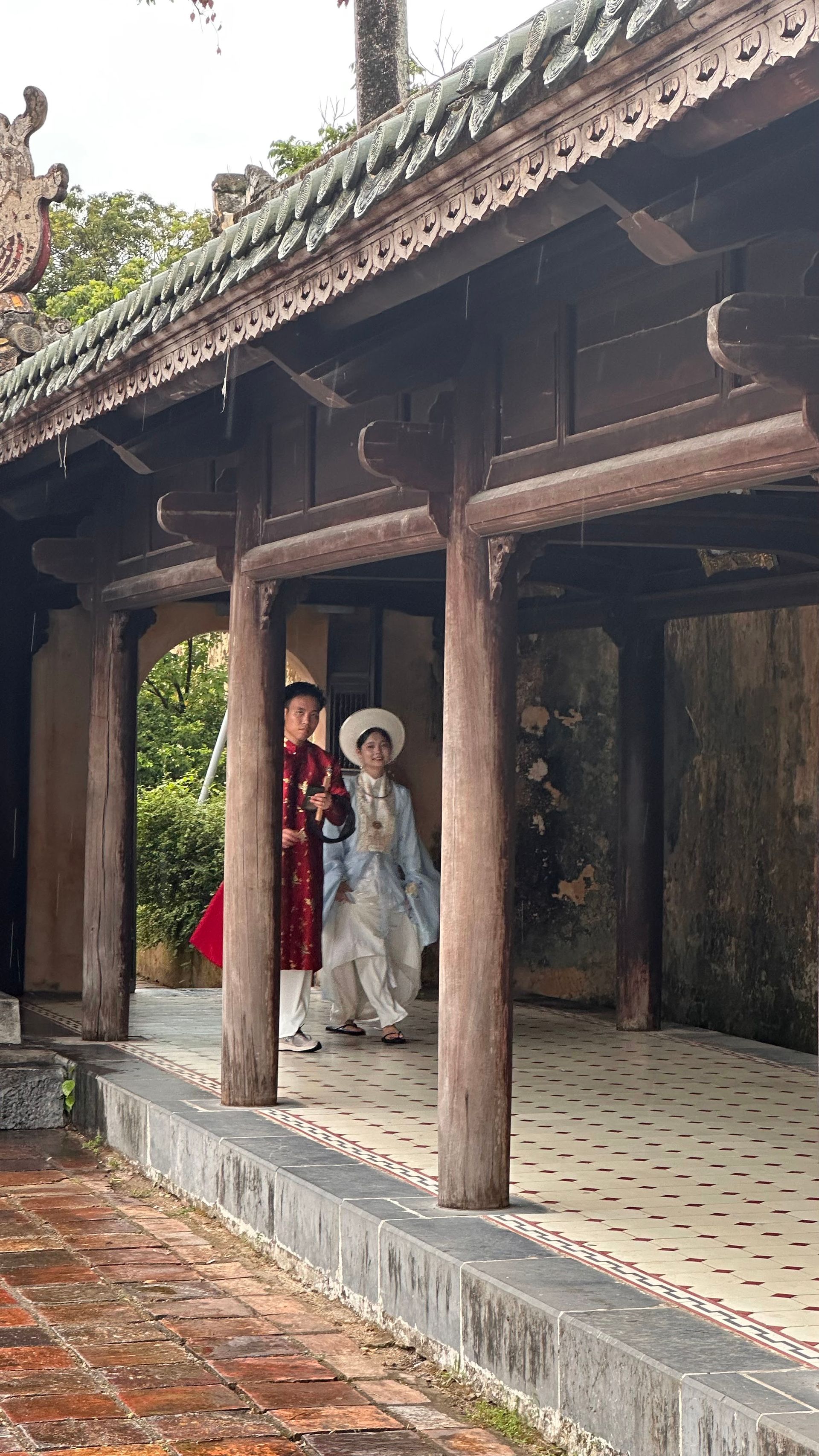
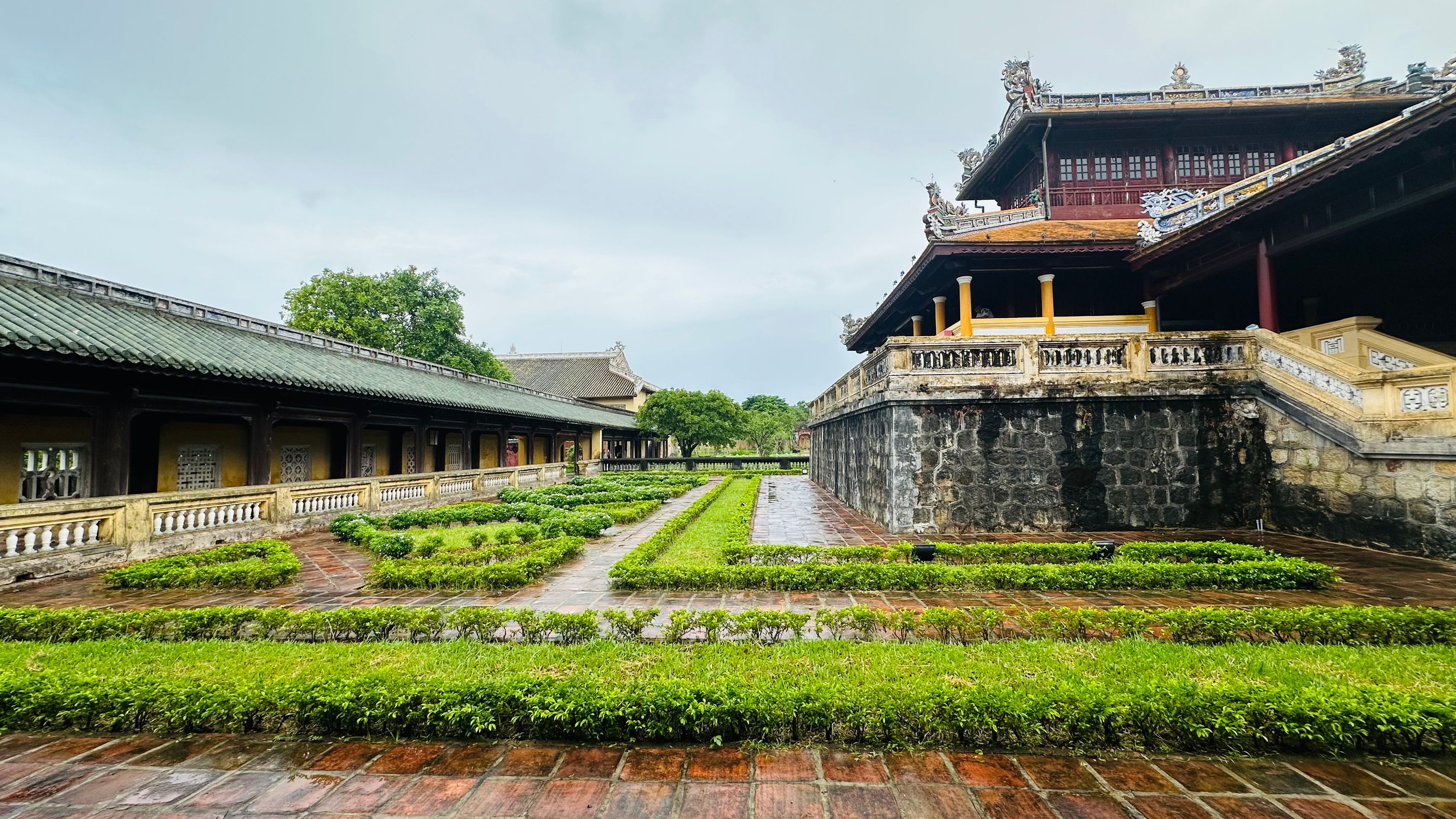
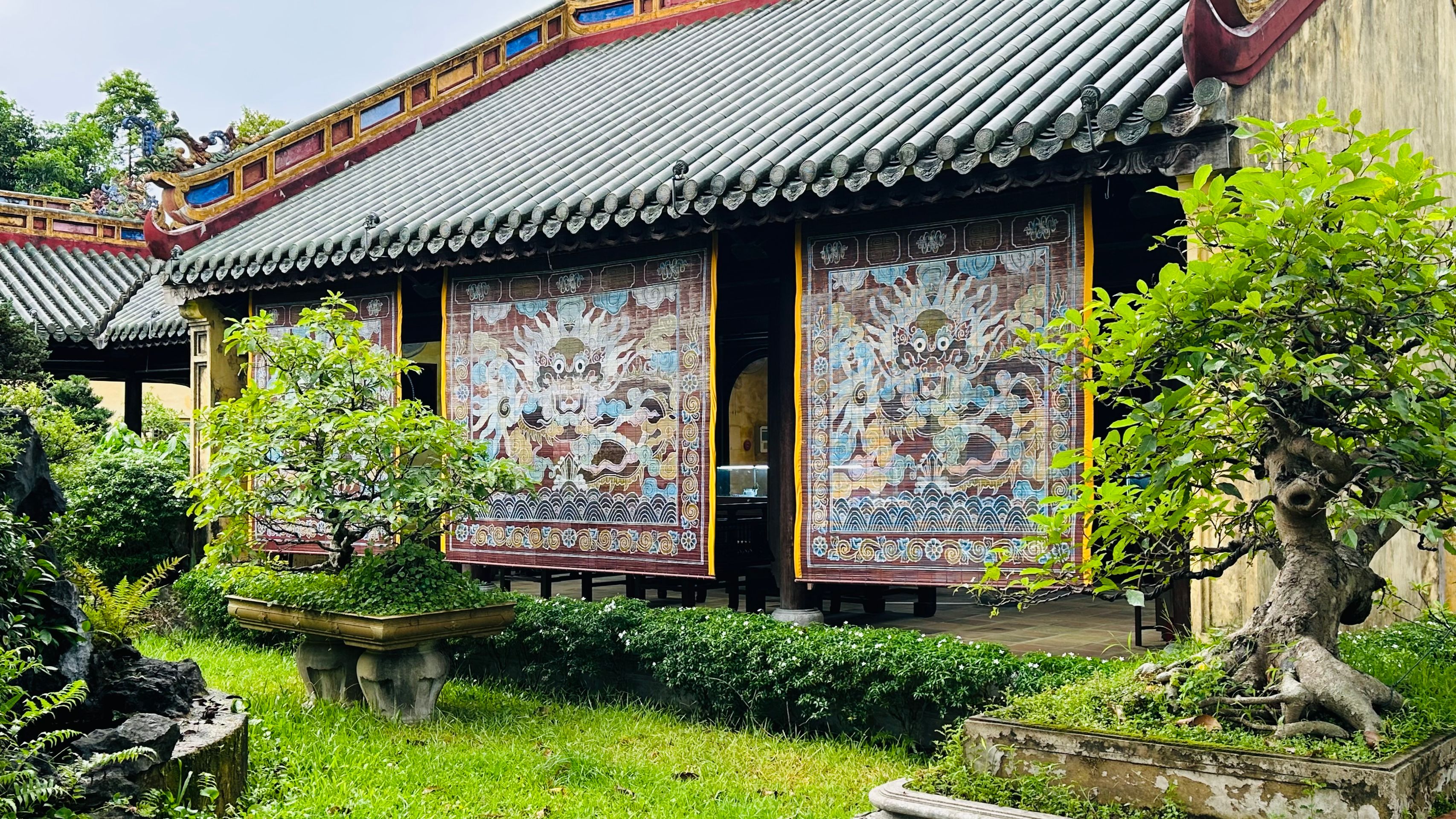
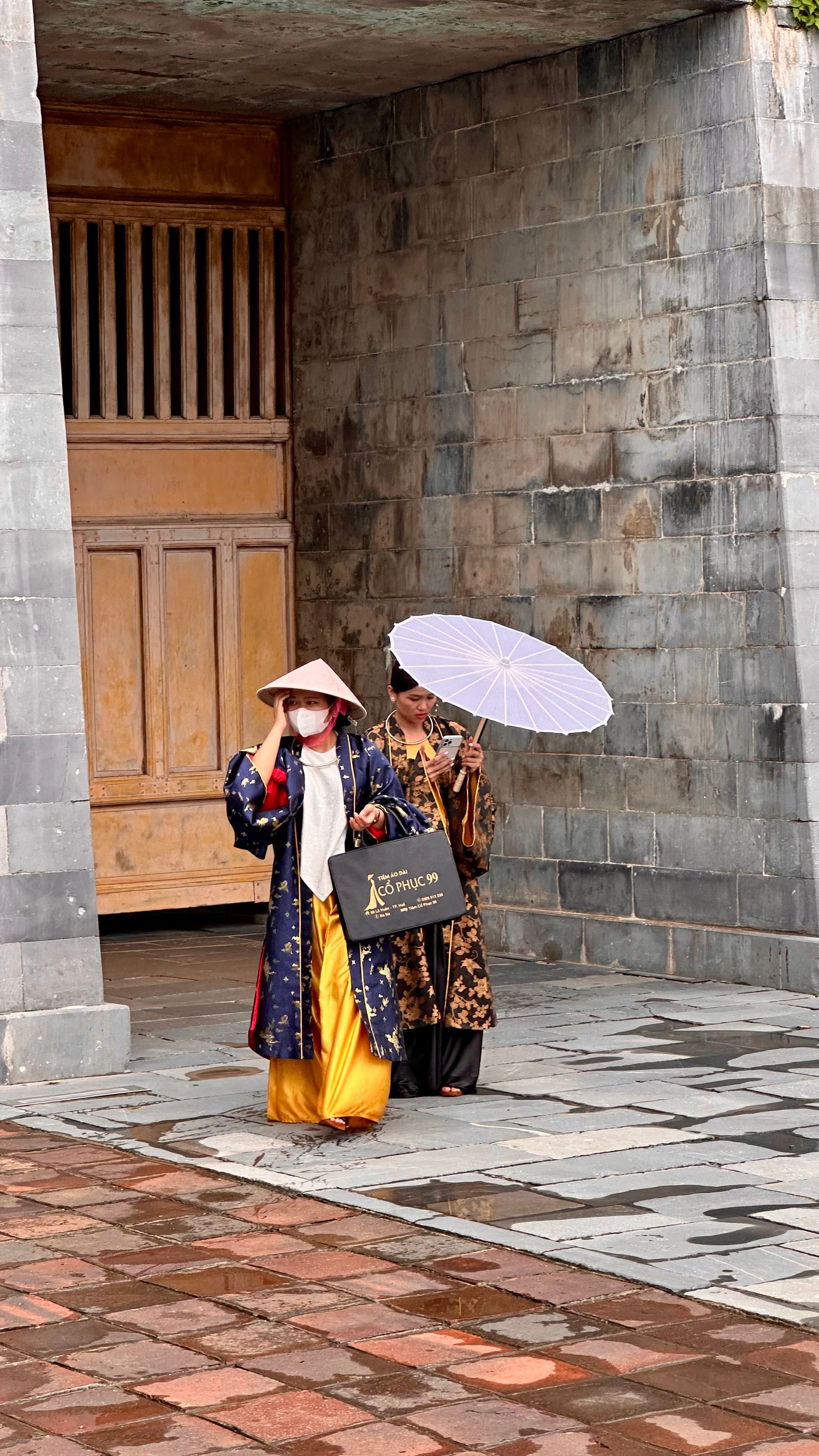
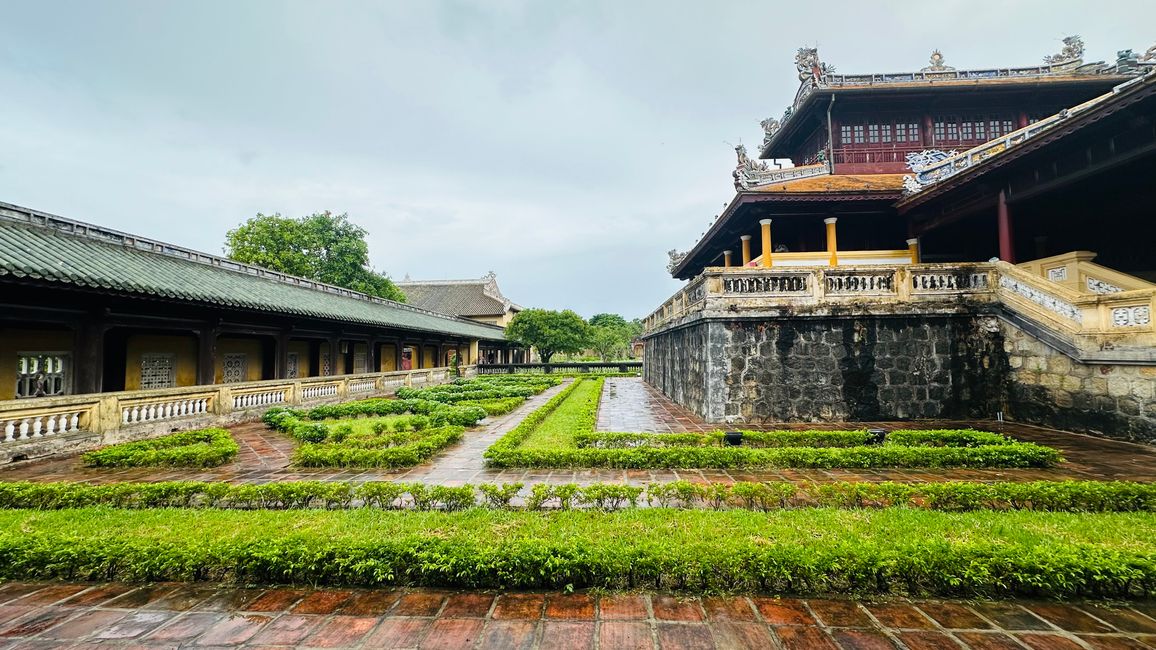
Within the citadel, there are many long corridors and some magnificent, richly decorated buildings. Many Asian tour groups passed through the complex, propelled by their guides, who left no time to linger. Professional photo sessions were also taking place – the “models” were even dressed in ancient costumes.
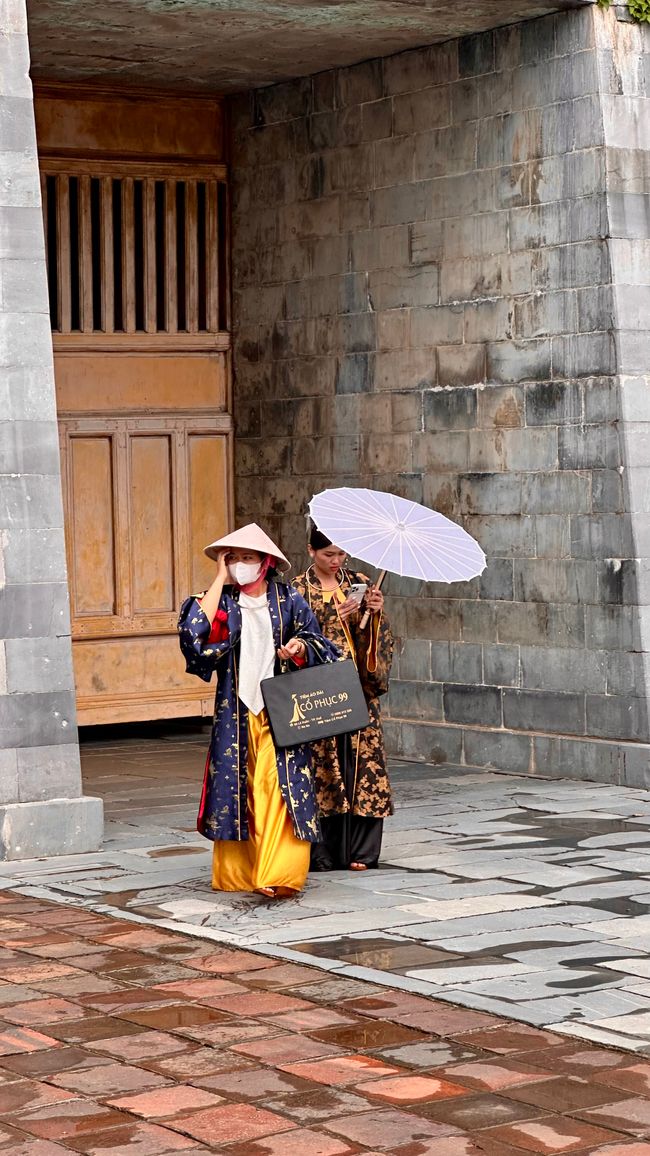
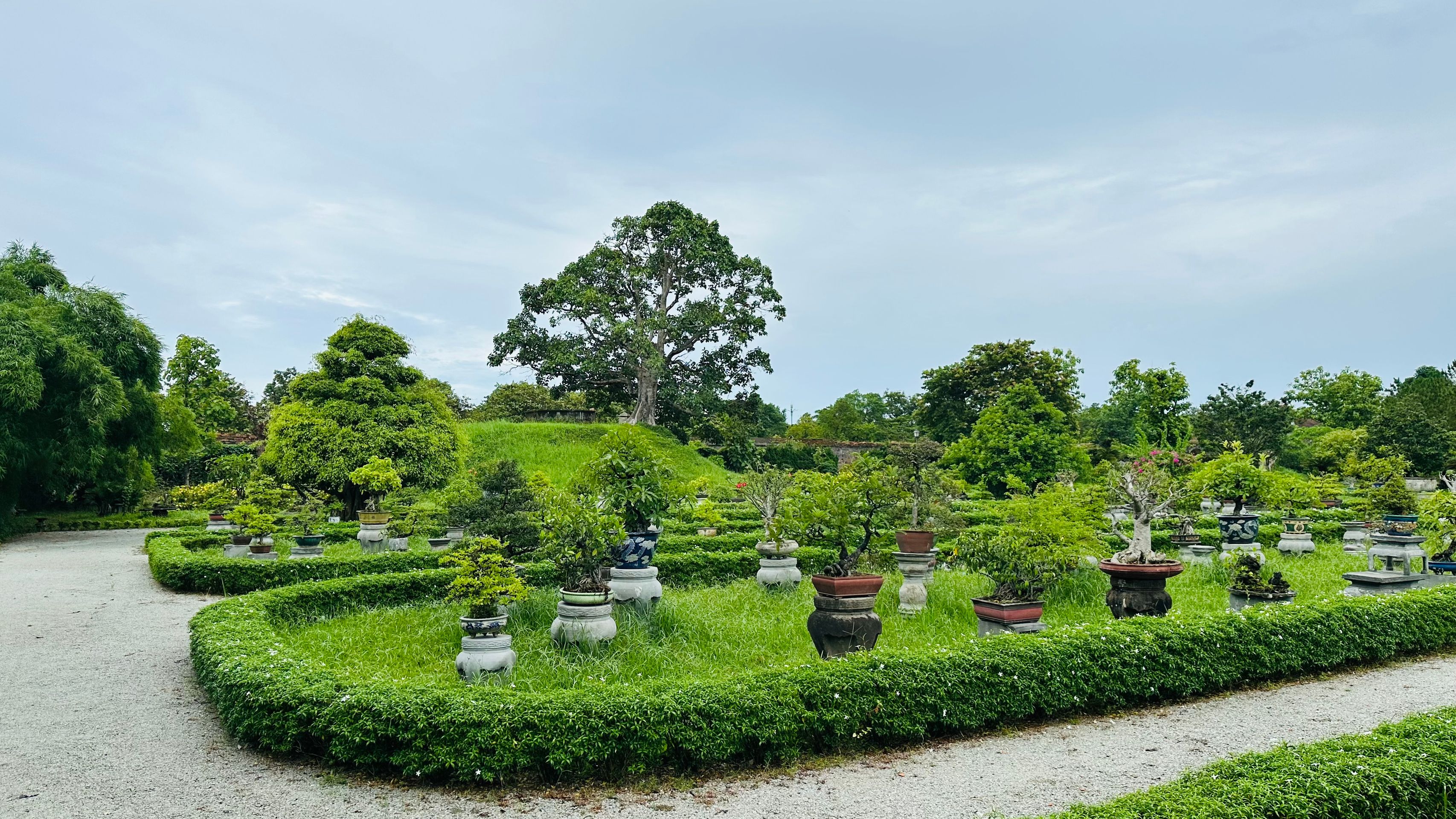
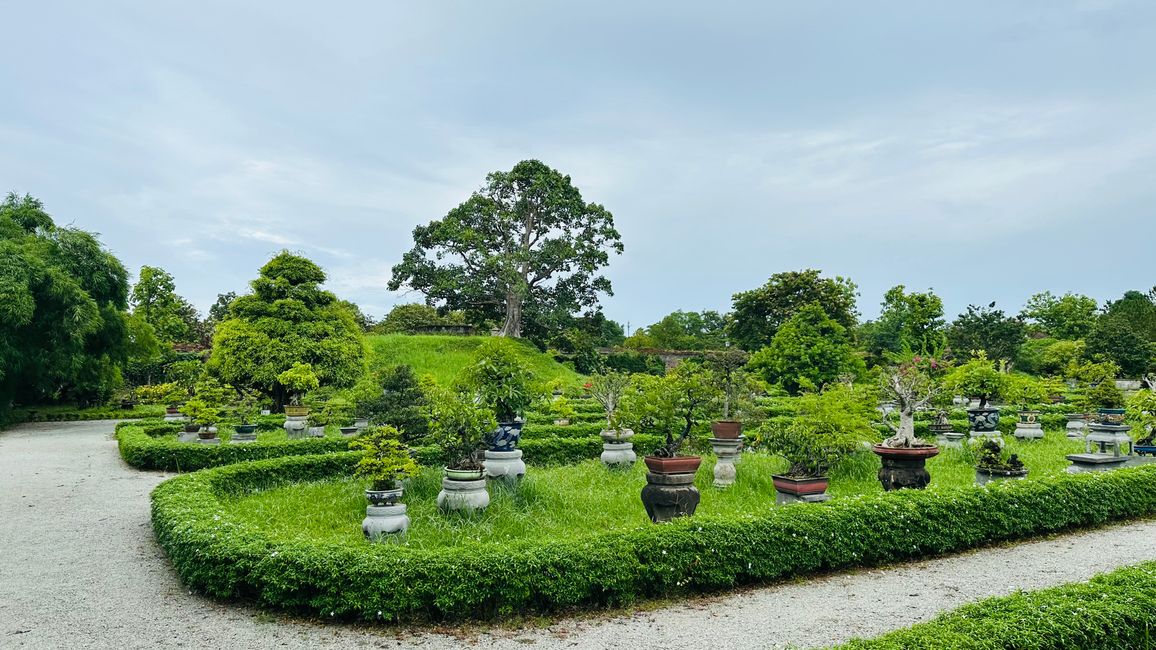
There are also quieter corners in the citadel, like the garden with a large bonsai collection. I particularly liked a small pavilion with a fish pond, where we waited out the rain and watched the water bead off the lotus plants. Meanwhile, the next photo session was already being set up behind us – complete with corresponding lighting and at least three photographers.
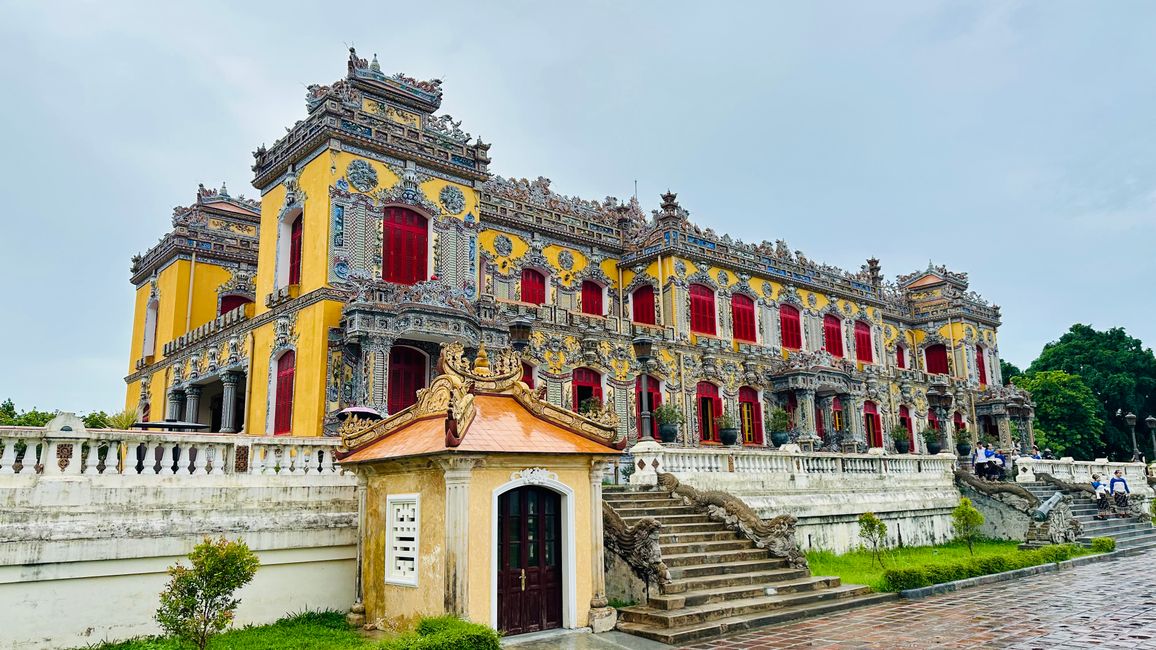
The buildings strongly resembled the tombs from the morning. However, the throne room was very sparsely furnished – aside from the throne, there were no other pieces of furniture – but the walls and ceiling were all the more lavishly decorated.
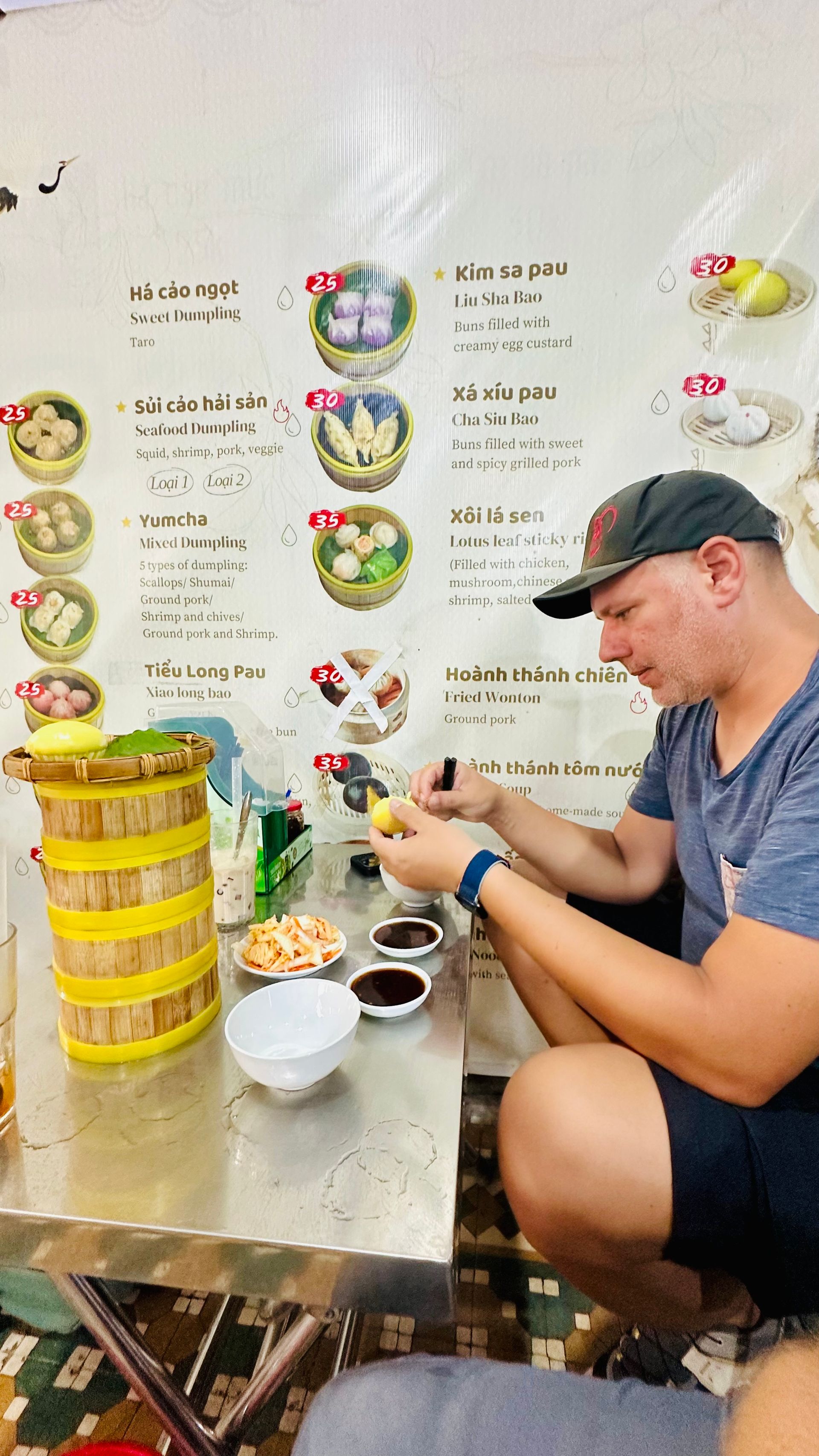
Just before closing at 5:30 PM, we made our way back (to avoid being locked in again) and quickly stopped at a small local restaurant. Simon finally got his beloved baos – steamed yeast dough balls with various fillings.
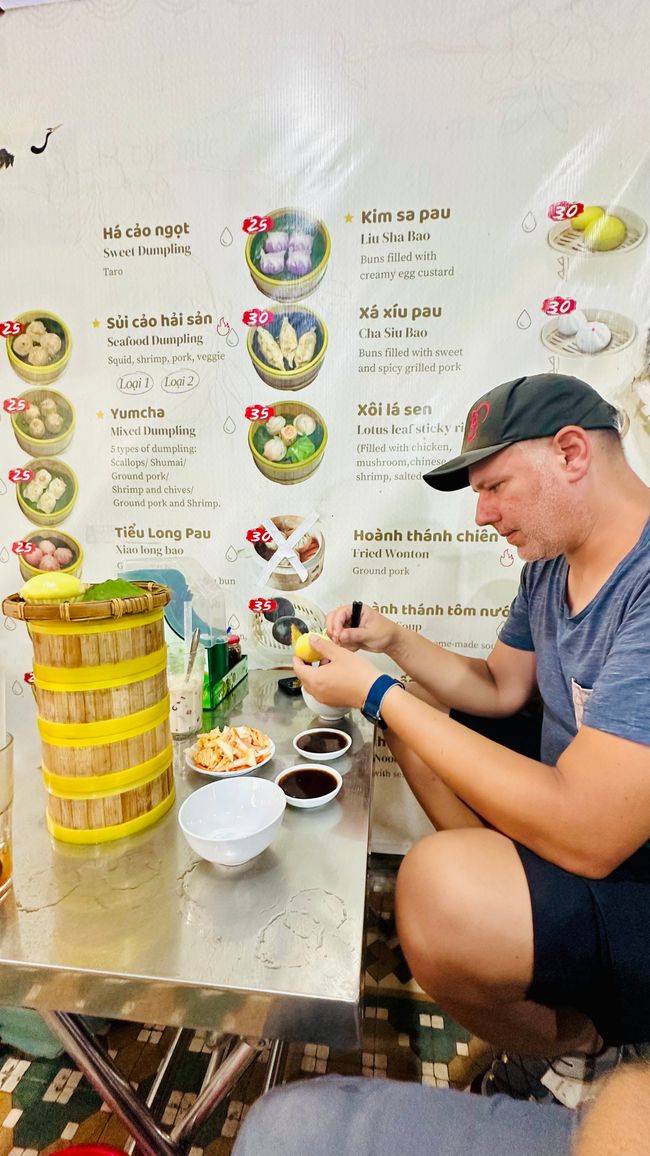
We were apparently the only western guests, as we were immediately eyed and secretly photographed. And once again, we consumed the food incorrectly: the bowl of soup should have been eaten together with the fried rice. You never stop learning. However, everyone was very warm and simply curious.
The next day we continued on to Da Nang. The bus ride was again very pleasant and comfortable. Unfortunately, the hotel room was a disappointment – it was the first time we immediately canceled a room after seeing it. The shared toilets of the attached hostel were smelly through both the door and the air conditioning. The window in the room faced directly into the lobby, meaning we could hear both the noise from the nearby street and the conversations and music from the lobby. That the sink was not in the bathroom but in the bedroom – next to the sink in the kitchenette (why even two?!) – was tolerable, though odd.
Since it was too late for extensive sightseeing and we hadn't found alternative accommodation, we drove the 45 minutes back to Hoi An and returned to Da Nang the next day. After all, I wanted to keep my dentist appointment.
My teeth were wonderfully taken care of at the Australian Dental Clinic. In addition to a cleaning, I had a retainer replaced, two crowns made, and a filling done – all for just 2 million VND, which is about 67 euros.
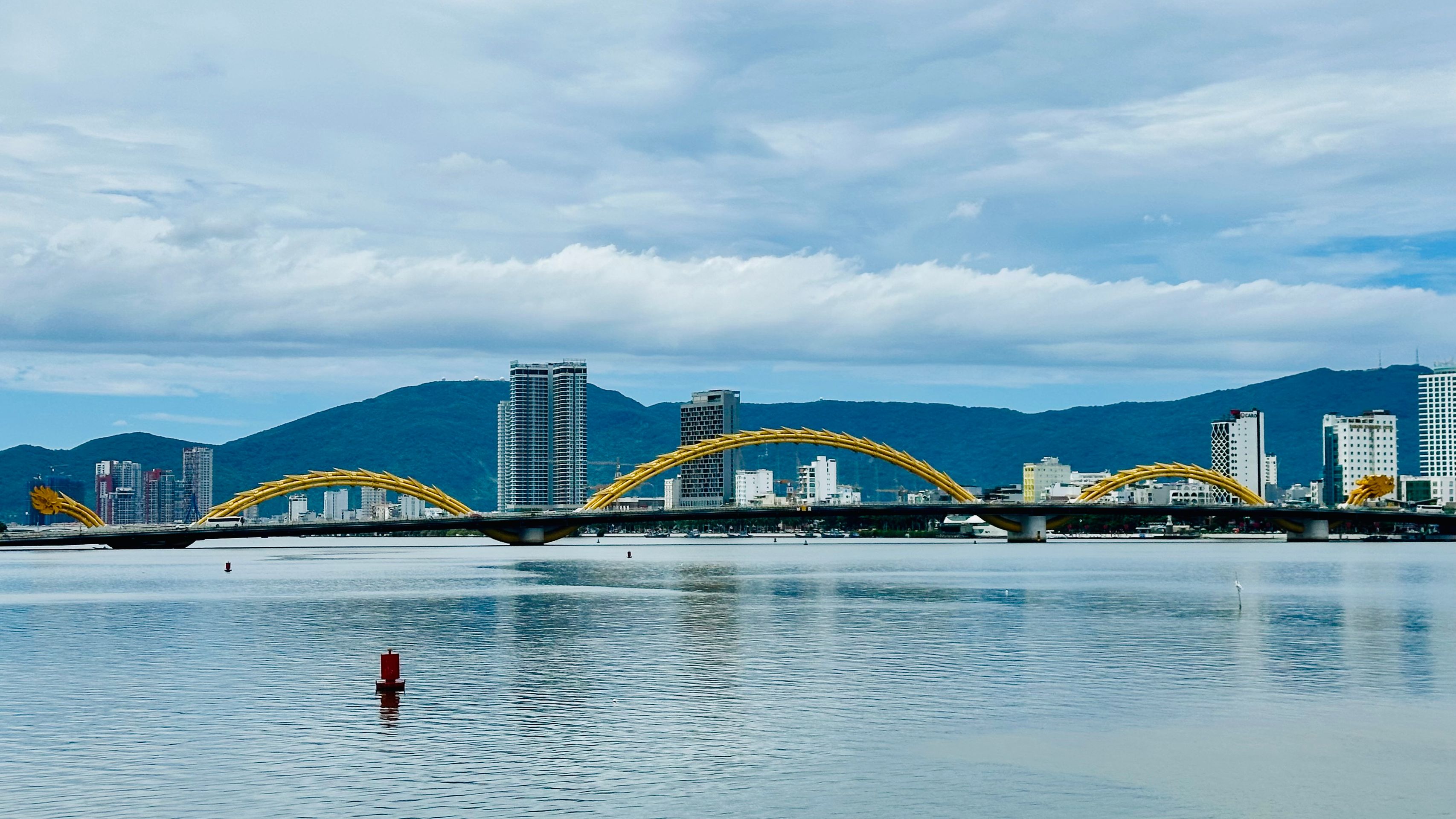
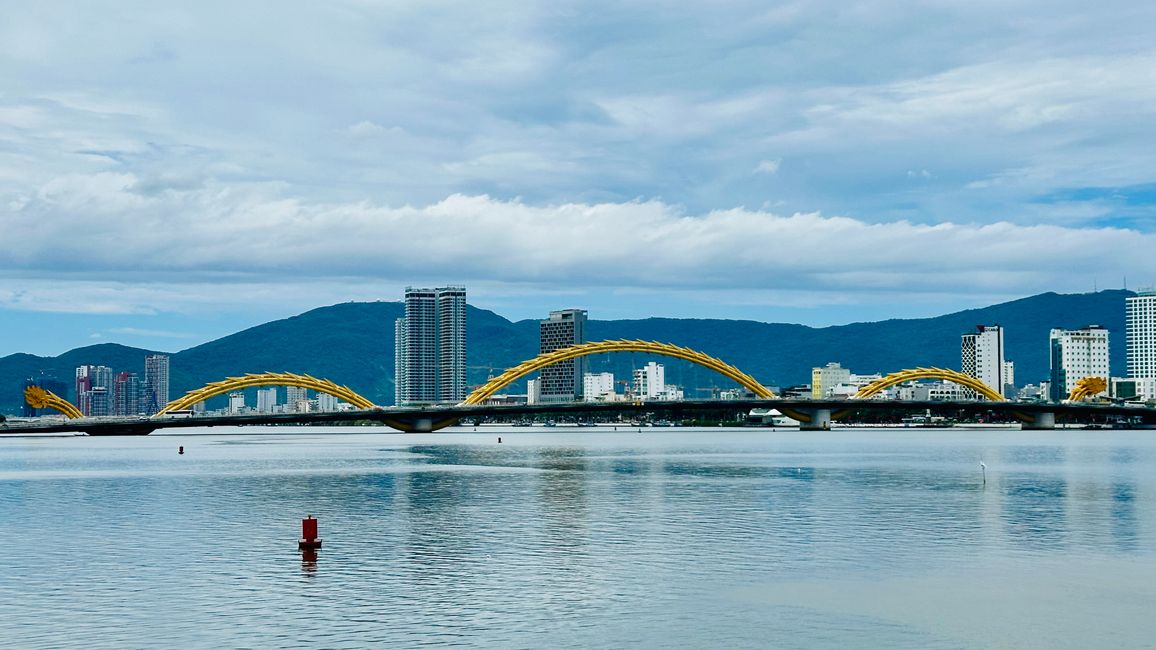
At noon, we strolled a bit through the town and walked along the promenade to see the Trần Thị Lý Bridge and, of course, the famous Dragon Bridge.
We also wandered through the Han Market and the Con Market. The Han Market is more geared towards tourists: there are many dried fruits and nuts and in the upper area shoes, bags, T-shirts, and pants for sale – with the same models also found in the shops in Hoi An. The Con Market, on the other hand, is more intended for locals: here you can find fresh produce and mainly household items like brooms and storage containers.
We really enjoyed the