

Java, the Island of Superlatives
as Caca explains) designed in the mid-18th century, was the place where former sultans leisurely enjoyed the company of their wives, concubines, and children. There is a bathing...
Published: 31.07.2026
Yogyakarta, the capital of the eponymous sultanate on Java, is the starting point for two monumental UNESCO World Heritage Sites. They leave a lasting impression – at least on me, who visited the two temple complexes on July 3rd and 4th, 2026. While the Hindu complex of Candi Prambanan fascinates with its towers rising steeply towards the sky, the Buddhist monument Borobudur, a terraced pyramid, impresses with its gigantic size.
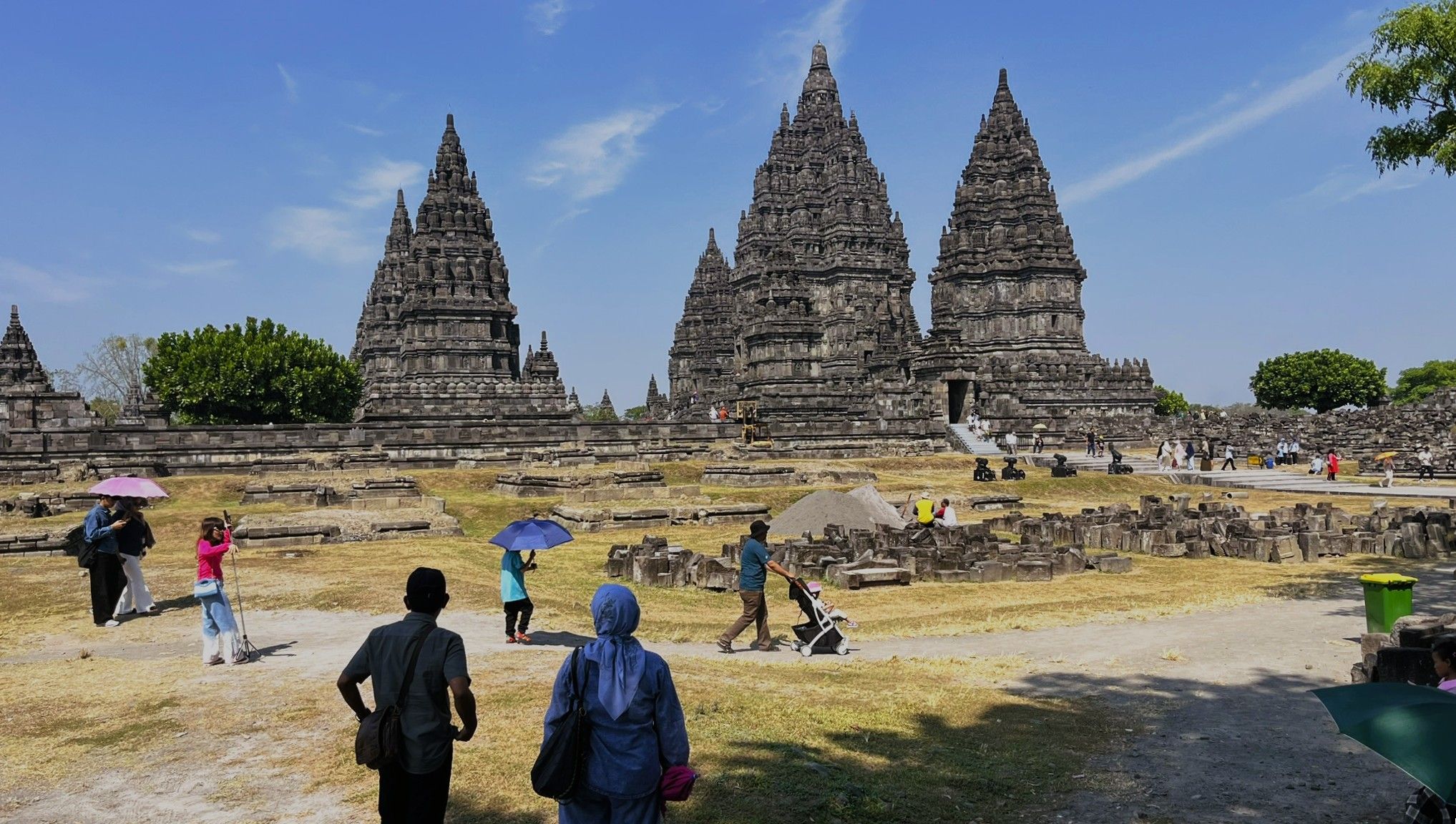
The Prambanan archaeological park consists of four main sites, which can be easily explored on foot or by electric golf cart, ideally from south to north. Built in the late 9th century under the Hindu-Buddhist Mataram dynasty, Prambanan is almost three hundred years older than the perhaps even more famous temple complexes of Angkor.
(Clarification for those interested in history; everyone else can skip this parenthetical remark: The Hindu-Buddhist kingdom of Mataram existed from the 8th century AD and disappeared in the 10th. Islam only reached Java from the 13th century onwards; the first Muslim sultanates were founded in the 14th and 15th centuries. The Islamic Sultanate of Mataram emerged around 1580 and collapsed in 1755. Among other things, the Sultanate of Yogyakarta, which still exists today, arose from it.)
Shiva reigns supreme over everything.
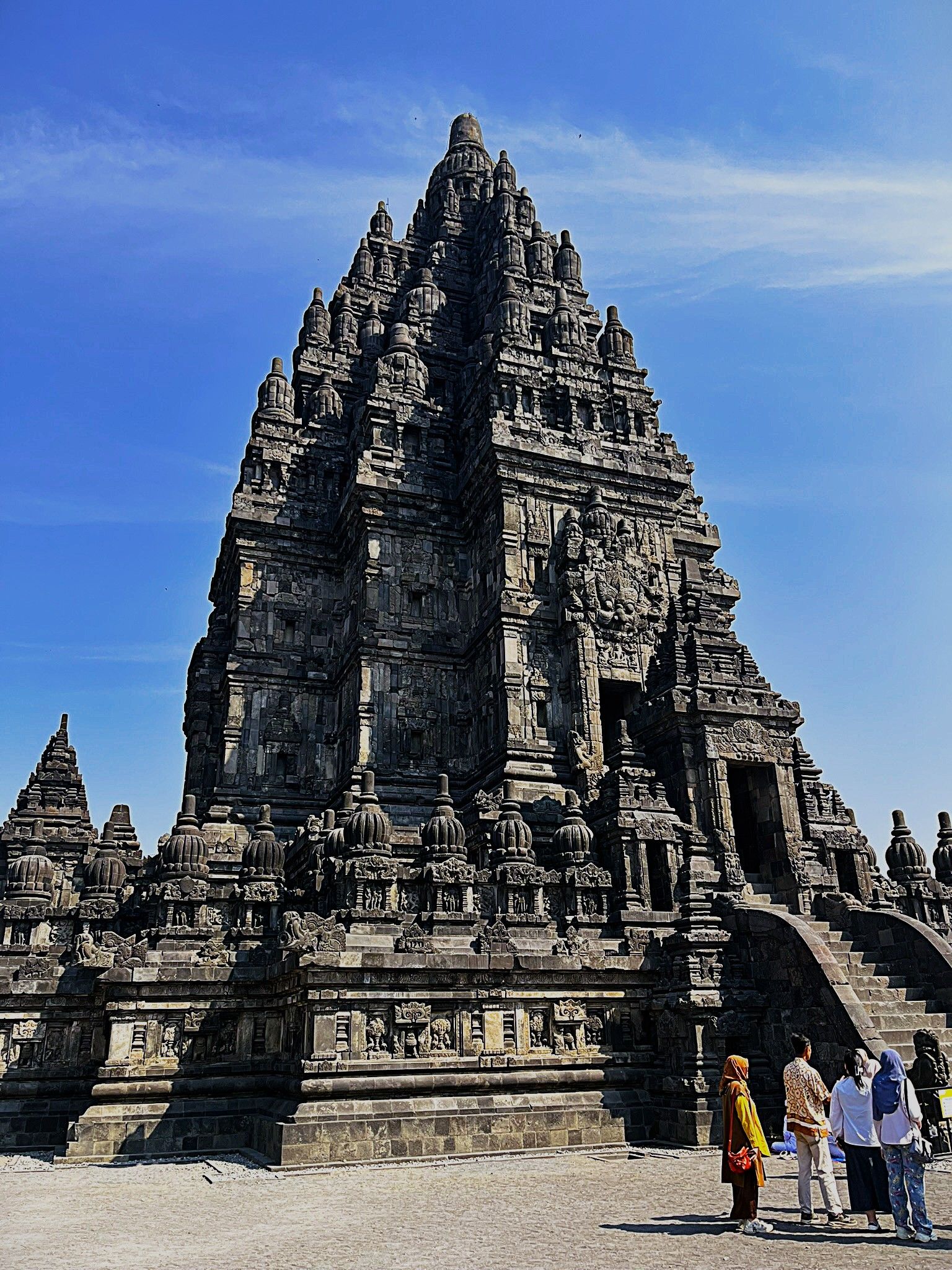
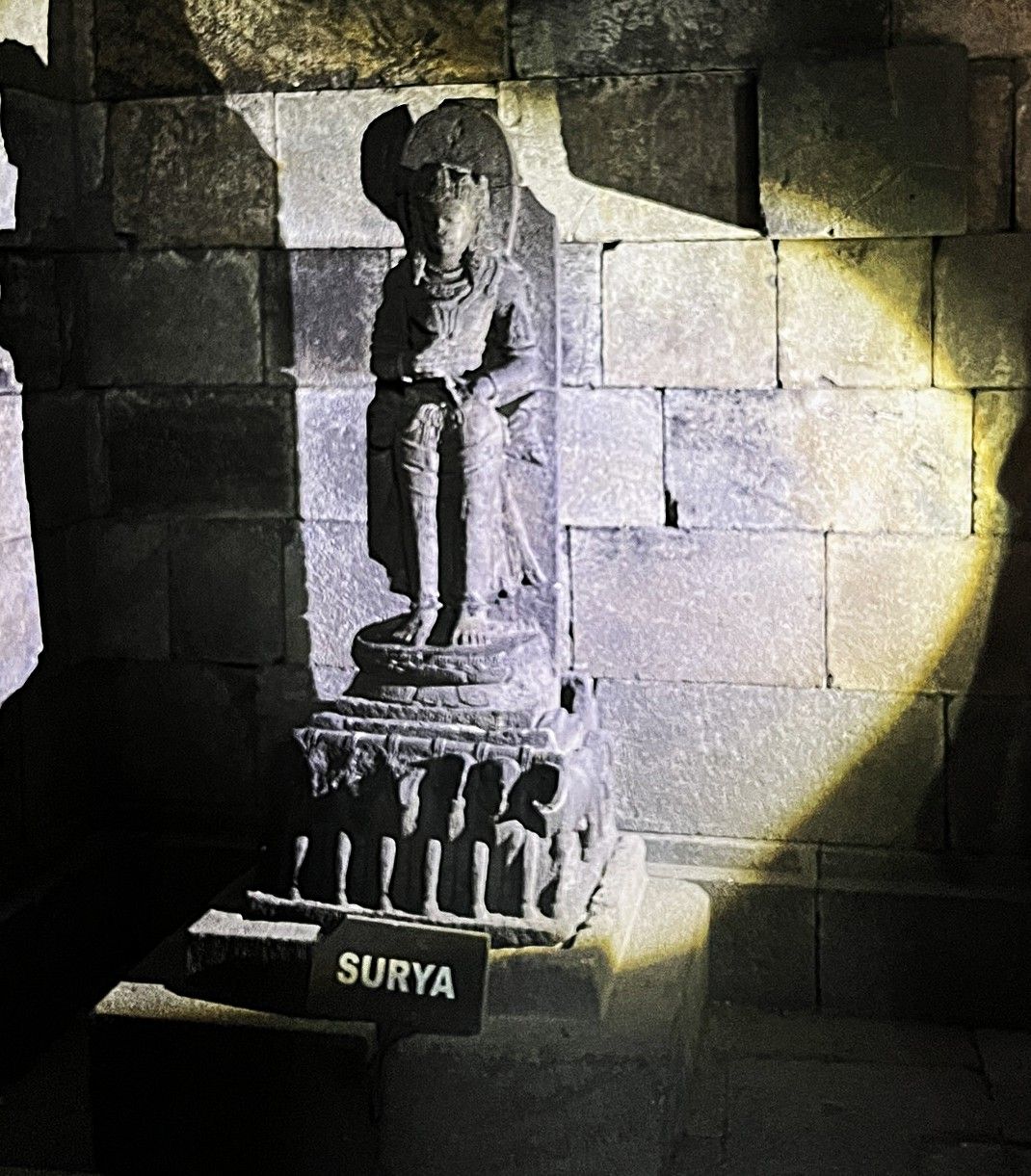
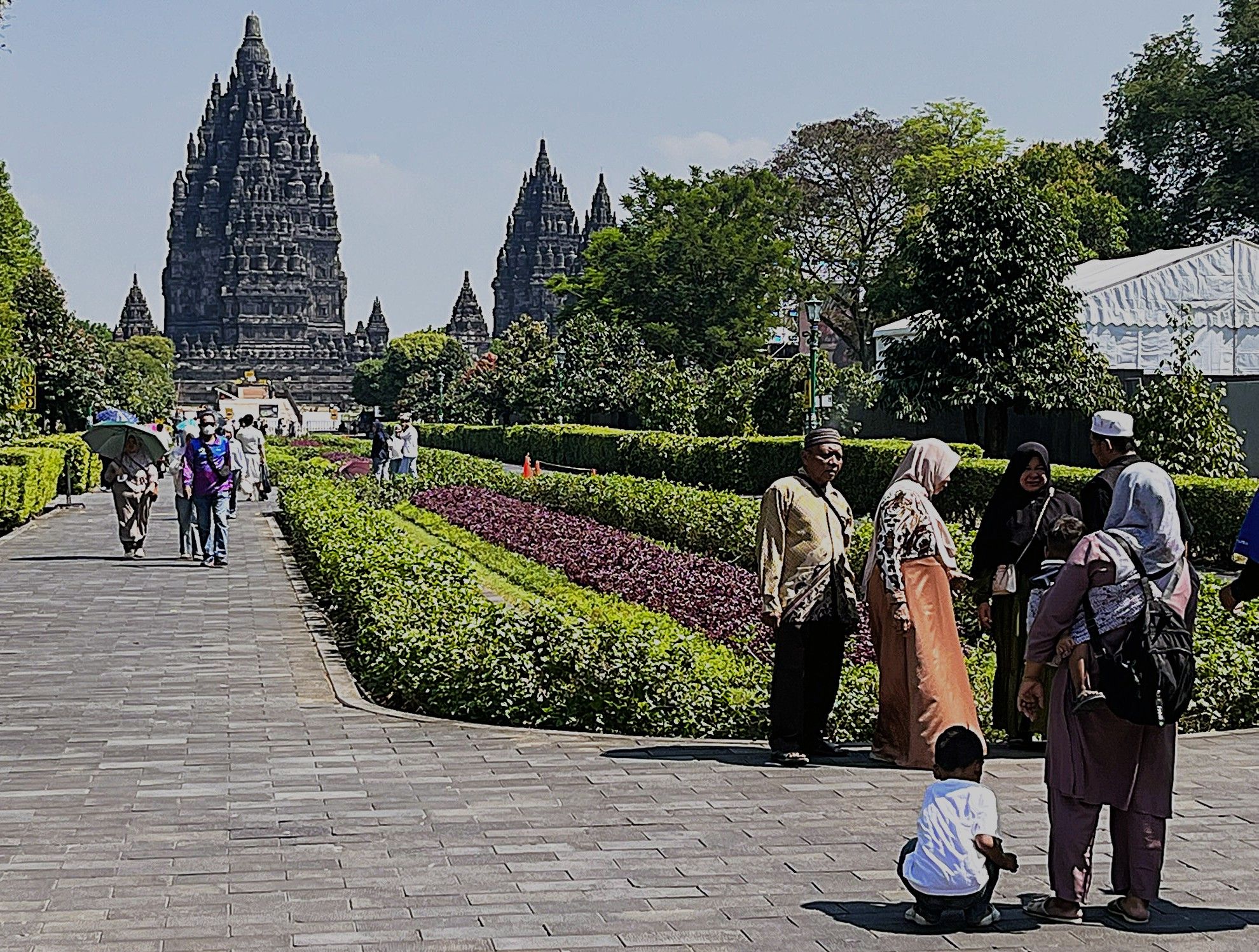
The most magnificent complex, Candi Prambanan, located in the north of the site and dating back almost 1200 years, is dedicated to the Hindu Trinity, the so-called Tri-murti: At its center are eight main temples, the 47-meter-high Temple of Shiva (the Destroyer) being the dominant central structure that shapes the entire sanctuary. It is flanked by two other large temples for Vishnu (Preserver) and Brahma (Creator).
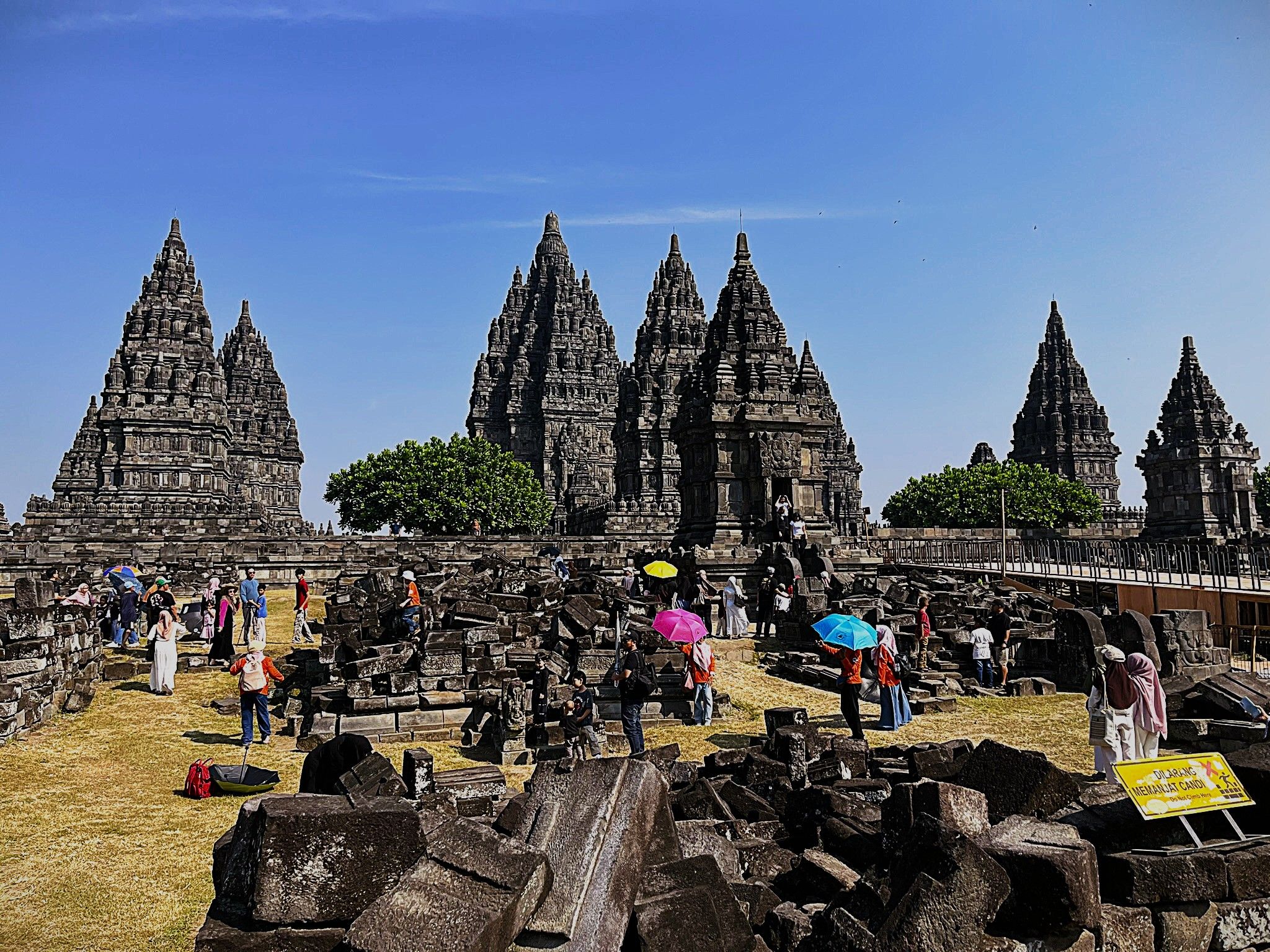
Originally, the complex contained 224 to 250 individual shrines. Many of these small temples now survive only as piles of black basalt stones or remnants of foundations, and it is uncertain whether they can ever be reconstructed. Prambanan was largely destroyed in an earthquake in 1549 and only gradually rebuilt in the 20th century. In the meantime, local people had used the site as a source of building materials for centuries, and many parts are simply no longer there. (What I'm saying here, of course, comes not from my own knowledge, but from that of our guide.)
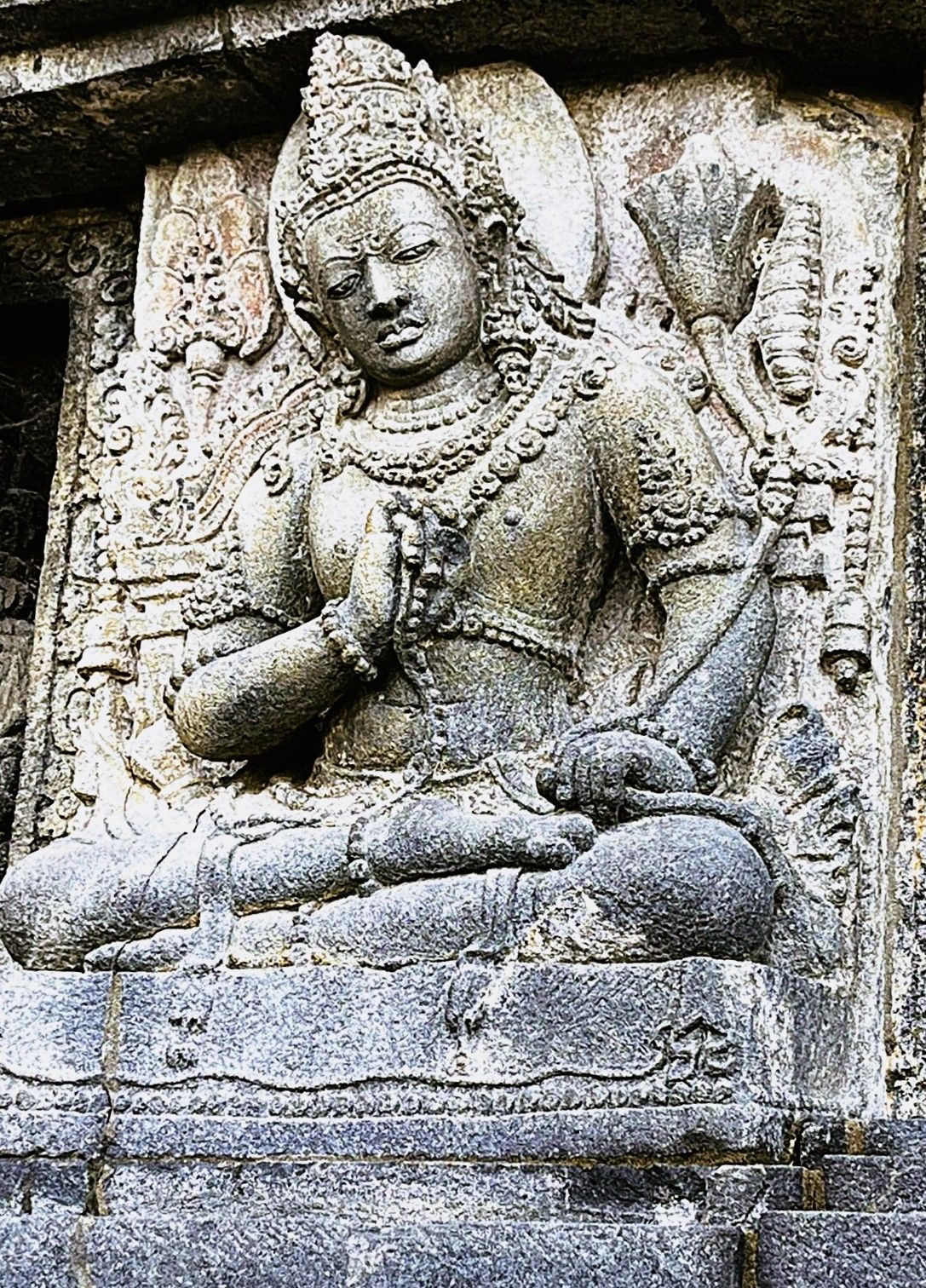
The slender, soaring towers are richly decorated with reliefs. These were carved from the already constructed stones; the stonemasons could therefore not afford the slightest mistake; this makes the wealth of detail, precision, beauty and expressiveness of these works all the more admirable.
The scenes depicted are from the Hindu epic Ramayana, parts of which are over 2500 years old. It tells the life story of Prince Rama, a human incarnation of the god Vishnu.
Rama was an ideal ruler. His fame and divine lineage inspired the Thai King Vajiravudh, who reigned from 1910 to 1925, to call himself and his five predecessors of the Chakri dynasty, who had been in power since 1782, "Rama" and to number them retrospectively. Thus, Vajiravudh became Rama VI; the current King of Thailand, Maha Vajiralongkorn, is Rama X.
Peaceful coexistence
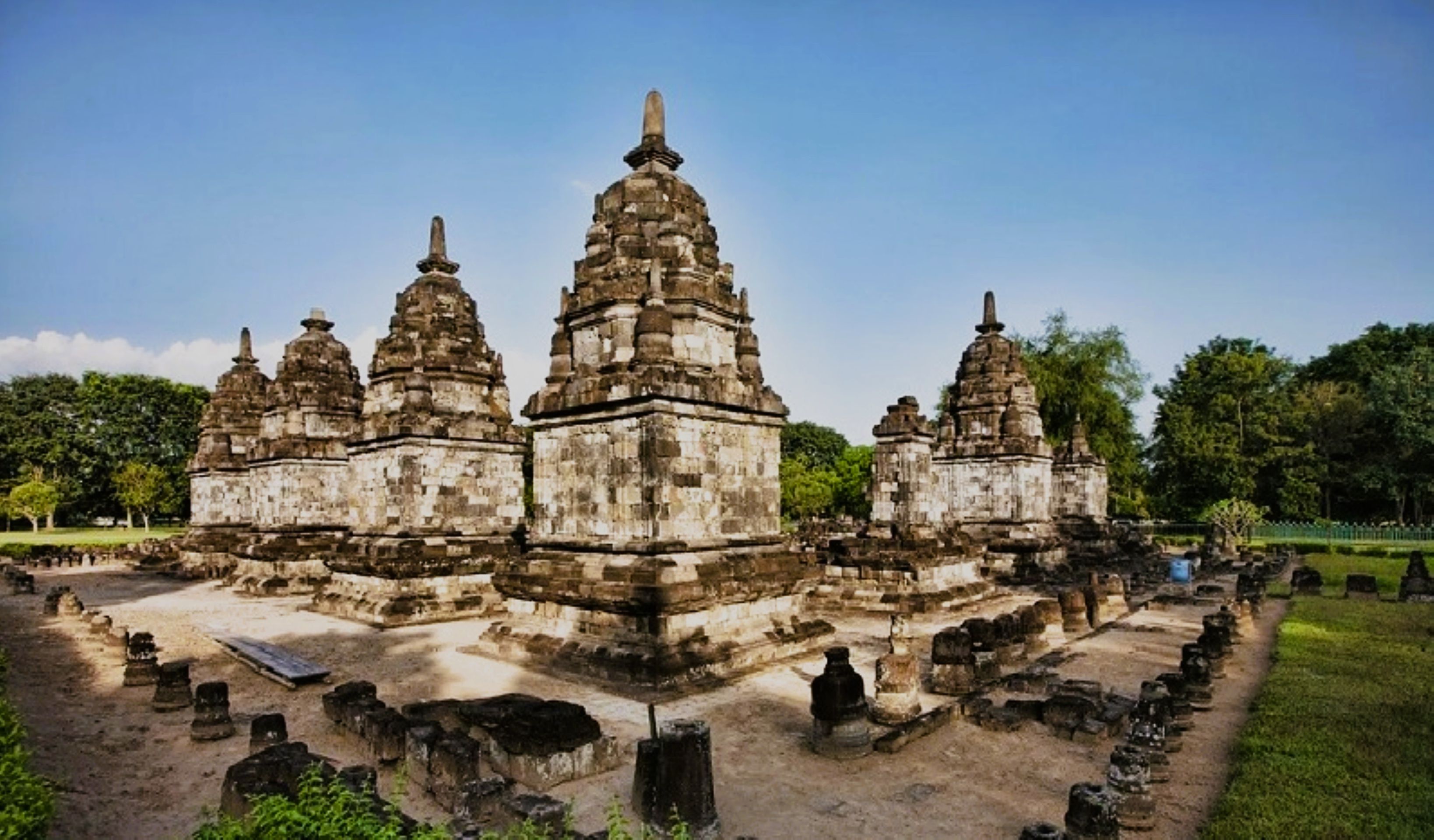
Three other temples in the same park are dedicated to Buddha and demonstrate the peaceful coexistence of religions in the former kingdom. North of the Hindu Prambanan main complex lies the Buddhist Candi Lumbung. "Lumbung" translates as "rice granary," but it is a restored temple that was once surrounded by 16 smaller subsidiary temples. Lumbung also features fine stonework and stupas.
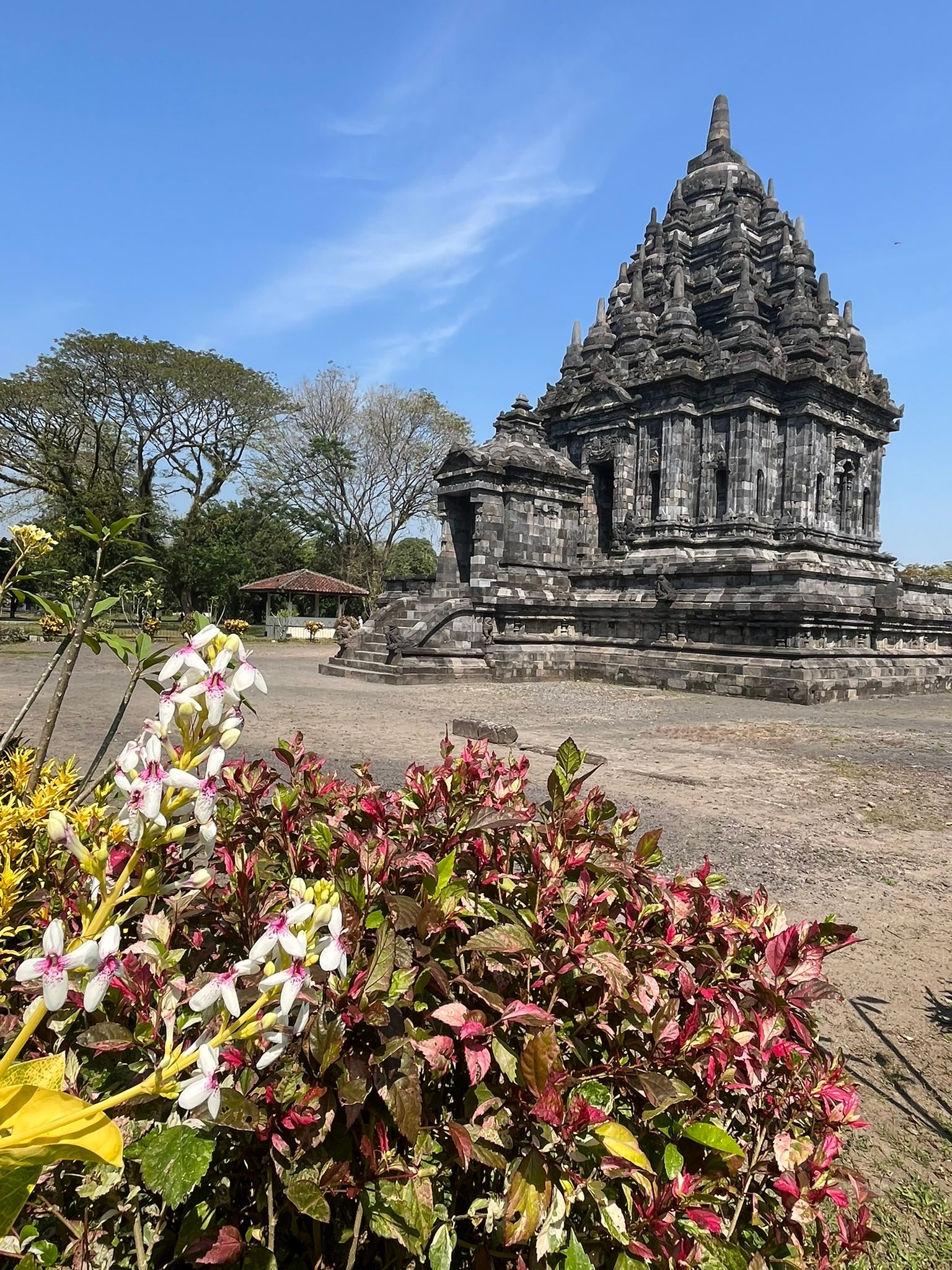
Just a little further north lies Candi Bubrah. Long a ruin, this Buddhist temple has been painstakingly restored. Here you can see well-preserved Buddha statues on the exterior and grim Kirtimukha heads above the niches. The Sanskrit word Kirtimukha means "face of glory": this grotesque monster with bulging eyes, fangs, and a gaping maw is said to protect the temple.
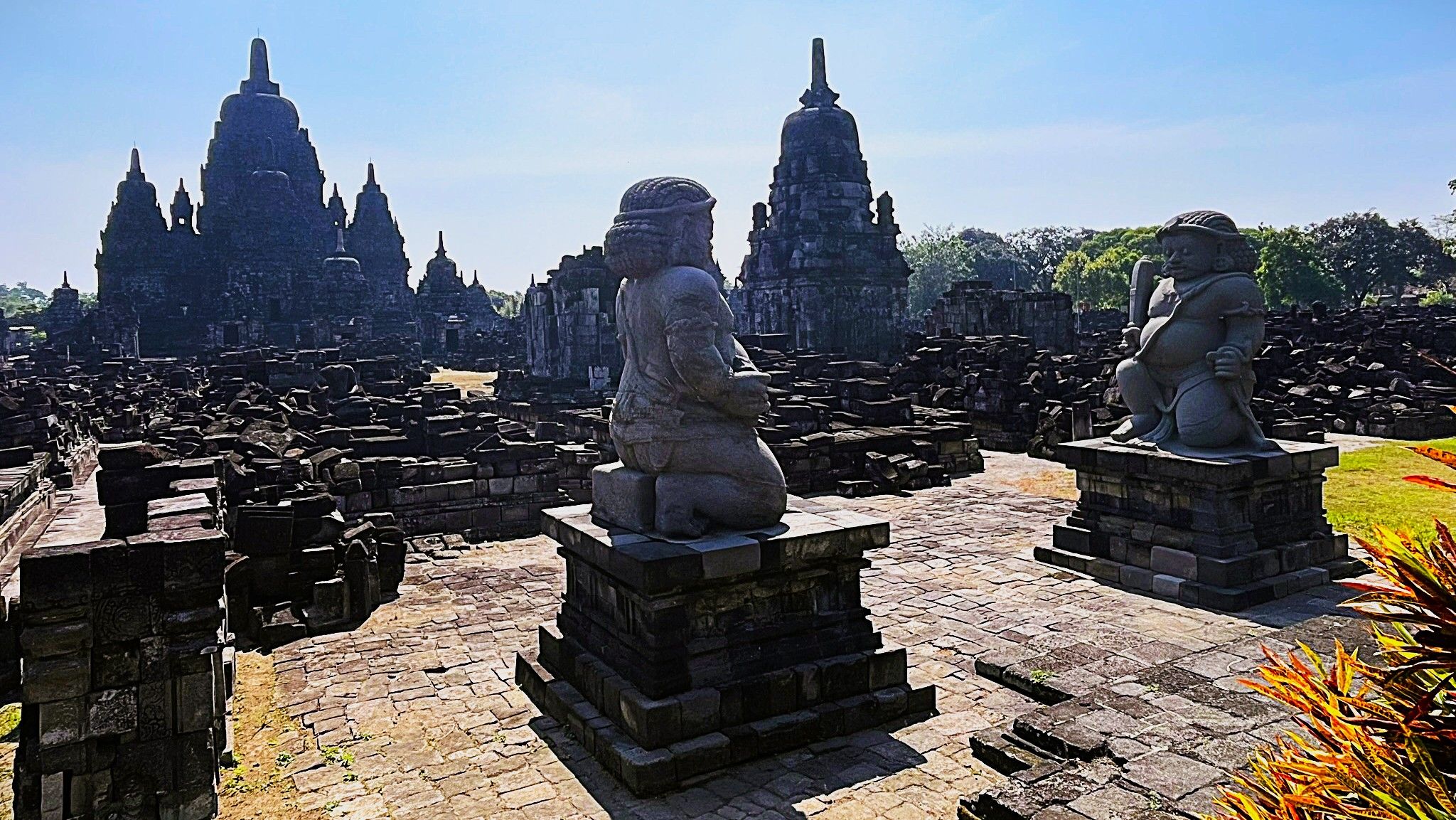
Sewu lies at the far northern end of the complex. Its name means "Thousand Temples"; indeed, there were once 249 structures. Two imposing, armed guardian statues flank the entrances to the central hill. Interestingly, this Buddhist temple also features scenes from the Hindu epic Ramayana. Unfortunately, I can't see them; Candi Sewu is fenced off and can only be viewed from the outside. Nevertheless, this second-largest Buddhist temple complex in Indonesia, after Borobudur, is truly impressive.
Borobudur will be my next highlight.